Is it weird that I trust Dr. Google (AKA the Artificial Intelligence that answers every question I put in the search bar) more than I trust my human doctors at this point? Whereas most of my doctors seem to hear every third or fourth word I say, Dr. Google hears everything, and asks follow up questions, and gives me important information in clear language that I can understand. I know I’m supposed to be wary of Artificial Intelligence (or are we legally required to call it Super Intelligence now?), because the robots are going to destroy the world, but honestly, humans have done quite a lot of destroying up to this point, so I’m not sure the robots could do any worse. And Dr. Google is patient with me, and compassionate, and even helps me phrase my questions to bring to the human doctors in a way they might be able to hear it (since Dr. Google can’t prescribe medication, yet).
I think the follow up questions are my favorite part. Dr. Google doesn’t say, “Is there anything else on your mind?” or “How else can I help you?” Instead, Dr. Google looks back at what I said and asks a more specific follow up question, and explains how certain drugs interact, and the possible side effects; and Dr. Google never gives me side eye or talks down to me or ignores my concerns.
There’s something hopeful, and devastating, in the idea that computers can be programmed to take better, or at least more consistent and persistent, care of us than our fellow humans.
I used to consult with Rabbi Google every once in a while, when it was just a search term here and a link to MyJewishLearning there, and even now, Rabbi Google is still only able to tell me where to find a particular prayer, or how to celebrate a Jewish holiday, and doesn’t know which story from the Torah or the Talmud might help ease my existential crisis. Same with the chatbot/psychology programs (which of course I have tried), that promise to uncover all of the secrets of my heart; maybe because actual therapists had to program the chatbot, and they can’t tell me who I am either.
I don’t really understand how artificial intelligence works, or how an AI “Agent” can go off on its own and do something it wasn’t programmed to do. And I don’t know how (or if) safeguards will be put in place to prevent the robot apocalypse. I tend to see computers like enormous pit bulls in studded collars, scary if you make them scary, but capable of being sweet and kind and playful if you raise them right. And really, it seems unfair to expect artificial intelligence to be kinder and better than the humans who created it. It would be great if some of the computer geniuses could imagine ways to make the world a kinder, safer place, instead of always thinking up ways to destroy us all, but until that time comes, at least I have Dr. Google to talk to.
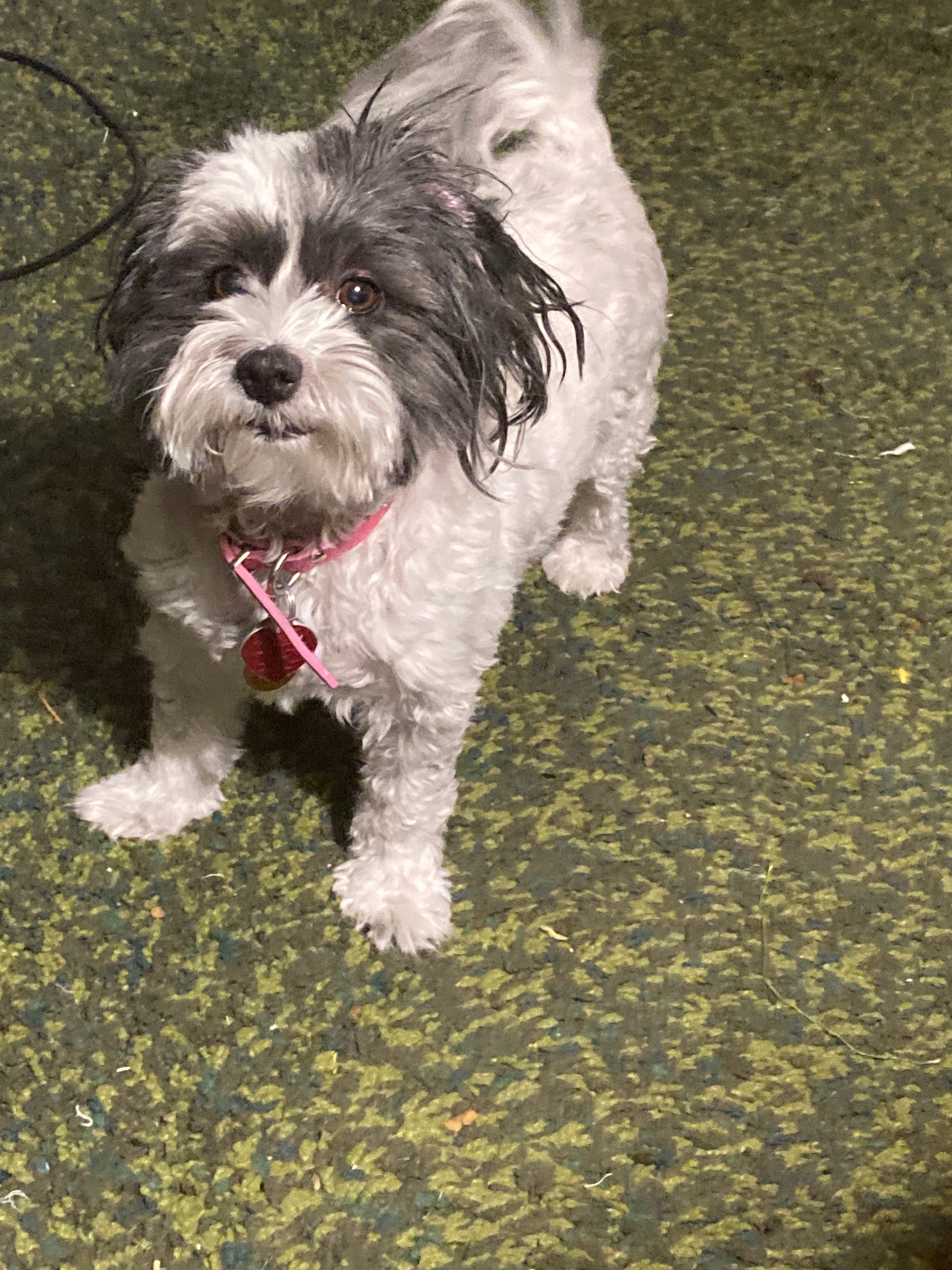
“Uh oh, Mommy’s losing her mind.”
If you haven’t had a chance yet, please check out my novel, Yeshiva Girl, on Amazon. And if you feel called to write a review of the book, on Amazon, or anywhere else, I’d be honored.
Yeshiva Girl is about a Jewish teenager on Long Island, named Isabel, though her father calls her Jezebel. Her father has been accused of inappropriate sexual behavior with one of his students, which he denies, but Izzy implicitly believes it’s true. As a result of his problems, her father sends her to a co-ed Orthodox yeshiva for tenth grade, out of the blue, and Izzy and her mother can’t figure out how to prevent it. At Yeshiva, though, Izzy finds that religious people are much more complicated than she had expected. Some, like her father, may use religion as a place to hide, but others search for and find comfort, and community, and even enlightenment. The question is, what will Izzy find?
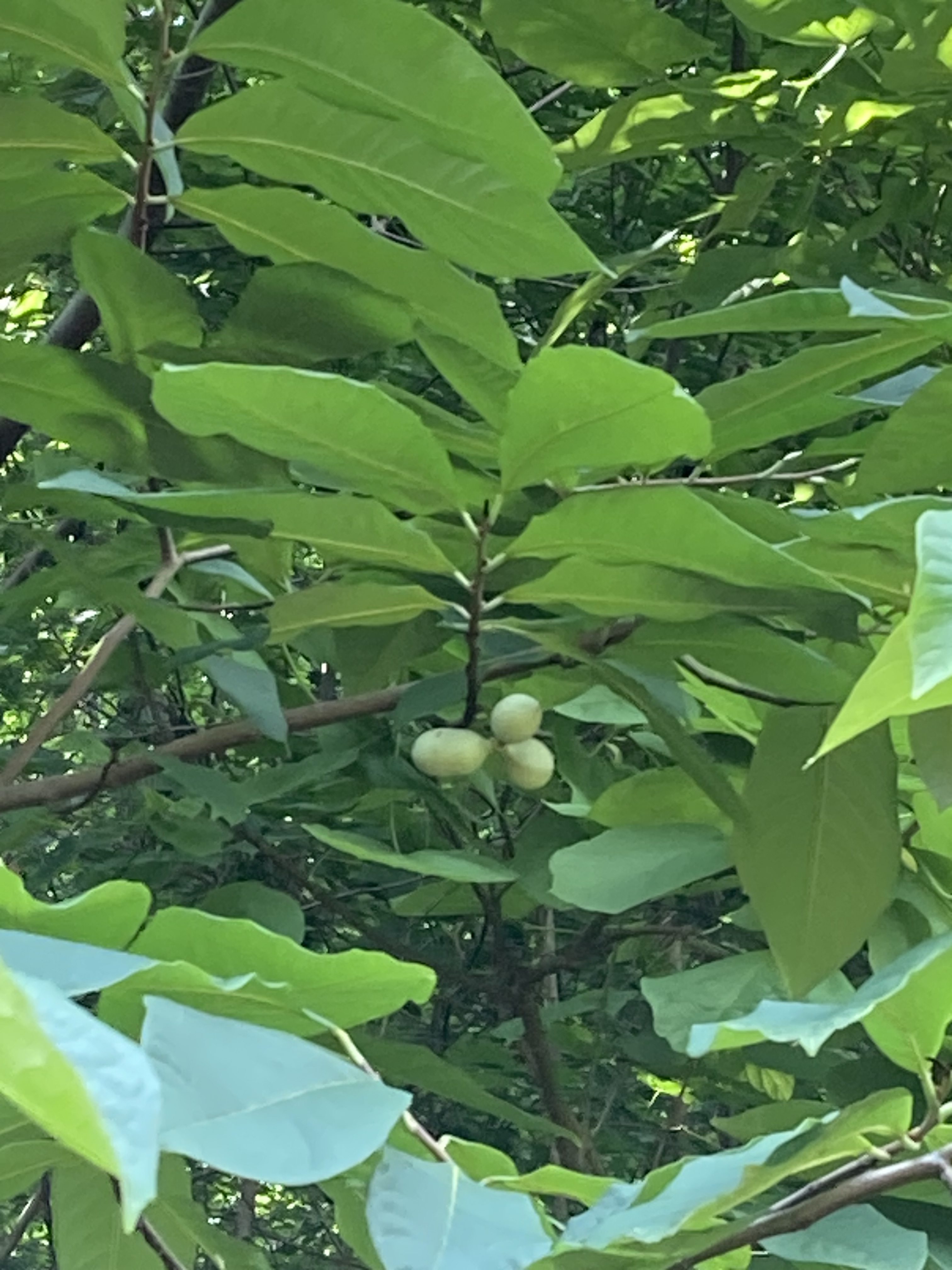
My pawpaw tree has been through too much. Earlier in the summer, after we found five or six pawpaw fruit growing on various branches, the gardeners came. It’s possible that their boss didn’t tell them that the tree was off limits, though the bowtie, two dog collars, and yellow caution tape around his trunk should have been a hint. Mom heard the sound of the chainsaw and sent me out to stop them, way too early in the morning, but by the time I reached the big pawpaw tree six branches had already been removed, and all of the growing pawpaw fruit with them. I managed to communicate with the chainsaw wielding gardener that he was NOT supposed to cut more branches from the tree, and that he should leave the younger trees, about twenty feet away, alone.
The three-fer, in the before times
I was sure that that was the end of the pawpaws for the year, and, honestly, I was ready to give up the fight altogether. That tree has been my responsibility for almost twenty years; it survived the murder of the second tree (that time they just went straight for the trunk), and the trauma of being replanted when we moved to the co-op, and the humiliation of wearing a bowtie, but it was starting to feel like a hopeless battle.
But, sometime in August, Mom went out for her daily walk and saw that there was another pawpaw on the tree, higher up than the ones we’d noticed before, visible now that the other branches were not obscuring it. I didn’t want to care. A bird or a squirrel would inevitably come along and knock it down or eat it up. I wouldn’t have been surprised if the gardeners had come back in the middle of the night to get that one last branch.
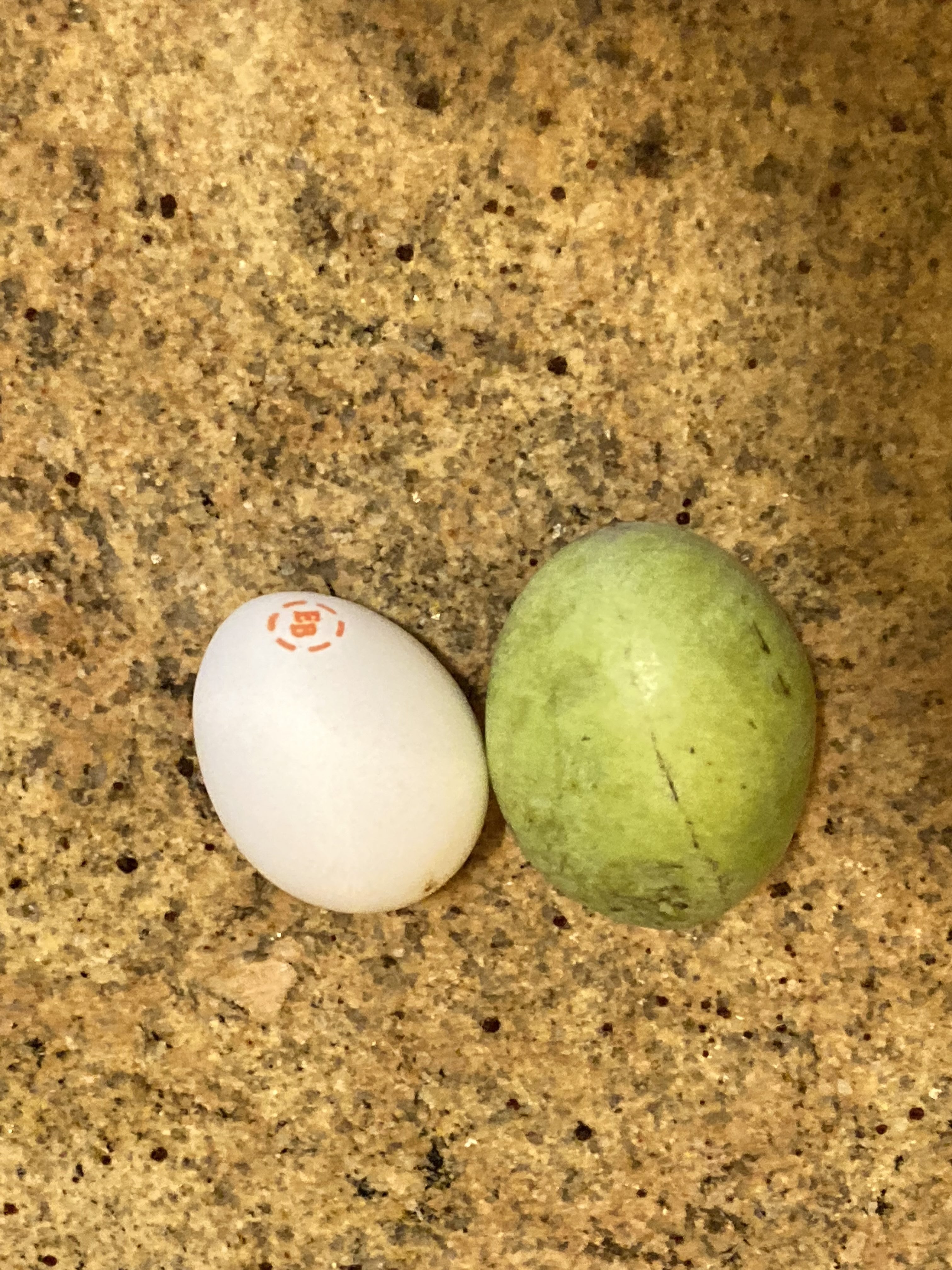
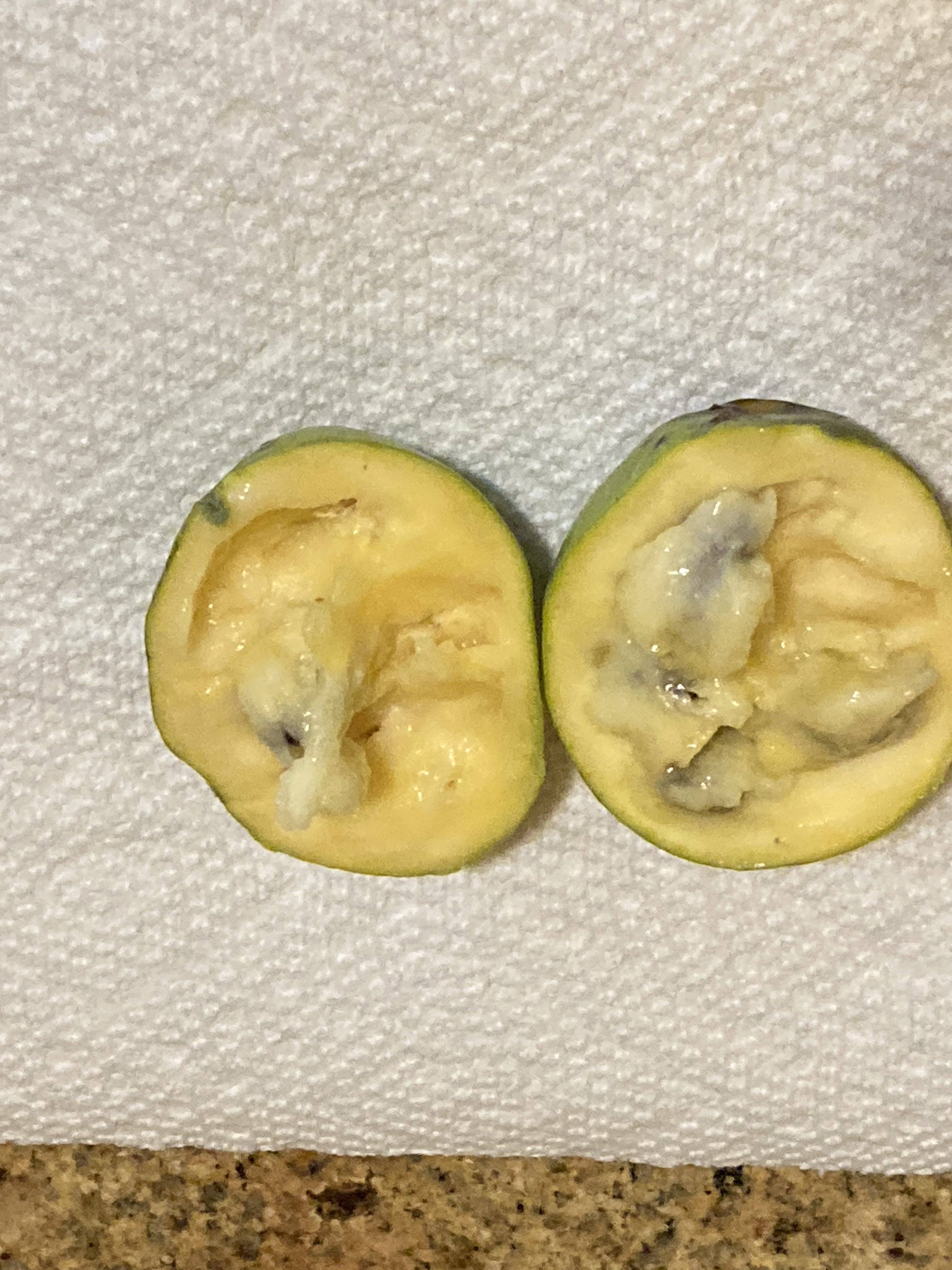
And then, last week, Mom came in from her walk and handed me a pawpaw the size of an egg. It had fallen from the tree, and we weren’t sure it would be edible, but when I cut it open it was ripe and delicious. I need these reminders every once in a while, that good things are possible, and worth working for, even with all of the losses and failures along the way. It was just one small piece of fruit, split between two people, but a little bit of pawpaw goes a long way. Apples and oranges and cherries and pears and bananas are all wonderful things, and easily found at the supermarket, but pawpaws almost seem like they’ve been cooking under their skins, building complex flavors and concentrating all of that magic into one small package.
Slightly bigger than an egg
Tiny, but mighty.
So, I’m not giving up on my pawpaw tree, though I’m going to have to come up with more creative ideas for how to protect it from the gardeners, and other predators. Maybe an electrified fence? Poison darts? A tree alarm that wakes the whole neighborhood when a squirrel’s foot even touches a branch?
I’ll keep thinking.
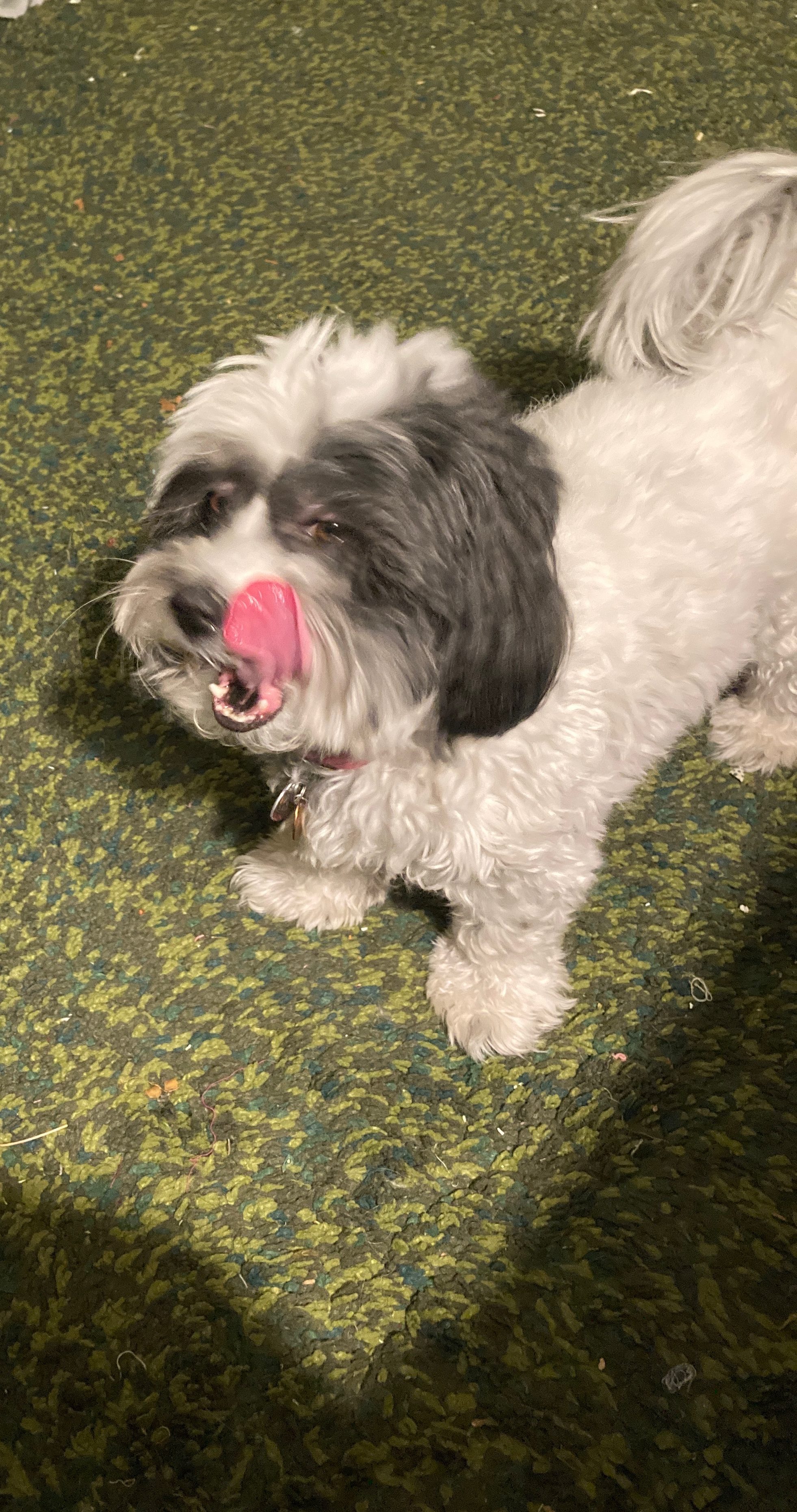
“Does it taste like chicken?”
If you haven’t had a chance yet, please check out my novel, Yeshiva Girl, on Amazon. And if you feel called to write a review of the book, on Amazon, or anywhere else, I’d be honored.
Yeshiva Girl is about a Jewish teenager on Long Island, named Isabel, though her father calls her Jezebel. Her father has been accused of inappropriate sexual behavior with one of his students, which he denies, but Izzy implicitly believes it’s true. As a result of his problems, her father sends her to a co-ed Orthodox yeshiva for tenth grade, out of the blue, and Izzy and her mother can’t figure out how to prevent it. At Yeshiva, though, Izzy finds that religious people are much more complicated than she had expected. Some, like her father, may use religion as a place to hide, but others search for and find comfort, and community, and even enlightenment. The question is, what will Izzy find?
A few months ago, I answered a survey, somewhere, about my interest in the videos put out by Unpacked Media, a resource I’ve used countless times that takes really complicated Jewish issues and makes them more bite-sized and entertaining. I forgot about the survey almost immediately, so when I received an email saying that I was on the waitlist for the Unpacked Community Beta, I was momentarily stung (wait list? Why don’t you want me?), and bewildered (What’s a “community beta”?), and then quickly forgot about it. When I was taken off the waitlist, I was between online Hebrew classes and decided to give it a try. The discussion board is part “safe space” and part consumer feedback for the creators of the Unpacked educational videos, and at first, I wasn’t really sure what to make of it. Was I just being patronized, or was someone actually listening to me? But the Unpacked Community Beta (as in, experimental, for now) has quickly become a meaningful outlet for me, and a genuinely safe space to engage with challenging ideas.
The best example of that, so far, came when they posted the first episode of a new podcast called Borderlines, hosted by Yirmiyahu Danzig, and asked for feedback. The likelihood that I was going to sit through an hour-long interview with a politician was pretty low, except, I felt an obligation to help the Unpacked Community, and I was actually willing to engage with more difficult material if I could have my own voice heard in response. There’s something so disempowering about being told to watch a video or read an article or listen to a lecture without ever having the chance to respond.
The first thing that struck me was that Samer Sinijlawi, a Palestinian politician from East Jerusalem, talked about having gone to the Gaza Envelope to grieve with the families impacted by the Hamas attack on October 7th. There are certainly other Palestinians who have expressed horror at what Hamas did that day, but most of those Palestinians are also Israeli citizens, part of the 20% of the population of Israel that isn’t Jewish. Here was a man who had refused to even apply for Israeli citizenship, despite living in East Jerusalem where that is an option, because of his fervent hope that a Palestinian state, and therefore Palestinian citizenship, would soon be possible, and he was still willing to offer compassion to victims on the other side of the conflict, which made it easier for me to listen to whatever else he was going to say.
One of his main points in the interview was that the Palestinians living in the conflict on a daily basis are more often willing to be pragmatic and realistic than the Palestinians and allies watching from a distance, who often hold more maximalist and, in his words, la la land views. It was an interesting thing to hear, given that among Jews it’s probably the opposite. Many, if not most, diaspora Jews are much more hopeful about a two-state solution than most Jews living in Israel, who are under almost constant threat from the conflict, but it is the Jews who live in Israel, and know what it’s like on the ground, who get to vote on the path forward, rather than those of us in the diaspora who watch the results on the news. More often than not, it has been the Palestinians in the diaspora, or others claiming to speak for them, who have made most of the decisions for the Palestinian side, while the Palestinians on the ground have had to live with the consequences. It’s especially noticeable when campaigns like BDS (Boycott, Divestment and Sanction), who say they are targeting Jewish settlers, in the West Bank, instead manage to punish the Palestinians working at Israeli factories and the few Palestinian/Israeli partnerships that are trying to create a path forward. Instead of making Palestinian lives better, or pushing the Israeli government back to the negotiating table, their actions tend to lead to more fear in Israel, and hardening of borders and hearts in response. At times it’s hard to know if the people who say they are speaking for the best interests of the Palestinians are just nonrat of the realities on the ground, or if they intend to push Israeli leadership further and further to the right so that negotiation is impossible and violence inevitable. Sometimes people are Machiavellian, and sometimes people are just wrong.
Another thing Samer Sinijlawi talked about was how unhelpful the rigid narratives are, on both sides, and how much better it would be if people could really get to know the lived experience of the other and start to come up with creative solutions together. I could almost picture the season of the Real World Jerusalem, “where people stop being polite and start getting real” (if that’s not too dated a reference). But even in this Borderlines interview, with two seemingly very willing participants in the dialogue, the discussion kept coming back to the surface level, and the rigid narratives, without being able to progress much further. It felt like, even with people of good will on both sides, the ice has to be re-broken over and over again before even the smallest shards of light can get through.
I watched a few more episodes of the Borderlines podcast, before the high holidays started to steamroll over me, and what I liked about the ones I saw was that Yirmiyahu Danzig seemed to be trying to take a deeper look at all kinds of issues in Israeli society, not just focusing on the Palestinian/Israeli conflict as if everything else is working perfectly. He spoke to an Ethiopian Israeli academic about the difficulties Ethiopian Jews faced, and continue to face, trying to fit into Israeli society, and he also spoke to an Israeli/American rabbi, who comes from a family of celebrated orthodox rabbis, about how to bridge the divide between American Jews and Israeli Jews, orthodoxy and liberalism.
Something is happening. Communities are being built, often online where safeguards can be put in place, based on a genuine willingness to hear and be heard. Hopefully, with practice, more and more people will feel brave enough to consider ideas that challenge the status quo and maybe, finally, come up with workable answers. But all of this is happening at the same time as Americans and Israelis are wading through nasty political campaigns (leading to elections in late October and early November), and terrorism and settler violence in the West Bank are prominent again in the news. I can’t say that I’m feeling hopeful or optimistic, but I can see ways forward, and I can see people who are willing to keep trying. That’s gotta count for something. Right?
“How would I know?”
If you haven’t had a chance yet, please check out my novel, Yeshiva Girl, on Amazon. And if you feel called to write a review of the book, on Amazon, or anywhere else, I’d be honored.
Yeshiva Girl is about a Jewish teenager on Long Island, named Isabel, though her father calls her Jezebel. Her father has been accused of inappropriate sexual behavior with one of his students, which he denies, but Izzy implicitly believes it’s true. As a result of his problems, her father sends her to a co-ed Orthodox yeshiva for tenth grade, out of the blue, and Izzy and her mother can’t figure out how to prevent it. At Yeshiva, though, Izzy finds that religious people are much more complicated than she had expected. Some, like her father, may use religion as a place to hide, but others search for and find comfort, and community, and even enlightenment. The question is, what will Izzy find?
I started wearing glasses in second grade, when I finally realized that the teacher was writing actual words and numbers on the board and not just doodling. By fourth grade, I had to wear the glasses all the time. I tried contact lenses when I was a teenager, after realizing that getting hit in the face with a volleyball hurts more with glasses on, but I never really got used to the contact lenses and eventually gave them up. Since then, I really only take my glasses off to go to sleep or take shower (and there really should be windshield wipers for glasses by now). At some point, I developed intermittent exotropia (part-time crossed vision) and farsightedness, but the prisms and bifocals I tried made me nauseous, so I learned to accept a little bit of blur in my life. And I’m not blind without my glasses. If I forget to put them on first thing in the morning I don’t, usually, bump into walls or trip over a puppy dog.
But recently, I’ve noticed something strange. Sometimes, when I first wake up, before I put my glasses on, I see things that aren’t really there. Like the big white dog at the end of the bed, which turned out to be my laundry bag (I was too lazy to put the clothes away the night before), or the black column that seemed to shimmer and maybe opened a portal to another universe, which turned out to be my half open closet and a black shirt. It’s as if some part of my brain has decided to decipher the blurry images instead of accepting the blur, despite incomplete visual information.
One morning, I woke up to a huge dragonfly hovering over my bed. I could hear it buzzing like a tiny helicopter, and then I put on my glasses and the whole thing, noise and all, disappeared. There wasn’t even a shadow or a crack in the ceiling to explain what I’d seen, and the only buzz-adjacent sound was my very loud air conditioner, which had never reminded me of a dragonfly in the past.
I’m afraid to google this and find out it’s a symptom of yet another incurable disease, so for now I’m just trying to remind myself that it’s unlikely that a house elf is hovering over my dresser (Jewelry box), or that a faceless stranger is standing by my bookcase (exercise bike). So far, each time I’ve imagined something impossible, I’ve been able to put on my glasses and watch it disappear. Which, to be honest, is kind of sad. I really miss that big white dog. He seemed very nice.
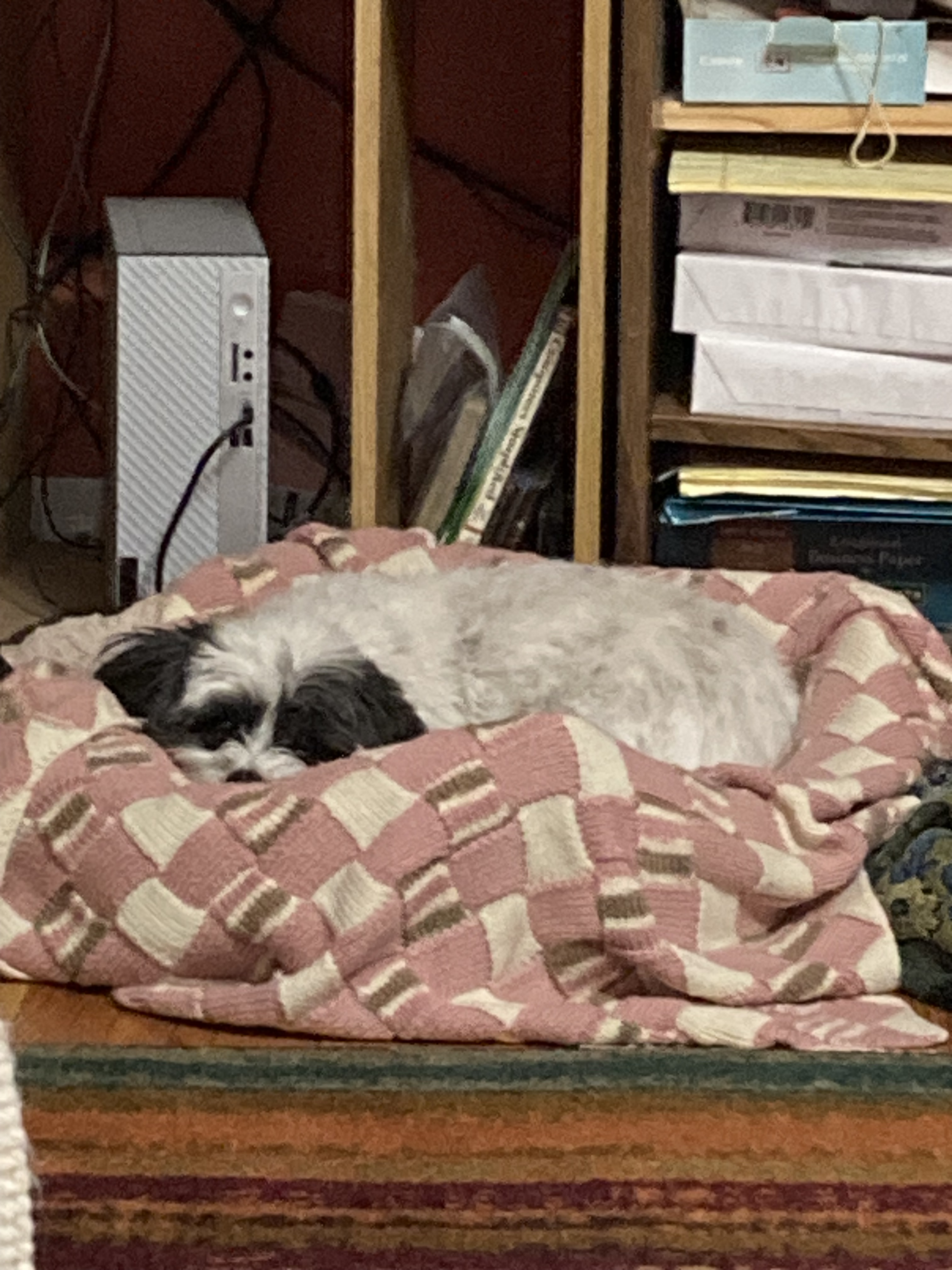
“Harrumph.”
If you haven’t had a chance yet, please check out my novel, Yeshiva Girl, on Amazon. And if you feel called to write a review of the book, on Amazon, or anywhere else, I’d be honored.
Yeshiva Girl is about a Jewish teenager on Long Island, named Isabel, though her father calls her Jezebel. Her father has been accused of inappropriate sexual behavior with one of his students, which he denies, but Izzy implicitly believes it’s true. As a result of his problems, her father sends her to a co-ed Orthodox yeshiva for tenth grade, out of the blue, and Izzy and her mother can’t figure out how to prevent it. At Yeshiva, though, Izzy finds that religious people are much more complicated than she had expected. Some, like her father, may use religion as a place to hide, but others search for and find comfort, and community, and even enlightenment. The question is, what will Izzy find?

I can’t seem to settle on a writing schedule, or even stick to one particular writing project for more than a few days at a time, and the chaos of that has started to undermine even my blog writing, which is usually my reliable safe space each week. Usually, I know I’ll get a blog post done in time, even if I’m four drafts in and still not sure what I’m trying to say by Friday night. Every once in a while, an essay crashes and burns after weeks of effort, but even then, there’s always been another essay in the pipeline, ready to take its place. But lately, I feel like I’m speeding around in circles, starting and stopping each idea without rhythm or consistency, and losing the feeling of structure and safety the blog has always created for me, no matter what else was going on in my life.
I’ve been spiraling through memoir and fiction, mystery and romance, essays and poems, even English and Hebrew, and nothing feels right, nothing feels like a structure I can rely on to help organize all of the different parts of who I am into one consistent whole.
I remember, years ago, when I took a class in how to teach the twice exceptional child (gifted and autistic were the two exceptions they were looking at, for the most part), and I found a drawing that I loved. Some anonymous teacher had drawn a child (huge, filling the whole page) with a scaffolding on either side where the teacher could climb up and add supports as unobtrusively as possible, and ever since then I’ve imagined this scaffolding around me, helping me stay upright, intervening when I start to lose my way. I can almost see it, like I’m a building constantly under repair, supported and in process to something better.
But lately I’ve been struggling to find the right supports, the right structures and schedules and goals to keep me growing instead of spiraling off into the ether. I know I’ll find it eventually, but these moments, where I’m spinning and spinning and can’t find the ground, and my scaffolding is nowhere to be seen, are really scary.
“You’ll be okay, Mommy. I have chicken treats.”
If you haven’t had a chance yet, please check out my novel, Yeshiva Girl, on Amazon. And if you feel called to write a review of the book, on Amazon, or anywhere else, I’d be honored.
Yeshiva Girl is about a Jewish teenager on Long Island, named Isabel, though her father calls her Jezebel. Her father has been accused of inappropriate sexual behavior with one of his students, which he denies, but Izzy implicitly believes it’s true. As a result of his problems, her father sends her to a co-ed Orthodox yeshiva for tenth grade, out of the blue, and Izzy and her mother can’t figure out how to prevent it. At Yeshiva, though, Izzy finds that religious people are much more complicated than she had expected. Some, like her father, may use religion as a place to hide, but others search for and find comfort, and community, and even enlightenment. The question is, what will Izzy find?