Just barely.
This time of year is always a challenge for me, with choir rehearsals and synagogue school starting and then high holiday services one after another. I had to skip the Tashlich service – the one dogs are invited to because it’s at a pond instead of indoors – because I was wiped out after the first (three hour) service of the day. And then I had to leave early on the second day of Rosh Hashanah too, because I was afraid if I stayed much longer, I wouldn’t be able to drive home safely. Mom was sure people would assume it was her fault we were leaving early, but she was ready to stay until the bitter end. I was the weak link.
This feeling, that I am at my breaking point so much sooner and so much more completely, is frightening.
Listening to the shofar blasts was more meaningful this year, somehow. The strangeness of the sound – not music, but not not music either – connects us back to our ancestors, who used ram’s horns to be heard over the din of the crowd. Each prayer on this holiday seems to bring us back to a time in Jewish history, really. We say the Acheinu prayer for the wellbeing of the Israeli hostages, but the text was written millennia ago, when Jewish hostages were taken by ancient enemies and redeemed by the Jewish community at whatever cost, and the music connects us to yet another Jewish community in the more recent past, so that we can feel our ancestors in the room with us from every direction.
The aging of our congregation was more obvious this year, with all of the walkers and the rollators and the shuffling and the rounded shoulders, but it was good to see the congregation filled to the rafters (literally, we had people up in the choir loft, which is never actually used for the choir). We were only filled to the brim for the first day of Rosh Hashanah and the morning of Yom Kippur, but still, it was nice to see.
I’ve gotten used to the presence of the security guards at the front doors now, and the locked doors, and tinted windows, and bollards to prevent car rammings, but it’s hard to settle into the reality that we really do need all of those measures because there are people who actively want to kill us.
And then, of course, I caught a cold on Yom Kippur. Mom was sure that my allergies were kicking in, because the heat had gone on overnight for the first time, swirling dust every which way, but as the day went on my symptoms worsened until it was obviously more than just allergies.
Surprisingly, though, with all of that, the Yom Kippur services were easier than expected. The rabbi’s speech, Against Despair, helped a lot. We started the day with the news about the attack on Jews entering a synagogue in Manchester, England, so despair was sitting in the room with us, but the hope the rabbi tapped into wasn’t about how things were going to turn around and love would prevail, instead he told us that the Jewish people have survived through one devastation after another, outliving enemies time after time, just by the commitment to life.
The other highlight of Yom Kippur, for me, was a prayer I must have heard many times over the years, but it hit me differently this time. It’s called Shma Koleinu (Hear our Voice), and in our synagogue it is sung as a solo by the cantor. It’s a simple plea for God to hear our suffering, and to hear our pleas for help, and I always forget how healing it can be just to be heard, even when no material help can be offered.
Hear our voice, God, spare us and have compassion on us and accept our prayers, mercifully and willingly.
I went looking for this prayer on YouTube and found a lot of versions, including a few with the same tune we use (by Max Helfman), but none of them captured the power that our cantor was able to create with those same notes. Technically, I think its because he chooses to stay in chest voice instead of switching to head voice for the top notes of the cry, so it sounds more like a cello than like a violin; the fullness of the sound, rather than something more piercing or fragile, implies that we deserve to be heard by God. It’s not a desperate plea, instead we’re calling out, through our cantor, to say that we need help and respect at the same time.
We feel like we walk through the world without leaving a ripple in the fabric of other people’s lives, and while that’s never really true, it feels true, when no one stops to tell us that we’ve been heard.
Singing with the choir, even though it takes a lot out of me, gives me the opportunity to be heard and seen, and to feel like an essential part of my community. And we all need that feeling. We all need to feel like our presence matters and our voice counts to someone other than ourselves.
There’s a reason why Rosh Hashanah and Yom Kippur are the big communal holidays in Judaism, and it’s not because they are the only holy days on the Jewish calendar (there are kind of a lot). It’s because they are the hardest. We are meant to spend this time searching our souls for the sins we’ve committed, and, like chimps carefully picking bugs out of each other’s hair, this awful task is much easier to do with company. When we cry out to God and express despair, at least we aren’t doing it alone, because to do such a thing alone would be to risk truly falling into a pit of despair where the monsters have free reign.
We do all kinds of things to mitigate the despair of looking so closely at our lives and at what we need to change in the coming year: we find beautiful music to set our prayers to, we dress up, we prepare more deeply and for a longer period of time, and we come together. And then, we stand together and pray for long periods of time, listing our sins and our flaws and our fears, but we do it together, in the light of the synagogue, rather than alone in the dark.
And when we cry out to God, we are also crying out to each other: Hear me and I will hear you, and together we can make sure our lives matter, at least to one another.
Shma koleinu by Max Helfman – sung by Cantor David Rosen – https://youtu.be/ijAuDvzVmfw?si=RSsIoxhpiXJUkeCT
If you haven’t had a chance yet, please check out my novel, Yeshiva Girl, on Amazon. And if you feel called to write a review of the book, on Amazon, or anywhere else, I’d be honored.
Yeshiva Girl is about a Jewish teenager on Long Island, named Isabel, though her father calls her Jezebel. Her father has been accused of inappropriate sexual behavior with one of his students, which he denies, but Izzy implicitly believes it’s true. As a result of his problems, her father sends her to a co-ed Orthodox yeshiva for tenth grade, out of the blue, and Izzy and her mother can’t figure out how to prevent it. At Yeshiva, though, Izzy finds that religious people are much more complicated than she had expected. Some, like her father, may use religion as a place to hide, but others search for and find comfort, and community, and even enlightenment. The question is, what will Izzy find?

 rachelmankowitz
This is a beautiful post, Rachel. It gave me goosebumps, but in a good way, to picture the cantor singing solo. To me, a song is so much more impactful when sung by one voice. I don’t know why but it is.
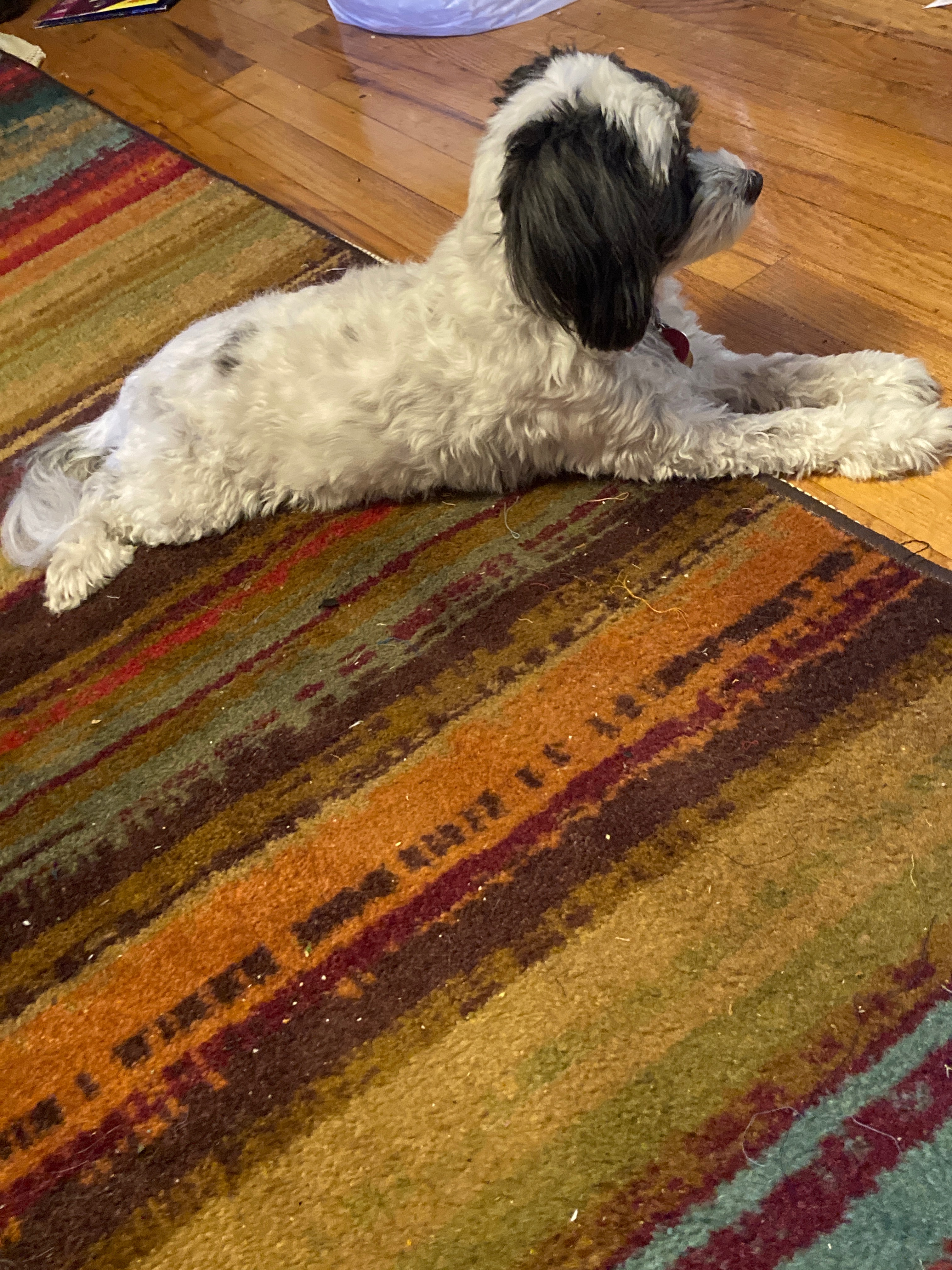
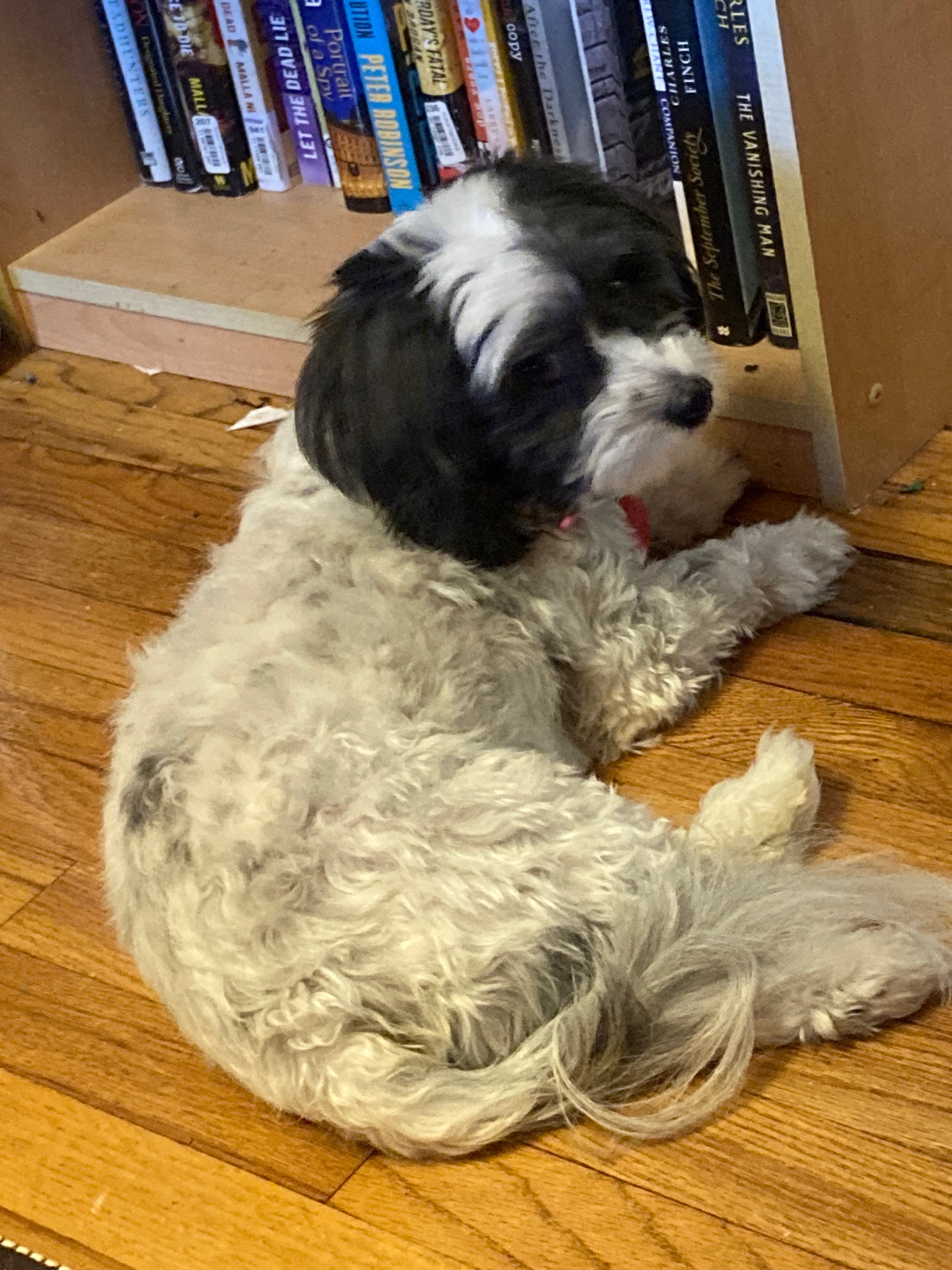
Tzipporah looks so cute waiting. If not ancestors, but I hope she got treats.
Thank you! Tzipporah never has to wait long for treats, though she thinks it’s eons.
Rachel, I love this message at the end:
”Hear me and I will hear you, and together we can make sure our lives matter, at least to one another.”
To me, this is a reason God gave us a brain and a heart, to help ourselves and each other. This saying sounds also like the advice Dr. Wayne Dyer would give.
Keith
Thank you! It’s a simple truth but really hard to live up to, so we have to keep working on it.
The services sound so beautiful, Rachel. I have been reading through the Old Testament this year and I love to read about the festivals and holy days. I’m so sorry you have to have security guards and darkened windows. It’s so wrong. Wishing you peace and health!
Thank you! The lucky thing is that our security guards have become friends. More friends is always good.
humanity. everyone can learn a lot from Jewish prayer and people, if we’d only just listen. Thank you for this post. It’s beautiful.
Thank you!
Gmar Tov.
Shanah Tova!!!
Sounds like you got a lot of good out of it too.
I really did!
This is one of the most profoundly beautiful and honest reflections I have ever read. Thank you for sharing the sacred and the challenging, the weary and the hopeful, all woven together with such grace.
Your description of the exhaustion—of being the “weak link”—is so deeply relatable. It takes immense strength to know your limits and to prioritize your safety, even when it means missing something meaningful. That is not weakness; that is wisdom.
The way you wove together the ancient and the modern—from the Acheinu prayer to the security bollards, from the shofar’s primal cry to the cantor’s cello-like plea in Shma Koleinu—was breathtaking. You captured the essence of what it is to be part of a people with a long memory: carrying the weight of history while finding the specific notes of hope for today. The image of the congregation, aged yet resilient, “filled to the rafters” is one I will not soon forget.
Your insight into why these are the great communal holidays is nothing short of brilliant. “Like chimps carefully picking bugs out of each other’s hair” – what a perfect, powerful metaphor. The awful, necessary task of soul-searching is made bearable because we do it side-by-side. We cry out to God, and in doing so, we hear each other. That is the heart of community.
And your point about the cantor’s chest voice—that it wasn’t a desperate plea, but a call deserving of respect—was a stunning piece of observation. It speaks to the entire struggle: to be heard in our full, authentic, grounded humanity, not in a fragile whisper.
This entire piece was a ripple, and I can promise you, it has been heard. It matters.
I am also incredibly moved by the connection to Yeshiva Girl. It’s clear that the novel springs from the same deep well of understanding that this reflection does—a knowledge that faith and community are not simple, but complex, sometimes painful, and ultimately essential landscapes where we search for truth and comfort. I will absolutely seek it out on Amazon. A story that explores the complicated, sometimes dark, but also enlightening corners of religious community feels more important than ever.
Thank you for this gift. Your voice, both here and in your writing, counts. It matters. G’mar chatimah tovah.
Thank you so much! Shanah Tovah!
So beautiful and heartfelt, Rachel.
Thank you so much!
A powerful piece. Thankyou.
Thank you!
💛
“We feel like we walk through the world without leaving a ripple in the fabric of other people’s lives, and while that’s never really true, it feels true, when no one stops to tell us that we’ve been heard.” Your take-away is such a powerful one, Rachel. How important it is to know we’ve been heard–by each other and by God. Indeed, you have been heard, dear friend.
Thank you so much!
ooomph, that is A Lot! And it is not just the physical demands!
I am sure that it is all worth it.
It really is!
All so beautifully put, but most telling how so much we do is easier with others. Thanks to all that is holy for having others to support and provide support, to pray for and pray with, and to be there for all who need someone and who can be the someone for others.
Thank you so much!
Beautiful, and thoughtful, post, Rachel. 🤗
Thank you!
You’ve written plenty of extraordinary posts, Rachel, but this one strikes me as the most extraordinary to date. You see, feel, and weave together so much, so profoundly, in a relatively brief piece of writing.
May you find a measure of the peace that comes from being heard. As you can see from the comments, you are most emphatically being heard.
I hope you don’t spend much time dwelling on your concern about reaching your breaking point. My belief is that you have inner strength you simply haven’t recognized–but it is there for you to draw on as needed.
Thank you so much!
This weekend I ended up at the emergency medical tent at our fall festival. I had only been there 90 min. It can be confusing and overwhelming to watch our bodies give out long before our spirits want to.
Don’t worry. God hears you. He knows you’re there. You are one of His favorites! 💕
Good for you for going to the festival in the first place. Life is supposed to be filled with wonder, no matter how much work it takes to get there.
The celebrations sound wonderful. I live down the street from a synagogue and sad/happy to see the presence of police. Sad because it is necessary, happy that people are safe.I get tired easily and have to leave early, but something is better than nothing. Happy Holidays.
Get Outlook for Androidhttps://aka.ms/AAb9ysg
The police in our area have been really wonderful at looking out for us and government grants have paid for a lot of security measures to keep us safe. Even though antisemitism has grown, there is still a majority who thinks people of different religions and races and cultures should all feel safe in their places of worship, schools, hospitals, offices and homes. we just have to keep holding onto those values and keep voting for them.
This was a wonderful blog, Rachel. It made me feel good and thank you for that. It’s been a very long time since I’ve been to a synagogue and for some reason this year I wanted to do something. I didn’t want another service in Hebrew that I didn’t understand so I chose a reform congregation knowing that I’d hate it because the service wouldn’t be in Hebrew that I wouldn’t understand (make sense of that!) and it turned out I loved the service. Everything about it and so much that I’m thinking of going to a morning minyan or a Shabbat evening at some point. It was a weird experience to feel like you belong when all you’re doing is watching something on a computer screen. And the sound of the shofar… I don’t know what to say. Anyway, thanks again for a great blog and the link to the Shema Koleinu.
Thank you so much!
I’m glad Yom Kippur was so rewarding.
Me too! Thank you!
That was beautifully written and so moving!
Thank you so much!
This was so beautiful, Rachel! Thank you for sharing!
Thank you!!!