My dogs are scratchy gluttons. If I keep going with the scratchies for as long as they ask, first they yawn, then they close their eyes, then they start to relax into mush, and then they don’t need any more scratchies because they are asleep.
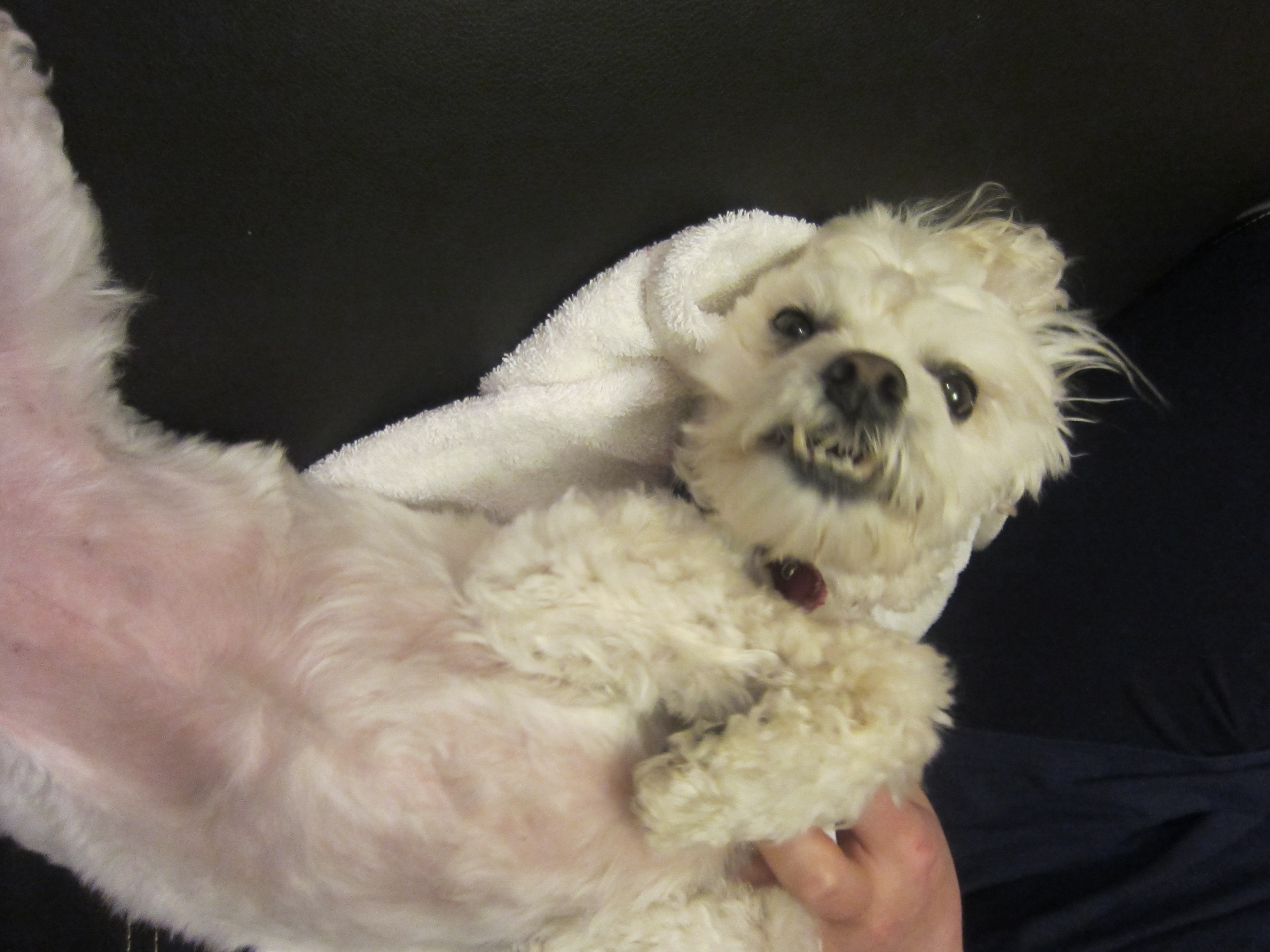
“Excuse me. I’m getting my scratchies now.”
If Cricket’s feeling grumpy and I start to scratch her head and ears and under her chin, I can almost see the neurons making better connections in her brain and sending calming signals throughout her body.
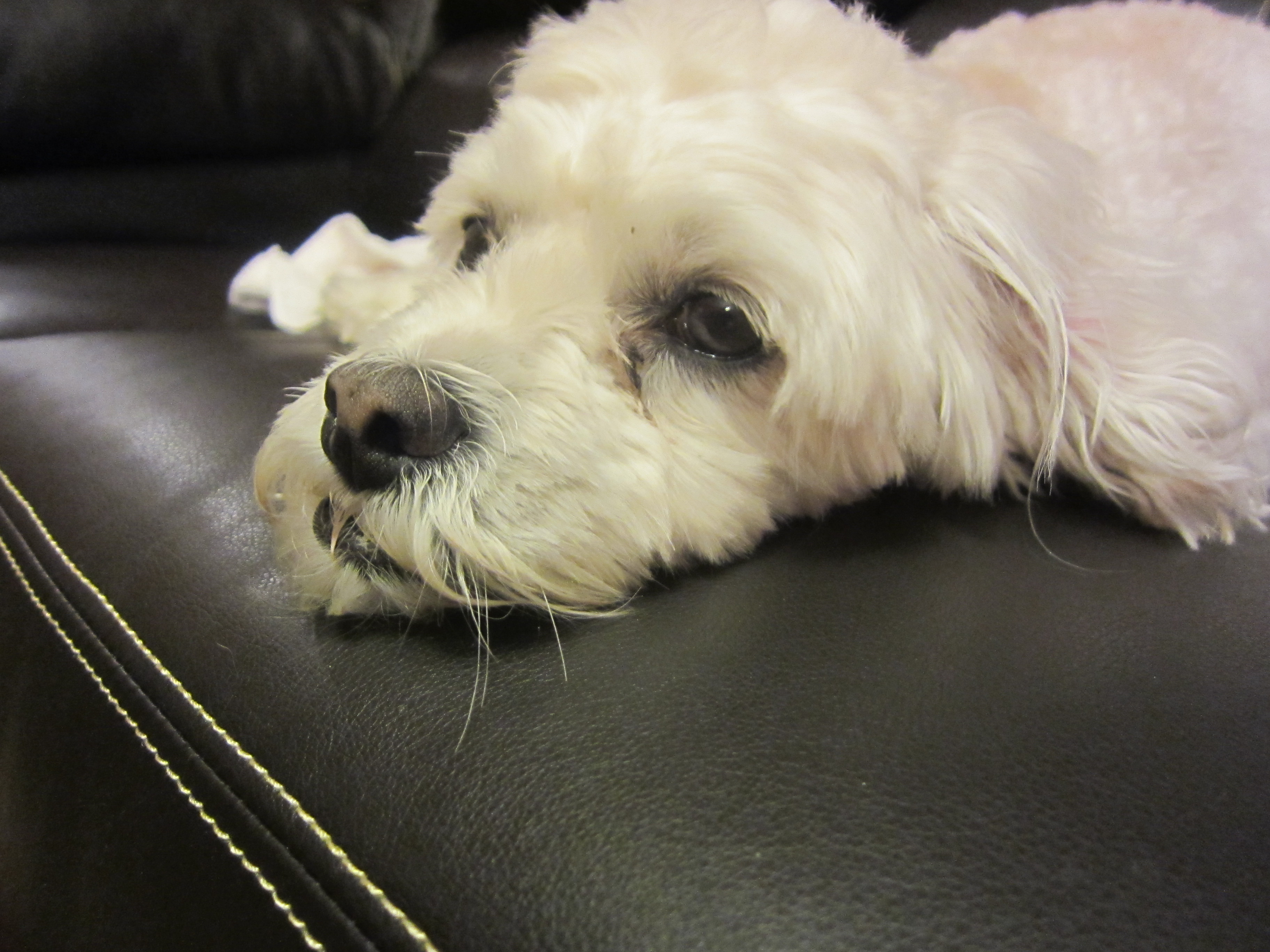
“I’m not sleepy at all. More scratchies.”
Given the amount of petting my dogs seem to need every say, I wonder how humans survive on so little. Just to get through a harried day of walks and meals and naps, Cricket tells me, she needs at least an hour of petting. She knows instinctively that petting is good for her, that it makes her feel better – whether it’s freeing up her chi, releasing neurotransmitters, or relaxing her muscles, she feels better because of it.
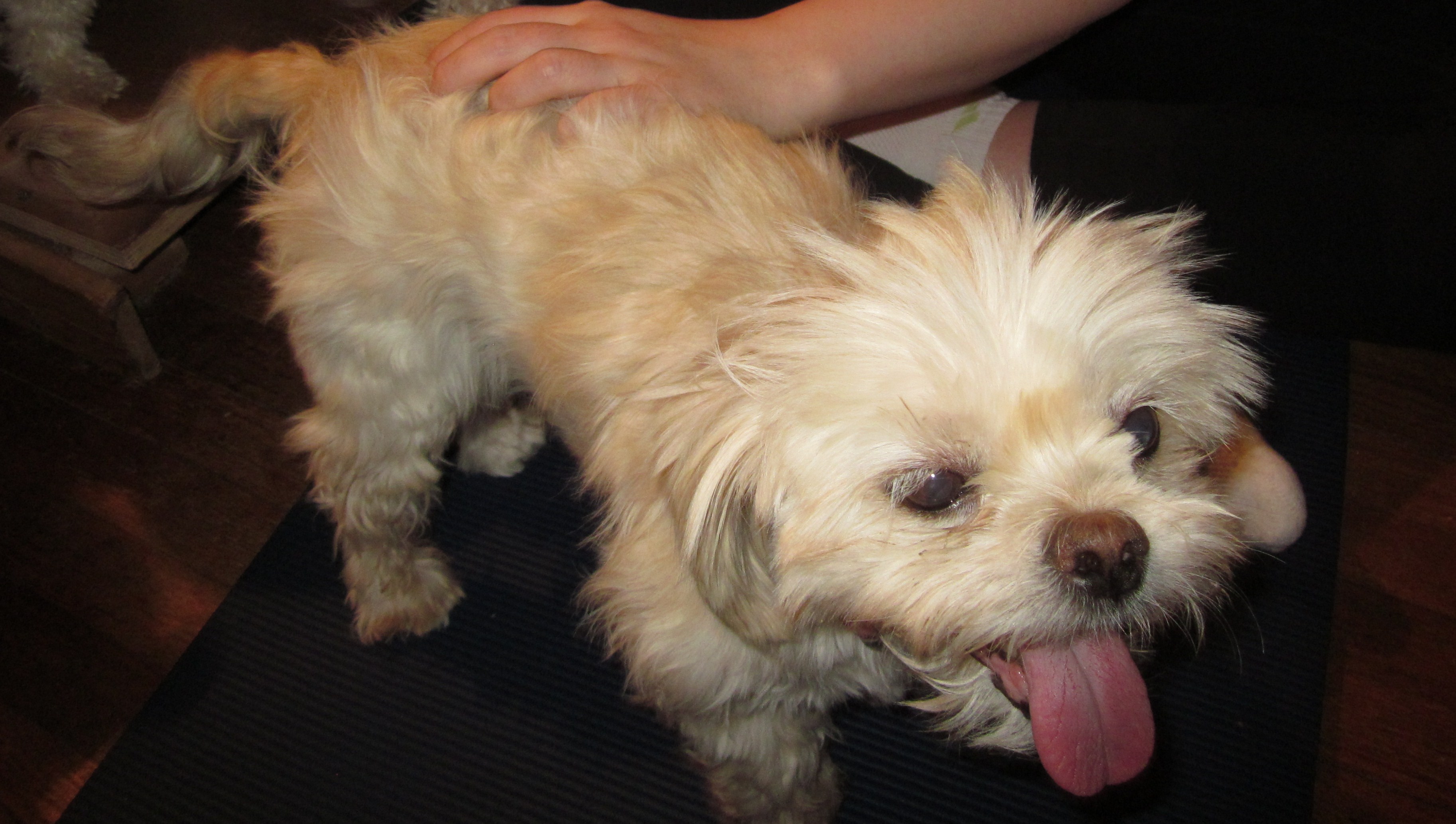
Butterfly loves her scratchies.

And, finally, Cricket has been scratched enough.
Dogs are safe to touch, because we aren’t afraid that they will misconstrue our attentions, and because if they don’t want to be touched they are not so polite that they will continue to allow contact, the way humans will. Humans are often too polite for their own good, trying not to hurt someone else’s feelings and sacrificing their own safety instead.
Touch between humans can go so quickly from comforting to threatening. If someone you like and trust squeezes your shoulder or gives you a hug, that can make you feel better. But if someone you don’t like, or don’t know, does the same thing, the violation of boundaries can be overwhelming. We have so many (necessary) rules in place to protect us from unwanted and threatening human contact, but not much has been clearly stated about what kinds of healthy touch we need.
Medicine is often practiced from a distance, through scans and blood tests and a few vague questions, but there’s a lot to be said for the idea that touch can be used to diagnose, and especially to treat, certain problems. Touch in general can be a way to transmit kindness, which is one of the most healing things we can give each other.
My mother has been having nerve pain and numbness in her feet for the past few years and numerous doctors and tests and medications have failed to relieve, or even to diagnose the cause of the problem. Feeling desperate, Mom finally took the recommendation of a friend and tried a cranial sacral therapist. He’s a doctor of osteopathy and covered by Medicare, so she figured it wouldn’t hurt to give it a shot.
He talks about moving plates in her skull and other hoo haa things that don’t make much sense to me when Mom reports back about her visits, but as a result of these treatments, her pain is going away. And with each visit, the pain stays away longer and longer. I don’t understand any of it, but it seems to be working.
I’ve had a few EEG’s over the past few years and, though I’m not a fan of the 24 or 48 hours of traipsing around with machinery attached to my head, I love how it feels as the little sensors are individually attached. I don’t know why this is such a magical feeling. I feel the same thing when my hair gets shampooed before a haircut. It’s not the same as a massage, where only skin is being touched. I wonder if this is what petting feels like to my hair-covered dogs, as if the touch reaches down to the root of the hair, deeper than the skin.
In summer camp, girls braided each others hair or drew letters on each other’s backs with a finger, as an excuse to touch and be touched. And it relieved some of the homesickness we all felt.
My dogs try to pet me, each in her own way. Cricket paws at me, or lifts my hand with her nose, when she wants me to scratch her, and then cuddles into my side or onto my lap. Butterfly noses my head if I’m exercising on the floor. She likes to sniff my hair or my armpit and then sit there and stare at me while I do my crunches. But her real offering is the way she licks my hands with such love and care. It’s not quite the same as petting, but it might actually be better.

Butterfly’s licks are on the way.
 rachelmankowitz