Monthly Archives: January 2025

The Attic

I have a lot of dreams

that take place in the attic

of the house where I grew up.

Or rather, they start in the attic

and then I have to climb a steep ladder,

or crawl through a tiny hallway,

or walk a long distance

in the summer heat or the deep snow,

until I find myself in a bank

filled with endless corruption,

where no one listens to me,

no matter how long or loud I shout;

or I find myself in a three-story mall

filled with every possible thing,

except for the one thing I’m looking for;

or, most often, I’m in a school

inside an enormous castle made of stone,

and I am wearing the wrong clothes,

and I can’t find my classroom

or any of my friends.

In reality,

our attic was small,

with a slanted ceiling

and wood-paneled walls.

The stairs up to the attic were steep

and covered in the same orange and yellow plaid carpeting

as the rest of the attic floor.

To the left was the mismatched bathroom,

with a stand-alone bathtub,

and a toilet, up on a podium, in the eaves.

To the right was our playroom,

where we acted out stories

and played with friends.

There were birthday parties in the attic,

and we did arts and crafts,

and tried to make movies with an old film camera.

We travelled into space from the attic,

just me and my brother,

and visited every planet we could imagine.

The attic was also our guest room,

with sofa beds that squeaked when they were opened.

Our cousins lived in the attic, one summer,

and created the circus of Nimbus the rat.

And Grandma Ida,

my father’s mother,

lived there for a summer,

just before she died,

so that Mom could take care of her.

Eventually,

the attic became our storage room.

My old cradle stood in a corner,

and the wooden toy box

that was filled with everything but toys.

We kept bags of our old baby clothes in the crawlspace,

and when I hid there,

among the soft bags of clothes,

I would fall asleep to the sound of mice

dancing on the floor around me.

One time, Dina,

our black Labrador mix,

found a bag of my old stuffed animals

and chewed through half of them,

and brought them down to my bedroom,

unstuffed, one by one.

Papa smurf was never the same.

My memories from the attic are haphazard

and come to me out of order

and outside of time.

We could hear squirrels and raccoons in the roof,

and we could see our pool in the backyard,

and we could see the kids who walked home from school,

who threw rocks at our front door.

But more than all of that,

the attic was a place to hide.

After my father, with help, finished the attic,

putting in the carpet and the paneling

and the electricity and the plumbing,

he never returned,

as far as I know,

and that made the attic into my safe place.

In the end,

Dina, our black Labrador mix,

was the only one who used the attic,

long after the mauling of Papa Smurf was forgotten,

or at least forgiven.

She didn’t seem to mind the heat in the attic

(unless she somehow learned how to turn on the air conditioner).

She would lay out in the rays of sun,

as if she was on a beach somewhere,

imagining her own alternate worlds,

though probably not in banks or malls or schools.

In her imaginary worlds, I’m sure,

she was chasing the squirrels she could hear in the roof,

and maybe, sometimes, she even caught them.
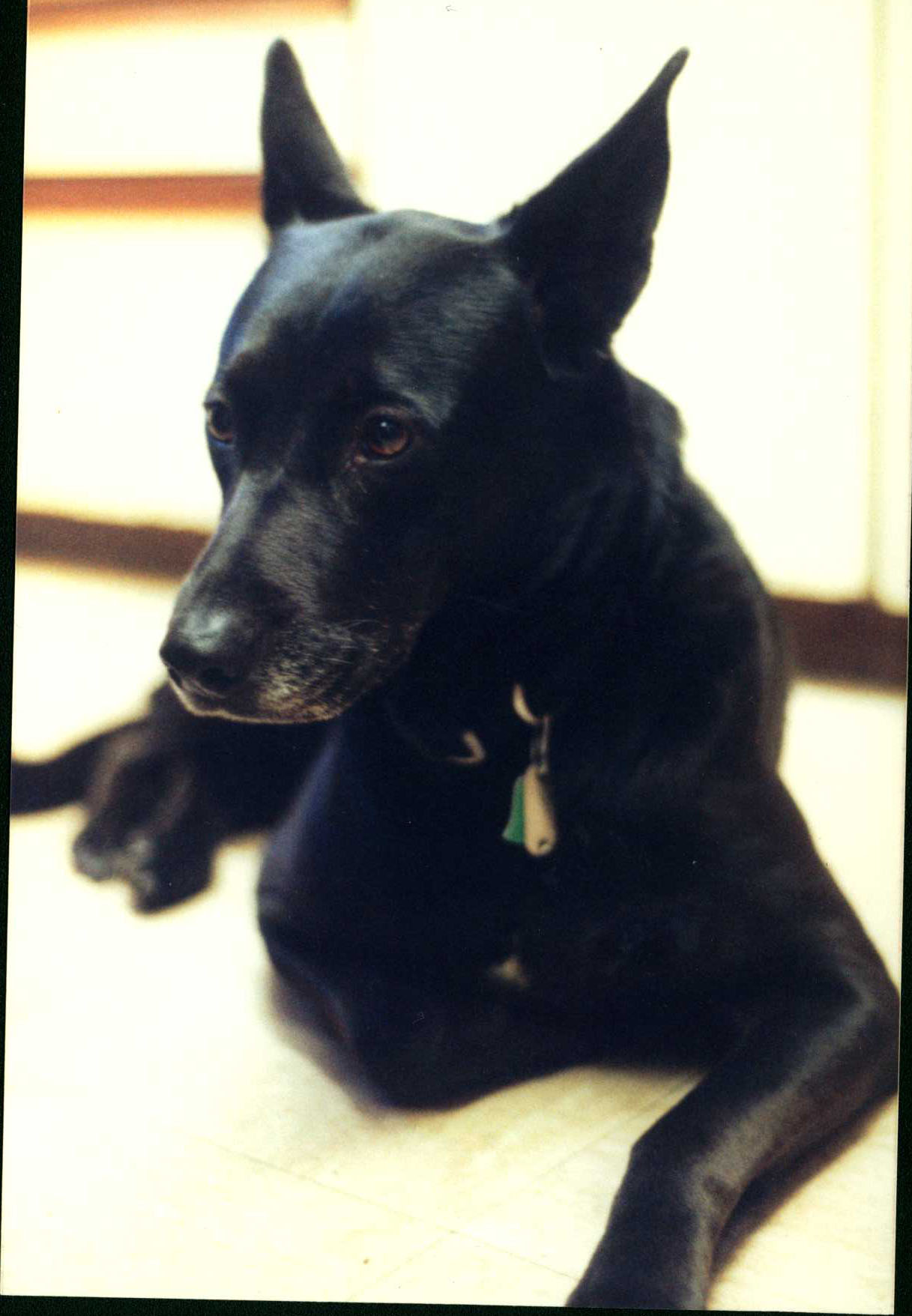
My Dina

עליית הגג

יֵשׁ לִי הָרבֵּה חָלוֹמוֹת

שְׁמִתְרַחשִׁים בָּעַלִיָת הָגָג

בָּבַּיִת שְׁבּוֹ גָדָלתִי.

אוֹ, יוֹתֵר נָכוֹן, הֵם מָתחִילִים בָּעָלִיָית הָגָג

וְאַז אַנִי צרִיכָה לְטָפֵּס בְּסוֹלֵם תָלוּל,

אוֹ לִזחוֹל דֶרֶך מִסַדרוֹן קטָנטָן,

אוֹ לָלֶכֶת מָרחֵק רָב

בָּחוֹם הָקַיִץ אוֹ בָּשֶׁלֶג הָעָמוֹק,

עַד שְׁאַנִי מוֹצֵאת אֶת עָצמִי בְּבָּנק

מָלֵא בְּשׁחִיתוּת אֵינסוֹפִית,

אֵיפֹה אַף אֶחַד לֹא מָקשִׁיב לִי,

לֹא מֶשָׁנֶה כָּמָה זמָן אוֹ כָּמָה חָזָק אַנִי צוֹעֶקֶת;

אוֹ, אַנִי מוֹצֵאת אֶת עָצמִי בְּקֶניוֹן בְּשָׁלוֹשׁ קוֹמוֹת,

מָלֵא בְּכֹּל דָבָר אֶפשָׁרִי,

חוּץ מְהָדָבַר הָאֶחָד שֶׁאַנִי מְחָפֶּשֶׂת;

אוֹ, רוֹב הָזמָן, אַנִי בְּבֵּית סֵפֶר

בְּתוֹך טִירָה עָנָקִית, עַשׂוּיָה מֵאֶבֶן,

וְאַנִי לוֹבֶשֶׁת אֶת הָבְּגָדִים הָלֹא נְכוֹנִים

וְאַנִי לֹא יְכוֹלָה לִמצוֹא אֶת הָכִּיתָה שֶׁלִי,

אוֹ אַף אֶחַד מְהָחָבֵרִים שֶׁלִי.

בָּמְצִיאוּת,

עַלִיָית הָגָג שֶׁלָנוּ הָייתָה קָטָנָה,

עִם תִקרָה מְשׁוּפַּעַת

וְקִירוֹת ספוּנֵי עֵץ.

הָמָדרֵגוֹת לְעַלִיָית הָגָג הָיוּ תלוּלוֹת

וְמְכוּסוֹת בְּאוֹתוֹ שַׁטִיחַ מְשׁוּבָּץ בְּכָּתוֹם וְצָהוֹב

כּמוֹ בְּשְׁאָר עַלִיָית הָגָג.

מִשׂמֹאל הָיָה חָדָר אָמבָּטיָה הָלֹא תוֹאֵם,

עִם אָמבָּטיָה עָצמָאִית,

וְשֵׁירוּתִים עָל דוֹכֵן, מִתַחַת לָמִרזָבִים.

מִיָמִין הָיָה חָדָר הָמִשׂחָקִים שֶׁלָנוּ,

שְׁבּוֹ הָצָגנוּ סִיפּוּרִים

וְשִׂיחָקנוּ עִם חָבֵרִים.

הָיוּ מְסִיבּוֹת יוֹם הוּלֶדֶת בָּעַלִיָית הָגָג,

וְעָשִׂינוּ אוֹמָנִיוֹת וְמָלָאכוֹת,

וְנִיסִינוּ לִיצוֹר סרָטִים עִם מַצלֵמַת סרָטִים יְשָׁנָה.

נָסַענוּ לְחָלָל מֵעַלִיָית הָגָג,

רָק אַנִי וְהָאַח שֶׁלִי,

וְבִּיקָרנוּ בְּכֹּל כּוֹכָב שֶׁיָכוֹלנוּ לְדָמיֵין.

עַלִיָית הָגָג גָם הָיָה חָדָר הָאוֹרחִים שֶׁלָנוּ,

עִם סָפּוֹת נִפתָחוֹת שְׁחוֹרקוּ כְּשְׁפָּתחוּ אוֹתָם.

בְּנֵי הָדוֹדִים שֶׁלָנוּ גָרוּ בָּעַלִיָת הָגָג, קַיִץ אֶחָד,

וְהֵם יִצרוּ אֶת הָקִרקָס שֶׁל נִימבּוּס הָחוּלדָה.

וְסָבתָא אַידָה,

אִמָא שֶׁל הָאָבָּא שֶׁלִי,

גָרָה שָׁם לְקַיִץ,

רֶגַע לִפנֵי שְׁהִיא מֵתָה,

כְּדֵי שְׁאִמַא תוּכָל לְטָפֵּל בָּה.

בְּסוֹפוֹ שֶׁל דָבָר,

עַלִיָית הָגָג הָפָך לִהִיוֹת הָמַחסָן שֶׁלָנוּ.

הָעַרִיסָה הָיְשָׁנָה שֶׁלִי עָמָד בָּפִּינָה,

וְקוּפסָת הָצָעַצוּעִים מְעֵץ,

מְלֵאָה בְּכֹּל דָבָר, מִלבַד צָעַצוּעִים.

שָׁמָרנוּ אֶת בִּגדֵי תִינוֹקוֹת הָיְשַׁנִים שֶׁלָנוּ בְּחָלָל הָזחִילָה,

וְכְּשְׁהִתחָבָּאתִי שָׁם,

בֵּין הָתִיקִים שֶׁל בְּגָדִים רָכִים,

נִרדָמתִי לְצְלִילֵי עָכבָּרִים

רוֹקדִים עַל הָרִצפָּה מִסבִיבִי. 

פָּעַם אַחַת, דִינָה,

הָכָּלבָּה הָלָבּרָדוֹר הָשׁחוֹרָה הָמְעוֹרֶבֶת שֶׁלָנוּ,

מָצאָה שָׂקִית הָפּוּחלָצִים הָיְשַׁנִים שֶׁלִי 

וְלָעָסַה חָצִי מִהֶם,

וְהוֹרִידָה אוֹתָם לַחַדַר הָשֵׁינָה שֶׁלִי,

לֹא מַמוּלאִים, בְּזוֹ אַחַר זוֹ.

אָבָּא דָרדָס מְעוֹלָם לֹא הָיָה אוֹתוֹ דָבַר.

הָזִיכרוֹנוֹת שֶׁלִי מְעַלִיָת הָגָג הֵם אִקרָאִיים

וְהֵם בָּאִים אֵלַיי לְלֹא סֵדֶר 

וְמִחוּץ לָזמָן.

מִשָׁם יָכוֹלנוּ לִשׁמוֹעַ אֶת הָסנָאִים וְהָדבִיבוֹנִים בָּגָג, 

וְיָכוֹלנוּ לִראוֹת אֶת הָבְּרֵיכָה שֶׁלָנוּ בָּחָצֵר הָאָחוֹרִית,

וְרָאִינוּ אֶת הָיְלָדִים שְׁהָלכוּ הָבַּיְתָה מִבֵּית הָסֵפֶר,

ושְׁזָרקוּ אָבָנִים עַל דֶלֶת הָכּנִיסָה שֶׁלָנוּ.

אָבַל יוֹתֵר מִכֹּל זֶה,

עָלִיָת הָגָג הָייתָה מָקוֹם לְהִסתָתֵר בּוֹ.

אַחַרֵי שְׁאָבָּא שֶׁלִי, עִם עֶזרַה, סִיֵים אֶת עַלִיָית הָגָג,

שָׂם אֶת הָשָׂטִיחַ וֹהָחִיפוּיִים

וְאֶת הָחָשׁמָל וְהָאִינסטָלָצִיָה,

הוּא מְעוֹלָם לֹא חָזָר לְשָׁם,

עַד כָּמָה שְׁאַנִי יוֹדַעַת,

וְזֶה הָפָך אֶת עַלִיָית הָגָג לָמָקוֹם הָבָּטוּחַ שֶׁלִי.

בָּסוֹף,

הָיְחִידָה שְׁהִשׁתָמשָׁה בָּעַלִיָית הָגָג

הָייתָה דִינָה, הָכָּלבָּה הָלָבּרָדוֹר הָשׁחוֹרָה הָמְעוֹרֶבֶת שֶׁלָנוּ,

הָרבֵּה אַחָרֵי הָהָרָס שֶׁל דָרדָס אָבָּא הָיָה נִשׁכַּח

אוֹ לְפָחוֹת נִסלַח.

נִראָה לִי שְׁלֹא אֶכפָּת לָה מֵהָחוֹם בָּעַלִיָית הָגָג

(אֶלָא אִם כֵּן שְׁהִיא לָמדָה אֵיך לְהָדלִיק אֶת הָמָזגָן).

הִיא שָׁכבָה בְּקָרנֵי הָשֶׁמֶשׁ,

כְּאִילוּ הִיא הָייתָה עָל חוֹף אֵיפֹשְׁהוּ,

מְדָמיֶינֶת אֶת הָעוֹלָמוֹת הָחָלוּפִיִים שֶׁלָה,

אַבַל, כָּנִראֶה, לֹא בְּבָּנקִים אוֹ בְּקֶניוֹנִים אוֹ בְּבָּתֵי סֵפֶר.

בָּעוֹלָמוֹת הָדִמיוֹנִיִים שֶׁלָה, אַנִי בְּטוּחָה,

הִיא רָדפָה אַחַרֵי הָסנָאִים שְׁיָכלָה לִשׁמוֹעַ בָּגָג

וְאוּלַי, לִפְעַמִים, הִיא אָפִילוּ תָפסָה אוֹתָם.

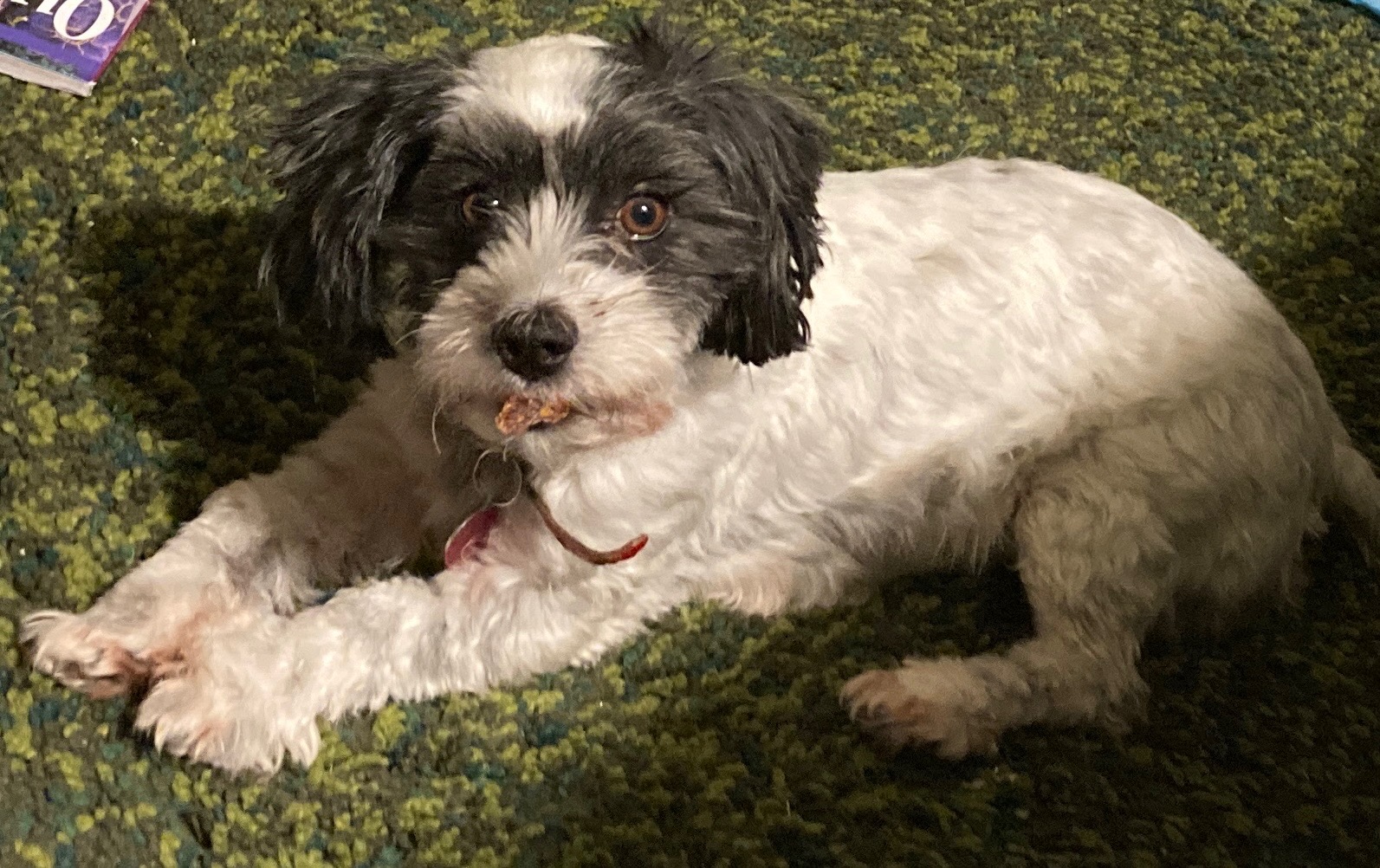
“In my dreams, all my stuffies are real, but they never steal my chicken treats.”

If you haven’t had a chance yet, please check out my novel, Yeshiva Girl, on Amazon. And if you feel called to write a review of the book, on Amazon, or anywhere else, I’d be honored.

            Yeshiva Girl is about a Jewish teenager on Long Island, named Isabel, though her father calls her Jezebel. Her father has been accused of inappropriate sexual behavior with one of his students, which he denies, but Izzy implicitly believes it’s true. As a result of his problems, her father sends her to a co-ed Orthodox yeshiva for tenth grade, out of the blue, and Izzy and her mother can’t figure out how to prevent it. At Yeshiva, though, Izzy finds that religious people are much more complicated than she had expected. Some, like her father, may use religion as a place to hide, but others search for and find comfort, and community, and even enlightenment. The question is, what will Izzy find?

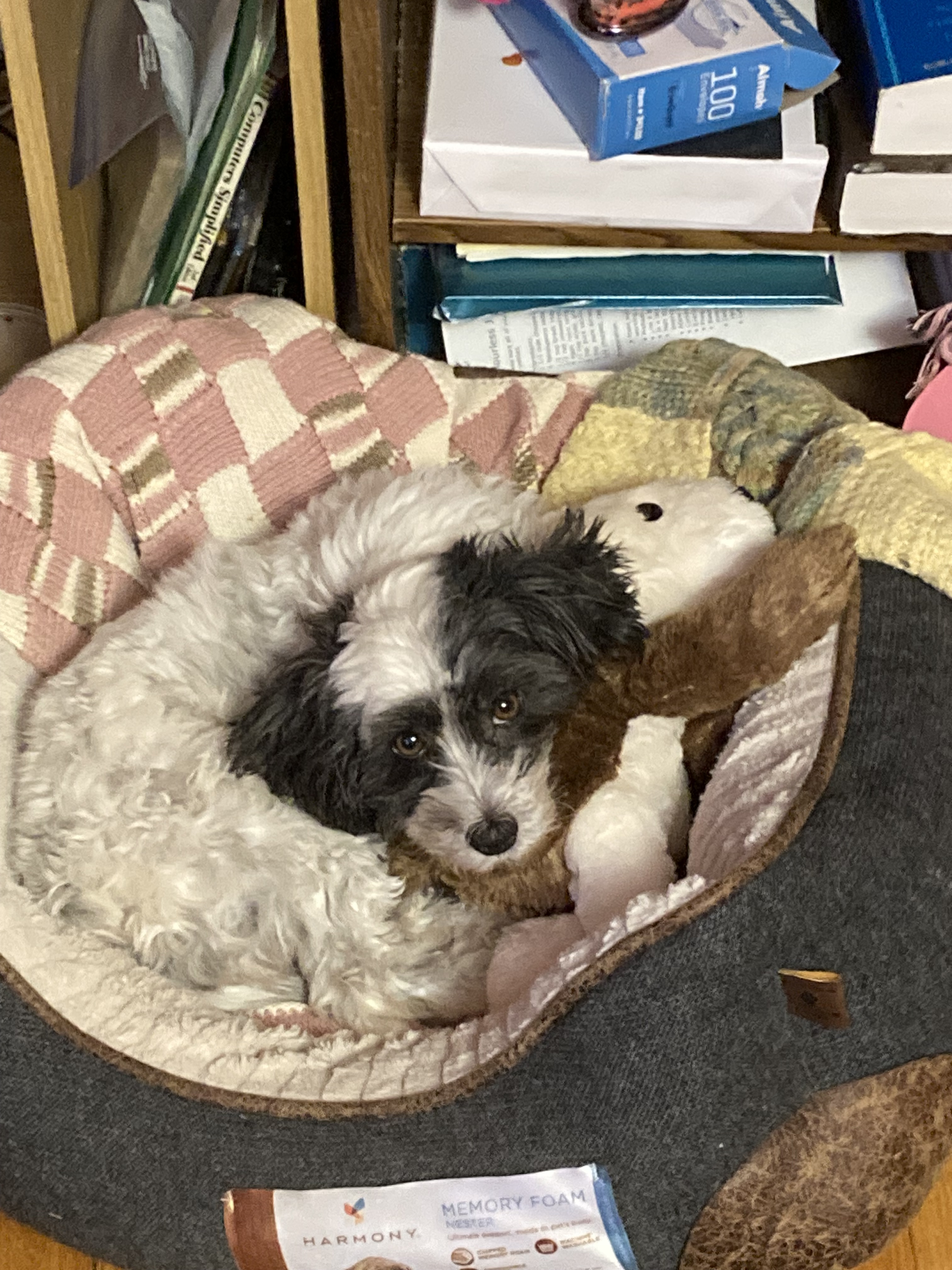
Tzipporah Loves her Bed

            For Tzipporah, it seems, bed is life. When we come back to the apartment, from a visit to the vet or a visit to the backyard, she tries desperately to jump out of my arms, and once she hits the ground she runs straight to her bed. Safe. Once she’s recovered from her outing, though, she relaxes: stretching out, rolling on her back, sticking out her tongue, and dangling her head over the side of the bed.  

But now, seven or eight weeks into having her with us, we’re getting worried that she only feels safe in her bed, and everything else is lava. When we are all together in the living room, she rarely leaves her bed; it’s only when the humans leave the room that Tzipporah is willing to walk away from her safe place for more than a second. There have been times when, seemingly, she hasn’t left her bed for half the day, not even to pee or get a drink of water from the kitchen. At night, though, she tends to wander around the apartment, investigating her new home, but when she sees any movement from the supposed-to-be-sleeping humans, she runs back to the living room and straight to her bed.

When she first came home, it wasn’t like this, she would sleep on the rug in her grandma’s room, or on the cushions in my room, or in her bed in the kitchen, or in either one of the dog beds in the living room, moving from one sleepy place to another throughout the day and night. So, I put wee wee pads in every room, and the hallway, to give her the best chance to learn that pee goes on the wee wee pad and not the rugs. When she peed near any of the wee wee pads, I would sop up the pee, place the wet paper towels on the wee wee pad, and then move the wee wee pad closer to the spot where she’d peed. And she would then, maybe half the time, start peeing on the wee wee pad instead. But as the weeks have passed, she has gradually decided on the living room as her home base, and on the one dog bed she likes best, and I’ve been able to remove the other wee wee pads one by one, and focus more on rewarding her for peeing and pooping on the wee wee pad in the living room, with some success.

Basically, she was doing well, but I started to get anxious about her bed-o-philia and worried I wasn’t doing enough to help her make progress, leaving her to calcify in her bed.

            So, given her only-dog status, and my fears about her fears, I ordered a heartbeat puppy (a stuffed animal with an insert in the belly that mimics a heartbeat), and Tzipporah took to it right away, snuggling with it in her bed. When Mom wanted to see if Tzipporah could sit on the couch with us, to watch TV, I brought her and her heartbeat puppy (in her bed) to the couch, so she could feel as safe as possible in the new location. I tried to give her a treat while her bed was on the couch, but she was too anxious to eat it. After a little while, I returned her bed to its regular spot, and suddenly she noticed the chicken treat and ate it happily.

            She’s made a lot of progress, when I look back at where we started. She’s now willing to stay in the dog bed next to me when I sit at my computer, instead of running away to escape the scary human monster, the way she used to. And she’s been getting used to being petted, and even having her hair combed, as long as there are treats involved.

She surprised us by doing well when her first “strangers” (aka my aunt and cousin) visited the apartment, in large part because my cousin brought a bag of freshly cut cheese and chicken cubes for the occasion (there were also salami slices, but even though Tzipporah gave them a lick, she wasn’t sure how to eat them).

Tzipporah also, finally, had her second visit with Kevin, the mini golden doodle, after weeks of everyone hiding inside because of the cold weather. She was still terrified of being on the ground outside, but she tolerated being sniffed by Kevin, and then she sat on my lap while Kevin sat quietly next to us, and I petted him, and then let Tzipporah smell my hand, and then petted her. Over and over. It’s hard to know if my completely scientific experiment worked, but Kevin certainly enjoyed it.

She still doesn’t talk much; she only cries at night when she thinks she’s alone, and she has only barked once in her sleep, but it was a very light bark, more like a yip. On the other hand, she has become more and more expressive with her eyes, staring at us as dramatically as possible to let us know she could use more treats.

            The fact is, she is healing as fast as she can and becoming more herself every day. Really, it’s miraculous that Tzipporah feels safe anywhere, after four years in a cage in a puppy mill; that she can stretch out in her bed and show her belly, and not worry about being hurt, is a testament to how much she trusts us already. The only real problem here is my need for her to be all better right away. I have the same impatience with myself. I forget how much progress I’ve (we’ve) made, always focusing on how things should be, instead of recognizing the effort it took to get where we are. Maybe Tzipporah will be the one who finally teaches me how to celebrate how things really are, instead of always worrying about how things are supposed to be. Or maybe we’ll just bond over our shared love of treats (chicken for her and chocolate chip cookies for me) and be satisfied with that. We’ll see.

If you haven’t had a chance yet, please check out my novel, Yeshiva Girl, on Amazon. And if you feel called to write a review of the book, on Amazon, or anywhere else, I’d be honored.

            Yeshiva Girl is about a Jewish teenager on Long Island, named Isabel, though her father calls her Jezebel. Her father has been accused of inappropriate sexual behavior with one of his students, which he denies, but Izzy implicitly believes it’s true. As a result of his problems, her father sends her to a co-ed Orthodox yeshiva for tenth grade, out of the blue, and Izzy and her mother can’t figure out how to prevent it. At Yeshiva, though, Izzy finds that religious people are much more complicated than she had expected. Some, like her father, may use religion as a place to hide, but others search for and find comfort, and community, and even enlightenment. The question is, what will Izzy find?
Russian Nesting Dolls

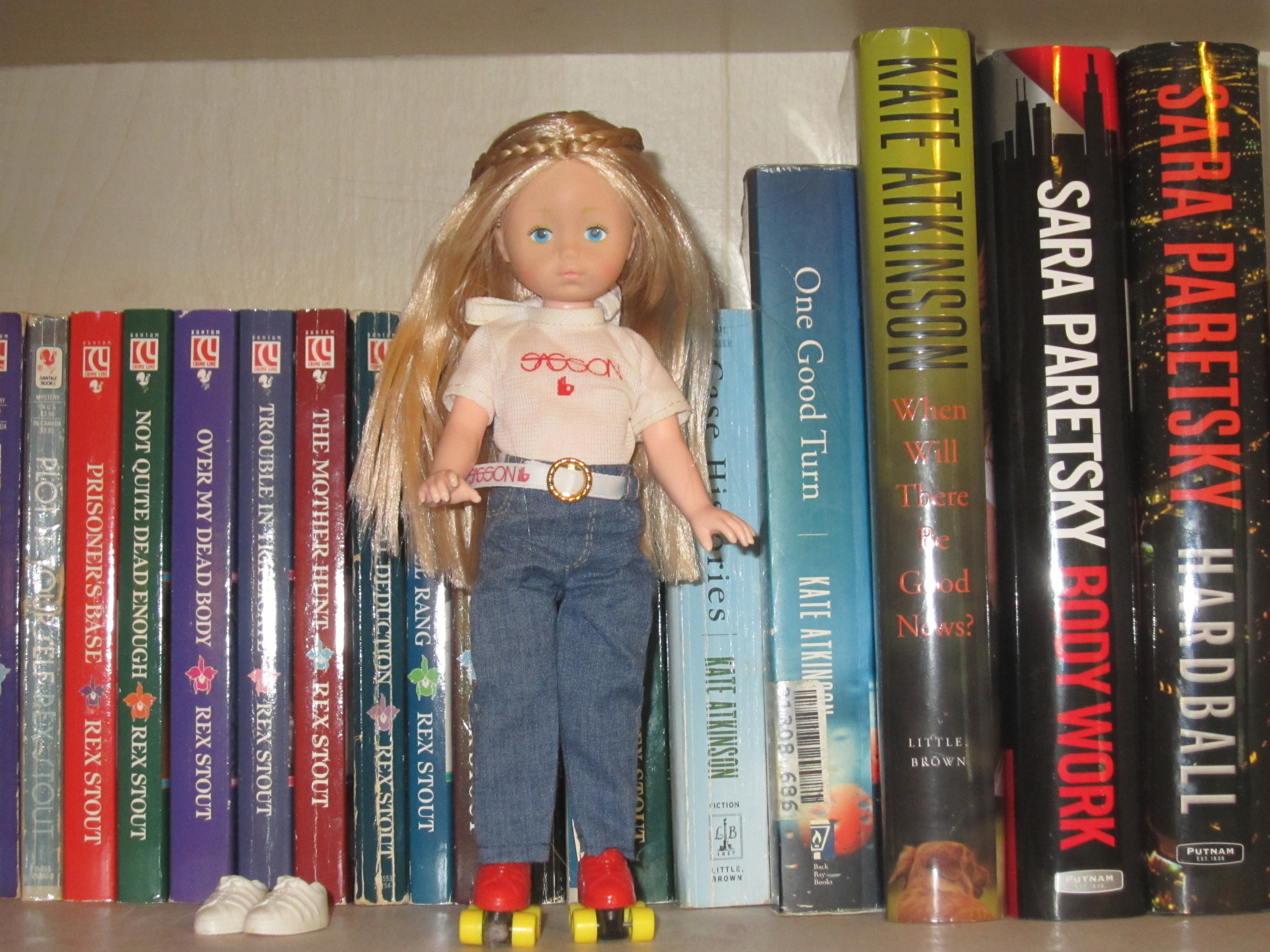
            I don’t remember if I ever had a set of Matryoshka dolls (Russian nesting dolls) of my own when I was younger, but I definitely saw them and played with them somewhere along the way. There was something magical about how each doll hid another doll, and another, and another, except, there wasn’t much to do with these “dolls.” You couldn’t dress them up, or hug them, and none of them had roller skates (like my Ginny doll). And they were so static: their eyelids didn’t open and close, and their arms and legs didn’t move. And yet, they still drew my attention. I haven’t thought about those dolls very much over the years, but recently I saw a set of them on TV, and my first thought was that they would be a very helpful metaphor for the way we carry our old stories within us, even as we try to grow beyond them.

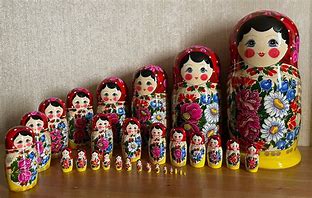
Traditional Russian nesting dolls (not my picture)
My Ginny doll is a reader.

            I was sure that everyone must see the same thing in them as I did, but when I went looking for more background on the dolls, I found out that everyone sees something a little different, depending on where they are in their lives and what lens they are looking through.

            Originally, the dolls were made as a children’s toy, in 1890, possibly inspired by a nesting doll from Japan, and they were meant to highlight Russian femininity, with the dolls wearing a sarafan, a long, shapeless traditional Russian peasant dress, and the figures inside representing her children, of both genders, with the smallest being a baby, made of a single piece of wood.

A smaller set (not my picture)

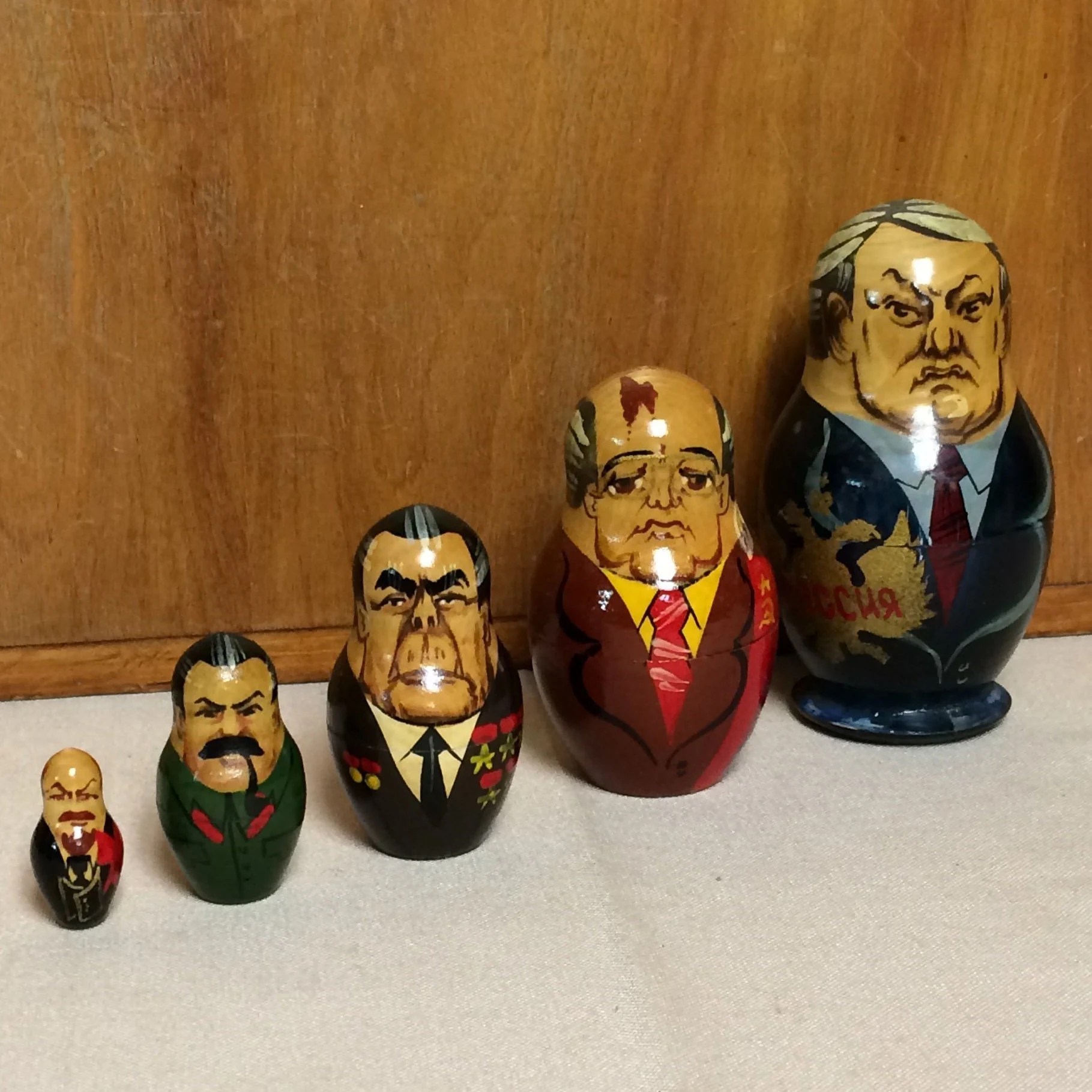
But somewhere along the way the dolls became a favorite souvenir for tourists, and then a way to represent famous Russian politicians, and how each generation of politicians was influenced by the ones who came before. Some people have even repurposed the dolls to represent complicated corporate structures used to avoid paying taxes, like shell companies.

Political Russian nesting dolls (not my picture)

But when I look at these dolls, I see myself, and the way each of my previous selves stays inside of me. My layers don’t peel off, like an onion, or slough off, like the skin of a snake; I hold onto everything, whether I want to or not. I would have thought, given all of that, that I would feel some relief at seeing each doll standing separately on its own “feet,” but instead, the separated dolls seem hollow to me, even forlorn. Despite the pain of holding onto the past, I feel stronger, and more fully myself, with all of my selves held together.

            And there’s something powerful about having a metaphor that I can see and touch and move around in space; because when all I have are words to help me organize my thoughts, the chaos can become overwhelming.

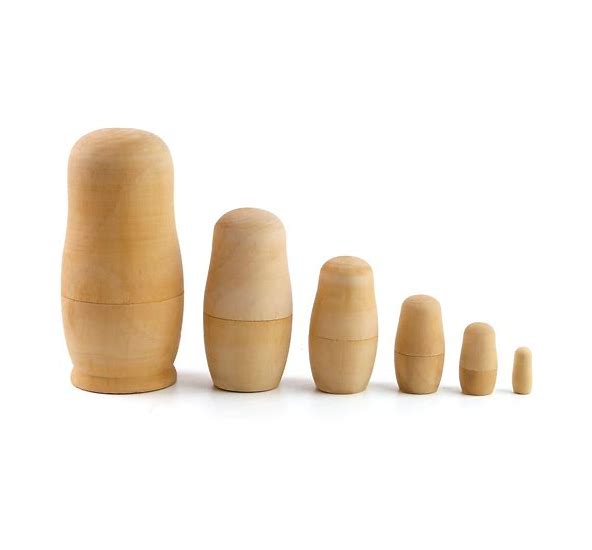
            When I went looking for images of Matryoshka dolls, I found all kinds of different sets – five doll sets and ten doll sets, people and animals, dolls that look exactly the same at each size, and dolls that are completely different from one another – but the most intriguing thing I found were blank sets of dolls that you can paint however you like. And it occurred to me that, if I had any artistic talent at all, which I don’t, it would be really meaningful to create the figures to represent my own layers, or the important people who have influenced me over time, to help me really see all of my pieces.

Animal nesting dolls (not my picture)
Blank nesting dolls (not my picture)

And then I thought about how I could use those blank doll sets with my students, to help them visualize how each generation influences the next, and how who they are today is connected to everyone who came before. And then I thought about the costs of all of the materials involved, and the difficulty of getting my boss on board, and then the work of explaining to the kids exactly what I was looking for, so they wouldn’t just paint all of the dolls as different sized poops; and then I fell into a black hole of self-recriminations about all of the ways I suck as a teacher, and a therapist, and a person overall.

And yet, despite the waterfall of thoughts and worries and self-loathing that washed over me, I still think the Matryoshka dolls have a lot to offer, though maybe they should come with a warning label: open at your own risk, objects inside may be a lot more complicated than you expect.

“Just like me!”

If you haven’t had a chance yet, please check out my novel, Yeshiva Girl, on Amazon. And if you feel called to write a review of the book, on Amazon, or anywhere else, I’d be honored.

            Yeshiva Girl is about a Jewish teenager on Long Island, named Isabel, though her father calls her Jezebel. Her father has been accused of inappropriate sexual behavior with one of his students, which he denies, but Izzy implicitly believes it’s true. As a result of his problems, her father sends her to a co-ed Orthodox yeshiva for tenth grade, out of the blue, and Izzy and her mother can’t figure out how to prevent it. At Yeshiva, though, Izzy finds that religious people are much more complicated than she had expected. Some, like her father, may use religion as a place to hide, but others search for and find comfort, and community, and even enlightenment. The question is, what will Izzy find?
Jacob and Israel

            At a recent Friday night service, because the Torah portion for the week was about our forefather Jacob wrestling with an angel of God, our rabbi told us that Jacob is renamed Israel because Israel means “to struggle with God and to prevail.” And my inner voice woke up and said, huh?

            My whole life I’d been taught that the name Israel means “to struggle with God.” Period. No prevailing included. The idea that to be Jewish means to welcome the struggle with God, and to always ask questions, without ever knowing if you will succeed or fail, or even focusing on success as a goal, has been essential to my sense of self as a Jew, and as a person overall. I don’t have to win, or be successful, in order to have a meaningful life; I just have to be willing to engage in the struggle.

            But here was the rabbi saying that, no, we struggle and we prevail, and that’s what makes us the People of Israel.

            So, of course, I had to look into this, and it turned out that we were both right. The traditional translation for the name Israel is “to struggle with God,” but when the angel tells Jacob about his new name, he says that Jacob is given this name because “he struggled with God and he prevailed.” So, the “prevailed” part of the name is silent, but implied.

            I still couldn’t wrap my head around this sea change in what it might mean to be part of the nation of Israel, aka Jewish. Aren’t we supposed to be the underdogs? Hasn’t that been our identity and our history for, I don’t know, two millennia? What would it mean to suddenly see myself as a member of a group that, supposedly, always prevails? And why do I find that idea so incredibly uncomfortable?

            I kept researching and was able to find an alternate translation for the name Israel: instead of “struggles with God” it could also mean “empowered by God.” But that translation felt even worse, because I’ve never felt empowered, by God or anyone else, and if my people is identified as those guys who are empowered by God, and I feel distinctly unempowered by God, doesn’t that make me an outsider even to my own group?

            Of course, it’s a tiny bit silly to get so caught up in an argument about the meaning of a name given to one of my ancestors three millennia in the past. But I think we all do this. Whether it’s identifying with a bible story, or with a more recent ancestor, or with the stories our families have told us about ourselves, we find our identities in the stories we are told and we are often reassured by the shape they give to our lives.

            I’m also thinking about this in relation to the current situation in the Middle East (if current implies the last century or so), where the stories of the Hebrew bible resonate not only with the Jews, and the Christians, but with the Muslims as well, who read their own retellings of stories from the Hebrew Bible in the Koran. It’s significant that Muslims traditionally see themselves as the descendants of Ishmael, the first-born son of Abraham in the Hebrew Bible, who is disinherited in favor of Isaac, his younger half-brother. In fact, this pattern of the older brother being disinherited in favor of the younger brother happens two times in a row, so it’s clearly a story that has resonated for a lot of people for a very long time. And in the second iteration, with the twins, Jacob and Esau, Jacob steals the blessing from his older brother, through trickery, rather than just benefiting from the prejudices of his parents, the way Isaac does.

            It is not a coincidence, then, that given events that could have been interpreted in multiple different ways, many Muslims interpreted the return of the Jews to the land of Israel, and the decision of the United Nations in 1948 to divide the land of Palestine between the Jews and the Arabs, as the Jews receiving a blessing they did not deserve, whether through trickery or prejudice. And the Jews, viewing history through the lens of Jacob, continue to see ourselves as the underdogs, fighting for our small share against a stronger brother, despite having grown in strength and influence along the way. Obviously, this isn’t the only lens through which we all see these conflicts; it’s much more like a kaleidoscope where our lens keeps changing every moment and any one perspective is hard to hold onto for long. But breaking out of our old biblical roles, in order to see each other as we actually are in the present, becomes even more difficult when we are obligated to read and re-read these same stories on a regular basis.

            It’s significant that, in those same stories, Esau becomes a successful landowner, despite seemingly losing his birthright to Jacob. In fact, when the brothers meet again, years later, Esau forgives his little brother, who is still struggling to forgive himself. That story is in there too, and could be a model for how to create a road towards peace. But for some reason, we remain stuck in the first half of the story. Or worse, we fall back into the earlier story, where neither Ishmael nor Isaac have much agency at all in creating their own life stories.

            It interests me that even though Jews see Abraham, Isaac, and Jacob, equally, as our forefathers, it’s only the children of Jacob (the Israelites, or the children of Israel) who eventually become the Jews. Why doesn’t Jewishness extend to both sons of Abraham? Why aren’t we all called Abrahamites? Why does the Hebrew Bible insist on telling us about these stories of family ruptures to help us understand who we are?

            There’s one more lesson in this story that seems relevant to me: when Abram and Sarai’s names are changed by God (each getting an H added, to symbolize the addition of God into their lives and selves), they become Abraham and Sarah, and their old names are never used again in the text. But after Jacob wrestles with the angel, and is renamed Israel, he is still called both Jacob and Israel in the text; both Jacob and Israel continue to exist, with neither one canceling out the other. And I can relate to that; I can relate to having internal conflicts, and being different at different times, and sometimes feeling empowered or imbued with God, and other times, not so much.

            I think these stories stay with us because we are never finished struggling with God, or with ourselves. We are never done with our past, or with the parts of ourselves who have struggled and failed in one way or another. The hope is that we can also make room for newer parts of ourselves, parts who have wrestled with God and prevailed, and found that there is something better, stronger, and sweeter on the other side.

“I like sweet things too. Like chicken.”

If you haven’t had a chance yet, please check out my novel, Yeshiva Girl, on Amazon. And if you feel called to write a review of the book, on Amazon, or anywhere else, I’d be honored.

            Yeshiva Girl is about a Jewish teenager on Long Island, named Isabel, though her father calls her Jezebel. Her father has been accused of inappropriate sexual behavior with one of his students, which he denies, but Izzy implicitly believes it’s true. As a result of his problems, her father sends her to a co-ed Orthodox yeshiva for tenth grade, out of the blue, and Izzy and her mother can’t figure out how to prevent it. At Yeshiva, though, Izzy finds that religious people are much more complicated than she had expected. Some, like her father, may use religion as a place to hide, but others search for and find comfort, and community, and even enlightenment. The question is, what will Izzy find?