Tag Archives: memoir

Shaking the Kaleidoscope

After all of your thoughtful responses to my failed-mystery-writing-summer, I felt like a kaleidoscope that had been shaken back into place. What it boils down to: you don’t have to try to be someone more market savvy, or normal, but you do need to focus on getting your own particular stories written, whether they are fiction or non-fiction, whether the outside world is desperate to hear those stories or not, and stop letting the need to be acceptable cut you off at the knees. Because, really, what if we’re all more interesting than we’ve been given credit for? And what if expecting everyone to hit the same milestones at the same times and learn the same life lessons from our disparate lives is a misunderstanding of why we’re even here in the first place? What if the things that feel vulnerable and not good enough about me are the real things I have to offer the world and by trying so hard to fit in, or sound normal, I’m losing what’s special about me? What if by reading an endless supply of stories about the same successful, good looking, well-regulated people, we’re getting only a tiny speck of the wisdom the world has to offer us?

I don’t completely buy this vision yet, to be honest. I’m still too aware of the American ethos that everyone should be ruggedly independent and capable of surviving by ourselves in the wild; every man is an island, etc. But I’ve never actually been able to live like that. I’ve always needed help to get from point A to point B, and the only real variable is whether I ask for the help I need, or fail to ask for it. And maybe that’s normal. Maybe most people are just putting on a shiny gloss and pretending at normal too.

So, my job is to write the stories, essays, songs, novels, that keep screaming at me to be written, and not to sit in judgement of all of those stories before they’ve even been told. It’s still hard to ignore the voices in my head telling me to just shut up and let the smart, capable, useful people talk, but getting so much support and validation from all of you makes a real difference. I can’t promise that my brain won’t go off the rails again by tomorrow, but at least for a few minutes I’ve been able to take in the love and acceptance you’ve been offering me, just as I am. And I am so grateful to you.

“I could use some more chicken treats, Mommy. just so you know.”

If you haven’t had a chance yet, please check out my novel, Yeshiva Girl, on Amazon. And if you feel called to write a review of the book, on Amazon, or anywhere else, I’d be honored.

            Yeshiva Girl is about a Jewish teenager on Long Island, named Isabel, though her father calls her Jezebel. Her father has been accused of inappropriate sexual behavior with one of his students, which he denies, but Izzy implicitly believes it’s true. As a result of his problems, her father sends her to a co-ed Orthodox yeshiva for tenth grade, out of the blue, and Izzy and her mother can’t figure out how to prevent it. At Yeshiva, though, Izzy finds that religious people are much more complicated than she had expected. Some, like her father, may use religion as a place to hide, but others search for and find comfort, and community, and even enlightenment. The question is, what will Izzy find?


Jepthah’s Daughter

            The last story we looked at in Bible Study, before breaking for the summer, was the sacrifice of Jepthah’s daughter in the book of Judges. This is clearly not the most inspiring book of the Hebrew Bible. The first five books are the stars, of course, with the origin story of the Jewish people and their relationship with God at center stage, so even when those books get boring you give them a pass (I see you Leviticus and Numbers, I see you). Then in Joshua, you get the (mostly) triumphant story of the first military leader of the ancient Israelites as they return to the land of Canaan after generations of slavery in Egypt. But then we have the book of Judges, where the ancient Israelites are living in the promised land, but still in tribal groups, and being led by one military leader (aka judge) after another. These are not the great heroes of Jewish history, and they are not portrayed as if they are.

“Are there any dogs in this story?”

Jepthah’s name in Hebrew (Yiftach), literally means “He will open,” and therefore my rabbi nicknamed him “big mouth,” because his most obvious quality is that he opens his big mouth when he shouldn’t. He’s introduced as the disinherited son of a prostitute, kicked out of Gilead by his more respectable brothers, living with the bad boys in a place called “Tov,” which, ironically, means “Good.” Eventually, the elders of Gilead go searching for him, because they are under attack by the Ammonites and he’s developed a reputation as a fighter.

            Of course, his first response to them is disbelief. They kicked him out of town and now he’s supposed to save them? But then they tell him that if he can deliver them from the Ammonites, he will become their leader, which would be the ultimate turnaround for him. And, we are told, God is with him. Unfortunately, Jepthah either doesn’t know that God is on his side, or doesn’t trust in God, so he makes a vow to God, “if you deliver the Ammonites into my hands, then whatever comes out of the door of my house to meet me on my safe return shall be yours and will be offered by me as a burnt offering.” To be fair to Jepthah, people kept animals in their houses, so he probably assumed he would be sacrificing a cow or a goat or a chicken.

            Jepthah, of course, successfully defeats the Ammonites, and when he returns home his only child, a daughter, comes out to meet him, dancing and playing a tambourine (as one does). Upon seeing his daughter, he tears his clothes in mourning. “Ah, my daughter! You have brought me low; You have become my calamity. I have opened my mouth to Yahweh and I cannot turn back.” The Mishna, composed by the rabbis 1500 years after the period of the judges, says that a vow like this that goes against Jewish law is an invalid vow, but Jepthah didn’t get to consult the rabbis and he clearly thought he had no choice. His daughter quickly accepts her fate and just asks that she first be allowed to go away to the mountains with her friends to weep for her virginity, and I was sure this would be the moment when she ran away to live on a kibbutz, or something, but no, according to the text she is then sacrificed by her father. There’s some debate among the commentators over whether she is actually killed, or if maybe she was dedicated as a servant to God (and therefore remaining a virgin for the rest of her life, which would explain the mourning for her virginity thing). The act itself is not described, so there’s some wiggle room.

The lesson of this story has come down as: don’t make a hasty vow because there are consequences to your words. Though you could also choose to learn the lesson that if you are so insecure in your relationship with God that you can’t feel when God is with you, bad things will come of it. Of course, it’s hard to focus on either one of those lessons over the horror of child sacrifice. There seems to have been a lot of confusion in the ancient world over whether God wanted human sacrifices or not, because it was something everyone else was doing at the time and it seemed like such a good idea.

            To try to make sense of this story, we read excerpts from Phyllis Trible’s Texts of Terror, which compares the story of the daughter of Jepthah with the attempted sacrifice of Isaac by his father, Abraham.

            Isaac said to his father Abraham, “Father!” and he said, “Here I am, my son.” He said, “the fire and the wood are here, but where is the lamb for a burnt offering?” Abraham said, “God himself will provide the lamb for a burnt offering, my son.” So, the two of them walked on together.

            When they came to the place that God had shown him, Abraham built an altar there and laid the wood in order. He bound his son Isaac, and laid him on the altar, on top of the wood. Then Abraham reached out his hand and took the knife to kill his son. But the angel of God called to him from heaven and said, “Abraham, Abraham!” and he said, “Here I am.” He said, do not lay your hand on the boy or do anything to him; for now, I know that you fear God, since you have not withheld your son, your only son, from me.” And Abraham looked up and saw a ram, caught in a thicket by its horns. Abraham went and took the ram and offered it up as a burnt offering instead of his son.

             Later, when Abraham returns to his servants and they all go back home, there’s no mention of Isaac at all, and the interpretation has been offered that in an earlier version of the Hebrew Bible Isaac really was sacrificed, and it was only a later editor who let him live, but didn’t bother to give him anything to say, because, really, what could he say?

My rabbi has long had a fascination with the story of the binding of Isaac, if only because we read about it every year during the high holidays and he has to come up with something interesting to say each time. So, as we re-read the story from Genesis, my rabbi not-so-subtly suggested that someone should write about how Isaac felt that day. Ideally, he would take poor Isaac out to lunch at his favorite diner and get the story from him first hand, but if he couldn’t do that, then maybe someone could imagine how that conversation might go. But to be honest, after reading the scene again, I was as silent as Isaac. His father almost killed him, for no reason other than that a voice Isaac could not hear told him to do it. All of this after, in the previous scene, his older half-brother, Ishmael, is exiled from the family encampment and left to die of thirst in the desert, if God hadn’t, again, stepped in.

            Abraham is presented to us as the first person who can hear God’s voice, and the only one at that particular time, and he is so devoted to God that he is willing to sacrifice his sons because God asked him to, and poor Isaac (who, some commentators suggest is actually in his thirties or forties at the time of the attempted sacrifice) is then traumatized for the rest of his life. The end. What else is there to say? God and Abraham are the stars of the story, and Isaac’s fear, or anger, or confusion at his father’s murderous behavior are clearly beside the point. With Jepthah’s daughter it’s even worse, not only doesn’t she get a name, she isn’t saved at the last moment like Isaac is, which is probably why the commentators are looking for loop holes, because this can’t be the story, can it? Why is this even included in the canon?

 There are, if you can imagine, even more horrifying stories in the book of Judges, all meant to portray the struggles of becoming a nation, and while we tend to prefer the stories where the people are better than average and God is generous, I think the fact that we have to sit with our ancestors’ mistakes is probably the point of reading the Hebrew Bible. Sure, it’s nice to imagine that your ancestors had a direct connection to God, but how does that help you figure out how to live your life today without God telling you exactly what to do? The word “Torah,” literally means “teaching,” so it’s fair to assume that we are supposed to be learning from these stories about how not to make the same mistakes as our ancestors (though some present-day politicians seem to think those mistakes are actually a road map to be followed). Eventually, instead of leaders who are focused solely on war and security, we start to see prophets and kings and priests who are more self-aware, more strategic, and more connected to God. But we’re not there yet.

            We didn’t read the story of Jepthah’s daughter at this particular moment because we knew it would resonate uncomfortably with the present day Middle East, it was just the next book in the series, and, according to my rabbi, we have to read every word, no matter how boring, or how many unpronounceable names we come across (usually it’s my job to read the unpronounceable names, and the repetitive lists of animal sacrifices, because I’m the youngest and have dues to pay). But there’s something reassuring in knowing that, eventually, even the book of Judges will end, and better times are ahead. With new elections coming up, both in Israel in October and in the United States in November, there is the possibility that smarter, better leaders will prevail over our present-day Jepthahs, and this cycle of history can finally move on. We can only hope.

“Or we can hide until it’s over.”

If you haven’t had a chance yet, please check out my novel, Yeshiva Girl, on Amazon. And if you feel called to write a review of the book, on Amazon, or anywhere else, I’d be honored.

            Yeshiva Girl is about a Jewish teenager on Long Island, named Isabel, though her father calls her Jezebel. Her father has been accused of inappropriate sexual behavior with one of his students, which he denies, but Izzy implicitly believes it’s true. As a result of his problems, her father sends her to a co-ed Orthodox yeshiva for tenth grade, out of the blue, and Izzy and her mother can’t figure out how to prevent it. At Yeshiva, though, Izzy finds that religious people are much more complicated than she had expected. Some, like her father, may use religion as a place to hide, but others search for and find comfort, and community, and even enlightenment. The question is, what will Izzy find?

Wasn’t I Going to Write a Mystery This Summer?

Wasn’t I Going to Write a Mystery This Summer?

            My plan for the summer included writing the first draft of my mystery novel, finally, after years of thinking about it and plotting it out. Everyone I talked to said it sounded like a great idea, and of course I should pursue it, and it would be so much more fun than all of my other writing ideas, which are, let’s face it, pretty depressing. So, I wrote out my list of open questions about the plot and the characters and who was getting killed and who was doing the killing, and I printed out worksheets with one prompt per page (so it wouldn’t be too overwhelming), and I got through the first few pages and then…nothing. I also bought a few (used) copies of How-to-write-a-mystery books, and I read half of one chapter of one book and then that petered out too. Which is, I guess, my brain’s way of telling me that it’s not the right time for the mystery yet.

“I think you need a nap.”

But I’m not sure what to work on instead. Most of the summer, and for a long time before that, to be honest, the writing that has come most naturally to me has been memoir essays, for the blog and otherwise, but does that mean I should be writing a memoir? Because I still don’t really believe that I can write a whole memoir, or get it published, and I’ve also been thinking about a bunch of other projects that have been on hold for one reason or another, and I’m asking myself how much memoir and how much fiction is the right balance for me at this moment. How much of my own pain can I tolerate? And how much fiction do I need to infuse into my life to make it bearable? I once had a non-fiction teacher who said that all writing is 80% true and 20% fiction, whether you choose to call it a novel or a memoir, which sounded both jaded and possibly true to me at the time, but then a lot of memoir writers got caught outright lying, so… Honestly, I’ve always believed that full-length memoirs only work when people are writing about suffering and struggles and vulnerability that they have already overcome, and therefore I should write fiction until my life works out, and then I can write a memoir if I really want to. I’ve also never been much of a memoir reader, even when literary memoirs were at the top of the best seller lists, and they say that you should write the book you want to read, which is why I thought I should write a mystery in the first place. So, I’m confused.

            My therapist used to tell me that my problem was stubbornness. She believed that I was choosing not to write the kinds of things that would get published, and choosing not to do all of the other things that normal people do – because of my ideals. And I would love to be able to take credit for that, but it’s bullshit. I spent a lot of time trying to figure out academic writing, until I finally had to accept that a PhD thesis would probably kill me. And I took classes in poetry and TV writing and playwriting and fiction and non-fiction and on and on and I tried to figure out what was getting published and how to write it, I just wasn’t successful. So, sitting there in therapy and being told that I was being stubborn, and a perfectionist, when I knew that’s not what was going on, left me feeling like I couldn’t be trusted to know myself, or know anything. If no one believes you are who you say you are, are you still you?  

            I love writing the blog. I love writing essays, period. I always have. In college, I used to write essays for my teachers, not for credit, just to try out my ideas and process what I was learning in class. But when I sent my essays out to literary magazines, and my short stories and poems and novels, they were rejected over and over again. And I figured, first of all, if I’m going to be rejected, I’d rather it be for something that isn’t 100% me, thank you very much. And second, I can’t really fix who I am to make myself more palatable and marketable, but I can make things up, so better to stick with fiction. Except, I don’t know what to fix in fiction anymore either. I really don’t know what makes one story/novel/memoir/artist successful and another an also-ran.

I’ve been watching the auditions from The Voice Israel on Youtube and most of the people who don’t get a chair to turn, sound (to me) just as talented as most of the people who do. It has so much to do with what each judge can relate to, in that moment, on that day. And that sucks. If I can be just as talented and work just as hard as another writer, but because their stars align and mine don’t, they are successful and I am not – where does that leave me?

            And I guess I’m thinking, maybe there is no “right” answer. Maybe there is no type of writing that will automatically be successful, and I’m not stubbornly avoiding the correct path, and I don’t need to browbeat myself into becoming a totally different kind of writer, because it wouldn’t make a difference.

            Ideally, I would have a plan going forward. I would work on one project at a time, research the perfect agent/publisher/audience for it, become wildly successful, and then move on to the next one. But my brain doesn’t work that way, and trying to twist myself into shapes that don’t fit me is both really uncomfortable and clearly a waste of time. So, what does that mean? I have no idea. I guess it means that I should write what I’m up to writing, when I’m up to writing it, and ignore as many of the insistent shoulds as I possibly can, except that ignoring those voices in my head is not one of my natural talents either. Basically, I’m getting my writing done, if I’m learning about myself and the world around me and I’m doing the best I can, maybe that is enough for now.

“Have you considered chicken treats? They’re like magic.”

If you haven’t had a chance yet, please check out my novel, Yeshiva Girl, on Amazon. And if you feel called to write a review of the book, on Amazon, or anywhere else, I’d be honored.

            Yeshiva Girl is about a Jewish teenager on Long Island, named Isabel, though her father calls her Jezebel. Her father has been accused of inappropriate sexual behavior with one of his students, which he denies, but Izzy implicitly believes it’s true. As a result of his problems, her father sends her to a co-ed Orthodox yeshiva for tenth grade, out of the blue, and Izzy and her mother can’t figure out how to prevent it. At Yeshiva, though, Izzy finds that religious people are much more complicated than she had expected. Some, like her father, may use religion as a place to hide, but others search for and find comfort, and community, and even enlightenment. The question is, what will Izzy find?

How Not to Write a Song

            I wrote a set of lyrics, or a poem, or something, and I wanted to see if I could translate it into an actual song, at which point, of course, I forgot everything I’d ever known about music or writing. I went to Google to ask how to write a song and found page after page that boiled down to: set up the story in verse one, state the basic emotion of the song in the chorus, advance the story in verse two, and good luck. But shockingly, I still felt clueless about how to proceed. In general, when I write I just write, and the rhythm comes from the words themselves and from how often I need to stop and breathe. In order to write a song, though, I needed a more deliberate structure and I was still at a loss.

“Oy.”

So then I collected a YouTube list of songs that seemed well-structured (to me) and started listening to them to see if I could figure out how they worked. I listened to a lot of Mumford and Sons songs, like Awake My Soul and I Will Wait, and My Church and The Bones by Maren Morris, and Falling and Sweet Creature from Harry Styles, and songs from Regina Spektor and Van Morrison and Sarah Mclachlan and James Taylor and Nat King Cole. And what I noticed, after listening to dozens of songs and reminding myself to listen for rhyme and meter each time, wasn’t rhyme and meter. Instead, it was how I felt. Even when a song didn’t bother to finish telling its story, as long as there was one moment where I felt something or saw something or maybe even smelled something, the song felt successful.

            I also noticed that I really wanted to rewrite other people’s songs. I’d be singing along, feeling like this is my song, until a word or two would ring false and break the spell. For example, Kelly Clarkson’s song Mine is beautiful and heartbreaking and almost perfect, until she gets to the line “eternal sunshine of the spotless mind,” which feels like a foreign substance dropped in from popular culture rather than part of an organic whole. (I blame my rabbi for this tendency of mine to want to edit. He “adapts” poems and essays from established writers to fit his purposes throughout the year, and especially on the high holidays, when we need as much help from English as possible to try to understand the endless Hebrew liturgy. I mean, I was always like this, but now I have, like, God’s permission.)

             Anyway, with all of that in mind, I was even more uncertain about how to proceed. I was especially flummoxed by the need to rhyme, because it reminded me of having to buy a thesaurus in graduate school and being told there was always a “right” word for each purpose. But one of the things I learned from my long listening experiment was that rhyme schemes can help create a sense of anticipation, or inevitability, in a song, taking something that otherwise feels humdrum and making it almost magic. So, bravely, I looked through my existing lyrics and made a list of words I thought I could find rhymes for, and then I asked Google for rhymes (no more stupid thesaurus for me!)) and wrote down every possible word that resonated for me. At this point I was lost in a sea of words and even more overwhelmed than before, but I reminded myself that there’s always a way forward and I started freewriting every image I could think of for each word on my list.

If this is starting to sound like a ridiculous amount of work, especially with no guarantee that it would lead anywhere productive, I agree. But I can’t think of any other way forward. The gulf between “I want to write a song” and “I know how to write a song” feels so vast, it’s like trying to fly over an ocean without a plane, or a life preserver. And I’m still somewhere over the Atlantic at the moment, desperately flapping my wings. Wish me luck! 

“Good luck and chicken treats, Mommy!

If you haven’t had a chance yet, please check out my novel, Yeshiva Girl, on Amazon. And if you feel called to write a review of the book, on Amazon, or anywhere else, I’d be honored.

            Yeshiva Girl is about a Jewish teenager on Long Island, named Isabel, though her father calls her Jezebel. Her father has been accused of inappropriate sexual behavior with one of his students, which he denies, but Izzy implicitly believes it’s true. As a result of his problems, her father sends her to a co-ed Orthodox yeshiva for tenth grade, out of the blue, and Izzy and her mother can’t figure out how to prevent it. At Yeshiva, though, Izzy finds that religious people are much more complicated than she had expected. Some, like her father, may use religion as a place to hide, but others search for and find comfort, and community, and even enlightenment. The question is, what will Izzy find?

Doctors

            Recently I started to go through all of my clothes to see what still fits, and what might never fit again, and what’s ugly even if it fits me, but I keep interrupting the process out of fear that this is all premature, because I’m just going to gain all of the weight back next year, or the year after that, when I can’t afford to pay out of pocket for the Zepbound anymore. My doctor has already told me that even if my insurance eventually allows GLP-1 medications for weight loss, they probably won’t cover it for me, because I’ve already lost the weight and therefore I can’t prove that I need the medication. He tried vaguely to reassure me that it will be okay, because I won’t need to be on the medication for the rest of my life, but most of the current research says the opposite. And in the aftermath of that frustrating conversation, it occurred to me how little it really matters to my doctor if it turns out he’s wrong. It’s my money and my body and my health, and I’m the one who’s going to be dealing with the consequences.

“Uh oh. This is going to end up being my problem, isn’t it?”

            I wish I had faith that going to a different doctor would lead to better care, or more compassion, but that has not been my experience. If anything, starting with a new doctor means having to argue over things I’ve already spent years proving, as if my long medical history doesn’t exist. I’ve been to so many doctors, and they’ve all been trained to disregard the symptoms reported by patients in favor of the hard data of blood tests and scans, even though time after time the tests turn out to have been wrong, or more often, incomplete, as medical knowledge progresses. This tendency of doctors to ignore or dismiss patient reports has, of course, led many people like me to look for answers elsewhere, especially online, where snake oil salesmen abound. The huge flood of unregulated medical information available online has become overwhelming, especially when the crowd, based vaguely on genuine research, decides that every symptom is clearly part of a single syndrome, except that the single diagnosis that covers everything keeps changing. For a while there, everyone had Epstein Barr virus, then Lyme disease, and then Fibromyalgia. And of course, we are all plagued by too much inflammation and need to avoid gluten and do lymphatic drainage exercises, for some reason. The latest trend is to diagnose everyone with some degree of Autism, and to connect Autism to every other known disease. The blurring of the lines between one disorder and another, and a tendency to ignore differences in intensity or frequency of symptoms, has made many serious diagnoses seem both ubiquitous and meaningless, but these theories are so tempting because we’re desperate to understand what’s going on and none of the experts seem to have answers.

            For a long time, I assumed this was only happening to me, because doctors found me particularly hard to believe. I only understood how widespread this phenomenon was when I started to go to a whole new set of doctors with Mom over the last few years. After a lifetime of being treated like a sane person by whatever doctors she’d needed to consult, now that she had a list of confusing symptoms with no easily discovered answers, she was getting the same ghosting from her doctors that I’d been getting all along. When Mom, tentatively, offered an explanation for one of her symptoms, her doctor lectured us about how his wife had gone to their pediatrician and dared to suggest a diagnosis for what was going on with their young child. He seemed to expect my mother and I to agree with him that this was ludicrous behavior on his wife’s part, because patients should never imagine they know what’s happening before the doctor tells them. It didn’t seem to register with him that we were horrified by the way he was dismissing his wife’s concerns, and dismissing us by proxy.

            Ideally, doctors would be trained to see the patient as their best partner in figuring out what’s going on in their own body, and doctors would also have easy access to resources to help support patients’ psychological, physical and financial needs, but instead most doctors work in isolation from one another and treat their patients like cars on an assembly line. If anything, the medical world has doubled down on its reliance on hard data, as if we are all just a series of numbers waiting to be deciphered.

            I don’t understand why this is how medicine works in the United States today, but then again, I don’t understand a lot of things about how this country works. The fact is, I have a lot of sympathy for doctors who have to treat patients suffering from so many unknown diseases in a world where what we eat and how we live keeps changing so quickly that we can’t keep up with how it all impacts us. I don’t resent doctors for not knowing the answers to complicated questions, I resent them for not being curious, and for leaving us to do the research on our own without their extensive medical education to help us sort the reasonable from the ridiculous.

Given all of that, I’m probably going to keep a lot of clothes that don’t fit me anymore, just in case. And maybe I should start doing those lymphatic drainage exercises too. I mean, you never know.

“Or we could go for a walk. No?”

If you haven’t had a chance yet, please check out my novel, Yeshiva Girl, on Amazon. And if you feel called to write a review of the book, on Amazon, or anywhere else, I’d be honored.

            Yeshiva Girl is about a Jewish teenager on Long Island, named Isabel, though her father calls her Jezebel. Her father has been accused of inappropriate sexual behavior with one of his students, which he denies, but Izzy implicitly believes it’s true. As a result of his problems, her father sends her to a co-ed Orthodox yeshiva for tenth grade, out of the blue, and Izzy and her mother can’t figure out how to prevent it. At Yeshiva, though, Izzy finds that religious people are much more complicated than she had expected. Some, like her father, may use religion as a place to hide, but others search for and find comfort, and community, and even enlightenment. The question is, what will Izzy find?
Hearing My Own Voice

            As a rule, I’m more comfortable writing letters (or emails or texts) than trying to tell someone what I think face to face, because even when I prepare ahead of time, and write down all of my thoughts, and study the bullet points over and over again, my mind still goes blank when faced with someone else’s plan for the conversation. Part of the problem is that I can see when they don’t understand me (in writing, I don’t find that out until later), but even more than that, I get intimidated by people who radiate confidence, whether that confidence is warranted or not. I’ve never had a talent for certainty, even though I have plenty of opinions, and the shining star of someone else’s confidence tends to dazzle me into silence.

“Do I look confident to you?”

            Even when I’m alone, though, I still struggle to hold onto my own thoughts in the face of so many impatient internal interruptions: But you should have done this already! But you’re taking too long! But why is everyone else so far ahead of you?! I can barely finish one sentence without the “But, but, but” voice butting in. That voice insists that it knows the world better than I do, and knows who I should be in every situation, and it gets louder and louder if I dare to ignore it. The problem is, I created this internal voice myself, in therapy, modeling it on my long-term therapist’s voice. I had automatically internalized my father’s deep baritone telling me that I was stupid and selfish and the cause of all evil, so when I started therapy I needed a strong voice to help fight it off, and Mom’s gentle voice, encouraging me to say more, to sing more, to dance more, wasn’t loud enough to shout him down. I was relieved to be able to mimic my therapist’s confidence, in herself and in me, to keep my father at bay. But, somewhere along the way, the inner voice that was supposed to be protecting me started to cause harm. It never turned mean or abusive, but it started to get impatient with me, insisting that I should be able to do more than I could, and demanding that I march to a more predictable rhythm than my natural sway. Each time I thought that I’d found my footing on the skinny balance beam of “I know what I’m talking about,” that internal voice would break in and tell me that I was wrong and I’d fall to the floor in a jumble of arms and legs. It took me way too long to realize that this was happening, and even longer to believe that I could do something to change it.

            I haven’t fixed it all yet, of course. I just know that the next task is to replace that voice with something more my own, even though, most days, trying to ignore the critical voice makes me feel like I’m standing in the middle of a thunderstorm and trying to ignore the rain. My own voice is still pretty easily drowned out, but I’m hoping that, at this point, I’ve slayed enough of my dragons that I no longer need a big, booming voice to fight my battles for me. And maybe, just maybe, I can give my own voice the chance to grow into whatever it was meant to be from the beginning.

“I hear a voice saying that the puppy dog needs more chicken treats. Can you hear it?”

If you haven’t had a chance yet, please check out my novel, Yeshiva Girl, on Amazon. And if you feel called to write a review of the book, on Amazon, or anywhere else, I’d be honored.

            Yeshiva Girl is about a Jewish teenager on Long Island, named Isabel, though her father calls her Jezebel. Her father has been accused of inappropriate sexual behavior with one of his students, which he denies, but Izzy implicitly believes it’s true. As a result of his problems, her father sends her to a co-ed Orthodox yeshiva for tenth grade, out of the blue, and Izzy and her mother can’t figure out how to prevent it. At Yeshiva, though, Izzy finds that religious people are much more complicated than she had expected. Some, like her father, may use religion as a place to hide, but others search for and find comfort, and community, and even enlightenment. The question is, what will Izzy find?

The Heat Wave

            We had our first heat wave of the summer last week, but I’d seen the previews on Zoom, because two of my online Hebrew classmates live in Switzerland and Germany and they were suffering from the unrelenting, un-air-conditioned heat. Watching them on screen brought back memories of visiting my aunt in Paris, when I first discovered that Europeans don’t really believe in air conditioning. I spent those ten days in Paris, in August, desperately searching for ice cream and trying not to sweat to death. They tell me that heat intolerance is a side effect of my various autoimmune disorders, which is better than what I tell myself, which is that it’s a character flaw. Good people can stand the heat. Good people don’t need to hug their air conditioners for dear life all summer long.

When the heat wave finally came to Long Island last week, though, it turned out that the air conditioner in my bedroom wasn’t up to the job, especially when all of the other air conditioners on Long Island were on at the same time and the power company did brown outs to manage the demand. I spent one night trying to sleep in my room, listening to my poor air conditioner moan in pain every few minutes while I tossed and turned trying to find a cool spot, and then I brought my pillow and blanket into the living room and slept on the couch, directly under the big air conditioner. One side benefit of sleeping in the living room was that, every once in a while, I could look over and see Tzipporah sleeping comfortably in her bed across the room (she seems to be able to tolerate my presence as long as she thinks I’m asleep).

            I’ve lived through plenty of heat waves before, but this one seemed to hit me harder than usual. Even sitting right next to the big air conditioner, I could feel the pressure in the air squeezing my brain and weighing down my limbs like concrete. I struggled to move, or even think, and for a few days I didn’t even try to accomplish anything.

            Once the heat broke, though, I was able to go outside and visit my pawpaw tree, to see how he’d fared in the heat. Was it last year that the few fruits the tree was able to produce were eaten up by the birds? I can’t remember. So far, this summer’s fruit is having better luck, and for the first time we even have a three-fer, three pawpaws on one stem. There’s something about this tree that resonates with me. It struggles to produce fruit, and stay upright, but every summer, no matter how much failure or success it had the year before, it takes the risk to grow again. My familiar.

            Thank you, Monsieur le Pawpaw, for giving me hope when I struggle to find it for myself. Keep growing!

If you haven’t had a chance yet, please check out my novel, Yeshiva Girl, on Amazon. And if you feel called to write a review of the book, on Amazon, or anywhere else, I’d be honored.

            Yeshiva Girl is about a Jewish teenager on Long Island, named Isabel, though her father calls her Jezebel. Her father has been accused of inappropriate sexual behavior with one of his students, which he denies, but Izzy implicitly believes it’s true. As a result of his problems, her father sends her to a co-ed Orthodox yeshiva for tenth grade, out of the blue, and Izzy and her mother can’t figure out how to prevent it. At Yeshiva, though, Izzy finds that religious people are much more complicated than she had expected. Some, like her father, may use religion as a place to hide, but others search for and find comfort, and community, and even enlightenment. The question is, what will Izzy find?

Slow Progress

            As the Percocet depression gradually dissipated (with a short foray into antibiotic depression, when my cheek puffed up from a possible infection and my doctor’s partner, who I’d never met before, put me on a really strong antibiotic that was maybe overkill), I slowly started to get back to a regular routine: organizing the pile of clothes draped over my semi-recumbent bike, looking through all of the notebooks on my bedside table, and starting prep work for my next novel. I thought I would be doing at least one macaroni song per week by now too (writing new lyrics to an existing song, as a way to get used to song structure and try out an activity for my students), but I keep losing my nerve and going back to the research stage hoping to re-find my nerve.

“Harrumph.”

Getting back to voice practice was also a process. I started with humming at first, afraid to open my mouth and risk re-opening the barely healed stitches, but now I’m back to doing the full session of vocal exercises and song experiments, lip trills and all. I can’t imagine what people passing my window must be thinking, with all of that “Ha ma ma” and “Kee kay kah koh koo” and “Videe videe vee” and “Doo vah doo.” I try not to think about it too much. I was even able to go to the first choir practice of the year (also the only one of the summer). I can’t tell if my tone has improved, but I didn’t run out of air or struggle to reach a note for the full hour and a half, so something might be working.

            Unfortunately, I’m also back to watching the news. I really should know better, but I keep worrying that the world is going to collapse overnight and I’ll be the last one to know, and the last one to get to the supermarket for my share of the toilet paper and canned beans. The rising antisemitism has been snowballing lately, with Trump throwing Israel under the bus in his Iran deal, and the new mayor of New York city calling AIPAC (the American political action committee that advocates for Israel) “monsters.” If he were calling all political action committees that spend money on American elections, “monsters,” I might have been able to discount it, but that’s not what he said. AIPAC has become one of the best-known PACs, not because it spends the most money, or because it’s the most powerful or the most successful, but because it supports Israel, and Israel seems to have become a dirty word. Mamdani, who makes a point of saying that he has lots of Jewish friends and supports the many Jews who live in New York city, campaigned on his anti-Israel views; not just anti-the-current-government-of-Israel, or their decisions around the war, but anti the existence of a Jewish state at all. I’m not sure where he thinks the line is between the Jews he likes and the Jews he can’t stand, but I’m pretty sure I know which side of the line I’m on. And now he’s successfully supporting candidates who are even more virulently antisemitic than he is (or at least than he openly acknowledges), and the Democratic party seems to be going along with him.

For my sanity, I’ve been watching recordings of the Harry Styles concerts on YouTube, first in Amsterdam and now in London, if only to see what he wore at the latest show (I’m not a fan of the short shorts, but the shirts and ties are very cool). It’s hard to hear his voice in the clips from Wembley Stadium, but he did a one-night concert with an orchestra, as part of his Meltdown festival in London, and sang a cover of Simon and Garfunkel’s Bridge Over Troubled Waters that was truly beautiful. I’m not the right audience for the synthesizer distortions on his new songs, or the way he runs laps around the stage (because I can’t relate to having that much energy), but when he sits down at the piano to sing, I’m there.

One day I’d love to write a song that captures something I can’t express in any way other than music, but for now it feels like there’s a lion standing guard by the gate, warning me away. In the meantime, I’m finding comfort in other people’s music, and in checking in on Harry Styles’ latest fashion choices, and even in singing along.  

Harry Styles & Jules Buckley Orchestra – Bridge Over Troubled Water – https://youtu.be/dO7zAwhaQbM?si=39jREgLWB2-eQolV

If you haven’t had a chance yet, please check out my novel, Yeshiva Girl, on Amazon. And if you feel called to write a review of the book, on Amazon, or anywhere else, I’d be honored.

            Yeshiva Girl is about a Jewish teenager on Long Island, named Isabel, though her father calls her Jezebel. Her father has been accused of inappropriate sexual behavior with one of his students, which he denies, but Izzy implicitly believes it’s true. As a result of his problems, her father sends her to a co-ed Orthodox yeshiva for tenth grade, out of the blue, and Izzy and her mother can’t figure out how to prevent it. At Yeshiva, though, Izzy finds that religious people are much more complicated than she had expected. Some, like her father, may use religion as a place to hide, but others search for and find comfort, and community, and even enlightenment. The question is, what will Izzy find?

Massaging a Reluctant Puppy Dog

            For a few nights in a row now, I’ve been practicing doggy massage on Tzipporah. It started when Mom was worried that Tzippy hadn’t pooped in a few days, so she asked me to try to massage her, the way I used to do with Cricket, after her knee surgeries way back when. I’d just seen a video on Facebook about using massage to help dogs regulate their nervous systems, so it seemed like kismet, especially now that I could actually walk across the room again without fear of falling down.

            I sat down in front of Tzippy’s bed and started by massaging that space between her eyes, the one that makes her eyes half close, and then I lightly stretched and rotated her ears, and found the spot on her jaw that the video said might hold a lot of tension. I also removed the goop while I was in the area, though I don’t think that was especially calming for her.

“Not calming at all, Mommy.”

            Next, the video said to run a finger down her spine, from the bottom of her neck to the top of her tail. I did it a few times, and I’m not sure if it accomplished anything, but at least she didn’t seem to mind too much. Then I tried the tapping, which I was circumspect about, because it involved just tapping lightly on her legs and back and head. I didn’t notice any reaction from her in particular, except maybe some side eye. I even tried pressing her paw pads and bending and straightening each paw, which she did not like at all, pulling her legs under her body like a turtle hiding its head. And finally, I did the regular massage I used to do on Cricket, pressing on the muscles on either side of her spine, looking for tension and possible knots. I didn’t move on to the stretching exercises Cricket used to love, because Tzippy was already curling into herself by then, trying to make herself as small as possible. But within a half an hour, she’d left a poop on the wee wee pad in the hall, so I was encouraged to keep trying and to see if maybe massage could help more than just her digestive system.

            It’s progress, I think, that she’s willing to tolerate these short nightly sessions, even if she still thinks Mommy is very weird. She’s still escaping whenever I walk into the room, so I have to wait for her to be completely wiped out before starting the massage or else she’ll run away. But some things are changing for the better. I made myself pasta with melted cheese the other day (I’m still sticking to the soft foods diet, just in case), and I noticed her staring at me, so I held a piece of curly pasta out to her and she slowly, carefully, took it with her teeth, brought it over to her bed, and ate it with gusto. And then she took the long way around the coffee table again, and stared at me with her head tilted to the side, and waited for me to hold out another piece of pasta. It was the first time she’d ever taken food directly from my hand (even with the prized chicken treats, I have to put the treat down and walk away before she’ll go near it), so maybe the massage really is having an effect. Either that, or, just like my human students, she really really loves macaroni and cheese.

“Give me the cheese, Mommy!”

If you haven’t had a chance yet, please check out my novel, Yeshiva Girl, on Amazon. And if you feel called to write a review of the book, on Amazon, or anywhere else, I’d be honored.

            Yeshiva Girl is about a Jewish teenager on Long Island, named Isabel, though her father calls her Jezebel. Her father has been accused of inappropriate sexual behavior with one of his students, which he denies, but Izzy implicitly believes it’s true. As a result of his problems, her father sends her to a co-ed Orthodox yeshiva for tenth grade, out of the blue, and Izzy and her mother can’t figure out how to prevent it. At Yeshiva, though, Izzy finds that religious people are much more complicated than she had expected. Some, like her father, may use religion as a place to hide, but others search for and find comfort, and community, and even enlightenment. The question is, what will Izzy find?

Percocet Withdrawal

            As the pain from the surgical procedure started to recede, I was able to gradually reduce the dose of Percocet (an opiate) until I’d completely transitioned back to Tylenol and Ibuprofen, and I was sure that that would lead to a big uptick in energy, because I was convinced that the Percocet was what was making me so sleepy, and dizzy, and nauseous. Come to discover, there’s such a thing as Percocet withdrawal, even when you’ve only been taking an opiate for a limited period of time. And Percocet withdrawal, it seems, can exist along a spectrum, from the version we’re familiar with from movies, where hard core addicts are locked in padded rooms, sweating and hallucinating for days until the drugs are finally out of their system, to something more like what I’ve been experiencing, which is extreme physical weakness, dizziness and depression.

“What makes this night different from all other nights?”

            My current form of depression involves swirling fears around the death of critical thinking in the academic world, and the super-fast pace of everything, and how thoroughly unprepared we are as a society for most of the things we have to deal with on a regular basis. It’s not just the doctors who prescribe medications without explanation (leaving it to the pharmacist to report contraindications and side effects in the tiniest type possible), it’s the short bursts of news on social media that have replaced comprehensive and detailed storytelling, and the eye rolling and foot stomping that has replaced careful listening and thoughtful responses. It feels as if we’ve bought into an assembly line philosophy of life, where all of the pieces of are laid out from the start, with very little room for variation, and we’ve applied it to things like news and medicine and school and work without ever recognizing that it doesn’t actually work for more complex, human activities. I saw this in graduate school for social work, where so much of what we were taught was manualized, until each problem, no matter how long lasting or deeply ingrained, was seen as solvable in 4-16 weeks, as long as you adhered to the plan. This was, of course, nonsense. I learned, finally, that the system is set up for the sake of insurance companies and legalities and institutional survival, rather than for the healing of actual human beings. And now I am watching people in the world at large fight over who can be louder, stupider, meaner and more unrealistic, and I keep waiting for the world to right itself and return to the boring, pragmatic, long-term work of connecting people to the resources they actually need, and listening to the people who have been left unheard, and teaching all of us more effective ways to communicate and function in our changing world. And I’m exhausted with the waiting.

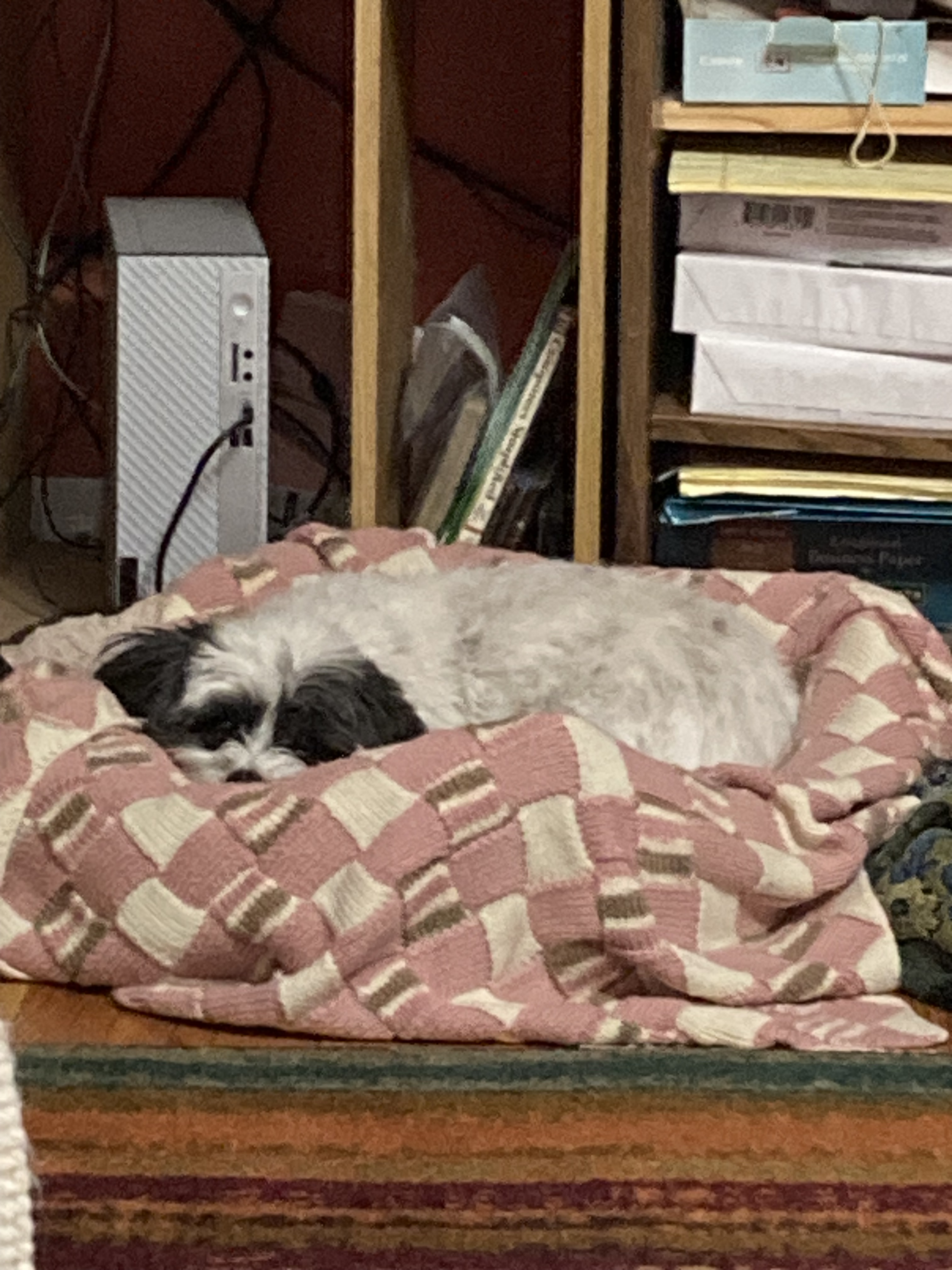
            My hope is that as the Percocet leaves my system, my thoughts will shift from assembly lines and failed systems and the end of the world as we know it, to something more hopeful, but I worry that this might be more than just a symptom of a passing disorder. Nurse Tzippy has been keeping an eye on me while we wait.

If you haven’t had a chance yet, please check out my novel, Yeshiva Girl, on Amazon. And if you feel called to write a review of the book, on Amazon, or anywhere else, I’d be honored.

            Yeshiva Girl is about a Jewish teenager on Long Island, named Isabel, though her father calls her Jezebel. Her father has been accused of inappropriate sexual behavior with one of his students, which he denies, but Izzy implicitly believes it’s true. As a result of his problems, her father sends her to a co-ed Orthodox yeshiva for tenth grade, out of the blue, and Izzy and her mother can’t figure out how to prevent it. At Yeshiva, though, Izzy finds that religious people are much more complicated than she had expected. Some, like her father, may use religion as a place to hide, but others search for and find comfort, and community, and even enlightenment. The question is, what will Izzy find?