One of the things I’ve been enjoying a lot lately in my online Hebrew classes is watching Israeli stand-up comedy routines. Even a year ago, I would have found it really difficult to follow what they were saying because they speak so quickly, but now, as long as the videos include subtitles in Hebrew, I can pretty much follow what’s going on. And I’ve found that I’m learning a lot about Israeli culture from these short videos on YouTube, because a comedian’s job is to comment on, and laugh at, all of pompous, ridiculous, or just plain wrong things the politicians, the media, and regular people are saying and doing every day.

One of my favorite Israeli comedians is Giora Zinger. He and his family made Aliya (immigrated to Israel) from Ukraine when he was five or six years old (he has a whole bit about how he, and many other Jewish boys from the former Soviet Union, had to be circumcised when they arrived in Israel, and getting circumcised as a newborn is a completely different experience from getting circumcised when you are old enough to know what’s going on). A lot of his humor is about the cultural divide between his Ukrainian parents and the Israeli culture he grew up in. And his version of his mother’s accent, in Hebrew, is probably my favorite thing in his act, both because his version of his mother speaks much more slowly than most Israelis, so I can understand what she’s saying, and because his version of her says all of the things you’re not supposed to say out loud.
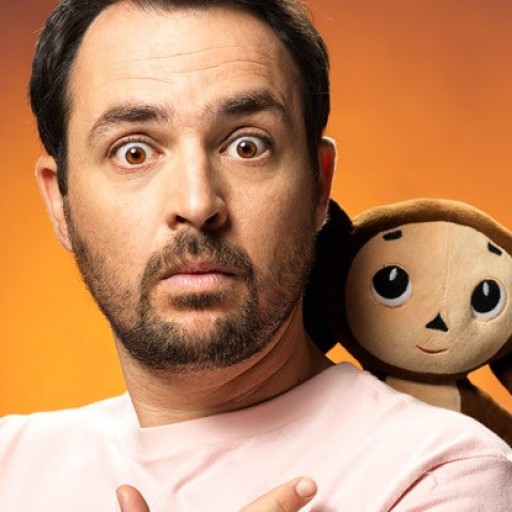
Israeli humor is, overall, less politically correct than American humor, so some comedians can come across as a little mean, but most of the time they are refreshingly honest and give me a lot of insight into how people in Israel really feel.
Another comedian I started watching recently is Yuval HaGanan, which translates to Yuval the Nursery School Teacher, and his act comes straight out of his day job as a, yes, nursery school teacher. He does a lot of impressions of his three- and four-year-old students, sharing their responses to the war, or a death in the family, young love and, of course, poop. And, like Giora Zinger’s mother, they tend to tell it like it is. Yuval also talks about all of the times when he had no idea what he was supposed to say to the kids’ very direct questions and just went with whatever came out of his mouth, and I can relate.

But my favorite Israeli comedian at the moment is Udi Kagan. His humor is often very silly, and filled with bodily noises, and jokes at his own expense, and at his failures as a husband and as a father and as an adult male in general. He is also a musician and often plays the piano and sings as part of his act. There was one video about re-hearing the Aerosmith song “I don’t want to miss a thing,” (from the movie Armageddon), years after it became a hit, and suddenly realizing how disturbing the lyrics are (I could stay awake just to hear you breathing…). He plays a lot with that space between Hebrew and English, where Israelis often find themselves, because they watch a lot of American TV, and listen to a lot of American music, and study English much more seriously in school than Americans study any second language.

But the reason why he’s my favorite right now is because of a 20-minute clip that was recently posted on YouTube where he talked about suffering from PTSD after his army service, and how it came roaring back after the Hamas attacks on October seventh. In Israel they either say “PTSD,” in English, or they use the Hebrew translation of “Battle Shock,” which is an old term for PTSD, and maybe more to the point in this case. In the video, he talks about all of the ways he and his friends tried to ignore their symptoms, or mute them with drugs and alcohol, until he finally asked for help and started to get better. And something about his vulnerability, and silliness, and self-deprecating honesty, allowed the audience to really go there with him. And not just the in-person audience, because I’ve already seen a bunch of videos of young Israeli men responding to his performance and opening up about their own experiences with PTSD.
I was getting frustrated that I couldn’t share these Israeli comedians with my friends and readers, because their acts are in Hebrew with only Hebrew subtitles, but when I went back to watch Udi Kagan’s “Battle Shock” video again, I found a version with English subtitles. None of his other videos, that I could find, had been translated, but maybe someone recognized that this one needed to be shared with as many people as possible.
There are, of course, many other voices in Israeli comedy. There are even Israelis who perform in English, like Yohai Sponder, who has become a huge presence online (for the Jewish world at least) since October 7th. His broken English is a big part of his act, as is the giant star of David he wears around his neck. He’s not gentle and sweet like Udi or Yuval or Giora; he has the macho style that is more often identified with Israeli men. But a lot of Diaspora Jews have found comfort in his confidence, and his pride in being Jewish, in the face of the renewed wave of antisemitism.
There is still something amazing to me about the existence of a country, however small, where being Jewish is the norm, and therefore where the music and the art and the drama and the comedy all either come from a Jewish perspective or are in conversation with Jewish history, without apology. My hope is that this war will end soon, and the hostages are returned, and a road to peace with the Palestinians can be found, and that peace will make it possible for the lighter, softer side of Israelis to become more visible, both so people can see them more fully, and because I think Israelis have wisdom to share about resilience and how to find humor and love and hope even under difficult circumstances.
Yohai Sponder (English): https://www.facebook.com/share/v/12Mb6a9ffdC/?mibextid=wwXIfr
Udi Kagan, “Battle Shock” (Hebrew with English subtitles): (previous link didn’t work, hopefully this one will) https://open.substack.com/pub/danielgordis/p/body-and-soul-remarkable-stories?utm_campaign=post&utm_medium=email
Another link from Sam256 (here’s a link to my translation that should work)
https://www.kapwing.com/videos/68b0dddfc7c3f67997512635

If you haven’t had a chance yet, please check out my novel, Yeshiva Girl, on Amazon. And if you feel called to write a review of the book, on Amazon, or anywhere else, I’d be honored.
Yeshiva Girl is about a Jewish teenager on Long Island, named Isabel, though her father calls her Jezebel. Her father has been accused of inappropriate sexual behavior with one of his students, which he denies, but Izzy implicitly believes it’s true. As a result of his problems, her father sends her to a co-ed Orthodox yeshiva for tenth grade, out of the blue, and Izzy and her mother can’t figure out how to prevent it. At Yeshiva, though, Izzy finds that religious people are much more complicated than she had expected. Some, like her father, may use religion as a place to hide, but others search for and find comfort, and community, and even enlightenment. The question is, what will Izzy find?

 rachelmankowitz
I hope the comedy helps you smile and laugh out loud regularly.
It helps so much! Thank you!
Cultural immersion is one of the most effective ways to learn a new language. What more pleasant way to do that than with humor.
It really is a fantastic way to learn!
I laughed and laughed at the thought of ‘bark-titles.’ I really do enjoy your writing. Sometimes I’m so taken with a post that I think about it for days, although it would be better if I would think less and write a few words of response for you. I’ll try to do better!
Thank you so much!
I am impressed that you learned Hebrew well enough to follow along with the comedy videos. It seems like a very difficult language to learn. I love your dog photos. I forget his name at the moment.
Tzipporah has become much more tolerant of having her picture taken!
Yes Tzipporah was her name. I remember now. She is very cute.
Comedians the world over probably have a better read on society’s pulse than anyway, and less afraid to say what they think. I definitely want to watch some of the videos you mentioned. It’s a wonderful thing that you found these and that you have the ability to share them and your thoughts. Thank you!
The bravery of comedians is totally beyond me, and I so appreciate it.
Damn the battle shock in American was removed from YouTube for a Copyright violation 🫤
I found another version with English subtitles as part of Danile Gordis’ substack column. I can’t seem to link it, but it’s at: substack.com/danielgordis/body-and-soul, from about a week ago.
Thanks it’s a tiny clip..but his delivery brought a smile to me
Just put the new link in the revised post and it’s working!
Cool thanks
This has to be the best way to learn languages
It really helps!
Thanks for the excellent review of comedy in Israel. Listening and watching certainly must be good for gaining even more appreciation of culture and perspective there. I tend to go for stand-up comedy that lets loose. No, not meanly but certainly topically. I admire the Israeli commedians who take on the happenings of the day, which in Israel and Palestine and elsewhere in the region are violent and difficult. Not that they aren’t here. With you, I hope for peace. And by the way I am fine with English subtitles, as I know some aren’t. And Tzipporah should have titles in her native tongue as well.
I keep looking for the bark-titles, but I haven’t found any on YouTube, yet.
Darn the video isn’t available, Rachel!
I found another version with English subtitles as part of Danile Gordis’ substack column. I can’t seem to link it, but it’s at: substack.com/danielgordis/body-and-soul, from about a week ago.
darn … I don’t use sustack.. but will try elsewhere xo
Just put the new link in the revised post and it’s working!
🙏🏼
No Israeli female comedians?
There are a few, though standup is still a very masculine field. Some of the best female comics are comic actresses.
It’s interesting that you are learning from comedy shows. I watched a few Israeli series on Netflix and learned about the culture from them.
Comedy is easier for me. Fauda freaks me out.
I REALLY enjoyed reading this blog…and learned a lot too! Thank you for sharing!!!
Thank you so much!
Definitely need more comedy and less war.
Art
Amen!
I love this, Rachel! I tried to watch the shock video with English subtitles but it was blocked.
I found another version and added it to the post, if that helps.
Thank you, Rachel.
I did one of the original translations with subtitles on YouTube that got blocked. It’s really too bad. I even tried to email them my subtitles so they could publish it themselves, but never got a response. I wish more people could see it. Also a Hebrew learner and love this way of improving!
That’s an amazing achievement! I’m not sure why Mako is blocking the translations when so many people would appreciate seeing it.
here’s a link to my translation that should work
https://www.kapwing.com/videos/68b0dddfc7c3f67997512635
Thank you so much!
The Sam256 version worked and it showed the entire monologue. That was really an amazing piece and I don’t know where someone gets the kind of courage necessary to share thoughts and experiences that personal. Maybe it’s good that I don’t know where that courage comes from? There are way too many people who don’t (or don’t want to) realize the toll war takes on the people who are in it and that’s a terrible shame. And worse might be how easy it is for people to ignore them. He touched on that when he talked about the junkie walking down the street between the cars asking for money. You wrote about a country where being Jewish is the norm and I’ve often wondered about that and how it would feel and what it would be like to live there.
I get glimpses of it from the videos, but, fingers crossed, I’ll be visiting there in a few weeks to see for myself.
Fingers crossed! Do you plan on blogging from Israel or will you be taking a break during the trip?
I’ll be taking a break from blogging for a couple of weeks, for the first time in forever. We’ll see how that goes!