Monthly Archives: November 2025

My Israel Trip: Day One

            From the beginning, it was something of an out of body experience. I took a car service to the airport, waving goodbye to Mom in the parking lot of our co-op, chatting with the driver about all manner of things (gardening, mothers, compression socks, and, of course, traffic at the airport). When I arrived at Terminal Four at JFK, I was immediately overwhelmed: people were rushing in different directions and there were no clear signs, that I could see, telling me where to go. I had already checked in online, so I was pretty sure I didn’t need to stop at a check-in kiosk, but beyond that I was lost. I asked a man in uniform (hopefully he actually worked there), and he directed me to a woman who was checking boarding passes. I showed her my electronic boarding pass and she let me through, and then I had to show my electronic boarding pass (AKA my phone) to two more women as I followed the crowd around cones and other obstacles onto the security line. I tried to do exactly what everyone else on the line was doing, showing my passport, lugging my carry-on and my personal bag into the gray buckets and pushing them towards the scanner, but I must have missed some of the instructions because my personal bag was pulled aside and I had to wait on another line until they could hand check it, and tell me that I was supposed to have taken my laptop computer out before putting the bag through the scanner. Live and learn.

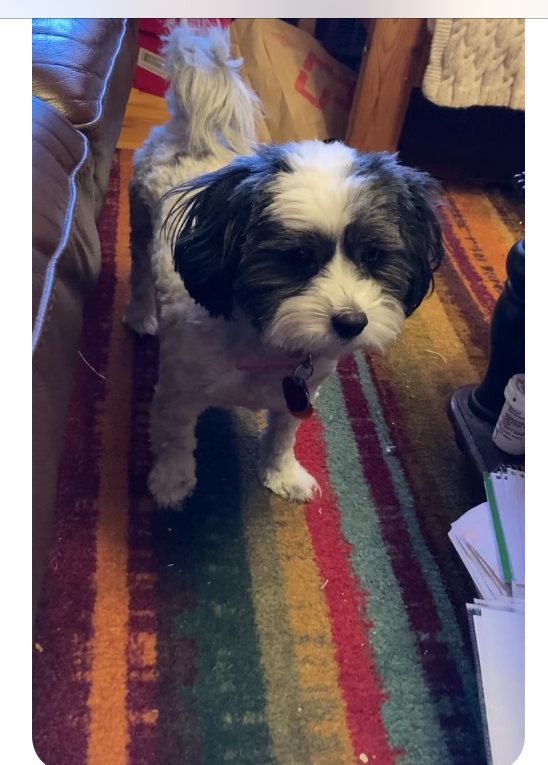
“You should have stayed home with me.”

            When they sent me on my way, I still wasn’t sure where I was supposed to go next. People were wandering in a bunch of different directions, and signs listed different lounges and gates and floors, but nothing said: this is the way to EL AL. I followed an elderly couple to the elevator, which said “to all gates,” and followed them in, and, luckily, when the doors opened there was finally a big screen listing the destinations and flight times and gates, and I found my flight on the list and followed the arrows to my gate. At least, I thought I was following the arrows in the right direction. I walked past endless toy stores and candy stores and restaurants and people waiting at other gates for other planes, but I couldn’t find my gate. Eventually, I found another nice man in a uniform (this time I was pretty sure he worked for the airport, or at least for one of the airlines), and he directed me to go back to where I’d started and then keep going in that direction. Finally, after walking through what felt like the whole airport, I found my gate and sat down in the waiting area – two hours before boarding was set to begin. They say to get to the airport three hours before your flight, just in case.

            I spent the next two hours people watching, and texting with Mom. There were casually dressed couples (jeans and t-shirts like me) carrying babies, and Haredi men in long back coats with special boxes to carry their hats, and Yeshiva boys in khakis and polo shirts and black suede kippot studying and eating together at a work table. There were also enough other solo female travelers to make me feel less conspicuous than I’d expected, and people reading actual hardcover books like the one hiding at the bottom of my bag while I stole a few last looks at my phone. At some point, there was a group of men on the other side of the waiting area saying the afternoon prayers, and then ten minutes later, after sunset I assume, another group gathered to say the evening prayers, and then our flight was called to start boarding.

            I showed my electronic boarding pass to the woman guarding the line to board the plane, but she said, “Oh no, I will not look at that. You need a paper boarding pass.” Luckily the line at the EL AL desk was short, and I only had to go through a short security interview (Do you understand Hebrew? Are you sure? Why are you going to Israel? Where are you staying?), and then they scanned my passport, and handed me my paper boarding pass and sent me through to the plane.

            The last flight I’d been on was years earlier, and barely two hours long, so I was anxious about the 11-hour flight, without Wi-Fi and with no one to talk to. When I found my seat, a nice man (no uniform this time) helped me lift my carry-on suitcase into the overhead compartment, and then I discovered that my personal bag didn’t actually fit under the seat in front of me, the way all the videos said it would, and there was no more room in the storage compartments, so I was going to have to sit with my legs on an angle for the whole flight. At least I had an aisle seat, though. I’ve been watching Stephen Colbert do his Colbert Questionnaire for a very long time, so I knew I was supposed to get an aisle seat, rather than a window seat, to avoid having to climb over someone else to get to the bathroom.

            I felt some panic just before takeoff, thinking about every possible thing that could go wrong on the trip, and feeling trapped because getting back home would be so much harder midair, but it passed, eventually. I watched my seatmate to find out how to use the entertainment system in front of my seat, and I found a bunch of Israeli TV shows, in Hebrew, which I hoped would help me acclimate to all of the Hebrew I’d be hearing in Israel. I ended up finding a really interesting interview show and watched episode after episode: with an Israeli actress, a past Minister of communications, a former head of Mossad, an Arab Israeli reporter, a comedian who specialized in doing impressions (including of Netanyahu), and the current head of the opposition in the Knesset. We were served dinner about an hour into the flight, and I had to watch my seatmate to figure out where to find the folding tray table hidden in the armrest, but I never figured out how to turn on a light to be able to read my book once the overhead lights were turned down.

They served breakfast about an hour before we landed in Israel, and at that point, a lot of the men on the plane got up to pray the morning prayer, even though it still felt like the middle of night to me.

I’d heard horror stories about people being pulled from the security line and interviewed by customs officials for hours upon landing at Ben Gurian airport, but when we landed, I barely had to wait on line before my passport was checked and I was sent on through. Then I followed a big family through the maze of hallways until I finally reached the arrivals lounge, where I had just enough time to switch my phone to my temporary Israeli telephone number before my friend arrived to pick me up.

            I hadn’t slept at all on the plane, but somehow, I wasn’t tired, so she drove us straight to the Western Wall (The Kotel) in Jerusalem. I’d been promised that I would feel inspired just entering Jerusalem, and that being at the Kotel (the only outer wall remaining after the destruction of the Second Temple in 70 CE) would be profound, but as we walked through the alleyways of the old city, past endless groups of Israeli school children on day trips with their teachers, and groups of soldiers in training, also on day trips with their teachers, I didn’t feel much of anything.

Don’t those kids look inspired?!

It was a long walk on hard stone, down steps and around corners, until we were at the Kotel, and my first impression of this ancient holy place was, eh, it’s kind of dinky. I mean, it’s a wall, with some greenery growing out of it, and pieces of paper stuck in every crevice, but it didn’t glow or anything, and no great voice called down from the heavens telling me that I was home. I’d been warned that I would need to wear a skirt to go to the Kotel, and that there were women guarding the entrance who would insist on wrapping me in a scarf to cover my pants, but it turned out those women were out for the day, or distracted, and I was able to walk in wearing my jeans and t-shirt from the plane. The women’s section was significantly smaller than the men’s section, but one of the men had already climbed up to peer over the divider to see what the women were doing.

            There were plastic chairs set up for us to sit in, but many more women were standing right up against the wall, holding their prayer books and shuckling back and forth. A lot of the women wore long skirts, and elaborate scarves wrapped multiple times around their heads, and prayed with great feeling, but I just sat there and watched. I was fascinated by a pigeon with a peg leg. I don’t actually know if he actually had a peg leg or if he was just missing his foot, but he walked like a pirate and kept scanning the ground for crumbs. A little boy nearby was carrying a bag of snack chips, even though my friend told me you weren’t supposed to bring food to the area, so the bird was on the right track.

            I didn’t feel like praying, or writing a note to shove into the wall. I’d always imagined that there would be a notepad and pen set up nearby, and ladders, so you could put your note into a crevice away from public view, but no. The notes were all homemade and folded into tiny shapes in order to fit into the tiniest spaces in the wall, and you had to really look closely in order to see them. The most interesting thing, to me, was the way many of the women would back away from the wall as they left, and when I asked my friend about it, she said it was a sign of respect, because you shouldn’t turn your back on God. For my own safety, I didn’t risk the maneuver myself, because I was sure I would trip over my feet, or a spare child, so I walked out facing forward while my friend walked out backwards. I hope God understands.

            On our way back up the steps, I finally saw my first Israeli cats (they have stray cats everywhere) and took a picture to send to Mom as my first missive from the holy land. Then we wound our way back through the alleyways, passing little shops and food stalls and tour groups, and many men and women carrying paper cups, asking for money. They didn’t look like the unhoused people I used to see in the subway in New York, more like this was their job and they were proud of it. I could picture them finishing a long day of begging for money from strangers and returning home to their modest Jerusalem apartments to put their feet up and watch TV. At one point, there was a cat stretched out on a low wall, next to a discarded paper cup, but he didn’t make a move to ask for spare change. He seemed confident that someone would feed him eventually.

I’d read all about Jerusalem Syndrome, and how so many people went crazy and started to think they were God just because they were breathing the air in Jerusalem, but I guess I’m immune. I should have known that I wouldn’t be a good candidate for delusions of grandeur.

After visiting the old city, we drove around Jerusalem while my friend played tour guide. She’d lived in Jerusalem when she first made Aliyah, in her 20’s, so it was all very familiar and homey for her. She drove us through the different neighborhoods and past the Israel museum and the Knesset and the Supreme court and the National Library – everywhere a bus tour would have taken us – and then she pointed out the hotel where she’d had her wedding (which I missed, of course), and the neighborhood where her parents were living, though they were out of the country at the moment. And as we drove around Jerusalem, and then out towards her home, my friend and I started to catch up. We’d seen each other every few years when she came to visit family in the States, and of course we’d chatted through email and then WhatsApp, but this was, already, the most time we’d spent together in years, and I started to remember why we became friends in the first place: no matter how shy and anxious and out-of-body I felt, she was able to make to me feel seen and heard and comfortable. I’d been worried that I would feel like a burden, or that we’d have nothing to say to each other, but she was doing everything she could to let me know that I was welcome, and that she was looking forward to our next adventure.

            When we arrived in Modiin, about thirty minutes outside of Jerusalem, it was still light out, and I was surprised to find that the city looked suspiciously like White Plains, NY – with all of the newness and crispness of an upper middle-class enclave. It’s a very young, planned city, so it doesn’t have the tiny alleyways of Jerusalem, or the crowded streets, and the wide-open spaces made it easier to breathe.

First view of Modiin

            My friend’s four-bedroom apartment was huge, and in the process of being cleaned by her Yemeni Israeli house cleaner, whose rapid-fire Hebrew was matched by my friend’s equally rapid-fire Israeli-accented Hebrew – all too fast for me to follow. Of course, I knew that my friend spoke Hebrew – I mean, she’d lived in Israel for decades – but I hadn’t realized she would sound like someone who’d been born there. Up until that point, and on all of our visits in the States, we’d only spoken to each other in English.

            I was set up in her older daughter’s room (since she was away doing national service), and, as I unpacked I, of course, fell back into my out-of-body, what-am-I-doing-here state of mind. I was trying to hide from the cleaning lady, who was busy mopping the living room floor with what looked like a squeegee, because she’d already asked me ten or fifteen personal questions, in Hebrew, about my career and family and where my friend and I knew each other from, and I was afraid the questions were going to get steadily more intrusive. I checked my email and found out that I’d received another rejection from one of my agent queries, which I guess is better than the silence I was getting in response to most of the others, but it didn’t feel great. I focused on unpacking and getting my bearings, and when the house cleaner was finished my friend introduced me to the two kids who were still living at home, and her husband (who I’d met briefly a few times over the years) and the family rabbit, Choo, who spent most of his time meditating in his cage, or wandering out in the yard, on the look out for stray cats so he could rush back to safety at any moment.

Choo, the rabbit

            I don’t remember what we ate for dinner that first night, or what I did or said for the rest of the evening, until it was time to go to bed. I’d been awake for something like 36 hours by then, but I was still too keyed up to sleep, so when everyone went to bed, I went to my room and watched hours of Glee videos on my phone, spending some time with Cory Monteith, the lead actor on Glee, until his untimely death from an accidental overdose. For some reason he felt like a good friend, even though I’d never met him. It was an odd sensation, to find so much comfort in someone I didn’t even know, and who was no longer around, as if my brain was able to manufacture this reassuring presence to help manage my anxiety.

            Eventually, I fell asleep, and slept well. I woke up late the next morning when my friend knocked on my door, after already having done the laundry and emptying and filling the dishwasher and sending the kids off to school and getting a few hours of work done. I washed and dressed quickly, took my meds, ate some breakfast, and, with a few more deep breaths, I was ready to start day two.

“Wait, all of that was just day one? This is going to take forever.”

If you haven’t had a chance yet, please check out my novel, Yeshiva Girl, on Amazon. And if you feel called to write a review of the book, on Amazon, or anywhere else, I’d be honored.

            Yeshiva Girl is about a Jewish teenager on Long Island, named Isabel, though her father calls her Jezebel. Her father has been accused of inappropriate sexual behavior with one of his students, which he denies, but Izzy implicitly believes it’s true. As a result of his problems, her father sends her to a co-ed Orthodox yeshiva for tenth grade, out of the blue, and Izzy and her mother can’t figure out how to prevent it. At Yeshiva, though, Izzy finds that religious people are much more complicated than she had expected. Some, like her father, may use religion as a place to hide, but others search for and find comfort, and community, and even enlightenment. The question is, what will Izzy find?


Falling Into Glee

            It started a few weeks ago, when I mentioned Glee in a class (Talking Shpilkes), and talked with my students about the way they used to use mashups in the show, combining two songs from different genres to bring something new out of the combination. A student asked me for concrete examples, and I dutifully typed Glee into the search bar on YouTube, but was interrupted by the dismissal bell. I forgot all about it, but the YouTube algorithm remembered, so among the videos about places to visit in Israel, and Israeli music, and instructions on how to pack for an international trip, I started to see a few songs from Glee here and there. I had watched Glee when it aired originally, about fifteen years ago, and enjoyed it a lot, but I hadn’t spent much time thinking about it in the interim. So, I thought, I’ll just watch one video, one song, to remind myself of what the show was like, especially because I couldn’t remember which songs they’d used for mashups, and I was starting to worry that I’d imagined the whole thing. Almost immediately, I fell into a black hole of Glee videos: the top 100 songs on Glee, and then the top 200, and then the best mashups, and the saddest songs, and the best duets, and on and on.

Each day, I assumed I’d watched as many videos as I could stand, and I’d just watch one more, and then the binge would start all over again. I tried to understand I was getting so sucked in, especially when I couldn’t even find full episodes of the show, just short clips of the musical numbers. I thought the timing of the binge might be significant, because here I was watching scenes from a show about high school the week before a planned visit to Israel to see my best friend from high school. There was also something about the way the actors sang and danced full out, every time, pushing the emotions out to their fingertips, that was cathartic for me; because that’s how life feels, even if it doesn’t look that way from the outside. Each song seemed to crack me open and tap into emotions I’d long ago learned to contain, or repress.

            On Glee, as opposed to in my real life, they were able to find the right songs to express everything that needed to be said, and watching one performance after another, I felt like I was connecting to those lost or hidden parts of myself. But while watching these “kids” (the actors were mostly in their twenties) perform was cathartic, it was also bittersweet, because all of the old expectations and comparisons came rushing back; all of the feelings of not being good enough or talented enough or brave enough. And I remembered the anxiety that came with performing, too; it wasn’t just a little stage fright for me, it was crippling.

            I did my best to overcome my fears. I took voice lessons, and I went to a musical theatre camp. I wrote my own songs and poems and plays. I used to sing and dance in the halls in elementary school, and for a long time I would dance around the kitchen while Mom was making dinner, telling her about my day. But when I tried to perform in public, the anxiety got in the way.

            And then, as I continued to watch more and more videos from Glee, I started seeing the videos about the death of Cory Montieth, the male lead on the show. I don’t even remember how I reacted at the time of his actual death during the run of the show, but now it was tapping into my grief at all of the things I’d lost, or never had in the first place. I started to think that if I just watched one more video, Cory would come back to life. Or maybe it was a mistake, and Cory Monteith didn’t actually overdose, they got it wrong, and he was still alive, somewhere. But each time I watched, the tribute episode replayed, and no amount of watching or hoping could bring him back to life.

            I couldn’t understand why his death was hitting me so hard, so many years later, or why the reality of his death was so hard for me to accept. I didn’t have the same reaction to his co-star Naya Rivera’s accidental drowning a few years after the show ended.

In a way, Finn, Cory Monteith’s character on the show, may have represented that one person I was waiting for, the man who would make me feel acceptable and loveable, and the grief at never having found him, and never having found that feeling of acceptance internally. Or he could represent someone who was willing to try and fail; because he wasn’t one of the musical theatre prodigies on the show, competing for the number one spot. He was just loving the work, and putting everything he had into it. He was the cast member I would have wanted to know, and hang out with. It would have been a joy to make him laugh. And yet, he must have been struggling, fighting old demons, all along.

After he died, from an accidental drug overdose just before shooting for the fifth season was supposed to begin, it became clear that he had been the heart of the show. He must have been such a relief to be around, after the constant competition and backbiting of the showbusiness life many of them had been living since childhood. He was the one who made Glee accessible, and made the audience feel like we could be part of things, even if we didn’t have Lea Michele or Amber Riley’s voices. And he was having so much fun!

Finn (Cory) and Rachel (Lea) on Glee

I don’t think Finn resonated for me the first time I watched Glee, ten to fifteen years ago. I would have been much more focused on the Lea Michele/Amber Riley rivalry, or the love story between the teachers, Mr. Shue and Miss Pillsbury. But it all hit differently this time. And my favorite moments weren’t about the best vocals, or the most dramatic or comedic scenes, it was all about the duets between Cory and Lea Michele, and the way he seemed to love and respect her (you can see it in the show, and in interviews. It pours off of him). While there were a million things the other cast members could do that he couldn’t, his great talent seemed to be his ability to create believable relationships. He made each relationship on the show feel real, and heartfelt, and reliable. And then he died.

            There’s been a lot of behind the scenes gossip about Lea Michele (the female lead on the show and his real-life girlfriend), about how she treated other actors disrespectfully; that she was a bully, or even a racist. My own sense was that she was very much like her character on the show: single-minded about her goals in life, and unaware of how her behavior impacted other people. And then Cory died, and she shut down. It seemed like a lot of the worst stories about her came from those years, after his death. And I kept thinking about how much Cory seemed to love her, and how Jonathan Groff (her best friend and another extraordinary triple threat Broadway actor) loves her, and how she can sing in a way that breaks my heart open, and it made me want to give her the benefit of the doubt.

            Also, watching some of the behind-the-scenes videos of Ryan Murphy (the creator of the show) made me think that a lot of the drama among the actors came from the way he led them at the time. He created a beautiful, if imperfect show, that inspired an enormous amount of people to be more fully themselves, but he often did it through manipulating and exposing his actors’ inner lives, unintentionally causing harm.

            The genius of the show is also the most painful thing about it: it feels real. It’s a heightened, melodramatic, glorious, and heartbreaking trek through the growth process, and inadvertently, it created a vivid picture of how grief can shatter people. They did their best to wrap up the show neatly, but at the heart of it all is the reality that the story didn’t get to finish; the dramatic arc broke when Cory died. And something about that brokenness just kept sticking with me and echoing.  

I thought the binge, and the resonance, would end once I got to Israel, with so much to see and feel, but it continued. And one thing I realized, as my high school friend and I spent hours traipsing across Jerusalem and Tel Aviv, and reminiscing about the past and catching up on what we’d missed over the years, was that my friend also has a talent for relationships, just like Cory Monteith. She has the ability to make all kinds of people feel comfortable and welcome. She is full of curiosity, and open about her own struggles, and generous to a fault with her time and attention: offering to take a picture for the group of tourists at Caesaria; offering to watch a guy’s double-parked car while he helped his girlfriend move in Old Yafo/Jaffa; willing to take in an old friend for more than a week and show her around Israel.

I wish I could say that I’ve unraveled the whole Glee mystery for myself, and figured out what I need to learn from it, and figured out how to tolerate knowing that this man I never knew really is gone, but that would be a lie. It will take me a while to process the impact of my Glee binge, and the impact of the Israel trip. But don’t worry, I’ll get to the details of the trip in my next blog post, with plenty of pictures, and maybe I’ll even get some things figured out. Eventually.

“Don’t forget pictures of me, Mommy.”

Songs to get you started on Glee:

(The song that started it all) “Don’t Stop Believing” – https://youtu.be/1FaJshIWdpU?si=aIf5vvYV0pcHaK1n

(The crush) Cory Monteith – Jessie’s Girl – https://youtu.be/6twI8pyeRF0?si=ZlkvnjJVgCW9KEkC

(The Love) Pretending/Light Up the World –https://youtu.be/0j5wIDfYNB8?si=VGPkr1yhJ3MOmOgT

(The loss) Lea Michele – Make you feel my love – https://youtu.be/z-uLll_cZHs?si=DdrUIus25tAjKQz_

(Just a great song and performance from Lea Michele) To Love You More – https://youtu.be/hQQT49lEM7I?si=CWQSN3qOetxRm544

There are so many more, but these should get the binge rolling.

If you haven’t had a chance yet, please check out my novel, Yeshiva Girl, on Amazon. And if you feel called to write a review of the book, on Amazon, or anywhere else, I’d be honored.

            Yeshiva Girl is about a Jewish teenager on Long Island, named Isabel, though her father calls her Jezebel. Her father has been accused of inappropriate sexual behavior with one of his students, which he denies, but Izzy implicitly believes it’s true. As a result of his problems, her father sends her to a co-ed Orthodox yeshiva for tenth grade, out of the blue, and Izzy and her mother can’t figure out how to prevent it. At Yeshiva, though, Izzy finds that religious people are much more complicated than she had expected. Some, like her father, may use religion as a place to hide, but others search for and find comfort, and community, and even enlightenment. The question is, what will Izzy find?

Friday Night Services

            For a long time now, I’ve attended most of the Friday night services at my synagogue online. At least last year I had to go in person once a month to teach, but our program changed and I no longer teach on Friday nights, so even those services have been lost. Part of the change is physical: I’m just so tired by the end of the day, and at the beginning, and in the middle. One small trip to the grocery store wipes me out so much that I need a three-hour nap just to recover. After that, I can’t even fathom taking a shower and getting dressed to go to synagogue, not even when one of my former students is marking their b’nei mitzvah, despite the promise I made to myself that I would go to every Friday night service for every student who’d ever been in my class.

            I’ve always been tired, and I’ve always been in pain, but still, something has shifted.

Tzippy can relate.

            Maybe it happened when our senior rabbi cut down to a quarter time, and started to show signs of age, so that even when he’s there and vibrant and funny and inspiring, there’s still this underlying sense of doom and grief, as if a clock is ticking in the background.

            Maybe it happened when I started taking weight loss medication, and something in the mechanism that cuts my appetite also cut into my ability to enjoy the rest of my life.

            Maybe all of the antisemitism that’s been unleashed since October 7th has finally pulled me under, because it doesn’t feel temporary anymore. After the ceasefire, it doesn’t feel like something with a cause and effect anymore. It feels endemic.

            Maybe it’s all of the rejection, after sending my writing out for so many years, with no idea why I’m not what anyone’s looking for.

            I still had some sense of energy last spring – I can vaguely remember what it felt like – when I started to plan the Israel trip, and started researching agents for the new book. I even felt hopeful, and brave, and willing to push through the hard tasks and difficult feelings to get to the good stuff on the other side.

            My hope is that the current malaise is a side effect of my travel anxiety, and once I get to Israel and the anxiety can disperse, I’ll find the rest of my feelings, and I will feel brave again. But I miss the feeling of hope that pushed me to start going to Friday night services in person way back when, and to make the effort to talk to new people and to sing and to speak up. I miss the feeling that I was building up to something, creating something that would continue to grow and bring me joy and comfort.

            Maybe I just need to recommit to the practice of going to services on Friday nights, forcing myself out of the house no matter how tired I am, the way I used to do before zoom services were a thing. I don’t know. Maybe spending a shabbat in Israel will wake something up in me that has been on pause for a while, and I’ll be ready to make more of an effort once I get back home. That would be something to look forward to.

“I’m ready.”

            (I’ll be away from the blog for the next couple of weeks, but hopefully I will have a lot to share when I return. Fingers crossed!)

If you haven’t had a chance yet, please check out my novel, Yeshiva Girl, on Amazon. And if you feel called to write a review of the book, on Amazon, or anywhere else, I’d be honored.

            Yeshiva Girl is about a Jewish teenager on Long Island, named Isabel, though her father calls her Jezebel. Her father has been accused of inappropriate sexual behavior with one of his students, which he denies, but Izzy implicitly believes it’s true. As a result of his problems, her father sends her to a co-ed Orthodox yeshiva for tenth grade, out of the blue, and Izzy and her mother can’t figure out how to prevent it. At Yeshiva, though, Izzy finds that religious people are much more complicated than she had expected. Some, like her father, may use religion as a place to hide, but others search for and find comfort, and community, and even enlightenment. The question is, what will Izzy find?
Blurry Vision

            My glasses broke. I’ve had the same pair of glasses for a very long time, because I like the frames and because my prescription hasn’t really changed in years, so I got lulled into believing they would last forever. As soon as the frames broke, and one of the lenses fell into my lap, I panicked: It’s the end of the world! God hates me! I will never see clearly again! I’ll have to feel my way across Israel in a fog!

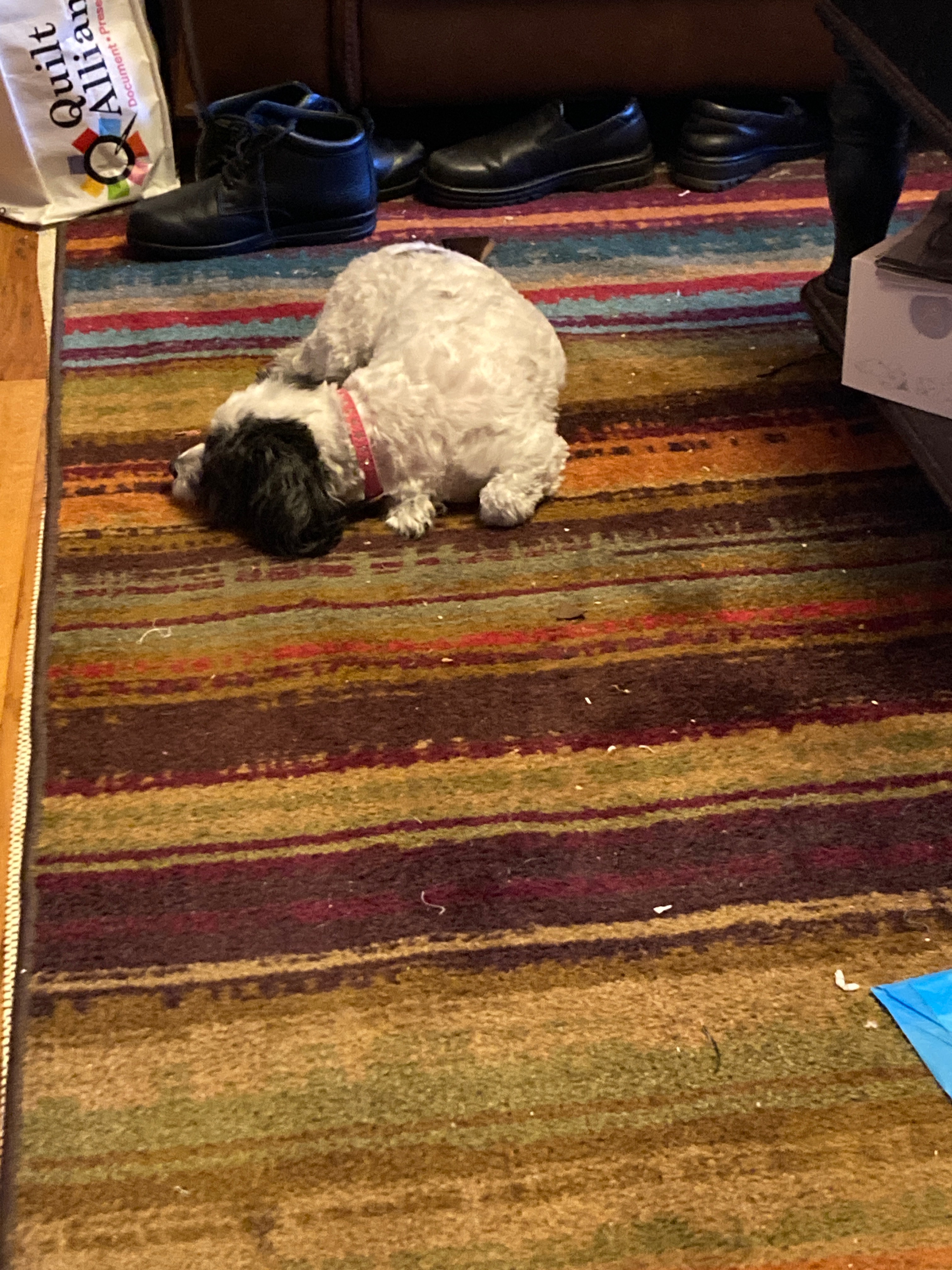
“Oy. Mommy’s losing it.”

            I tried taping the frames, and then Mom went the extra step and tried gluing them, but it was hopeless, until Mom asked if I had a back up pair and I remembered that there was an old pair of glasses in my cabinet-of-lost-things and when I put the glasses on, I could at least see where I was going.

            This all happened on Saturday night, early Sunday morning, so I had plenty of time to wallow in my helplessness and ruminate on my inability to function in the real world and think about how useless I would be out in the wild (I don’t know where the idea came from that I would be dropped out into the wild, possibly by helicopter, to survive on my own, but I have always had this image in mind and have always been convinced that it would not go well).

            The next morning, we went to the Pearle Vision Center nearby (almost around the corner, though I’d never noticed it before), and asked if they could fix the frame (yes, but it would take two weeks and the fix would only be temporary), and then if I could get a new pair of glasses a bit sooner than that (since I would be leaving for my trip in fifteen days), and they said they could get the glasses done by Tuesday or Wednesday, depending on when I could get them a copy of my prescription.

            I chose frames, and then the woman in charge immediately chose different frames for me (probably more expensive, but much nicer than the ones I’d chosen for myself, and I was in no mood to quibble), and then she gave me a store card and wrote out the email address and told me to have my eye doctor send them my prescription as soon as possible.

            When we got home, I was actually able to find my prescription from the original-now-broken glasses, and I was able to send it to her right away and pay for the glasses over the phone,  and she told me I’d get a text when the glasses were ready.

            In the meantime, everything was a little blurry. I’m nearsighted, so even with the out-of-date prescription, writing and reading up close were fine, but there was no way I could read subtitles on TV, and individual figure skaters looked like fuzzy twigs. Fortunately, Hallmark movies, with all of their bright colors and constant sound were perfect. Driving was also, surprisingly fine, though I didn’t risk taking any long trips.

            It was lucky that this happened now, instead of when I’m away in Israel, but it also reminded me of all of the things that could go wrong and set off waves of panic. Except, while my internal experience of all of this felt chaotic and frightening, Mom said I was handling it all really well, asking the right questions, speaking clearly, making solid decision, etc. I wish my internal experience reflected that, but it’s reassuring to know that even if I’m freaking out, I seem okay on the outside. I just wish I could feel as calm as I look, because then there’d be so much more I could do. Anxiety is really exhausting.

“This is news to you?”

If you haven’t had a chance yet, please check out my novel, Yeshiva Girl, on Amazon. And if you feel called to write a review of the book, on Amazon, or anywhere else, I’d be honored.

            Yeshiva Girl is about a Jewish teenager on Long Island, named Isabel, though her father calls her Jezebel. Her father has been accused of inappropriate sexual behavior with one of his students, which he denies, but Izzy implicitly believes it’s true. As a result of his problems, her father sends her to a co-ed Orthodox yeshiva for tenth grade, out of the blue, and Izzy and her mother can’t figure out how to prevent it. At Yeshiva, though, Izzy finds that religious people are much more complicated than she had expected. Some, like her father, may use religion as a place to hide, but others search for and find comfort, and community, and even enlightenment. The question is, what will Izzy find?