There are so many books on my bedside table waiting to be read, and notebooks filled with half-finished stories, and a pile of descriptions of classes I might want to take, and random pieces of ripped out notebook paper everywhere. I feel like I’m swimming in unfinished thoughts. My year of rejections has also continued unabated, even though I was sure this was the novel that would break through. And my health is still what it is, despite all of the doctor visits and medication trials and weight loss. I keep thinking that if I could just have a time out, I’d be able to catch up with my to-do list, but when I do have time, I spend most of it playing games on my phone or watching YouTube videos, because I can’t concentrate on anything more complicated than that.
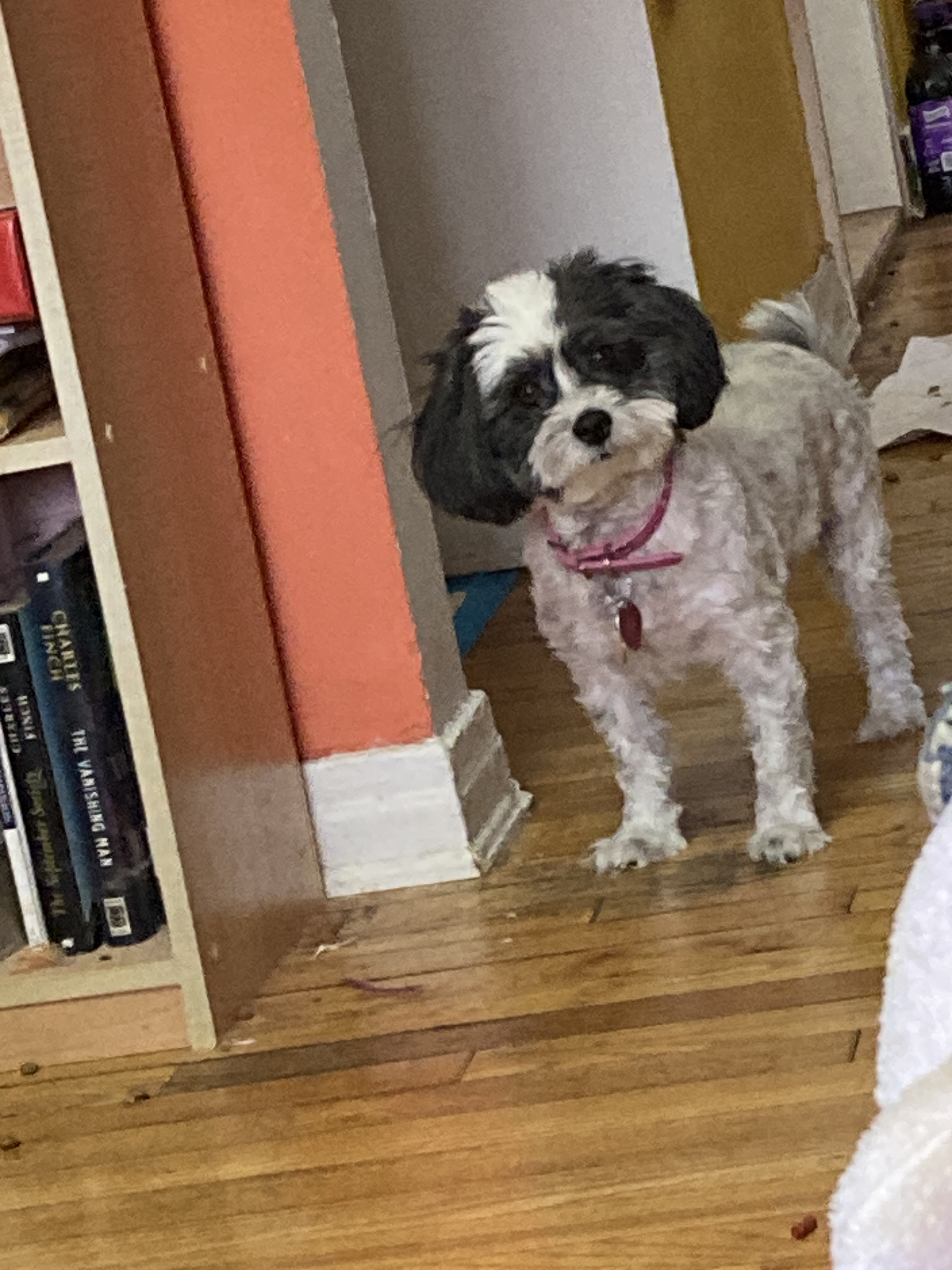
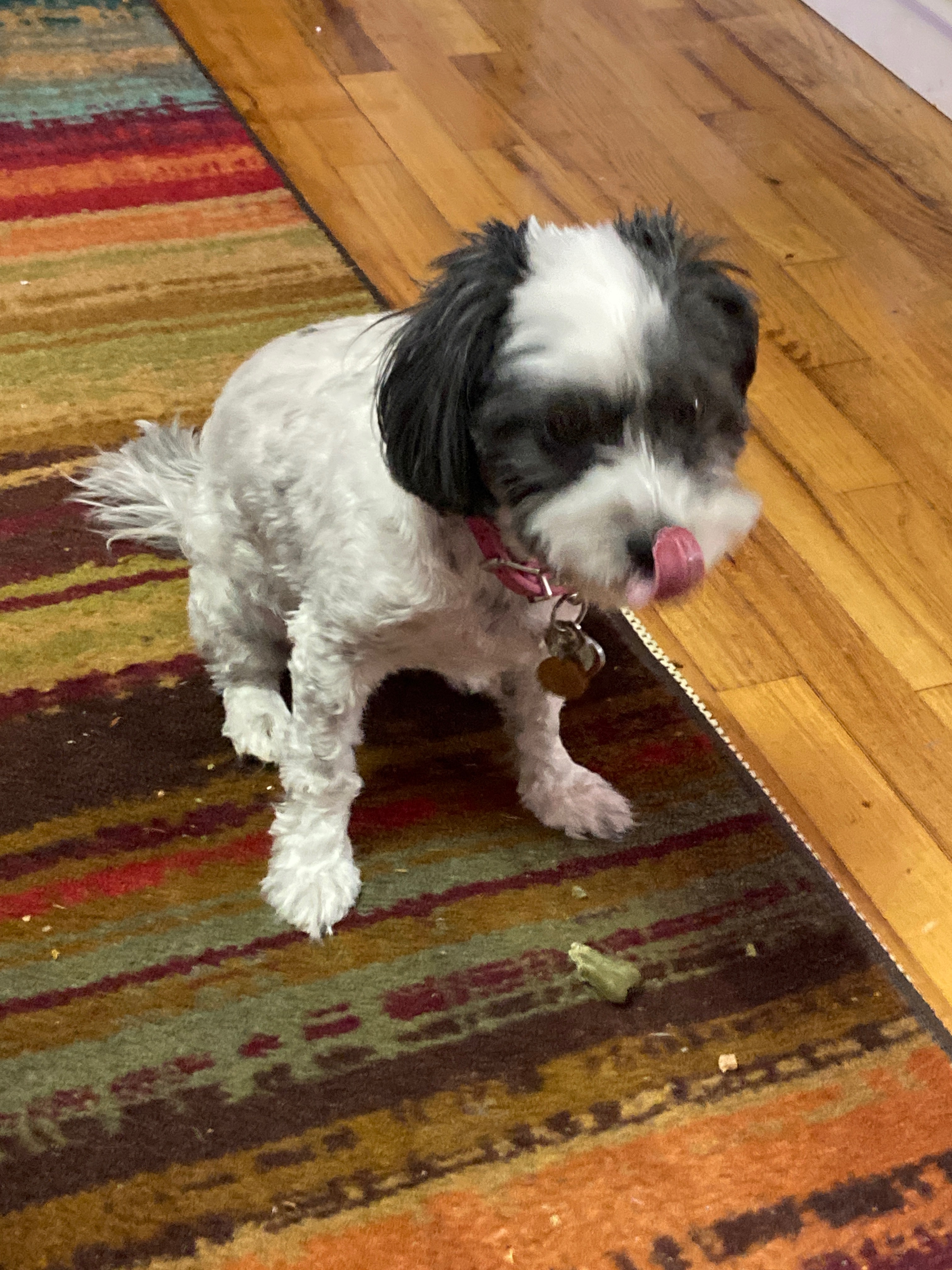
“Have you tried walking?”
This school year has been especially hard, because no matter what I try, I am no match for my current group of students. We get our lessons done, but it feels like I’m doing battle with an army of court jesters each time, and I need days to recover before I can think straight, let alone focus on my to-do list. I’ve been questioning everything about teaching this year, questioning whether I have any talent for it, or if I can learn the skills I’d need to learn to get better, or if I even want to bother anymore. I feel like I’m hitting a wall, but I don’t know if I should push through it in the hopes that a breakthrough is coming, or if I should try to pivot to something else. And if so, what?
Either way, I need to be able to write more each day, because there are so many projects screaming for my attention, and collecting rejection letters is too overwhelming without an ongoing writing project to give me hope. The problem is that I struggle with the transition from teaching to writing, and from one writing project to another, both because I don’t feel confident that I’m doing anything right and because I keep placing the voice of authority outside of myself, but not consistently in the same place. From the outside, it may seem obvious what I should do and who I should be, but from the inside I feel like a blur, like I can’t get a grip on who I am, what I’m good at, what I need to do, or what I want to do. There are moments, very short ones, when I feel like I’m on the right track, but then I’m off spinning in another direction and feeling lost again.
I remember learning about Beginner’s Mind from Natalie Goldberg’s Zen-influenced books on writing, where she emphasized approaching each new experience with a lack of preconceptions, and I loved that idea because it made my self-doubt seem more like a value instead of flaw, as if I was choosing to approach the world with humility, even though it really wasn’t a choice. I wake up most days feeling like I’m starting from scratch, having to re-learn all of the lessons and make all of the choices all over again, as if yesterday never happened. And it’s exhausting.
I wish I could figure out how to cultivate something more like Expert’s Mind, or even Advanced Beginner’s Mind, and wake up each morning with a sense of confidence that I know what I’m doing, but I’m not there yet. To be fair, there are a couple of games on my phone that I’m getting pretty good at. So, there’s that.
“That doesn’t count.”
If you haven’t had a chance yet, please check out my novel, Yeshiva Girl, on Amazon. And if you feel called to write a review of the book, on Amazon, or anywhere else, I’d be honored.
Yeshiva Girl is about a Jewish teenager on Long Island, named Isabel, though her father calls her Jezebel. Her father has been accused of inappropriate sexual behavior with one of his students, which he denies, but Izzy implicitly believes it’s true. As a result of his problems, her father sends her to a co-ed Orthodox yeshiva for tenth grade, out of the blue, and Izzy and her mother can’t figure out how to prevent it. At Yeshiva, though, Izzy finds that religious people are much more complicated than she had expected. Some, like her father, may use religion as a place to hide, but others search for and find comfort, and community, and even enlightenment. The question is, what will Izzy find?
The goal in my new online Hebrew class is to get us to talk as much as possible, and one of the exercises we do a lot is a game called Ze Mazkir Li (That reminds me…), where the teacher or someone else starts telling a story, something mundane like what they ate for breakfast yesterday, and as the timer gets closer to zero someone else has to interrupt with “that reminds me,” in order for the clock to start over again. The idea is to push us to speak up, even when there’s nothing profound to say, and to teach us to listen carefully enough to our classmates to know when to jump in. I almost never volunteer when we play this in class, until the teacher insists, but when we were assigned the game for homework, I did a little better. I was paired up with a young Muslim woman from Jerusalem, and we sent voice messages back and forth, about the chocolate cake her sister made, which reminded me of my chocolate chip cookie recipe, which reminded her of how little she likes to cook, or clean, which reminded me of how little I like to cook and clean too.
“Me too!”
We do all kinds of games like this in class, and some are more fun than others. For example, the teacher will share a picture on screen and call on someone to describe what they see (usually something very silly), or he’ll announce that he has an “unpopular opinion,” like, store-bought baked goods are better than homemade, and we’ll start to argue, or he’ll ask for advice, like, how do I learn how to cook after many failed attempts, and everyone shares their ideas. He generally stops each speaker at thirty seconds, both to limit the stress each of us is under to come up with something brilliant to say, and to make sure everyone gets a chance to talk. But instead of saying “Stop,” when someone has talked enough, he says “Avocado,” to make it a little softer. The power of “Avocado” was obvious from the first day of class and is probably the biggest difference between Fluency and every other level I’ve been in, because everyone gets the chance to talk and no one (including me) can hide in the background.
This class, the format of it and the teacher running it, is so much more fun and productive than my last class, even though we aren’t trying to learn new vocabulary, and even though I still feel self-conscious every time I’m called on. The goal is to get us to use the words we already know and to, eventually, talk without thinking. It’s challenging, and often uncomfortable, but I can see that I’m talking much more in this class, and I’m getting to know all of my classmates, instead of just the extroverted ones.
To be fair, I did skip one homework assignment so far. We were supposed to record videos of ourselves doing some kind of household chore and speaking Hebrew at the same time, and even if I could have handled the pat-your-head-and-rub-your-stomach complexity of the task, I couldn’t make myself record a video. I can’t explain why that’s my limit, since I spend an hour and a half on screen during each class, and I don’t mind doing (short) voice messages for homework, I just know that trying to do a video paralyzed me. And the teacher won me over by not making a big deal out of me being the only one who didn’t do the homework that day.
The lucky thing is, we never stay very long on any one exercise, so even if something is particularly difficult for me, I know it’ll be over soon. My favorite activity, by far, is listening to songs and learning the lyrics – literally repeating the lines over and over again and then being tested to see if we can remember the words hidden behind black boxes on the screen. I love that there are still so many Israeli songs I’ve never heard before, and that each one gives me a new window into what life in Israel is, and was, like, but most of all, I like the break from having to come up with something to say.
One of the most difficult things we’ve done so far was watching an animated video and taking turns narrating the events on screen. The action went so fast and I was missing so many words to describe what was happening in the story that I felt like I was hopping and flipping and ducking my way through my thirty seconds. It helps that these exercises are difficult for all of us, though, so we can commiserate when words fail us, and happily toss the hot potato to the next poor soul when it’s their turn.
The surreal part of all of this, of course, is that our zoom classes are taking place while half of the people on my screen are receiving missile alerts on a regular basis, including our teacher. At the beginning of each class the teacher has to remind the students in Israel that safety is the priority, so if they get a missile alert, they should close their computers and go straight to a shelter, and then he tells the rest of us that we can stay on the zoom and just keep chatting until the alert is over. We’ve only missed one class session so far, when the missile alerts first started, and the teacher hasn’t had to run out of class, yet, but we’re learning the most Israeli lesson of all: just keep putting one foot in front of the other, and make it into a dance if at all possible. It also helps that we avoid discussing politics and focus instead on the very serious subjects of snacks and music and nature and movies. The light tone of the class is also what makes it possible for us to meet people we’d never have had conversations with anywhere else, and to find out that we have a lot in common. One of my best friends in class is a Christian nursery school teacher in Germany, who decided to learn Hebrew after falling in love with the language on a vacation in Tel Aviv, and the young Muslim woman I was paired with for the homework assignment fits right in, with stories about how her family celebrates Ramadan and how she leaves most of the food prep to other family members, thank you very much.
I can’t promise that I’m making great strides forward with my Hebrew, but I know I’m in the right place for that progress to happen, and most likely I will be too busy arguing over which Star Wars movie is the best one to even notice when the words start to flow more smoothly. It’s still not easy, and I still hear the nasty voice in my head telling me how stupid I am and how much money and time I’m wasting, but that voice tends to get drowned out by all of the voices from class arguing about the best way to cook a hard-boiled egg.
“Now I’m hungry again.”
If you haven’t had a chance yet, please check out my novel, Yeshiva Girl, on Amazon. And if you feel called to write a review of the book, on Amazon, or anywhere else, I’d be honored.
Yeshiva Girl is about a Jewish teenager on Long Island, named Isabel, though her father calls her Jezebel. Her father has been accused of inappropriate sexual behavior with one of his students, which he denies, but Izzy implicitly believes it’s true. As a result of his problems, her father sends her to a co-ed Orthodox yeshiva for tenth grade, out of the blue, and Izzy and her mother can’t figure out how to prevent it. At Yeshiva, though, Izzy finds that religious people are much more complicated than she had expected. Some, like her father, may use religion as a place to hide, but others search for and find comfort, and community, and even enlightenment. The question is, what will Izzy find?
A few weeks ago, I drove Mom to the bank in our old neighborhood in order to open a new account, because one of her checks had been stolen (through the mail) and “washed,” meaning that someone took a check, erased what was written on it, and wrote in a new receiver and a new dollar amount and cashed it. The bank’s solution to all of this was to have Mom close her old bank account and open a new one, in person, and then deal with all of the hassle of rerouting automatic deposits and bill pay to the new account. I was, of course, angry that Mom had to spend weeks going here and there and making a thousand phone calls and doing endless paperwork to clean up someone else’s crime, but my more lasting feeling from this incident was the fear that if this had happened to me, I would have been lost.
“Me too.”
As it was, I sat there next to Mom at the bank and listened as the bank manager explained all of the necessary steps going forward, and I couldn’t make sense of half of the things she was saying. I could hear the words clearly, and I was able to remember most of them later, but I couldn’t understand them enough in the moment to answer her questions, or even to know which questions to ask. When I told my therapist about the whole experience, and how familiar and upsetting it was, and how it made me feel like I must have some kind of learning disability to still be struggling after so many years of effort, she said, You’re too smart to have a learning disability. Period.
So, as I’ve done so many times in the past when I wanted to understand something that no one could explain to me, I went a-googling, and I found two related learning disabilities that could describe some, though not all, of my learning difficulties: Dyspraxia, which is a motor skill disorder that affects coordination and movement, and Visual Spatial Disorder, which is a disorder that affects how the brain interprets and manipulates visual information. The symptoms and descriptions of the two disorders overlap so much that I could barely tell them apart, which suggests that we are still at the beginning stages of understanding the brain. Not only do the symptom lists of these two disorders crossover with each other, they also crossover with a number of other disorders (ADHD and Dyslexia and Autism, for a start), and it feels like the experts might be conflating a lot of different issues in an attempt to come up with a theory of everything too soon. But this is what we have for now.
People with these two disorders may struggle to judge how near or far away an object may be, or to understand directions (like make a right in three blocks), or to coordinate hand and eye movements. These issues can be developmental (present from early childhood) or emerge due to a neurological condition later on, or both really, and since visual spatial processing relies heavily on the brain’s right hemisphere, particularly the parietal lobe, damage to this area of the brain could be a causal factor in the symptoms.
Common symptoms include clumsiness, poor handwriting, frustration with building blocks and problem-solving games, difficulty figuring out left versus right, struggling to read maps, struggling with sports and drawing. And a lot of that sounds like me. I was always picked last for teams in elementary school, and my ability to draw a tree has remained at about the same level since kindergarten, and I struggle with problem solving tasks of all kinds. I remember vividly how hard it was for me to learn how to tell the difference between my left and my right in first grade, and how often I struggled to read a clock (not digital, thank you). I even struggled with hopscotch in kindergarten, which made recess a problem.
“Recess is outdoors, right? That’s horrible.”
I’ve been trying to learn how to play chess on Duolingo for quite a while now, and I’m noticing that I still can’t think more than one move ahead and can’t see patterns that the app thinks should be obvious to me. The same was true when I used to play tennis. I could hit the ball well, but I couldn’t plan ahead and strategically move my opponent around the court. I also had a lot of trouble reading recipes and learning how to drive. Interestingly, I can actually put together IKEA furniture pretty well, so I don’t struggle with all visual spatial tasks equally, and I love doing jigsaw puzzles. I actually spent years, as an adult, obsessively putting together jigsaw puzzles until the pieces fell apart, which may be a clue to the therapeutic interventions that might be worth exploring in the future.
There are plenty of signs of these disorders that don’t fit me, though. I wasn’t late hitting developmental milestones, and I never had trouble climbing stairs, and I didn’t have a short attention span, or struggle with math or with writing stories, and I didn’t have a hard time copying from the board, (once I had glasses). They also say that kids with Dyspraxia may get lost navigating through their school building, and I never struggled with that, but then again, I went to very small schools as a kid. I did, and do, struggle with reading maps, and I have had thousands of dreams about getting lost in school buildings, just not the school buildings I actually went to in real life.
There was an achievement test, in ninth grade, that included three sections instead of two; along with math and reading, there was a whole section on spatial relations. And while I scored in the 99th percentile for math and reading for my grade level, in spatial relations my score plummeted down to the 50th percentile. One of the skills I struggled with the most on that test was something called Mental Rotation, which is the ability to rotate 2D and 3D objects in your mind, and then unfold them, or look at them from different perspectives and identify how the shapes fit together. No one followed up on my scores on that test or even seemed to see them as worthy of attention, since we didn’t study spatial relations in school. And then, when I was seventeen years old and had to drop out of college with severe panic attacks, my therapist at the time sent me for IQ testing (I’m not sure why, looking back), and despite years of scoring really well on tests and being told how smart I was, this test decided that I was of average intelligence. I specifically remember the block test they used for the quantitative part of the test and how long it took me to match the patterns on the blocks to the pre-set designs.
At some point, as an adult, I was diagnosed with Intermittent Exotropia during an eye exam (trouble keeping both eyes focused at the same time), and when I went for vision therapy, they used the block test and other visual spatial games as part of the therapy, specifically to improve my eye coordination, so there could be some physical component to this disorder, at least for me, and it could have worsened over time because of neurological changes resulting from my autoimmune issues. But it’s hard for me to tease apart what I struggle with for mechanical reasons (needing glasses, needing vision therapy, needing physical therapy), and for neurological reasons (interpreting the information from my senses incorrectly), and for emotional or psychological reasons (anxiety and trauma).
Interestingly, I saw a paper that said there’s a correlation between Agoraphobia and Visual Spatial Disorder, since struggling to make visual sense of crowded environments can make you anxious in those spaces. And fear of heights has also been associated with Visual Spatial Disorder, possibly because people with this disorder may misjudge vertical distances and assume the ground is much further away than it really is. And I’ve struggled with both of those issues.
I’m still not sure if Dyspraxia or Visual Spatial Disorder explains the way I struggle with more abstract intellectual tasks, like finances and long-term planning, because I haven’t seen much written about that, possibly because most of the material I’ve seen relates to school age children rather than adults.
My therapist has often complained that I work too hard on each task and that I could get so much more done if I was less of a perfectionist, which never sounded right to me. And now I’m wondering if all of the effort I put into each lesson plan, essay, novel, etc., is how I’ve learned to compensate for this fundamental learning disability that has never been diagnosed. I have to work very hard to find the shape of each project and understand how the pieces fit together, not because I’m trying to make it perfect but because I’m trying to make it whole. The most frustrating part of all of this is, though, is that even if this is my diagnosis, it’s still just one small piece of the puzzle, and I’m left to figure out that puzzle with a brain that struggles to see patterns clearly.
Harrumph.
“Time for a snack.”
If you haven’t had a chance yet, please check out my novel, Yeshiva Girl, on Amazon. And if you feel called to write a review of the book, on Amazon, or anywhere else, I’d be honored.
Yeshiva Girl is about a Jewish teenager on Long Island, named Isabel, though her father calls her Jezebel. Her father has been accused of inappropriate sexual behavior with one of his students, which he denies, but Izzy implicitly believes it’s true. As a result of his problems, her father sends her to a co-ed Orthodox yeshiva for tenth grade, out of the blue, and Izzy and her mother can’t figure out how to prevent it. At Yeshiva, though, Izzy finds that religious people are much more complicated than she had expected. Some, like her father, may use religion as a place to hide, but others search for and find comfort, and community, and even enlightenment. The question is, what will Izzy find?




 rachelmankowitz