Tag Archives: chanukah

The Comfort of the Chanukah Lights

            The word Chanukah means dedication, and refers to the rededication of the Temple in Jerusalem, in the 2nd century BCE, after it had been won back from the Seleucid Greeks. So, to get my synagogue school students into the spirit of the holiday, we created a Human Chanukiah (complete with dance moves to represent each candle being lit), and I asked each of them what they wanted to dedicate themselves to this year, for Chanukah, or, given the time of year, for the New Year. And for the most part, they wanted to dedicate themselves to fun things: like sports, and candy, and getting more presents, and playing with their friends. Not one of them said they wanted to dedicate themselves to getting good grades, or doing their homework, or eating healthier food; they just wanted to live in the moment and live well, on their own terms.

“Sounds good to me.”

            I keep forgetting how much wisdom the kids have to share with us. As a teacher, I keep judging myself by my success at getting them to focus on Hebrew and prayers, and being good and generous and charitable, but that’s not what they want most for themselves. Just because their parents want them to do well in school, and be good at sports, and end up in successful careers that earn them enough money to send their own kids to synagogue school, that doesn’t mean that that’s what motivates the kids to get up each morning. And I think the most important thing I can do for them is to focus on what they really want and who they really are, so they know that they matter to the people around them. Because if, someday, they feel motivated to work hard and be kind and accomplish great things for society, it needs to come from their own values and feelings and beliefs, and not just from the hope of pleasing other people. When things get hard, which they always do, the thing that will keep them going in the midst of all of that work is the ability to find joy and meaning in who they actually are, and the light they have inside of them.

Miss Ellie, full of light

            I struggle with this all the time, because I keep getting confused about whose goals I should be working towards, mine, or the people who are judging my accomplishments or lack thereof. And I thought about this a lot this past week when I heard that Stephen “Twitch” Boss, a dancer and judge from So You Think You Can Dance and DJ on The Ellen Show, had killed himself, at age forty, leaving behind a wife and three children. I don’t know why he did it. There seems to have been a suicide note mentioning past challenges, but I don’t know if that made things clear to his family and close friends or if it was too vague even for them to understand. So, of course, I’ve been trying to process the loss in my own way.

            I felt a lot of different things at the news: disbelief, of course, because he was such a passionate, charming, talented, and seemingly happy person; grief, because even though I never met him, his dancing and his humor and his kindness and his patience with other people all made him seem like someone I’d want to know; anger, at him, for choosing to go and not to continue to share his love and talent and light with us; sadness, at how much pain he must have been in to see suicide as the only answer, and to so completely prevent anyone from stopping him once he’d decided to die; and anger again, that he had a gun, because guns are the most efficient way to kill yourself, and maybe if he’d used another method he could have been reached in time to receive the life-saving help he didn’t know how to ask for; and then I felt fear, that if he could be overcome by his darkest emotions, despite all of his talent and love and resources and friends, what’s going to save me if I fall into the deep dark again? And then I felt survivor’s guilt, for being so lucky as to have found the right kind of support, and medication, and therapy, to not be in the place he was in.

I’ve been comforted by how many people loved him, and cared about him, and were deeply impacted by his death. Grief is easier to bear when it’s shared, and when the value of the lost one is so completely acknowledged and understood.

            And I’ve also seen a lot of posts and videos on social media professing knowledge about why he killed himself, looking for clues and conspiracies or people to blame. It’s his wife’s fault, or Ellen DeGeneres’ fault, or he was in a financial hole because someone cheated him, or he didn’t kill himself, he was murdered. And I understand the impulse, the need, to make sense of a loss that is so hard to accept. I want something to grab hold of too. I want an explanation. Most of all I want it to not have happened. Even if he never danced again or never showed himself in the public eye, it would be better to be able to think of him as alive, and living the life he wanted for himself.

But I’ve also been watching his old dance routines on YouTube, and I can’t help wishing that he could have been given more opportunities to share his gifts, more time on stage and screen, more time with great choreographers. His dancing reminded me of Gene Kelly, with the charismatic full body presence he had, and the humor and warmth and energy that filled every step, and I could picture him in those MGM musicals, dancing on the ceilings and singing in the rain, because he was the kind of leading man you could believe in, and love, and root for. And he was a dancer who could capture your heart no matter what style of dance he tried. But maybe that’s just me wishing for things for him that he didn’t want for himself.

            What I want to learn from his death, and what I want to make sure my students know, is that even when you don’t achieve all of the goals you set for yourself, or the goals others set for you, you still matter and you still deserve to take up space in the world. And if you can hold onto who you really are, and the things that bring you joy, that can be what brings you back from the brink when the darkness sneaks up and tries to convince you that life isn’t worth living anymore. We all deserve joy, and love, and time to play with our friends, and all of the presents we want, even if we can’t always get those things.

            After a Jewish funeral, and then yearly on the anniversary of the death, Jews light a memorial candle, a yahrzeit candle, that is meant to last twenty four hours, to mark the memory of the loved one and the light they brought to the world, and I feel like Chanukah, with its eight days of light, came at just the right time to support me through the loss of Twitch and his light; eight days of manufactured light, to fill the void left by the passing of his natural bright light. It’s a small comfort, a metaphorical comfort, but it is real.

            I feel so lucky that Twitch existed and had a platform to share his light for as long as he was able. I wished for more for him, and from him, but what a gift he already was! I hope that his friends can bring light into the lives of his wife and children, and his mother and grandfather, for as long as they need it in order to get to a place where their own light can shine again, and when the memory of Twitch can bring them more light than grief.

            Zichrono livracha, may his memory be a blessing.

Here are some clips to watch, if you want to share some of the light Twitch brought to the world:

Katee and Twitch – Mercy - https://youtu.be/nhrxfHCtMJA
Alex and Twitch – Outta Your Mind - https://youtu.be/TLtSfYX8tJk
Kherington & Twitch - Dreaming With a Broken Heart - https://youtu.be/cufPoqE21ko
Sasha and Twitch - Misty Blue - https://youtu.be/l4cbpCs_E9g
SYTYCD Stephen "Twitch" Boss solos - https://youtu.be/3KlCG9OpWNM
Twitch and Allison dance to "Bebot" by the Black Eyed Peas - https://youtu.be/giqyscyp9XY

If you haven’t had a chance yet, please check out my Young Adult novel, Yeshiva Girl, on Amazon. And if you feel called to write a review of the book, on Amazon, or anywhere else, I’d be honored.

            Yeshiva Girl is about a Jewish teenager on Long Island, named Isabel, though her father calls her Jezebel. Her father has been accused of inappropriate sexual behavior with one of his students, which he denies, but Izzy implicitly believes it’s true. As a result of his problems, her father sends her to a co-ed Orthodox yeshiva for tenth grade, out of the blue, and Izzy and her mother can’t figure out how to prevent it. At Yeshiva, though, Izzy finds that religious people are much more complicated than she had expected. Some, like her father, may use religion as a place to hide, but others search for and find comfort, and community, and even enlightenment. The question is, what will Izzy find?

Baking Bread Again

            I don’t know if the new dose of the antidepressant kicked in, or if it was just because of the cold weather, but the other day I finally felt like baking again. Mom and I looked through cookie recipes and cake recipes and then we settled on a Buttermilk Seed Bread, because it just sounded right. There’s something about the way bread dough needs to rest, and rest again, that resonates with me.

Ellie too.

            I didn’t knead the dough myself (that’s what Kitchenaid mixers and dough hooks are for, it turns out), but I helped mix in the ingredients (whole wheat flour, titular Buttermilk, cranberries, dates, poppy seeds, sunflower seeds, etc.), and helped punch down the dough after the first rise (so satisfying!), and put it into the loaf pans to rise again. I fell asleep before the bread was ready to go into the oven, but at least it was a start.

Despite the mass baking on social media (sourdough and banana bread especially) that occurred during the stay at home orders and boredom of Covid, I haven’t done much baking, or even cooking for the past two years. I made cookies once or twice, from a mix, and I chopped vegetables here and there, but mostly I reheated frozen dinners and opened cans of soup and smeared peanut butter on almost everything, while Mom did the actual cooking.

“Where’s the peanut butter?

            I used to cook every day, and bake a lot too, but I’ve been so tired, for so long, that I’ve gotten used to not wanting to do things, especially in the kitchen, where standing on the hard floor and leaning over the sink or the counter or the dishwasher leaves me feeling like I’ve been stabbed in the back with a cleaver. But for some reason, the other day, I felt like baking, so that’s what we did.

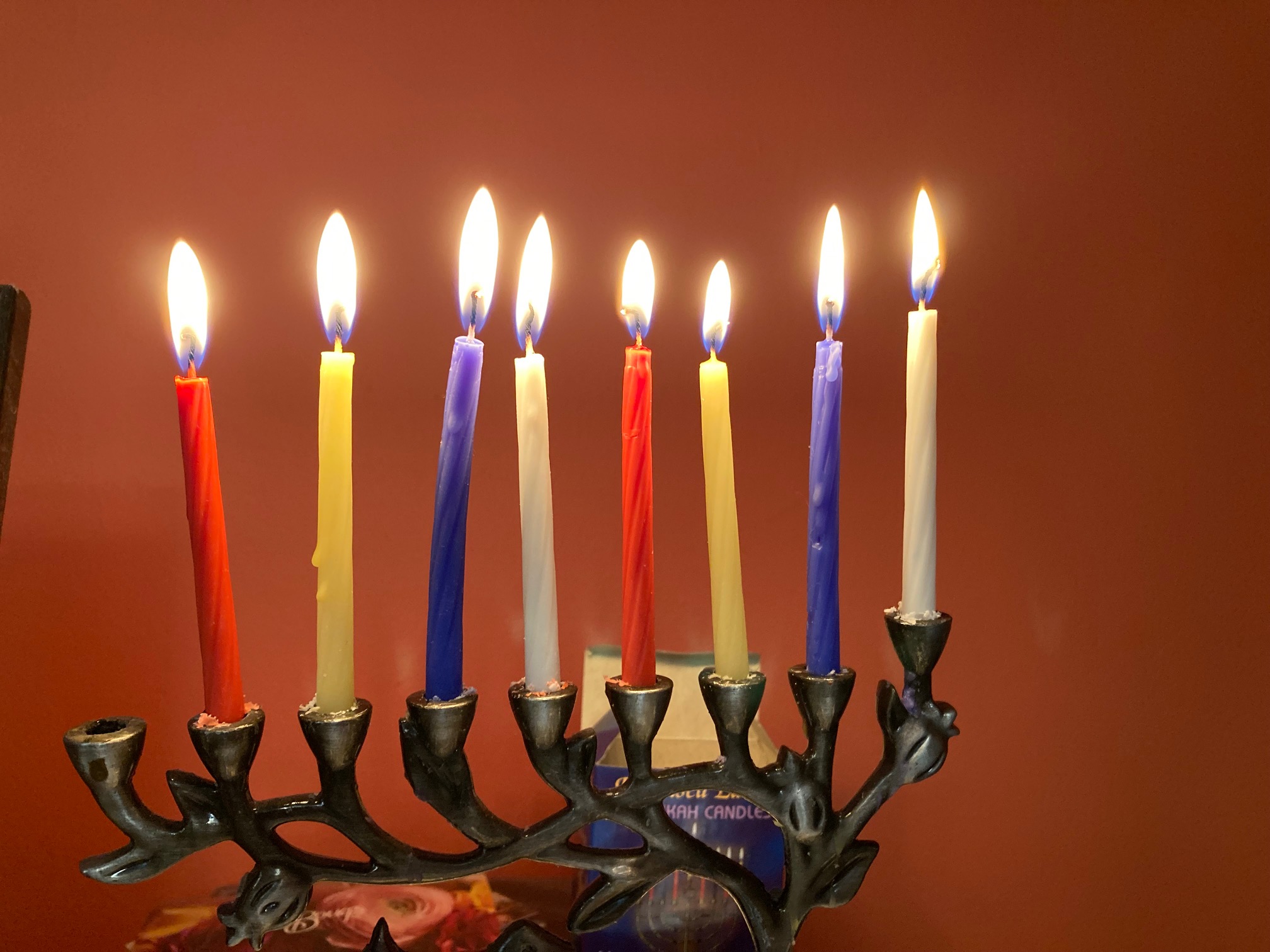
            Each day this past week we lit our Chanukah candles – either with our congregation on Zoom or just me and Mom and the dogs – and even though it often felt like a chore, like something I just had to get done, sometimes the sparks of light reached me and made a difference.

Day 4

            There’s something about the way the fire grows by one candle each night of Chanukah that makes sense to me. It fits the way I live my life, growing slowly each day, doing a little bit more and a little bit more, until seemingly out of nowhere, I’ve achieved something I didn’t know I could do. The way the Chanukah candles grow brighter each day of the holiday, instead of dimmer, makes me feel like it’s okay to pace myself, and to make the most of each day in whatever way works for me (naps, snacks, more naps, repeat), allowing me to focus on letting the fire grow instead of dim as I go forward.

Day 7

            I’m not suddenly cooking every day, but I’m noticing that I want to do more. I want to go to the Costco near us and buy…something, and I want to take a trip…somewhere. I’m not up to it yet, but for now it’s enough to know that I want to do these things; that they even sound like fun.

            After a few days of making sandwiches with the new bread (pastrami with mustard), I found a recipe for marzipan filled rugelach. I haven’t made them yet, but I bought all of the ingredients, so those Chanukah candles are adding up to something. I’m not setting the world on fire yet, but I’m wondering what else might start to sound good again, and I’m looking forward to finding out.

“We’re ready!”

If you haven’t had a chance yet, please check out my Young Adult novel, Yeshiva Girl, on Amazon. And if you feel called to write a review of the book, on Amazon, or anywhere else, I’d be honored.

            Yeshiva Girl is about a Jewish teenager on Long Island, named Isabel, though her father calls her Jezebel. Her father has been accused of inappropriate sexual behavior with one of his students, which he denies, but Izzy implicitly believes it’s true. As a result of his problems, her father sends her to a co-ed Orthodox yeshiva for tenth grade, out of the blue, and Izzy and her mother can’t figure out how to prevent it. At Yeshiva, though, Izzy finds that religious people are much more complicated than she had expected. Some, like her father, may use religion as a place to hide, but others search for and find comfort, and community, and even enlightenment. The question is, what will Izzy find?

Rededication

I’m exhausted. I’m (very) tempted to hibernate until spring; to fall into a sea of Christmas movies and jigsaw puzzles and coloring books and naps with the dogs. The schools in my area are preparing to go fully virtual this winter, in case the Covid surge hits us the way it’s hit the rest of the country. I feel like I’ve been running full out the past few weeks at synagogue school, hoping to make it to winter break before the wave inevitably hits.

There’s a deep weariness like cement in my bones, and I feel like my soul has taken a battering too, with the anxiety leading up to, and now out of, the presidential election, and the stress of Covid and how it impacts teaching; it feels like my soul and not just my body is black and blue and tender to the touch.

“Oy.”

I think we’re all feeling that way this winter. It would be nice if we could rest at home until the vaccines are ready for mass distribution, and then Santa and the reindeer could bring doses to every house and apartment and sprinkle fairy dust over all of us, instead of making us go to the doctor for a shot in the arm, or two.

“No fairy dust yet, but I’ll keep checking.”

One of the main themes of the Jewish holiday of Chanukah, along with celebrating the miracle of the oil lasting eight days, is the rededication of the Temple in Jerusalem after it was used for profane purposes (like, an altar to Zeus and sacrificing pigs within the walls). The word Chanukah itself means dedication, and, not coincidentally, this is often a time of year when we start planning our goals, or resolutions, for the coming year. But I’m not ready.

I keep thinking that I need to rededicate myself to knowing my limits, and respecting them; that I need to stop believing that I have to be someone else; someone who can multitask, and work eighteen hour days, and write three novels a year. I’m not that person, and no amount of beating myself up is going to change that.

But it feels impossible to move from constant self-improvement efforts to some semblance of self-acceptance. I feel like the ancient Temple in Jerusalem, before the Maccabees came in to clean things up. And just like with the Temple, before I can re-dedicate myself to moving forward, I need to really look around and survey the damage, because there may be miracles hiding in the wreckage, canisters of oil that will last eight days instead of one, for example, or other sources of light that have been in hiding. I can’t just turn my system off and on again and expect it to reboot.

“I think I see the light!”

I’m going to continue lighting the Chanukah candles each night, and hope that the growing light gives me inspiration, or at least some peace. But, I’m not ready for re-dedication yet. I need rest and presents and joy, and then more rest, before I can re-dedicate myself to the sacred tasks of my life. I think the dogs will be okay with that.

Night one
Night two, with help from Butterfly
Night three with Miss B
“We’ll think about it.”

If you haven’t had a chance yet, please check out my Young Adult novel, Yeshiva Girl, on Amazon. And if you feel called to write a review of the book, on Amazon, or anywhere else, I’d be honored.

            Yeshiva Girl is about a Jewish teenager on Long Island, named Isabel, though her father calls her Jezebel. Her father has been accused of inappropriate sexual behavior with one of his students, which he denies, but Izzy implicitly believes it’s true. As a result of his problems, her father sends her to a co-ed Orthodox yeshiva for tenth grade, out of the blue, and Izzy and her mother can’t figure out how to prevent it. At Yeshiva, though, Izzy finds that religious people are much more complicated than she had expected. Some, like her father, may use religion as a place to hide, but others search for and find comfort, and community, and even enlightenment. The question is, what will Izzy find?
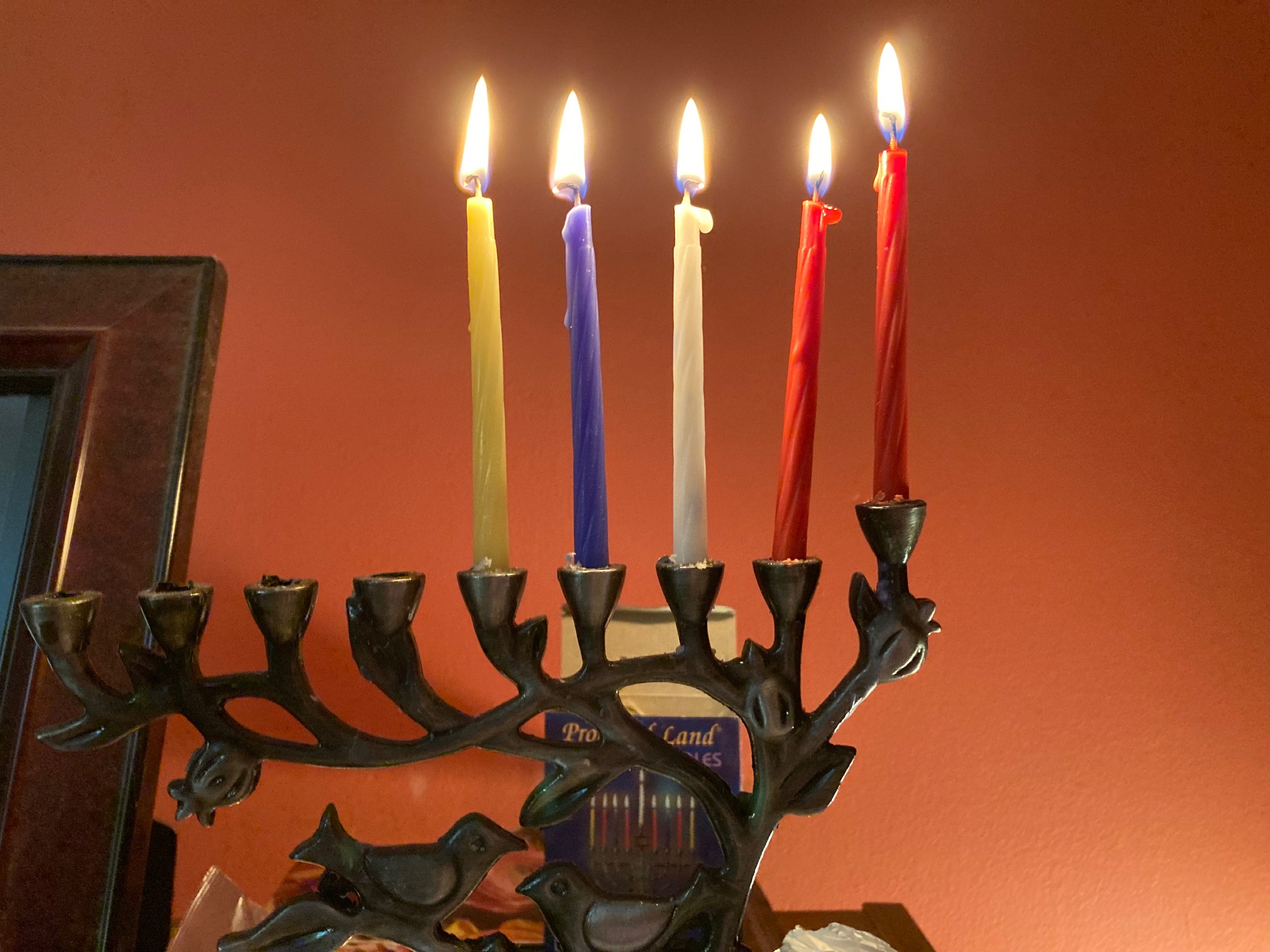
This Chanukah

            We bought a new chanukiah (a candle holder with nine branches) for Chanukah, as a step up from the one we’ve used for the past two years: a tiny supermarket trinket with mini candles that burned down in minutes. That one replaced what we’d had for many years, which was nothing. It seems strange, given how much Judaism means to me, that I still struggle so much with the symbols and rituals of being Jewish. I still don’t light Shabbat candles on Friday nights, or bake or buy a challah, or say blessings over wine (or even grape juice). I take great joy in singing the prayers and in the sense of community and I love teaching the kids in synagogue school. But. There are still so many glitches.

The new Chanukiah in it’s place of honor next to Miss Butterfly

            One of the glitches is the story behind the holiday of Chanukah. The traditional story is that the Jews rose up against their Greek-Syrian oppressors in the second century before the Common Era. King Antiochus IV had outlawed the Jewish religion, ordering the Jews to worship Greek gods, and his soldiers attacked the city, killing thousands and desecrating the Holy Temple in Jerusalem. The Jews rebelled, under Judah the Maccabee, and retook the city and the Temple, and when they went to rededicate the Temple, and light the seven branched Menorah, they could only find enough consecrated oil to last one day, but, miracle of miracles, the oil lasted eight days.

Miracles shmiracles.

            Except. The war started as a civil war between those Jews, led by the Maccabees, who were determined to impose Jewish law on all of the Jews, even by force, and those Jews who had adopted Greek customs; the entrance of the Greek soldiers came later. The Maccabees won the war, killing Greek soldiers and their fellow Jews, and took control of the land of Israel for more than a century. Oh, and the oil that lasted eight days? It wasn’t in the original telling of the story. The miracle of the oil came up later, when the Rabbis needed an excuse for a festival of light to replace the pagan festivals of light the Jewish people loved so much.

            So, how do I celebrate a miracle (eight days of oil) that I know didn’t actually happen? And how do I celebrate a holiday that honors the killing of Jews like me who just wanted to have a foot in both the religious and the secular worlds?

            I struggle with the story behind this holiday just like I struggle with the story of Purim (punishing the man who planned the mass murder of the Jews by killing him and his whole family), but I can also see the value of a holiday that helps us find a way to feel hopeful during a dark time, be it a time of oppression or a time of literal darkness.

            The fact is, even though in America we tend to look at Chanukah as the sort of third cousin twice removed of the big winter holiday of Christmas, it turns out that many cultures have a festival of light around this time of year. Each one has its own story – whether it’s about the birth of Jesus, or the rebirth of the Sun, or honoring ancestors; the Hindus have a whole epic among the Gods for Diwali (celebrated mid-November this year) that ends in the triumph of good over evil.

            What all of these holidays have in common is the celebration of light. As the days get shorter and colder, and the nights get longer and darker, we all need something to remind us that light and heat and harvests and joy will return. We light candles, or clay lamps, or bonfires, or firecrackers, and we make a point of celebrating with our loved ones and eating special foods, all so that we can make it through the winter with our hope intact. We’ve gotten so good at this that, at least in America, we call this “the most wonderful time of the year!”

“The MOST wonderful?!”

            We still crave the symbols of our own cultures when we celebrate, though, just like we want to spend time with our own families and friends at this time of year. So for Christmas there’s Santa Claus, and mistletoe, yule logs (originally from a druid custom of rolling a flaming wheel down a hill to remind the sun how to rise), and of course Christmas trees (fun fact, people used to light up their Christmas trees with candles, before electric light came along, so Christmas tree fires were very common); and for Chanukah, we light our Chanukiyot and spin dreidels and eat potato latkes and chocolate gelt (coins); and for Yalda Night, a Zoroastrian Winter Solstice celebration in Iran on the longest night of the year, there are red fruits (like pomegranates and watermelons) to symbolize the crimson colors of dawn, and dried fruit and nuts and Persian sweets and poetry; and on St. Lucia’s Day in Sweden, the eldest daughter dresses in a long white gown, tied with red ribbons, and wears a crown of candles and lingonberry greens, and brings sweet rolls called Lussekatter to her family; and for the Chinese Lunar New Year lanterns are lit to celebrate the light of the moon, and dumplings and fish and rice cakes and noodles are eaten for good luck in the coming year; and for Diwali, clay lamps called Diyas are lit to celebrate the triumph of light over darkness and good over evil, and there are candles and firecrackers and intricate patterns of colored powders, and sweet and savory foods; and for Kwanzaa, an African American holiday to commemorate African Winter Solstice festivals, a Kinara (a candle holder with seven branches) is lit with candles in red, black and green, and gifts are given, and harvest foods of Africa are eaten, and the values of African village traditions are celebrated.

            But all of it, however specific the details are to our own cultures, connects us to the overall human need for light, and wisdom, and hope for tomorrow.

            When I think of it like that, Chanukah starts to take on more of a glow for me. And it also makes sense of my love for Christmas movies, which are really all about love and light and miracles, especially the small miracles that help us through each day.

            So maybe this year, even as Mom and I light the candles on the Chanukiah, and sing Chanukah songs to the dogs, we can think about all of the other people around the world celebrating their own festivals of light, and we can remember the creativity and ingenuity of all of our ancestors in finding ways to feel joy at such a dark time of year, instead of each of us hibernating in our own caves. And maybe, along with the obligatory potato latkes, we can celebrate with samosas, or Halwa, or dumplings, or Lussekatter. Maybe we’ll even drink some Swedish Glogg (flaming mulled wine!), though probably not. The dogs would much prefer a traditional Winter Solstice meal, with lots and lots of roasted meat.

“We’re ready to be spoiled for eight days! Or more!!!!”

            I don’t want to erase the history that brought my people to this point, or pretend that my ancestors were any less flawed than they were. I want to find a way to honor the deeper meaning of the holiday, for me, which is that survival is possible, even through the darkest of times, if we are willing to look around and learn from each other.

If you haven’t had a chance yet, please check out my Young Adult novel, Yeshiva Girl, on Amazon. And if you feel called to write a review of the book, on Amazon, or anywhere else, I’d be honored.

            Yeshiva Girl is about a Jewish teenager on Long Island, named Isabel, though her father calls her Jezebel. Her father has been accused of inappropriate sexual behavior with one of his students, which he denies, but Izzy implicitly believes it’s true. As a result of his problems, her father sends her to a co-ed Orthodox yeshiva for tenth grade, out of the blue, and Izzy and her mother can’t figure out how to prevent it. At Yeshiva, though, Izzy finds that religious people are much more complicated than she had expected. Some, like her father, may use religion as a place to hide, but others search for and find comfort, and community, and even enlightenment. The question is, what will Izzy find?
Ellie’s Surprise Birthday


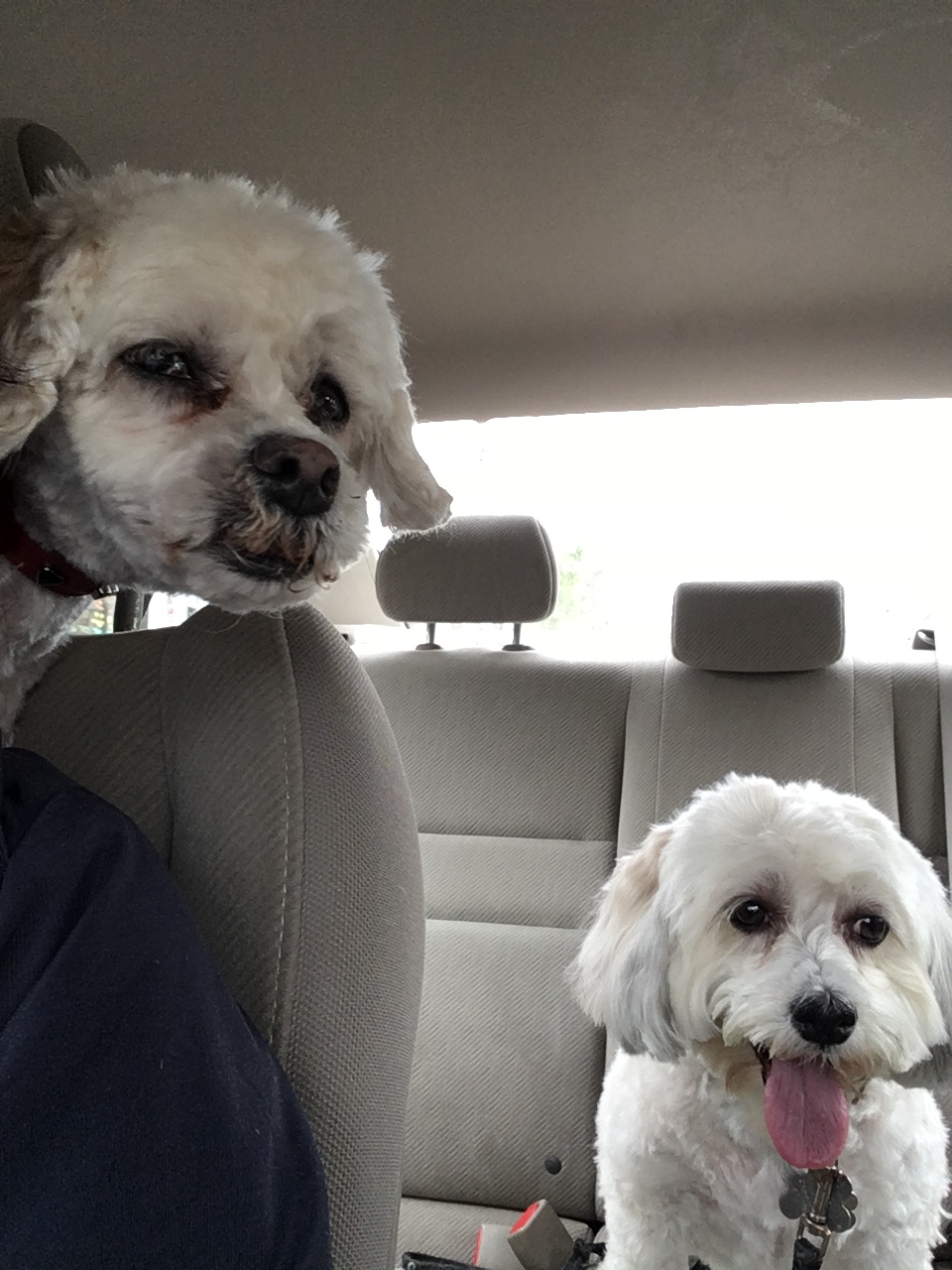
This past Thursday we got a call from our groomer (the goddess who mediated Ellie’s adoption) wishing Ellie a Happy Birthday. Wait, what? It turns out that Ellie just turned five years old this week, and we now know her exact birthday, so of course celebration ensued (I still plan to celebrate her Gotcha Day in July, but two birthday parties won’t hurt anyone).

009

“A birthday party means food, right Mommy?”

004

“Where’s my party?”


We were already in celebration mode, what with my own birthday, and Thanksgiving, and Chanukah coming up, and, oh yeah, the publication of my novel Yeshiva Girl (!!!!!!!!!!).

51WewBFUZ5L._AC_US218_


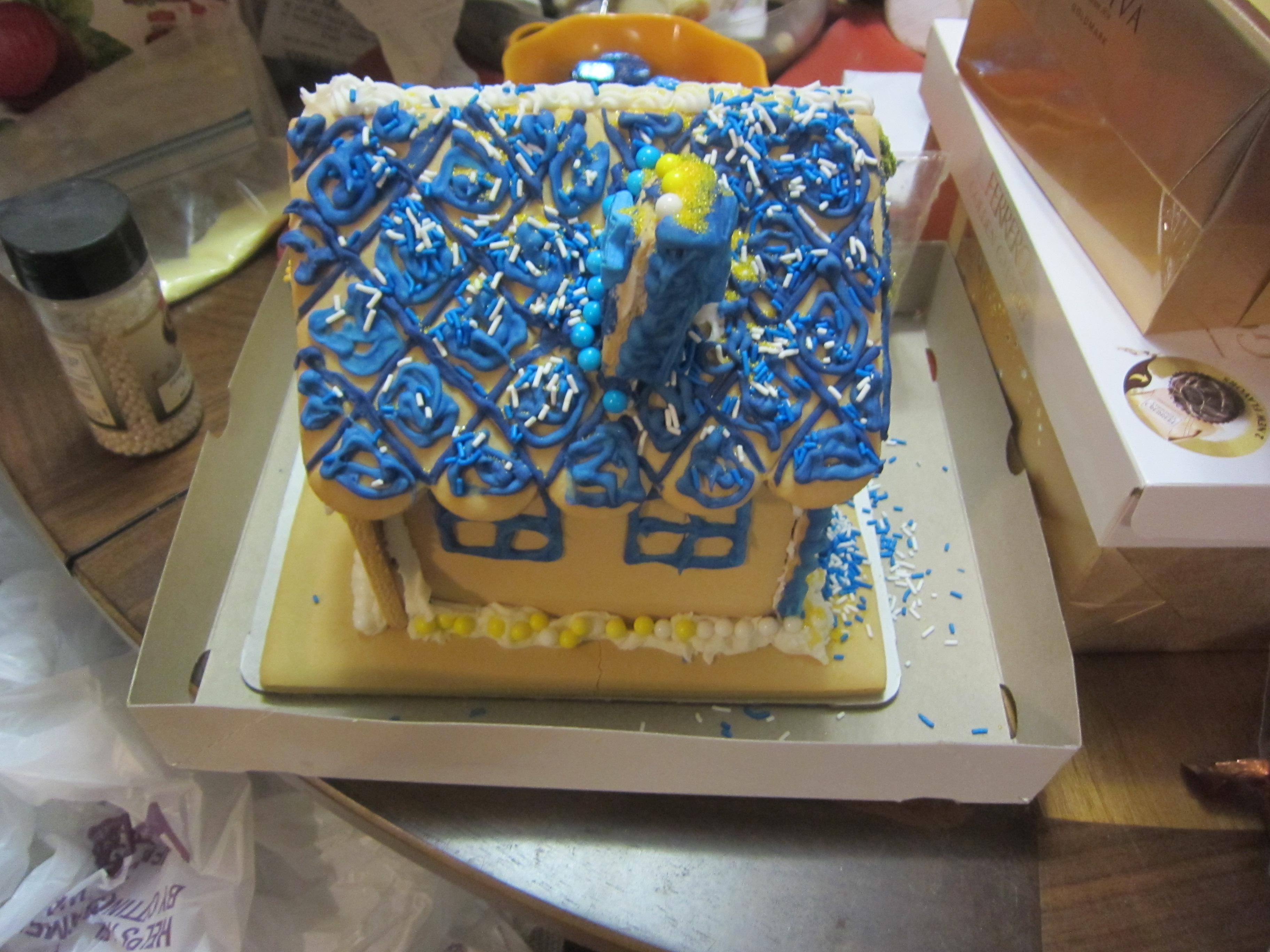
My first thought for the celebration was cookie decorating, given the season. I found a Chanukah House kit at our local drug store (yes, there are quite a few Jews in my neighborhood), right next to the Gingerbread house kits. My cookie decorating skills lack a certain precision, so, a lot of the house making materials ended up on the floor, where the dogs enjoyed them thoroughly. It turns out you need a lot of royal icing to hold a house made of sugar cookies in place, and then you need to cover the whole thing with much more sugar than you could ever have imagined. Mom had a steadier hand with the roof tiles, but I just played for hours, tossing sprinkles and candy every which way.

003

It turned out that that was not enough cookie decorating for us (um, me). So I made a batch of sugar cookie dough and used every cookie cutter I own, from tiny leaves, to giant Butterflies, with teddy bears and hearts and giraffes in between. I colored way outside the lines (as always, I actually failed coloring in kindergarten), and made sure to let the dogs share in the joy whenever possible. And then, to balance out their diet, I used our new treat launcher to spray chicken-flavored treats around the room and set the girls off on a scavenger hunt to make sure not one bite was lost.

001

iced cookies

Celebration accomplished!

I’ve been overwhelmed this week with the support for my novel and I want to thank everyone who ordered a copy of Yeshiva Girl from Amazon, and everyone who offered encouragement on the blog as well. I can’t wait to hear what you think of the book!

If you haven’t seen it yet, please check out my Amazon page and consider ordering the Kindle or Paperback version (or both!) of Yeshiva Girl. And if anyone feels called to write a review of the book on Amazon, I’d be honored.

yeshiva girl with dogs

The girls are trying to read the book too, in their own way.


Yeshiva Girl is about a Jewish girl on Long Island named Izzy (short for Isabel). Her father has been accused of inappropriate sexual behavior with one of his students, which he denies, but Izzy implicitly believes that it’s true. Izzy’s father decides to send her to an Orthodox yeshiva for tenth grade, out of the blue, as if she’s the one who needs to be fixed. Izzy, in pain, smart, funny, and looking for people she can trust, finds that religious people are much more complicated than she had expected. Some, like her father, may use religion as a place to hide, but others search for and find comfort, and community, and even enlightenment.


Chasing the Light


Chanukah, the Jewish festival of lights, started on Tuesday night, and it feels like it’s coming along at just the right time. Chanukah is a holiday for celebrating miracles and light (and a few other things that I choose to ignore, because violence and gore are not my thing). The miracles are about the survival of the Jewish people, and a light that shines longer than it ever should have. Of course, in celebrating that light we have to take it too far: if one candle is nice, eight or nine are nicer, if one Menorah is nice, twenty or thirty, or one twenty-foot tall Menorah, is nicer.

menorah21 brooklyn

In Brooklyn (not my picture)

I have been impatiently waiting for some light, especially since Miss Butterfly died, because she radiated light. I’ve tried so hard to generate enough light to fill the void she left behind, but what she did effortlessly I struggle to match.

pix from eos 020

Butterfly, radiating internal light

In a strange coincidence, or not, on Tuesday afternoon we received an envelope in the mail form Butterfly’s clinic, with her collar and tags. They’d lost track of them for five months, but on the first day of Chanukah, they were found (or at least received). Mom took it as a sign that Butterfly wants us to find a new sibling for Cricket. I want to see it that way too, but looking at her little pink Butterfly charm just made me sob.

001

I want to believe that bringing a new dog home will add light back into our lives. There is a new puppy across the hall, a little black ball of fluff who hops and cries and looks into your eyes until you melt. He makes me think that maybe I could manage a puppy again (I can’t); then there’s his sort-of-sister, Hazel, the mini-Goldendoodle, with her evanescent joy and uncontrollable peeing; and Teddy, our sometime boarder, who went home to find a new sister in his house, a Shih-Poo named Rosie who is doing her best to catch his eye. The light is everywhere, but I can’t quite catch it and hold onto it; I just keep seeing it run past me.

This past weekend, the first snow of the season brought out Cricket’s joy and light. She loves to run through the snow and catch snow balls with her mouth, and dig for hidden snow balls in the snow. I gladly reached down (with my gloves on) for handfuls of snow to keep her entertained. Her capacity for joy is extraordinary, and extraordinary to watch, even in the freezing cold.

041

“Look at the snowy light dropping from the sky!”

IMG_1861

“Throw the ball, Mommy!”

I’ve been trying to look at Petfinder.com, but the pages and pages of dogs in nearby rescues and shelters overwhelm me. How do you choose? I want a puppy, but I don’t have the energy. I want a senior dog, like Butterfly, but I can’t go through the trauma of loss again so soon. I want a Great Dane, but I don’t have the room, or the strength. Whenever I see a cute dog who is the right size (no bigger than Cricket), and age (three or four), and doesn’t look too much like Butterfly, I get excited, and then terrified, and then I start crying.

I’m going to need all of the light I can get in order to help me see clearly in the next leg of this journey, and I’m hoping that Chanukah will start me off well, bringing light, and some joy, and maybe even a little bit of hope.

IMG_0667

Butterfly leads the way.


Happy Chanukah


051

Happy Chanukah!


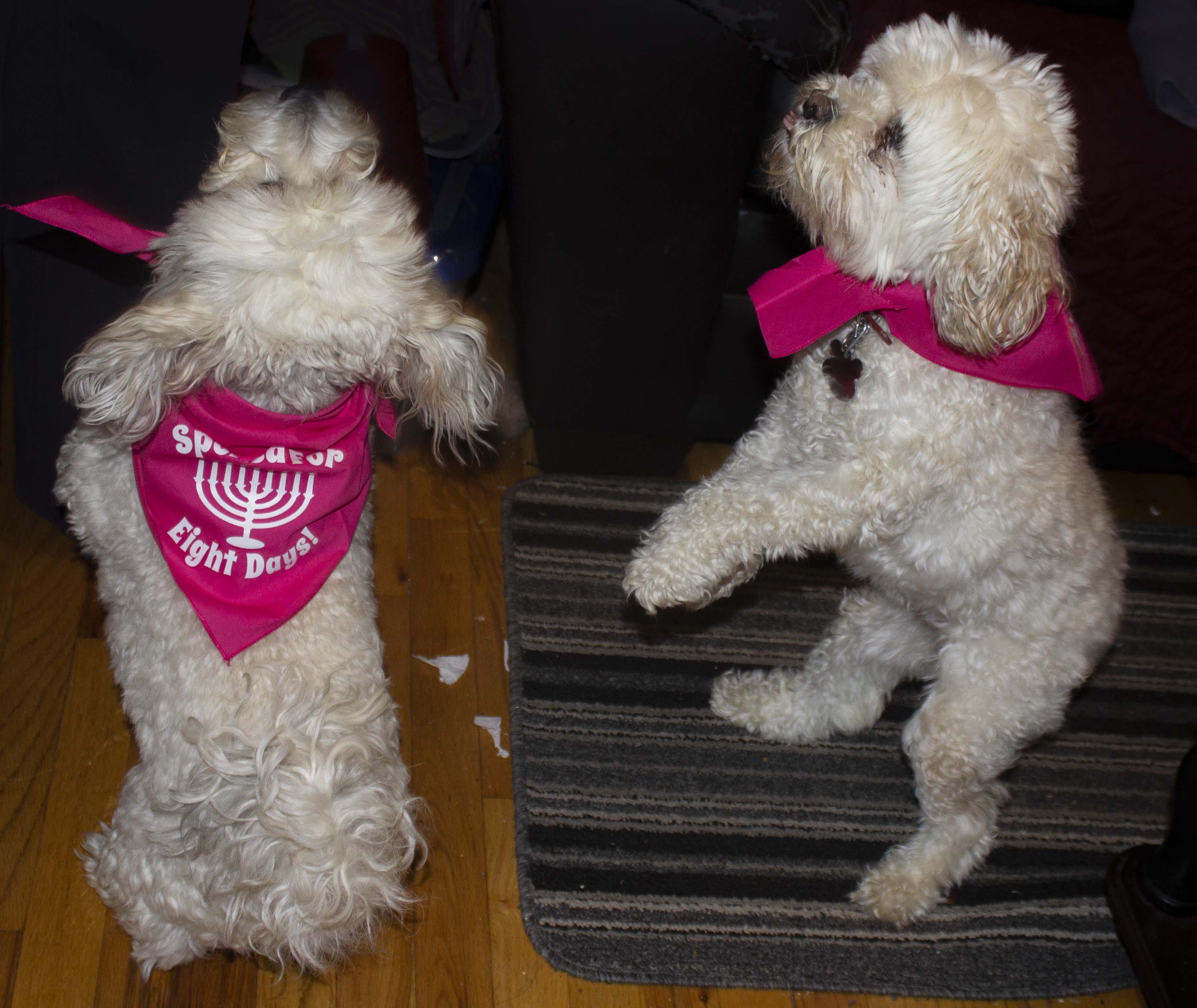
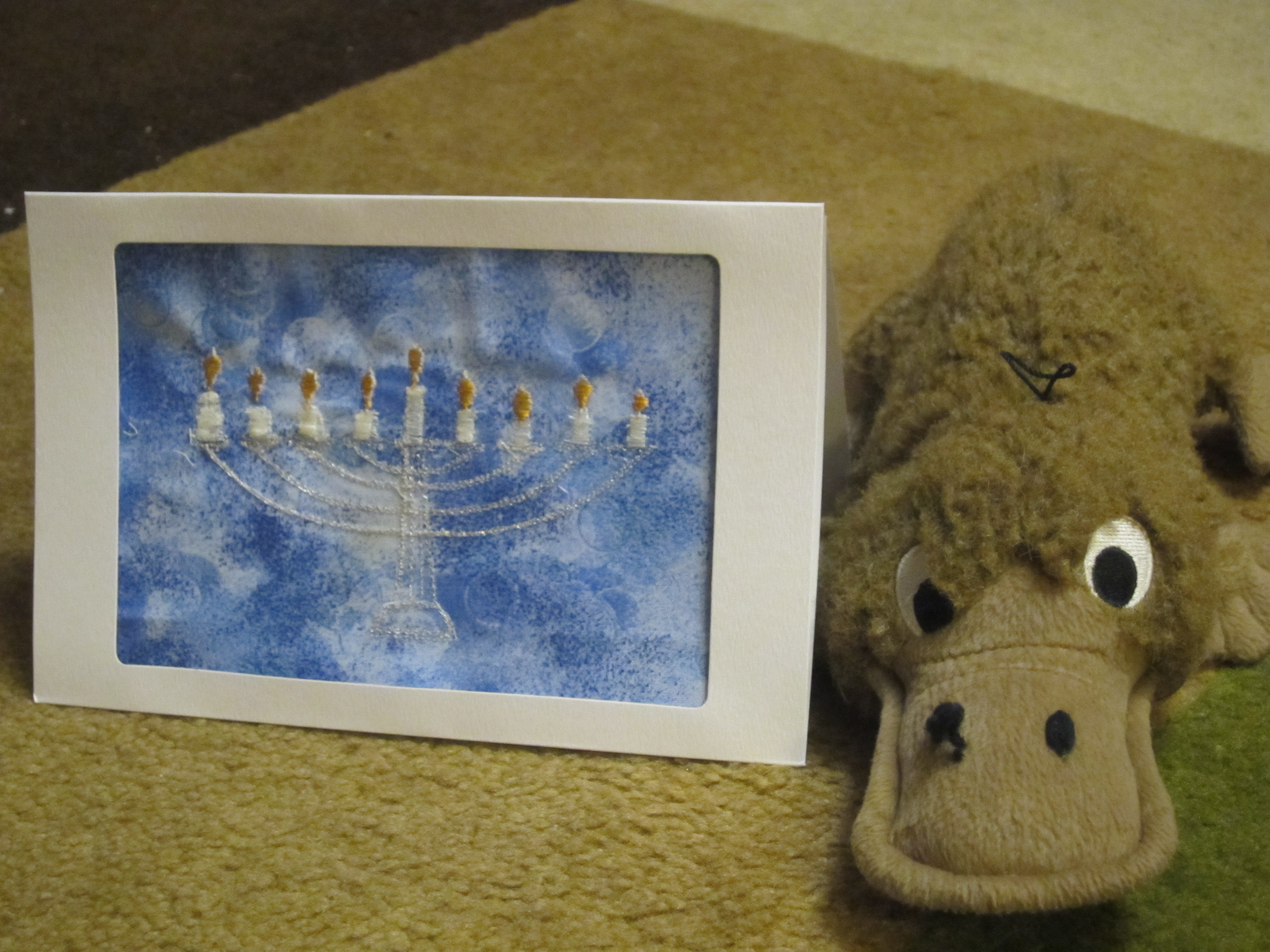
Chanukah, from what the rabbis tell me, means Dedication, as in the rededication of the Temple in Jerusalem after misuse, when one night’s worth of oil lasted for eight nights. The dogs rededicated themselves by going for their pre-holiday haircuts (and kerchiefing), and Mom started a new tradition of sewing her holiday cards instead of buying or printing them. I’ve decided that I’m going to rededicate myself to joy, and love, and fun. It’s so much easier to dedicate myself to work, or exercise, or obligations, because the internal and external pressures towards those goals are enormous. But fun? The dogs think I have lost too much of my oomph in this area, and I agree.

cricket-hairy

Cricket before her haircut,

046

and after.

021

Butterfly before

041

and after.


When I was little, my mom used to make scavenger hunts for me and my brother, for each night of Chanukah, as a way to make up for how small our presents were. One night, we split a package of dimes from the bank; one night my father came home with a used VCR for the whole family that someone else was giving away; we got packages of plastic combs, and socks, and small bags of candy. But we didn’t care, because it was the time and care Mom put into those scavenger hunts that was magical to us. She’d write clues on index cards and hide them throughout the house, one card leading to the next, until we found the ultimate prize.

My brother was convinced that the size of our presents meant that we were poor, even thought we had a nice house, and two family cars, and we both went to private school (on scholarships). But really, Mom was so careful with money, because our father was profligate. He put a lot away for retirement, and bought himself presents, and liked to give gifts to other people. He didn’t understand why I would need regular shoes and sneakers. He was especially angry when my feet grew so fast that I needed a second pair of shoes in less than a year.

My brother chose to ignore the profligacy, and focus on the poverty, and aimed for a good upper middle class career in his adult life. I focused on the unfairness, and the confusion, and ended up as a writer and a fledgling social worker.

But both of us love the play time of Chanukah, and being able to remind ourselves of the joy of running through the house looking for those hidden index cards in Mom’s handwriting, letting us know that we were the most important people in the world to her.

The dogs like to think of every day as a scavenger hunt for treats that will magically fall from the sky just for them. They’re pretty sure that every day should be a holiday, full of treats, and love and joy.

037

“The treats are coming! The treats are coming!”

011

“The treats are hiding under the snow, Mommy.”

008

“Wheeeeeeeeeeeee!”