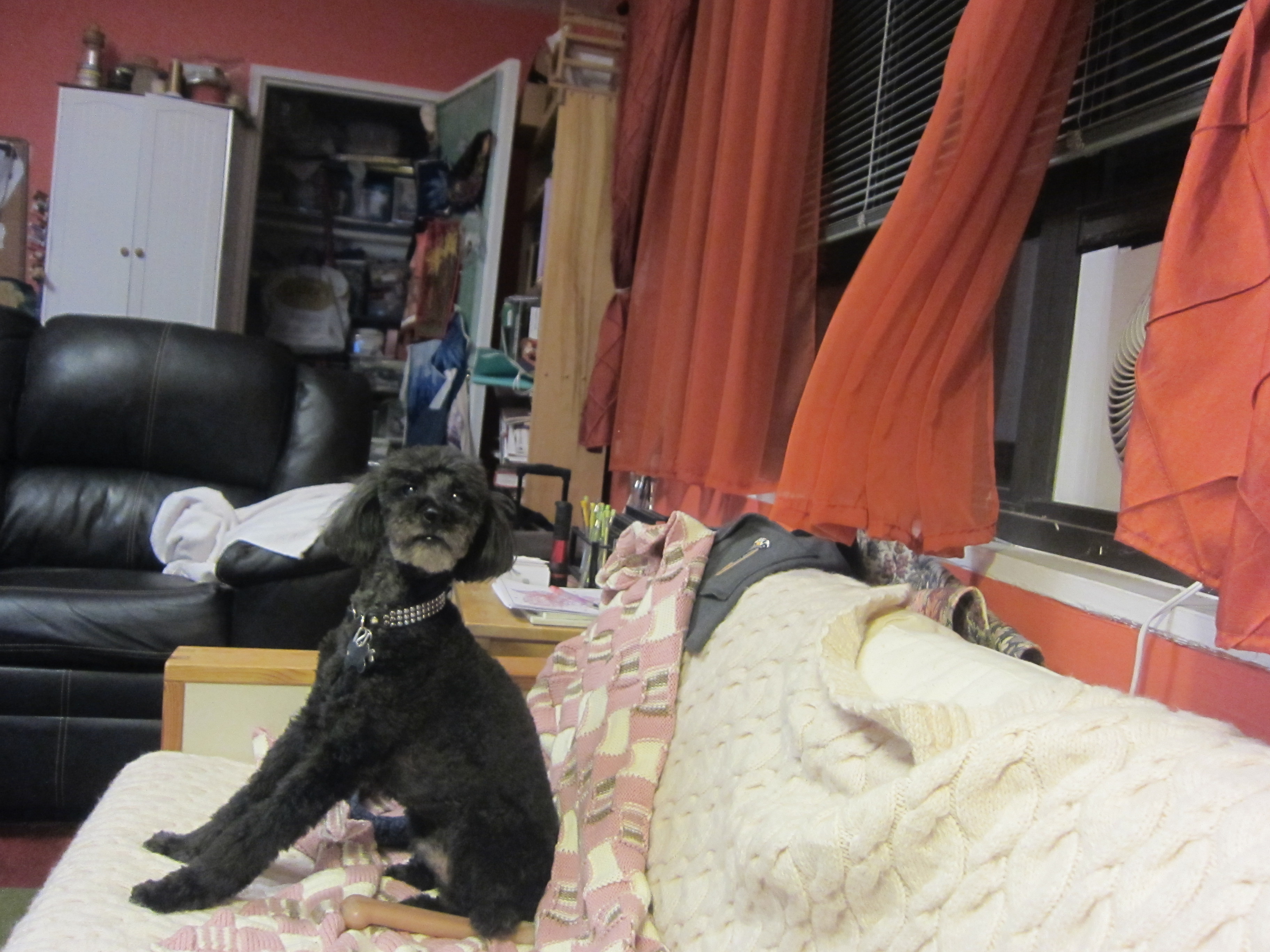
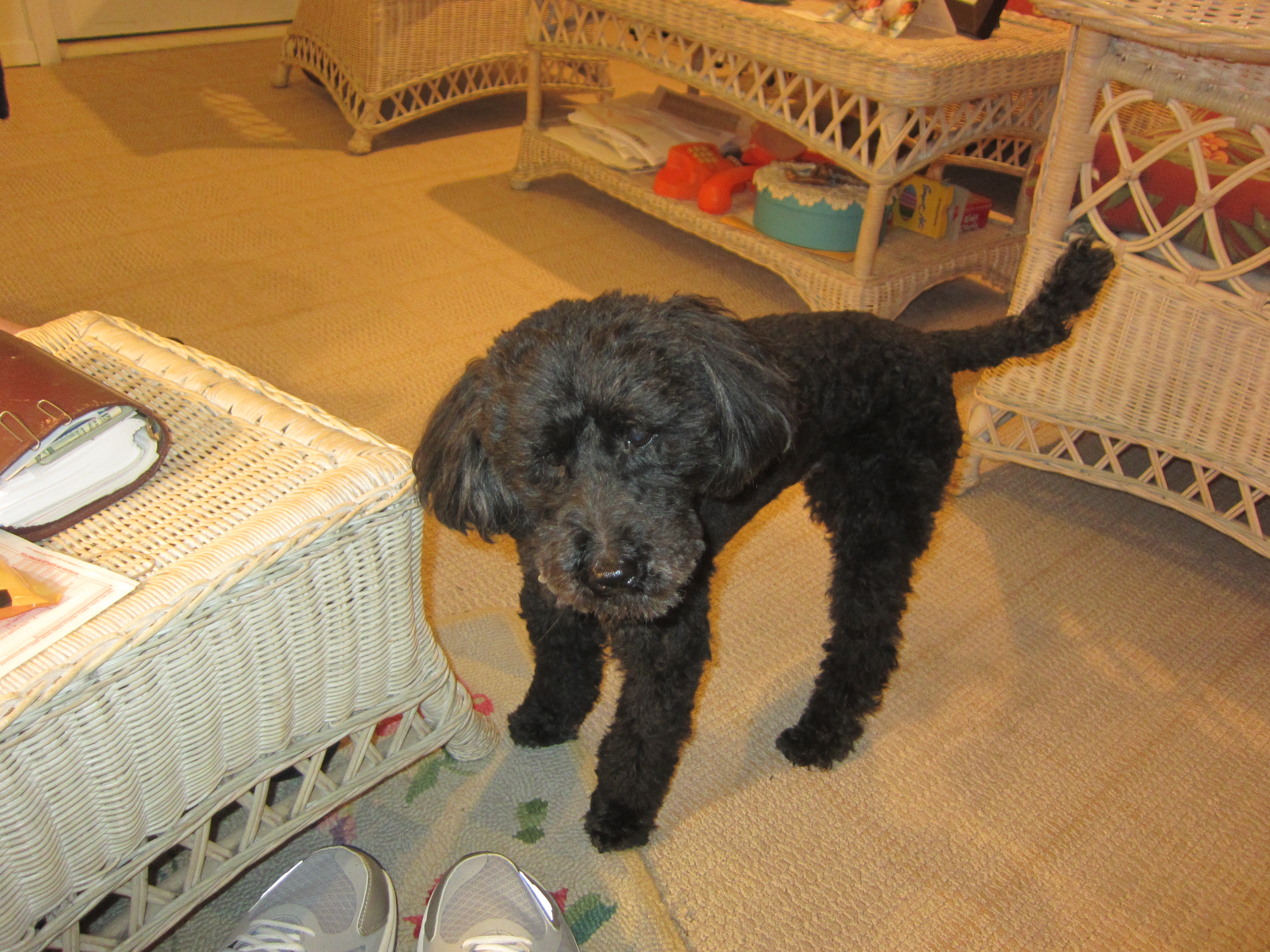
This past Monday morning, after watching her decline throughout the weekend, we brought Cricket to the vet to end her life. She was sixteen years, two months and three and a half weeks old.

So many times over the past weeks and months we had thought Cricket was nearing the end, and we told ourselves that if she was in the same state in the morning we’d take her to the vet and put her to sleep. Almost every time, Ellie would sleep in Mom’s room overnight, instead of mine, watching over her sister, but when morning came, Cricket would wake up ready to try again; demanding to try again.
Except, in the last few weeks, each time Cricket bounced back, she was a little shakier and a little more uncertain than the time before. We held onto what the vet had said, that if she didn’t eat for three days she was suffering, as our guide, because we didn’t want her to suffer, but we also didn’t want to cut short her life, even a day sooner than necessary.
She still needed the ACE (doggy valium) in order to tolerate her daily subcutaneous fluids (I still have the bite marks from the few times I tried to do it without the ACE, even in her last week), and I was able to take advantage of her time on the ACE to do some grooming that she would never have allowed otherwise: making sure she was clean, and could see as clearly as her foggy eyes would allow, and could grip the floor with her feet, even if she didn’t have perfect control of her legs.
So many people who would never think of assisted suicide for a family member, think it is the only compassionate thing to do for a pet, and I see their point, and even agree with it most of the time, but each time someone hinted to me that it was time to let Cricket go, I disagreed. Dogs can’t speak the way we can, but after sixteen years I knew Cricket, and I knew she wanted to stay as long as possible and she wouldn’t appreciate us making that decision for her, even if it was made with love and compassion and a wish to save her from further pain. But also, however much I want to believe in the Rainbow Bridge, and heaven, and the persistence of the soul beyond the body, I know that death is final. Even if there is something that persists after death, it’s not the same as the life we know.
And I kept thinking of Dina, our lab mix who died at sixteen years and two months of age. Dina couldn’t hold herself up anymore by her last day, but she was still eating, folding herself around her bowl of food. At the time, the decision to let her go was made because Mom was going away to New Zealand for a few weeks and I would be left alone to care for a dog who couldn’t see or hear and was crying in pain. But it still felt too early. If Mom hadn’t been leaving, we wouldn’t have gone to the vet on that particular day. We would have waited. It may have only been one or two more days, or a week, but I felt guilty for that decision. I still don’t know if it would have been right or wrong to wait longer. Maybe there’s no right or wrong in this.

Our goal with Cricket was to make her as comfortable as possible; to maximize her happiness and minimize her pain. The prolonged hospice period was hardest on Mom, because Cricket insisted on sleeping next to her Grandma, and if she couldn’t wake up in time to get to the floor, she’d pee on Mom’s bed (we had a special set up to protect the bedding, with a wee wee pad and towels and mats, but it wasn’t always enough). But even with all of that, Mom didn’t want to let her go either. So we waited, and we did our best. We spent a lot more time holding her, and wrapping her in towels and blankets to keep her cozy. Her bones were sharp under her warm t-shirts, but we worked hard to hear everything Cricket was saying, about what she wanted, and what she could tolerate.
At a faculty meeting for synagogue school, the week before Cricket died, we did an exercise for the holiday of Sukkot where we passed the Etrog (the citron that’s used as one of the four species for the holiday) around the room. The Etrog, this oversized, lumpy cousin of a lemon, is said to represent the heart, so each of us was asked to hold the Etrog to our chests and say what we were holding close to our hearts right then – a goal, a person, a moment of joy, a realization, etc. – and I said Cricket, I’m holding my dying dog to my heart, and then I went home and literally held her next to my heart for hours.
That night, or the next, when we carried Cricket outside to join Ellie for her evening walk, her friend Kevin, the mini-Goldendoodle, heard us and came running, and Cricket’s little tail wagged and wagged, and she pushed herself to walk faster to get to him, to follow him, to sniff him. After a little while she got worn out and came over to rest by my leg, to let me know she was ready to go back inside; but just seeing her with him, perking up and finding joy in his presence again even for a few minutes, reassured me that we were doing right by her.
And then, a few days later, she stopped eating, and then she stopped drinking. She couldn’t stand up on her own anymore, even though she desperately wanted to, and we knew it was time. Her life was so full and rich and complicated and true, and she gave us every last drop of herself and squeezed everything she could out of her one life, but it still felt too soon to let go. Maybe it always will.
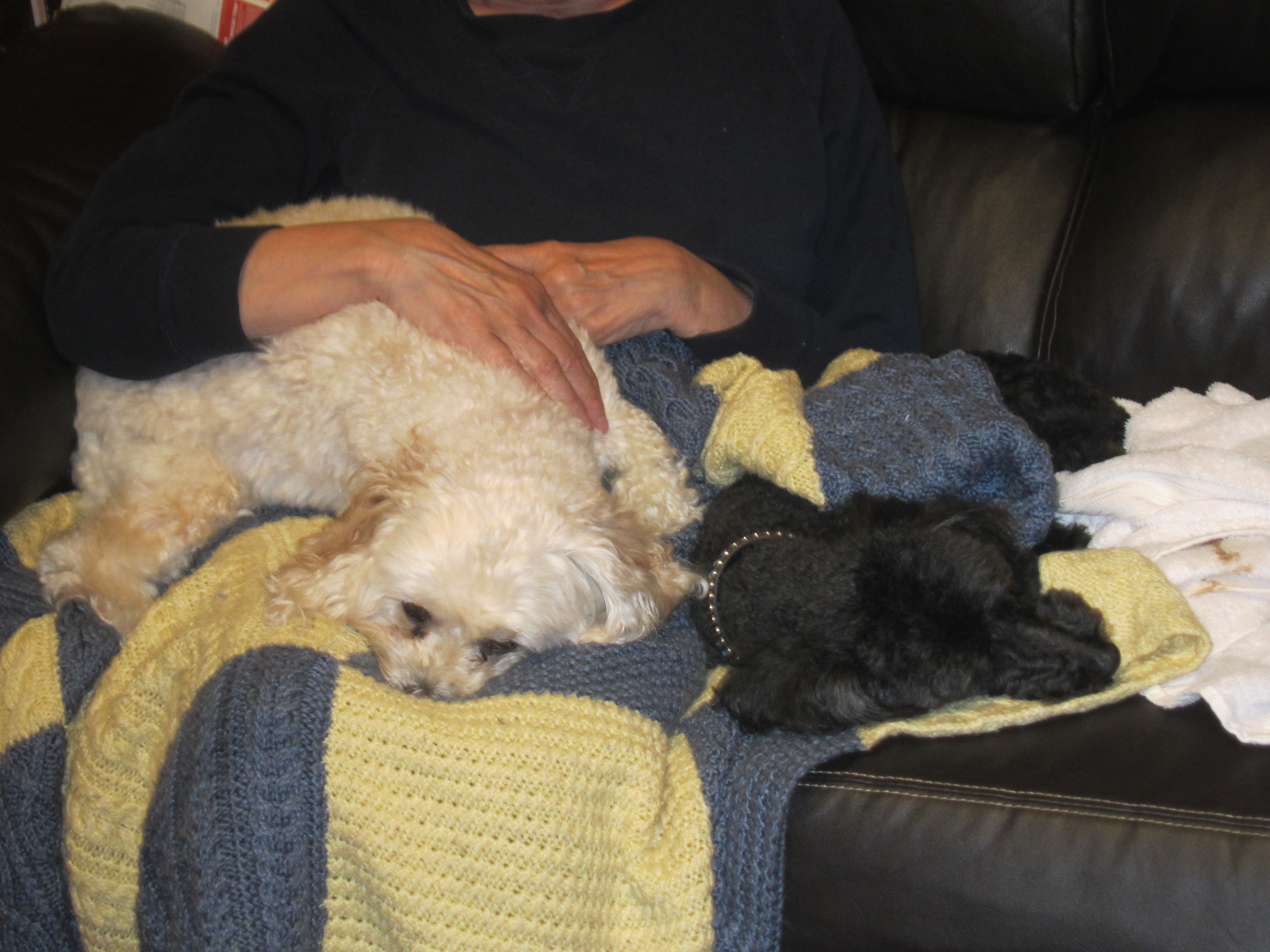
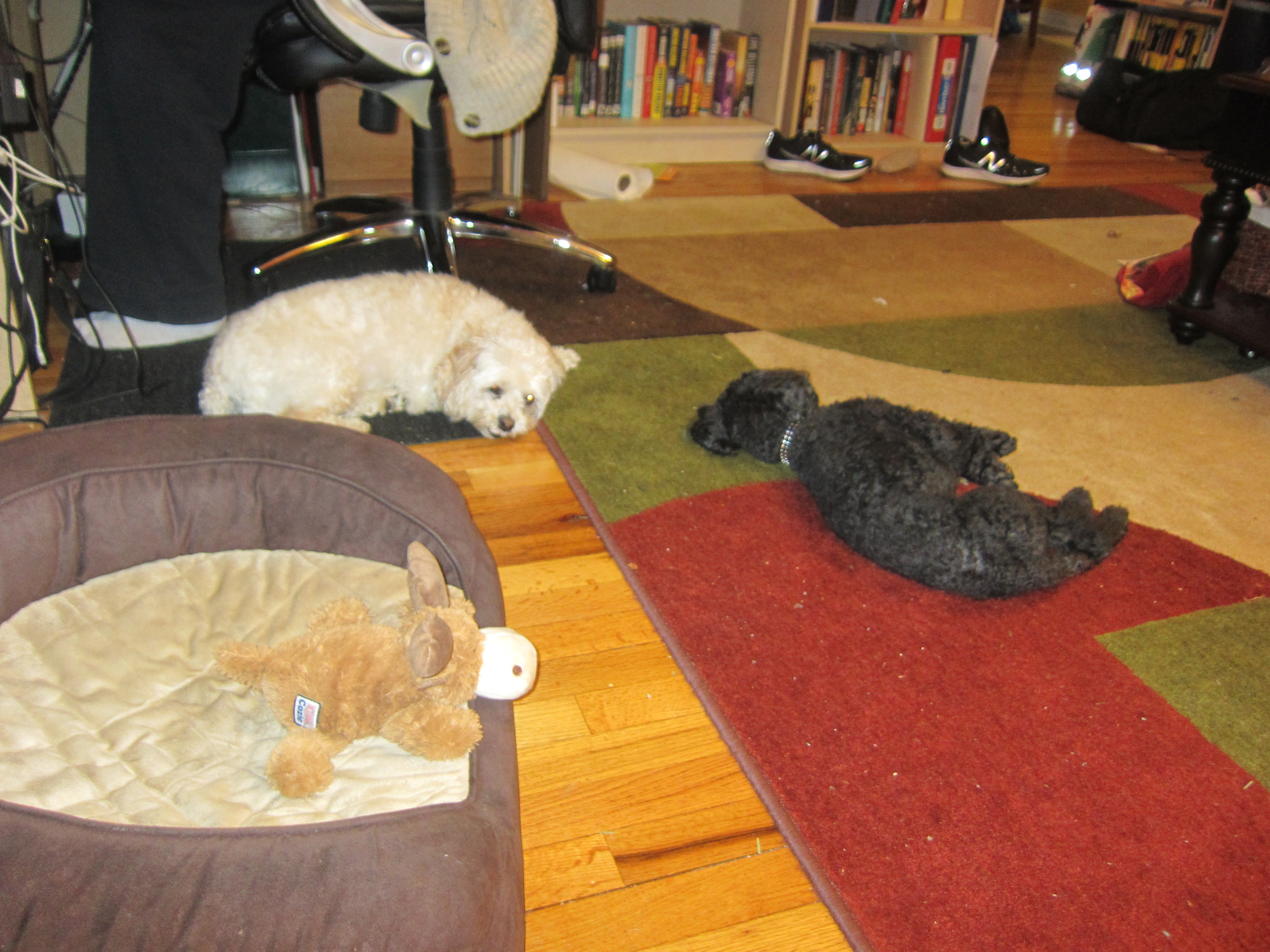
When we came home from the vet, I started to clean: doing load after load of laundry, picking up the wee wee pad path, folding Cricket’s t-shirts and sweaters and putting them away in the closet. And the apartment felt so quiet without her; so big and empty. But then there was Ellie. She was confused, sniffing the places where her sister should have been, looking to us for an explanation, and then climbing up onto the couch for comfort, keeping us close to her so she wouldn’t lose anyone else.

It will take all of us some time to get used to a world without Cricket. It doesn’t seem real, or even possible, that she’s gone. I think part of me believed that Cricket would live forever, because she wanted to, and because her spirit was so indomitable. The idea that she, like all of us, was mortal, just feels impossible. Her presence is everywhere is our lives, and her absence is everywhere too. But I take great comfort in the knowledge that she knew, all her life, no matter what, that she was loved.

If you haven’t had a chance yet, please check out my Young Adult novel, Yeshiva Girl, on Amazon. And if you feel called to write a review of the book, on Amazon, or anywhere else, I’d be honored.
Yeshiva Girl is about a Jewish teenager on Long Island, named Isabel, though her father calls her Jezebel. Her father has been accused of inappropriate sexual behavior with one of his students, which he denies, but Izzy implicitly believes it’s true. As a result of his problems, her father sends her to a co-ed Orthodox yeshiva for tenth grade, out of the blue, and Izzy and her mother can’t figure out how to prevent it. At Yeshiva, though, Izzy finds that religious people are much more complicated than she had expected. Some, like her father, may use religion as a place to hide, but others search for and find comfort, and community, and even enlightenment. The question is, what will Izzy find?







 rachelmankowitz