Tag Archives: death

Goodbye, My Butterfly


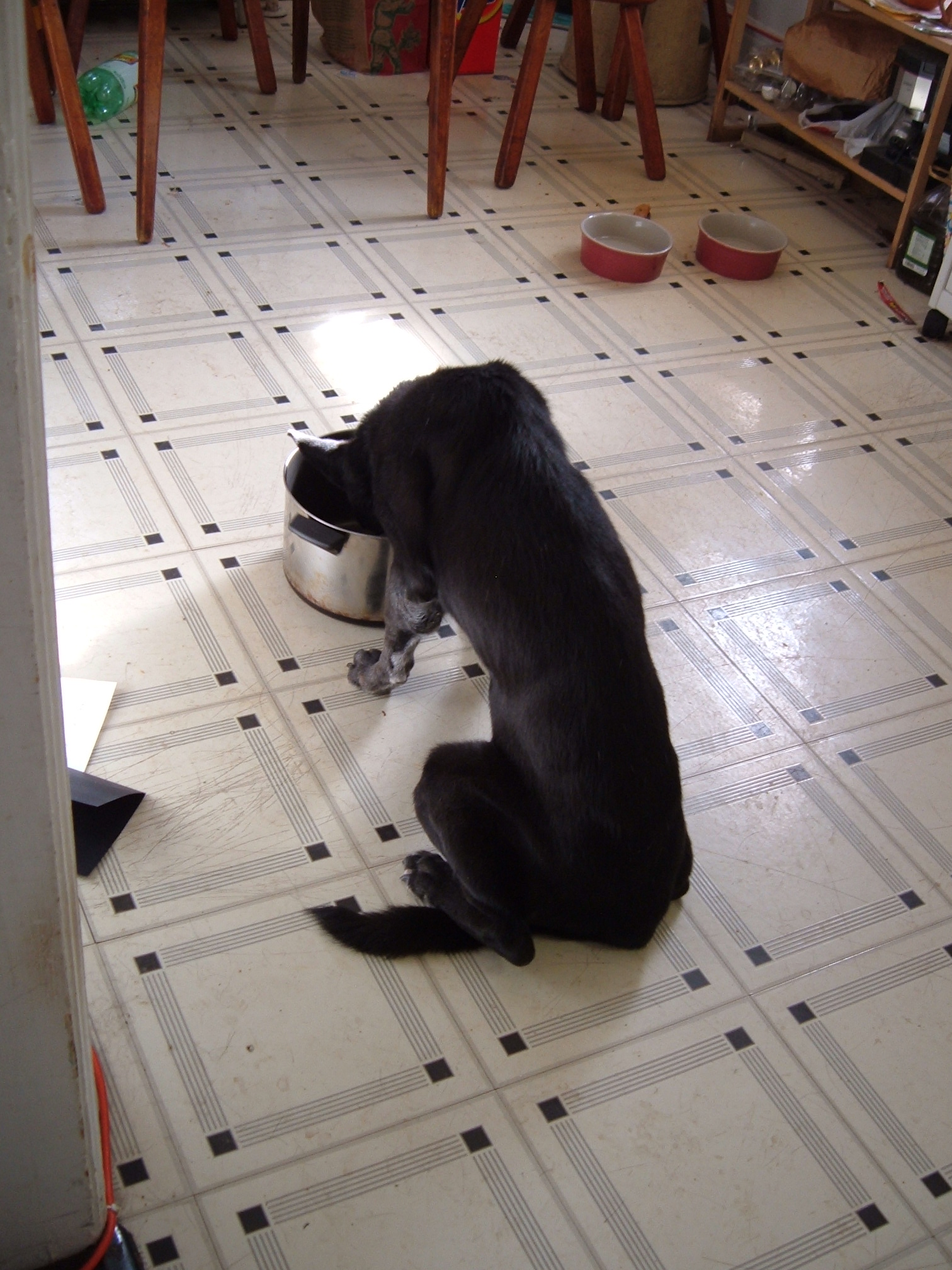
Three or four hours after Butterfly’s death, Cricket did something she never does: she brought a mouthful of kibble into the living room, dropped the pieces onto the carpet, and ate them kibble by kibble. Did she mean to mimic Butterfly’s favorite way of eating? Was she consciously honoring her sister’s memory? Or did Miss Butterfly find a way to join with Cricket for just a moment to visit us and say goodbye?

I don’t know.

014

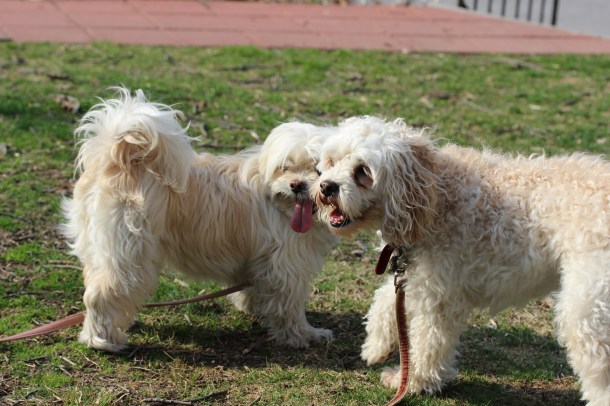
Cricket and Platypus, after.

I didn’t expect Butterfly to die, not yet. I counted her age from the day she came home, almost five years ago, and tried to ignore the eight years in the puppy mill that came before. Yes, she’d been in the hospital, but she was getting better. She’d coughed a bit the night before, but no more than was usual for her over the past year. Her bark was strained, yes, but I thought it was from a sore throat and it would pass.

007

Miss Butterfly

Mom came into my room at 6:30 in the morning, carrying Butterfly in her arms and saying, she’s making strange noises. Just the way Butterfly was limp and awkward in Mom’s arms told me that something was very wrong. She made some sort of wet hiccupping noise as Mom put her down on my bed. And then blood poured out of her mouth, and her eyes rolled back, and more blood poured out of her nose.

She was gone, but I couldn’t believe it. I checked for her pulse and couldn’t feel anything. Mom said she could feel a faint movement in her chest, and then nothing.

I kept my hands on Butterfly, petting her, only because Mom told me to do it; I couldn’t think at all for myself. I could see Butterfly’s hair move as I rubbed her back and I thought, she’s not dead. If I just keep contact with her I can keep her from leaving me. Her pulse is just hiding. It was a lot of blood, yes, but she has more. Doesn’t she?

My mind was split in pieces as I sat there watching her die. No, she was already dead, but part of me didn’t believe it. And part of me was trying to come up with a to-do list (laundry for the bloody sheets, go to the clinic to have her cremated – but she’s not really dead! How dare you even think of killing her! There were all of those meds we hadn’t given her yet, and the diabetes testing supplies, and the diabetic dog food, and the doggy steps next to my bed. She would need them.

I couldn’t move forward in time. I just stayed in that loop, sobbing, and hoping, for forty five minutes. Time was barely creeping by, but then each time I checked the clock, time was galloping past me.

Cricket hid under my bed. Even when Mom went to talk to her, to console her, she hid further under the bed and growled.

I asked Mom for a wet wash cloth and washed Butterfly’s face, but I didn’t want to push too hard, and hurt her.

We put her in her doggy bed on the living room floor and covered her with a piece of soft gray fabric from Mom’s stash. I wanted Cricket to have a chance to say goodbye. It took Cricket a while to come over and sniff the hidden Butterfly, though. I lifted the blanket so she could see that her sister really was under there, and she looked at her face for a moment and then ran under the couch to hide again. I could understand that; I felt the same way. But I re-covered my baby and lifted her bed onto the dining room table, with a towel underneath because the bed had become damp. Mom said that the body lets go of its fluids after death, but I couldn’t think about that. I couldn’t think that she was dead. If I only looked at her back, her tail, her paws, she could be sleeping. But if I looked at her face, I knew she was gone. And I kept reliving that last moment of terrible release, her twisted tongue, her blood flowing onto my bed.

We had to wait until nine o’clock in the morning to call the clinic and ask them what to do, so in the meantime I stripped my bed and took everything to the laundry. I needed something to do, something practical and concrete.

When we went to the clinic, I stayed in the car while Mom went inside to make arrangements. I sat in the back seat, next to Butterfly, and uncovered her tail and her back. Her hair looked normal. As long as I didn’t look at her face it was alright. But then a vet tech came out to the car and reached in for Butterfly. She picked up the doggy bed like a folded piece of pizza and I wanted to yell at her, that’s my baby in there! But I couldn’t speak.

I spent all day Wednesday reading the beautiful comments left on the blog, honoring Butterfly’s special soul and her ability to reach out and spread love wherever she went. All day I forced myself to remember that she was gone. She didn’t need her doggy steps anymore. No more blood tests and insulin shots. No more pills wrapped in peanut butter. No more barks of outrage in the morning when she wanted to go out. No more sous chef resting her chin on the tile leading into the kitchen.

But I didn’t really believe it. She would come back. The clinic would call and say that we made a mistake, Butterfly was awake and needed to be picked up. I didn’t care what was real or possible, I just wanted her back.

I feel like I failed her, like there was something else I should have known to do for her. But most of all I miss her. She brought out the best in me, the kindest, warmest, most compassionate parts of me. I liked myself more when I was with her. I liked everyone more, because I had her with me. And I want her back.
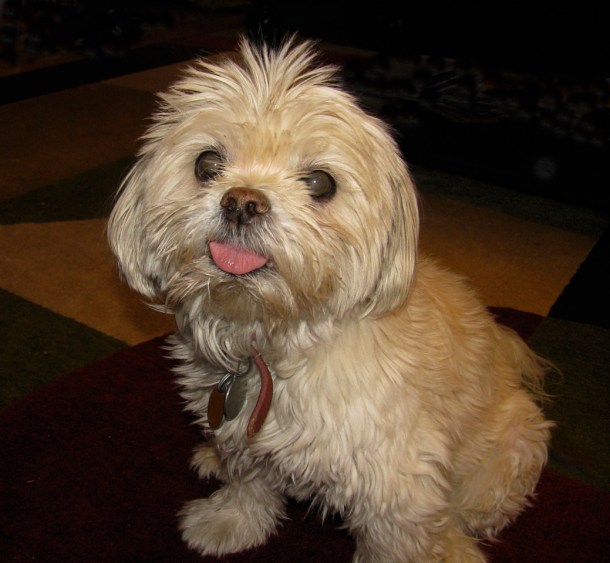
butterfy with hair stand up


Hershey is Gone

img_1050

Hershey, the last feral cat at my building, has died. I wanted to believe that I was overreacting to her symptoms, especially when I saw her meandering around the property for a couple of weeks after she’d first seemed sick, but I was right to be worried. I started to count days, since the weekend, that I had not seen her around, hoping that I just wasn’t looking closely enough. But then I saw her outdoor house, a box covered in a blue tarp, removed from the alcove next to my neighbor’s apartment, and wrapped up to be taken away.

I asked the maintenance man, sitting on the steps at the last building, if he knew why Hershey’s house was wrapped up, and he said that Hershey had died, and my neighbor had asked him to pack up the cat house because she wouldn’t need it anymore, and maybe because she didn’t want the reminder.

I started sobbing as soon as I got into my apartment. But I was also very, very angry, at my neighbor for not seeking medical help for Hershey when her symptoms began, and at myself, for not confronting her or trying to trap Hershey myself to get her to the doctor.

img_1045

I’ve been told that there used to be fifteen feral cats on the property, and the lawns were dotted with dead mice (and these are the same people who are worried about my dogs peeing on the grass?). One of my neighbors was proactive about trapping the cats, to get them spayed and neutered, and intervening with new litters as soon as possible to get the kittens adopted out if at all possible. He supports a group called Alley Cat Allies based in Washington, DC that advocates for trapping and neutering programs, and helps fund one nearby. He also personally rescued cats that could not survive the feral life, and sought medical care for them whenever possible. Maybe it was all of his work, or just a change in the neighborhood, but by the time Mom and I had moved in, there were only two or three feral cats left. It was hard to tell, actually, because a bunch of my neighbors had indoor/outdoor cats as well, and left front doors or window open for the cats to go wandering on their own schedules, but eventually there were just two, Gimpy and Hershey.

And now there are none.

I’m supposed to be grateful that Hershey lived as long as she did, and as well as she did, as a feral cat. I’m supposed to be philosophical about her death. “That’s nature,” the maintenance man told me, with a shrug. “She wouldn’t have been able to tolerate a visit to the vet, or the medical care required,” another said.

moms-hershey-picture

I worry that Hershey caught whatever illness killed Gimpy (the second to last feral cat, who died a month ago, at age thirteen), or that, even worse, someone put out poison that killed both cats, and my dogs might be vulnerable as well.

Before the blue tarp-wrapped cat house was removed from the lawn behind the building, the girls had a chance to sniff their goodbyes to Hershey. They took a long time, checking each crevice, seeming to recognize her smell, and her story, in each corner.

pix-from-eos-006

“Hershey has to be here somewhere.”

There are still squirrels, and raccoons, and birds and, of course the dogs, around the place. But there is no more Hershey. I’d gotten used to having her around, and spying her through the greenery of the retaining wall. I’m not used to her being gone. I keep looking for her, everywhere.

img_1085

The Day My Grandfather Died

I was eight years old and we’d just gotten back from visiting him in the hospital the day before. Memorial Day weekend. We’d stayed at a campground near the hospital in Mount Kisco, New York, as if it was just another adventure, not pancreatic cancer.

I think we were only there one night, and then visited him in the hospital in the morning, but I don’t remember much. It was the phone call the next morning, as the bus was arriving for school that stuck with me.

Mom answered the phone on the wall in the kitchen, next to the yellow and orange wallpaper that was starting to peel. The skin around Mom’s eyes turned dark purple and if she said anything I don’t remember it, but I knew that Grandpa was dead.

I was in a fog. My grandpa was the first of my four grandparents to die, and the one I needed the most. He was the one who loved us. He was the one who could fix everything, or at least that’s what I wanted to believe. His death meant that we were on our own.

We had to go to school anyway, me and my brother. He was ten years old and I was eight, and he didn’t talk to me on the bus or in the hallway at school, ever. My friend Alex noticed that I wasn’t my usual self in the one class we had together, art. He chatted to try to get me to smile, and listened when I remembered how to talk, but mostly he just watched me, to make sure I was okay and not shattering into tiny pieces.

My parents picked my brother and me up from school at noon, and took us to the deli where our father picked up too many sandwiches, and chatted with the counterman, and drank Dr. Brown’s celery soda, (really gross), before we drove up to Westchester to see Grandma.

The funeral had to be planned. Relatives had to arrive. Decisions about the future had to be made. But I just remember sour pickles and pastrami sandwiches and the utter emptiness of that house without Grandpa in it.

My grandfather was my idea of God – a little bit frail and not especially powerful but full of love and joy. I knew he loved me, and my brother, and my cousins, and I knew there was enough love for all of us. My grandfather was the only person in the world who seemed to have power over my father, though he rarely used it.

One of my aunts spoke at the funeral, but I don’t remember much about that day. A lot of funerals seem to mush together from those years: the funeral parlor, the pine box, the black ribbons, the cemetery, the prayers, and all of those grey stones. What stays with me is the grief; the void of no-Grandpa that we were left with after that.

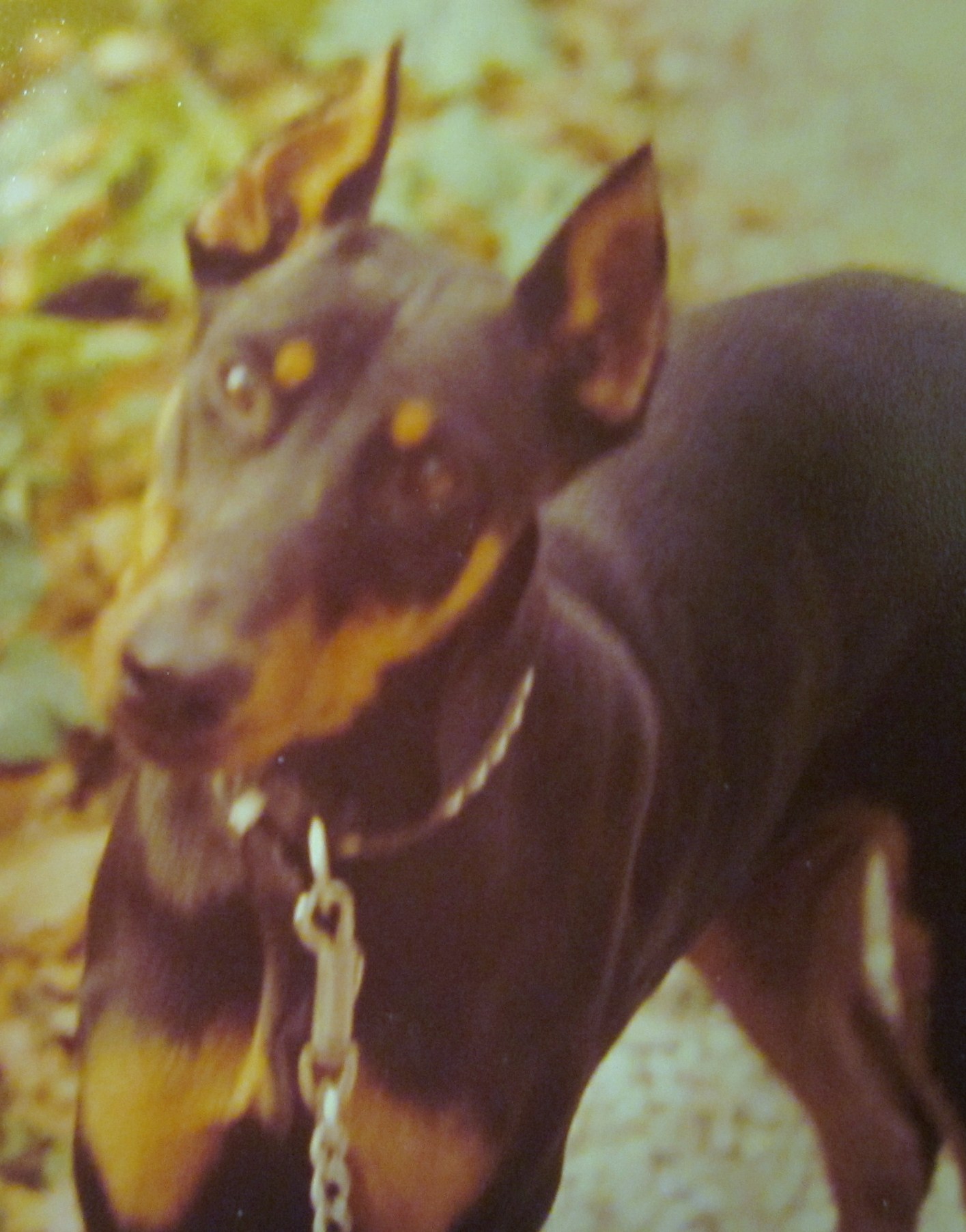
I don’t remember Delilah, our Doberman Pinscher, being a part of things. Did she come with us camping that weekend? Did she sleep on my feet after the funeral? Was she there in the kitchen when the phone rang? I don’t know. But I do know that I would have talked to her about all of it, like I learned to talk to Grandpa after he died, and like I used to talk to God. I never considered it talking to myself, because I always knew that someone was listening.

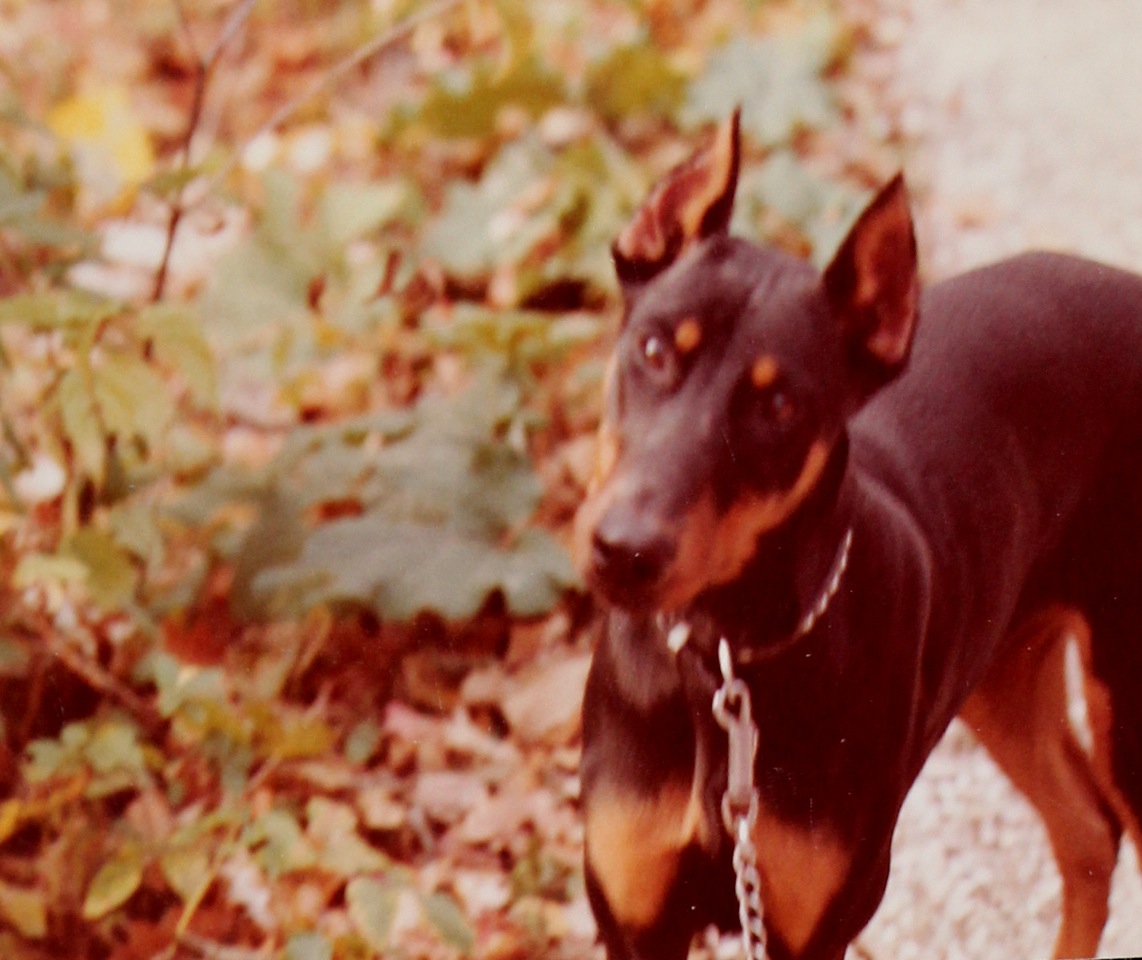
Delilah.

Delilah.

Delilah and my brother, comforting each other.

Delilah and my brother, comforting each other.

And Delilah, who loved me in her own quiet way, was always willing to listen.

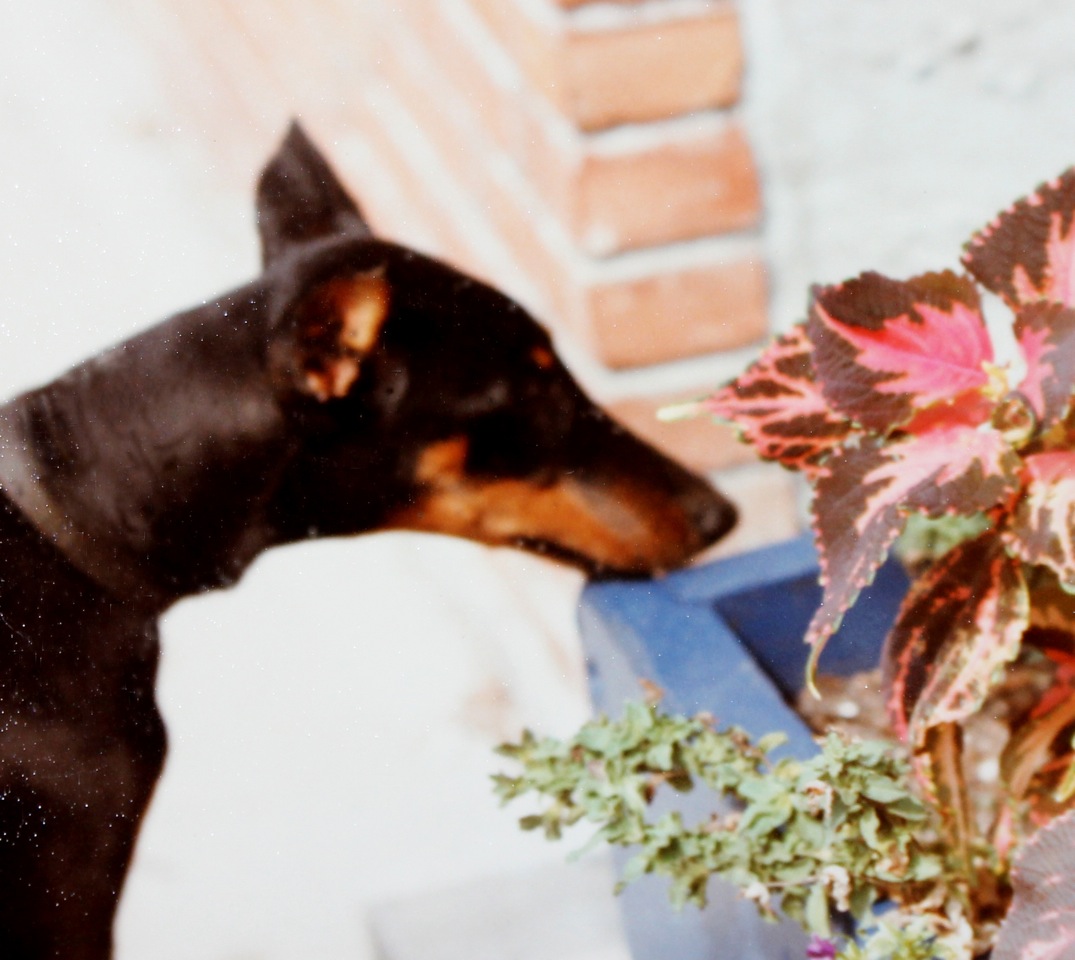
Delilah's favorite form of listening.

Delilah’s favorite form of listening.

Mourner’s Kaddish

I have felt, for a long time now, that I have mourning to do, without the rituals with which to do it. My grandfather died when I was eight years old and I was not required, or even allowed, to say the Mourner’s Kaddish for him. I have lost dogs, but there is no ritual of Jewish mourning for a dog. There is also no mourning ritual after a betrayal or divorce. There are rituals for birth, coming of age, marriage, and death, but there are more events in life than that.

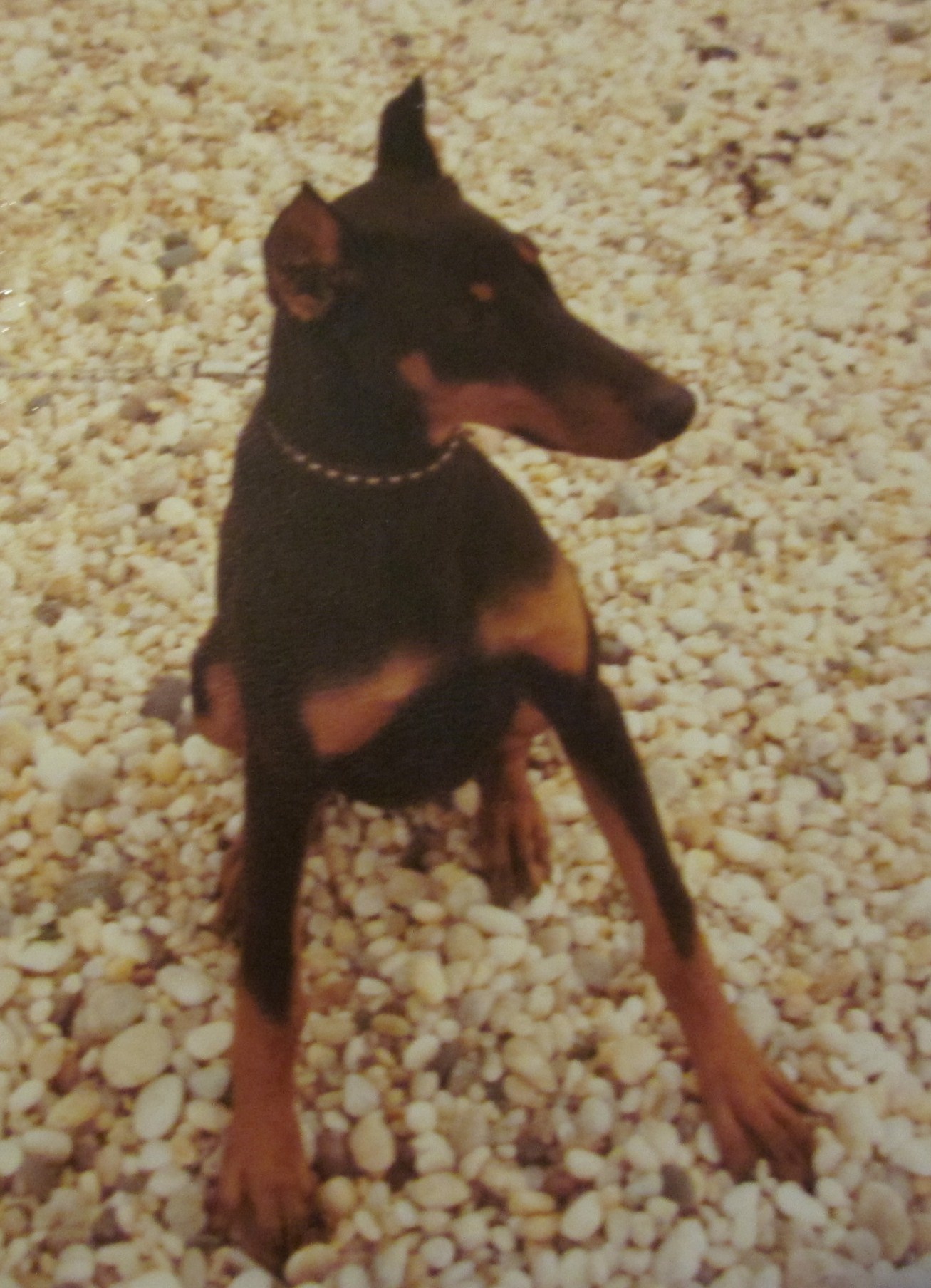
Delilah at the beach.

Delilah at the beach.

IMG_0547

Dina loved peanut butter.

The Mourners Kaddish is not actually about death, it is about reiterating faith in God. The prayer is mostly in Aramaic, rather than Hebrew. I never studied ancient Aramaic, so I only really understand this prayer because of the English translation. But the sound of the words, sung or spoken, has power, maybe because it sounds different from the largely Hebrew prayers in the rest of the service. It’s almost like the words have magic because of their otherness, as if secrets are hidden within them.

My favorite line of the prayer is a long list of the types of praise we offer. From the Artscroll Siddur: “Blessed, praised, glorified, exalted, extolled, mighty, upraised, and lauded be the name of the Holy One, blessed is He beyond any blessing and song, praise and consolation that are uttered in the world.”

It sounds better in the Aramaic, but it’s this long list of the ways we express love. And yes, we say them about God, but I think of them as being about us, about each other. These are all of the ways we experience and express our love for each other – with glory or comfort, with praise or song, and yet we can never capture all of that love in words because it is beyond the words we have available to describe it. So, yes, we are being reminded to have faith in God at our lowest moment, when we might feel as if God has forsaken us, but for me, it is a moment to acknowledge the love we still feel for the person we have lost, and for the people we still have.

Cricket, giving thanks for a leaf.

Cricket, giving thanks for a leaf.

Butterfly, in silent prayer, for chicken.

Butterfly, in silent prayer, for chicken.

The Mourner’s Kaddish can only be said with a quorum (ten Jews, some congregations still count only men) as part of the service. People who would otherwise say a hasty version of their morning prayers at home before work, will, for the year of mourning, make a point of finding an early service at their own or another synagogue, and hope that at least ten people will show up in time.

The Mourner’s Kaddish is said at the end of the service, not at the beginning, and I can think of a couple of reasons for this: one, so that the mourners will stay for the whole service in order to maintain the quorum and allow for all of the communal prayers to be said; and two, because there is healing energy in being there for the regular daily prayers, with your community, and in deep mourning you may not be able to believe that and choose it for yourself if it were not required.

At my current congregation the custom is, basically, for mourners to stand and the rest of us to sit, for the Mourner’s Kaddish. But over the years the instructions have become more convoluted and the rabbi has had to come up with a paragraph-long list of instructions: if you are in a period of mourning, or have a yahrzeit (the anniversary of the death of a loved one), or are supporting a friend who is in mourning, or think this is a good time to stand and remember…

Earlier in the service, a shortened version of the same prayer is sung, rather than spoken (as it is for the Mourner’s Kaddish) and the feeling is more joyful and light, with the same exact words. It seems to me that using the same prayer for both purposes is a way to gently remind mourners that they used to sing this song, and some day they will again. Until then, they will speak the words with the community, be part of and apart from them, and know that they are seen and that they are not alone.

Most of Jewish ritual is meant to be practical. When it’s not practical, it is either out of date for its original purpose, or the practical purpose is a little more hidden and requires some time and repetition to discover. So I wonder what the ancient rabbis meant by leaving other losses unritualized and unmourned. Maybe some of the prayers just didn’t make it into the canon, or were lost along the way. Maybe one day there will be an excavation of a little town outside of Jerusalem, and inside of an ancient stone dog house they will find the lost book of prayers for how to mourn a beloved dog. I think a lot of people would appreciate that.

I found this stone dog house online. I especially like the potted plant in the window.

I found this stone dog house online. I especially like the potted plant in the window.

The Dina Years – The End

The Shadow

Dina’s Shadow

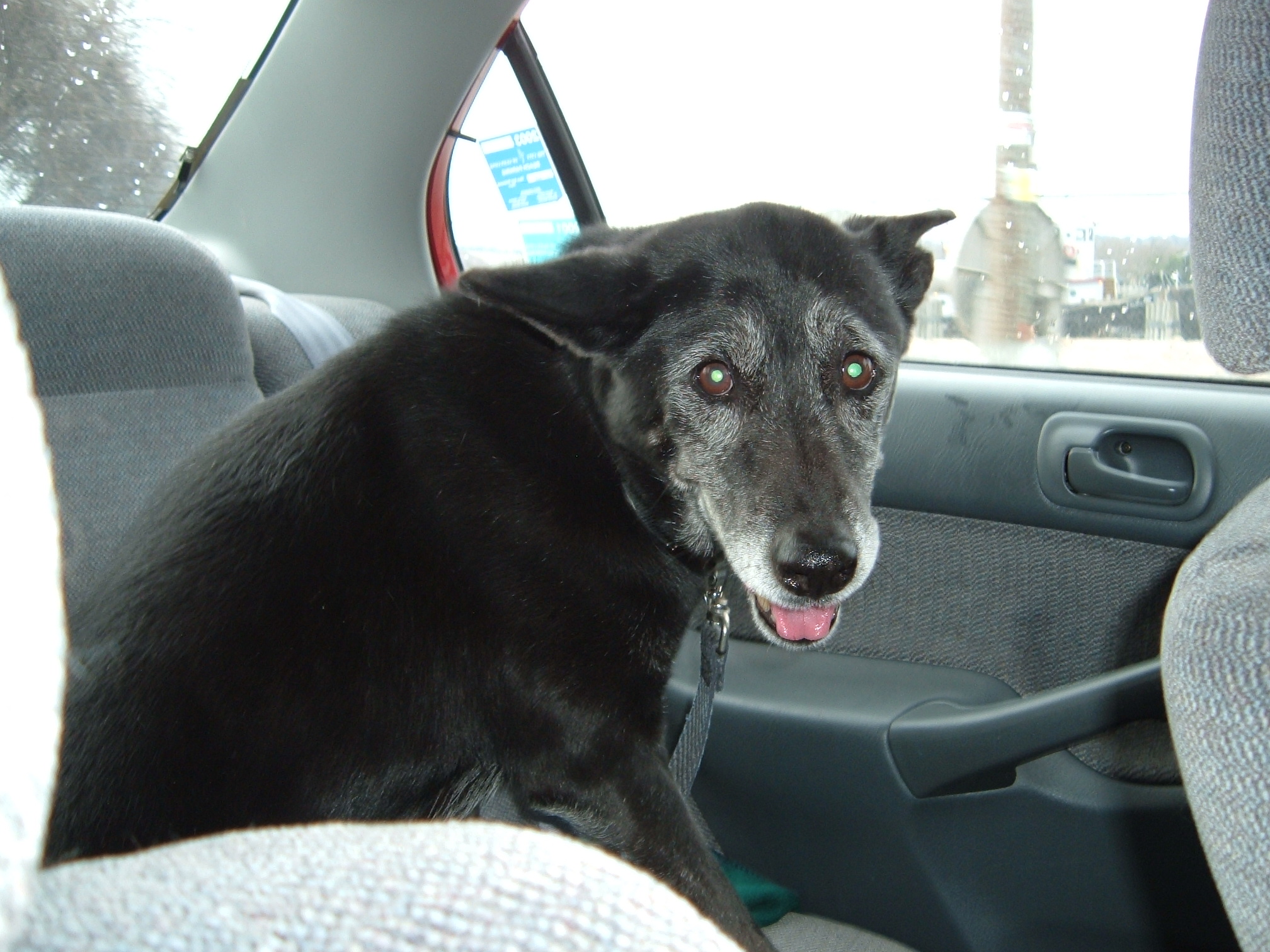
When Dina, my black Labrador mix, was fourteen years old, she started to lose her hair. The clumps of hair were like little bushels of hay, black at one end and white, with flakes of grayish skin attached, at the other. I relished pulling out clumps of hair and dropping them into the growing pile on the floor.

Dina had been with me since I was sixteen years old and we accepted each other. She accepted that I was afraid of loud noises and strangers and telephone calls. And I accepted that she was afraid of children, other dogs, thunderstorms, and walking across wooden slats.

Dina never had Cancer or Diabetes or Parvo or heart disease, but by the time she was fifteen years old, she was dying. First it was her kidneys. Then there was the arthritis. She began to trip over her feet, and then her hips dropped. Defecating was too hard of a job to do while standing. Her legs shook and she fell and squashed the pile of feces under her folded tail. Her legs splayed in splits on floors that had never before seemed slippery to her.

            She paced from room to room, up the stairs and back down, endlessly, as if she didn’t know where she was or that she’d already done the route ten times in a row. She peed indoors, mostly, by the end. She couldn’t remember what the need to pee felt like, and even if she could, her urinary tract was completely befuddled. When I asked her if she wanted to go out to pee, she would lift her head, consider, and more often than not, go back to sleep. I didn’t know that dog. My Dina heard the word pee, or walk, or go, or leash, and ran down the stairs panting in desperation.

When she was younger, Dina could walk for an hour, to the point of utter exhaustion, and still want more. And the drool! Long strings of white, bubbling drool would hang from her mouth and she’d shake her head and the strings would paste themselves to her neck or her chin and her tongue would be heavy with sweat and her eyes shining. And she would sing. Whenever we sang high enough notes, she’d warble along and howl like a wolf. But now I had to inch her food dish closer to her feet because she couldn’t eat standing up or even squatting. She sat like a child with her useless legs splayed around the bowl.

Dina's favorite activity - eating

Dina’s favorite activity – eating

            The doctor kept offering us medications to cover her symptoms: an expensive drug to make her less senile, antibiotics for the endless urinary tract infections, Pepto Bismal for the diarrhea. I wanted the doctor to be compassionate and tell me that it would be okay to put Dina to sleep, but he didn’t. And my mother wasn’t ready to let go. Or, rather, she wanted Dina to decide the day; to walk off into a field and choose the moment to die.

And then Dina’s hair stopped clumping. Her body was covered with a fog of loose hair at all times, no matter how often she was brushed.

Dina died on a fuzzy blue blanket on the floor in the vet’s office when she was sixteen years old. I sat against the wall, petting her back. My mother sat under the examining table, petting her head. And we stayed with her through both shots, knowing it was time to let go, but still not ready.

I imagined Dina running into a field of roasted chicken growing like wheat from the ground as far as she could see with her eyesight fully returned. I saw her galloping, unable to decide where to start, unable to believe the joy ahead of her, that she could eat a whole chicken and never worry about the bones sticking in her throat, and splintering through her esophagus like a broken needle. She could eat without end and without rice as filler!

But she’d never learned how to make friends. She depended on her people for company and communication. What would she do in heaven without us? Who would laugh with her and at her and scratch her belly and pull on her ears in that way she hated so much?

            Would all of that chicken really make up for being alone?

When we got home, we packed up her left over pee pads and pee absorbing powder and anti pee spray. We packed her food and water bowls and her collar and her leash and her brush. But we couldn’t throw any of it away.

            I had to put away the scarlet bathmat she used to sleep on. She liked the ray of sunlight from the bathroom window and the softness of the mat. The bathroom was her favorite place and I had to fight with her constantly to get her to leave so I could pee in private. As she aged, it only got worse. The slow aching rise of her elderly body onto shaky feet, one long stretch where she tilted and threatened to fall, and then the drippy-eyed stare as she stood two feet from the door asking why this horrible exodus had come upon her and who was I, what fresh evil was I, that I would make her flee her home, however slowly.

            Dina took up so much space and sound that her absence was profound. I felt the silence deep in my body; it reverberated. No jangly collar, no tap tap of uncut toenails on hardwood floors, no scrape of food bowls against kitchen tile.

            Her hair was everywhere in the apartment, cropping up under chairs, in furniture crevices, trapped in corners of the floorboards.

            I cleaned every surface in the apartment, scrubbed the walls and the floors until my hands were raw and my knees ached, but her hair still lingered.

            When Cricket came home, Dina had been gone for nearly eight months, but the smell of her was still in the apartment, especially on the small rug in my room where Dina did a lot of her napping.   Cricket could smell her big sister in the floors and behind the furniture, and I think they had talks about how to handle Dina’s people. Sometimes I could even see Dina, like a mirage, sleeping on the floor, opening her eyes for a second to check on me, and then falling back to sleep.

Dina's smile

Dina’s smile

Samson and Why I Hate Halloween


When I was six years old we had a dog named Samson. We adopted him as an eight week old puppy from the shelter. We were used to more aggressive or standoffish dogs, but Samson was a black Labrador mix and had the Lab personality through and through. My brother and I would race off the bus from school to see Samson and play with him. He was the happiest dog we’d ever had and we loved him.

It could just be that he was still a baby, and hadn’t settled into dogdom yet, or maybe he just didn’t have time to cause trouble before he died.

We only had him for two months, until he was hit by a car, on Halloween. I’ve built up a long list of reasons why I hate Halloween: monster movies scare me; I had to touch peeled grape “eyeballs” in the dark at a Halloween party; I don’t like knocking on strangers’ doors; I prefer to choose my own candy; and I have PTSD, so every time someone knocks on our door or rings the doorbell to trick or treat, I feel like hiding under the bed.

I sound like the Grinch who stole Halloween, I know.

But the bottom line is that Samson was hit by a car on Halloween, and the two events have always been paired in my mind.

Mom’s not sure how he got out of the house, but she blames herself. She thinks she must have left the door open when she took the garbage out. When she realized he wasn’t in the house, she ran outside to look for him and a group of kids told her he’d been hit by a car and they’d carried him to the side of the road. His body was still warm, but starting to get stiff by the time Mom brought him up to the porch. I don’t know why he ran out into the street. Maybe he was following the trick or treaters. I don’t know. I was already in my pajamas and probably asleep.

My father insisted that my brother and I not be told that night, so we found out the next morning, after they’d already buried him in the backyard.

Something about the Samson story still feels unresolved, like a haunting. And I don’t know what it is. The traumatic event happened off screen. I didn’t see him getting hit by the car, and I didn’t see him die. I worry that Samson could have been saved if only I’d known that he needed me. I don’t have many narrative memories of him, just a feeling. Not so much a body memory as a soul memory. I feel, in some indistinct place in my heart, my face, my hands, that he was a joyful place in my life. And he was fleeting.

Delilah’s Diabetes

When Delilah was about eight years old, and I was fourteen, she developed diabetes. I don’t know how we discovered it, but we were sensitive to certain signs because my father had been diagnosed with type-two diabetes about four years earlier. Delilah was a healthy, if skinny, Doberman Pinscher until she got sick. She wasn’t the most energetic creature, but as soon as the door bell rang, she would start to bark, like the guard dog she was born to be. Except that, as the person entered the house, Delilah would walk backward up the stairs, and continue to bark from a safe distance.

She spent a lot of time out in the backyard. Mom would leave the back door open, with the screen door in place, so if Delilah wanted to go outside she could push the door open with her nose, and if she wanted to come back in she could bark once or twice. But more often than not she’d just rest on the back porch.

I never saw Delilah jump off the porch, I only heard about it, that this mostly quiet dog could get so worked up over the little birds who nested under the roof of the garage that she would stand on the porch with her front feet on the railing and then leap into the air to catch a bird. The drop from the porch railing looked steep to me, but Delilah was an athlete and took it in stride.

And then she got sick. The vet sent Mom home with hypodermic needles, alcohol wipes, and vials of insulin. She had to get the shots daily, with Mom learning how to pinch an inch of skin and plunge in the needle where Delilah was least likely to feel it.

Delilah was on insulin for almost a year before she died. I don’t even remember her showing signs of deterioration by the time summer came.

I had a habit of waking up early on Saturday mornings to clean the kitchen before my parents woke up. I generally woke up anxious, and scrubbing counter tops calmed me down. One Saturday morning in July, I was halfway down the stairs when I saw Delilah on the floor of the dining room. There was a greenish grey aura around her, like a dark version of the chalk outline the police on TV draw around dead bodies. This dog who had been brown and black, now seemed grey. I knew she was dead, and I panicked and ran back upstairs to hide in my room and let someone else find her.

By the time I came back downstairs a few hours later, my parents were there. They’d found her, wrapped her in a blanket, and moved her body to the back porch, because nothing could be done while it was still the Sabbath.

It was summer, so it was past nine o’clock by the time the Sabbath was over. It was dark by then, and raining. Suddenly, my father thought burying her was an immediate necessity. It couldn’t wait until the morning. It couldn’t be handled by the vet. He couldn’t ask friends to come and help. I had to help carry the blanket covered dog down the porch steps, to the back corner of the backyard, dig a hole, put her in, and cover the hole with dirt.

Mom tells me it was more common back then to bury a dog yourself, but by the time I was fifteen, it didn’t feel common at all, it felt illegal and disturbing. I was crying and shaking and my father was yelling at me to hurry up and to shut up.

It wasn’t a good way to say goodbye to someone who had been family to me for more than half of my life. And it was too dramatic for Delilah. She would have preferred something quiet and peaceful, with the TV on in the background and a few gentle pats on the head.

Solomon, the dastardly Doberman


            Solomon was the first significant dog in my life. We have no pictures of him, probably because he was never stationary long enough to be caught on film. He was a Doberman Pinscher with clipped ears and tail, and he was mythological in personality. He was a puppy when I was still in diapers, and he used to grab the used cloth diapers away from my mother before she could clean them.

It was odd, looking back, for my Jewish father to be drawn to a pure bred, German dog. He came from a generation of Jewish people who refused to even buy a German car. But he liked the idea of a guard dog to protect his house, or his castle.

As Solomon got older, he was a very handsome dog, but not kid friendly. He was eighty pounds of muscle and he only did what he wanted to do. He didn’t like cuddles or playing catch. He certainly didn’t want to play dress up with me. He had a habit of escaping from the backyard and leading a parade of cars trying to catch him as he ran down the street.

One time, he ran away and took over someone’s lawn. He wouldn’t let the family into or out of their house for a whole day, until they were able to get to his name tag and call my parents to come get him. That’s probably when my parents called a trainer to help them manage him better. But the trainer said that my father’s aggressive response, jerking Solomon’s chain and yelling at him, and my mother’s very opposite submissive response, were the problem. And my parents knew they couldn’t change each other any more than they could change Solomon, so that was the last of the trainer.

When Solomon was four years old, and I was five, he was diagnosed with Parvo. I looked up the parvovirus online recently, and the symptoms didn’t sound good: bloody diarrhea, vomiting, anorexia, lethargy, fever, and severe weight loss. He stayed overnight at the vet and they sent him home with medication and an uncertain prognosis.

A few days later he was stretched out on our kitchen floor, listless. Our kitchen was very seventies, with orange and yellow wallpaper and a lot of light coming through the windows and the open back door. I sat on the floor with him. He was still alive but this vigorous, aggressive creature was wiped out by his disease. He was still and silent and he watched me solemnly as if he was finally seeing me. I don’t know what he was trying to communicate. Maybe he was asking me why he had to be so sick. Maybe he hoped I could make him better. Maybe he was just relieved to have someone with him while he died.

My mother covered him with a yellow knitted blanket, and stayed with us in the kitchen. I don’t remember if she was cleaning the kitchen or making dinner but it seemed like she was keeping busy because she was too sad to look at him. I sat there next to him and patted his head and looked into his eyes and I felt like we were together in this.

People underestimate what children can feel and understand, because children don’t have the words yet to tell you what they know. But I felt his grief and I stayed with him until he was gone, because that’s what I would have wanted him to do for me.

Image