Tag Archives: PBS

The Paris Murders

            We watched what we thought was the first season of The Paris Murders on PBS last year, and I was intrigued enough to wonder if there were more seasons available, but the show wasn’t on any of the streaming services we got at the time, so I put the idea out of my mind, assuming PBS would eventually play another season. But then, recently, Mom had to buy something on Amazon that required a short-term subscription to Prime, and with her new prime membership came Prime Video, and inside of that, we found out that PBS Masterpiece was doing a seven-day free trial, and they had seven seasons of The Paris Murders.

            My first thought was that, of course, I could watch all seven seasons in seven days, but when it turned out that I was mistaken, because of work and sleep and other annoying things like that, we reluctantly decided to pay the fee for the month so we could watch the rest of the episodes (and then maybe watch them all again).

            And then, when I started to get close to the end of the series, I looked the show up online and it turned out that there were supposed to be ten seasons. For some reason, when PBS decided to air the French show Profilage, they changed the title to Paris Murders and started with season four, calling it season one. I have no idea why they did this, and now, having watched all seven available seasons, I am desperate to know what came before, but I have no idea where to find those first three seasons, or why PBS decided to disappear them. There are some mysteries in the series that I think must be hidden in those first three seasons, but also, I just miss the show and it would be a relief to have a few more seasons to wallow in.

            Part of the intrigue is also that I can find snippets of the earlier seasons in these weird video compilations on YouTube, put to music, so I can see hints of all of the storylines I missed, including a whole other character, but I have no idea what it all means.

            It’s important to say, somewhere in here, that Profilage is a crime show set in Paris, created by two women, and with an emphasis on crimes that impact women. There is a deep understanding in this show of how trauma (especially in childhood) impacts who you can become in the future, and the immense work it takes to create a liveable life in the aftermath.

            I always find it so difficult to relate to the shiny, glossy, successful surfaces people show to the world, in real life and especially on TV, where even police detectives are in full makeup in the middle of the night, so when I’m allowed to see through the cracks to the person underneath, and feel like this is a person who is really struggling and really trying to heal, the relief I feel is deep and lasting, even if its fiction.

            My biggest disappointment, though, while watching this clearly addictive series, was that in season four (really season seven in the original count), Chloe, the female lead, a criminologist with a, let’s say, quirky personality (or tormented, sweet, complicated, loveable, and mentally ill) decides to leave Paris (and the show), and her protégé, the much less lovable Adele, takes her place. It’s possible that getting to watch those first three seasons would fill up my Chloe tank, and help me appreciate her protégé a bit more, but without those three seasons, I’m in limbo.

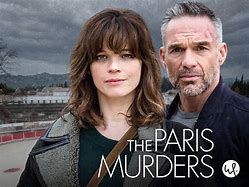
            The actress who played Chloe (Odile Vuillemin) did an amazing job of capturing the physical awkwardness and social oddness of her character, while also being deeply loving and present with all of the other characters. She was especially good opposite Commander Rocher (Philippe Bas) who, unfortunately, lost some of his depth when she left the show (though he remained ridiculously good looking and reliable and an unreasonably good athlete, which makes for some amazing action scenes).

Basically, I got very, very attached to these characters, possibly because I tried to watch seven seasons in less than a week, but also because I saw something in Chloe, especially, that resonated with me. Her vulnerability, her brokenness, her willingness to show all of her emotions, no matter how unpretty they may have seemed to other people, reached me.  And I felt like there were things I could have learned from her, like a puppy mill rescue can follow a dog who’s lived in a home for a while, to figure out how everything works, and follow in their familiar footsteps.
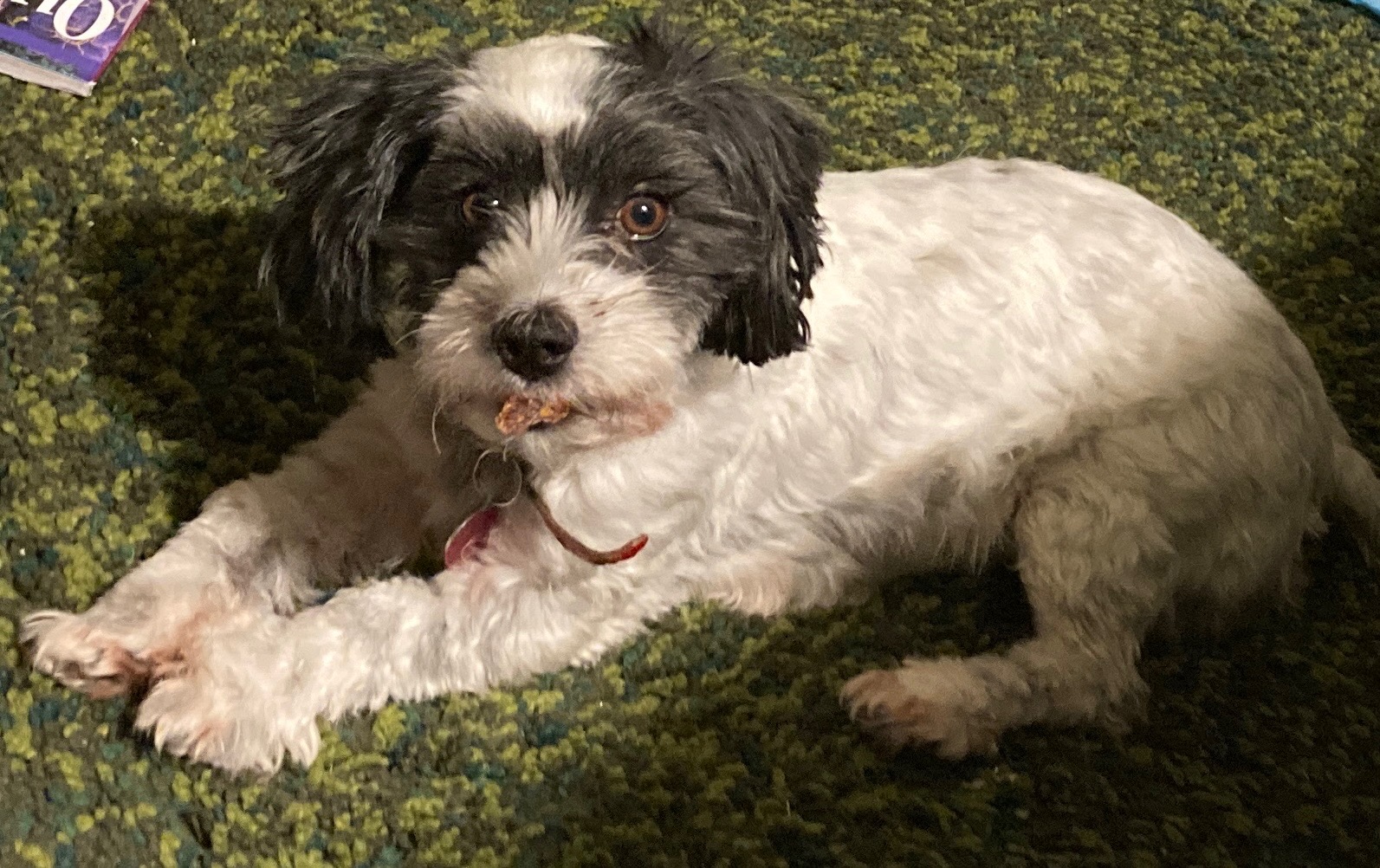
“Would I have to share my chicken treats?”

            Chloe, with her fiery red hair, and sixties style outfits, and the heels, and the bags, doesn’t look or act anything like me, but I could feel what she was feeling. And I miss her.

            So, yeah, if anyone knows how someone in the United States can access the first three seasons of Profilage, please let me know.

            I’m also hoping that showing season four/season one of the show on PBS, and maybe building a new audience in the United States, will create enough interest to get the writers to consider bringing the show back, or creating something new to bring Odile Vuillemin and Philippe Bas back together again to work on more cases.

A girl can dream.
If you haven’t had a chance yet, please check out my novel, Yeshiva Girl, on Amazon. And if you feel called to write a review of the book, on Amazon, or anywhere else, I’d be honored.

            Yeshiva Girl is about a Jewish teenager on Long Island, named Isabel, though her father calls her Jezebel. Her father has been accused of inappropriate sexual behavior with one of his students, which he denies, but Izzy implicitly believes it’s true. As a result of his problems, her father sends her to a co-ed Orthodox yeshiva for tenth grade, out of the blue, and Izzy and her mother can’t figure out how to prevent it. At Yeshiva, though, Izzy finds that religious people are much more complicated than she had expected. Some, like her father, may use religion as a place to hide, but others search for and find comfort, and community, and even enlightenment. The question is, what will Izzy find?

Watching the U.S. and the Holocaust, or, Thank You, Ken Burns


            Watching the Ken Burns documentary, The U.S. and the Holocaust, the week before Rosh Hashanah (the Jewish New Year) was hard. The three night, six-hour documentary was advertised as being about America’s reaction to the treatment of Jews in Germany leading up to and during the Holocaust, and the ways our own prejudices and the resulting immigration restrictions we set up at the time, kept the United States from being a haven for those escaping Hitler. I felt myself shaking with rage and pain and frustration, and I started to yell at the TV (similar to the way I felt when Trump took that first trip down the escalator onto the world stage). But however difficult it was for me to sit with the pain and horror of the documentary, it was even more validating. The timeline of the film, and the clarity it brought to the questions of when people in the United States knew what was happening op the Jews in Germany, and how they chose to respond to that information, was edifying; some failed to act because of their ingrained anti-Semitism, but others were afraid that if they took action to help the Jews of Europe it would set off even more (!!!!!) antisemitism around the world, and especially at home. It’s painful, but important, to remember how prevalent anti-Semitism was at the time.

            Antisemitism has come racing back in the last decade, but it’s still not seen as much of a problem by the wider world, maybe because Jews are perceived as powerful and white and part of the majority, rather than as a very small minority with an outsized place in history. Jews have been blamed for things like the black plague, failed governments, and poverty, whenever a convenient scapegoat has been needed. Maybe the Jews are easy to blame because we are a small enough group that people think we can be easily removed, like a tumor, but even after expelling the Jews, converting the Jews, or killing the Jews, it has always become clear, again and again, that the Jews weren’t the problem in the first place.

            I felt strongly that I needed to watch this documentary as it aired, rather than recording it and watching it later, because I wanted to feel like I was watching it with other people. I needed that feeling of support. So when the second night of the documentary was postponed in favor of a recap of Queen Elizabeth’s funeral, for anyone who may have missed more than a week’s coverage of every detail leading up to and through the funeral on multiple channels, I felt minimized and pushed aside. I definitely took it personally.

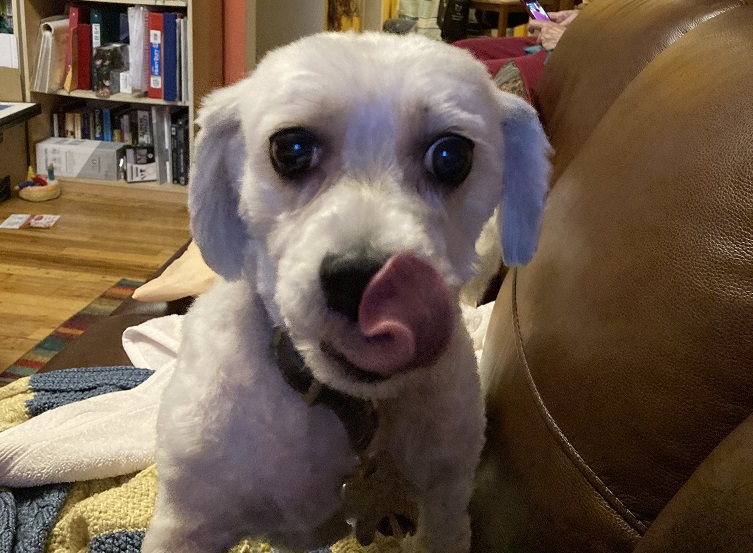
“Me too.”

            There are around 7.6 million Jews in the United States today (according to Google), less than there were in Europe before World War Two, and we are only about 2.4 percent of the U.S. population, and yet, when the White Supremacists marched in Charlottesville they shouted “Jews will not replace us,” as if we are a threat to their place in the world.

            So when PBS aired the second episode, a day later than expected, I sat down in front of the television with my mom and crossed my fingers, hoping a crowd would be watching with us and that something would come of it.

“We’re watching with you, Mommy.”

            There were times when the documentary seemed to equivocate, trying very hard to soften its criticism of America, and especially of president Roosevelt. And there wasn’t much reference to the way the British actively kept Jewish refugees out of Palestine, leading up to and during the Holocaust, despite knowing full well that they were sending boats full of refugees back to Germany to die. But I appreciated the way the filmmakers bookended the documentary with the Anne Frank story, which is so familiar to the American audience, and then delved deeper into her real life than we usually see in discussions of her edited diary. Her former classmate, who went through very similar circumstances as Anne but survived the Holocaust, talked about the famous line in the diary where Anne says that she still believes people are essentially good, but she pointed out that it was written before the Franks were captured by the Gestapo, and before Anne was taken to Auschwitz, and before she and her mother and her sister died there. The optimism of that line has captured American hearts for generations but it has always bothered me, because many people are NOT essentially good, and Anne Frank’s life and death are proof of that. But the sugar coating of her story is very American, where we don’t just need a spoonful of sugar to make the medicine go down, but a cup, or five.

“I love sweet things!”

            The thing the documentary did best was to address the tendency of majorities to blame their problems on powerless minorities, and it made a clear connection between how the United States dealt with African Americans and Native Americans, and how the Nazis treated the Jews. Hitler is so often portrayed as an outlier in his hatred for Jews, and the disabled, and homosexuals, and the Romany, and on and on and on, but he was following models he’d seen in other countries, including ours, and the fact that most countries in the world refused to take in refugees from Hitler, allowing them no safe place to escape to, was a secondary cause of so many deaths.

            In the film, Freda Kirchway, who wrote for the Nation magazine in 1943, was quoted as saying, “We had it in our power to rescue this doomed people and we did not lift a hand to do it, or perhaps it would be fairer to say that we lifted one cautious hand encased in a tight-fitting glove of quotas and visas and affidavits, and a thick layer of prejudice.”

Even after Americans knew what had happened to the Jews in the Holocaust, and saw the concentration camps and their survivors, only 5% of Americans were willing to let in more Jews.

            I don’t know why this documentary aired in September, instead of around Yom HaShoah (Holocaust Remembrance Day, in the spring), but a week later, a far right leader, with direct connections to Mussolini’s fascist party, won the election in Italy, so it turned out to be very timely after all.

            There are people who, endlessly, deny that the Holocaust happened, despite all of the evidence. Right now, we’re watching the Ukrainians fight a war and at the same time have to document the atrocities done to them in granular detail, because they know they will need this evidence to prove what really happened, and even then, the people who don’t want to know will continue to deny it; believing what their minds can tolerate instead of what is demonstrably true.

            This phenomenon of disbelief haunts us. Most Jews had the same trouble believing that such a thing could happen, because no one wants to believe things that make them feel uncomfortable, or frightened, or guilty, or any of the other emotions we hate to sit with. Humans are great at forgetting or minimizing or compartmentalizing the knowledge we can’t deal with.

            People can’t take in a number like six million people killed. And when they can, they often choose to believe that the Jews were to blame for their own killings; that they were complicit, or weak, or evil, and that’s why they were targeted and killed in such large numbers. There were something like nine million Jews in Europe before World War Two, and six million of them were killed. Most of the rest left Europe, to escape Hitler, or to escape their neighbors who didn’t want them around even after the war.

            It’s a painful thing to look at all of that hatred and horror, but it’s necessary, and I’m grateful to Ken Burns and his colleagues for making an attempt to bring this history back to the forefront, and to remind America of the dangers we face when we refuse to believe the evidence in front of us. And in the aftermath of watching the documentary, I hoped to hear that everyone in the world, or at least in America, had been watching with me, but I only saw a few responses, and those mostly from within the Jewish community. I hope that when the documentary airs again, and again, more people will choose to see it. But even with the lack of public response, what I still feel most deeply is gratitude, to Ken Burns, Lynn Novick, Sarah Botstein and the rest of their team, and to all of the people who participated in the documentary, and to the people who chose to air it.

Thank you for being willing to see what really happened. Thank you for making it feel real instead of like it’s a bad dream or an exaggeration or so long in the past as to be irrelevant. Thank you for seeing the parallels in the world today. Thank you for saying that these horrifying things have to be looked at and acknowledged, over and over again, to combat the natural human desire to forget.

To Stream the U.S. and the Holocaust from PBS – https://www.pbs.org/kenburns/us-and-the-holocaust/

If you haven’t had a chance yet, please check out my Young Adult novel, Yeshiva Girl, on Amazon. And if you feel called to write a review of the book, on Amazon, or anywhere else, I’d be honored.

            Yeshiva Girl is about a Jewish teenager on Long Island, named Isabel, though her father calls her Jezebel. Her father has been accused of inappropriate sexual behavior with one of his students, which he denies, but Izzy implicitly believes it’s true. As a result of his problems, her father sends her to a co-ed Orthodox yeshiva for tenth grade, out of the blue, and Izzy and her mother can’t figure out how to prevent it. At Yeshiva, though, Izzy finds that religious people are much more complicated than she had expected. Some, like her father, may use religion as a place to hide, but others search for and find comfort, and community, and even enlightenment. The question is, what will Izzy find?