Tu Bishvat is a Jewish holiday marking the New Year of the Trees, and this year it took place from sundown Wednesday January 24th to sundown Thursday January 25th. In ancient times, Tu Bishvat, or the fifteenth day of the Hebrew month of Shvat, was simply the day set aside as the birthday of all trees born in that year. This was important information to have, because it was forbidden to eat from a fruit tree in the first three years of its life, and in the fourth year you had to bring the fruit of the tree the Temple in Jerusalem. Only in year five did the fruit belong to the farmer.
Trees have always been important in Judaism: like the tree of Knowledge of Good and Evil in the story of the Garden of Eden, or the Torah itself (the Hebrew Bible) being referred to as a tree of life. I read recently (on Ritualwell) that in ancient Israel a tree was planted when a child was born, and as the child grew he or she would care for their tree and then eventually use its branches for their wedding canopy. Even the Rabbis were tree-centric, with a quote from Rabbi Eliezer saying, “When a tree is wantonly cut down, its voice rings from one end of the earth to another,” which makes me think of my Pawpaw tree, which really did seem to set off communal keening among all of the trees in our backyard when it was cut down, and then sent out saplings to take its place.
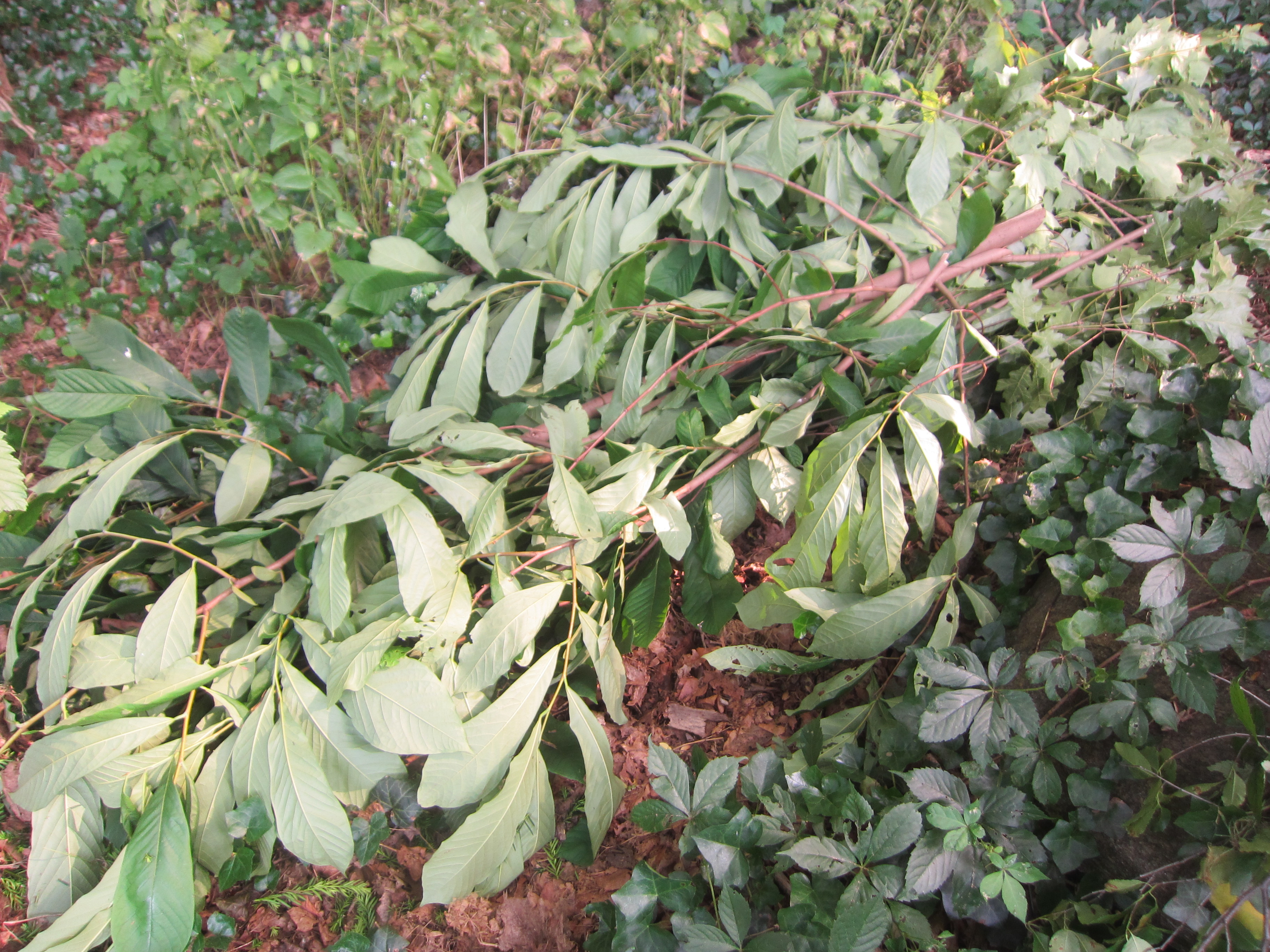
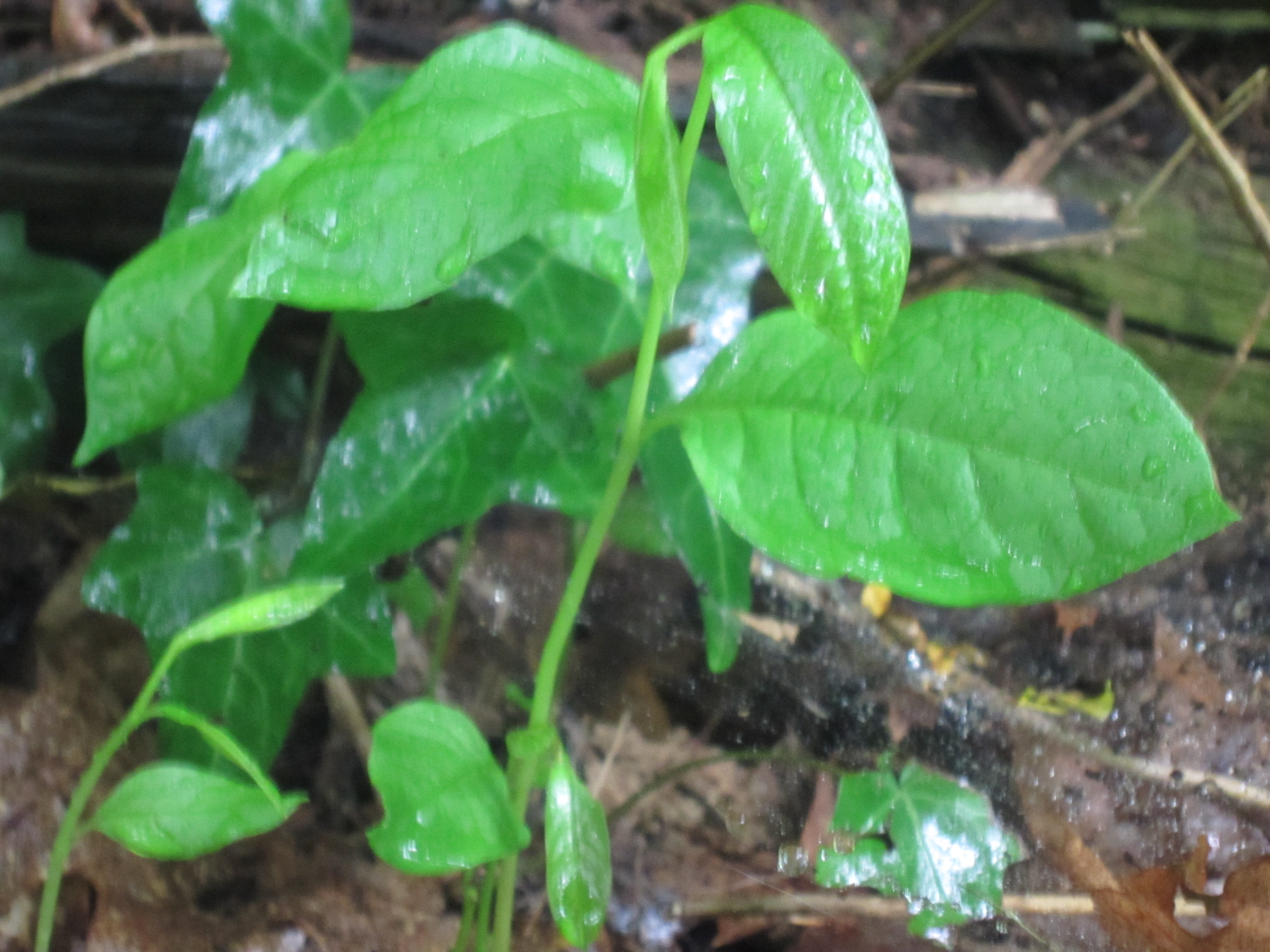
But it wasn’t until the 16th century that Isaac Luria (a Kabbalist, or Jewish mystic) and his followers in Safed transformed Tu Bishvat from a date on the calendar into a festival celebrating the fruits of Israel. They believed that the spark of the divine was as present in trees as it was in people, and they believed that eating the fruits of those trees would release the divine sparks into the world (I’m pretty sure they did not use the same technique for releasing the divine sparks from people. We have our demons and dybbuks and Golems, but as far as I know cannibalism has never taken off in the Jewish tradition).
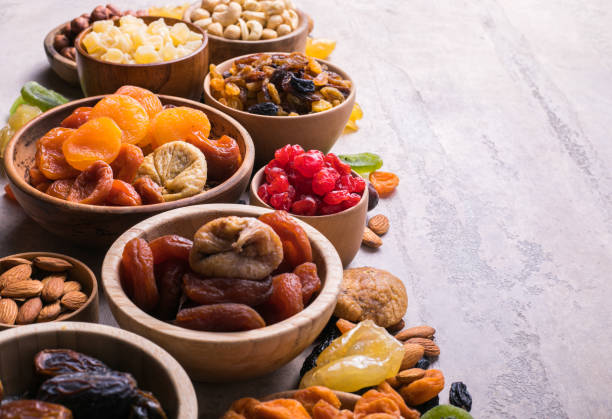
The Kabbalists, being good obsessive compulsive Jews, decided to create a Tu Bishvat Seder, modeled on the Passover Seder, to celebrate four types of fruits (and four glasses of wine to go with them). There are many different versions of the Tu Bishvat Seder, but this is one of them: The first fruit is one that is hard on the outside and soft on the inside (like almonds, walnuts or coconuts), and they can remind us of the protection the earth gives us, or the ways we keep ourselves separate and protected from one another, hiding the divine spark within; the second fruit is soft, with a pit in the center (like olives, dates, peaches or cherries) and they can symbolize the spiritual strength within each of us, or the potential inside of us that has not yet been tapped; fruit number three is soft throughout and completely edible (like figs, grapes, blueberries and raspberries) and I’m not sure what mystical significance they have, but they are certainly yummy; the fourth fruit has a tough skin on the outside and sweet fruit within (like mangos, bananas, avocados and pawpaws) and they are all about the mysteries of our world and our hunger to uncover the juicy secrets.
The four cups of wine for the Tu Bishvat Seder are drunk in a specific order and in varying shades of red, pink, and white, to represent the cycle of life and the four seasons, but just like on Passover, you can get away with varying shades of grape juice, in case you need to drive home afterwards.
When I was in elementary school they never mentioned a Tu Bishvat Seder to us, but each class got a tray of fruits and nuts common in Israel, especially carob, which was almost impossible to eat but traditional, because it was one of the few fruits from Israel that could make the long trip to the European shtetls of my Ashkenazi ancestors without spoiling. Oranges and pomegranates were much harder to get.

Tu Bishvat changed again in the late 19th century, when Jews were able to buy land in Palestine (because the Ottoman Empire ended its ban on selling land to Jews), and European Jews established agricultural settlements and planted trees to re-green the land and plant deep symbolic roots. The Jewish National Fund was established in 1901 to buy property in Palestine, and Tu Bishvat tree planting ceremonies became an annual event.
Today, Tu Bishvat is celebrated in all of those ways, but also as a Jewish Earth day: a chance to celebrate nature and learn how to take care of the earth. It’s celebrated in Israel as a full holiday, with tree planting ceremonies and special ecological awareness programs and, of course, lots of food.
Recently, some of the families whose loved ones were killed by Hamas at the music festival in southern Israel on October 7th joined with the Jewish National Fund to plant trees on the concert site. Around a thousand people came together to plant 200 seedlings, both to celebrate Tu Bishvat, but more importantly to try to bring new life, and hope, to land suffused with death. And so the meaning of the holiday continues to grow and change, as we change.
When I asked my synagogue school students why we would have a special holiday to celebrate the birthday of the trees, they said that it would be very difficult to keep track of the birthday of each individual tree, remembering to send a card or bake a cake, so having one day to celebrate all of the trees is much easier. They took for granted that, of course, you should celebrate trees; that wasn’t even a question.
We also talked about why now? Why celebrate trees in the middle of winter? I told them that the date had been chosen because it was the end of the rainy season in ancient Israel, a propitious time to plant a tree in rich soil, but, really, maybe celebrating trees in winter, when they are at their most naked and vulnerable, and least beautiful, is the perfect time to throw them a party; just like we celebrate light in December when the days are at their shortest and the dark of night feels endless.
And maybe we can learn from this idea of celebrating trees when they are at their most fragile, or light when it is most rare; maybe that’s why we should keep praying for peace even when it seems most impossible. We need to believe that spring and light and peace can return in order for our faith to sustain us through the hard times, and through the hard work that needs to be done to reach peace.
My students have decided that Tu Bishvat should be celebrated by hugging a tree, or singing it a song, or knitting it a sweater to survive the coldest days, though I’m still a fan of eating as celebration myself. Let’s hope the trees feel all of our love this week, and that God hears our prayers, and that we all hear each other and our hopes for a peaceful future.

If you haven’t had a chance yet, please check out my Young Adult novel, Yeshiva Girl, on Amazon. And if you feel called to write a review of the book, on Amazon, or anywhere else, I’d be honored.
Yeshiva Girl is about a Jewish teenager on Long Island, named Isabel, though her father calls her Jezebel. Her father has been accused of inappropriate sexual behavior with one of his students, which he denies, but Izzy implicitly believes it’s true. As a result of his problems, her father sends her to a co-ed Orthodox yeshiva for tenth grade, out of the blue, and Izzy and her mother can’t figure out how to prevent it. At Yeshiva, though, Izzy finds that religious people are much more complicated than she had expected. Some, like her father, may use religion as a place to hide, but others search for and find comfort, and community, and even enlightenment. The question is, what will Izzy find?







 rachelmankowitz