Monthly Archives: October 2025

Talking Shpilkes

            Shpilkes is a Yiddish word that literally means “pins,” but has come to refer to “sitting on pins and needles,” or, feeling fidgety and nervous and needing to move.

            When I teach this word to my students, I tend to liken it to the ADHD symptoms they see in so many of their classmates (because even the undiagnosed kids seem to have shpilkes by the end of a long school day, which is when they come to me). This time, I was sitting with a mixed age group of kids, from second to sixth grade, for our twenty-minute elective period at the end of synagogue school for the day, and we were all exhausted and ready to go home.

            I gave them the option of sitting at their desks or on the floor, but most of them chose to sit at their desks, except for the one girl who chose to sit in my rolling chair, so I sat on the floor by myself. Whatever. As a warm up, I asked them to repeat the word “shpilkes” with me, over and over, because it’s just fun to say. We’d already done a session on Kvetching (complaining) before the holiday break, and I knew we weren’t ready to move straight to Kvelling (expressing joy at someone else’s accomplishments), so shpilkes was the next step on our Yiddish ladder.
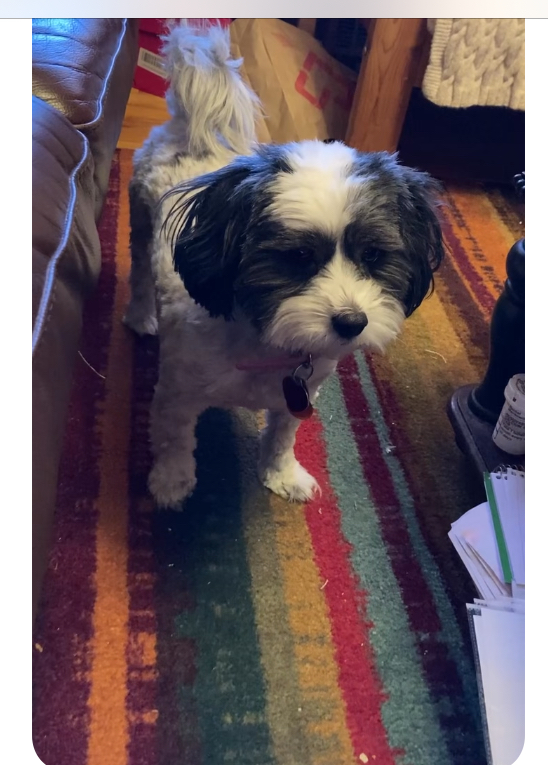
“Kvelling sounds terrible.”

            Once they’d giggled through the word a few times, I asked them if they had ever experienced having shpilkes themselves, or if they knew someone else who struggled to sit still, and they told stories about friends who couldn’t sit still, or couldn’t shut up, though no one was willing to jump in yet and admit that they themselves might struggle with sitting still. Then, one girl raised her hand shyly and said, I know someone who’s the opposite. She can get so focused on reading a book that she doesn’t hear what’s going on around her.

I asked if anyone else knew someone who could get so caught up, or if they’d experienced something like that themselves, and the stories kept coming. And then one of them asked, do you know the feeling when a song gets stuck in your head and you can’t get it out! Which led to an in-depth discussion of earworms and what causes them and how to treat them. One girl had developed a whole theory, saying that earworms are caused when you forget some of the lyrics to a song you like, so your brain just keeps repeating the song to try and remember the lost words. Her suggested treatment was to go to Spotify and listen to the song until the earworm crawled away in defeat, which, she said, worked every time.

            Aren’t our brains fascinating?! I said, from my seat on the floor. By then, one of the students had joined me on the floor, because all this talk of shpilkes had reminded him that chairs and desks are confining and it’s much more comfortable to stretch out.

            But, what about when one friend has shpilkes and the other friend has to deal with the consequences? Because, my friend keeps getting us into trouble when she talks in class, and she can’t help it, but we’re going to get kicked out and I really like that class.

To which one of the younger boys said, Yeah, it’s hard when you can’t understand why someone acts the way they do, even though you still like them and want to spend time with them. I’m paraphrasing, but only a little.

            And with minutes left to go, and so many more stories to tell and hands raised and legs swinging, I asked them if they’d ever seen a show called Glee (a few of them had, actually. Streaming makes everything new again). Glee was a TV show about a high school glee club, where they often took two songs from different genres and mashed them toegther, and sometimes, not all the time, the mash-up allowed us to hear each song in a new way because of how the two songs spoke to each other. The kids didn’t even need me to hammer the point home. They already had their hands up with stories to share about their friends who are really different from them but make life so interesting.

            Of course, my most literal student asked if I could supply examples, and I did try to find something from Glee on my phone, but the dismissal announcement interrupted me, and then we had to focus on listening to the walkie talkie calling out names one by one. But even then, more stories were spilling out, and each story reminded someone of another story, and another.

            It doesn’t always go like this. My current regular class has so much collective shpilkes that it feels like we’re hiking through a tornado just to get from the beginning of a sentence to the end. But sitting on the floor, listening to the stories flow around the room, reminded me that they all have so much going on inside of them, and sometimes, if I’m very lucky, they will share their stories with me in a way I can hear them.
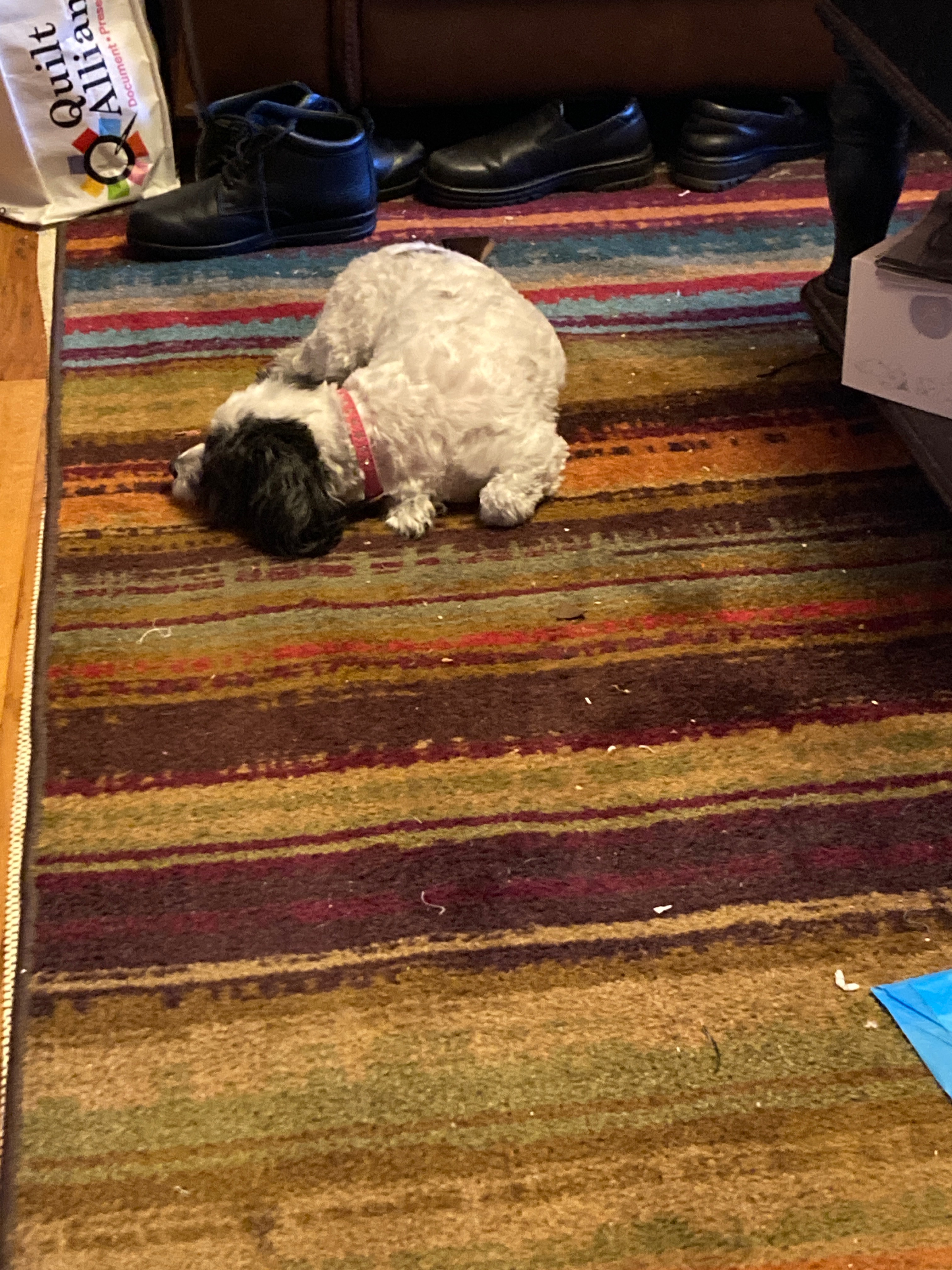
“I only get Shpilkes in the middle of the night, when everyone else is sleeping.

If you haven’t had a chance yet, please check out my novel, Yeshiva Girl, on Amazon. And if you feel called to write a review of the book, on Amazon, or anywhere else, I’d be honored.

            Yeshiva Girl is about a Jewish teenager on Long Island, named Isabel, though her father calls her Jezebel. Her father has been accused of inappropriate sexual behavior with one of his students, which he denies, but Izzy implicitly believes it’s true. As a result of his problems, her father sends her to a co-ed Orthodox yeshiva for tenth grade, out of the blue, and Izzy and her mother can’t figure out how to prevent it. At Yeshiva, though, Izzy finds that religious people are much more complicated than she had expected. Some, like her father, may use religion as a place to hide, but others search for and find comfort, and community, and even enlightenment. The question is, what will Izzy find?
Packing Practice

            In anticipation of my Israel trip, and to try to allay some of my overall anxiety, I decided to do a practice run at packing. I planned it for the two-week Sukkot break from teaching (after the Jewish High Holidays), on the assumption that full days would be filled with perseverating and procrastinating, which they were.

            Earlier in the summer, I went through a marathon effort to research everything for the trip, watching endless videos about where to go and what to bring and how to pack it correctly, and then I spent way too much time on Amazon buying all kinds of things I was sure I would need. In my defense, the high level of anxiety made it very hard for me to think clearly, which also explains why I ended up with multiples of a bunch of things, because I forgot what I’d already ordered.

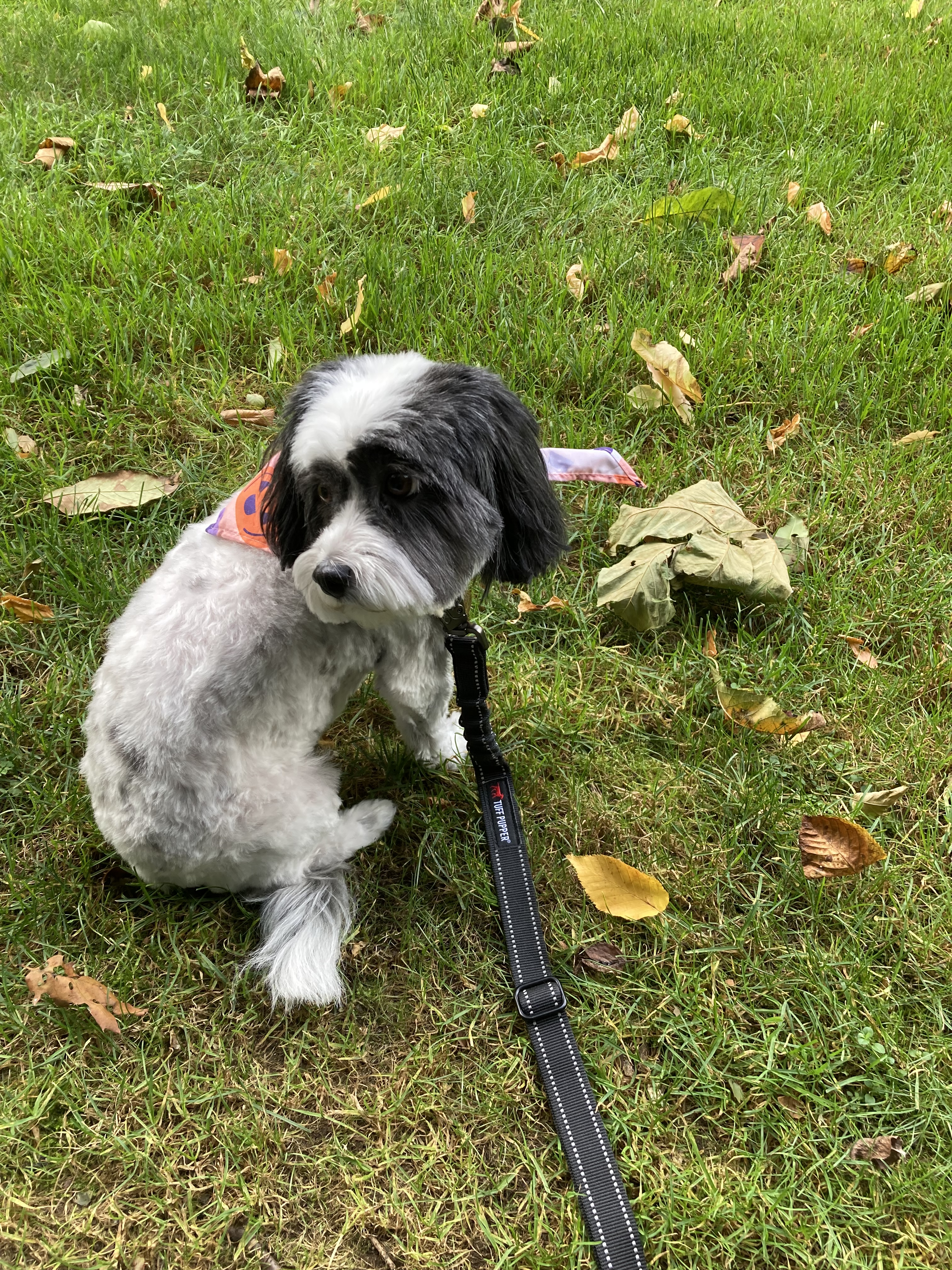
“Why couldn’t you have forgotten to take me to the groomer?

            The goal of the practice packing was to : 1) figure out if I could take just a carry on and a personal bag, or if I’d need a bigger suitcase that I would have to check in (which all of the videos told me not to do); and 2) to see if there was anything I’d forgotten to buy (like quart-sized Ziploc bags, for packing liquids and medications, according to the rules).

            But first I had to recover from my Yom Kippur cold, and then watch guiltily as Mom suffered from her own version of the cold, and then I had to catch up on errands that I’d had to put off during the holidays and the ensuing sick-in (like laundry and food shopping and multiple trips to the drug store). And then I had no more excuses. Except, I still couldn’t even look at the pile of stuff from Amazon that had been living on my treadmill for months, or at the packing list I’d made after watching and rewatching and summarizing and analyzing all of those videos.

            I tried to think of ways to make the task more manageable, to Bird-by-Bird it, the way I do with everything else that overwhelms me (I know that Anne Lamott meant her wisdom to be used specifically for writing projects, breaking down a big project into smaller tasks, bird by bird, but for me it has become a helpful way to portion out all kinds of difficult tasks). But even the thought of looking at my packing list, or opening the bag of compression packing cubes, set off images in my mind of being pulled out of the security line by giant men with mustaches (for some reason), and stun guns.

            Finally, in a moment of desperation, I poured all of the Amazon items onto my bed, so I could go through them and see what I had actually bought. The two extra crossbody bags and the extra power adaptor made me feel silly, it’s true, but it wasn’t as bad as I’d feared. Most of the things I’d bought were useful, if not strictly necessary. And I was able to use the packing cubes (multiple sizes of mesh zipper bags) to help keep things organized, and allow me to pack one small bag at a time instead of a whole suitcase.

The easiest place to start was to pack the things I wouldn’t need to use in the next few weeks, like the travel-size Waterpik, and the long skirt, and the foldable water bottle (why did I think I’d need such a thing?). And then I added in socks and underwear to fill out the bag, and because I remembered my high school friend (the one I’m going to visit in Israel) telling me about a long trip she took where she made sure to pack thirty pairs of socks for thirty days (her father owned a sock store), I threw in a few extra pairs of socks, for luck.

            I knew I couldn’t pack my prescription meds until the last minute, especially because I’d decided to go with the strictest recommendations, which said to bring the actual bottles instead of pre-packing pill cases and bringing the prescription labels, so I typed up the (also recommended) list of all of my medications, and doses, and doctors names, and phone numbers. And then I filled a pill case with all of the over-the-counter medications I might need on the trip (allergy meds, Tylenol, probiotics, etc.), and labeled each compartment so I wouldn’t accidently confuse the Benadryl with the probiotic. And then I packed an empty day-by-day pill case, to fill once I get there. The very specific, and endless, rules around how to pack medications and liquids make me worry that if I do something even a little bit wrong, I’ll be arrested and accused of drug trafficking, because I am clearly planning to smuggle anti-depressants and thyroid medication to sell on the black market in Tel Aviv.

            By the time I’d finished practice packing the meds, and the liquids (in flexible silicone bottles that came with their own labels too!), I was exhausted, but at least I had a better idea of what I’d forgotten to buy (the Ziploc bags), and I’d resolved some of the conundrums I’d left hanging for months (should I bring the prescription bottles or just the labels and a pill case). I just took a few more minutes to shove a few outfits into my suitcase to see how much would fit, and then I declared myself finished.  

            It still doesn’t feel real that I’m going to be in Israel in a few weeks, though. Just like it doesn’t feel real that all of the living hostages are finally home. It takes me a long time to process things like this, and it doesn’t help that I’m already seeing reports about Hamas reasserting itself in Gaza, and killing their Palestinian enemies in the streets. I’m also not hearing much optimism about Hamas actually returning all of the bodies of the murdered hostages or agreeing to disarm. But I can’t do anything about that, or about many of the other things that are causing me so much anxiety, but I can pack my suitcase, and unpack it and repack it, and make sure I have enough socks and Tylenol and shampoo to make it through my trip. For now, I guess, that will have to be enough.

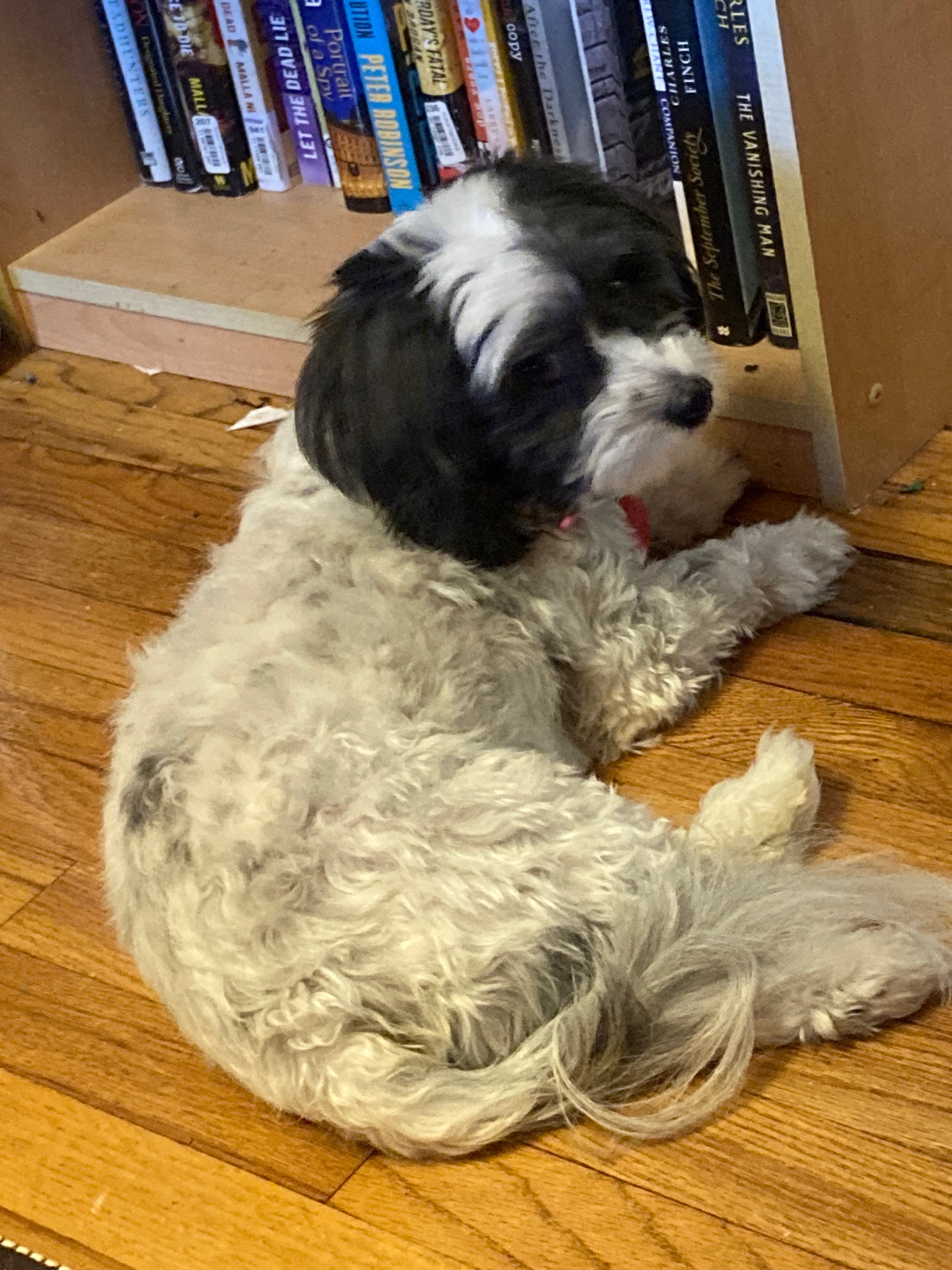
“You could order more chicken treats. I’m sure that would make you feel better.”

If you haven’t had a chance yet, please check out my novel, Yeshiva Girl, on Amazon. And if you feel called to write a review of the book, on Amazon, or anywhere else, I’d be honored.

            Yeshiva Girl is about a Jewish teenager on Long Island, named Isabel, though her father calls her Jezebel. Her father has been accused of inappropriate sexual behavior with one of his students, which he denies, but Izzy implicitly believes it’s true. As a result of his problems, her father sends her to a co-ed Orthodox yeshiva for tenth grade, out of the blue, and Izzy and her mother can’t figure out how to prevent it. At Yeshiva, though, Izzy finds that religious people are much more complicated than she had expected. Some, like her father, may use religion as a place to hide, but others search for and find comfort, and community, and even enlightenment. The question is, what will Izzy find?

A Pupdate for the New Jewish Year

            Over the past year, Tzipporah had successfully mastered the art of peeing and pooping on the wee wee pads; we had to throw out a few rugs early on, and do a lot of scrubbing, but eventually we figured out the right number of wee wee pads, at the right strategic places, to make the whole thing work for her. But then, a few weeks ago, she started to leave tiny pee puddles in my bedroom, out of nowhere.

            I was 95% convinced that she was using her pee as a form of criticism, rather than having a health problem, because I noticed that the pee puddles only seemed to appear when there were no more treats left. So, if I took a nap during the day and didn’t remember to put a Greenie in front of the air conditioner, there might be a pee puddle by my door when I woke up, and if I set out a trail of chicken treats at bedtime, but failed to refill it at some point during the night, there might be a pee puddle on my path to the bathroom in the morning.

“Oops.”

Then, one night, while I was sitting with her in the living room, Tzipporah suddenly got up, walked across the room, and disappeared down the hall. I sat very still, in shock, wondering if she’d forgotten I was there, because in her almost-a-year of living with us, she has never gotten out of her bed while I was in the room with her, let alone walked brazenly across the room. When she returned to her bed, I snuck a peek into the hallway and saw that she’d left a poop on the wee wee pad. Good girl! I cleaned up after her and praised her and gave her a treat, dizzy with the belief that we were finally turning a corner in our relationship. But the second and third time she left the room, she went straight to my bedroom and used my rug as her bathroom, overcome with a bout of diarrhea. It’s a cheap rug, so I wasn’t overly upset about that, but the spark of joy I’d felt when I thought she was making progress was immediately flushed down the toilet.

            It turned out that during her evening strolls through the apartment, she’d been eating whatever she could find on the floor, whether it was a piece of onion dropped during the preparation of dinner, or a piece of the Siberian Iris leaves Mom was using for weaving. Once we figured out the cause of the problem, we were able to keep the floor safer for her, and the diarrhea and the pee puddles quickly disappeared.

            The truth is, though, that she really has been making some progress. She’s become much more present during her once-weekly therapy visits, lifting her head and looking around the room instead of hiding under my elbow. And she’s gotten used to the routine of sitting in the backseat of the car with her seat belt on, and then walking towards the door to be detached and picked up. Most of the time she practically jumps into my arms, whether we’re on our way into therapy or on our way home.

And she has started to express herself more forcefully with me, pawing at my hand when she thinks I’m brushing her hair too much, giving me the evil eye whenever I go near her tail with the comb. She was already letting loose with a bark or two each night, at Grandma, when the treats came too slowly, but recently she actually barked at the TV, pacing back and forth and yelling at a man on the screen, though I wasn’t there in person so I have no idea who she was barking at or how much he deserved it. I still only get to see her adventures when Mom can record them for me, since Tzipporah’s law against leaving her bed while I’m in the room came back into play as soon as her belly problems resolved.

            My big hope is that while I’m away in Israel, in a few weeks, she will realize that she can run freely around the apartment without fear of running into Mommy, and then she’ll get so used to her freedom that she won’t want to relinquish it even when I return. It’s my dream, anyway, and I’m allowed to dream. I mean, if peace can come to the Middle East, surely Tzipporah can figure out that I’m not all that scary. Right?

“Mommies are so needy.”

If you haven’t had a chance yet, please check out my novel, Yeshiva Girl, on Amazon. And if you feel called to write a review of the book, on Amazon, or anywhere else, I’d be honored.

            Yeshiva Girl is about a Jewish teenager on Long Island, named Isabel, though her father calls her Jezebel. Her father has been accused of inappropriate sexual behavior with one of his students, which he denies, but Izzy implicitly believes it’s true. As a result of his problems, her father sends her to a co-ed Orthodox yeshiva for tenth grade, out of the blue, and Izzy and her mother can’t figure out how to prevent it. At Yeshiva, though, Izzy finds that religious people are much more complicated than she had expected. Some, like her father, may use religion as a place to hide, but others search for and find comfort, and community, and even enlightenment. The question is, what will Izzy find?

Did I Survive the Jewish High Holidays?

            Just barely.

            This time of year is always a challenge for me, with choir rehearsals and synagogue school starting and then high holiday services one after another. I had to skip the Tashlich service – the one dogs are invited to because it’s at a pond instead of indoors – because I was wiped out after the first (three hour) service of the day. And then I had to leave early on the second day of Rosh Hashanah too, because I was afraid if I stayed much longer, I wouldn’t be able to drive home safely. Mom was sure people would assume it was her fault we were leaving early, but she was ready to stay until the bitter end. I was the weak link.

            This feeling, that I am at my breaking point so much sooner and so much more completely, is frightening.

            Listening to the shofar blasts was more meaningful this year, somehow. The strangeness of the sound – not music, but not not music either – connects us back to our ancestors, who used ram’s horns to be heard over the din of the crowd. Each prayer on this holiday seems to bring us back to a time in Jewish history, really. We say the Acheinu prayer for the wellbeing of the Israeli hostages, but the text was written millennia ago, when Jewish hostages were taken by ancient enemies and redeemed by the Jewish community at whatever cost, and the music connects us to yet another Jewish community in the more recent past, so that we can feel our ancestors in the room with us from every direction.

Tzipporah is waiting for her ancestors to visit the apartment, with treats.

            The aging of our congregation was more obvious this year, with all of the walkers and the rollators and the shuffling and the rounded shoulders, but it was good to see the congregation filled to the rafters (literally, we had people up in the choir loft, which is never actually used for the choir). We were only filled to the brim for the first day of Rosh Hashanah and the morning of Yom Kippur, but still, it was nice to see.

            I’ve gotten used to the presence of the security guards at the front doors now, and the locked doors, and tinted windows, and bollards to prevent car rammings, but it’s hard to settle into the reality that we really do need all of those measures because there are people who actively want to kill us.

            And then, of course, I caught a cold on Yom Kippur. Mom was sure that my allergies were kicking in, because the heat had gone on overnight for the first time, swirling dust every which way, but as the day went on my symptoms worsened until it was obviously more than just allergies.

Surprisingly, though, with all of that, the Yom Kippur services were easier than expected. The rabbi’s speech, Against Despair, helped a lot. We started the day with the news about the attack on Jews entering a synagogue in Manchester, England, so despair was sitting in the room with us, but the hope the rabbi tapped into wasn’t about how things were going to turn around and love would prevail, instead he told us that the Jewish people have survived through one devastation after another, outliving enemies time after time, just by the commitment to life.

            The other highlight of Yom Kippur, for me, was a prayer I must have heard many times over the years, but it hit me differently this time. It’s called Shma Koleinu (Hear our Voice), and in our synagogue it is sung as a solo by the cantor. It’s a simple plea for God to hear our suffering, and to hear our pleas for help, and I always forget how healing it can be just to be heard, even when no material help can be offered.

            Hear our voice, God, spare us and have compassion on us and accept our prayers, mercifully and willingly.

            I went looking for this prayer on YouTube and found a lot of versions, including a few with the same tune we use (by Max Helfman), but none of them captured the power that our cantor was able to create with those same notes. Technically, I think its because he chooses to stay in chest voice instead of switching to head voice for the top notes of the cry, so it sounds more like a cello than like a violin; the fullness of the sound, rather than something more piercing or fragile, implies that we deserve to be heard by God. It’s not a desperate plea, instead we’re calling out, through our cantor, to say that we need help and respect at the same time.

We feel like we walk through the world without leaving a ripple in the fabric of other people’s lives, and while that’s never really true, it feels true, when no one stops to tell us that we’ve been heard.

            Singing with the choir, even though it takes a lot out of me, gives me the opportunity to be heard and seen, and to feel like an essential part of my community. And we all need that feeling. We all need to feel like our presence matters and our voice counts to someone other than ourselves.

            There’s a reason why Rosh Hashanah and Yom Kippur are the big communal holidays in Judaism, and it’s not because they are the only holy days on the Jewish calendar (there are kind of a lot). It’s because they are the hardest. We are meant to spend this time searching our souls for the sins we’ve committed, and, like chimps carefully picking bugs out of each other’s hair, this awful task is much easier to do with company. When we cry out to God and express despair, at least we aren’t doing it alone, because to do such a thing alone would be to risk truly falling into a pit of despair where the monsters have free reign.

            We do all kinds of things to mitigate the despair of looking so closely at our lives and at what we need to change in the coming year: we find beautiful music to set our prayers to, we dress up, we prepare more deeply and for a longer period of time, and we come together. And then, we stand together and pray for long periods of time, listing our sins and our flaws and our fears, but we do it together, in the light of the synagogue, rather than alone in the dark.

            And when we cry out to God, we are also crying out to each other: Hear me and I will hear you, and together we can make sure our lives matter, at least to one another.

Shma koleinu by Max Helfman – sung by Cantor David Rosen – https://youtu.be/ijAuDvzVmfw?si=RSsIoxhpiXJUkeCT

“Next year, can I sing too?”

If you haven’t had a chance yet, please check out my novel, Yeshiva Girl, on Amazon. And if you feel called to write a review of the book, on Amazon, or anywhere else, I’d be honored.

            Yeshiva Girl is about a Jewish teenager on Long Island, named Isabel, though her father calls her Jezebel. Her father has been accused of inappropriate sexual behavior with one of his students, which he denies, but Izzy implicitly believes it’s true. As a result of his problems, her father sends her to a co-ed Orthodox yeshiva for tenth grade, out of the blue, and Izzy and her mother can’t figure out how to prevent it. At Yeshiva, though, Izzy finds that religious people are much more complicated than she had expected. Some, like her father, may use religion as a place to hide, but others search for and find comfort, and community, and even enlightenment. The question is, what will Izzy find?