Category Archives: dogs

The Dina Years – Separation Anxiety

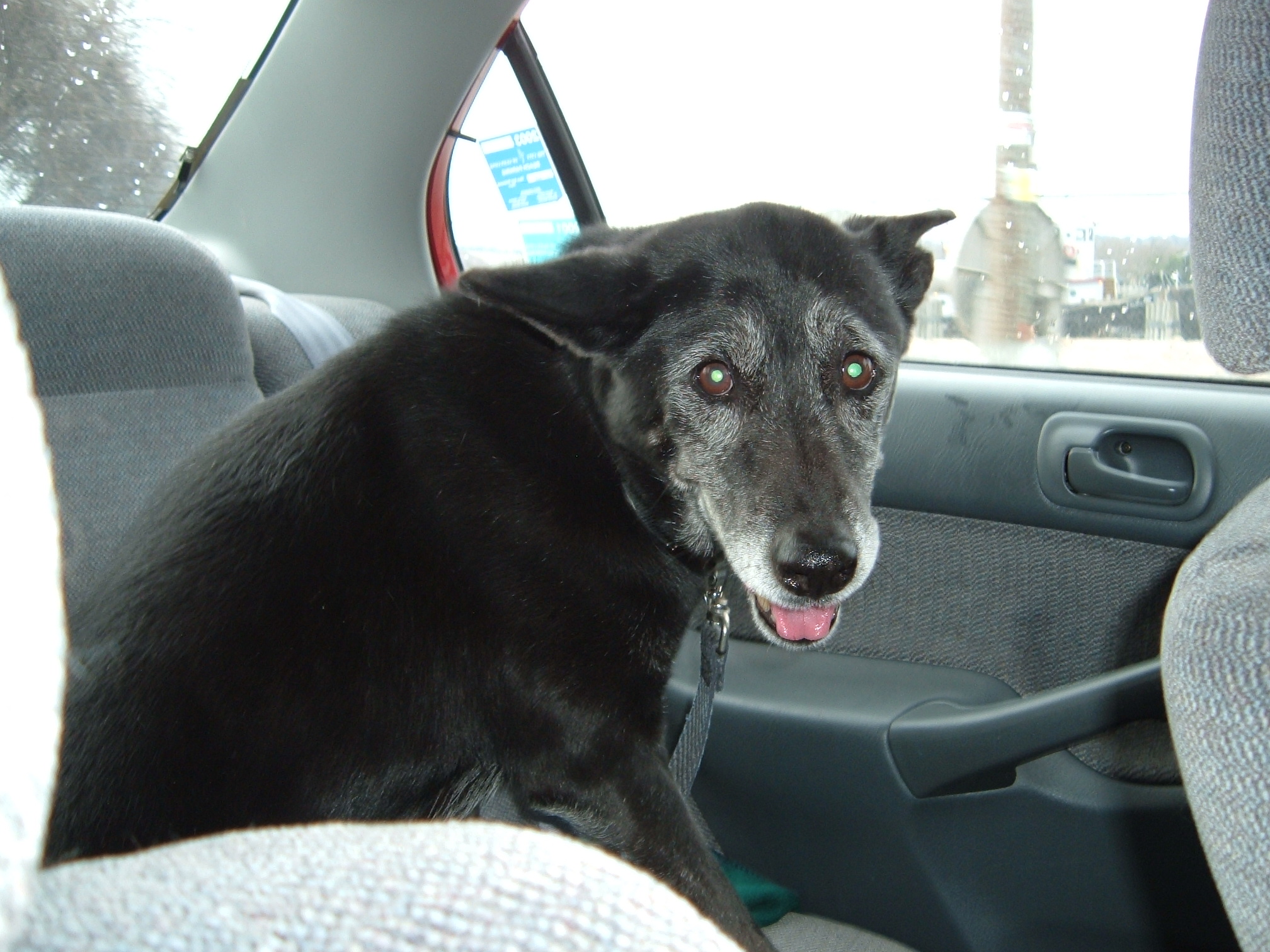
Dina and her shadow

Dina and her shadow

 I was supposed to outgrow my separation anxiety. People expect small children to cling to Mommy, but as you get older, not so much. Except that, I grew up afraid that my mother would leave. My father would yell, and yell and yell some more, until she ran out the front door to get away from him. I could hear the door slam from my bedroom upstairs, and I was afraid that this time she would leave and never come back.

But she always did come back. And when I was twenty-three and she was truly ready to leave him, she took me with her. I wasn’t ready for graduate school yet. I needed a cave to hide out in, and I needed my mother. I was like a little mouse, scampering up and down the stairs, terrified of being caught, and eaten.

Our dog, Dina, a black Labrador mix, was almost eight years old, and Mom wasn’t sure about bringing her with us, but I insisted. I had made a commitment to Dina and I couldn’t leave without her. My father didn’t even ask if Dina could stay with him. I would have said no. I would have screamed and run away with her in the middle of the night. But he didn’t ask.

We left behind most of the things my mother had accumulated over thirty years of marriage, but we did take the living room couch. Mom had picked it out from a charity shop to replace the faux leather couch Dina had destroyed during her rampaging-puppy years.

We found an apartment that accepted dogs, and the couch was now our central gathering place. When Mom and I sat down to watch TV, Dina climbed up to be the glue between us.

My father had refused to let Dina get fixed, even though she’d been having hormonal problems and false pregnancies for eight years, tearing up carpets to create bedding for imaginary puppies. One of our first priorities when we moved was to find a new vet and get Dina her operation. They shaved her belly pink and left a long black scar, but even though she was woozy and sore, I knew we’d finally done right by her.

Within months, something changed: Mom and Dina started to bond. My mother woke up early to take Dina outside for the first pee of the day, now that we had no backyard to let her loose in, and then my fifty-five year old mother would get down on the floor with Dina and pounce and growl and throw dusty tennis balls every which way.

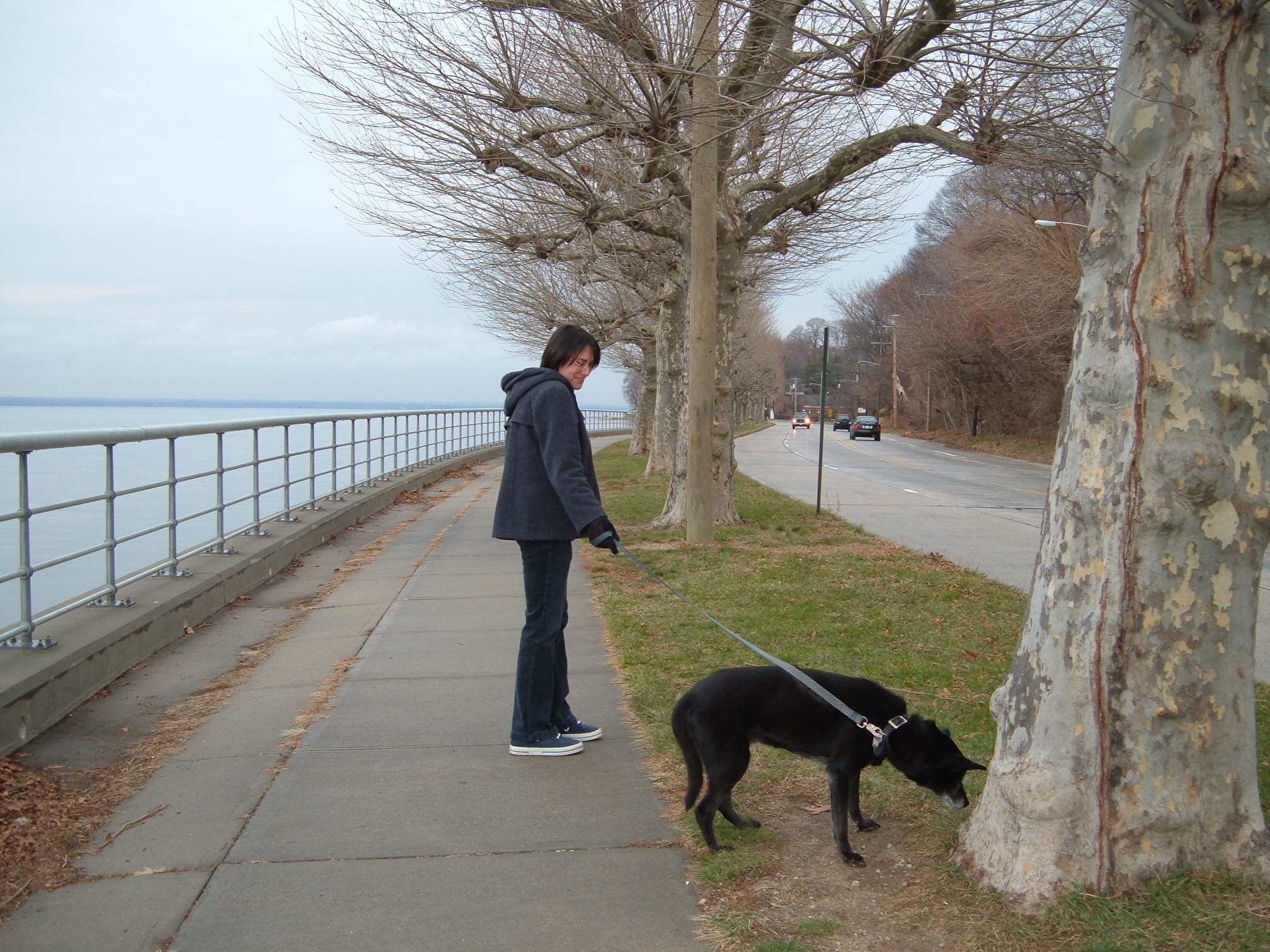
Mom became the fun sister, and I was the fuddy duddy, the disciplinarian. In our new life, I was responsible for cooking and cleaning. I put out the garbage and made up menus and shopping lists and budgets. I made sure Mom ate healthy food and had lunches to take to work. I planned TV watching and other entertainment. I also took Dina out for long walks every day; two or three miles of wandering around the neighborhood, with poopy bags and fresh water and paper towels to clean off her drool.

And yet, when my mother came home from work each day, Dina’s ears perked up, and her tongue stuck out and she made guttural sounds as if she were trying to squeal, “Mommy! Mommy! Mommy! Mommy!”

I knew that Dina had been out to pee at three PM and again at six, and I knew that she could actually hold her bladder intact very well for eight to ten hours without incident, but Dina’s manipulative brat persona would surface – Bam! “Oh Mommy, I just have to pee or I’ll die!” and then, “Oh Mommy, I am so hungry I could faint!” even though she’d been eating Twizzlers and string cheese with me all day long while I was supposed to be writing. She’d even eaten a few stray chunks of her own dry dog food.

I think that, finally, Mom felt like she deserved to be loved. By both of us, because Dina’s excited greeting was pretty similar to how I felt. I couldn’t begrudge her this joy which was suddenly part of her every day life.

My separation anxiety didn’t go away, though. I still worried that Mom would die. She would have a heart attack on the train into the city, or get into a car accident on the way home from the station. Something would happen while she was out of my sight and I wouldn’t be able to save her.

And Dina started to develop similar separation anxiety symptoms, around me. When I left the house without Dina, even for an hour, she would run up to my room and sit on my bed, releasing hair and drooling until my room smelled like stale dog breath. I wonder if she, too, was imagining all of the awful ways I could die and never return to her. I’m pretty sure her scenarios would have involved squirrels, and cats. An assassin cat and his squirrel assistant were clearly plotting ways to get me as soon as I walked out the door. That’s why Dina had to push past me, and bite my leg whenever I tried to leave. To protect me.

Dina, keeping me safe from the jigsaw puzzle.

Dina, keeping me safe from the jigsaw puzzle.

The fact is that I don’t think I could have handled sitting in an empty apartment all day while Mom was at work. I needed Dina as much as she needed me. Even if all she wanted was to rub her head against my leg when her nose itched.

As a result of her operation, and with the addition of her extended walking schedule, she wasn’t tearing up carpets anymore, and her remaining neuroses were manageable, as long as I never left the house without her. And, actually, I could live with that.

Me and Dina, out for a walk.
Me and Dina, out for a walk.

The Barbecued Ribs Fiasco

A Poopoo platter. Not my picture.

A Poopoo platter. Not my picture.

               As a kid, I was a fan of the Poopoo platter at the Chinese restaurant. I liked the blue fire and the drama of the contraption brought to our table, and the fried, oily, sweet and sticky finger foods on the trays. My brother and I also really liked saying “poopoo” out in public.

As I got older, I learned how to cook lighter versions of my Chinese food staples, but every once in a while, when I’m tired and grumpy and do not want to cook, Mom and I order take out Chinese. I’m usually careful to order non-fried dishes, with light sauces, and tons of extra vegetables. If I get dumplings they’re steamed and filled with vegetables. But sometimes the crappiness of the day is so awful that it requires extra special yummy, greasy, sweet food with no redeeming value. Like barbecued ribs, which are, only slightly, a more grown up take on the food in the Poopoo platter.

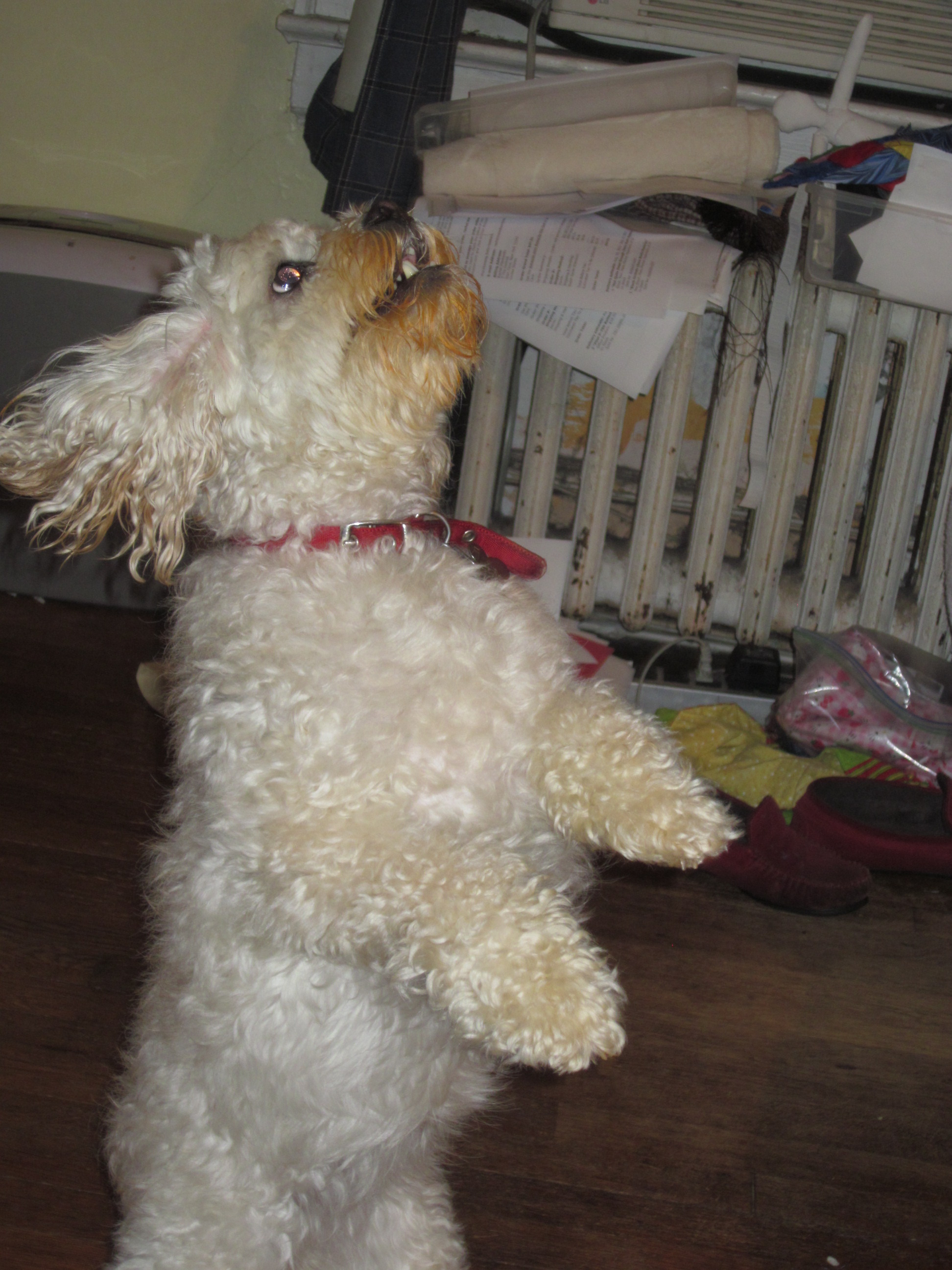
Before we adopted Butterfly, Cricket was an only dog, and took advantage of her role as only grand dog as often as possible. She knew her best bet was to sit on Grandma’s lap, because Grandma’s guilt buttons are stronger than her hunger buttons. So as soon as Mom had finished with one of her barbecued ribs, she handed it off to Cricket. We were eating special food, Mom said, why shouldn’t Cricket?

Cricket and Grandma sharing a snack.
Cricket and Grandma sharing a snack.

and another snack

and another snack

I knew that chicken bones were dangerous for dogs from way back, because someone, probably my brother, had given me a vivid description of how the bones could splinter in my dog’s throat or intestines, and pop them like balloons. But since I’d spent a large part of my childhood kosher, I had no idea what to expect of pork bones. I assumed they were the same as beef bones. They looked the same to me.

            Cricket sat on the floor with a bone between her paws and not only did she clean off the fat, and gristle, she started to eat the bone itself, crunch, crunch, crunch until it disappeared. There were no signs left, no garbage, just some stubborn oily stains on the hard wood floor. The first one went so well, I gave her my own leftovers. That way I could leave all of the extra fat on the bone and not feel guilty for wasting food.

            I woke up in the middle of the night to the sound of retching. I called Cricket over and rubbed her back, and she went back to sleep next to me. But in the morning, there were two piles of predigested bone on my carpet and one spot where, clearly, there had been puke and it had been re-ingested.

            Much scrubbing later, I found older piles downstairs on the wood floor, and as the day went on the vomiting continued but became less productive, just puddles of spit, preceded by those awful, whole body spasms. I was afraid some of Cricket’s vital organs would be left in those piles on the floor. But after all of that, she was smiling, and asking for Parmesan cheese on her dog food and wondering when we were going to have ribs again.

            Sometimes you can only learn a lesson in the most vivid way possible. Just reading it as a list of no-no foods isn’t convincing, but seeing your dog turn inside out does the trick.

I try to be careful about what Cricket and Butterfly eat now. I looked up multiple lists of no-no foods and cross referenced and studied. But Cricket still prefers to eat whatever her Grandma has touched, and blessed for her. She would rather eat a piece of Grandma’s peanut butter and jelly sandwich than a flurry of Parmesan cheese on her dog food that never passed through Grandma’s hands. Food is love; food is relationship, even for dogs.

Butterfly and Cricket, begging for pizza.

Butterfly and Cricket, begging for pizza.

The Dina Years – Puppyhood

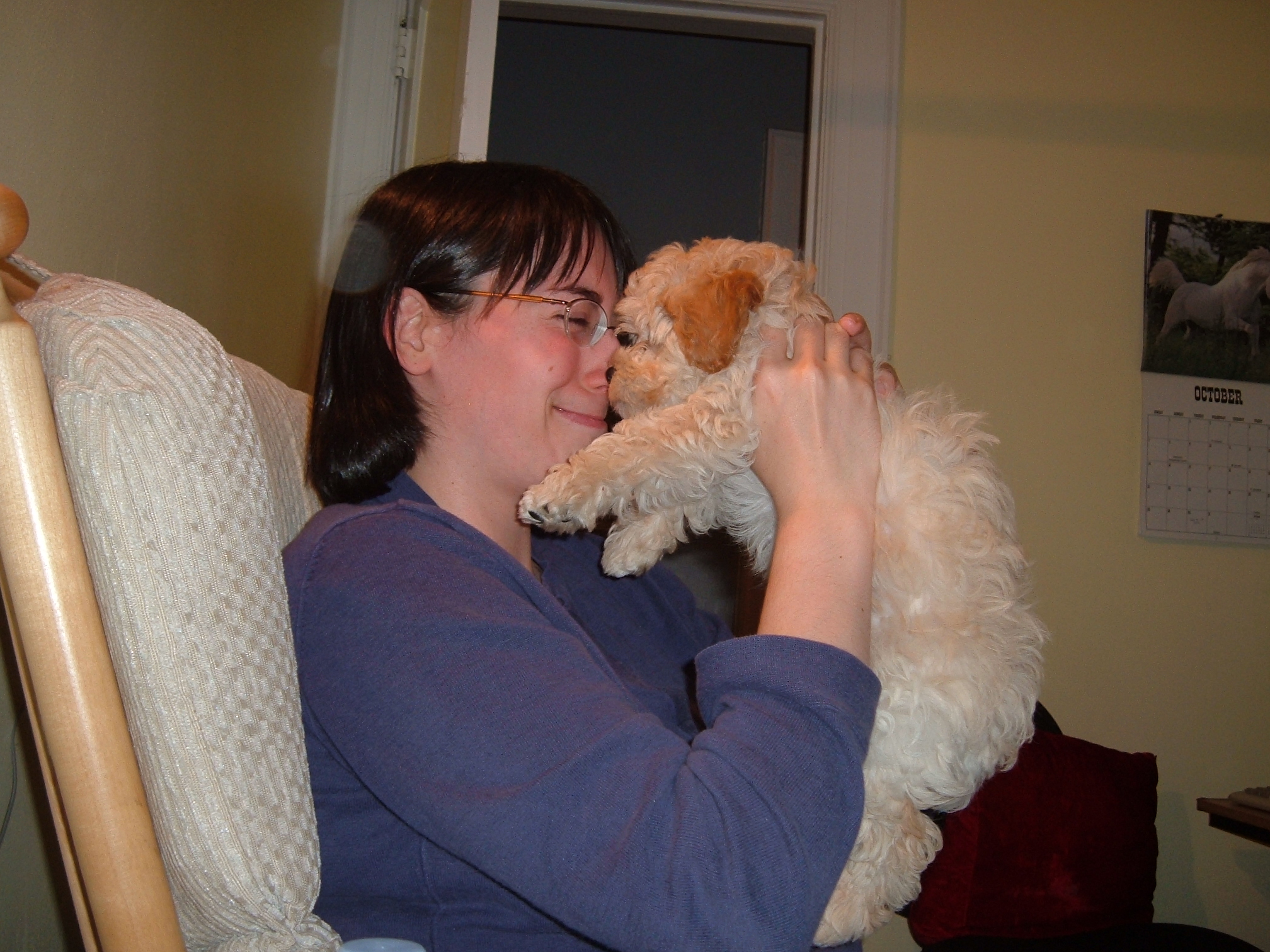
Puppy Dina

Puppy Dina

When I was sixteen years old, my parents, my brother and I went to a Long Island animal shelter to find a new puppy. We’d lost our previous dog over the summer to diabetes, and the house was feeling empty. We had to wait in line on a cold January morning because that was when my brother was home from college.

There was a litter of Labrador/mix puppies set up in cages around the room, and I chose the girl puppy because she had a drippy nose and rubbed it against my hand through the bars of her cage. Within hours of bringing her home, we found out that she was sick. She wasn’t just sniffling; she was also vomiting and woozy. This animal shelter, we later learned, had a reputation for adopting out sickly animals and our puppy had to go back and stay for a week of anti-biotics before she could come home.

We had named her Dina, because my father wanted a biblical name, and my brother was indifferent, and I thought of Dina, the sister of the twelve tribes of Israel, who we’d been learning about at my orthodox Jewish school. My brother shrugged and my father gave me a funny look, maybe because Dina was famous for being raped, and then avenged by her brothers. But he didn’t argue, for once.

When Dina came back home, we put newspaper down on the floor, but expected her to know how to pee outdoors. My father yelled at her for eating from the table, and then gave her his leftovers from the table. She had full run of the house with no boundaries, but she was expected to know that furniture was off limits for chewing. I asked if we could take Dina to an obedience class but my father refused. He saw nothing wrong with the way things were. Dina would continue to misbehave and he would continue to yell at her, and blame my mother, as it should be.

            She liked to spend time up in the attic, because it was the warmest room in the house, and it was a convenient place to poop without being noticed or yelled at. While she was up there, she found a big black garbage bag filled with my childhood stuffed animals. I had just recently put my toys into storage, in an attempt to force myself to grow up. And I didn’t mind sharing my toys with her, except she didn’t just teethe on the stuffed animals and cover their soft fur with slobber. She ripped them open and stuck her nose into their bellies, leaving wet cotton lumps on the carpet. Then she dragged the lifeless bodies of each of my old playmates to my bedroom door.

            My brother’s paraphernalia remained untouched. She didn’t even bother with his smelly socks or worn old sneakers. His room – a shrine to clutter and odd, unidentifiable smells – remained pristine and unchewed.

My mother suggested that Dina was “playing” with my toys because she missed me when I was in school during the day, and she was looking for smells that reminded her of me. It all sounded farfetched to me, especially the idea that I had a recognizable odor. That just sounded wrong.

But after a while, Dina had devoured all of my small stuffed animals, and moved on to Panda. He was life-sized, or the size my life took when I was four years old and my grandfather thought I needed a companion my own height. My grandfather died when I was eight years old, and Panda was watching over me as his stand in.

My Grandpa

My Grandpa

Somehow, Dina knew that Panda was hidden in the back of my bedroom closet. She nosed open the closet door, pushed my clothes out of the way, and climbed up Panda’s overstuffed legs. She balanced her paws on his belly and gnawed with focus and determination on his pompom belly button and googly eyes.

I found Panda, humiliated and shamed, on the floor of my room, when I came home from school that day. Mom did her best to sew things back into place, and then she sent Panda for the water cure, in the washing machine, which seemed to help. But I was angry, and I refused to let Dina back into my room for days.

Panda, after plastic surgery, ready for physical therapy.

Panda, after plastic surgery, ready for physical therapy.

Dina was bereft. She scratched at my bedroom door with her nails, leaving deep grooves in the wood, even cutting through the corner of the hollow door with her teeth. I had to relent, for the sake of her mental health, and the health of my door.

As soon as I let her back into my room, she climbed up on my bed. She made a half hearted attempt to chew on my math textbook, but then she stretched out to watch TV with me. She leaned her head on my legs and I could feel her breath and her warmth, and I thought, this is better than a stuffed animal. This is real. Maybe Grandpa sent her to be my new watcher.

Gardening Puppy

Cricket has her paws on the red handled trowel

Cricket has her paws on the red handled trowel


            Cricket loves to dig. She has adopted a small red handled trowel as her own and whenever her grandma is using it, Cricket goes over to bark at it and try to steal it. She hasn’t figured out how to make it dig, but then maybe that’s not her intention. She’s angry at it for taking her job.

"You can't have it, Grandma!"

“You can’t have it, Grandma!”

            When she’s out with Grandma, doing the gardening, her job is to pull out roots and weeds. She’ll dig first with her paws and then grab with her teeth and pull. Then she runs back into the house, with four black feet and a black chin with a little bit of her original white hair showing through, and then she spreads the dirt around, leaving her water bowl muddy and her face smiley.

            She was getting impatient with the long winter this year and decided to dig random holes in the lawn. I had to watch her carefully to catch the crazy digging before she was a foot down into the earth. And then we had to replace the divots and stomp them down, like we were at a polo match.

            Ideally, Cricket would have her own garden, or a sandbox, to play in. But the endless baths that would result wouldn’t make mommy or puppy very happy. And she doesn’t just want to dig aimlessly, she wants to accomplish something.

Cricket's after-bath twist

Cricket’s after-bath twist

            Cricket and Grandma have different ideas on gardening. Their aesthetics are in opposition. Cricket likes holes. She likes digging through the top layer of grass to explore the rich, meaty underbelly of dirt. She likes to remove things from the ground, rather than add them. We have to keep her at a distance from anything freshly planted, because she will unplant it with relish.

            When we moved recently, we lost a full lawn of gardening space where Mom had planted berry bushes, and pawpaw trees, a full vegetable box, and sunflowers, and lilies, and hydrangeas, and strawberries, and on and on.

            In our new place there isn’t as much space and it has to be shared, which means, most of all, that gardening puppy does not get to participate. I’d love to be able to put her on the long lead out in the yard, but I’m afraid that would bother my new neighbors and I’m not ready to alienate anyone, yet.

For Mother’s day we went to the gardening store and bought four different kinds of tomato plants, and a purple pepper plant, to plant along with the things we brought from our last home. But Cricket keeps trying to climb into the new vegetable plot to “help.”

Butterfly likes to sniff the flowers, but she’s delicate about it. The only time she likes to dig is when she’s standing next to her food bowls, scratching at the wood floor as if she thinks more food is hidden underneath.

Butterfly, considering the mysteries of the universe

Butterfly, considering the mysteries of the universe

Hopefully, Cricket will be able to find an outlet for her gardening passions, one that doesn’t include unplanting the tomatoes, or rolling in the patches of poison oak the way the local cats like to do. But I think, for now, she’s happy that her Grandma is gardening again, getting excited about new vegetables and flowers, as long as Cricket gets to sniff each and every one and give her bark of approval.

Katie the Cat


When I was a teenager, my aunt had a friend who could not say no to a cat. She took in old ones and young ones, exotic ones and feral ones. The cats clearly owned the house, sitting on the dining room table and the kitchen counters, preventing the humans from preparing meals in their own house; which explained all of the take-out menus. These were well fed cats, some over twenty pounds. But then there was Katie; she was the anomaly. Katie was a small, ill behaved, underfed specimen with no social skills, who lived under the bed in the guest room and was terrified of humans and animals alike.

Katie looked something like this, but I never had a chance to take her picture. (This is not my picture, thank you Google)

Katie looked something like this, but I never had a chance to take her picture. (This is not my picture, thank you Google)

            My aunt’s friend was going away for a few days and, while she could leave out food and litter boxes for the sociable cats, and have a neighbor come in to check on them, Katie needed special care. So       I was called into service.

Mom and I brought Katie home in a cat carrier and brought her to my bedroom and closed the door so that our dog, Dina, couldn’t come in. Dina was a forty-five pound black Lab mix and I’m pretty sure Katie was more of a danger to her than the other way around. Dina didn’t like the arrangement at all, because my room was her room. But I felt a responsibility to Katie, not to traumatize her any further. Who knew what her early life had been like to make her so frightened and angry?

I had a platform bed pushed into the corner of my room and immediately Katie found the L shaped tunnel it made against the wall, and scurried inside. I placed her litter box at one end and her food and water bowls at the other end. If I dared to reach my hand in, she’d hiss at me from the darkness. She came out to pee and eat and drink when I was sleeping or out of the room, and the rest of the time I just heard her, licking her paws, scratching the carpet, and mumbling to herself.

I made a point of taking Dina out for long walks to compensate for not letting her into my room. And on our walks, I tried to brainstorm ways to reach Katie. I pictured myself as a cat whisperer, solving all of her problems in the four days she would stay with me, and going on to become a Vet, or a therapist, or Mother Theresa. Dina just hoped the long walks would continue after the interloper left.

My Dina, and me

My Dina, and me

Katie was very hard to like. First of all, she was a cat, and I am allergic to cats. I don’t think I knew that before I agreed to cat sit, but maybe I did and I just felt too guilty to say no. My eyes water and I feel itchy all over, on my arms and lips and in my throat. I get nauseous and itchy just seeing cats on TV.

Maybe, given more time, Katie would have learned to trust me, but four days was not enough to make a dent. I was relieved when she left, and I felt guilty for that too.

A few years later, my aunt and I volunteered at the local animal shelter, and we were sent to the cat apartments to help socialize them. I saw it as a chance to make up for my failure with Katie. There were three or four cats in each apartment and they had beds and hammocks and scratching posts and climbing towers. But they weren’t sure about humans and my job was to go from group to group and sit with them for a while and let them get used to me.

I had learned more about neurotic animals by then, and I didn’t take it personally when the cats stayed back or stared at me for five minutes straight, waiting for me to impress them.

Then came kitten season and suddenly there were three or four litters in crates in the front room of the shelter, where visitors could see and adopt them right away. I was overwhelmed by all of them, and by the fact that, if not for some kind stranger, they would all have been left on the streets, to die, or to become like Katie.

I sat there, feeding the smallest kitten with a medicine dropper and I felt like I could barely breathe from grief, from responsibility, from anxiety that the problem was too big to ever be solved, especially by me, or by anything I could do.

I couldn't find a kitten small enough using Google. The kitten was about half this size.

I couldn’t find a kitten small enough using Google. The kitten was about half this size.

The little kitten climbed up my sweater and the head of the volunteers told me she probably wouldn’t survive twenty four hours, despite my ministrations. I felt sick and itchy and ready to climb out of my skin and I wanted to believe it was just my allergies, as the kitten scratched my face, asking for my full attention.

All I could do was give her food and kisses, and hope.

Happy Mother’s day to all of the dog and cat (and piggy) mommies and all of the mommies of little humans, and especially to my own Mommy!

We love you!

We love you!

Leaving Limbo

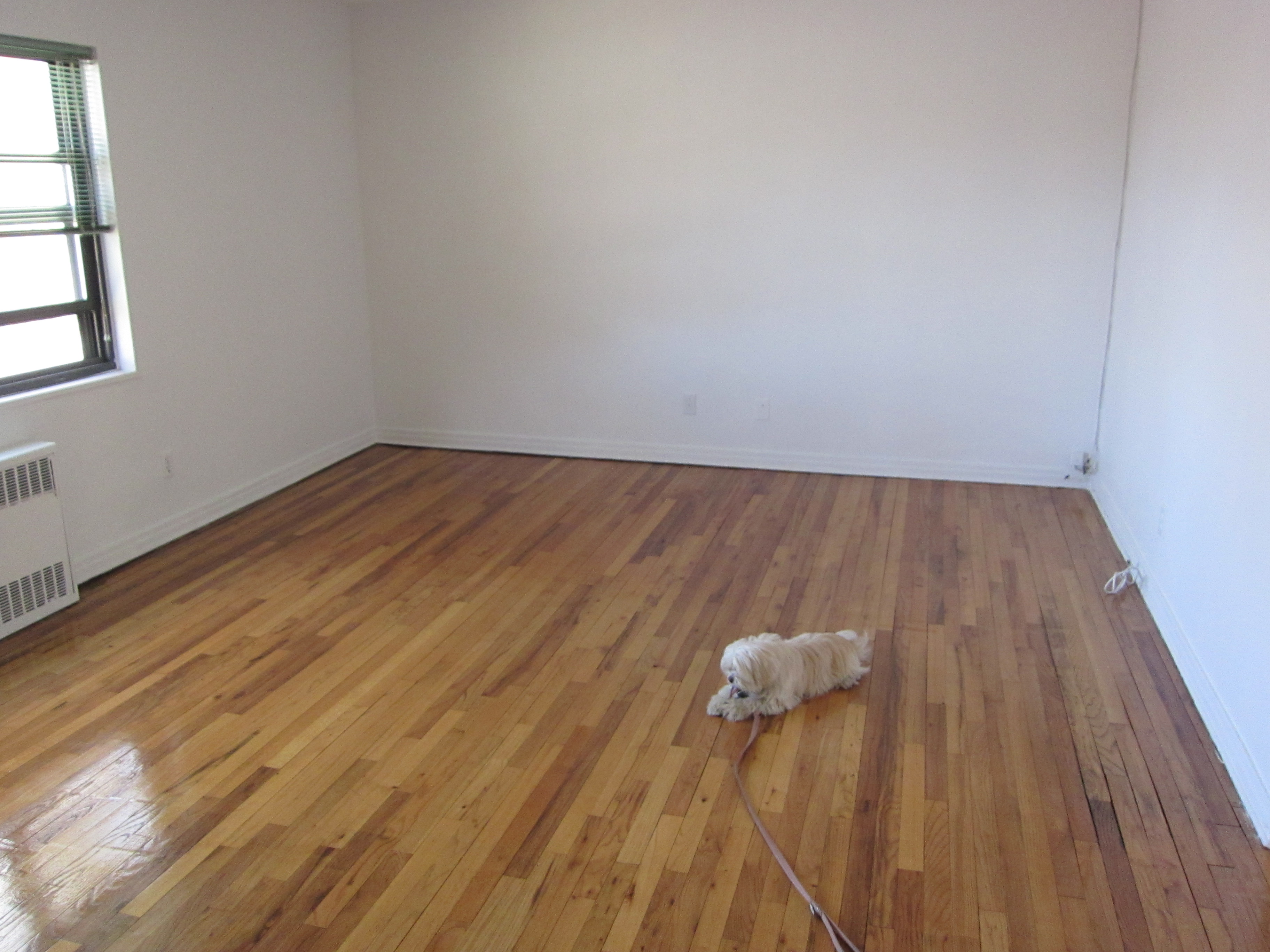
Butterfly's new room

Butterfly’s new room

            We are moving. We’ve lived in limbo, intentionally, for fifteen years, avoiding people and places that would remind me of where I grew up and what I had to contend with. This neighborhood has been my witness protection program. It’s not that I live in the country or out in the boonies, but it takes a while to get to the expressway and that’s an important point on Long Island. It takes a while to get anywhere from here. I will miss the privacy of living off a small road. We’re moving to a major road, near a high school and a train station. I’m afraid of being so visible.

I’ve been gradually moving back into the world, going to synagogue again, going to school, and finally moving into an area where I will run into people I knew before. I think I’m ready but there will be no way to be sure until I get there, and take the next step.

            When we first moved here fifteen years ago, it was the beginning of April, and the trees smelled like honey. I grew up in a flat neighborhood, with wide green lawns and evergreen trees and tall, old maples and oaks and it was majestic, but monotone. Here it was pink and white and red and yellow. Someone told me that this neighborhood was where the gardeners for the gold coast mansions lived. So they would come home and experiment with color and shape and size and arrangement. It’s a nice story, if it’s true.

Autumn in the neighborhood

Autumn in the neighborhood

            I will miss how familiar everything is. I know how long each route is; I know where the hills are, and where the road dips, and where a dog will bark.

I can’t imagine all the smells Cricket will miss from her five and a half years worth of walks in this neighborhood.

Cricket sniffing her neighborhood

Cricket sniffing her neighborhood

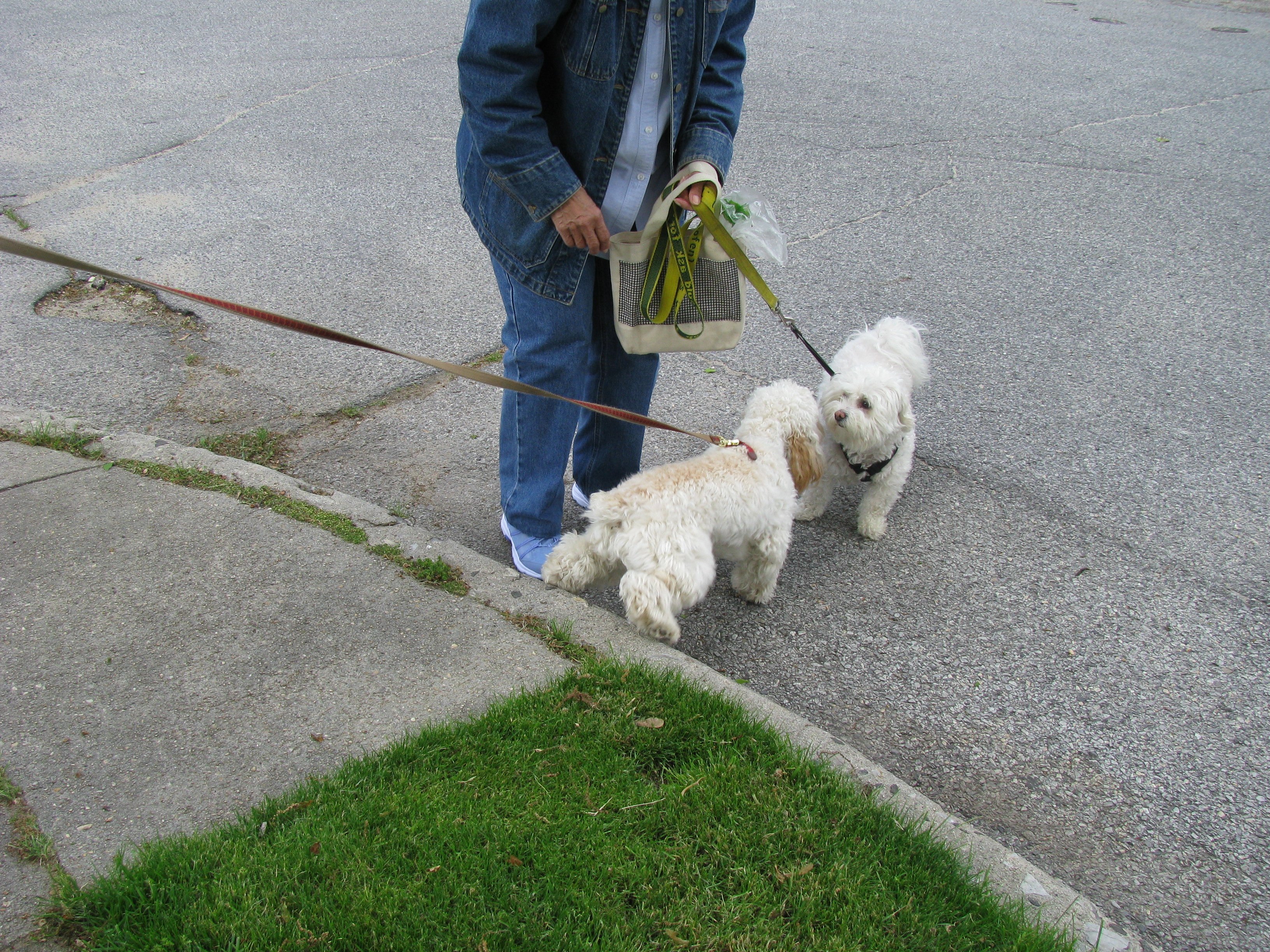
I’ve worked so hard at overcoming my social anxieties, and I do a lot better now, but I still panic, I still feel overwhelmed. And then someone walks by with a dog and I’m a chatter box, asking the dog’s name, giving pets and scratches, talking about my dogs, forgetting to ask the name of the human, or offer my own name, or shake hands.

            I feel such relief when I see a dog, of any kind. My autonomic nervous system calms down at the sight of a dog.

Nose kisses with Poochie

Nose kisses with Poochie

            I’m better at collecting dog friends than people friends. I feel much more confident that I am likeable with dogs. People make me anxious and make me question my value. Dogs just boost my neurotransmitters and make me feel loved.

Cricket and Ursula, the boxing puppies

Cricket and Ursula, the boxing puppies

            We made cards for our nearest neighbors and homemade dog blankets for three of the dogs Cricket and Butterfly love and will miss very much. But I felt awkward giving gifts and presuming we would be missed when we leave. And I was worried they would be mad at us for leaving and upsetting the equilibrium of the block. But it turned out that our neighbors loved us in return, and though they will miss us, they wish us well.

This was the picture on the card to say goodbye

This was the picture on the card to say goodbye

            A few years back, when I was walking Cricket around the neighborhood, we came across a tree that looked a lot like a chicken. I was still pining for my ex-boyfriend, a chicken enthusiast, and I wanted to believe that the chicken tree was a sign from the universe, that some part of him was still with me. The chicken tree gave me hope. This whole neighborhood has sustained me for fifteen years and offered me small gifts that have allowed me to hope that the future will be brighter and that moving forward will be a good thing.

The Chicken Tree

The Chicken Tree

The Baby Substitutes

Me and baby Cricket

Me and baby Cricket


Almost from the beginning, I carried Cricket like a baby, she grabbed around my neck with her front paws and wrapped her back paws around my waist, or whatever was closest. She’s kind of a cross between a dog and a monkey the way she can use her limbs like arms and legs. I wanted to make the most of the hugs and baby-like things about her in case I never got to have a human baby. Maybe I was being too fatalistic.

I used to think I was in therapy almost entirely to prepare for motherhood, to make sure that I would be functional and kind and smart in raising my children and not take out any of my weirdness and depression on them.

Throughout my twenties, I had a dog with serious neuroses – separation anxiety, fear of strangers, fear of bridges, panting out half her body weight and releasing hair in piles every time I left the house. I practiced on her, learning how to be a mom to her, how to set limits and offer comfort and accept her as she was and teach her what she could learn.

Dina in her mild old age

Dina in her mild old age

My prospects for becoming healthy in time to be a mom before my eggs wither and splat are not good. I’m not quite at the point of no return yet, and with reproductive technology, that point has been pushed off even further. But I already feel the loss. I thought my number one goal in life was to be a writer, and it was, and is, but it turns out that being a mom was second, not fourth or fifth like I would have thought.

Theoretically, I could go to a sperm bank, or foster a child, or adopt. Mom would help. But I don’t feel like I’m up to the challenge. And I’m not sure if I would like children as much as I like dogs.

There are a lot of things that just aren’t the same about parenting a child and a dog. Children grow up and go through many different stages of development and need to learn how to be responsible for themselves and think independently. You can’t clicker train a child if you want them to make their own decisions about right and wrong some day. A dog remains on a leash or in an enclosure and never learns to drive or gets a credit card or finds a job or robs a bank.

Cricket is a lot of hard work. If she were a human child I would say that she has ADHD and maybe a conduct disorder. And I would say that, as a parent, I struggle with disciplining her and setting clear rules and keeping her busy in productive ways. I feel like instead of building better parenting skills from raising Cricket, I’ve become resigned to the way Cricket is.

Cricket, biting the hand that feeds her

Cricket, biting the hand that feeds her

I accept that I will have a shorter amount of time with Butterfly. She only came to me at eight years old, after a hard life, and her breed’s life expectancy is twelve to fourteen years. But what I’ve learned from Butterfly is that I could adapt to raising a child who is not a baby when they come to me, and is already formed by difficult circumstances. So, again, the dogs are my practice for little humans.

My adopted Butterfly

My adopted Butterfly

But they may also be all there is. I may never give birth or adopt or even foster a child. I may never be financially, emotionally, or physically ready to be a mom. And if that’s the case, then the dogs ARE my kids. And I need to take as much joy and education from their presence as I can.

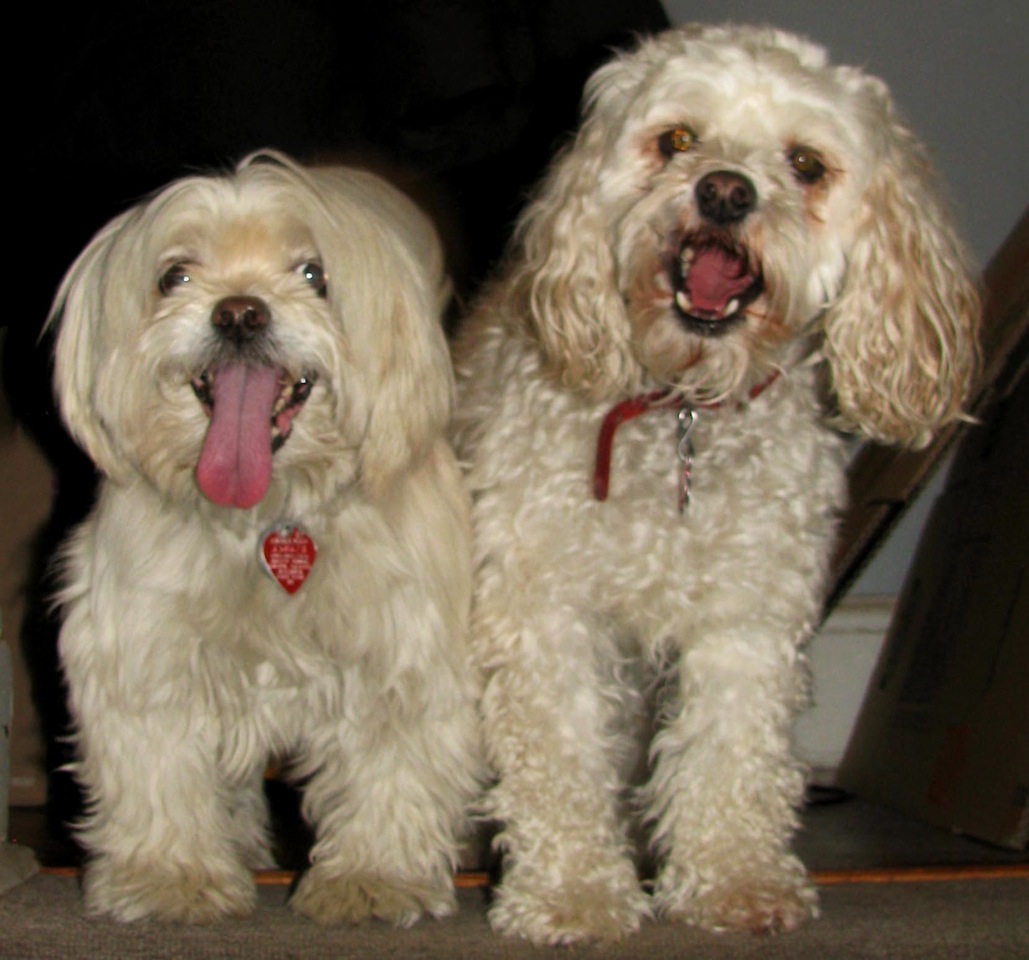
My girls

My girls

The Red Dog


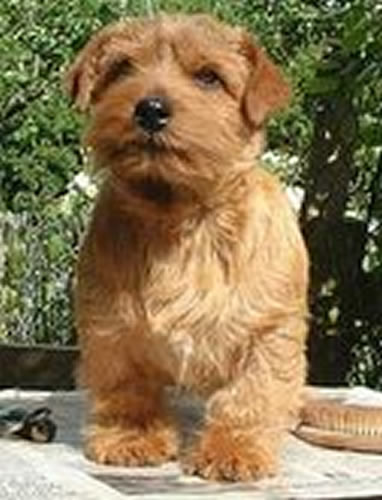
This is a Red Dog, but not The Red Dog (and this is not my picture of a Norfolk Terrier)

This is a Red Dog, but not The Red Dog (and this is not my picture of a Norfolk Terrier)

            The first time I saw Red Dog, about three years ago, Cricket and I were walking up the hill on our regular route around the neighborhood. We rounded the corner and there was a dog in the leaves at the side of the road. She looked like some kind of terrier and she was the same color as the autumn leaves around her, that orangey, reddish brown, and hard to see. But then Cricket noticed her and started to leap frog towards her. She does this. Instead of her pull-like-ox move, she hops forward in hopes of outsmarting the leash.

            The little red dog crossed the street, so we did too. She wandered around on the side street, sniffing all of the hot spots, letting Cricket know where they were. I couldn’t leave, knowing she was in the street with no leash and cars on the way, so we stayed with her. Eventually, she climbed up a lawn and stood on a small concrete slab at the front door, like she owned it. Cricket and I walked up to the lawn and knocked on the door. A sleepy face eventually came to the door and I asked if this little dog lived here. The woman stepped back, and the little red dog ran inside. And then the door shut.

            The next time we saw the little red dog, it was about a month later and getting chilly. She was missing a lot of hair down her back, and from a distance, I could see black dots on her skin. It was only when I got up close that I could see that the black dots were moving.

            My immediate reaction was revulsion, and I pulled Cricket away from her. Cricket had fleas once when she was a puppy. She was two months old and I was giving her a bath and found these things that looked like black sesame seeds stuck in her hair. I freaked out and obsessively cleaned and medicated her and combed and combed and combed.

This is not Red Dog either, but, ouch! (also not my picture)

This is not Red Dog either, but, ouch! (also not my picture)

            But Red Dog had been colonized. She had cities of fleas. I couldn’t understand how a human could live in a house with a dog that thoroughly inhabited by fleas. Fleas jump.

            I wanted to take her home and dunk her in a flea bath and wrap her in a soft towel and comb and soothe and ice and do whatever necessary to make her feel better.

            But more pressing was the fact that she was standing in the middle of the street and not following Cricket to safety at the side of the road, and there was a car coming straight at her. I screamed. It was one of those out of body screams where you look around to see where the noise came from. Finally the scream brought someone out of the house.

            Red Dog’s mom was disheveled and wearing pajamas and she asked why I’d screamed. I pointed to Red Dog, who was now safely on the side of the street, sniffing at Cricket. And, when I got my words back, I told her about the car.

            No real reaction. It was as if her emotions were blunted. She came down the lawn and picked up Red Dog, fleas and all, and watched as her other dog ran out of the house, without a leash, or even a collar. He was a black haired, medium sized dog, maybe fifty or sixty pounds. And the woman called him Jack, yelling at him to stay out of the street. Jack was missing hair too. I realized I’d seen him around the neighborhood, even further away from the house than Red Dog.

I mentioned the fleas and the woman smiled and said, “I know,” and shrugged. She eventually got both dogs back in the house and Cricket and I went along on our walk, but I couldn’t stop obsessing. The woman had cuddled Red Dog. She didn’t seem abusive or mean, but her dogs were sick with flea juice. I wanted to go home and get a box of Frontline and leave it in her mailbox, but I was afraid she wouldn’t use it or she’d be insulted and firebomb my house.

            I called my mother at work and asked for advice, because I couldn’t sit still and I was fantasizing about running back and stealing Red Dog. Mom asked her coworkers and they suggested I call the ASPCA which led me to the local no kill animal shelter in my town. The woman I spoke to from the shelter was just as upset as I was when I described Red Dog’s hair loss and standing in the street. She said they’d had previous complaints at that address and they would look into it again. She didn’t make me feel like I was interfering or making too much of it, but she also didn’t give me much reason to hope that they could help Red Dog.

            I wanted to be a super hero but I didn’t know how to do it.

            I didn’t see Red Dog for a long time after I made the call for help. I hoped, but did not believe, that they had been able to make a difference. Eventually, I did see her again, at least a year later. She had most of her hair back, but she was still outside by herself with out a collar or a leash, running into the street. As we got closer, her person came out of the house to get her, so that was progress, at least.

            I walk by her house regularly but rarely see her. I hope that means she’s doing well and her fence is working.

            The Red Dog situation, and the deep pull to save her, is what, eventually, led to adopting Butterfly. I learned, from Red Dog and others along the way, that I really didn’t need to know a dog from puppyhood to love her. In fact, my ability to love a dog seems to blossom in the first few seconds and is very hard to shake.

My Butterfly, with her Duckie

My Butterfly, with her Duckie

Butterfly, with her own adoptive family

Butterfly, with her own adoptive family

Stair Climbing for Puppies

Baby Cricket, confused by the stairs

Baby Cricket, confused by the stairs

            When Cricket was a tiny puppy, she had to learn how to climb the stairs. My bedroom is in the attic and Grandma’s room is one floor down, and baby Cricket just couldn’t decide where to spend her time. She would stand at the top or the bottom of the stairs longing to be wherever she wasn’t.

            Her first attempts at climbing the stairs were harrowing. She managed to lift all four paws onto one step, and then the next, and the next, and then she looked down from the middle of the staircase and cried like a toddler at the top of a Ferris wheel. She was terrified, but she was also Cricket, which means relentless and determined. She willed herself up the stairs.

Baby Cricket, waiting to go up the stairs

Baby Cricket, waiting to go up the stairs

            I don’t remember how long it was before she developed a down-the-stairs strategy. Maybe we’d been watching skiing on TV, because she did the stairs like they were moguls, bumping her butt in the air with each jump.

Baby Cricket, exhausted from her travails

Baby Cricket, exhausted from her travails

            When Butterfly came home from the shelter in November, she had never used stairs before. She was scared to even climb up on the curb when we went out for a walk, let alone attempt the high hill of stairs up to our apartment. She worked on those curbs, seven times a day, until she was flying over them. But she needed some instruction with the stairs. I’d put her front paws on a step, then lift her midsection to show her how to make the next step. Up and up until she’d gone all the way up the stairs. We did this day after day until she started to place her paws all by herself.

Butterfly going up

Butterfly going up

            We assumed she would learn the down-the-stairs next, but nothing worked. I showed her a way to do the steps sideways, so she could fit her whole self on each step and not have to look down. But as soon as I let go, she would scramble back up to the top as if her paws were on fire.

            We tried her on different types of steps, carpet and hard wood and concrete, higher rises and shorter rises, skinnier steps and wider steps. But nothing worked.

            This hasn’t stopped her from climbing up every staircase she sees, though. There’s a never ending staircase at the local beach, and she tries to run up high and higher, without any thought of how she’s going to get back down. Some magic angel will make it happen, even if that angel is Mommy and groaning the whole way.

            I had to put a pet gate in the doorway to my room, to stop her from running up there and barking to be brought back down, or worse, staying up there alone for hours. Before I had the bright idea to block my door-less doorway, I had to do a lot of puppy retrieval, climbing stairs endlessly to make sure she had access to food and water and a place to pee. But as soon as I move the pet gate, she comes running from wherever she is in the apartment, even if her head is buried in her food bowl, just to run up those stairs.

Butterfly going up, again!

Butterfly going up, again!

                      Cricket thinks this is hilarious.

Dancing Puppies

Always start with a stretch

Always stretch first


Cricket first came home as an eight week old puppy, in September of 2007. She was adorable and tiny and running in every direction and we took her to puppy class that October, determined to start her off right. She needed socialization, and manners. And we needed some idea of how to make her stop biting us.

Every Monday night, after class, we drove home discouraged, and turned on the TV for some relief. I don’t remember if I’d watched Dancing with the Stars before that season, but it was on after class and it was undemanding, so it became a staple.

I picked up my exhausted, angry puppy, and we learned how to dance. She liked the calm, slow, up and down twirls of the Waltz. I liked the sharp, staccato turns of the Tango, paw in hand. But her best dance was a free form mix of the Latin dances. She loved to shake her tushy. I held her in the air and twisted her to the right and the left, shoulder shimmy right and left. We sang the “I like big butts” song and the “My milkshake brings all the boys to the yard” song, though Cricket does not have much of a milkshake.

Cricket demonstrates a dance lift

Cricket demonstrates a dance lift

Each week, we danced with the contestants and tried new rhythms and new lifts, and the dancing bonded us in a way the class, with its forced sits and holding-puppy-on-her-back to get her calm, never could.

I’ve tried to teach Cricket some dance moves she can do on her own. There’s the slow turn on two feet, and the two-steps-forward-two-steps-back, and the sit-down-stand-up-jump combination. All held together with chicken treats. But, honestly, she’d rather be getting scratchies.

Cricket mid-spin

Cricket mid-spin

When Butterfly first came home she wasn’t up to dancing. She’d been living in a crate for her eight years at the puppy mill and needed to start slow. The first step was to get her moving, just walking around the block, using her legs, climbing curbs and steps. She learned about jumping for treats from Cricket, and she taught herself how to twirl, just for fun.

Butterfly learns by watching Cricket

Butterfly learns by watching Cricket

Now that she has all of her dance steps, she prefers to dance on her own instead of with me. She has a very specific, well choreographed poopy dance. First she starts to run, back and forth, back and forth, to warm up. Then she starts to hop and skip in circles, in one direction and then the other. Then there are the spirals. She ends with a few small, hopping circles, lifting her hind end up and bouncing it off the ground.

Then, finally, she stops and poops.

Butterfly mid-dance

Butterfly mid-dance

It’s possible that Butterfly’s puppy mill was near a ballet school. I can’t imagine how she had the room to develop this dance routine living in a crate all day, day after day. She must have been dreaming this dance her whole life.