Category Archives: dogs

I want to live at Dogtown

There was a show on the National Geographic channel a few years ago set at an Animal Sanctuary in Utah called “Best Friends.” They have separate enclosures for birds and cats and rabbits and horses and pigs, and the section for dogs is called Dogtown.

dogtown

The show focused on their work with last chance dogs, and how they try to give them better lives. Each dog has a team of veterinarians and groomers and trainers and volunteers looking out for them, and coming up with creative ideas for how to help them with problems other shelters couldn’t solve. So a half-blind, ten year old dog, who couldn’t walk on a leash, had people brainstorming ways to help him live his best possible life. And, if they couldn’t find him a forever home, he would always have a home at the sanctuary.

The Dogtown staff

The Dogtown staff

Dogtown represents the kind of safety net I wish we all had, pets and humans alike, because the volunteers and groomers and vets and trainers at Dogtown seemed to be infused with a level of compassion and persistence you don’t find in regular life. The problem is that most shelters are not Dogtown. Some have the compassion, but not the skill, or they have the volunteers, but not the money, or the space.

            The shelter where we got Butterfly subsidizes her medical care, and sends buses to pick up dogs from puppy mills all the time, but they have no mandate to train the dogs, or help them overcome social deficits. Their goal is to send the dogs out to new homes as soon as possible.

My Butterfly, with her Duckie

My Butterfly, with her Duckie

Dogtown, the TV show, went into different aspects of dog rescue work: fostering, volunteering, emergency interventions off site, veterinary care and training. And I kept wanting to be part of what they were doing. They made it look possible, even when they were crying, or struggling to come up with answers. I imagined myself in all of the different jobs, but I couldn’t quite believe I’d be up to the challenge. I don’t think I would be good at short term foster care, for example. My heart would keep breaking without enough time to heal in between dogs. I know myself well enough to know I don’t have the Teflon for that.

            I’ve wanted to work with dogs for a long time. When I was in my early twenties, I volunteered at a small no kill shelter, because I thought it might be something I’d be good at. But the established volunteers made me feel like I was in the way and they were doing me a favor by letting me help out with the cats. Dogs were too advanced for a beginner like me, they said. I started to believe that my need to be helpful was actually selfish and a character flaw.

            Recently, after watching repeats of old episodes of Dogtown, I was inspired to look into volunteering again, and found a class advertized at a nearby shelter. Mom wrote to them to ask for information and the email they sent back said that we could take their class in how to volunteer, but we’d be damn lucky if they had an actual spot for us in their schedule, ever. I’m paraphrasing. But the message I heard was, of course you want to volunteer with dogs, so does everyone else. What makes you so special?

            My dream would be to have my own menagerie of dogs to take care of at my own home, without other people around to tell me I’m not good enough. I’d need more money, and time to make sure the dogs have all of the love and medical care and training they need to thrive. I think I could be good at that.
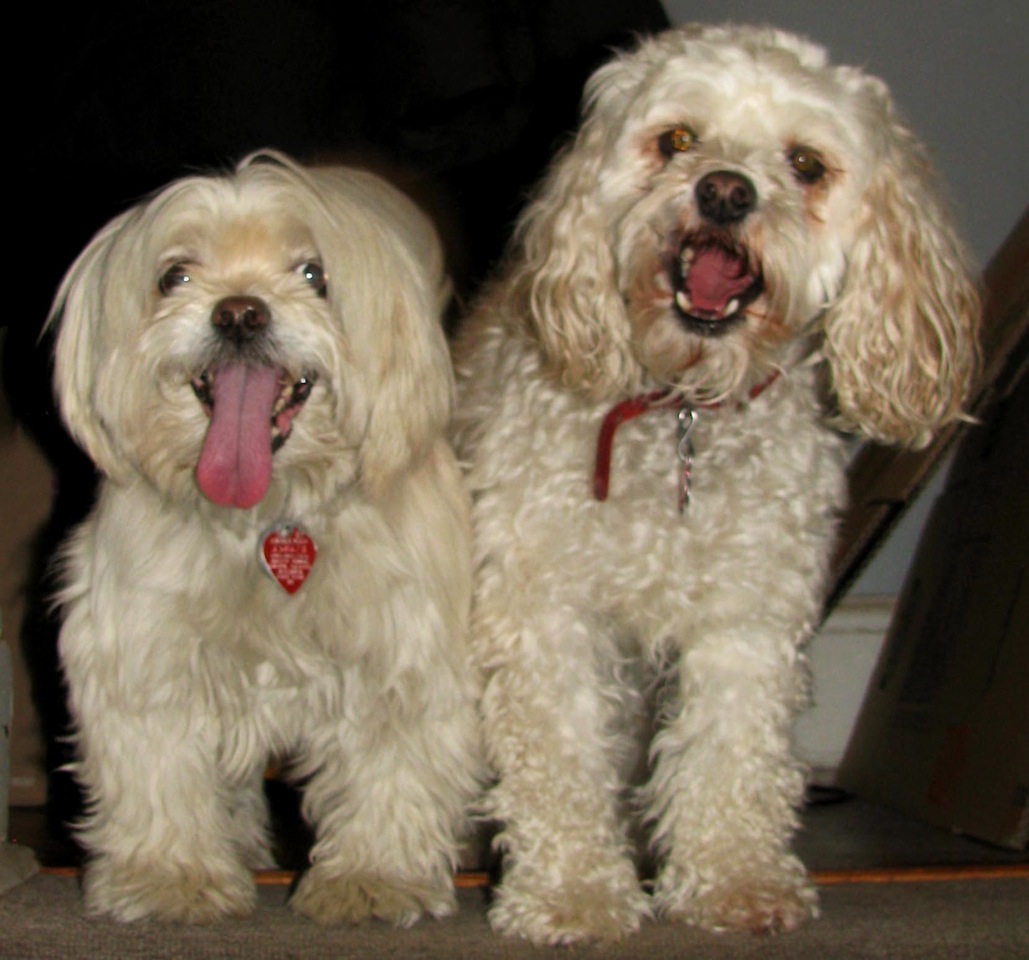
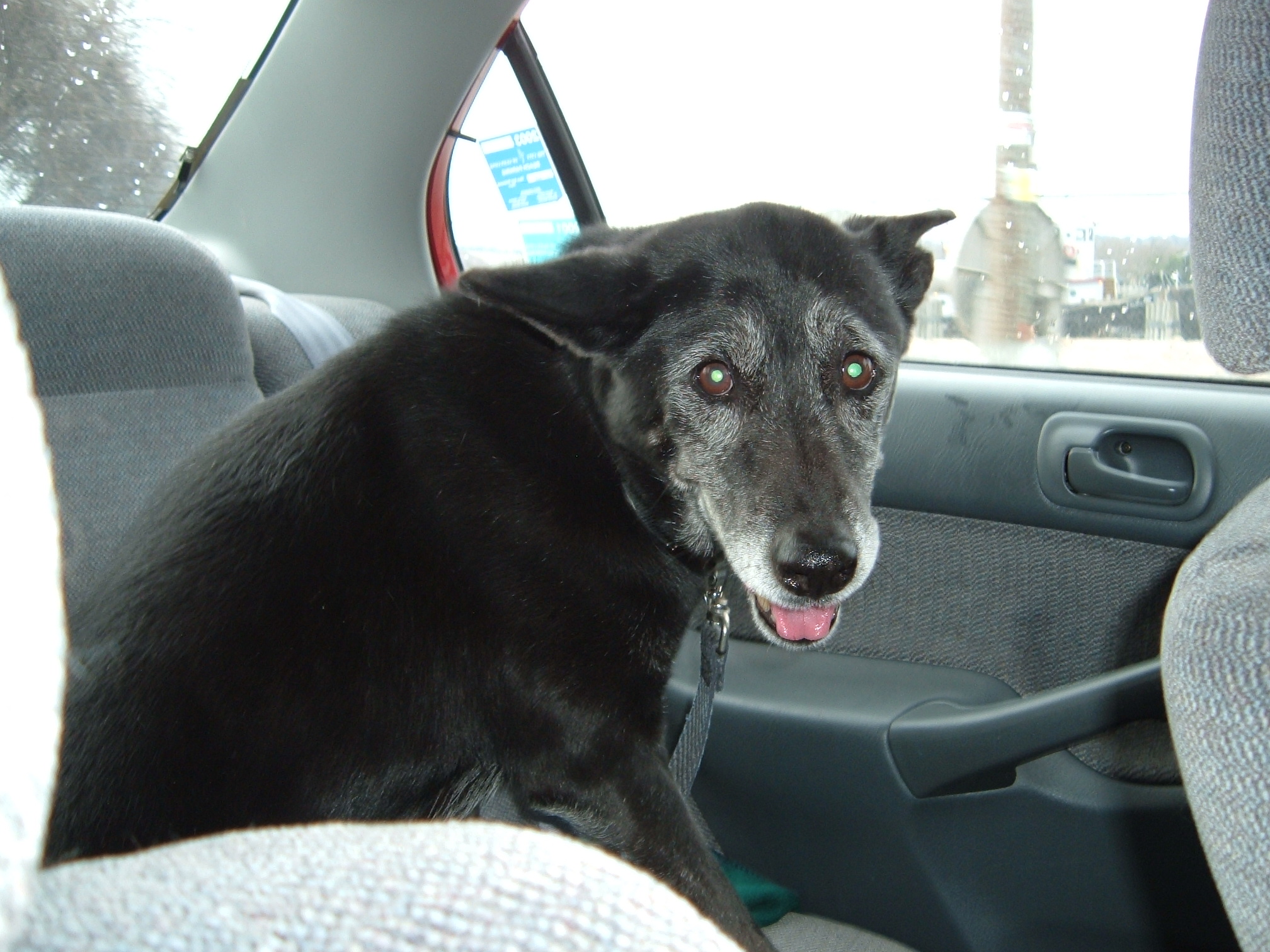
Butterfly and Cricket
Butterfly and Cricket

My Dina

My Dina

Delilah

Delilah

and one of her many puppies

and one of her many puppies

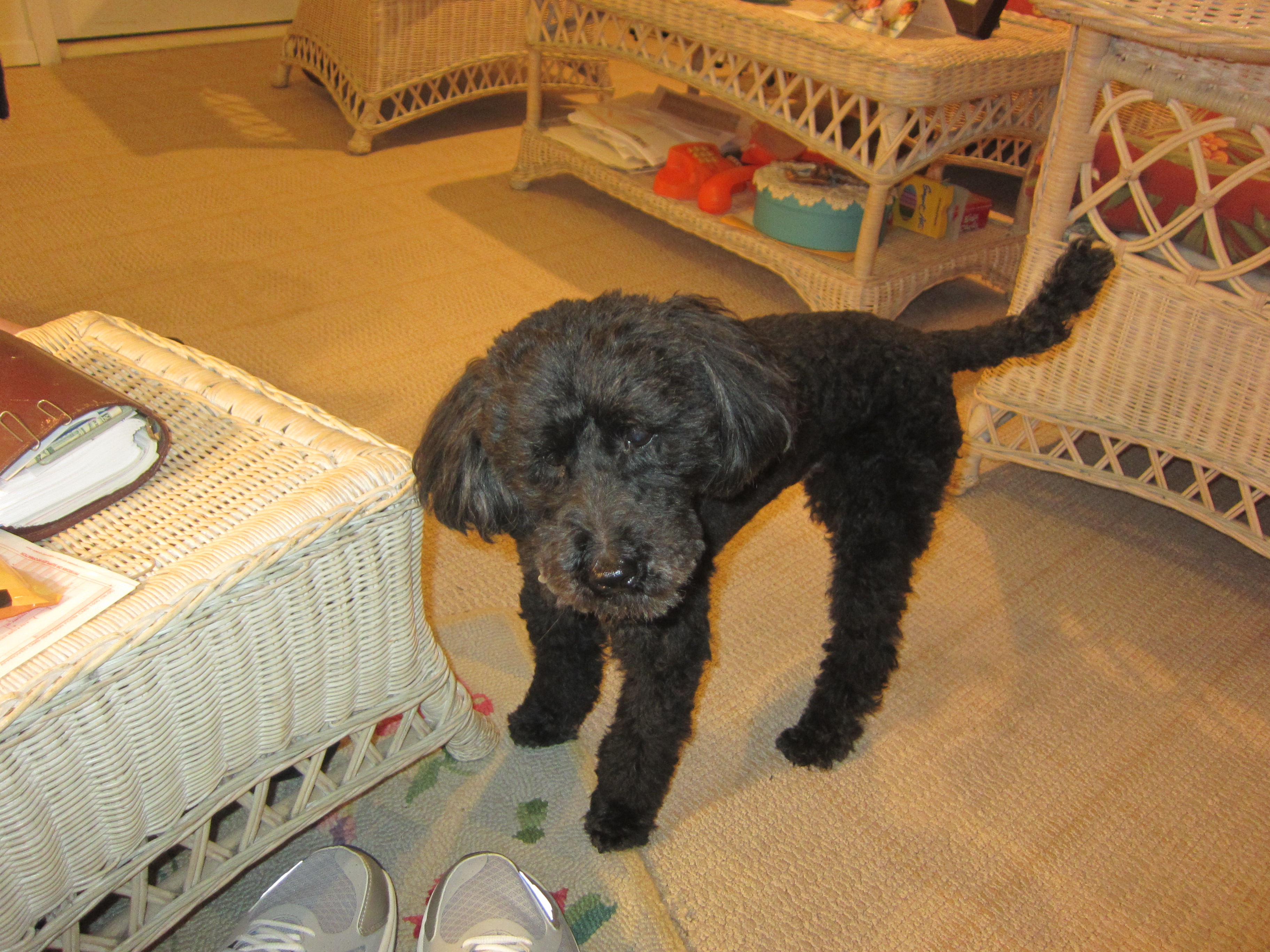
Rachel dog, my first babysitter
Rachel dog, my first babysitter
Teddy, the Therapy Dog

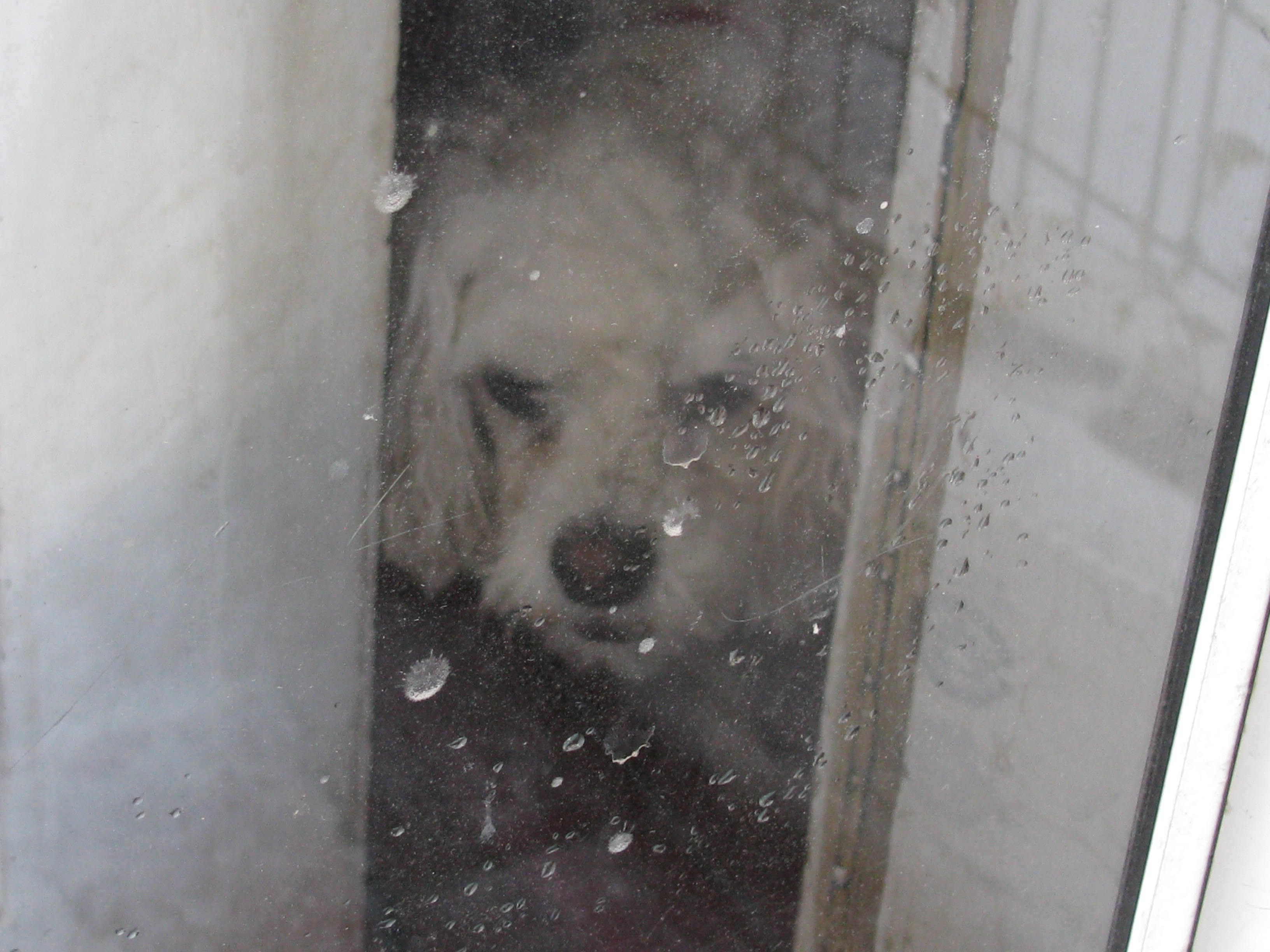
My therapist has a miniature Poodle named Teddy, and he is her assistant therapist. He comes out of the office to get me from the waiting room, either barking at me or nosing my leg, depending on his mood, and then he does his Gumby-like stretch to relieve the stress of his very difficult job. He is my yoga guru; he does not seem to have bones at all.

Teddy, analyzing the depths of my soul

Teddy, analyzing the depths of my soul

Teddy, analyzing the smells I brought with me from home

Teddy, analyzing the smells I brought with me from home

Teddy is eight and a half years old and I have known him since he was a ball of puppy fluff. He was shy at first. He slept on his Mom’s lap or looked at me with suspicion. I spent a large part of two years in therapy working on my relationship with Teddy. If I was too eager to pick Teddy up early on, he would let me know, by backing up and walking away. But the next week he’d let me try again. And if I overcorrected, by not reaching out at all, he’d take a step closer to let me know he was willing to be addressed. He worked with me, and the more carefully I listened to his cues, the better he liked me and rewarded me, with attention and kisses.

Baby Teddy looked something like this

Baby Teddy looked something like this

Teddy is the reason I looked for a Poodle mix when it was time to get a new dog. Before I met him, Poodles looked too frou frou to me, with those strange dog show haircuts (pompoms on the tush, etc) and prissy bows and ribbons in their hair. But Teddy had a puppy hair cut that made him look like a real dog. He gets his hair cut every four or five weeks, because his groomer is something of a tyrant about inappropriate hair length for miniature Poodles, but also because his hair starts to cover his eyes and his black eyes are impossible to see through the poof of black hair.

            When I brought Cricket home, six years ago, one of the first places she went was to therapy to meet Teddy. I brought all of her paraphernalia with me in the equivalent of a diaper bag. There was a wee wee pad, poopie bags, paper towels, water, tissues, a chew toy, a soft toy, and treats. Cricket fell in love with Teddy, and with my therapist, right away. She tried to jump onto both of their laps and sniff all of Teddy’s toys and every corner of the room. Teddy took to hiding behind his Mom’s wicker chair so that Cricket couldn’t sniff his butt. He had to growl at her, to warn her away, because she wasn’t listening to his cues and taking it slow. Cricket is not good at adapting to other people’s rules.

Puppy Cricket, the menace

Puppy Cricket, the menace

Teddy prefers when I don’t bring my dogs. He likes to sit on my lap, facing me. He sits like a little gentleman, and leans into scratchies, until I have to hold him up, like the leaning tower of puppy. He is starting to get some grey hair on his chin, but he’s still mostly black velvet and very amenable to being scratched.

He has a “little” sister, an eighty pound Golden Retriever, who comes galloping up the stairs to visit the office sometimes. I’ll have Teddy on my lap and his sister next to me, giving me her closed-eyed smile while she gets her scratches. This is my idea of effective therapy.
Teddy's sister smiles like this Golden, and thinks we should have therapy outdoors.

Teddy’s sister smiles like this Golden, and thinks we should have therapy outdoors.

Butterfly’s Echo

              Recently, we took Butterfly in for her six month echocardiogram. When we adopted her at the end of 2012, she was diagnosed with a heart problem that could, potentially, develop into congestive heart failure. I worry each time she coughs, because the original vet told me that coughing could be a sign of heart failure. And I worry about the lumps and bumps on her skin, because I don’t want to assume that something is benign and then find out that I left a tumor growing inside of my baby until it was too late. I just can’t believe that she is as healthy as she seems.

Butterfly's First Day Home

Butterfly’s First Day Home

The echocardiograms are subsidized by the shelter where we adopted her, and they also cover her wellness visits, so we scheduled both at the same time.

We took her for her 10:30 AM appointment and she was seen almost immediately by the cardiologist. He said, basically, that her prolapsed valve was a tiny bit worse, but she had no signs of congestive heart failure. I told him how much she had improved since November: she can run, and jump, and stand straight up on her back legs, to beg for food. He just smiled and patted her head, and the appointment was over.

When we asked at the front desk about Butterfly’s wellness visit, they said she was scheduled for 12:45 PM, in two hours, so not at the same time, as we’d been told. We were wondering if we should go home for lunch and come back, but the woman at the desk said there was only one dog ahead of us and it would be a short wait.

We sat on the wooden benches against the walls of the waiting room, which were comfortable for the first twenty minutes, and then not. Butterfly was stunned from her ordeal. She still had goop on her belly from the test, and she was almost dead weight in my arms again, the way she’d been way back when we first adopted her. I held her on my lap and gave her scratches and talked to her. We tried the dog cookies they had in a jar on the counter, but she wasn’t interested. I hadn’t thought to bring chicken treats with me.

I felt awful leaving Cricket home alone. Cricket found it shocking herself. But she didn’t need to sit in a waiting room swirling with various diseases. And, as we sat there waiting, I was relieved to have left her home, because she would have been barking her head off.

My poor lonely Cricket

My poor lonely Cricket

The waiting room was full. There were a lot of newly adopted puppies getting their shots or being treated for kennel cough. There was a Cocker Spaniel with a big, red growth on his ear and a cone on his head to keep him from biting it, again. And there was an Australian Cattle Dog mix, named Bandit, who jumped up and shed all over me and gave me kisses. He had epilepsy and was there to get more medication for his seizures. It was an odd coincidence, because I’d just been told that my abnormal EEG could mean that I was having partial seizures. I tried to ask Bandit what it felt like to have epilepsy, but he was too busy giving me kisses.

An hour along, Butterfly was back to full strength and up to visiting the other dogs, and peeing on the floor, but Mom was getting antsy. She went up to the front desk to ask when we’d be going in and they told her there had been twelve emergencies, and they all took precedence over a wellness visit. But, the woman at the desk told her, there was only one more dog ahead of us.

Our choices were to believe her and stay, or be circumspect, reschedule the appointment, and go home. I really wanted to take Butterfly to Cricket’s vet instead, but it was so much more expensive. The shelter’s medical care was subsidized, so instead of paying $350 for an echo, we paid $50 and there was no charge for her wellness visit. We decided to wait.

There was a pug in the waiting room with her dad, and she was there for an echo too. She already had congestive heart failure and took daily meds to help control it, but her dad said that if he saw her trying to run after a squirrel in the yard, he’d run screaming, “No!” because if she exerts herself too much, she faints.

I felt guilty, and lucky, that my Butterfly wasn’t in her situation, yet.

After the pug left, more puppies came in for their shots, including two white toy poodles, with their ears died pink and blue to identify which one was the boy and which one was the girl.

The long wait was starting to get to me, but I felt guilty for complaining when all of these other dogs were coming in with emergencies, and I wasn’t paying much for help. I do okay with feeling worthy of care when I’m alone, but when it feels like someone else might need things more than I do, I struggle. I almost lose track of myself, and disappear. I couldn’t force myself to go up to the front desk and ask about Butterfly’s appointment, even after two hours, and then three. I left it to Mom to be the assertive one.

It’s been a relief to see Butterfly finding her voice lately. She barks when her sister leaves the room, or when she thinks she’s missing something exciting. She demands attention and expresses frustration when it is not forthcoming. I wanted this for her, but I’m not the one who taught her, Cricket did. Maybe I can get Cricket to give me lessons too.

My assertive girls

My assertive girls

By the time we went in for the wellness visit, we’d been in the waiting room for four hours, and when the general veterinarian looked at Butterfly’s chart, she found out that she only needed one booster; the rest weren’t due until November.

Since we were there anyway, I took the opportunity to point out to the vet all of the various lumps and bumps on Butterfly’s skin. She did a needle aspiration on the largest lump and showed me how the pus came up through the needle. It was a sebaceous cyst, she said, and nothing to worry about.

We were done within minutes of stepping into the examining room. We were exhausted, and starving, but relieved.

When we finally got home, Cricket was crazed and jumping all over us as if we’d been gone for months. She sniffed Butterfly for signs of where she’d been and then carefully sniffed my pant leg for the smells of other dogs, of which there were many. My clothes, covered in dog hair, went straight into the laundry basket and I went into the shower. After we’d all calmed down and eaten a late lunch, we settled down for a nap. Butterfly fell asleep at my side right away, but Cricket ran back and forth from Mom’s room to mine every few minutes, to sniff her sister for signs of where she’d been, still shocked that Butterfly had dared to go on an exciting adventure without her mentor.

Butterfly and her suspicious mentor

Butterfly and her suspicious mentor

Cricket, the Sous Chef

            Cricket is my sous chef. She stands in the kitchen while I’m making dinner, and tries to reach her paws up to the cutting board to steal red bell peppers. If she doesn’t feel like jumping, she scratches at Grandma’s leg to be lifted up so she can see the vegetables up close. If Grandma picks her up near a fresh cut onion, she sneezes. But once the sauté pan is on and the oil is heating the garlic and peppers and onions, Cricket twitches her nose and then licks her lips, at which point she has to be put down on the floor to avoid her jumping into the pan with all four feet.

Who me? I wasn't anywhere near those beets.

Who me? I wasn’t anywhere near those beets.

I’ve been tempted to buy Cricket a white toque to wear on her head, or a chef’s jacket with buttons, but she is not a fan of clothes.

Butterfly is more circumspect about the kitchen. She tends to stand in the doorway, or stretch out with her head on her paws, and stare. She’s afraid of all of the noise, like knives on cutting boards, sizzling pans, and whirring mixers, and she’s afraid she will get stepped on. Her spatial relations are, legitimately, not very good. Cricket is better at negotiating small spaces and human legs; she’s more bendy.

Butterfly tends to stand back and let Cricket get first crack at any dish at the end of a meal, because Cricket is a superb dish cleaner and Butterfly’s skills have not yet risen to Cricket’s level. It will come with time.

Class is in session

Class is in session

But Cricket is still the master

But Cricket is still the master

I used to bake a lot when Cricket was a puppy, and she learned to take part in the process: supervising the mixer, sniffing for cookie doneness, and, of course, cleaning up afterward. She gets angry, now, when I make something with chocolate in it, because then she can’t clean the bowl, or the beater, when we’re done. She would like for me to always make sugar cookies, or something with peanut butter.

Cricket is very busy

Cricket is very busy

Cricket is teaching Butterfly how to listen for the oven timer, a very important skill. They get up from their rest positions on the living room rug and stare at me until I get up. If Cricket thinks the food is ready early, despite the lack of a beep, she will let me know.

            In pursuit of her goal of one day becoming a chef with a kitchen of her own, Cricket prefers that we test chicken recipes. She likes when I make chicken wings, because I never eat the skin, and therefore she gets to taste test a chicken’s worth of skin. She is less interested in recipes that ask for boneless, skinless chicken breast, because she’s never offered the leftovers from those.

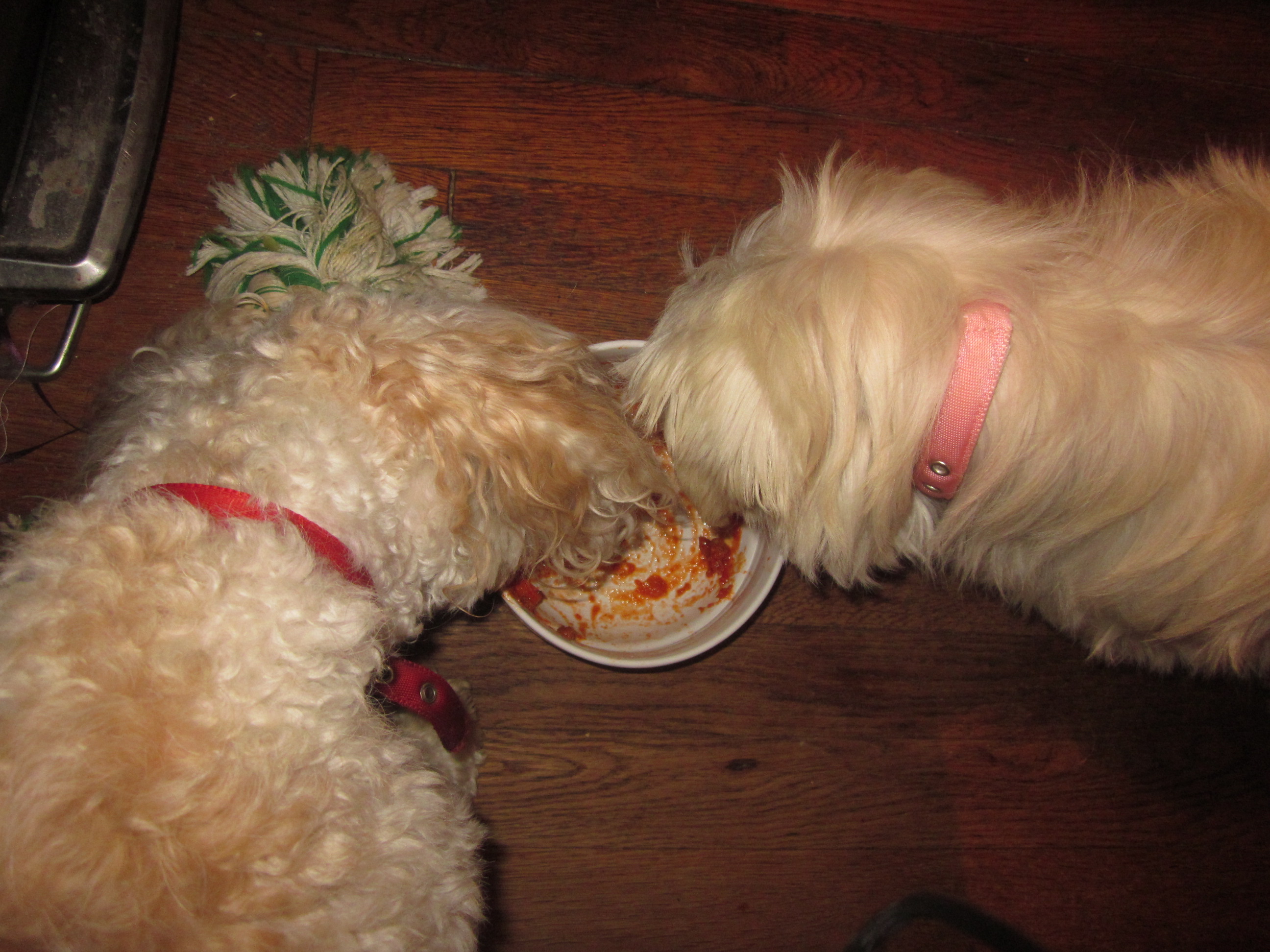
Pizza is also a favorite of hers, and of Butterfly’s. At this point, I have to give them the pizza crusts, even if they are the rare edible pizza crusts. I remove all tomato sauce possible, because I worry the spices will make them sick, and I divvy up the pieces into their bowls, and then they inevitably bring the crusts to the living room rug for chewing.

At Cricket’s restaurant, the pizza would probably be topped with: chicken, red bell peppers, pumpkin, Parmesan cheese, and olives. This would be the Cricket special. The Butterfly special would be covered in dry dog food and probably not go over as well.

Butterfly's favorite pizza topping: kibble

Butterfly’s favorite pizza topping: kibble

The waitresses at Cricket’s restaurant would sit at the tables with the customers and feed them by hand. One blueberry at a time.

            While Cricket pursues her cooking repertoire, and Butterfly attempts to scale the steeply competitive sous chef ladder, the girls are still grand champion eaters. Butterfly is a big fan of high fiber pasta, especially the little ears (orrichete). I choose to believe she is being health conscious, and attempting to improve her hearing as well.

Butterfly has followed Cricket’s example and learned how to stand on her back feet, leaning her front paws on Grandma’s knee during dinner. This is a very effective method of persuasion. Grandma is a pushover for puppy dog eyes and always finds something yummy to share. Cricket has been an incredible teacher, in this as in all things.

One day, Butterfly, the student will become the master

One day, Butterfly, the student will become the master

Shy People Need Dogs


A few years ago, I noticed a yellow sign with “RP” in black lettering, attached to a telephone pole in my neighborhood. Mom had seen similar signs before, for location shoots for movies and TV.

These yellow signs are very exciting.

These yellow signs are very exciting.

My mother went to USC film school way back when, and worked as a film editor, so she was curious about what they were filming. She followed the signs and found out that the TV show Royal Pains was shooting scenes at the beach near us. The show is set in the Hamptons, which is further out on Long Island from us, and much (much) more expensive.

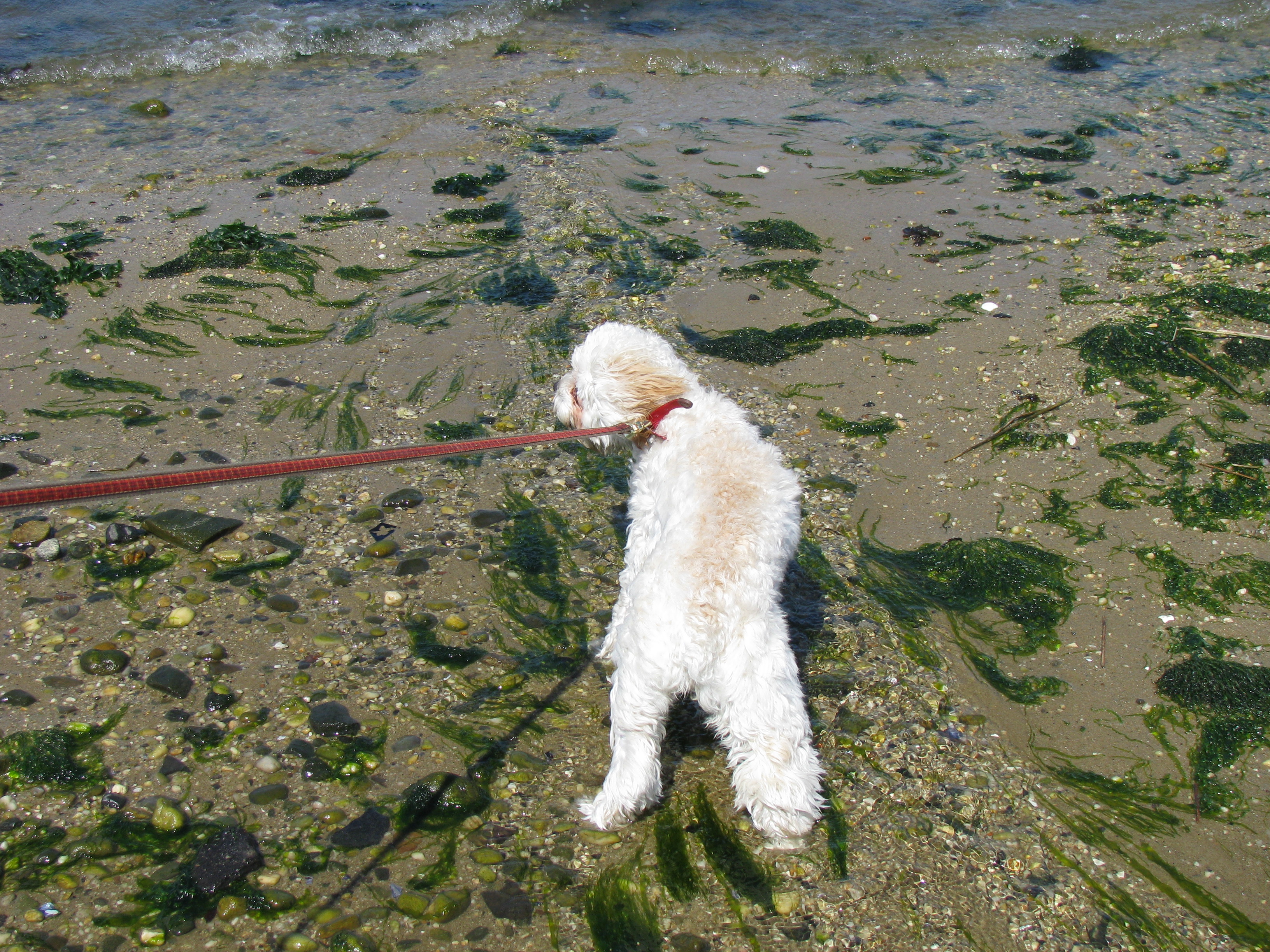
Cricket Loves the beach

Cricket Loves the beach

I couldn’t bring Cricket along when we stalked the set, because dogs aren’t allowed at that particular beach. I wished she could come, and bark, and draw attention to herself, because I knew I wouldn’t be able to talk for myself.

(Just so you know the show really does exist)

(Just so you know the show really does exist)

The main character on the show is a concierge doctor who diagnoses strange diseases on the fly. Royal Pains is like the happy, pretty answer to House, with a bit of MacGyver thrown in. But more than the show itself, it was one of the featured actors I wanted to see. I’ve had a crush on Campbell Scott since I was sixteen years old.

I almost met him ten years ago. He was giving a talk at a small cinema on Long Island. He’s smart and articulate and down to earth. If ever there was a movie star I should have been able to talk to, it was him.

This is Campbell Scott

This is Campbell Scott

I did my best to dress up, in a sweater and black pants and a clean pair of sneakers, and sat in the third row of the movie theatre, next to Mom.

            First we screened the movie, The Secret Lives of Dentists, which involved scenes of screeching drills, blood, and the uncomfortable intimacy of the inside of a stranger’s mouth. I focused, instead, on the scenes of Campbell Scott as the father of three little girls. He carried the five year old around so constantly that at one point he said she had become part of his body.

            As the movie ended, he sat down at the front of the theatre, munching kernels of popcorn as the credits continued to roll over his head. When the lights came up, he tapped the microphone to begin, and – nothing.

            “I’ll use my theatre voice,” he said, and his voice reverberated.

            “Use the microphone!” someone screamed from further back.

A woman in the row ahead of me took the traveling microphone. “I thought you did a wonderful job in this movie, of showing parenthood as it really is: a burden.”

            “You liked the vomiting scenes?” he asked, with a grin.

            One woman towards the back of the room asked, in a plaintive voice, “Could you talk for a minute about Dying Young?”

“What about it?”

“Anything.”

I moved forward in my seat, afraid he would dismiss this movie I loved as commercial crap.

“In Europe they called it The Choice of Love,” he said. “Better title, don’t you think? A person could see a title like that in the paper and say, hey, let’s go see that movie. But, Dying Young,” his voice went down an octave. “Why not just stay home and slit your wrists instead.”

I wanted to raise my hand and tell him how wrong he was about the title. How those two words were exactly what drew me to the theatre, at sixteen. I was suffering, and inarticulate. The opportunity to see some of my own pain reflected back to me was the whole point. But I couldn’t say that to a room full of strangers.

The crowd gave him a standing ovation and then slowly moved into the café down the hall for refreshments.

“What should we do now?” I asked my mother, as we watched the majority of the audience get stuck in a traffic jam at the single exit door.

“Why don’t we go to the café and maybe you’ll get a chance to talk to him,” she said.

“What would I say?”

“You’ll think of something,” she said. My mother has an unreasonable amount of faith in me.

We followed the crowd into the reception hall and I stood at the periphery, with my arms and legs crossed, willing myself to move forward, reach out, and say anything. Hello, would be nice. People swirled around him, ticking him around like a clock, quarter turns at a time, for autographs and pictures and questions.

I stood about six feet away, a step outside of the circle created by braver people than me. I listened. I wanted so badly to speak up, to have a memory for the rest of my life of having actually spoken to him. He looked in my direction every once in a while, and I imagined myself touching his arm and telling him he was wonderful. But everything I wanted to say was raw, and I didn’t want to inspire his pity, or annoyance.

And then he was being led out of the room, in slow motion, by the owners of the theatre. I just stood there, frozen.

I try to accept my limitations and forgive myself for the wide variety of anxiety symptoms that run my life, but that moment stayed with me. I could see him seeing me, wondering why I was standing there and saying nothing.

I’m hoping that Royal Pains will do some location shoots near where I live now, because the village main street is often used as a stand in for the Hamptons. And maybe I could walk down the hill with Cricket and Butterfly and meander near where the actors and crew are set up, and see if the dogs can act as my social bridge. Maybe Butterfly will bat her eyelashes and draw a crowd. And maybe Cricket won’t bark and lunge at a cameraman.

I'm sure the girls will make the walk down the hill easy for me.

I’m sure the girls will make the walk down the hill easy for me.

Who could resist Butterfly?

Who could resist Butterfly?

Maybe by the time the weather cools down, and they come back to my neighborhood, I’ll have figured out something to say.

Synagogue Dogs

            I wish that my dogs could participate at my synagogue. Yes, Cricket is obstreperous and barky and disruptive, but I’d like to believe that there is something in the music of prayer and the solemnity of the service that would help calm her and give her some relief, the way it does for me. The Rabbi and Cantor at my synagogue like to sing harmonies. I think that was the clincher for me when we visited the synagogue last year and decided to join, the way the music was like a conversation between the two of them.

            It would be nice to have an acknowledgment that dogs are members of our families, especially for people like me who don’t have children, or husbands or wives. We get left out of community rituals that would allow us to feel more whole and welcome.

And sometimes, I just feel like I want Butterfly to be sitting on my lap, so I won’t feel so strange to myself in this strange place that isn’t home. She would be my therapy dog, for when I start to twitch and shake and feel self conscious about being in public.

Butterfly, in silent prayer.

Butterfly, in silent prayer.

 Butterfly’s presence would calm and relax the people around her, except for the occasional stress peeing. And then there would be one less place my dogs would be barred from going. It’s already painful for them that they can’t go to the supermarket.

            My synagogue is Reconstructionist and one of their prime directives is to be inclusive of all kinds of people. People, but not dogs? They’ve broken down barriers for intermarried couples and gay couples and women in leadership. Shouldn’t there be some way to break the prejudice against my dogs?

At Friday night services, people wear casual clothes. I started out wearing black dress pants and high heeled boots, because I thought I should, but now I wear jeans and sneakers. There is an aging population at services and they are very accepting of each other’s limitations. They understand the need to be there instead of alone. This is the kind of place that could welcome dogs.

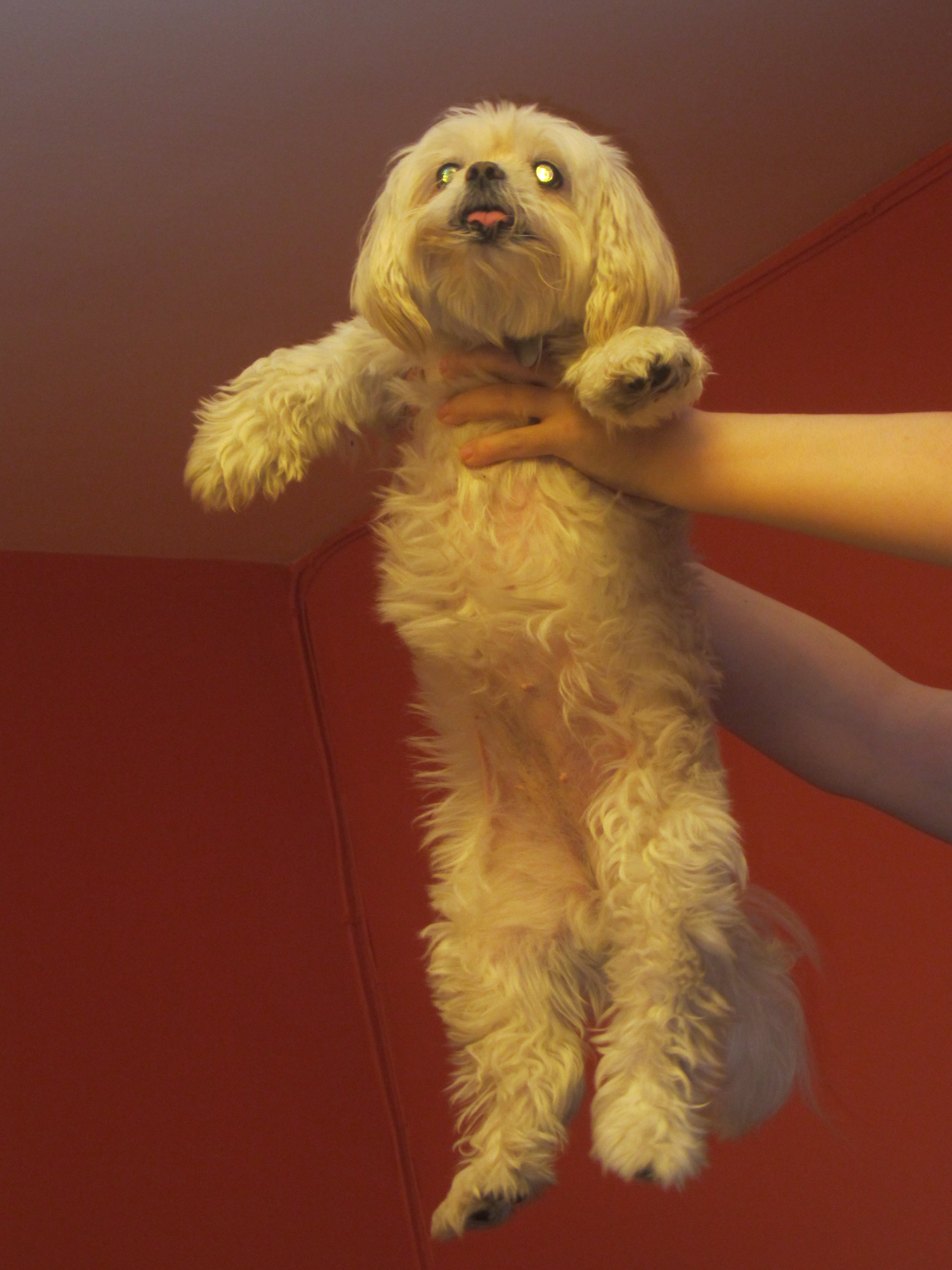
            I would have loved there to be a service to welcome Butterfly into our family. I picture something like the Lion King scene where Simba is introduced to the community, raised up high. I would have liked the Rabbi to hold Butterfly up on the pulpit and say a blessing over her and announce her name to the congregation.

Butterfly's naming pose

Butterfly’s naming pose

When Cricket is sick, it would be nice to be able to go to synagogue and say a public prayer for her recovery. There’s something powerful about putting aside privacy to ask for help from the community, as if we are tapping into an electrical system where everyone’s energy is pooled together.

Cricket is less amenable to being raised in the air

Cricket is less amenable to being raised in the air

On Purim, when we read the story of Esther and use a noise maker, called a grogger, to blot out the name of the bad guy in the story, Haman, the dogs could participate. My dogs, especially Cricket, could be living noisemakers. There could be a whole Hebrew school class for the dogs, to train them for their big day, when they can stand up as a barking choir, and blot out the name of the enemy who tried to harm their humans.

But most of all, I think dogs could bring something unique to a house of worship, because they are not of any particular religious or ethnic persuasion. A Golden Retriever could just as easily, and happily, live with Jews or Muslims or Christians or Buddhists. Dogs are not biased towards one religious group or another. A dog’s presence in the synagogue could be a reminder of the basic spirituality we all share, the God-sense we are all trying to tap into, rather than the specific religion we use to get us there.

My synagogue-ready dogs

My synagogue-ready dogs

DSM Puppy

I took a class in Abnormal Psychology this past semester, and we learned about the Diagnostic and Statistical manual of Mental Disorders, published by the American Psychiatric Association. The DSM is similar to a field guide to birds, without the map to tell you where to find each colorful creature.

DSM-5_3D

There was a lot of excitement, from the teacher, about the new DSM 5 arriving in May, and I began to think, what would a DSM for dogs include?

My incomplete list of disorders:

Hyperbarkia – a disorder in the quantity of the barking and/or the level of hysteria. An occasional woof-woof to mark the passing of a neighbor, or a more persistent bark to note a stranger at the door, can both be within the normal range. Whereas an unending barking spree, lasting twenty minutes or more, or rising to operatic levels, can be a sign that the need-to-bark meter has jammed.

Bite-the-hand-that-feeds-you-disorder is self explanatory.

Cricket, a case in point

Cricket, a case in point

Foreign object eating disorder – eating rocks and sticks and plastic toys, because those trips to the vet are just so much fun!

Vacuum phobia – when dogs believe that the vacuum cleaner is a giant roaring monster, ready to devour every toy, treat, and dog in its way.

Mailman paranoia is the belief that the mail delivery person is coming to massacre the family, and the only thing standing in his or her way is a tiny barking dog. (I worry that this puts undue stress on Cricket’s heart.)

"Mailman! Mailman! Mailman! Mailman!"

“Mailman! Mailman! Mailman! Mailman!”

Scratching Addiction is when a dog can get hours of scratchies at a time and never feel like it’s enough. Having an endless void inside of you, that no amount of scratchies can fill, may lead to other addictions, like chicken. Not to be confused with a genuine allergic skin condition.

Butterfly, a borderline case of scratching addiction

Butterfly, a borderline case of scratching addiction

Bone hiding disorder – this can be a normal reaction to a sibling who steals bones, or it can be a miscalculation on the dog’s part, imagining that the humans would steal that dirty, spit covered nylabone, if only they could find it.

PGSD or Post-Grooming Stress Disorder results in flashbacks and tremors at the sign of clippers and the sound of bath water. This can be incredibly disabling and creates the false impression that dogs prefer to be dirty. They do not. They just believe that the process of becoming clean will kill them.

Cricket hates being wet

Cricket hates being wet

Overly Selfless Dog Disorder is common in Golden Retrievers and other therapy dogs. This disorder can result when a dog is so focused on pleasing her humans, or other dog siblings, that she doesn’t stand up for herself. These dogs can be so good natured and non-confrontational that others take advantage of them or ignore their needs. (Butterfly started out this way, refusing to fight with Cricket over food or leashes or toys. If Cricket wanted something, Butterfly would stand back and leave it to her sister. But she’s getting better at elbowing her way to the food and speaking up when she wants to go outside or eat Grandma’s chicken wings.)

Butterfly: "Who me?"

Butterfly: “Who me?”

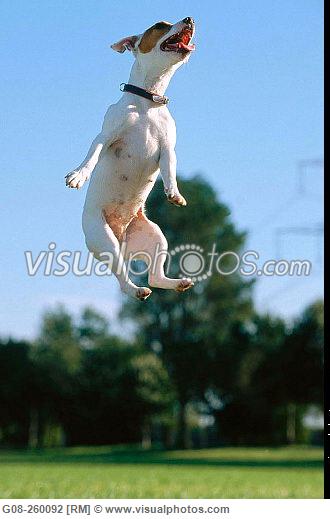
Jumping Bean Disorder – Some dogs have this need to bounce that can’t be repressed. Jack Russells are known for springing so high into the air that they greet human visitors at eye level. (Butterfly has not managed this feat, but she is trying.)

a serious case (not my picture)

a serious case (not my picture)

Fear of Thunderstorms is very common. I imagine thunder sounds like a huge, unnaturally ferocious, dog standing outside of the house and barking to get in. (Butterfly gets very anxious. Usually she sleeps on her side of the bed, with maybe a paw stretched out to touch me. But during thunderstorms, she climbs on my chest and shakes. Cricket has no fear of the sound of thunder, but she doesn’t like to be out in the rain and get plinked on the head by rain drops.)

Flibbertigibbet Disorder is an unrelentingly positive attitude towards going outside for walks that causes the body to hop and twirl and race around in aimless circles, preventing the attachment of the leash.

Small Dog Syndrome is when dogs under fifteen pounds believe they can intimidate full sized humans, by growling. This is also assumed to work on Fed Ex drivers.

This is my incomplete list of disorders. Clearly further revisions and additions will be needed. This shouldn’t take more than twenty years.

Cricket, the Town Sheriff

Cricket thinks she’s the Town Sheriff. She’s fluffy, and barely fifteen pounds, but she believes it is her job to protect her home, to the death if necessary. She rains barks on people, but she can’t discern between deserving targets and innocent victims.

Cricket, mid-bark

Cricket, mid-bark

As soon as we moved into our new apartment, Cricket realized that her greatest challenge, by far, is the Seven Eleven up the block. We live just around the corner from what is clearly the neighborhood hub. People fill the parking lot and the sides of the street and flow in and out all day, for the twenty varieties of coffee, a wall of sandwiches, miscellaneous doodads and a chance to schmooze.  Cricket thinks schmoozing will lead to chaos, so she barks warnings at truck drivers, moms, teenagers from the local high school, and men who hesitate to leave the safety of their cars.

Cricket's disapproving look

Cricket’s disapproving look

            As we walk past the Seven Eleven, there’s a bus stop and then a train station. A lot of innocent bystanders, waiting for transportation, see my cute fluffy dogs and get a big surprise when Cricket opens her mouth with a blast of rat-a-tat-tat. More than one victim has clasped his heart in shock. (Women are never shocked. I find this interesting.)

Cricket also guards the car

Cricket also guards the car

            When people come to visit us, Cricket’s bark-o-meter gets jammed and she can’t shut it off. She barks at anyone who dares to enter her sacred space and continues to bark even after they leave, running to the door as if to say, “and another thing!”

The only way to calm her down is to hold her in my arms, or let her climb on my head and neck like a monkey. With enough physical contact and reassurance, she will sputter down into an occasional rumbly growl. But if I let go, or, God forbid, put her down on the floor, all hell breaks loose again.

            Most visitors expect Cricket to quiet down, eventually. They figure, I’m nice, I’m not here to rob anyone, she’ll figure that out and give up the fight. Nope.

            Cricket barks at the maintenance men when they come to mow the lawn. She barks when she hears a door closing in another apartment, or footsteps in the hall, or the mail being delivered. When she’s on the stairs or in the lobby of our building, her voice resonates like she’s barking inside of a tuba.

I had hoped that Butterfly’s calmer demeanor would help Cricket reexamine her prejudices and maybe learn some Zen, but the improvements, in this area, have been minor. If anything, Cricket has recruited Butterfly as her deputy.

Deputy Butterfly

Deputy Butterfly

The Dina Years – The End

The Shadow

Dina’s Shadow

When Dina, my black Labrador mix, was fourteen years old, she started to lose her hair. The clumps of hair were like little bushels of hay, black at one end and white, with flakes of grayish skin attached, at the other. I relished pulling out clumps of hair and dropping them into the growing pile on the floor.

Dina had been with me since I was sixteen years old and we accepted each other. She accepted that I was afraid of loud noises and strangers and telephone calls. And I accepted that she was afraid of children, other dogs, thunderstorms, and walking across wooden slats.

Dina never had Cancer or Diabetes or Parvo or heart disease, but by the time she was fifteen years old, she was dying. First it was her kidneys. Then there was the arthritis. She began to trip over her feet, and then her hips dropped. Defecating was too hard of a job to do while standing. Her legs shook and she fell and squashed the pile of feces under her folded tail. Her legs splayed in splits on floors that had never before seemed slippery to her.

            She paced from room to room, up the stairs and back down, endlessly, as if she didn’t know where she was or that she’d already done the route ten times in a row. She peed indoors, mostly, by the end. She couldn’t remember what the need to pee felt like, and even if she could, her urinary tract was completely befuddled. When I asked her if she wanted to go out to pee, she would lift her head, consider, and more often than not, go back to sleep. I didn’t know that dog. My Dina heard the word pee, or walk, or go, or leash, and ran down the stairs panting in desperation.

When she was younger, Dina could walk for an hour, to the point of utter exhaustion, and still want more. And the drool! Long strings of white, bubbling drool would hang from her mouth and she’d shake her head and the strings would paste themselves to her neck or her chin and her tongue would be heavy with sweat and her eyes shining. And she would sing. Whenever we sang high enough notes, she’d warble along and howl like a wolf. But now I had to inch her food dish closer to her feet because she couldn’t eat standing up or even squatting. She sat like a child with her useless legs splayed around the bowl.

Dina's favorite activity - eating

Dina’s favorite activity – eating

            The doctor kept offering us medications to cover her symptoms: an expensive drug to make her less senile, antibiotics for the endless urinary tract infections, Pepto Bismal for the diarrhea. I wanted the doctor to be compassionate and tell me that it would be okay to put Dina to sleep, but he didn’t. And my mother wasn’t ready to let go. Or, rather, she wanted Dina to decide the day; to walk off into a field and choose the moment to die.

And then Dina’s hair stopped clumping. Her body was covered with a fog of loose hair at all times, no matter how often she was brushed.

Dina died on a fuzzy blue blanket on the floor in the vet’s office when she was sixteen years old. I sat against the wall, petting her back. My mother sat under the examining table, petting her head. And we stayed with her through both shots, knowing it was time to let go, but still not ready.

I imagined Dina running into a field of roasted chicken growing like wheat from the ground as far as she could see with her eyesight fully returned. I saw her galloping, unable to decide where to start, unable to believe the joy ahead of her, that she could eat a whole chicken and never worry about the bones sticking in her throat, and splintering through her esophagus like a broken needle. She could eat without end and without rice as filler!

But she’d never learned how to make friends. She depended on her people for company and communication. What would she do in heaven without us? Who would laugh with her and at her and scratch her belly and pull on her ears in that way she hated so much?

            Would all of that chicken really make up for being alone?

When we got home, we packed up her left over pee pads and pee absorbing powder and anti pee spray. We packed her food and water bowls and her collar and her leash and her brush. But we couldn’t throw any of it away.

            I had to put away the scarlet bathmat she used to sleep on. She liked the ray of sunlight from the bathroom window and the softness of the mat. The bathroom was her favorite place and I had to fight with her constantly to get her to leave so I could pee in private. As she aged, it only got worse. The slow aching rise of her elderly body onto shaky feet, one long stretch where she tilted and threatened to fall, and then the drippy-eyed stare as she stood two feet from the door asking why this horrible exodus had come upon her and who was I, what fresh evil was I, that I would make her flee her home, however slowly.

            Dina took up so much space and sound that her absence was profound. I felt the silence deep in my body; it reverberated. No jangly collar, no tap tap of uncut toenails on hardwood floors, no scrape of food bowls against kitchen tile.

            Her hair was everywhere in the apartment, cropping up under chairs, in furniture crevices, trapped in corners of the floorboards.

            I cleaned every surface in the apartment, scrubbed the walls and the floors until my hands were raw and my knees ached, but her hair still lingered.

            When Cricket came home, Dina had been gone for nearly eight months, but the smell of her was still in the apartment, especially on the small rug in my room where Dina did a lot of her napping.   Cricket could smell her big sister in the floors and behind the furniture, and I think they had talks about how to handle Dina’s people. Sometimes I could even see Dina, like a mirage, sleeping on the floor, opening her eyes for a second to check on me, and then falling back to sleep.

Dina's smile

Dina’s smile

The Dance of the Leashes

The knotted Leashes

          When Butterfly came home from the shelter in November, she didn’t know how to walk on a leash. She learned by watching Cricket, following her tail wherever it went. She sniffed whatever Cricket sniffed and peed wherever Cricket peed.

            Seven months later, Butterfly has her own ideas about what to a sniff, and where to pee, and who to greet, and when to stop randomly in the middle of the sidewalk and refuse to go forward.

            For their first pee in the morning, Cricket yawns and stretches, and waits patiently for her leash to be attached. Butterfly, on the other hand, does her flibbertigibbet twirls, and runs to drink some water and load up on dog kibble, fitting it into her cheeks like a chipmunk, or gulping it straight down.

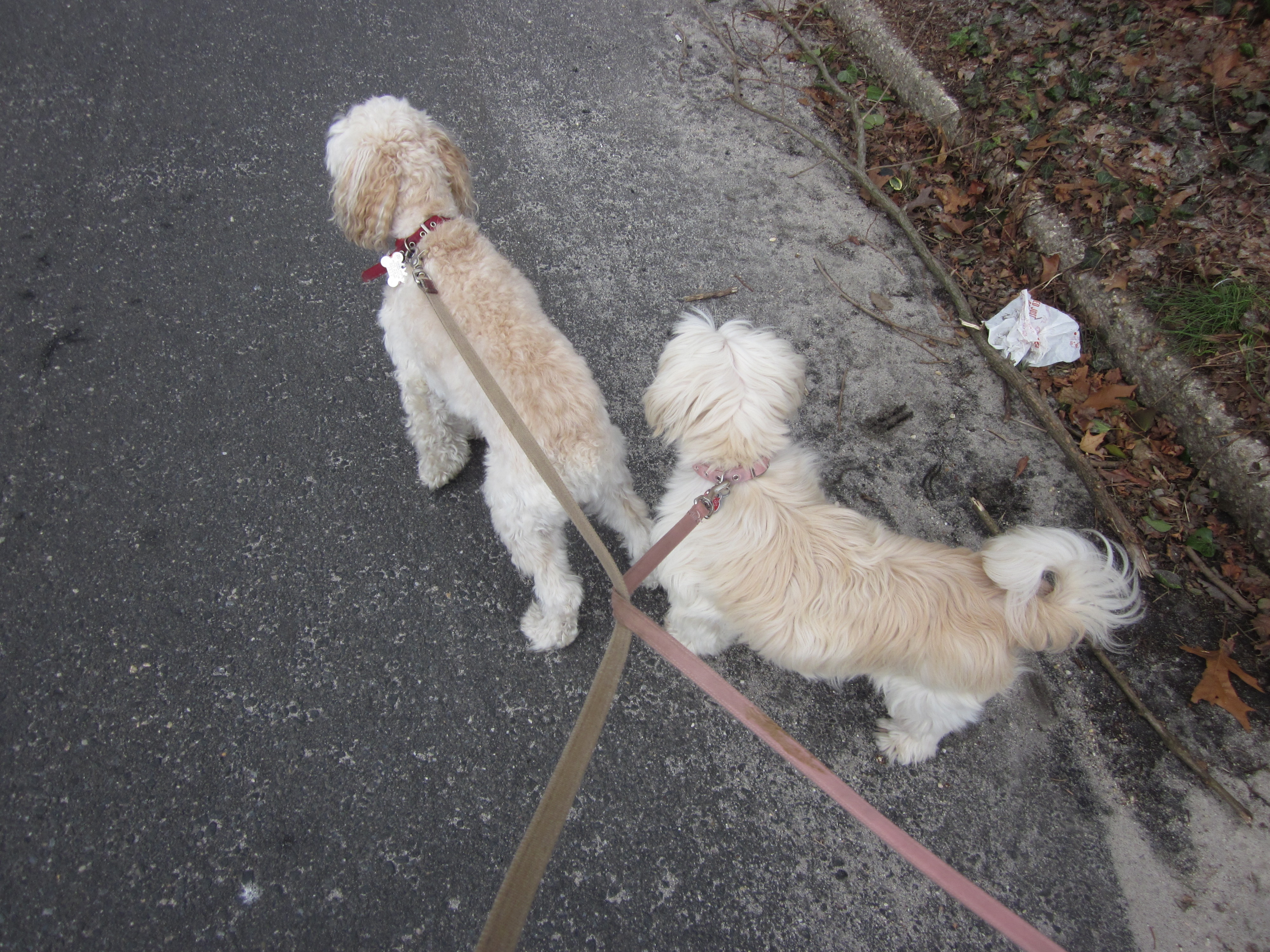
            Within seconds, Butterfly’s leash is wrapped around her torso and through her legs. Then Cricket’s leash tangles around Butterfly too, threatening to pull off Butterfly’s paw, or her head.

A Tangled Butterfly

A Tangled Butterfly

            When Butterfly has hopped and twisted herself free, the girls pull me outside, often in opposite directions. I am yanked like a wishbone at the breaking point, one arm forward and one behind. We look like a stretched out version of kindergarten children in museums, where everyone holds hands single file so no one will get lost. And then the dogs turn me around until my arms are wrapped behind my back and I have to switch the leashes from hand to hand and do a twirl to find forward again.

I wonder what this would look like if done by rhythmic gymnasts.

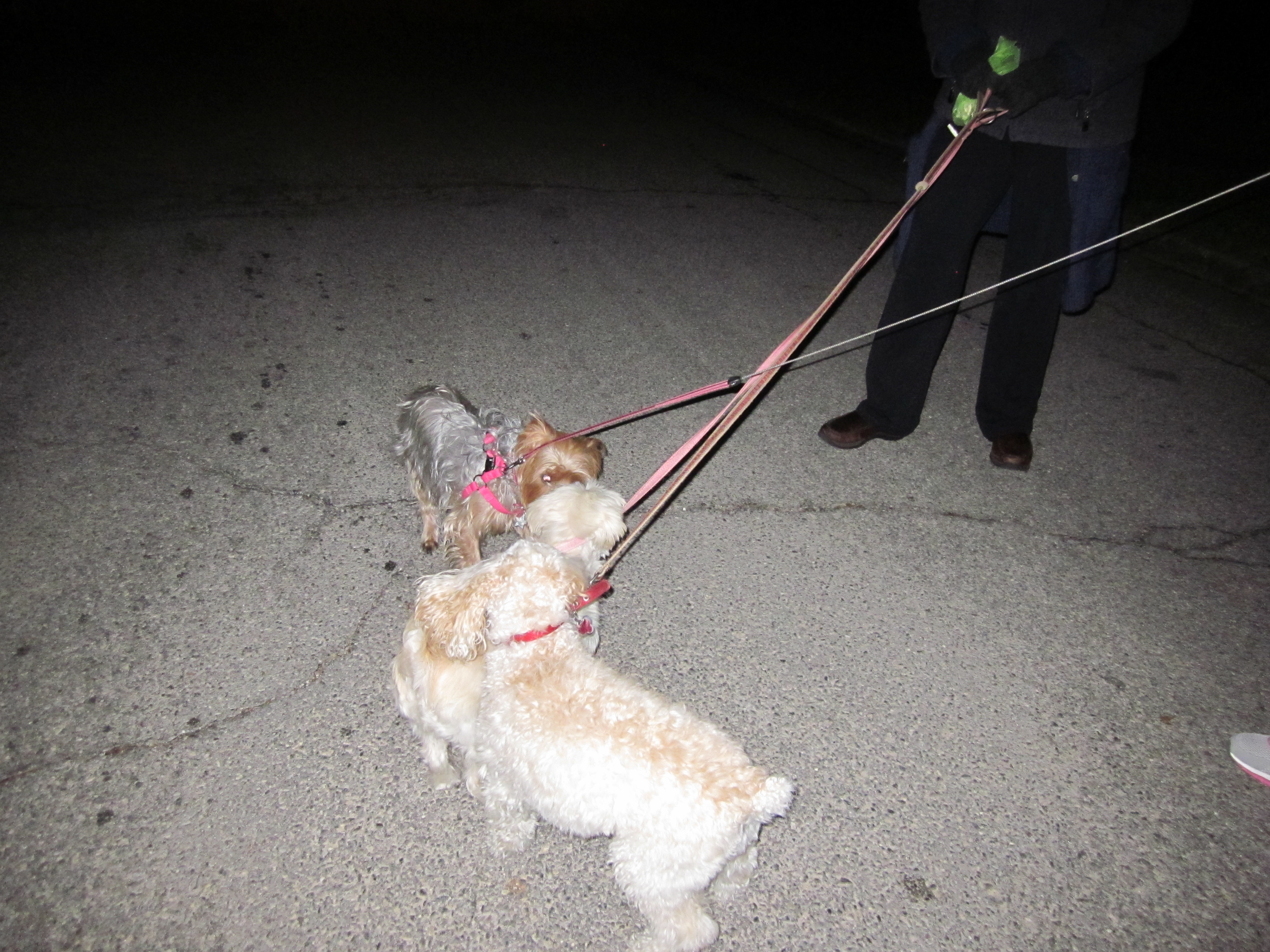
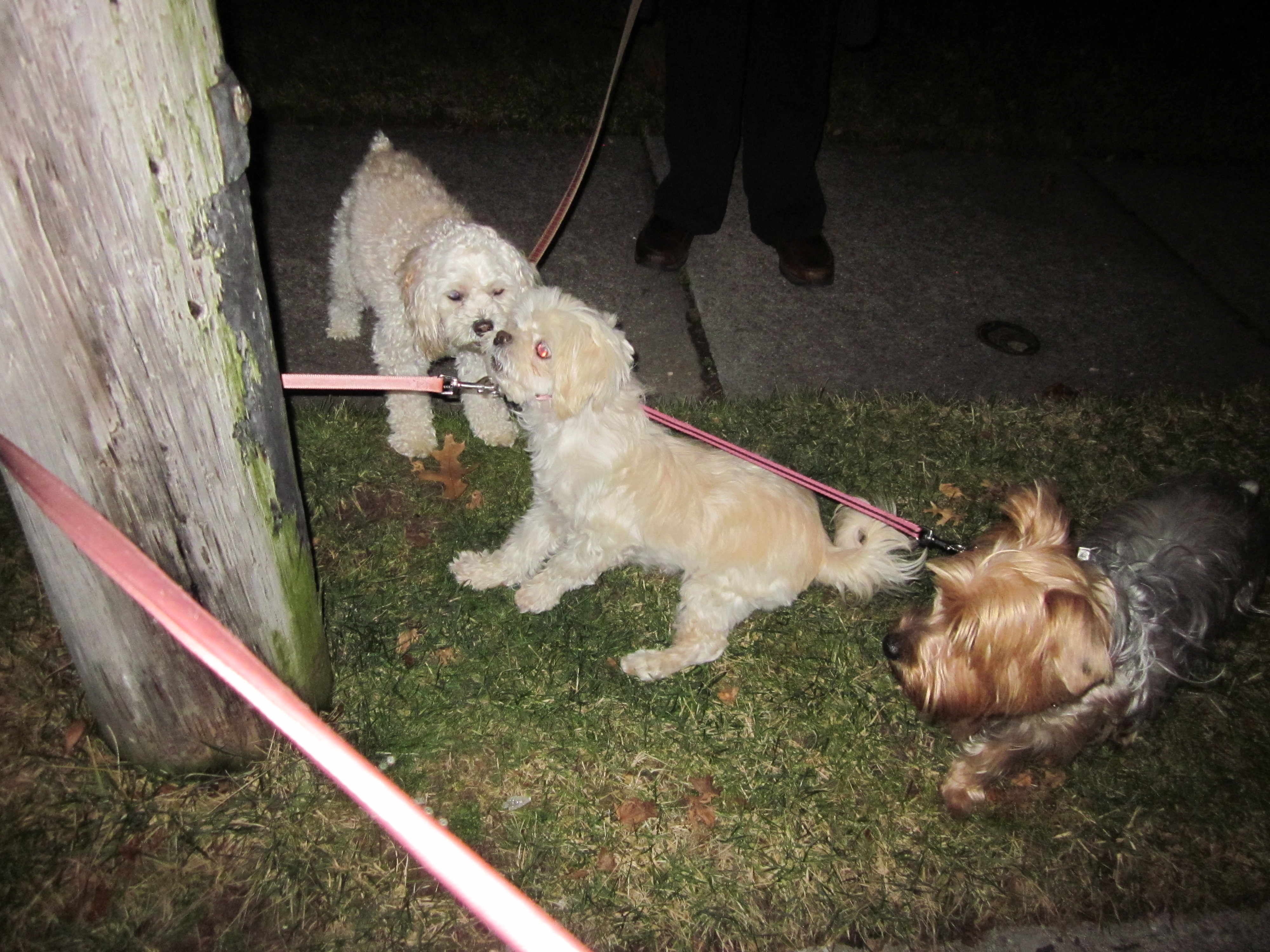
            The dance of the leashes becomes even more complicated when a third dog is introduced. The third dog will inevitably have one of those skinny retractable leashes that could slice your leg off if it wraps around you. Then there is the moment when the dogs line up in a sniff train that either transmutes into a sniffing circle or a free for all where each dog is trying to protect her hind end while simultaneously attempting to sniff another dog’s butt.

The Three Dog Dance

The Three Dog Dance

And add a pole

And add a pole

The highlight of the dance is when the dogs sniff eachother’s tushies for inspiration and then do a simultaneous pee routine, like a synchronized swim team. This does not happen every day, and must be cherished.

            When Mom and I take the dogs out together we each take a leash. This, theoretically, should iron out the problems, but then it’s me and Mom square dancing, as the dogs weave in and out, and we pass the leashes back and forth.

            Cricket likes to use her leash to shepherd Grandma. She will quietly walk around to Grandma’s other side and then pull the leash forward, corralling Grandma. Clearly this would all be easier for Cricket if Grandma would agree to wear a leash.

            Back in the apartment, with their leashes removed, it’s as if the dogs are back in their pajamas, and I start singing my wistful version of a song from Annie, “You’re never fully dressed, without a leash.”