Tag Archives: animals

Alexander Salamander

            I don’t remember if I’ve written much about my childhood friend Alex in these pages, but he was my best friend in nursery school and kindergarten, and despite being in my life for such a short time, he has retained something like heroic status in my memory, maybe because he was one of the few people to see me and accept me at that vulnerable time in my life. At some point during those same years, my family went on a camping trip by a lake and I found a salamander by the water: a plain, greenish-black creature who climbed across my child-sized hand and immediately felt like a friend. And, over time, Alex and the salamander have started to merge in my mind – not because they looked alike, but because they both symbolized friendship in its most magical form, able to treat me with kindness, and willing to spend time with me even when there was nothing to say.

“I must be very magical too.”

            I don’t remember for sure if there was just one salamander, or of I’ve merged a couple of different memories into one, but I remember seeing the salamander and thinking that he was just like me: vulnerable, curious, and alone. I also remember thinking that his feet were soft, and that he reminded me of the frogs I’d met on another camping trip, when my brother and I sat next to a pond in the rain, counting tadpoles in the water.

            When I looked up salamanders online, I found out that salamanders are amphibians, like frogs rather than lizards, and that they thrive in moist environments and hide in shadows, which is why they’ve come to represent the hidden aspects of ourselves in psychology and mythology. Most meaningful to me, salamanders are supposed to represent healing, because they can regenerate lost limbs, as well as other damaged parts of their bodies, like the heart or even part of the spinal cord, without scarring. Not only can salamanders regenerate lost limbs, they often intentionally drop their tails in order to get away from a predator, which is a skill that would have served me well when I was growing up in my father’s house.

            I like the symbolism of the salamander regenerating limbs because even though I’m not an especially adaptable person, I have been able to regrow parts of myself that I thought I’d lost along the way. It has been a painful process, kind of like the bone-regrowing potion in the Harry Potter books, but it feels magical nonetheless. I don’t remember Alex losing an arm or leg in nursery school, or regenerating it a few weeks later, but in my imagination that was something he could have done, because he seemed only half human to me, with magical powers of his own, like the ability to draw pictures of the images I saw in my head and make them real.

            There is a lot of diversity among salamanders, in color and size and shape and limbs, but the more brightly colored they are, the more likely they are to be poisonous, unlike my drab-colored, benign little friend. There are about 760 living species of salamander found in north America alone, but I couldn’t find a picture of my salamander, so maybe he was feeling shy on picture day.

            Interestingly, there’s a whole mythology around salamanders being created by fire, or impervious to fire, because they tended to live in hollowed out logs, and when those logs were set on fire, the salamanders would run out, in order to survive. But, even if they can’t withstand fire, or create it, it probably helped their survival to have these myths swirling around them, scaring people away, or inspiring their awe and support.

            Along with a reputation for healing, and surviving fiery logs, salamanders are also seen as symbols of transformation. While they can regenerate lost body parts throughout their lives, they also go through a one-time transformation, like a caterpillar who becomes a butterfly, as part of their growth cycle. But in my mind, both Alex and Alexander the salamander have remained unchanged over time, and have offered me a tremendous amount of comfort as I have grown and changed into new versions of myself that neither of them would recognize, though they might recognize something familiar around the eyes.          

If you haven’t had a chance yet, please check out my novel, Yeshiva Girl, on Amazon. And if you feel called to write a review of the book, on Amazon, or anywhere else, I’d be honored.

            Yeshiva Girl is about a Jewish teenager on Long Island, named Isabel, though her father calls her Jezebel. Her father has been accused of inappropriate sexual behavior with one of his students, which he denies, but Izzy implicitly believes it’s true. As a result of his problems, her father sends her to a co-ed Orthodox yeshiva for tenth grade, out of the blue, and Izzy and her mother can’t figure out how to prevent it. At Yeshiva, though, Izzy finds that religious people are much more complicated than she had expected. Some, like her father, may use religion as a place to hide, but others search for and find comfort, and community, and even enlightenment. The question is, what will Izzy find?

The Gang of Cats

            There is a group of cats that has taken to visiting the backyard of my co-op. So far I know there are at least three of them, a grey one with white feet, and a white one with black markings, and a black one with white markings, though there may be more. It’s hard to count them because they often come around one at a time during the day. When they see Ellie coming out of our door they start to run, and Ellie chases them until they jump up into the retaining wall, out of her reach. For some reason, they have a habit of “hiding” on the third or fourth tier of the retaining wall, behind a single flimsy branch, as if Ellie would be able to see them up there if they weren’t camouflaged by this wondrous work of nature. Except, Ellie can’t see them at all, because she’s a dog and has limited vision and can’t really see things unless they are nearby and/or moving. Generally, Ellie prowls around at ground level searching for clues of the cat’s whereabouts, while I stand right in front of the hidden cat and try to make conversation.

Not one of the current cats, but probably an ancestor.

            The cats never answer my questions, though, which is very disappointing. I keep asking them where they live, and how they’re doing, and they just ignore me and watch the dreaded Ellie down below. Cricket isn’t interested in the cats at all at this point in her life. In fact, she has given up on cats and squirrels and birds altogether and has focused all of her attention on trying to get Kevin, the Mini-Golden-Doodle who lives two buildings over, to play with her.

            Eventually, after Ellie has forgotten about the cat in the retaining wall, and Cricket has, reluctantly, accepted that Kevin isn’t going to come out to play, the dogs let me take them back inside and the cats go back to what they were doing before, usually hanging out under the bushes in front of my building, because it’s the best place from which to spy on the mourning doves, who spend a lot of time near there (my neighbor is very generous with bird seed). A few times we’ve found piles of grey and white feathers in the yard, with no sign of the bird who used to wear them. I try to believe that the bird has survived the attack from the cats, somehow, because there’s no sign of the body or bones or blood, but half a bird’s worth of feathers is a lot, especially when there’s so much of the soft fluff that comes from the layer closest to the bird’s body.

“I didn’t do it. I was sleeping the whole time.”

I don’t know if these cats have homes, or humans to take care of them, and I don’t know if they are really hungry, or if they are more like Ellie, who feels like she’s starving two minutes after a breakfast of kibble, cheese, and chicken treats. They look pretty healthy, so it’s possible that they are house cats who are allowed out whenever they want, either that or there are a lot of people in my neighborhood who like to feed stray cats. It would be easier for me to accept the cats’ hunting behavior if they are feral, though it would still be hard to forgive. Those mourning doves are so awkward and well-fed that they really don’t stand a chance against a gang of cats.

One of the Mourning Doves searching for snacks.

            And yet, despite all of that, I still look forward to seeing the cats. Part of me even wishes that the cats would realize that Ellie isn’t a threat to them, and would see her as a potential friend, because she needs one (Cricket doesn’t count as a friend; she’s a sister, which, if you ask Cricket, is a whole other thing). Ellie would love to catch up to one of the cats and have a loud conversation with them, or teach them one of her special dances (hop, hop, slide, hop, twirl, prance, jump, spin). But they don’t know that Ellie would never hurt another creature and is no threat to them; though she’s been known to hurt Kevin’s feelings when she “hides” on our stoop every time Kevin comes around.

“I wasn’t hiding, I was waiting for you to let me back into the house so I could escape from, Kevin.”

I’m allergic to cats, so I can’t have one of my own, either for my sake or for Ellie’s, but I wish I could. I miss my old friend Muchacho, the cat who lived here when we first moved in about ten years ago. He lived in one of the apartments nearby, with his human, but he came and went through the window as he pleased. He was so friendly that he’d let me pet him, and even pick him up once or twice. It was a real loss when he died, because even though I still have neighbors with cats, they are all indoor cats and I rarely see them. These visiting cats are nothing like Muchacho, of course, and they are unlikely to let me get anywhere near petting them, but part of me believes that if I’m friendly enough they will change their minds. I even worry about them when they’re not here, almost as much as I worry about the wellbeing of the birds when the cats are here. I wonder what the cats are thinking, and where they go when they aren’t in our yard, and if they have human families, or feline ones, or enough food or shelter. I haven’t, yet, tried to chase them up into the retaining wall the way Ellie does, hoping for answers to all of my questions. But I’ve been tempted.

Muchacho

If you haven’t had a chance yet, please check out my Young Adult novel, Yeshiva Girl, on Amazon. And if you feel called to write a review of the book, on Amazon, or anywhere else, I’d be honored.

            Yeshiva Girl is about a Jewish teenager on Long Island, named Isabel, though her father calls her Jezebel. Her father has been accused of inappropriate sexual behavior with one of his students, which he denies, but Izzy implicitly believes it’s true. As a result of his problems, her father sends her to a co-ed Orthodox yeshiva for tenth grade, out of the blue, and Izzy and her mother can’t figure out how to prevent it. At Yeshiva, though, Izzy finds that religious people are much more complicated than she had expected. Some, like her father, may use religion as a place to hide, but others search for and find comfort, and community, and even enlightenment. The question is, what will Izzy find?

My Inner Critics


I have a lot of internal critics, and they are loud. Some of the internal noise is just me disagreeing with myself about what I should be doing at any given time, but the critics are distinct and somewhat separate from “the real me.” The three most obvious voices are the snake, the crow, and the mouse.

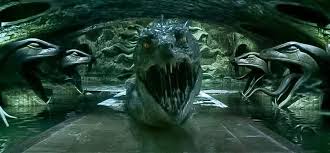
The snake tells me that I am evil, and the cause of all evil, and that everything I do is suspect, and nothing I do is on the level or even passably okay. The snake isn’t some common garden snake, or even an eight-foot python or a boa constrictor. This snake is more like the Basilisk in Harry Potter and The Chamber of Secrets. It is huge, and deadly, and I can’t get rid of it.

Basilisk face

(not my picture)

The crow, on the other hand, is more like an obnoxious teenager. He tells me that I am a drama queen, and always exaggerating and being melodramatic. The crow minimizes my pain and my achievements, and tells me that I’m annoying and overbearing, and mostly tells me to get over myself, the way my brother used to do. This voice is almost impossible to argue against, because it sounds so true to me, which leaves me feeling hopeless and helpless and unimportant.

Then there’s the mouse. She isn’t so much a critic as a misguided ally. The mouse tells me to make myself small, and to hide, because that’s the only way to be safe. She tells me that I shouldn’t be so open or so loud or so visible, not because I’m doing something wrong but because it will bring danger to both of us. The mouse also doubts my chances for success or support out in the world, because she doesn’t trust the world to be a safe place.

281

“You don’t mean me, right? ‘Cause, I’m not a mouse.”

There’s a theory in mental health circles that even your introjects (the critics, “old tapes,” or voices of your earliest relationships that live on in your mind) always have your best interests at heart, at least from their own points of view. And the crow and the mouse fit within that description; they both think they are right about how the world will treat me if I act in certain ways, and they mean well. They are, really, giving me their version of the best possible advice.

067

“I always give you the best advice, and you never take it.”

But the snake is different. The snake has no interest in what’s best for me. The snake is only interested in the snake, and in creating pain and destruction. So maybe what the mental health community is forgetting is that if you have been abused as a child, by someone very close to you who actively meant you harm, then you will have an introject that means to abuse you continually. For some reason, despite the presence of evil in so many people’s lives, the mental health community prefers to believe that most people don’t experience evil. I don’t know why they believe something that is so patently untrue.

The snake is my version of “fake news,” and its message is broadcast at me twenty-four hours a day. I make the best possible arguments against the fake news, collecting my facts and logic and arguing fiercely, but it’s exhausting. And sometimes, after the crow and the mouse have worn me out with their warnings of danger, I don’t have the energy to fight off the fake news, and the snake takes that moment to shoot venom through my entire body and mind.

I wonder what Ellie would think if she could hear what the snake says to me every day. She’d probably cover her ears with her paws and hide in her bed. Cricket would growl and bark and threaten bodily harm. Which is why I’m grateful that the snake stays inside my head, and not outside. If I can’t protect myself, at least I can protect my puppies.

295

I keep trying to create safe containers for each of the introjected critics; to gently remind them that they are relics of the past and not needed in the present moment. But they keep coming back, louder, more articulate, and more convinced of their own beliefs. That’s not what I was told to expect. I was told that therapy would help me to at least mute the critics. I was told that I could, over time, rewire my brain to work around the old messages. Instead, I’ve found that while I can add more than I ever thought possible to my brain: new information, new pathways, new connections, I can’t remove anything. I don’t have a knife sharp enough to accomplish that task. Or a medication either.

Cricket is my most consistent external critic. She lets me know, right away, when my behavior is not up to her standards: when I’ve slept too late, spent too much time at the computer, eaten too much of my own dinner, etc. But it’s easier to recognize her self-interest when she criticizes me, than to recognize it in the introjected critics, because Cricket is physically separate and not inside my head (though she’d really like to have the technology to make that possible). There’s something about hearing messages about all of your flaws and mistakes broadcast in your own voice, inside of your own head, that makes them harder to push away.

030

“You make me sound awesome!!!!”

But every once in a while, I remember the Wizard of Oz, and how the Great Oz was really a little, ordinary man behind a curtain. And I think, maybe that snake is just an illusion; powerful and effective, but an illusion just the same.


If you haven’t had a chance yet, please check out my Young Adult novel, Yeshiva Girl, on Amazon. And if you feel called to write a review of the book, on Amazon, or anywhere else, I’d be honored.

Yeshiva Girl is about a Jewish teenager on Long Island, named Isabel, though her father calls her Jezebel. Her father has been accused of inappropriate sexual behavior with one of his students, which he denies, but Izzy implicitly believes it’s true. As a result of his problems, her father sends her to a co-ed Orthodox yeshiva for tenth grade, out of the blue, and Izzy and her mother can’t figure out how to prevent it. At Yeshiva, though, Izzy finds that religious people are much more complicated than she had expected. Some, like her father, may use religion as a place to hide, but others search for and find comfort, and community, and even enlightenment. The question is, what will Izzy find?


A Dog Named Rachel


            Before I was born, my parents had a dog named Rachel. She was a stray they’d picked up along the way, a black dog of unspecific origin. She was old by the time I came around, but there’s a story that when I was six months old, my mom called for “Rachel,” and the dog hobbled over to Mom thinking she was the one being asked for, and I crawled.

            I like my name, it’s a good name. There are a lot of biblical names with negative connotations, but mine is pretty clean and positive. So I should be happy.

            Except, my brother wasn’t named after a family pet.

            My father said the names were a coincidence. I was named after a great grandmother named Rachel, and Rachel dog was maybe named after Rabbi Ralph or one of the rabbits my parents kept in the backyard before I was born.

            There’s a Jewish custom, or superstition, against naming a child after a living relative. I’m sure there’s a long tractate somewhere explaining the reasons, but I remember being told that it was wrong to take a name from someone who was still busy using it. As if you’d steal some of their years along with their name. And Rachel dog was still alive when I stole her name. She didn’t live much longer after that, either.

            I feel like my father was sending me a message by giving me the same name as the family dog. He made a point of not talking about it, just leaving the truth in the background, for me to discover on my own and guess at the significance. It was a message he could hide from the outside world, who would only see the loveliness of the biblical Rachel, and never see the humiliation.

Animal Cops

Sometimes I watch the animal cop shows on Animal Planet. I usually can’t watch a whole episode at once. They intervene in cases of abuse and neglect: a dog left in a yard with a chain embedded in her neck, kittens left under a porch without care, a horse starving in a filed, a duck with a knife wound in its backside.

Watching those shows makes me feel guilty for not wanting to be a veterinarian or animal cop or doggy social worker. And then the guilt expands from neglected and abused dogs to neglected and abused children, until I end up curled in a ball on the floor, feeling useless and awful, and still having no idea what to do.

There used to be a show on TV called Dogtown, about a well funded animal rescue facility in Utah, called Best Friends. They had areas for all kinds of animals, but the show focused on the dogs. They had trainers and groomers and veterinarians on staff, plus volunteers and adoption counselors and caretakers and on and on. It seemed like somewhere I’d want to go myself, to be rewired and retrained and adopted out anew. They also had a policy that any dog who couldn’t find a new home would always have a home with them.

Orphanages would come back into style if they were run half as well and with half as much compassion as Dogtown. And it makes me wonder why we can’t do better for children in foster care, or for dogs across the country who are being put down by well meaning people at understaffed shelters.

It was an aspirational show, but nothing I could imagine living up to myself. After each episode I’d think, maybe I could learn how to train dogs, or join a local rescue operation, or at least foster dogs while they’re waiting for their forever home. But then I’d crumple again, and feel guilty for having only the one dog and not even being able to train HER.

I guess my question is, could the people who create these shows take the next step, the one that allows people like me to step out of the guilt and have a manageable task to do that would actually help. Is there a think tank working on this? How can rescue organizations marshal the millions of pet owners and animal lovers to help, instead of overwhelming us with so much guilt that we can’t think straight or even remain upright?