A few weeks ago, on one of the coldest days of the winter so far, a bird came into the apartment. This happens sometimes. Mom keeps a bag of birdseed in her room to feed the neighborhood birds, and she uses the slight open space next to the air conditioner as a sort of take-out window. And sometimes, especially on very cold days, a bird will finish eating and take that extra step and come inside. We’ve had birds come to visit for an hour, or an afternoon, or a day or more. They’re usually too fast to be caught, flying across the living room to the bookcase in the hall, and then the light fixture in the dining room, and the refrigerator in the kitchen, eventually making their way back out the same way they came in.
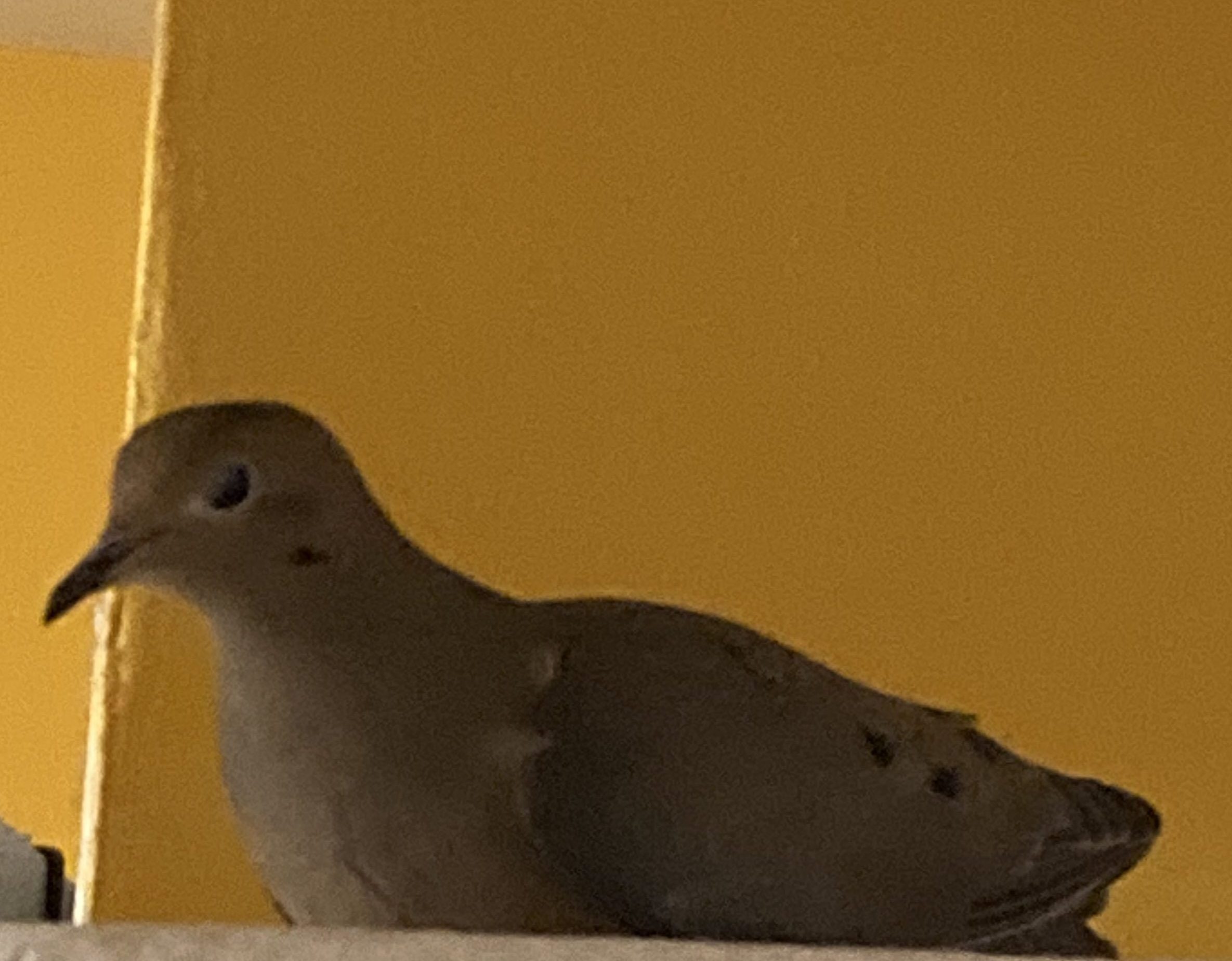
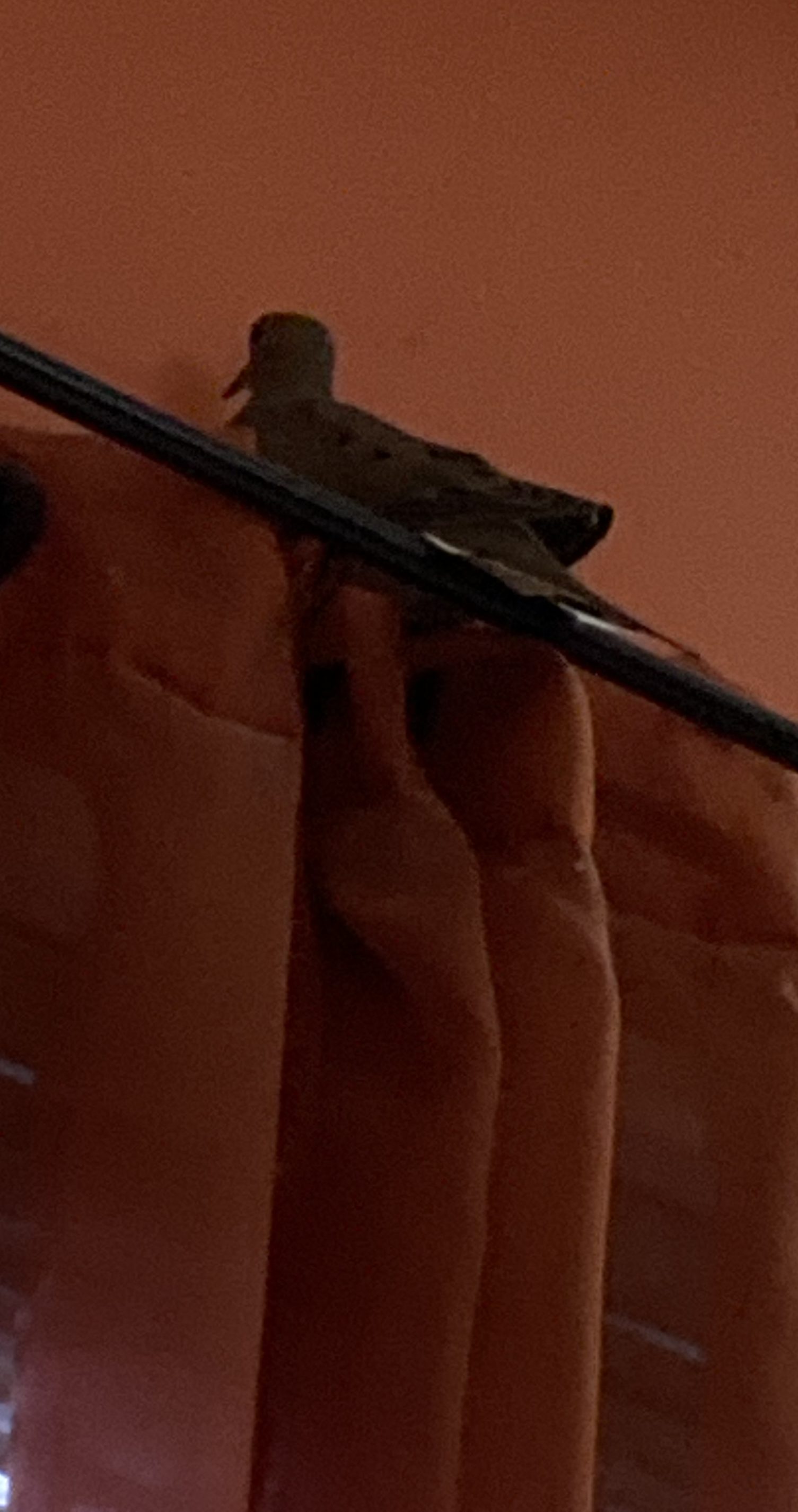
But this bird was different. He was a kind of dove, grey and white, larger and slower and much more frightened than the other birds had been. Mom was able to catch him right away, but before showing him the way out she wanted to show him to me. She brought him into the living room, and when she relaxed her grip, just a little, he flew from her hands up to the curtain rod by the window. After a few moments of rest, as we watched, he stepped away from the curtain rod to fly away, and instead hit his head on the ceiling, over and over again. He kept flapping his wings and propelling himself up and down, caught in a strange loop, until he was finally able to break the pattern and reach the safety of the curtain rod again.
It was awful to watch each time he made a new attempt. I screamed, and Mom tried to catch him, and I covered my eyes in horror as I heard his wings beating against the ceiling again and again. When I opened my eyes, I noticed that there was blood on the ceiling, little dots of red where he’d done his latest dance, and when I looked up at him, standing there on the curtain rod, I could see blood on the feathers of his head. We kept trying to convince him to let us help him, but he was terrified and couldn’t think straight and couldn’t trust anyone; and I could relate.
I left the room at some point, to rest, or escape, and by then he was resting too, standing on the curtain rod, facing the wall. When I came back into the room after my nap, hours later, it was quiet and I assumed he’d escaped on his own, like all the other birds. And then I looked up. There were red dots spattered across the ceiling, from one side of the room to the other, marking every attempt he’d made to escape, and every time he’d found the ceiling where he expected to find sky. He wasn’t standing on the curtain rod anymore, though, and he wasn’t on top of the bookcase in the hall, or the light fixture in the dining room, or the refrigerator in the kitchen. And then I saw him, one foot on the sewing machine, flapping his wings, falling in slow motion down to the floor.
Mom wrapped him in a piece of fabric and carried him to the window in her room and set him down on the ledge next to the air-conditioner. I was afraid that if he took a step, he would just fall, but he was able to fly and landed on the cold ground in the backyard, stunned, but breathing. And when we checked later, he was gone, hopefully because he was able to fly away on his own.
I’d like to believe that he made his way home after that, where his wound could be tended with loving care, and he could consolidate his new life lessons – about accepting help when you need it, and taking a breath when the strange dance of panic starts to take over – but these lessons are so hard to learn.
“Tell me about it.”
The window in Mom’s bedroom is now kept closed, though the birdseed is still placed on the windowsill each morning for whoever needs it. These bird visitations had always seemed like a gift in the past, but this one made it clear that wild birds are not meant to live indoors, even for a little while. They need space to fly. Or a helmet. A helmet would be great.
“I want a helmet too!”
If you haven’t had a chance yet, please check out my novel, Yeshiva Girl, on Amazon. And if you feel called to write a review of the book, on Amazon, or anywhere else, I’d be honored.
Yeshiva Girl is about a Jewish teenager on Long Island, named Isabel, though her father calls her Jezebel. Her father has been accused of inappropriate sexual behavior with one of his students, which he denies, but Izzy implicitly believes it’s true. As a result of his problems, her father sends her to a co-ed Orthodox yeshiva for tenth grade, out of the blue, and Izzy and her mother can’t figure out how to prevent it. At Yeshiva, though, Izzy finds that religious people are much more complicated than she had expected. Some, like her father, may use religion as a place to hide, but others search for and find comfort, and community, and even enlightenment. The question is, what will Izzy find?
I had this past week off, like most teachers in the United States, for Presidents’ week, and I really needed the break. But one week of vacation was just long enough to remind me of all of the things I wanted to get done, and not long enough to actually do them. Especially since the first thing on my to-do list really took over.
My to do list: SLEEP; put the new rugs down; think through all of the requirements for our next dog(s), and look for rescue organizations that will let us adopt without a fenced in yard; finish three novels and start two more, though one or more may end up being a memoir instead of fiction; read through my ten boxes of Therapy Pages notebooks and plan how to use them; start exercising again (for the fiftieth time); clean the kitchen and get back to cooking (instead of microwaving); read all of the books on my bedside table and piled haphazardly on my shelves; buy more bookcases; finish translating another ten Israeli pop songs and try not to add more to the list right away; work on lesson plans for the rest of the school year; get a haircut (or find a good excuse for why I shouldn’t have to ever cut my hair again); read through my hundred-page-plus draft of an “essay” on the history of the modern state of Israel, and see how many more books I will need to read before I can convince myself that I’m in over my head; watch every webinar I’ve downloaded from YouTube, on writing and therapy and music and Israel and whatever else; oh, and don’t fall into a deep depression as a result of the isolation and loneliness, if possible.
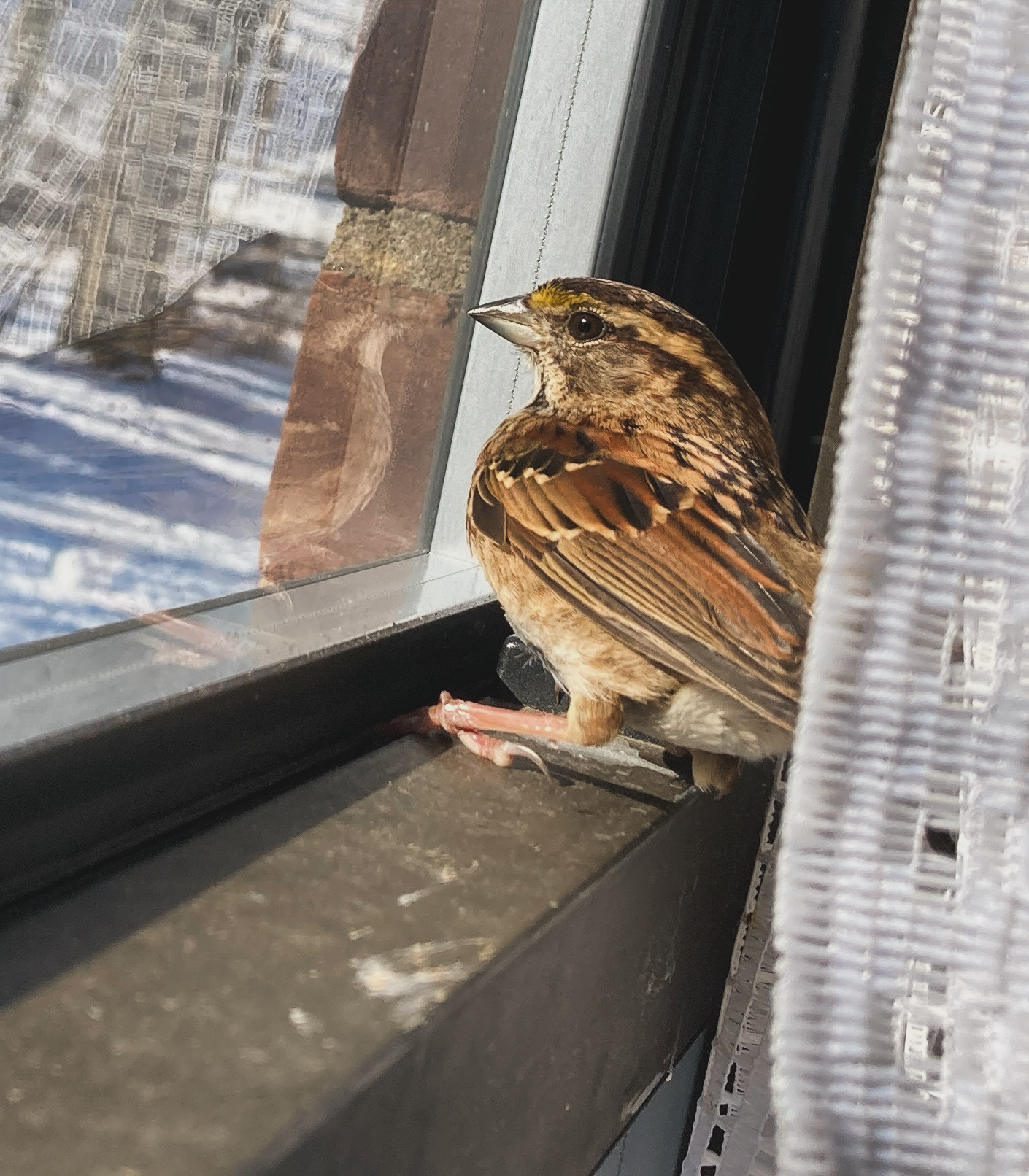
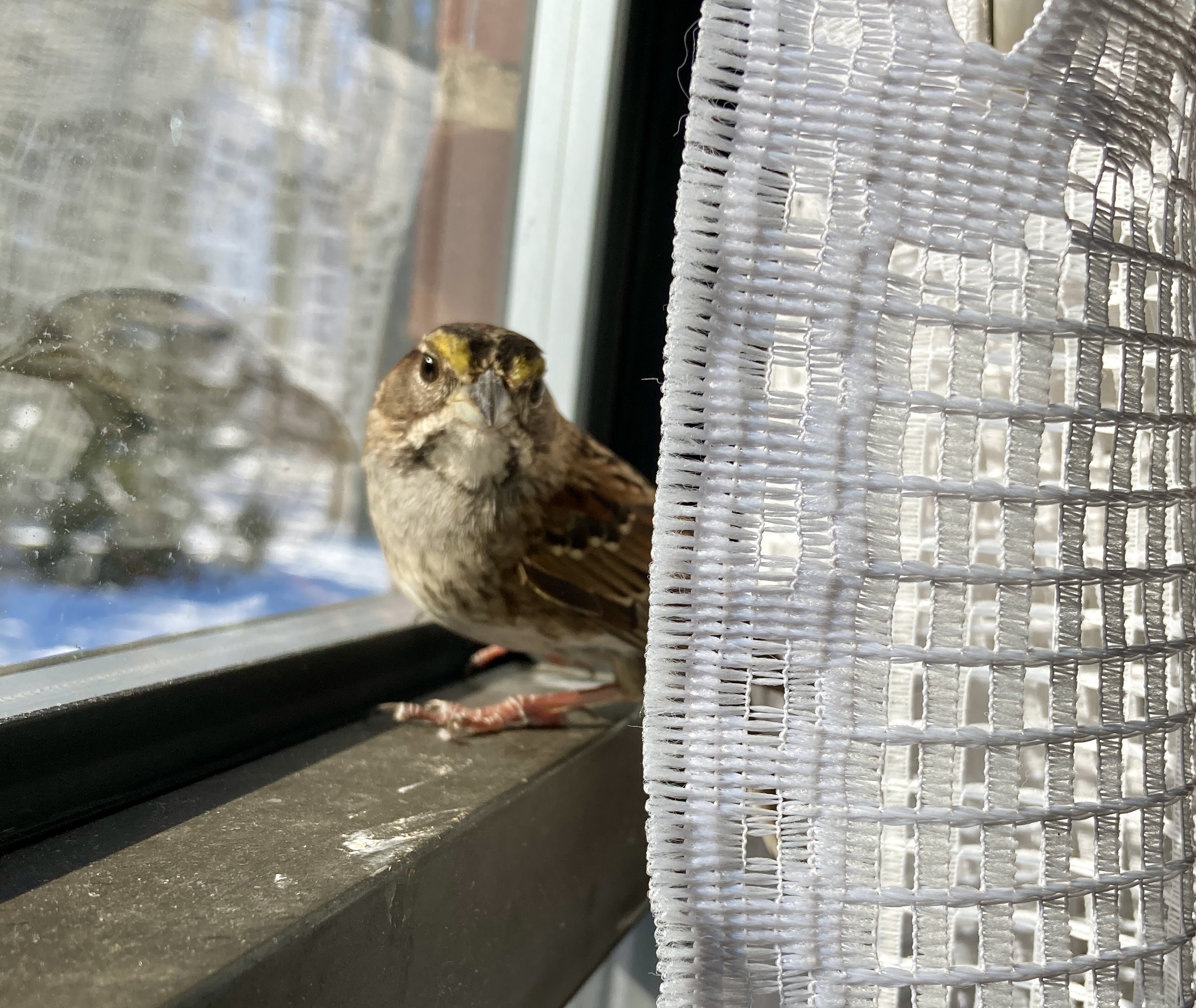
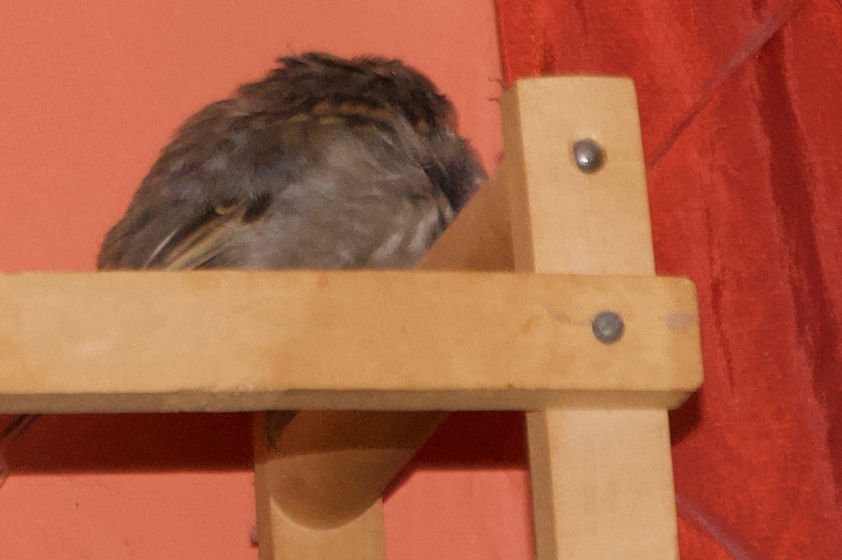
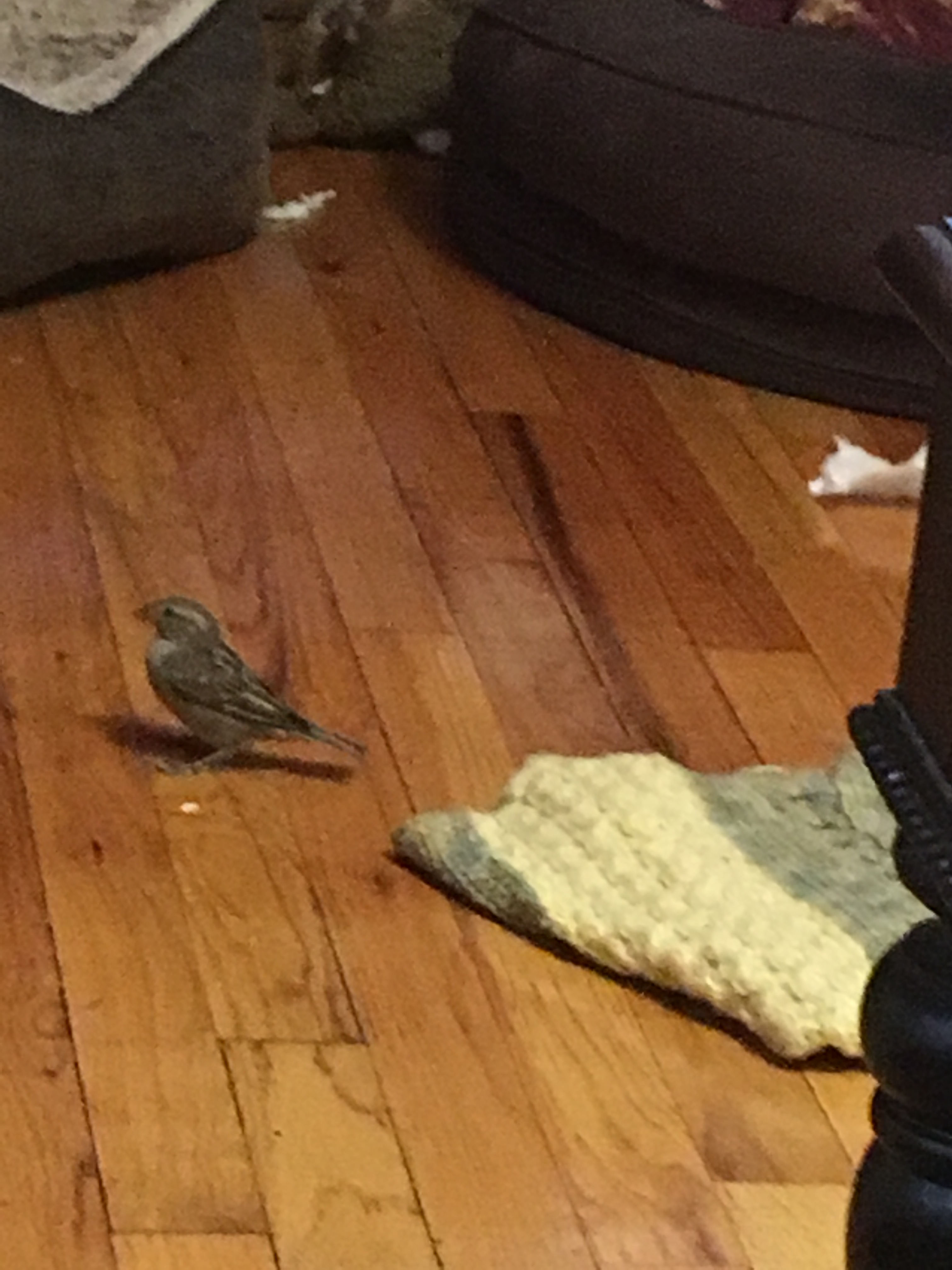
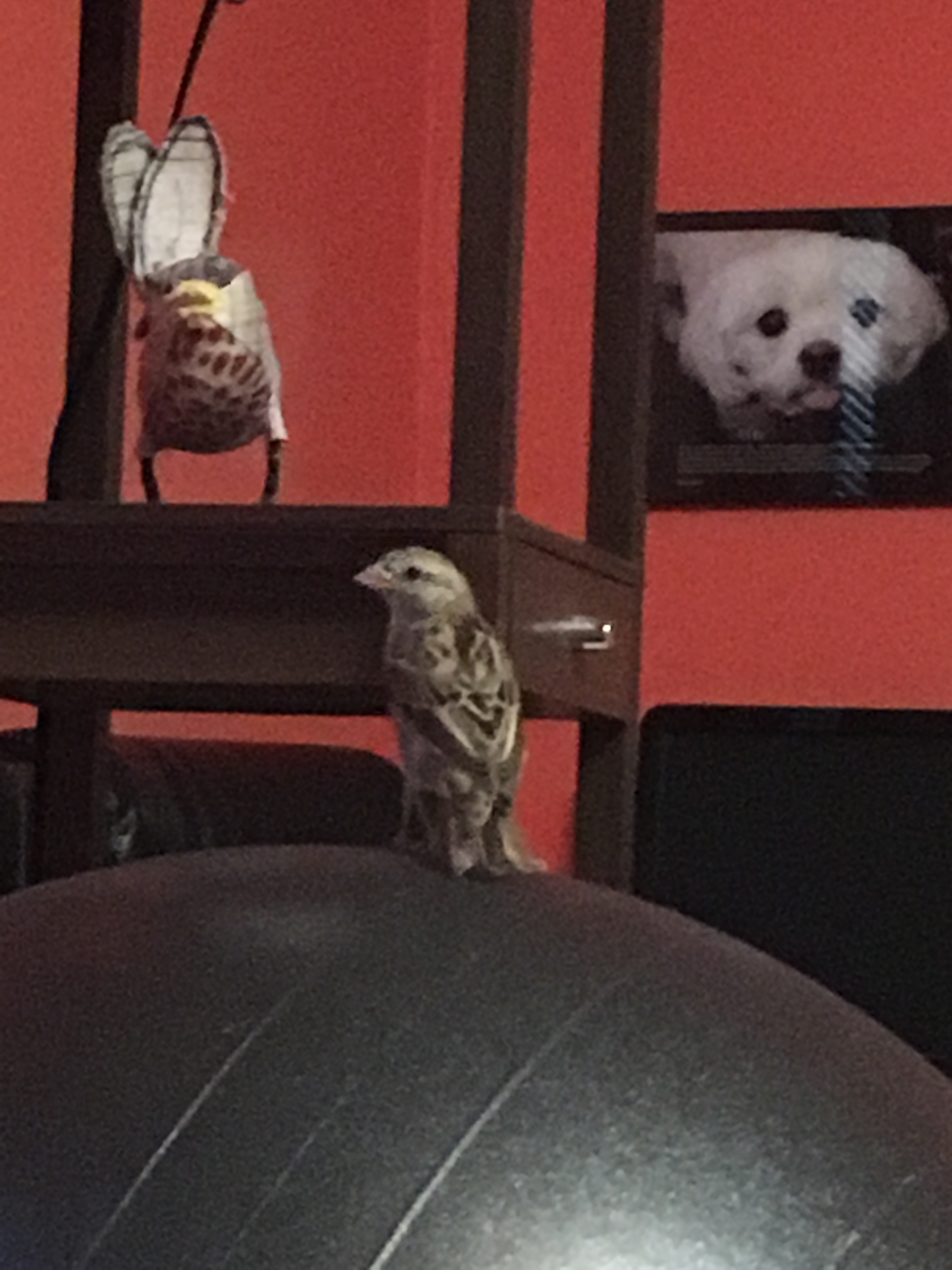
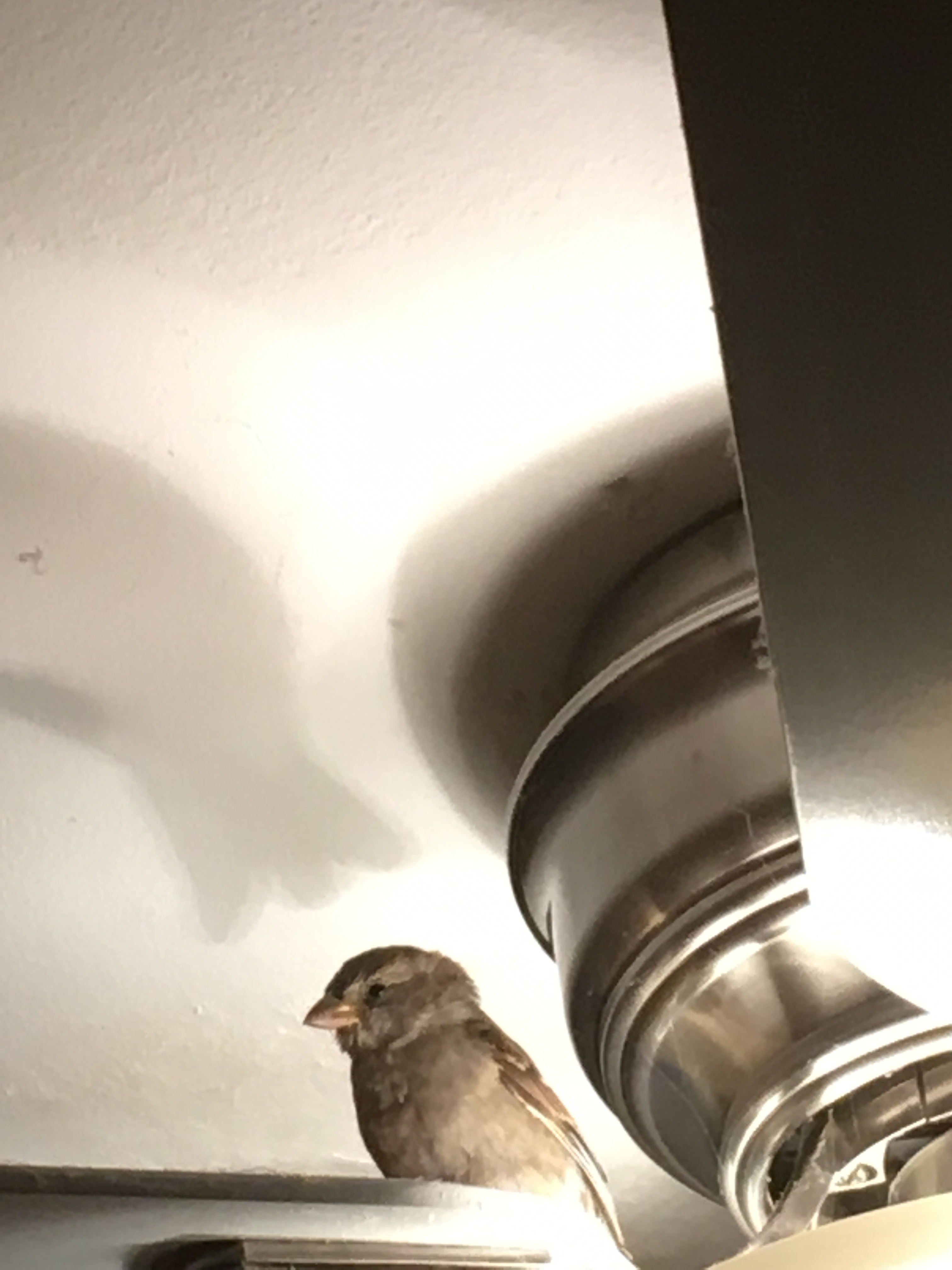
One nice thing happened before the actual vacation started which gave me hope: we had another birdie visitor. This time it was a young white-throated sparrow who either had ADD or a panic disorder and kept flying and pacing relentlessly around the apartment. Mom got some great pictures of him in the few moments when he was able to remain still.
But then, right after the bird left, I heard from my pharmacy that the FDA is clamping down on off label prescriptions for Ozempic (anything other than a type-two diabetes diagnosis), and then my doctor told me that my insurance won’t cover any of the other weight loss medications (Wegovy, etc.), so if I wanted to keep taking weight loss medication it would cost at least $1,000 per month. So, after six months of slow weight loss, the experiment is suddenly over. There’s a bill in the US congress to try to get weight loss medications covered by health insurance, but who knows how long it will take to get it approved; relying on the smooth workings of the United States government has never been a good life strategy.
If the weight I’d already lost had improved my overall health, then maybe I would feel better about stopping here, but, if anything, I’m more exhausted now than I was six months ago. Which is why the first thing on my to-do list overwhelmed everything else I wanted to accomplish this week, and most of my vacation was spent sleeping, or at the very least, lying down. I also watched a bunch of webinars (and managed to download even more), and got some reading and writing and typing done. But vacation is almost over and my to-do list is, if anything, longer than it was at the beginning of the week. How is that even possible?
Here’s hoping that the rest I’ve been able to get this week will help me get through until the next short vacation, and that somewhere along the way some more birdies will come along to remind me that all of this is worth the effort – even if my to-do list never, ever, gets done.
If you haven’t had a chance yet, please check out my Young Adult novel, Yeshiva Girl, on Amazon. And if you feel called to write a review of the book, on Amazon, or anywhere else, I’d be honored.
Yeshiva Girl is about a Jewish teenager on Long Island, named Isabel, though her father calls her Jezebel. Her father has been accused of inappropriate sexual behavior with one of his students, which he denies, but Izzy implicitly believes it’s true. As a result of his problems, her father sends her to a co-ed Orthodox yeshiva for tenth grade, out of the blue, and Izzy and her mother can’t figure out how to prevent it. At Yeshiva, though, Izzy finds that religious people are much more complicated than she had expected. Some, like her father, may use religion as a place to hide, but others search for and find comfort, and community, and even enlightenment. The question is, what will Izzy find?
(A Note: A wild bird – a Junco – visited for a few very cold days recently and read the hard copy of my essay before publication, leaving a few responses)
“I have a few notes.”
As the nature of Israel’s war against Hamas changes, becoming more targeted and with fewer soldiers on the ground in Gaza, the conversation in Israel has been moving to the question of what happens the day after the war ends. (Of course there are a hundred other conversations going on at the same time, but my brain can’t process all of it. I can’t make sense of a genocide charge at The Hague, or continued terrorist attacks in Israel, or ongoing calls for Israel to stop fighting even as rockets are being fired at the north and south of Israel and the Houthis are firing on ships in the Red Sea. So, for now, I’m trying to focus on something hopeful.) Recently, I was able to watch a zoom call from the Reconstructionist Rabbinical Association called Holding on to Hope, which hosted leaders from three different Israeli organizations who have been working towards peace and coexistence between Israelis and Palestinians.
One message that came through consistently from these leaders is that the efforts that are most successful are the ones that address self-interest, rather than arguing for peace from a selfless altruism. Another theme was that what happens in Gaza impacts Tel Aviv, in terms of health, and air and water quality, as well as violence, and there are no walls high enough to change that.
“Walls? Pfft.”
One of the organizations on the zoom was a joint Jewish and Arab school in Israel called Hand in Hand. The public school system in Israel separates out Arabs and Jews into separate schools, in large part as a gesture to allow Arabs to maintain their own culture and language and not have to study Jewish subjects, but over time this separation has widened the divide between Jews and Muslims and Christians in Israel. The Hand in Hand schools bring these children together to help them learn to understand each other’s narratives and grapple with how to move society towards coexistence. There are six Hand in Hand schools in mixed Arab and Jewish towns so far: in Jerusalem, Haifa, Jaffa, Kfar Saba, Wadi Ara, and Galilee. And the schools also work at building connections among the adults in the surrounding community.
The representative of the Hand in Hand schools on this zoom was a Palestinian citizen of Israel, with a background in film in particular and the arts in general. His sense of hope for the future came from his belief that education is what will create the next generation of leaders, able to speak each other’s languages and understand each other’s cultures and see each other as companions on the same journey.
“A feather in feather school would be nice.”
Coincidentally, I recently read about a new Israeli TV show (not yet available here) set in a Hand in Hand school (or something like it) in Jerusalem. The review I read in Kveller suggested that, because it’s a comedy, it often wraps up complex issues a little too quickly, but the fact that it can represent those complex issues in an entertaining way could make a big difference in what people begin to see as possible in the future.
The second organization represented on the zoom was Standing Together, a political action organization that brings together Jewish and Palestinian citizens of Israel, and secular and orthodox Jewish Israelis, to work on issues on which they have common cause, as a way to build consensus and community so that over time they can begin to work together on the bigger battles yet to come.
I’d seen a previous zoom, earlier in the Fall, that focused entirely on the Standing Together group, but I found it alienating, maybe because it was so soon after October 7th and everyone’s emotions were still so raw. This time around I heard a lot more acknowledgment of the pain and fear of both Jewish and Palestinian citizens of Israel, and ideas for how to bring both peoples to the table in order to create a sustainable peace.
The third organization represented on the zoom was completely new to me, called A Land for All (previously called Two States, One Homeland). It’s a think tank made up of Jewish and Palestinian citizens of Israel, and Palestinians from outside of Israel, to problem solve the nitty gritty policy issues necessary for peace. The basic idea that they’ve come up with is a two state confederation, where a Jewish State and a Palestinian State live side by side, with open borders and some joint institutions. The specifics of the proposal weren’t discussed in this zoom, but the idea that some people are ready to sit together and seek workable plans for a peaceful future is encouraging.
Except, with Israel being accused of genocide at the International Court for Justice, and Hezbollah and the Houthi rebels attacking from the north and from the sea, and hostages still being held in Gaza, I don’t know how many people within Israel are up to hearing any of this right now, which is probably why this was a zoom for American Jews.
A final peace deal between Israel and a Palestinian state has been so elusive, in part, because the two sides can’t even agree on the preconditions for sitting down to talk. Palestinian leadership wants all new Jewish settlements in the West Bank stopped, and preferably for all of the existing ones to be removed as well, as a precondition for discussing peace with Israel. And Israelis have wanted reliable promises that the terrorism will stop before they discuss the settlements, let alone final agreements on where the borders of a future Palestinian state should be. Many Palestinians and their supporters seem to believe that terrorism is the only way their voices will be heard, by Israel and by the world at large, but every terrorist attack has pushed the Israeli public further away from any belief that peace is possible, and therefore from any willingness to make difficult compromises for that unreachable peace.
When I discussed the concept of peace recently with my synagogue school students, they weren’t thinking about Israel or even peace between countries, instead they looked at peace through the lens of family life, saying that there has to be a lot of room within peace and coexistence for disagreement, and even some bloodshed (their point of reference was fights with their siblings, so, hopefully not too much blood). They spend a lot of their time working towards peace in their daily lives, managing disputes with their friends and family, dealing with hurt feelings, and learning how to compromise, but all of that feels possible for them because they know they are safe in their homes and that people care about them and are listening to them.
In all of the coverage on the news, and in all of the opinion articles that I’ve read and international voices I’ve heard, no one has offered a workable plan for peace that addresses what is actually happening right now. No one has come up with a way to disempower Hamas and destroy the tunnels without causing unacceptable damage to the structures and the people above ground in Gaza. In fact, the UN refuses to call Hamas a terrorist organization, and since Gaza is not considered a state and has not signed agreements to follow international law, they can’t be held officially responsible for their actions, but Israel, which is an acknowledged state and has signed these agreements, is being brought to The Hague for fighting back against Hamas. The international community has not addressed this invisibility of organizations like Hamas, Hezbollah, or the Houthi rebels, who are acting as proxies for Iran’s interests in the Middle East, and Hamas has taken full advantage of its political invisibility to press its war against Israel, which certainly didn’t start on October 7th.
The fact that Israel is under attack from, basically, all sides, has not changed the rhetoric around the world that has portrayed Israel as a lone menace in the Middle East, causing all of the trouble.
All three of these Israeli organizations are working towards long term goals that will require consistent commitment and ongoing efforts and will not be put in place within the next few months, but the world, and the combatants on both sides, are too impatient for that slow growing peace process, and the extremists on both sides keep taking advantage of that impatience and offering apocalyptic solutions that will only work for one side or the other. Every time I watch the news I hear this ticking clock, and the absence of hope, but I know there are people out there who are thinking and breathing and working for peace, and that’s what I want to hear more about, because that’s where a livable future will come from.
If you haven’t had a chance yet, please check out my Young Adult novel, Yeshiva Girl, on Amazon. And if you feel called to write a review of the book, on Amazon, or anywhere else, I’d be honored.
Yeshiva Girl is about a Jewish teenager on Long Island, named Isabel, though her father calls her Jezebel. Her father has been accused of inappropriate sexual behavior with one of his students, which he denies, but Izzy implicitly believes it’s true. As a result of his problems, her father sends her to a co-ed Orthodox yeshiva for tenth grade, out of the blue, and Izzy and her mother can’t figure out how to prevent it. At Yeshiva, though, Izzy finds that religious people are much more complicated than she had expected. Some, like her father, may use religion as a place to hide, but others search for and find comfort, and community, and even enlightenment. The question is, what will Izzy find?
There is a group of cats that has taken to visiting the backyard of my co-op. So far I know there are at least three of them, a grey one with white feet, and a white one with black markings, and a black one with white markings, though there may be more. It’s hard to count them because they often come around one at a time during the day. When they see Ellie coming out of our door they start to run, and Ellie chases them until they jump up into the retaining wall, out of her reach. For some reason, they have a habit of “hiding” on the third or fourth tier of the retaining wall, behind a single flimsy branch, as if Ellie would be able to see them up there if they weren’t camouflaged by this wondrous work of nature. Except, Ellie can’t see them at all, because she’s a dog and has limited vision and can’t really see things unless they are nearby and/or moving. Generally, Ellie prowls around at ground level searching for clues of the cat’s whereabouts, while I stand right in front of the hidden cat and try to make conversation.
Not one of the current cats, but probably an ancestor.
The cats never answer my questions, though, which is very disappointing. I keep asking them where they live, and how they’re doing, and they just ignore me and watch the dreaded Ellie down below. Cricket isn’t interested in the cats at all at this point in her life. In fact, she has given up on cats and squirrels and birds altogether and has focused all of her attention on trying to get Kevin, the Mini-Golden-Doodle who lives two buildings over, to play with her.
Eventually, after Ellie has forgotten about the cat in the retaining wall, and Cricket has, reluctantly, accepted that Kevin isn’t going to come out to play, the dogs let me take them back inside and the cats go back to what they were doing before, usually hanging out under the bushes in front of my building, because it’s the best place from which to spy on the mourning doves, who spend a lot of time near there (my neighbor is very generous with bird seed). A few times we’ve found piles of grey and white feathers in the yard, with no sign of the bird who used to wear them. I try to believe that the bird has survived the attack from the cats, somehow, because there’s no sign of the body or bones or blood, but half a bird’s worth of feathers is a lot, especially when there’s so much of the soft fluff that comes from the layer closest to the bird’s body.
“I didn’t do it. I was sleeping the whole time.”
I don’t know if these cats have homes, or humans to take care of them, and I don’t know if they are really hungry, or if they are more like Ellie, who feels like she’s starving two minutes after a breakfast of kibble, cheese, and chicken treats. They look pretty healthy, so it’s possible that they are house cats who are allowed out whenever they want, either that or there are a lot of people in my neighborhood who like to feed stray cats. It would be easier for me to accept the cats’ hunting behavior if they are feral, though it would still be hard to forgive. Those mourning doves are so awkward and well-fed that they really don’t stand a chance against a gang of cats.
One of the Mourning Doves searching for snacks.
And yet, despite all of that, I still look forward to seeing the cats. Part of me even wishes that the cats would realize that Ellie isn’t a threat to them, and would see her as a potential friend, because she needs one (Cricket doesn’t count as a friend; she’s a sister, which, if you ask Cricket, is a whole other thing). Ellie would love to catch up to one of the cats and have a loud conversation with them, or teach them one of her special dances (hop, hop, slide, hop, twirl, prance, jump, spin). But they don’t know that Ellie would never hurt another creature and is no threat to them; though she’s been known to hurt Kevin’s feelings when she “hides” on our stoop every time Kevin comes around.
“I wasn’t hiding, I was waiting for you to let me back into the house so I could escape from, Kevin.”
I’m allergic to cats, so I can’t have one of my own, either for my sake or for Ellie’s, but I wish I could. I miss my old friend Muchacho, the cat who lived here when we first moved in about ten years ago. He lived in one of the apartments nearby, with his human, but he came and went through the window as he pleased. He was so friendly that he’d let me pet him, and even pick him up once or twice. It was a real loss when he died, because even though I still have neighbors with cats, they are all indoor cats and I rarely see them. These visiting cats are nothing like Muchacho, of course, and they are unlikely to let me get anywhere near petting them, but part of me believes that if I’m friendly enough they will change their minds. I even worry about them when they’re not here, almost as much as I worry about the wellbeing of the birds when the cats are here. I wonder what the cats are thinking, and where they go when they aren’t in our yard, and if they have human families, or feline ones, or enough food or shelter. I haven’t, yet, tried to chase them up into the retaining wall the way Ellie does, hoping for answers to all of my questions. But I’ve been tempted.
Muchacho
If you haven’t had a chance yet, please check out my Young Adult novel, Yeshiva Girl, on Amazon. And if you feel called to write a review of the book, on Amazon, or anywhere else, I’d be honored.
Yeshiva Girl is about a Jewish teenager on Long Island, named Isabel, though her father calls her Jezebel. Her father has been accused of inappropriate sexual behavior with one of his students, which he denies, but Izzy implicitly believes it’s true. As a result of his problems, her father sends her to a co-ed Orthodox yeshiva for tenth grade, out of the blue, and Izzy and her mother can’t figure out how to prevent it. At Yeshiva, though, Izzy finds that religious people are much more complicated than she had expected. Some, like her father, may use religion as a place to hide, but others search for and find comfort, and community, and even enlightenment. The question is, what will Izzy find?
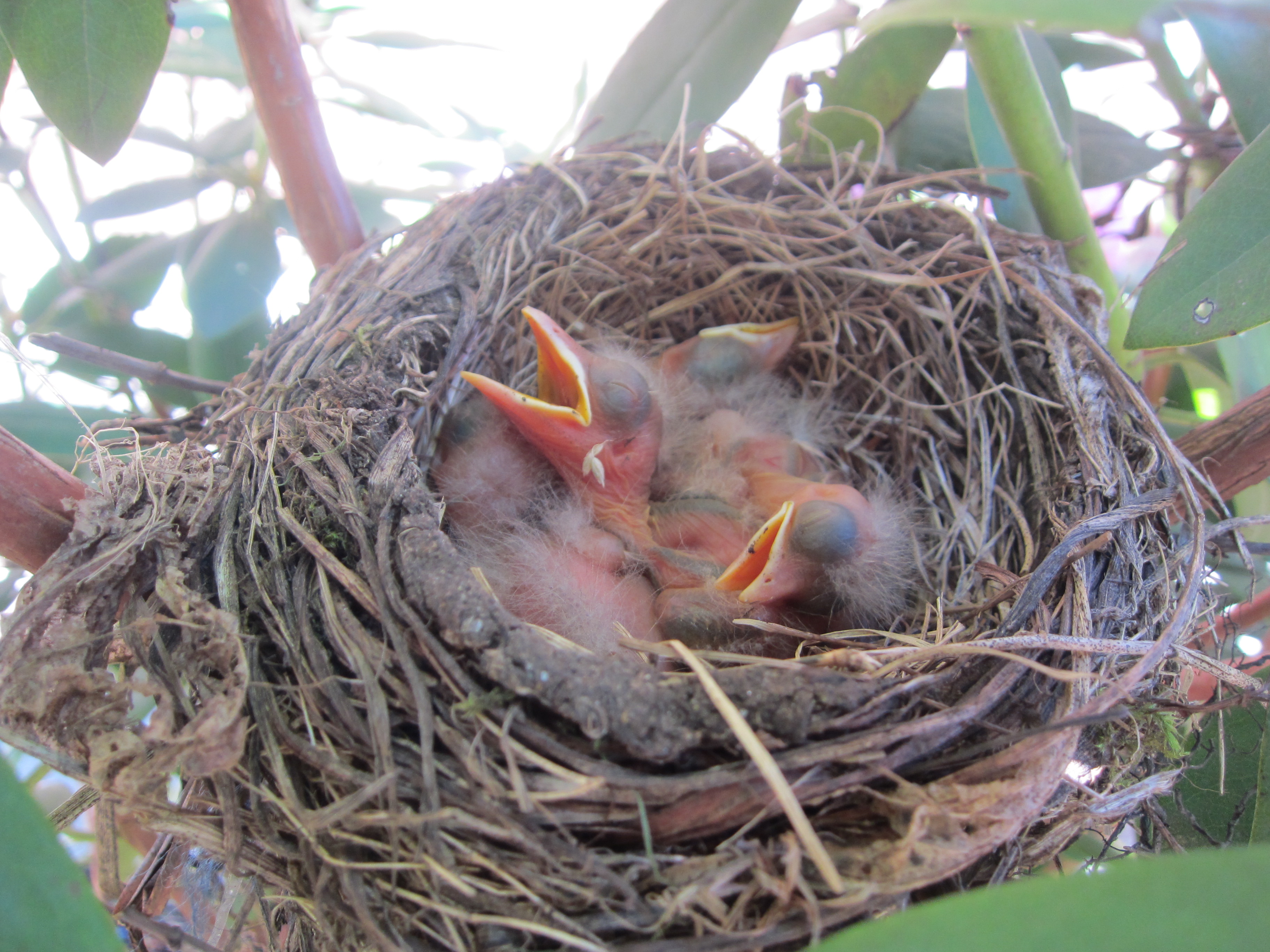
There was a mama bird in the rhododendron bush again. I have pictures, from years ago, of a robin’s nest in the same bush: from the little blue eggs to the baby birds as they grew and stretched and learned how to fly. But the rhododendron bush has grown much bigger over the years, and the current robin built her nest further inside and a little too high for me to get a glimpse inside the nest, even with my phone. But I loved watching her build her nest, and watching it grow taller and sturdier each day. She mostly wove in branches, but she also took other materials from the yard to add softness to the inside.
The previous robin family
I could see the mama bird throughout the day, each time I took the dogs out for a walk, and she would be sitting on her nest, chin up at one side, tail up at the other side, so proudly guarding and warming her eggs, turning like a sundial throughout the day. I made a point of greeting her each time, and wishing her good luck, and asking her when the babies would be born, though she never answered me. There’s something about baby birds and their rubbery, alien-like vulnerability that makes me feel so hopeful.
My neighbors and I would check in with each other to share news of the mama bird, sharing our thoughts about her marvelous nest building skills, and her ability to ignore our dogs. No one else was able to get a picture of her either, as far as I know.
But then she was gone. One neighbor was tall enough to check inside the nest, after a few days of not seeing her, and he said that there were no broken egg shells, no signs of habitation at all. He said he hoped that meant she had taken her eggs somewhere else, maybe somewhere further out of human reach; but she’d spent so much time building the nest, and she’d spent so much time sitting on the nest, that it seemed unlikely, to me, that she would pack up the whole family and move at such a late date.
I don’t know what happened. Maybe another bird came along and stole her eggs, or maybe the eggs fell out of the nest and another animal carried them off. Or maybe it was a false pregnancy from the beginning. When I was younger, I had a dog who had a lot of false pregnancies. Dina, a black lab mix, would create a nest for herself underneath my parents’ bed, scratching the carpet for nesting material until all that was left of the carpet was the webbing underneath. She was convinced that she was about to have puppies, and she even produced some milk, but there were never any puppies. The repeating cycle of expectation and loss overwhelmed her, with the hormones rushing through her body making her eyes glassy with confusion. I felt Dina’s grief in my own body and it has always stayed with me.
Miss Dina in later life
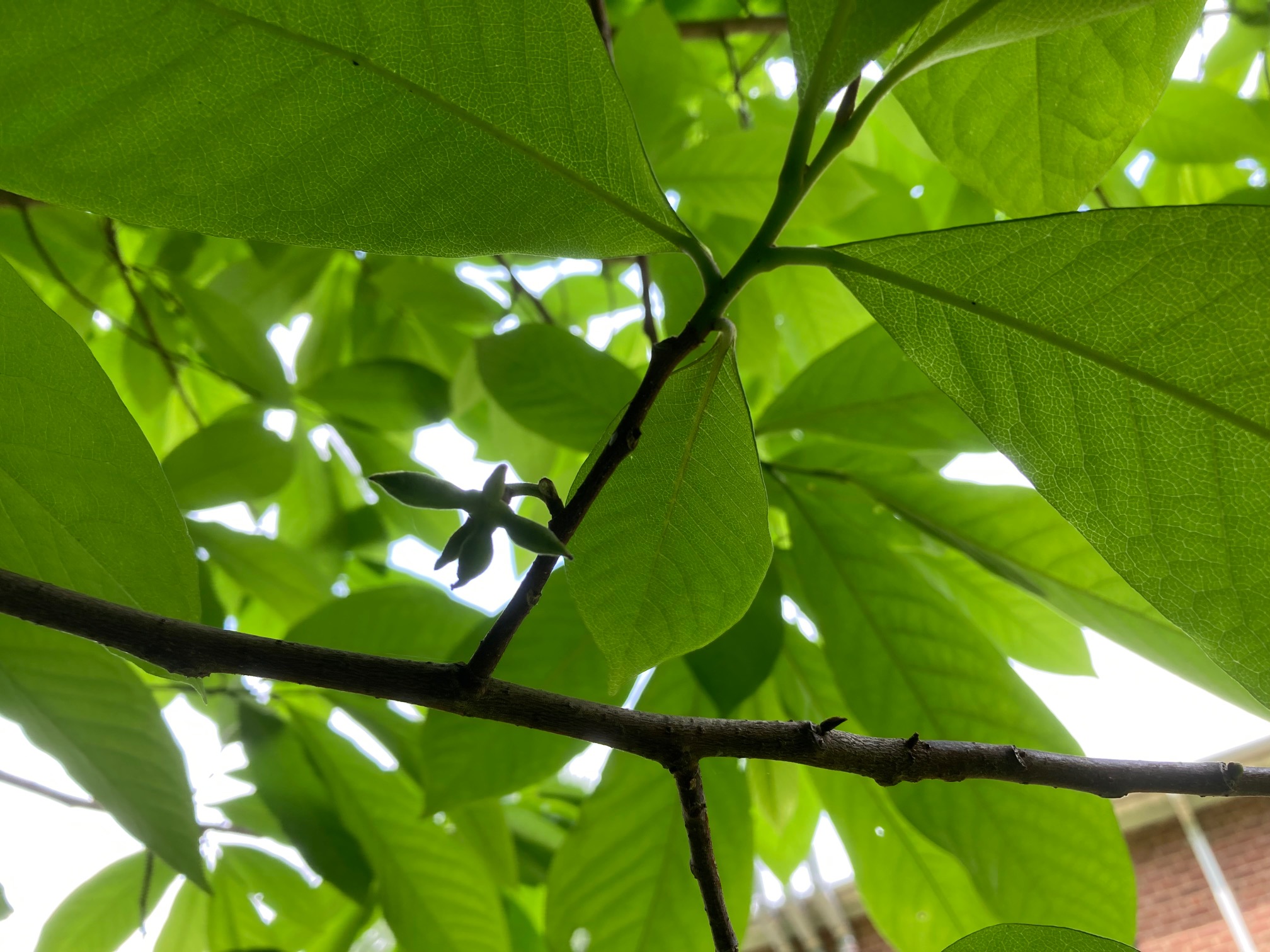
Around the same time that the mama bird was creating her nest this spring, and beginning to roost, flowers blossomed on the pawpaw tree, twenty or so feet away. And then, after the mama bird disappeared, the deep red pawpaw flowers fell to the ground, leaving behind the beginnings of pawpaw fruit, little clusters that looked like hands starting to stretch out. We had our first homegrown, ripe, paw paw fruit last year, and I’d like to think this year we might have two, or even three.
The pawpaw hand.
It’s painful to feel hopeful so often and have my hopes dashed, like Dina and her false pregnancies, and yet I’ve found that it’s even more painful to try to live without hope. It’s sad to think that the mama bird lost her babies, or never had them in the first place, but it would be even harder to have never seen her sitting on her nest, dreaming of her future, in the first place. And watching the small pawpaw fruit start to appear fills me with wonder, independent of whether or not they become full grown fruit; though I’d prefer to have a small harvest by the end of the growing season, of course. But just the harvest, without the hours and days and months of hope leading up to it, wouldn’t be enough. The feeling of hope, more than anything else, is really the point.
“Uh, we prefer the food.”
If you haven’t had a chance yet, please check out my Young Adult novel, Yeshiva Girl, on Amazon. And if you feel called to write a review of the book, on Amazon, or anywhere else, I’d be honored.
Yeshiva Girl is about a Jewish teenager on Long Island, named Isabel, though her father calls her Jezebel. Her father has been accused of inappropriate sexual behavior with one of his students, which he denies, but Izzy implicitly believes it’s true. As a result of his problems, her father sends her to a co-ed Orthodox yeshiva for tenth grade, out of the blue, and Izzy and her mother can’t figure out how to prevent it. At Yeshiva, though, Izzy finds that religious people are much more complicated than she had expected. Some, like her father, may use religion as a place to hide, but others search for and find comfort, and community, and even enlightenment. The question is, what will Izzy find?
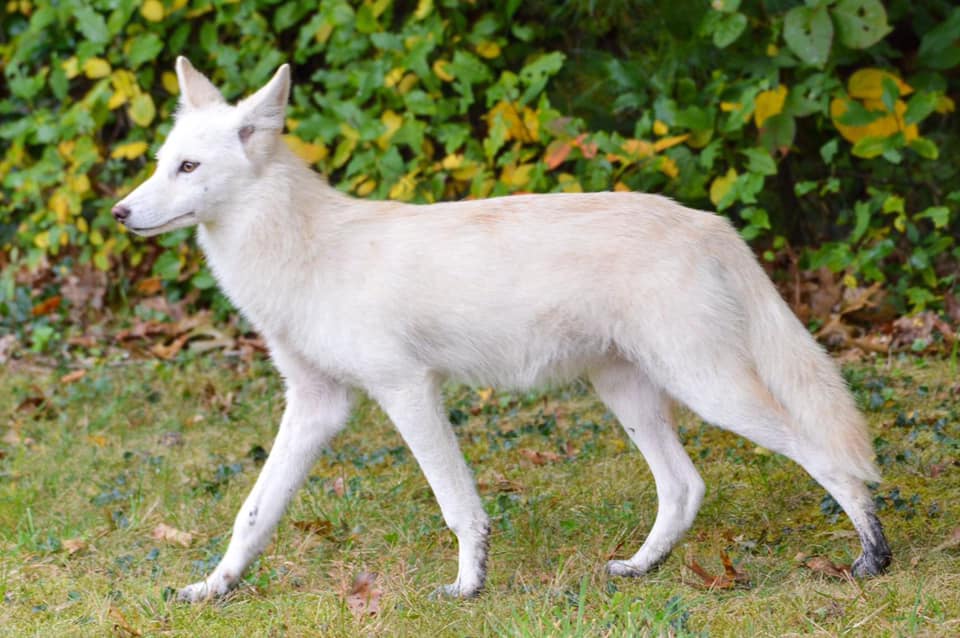
As the title of this blog post suggests, I have never seen the coyote rumored to live in the woods behind my building. The first I heard about the coyote was late one night, in the freezing cold, when Cricket and her Goldendoodle friend Kevin were having a battle in the yard, and Ellie was trying to sneak back to our front door, and Kevin’s Mom said, so, did you see the white coyote?
“The what?”
And my first thought was, nah, probably just a new cat, with long legs. Humans have vivid imaginations. We get a lot of stray cats visiting around here. There’s the brown and black striped cat, and the black cat with two white feet, both way too fast for Ellie to catch them, though she always tries. Sometimes we see raccoons and possums and voles, and of course we are inundated with brazen grey squirrels, and then there are the mourning doves, and wrens and starlings and cardinals and robins and blue jays, etc, etc. But a coyote, that’s new.
Not my picture
I read an article that said urban or suburban coyotes rarely attack humans and can easily be scared away by hand waving and loud noises – which could explain why I’ve never seen the coyote; I’m always out there with Cricket, who makes a lot of noise, and Ellie, who runs like she’s ready to fly in three directions at once.
“Weeeeeeeeeee!”
Also, coyotes are generally nocturnal and my dogs are easily spotted at night – being white and fluffy – so the coyote probably hides behind the huge downed tree at the edge of the yard and waits for us to go back inside before doing whatever it is that coyotes do.
Supposedly, when I hear what sounds like a goose being strangled by a cat late at night, it’s actually the coyote. I don’t know if this is a single coyote or a mated one, out searching for a light meal for two. I guess we’ll find out in a few months. Coyotes mate in February (for Valentine’s Day?) and give birth in April.
Not my picture
It’s possible that I did see the coyote once, actually because I saw what I thought was a really long-legged cat running up into the woods one night, and was surprised that Ellie didn’t try to chase it. Ellie seems to have given up on catching a squirrel, but she still believes she’ll be able to outrun a cat, one day.
“I can do it, Mommy!”
I’ve made a point of holding onto Ellie’s leash after dark, ever since I heard about the coyote and was warned with horrific stories of pets being abducted never to be seen again (similar to the horror stories of small dogs being carried away by hawks), but given that some of my neighbors leave food out for the stray cats, and others leave food out for the birds, the coyote can probably live pretty well here without having to hunt for anything larger than a mouse.
So, I guess we’re okay for now. And it gives us something to talk about when the dog walkers meet up in the yard at night. I wonder, though, if while the humans are sharing scary stories about the dangerous white coyote who stalks the woods, the dogs are rolling their eyes at each other and saying, oy, humans are so silly. Bob’s harmless.
“How did you know?”
If you haven’t had a chance yet, please check out my Young Adult novel, Yeshiva Girl, on Amazon. And if you feel called to write a review of the book, on Amazon, or anywhere else, I’d be honored.
Yeshiva Girl is about a Jewish teenager on Long Island, named Isabel, though her father calls her Jezebel. Her father has been accused of inappropriate sexual behavior with one of his students, which he denies, but Izzy implicitly believes it’s true. As a result of his problems, her father sends her to a co-ed Orthodox yeshiva for tenth grade, out of the blue, and Izzy and her mother can’t figure out how to prevent it. At Yeshiva, though, Izzy finds that religious people are much more complicated than she had expected. Some, like her father, may use religion as a place to hide, but others search for and find comfort, and community, and even enlightenment. The question is, what will Izzy find?
For the past few years, ever since my Mom’s friend Olivia died one January, a Carolina Wren has taken to visiting the apartment over the winter. The first visit, within days of Olivia’s death, felt like a spiritual visit from Olivia herself, to let us know that she was okay, and to say goodbye. When the wren (or a different wren) returned the next year, it seemed like Olivia was checking in on us, and letting us know that her spirit was flying free.
“This is my good side.”
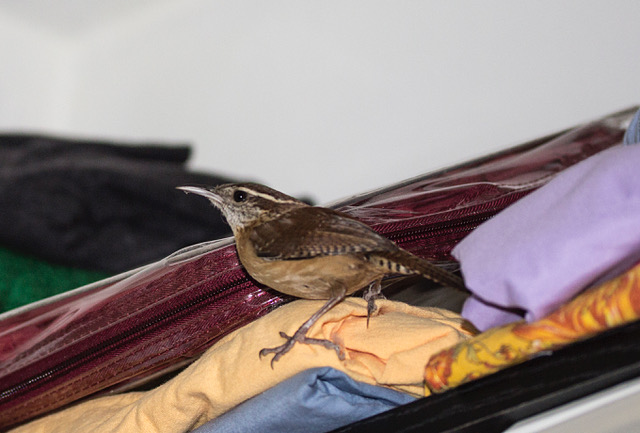
This year has been different. A Carolina Wren has come into the apartment four or five times already, usually on the coldest, snowiest days. She (I always assume she’s a she) sometimes stays overnight, flying from one room to another, sampling the kibble, taking a bath in the water bowls, singing a few songs, leaving poop on the curtains and then heading out.
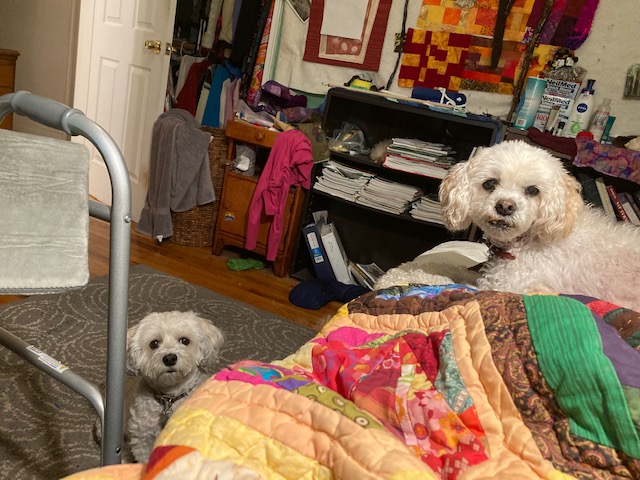
The dogs never seem to mind the visits, even when the little bird is singing full out or flying over their heads.
“Go ahead. Eat as much kibble as you want.”
On her third visit this winter, in the middle of a snowstorm, a second Carolina Wren came in with her. I don’t know if it was her mate (he was a little fatter than she was), or another bird, curious about where she kept escaping to when everyone else was freezing. Our Carolina Wren did not seem to appreciate the company. The bigger bird perched on the top of my bookcase while the little one did gymnastics on the curtain rod, and tried and failed to land on a bare lightbulb, and two-stepped her way down the curtain in my room. Finally the bigger bird decided to leave, but our little Wren stayed a while longer.
“Does this color make my foot look big?”
During her next visit, when I was practicing the alto part for a choir recording, she decided to sing with me. She didn’t sing the tune I was singing, she sang her own, but she sang it in answer to me and along with me, insistently; maybe trying to figure out why I was singing the wrong song. Her voice was much bigger than mine, despite her tiny size, and it filled the whole apartment. There wasn’t much harmony between her song and mine, but there was a magic to it anyway. There was communication and echoing and solidarity and questioning; and it was beautiful.
It reminded me of how my old black lab mix, Dina, would hear us singing at Friday Night dinner and add her howl to the song. I found out that if I hit certain notes, usually higher up in my register, it would set her off. And even if we weren’t singing the same song, we were singing together; and even if it didn’t sound right, it sounded like love.
My Dina.
I don’t know what it means that the Wren is visiting us more often, or even if it’s the same Wren each time. Maybe we’re listed on the Wren-airbnb site; maybe she’s looking for a nest, or for nesting materials (we have an enormous collection of fabric scraps); maybe she needs a respite from her mate and we seem friendly enough; or maybe there really is some communication between the spirit and bird worlds, and old friends are coming to visit in bird form. I’m not an expert on the afterlife, or on birds, but it’s nice to be visited, and it was nice to have someone to sing with in person, in this year of social distancing.
“I can play while you sing, Mommy.”
If you haven’t had a chance yet, please check out my Young Adult novel, Yeshiva Girl, on Amazon. And if you feel called to write a review of the book, on Amazon, or anywhere else, I’d be honored.
Yeshiva Girl is about a Jewish teenager on Long Island, named Isabel, though her father calls her Jezebel. Her father has been accused of inappropriate sexual behavior with one of his students, which he denies, but Izzy implicitly believes it’s true. As a result of his problems, her father sends her to a co-ed Orthodox yeshiva for tenth grade, out of the blue, and Izzy and her mother can’t figure out how to prevent it. At Yeshiva, though, Izzy finds that religious people are much more complicated than she had expected. Some, like her father, may use religion as a place to hide, but others search for and find comfort, and community, and even enlightenment. The question is, what will Izzy find?
During the days between Rosh Hashanah and Yom Kippur (the Days of Awe) a bird came to visit my apartment. She showed up midday on Saturday; she was just there when I came back in from walking the dogs, flapping her wings against the inside of the living room window, inches away from the space where she must have accidentally come in (there’s a space next to the air conditioner that Mom uses to give the neighborhood birds their snacks). I tried to show the bird the exit, as gently as possible, but she ignored me.
“I’m staying.”
I, of course, took pictures of her flying around the apartment, from light fixture to curtain rod to picture frame, thinking she would be leaving at any moment. And when I left to pick up Mom from the train (she’d been out quilting with friends for the day), I was sure the bird would be gone when we returned. But she was still there, and Mom said that she was a (female) house sparrow, based on her size and markings.
We put a few pieces of challah on the window sill in the living room, to show her the way back outside, but the bird picked up each piece of bread and flew it to her safe place (a wooden loom on top of Mom’s bookcase) and ate in peace. Then she took a nap, head curled into her neck, half hidden behind the living room curtain.
Sleeping birdie.
We were sure she would be gone by morning, after her meal and a long nap indoors, but she woke me up at seven thirty the next morning with a big squawk. She had ventured out of the living room at some point and found her way into my room. And decided she needed company; and that her company should be awake.
“Something is very wrong with these animals.”
When we all decamped to the living room for breakfast, and the CBS Sunday morning show (Mom watches the whole show just to see the moment of nature at the end), the bird followed. She was very entertaining. She flew back and forth from the kitchen to the dining room to the living room, doing her own version of dog zoomies. She shared Mom’s breakfast (Mom got a picture of the bird eating challah on the kitchen counter), and pooped in all kinds of new places.
“Don’t poop on me, Birdie.”
Later, the bird even followed me into the bathroom when I went to take a shower (I didn’t notice she was there until too late, but she was kind enough to wait for me on top of the medicine cabinet instead of hanging out in the shower with me. Small favors). Cricket was waiting right outside the bathroom door afterward, horrified.
“Aaaaack!!!”
By the thirtieth hour of the bird’s visit, Mom was getting worried. She’d reached out to her cyber community and was reminded of the health risks of having a wild bird in the house, because of the poop she seemed to drop any and everywhere. So we removed all traces of food from the kitchen counters, and even got rid of the bread for the outdoor birds. But the bird decided to try the kibble left in the dogs’ bowls, and then she checked the living room floor for any crumbs the dogs might have left behind. Cricket started to notice the invasion at that point, because it was one thing to have a bird flying around in the light fixtures, but something completely different to have a bird calmly walking along the floor, trying to share her food. Cricket’s food is sacrosanct, just ask Ellie.
“It’s true.”
“Now where did that fluffy monster hide the treats?”
When it was time to go to sleep for the night, the bird set herself up on her wooden loom again, and she was still there the next morning, though she was kind enough not to wake me up this time. I do prefer to sleep as late as I can.
Butterfly watching over Birdie’s meeting with Canada bird.
I was seconds away from naming her (Tzippy, short for Tzipporah, Hebrew for female bird) when the bird finally left. Mom plugged the hole next to the air conditioner with a tissue, to discourage her from coming back in, but the bird seemed to have finished her visit by then and didn’t return. There had been a lot of extra squawking outside the windows that morning, maybe from her family or friends, telling her that she needed to come back out to the real world.
The depression I felt after the bird left was pervasive. I felt like we’d exiled her. Yes, she pooped everywhere, and didn’t clean up after herself; and yes, she woke me up too early in the morning; and yes, Cricket was getting annoyed with her. But she made me feel special, just by being there. She made me feel chosen.
There’s a moment in the prayer service at my synagogue where we put our arms around each other to say the Priestly Blessing, as a way to celebrate family and community ties. It took me a few years to get used to all of the touching and closeness involved in that blessing, but for the forty-some-odd hours while the bird was staying with us, I felt like she was holding out her wings to be included in our little family group: singing the blessing with us, arm in arm.
And I felt blessed, and full of awe. We focus so much on self-examination and looking for the sins we need to atone for during the High Holiday season, but the bird reminded me that sometimes there’s nothing to atone for. Sometimes your assessment can tell you that you are on track and you are loved, and that you deserve the visit of a little bird to remind you that every day can be full of awe, if you pay attention.
Bye bye Birdie.
If you haven’t had a chance yet, please check out my Young Adult novel, Yeshiva Girl, on Amazon. And if you feel called to write a review of the book, on Amazon, or anywhere else, I’d be honored.
Yeshiva Girl is about a Jewish teenager on Long Island, named Isabel, though her father calls her Jezebel. Her father has been accused of inappropriate sexual behavior with one of his students, which he denies, but Izzy implicitly believes it’s true. As a result of his problems, her father sends her to a co-ed Orthodox yeshiva for tenth grade, out of the blue, and Izzy and her mother can’t figure out how to prevent it. At Yeshiva, though, Izzy finds that religious people are much more complicated than she had expected. Some, like her father, may use religion as a place to hide, but others search for and find comfort, and community, and even enlightenment. The question is, what will Izzy find?
I spend a good portion of time each week exploring blog posts on WordPress. I start by going through the sites I follow on my Reader, and then, if I have time, I check in with the posts in different categories, like dogs, birds, memoir, knitting, recipes, etc. Part of it is just simple outreach, looking for other bloggers who might be interested in what I’m writing too, but a lot of it is an endless curiosity about other people.
“What about us?”
So when I came across a blog post that promised pictures of crafty handmade birds for the next thirty days, I decided to keep an eye on it. The blogger was sewing these elaborate stuffed birds, each with their own colorful personality, and I was charmed. After a while, out of the blue, I heard from the blogger herself, thanking me for my support and offering to make a bird just for me.
I was shocked! All I’d done was press like a few times, but her email reminded me that the small acts we do each day can have much bigger meaning in the world than we realize. I know that I have been impacted in big and small ways by the things other people have done, like smiling at me in the supermarket, or commenting on one of my blog posts, or posting a picture that breaks my heart or makes me laugh or just reminds me that I am not alone. We do these things every day, thinking we are such small actors in the world and it’s only meaningful to us, but I’m starting to realize that I can’t know what my impact on other people might be. And impacting even one person, even in a small way, feels wonderful!
My beautiful bird arrived last week and she has been acclimating to her new environment, and new housemates. Cricket and Ellie were fascinated by the look and smell (and taste) of her, so she flew back into her box for a little while until they calmed down. My bird’s creator is Susan Fae Haglund, by the way, and she’s on Instagram and WordPress and Etsy too, so please look out for her work.
“Hello everybody!”
Ellie is trying to say hello.
Cricket really likes the new bird in the house.
When I first started this blog I thought it was something I was supposed to do, to build my “platform” as a writer, but it has become something I need to do for myself, to feel connected to people who matter to me. The majority of the book sales for Yeshiva Girl have come through the blog and I feel endlessly grateful for that. I want all of you to know that every blog I follow has made an impact on me, and made my world bigger and brighter than I could have hoped.
Thank you!
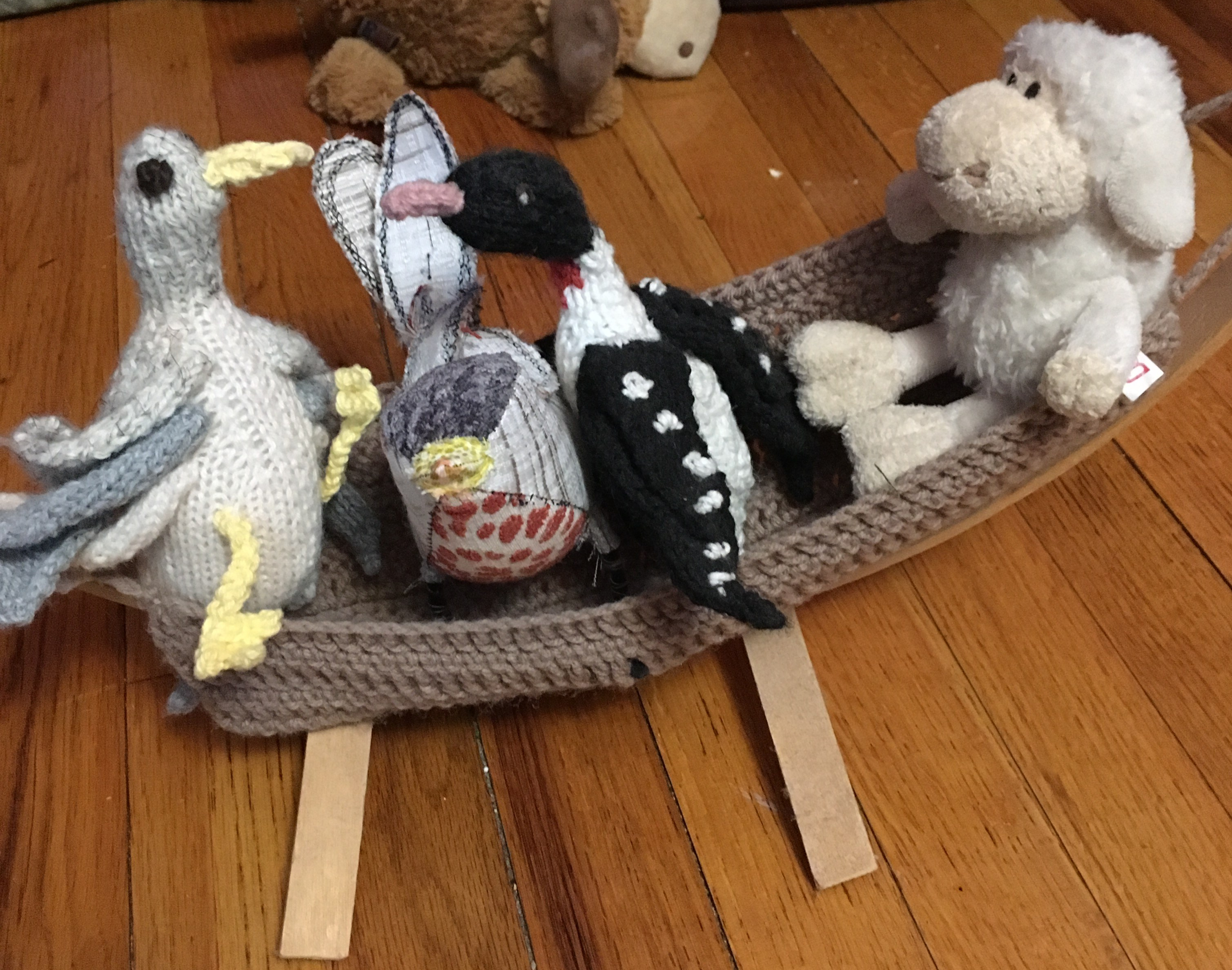
The new bird is fitting in with the older guys.
Even Lambie’s on board!
If you haven’t had a chance yet, please check out my Young Adult novel, Yeshiva Girl, on Amazon. And if you feel called to write a review of the book, on Amazon, or anywhere else, I’d be honored.
Yeshiva Girl is about a Jewish teenager on Long Island, named Isabel, though her father calls her Jezebel. Her father has been accused of inappropriate sexual behavior with one of his students, which he denies, but Izzy implicitly believes it’s true. As a result of his problems, her father sends her to a co-ed Orthodox yeshiva for tenth grade, out of the blue, and Izzy and her mother can’t figure out how to prevent it. At Yeshiva, though, Izzy finds that religious people are much more complicated than she had expected. Some, like her father, may use religion as a place to hide, but others search for and find comfort, and community, and even enlightenment. The question is, what will Izzy find?
There was a crow here the other day. I’m used to the cardinals and the starlings and the wrens and the sparrows and even the blue jays coming to the living room window and looking in, expecting snacks. I was not ready for this galumphing black bird to, basically, fall out of the sky and land on the window ledge with a thump. He, or she, seemed to move in slow motion, which made sense, being at least three times the size of any other bird in sight, and not especially agile.
After a moment of confusion (those hard landings are jarring when you’re not prepared), the crow lifted its wings, and in slow motion again, galumphed off to somewhere else, out of my view.
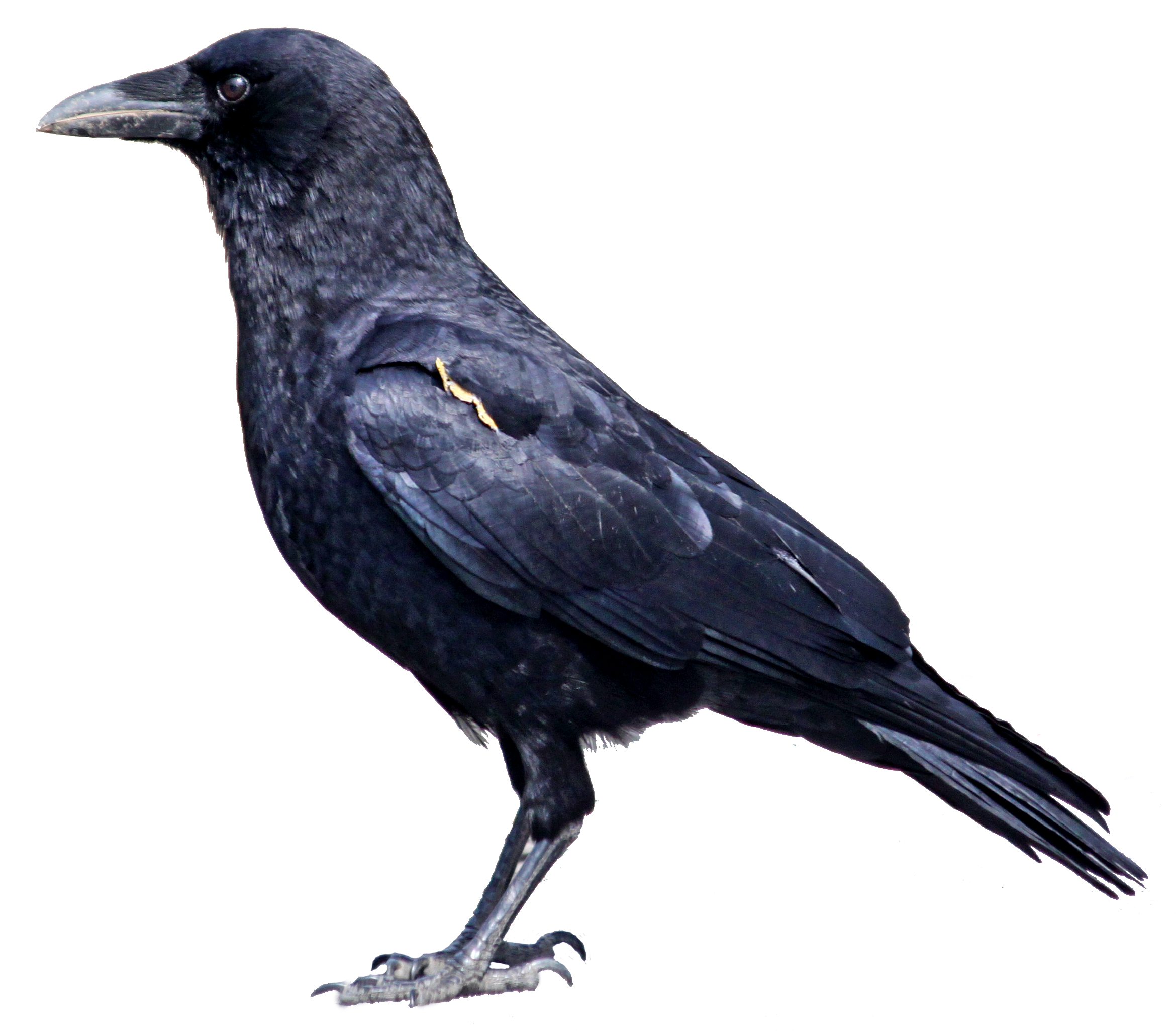
(not my picture)
I always think of birds, and flying in general, as inherently graceful. I think if them catching the wind and stretching their wings like ballerinas. But the crow was nothing like that. It was awkward, and slow, and sort of human. I felt a kinship with it, because that’s probably how I would fly, if I could fly.
I haven’t seen the crow again, which makes me even more curious about that strange visit. Of course I had to google crows. One fun fact, crows have very good memories for human faces, and can really hold grudges. If one particular human does a crow wrong, the crow will share the story with all of his friends, and the whole community will hold the grudge, and recognize that particular human face forever.
It’s as if crows invented Twitter.
One of the articles I read explained that a group of crows is called a Murder because if one crow dies, the rest will come together to figure out who or what killed their friend. They’re like the detectives of the bird world! I’d like to think that my visiting crow was out on an investigation. Maybe he thought I was harboring a criminal on my window ledge (probably one of the blue jays. Those guys are assholes).
I just wish the crow would come back to visit. I could offer him some tea, and maybe a ginger snap or two, and he could sit down and to tell me how the mystery ends.















 rachelmankowitz