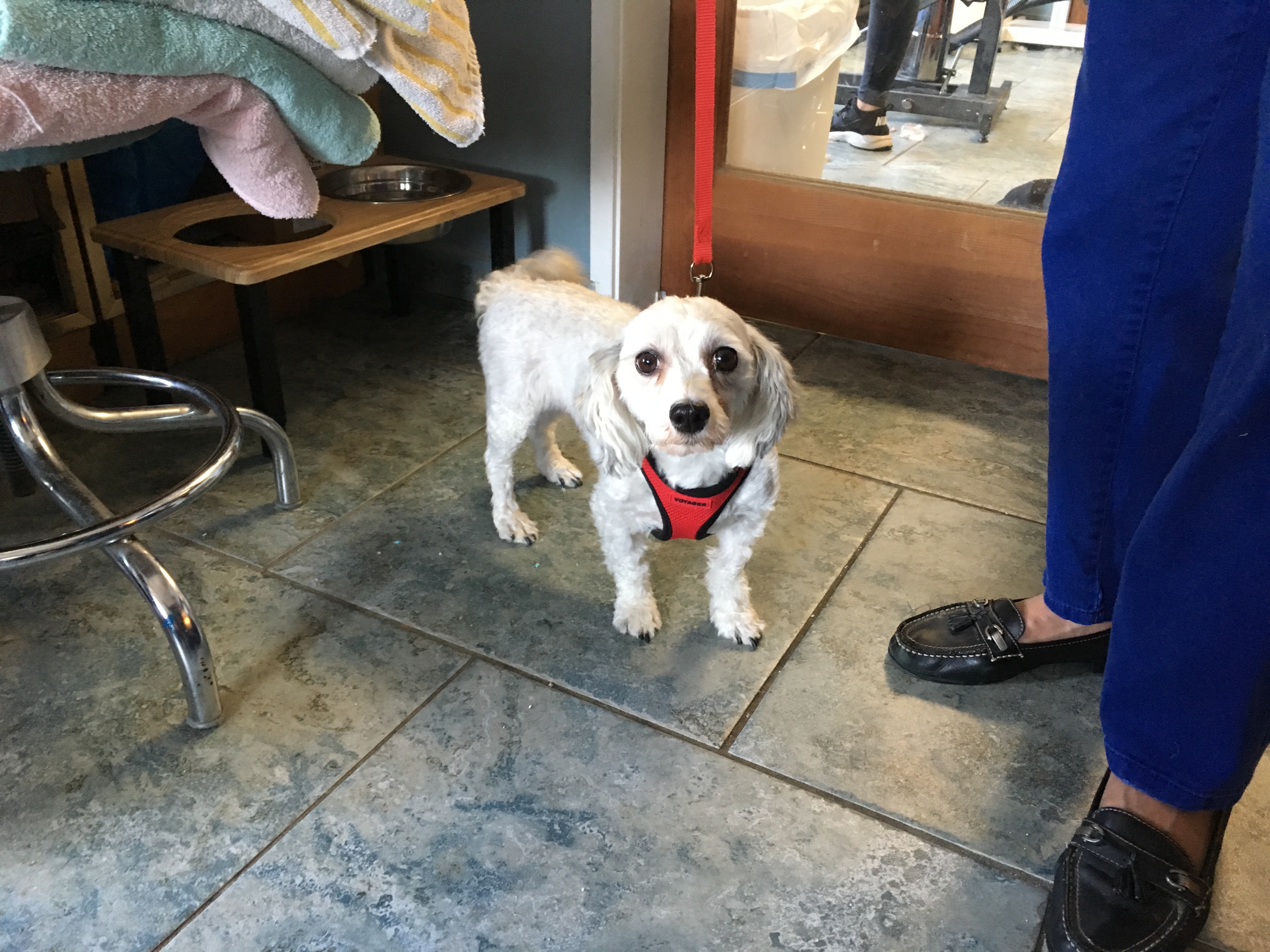
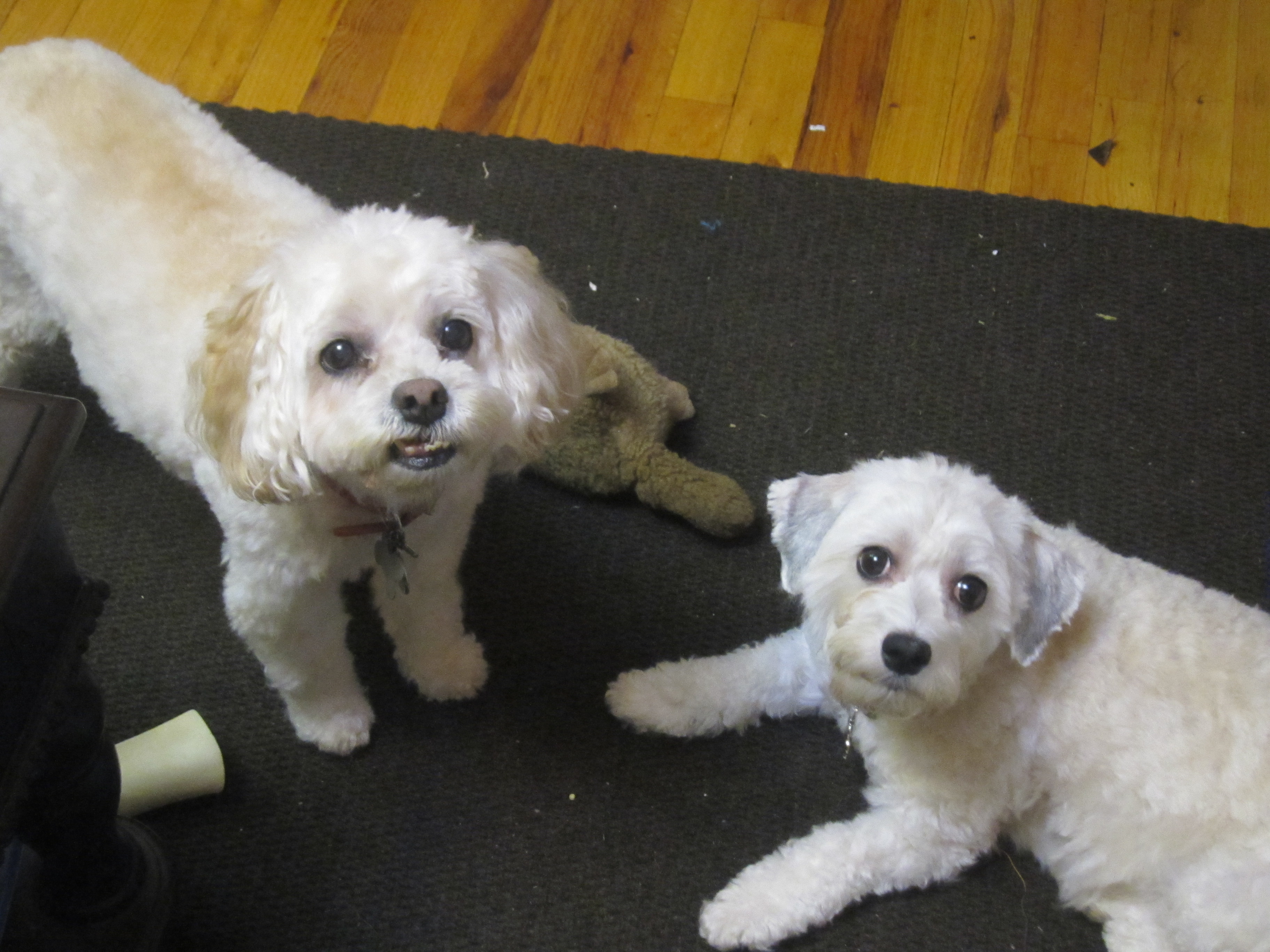
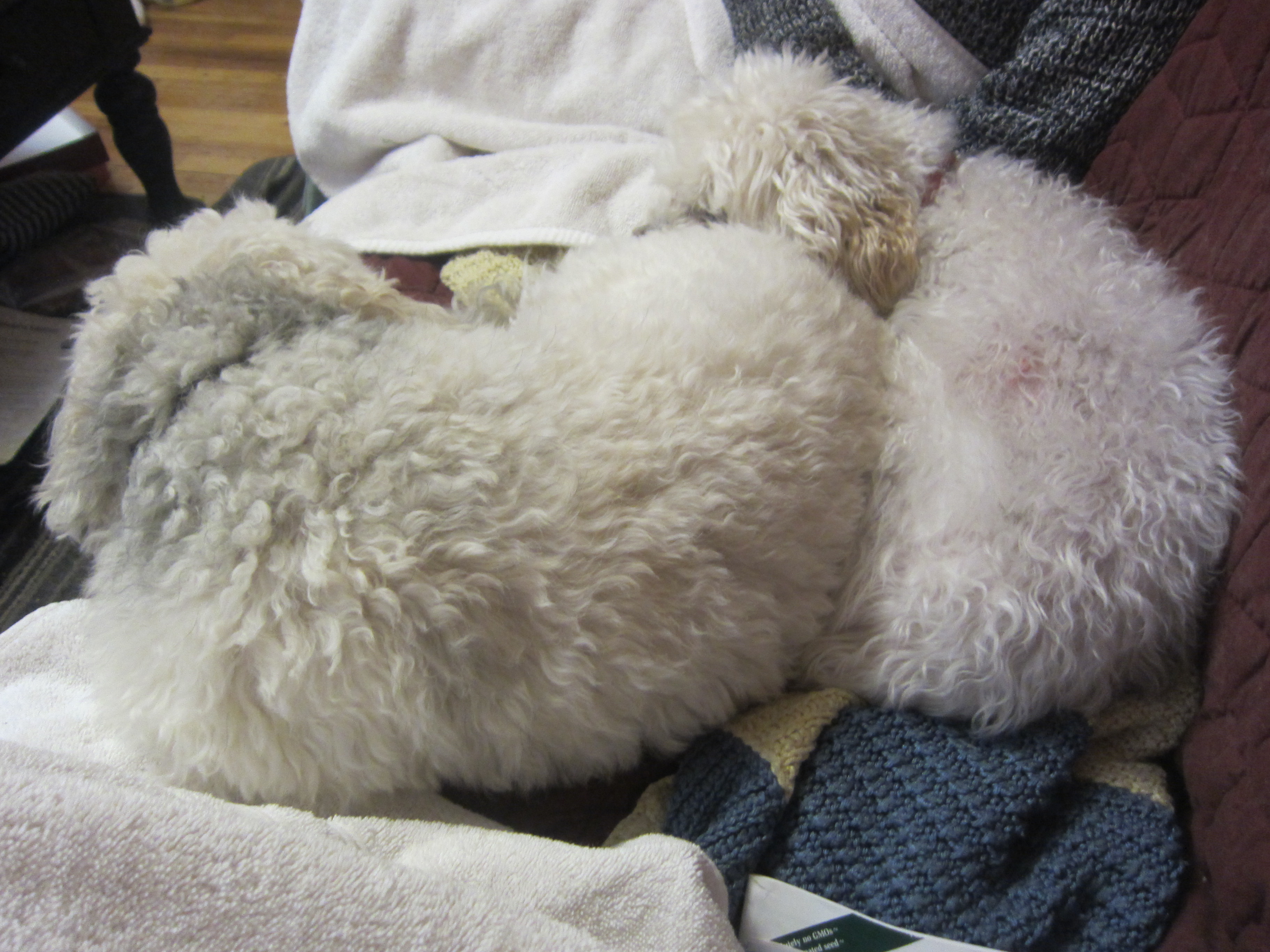
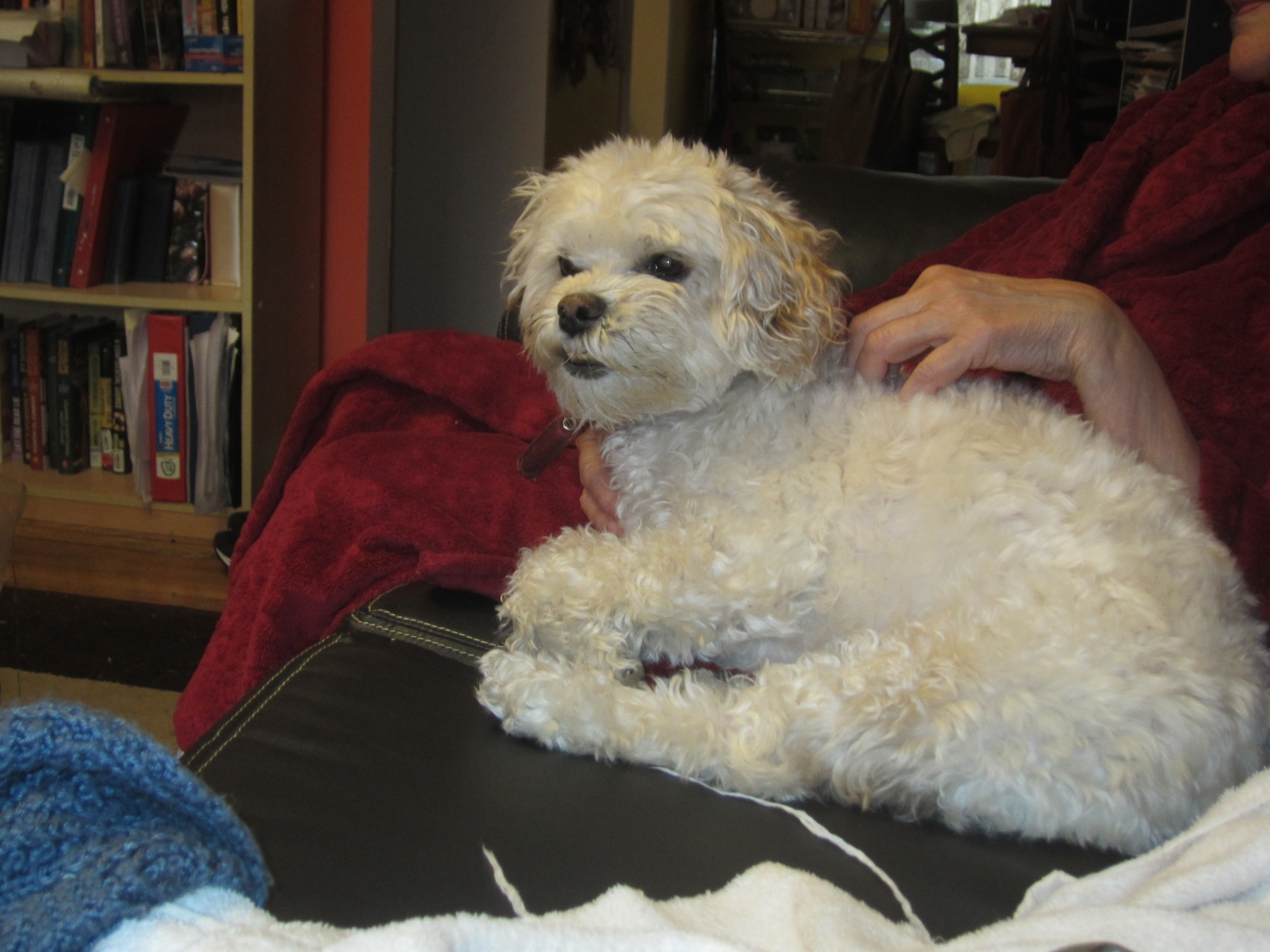
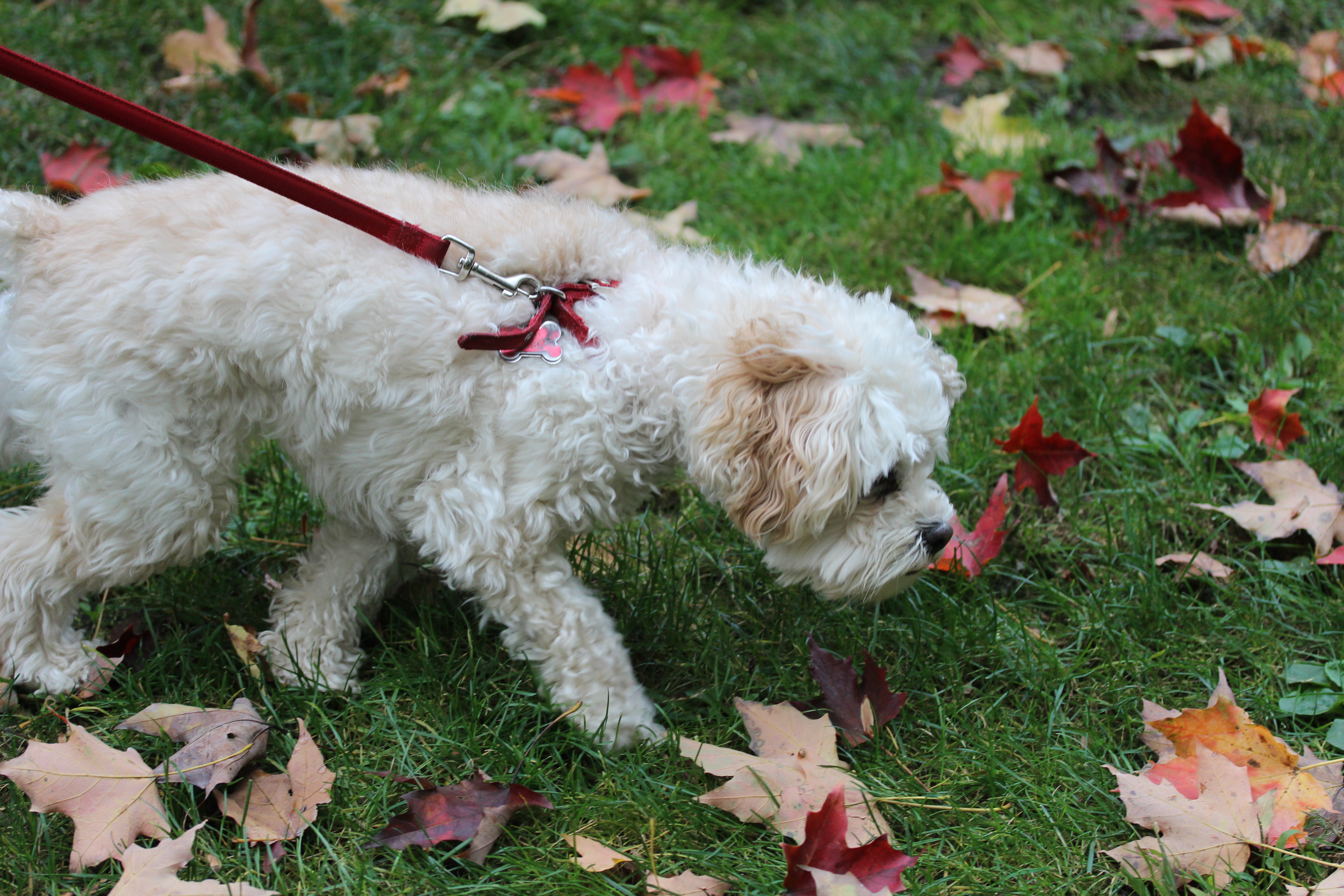
We had our yearly Women’s Seder at our synagogue recently (far in advance of Passover this year, because of scheduling issues), and the music was lovely, and I got a chance to sing with friends, but it was bittersweet because so many people I hadn’t seen in a while asked about the dogs. Some knew that Cricket had died, but not Ellie; most didn’t know about either one. And I found myself having to explain, over and over, that they’re gone and I’m heartbroken. Like a mantra.

The fact is, I’ve had to go over their deaths again and again, just for myself, to remind me why there won’t be a dog at the door when I get home, or to explain to myself how I managed to get through a whole day without going outside.
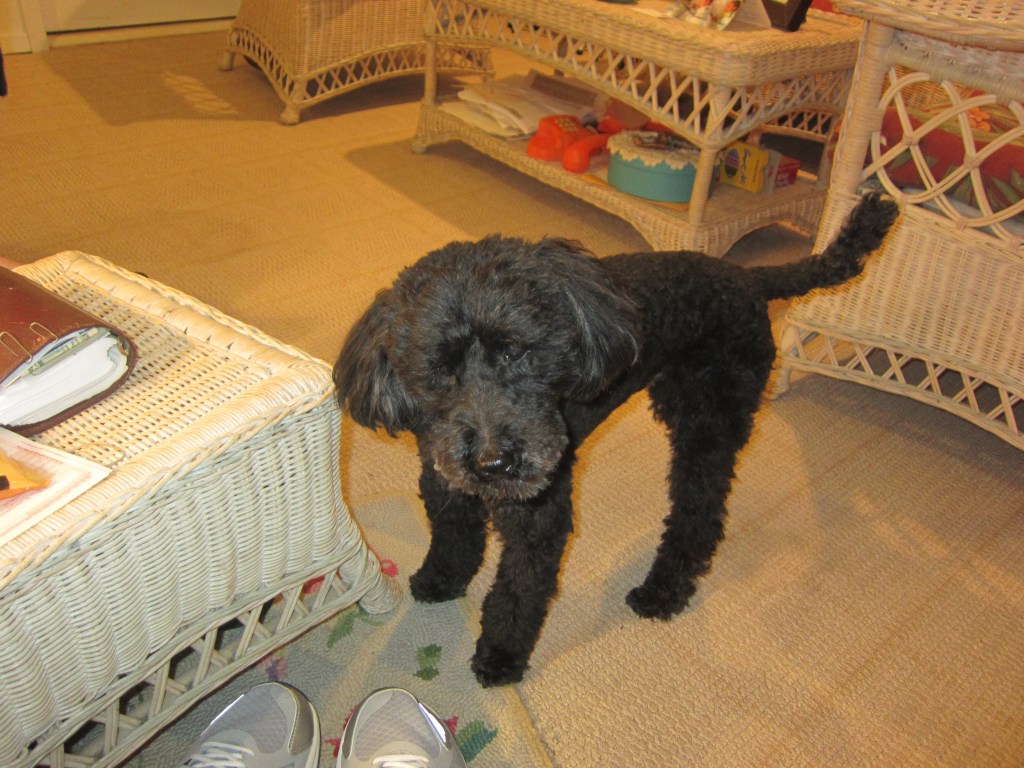
Kevin, the mini Goldendoodle in our complex, left a squeaky tennis ball on our steps the other day. I don’t know if he left it for Cricket, still hoping she would come out to see him, or if he just left it for me; either way, it felt like a gift.
I’ve started to have more memories of Cricket from before she got sick; just glimpses, of her standing on my chest to wake me up, or bouncing around the yard with Kevin, or flying like the wind when she was younger, fitting as many sticks as possible into her mouth at one time. But I’m still haunted by Ellie’s last days. It’s very hard to remember happy Ellie, for now. I just keep seeing her struggling to breathe, looking to me for help but I didn’t not know what to do. I hope this stage will pass soon and I will be able to remember her happy years, her joy, and her peace.


I’m trying to be patient with the grieving process, letting it unwind at its own pace, even though I wish it would hurry up. I’m still not ready to spread the dogs’ ashes and say a final goodbye. I think it took a year before I was ready to say goodbye to Butterfly, and back then we still had Cricket with us for comfort. Losing both dogs at the same time has been brutal.
One of the families at my synagogue has an emotional support dog who comes into the sanctuary for services. He’s basically a smaller version of Kevin: a poodle mix with curly reddish gold hair. He’s very well behaved and knows how to sit on a chair by himself; looking as if he’s listening attentively. A few weeks ago he came to services wearing his new blue satin Kippah, with a Jewish star on it, and the cuteness almost killed me.
I do my best to absorb my doggy vitamins from witnessing the joy of the dogs in my neighborhood whenever possible, and I watch a lot of dog videos on Facebook too, to take the edge off of the longing for another dog, because I’m not ready to start over again, yet.
There’s something about the Passover story, the escape from slavery to freedom, that seems to fit this stage of grief. We tend to see the Exodus from Egypt as an ecstatic, completely positive moment; but how can it be? There’s so much fear and grief in leaving a familiar place, even if it’s full of pain, and there’s so much anxiety in going somewhere new and unfamiliar. I like that the Seder encourages us to sit with all of those feelings, and I love that we go through this process every year as a way to practice these difficult skills so they will be there for us when we need them. It makes me think of how tennis players practice their forehands and backhands, or figure skaters run through their programs endlessly, or football teams practice different plays so that it can all be automatic under stressful conditions, when it’s impossible to really think it all through.
I like that the Passover Seder creates space for talking through the story of the Exodus, and asking questions and arguing about how the lessons of the past can apply today, but is also filled with physical experiences, like eating the maror, the bitter herb, with the Charoset, the sweet apple or date sauce, to remember that we can survive the bitterness, and this is how. I remember learning about a group of Sephardi Jews who would carry a pillow case filled with heavy books around the Seder table, to feel the burdens of slavery and then to experience the relief of letting the burdens go.
I’m trying to use all of this practice now, to remind myself that I can handle this transition better if I take the grief in small bites, and with the help of some sweetness to balance out the pain. I’m trying, but each day the grief turns again to a slightly different edge, and it feels like I have to learn all of the same lessons all over again. Maybe the point of all of the practice isn’t that it will make these difficult transitions easy or automatic, but that it will give me a memory of having made it through to the other side, so I can have faith that I will make it across the sea this time too.

If you haven’t had a chance yet, please check out my Young Adult novel, Yeshiva Girl, on Amazon. And if you feel called to write a review of the book, on Amazon, or anywhere else, I’d be honored.
Yeshiva Girl is about a Jewish teenager on Long Island, named Isabel, though her father calls her Jezebel. Her father has been accused of inappropriate sexual behavior with one of his students, which he denies, but Izzy implicitly believes it’s true. As a result of his problems, her father sends her to a co-ed Orthodox yeshiva for tenth grade, out of the blue, and Izzy and her mother can’t figure out how to prevent it. At Yeshiva, though, Izzy finds that religious people are much more complicated than she had expected. Some, like her father, may use religion as a place to hide, but others search for and find comfort, and community, and even enlightenment. The question is, what will Izzy find?






























 rachelmankowitz