Tag Archives: memoir

My Latest Symptom

            The most recent embarrassing symptom of my autoimmune/connective tissue/who-knows-what disorder was a wound on my lip that refused to heal. Actually two. The first one was on the right side of my lower lip and lasted at least three weeks, and as soon as it healed another one opened up on the left side. I can’t even explain the frustration I felt when, after less than a day with actual normal skin, a new wound opened up.

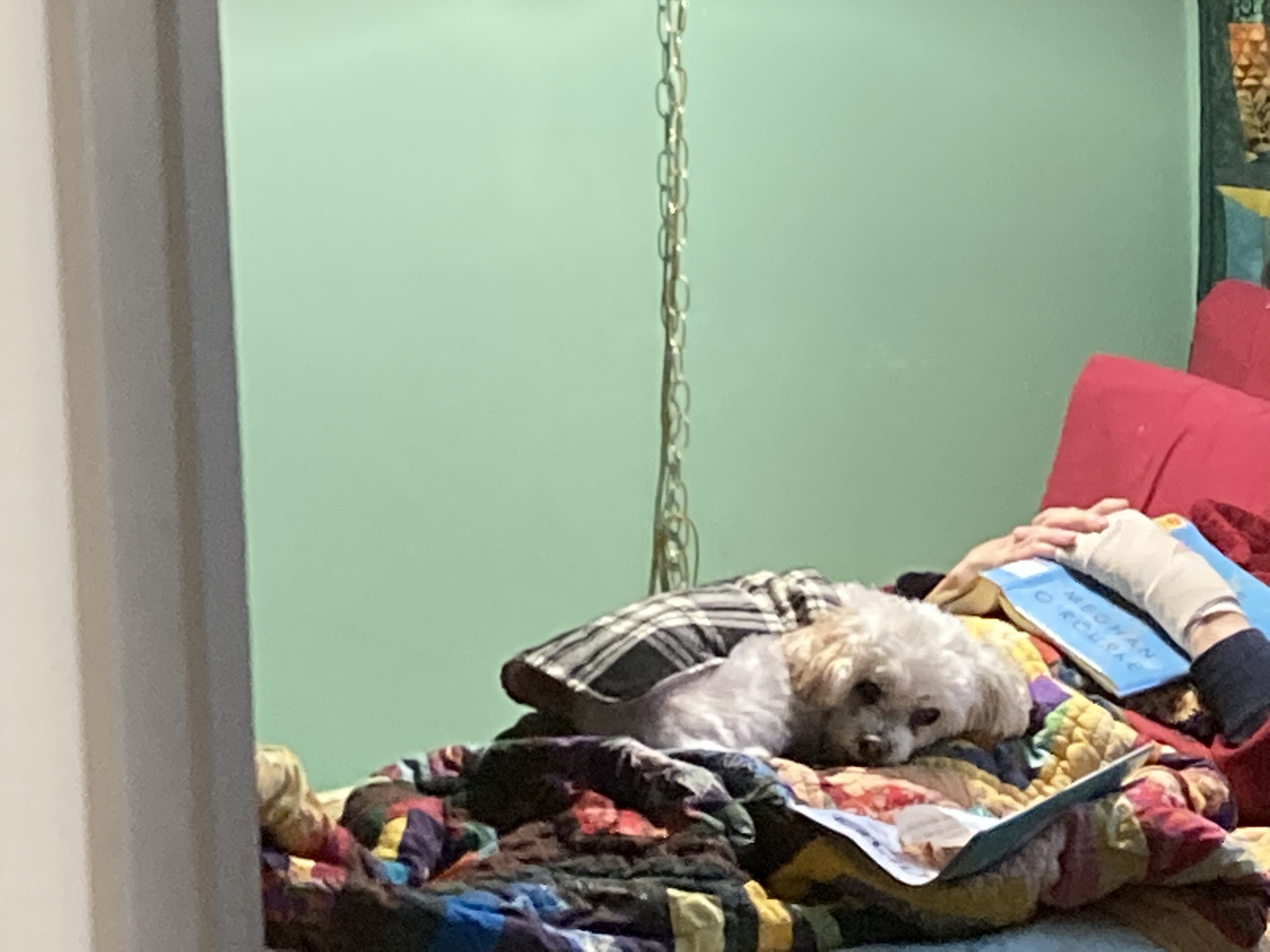
“You looked really weird, Mommy.”

            This would have been fine, though, if every time I was in the view of other human beings I was wearing a face mask, but I teach online once a week, and take a Hebrew class online twice a week, and I was supposed to record another choir video, so it was been an exercise in holding my head at funny angles, rejiggering the lights, and trying not to feel embarrassed when my still bleeding lip, or any of the many different scabbing stages, were visible. Only one of my students mentioned it, and I’m assuming that everyone else was either being polite or not actually paying attention to me (which is more likely).

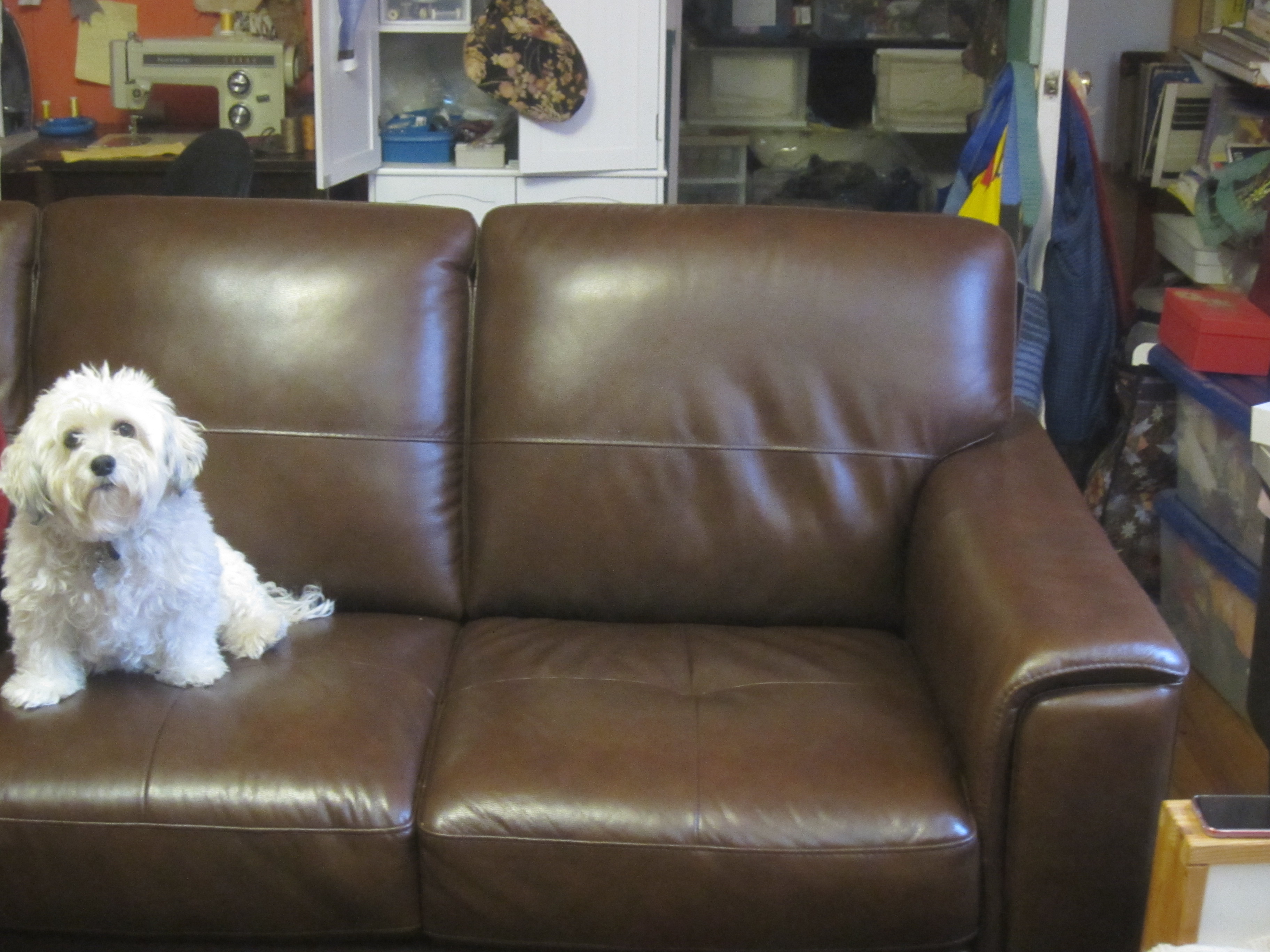
“Were you saying something?”

            The oral pathologist said the lip wounds were probably caused by a combination of the Lichen Planus (an autoimmune disease that impacts the inside of my mouth and also my lower lip for some reason), and the way the face masks keep moisture in, and the steroid gel I have to use to control the Lichen Planus (which barely works, but successfully thins my skin). He wasn’t concerned, though. He was also unconcerned that there was an ulceration on the side of my tongue, and raw red skin on the inside of each cheek, and gum irritation that will lead to more and more problems in the future (his nurse joked that I should save my money for all of the dental work I will need – Ha ha! So funny!), all of which has made eating a painful experience for quite a while now. But other than that, sure, no big deal.

            The thing is, if I could just be sanguine about my symptoms and accept them as a passing experience, maybe I’d be okay. But instead, I end up feeling like these symptoms are proof that I am a disgusting and unlovable creature. I feel like a throwback to biblical times, when Miriam (the sister of Moses and Aaron) was punished with a skin disease for being a gossip. I’ve been putting off teaching my synagogue school students about Tzara’at – the skin disease Miriam, and others, were supposedly punished with for their “bad speech,” because I really don’t want to risk them thinking this lip thing is going to happen to them too. And, really, I don’t want to risk convincing myself that there’s something to that argument. I mean, if gossip caused skin disease none of us would have any skin left!

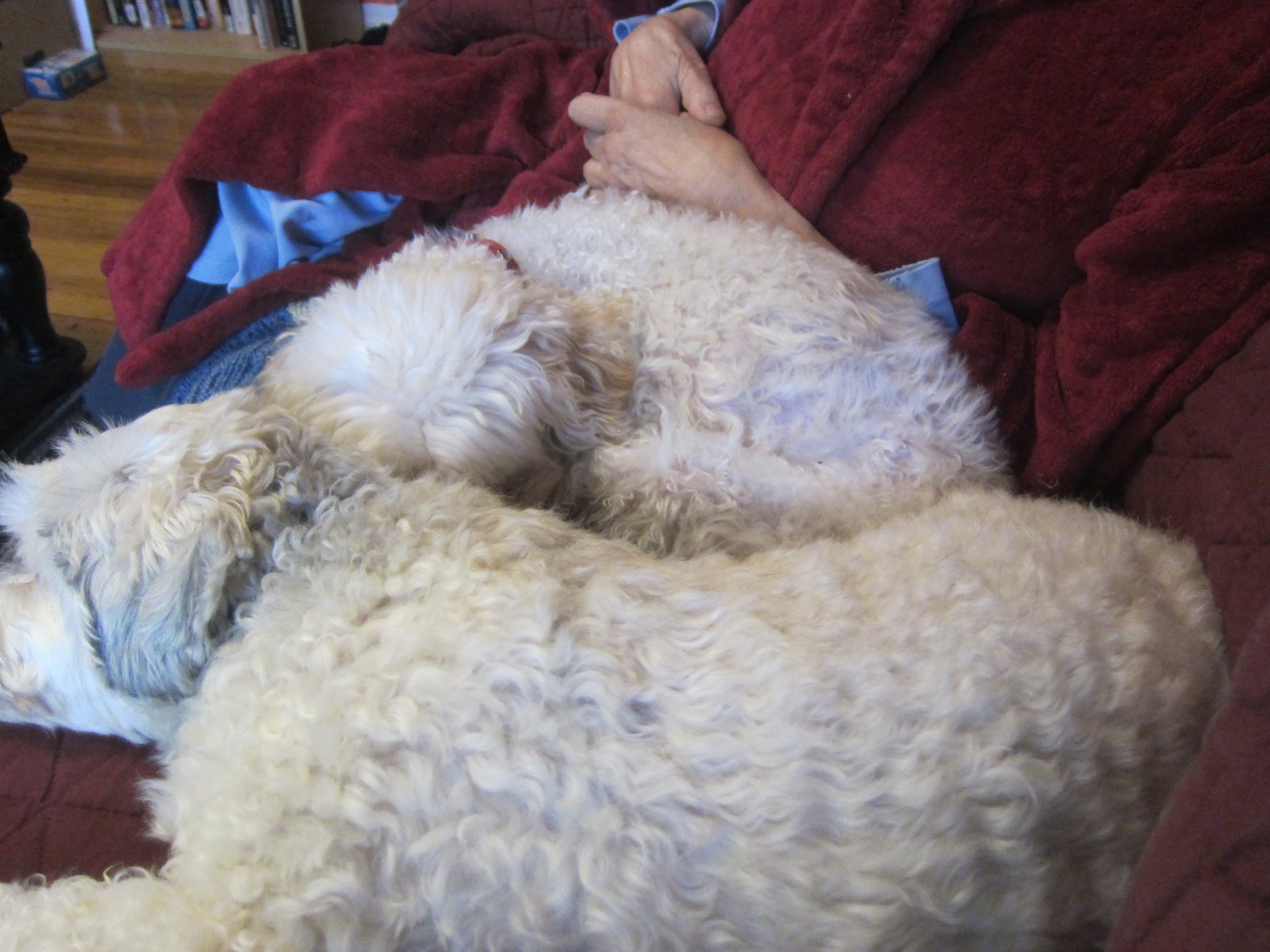
“What?!”

            As soon as my lip healed – mostly – I rushed to do my choir recordings before a new wound could open up, and I made it with one day to spare before the deadline (I really did not want to explain why I would need more time). And instead of worrying about my lip, I was able to worry about the glare on my glasses, and the break in my voice when I had to move from the lower notes to the higher notes, and the flyaway hairs escaping from all sides of my ponytail, etc., which was a relief.

            I don’t know what my next weird symptom might be, because it’s generally unpredictable, and I’m not so evolved as a human being that I can be blasé about symptoms that impact how I look. But for now, I’m going to make the most of the feeling of freedom that comes from being able to turn my head from side to side while I’m on screen, and eat salty food without fear of excruciating pain, and knowing that if I fall into the depths of despair in the next few days it will be about something other than how I look on Zoom.

“I think I look pretty good.”

If you haven’t had a chance yet, please check out my Young Adult novel, Yeshiva Girl, on Amazon. And if you feel called to write a review of the book, on Amazon, or anywhere else, I’d be honored.

            Yeshiva Girl is about a Jewish teenager on Long Island, named Isabel, though her father calls her Jezebel. Her father has been accused of inappropriate sexual behavior with one of his students, which he denies, but Izzy implicitly believes it’s true. As a result of his problems, her father sends her to a co-ed Orthodox yeshiva for tenth grade, out of the blue, and Izzy and her mother can’t figure out how to prevent it. At Yeshiva, though, Izzy finds that religious people are much more complicated than she had expected. Some, like her father, may use religion as a place to hide, but others search for and find comfort, and community, and even enlightenment. The question is, what will Izzy find?


Self-Advocacy, or The Sky is Falling

            Ever since we moved into this apartment nine years ago there’s been a sort of splotch on the ceiling in my bedroom, next to the overhead light and the broken ceiling fan. We were told early on that the splotch was insignificant, because there was no mold or mildew or any water leaking in from the roof, so, just ignore it. And since the splotch never seemed to change color or get bigger, we ignored it.

“It looked like a chicken to me. I didn’t ignore it.”

            But a week or so ago, I noticed big white flakes of something on my bedroom rug. We had just recently gotten rid of the old couch in the living room, the one that left tiny black flakes of fake leather everywhere, so I sort of thought I was being punked (by Cricket?). My other thought was that Mom was making a quilt with small pieces of white fabric and the leftovers were being tracked into my room by doggy feet. Up close, though, the flakes looked like pieces of eggshell, and then I was annoyed, because Mom has a habit of giving the dogs special treats while she’s making dinner, that they then drag into my room and spread on the floor (I can’t count the number of times I have tripped over carrots on my way to bed), but I couldn’t imagine she would have given them hard boiled eggs with the shells still on, so I called Mom in for her opinion of what the hell was scattered across my floor.

            As soon as Mom saw the eggshell-like pieces on the floor she looked up, so I looked up too, and then it was obvious what the problem was: my ceiling was shedding flakes of white paint. The splotch on the ceiling was bigger, and pieces of white paint were missing and others were dangling from the splotch.

            Mom made some phone calls and found out that my splotch was not the only one in the co-op – there were vents on the roofs of all of the buildings and when we had our recent heavy snowfall everyone who lived under one of these vents had the same leaks, and probably the same splotches. The advice Mom was given was that we sweep the excess paint off the ceiling and ignore it, because we’d have to wait until the weather warmed up before the roofers could get to the repairs.

            And when Mom told me this, I said, oh, okay and I shrugged. The sky is falling. Oh well.

            I’m not proud of myself for being like this, there are just certain areas of my life where my self advocacy skills, or my willingness to fight, are nil. I’m lucky that I have Mom, because she’s much better at making the phone calls to at least demand answers, but I won’t have Mom forever, and I don’t know how to teach myself to become more like her, or even feel empowered enough to believe I have the right to ask for what I need, let alone what I want. I’m much more likely to hide under my bed, or hold my breath and wait.

“I can hold my breath, too.”

            The need for self-advocacy has also come up – a lot – with my health, and it presses all of my buttons: my feelings of invalidation when people ignore me, my lack of self-worth because I feel like they’re right to ignore me, my anxiety about saying the wrong thing and getting in trouble. And the reality is that my attempts at self-advocacy have, historically, left me feeling depleted instead of empowered, because I couldn’t convince the doctor, teacher, publisher, etc., to take me seriously.

“I’ll bark at them for you!”

            As a result, I’ve been doing a lot of research on the subject of self-advocacy, to try to build up to being better at this And so far, the advice has been overwhelming: reward yourself for every attempt at speaking up; decide what you want, and what you are willing to settle for; be clear and concise; be consistent; identify when the other person is being unfair; remember that you have the right to change your mind; make sure to ask for what you want; feel free to express your feelings; and to say no, and to make mistakes; and demand to be treated with respect. And that’s just the short list.

            So it’s not surprising that I still wasn’t up to doing anything different when I went to my most recent doctors’ appointments, but I felt like a failure anyway, because I fell back on my usual coping behavior, which is to make jokes and smile, even when I feel crummy; and to remember the crazy things people say to me, but still smile and nod while they say them. That’s what has allowed me to survive a lot of bad doctor visits in the past, and a lot of everything else, so it’s been hard to give it up.

            Even so, I’m still trying to push myself to fight harder for the things I want, especially to not take failure as an inevitable proof that I am undeserving. I believed, for a long time, that if I deserved good things they would just happen, and therefore when those good things didn’t happen, I must not deserve them. I’ve started to rethink those assumptions, but fighting for myself is hard. It means being willing to keep sending my writing out despite endless rejections, and it means trying to believe that my work is still good, even when ten, or fifty, or a hundred publications tell me that it’s not what they’re looking for right now.   

“It’s exhausting.”

            I wish these lessons could be easier to learn, or at least simpler to understand, but as with everything else in life, it’s complicated. Sometimes taking no for an answer, either from my own body or from something or someone out in the world, is the best choice, so that I can conserve my energy for the next fight. And sometimes the fight itself, convincing myself that I deserve to be heard, is worth the effort, even if a good outcome is unlikely.

            Looking back at the list of advice for how to become a better self-advocate, the one thing that sticks with me is the idea that I should reward myself for each attempt, no matter how unsuccessful. I’ve always done well with rewards as motivation. If I can watch a fun movie while I’m on the exercise bike, then I’m much more likely to make it through the full forty-five minutes, and look forward to getting back on the bike the next day. And if I know that the dogs will be at the door as soon as I come home, throwing themselves at me with relief, it’s much easier to go out in the first place.

            So I’m going to start thinking of possible rewards to pair with speaking up when a doctor tries to blame my health problems on my weight, or to pair with sending out an essay to a new publication. At this point, though, I can’t think of any reward good enough to make me willing to allow a stranger into my room to fix the splotch on the ceiling, so that one will have to wait.

“Have you ever tried chicken treats?”

If you haven’t had a chance yet, please check out my Young Adult novel, Yeshiva Girl, on Amazon. And if you feel called to write a review of the book, on Amazon, or anywhere else, I’d be honored.

            Yeshiva Girl is about a Jewish teenager on Long Island, named Isabel, though her father calls her Jezebel. Her father has been accused of inappropriate sexual behavior with one of his students, which he denies, but Izzy implicitly believes it’s true. As a result of his problems, her father sends her to a co-ed Orthodox yeshiva for tenth grade, out of the blue, and Izzy and her mother can’t figure out how to prevent it. At Yeshiva, though, Izzy finds that religious people are much more complicated than she had expected. Some, like her father, may use religion as a place to hide, but others search for and find comfort, and community, and even enlightenment. The question is, what will Izzy find?

The Unseen Coyote

            As the title of this blog post suggests, I have never seen the coyote rumored to live in the woods behind my building. The first I heard about the coyote was late one night, in the freezing cold, when Cricket and her Goldendoodle friend Kevin were having a battle in the yard, and Ellie was trying to sneak back to our front door, and Kevin’s Mom said, so, did you see the white coyote?

“The what?”

And my first thought was, nah, probably just a new cat, with long legs. Humans have vivid imaginations. We get a lot of stray cats visiting around here. There’s the brown and black striped cat, and the black cat with two white feet, both way too fast for Ellie to catch them, though she always tries. Sometimes we see raccoons and possums and voles, and of course we are inundated with brazen grey squirrels, and then there are the mourning doves, and wrens and starlings and cardinals and robins and blue jays, etc, etc. But a coyote, that’s new.

Not my picture

            I read an article that said urban or suburban coyotes rarely attack humans and can easily be scared away by hand waving and loud noises – which could explain why I’ve never seen the coyote; I’m always out there with Cricket, who makes a lot of noise, and Ellie, who runs like she’s ready to fly in three directions at once.

“Weeeeeeeeeee!”

            Also, coyotes are generally nocturnal and my dogs are easily spotted at night – being white and fluffy – so the coyote probably hides behind the huge downed tree at the edge of the yard and waits for us to go back inside before doing whatever it is that coyotes do.

            Supposedly, when I hear what sounds like a goose being strangled by a cat late at night, it’s actually the coyote. I don’t know if this is a single coyote or a mated one, out searching for a light meal for two. I guess we’ll find out in a few months. Coyotes mate in February (for Valentine’s Day?) and give birth in April.

Not my picture

            It’s possible that I did see the coyote once, actually because I saw what I thought was a really long-legged cat running up into the woods one night, and was surprised that Ellie didn’t try to chase it. Ellie seems to have given up on catching a squirrel, but she still believes she’ll be able to outrun a cat, one day.

“I can do it, Mommy!”

            I’ve made a point of holding onto Ellie’s leash after dark, ever since I heard about the coyote and was warned with horrific stories of pets being abducted never to be seen again (similar to the horror stories of small dogs being carried away by hawks), but given that some of my neighbors leave food out for the stray cats, and others leave food out for the birds, the coyote can probably live pretty well here without having to hunt for anything larger than a mouse.

            So, I guess we’re okay for now. And it gives us something to talk about when the dog walkers meet up in the yard at night. I wonder, though, if while the humans are sharing scary stories about the dangerous white coyote who stalks the woods, the dogs are rolling their eyes at each other and saying, oy, humans are so silly. Bob’s harmless.

“How did you know?”

If you haven’t had a chance yet, please check out my Young Adult novel, Yeshiva Girl, on Amazon. And if you feel called to write a review of the book, on Amazon, or anywhere else, I’d be honored.

            Yeshiva Girl is about a Jewish teenager on Long Island, named Isabel, though her father calls her Jezebel. Her father has been accused of inappropriate sexual behavior with one of his students, which he denies, but Izzy implicitly believes it’s true. As a result of his problems, her father sends her to a co-ed Orthodox yeshiva for tenth grade, out of the blue, and Izzy and her mother can’t figure out how to prevent it. At Yeshiva, though, Izzy finds that religious people are much more complicated than she had expected. Some, like her father, may use religion as a place to hide, but others search for and find comfort, and community, and even enlightenment. The question is, what will Izzy find?

Speaking Hebrew

            I’m in my third semester of Hebrew classes with the school in Tel Aviv (online), and I’m still loving it. Each semester is ten weeks long, with about a month off in between, and it’s work, but their method lowers the stress level from where it would be in a regular academic class (no tests, short lessons, lots of repetition and variety). And I love that I’m meeting so many different people: from Italy, and Germany, and South Africa, and France, and India, and Australia, and, of course, the United States and Canada. It surprised me, at first, that aside from the fact that we’re speaking Hebrew, and we don’t have class on the Jewish holidays, there’s almost no Jewish content to the class. I don’t even know if all of my classmates are Jewish, because it never comes up. Sometimes I miss the Jewishness I was expecting, but this way I’m getting a real sense of what it must be like to be in a country where Jewishness is so much in the background, and so taken for granted, that it doesn’t need to be discussed.

            My original goal in taking these classes was to overcome my fear of speaking Hebrew, and especially of making mistakes, and I still feel a pinch when I get something wrong in class, or forget something I should have remembered, or lose focus for a second and have to ask for instructions again – but the pinch is so much smaller than it used to be. The accepting, non-judgmental style of the classes seems to be helping to change the wiring in my brain in a way that will, hopefully, translate into the rest of my life as well.

            I keep trying to figure out why I like these classes so much, despite the amount of time and money I’m spending on it that I should be spending on more practical things. I think part of it is that I like getting a chance to meet new people in a controlled environment, where I know what’s expected of me and where the boundaries are. But I’m not sure that that would be enough to push me to take a French or Spanish class, even in the exact same format. There’s a little girl inside of me who fell in love with Hebrew early in life, and she’s reveling in this chance to speak her language.

“Shalom!”

            But maybe my favorite thing about these zoom classes, especially since in-person gatherings have required face masks for so long now, is that my facial expressions are visible. There’s so much of who I am that comes through on my face and it’s been such a relief to be  seen again and to have people say – oh, Rachel doesn’t like that – without my having to say a word!

“Hmm.”

            I’m still – three semesters later – finding stores of vocabulary and grammar that I haven’t accessed in decades. The more I practice, the less time I have to spend rifling through the dusty attic of my brain, with its sticky closets and creaky drawers, for each word I want to say. But I still get anxious when I first log onto the zoom class and the teacher asks each of us how we’re doing and I have to think of a simple, polite answer to the question, in Hebrew. Even in English I would struggle to eke out an everything’s fine, but in Hebrew I feel even more tongue tied.

And yet, given how awkward these opening conversations are for me, it’s ironic, or perfectly reasonable, that I decided to teach my synagogue school students how to have a simple opening conversation in Hebrew. Person one: Hi, how are you. Person two: choose from everything’s fine, very good, and terrible. The kids love saying Al HaPanim (I feel terrible) so that’s been a hit. I love that the kids giggle and smirk when they say it, because that means it will stick with them. And I know from my own experience that there’s such relief in being allowed to say, “I feel terrible,” if only because we are usually expected to say we’re fine when someone asks. And when I explained to them that the literal translation of Al HaPanim is “on the face,” as in “I’m falling on my face,” or “I’m covering my face with my hands because it’s so bad,” they loved it even more. For me, just saying, “it’s on my face,” when my emotions often are right on my face, resonates.

            We’ve also started watching Israeli TV shows for homework between Zoom classes, and it’s exciting to see how much I’ve been able to understand (because even the subtitles are in Hebrew!). The first show we watched was a romantic comedy about the fashion business, and now we’re watching a drama about a group of army buddies with PTSD getting back together to solve a mystery. The TV shows are much more my speed than a lot of the Israeli movies I’ve been able to find, and it’s giving me a better sense of what Israelis themselves might choose to watch.

She has it/The Stylist
When Heroes Fly

            And, as a result, it’s getting more real to me that I may, eventually, be able to visit Israel. Even a few years ago it felt like a dream, or something for my bucket list, but now it feels inevitable. I feel like these classes are giving me the solid ground under my feet that I will need on the trip, in order to really appreciate the experience and not feel unmoored and overwhelmed. I still worry that Israelis won’t like me, because I am too soft, too American, but I’m learning more and more with each class about how Israelis, at least in Tel Aviv, think and speak in real life, and I’m finding that, just like Americans, they are all different, almost like real people.

            In the meantime, I keep practicing my Hebrew, reading slowly through My Hebrew copy of Harry Potter, watching Israeli TV shows and movies, and speaking Hebrew at home, at least with the dogs. They really seem to understand what I’m saying, though they might just be humoring me. It’s hard to tell. They can be especially inscrutable when they’re overdue for a visit to the groomer.

“We don’t need haircuts, and we understand every word you say.

If you haven’t had a chance yet, please check out my Young Adult novel, Yeshiva Girl, on Amazon. And if you feel called to write a review of the book, on Amazon, or anywhere else, I’d be honored.

            Yeshiva Girl is about a Jewish teenager on Long Island, named Isabel, though her father calls her Jezebel. Her father has been accused of inappropriate sexual behavior with one of his students, which he denies, but Izzy implicitly believes it’s true. As a result of his problems, her father sends her to a co-ed Orthodox yeshiva for tenth grade, out of the blue, and Izzy and her mother can’t figure out how to prevent it. At Yeshiva, though, Izzy finds that religious people are much more complicated than she had expected. Some, like her father, may use religion as a place to hide, but others search for and find comfort, and community, and even enlightenment. The question is, what will Izzy find?

The New Couch

            We finally, finally, got rid of our old couch. We’d gotten it when we first moved into this apartment, nine years ago, and it was shiny and new, black (faux) leather, with a convertible bed (because we were sure, or Mom was sure, that the grandkids would be sleeping over all the time). In the past, at least since one of our dogs ate a whole couch when I was growing up, we bought our “new” couches from charity shops. But when we bought this apartment, after many years of renting, Mom decided to put aside her prejudices as the daughter of a consumer advocate and avowed penny pincher and spend some money on real furniture (though we still got a lot of IKEA bookcases, because…I like to put things together). The big purchases at that time, other than the apartment itself, were the couch and a dining room set (which we almost never use because we don’t eat at the dining room table and because our dining room is really just an entrance hall and not big enough for the table and chairs we chose, though they are beautiful).

Cricket claimed the couch when we first moved in

            Anyway, it became clear early on that the faux leather of the new couch was really really faux, because it started to flake. Neither of our dogs at the time shed, but the couch made up for it, spreading tiny pieces of black material around the apartment, and no amount of sweeping could eliminate the trail of black fabric pieces.

            But, we’d spent so much money getting the apartment in shape, and the couch still worked, even if it was quickly becoming a naked-fabric-couch that had to be covered with blankets (and then with a special couch cover that still couldn’t prevent the shedding underneath), so we kept it. It was like a snake constantly shedding its skin and never getting a new one – not the most uplifting metaphor for a new start in life, but it was comfortable, and there was that convertible bed, just in case, so we tried to ignore it.

Ellie, Mom and Cricket ignoring the shedding couch
Ellie, enjoying the first couch cover

            Until Mom hit a wall. I can’t say what finally caused her to hit the wall. She has an incredible ability to tolerate things other people could not put up with, but then, all of a sudden, she can’t anymore, and last year, the switch flipped on the couch. But she was still her father’s daughter, so she had to do a lot of shopping and price comparisons (if Consumer Reports reviews couches, I’m sure she checked in with them). She finally found the couch she wanted, but it wasn’t available right away, so we waited, and finally, a few weeks ago, the new brown leather (non-convertible) couch arrived.

            When the delivery guys took away the old couch, and we’d swept away as many of the black flakes as we could, we decided to also get rid of the carpet runner we’d bought from Costco a few years ago, because it was holding onto the leftover flakes from the couch. I’d ordered a new runner before the new couch came, but it would be a few more days before it arrived, and I thought it wouldn’t be terrible to have a bare floor for a few days, to go with the shiny new couch and the sudden lack of tiny black flakes all over the floor.

Ellie claiming the old rug

            Except, the new couch was a little bit higher, and a lot more slippery, and neither one of the dogs could figure out how to jump up onto it. I put a towel on the floor, which made it possible for Cricket to jump up, but Ellie still needed to be picked up, and even then, she couldn’t find her footing on the couch and seemed to think she was on a skating rink, sliding along on her butt.

            As soon as the new rug arrived and we’d put it down in front of the couch both girls were able to jump on and off the couch with ease, and all the world was right again.

            I hate change, and clearly so do they, but once we’d addressed what they actually needed – solid footing – everything else became manageable. And it got me thinking.

            I wanted a new rug because the old one was drab and cheap and couldn’t quite get clean, and I chose something colorful and better made and machine washable – but I didn’t think about what the dogs needed: that the rug had to be here now, not a day, or three days, later. They didn’t care what the rug cost or what it looked like or if it could be cleaned easily – they only cared if the ground felt secure under their paws, so that they could get up on the couch when they wanted to and feel like they had some control over their world.

Ellie and the new couch
Cricket sniffing the new rug

            There’s something here that I’ve been trying to piece together; a lesson about the difference between what matters to me in life, versus what I think is supposed to matter to me, or what matters to other people. It feels like I’ve been missing a lot of these cues, not just from the dogs but also from myself, and ignoring the real underlying need in favor of what I think my needs should be. But when I don’t check in with my real needs, or discount them, I end up feeling insecure and as if the world is an incredibly slippery place. I think the girls are teaching me that I need to pay closer attention, and give more weight, to my feelings, especially when I have the sense that something is missing. Because without solid ground under my feet, I’ll never be able to jump.

“Much better.”

If you haven’t had a chance yet, please check out my Young Adult novel, Yeshiva Girl, on Amazon. And if you feel called to write a review of the book, on Amazon, or anywhere else, I’d be honored.

            Yeshiva Girl is about a Jewish teenager on Long Island, named Isabel, though her father calls her Jezebel. Her father has been accused of inappropriate sexual behavior with one of his students, which he denies, but Izzy implicitly believes it’s true. As a result of his problems, her father sends her to a co-ed Orthodox yeshiva for tenth grade, out of the blue, and Izzy and her mother can’t figure out how to prevent it. At Yeshiva, though, Izzy finds that religious people are much more complicated than she had expected. Some, like her father, may use religion as a place to hide, but others search for and find comfort, and community, and even enlightenment. The question is, what will Izzy find?

I Cut My Own Hair

            I kept seeing ads for an at-home haircutting kit in my Facebook feed, in those “five hundred things on Amazon that you obviously need” type of lists that pretend to be articles. I am addicted to those lists, which is probably why they come up so frequently on my feed.

            Anyway, the kit included two plastic guard clips and a pair of scissors, so you could cut your hair at home. If it had cost five or ten dollars I would have ordered it immediately, alas it was more expensive than that, and I was skeptical that it would be worth the money.

            But…I hate getting my hair cut. I hate sitting in a salon and listening to all of the inappropriate personal conversations blossoming around me, and I hate feeling pressured to talk to the hairdresser, and I hate feeling like I’m being stared at and judged the whole time (Did you see her nails? I bet she only gets her hair cut every few months! She’s not even wearing makeup!!). I start to feel like I have a sensory processing disorder with all of the smells and noises and lights, and I’m on the edge of running out the door screaming the whole time. And the haircut itself always takes so long! And it’s so stressful trying to guess how much hair I should ask her to cut off, and inevitably I guess wrong and when she’s all done I realize I wanted it two inches shorter, but I’m too embarrassed to say anything.

“I’m not embarrassed. I’ll say it for you!”

            For years, Mom and I went to a small salon, behind a beauty supply store that was never crowded, and the hairdresser was low key and liked to talk about dogs. The haircuts themselves were still anxiety producing, but I could handle it. And then the store closed, a few years ago, and we had to go to go back to a real hair salon and my anxiety blew up.

            And then came Covid. I left my hair to grow very long at the beginning of the pandemic, unwilling to risk a crowded hair salon, even while wearing a mask and with each cubicle separated by a plastic divider. I finally went back, but each time my anxiety got worse, and I put off the next haircut even longer.

“My hair is fine the way it is, Mommy.”

            But recently, my hair had gotten so long that I had to wear it up every day, because if I left it down it was as if I had a hundred paint brushes attached to my head, getting into everything. And that silly haircutting kit ad just kept showing up on my Facebook feed, taunting me, telling me that I’d either have to put on my mask and get a real haircut, or buy the dang thing and take a risk. The turning point came when Mom got into a snit one night, after I fell asleep, because her hair had gotten stuck in her glasses for the thousandth time, and she decided to chop off her bangs on her own. When I woke up the next morning her hair looked very much like the way mine looked when I was five years old and my best friend cut my bangs with a pair of safety scissors.

“Ive seen worse haircuts.”

            I showed Mom the home haircut kit and she said, eh, why not? So I finally ordered it, ready to blame her if it turned out to be a waste of money.

            The kit arrived not too many days later, but I just stared at it, in its packaging, for a few more days. And then I risked opening it, and continued to stare at it. Then I watched a bunch of videos on YouTube of people using the clips to cut their hair, to trim bangs, and even make long layers. And then, finally one day I decided to try it. I waited for my hair to be dry (which takes a long freaking time lately), and combed out the knots, and then I layered paper towels over the bathroom sink to catch the hair as it fell, and I took a deep breath. I’d decided to try doing the long layers, because that way I could gather all of my hair in front of my face and actually see what I was cutting (instead of trying to cut my hair behind my back). Miraculously, the guard clip stayed in place as I hacked away at my hair (there are a lot of teeth in the guard clip to keep the hair from moving around as you cut). The scissors that came with the kit were surprisingly small, but I thought I should at least try to use them the first time, in case they had special powers (they didn’t). It took a lot of chopping to get through the mass of hair, but then I was able to even everything out by snipping as close as possible to the edge of the guard clip, after the masses of hair were out of the way. And when I flipped my hair back to see how the hair cut had turned out, the layers looked really good, as if I’d gotten an actual haircut! I went ahead and used the smaller guard clip to trim my bangs, and went a little shorter than I meant to because it was harder to judge the right length than I thought it would be. But then I was done. And it was, relatively, easy. I will need to try again pretty soon, though, because my hair is still too long. Except, I’m anxious about cutting my hair too short; it has become kind of like my security blanket during Covid, keeping me safe, somehow.

Oh, and after all of that time spent cutting my hair with the tiny scissors, I remembered that I actually have an electric clipper in the closet (from back when I was naïve enough to think I could groom Cricket at home) that I could have been using to cut my hair much faster. I had to give up on my grooming attempts with Cricket way back when, because even after a year and a half of diligent effort, I could still barely brush one swath of her hair without running out of chicken treats. Even sweet Ellie starts to grumble when I try to comb her hair or, god forbid, clean her ears, so the clippers have stayed in the closet and have probably rusted through, though I should probably check.

“Nooooooooo!”

As long as I don’t suddenly decide that I need to have short hair, or a Mohawk or something, I should be able to use my little haircutting kit for the foreseeable future, or at least long enough to forget exactly how awful it feels to go to the hair salon. In the meantime, the dogs still have to go to the groomer, because there’s no kit in the world that will make them tolerate me cutting their hair at home, let alone their nails, without risking life and limb. So while I can now avoid the expense and anxiety of going out for haircuts, the girls will still have to go to the groomer regularly, each haircut costing about as much as it would cost for a human woman’s haircut, and requiring a lot of drugs (for Cricket) and treats (for Ellie) to make it worth the horror. Fingers crossed that neither of them decides they need to dye their hair or get a perm, because that could get prohibitive.

“Would I look good as a redhead?”

If you haven’t had a chance yet, please check out my Young Adult novel, Yeshiva Girl, on Amazon. And if you feel called to write a review of the book, on Amazon, or anywhere else, I’d be honored.

            Yeshiva Girl is about a Jewish teenager on Long Island, named Isabel, though her father calls her Jezebel. Her father has been accused of inappropriate sexual behavior with one of his students, which he denies, but Izzy implicitly believes it’s true. As a result of his problems, her father sends her to a co-ed Orthodox yeshiva for tenth grade, out of the blue, and Izzy and her mother can’t figure out how to prevent it. At Yeshiva, though, Izzy finds that religious people are much more complicated than she had expected. Some, like her father, may use religion as a place to hide, but others search for and find comfort, and community, and even enlightenment. The question is, what will Izzy find?

A Day of Rest

The defining story of the Jewish people is the story of the Exodus from Egypt. The children of Israel were slaves in Egypt for hundreds of years, and when they finally escaped one of the first things they did (at Mount Sinai) was to proclaim that there would have to be a rest day every week. And, yes, the way the Hebrew Bible is written, it’s God who tells them what the Ten Commandments are, including the commandment to keep the Sabbath day as a day of rest, but even if we believe that it’s coming directly from God and not from the people themselves, the people had a choice, to embrace the new rules or forgo them, and they chose to take them on. Imagine what having a full day of rest every week would have meant to a people who had only known life as slaves? Setting aside a full day of rest meant that, for at least one day each week, their time and their priorities were their own. We think of a day of rest as a logical necessity, because of the body’s need for rest, but that day off also creates more space in our own minds, for our hopes and dreams and plans, instead of just thoughts related to work and getting by.

I like to think of Shabbat as a time to sit and listen carefully to those quiet voices inside of us, the ones we can barely hear during the busy work week, so that we can put ourselves back together and bring our full selves back with us into our daily lives. Shabbat is a chance to heal the wounds of the week, especially the times when we’ve pushed through, despite hunger or exhaustion or pain, and never bothered to apologize to ourselves for the harm done.

“How dare you!”

But even in the United States, where we supposedly have a five day work week, with two days off, many people still work on the weekends, or set that time aside for chores and errands. Maybe they go to a prayer service, or have a family dinner, but they don’t spend a full day (and certainly not two days) napping or reading or taking nature walks; instead, they spend the time ticking things off their to-do lists. I’ve found that most people find the idea of rest, especially for a whole day, uncomfortable. Which means that the ancient Israelites knew what they were up to; they knew that rest is essential to living a full life, and that we would have to be commanded to do it.

“You need to be commanded to nap? Humans are weird.”

But even with my deep appreciation for rest, I still don’t feel like I make enough use of Shabbat each week. Part of the problem is that creating a day of rest takes effort. Shabbat is supposed to be a mini holiday every week – a mini Chanukah or Christmas or Passover – and that means a lot of planning, and cooking, and inviting, and cleaning, and dressing up. It sounds crazy to say that I am too tired for Shabbat; too tired to rest. But I am too tired to create the right circumstances for my soul to rest and recharge, instead of just my body.

            Another block to making the most of Shabbat is that I don’t really feel like I deserve a special day of rest each week, given the amount of rest I need, and take, during the work week. I feel like I should be making up for all of that laziness by doing chores on the weekend.

            And then there’s the biggest block of all: my memories of celebrating Shabbat as a kid. Before my father became more religious, when I was four, five, six, and seven, Shabbat was a good day. My brother and I went to Junior Congregation – an hour of Bible trivia and songs and prayers with the rest of the kids and with one not-so-grown up adult – and then, if we could sneak into the Social Hall after the maintenance guys had set up the tables, we could steal brownies while the adults were busy praying in the big sanctuary. And then I’d go to gymnastics with my best friend, and then me and Mom and my brother would get meatball heroes from the tiny Italian sub shop on the way home. It was pretty great.

“Meatball heroes, yes. Bible trivia? Not so much.”

            But then my father became more religious, starting when I was about eight years old, and instead of meatball heroes and gymnastics, my brother and I went from Junior Congregation in the little sanctuary straight into the big sanctuary with the adults, and then to the Kiddish in the Social Hall, where the adults drank Slivovitz and ate gefilte fish and herring and talked for what seemed like hours. We were able to eat a few more brownies, but it didn’t seem worth the trouble. And when we finally got home, we weren’t allowed to watch TV for the rest of the day, or even get homework done. The boredom was mind numbing, except for the times when we played Trivial Pursuit as a family, which were brutal. At that point in my life, the best part of Shabbat was the end.

            I gave up on celebrating Shabbat entirely in my twenties, going to therapy and writing workshops and shopping trips on Saturdays, because it was easier to think of it as just another day than to wrestle with the fish hooks of the past, the memories that cut so deep into my skin that it’s hard to pull them out without damaging my internal organs. And even after joining our current synagogue, nine years ago, and consistently going to Friday night services each week, I still couldn’t find a comfortable way to bring Shabbat home with me.

            But I want to be able to find some peace each week. I want there to be a day set aside where I can put down my big bag of anxieties and truly rest and recharge. But while I know people who are good at dissociating from their feelings, who can even be specific in which of their feelings and memories to “put on a shelf” and out of their minds, for a time, I can’t do it. My internal shelves are not well constructed, so the nasty things keep falling back into consciousness, often in dreams or nightmares, or just in triggers throughout the day that I can’t control or ignore.

“The shelves are falling! The shelves are falling!”

So I’m left with all of my memories and emotions and internal conflicts, even on Shabbat, and no amount of challah, or grape juice, or matzah ball soup, seems to be able to overcome that. Except, if I look back at the beginning of this essay, the purpose for Shabbat that I came up with wasn’t to be happy and carefree, it was to take the time to put your whole self back together, to take ownership of your time, and your internal life, so that when you go back to your daily working life you can bring your whole self with you. Maybe, on those terms, I’m doing Shabbat pretty well after all. Maybe the real problem is that I expect my version of Shabbat to match what I’ve seen in other people’s homes. Maybe it’s not so much that I’m flawed and broken beyond repair, but that my expectations of myself just don’t fit me. And maybe, my goal for Shabbat each week should be to gradually change my expectations of myself until they match the person I actually am. Maybe if I can do that, some peace will follow.

If you haven’t had a chance yet, please check out my Young Adult novel, Yeshiva Girl, on Amazon. And if you feel called to write a review of the book, on Amazon, or anywhere else, I’d be honored.

            Yeshiva Girl is about a Jewish teenager on Long Island, named Isabel, though her father calls her Jezebel. Her father has been accused of inappropriate sexual behavior with one of his students, which he denies, but Izzy implicitly believes it’s true. As a result of his problems, her father sends her to a co-ed Orthodox yeshiva for tenth grade, out of the blue, and Izzy and her mother can’t figure out how to prevent it. At Yeshiva, though, Izzy finds that religious people are much more complicated than she had expected. Some, like her father, may use religion as a place to hide, but others search for and find comfort, and community, and even enlightenment. The question is, what will Izzy find?         
I Don’t Want To Go To the Doctor

            I got a call on the answering machine (yes, they still exist, as do land lines), cancelling an upcoming appointment with the cardiologist. And I was thrilled! It’s not that I particularly hate my cardiologist, but every time I go to a doctor, whether it’s my primary care doctor, or a rheumatologist, a pulmonologist, an endocrinologist, a cardiologist, etc., they weigh me and then tell me that my real problem is my weight, and proceed to lecture me on how to go on a diet.

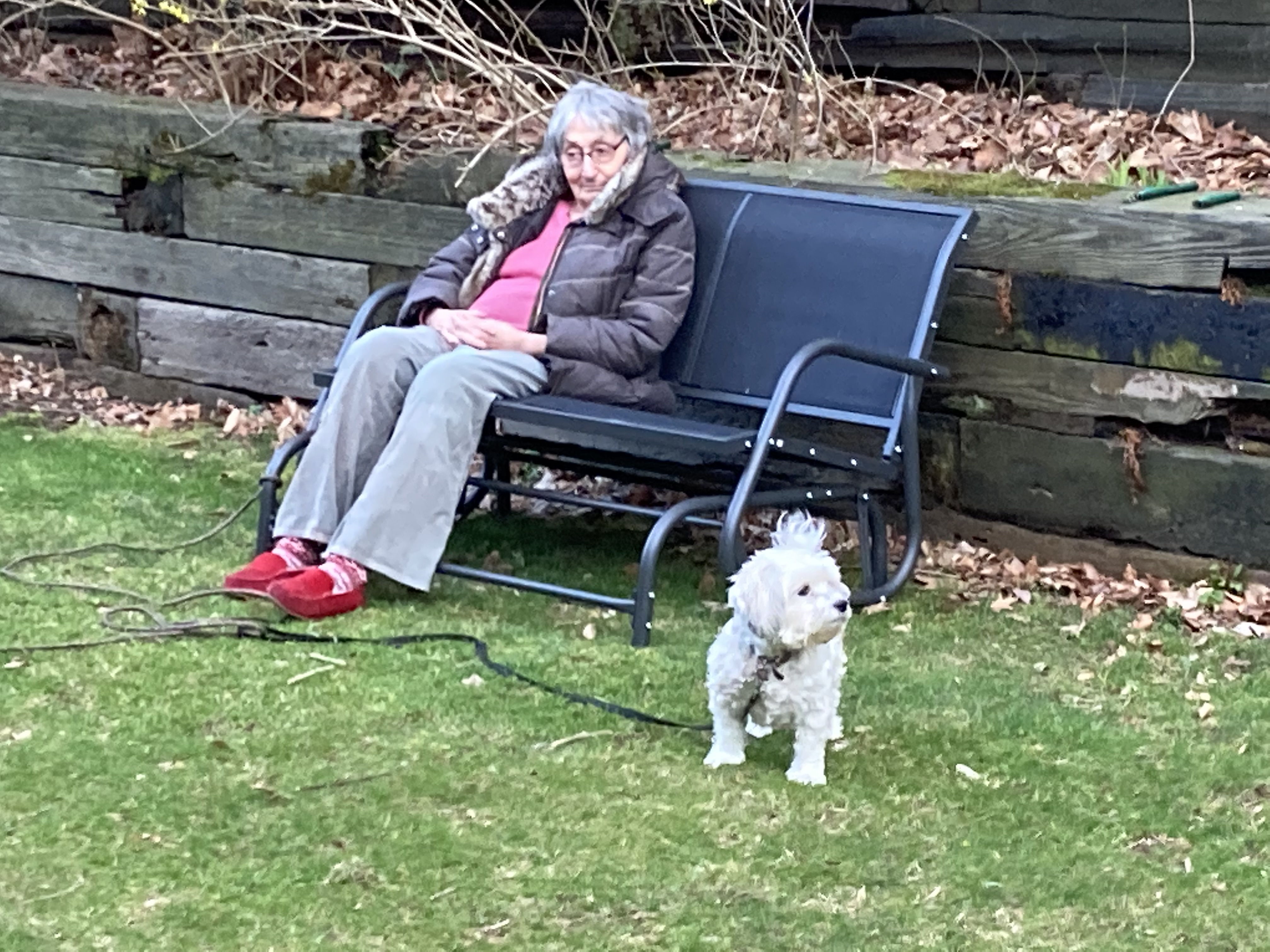
“I’m not fat, I’m fluffy.”

            I have been on every diet, and read every diet book, and lost and gained weight multiple times, and now I am working on Intuitive Eating with a Nutritionist and trying to undo all of that damage, but even so, every time I see a doctor they insist that if I just ate less and exercised more it would all be fine – as if my problem is that I’ve never heard of a diet before.

            Or as if my weight is my primary medical issue, which it’s not; the added weight is a symptom of both the psychological trauma of my childhood and the medical disorders I have had to deal with as an adult (and the medications I need to take to manage both). I’ve said this to my doctors over and over and over again, but it doesn’t seem to make a difference.

            When I told my nutritionist about all of this – and about my rage at the doctors, and adults in general, who encouraged my eating disorder when I was a child, and who have continued to push me into disordered eating as an adult, without ever feeling shame or responsibility, let alone bothering to educate themselves about an alternative way to address issues of nutrition and weight in their patients – she said, well then, that should be our next project.

            Huh?

            She said, you need to practice setting boundaries with your doctors around weight, and even try to educate them about the pervasiveness of the Diet Mentality and the endless Mobius strip of weight loss and weight gain that they seem to think of as such a wonderful idea but that has actually been shown to cause more health problems than remaining steadily overweight your whole life.

            But I’ve tried, and they never listen to me, and it’s not fair, and why don’t they have to learn this in school, and why is it my job to teach them and…

            And she agreed with me, and listened to me, and said, we need to work on setting boundaries with your doctors around the subject of weight.

            But, but, but…they never learn, and they keep repeating the same things, and whenever they tell me that I should just stop eating so much I believe them and…

            Oh.

            I had the aha moment at the same time she did: the real problem is that I don’t have confidence in what I already know and have worked so hard to learn, so that when they challenge me, I give in.

“Never give in!”

            I’ve worked so hard this past year to learn how to hold my ground when the “You just need to stop eating,” and “You’re less of a person because you are overweight” messages are said by movie stars, or social influencers, or random people in my life; but when a doctor says it, the ground under my feet still gives way. I sit there feeling small and hopeless and I forget everything I know, and believe everything they tell me – that if I would just stop eating so much I’d never have health problems again.

            Depending on how brittle the doctor is in presenting their message on my weight, it can take me hours, or days, or even weeks to get back to solid ground and remember that, actually, my weight is not the problem. And diets have never been a long lasting solution even to the weight issue, never mind for my health overall.

            So what can I do to fix this? And can it be fixed before my rescheduled appointment with the cardiologist which is coming up way too soon?

            The nutritionist suggested that I remind myself that, on this subject, the doctors don’t know me better than I know myself. She said to tell them – I know you’re going to bring up my weight, but I am working with a nutritionist on Intuitive Eating and I am making progress at my own pace, and, for now, your advice is not helpful on this subject. My weight is the least of my problems, and if we can focus on the physical pain and exhaustion that make life so difficult for me, and the connective tissue and auto-immune disorders that cause the pain and fatigue, and numerous other symptoms, that would be a more productive use of our time together.

            But I’ve said all of that, or at least most of it, to my doctors, and they just talk over me. Though maybe I haven’t said it with confidence. Maybe I’ve said it with my eyes on the floor, afraid of what they would say in response, afraid of their disapproval. Because even when I’ve said “the right things” I’ve only said them once; and when the doctor, inevitably, pooh poohed it, I shut up. Because I freeze in the face of their disapproval. I forget everything I know, and I let them talk down to me and blame me without contradicting them. And, no, it’s not my responsibility to teach them, or change them. But if I could stand up for myself, maybe I wouldn’t be so negatively impacted by each doctor visit.

            But how do I get there? How do I hold onto what I know when I start to feel shaky and small? How do I convince myself that I do know my body better than they do, and that I have done the research and I’m not just believing what I want to believe because it sounds easier?

            The temptation to just cancel appointments, or to go but shut off my brain for the duration, is very deep, because I don’t feel strong enough to stand up for myself effectively.

“Yeah, let’s stay home.”

            I wish I could promise myself that next time will be better, and that I will be different. But I don’t know how to make that happen. I had hoped that writing this essay would give me the confidence to believe that I can stand up for myself, but instead it has made it clear to me how much more work I need to do.

“Oy.”

If you haven’t had a chance yet, please check out my Young Adult novel, Yeshiva Girl, on Amazon. And if you feel called to write a review of the book, on Amazon, or anywhere else, I’d be honored.

            Yeshiva Girl is about a Jewish teenager on Long Island, named Isabel, though her father calls her Jezebel. Her father has been accused of inappropriate sexual behavior with one of his students, which he denies, but Izzy implicitly believes it’s true. As a result of his problems, her father sends her to a co-ed Orthodox yeshiva for tenth grade, out of the blue, and Izzy and her mother can’t figure out how to prevent it. At Yeshiva, though, Izzy finds that religious people are much more complicated than she had expected. Some, like her father, may use religion as a place to hide, but others search for and find comfort, and community, and even enlightenment. The question is, what will Izzy find?   



Cricket Had To Get Her Teeth Cleaned

            Cricket had to get her teeth cleaned, and I was scared. The doctor first mentioned to us that Cricket’s teeth needed cleaning around two years ago, I think. It’s possible he’d mentioned it earlier, but if so, I blocked it out. We were able to put it off at that point, because Cricket was dealing with other health issues that were more pressing, but since she’s been doing better the doctor’s insistence has been growing. Both Mom and I have been concerned about putting Cricket through such a procedure, because of her age and because we’ve heard so many horror stories about dogs dying from regular teeth cleanings, because of the anesthesia. The doctor has tried to reassure us, and at Cricket’s most recent checkup he gave her a battery of tests to make sure she would be safe undergoing anesthesia, and the doctor said that he was confident Cricket would be fine. I wanted to be as confident as he was, and I wasn’t, but Mom and I decided to go through with the procedure anyway, because Cricket’s quality of life was in the balance. The pain in her mouth, especially when she was eating, and the bacteria running through her system, weren’t doing her any good. But I was still scared.

            Cricket is fourteen and a half years old, and as of her latest checkup she was three pounds lighter than the fourteen pounds she’s weighed for most of her life; also, her eyes are a bit blue from cataracts, she’s on medication for incontinence, she seems to hear things that aren’t there, her hair is thinning, and, of course, she has bad teeth. When we first adopted her, I saw a chart that said that a Cockapoo her size would live around 20 years, but given the way she’s been aging lately, I’ve had to recalibrate my expectations. But even so, I’m nowhere near ready to lose her.

“I am a puppy. I don’t know what you’re talking about.”

            Cricket is a difficult dog, she demands what she wants in life and never tolerates no for an answer. She is prickly and feisty and temperamental and adorable, and she has only recently discovered the joys of play (with a Golden Doodle puppy named Kevin who lives in our complex). And no matter how often she gets on my nerves, I can’t imagine my life without her.

            But I trust her doctor, and he was getting more and more insistent that a teeth cleaning was necessary for her overall health, and I could see his point.

Ellie was still skeptical.

            I didn’t want to think about the small chance that she wouldn’t come back from the doctor’s office, but that was all I could think about. Cricket has never been a good patient. She resents both the illness and the treatment, and she absolutely blames me for whatever awfulness she’s feeling. I couldn’t even check her teeth myself, to see if the doctor was exaggerating about how bad it was in there, because she’d bite my fingers off. I wish I were exaggerating, but she recently bit me, hard enough to break through the skin on my thumb, just because I dared to try and wipe the goop from under her eye.

            We made an appointment for the dental procedure for during the winter break and I crossed my fingers – or braided them like a challah – in the hopes that Cricket would come back from the vet, and come back in better shape than she’d been in for a while, ready to chew and bark and play for all she was worth. That was the result I wanted, and I did my best to follow Cricket’s lead and refuse to accept no for an answer.

“No is my favorite word, but only when I say it.”

            The night before the procedure we had to put the food and water bowls away at nine pm, but Cricket barely noticed. Ellie on the other hand found the whole thing upsetting. And so did I. I had nightmares that whole night, and when it was time to leave in the morning, Ellie and I were wrecks, but Cricket was still fine. She was thrilled when Mom took her out to the car (so that I could put the food and water bowls out for Ellie), but Ellie was freaking out. Instead of eating or drinking, she stood by the door and cried as I left to catch up with Mom and Cricket.

I wasn’t freaking out, Mommy. I was just expressing my opinion.”

            Cricket was her usual anxious self in the car, shivering behind my neck, because she knew she was either going to the vet or the groomer and both are horrifying. And, of course, I had a hard time handing her off to the vet tech once we arrived, especially after signing the card that said I knew she would be undergoing anesthesia and recognized the risks. I watched the vet tech carry Cricket inside (the vet still doesn’t let people in the building, only pets, because of Covid) and tried not to panic.

“What are we doing at the vet?”

            By the time we got home, Ellie had pooped up a storm in the quilting area, and even after three treats and a lot of cuddles she still couldn’t settle down, shivering and breathing heavily in my lap. We both tried to take a nap, but the anxiety made it difficult.

            The call came around Noon that Cricket was “Great” and that we could pick her up between three and five pm. I watched TV and did jigsaw puzzles and tried to believe that Cricket was fine, but I had convinced myself so thoroughly that her life was at risk that I really couldn’t take in the idea that she was okay.

We got to the vet at 2:45 pm, but the vet tech understood. The vet came out to give us the bill (oy), and told us that they’d had to remove 7 rotten teeth, and that Cricket would need to take antibiotics and painkillers for a few days. And then there was Cricket, trying to jump out of the vet tech’s arms to get into the car. We thanked the vet and the vet tech and Cricket climbed all over me and her grandma, ready to get the hell out of there. She may have been a little high from her painkillers, but she was herself, and kept climbing all over me, and around my neck, and back down to my lap through the whole drive, until her leash was wrapped tight around my neck, twice.

            I’m sure it was unintentional. Or, I hope it was.

            When we got home, Ellie had to check Cricket out and sniff her everywhere, while Cricket kept pushing her sister out of the way so she could get to the water bowl (though she was only allowed a few sips of water at a time). And then Cricket spent the rest of the afternoon barking and complaining, as usual, because she wanted more water, and she wanted treats, and she wanted…everything.

            After all of the anxiety, and really expecting to get bad news from the vet, the idea that my fourteen and a half year old dog came through anesthesia with flying colors, and almost no after effects, feels like a miracle. And now she seems to be eating more and even starting to gain some of the weight back, and giving me hope that the original chart that said she would live to age twenty, might not have been so far off after all.

            I really needed a miracle right about now, to keep me going. Leave it to curmudgeonly Cricket to make it happen.

“I’m looking cute.”

If you haven’t had a chance yet, please check out my Young Adult novel, Yeshiva Girl, on Amazon. And if you feel called to write a review of the book, on Amazon, or anywhere else, I’d be honored.

            Yeshiva Girl is about a Jewish teenager on Long Island, named Isabel, though her father calls her Jezebel. Her father has been accused of inappropriate sexual behavior with one of his students, which he denies, but Izzy implicitly believes it’s true. As a result of his problems, her father sends her to a co-ed Orthodox yeshiva for tenth grade, out of the blue, and Izzy and her mother can’t figure out how to prevent it. At Yeshiva, though, Izzy finds that religious people are much more complicated than she had expected. Some, like her father, may use religion as a place to hide, but others search for and find comfort, and community, and even enlightenment. The question is, what will Izzy find?
Jigsaw Puzzle Therapy

            I finally got my Covid vaccine booster a few weeks ago. I’d been putting it off, first because I didn’t think I qualified, then because it was unclear if I should get one, and then because I was worried about how my body would react to a third shot (Mom had a bad reaction to her booster shot back in September). My plan was to wait for winter break, so that I could rest afterwards and not worry about having to do battle with, I mean teach, my students. But then Omicron came along, and the doctors on TV who’d been questioning the morality of getting third shots in the United States while poorer countries still weren’t getting their first shots suddenly did a one eighty and said that we should go out and get our boosters, yesterday. And, of course, by that time all of the appointments had been taken, by other adults getting boosters and by the kids getting their first and second shots. But then my synagogue magically sent out an email about a booster clinic happening at a local college, and I found an appointment right away, and since the boosters were now half the regular dose, instead of the full dose Mom got in September, the only side effect I experienced was pain in my arm at the site of vaccination for two days.

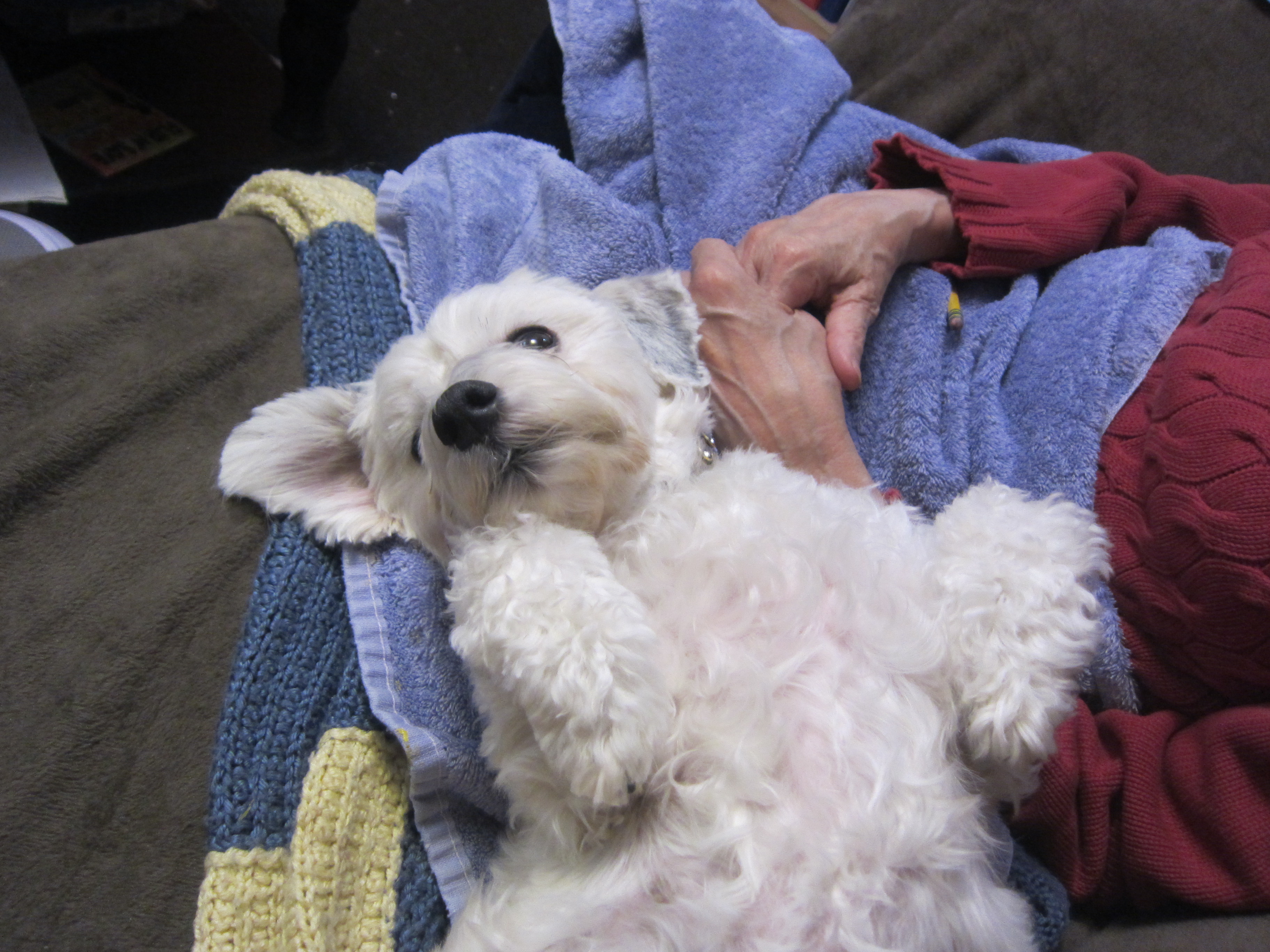
“Two days without enough scratchies. Harrumph.”

            And yet, once that anxiety was out of the way, I was still anxious. Very anxious. So it wasn’t just Covid, or Omicron, causing my anxiety, it was more than that. At around the same time, I realized that I was not up to thinking about New Year’s resolutions this year, because I’m still struggling with the ones from years past: trying to get my writing on track, working on Intuitive Eating, trying to figure out better ways to deal with my health, etc. I was actually offered a good part time job as a social worker, by someone I really respect, and I couldn’t take it because two full days at work would wipe me out for the next two weeks. It’s become clear to me that I am an even slower turtle than ever, and that that’s where the anxiety is coming from.

            But I can’t fix my health issues all of a sudden, or become someone who makes changes at the speed of light, and I realized that what I still need to work on most is how to accept where I’m at, and respect my own pace, without letting the anxiety overwhelm me.

            One thing that’s been working for me lately is jigsaw puzzle therapy: whenever I feel anxious about all of the things I haven’t done yet, or feel so confused and discombobulated that I can’t even figure out what I’m feeling, I work on a jigsaw puzzle. I like everything about jigsaw puzzles: the sorting, matching the colors and patterns, the image gradually appearing in front of me like magic, the sense of accomplishment, and then the chance to start over from the beginning and do the whole thing again.

           I used to have piles of jigsaw puzzles in the old apartment, because they helped untie the knots that kept me locked in place. I was so thrilled when I was able to give those puzzles away, because I’d found other things that helped even more: like knitting and baking and cooking, and eventually going back to school. But lately, I’ve needed my jigsaw puzzles again. They don’t require a lot of physical effort, and they don’t inspire too much self-criticism; they just activate the analytical and visual parts of my brain and help me slow down my thoughts to a more reasonable pace, so that I can try to deal with them one by one.         

“Hmm. One toy at a time? Interesting idea.”

   And knowing that I have jigsaw puzzle therapy available whenever I need it makes it easier for me to test my boundaries in other ways, with more baking (a Mille Crepe cake that took all day to make and came out sort of Meh), and more outings (HMart, the Korean market, was a mushroom bonanza!), and more essays delving into the past, bit by bit.

            I’m looking forward to a time when I won’t need quite so much Jigsaw puzzle therapy to help me through each day, but until then I’m happy to have something that works for me (and, conveniently, pairs so well with binging on Christmas movies!).

If you haven’t had a chance yet, please check out my Young Adult novel, Yeshiva Girl, on Amazon. And if you feel called to write a review of the book, on Amazon, or anywhere else, I’d be honored.

            Yeshiva Girl is about a Jewish teenager on Long Island, named Isabel, though her father calls her Jezebel. Her father has been accused of inappropriate sexual behavior with one of his students, which he denies, but Izzy implicitly believes it’s true. As a result of his problems, her father sends her to a co-ed Orthodox yeshiva for tenth grade, out of the blue, and Izzy and her mother can’t figure out how to prevent it. At Yeshiva, though, Izzy finds that religious people are much more complicated than she had expected. Some, like her father, may use religion as a place to hide, but others search for and find comfort, and community, and even enlightenment. The question is, what will Izzy find?