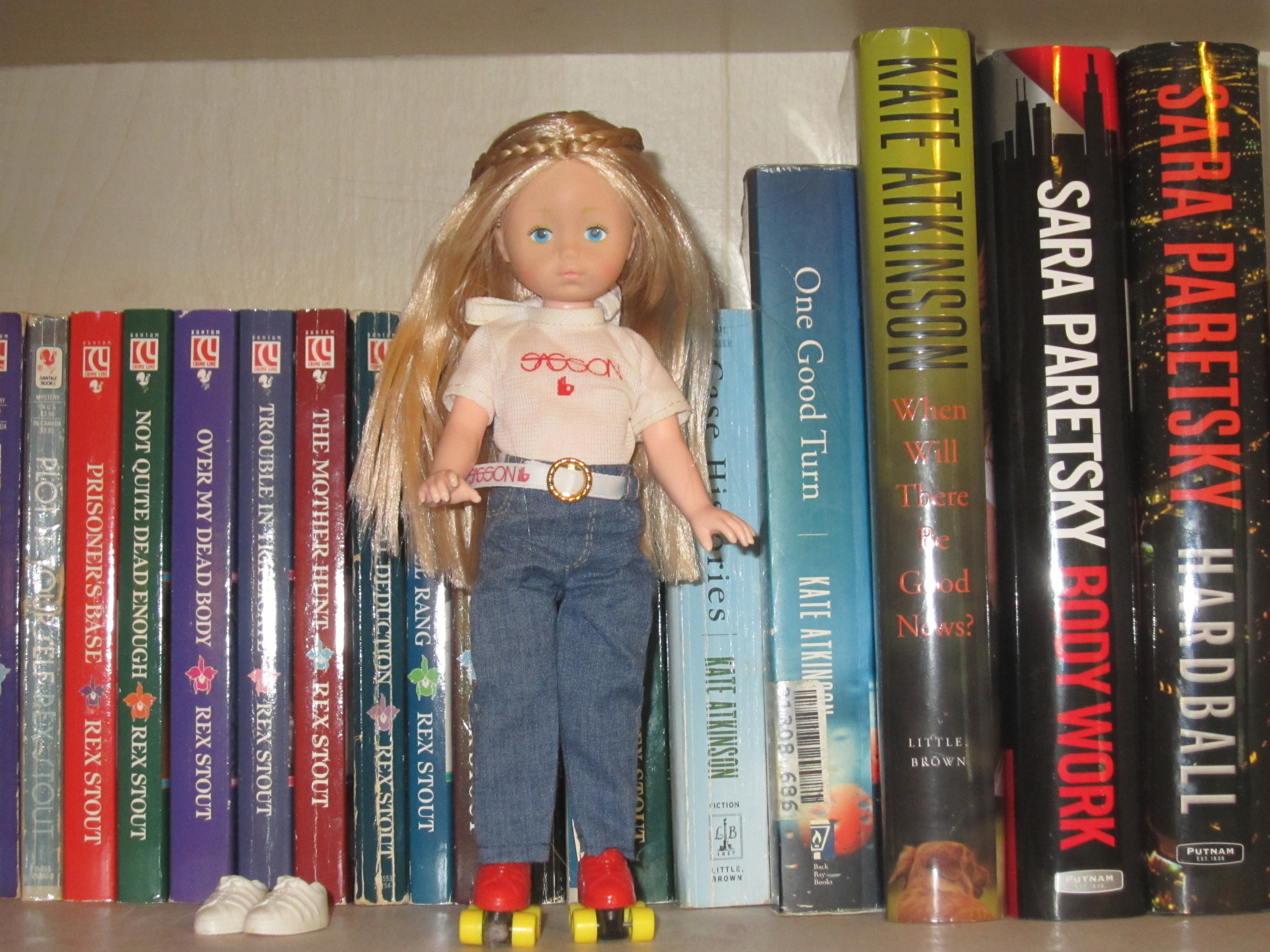
I don’t remember if I ever had a set of Matryoshka dolls (Russian nesting dolls) of my own when I was younger, but I definitely saw them and played with them somewhere along the way. There was something magical about how each doll hid another doll, and another, and another, except, there wasn’t much to do with these “dolls.” You couldn’t dress them up, or hug them, and none of them had roller skates (like my Ginny doll). And they were so static: their eyelids didn’t open and close, and their arms and legs didn’t move. And yet, they still drew my attention. I haven’t thought about those dolls very much over the years, but recently I saw a set of them on TV, and my first thought was that they would be a very helpful metaphor for the way we carry our old stories within us, even as we try to grow beyond them.
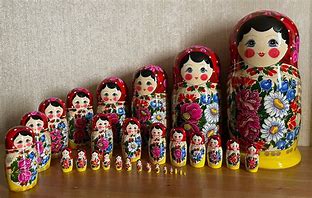
I was sure that everyone must see the same thing in them as I did, but when I went looking for more background on the dolls, I found out that everyone sees something a little different, depending on where they are in their lives and what lens they are looking through.
Originally, the dolls were made as a children’s toy, in 1890, possibly inspired by a nesting doll from Japan, and they were meant to highlight Russian femininity, with the dolls wearing a sarafan, a long, shapeless traditional Russian peasant dress, and the figures inside representing her children, of both genders, with the smallest being a baby, made of a single piece of wood.

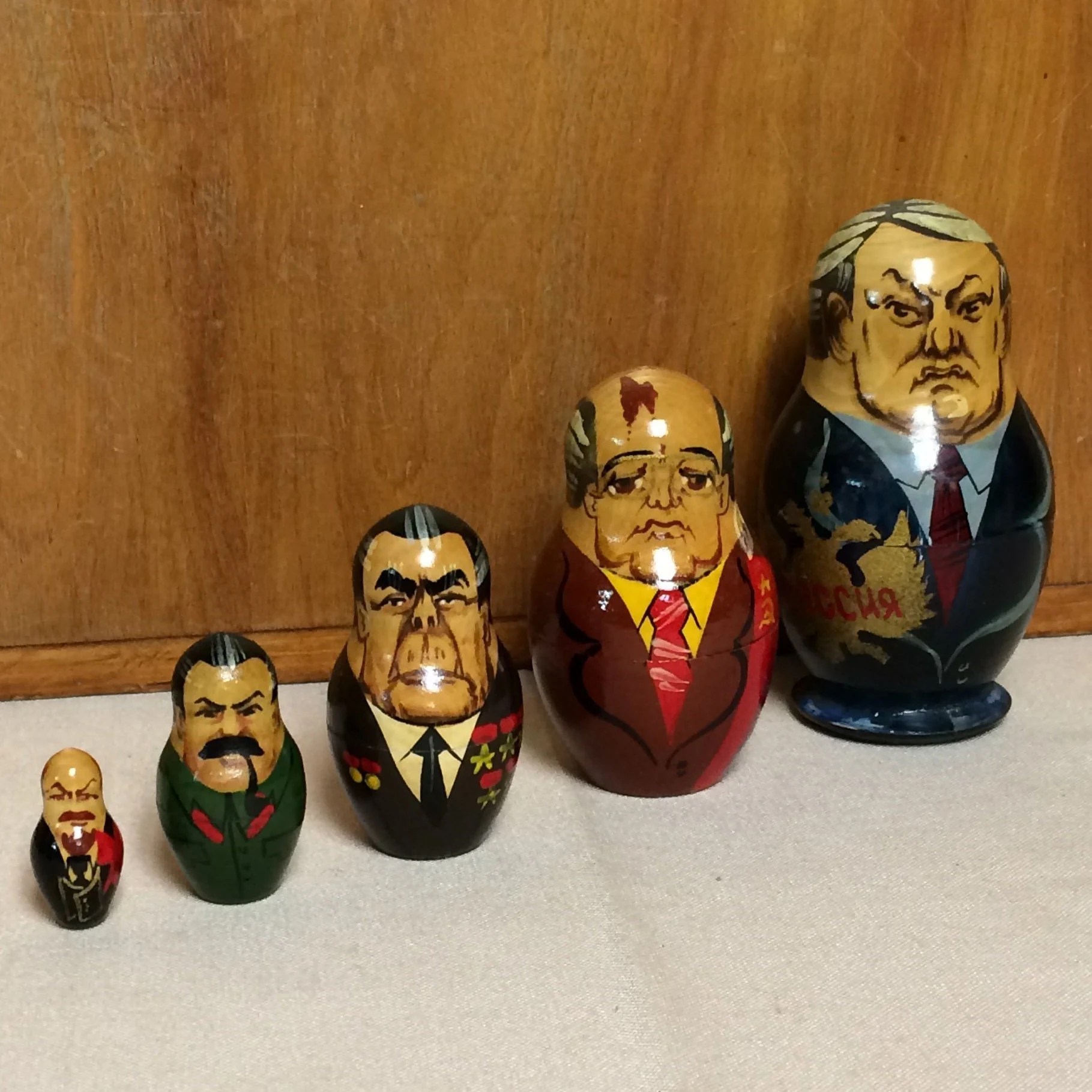
But somewhere along the way the dolls became a favorite souvenir for tourists, and then a way to represent famous Russian politicians, and how each generation of politicians was influenced by the ones who came before. Some people have even repurposed the dolls to represent complicated corporate structures used to avoid paying taxes, like shell companies.
But when I look at these dolls, I see myself, and the way each of my previous selves stays inside of me. My layers don’t peel off, like an onion, or slough off, like the skin of a snake; I hold onto everything, whether I want to or not. I would have thought, given all of that, that I would feel some relief at seeing each doll standing separately on its own “feet,” but instead, the separated dolls seem hollow to me, even forlorn. Despite the pain of holding onto the past, I feel stronger, and more fully myself, with all of my selves held together.
And there’s something powerful about having a metaphor that I can see and touch and move around in space; because when all I have are words to help me organize my thoughts, the chaos can become overwhelming.
When I went looking for images of Matryoshka dolls, I found all kinds of different sets – five doll sets and ten doll sets, people and animals, dolls that look exactly the same at each size, and dolls that are completely different from one another – but the most intriguing thing I found were blank sets of dolls that you can paint however you like. And it occurred to me that, if I had any artistic talent at all, which I don’t, it would be really meaningful to create the figures to represent my own layers, or the important people who have influenced me over time, to help me really see all of my pieces.

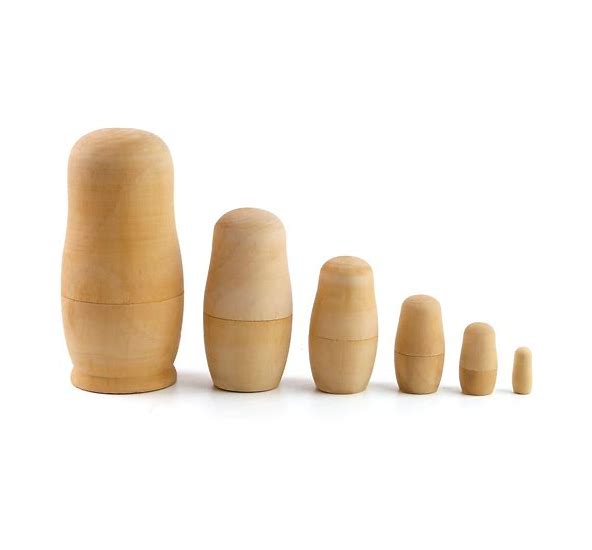
And then I thought about how I could use those blank doll sets with my students, to help them visualize how each generation influences the next, and how who they are today is connected to everyone who came before. And then I thought about the costs of all of the materials involved, and the difficulty of getting my boss on board, and then the work of explaining to the kids exactly what I was looking for, so they wouldn’t just paint all of the dolls as different sized poops; and then I fell into a black hole of self-recriminations about all of the ways I suck as a teacher, and a therapist, and a person overall.
And yet, despite the waterfall of thoughts and worries and self-loathing that washed over me, I still think the Matryoshka dolls have a lot to offer, though maybe they should come with a warning label: open at your own risk, objects inside may be a lot more complicated than you expect.

If you haven’t had a chance yet, please check out my novel, Yeshiva Girl, on Amazon. And if you feel called to write a review of the book, on Amazon, or anywhere else, I’d be honored.
Yeshiva Girl is about a Jewish teenager on Long Island, named Isabel, though her father calls her Jezebel. Her father has been accused of inappropriate sexual behavior with one of his students, which he denies, but Izzy implicitly believes it’s true. As a result of his problems, her father sends her to a co-ed Orthodox yeshiva for tenth grade, out of the blue, and Izzy and her mother can’t figure out how to prevent it. At Yeshiva, though, Izzy finds that religious people are much more complicated than she had expected. Some, like her father, may use religion as a place to hide, but others search for and find comfort, and community, and even enlightenment. The question is, what will Izzy find?








 rachelmankowitz