Tag Archives: TV

While You Were Barking

Dear Cricket,

This is an accounting of all of the things I have missed while you were barking.

You bark whenever someone opens a door: to the building, the basement, their apartment, a passing car, or a building across the street. Often this happens while I am watching TV. Inevitably the characters will be in the middle of revealing the heinous secret at the center of the plot when you start to bark. Thank God for the pause button. There never used to be a pause button on my TV remote. Clearly someone else has a dog like you.

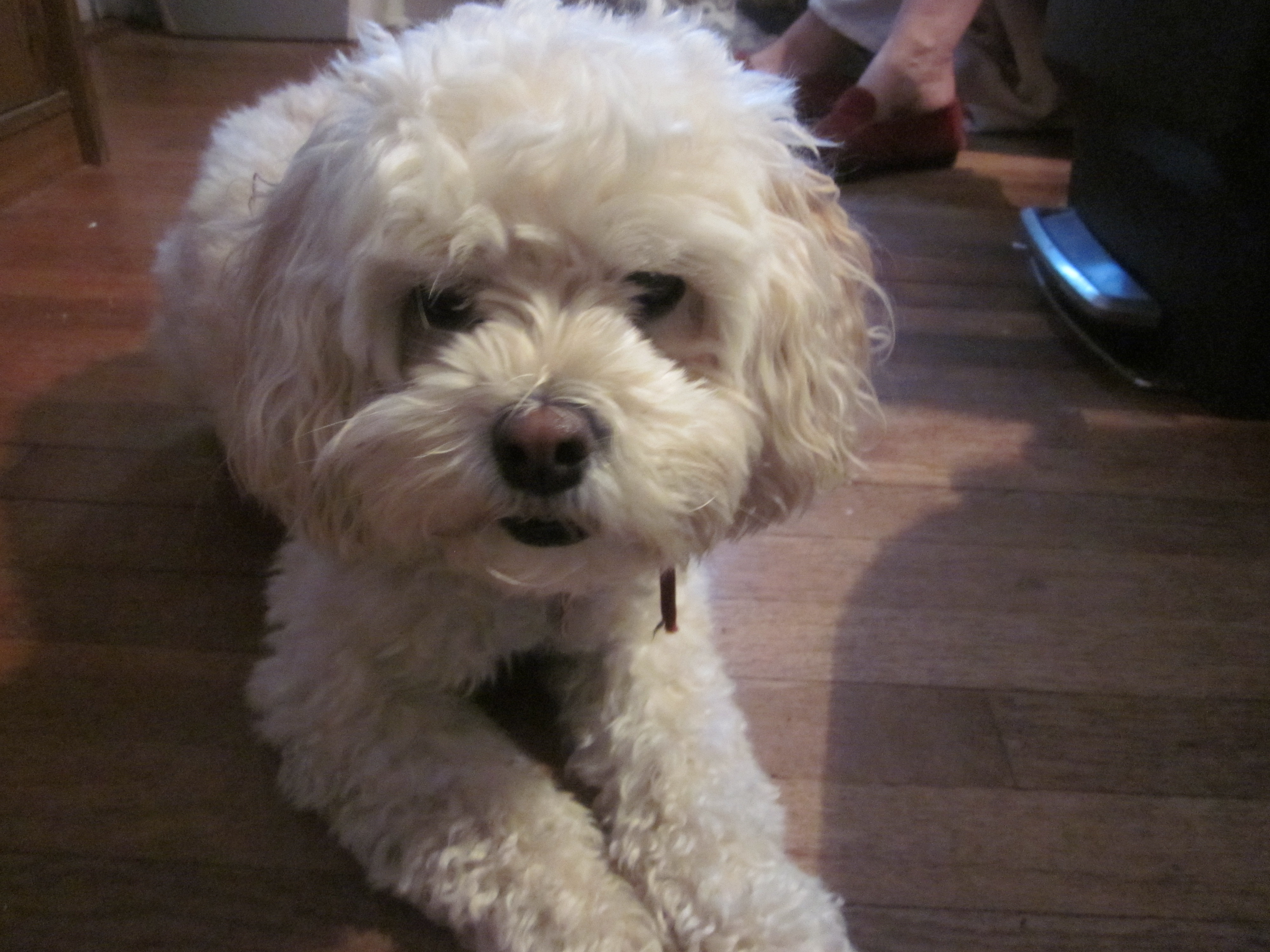
Butterfly to Cricket - "Shh, I'm watching TV."

“Shh, I’m watching TV.”

You especially like to bark when I am on the telephone. I know that you do not like the idea that I could choose to pay attention to anything but you and that this is, in fact, truly painful.

"I am Cricket, hear me bark!"

“I am Cricket, hear me bark!”

I have noticed that recently you have been teaching your sister how to bark with you. Together you are a formidable Greek chorus, lamenting murder and mayhem, warning of death and destruction. Every once in a while, I wish you would sing a few sweet lullabies, but I don’t expect this to take place.

Butterfly - "I think I can bark, I think I can bark..."

“I think I can bark, I think I can bark…”

You bark over conversations your humans are trying to have, and successfully end them with your demands for attention. We do try to wait until you are resting quietly on the floor before having any kind of in depth conversation, but not all conversations are in depth, or planned. Sometimes I just think of something I want to say while I’m at the computer, or eating dinner, and you inevitably have something louder to say at exactly the same time.

You have been very successful at using your bark as a device to train your people. Just like we might use a pull on your collar, or a clicker, you use a bark. These are the lessons you have taught me:

“Mommy, you can’t eat all of that dinner yourself.”

“You must check the window to see if someone is racing towards us with an ax.”

“You can’t clean the poop off my butt!”

“You will not make friends with that neighbor, or walk towards that corner of the lawn to meet that dog.”

“You cannot put your feet on the floor without my permission. How dare you!”

Cricket, you rule with an iron fist. You are not a person whisperer. You are a person barker.

There are so many places that say, of course your dog can come in, if she is well behaved, which counts us out.

You make it very difficult to have conversations with our new neighbors, because as soon as they walk up the path, you see them, and start to bark and lunge and I have to pull you away and focus your attention elsewhere. I try to make sure I smile at the human to let them know that I am not rejecting them or agreeing with your assessment of them, but I’m not sure how much of that comes across.

You need to be watched around children who don’t understand that you have boundaries. There are certain dogs (Golden and Labs come to mind) who can tolerate being poked and teased, but you cannot, and I understand this. I try to teach children how to be polite with you and recognize when you are warning them away, but they, inevitably, ignore everything I say. I’m sure you can relate to that. This is why I have to intervene and pick you up when things get knotty. This is not an invitation for you to bite me.

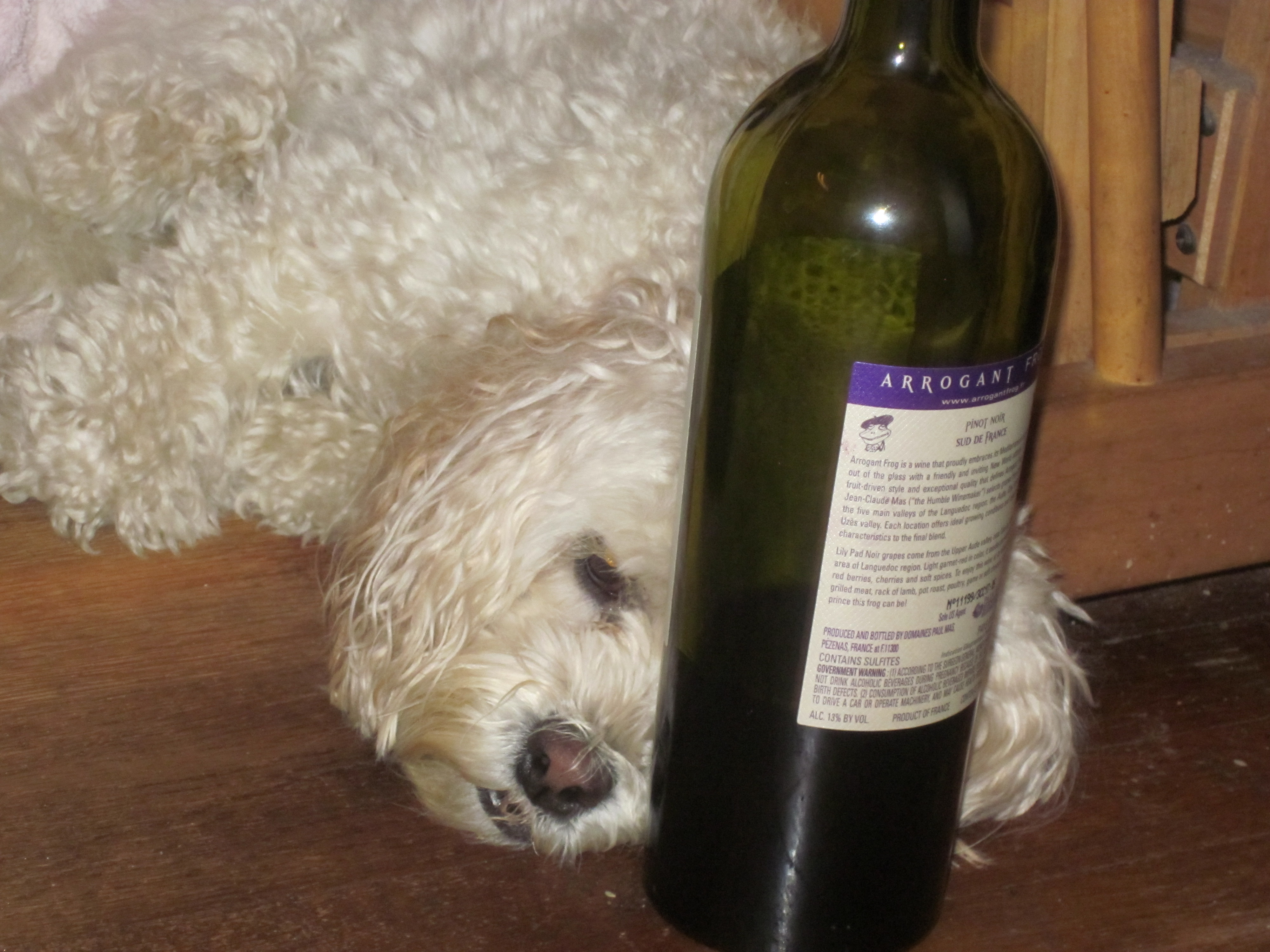
(No comment)

(No comment)

You are fully present in every moment, hyper-aware, and hyper vigilant, which makes you very entertaining, but it also means that you can get over stimulated. I am not suggesting that you become someone else, or that you stop expressing yourself. I just wish that, sometimes, you could hold back on the barking, and communicate your feelings in a less car-alarm, the-world-is-about-to-end, sort of way.

Love,

Mommy

I want to live at Dogtown

There was a show on the National Geographic channel a few years ago set at an Animal Sanctuary in Utah called “Best Friends.” They have separate enclosures for birds and cats and rabbits and horses and pigs, and the section for dogs is called Dogtown.

dogtown

The show focused on their work with last chance dogs, and how they try to give them better lives. Each dog has a team of veterinarians and groomers and trainers and volunteers looking out for them, and coming up with creative ideas for how to help them with problems other shelters couldn’t solve. So a half-blind, ten year old dog, who couldn’t walk on a leash, had people brainstorming ways to help him live his best possible life. And, if they couldn’t find him a forever home, he would always have a home at the sanctuary.

The Dogtown staff

The Dogtown staff

Dogtown represents the kind of safety net I wish we all had, pets and humans alike, because the volunteers and groomers and vets and trainers at Dogtown seemed to be infused with a level of compassion and persistence you don’t find in regular life. The problem is that most shelters are not Dogtown. Some have the compassion, but not the skill, or they have the volunteers, but not the money, or the space.

            The shelter where we got Butterfly subsidizes her medical care, and sends buses to pick up dogs from puppy mills all the time, but they have no mandate to train the dogs, or help them overcome social deficits. Their goal is to send the dogs out to new homes as soon as possible.

My Butterfly, with her Duckie

My Butterfly, with her Duckie

Dogtown, the TV show, went into different aspects of dog rescue work: fostering, volunteering, emergency interventions off site, veterinary care and training. And I kept wanting to be part of what they were doing. They made it look possible, even when they were crying, or struggling to come up with answers. I imagined myself in all of the different jobs, but I couldn’t quite believe I’d be up to the challenge. I don’t think I would be good at short term foster care, for example. My heart would keep breaking without enough time to heal in between dogs. I know myself well enough to know I don’t have the Teflon for that.

            I’ve wanted to work with dogs for a long time. When I was in my early twenties, I volunteered at a small no kill shelter, because I thought it might be something I’d be good at. But the established volunteers made me feel like I was in the way and they were doing me a favor by letting me help out with the cats. Dogs were too advanced for a beginner like me, they said. I started to believe that my need to be helpful was actually selfish and a character flaw.

            Recently, after watching repeats of old episodes of Dogtown, I was inspired to look into volunteering again, and found a class advertized at a nearby shelter. Mom wrote to them to ask for information and the email they sent back said that we could take their class in how to volunteer, but we’d be damn lucky if they had an actual spot for us in their schedule, ever. I’m paraphrasing. But the message I heard was, of course you want to volunteer with dogs, so does everyone else. What makes you so special?

            My dream would be to have my own menagerie of dogs to take care of at my own home, without other people around to tell me I’m not good enough. I’d need more money, and time to make sure the dogs have all of the love and medical care and training they need to thrive. I think I could be good at that.

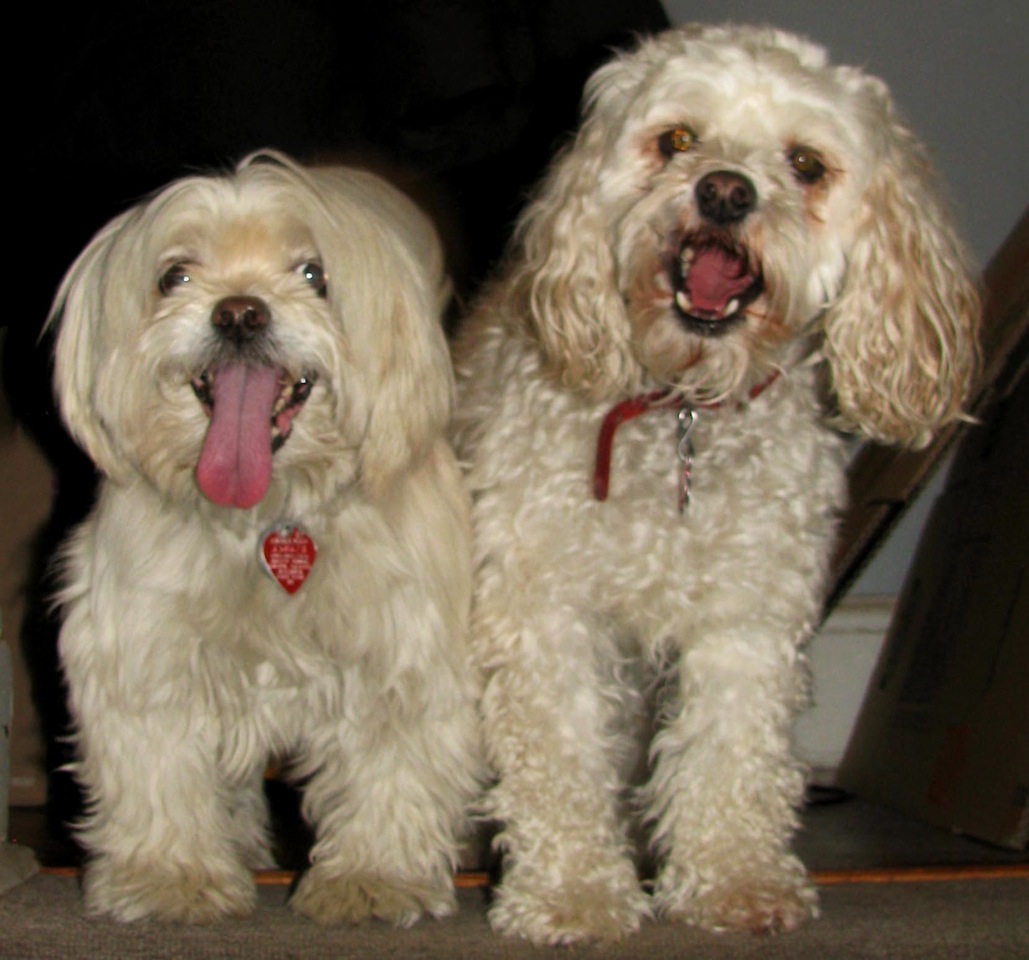
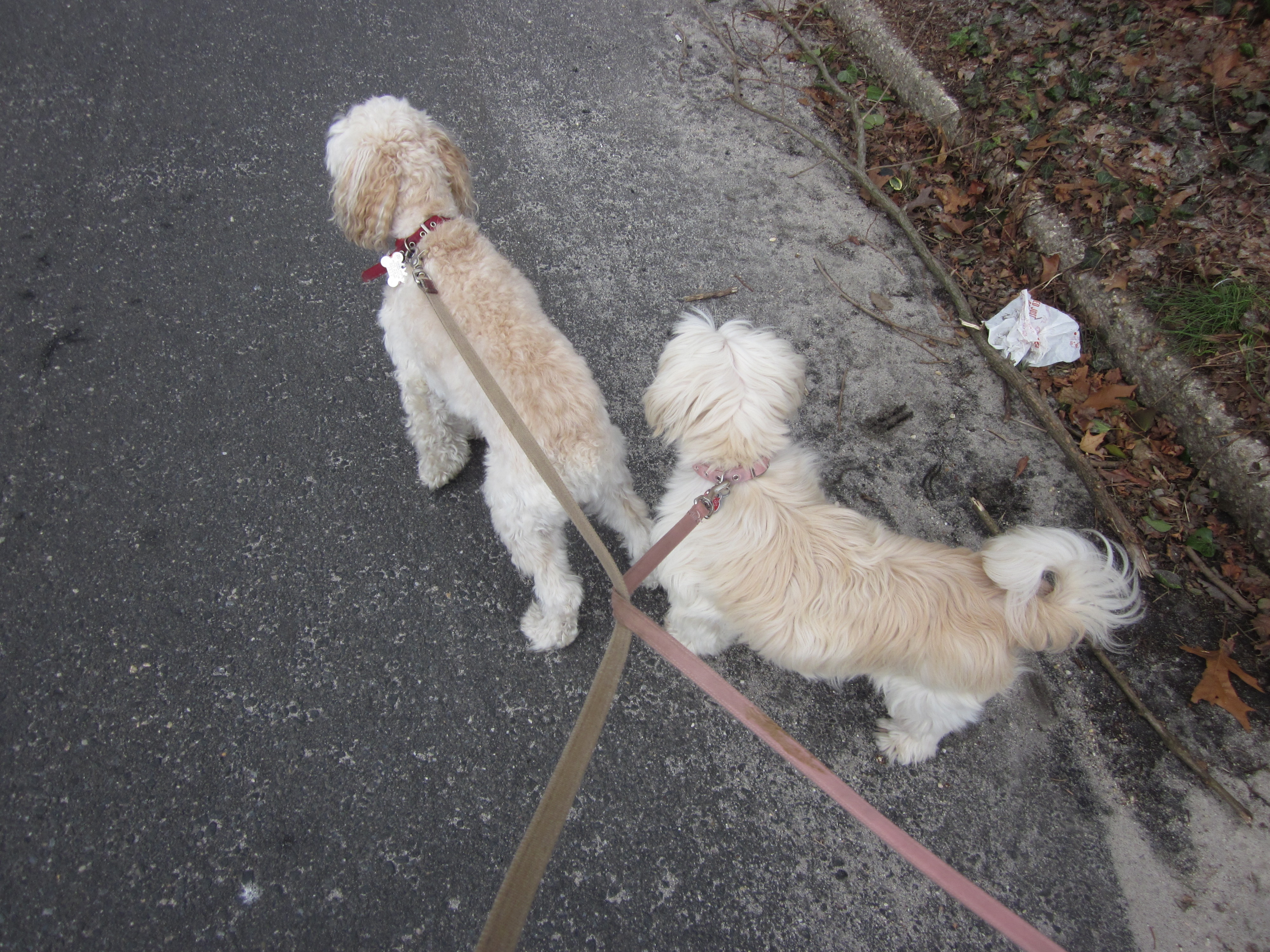
Butterfly and Cricket

Butterfly and Cricket

My Dina

My Dina

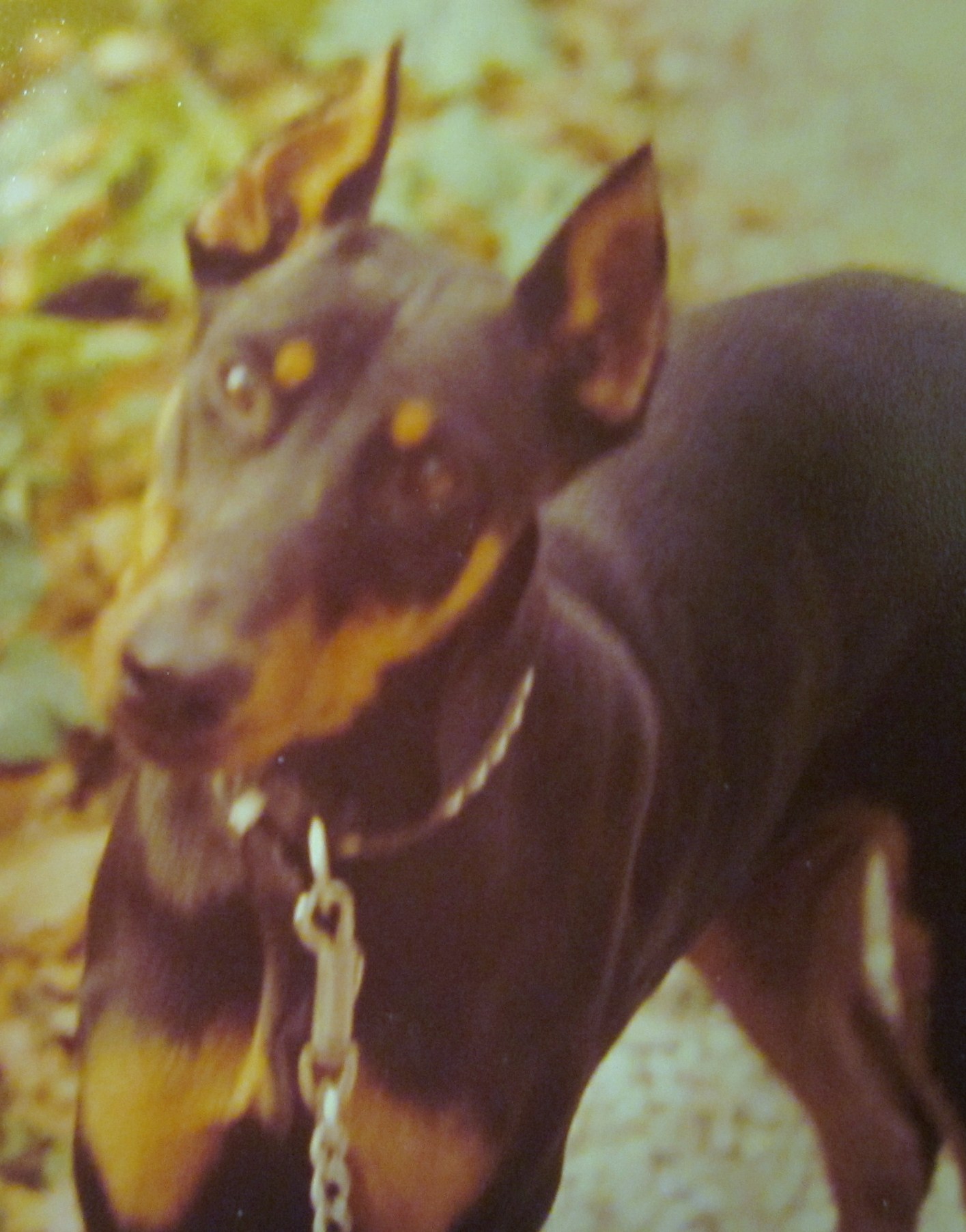
Delilah

Delilah

and one of her many puppies

and one of her many puppies

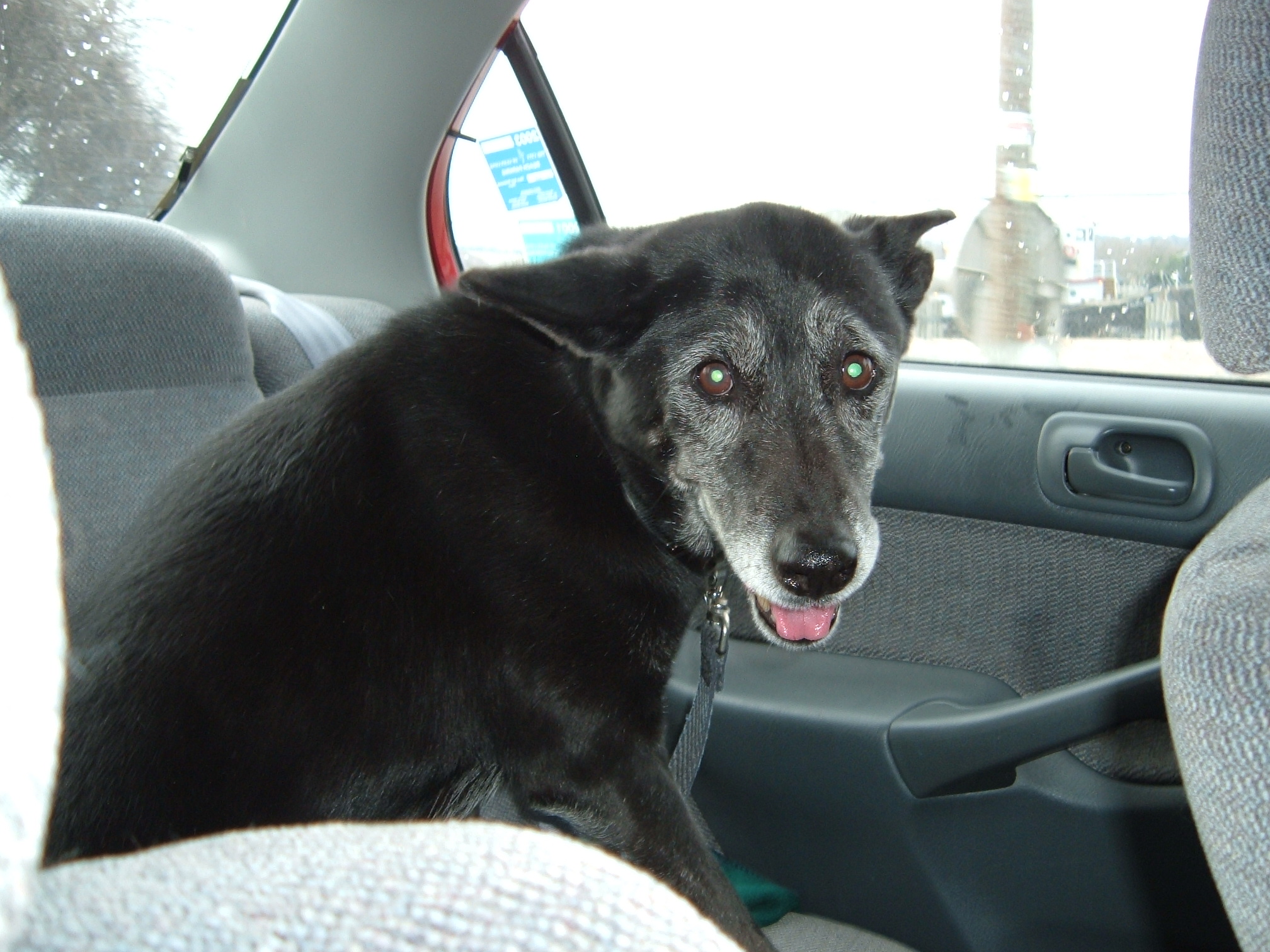
Rachel dog, my first babysitter

Rachel dog, my first babysitter

Shy People Need Dogs


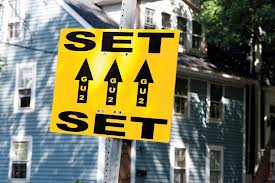
A few years ago, I noticed a yellow sign with “RP” in black lettering, attached to a telephone pole in my neighborhood. Mom had seen similar signs before, for location shoots for movies and TV.

These yellow signs are very exciting.

These yellow signs are very exciting.

My mother went to USC film school way back when, and worked as a film editor, so she was curious about what they were filming. She followed the signs and found out that the TV show Royal Pains was shooting scenes at the beach near us. The show is set in the Hamptons, which is further out on Long Island from us, and much (much) more expensive.

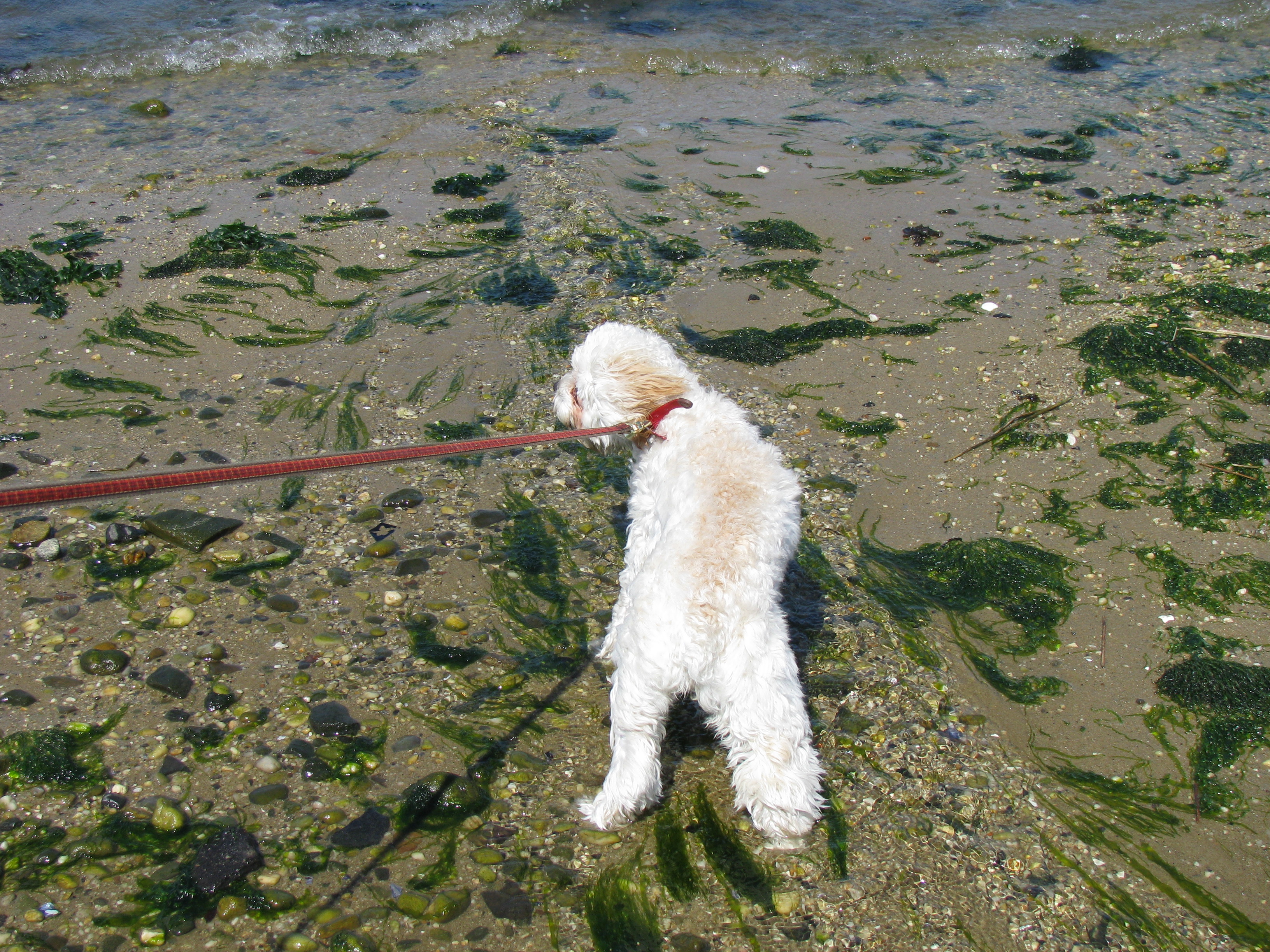
Cricket Loves the beach

Cricket Loves the beach

I couldn’t bring Cricket along when we stalked the set, because dogs aren’t allowed at that particular beach. I wished she could come, and bark, and draw attention to herself, because I knew I wouldn’t be able to talk for myself.

(Just so you know the show really does exist)

(Just so you know the show really does exist)

The main character on the show is a concierge doctor who diagnoses strange diseases on the fly. Royal Pains is like the happy, pretty answer to House, with a bit of MacGyver thrown in. But more than the show itself, it was one of the featured actors I wanted to see. I’ve had a crush on Campbell Scott since I was sixteen years old.

I almost met him ten years ago. He was giving a talk at a small cinema on Long Island. He’s smart and articulate and down to earth. If ever there was a movie star I should have been able to talk to, it was him.

This is Campbell Scott

This is Campbell Scott

I did my best to dress up, in a sweater and black pants and a clean pair of sneakers, and sat in the third row of the movie theatre, next to Mom.

            First we screened the movie, The Secret Lives of Dentists, which involved scenes of screeching drills, blood, and the uncomfortable intimacy of the inside of a stranger’s mouth. I focused, instead, on the scenes of Campbell Scott as the father of three little girls. He carried the five year old around so constantly that at one point he said she had become part of his body.

            As the movie ended, he sat down at the front of the theatre, munching kernels of popcorn as the credits continued to roll over his head. When the lights came up, he tapped the microphone to begin, and – nothing.

            “I’ll use my theatre voice,” he said, and his voice reverberated.

            “Use the microphone!” someone screamed from further back.

A woman in the row ahead of me took the traveling microphone. “I thought you did a wonderful job in this movie, of showing parenthood as it really is: a burden.”

            “You liked the vomiting scenes?” he asked, with a grin.

            One woman towards the back of the room asked, in a plaintive voice, “Could you talk for a minute about Dying Young?”

“What about it?”

“Anything.”

I moved forward in my seat, afraid he would dismiss this movie I loved as commercial crap.

“In Europe they called it The Choice of Love,” he said. “Better title, don’t you think? A person could see a title like that in the paper and say, hey, let’s go see that movie. But, Dying Young,” his voice went down an octave. “Why not just stay home and slit your wrists instead.”

I wanted to raise my hand and tell him how wrong he was about the title. How those two words were exactly what drew me to the theatre, at sixteen. I was suffering, and inarticulate. The opportunity to see some of my own pain reflected back to me was the whole point. But I couldn’t say that to a room full of strangers.

The crowd gave him a standing ovation and then slowly moved into the café down the hall for refreshments.

“What should we do now?” I asked my mother, as we watched the majority of the audience get stuck in a traffic jam at the single exit door.

“Why don’t we go to the café and maybe you’ll get a chance to talk to him,” she said.

“What would I say?”

“You’ll think of something,” she said. My mother has an unreasonable amount of faith in me.

We followed the crowd into the reception hall and I stood at the periphery, with my arms and legs crossed, willing myself to move forward, reach out, and say anything. Hello, would be nice. People swirled around him, ticking him around like a clock, quarter turns at a time, for autographs and pictures and questions.

I stood about six feet away, a step outside of the circle created by braver people than me. I listened. I wanted so badly to speak up, to have a memory for the rest of my life of having actually spoken to him. He looked in my direction every once in a while, and I imagined myself touching his arm and telling him he was wonderful. But everything I wanted to say was raw, and I didn’t want to inspire his pity, or annoyance.

And then he was being led out of the room, in slow motion, by the owners of the theatre. I just stood there, frozen.

I try to accept my limitations and forgive myself for the wide variety of anxiety symptoms that run my life, but that moment stayed with me. I could see him seeing me, wondering why I was standing there and saying nothing.

I’m hoping that Royal Pains will do some location shoots near where I live now, because the village main street is often used as a stand in for the Hamptons. And maybe I could walk down the hill with Cricket and Butterfly and meander near where the actors and crew are set up, and see if the dogs can act as my social bridge. Maybe Butterfly will bat her eyelashes and draw a crowd. And maybe Cricket won’t bark and lunge at a cameraman.

I'm sure the girls will make the walk down the hill easy for me.

I’m sure the girls will make the walk down the hill easy for me.

Who could resist Butterfly?

Who could resist Butterfly?

Maybe by the time the weather cools down, and they come back to my neighborhood, I’ll have figured out something to say.

How My Dogs Watch TV

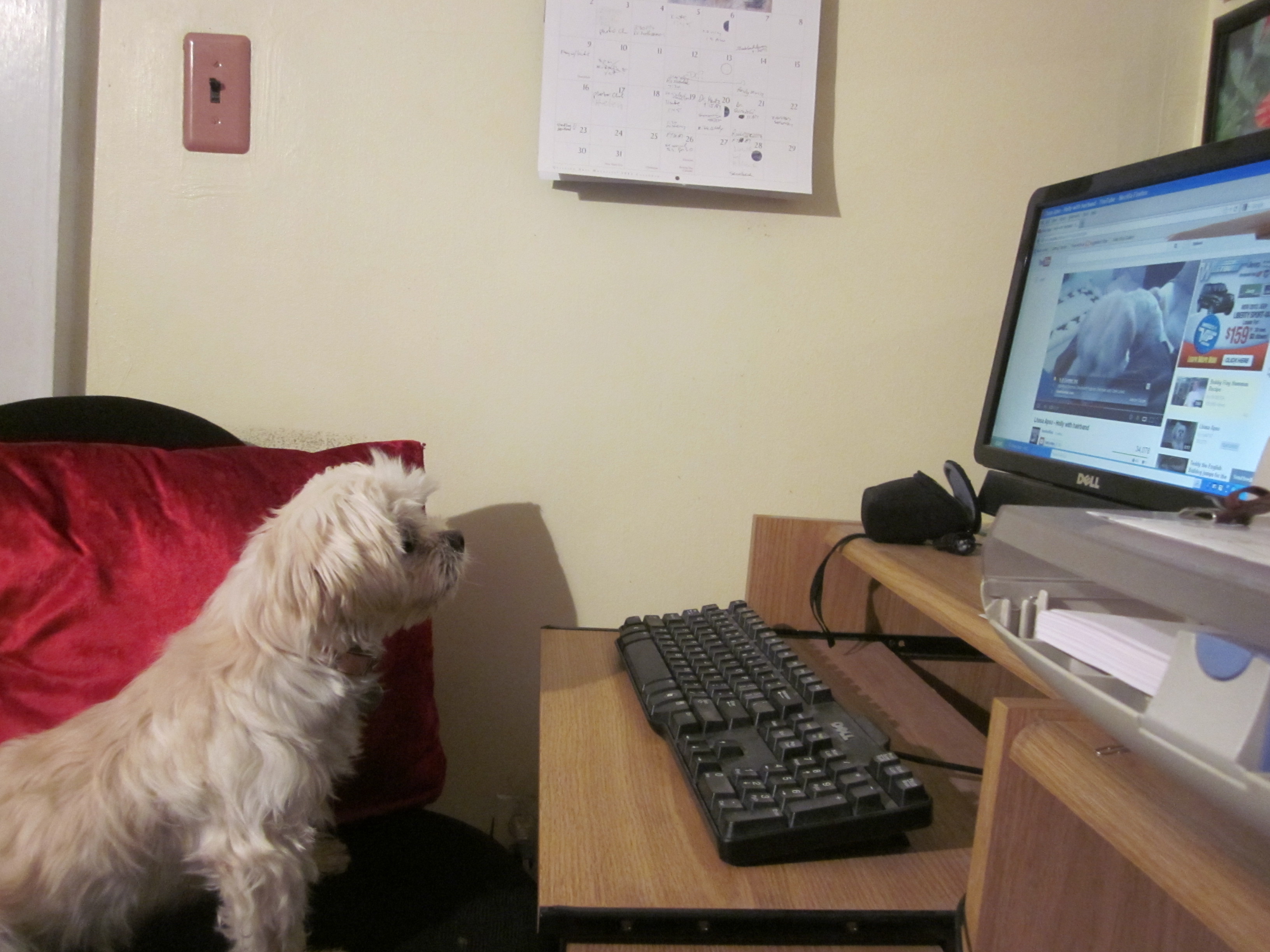
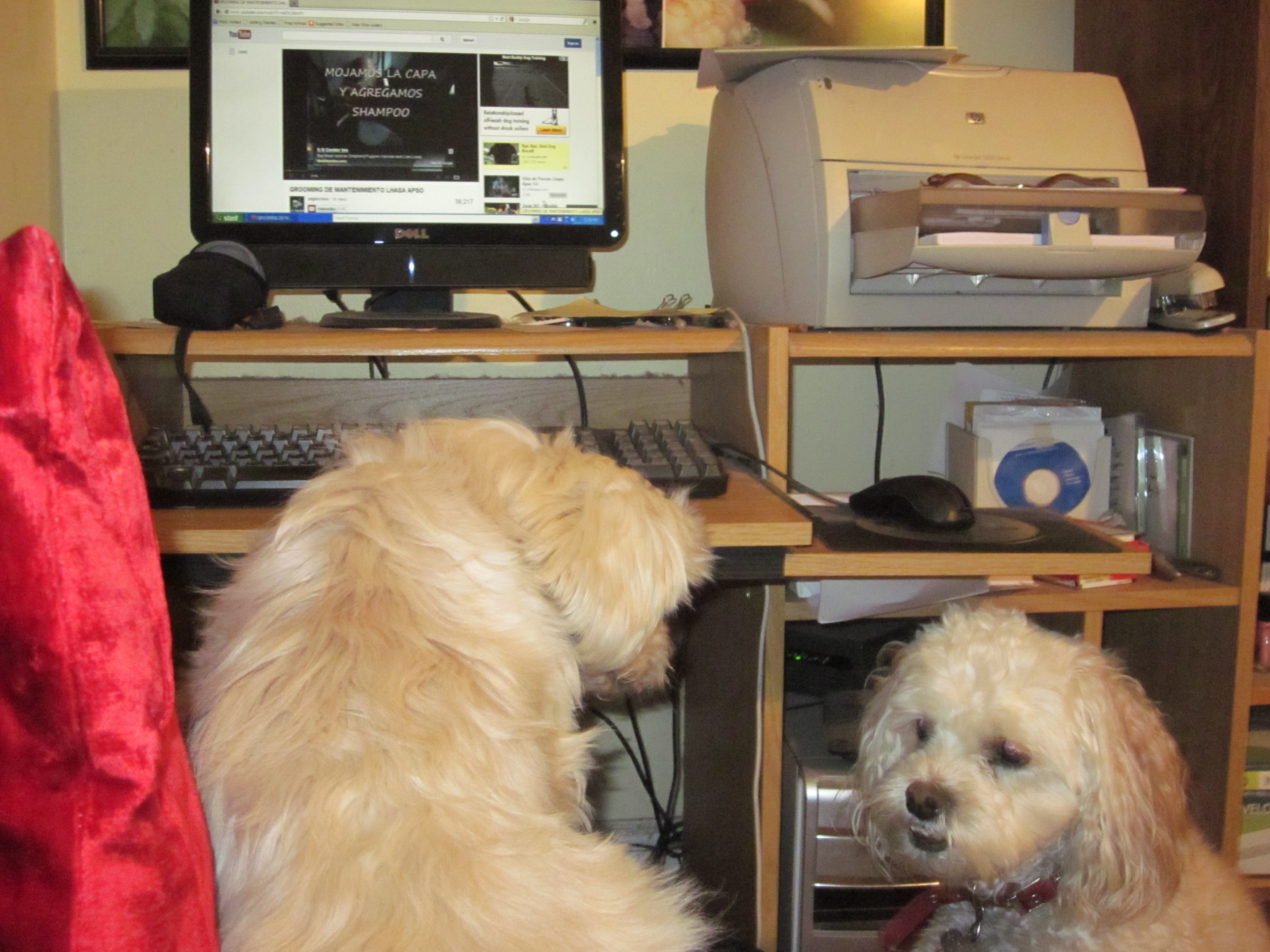
Butterfly at the computer

Butterfly at the computer


After twenty years of loyal service to the family, my small color TV finally collapsed a few years ago and we were forced to update. Cricket had been indifferent to the TV for the most part, until the flat screen arrived. Suddenly, she noticed strangers in her house. She stood in front of the TV and barked at Hugh Grant and tried to push at him through the screen. She searched behind the TV to see where the invader had come from.

Cricket prefers to watch Grandma

Cricket prefers to watch Grandma

Cricket is mostly indifferent to the TV now. But she does notice when the TV goes off, because that’s an important signal that something in her environment is going to change. Maybe her people are going to bed and she has to choose which room to visit, or maybe she’s going out for a walk, or, worst option, maybe her people are leaving the house without her.

The television is a big part of my life. I use it for background noise while I’m typing or cooking. I use it for company when I’m lonely. I use it for mood alteration when I get depressed. I had to make a point of not keeping a TV in my bedroom, because I’d never get to sleep.

When Butterfly first came home from the shelter, she was mesmerized by the TV. She was barely making eye contact with her people yet, but wherever she was in the living room, her eyes and ears were focused on that TV. I picked her up on my lap to watch a video on the computer of another Lhasa Apso, just like her, growling about something. She was fascinated. She couldn’t look away from the screen. Cricket could have cared less. She did the doggy equivalent of rolling her eyes, but Butterfly was riveted.

Side view of Butterfly - riveted

Side view of Butterfly – riveted


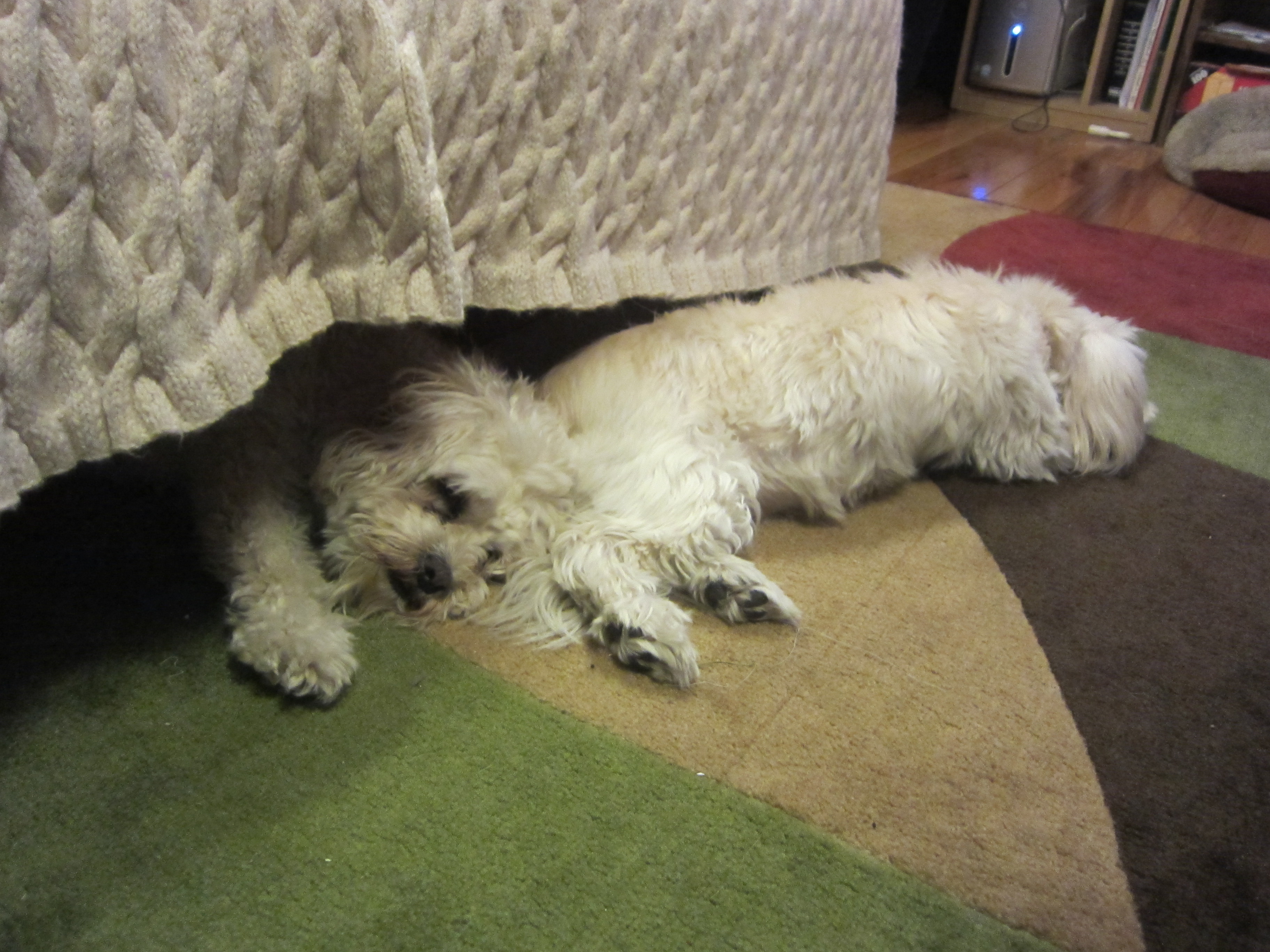
Cricket has just finished rolling her eyes

Cricket has just finished rolling her eyes


Butterfly was sleeping when the puppies came on the TV. I was watching a show called “Too Cute” on Animal Planet, where they follow puppies and kittens from birth to adoption. And the puppies started to squeak. Butterfly stood up, looked around in confusion and then walked over to the staircase behind the TV. She looked up, as if the puppies were up in the attic and she needed to go to them.

I’ve often thought I should leave the TV on for the dogs when I go out, in case they get lonely or bored. But Cricket tends to wait for us on the stairs, avoiding the living room entirely. Butterfly might watch the TV, but then I worry about what will be on. Even if there’s something cute and fluffy on when I leave the house, I might come back to crocodiles terrorizing puppies in a back yard. And I don’t think Butterfly would survive that.


Cricket in the City

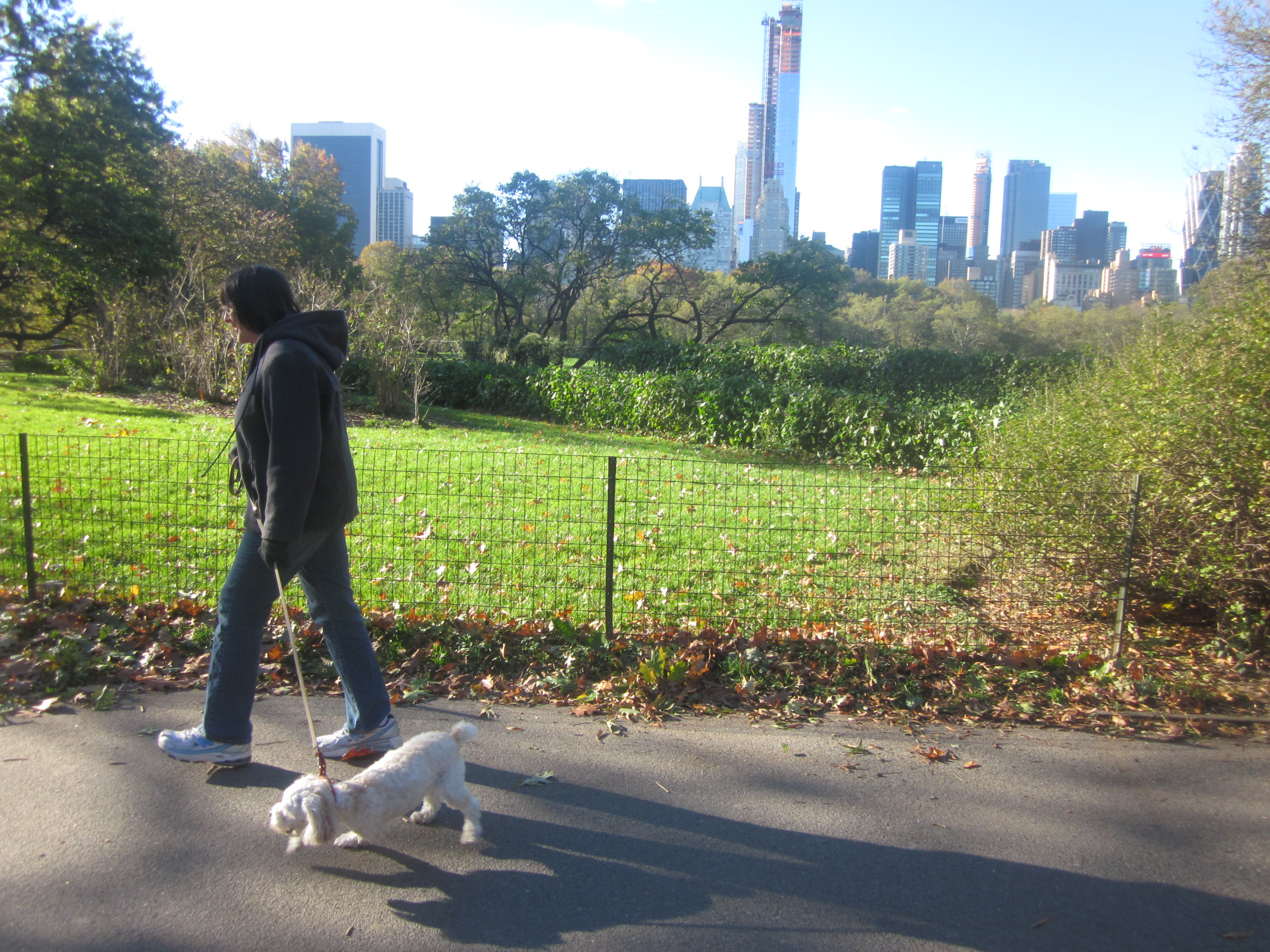
Cricket in Central Park


I live on the North Shore of Long Island and I was lucky during Hurricane Sandy to only lose power. There was no flooding or fire or downed trees at my house, though I only had to walk a few blocks to see power lines draped across the roads and horizontal trees where fences used to be. I was doubly lucky then, when a cousin of my Mom’s offered us her apartment in the city until our power returned. We drove in on the Wednesday after the storm and started out before anyone realized it was gridlock day. We were in the car for six hours on a trip that would usually take less than an hour. Six hours with Cricket climbing behind my neck and barking at trucks and all of us really needing to pee.

When we arrived at the building and found a magical parking spot only two blocks away, my first priority was, of course, to pee. And then I had to find and turn on the TV. I am a TV addict. I may have to write a whole blog on that someday, but suffice it to say that going a full day without TV leaves me strung out, two days and I’m shaking.

But really, what the TV offered was a better idea of what Hurricane Sandy had done. Listening to the radio on and off didn’t make it clear, pictures did. It was the flooding that I couldn’t have imagined without the pictures. The houses snapped in half and pulled off their foundations. The only sign of the storm damage in the Upper West Side neighborhood I was temporarily living in was that Central Park was closed, so all of the runners and the dogs had to crowd onto the sidewalks.

Cricket is my anxiety dog, in that she shows the anxiety I feel. She shook and cried under my legs during the storm itself. And then in the aftermath, she was scared of the dark. We always leave the living room light on, or a light in the hallway, but without electricity, the only light came from candles and flashlights and those were only where the humans were. And she became even more of a Velcro dog than usual.

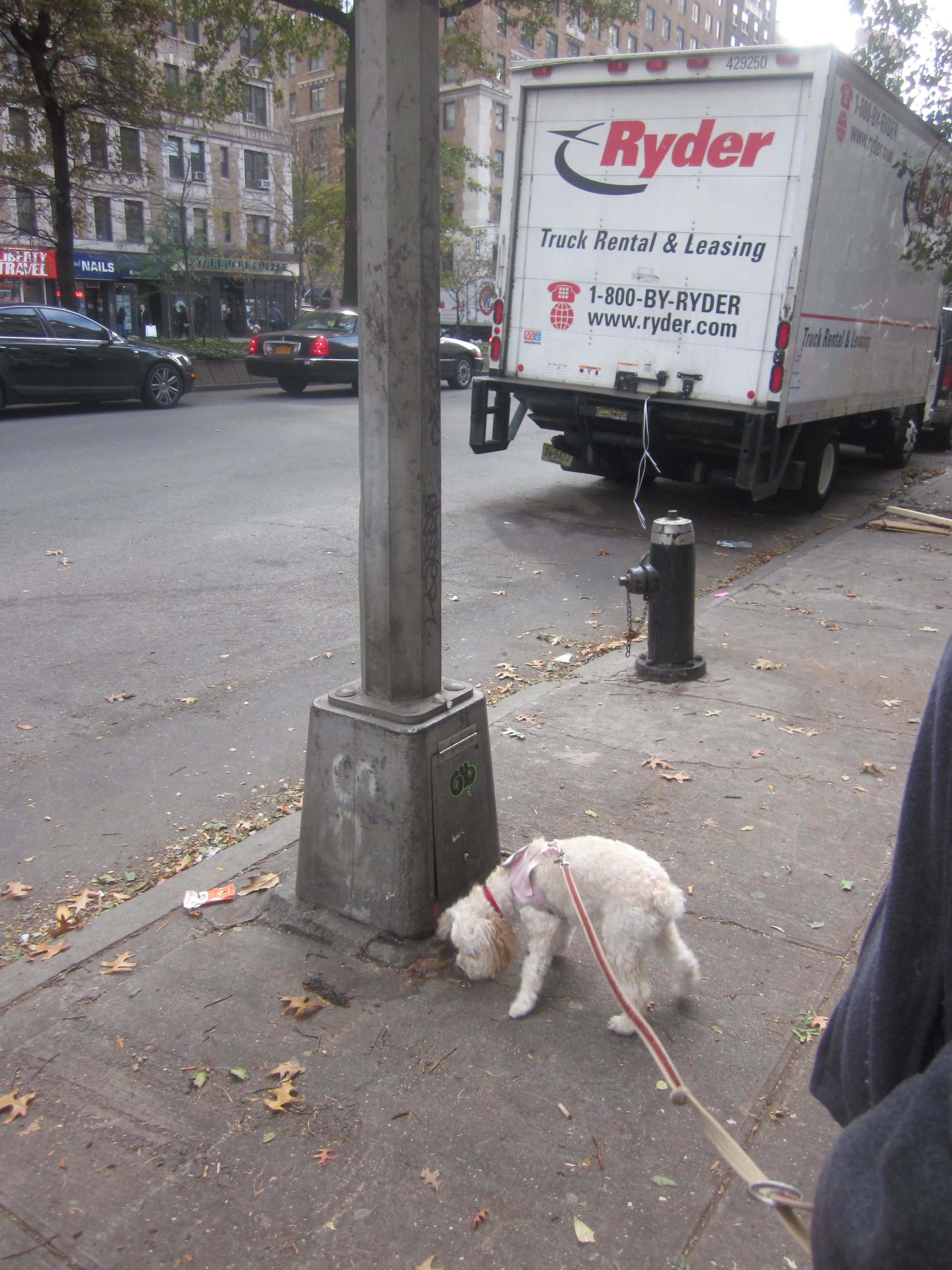
In the city, she was overwhelmed by all of the new people and smells and configurations. At first she wasn’t ready to poop or pee in a strange place, then, once she’d mastered that, she started to bark at everyone – in the elevator, in the lobby, on the sidewalk. She was clearly the country dog among city dogs. She weaved from side to side, sniffing every pee spot along the sidewalk, turning her head at every new dog, hiding behind my legs as every clique of marathoners ran by. The city dogs were polite, and somewhat jaded. They kept their eyes forward, did their business, and went on their way.


Cricket sniffing the city

We walked everywhere. They had a Fairway and a Trader Joe’s just like on Long Island, but more cramped and with escalators filled with people. I tend to panic in crowds, and that’s what happened when I tried to go into stores in the city. Everything was too close together and I couldn’t think, or breathe. But the crowds on the sidewalk were half dogs, so they didn’t scare me. It’s as if dogs mitigate the panic for me. If I could go to school, or work, or synagogue or the doctor with dogs, I’d have a much more active life.

Wouldn’t it be wonderful if dogs were allowed at the DMV?

I liked having doormen there at all hours. Taking Cricket out to pee at ten PM and being surrounded by light and people was very different from home, where it is dark and haunted by six o’clock this time of year, even with the power on. You only know other people are around because there are lights in the windows.

The power came back on in our neighborhood by Friday, so Saturday morning we were ready to go home. But first, Central Park was finally open and Cricket needed to walk. I’d seen so many dogs and runners on the grassless sidewalks that I’d assumed that was their natural habitat, but no, they belonged in Central Park, with the dogs finally free to run off leash and chase balls and grab sticks, and the runners on their own separate paths.

We met a woman and her dog who had been there from the first opening of the gates, when at least a hundred people and their dogs were waiting impatiently to get in. She said that once the gates were opened, the dogs ran like mad to get inside. After a week of being city dogs, they let loose and became dogs again.


Cricket taking center stage


Animal Cops

Sometimes I watch the animal cop shows on Animal Planet. I usually can’t watch a whole episode at once. They intervene in cases of abuse and neglect: a dog left in a yard with a chain embedded in her neck, kittens left under a porch without care, a horse starving in a filed, a duck with a knife wound in its backside.

Watching those shows makes me feel guilty for not wanting to be a veterinarian or animal cop or doggy social worker. And then the guilt expands from neglected and abused dogs to neglected and abused children, until I end up curled in a ball on the floor, feeling useless and awful, and still having no idea what to do.

There used to be a show on TV called Dogtown, about a well funded animal rescue facility in Utah, called Best Friends. They had areas for all kinds of animals, but the show focused on the dogs. They had trainers and groomers and veterinarians on staff, plus volunteers and adoption counselors and caretakers and on and on. It seemed like somewhere I’d want to go myself, to be rewired and retrained and adopted out anew. They also had a policy that any dog who couldn’t find a new home would always have a home with them.

Orphanages would come back into style if they were run half as well and with half as much compassion as Dogtown. And it makes me wonder why we can’t do better for children in foster care, or for dogs across the country who are being put down by well meaning people at understaffed shelters.

It was an aspirational show, but nothing I could imagine living up to myself. After each episode I’d think, maybe I could learn how to train dogs, or join a local rescue operation, or at least foster dogs while they’re waiting for their forever home. But then I’d crumple again, and feel guilty for having only the one dog and not even being able to train HER.

I guess my question is, could the people who create these shows take the next step, the one that allows people like me to step out of the guilt and have a manageable task to do that would actually help. Is there a think tank working on this? How can rescue organizations marshal the millions of pet owners and animal lovers to help, instead of overwhelming us with so much guilt that we can’t think straight or even remain upright?