A few weeks ago I had the opportunity to read one of my essays out loud to a Mutual Support Zoom for my synagogue. We’ve been doing these all year, as a way to keep each other company and to get to know our fellow congregants during Covid. We’re winding up the series now, since most of the regulars have been vaccinated and are returning, slowly, to in-person events, and this was my last chance to take a risk and add my voice to the mix.
The theme of this particular Zoom was trees, probably the third or fourth on that theme, because with all of the time we’ve been spending at home for the past year nature has caught everyone’s attention more fully than before. People have been presenting photographs and quilts and poems on trees, and experts have been called in to speak about the science of trees and the care and feeding of trees. When I was asked if I had anything to contribute on the subject, I thought about my pawpaw trees. They have grown with me, and surprised me, and devastated me for a long time now, and I realized that this was something I wanted to share. It didn’t hurt that I had an essay ready to go, freshly rejected from various literary magazines.

I haven’t done a public reading of my work in a long time, and in the past, I have found them overwhelming. At the graduate reading for my MFA in Fiction I was so anxious that I started crying at the podium, which made it much harder to see the papers in front of me, though I made it through, eventually.
This reading went a lot better than that one; maybe because it was a small group of familiar faces, or because in the intervening years I’ve had a lot of practice reading other people’s work out loud and teaching in front of a class. I don’t know. It was certainly helpful to have my pawpaw friends there to keep me company, in spirit. Whatever made the difference, this time I actually enjoyed reading my work to an audience. And I think I even did a good job of it (which, given my propensity to self-criticism is saying a lot).
I don’t know where this leads me, but it felt like a big step forward, because it’s a sign that, maybe, despite all of my fears, I’m getting better at pursuing the things I love. Wouldn’t that be wonderful?

So here’s the essay I read to those fifteen kind people. I hope you like it.
A Pawpaw Story
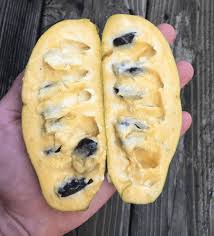
Almost fourteen years ago now, I ordered a box of Pawpaws at a friend’s suggestion. They arrived in September, each fruit wrapped in newspaper because they are so fragile and easily bruised. Pawpaws are custardy sweet, and the flesh has to be eaten with a spoon, not peeled like an orange, or sliced like an apple, or bitten straight into like a strawberry. They are filled with a row of almond shaped seeds that you have to dig out, or suck on, to get the flesh that clings stubbornly to them. It’s work. The Pawpaw season is very short and the fruit rots within days, so if you order a box (usually from Ohio) you need to eat them, or freeze them, fast.
Some say pawpaws are too sweet, or too funny looking, or too smelly, but, I discovered, pawpaws are just right for me.
We saved the seeds in the freezer, like the instructions said to do (pawpaw growers are, by their very nature, proselytizers), and at the end of the winter, Mom and I planted the seeds in big ceramic pots in the kitchen, next to the window sill, with the pots wrapped in scarves because there was still a bit of a chill left in the air. And then, like the Talmudic sages said the angels do for every blade of grass, I stood over the pots and whispered, “Grow, Grow.”
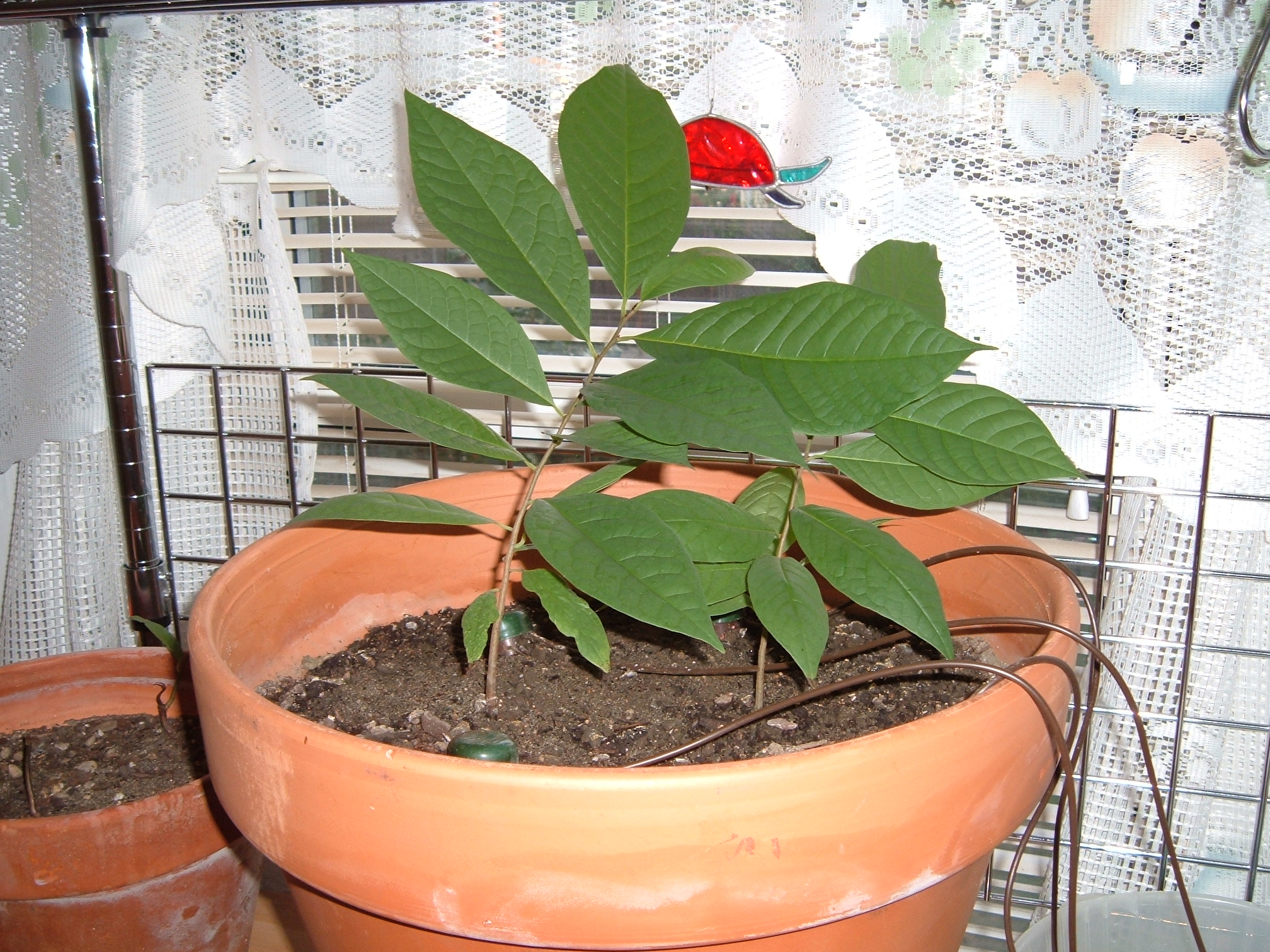
And they did grow. The seedlings were tall, and full of personality, and five or six of them even survived long enough to be planted outdoors once the weather was warm enough. We kept them in their pots at first, though, so that they could come back inside if they needed to.
Three, maybe four, survived the first year and grew into saplings, gradually growing taller, as their leaves extended out like shiny green fans. For years, their leaves paled to yellow in the fall, disappeared for the winter, and reappeared in the spring.
We had to dig the three surviving trees up and replant them five years later, when we moved. And one suffered a horrible gardening accident when the maintenance men were working higher up on the retaining wall and tossing small trees downhill. But the other two Pawpaw trees survived, now carefully marked, and settled into their new surroundings. They continued to grow, year after year, getting taller, and healthier, but there was no fruit yet, not even a flower.
We got impatient and ordered two new baby trees, because a Pawpaw expert told us we needed to have at least two trees in close proximity in order for fertilization to occur, and the two we had were too far apart. But the baby trees were crushed in the shipping process and never really recovered, though we watched over them hopefully for a season.
Finally, after eleven years, my two Pawpaw trees started to flower. The flowers were small, and a deep burgundy brown color, but pretty quickly they dried up and flew away, and the leaves turned yellow again and the trees went to sleep again for another winter.
The following year, the flowers came back bigger and brighter, and there were more of them, and they were filled with enough powdery, sticky pollen that we were able to transfer it from the flowers of one tree to the flowers of the other, by Q-tip, and hope for fruit. A tiny cluster of baby fruit showed up a while later, and even though it only survived for a week, we were hopeful that maybe in another year, after another season of flowering, the trees would be ready to fruit for real.

Twelve years may seem too long to wait for a piece of fruit, but to me the wait was sort of the point.
And then, about a month later, disaster struck, of the human kind. I was napping during the day, as I often do, and Mom was in the living room working on a quilt. Somehow she heard a sound over the thumping of the old sewing machine, maybe the crying out of a dying tree had a particular power. I heard a scream, and a door slam, and then my dogs came to get me, but they couldn’t tell me what was wrong. I waited, worried about that scream and the horror it foretold. I could only imagine the death and destruction, the multiple apocalyptic events held in that scream. When Mom finally returned, ringing the doorbell, because she’d forgotten her key, she told me that the new gardeners had killed one of the pawpaw trees, and she’d reached them just in time to save the second one.
I didn’t understand. The pawpaw trees were over fifteen feet tall by then, and no longer wearing the blue tape they’d worn years earlier to mark them as special, because after seven years on the property they didn’t seem at risk anymore. Mom said she’d had to drag the murdered Pawpaw tree into the woods herself, for burial. But, why? The gardeners told her that they’d had to cut everything back in order to mow the lawn in straight lines. But not a tree, she’d screamed at them, you could have trimmed some of the branches if they were in your way, but who cuts down a tree in order to mow a lawn?
The violence of it felt real to me, not metaphorical. When I finally went outside, the stump of the dead tree stuck up out of the retaining wall, looking wet, almost bloody. Obscene.
Within minutes, Mom was googling for advice. She wondered if we could re-plant the amputated branches, or order pollen from another pawpaw tree to be sent to us each year, in order to fertilize our lone tree and maybe, finally, produce fruit.
But I sat still, undone, convinced that you can’t un-chop a tree.
Weeks passed. We dressed the lone pawpaw tree in a colorful bowtie, to protect it from future gardeners, and I whispered to it daily, to keep it from dying of loneliness.
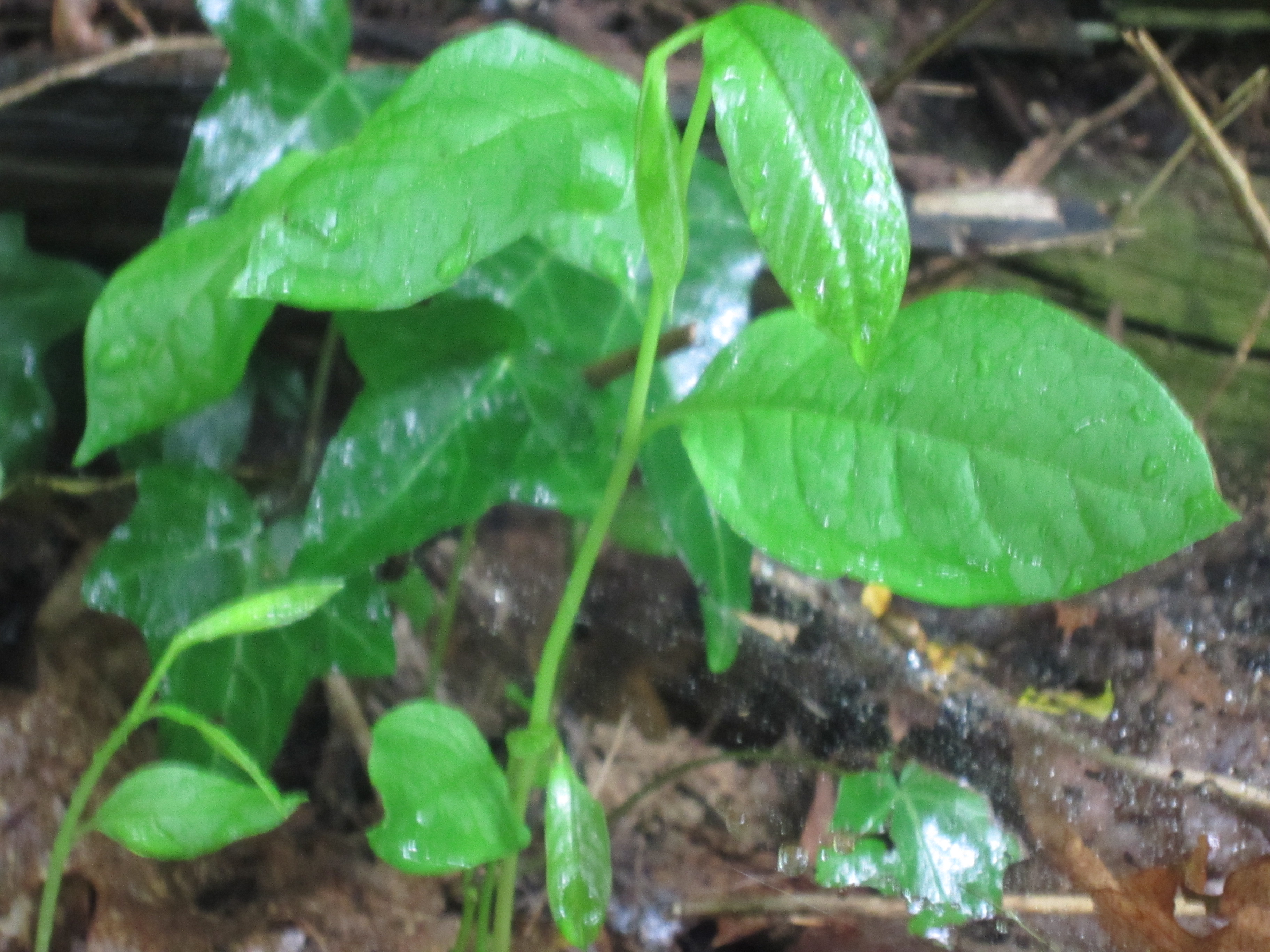
And then Mom called me to look at something in the retaining wall, in the area of the dead tree stump. I thought maybe she would show me more of her re-growth experiments, expecting me to be excited and invested, when all I could feel was the deadness of everything. Instead, she showed me pawpaw leaves, living and breathing on two long stalks, half green and half brown, and wobbly from very recent growth, growing out of the dirt two feet from the dead stump. We had not planted new Pawpaw seeds, or even noticed any random Pawpaw trees planting themselves under the mass of other trees and bushes in the retaining wall, but there they were. It just seemed so unlikely, to me, that Pawpaw trees could have created themselves, without any help, just when we needed them most.

I picked one of the leaves to bring over to the big Pawpaw tree to compare. But I still felt skeptical, because that’s my automatic response to most things. It can’t be true, especially if I want it to be true. Mom pointed out the unique quilting design on the leaves, unlike any other leaves nearby, and the shine on the baby leaves, which I’d seen many times myself when our Pawpaws came back to life each spring.
A few days later, Mom went back to the same spot, to make sure the Pawpaw stalks were still there, and not just a mirage made out of grief, and she found another, much smaller, Pawpaw sapling, maybe just a few weeks old. And she kept going back, and searching more carefully, and finding more Pawpaws, sprouting everywhere like a tiny village growing from the roots of the seemingly, but not really, dead tree.
And I had to accept that my skepticism, my pessimism, was wrong. Sometimes the things we want most really do happen; sometimes trees can re-create themselves. From the beginning, I thought that Mom and I would put in endless years of effort for no real reward, because that’s just the way of things. But there they were, a forest of pawpaws coming to life all around me, trying to tell me that trees are living things, and deep in their roots they are desperate to survive, just like us. And sometimes, despite everything, we grow.

If you haven’t had a chance yet, please check out my Young Adult novel, Yeshiva Girl, on Amazon. And if you feel called to write a review of the book, on Amazon, or anywhere else, I’d be honored.
Yeshiva Girl is about a Jewish teenager on Long Island, named Isabel, though her father calls her Jezebel. Her father has been accused of inappropriate sexual behavior with one of his students, which he denies, but Izzy implicitly believes it’s true. As a result of his problems, her father sends her to a co-ed Orthodox yeshiva for tenth grade, out of the blue, and Izzy and her mother can’t figure out how to prevent it. At Yeshiva, though, Izzy finds that religious people are much more complicated than she had expected. Some, like her father, may use religion as a place to hide, but others search for and find comfort, and community, and even enlightenment. The question is, what will Izzy find?

 rachelmankowitz
Rachel–all the emotions in this! I was so happy, then sad, then really angry (cut trees down to mow in a straight line?! Insanity!!). And then happy, again. This is wonderful. I hope your online audience enjoyed this, because I sure did. And I’m really glad your mom yelled at those gardeners–they deserved it.
My Mom is a tree warrior! It was awesome!
Yeah!!!!
I went on a similar journey to yours when reading this post! 🙂
Some journey, right?! I love when a writer can transport me like that.
I love that story! Do more stories and keep sharing them aloud.
Thank you!
I really enjoyed this story. I hesitate to call it a “story” because it is a true one. Hope springs eternal.
Thank you!!!!
Love this! We got fruit from our persimmon and satsuma trees the first year (2020). That was before we learned that conventional wisdom is that “babies should not be having babies,” and you’re supposed to discourage trees from fruiting until they’re well established. Well, we ultimately got two persimmons and about a dozen satsumas. This crazy year (a lot of rain and yo-yo changes in temperature) has not done the trees any favors. We had maybe half a dozen baby persimmons at one point, but now they’ve all fallen off, as have all the baby satsumas, But at least three more satsumas seem to have emerged, so I’m keeping my fingers crossed. Even if we lose them as well, I’m encouraged that the satsuma is putting out new shoots and gaining new leaves. Maybe next year they’ll be ready!
Fruit trees are magical!
Rachel before you know it you’ll have your very own Paw Paw grove where every tree is sporting a blue ribbon to ensure that it isn’t touched by careless hands. I’d like to think that your grove of Paw Paws will offer you a place of solace where you’ll be inspired and words as sweet as the fruit of the paw paw will pour out on paper.
That would be wonderful!
What a wonderful non-fiction story. Good for you for sharing the ups and downs of caring for such a fragile tree. I hope you have many trees to enjoy in the future.
Thank you!
That is crazy that the gardeners cut down a healthy tree!
The end with the pawpaw leaves reminds me of the dove with the olive leaf in the Noah’s ark story.
That’s lovely! Thank you!
Your today’s post makes us think a lot. Thank you, Rachel!
Thank you!
So very lovely and heartening. Thank you!
Thank you!
LOVE IT!! I have NO idea what pawpaw is, but will be looking.
Awesome!
I didn’t expect to be so moved by this essay. I don’t like fruit or gardening, so I didn’t expect to connect, but I kept reading. And then I also found myself feeling rage at the gardener and grief. And then the amazement and hope of those saplings.
Thank you so much!
I remember the expression from when I was a kid in Louisiana and my grandma would tell us these stories. Thanks for the memories .. jc
.
Thank you!
So cute (:
This is a wonderful essay. I was on the edge of my seat until the news came through that the apparently not-so-dead tree had managed to send forth some offspring. The babies are just as exciting as fruit.
Thank you so much!
Excellent news about your reading
Thank you!
Pleasure as always
I remember when your pawpaw tree was murdered. I am so happy to hear the sequel. It gives me hope.
Me too! Thank you!
I really never have heard of this fruit and don’t know if it grows in our local (New Jersey). It sounds delicious.
It is yummy! And There are pawpaws in New Jersey!
Alright, now I need to go on the hunt. Thanks.
Just beautiful. 🌷
Thank you!
I love your story of the trees, and reading it aloud is definitely a big confidence boost that you should build upon.
Best wishes, Pete.
Thank you! I’m working on it!
Rachel, thanks for the lesson on paw paws. I had no clue what they were. Keith
They are magical!
Beautiful story, and YAY for your MOM!!!!
Thank you! My Mom is awesome!
Your doggies are just the cutest. I am a bit busy so will come back to actually read the post soon as it sounds very interesting.
In my book, cutting down a healthy tree is nothing short of murder, and to mow the lawn?? Lazy swines! Great story Rachel and I’m glad you have a little forest of survivors.
Thank you! Me too!
Thank you for sharing your wonderful pawpaw story today!
Thank you!
I love this so much. I felt the anguish of that moment after the maintenance crew (I refuse to call them gardeners, after what they did!) had cut down your beautiful baby. And I cried out in joy over the new trees. I am grateful that this happened for you.
Thank you so much!
I love your Paw Paw tree pieces. That whole thread on your blog reflects the resilience and perseverance that is you.
Thank you so much!
Great story!
Thank you!
I love this! And that line, “in their roots they are desperate to survive, just like us. And sometimes, despite everything, we grow.” Beautiful. I love when I come across something growing through concrete or cement cracks. So powerful. What a beautiful story you share. The power in years of waiting and projecting your own gorgeous intention on nature. And never stop writing, woman. I love your soul. How you see the world is unique and beautiful and I for one want to see it too through your words. XOXO
Thank you so much!
A beautiful and uplifting story, Rachel. ❤
Thank you!
I know there’s an important lesson in this, and yet all I can think about is the horror and stupidity of what those gardners did and how you can protect the new baby pawpaws…
I worry every time they come to mow the lawn.
with a whiper, a cry while reading at the podium and a green thumb, it sure does look like you are growing your confidence Rachel. Nice story❣️
Thank you!
💖
This is a lovely essay. As someone who can anthropomorphize anything, especially trees, I’m grateful for the happy ending. We just had to remove three dying trees that may well have killed us if they’d toppled over. (Three large trees on both sides of our street had cratered a few months back in a wind storm, causing serious damage to a house near us and a car across the street; all humans intact, fortunately.) Nevertheless, I couldn’t watch my old friends, with sparse leaves remaining on their upper branches, wrenched from their environs after so many years.
So multiple cheers for your pawpaws; may they continue to thrive and eventually bear the fruit you’re eagerly anticipating.
Thank you!!!!!
Love the story. Hope the new sprouts grow and thrive.
Thank you! I hope so too!
Pawpaw, especially red pawpaw is one of my favourite fruits. I used to have a tree in the backyard when I lived in Darwin. The fruit was always perfect. Growing up in Brisbane, we had about five pawpaw trees and they were also productive.
Growing up with fruit trees in the backyard has to be amazing!
Beautifully written. Thank you for sharing!
Thank you!
What a great essay and a lovely ending too. I am worried that your rogue gardeners will ‘do for the saplings’ again if you’re not careful. I do find it hard to comprehend gardeners destroying plants – it’s not as if they were recognisable as weeds as there was a trunk to be chopped down. Thank you for sharing, I really enjoyed it and any editor rejecting it was obviously an idiot.
Thank you so much!
Oof, i felt this essay! Good lesson in it, without being preachy. Good for you for reading it aloud to your fellow Zoomers.
Thank you!!!!
I remember the gardening Hell when you lost the one! Ugh! Years of love & labor! Here’s hope to the future for more paw paws!
Thank you! Fingers and paws crossed!
Very inspiring and lovely. 🤗
Thank you!
Great story about your trees! I loved it!
Thank you!
What a wonderful story and I almost missed it. I was uncharacteristically busy these past few days and when your post showed up in my mailbox I said to myself, later, I’ll get back to it later. And then nearly didn’t! What a shame that would have been. I can imagine the emotion you put into the reading and it certainly deserves emotion. I hope the trees are all well and happy under your care and someday we’ll get to read about your first paw paw harvest!
Thank you!!!!!!
I’m so glad I just found this too!
oh my…..I am speechless in my wonder and gratitude of this great story!
Thank you so much!
I remember many of the adversities you describe because of prior posts. That makes this one especially hopeful – for paw paw trees, for you, for your mom – and for everyone else. Good on you.
Thank you so much!
Great story…love that closeup flower picture!
Thank you!!!!
Nice story Rachel, trees and plants provide so much for us. Good pics too 🙂
Thank you!
It’s so rewarding to successfully grow a tree from seed. However, it was sad to hear about your gardeners’ excuse in destroying one. Enjoy the fruits of your labors, Rachel.
Art
Thank you!
This excuse was not a valid one.
I remember you writing about the tree being chopped down before. Trees have their own secret life underground and surprises pop up sometimes.
I love good surprises!
I love this tree story.
Thank you!
Loved your essay! I want to plant Asimina triloba now too!
Thank you! Paw paws are awesome!
There’s a folk/children’s song where I come from (Missouri) the chorus of which goes “Pickin’ up paw-paws, put ‘em in a basket, way down yonder in the paw-paw patch.” Don’t remember the rest, the girls would sing it to a circle game on the playground back in the 1950’s.
I’ve heard of it! I wonder if that means pawpaw trees were common in the south at some point.
Here is the song:
https://www.appalachianhistory.net/2018/09/way-down-yonder-in-paw-paw-patch.html
Thank you!