I had this past week off, like most teachers in the United States, for Presidents’ week, and I really needed the break. But one week of vacation was just long enough to remind me of all of the things I wanted to get done, and not long enough to actually do them. Especially since the first thing on my to-do list really took over.
My to do list: SLEEP; put the new rugs down; think through all of the requirements for our next dog(s), and look for rescue organizations that will let us adopt without a fenced in yard; finish three novels and start two more, though one or more may end up being a memoir instead of fiction; read through my ten boxes of Therapy Pages notebooks and plan how to use them; start exercising again (for the fiftieth time); clean the kitchen and get back to cooking (instead of microwaving); read all of the books on my bedside table and piled haphazardly on my shelves; buy more bookcases; finish translating another ten Israeli pop songs and try not to add more to the list right away; work on lesson plans for the rest of the school year; get a haircut (or find a good excuse for why I shouldn’t have to ever cut my hair again); read through my hundred-page-plus draft of an “essay” on the history of the modern state of Israel, and see how many more books I will need to read before I can convince myself that I’m in over my head; watch every webinar I’ve downloaded from YouTube, on writing and therapy and music and Israel and whatever else; oh, and don’t fall into a deep depression as a result of the isolation and loneliness, if possible.
One nice thing happened before the actual vacation started which gave me hope: we had another birdie visitor. This time it was a young white-throated sparrow who either had ADD or a panic disorder and kept flying and pacing relentlessly around the apartment. Mom got some great pictures of him in the few moments when he was able to remain still.
But then, right after the bird left, I heard from my pharmacy that the FDA is clamping down on off label prescriptions for Ozempic (anything other than a type-two diabetes diagnosis), and then my doctor told me that my insurance won’t cover any of the other weight loss medications (Wegovy, etc.), so if I wanted to keep taking weight loss medication it would cost at least $1,000 per month. So, after six months of slow weight loss, the experiment is suddenly over. There’s a bill in the US congress to try to get weight loss medications covered by health insurance, but who knows how long it will take to get it approved; relying on the smooth workings of the United States government has never been a good life strategy.
If the weight I’d already lost had improved my overall health, then maybe I would feel better about stopping here, but, if anything, I’m more exhausted now than I was six months ago. Which is why the first thing on my to-do list overwhelmed everything else I wanted to accomplish this week, and most of my vacation was spent sleeping, or at the very least, lying down. I also watched a bunch of webinars (and managed to download even more), and got some reading and writing and typing done. But vacation is almost over and my to-do list is, if anything, longer than it was at the beginning of the week. How is that even possible?
Here’s hoping that the rest I’ve been able to get this week will help me get through until the next short vacation, and that somewhere along the way some more birdies will come along to remind me that all of this is worth the effort – even if my to-do list never, ever, gets done.
If you haven’t had a chance yet, please check out my Young Adult novel, Yeshiva Girl, on Amazon. And if you feel called to write a review of the book, on Amazon, or anywhere else, I’d be honored.
Yeshiva Girl is about a Jewish teenager on Long Island, named Isabel, though her father calls her Jezebel. Her father has been accused of inappropriate sexual behavior with one of his students, which he denies, but Izzy implicitly believes it’s true. As a result of his problems, her father sends her to a co-ed Orthodox yeshiva for tenth grade, out of the blue, and Izzy and her mother can’t figure out how to prevent it. At Yeshiva, though, Izzy finds that religious people are much more complicated than she had expected. Some, like her father, may use religion as a place to hide, but others search for and find comfort, and community, and even enlightenment. The question is, what will Izzy find?
I’ve been obsessively listening to Israeli music for a few years now, but the obsession went into overdrive after October 7th, when I needed to feel a connection to Israel that wasn’t all about the news. And as the months have passed, Israeli musicians have been creating more and more music, and finding new meaning in songs that came out before October 7th, as performers have crisscrossed their small country singing at soldiers’ last minute weddings, at hospital bedsides, for evacuees from the south and the north of Israel, and really for whoever has needed comfort. David Broza and Hanan Ben Ari and Shiri Maimon and Ishai Ribo and Sarit Hadad and Omer Adam and Keren Peles and Benaia Barabi and so many others have been singing at small parties and huge vigils and everything in between with a generosity and humility that’s hard to imagine in American superstars. It’s as if the whole music industry in Israel has mobilized to try to help people put their feeling into words, and to fight off the isolation of grief.
I wish the outside world could hear what I’m hearing, but because most of the songs are in Hebrew, they just don’t reach across the divide. And, despite listening to all of this music out of a desire to connect, I’ve actually felt even more isolated, because so few people around me are listening to the same music. Even at my synagogue, where the situation in Israel is top of mind, there are very few people who understand enough Hebrew to listen to this music and enjoy it. So, a few weeks ago, I started trying to translate some of the songs into English, in the hopes that I could close some of that divide.
My goal was to try to make the music accessible to people who don’t know Hebrew and for me to understand the songs better myself. I’m certainly not the first person to feel called to do this; there are multiple sites online where amateur translators can upload their translations of songs from other languages (my favorite is lyricstranslate.com).
Some Israeli pop songs have been professionally translated: there’s a popular video on YouTube of Tamir Greenberg on Kochav HaBah singing an English version of Hanan Ben Ari’s Shvurei Lev/The Broken Hearted. And there’s a lovely half English/half Hebrew version of an Ishai Ribo song (with the Solomon Brothers) that manages to capture something of the original magic.
But more often than not, the English translations are awkward. The problem is that Hebrew has so many internal rhymes and rhythms, and English is so chaotic and free form that you can’t make the songs sound alike. So, when I approached my own translations I didn’t even bother trying to rhyme, and focused instead on capturing the rhythm and the emotion of the original Hebrew, to the best of my ability.
The first song I chose is called Zeh Beseder/It’s Okay and it was a collaboration between an Israeli singer named Benaia Barabi and survivors of the Nova Music festival. It’s written in simple Hebrew, so I didn’t have to spend too much time on Google Translate, and it’s all about survivor’s guilt and needing to heal at your own pace, so it felt pretty universal.
Zeh Beseder/It’s Okay – Written and performed by: Benaia Barabi, et al.
(My Translation)
It’s okay that we’re not okay now
It’s okay to sing when it hurts
It’s okay to cry every morning
And even then to choose to rise
It’s okay to not feel normal
It’s okay not to say a word
It’s okay to dance ‘til morning
In a darkness full of hope
It’s easier to hide my face
To keep the pain in for a thousand years
The voices that keep screaming in my head
To pray for those small moments
When life is normal and we start to change
Only for my broken heart, I’ve tried to keep the faith
I want most of all to be together
To never have to be alone
To choose to sing at the top of my voice
And to reach out for your hand
We want most of all to live without fear
It’s okay to laugh just like that
Most of all I want to hug you close
Is it okay for me to love?
Most of all I want to hug you close
It’s okay for me to love
It’s okay to put on make-up and dress well
It’s okay to start to lose direction
Life keeps moving forward
So who am I not to go along?
It’s okay not to find the answer
It’s okay to need to pray for faith
It’s okay to ask a thousand questions
Of whether to be or not to be
It’s easier to hide my face
To keep the pain in for a thousand years
The voices that keep screaming in my head
I want most of all to be together
To never have to be alone
To choose to sing at the top of my voice
And to reach out for your hand
We want most of all to live without fear
It’s okay to laugh just like that
Most of all I want to hug you close
Is it okay for me to love?
The second song I chose is called Habayta, which literally means, “Towards Home,” about wanting the hostages to come home. The performance of the song, by Raviv Kaner, captures everything, even if you don’t understand any of the words, honestly. And if it were a song in English, about Americans being held hostage, it would probably be on American radio 24/7.
HaBayta/Return Them Home – Written by: Raviv Kaner and Elnatan Shalom
(My translation)
My father’s up, he’s already awake
My mother’s here, her pain just never ends
Mom and Dad go back to sleep again
Maybe it’s Shabbat and not Sunday
Surrounded by the noise and the chaos
There’s nothing left, there’s no point
Return him home to me right this moment
There’s nothing left, there’s no point
Return her home to me right this moment
Return them home
It’s dark now, turn off all the lights
Maybe for a day or two, at least
Because between despair and hope, I dream
When it’s over, I will breathe again
Surrounded by the noise and chaos
There’s nothing left, there’s no point
Return him home to me right this moment
There’s nothing left, there’s no point
Return her home to me right this moment
Return them home
There’s nothing left, there’s no point
Return them home to me right this moment
There’s nothing left, there’s no point
Return them home to me right this moment
Return them home
Maybe, in the end, I’m just doing these translations as a way to spend more time with music I love, but it would be really nice to share it with other people.
Let me know what you think.
Bonus: Two versions of a Jewish prayer (that didn’t need translation) that has become popular for months now, because it asks for the release of captives:
If you haven’t had a chance yet, please check out my Young Adult novel, Yeshiva Girl, on Amazon. And if you feel called to write a review of the book, on Amazon, or anywhere else, I’d be honored.
Yeshiva Girl is about a Jewish teenager on Long Island, named Isabel, though her father calls her Jezebel. Her father has been accused of inappropriate sexual behavior with one of his students, which he denies, but Izzy implicitly believes it’s true. As a result of his problems, her father sends her to a co-ed Orthodox yeshiva for tenth grade, out of the blue, and Izzy and her mother can’t figure out how to prevent it. At Yeshiva, though, Izzy finds that religious people are much more complicated than she had expected. Some, like her father, may use religion as a place to hide, but others search for and find comfort, and community, and even enlightenment. The question is, what will Izzy find?
On October 7th, 2023, when I started to see media reports of the Hamas attack on southern Israel, I was at a loss – I had no frame of reference for what I was seeing. I knew this was something different from previous terrorist attacks or rocket strikes, but I didn’t know what to compare it to. Early on, I heard some people reference the surprise of the Yom Kippur War, because the fiftieth anniversary of that war had just passed, but those comparisons faded quickly. Then there were the voices calling October 7th Israel’s version of September 11th, but 9/11 didn’t involve hand to hand combat, or rape, or children, and, fundamentally, the world wasn’t as horrified by October 7th as they were by 9/11. And then people said, over and over again, that this was the worst loss of Jewish life in a single day since the Holocaust, as a way to capture the overwhelming shock and grief of the attack; but comparing October 7th to the prolonged and systematic killing of six million Jews (and many millions of others), over the course of years, and across many borders, just didn’t seem helpful to me, and didn’t offer me any idea for how to cope with the horror, or how to respond to it.
And then the word pogrom started to be used, but it didn’t resonate for me at first, either. The word pogrom came originally from Russian, meaning “to destroy, to wreak havoc, to demolish violently,” but historically it has referred to acts of anti-Jewish violence perpetrated by civilians and supported by the military, in Eastern Europe, between about 1880 and 1920. And, at least in my mind, a pogrom was supposed to be about the dangers of being a minority in a world where the majority hates you. Except, for a lot of Jewish people, and not just Israelis, this did feel like a pogrom, and I wanted to understand why.
The thing is, while Jews are the clear majority population in Israel, they are surrounded by an Arab world that is majority Muslim, and the Palestinian cause has often been supported financially, politically and militarily by the surrounding Muslim countries, so the question of who is in the minority and who is in the majority depends on how closely you focus in or how widely you zoom out.
Some Jewish media outlets mentioned the 1903 Kishinev pogrom in particular, early on in the coverage of October 7th, so I decided to do more research to see if I could understand the comparisons.
The Kishinev pogrom took place on April 19-21, 1903, Easter day, in Kishinev, then the capital of Bessarabia in the Russian Empire (now Moldova). The attacks began after church services on Easter Day, which was also, maybe more significantly, the last day of the Jewish holiday of Passover. During the pogrom, 47 to 49 Jews were killed, 92 were severely injured, 700 houses were damaged, hundreds of stores were pillaged, and 600 women were raped; while the police and army did nothing.
Leading up to the attacks, the most popular Russian language newspaper in Kishinev was regularly publishing headlines like: “Death to the Jews!” and “Crusade against the hated race!” So that when a boy was found murdered in a town twenty-five miles away, and a girl committed suicide by poison and was declared dead at a Jewish hospital, the newspaper had a ready audience for its insinuations that both children had been murdered by the Jews so that their blood could be used to make matzo for the coming Jewish holiday of Passover (a bizarre blood libel that keeps coming up throughout history to incite violence against Jews, despite the fact that matzo is made of only water and flour, and blood is strictly forbidden in Jewish dietary laws).
On April 28th, the New York Times reprinted a Yiddish Daily News report smuggled out of Russia that described the pogrom:
“The mob was led by priests, and the general cry, ‘kill the Jews’ was taken up all over the city. The Jews were taken wholly unaware and were slaughtered like sheep…babes were literally torn to pieces by the frenzied bloodthirsty mob. The local police made no attempt to check the reign of terror. At sunset the streets were piled with corpses and wounded.”
Many pogroms had taken place before this one, but the graphic descriptions, and especially the photographs, of the Kishinev pogrom were sent around the world and made a deep impression, especially on American Jews who began organizing financial help for the Jews of Kishinev to emigrate to America and Palestine. The danger to the Jewish population of Europe was convincing to most people, though the Russian ambassador to the United States at the time tried to deny that the attacks had anything to do with anti-Semitism, blaming it on Jewish moneylenders upsetting the local peasants with their corrupt business practices.
But even more than the news reports and the photographs, the biggest impact the Kishinev pogrom would have on Jewish history came in the form of a poem.
Chaim Nachman Bialik, a journalist, poet, and publisher, was commissioned by the Odessa Jewish Historical Commission to travel to Kishinev and collect testimonies from the survivors of the pogrom. Bialik, who later came to be seen as Israel’s national poet, with his poems taught across the Israeli school system, was an early advocate for Zionism and the need for a new kind of Jew, a stronger, bolder Jew who wouldn’t be so vulnerable to antisemitism.
As he walked through Kishinev and listened to the survivors of the pogrom he began to form an idea for a long poem in Hebrew that would be published in 1904, meant to wake Jews up to the impossibility of life in the diaspora, called “In the City of Slaughter.”
“Do not fail to note, (he wrote)
In that dark corner and behind that cask,
Crouching husbands, bridegrooms, brothers peering through the cracks,
Watching their wives, sisters, daughters struggling beneath their bestial defilers,
Suffocating in their own blood,
Their flesh portioned out as booty.”
Bialik’s vision of the diaspora Jew’s weakness, and his willingness to blame the Jewish men for the rapes of their wives and daughters, became a rallying cry to find a place where Jews could be in the majority and therefore able to defend themselves. He, significantly, left out any references in the poem to the fact that local Jews had tried to defend themselves, but had failed because police dispersed those Jews attempting to defend Jewish homes and businesses, while allowing the rioters to go unchecked (Russian courts later used those attempts at self-defense to suggest that it was actually the Jews who struck first, and were therefore responsible for the riots that killed them).
But even if Bialik had acknowledged those attempts at self-defense, the lesson would still have been the same: life in the diaspora, in the minority, isn’t safe.
“Of murdered men who from the beams were hung,
And of a babe beside its mother flung,
Its mother speared, the poor chick finding rest
Upon its mother’s cold and milkless breast;
Of how a dagger halved an infant’s word,
Its ma was heard, its mama never heard.”
As a modern day Jew living in America, when I read this poem I got really angry, at Bialik, for the way he blamed the victims of the atrocity. It felt like identification with the abuser, in today’s therapy speak, but at the time it was galvanizing and convinced a lot of people that Zionism was the only answer for Jewish survival.
The word diaspora is often used as a stand-in for the Hebrew word Galut, which means “exile.” The idea is that after the destruction of the second temple in Jerusalem, in 70 CE, God exiled the Jews from the land of our ancestors, for our sins. This is how we are supposed to see our lives in the diaspora, as outside of God’s favor. But we don’t, or, I don’t. (This belief that we are in exile because that’s how God wants it, is why certain Chasidic groups are anti-Zionist. They believe we have no right to return to Israel until God brings us back there, in the time of the messiah). The Zionist cry was, let’s not wait for God’s permission to go home anymore, let’s not wait for the messiah, because if we wait too long we will be annihilated.
There was actually a second pogrom in Kishinev two years later, killing nineteen Jews, as part of a huge wave of pogroms across the Russian Empire during which 200,000 Jews were murdered in an estimated 600 different attacks on Jewish communities. But it was the first Kishinev pogrom that was remembered, and Bialik’s interpretation that lingered.
Interestingly, at the same time that Bialik was teaching the Jews about the power of a poem to inspire action, Pavel Krushevan, the publisher of that Russian newspaper in Kishinev that had incited the pogrom in the first place, had also learned an important lesson: incitement works. Within months he had published The Protocols of the Elders of Zion, a fictional account of Jewish leaders plotting to control the world, presented as if it were true. This book later spread around the world, teaching anti-Semitism to an ever wider audience. Hamas even refers to elements of the Protocols of the Elders of Zion in their charter.
As I continued to read Bialik’s poem, and the details of the Kishinev pogrom itself, it became clear that even though some of the circumstances of a pogrom didn’t fit what happened on October 7th, many of the victims of October 7thfelt the same powerlessness of the Jews in Kishinev, in large part because of the failure of the Israeli government to prevent the attacks, or to intervene to protect them in time, and, all over again, the lessons of Kishinev, especially the need for muscular self-defense, were back in the forefront of people’s minds.
The most penetrating message of the poem, for me, is Bialik’s anger at the Jews of Kishinev for not being angry enough.
“Turn, then, thy gaze from the dead, and I will lead Thee from the graveyard to thy living brothers, And thou wilt come, with those of thine own breed, Into the synagogue, and on a day of fasting, To hear the cry of their agony, Their weeping everlasting. Thy skin will grow cold, the hair on thy skin stand up, And thou wilt be by fear and trembling tossed; Thus groans a people which is lost. Look in their hearts, behold a dreary waste, Where even vengeance can revive no growth, And yet upon their lips no mighty malediction Rises, no blasphemous oath.”
The story of Kishinev, and the shame of it, had largely faded from the minds of American Jews by October 7th 2023, to the point that I don’t think it was even mentioned at my orthodox Jewish high school, where we studied Jewish history as part of our daily coursework, because it didn’t resonate for us, here, where, even now, despite growing antisemitism, and incidents of horrific violence, we feel at home in the diaspora. We feel safe. But in Israel, where the philosophies of Bialik and the other early Zionists are well-known, and where the population is largely the descendants of refugees from the diaspora, or the relatives of those who did not survive, feeling safe is more elusive.
To many, and maybe most, Israelis, the horror of October 7th was that even the new, strong, brave, well-armed Jew couldn’t prevent a Kishinev. And if the New Jew wasn’t enough, what would be?
Interestingly, while many Jews continue to see Israel through the lens of the Holocaust, and the pogroms of Eastern Europe, the Arab world has been taught to believe that these things never actually happened. Mahmoud Abbas, the “moderate” President of the Palestinian Authority in the West Bank, has consistently misrepresented, minimized and even denied the Holocaust. He has said that Hitler killed European Jews not because of anti-Semitism but because of the Jews’ “social functions” in society, such as money lending (just as the Russian Ambassador to the United States had said about the Jewish victims in Kishinev). In his doctoral thesis, written at a Russian University, Abbas argued that the Zionists had even colluded with the Nazis, agreeing to the extermination of the Jews of Europe in order to convince the world of the necessity for a Jewish state in the land of Israel. He has said that it’s possible that 6 million Jews were killed, but it’s also possible that it was less than a million. And, while he’s denying and minimizing the Holocaust on one hand, he’s also accusing Israel of committing “fifty holocausts” against the Palestinians on the other hand. And he’s not alone. Holocaust denial is rampant and normalized in the Arab world, where Mein Kempf and Protocols of the Elders of Zion have been widely published, and using the language of the Holocaust against Israel (calling them Nazis, accusing them of genocide, etc.) continues to be a common rhetorical tool.
And the thing is, if you’ve been raised to believe that the Holocaust was at the very least exaggerated, if not created from whole cloth, for the sole purpose of stealing Palestinian land in 1948, no wonder you would hate the Jews and think Israel has no right to exist. The fact that these ideas are so easily disproven is maddening. The Holocaust was minutely catalogued by the Germans themselves, similar to how Hamas documented the October 7th massacre with their Go-pros, and yet many Palestinians, and some of their supporters in the Arab world and in Europe and America, have even said they believe that October 7th was not only not as bad as it has been portrayed, but that it was perpetrated by the Israeli army itself.
The Kishinev comparison has been helpful for me in a lot of ways, especially in understanding the Israeli certainty that the right response to the attacks was overwhelming force, but there’s one overriding reason why the analogy doesn’t fit: the hostages. When Hamas militants and their civilian supporters took hostages back to Gaza with them, specifically to instigate a bloody ground war with Israel in order to turn world opinion against the Jews, they also, intentionally or not, created a double bind for Israelis that would create a whole new kind of horror; the choice between saving the hostages, by ending the war now and releasing all terror suspects along with all of the other Palestinian prisoners from Israeli jails, versus continuing the war so as to prevent future attacks and to prevent future hostages from being taken, is an impossible one.
The horror of knowing that so many hostages are still being kept in the tunnels of Gaza, and that the world stopped thinking about them a long time ago, is unbearable. It can’t be understood by a comparison to any other event; it refuses to be categorized or contained or ignored.
So here we stand, with the Palestinians in a constant state of Nakba, or catastrophe, ever since the creation of the state of Israel in 1948, believing that their land was stolen by vicious invaders who constantly lie about their origins and intentions, and Israelis constantly afraid of another Kishinev and, inevitably, another Holocaust.
I don’t know how we move past these narratives to help us see a new way forward, but maybe a new poem could be written, one that addresses the narratives of both peoples, or rather of the many different people within the larger mosaic of the Israeli-Palestinian conflict, and maybe that new poem could imagine a future where something other than violence prevails. I wouldn’t know how to write that poem, or who might have the skill and perspective and confidence to try, but I’d like to believe it will be possible. One day.
If you haven’t had a chance yet, please check out my Young Adult novel, Yeshiva Girl, on Amazon. And if you feel called to write a review of the book, on Amazon, or anywhere else, I’d be honored.
Yeshiva Girl is about a Jewish teenager on Long Island, named Isabel, though her father calls her Jezebel. Her father has been accused of inappropriate sexual behavior with one of his students, which he denies, but Izzy implicitly believes it’s true. As a result of his problems, her father sends her to a co-ed Orthodox yeshiva for tenth grade, out of the blue, and Izzy and her mother can’t figure out how to prevent it. At Yeshiva, though, Izzy finds that religious people are much more complicated than she had expected. Some, like her father, may use religion as a place to hide, but others search for and find comfort, and community, and even enlightenment. The question is, what will Izzy find?
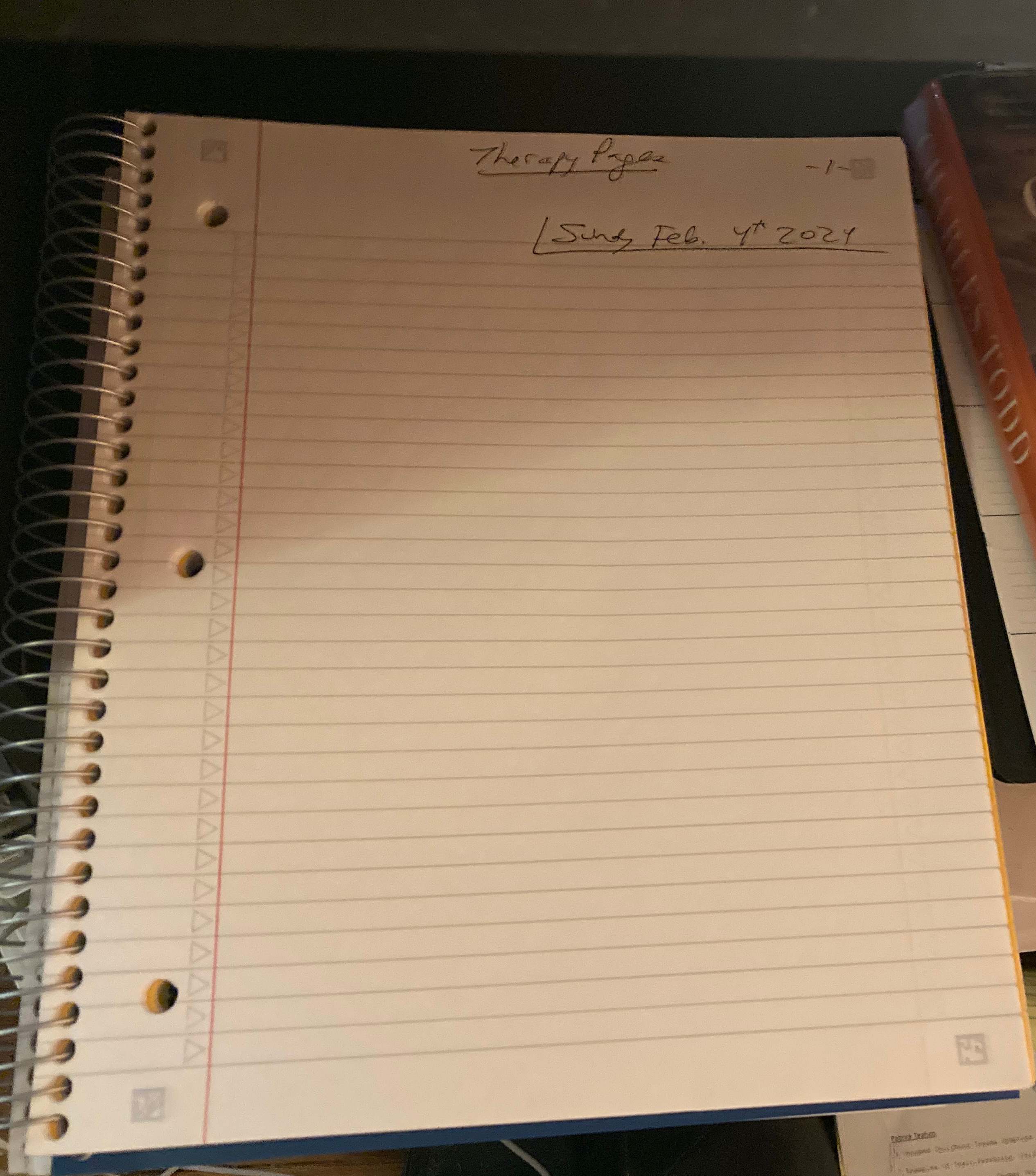
About a million years ago, I read Julia Cameron’s TheArtist’s Way for the first time and committed to doing Morning Pages every day (writing three stream of consciousness pages as soon as you wake up). I didn’t always do them in the morning, and I almost never stopped at three pages, so instead of calling them morning pages I called them my therapy pages, and I have a stack of boxes in my closet filled with old notebooks to show for it. But at some point, I stopped the practice, in all but name. I kept the notebooks nearby – there’s also always a five subject college ruled spiral bound notebook on my bedside table, with the day and date at the top of the page, but some days I forget to write anything, and others I just write a paragraph or two about my day before going to sleep, like sending a postcard to a good friend to keep up the connection, but not sitting down for a good long chat.
I was actually proud of myself for taking longer to finish each notebook, because it seemed so self-absorbed to keep writing so much just for myself, and because I have no more room in my closet to stack boxes of notebooks.
There’s also the thing I did early on that is a big no-no in Morning Pages, according to Julia Cameron. I started writing my Therapy Pages around the same time as I started seeing my therapist, and when I got frustrated by how little I could tell her in forty-five minutes per week that I told her about my Therapy Pages and she asked if she could read them and I said yes.
On one hand, my therapist got to know me really well really quickly, because I didn’t go back to edit the pages before handing them to her, but inevitably, knowing that she would be reading them, my internal editor took over and stopped me from writing things I didn’t feel comfortable having her read. And one more thing happened: my therapist told me that my Therapy Pages were better than anything else I’d written, because I’d also made the mistake of giving her my short stories to read and she wasn’t impressed; just like she wasn’t impressed years later with my novels, or essays. But she loved my Therapy Pages and she wanted me to publish them – this was before Amazon self-publishing became a thing – and she would not listen to me when I said, a) no one would publish them and b) I wouldn’t want to publish them, because they were supposed to just be for me.
I built up the nerve to stop showing her my pages pretty early on (probably also because I felt guilty for giving her so much work to do outside of our regular sessions), but the feeling of having someone reading over my shoulder, and judging me, never went away. Neither did the feeling that I was an utter disappointment as a writer, and/or a coward, and/or ten other horrible things.
Recently, I found out that Julia Cameron had actually continued to write more books after The Artist’s Way, and I ordered one of them, called The Listening Path. I can’t remember why Julia Cameron came up as a recommendation on Amazon that day: maybe someone had mentioned her name to me, or there was some random confluence of events in the Amazon algorithm while I was looking for something else. But even then, I just put the book on my pile of books to read and went on with whatever else I was doing. I was kind of reluctant to open the book, honestly. I’m so tired of advice on how to be better and I’m tired of being told to do something other than what I’m already doing. I’m just really, really tired, full stop.
But when I finished the latest book on my reading pile – an odd little middle grade fantasy about kabbalah, set at a Jewish sleepaway camp, by Ari Goelman – the next book on the pile was The Listening Path and I couldn’t avoid the book without openly acknowledging, to myself, that I was trying afraid of it. So I started reading. And within the first few pages of the introduction, reminding the reader about Morning Pages and Artist’s Dates and other advice from previous books, some part of my brain perked up and said, hey, why am I not doing Therapy Pages anymore?
I won’t go through the whole grumpy internal argument that ensued, but, after a few more pages of reading, and grumping, I picked up my five subject spiral bound notebook and started to write again, telling myself that I couldn’t stop writing until I’d done three pages, instead of the three or four lines I’d gotten used to. And it felt right. Not easy, or comfortable, to be honest, but right.
I still haven’t finished reading the introduction to The Listening Path, so I can’t say anything meaningful about the book itself, and already her insistence on the magical power of Morning Pages to get you unstuck and help you hear your inner self and blah blah blah is annoying the crap out of me, because where does she get off telling me what to do and acting like everyone is the same and can follow the same prescription to a better life, and on and on and on. Except, I think, for me, for this, she’s 100% right. I need this kind of stream-of-consciousness/required writing in order to hear myself again.
I need it for me, not for my novels, though it could also help me get back on track with writing the damned novels. But I’m terrified of what will come up in these Therapy Pages of mine – which is probably the real reason why I started letting myself avoid them in the first place. I’m afraid of all of the crummy things I might say to myself, and all of the ways I will feel challenged, and not good enough, and pushed to do things I’m not ready to do; and I’m really worried about turning that spigot back on. But somewhere along the way I stopped listening to myself, and even if it has made me feel safer, it has also made me feel less, of everything.
So, we’ll see how it goes. If a week’s worth of three pages a day re-opens the hellmouth in my brain, at least I’ll know what not to do.
Wish me luck.
If you haven’t had a chance yet, please check out my Young Adult novel, Yeshiva Girl, on Amazon. And if you feel called to write a review of the book, on Amazon, or anywhere else, I’d be honored.
Yeshiva Girl is about a Jewish teenager on Long Island, named Isabel, though her father calls her Jezebel. Her father has been accused of inappropriate sexual behavior with one of his students, which he denies, but Izzy implicitly believes it’s true. As a result of his problems, her father sends her to a co-ed Orthodox yeshiva for tenth grade, out of the blue, and Izzy and her mother can’t figure out how to prevent it. At Yeshiva, though, Izzy finds that religious people are much more complicated than she had expected. Some, like her father, may use religion as a place to hide, but others search for and find comfort, and community, and even enlightenment. The question is, what will Izzy find?




 rachelmankowitz