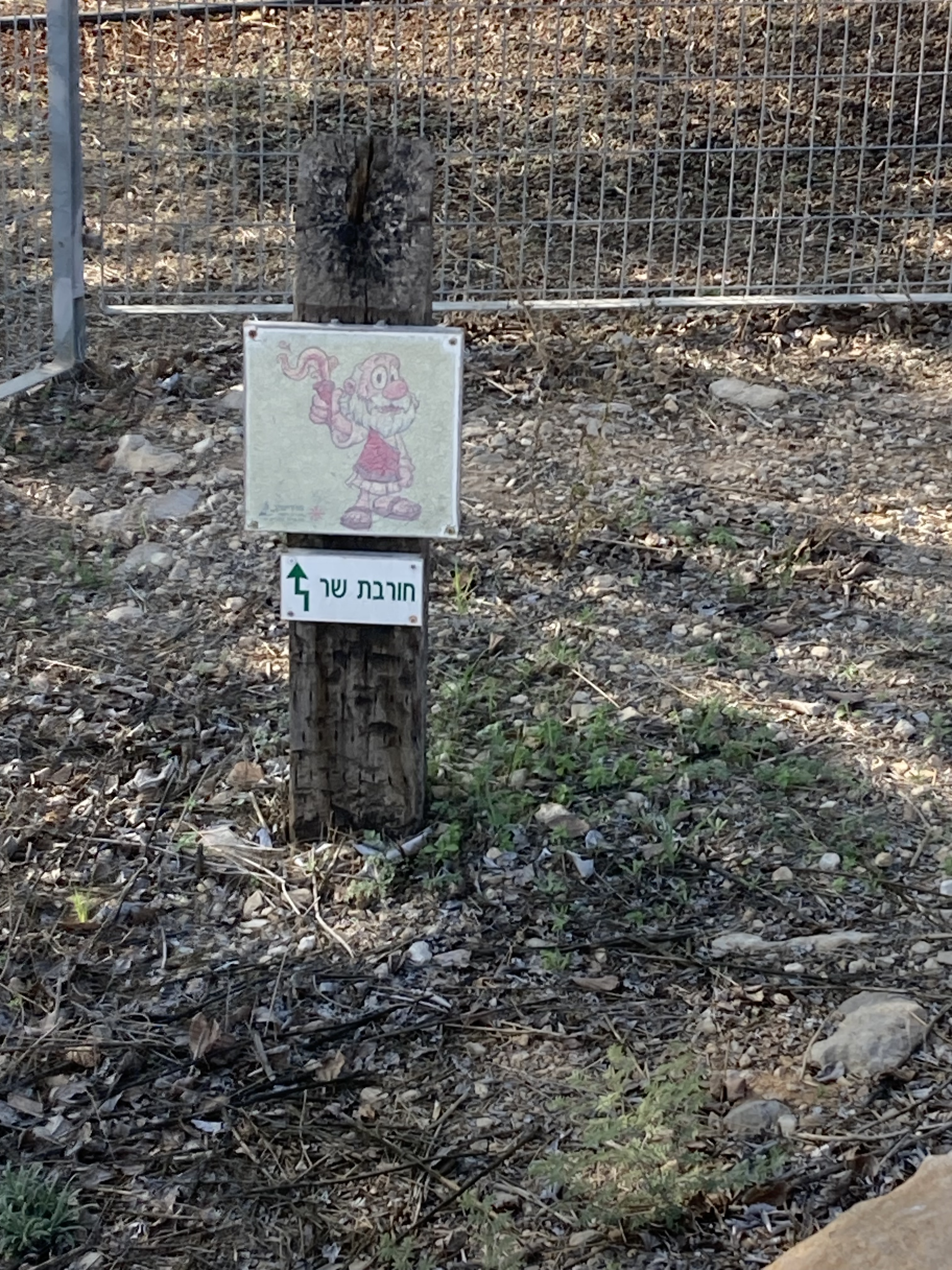
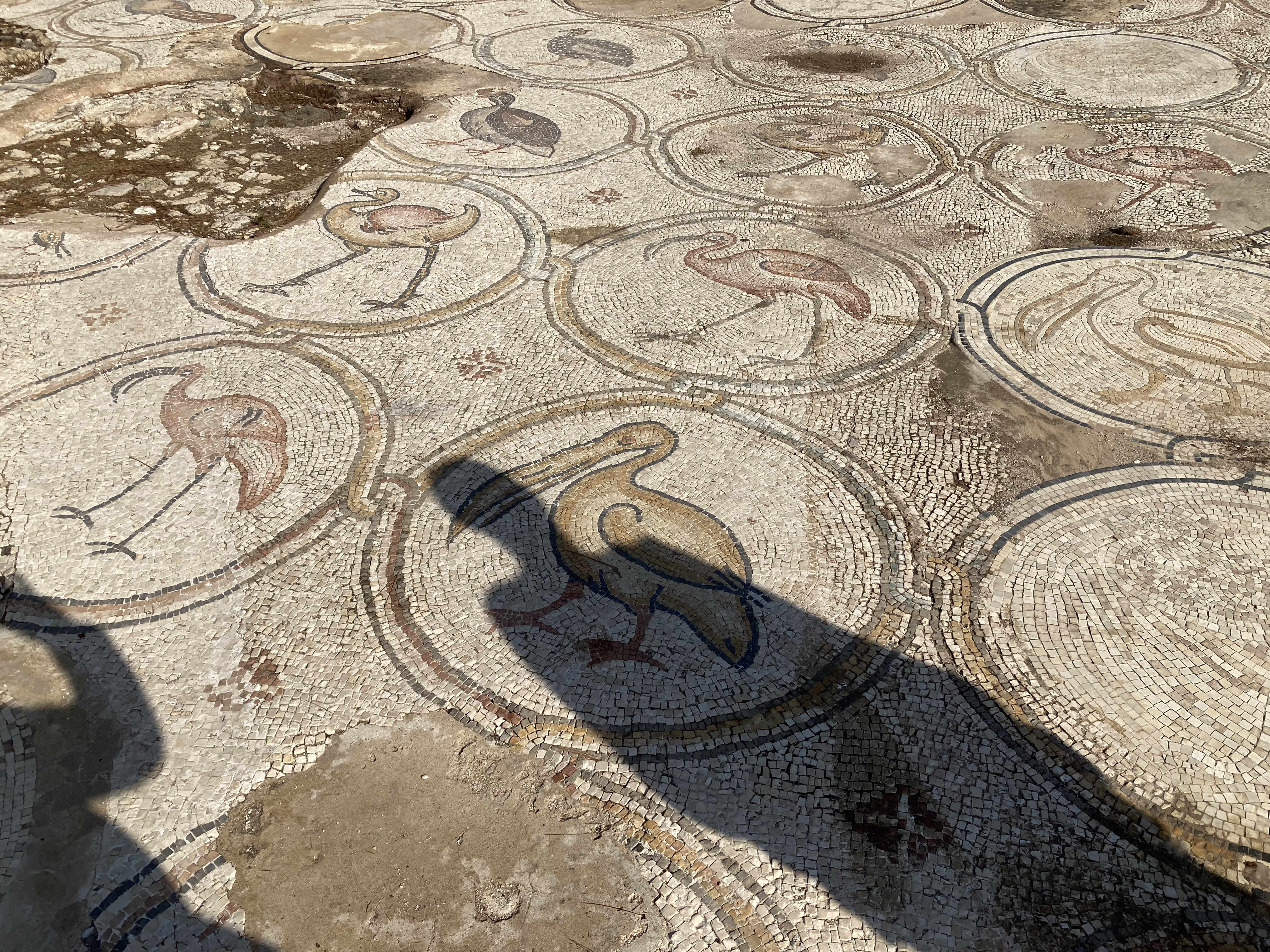
I slept well going into day eight of the trip, our official rest day in Modiin, and we took our time over breakfast, letting the day start slowly. Our first little excursion was to the ruins of the oldest known synagogue/temple found in Israel, basically because it was only a few minutes away. There were signs with a little cartoon character named Modi to guide us up to the site, and of course, I managed to trip over myself on the way. My legs just refused to fully come back online. We had to sit down to rest and recover once we got to the ruins, and I was appreciating how the remnants of the walls of the temple were so conveniently placed for sitting, when I heard people coming and turned to see a whole group of seminary girls walking up the path.
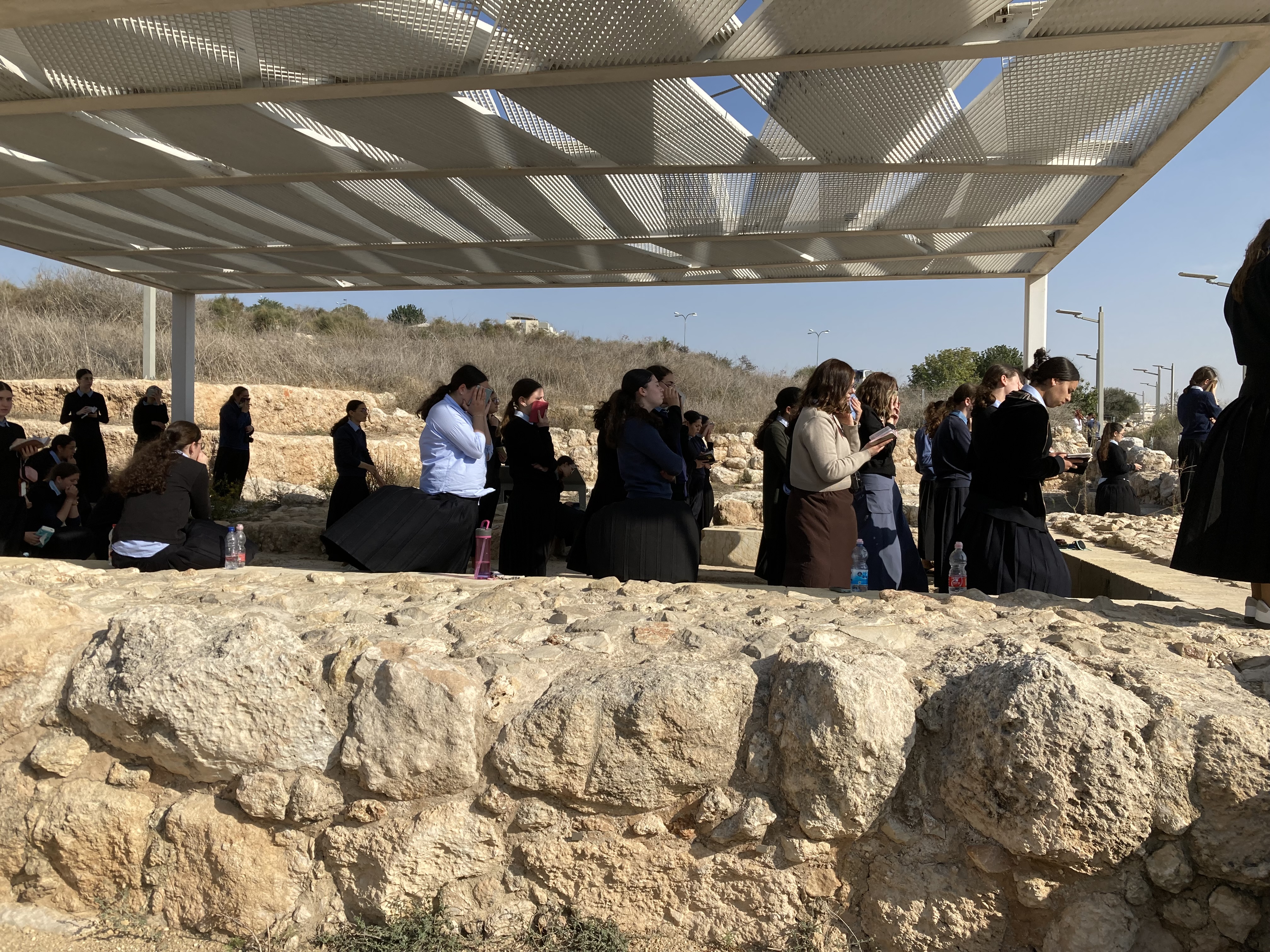
My friend asked if we should leave, but they invited us to stay and hear the presentation with them. In among all of the 19- and 20-year-old girls, wearing dark blue sweaters and long pleated skirts despite the warm weather, was one diminutive man in a long back coat, and yet this largely unassuming Chasidic looking man, wearing pants that didn’t quite meet his worn black sneakers, transformed into an old-time storyteller as soon as he started to speak.
The talk was all in Hebrew, and I was pretty sure I must be missing some important words at first, because it sounded like he was talking about a time capsule, or space aliens, until I realized that he was talking about the first Aliyah of the Ethiopian Jews to Israel in the 1980’s. I was still pretty sure that I was misunderstanding something, though, because I couldn’t figure out what the rescue of Jews from Ethiopia had to do with an ancient Temple ruin in Israel, but it turned out that he was comparing this very old community of Jews, who had been cut off from the main stream of Judaism for more than two millennia, to a time capsule that had allowed us to be teleported back in time to before the destruction of the second temple in Jerusalem. Those Ethiopian Jews, who had trekked across the dessert for weeks in order to be airlifted out of civil war and famine in Africa, had maintained an ancient form of Judaism where they still had priests (called Kesim) instead of rabbis, and animal sacrifices, and didn’t celebrate Hanukah or Purim, holidays that were only added to the calendar in the rabbinic period.
I teach my students about the Ethiopian Jews every year, among other Jewish communities around the world, and especially about the difficulties they faced when they came to the modern state of Israel and had to prove their ancestry, and fight against the orthodox rabbinate in order to maintain their own ritual practices, but this was a whole different way of seeing them; not as poor relations being saved from famine, or as new immigrants struggling to fit in, but as a gift of memory and tradition that could strengthen our whole people’s awareness of the past.
The frame of the story did its job, and we were successfully transported back to ancient temple times, when this ruin was a sacred building, and the high priest, dressed in magnificent robes, was in charge of the daily sacrifices. I could almost smell the Reiach nichoach, the pleasing odor (kind of like barbecue) of the sacrifices, and see the grandeur of the temple, even though all I could really see was a stone floor, with broken walls, and a man in a too big black coat sweating in the heat of the day.
Our storyteller told us that this spot where we were sitting was, the experts were 90% sure, most likely the site where the high priest Matityahu, the father of the Maccabees from the Hanukah story, had served, and therefore the starting point of the rebellion of the Maccabees against Antiochus and the Syrian Greek army. These seminary girls had clearly been brought to this place, at this time, for a reason: to find a connection to the Hanukah story that they could feel deep in their bones and hold onto throughout the holiday, to the lighting of the last candle. And there I was, by accident, in a place that otherwise would have looked like just another pile of rocks to me, inspired right along with them.
There’s some queasiness around the story of the Maccabees for liberal Jews, like me, because they weren’t just fighting against outsiders, but also against the Hellenized Jews who welcomed a loosening of the strictures of Jewish practice. And yet, these images of Matityahu in his priestly robes and the sense of the history imbued in this place was palpable for me too. And then he broke the spell, and returned to being the shy, unassuming man in a sea of women, telling the girls that they could take the opportunity to pray in this holy space, or to read psalms, or to just stand and take it in. All of the girls seemed to have prayer books on them, stuffed into hidden pockets in their skirts, I guess, and they began to silently read and shuckle and pray with kavanah (intention), like they really meant it. The storyteller wandered off, though, to allow the girls some privacy to absorb, or create, the holiness they needed from the ruins.
My friend and I quietly left the temple, first to see the ancient Mikva (the ritual bath) next to the temple ruins, where they would have cleansed their bodies before entering this sacred place, and then following the little Modi signs back down the hill to the car. We could still see the storyteller in the distance, looking awkward and alone again as he paced back and forth, waiting for the girls to be ready to leave.
After that, we met up with my friend’s husband at a local café that specialized in Sabich (eggplant, hard boiled eggs, chummus, etc., in a pita), to continue my education in Israeli food, and then we walked along the main street of Modiin, stopping to look at all of the stickers to honor fallen soldiers. These stickers had been ubiquitous throughout my visit, at the train station, on store windows, on the walls of buildings, but until now I hadn’t known what they really were. My friend’s husband explained that each sticker, with a smiling picture of a young person and a quote, was designed by the families of the fallen soldiers, so that people could get to know their lost loved ones and share in the wisdom they’d lived and learned in their short lives. I’d known about the posters of the hostages, of course, the ones that got ripped down over and over in New York and that were no longer needed now that the final living hostages had been returned from Gaza, but I hadn’t known about the stickers.
When it was time for my friend’s husband to get back to work, we dropped him off and headed to the mall to find a bookstore. A friend of mine from my Hebrew classes had gone to Israel the year before, and one of her favorite souvenirs had been Agatha Christie books translated into Hebrew, so when we’d decided to stay in Modiin for the day a bookstore was one of the first things on my to-do list. We were waved through by the security guard, as we drove into the underground parking lot, and my friend explained that it was his job to make sure we weren’t bringing weapons into the mall. Given that he’d barely looked at us, and certainly hadn’t checked in the backseat or the trunk of the car, he didn’t seem to be doing a very good job.
Everything in the mall was relatively new, even the floors of the parking lot still shined, but once we got inside it was a mall like any other, with free standing escalators to torment me as we went up, up, up. I held onto the railings for dear life each time, keeping my eyes closed for as long as possible and breathing a sigh of relief when we returned to solid ground. But when I opened my eyes, I could almost believe I was back on Long Island, with the kiosks selling candy, and that one store that sells every kind of tea, and so many clothing stores with English names. The only way you could tell that we were in Israel was that some of the stores’ signs were in Hebrew.
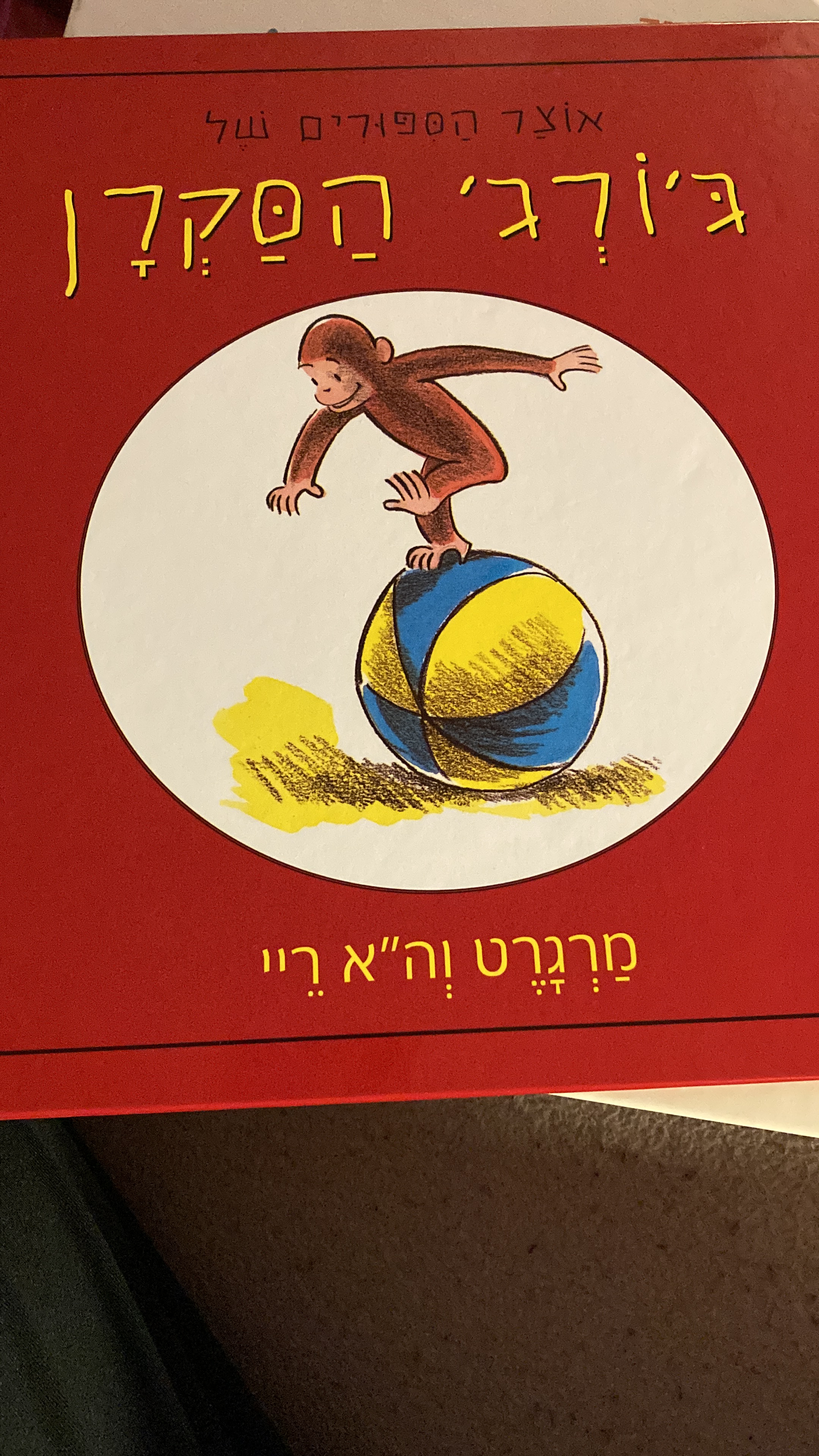
And then we reached the bookstore. It had actually been a long time since my last visit to a bookstore, given my Amazon fixation, but books are addictive, no matter the language, and once I was inside my eyes glazed over. I could find classics of Israeli literature over here, and translations of American bestsellers over there, and board games and stationery and gifts here and there and everywhere. I started collecting hardcover children’s books (Curious George in Hebrew!) like they were candy, and eventually had to force myself to put a few back so I wouldn’t fall over from the weight of it all. On my way to the cash register to pay for everything, I finally found the Agatha Christie books in Hebrew and had to add a few to the top of my pile, of course. I don’t know what happened exactly; it was like a switch flipped in my brain and after a week of looking at all kinds of potential gifts and souvenirs and always thinking twice, I stopped thinking altogether and just kept grabbing things. My friend said it was the first time she’d seen me so happy the whole trip (which I hope wasn’t really true, but books do have a unique effect on me).
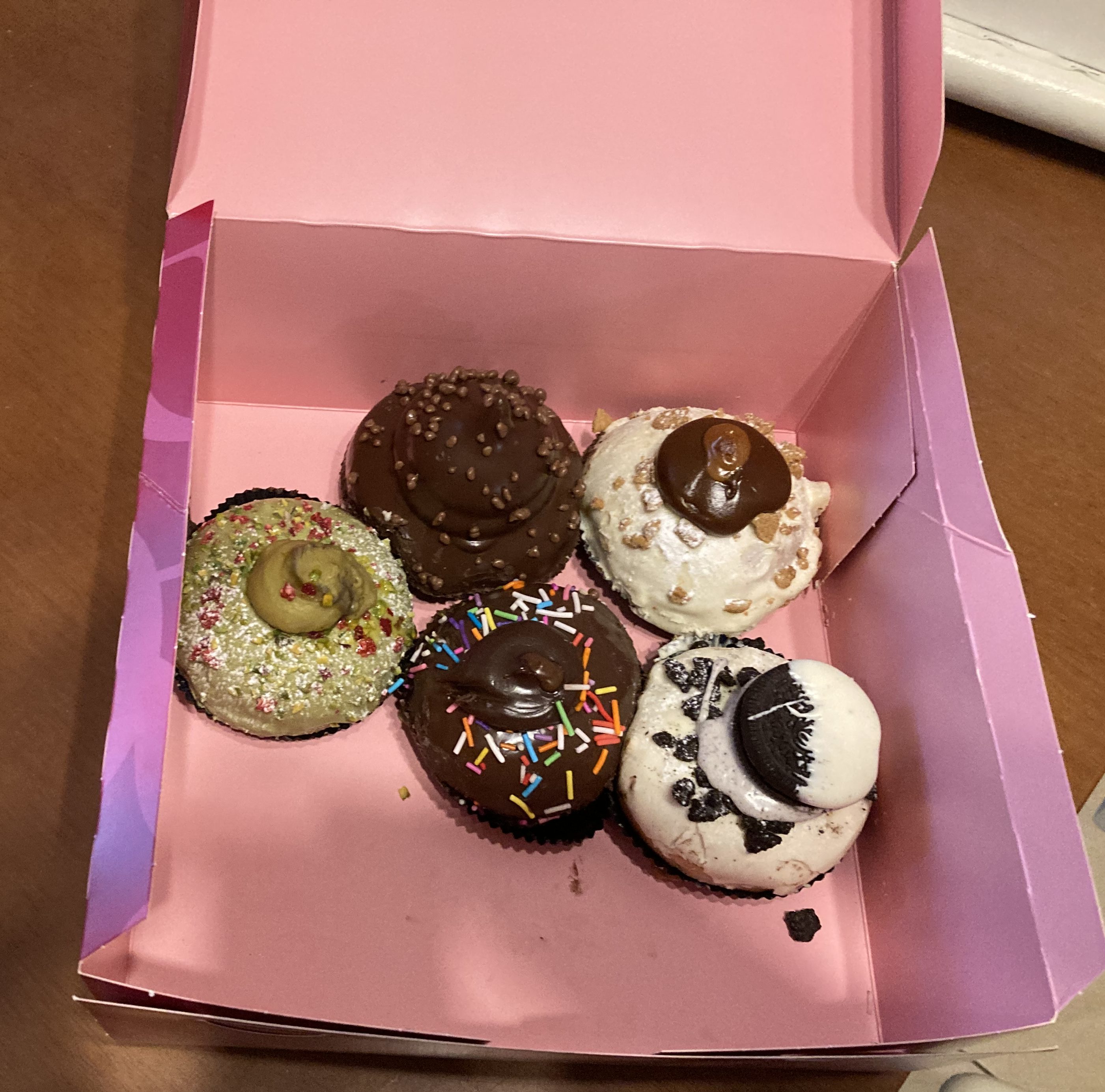
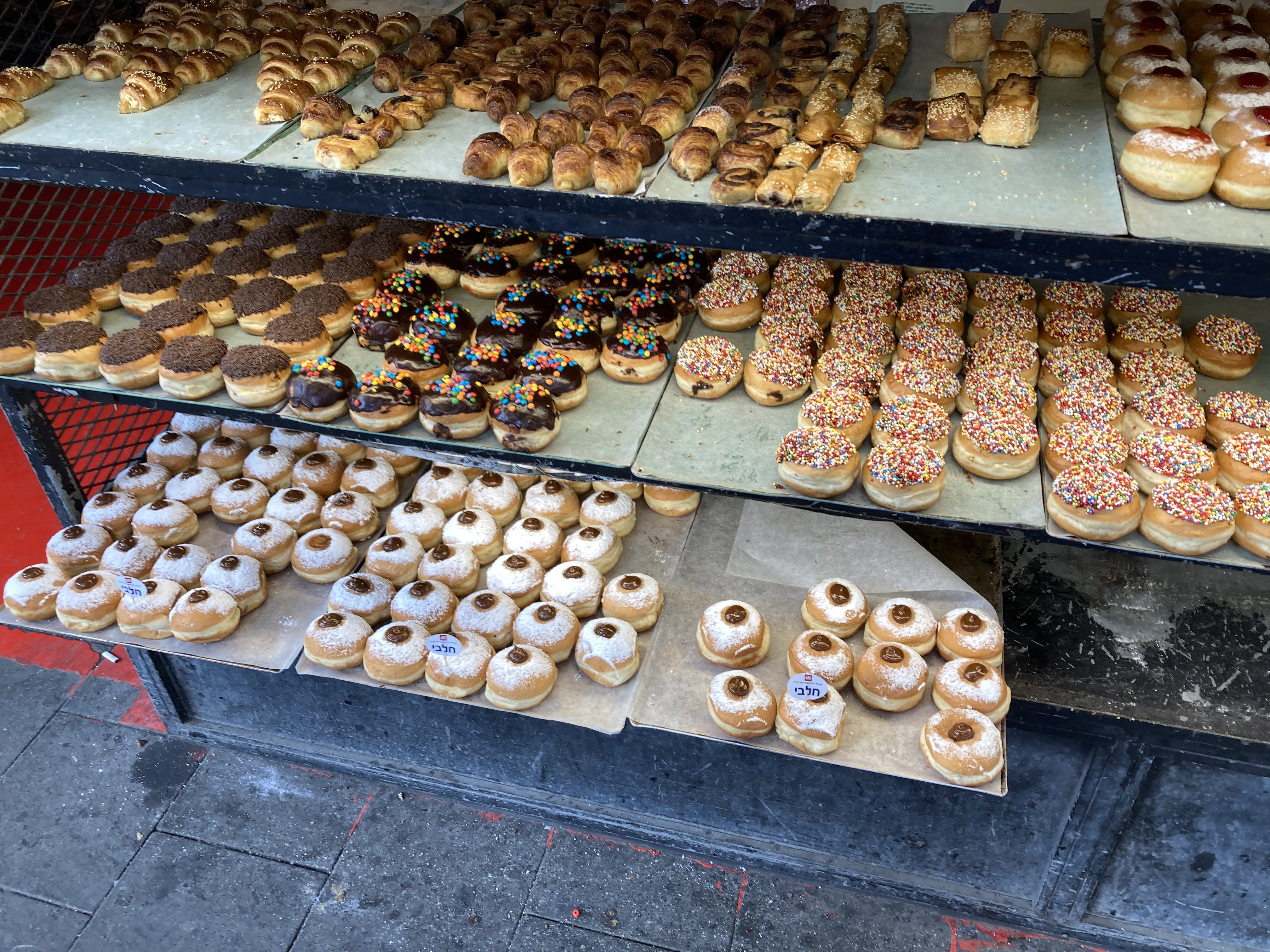
High from my purchases, our next stop was a bakery a few stores down, called Roladin, famous for its sufganyiot (the donuts that take over the country for Hanukkah each year), and I chose a bunch of different donuts, with various fillings and icings and toppings, to bring back to her family.
In the meantime, we picked up her husband and younger son, who had recently gotten his driver’s license. They have a crazy system in Israel, where you have to take an extraordinary number of driving lessons, from a professional, that you pay for, before you can even take the driving test, and then once you have your license, you still have to practice a certain number of hours with an adult in the car before you can qualify to drive on your own. So all week, my friend’s son had been begging his parents for any chance to practice driving, and I’d watched each of them return from these rides looking traumatized, but it turned out that he was actually a very good driver, much better at managing the roundabouts than I would have been, and he only struggled once, when his parents gave him conflicting instructions for how to correctly back up into their parking space.
We celebrated his achievement by cutting each of the donuts into five equal pieces, so we could each try every flavor. My favorite was pistachio, but that was expected, since pistachio reminds me of my grandfather and therefore always tastes best to me. Other favorites were the cookies and cream, and the caramel. After that, the kids had about ten more activities each, and I vegged out until it was time to have dinner and go to bed. I fell asleep listing all of the things I would need to bring with me on my next trip to Israel, and all of the things I now knew I could leave behind, and when I woke up the next morning, I realized that I’d automatically assumed that I would be coming back to Israel, soon.
Day nine started early, because it was going to be a long drive north to the kibbutz where their older daughter was doing her national service for the year. My friend had invited her husband along, mostly so that he could do the driving, but also because we were visiting their two oldest children, so, it only seemed fair. The further north we went, the more farmland and undeveloped land we passed, and the longer we went without seeing a McDonald’s sign. If getting to Caesarea by public transportation was inconvenient, getting to the kibbutz was pretty much impossible without a car, and my friend told me that a lot of the kids in the area hitchhiked, either standing on the side of the road with a hand out, or more often, using an app for Tremping. I was sure I’d misheard, because it sounded like she was calling her daughter a “tramp,” like, a loose woman, or like an old-time hobo jumping on cargo trains, carrying a stick and a dream, but it turned out that the Hebrew word Tremp comes from the German Trampen, and just means hitchhiking.
I can’t think of anyone I know in New York who would be okay with their kids hitchhiking, but in Israel it seemed to be considered normal, and my friend had had to adapt, to the point where her kids kept trying to convince her to stop and pick up random young people from the side of the road, to pay back all the rides that had been given to them.
When we arrived at the kibbutz, I finally met their older daughter again (the last time I’d see her was when she was a little girl, chasing my dog, Butterfly, around a field in Upstate New York, and happy to be chased in return). I’d seen pictures of her over the years, of course, but seeing her in person, and hearing her voice, was like flashing back to high school and seeing my friend as a young woman all over again; the same casual confidence, the playful glint in her eye, and a very strong tendency to give side eye. She had recruited one of older members of the kibbutz to give us a tour, and as he offered us fresh dates (the favored crop of the kibbutz), he showed us entrances to the old shelters, which hid underground rooms the size of a ballfield, and then he took us to a model of the original kibbutz layout, and told us stories about the early years. When my friend and her husband mentioned that they’d been dreaming about moving north, the old man made it clear that they don’t accept new members over age forty at this particular kibbutz, and I got a chance to see that my friend is still an expert at giving side eye herself.
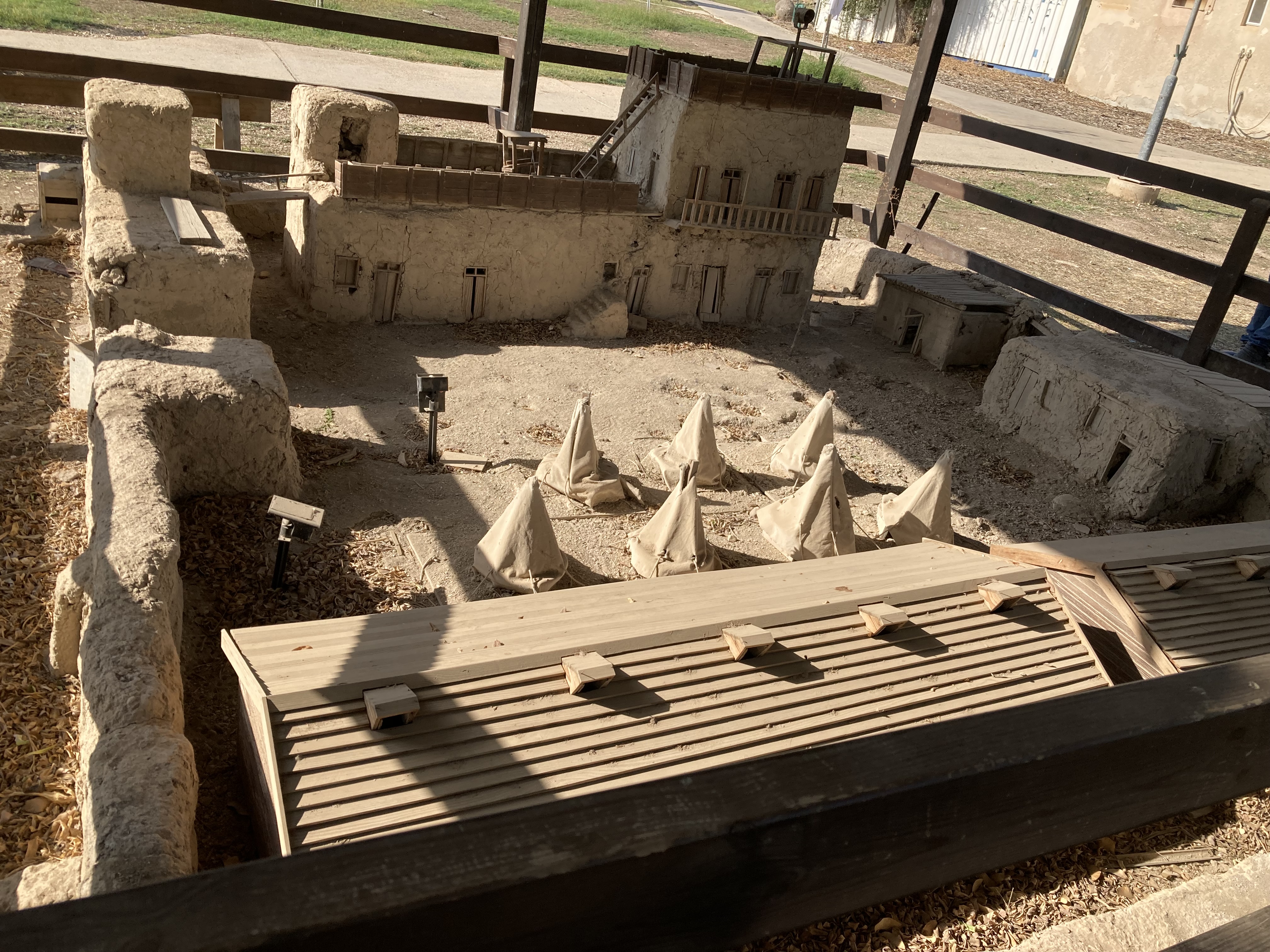
We ate lunch at a small café at the kibbutz next door, and my friend’s husband said that he’d actually lived at this second kibbutz for four months when he first moved to Israel, and he could still hear echoes of the older members yelling at him to stay off the grass.
As we drove back to the first kibbutz to drop their daughter back at work, she leaned over and pointed out a mountain in the not-too-far distance and told me, “That’s Jordan.” Good thing Israel isn’t at war with Jordan, anymore, because there’s barely a breath between the two countries at that point. She also made a valiant effort to try to recruit me to convince her parents to stay until ten or eleven o’clock at night, so she could catch a ride home with them after work, but suffice it to say, her campaign was unsuccessful.
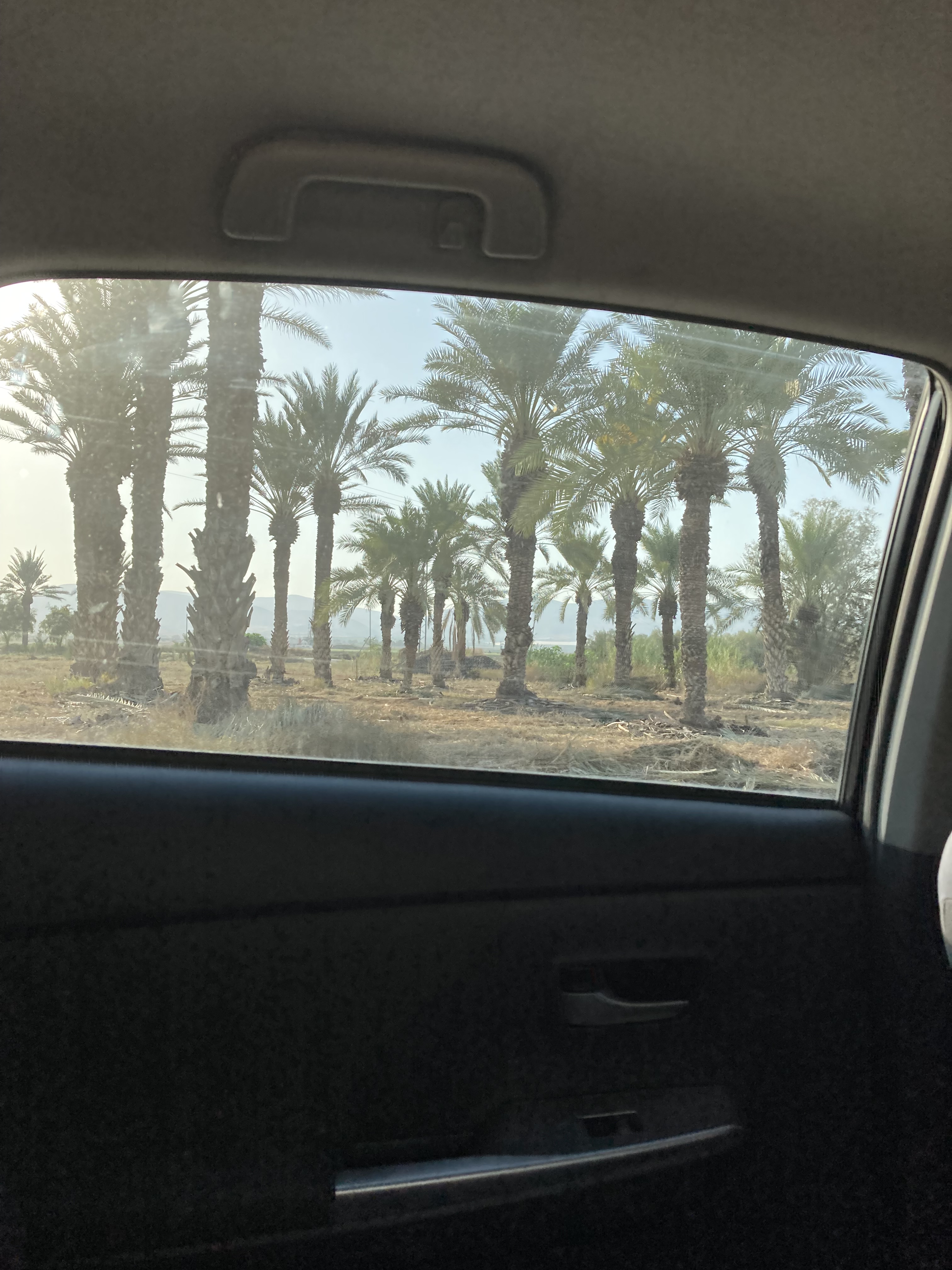
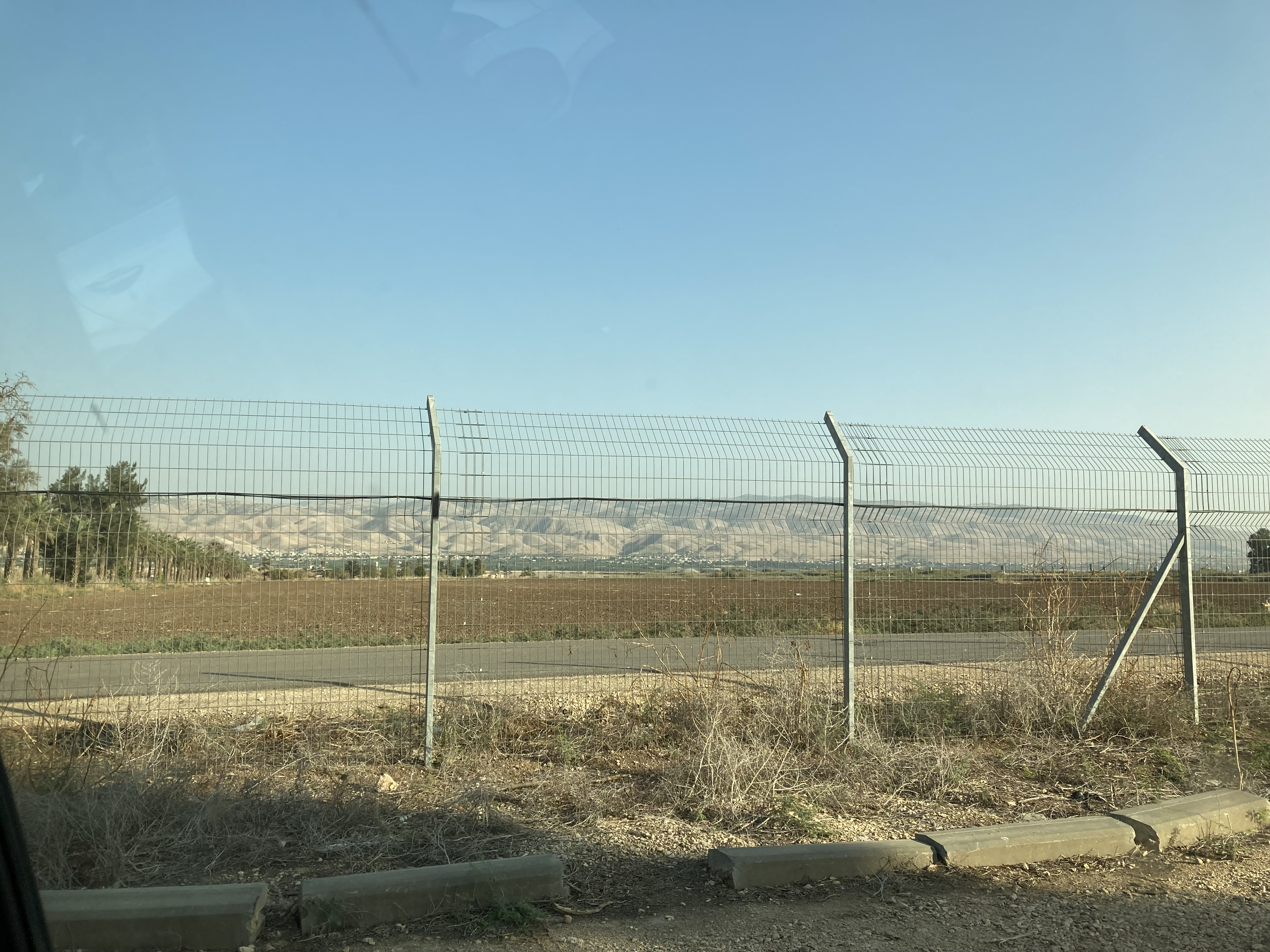
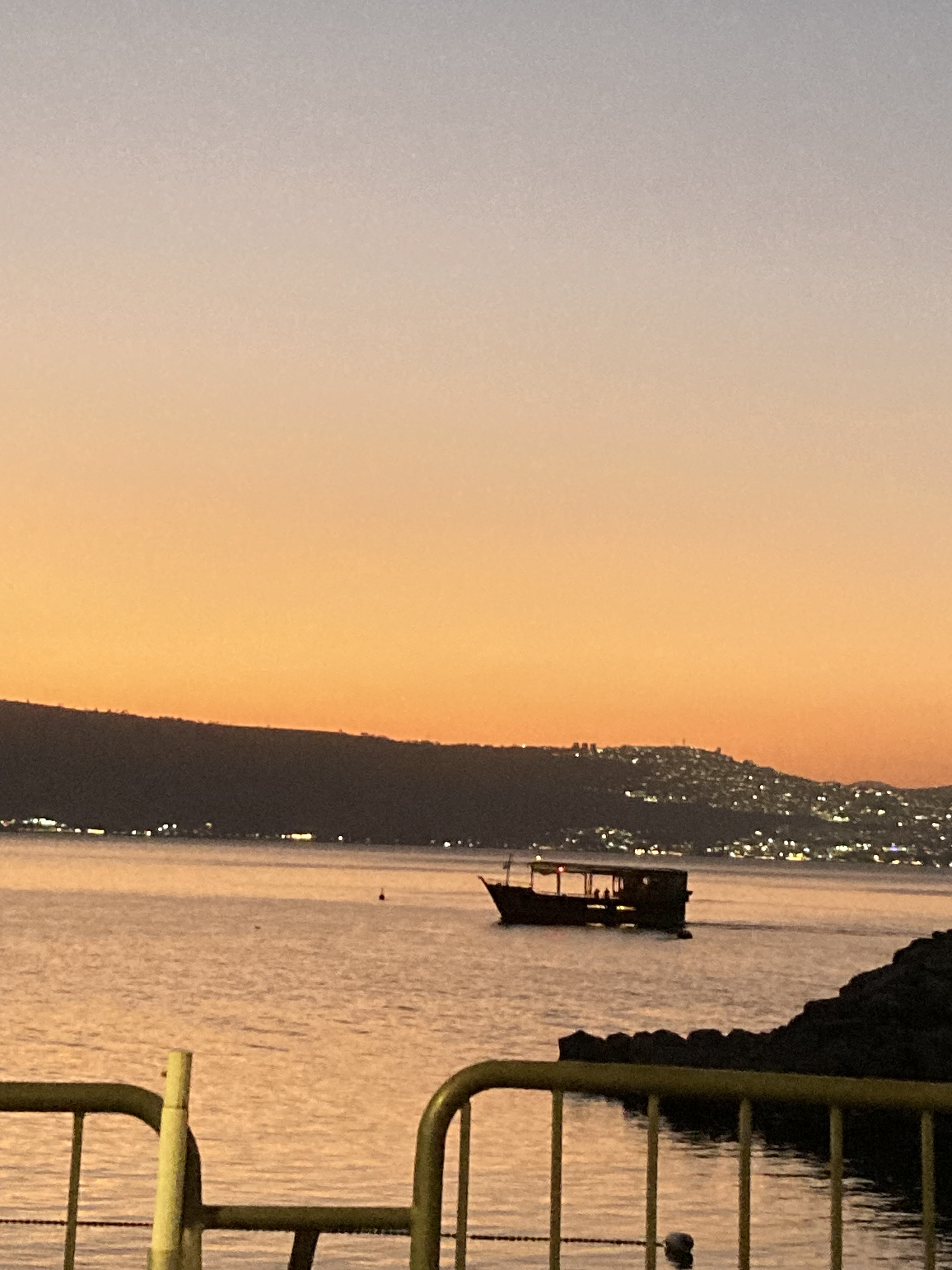
Once she was safely offloaded, we drove further north to pick up their eldest at his school and then went to the more touristy kibbutz where his girlfriend worked, right on the Kineret (the Sea of Galilee). We sat outside, on all-weather couches, and watched the sun set on the water, listening to American eighties music and watching the Christian touring boats go out to see where Jesus had walked on water. I hovered in and out of the conversations around me, leaving father and son to compare German and Israeli beer, and mother and son to discuss family vacation dates, without my help. And then it was time to leave. We dropped their son off at the Moshav where he was living and headed south again, stopping once to pick up some barbecue for dinner (brisket and chummus and sauces in something like pizza dough, tasty but challenging to eat in the back seat of a moving car). I closed my eyes at some point, so the trip back to Modiin seemed much quicker than the trip north that morning.
By the time we got back to their apartment, I had just enough energy left to take a shower, pack what I could pack, and get ready for bed. At some point overnight, I heard later, their older daughter had arrived, using the Tremping app successfully, and fell asleep in her younger sister’s room, since I was still occupying hers.
Everyone was very busy the next morning, so it was just me and my friend in the car on the ride to the airport. She came with me as far as she was allowed – which was a good thing, because I managed to trip over myself again trying to organize my bags. She made sure I was safely on the security line, and upright, before giving me a hug and heading off to manage the rest of the day’s activities.
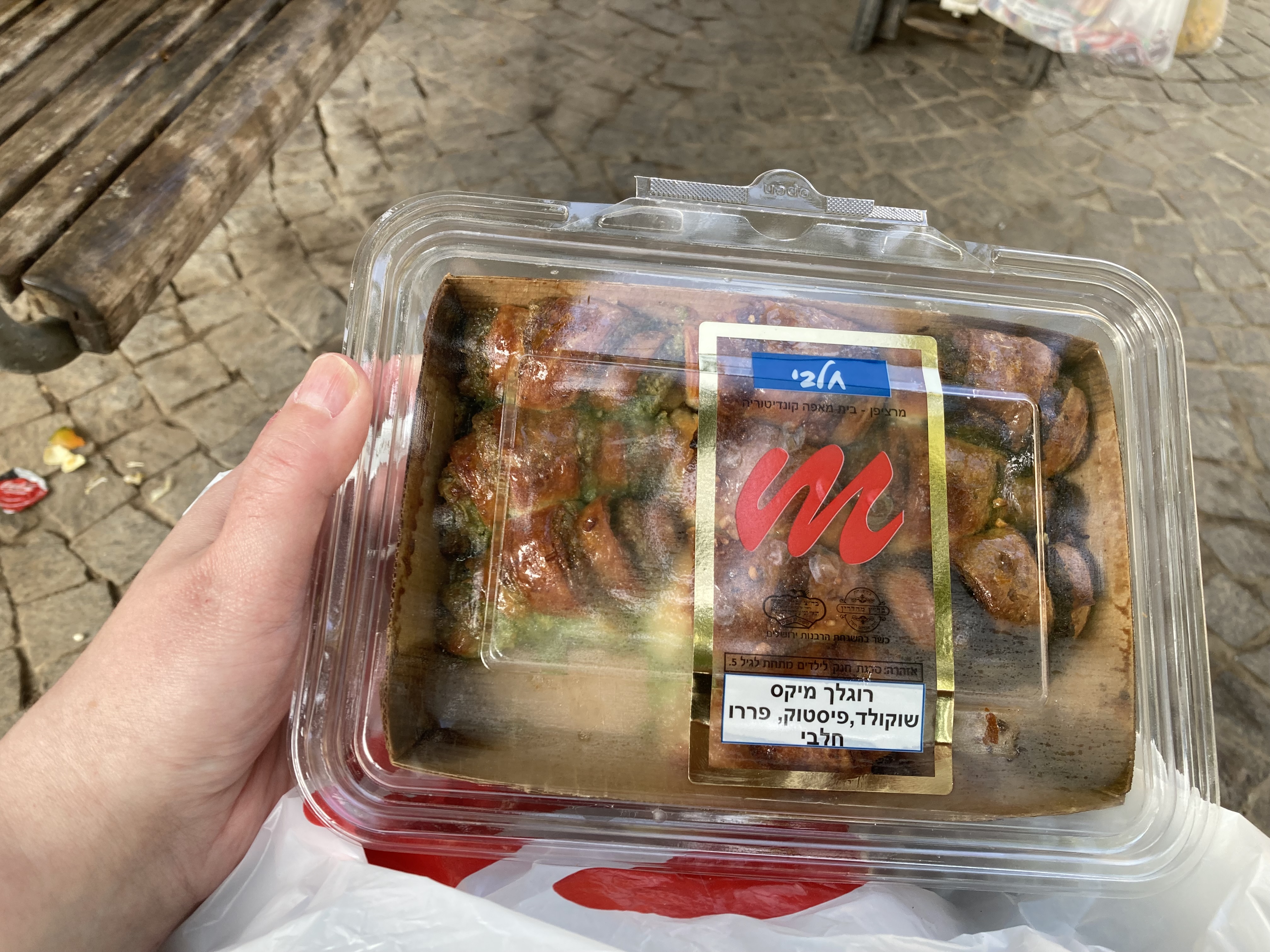
I remembered to take my computer (which I had not used at all) out of my bag for the security check, and showed my electronic boarding pass and passport to everyone who asked, and then I wandered through the duty-free stores, filling the last few spots in my bag with packages of Krembos and baklava to bring home to Mom.
Once again, the staff rejected my electronic boarding pass at the El Al counter, but they replaced it quickly with a paper boarding pass, and then we had to wait on line while they hand checked everyone’s bags. I had a nice moment with the security guy, vibing over the Krembo packages in my bag (ayn al Krembo/there’s nothing like Krembo), but when I struggled to reclose my suitcase fast enough, he got snippy with me, telling me to drag my open bags to the side before trying to close them. A nice older woman helped me repack my bags, and unruffle my feathers, and I made my way onto the plane.
This time, when the entertainment screen asked for my preferred language, I chose English, and managed to watch 14 of the 15 episodes of The Pitt to fill the 12-hour flight (more about that in another post, I think). It was a little after six pm when we arrived at JFK, and when I switched my phone back to its regular American carrier and texted Mom, she was already on her way with the car service (thank god, because if I’d had to navigate my way out of JFK on my own, after a 12 hour flight with no sleep, I would have curled up in a corner of the airport and cried).
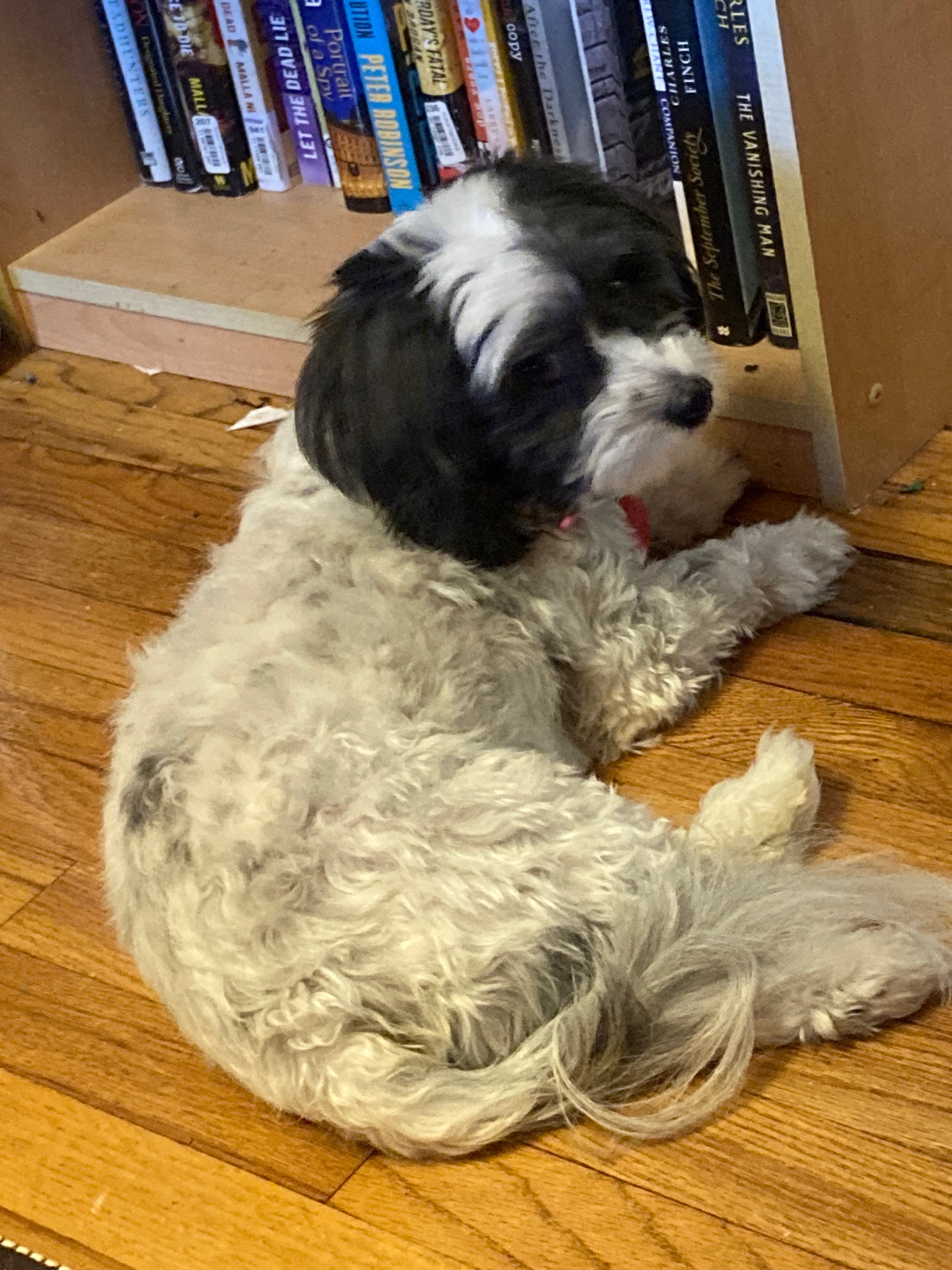
The ride home was quick and painless, and Tzipporah was right there in her bed when I walked into the apartment, as if I’d never left. It was a relief to be back home, and back to my regular routines (laundry, food shopping, teaching, combing a reluctant puppy dog), but part of my mind was still back in Israel, wondering what everyone was doing, and which salatim they were having for Shabbat dinner.
Even a month later, I still feel like I have one foot on Long Island and one foot back in Israel, and I keep thinking of more places I want to visit on my next trip: like Haifa, and Mitzpe Ramon, and maybe next time I’ll have the emotional fortitude to visit the memorials in the Gaza envelope area for the people who were killed on October 7th, though maybe not. All I know for sure is that I want to go back. Not right away; I need to rest and recover first, and save up money for the next set of adventures. But soon.

If you haven’t had a chance yet, please check out my novel, Yeshiva Girl, on Amazon. And if you feel called to write a review of the book, on Amazon, or anywhere else, I’d be honored.
Yeshiva Girl is about a Jewish teenager on Long Island, named Isabel, though her father calls her Jezebel. Her father has been accused of inappropriate sexual behavior with one of his students, which he denies, but Izzy implicitly believes it’s true. As a result of his problems, her father sends her to a co-ed Orthodox yeshiva for tenth grade, out of the blue, and Izzy and her mother can’t figure out how to prevent it. At Yeshiva, though, Izzy finds that religious people are much more complicated than she had expected. Some, like her father, may use religion as a place to hide, but others search for and find comfort, and community, and even enlightenment. The question is, what will Izzy find?














 rachelmankowitz