We have a lockdown drill every year at the synagogue school, mostly so the teachers can figure out where the safest and least visible spot is in their classrooms, because the kids are already experts. My first year as a teacher, I had to rely on my students to tell me what to do when the lockdown drill was called, and they calmly led me to my desk, where we all huddled under and behind it in the dark until we got the all-clear. My noisy, wild first group of kids turned silent and serious while they waited for the all-clear, and then quickly reverted to their usual chaos right after.
The next year, during Covid, I ended up in a random classroom with older kids I barely knew, and we all just hit the floor, each hiding under our own desks, whispers and giggles erupting all over the place. The police officers gave us a thumbs down on our attempt that time, mostly because we were completely visible through the glass wall into the garden. Somehow, we were supposed to have known to squeeze into the closet in the corner, or the cabinet under the sink. I never had to teach in that classroom again.
Eventually, I got my own classroom, and a clear plan for where and when to shelter in place. By then the Squirrel Hill synagogue shooting had happened, and we finally understood that these drills were not just pro forma – synagogues were targets. There’s a blind corner in my classroom where you can’t be seen from the door or windows, so if I move some desks out of the way we can all huddle in that corner and wait it out.
I remember having a discussion with my students, maybe five years ago, about an isolated antisemitic incident at a local public school; I don’t remember if it was a Swastika painted on the wall of the school, or something similar, but most of the adults in the neighborhood were willing to treat it as a learning opportunity for the offender. My students saw it differently. They were angry, and frightened, and had a lot of stories to tell me about similar incidents that had flown under the radar, and they needed to talk through the implications of seeing obvious signs of antisemitism in their usually friendly and welcoming environment. I mentioned it to the other teachers and to the clergy at the time, but they were mostly of the same mind as the parents, doubtful that antisemitism was really a problem in a world where racism against black people was exploding in the streets. But I guess Generation Alpha saw something coming, and now it’s here.
Over the years since the Squirrel Hill shooting, the (newly formed) security committee at the synagogue sought out grants to put in security doors, darkened windows, bollards to prevent car rammings, and, of course, security guards. And we’ve been lucky, because our local police department is knowledgeable and proactive, and there’s often a police car or two in our parking lot during the day. But the danger keeps growing. When we had our first professional development of the year, back in September, we had to practice yet another kind of drill; instead of sheltering in place, we had to practice escaping from the building and gathering at a safe distance, like a fire drill on steroids. It turned out that the only place nearby that would agree to host us in case of such an emergency was a church far down the road. Locations much closer to our building had been asked, consulted lawyers, and said no. I’d like to believe their reasons were practical – they didn’t have enough space for all of us, they didn’t have enough parking for all of the parents to come and get their kids afterwards, they didn’t have adequate security to ensure our safety – but all of those things were also true of the church that did agree to host us. The walk we took that day, talking the whole time about how we would guide our students along the side of the road and keep their attention off the danger, was exhausting and sobering. And then came the attack on the synagogue in Michigan, where they had put in all the same security measures as we did, and then the Hatzalah ambulances outside of a synagogue in London, and attacks on synagogues in Belgium and Toronto and on and on. Doing a lockdown drill is already overwhelming, but watching the news lately made me even more nervous than usual about our upcoming drill.
As expected, my current class struggled with the silence aspect of the lockdown drill. They took me seriously when I checked the hallway and locked the door and turned off the lights, and they followed willingly when I led them to the blind corner, each finding a comfortable spot on the floor, but they started to crack themselves up almost immediately, and every attempt I made to distract them made them laugh louder (I am, clearly, hysterical). Luckily, we were far enough away from the door and still quiet enough to not get in trouble with the police officers who were walking through the building, checking that our classroom doors were locked and that no one could tell we were hiding inside. My job, as it was explained to me, was to keep the kids quiet so that an attacker would skip our classroom and move on to the next classroom, or the next, but I know all of the teachers and students in those classrooms too. It’s hard to feel any sense of relief or accomplishment in getting a thumbs up on a job well done when I know that our safety could mean that someone we care about becomes the next target. But the kids came through the drill unscathed. They especially liked that it prevented me from actually teaching them anything. They are experts at deflecting my lesson plans as it is, so getting help from the police made them even happier, and they went on with the rest of their day without showing any outward signs of trauma.
We don’t spend a lot of time talking about these threats with our students, or about the current war with Iran, partly because we have too much to teach and too little time as it is, and partly because our directive is to focus on Jewish joy as much as possible and let the parents decided how much of the danger to share with their kids at home. But the threats still exist, whether we talk about them or not, and lately I’m feeling it.
If you haven’t had a chance yet, please check out my novel, Yeshiva Girl, on Amazon. And if you feel called to write a review of the book, on Amazon, or anywhere else, I’d be honored.
Yeshiva Girl is about a Jewish teenager on Long Island, named Isabel, though her father calls her Jezebel. Her father has been accused of inappropriate sexual behavior with one of his students, which he denies, but Izzy implicitly believes it’s true. As a result of his problems, her father sends her to a co-ed Orthodox yeshiva for tenth grade, out of the blue, and Izzy and her mother can’t figure out how to prevent it. At Yeshiva, though, Izzy finds that religious people are much more complicated than she had expected. Some, like her father, may use religion as a place to hide, but others search for and find comfort, and community, and even enlightenment. The question is, what will Izzy find?

 rachelmankowitz
such a world I thought I would never see such hate. Your students are lucky to have you as their guide. Be safe and keep moving positively forward.
Thank you!
Sadly, ever since years ago at Columbine, Colorado, society has not done enoough to protect children and staff at our schools. Hopefully, the public will demand much better counter terrorism measures and preventative techniques to stop the nonsensical shooting incidents. It’s refreshing to read that your students are aware of helpful, lifesaving measures.
The kids have grown up with these drills; they think it’s normal.
i will never understand this.
Our security drills at school were during the Cuban war crisis. Nobody was laughing under their desk. The kids today just don’t realize how real these potential threats are. The whole thing is just so sad.
I am saddened to read that in classrooms in your country, you need to have regular drills for active shooter incidents.
I hope we never have to introduce similar drills in schools in Australia.
“But the threats still exist, whether we talk about them or not, and lately I’m feeling it.“
It’s a weird and insecure world. I hope you’re able to find some way to manage the uncertainty so it’s not so overwhelming.
I like the thought of “Jewish joy”. I’ve never thought of that before.
Thank you!
It’s a terrible thing that you even have to have these drills.
I’ll never understand the human penchant for this level of hatred. Unbelievable that’s now what has to be done to help keep schools safe.
The number of lockdown drills I did over the years as a teacher? At least 2 sometimes 3 per year; and you never get used to them. Most were “routine” but even typing that makes me shake my head. We had a few that were problematic including one time when a kindergarten teacher’s door hadn’t locked properly so the police came in with their guns drawn — on a class of five year olds. Seriously?
The added layer of security at every Jewish school is important. We have a security guard in the parking lot and police at the gate. The day I was wearing a different coat and the guard didn’t recognize me, he came over to see why I was standing near the school.
Our security guards have become part of the family, Dad jokes and all, but it’s still weird to need them.
Their presence is meant to serve as a deterrent to outsiders and hopefully they can feel like part of the family to the people who belong there. I know what you mean.
I feel for you my friend.
Thank you!
This is a powerful and moving piece Rachel. You weave together the personal—the classroom moments, the children’s reactions, your own evolving role as a teacher—with the collective trauma of rising antisemitism and the ever-present reality of these drills. The contrast between the kids’ chaotic normalcy and the weight of what you’re all preparing for is striking, and your observation about the moral complexity of “succeeding” in a drill (knowing it could mean another classroom becomes the target) is deeply affecting. The way you connect your students’ earlier clarity about antisemitism to the present moment adds a poignant layer. Thank you for sharing this.🤝
Thank you!
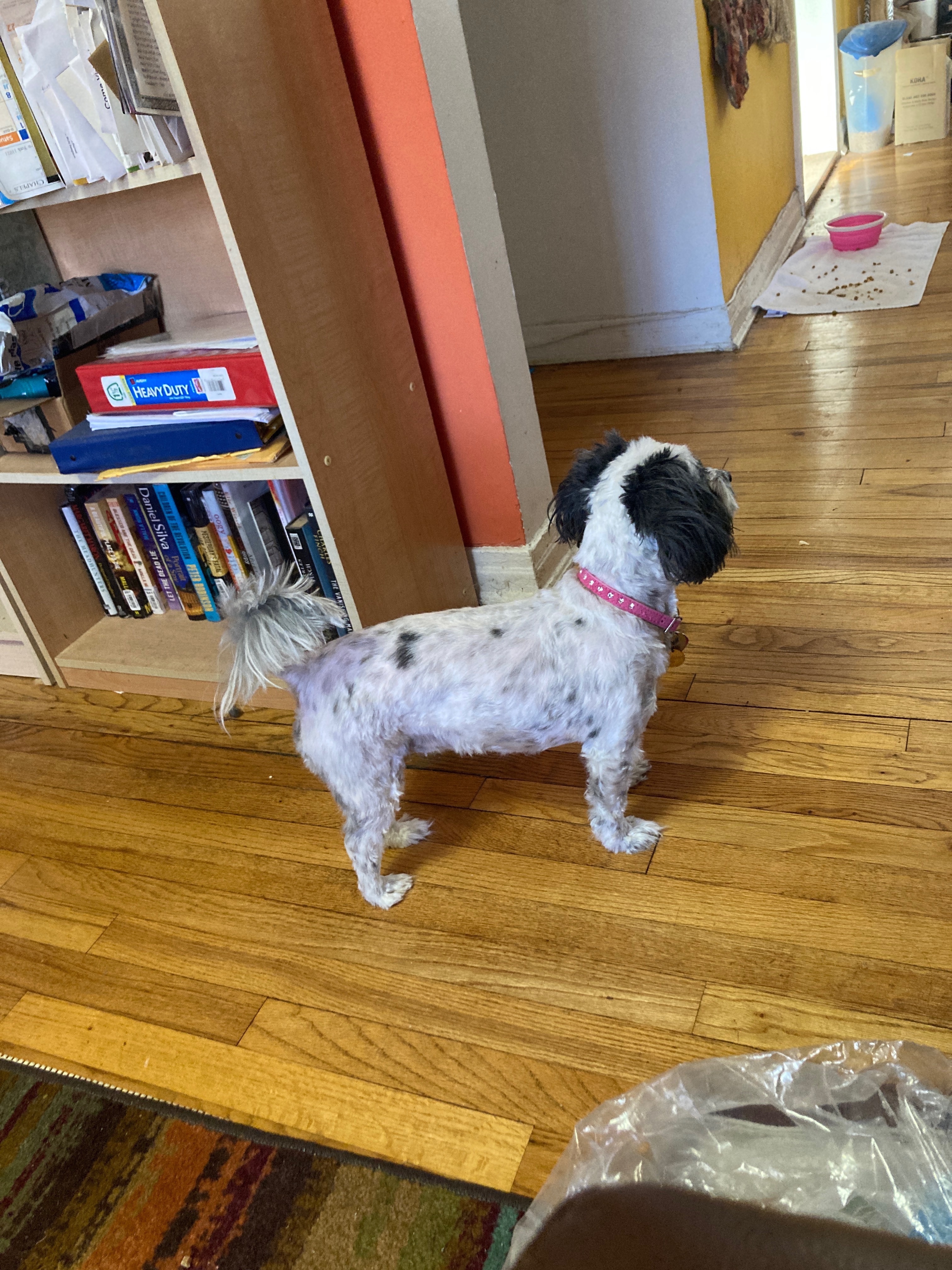
I remember The Tree of Life shooting here. Extremely sad. We pass the synagogue often going to the Pitt campus. It’s just sad people now have to prepare for this stuff. But what a cute guard dog you have!!!!
Thank you!
Such a worrying way to live.
Lockdown drills at school, are now necessary, unfortunately.
😦
We did nothing like this at school. How times have changed for the worse. Maybe giving the children tests at being completely silent for increasing periods during normal lessons would be a way to help them cope should the worst come to it.
I tried that at the beginning of the year; they thought it was hysterical.
I have had some rough students. One year as I was transferring jobs to become a teacher, I took a job at an alternative school. One of the students was a member of a neo nazi group and he used to draw symbols and tell me what it represented. I found him terrifying, one of the scariest students I have met. I lasted till the end of the contract and moved forward. What does not scare you, makes you stronger, they say.
Or freaks you out.
I am so happy to hear that your synagogue takes safety seriously and practices for preparedness. In my church, I was one of only three people who took CRASE training when it was offered. (Civilian Response to Active Shooter Environment – although they stressed that the same tactics could be used with knives and other weapons.)
The acronym they taught us for preparedness was ADD – Avoid Deny Defend. (Avoid: If possible, leave the building before trouble gets to you. Deny: Block access to the room where you are. Defend: Be prepared to fight the attacker off.). The examples they used were from actual situation where students and teachers faced trouble. In one instance, the students laid down on the floor and braced their feet against the door. When the bad guy couldn’t easily get in, he moved on. With another, the class piled desks and chairs in a tangled mess in front of the door. “Defend”, is something you could plan ahead for. What resources do you have in the classroom that could be for striking/throwing/blinding? (Throw glitter or flour in an attacker’s face? Swing a chair at them?)
I am sorry about the state of the world today and the anxiety it causes. I wish we could have more peace and love. Until things change, I’ll join my prayers of protection to yours to keep you and your students safe. ❤️
I agree that all students and teachers need to be prepared in this way.
It’s only going to get worse. Antisemitism is flourishing through online influencers on both the far right and far left, and I’m willing to bet it’s funded in part by Russia, Iran, and similar foreign actors. None of us are safe, but Jewish kids are even more vulnerable, so stay vigilant and keep listening to their concerns.
I will! Thank you!
It is beyond tragic that antisemitism is on the rise, and that synagogues and schools are being targeted. My heart goes out to all the victims and their families.
Thank you!
This is so terribly sad—and infuriating, Rachel. I’m glad you enabled us to see and feel a piece of it.
Thank you!
It’s such a shame that we as a society have to go through these precautions. May you and all in your community stay safe.
Thank you!
I think that often the worry about a liability law suit over-rides common decency
Yep.
It is so heart breaking that teachers and students have to go through these kinds of drills in schools and churches. (((hugs)))
Thank you!
Ugh, how well I remember lockdown drills with first graders during my last five teaching years. Keep on keepin’ on…
I taught in the Bronx for 6 years. One of my former students got shot right on the street outside of our school. The son of one of our office secretaries got shot at the park outside of another school I worked at. We get told by admin about the different levels at some point during our career: lock down (soft or hard), shelter-in, or evacuate. We don’t really have time to practice them all, so I’ve learned how to role play it from other veteran teachers.
When students want to giggle, I learned to be direct: “I do not want to die for you today” usually kills the jokes, because enough of the students have lost someone or know someone who has been a victim of violence.
I lived in Germany for four years working at a Max Planck Institute, which had an international research school. All of the students from other countries described how terrifying the US sounded in the news (and statistically) because it was so easy for anyone to just buy guns. The numbers don’t lie. Throw in the inadequacy of our mental healthcare and social welfare system, and I really didn’t have a leg to stand on.
Wow. Just wow.