Monthly Archives: April 2026

Macaroni Songs

            Now that I have my official Singing Straw (The brand I found is actually called Sound Straw), I have to search for opportunities to use it each day, either doing specific straw phonation exercises or randomly singing a song through the straw. The idea behind it is either to build vocal strength or improve voice placement, or both, so the fact that I can feel the break between my chest voice and head voice gradually smoothing out suggests it’s accomplishing something. I’m also doing lip trills and humming and adding some Zinga Zinga Zah exercises for good measure. I’m still not sure if I’m doing all the right things, but I do know that I’m making progress, in my breathing and range and clarity, so something’s working.
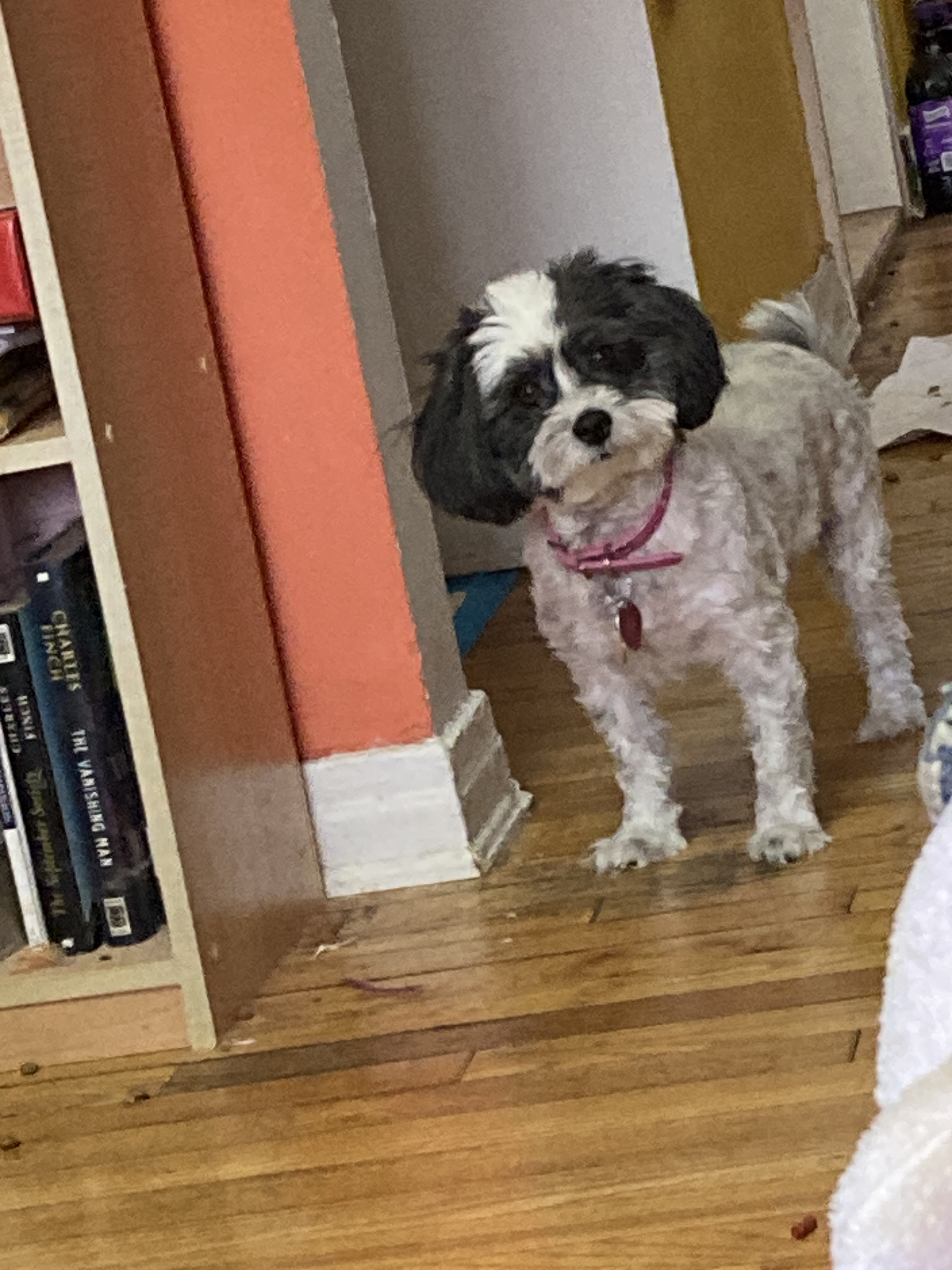
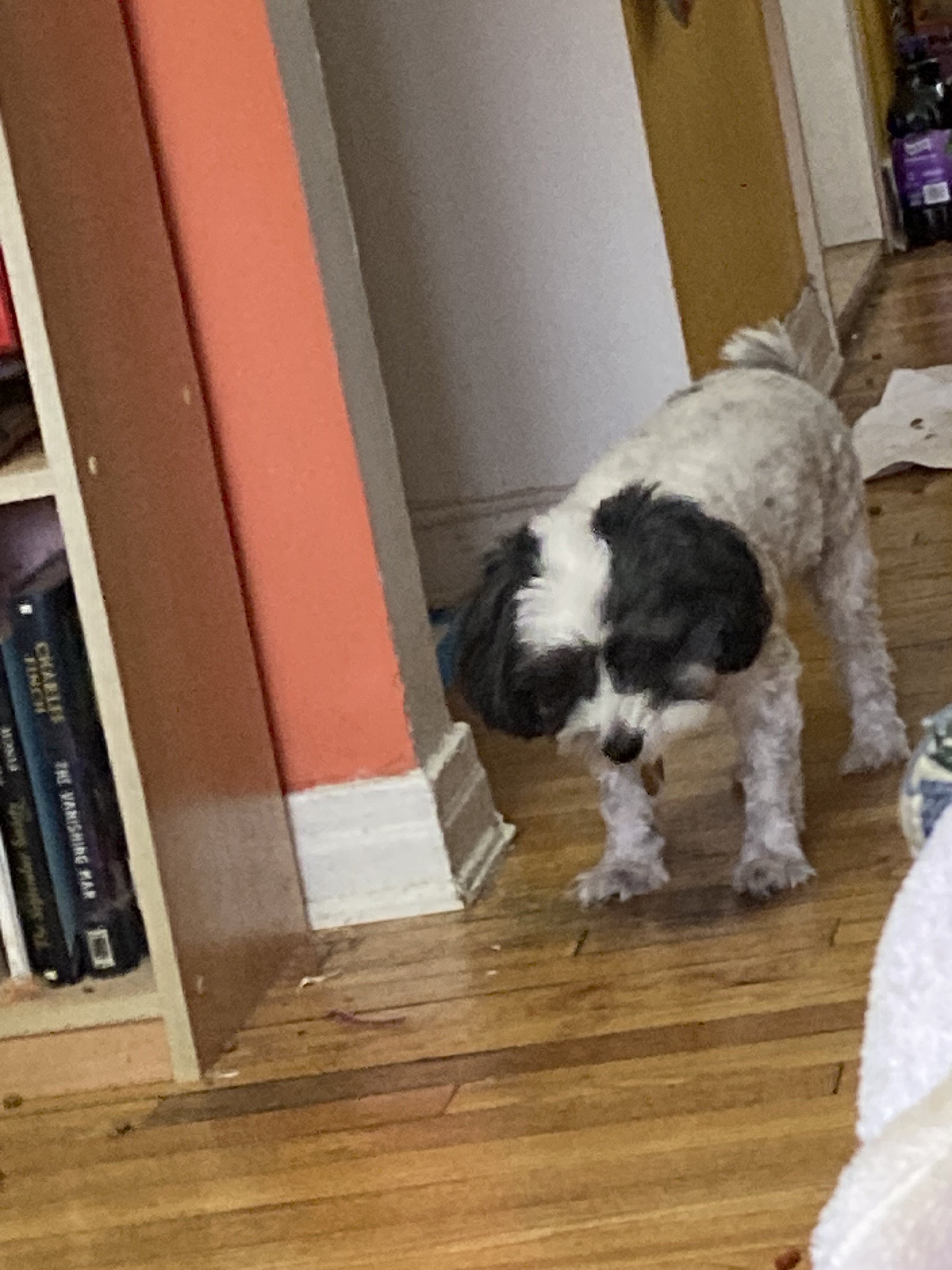
“Zinga Zinga Zah? Do I have to learn another new language now?”

After doing ten or fifteen minutes of vocal exercises, I try to sing along with seven or eight songs from my YouTube list (current favorites: The Story and The Joke by Brandi Carlile, Someone You Loved by Lewis Capaldi, Sweet Creature by Harry Styles, When I Fall in Love by Nat King Cole, Lose You To Love Me by Selena Gomez, and Piece by Piece and Mine by Kelly Clarkson), and that’s helping me build a sense of which songs fit my voice best and which ones are a little too challenging (or say things I don’t want to hear myself sing). The side effect of listening to all of these songs is that it’s re-activating my desire to write songs myself, but I still feel too intimidated by all of the music theory I don’t understand and I don’t have a piano or a keyboard anymore, so I’ve been a little lost. Along the way, though, I  had an idea for an elective to do with my students, where we would write new lyrics to existing songs (AKA macaroni songs), based on Jewish holidays or Jewish values I want them to focus on, and I realized that what I really wanted was to write macaroni songs for myself, to help me get song structure into my head. We did writing exercises like that back in graduate school sometimes, where the teacher would give us a model sentence from a famous writer and we had to copy the structure of it in our own words. It was a good way to stretch our minds in new directions, or at least to learn how to use a semi-colon, even though sometimes it felt like we were being told to copy and paste someone else’s superior style onto our own.  

            I learned the term “Macaroni song” from my rabbi years ago when we were reading the Psalms in Bible Study and he told us that a lot of the psalms were meant to be sung, and some of the psalms even listed the instruments that would be played or the popular melodies the psalms would be sung to. There was something very comforting about imagining my ancestors standing in the courtyard of the Temple in Jerusalem singing prayers to the equivalent of the latest Taylor Swift song.

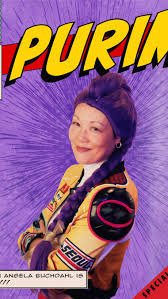
Macaroni songs are ubiquitous in the Jewish world. I remember writing them for color war in high school, and the cantor at my synagogue writes a bunch every year for the Purim spiel, and there are a ton of Jewish acapella groups that put out songs for Chanukah and Passover where they tell the story of the Maccabees or the Exodous to the tune of a song from Hamilton or Star Wars or Uptown Funk. This year, almost every synagogue did a version of K-Pop Demon Hunters for their Purim spiel, re-naming the show K-Pop Haman Hunters, and you can even find pictures of Angela Buchdahl, the Korean American senior rabbi at Central Synagogue in NYC, dressed up for the occasion, living out all of her identities at once.
I’m not up to singing “Golden” (the big hit from K-Pop Demon Hunters) yet, if I ever will be (it’s really, really high), and I still haven’t written my first macaroni song, but I feel like I’m going in the right direction, singing through good days and bad days, discovering the sounds that speak to me, and even forgetting, sometimes, to keep my voice down.

But, where’s the pasta you keep talking about?”

If you haven’t had a chance yet, please check out my novel, Yeshiva Girl, on Amazon. And if you feel called to write a review of the book, on Amazon, or anywhere else, I’d be honored.

            Yeshiva Girl is about a Jewish teenager on Long Island, named Isabel, though her father calls her Jezebel. Her father has been accused of inappropriate sexual behavior with one of his students, which he denies, but Izzy implicitly believes it’s true. As a result of his problems, her father sends her to a co-ed Orthodox yeshiva for tenth grade, out of the blue, and Izzy and her mother can’t figure out how to prevent it. At Yeshiva, though, Izzy finds that religious people are much more complicated than she had expected. Some, like her father, may use religion as a place to hide, but others search for and find comfort, and community, and even enlightenment. The question is, what will Izzy find?         

The Limits of Therapy

            Recently, I’ve been seeing ads for the Michael Jackson movie everywhere and it’s making me angry. I’d noticed his songs making their way back into public spaces over the past few years, but this is another level of normalization. I don’t know if, as a society, we’ve decided that it doesn’t matter if he was a pedophile or not, or if we’ve decided that we don’t believe the victims who came forward, or if we specifically can’t tolerate knowing that boys are just as vulnerable as girls when there’s a predator around. The only argument I’ve heard, over and over again, is that the gifts of this or that famous man or woman are worth more to society than the lives they ruined. We do this a lot, this convenient forgetting. We go through a huge reckoning – after the Holocaust, the civil rights movement, MeToo – and then we get tired of having to be so aware all the time and our hard-won wisdom disappears. The problem is that, for the victims of the abuse, there is no forgetting. And there’s just so much abuse victims can do to heal without the support of society at large, by, at the very least, not celebrating, or electing, known abusers.

“Say what?!!”

I hear too many people espousing therapy as THE answer – meaning, it’s your job, as the victim, to heal yourself; no one else needs to be involved or feel responsible or be inconvenienced by what happened to you. The mental health industry has contributed to this magical thinking even further by espousing short-term manualized therapies: 16 weeks to recover from childhood abuse, six weeks to fix your OCD symptoms, 4 weeks to overcome your addiction to heroin. Done. We even make jokes about people who remain in psychotherapy, or worse, psychoanalysis, for years, as if we believe that still being in therapy after a few years means you are a lost cause or just wasting time. I can promise you that I have worked very hard in therapy, for thirty years or so, and could spend the rest of my life working hard in therapy without fully healing. That’s just how it is. The damage human beings can do to other human beings is deep and lasting and people don’t just “get over it” through willpower or positive thinking or trauma-informed Yoga (sorry Bessel Van Der Kolk). Add to that how hard the work actually is, and how much it can cost, and how difficult it can be to find a good therapist in the first place, and how much shame can be thrown at survivors by the people around them for daring to keep “harping on the past.”

            As a society, we don’t have the patience to tolerate lifelong recovery, and yet we are unwilling to recognize the role those unresolved traumas have on our society on a daily basis. We even have a tendency to excuse abusers because they were abused as children, even though most abuse victims would never hurt anyone the way they’ve been hurt, on pain of death. The mantra “Hurt people hurt people” is incomplete and therefore wildly misleading, and yet I’ve heard it parroted by psychologists and social workers and doctors and activists, because people like pithy statements that can fit on a sign. Being hurt as a child is, yes, a necessary precursor to becoming abusive as an adult (and no, I don’t believe that some people are born evil despite having had a perfect childhood), but childhood abuse isn’t enough to create an abuser. More often than not, abuse survivors continue to suffer the effects of the abuse for the rest of their lives, refusing to take it out on anyone else around them, believing they deserve to suffer in silence, and society judges them for their failure to thrive.

“This feels personal.”

            In the age of social media, we have become, if possible, even more simplistic in our thinking. We want to believe that Superman is good and Lex Luthor is bad and that’s the whole story, because we don’t want to be bothered with parsing each personality trait and recognize that sometimes the bad guy wins us over by being charming and convincing, and sometimes the good guy gets ignored because he’s boring, or gets some things wrong. We crave certainty. I think this is how we ended up with Donald Trump. When a politician is uncertain or willing to question their own assumptions, we tend to dismiss them in favor of someone who thinks they know everything. No questions. No doubts. We, as a society, are acting like trauma survivors who want to forget the past because it was too painful, but the cost of forgetting is that the abuser continues to create chaos. It’s a culture-wide dissociative disorder that we can’t seem to recognize, let alone heal. But that leaves the actual victims of the abuse to try to heal while their abusers are actively being brought back into the fold. Woody Allen’s daughter had to change her name in order to get some peace, Michael Jackson’s victims have been forgotten again, and even Jeffrey Epstein’s victims have had to fight to be heard over all of the noise about his crimes, as if what was done to them isn’t at the heart of the story.

            When it comes to cases like Michael Jackson or Woody Allen or Donald Trump, we have the chance, as a society, to send a message to every victim that we will support and protect them, and that what happened to them could not have happened in the light of day. But when we elect and laud serial abusers and pedophiles and rapists, we are telling their victims, and everyone else, that no one gives a shit about their pain and they are out there on their own.

             My latest YouTube deep dive led me into the history of One Direction, the boy band from the UK that took over the world for a while in the 2010’s. I wasn’t paying attention to any of the craziness at the time, not even when Liam Payne died from a fall from a hotel balcony at age 31, overloaded with cocaine, alcohol and antidepressants. I remember hearing about his death in passing, but I didn’t really know who he was or who else was in the band and I just accepted the story that this was inevitable and unpreventable. So, during my deep dive, I was surprised to find out that Liam, in particular, had been really open about how and why he was struggling in the aftermath of his years in the group, and yet no one seemed to know how to help. He spoke eloquently, years before his death, about how he thought young people in the entertainment industry needed to be taken better care of, both protected from predators and offered psychological and emotional supports to help them navigate the bizarre world they’re in. We’ve actually seen a number of documentaries over the past few years about the damage done to young stars, kids who ended up relying on drugs and alcohol to get though their days while adults made millions of dollars off of them. What I haven’t heard, though, is any resulting plan to reckon with these situations and make sure they don’t happen again. No, instead we hear about cases like Liam Payne’s, of young people who had it all and then crashed and burned, as if no one was responsible for the damage except for him. If this is happening to famous kids, right in front of our eyes, just imagine what’s going on in the lives of children who are not famous and don’t have the media following their every move. Why is this okay with us? Why are we still unwilling to know what we know and make societal change to protect children and young adults from the predators around them?

            I haven’t seen the Michael Jackson movie, or the Broadway show that’s been in the works for a while now, but I’m sure they both dwell heavily on the abuse he suffered as a child and refuse to hold him responsible for the abuse he perpetrated as an adult. This is how the cycle of abuse gets perpetuated: first we don’t protect the child, then, because we feel guilty for what we didn’t do back then, we allow the abuse to be re-enacted on the next generation, and fail to protect the child victims once again.

            Why can’t we do better than this?

“I don’t know. Maybe that’s why I stay in bed all day. It’s safer.”

If you haven’t had a chance yet, please check out my novel, Yeshiva Girl, on Amazon. And if you feel called to write a review of the book, on Amazon, or anywhere else, I’d be honored.

            Yeshiva Girl is about a Jewish teenager on Long Island, named Isabel, though her father calls her Jezebel. Her father has been accused of inappropriate sexual behavior with one of his students, which he denies, but Izzy implicitly believes it’s true. As a result of his problems, her father sends her to a co-ed Orthodox yeshiva for tenth grade, out of the blue, and Izzy and her mother can’t figure out how to prevent it. At Yeshiva, though, Izzy finds that religious people are much more complicated than she had expected. Some, like her father, may use religion as a place to hide, but others search for and find comfort, and community, and even enlightenment. The question is, what will Izzy find?


Appapalooza

            I had to give up my subscription to the Simply Sing app because my phone overheated each time I used the app, and by the end I couldn’t even get through a whole song without the app shutting itself down. Some days, when it didn’t heat up as quickly, I was able to get 10 or 15 minutes of practice done and discover new songs and feel like my friends were singing with me, but that was rare. Most of the time I would use the app for a few minutes and have to take a break for fifteen minutes while the phone cooled down and then I’d get another two or three minutes of practice before having to let it rest again. I ended up spending most of my practice time doing vocal exercises on YouTube, so the fifteen dollars a month I was spending on the app seemed like a waste. But the app was the thing that made sure I practiced every day, or at least felt guilty on the days when I didn’t practice, and I was afraid that without it all of my slow but steady progress would come to a halt.

“You could have spent that money on chicken treats. Harrumph.”

So, I went looking for another app. I tried a lot of them: apps that focused on ear training (being able to hear and name a note), apps that emphasized karaoke (with most of the songs hidden behind a paywall), and apps that focused on vocal exercises or music theory or breathing. I ended up deciding to splurge ($4) on a month’s subscription to the KHansenMusic vocal exercises app, even though most of her fabulous exercises are available on YouTube, because it felt like a way to pay her back for watching so many of her videos for free, and because the app organizes lessons based on specific goals, like vocal recovery, smoothing out the break between chest and head voice, extending your range, or building resonance.             Then I went back to YouTube and created yet another playlist full of the songs I’d been practicing on the Simply Sing app, plus a hundred more, with the lyrics onscreen to help me along. YouTube doesn’t check my pitch accuracy the way the Simply Sing app did, but it’s free and has thousands of songs to choose from, so it’s good enough for now.

            The biggest lesson I’ve learned from all of this is, though, is that apps are a really good way to learn basic material and build new habits. Ideally, I’d have an app for each of my life goals and be able to check in on my progress in each one for a few minutes each day. There could be an app to coach me through each writing project, and an app for sending my work out to agents and editors, and an app to help me organize all of my doctors’ appointments and maybe an app to keep an eye on Tzipporah’s chicken treat intake. There’s something really encouraging about the (false) sense that someone is keeping track of my progress and cares where I’m struggling in my learning process. Recently, I saw a video on Facebook where these two guys said they realized they were addicted to their phones, so they created an app to help them reduce their screentime. I couldn’t tell if they were trying for irony or just lucking into it, but the message resonated anyway: sometimes you have to create an addiction to overcome an addiction. The most successful apps help people achieve something they really care about by leveraging their need for social approval and quick rewards to create long term habits.

            I haven’t found all of the apps I need in order to create the perfect life for myself, yet, but I could never have imagined things like Duolingo or YouTube when I was a kid saving up my allowance to pay for one Olivia Newton John album, so you never know. My hope is that educators and therapists (and doctors and whoever else) will figure out how to create and use these apps to help people learn the basic and boring things they don’t want to have to repeat a hundred times a day, and then they’ll be able to spend their valuable time focusing on the hard work that requires human interaction. That’s what should happen, but I’m afraid people will just use AI indiscriminately, for everything, and, of course, robots will take over the world and then humans will eventually get fed up and rebel and have to destroy everything and start over from scratch. Which is just a ridiculous waste of time and energy that could be better spent learning more languages on Duolingo. Just saying.

“If you find an app that makes humans make sense, send it my way.”

If you haven’t had a chance yet, please check out my novel, Yeshiva Girl, on Amazon. And if you feel called to write a review of the book, on Amazon, or anywhere else, I’d be honored.

            Yeshiva Girl is about a Jewish teenager on Long Island, named Isabel, though her father calls her Jezebel. Her father has been accused of inappropriate sexual behavior with one of his students, which he denies, but Izzy implicitly believes it’s true. As a result of his problems, her father sends her to a co-ed Orthodox yeshiva for tenth grade, out of the blue, and Izzy and her mother can’t figure out how to prevent it. At Yeshiva, though, Izzy finds that religious people are much more complicated than she had expected. Some, like her father, may use religion as a place to hide, but others search for and find comfort, and community, and even enlightenment. The question is, what will Izzy find?

This Passover

I only noticed that Passover was coming because I had to teach The Four Questions (Mah Nishtanah) to my students to get them ready for their family Seders. Other than that, I let all of the signs pass me by, like the shelves of Passover food at the local grocery store and the cloud-like “Mannah from Heaven” dangling from the ceiling of the social hall at the synagogue. I was not in the mood for any of it this year, honestly, with all of the doctors’ appointments (mine and Mom’s), and all of the news. I felt like my brain was already full and could not take in one more thing.

Given that, by the time the first Seder came around, and I realized that I had nowhere to go, I wasn’t really upset. I hadn’t downloaded a new Hagaddah, or planned new recipes, or found new songs to sing. I was just waiting for it to be over. Unfortunately, both synagogue school and my Hebrew classes took Passover off, so I went from feeling like I was too busy to breathe to being surrounded by silence.

“What’s wrong with silence?”

We are always invited to a Seder at my brother’s in New Jersey, but it’s a long drive back and forth and neither Mom nor I were up to making the trip, though I really like the way he hands out different Haggadot (The Harry Potter Hagaddah, a cartoon Hagaddah, a Haggadah with ten commentaries on each page, etc.) so that everyone at the table has a different way of seeing the Seder, and the arguments commence. My ideal Passover celebration would probably be a model Seder with the synagogue school kids, so we could walk them through all of the props on the Seder plate in real time, like the shank bone and the roasted egg and the Matzah and the horseradish (Maror), and find new ways to tell the story of the Exodus from Egypt that really speak to them.

Just a note, by the way: on The Daily Show with Jon Stewart, they made a joke about how Christians get to eat chocolate eggs for Easter and Jews are stuck with a shank bone – and it was a funny bit, but misleading. The shank bone is a prop on the Seder plate; you are not supposed to eat it. If someone at your table, other than the dog, has been gnawing on the shank bone, something has gone very wrong.

I grew up in a house that took Passover very seriously. We spent weeks preparing: cleaning the whole house, removing all signs of leavened bread, changing the dishes for the week, and filling three shopping carts with food. If you spend any time with religious (or even not that religious) Jews during the week of Passover, you’ll notice a heavy emphasis on eating – both because people get bored spending a week at home with their families and because trying to avoid any particular food can make you obsessive about the food you are still allowed to eat – as any dieter will to tell you.

            The fact is, I really like the idea of Passover, with the emphasis on storytelling and music and food and the symbolism of freedom and slavery. I could spend my whole life learning about the Exodous story and never be finished, so it bothers me that I don’t have time to teach my students all of the things I know about the holiday so far. I’m lucky if I can teach them how to sing the Four Questions and throw in some tidbits about the Ten Plagues and a little something about matza ball soup. This year I made them a Passover Madlibs to try and get as much of the story in as possible and maybe get them curious to learn more. In their rewritten version of Passover, they would have us drink 72 glasses of wine (instead of 4), and eat McDonald’s (instead of Matzah), and our ancestors would have faced landslides and tornadoes and chicken pox instead of the usual ten plagues.

            The emphasis on teaching children The Four questions is just because that’s the one thing the kids are supposed to know about Passover ahead of time, and it’s a way to encourage them to ask more questions as the Seder goes on. So they start with the most obvious question – why is it that on every other night we eat mac and cheese or pizza for dinner but tonight you’re giving us a bland cracker and a knob of horseradish? – and that gets them thinking of the next set of questions they might have, like: why were there ten plagues? Did the plagues really happen or are they a metaphor? Why would God allow regular Egyptians to suffer in order to convince Pharoah to let the Israelites go? Why is this holiday celebrating freedom so bittersweet? Where are the happily-ever-after stories we’re used to from Disney?

The goal of the Passover Seder isn’t to come up with definitive answers, it’s to make space for questions, and to slowly help us get used to the idea that life will be filled with a lot of questions that don’t have simple answers; and if you can drink some grape juice and jump around like a frog or spray your parents with salt water along the way, it goes down a little bit easier.

And now that I think of it, maybe this is my Seder this year, this essay. It’s not the traditional format, and there’s no shank bone or horseradish (Thank God), but it’s full of the things Passover is about: questions, complaints, stories, and food. Next year in Jerusalem!

“Where’s that bone you keep talking about?”

If you haven’t had a chance yet, please check out my novel, Yeshiva Girl, on Amazon. And if you feel called to write a review of the book, on Amazon, or anywhere else, I’d be honored.

            Yeshiva Girl is about a Jewish teenager on Long Island, named Isabel, though her father calls her Jezebel. Her father has been accused of inappropriate sexual behavior with one of his students, which he denies, but Izzy implicitly believes it’s true. As a result of his problems, her father sends her to a co-ed Orthodox yeshiva for tenth grade, out of the blue, and Izzy and her mother can’t figure out how to prevent it. At Yeshiva, though, Izzy finds that religious people are much more complicated than she had expected. Some, like her father, may use religion as a place to hide, but others search for and find comfort, and community, and even enlightenment. The question is, what will Izzy find?