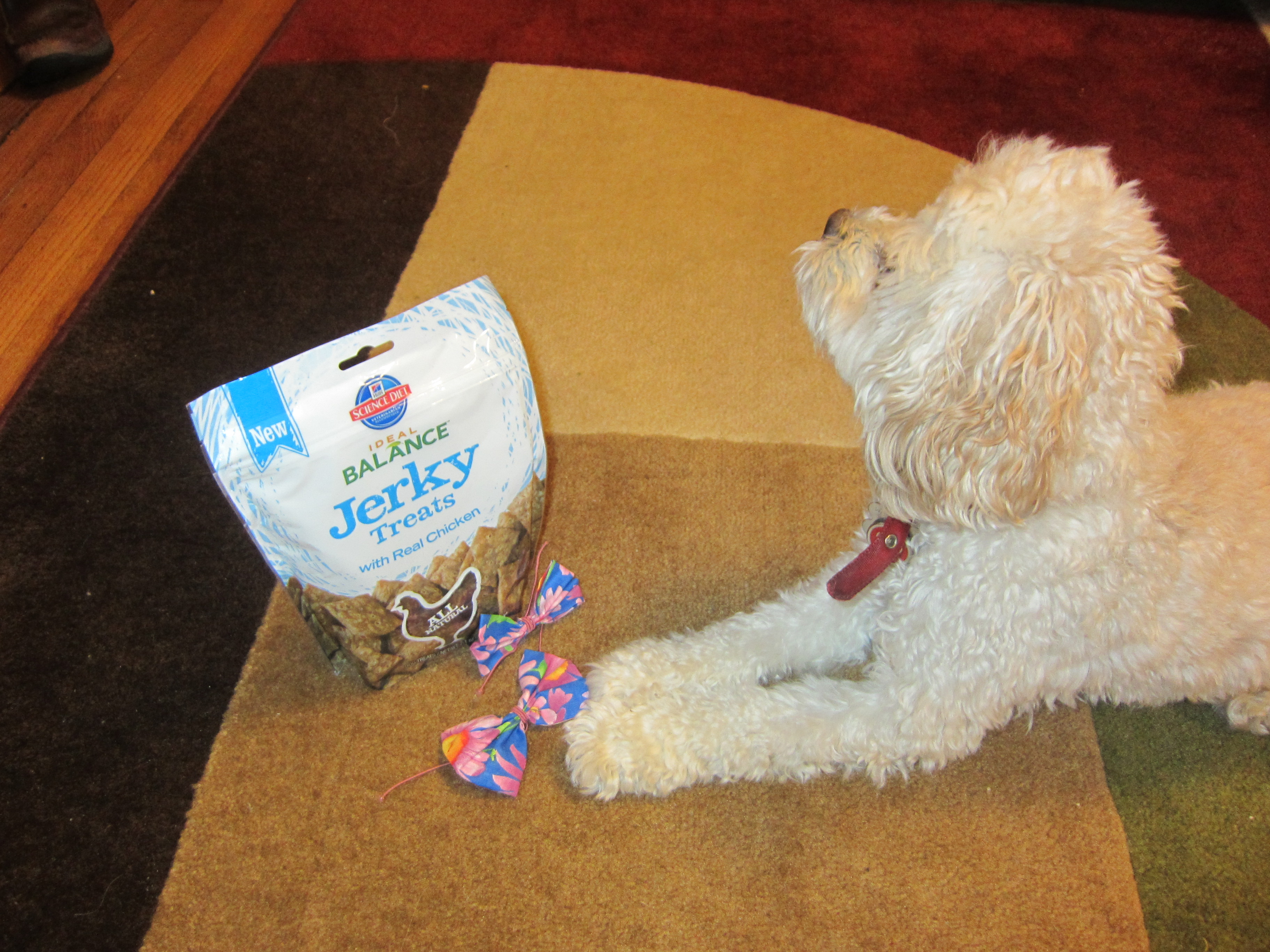
Cricket is guarding the treats
Thank you to Rachel Sheppard at mykidhaspaws.org for the treats and bows! Butterfly let Cricket have first shot at opening the present, but now they are both sleeping next to their treats.
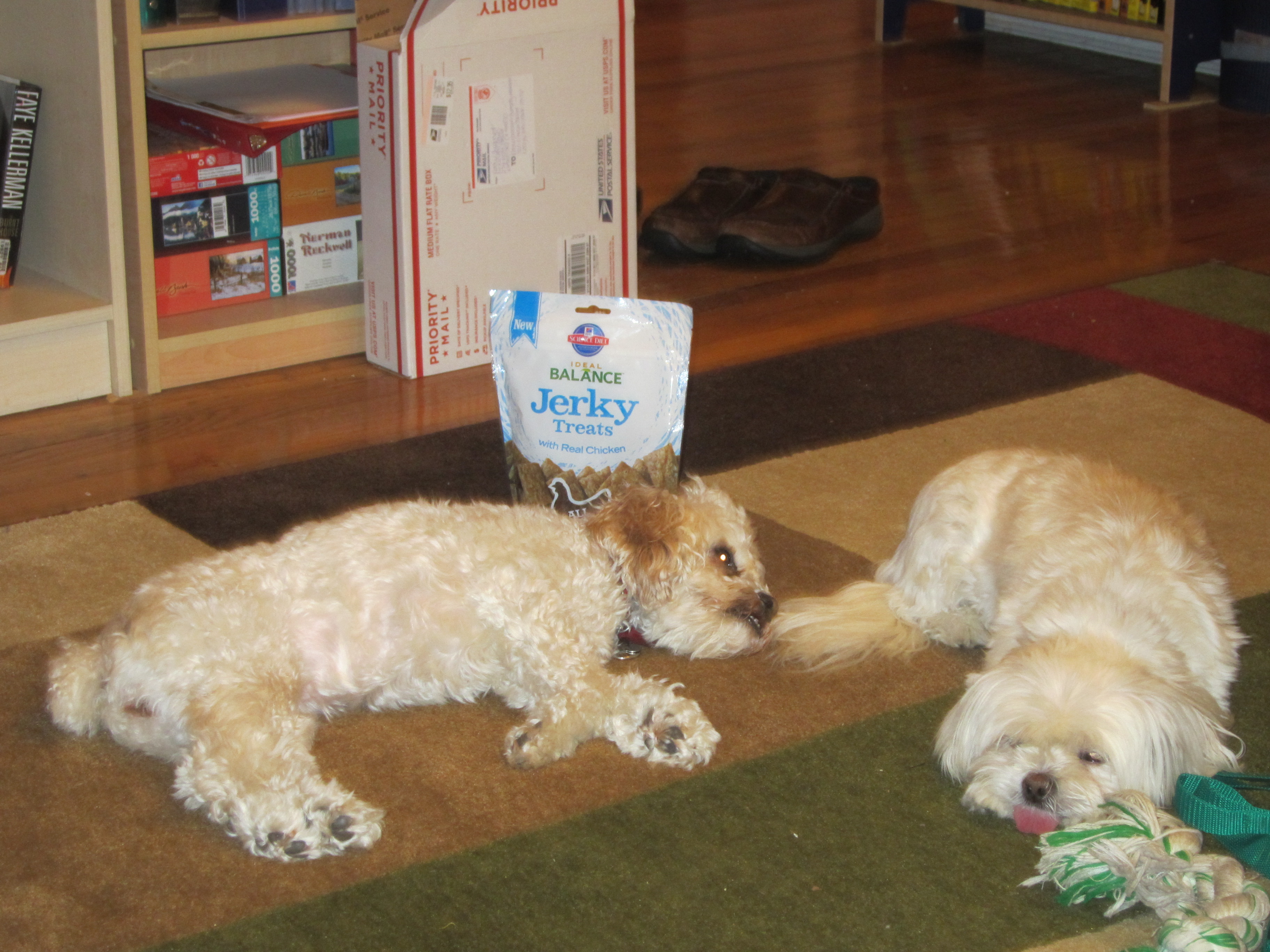
Sweet dreams
Cricket is guarding the treats
Thank you to Rachel Sheppard at mykidhaspaws.org for the treats and bows! Butterfly let Cricket have first shot at opening the present, but now they are both sleeping next to their treats.
Sweet dreams
 When Delilah was about eight years old, and I was fourteen, she developed diabetes. I don’t know how we discovered it, but we were sensitive to certain signs because my father had been diagnosed with type-two diabetes about four years earlier. Delilah was a healthy, if skinny, Doberman Pinscher until she got sick. She wasn’t the most energetic creature, but as soon as the door bell rang, she would start to bark, like the guard dog she was born to be. Except that, as the person entered the house, Delilah would walk backward up the stairs, and continue to bark from a safe distance.
She spent a lot of time out in the backyard. Mom would leave the back door open, with the screen door in place, so if Delilah wanted to go outside she could push the door open with her nose, and if she wanted to come back in she could bark once or twice. But more often than not she’d just rest on the back porch.
I never saw Delilah jump off the porch, I only heard about it, that this mostly quiet dog could get so worked up over the little birds who nested under the roof of the garage that she would stand on the porch with her front feet on the railing and then leap into the air to catch a bird. The drop from the porch railing looked steep to me, but Delilah was an athlete and took it in stride.
And then she got sick. The vet sent Mom home with hypodermic needles, alcohol wipes, and vials of insulin. She had to get the shots daily, with Mom learning how to pinch an inch of skin and plunge in the needle where Delilah was least likely to feel it.
Delilah was on insulin for almost a year before she died. I don’t even remember her showing signs of deterioration by the time summer came.
I had a habit of waking up early on Saturday mornings to clean the kitchen before my parents woke up. I generally woke up anxious, and scrubbing counter tops calmed me down. One Saturday morning in July, I was halfway down the stairs when I saw Delilah on the floor of the dining room. There was a greenish grey aura around her, like a dark version of the chalk outline the police on TV draw around dead bodies. This dog who had been brown and black, now seemed grey. I knew she was dead, and I panicked and ran back upstairs to hide in my room and let someone else find her.
By the time I came back downstairs a few hours later, my parents were there. They’d found her, wrapped her in a blanket, and moved her body to the back porch, because nothing could be done while it was still the Sabbath.
It was summer, so it was past nine o’clock by the time the Sabbath was over. It was dark by then, and raining. Suddenly, my father thought burying her was an immediate necessity. It couldn’t wait until the morning. It couldn’t be handled by the vet. He couldn’t ask friends to come and help. I had to help carry the blanket covered dog down the porch steps, to the back corner of the backyard, dig a hole, put her in, and cover the hole with dirt.
Mom tells me it was more common back then to bury a dog yourself, but by the time I was fifteen, it didn’t feel common at all, it felt illegal and disturbing. I was crying and shaking and my father was yelling at me to hurry up and to shut up.
It wasn’t a good way to say goodbye to someone who had been family to me for more than half of my life. And it was too dramatic for Delilah. She would have preferred something quiet and peaceful, with the TV on in the background and a few gentle pats on the head.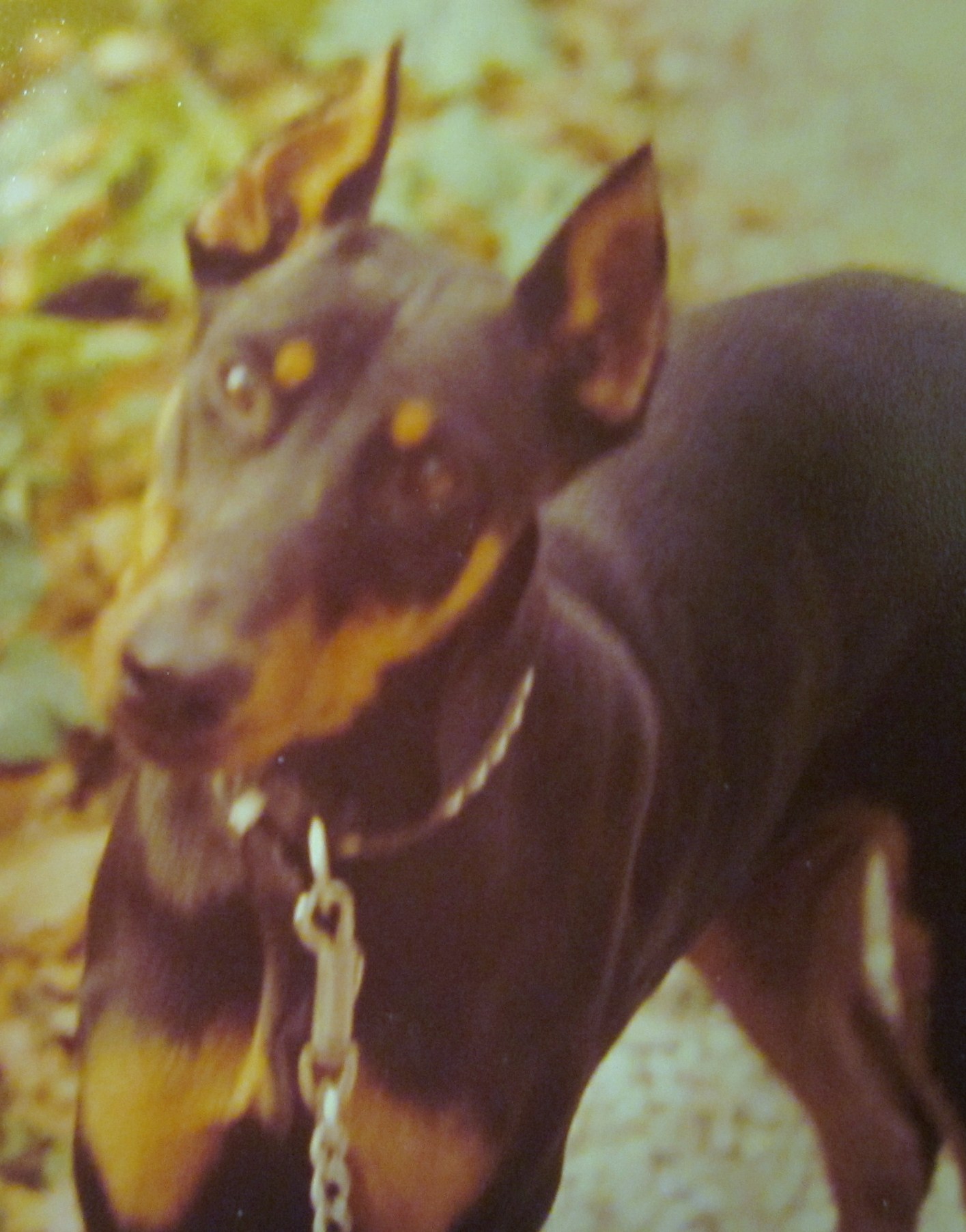
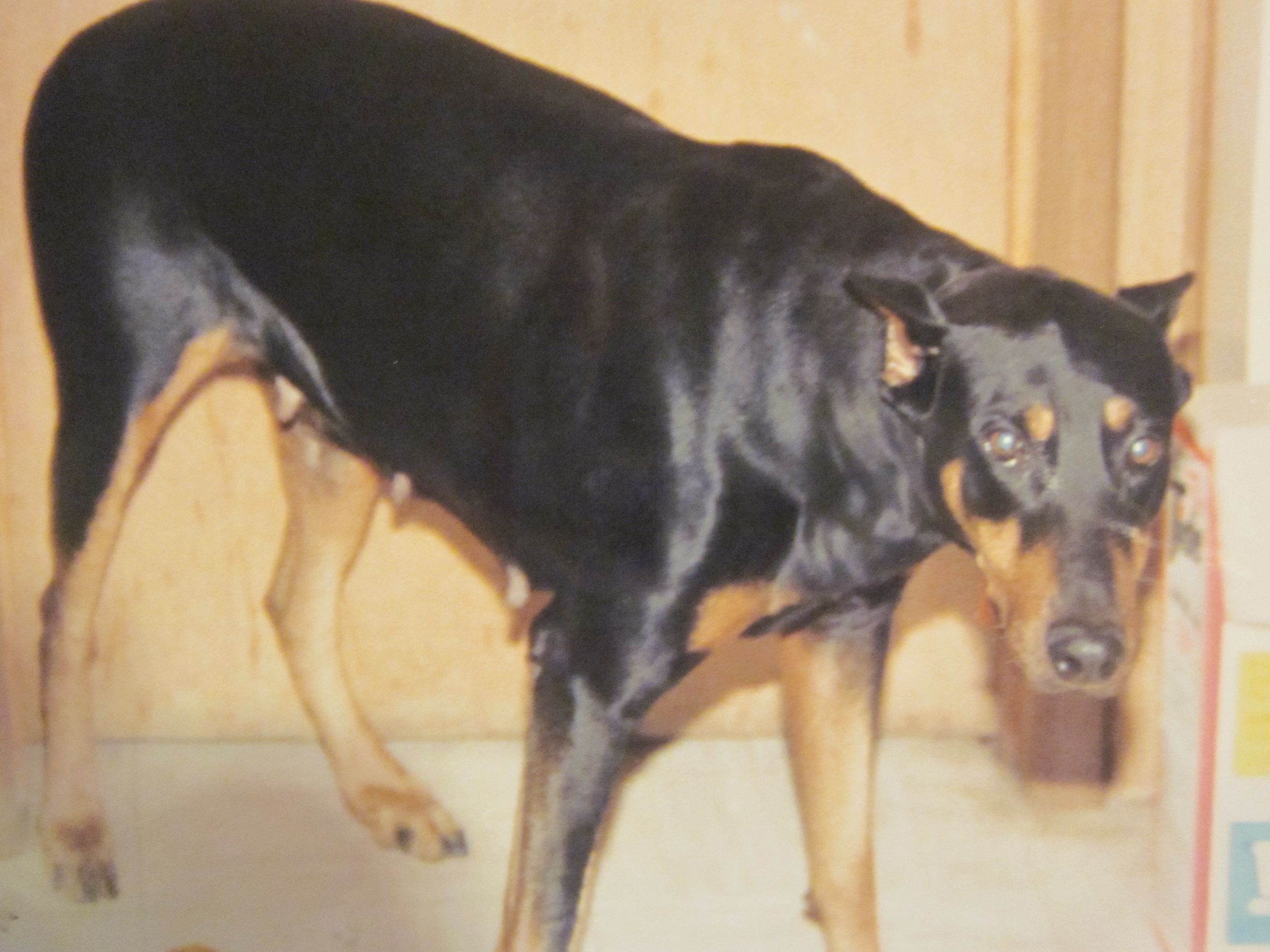
Delilah was a pure bred Doberman Pinscher. We adopted her from a breeder when I was six or seven years old on the condition that her first litter would go back to the breeder (and he would supply the stud and medical care). My father fed her from the table and spoke to her in German, but she liked to sleep on my bed in the afternoons, after barking at strangers passing by all day.
She had a job, though, and that was to get pregnant as soon as her body was ready. Mom woke me up when Delilah went into labor. I think it was sunrise or shortly afterwards, because the rays of the sun were shooting through the windows in the little vestibule between the kitchen and the dining room. The vestibule was just the right size for Delilah, her puppies, Mom, my brother, and me.
I remember Delilah breathing heavily, panting, with sweat dripping from her tongue. She had a kind of crazed look on her face, but very serious, especially after each bag of puppy slid out of her. The bags were grayish brown and slimy, but Delilah was conscientious about freeing each puppy from its cocoon, and cleaning it thoroughly so it could start to breathe and walk freely.
Suddenly, Delilah was a warrior. Any attempt to get close to her puppies without her permission and she’d bare her teeth and growl.
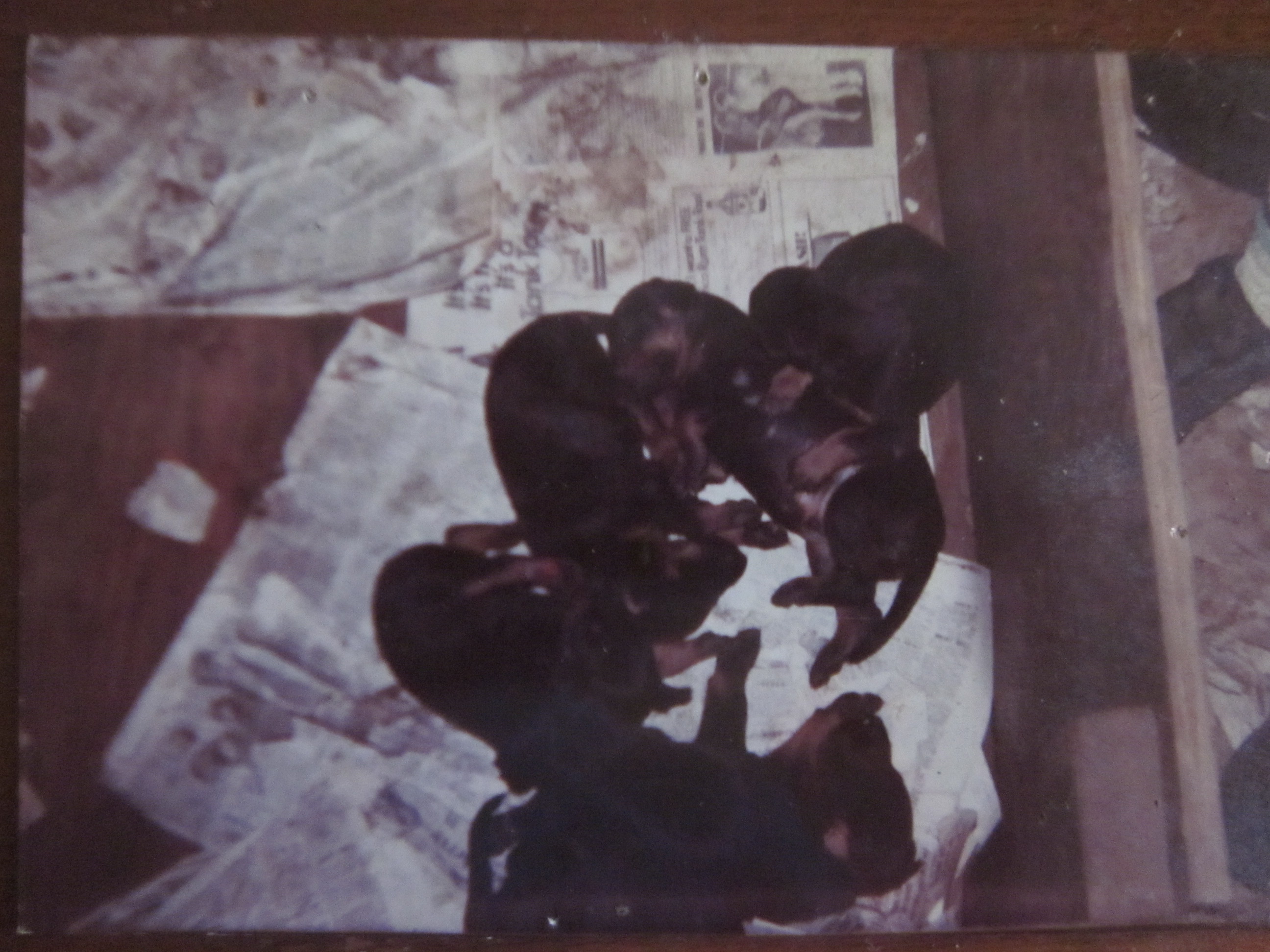
At around six weeks, the puppies were sent to the breeder for a medical visit. My father brought me with him to the breeder’s workshop to pick them up. I got there just in time to see a row of puppy tails on the work bench, unattached to the puppies. They had their ears wired up as well, with what looked like copper wire laced through each ear like a long row of earrings.
The puppies were warm, squeaky and cuddly, and when my parents brought them back to the breeder for good at eight weeks old, I was sad, but I wasn’t heart broken. I’d thought of them as borrowed, from the beginning.
The second litter of puppies was different. My father thought he could make money as a breeder on his own. He paid the original breeder a stud fee, and then the resulting puppies were ours to sell, free and clear.
My brother and I were away at sleep away camp during the pregnancy and arrived home a few days after the puppies were born. My father made sure to tell us that there had been eight puppies originally, but that Delilah had rolled onto one and killed it. When I repeated the story to my mother recently, she said no, it was a still birth. Delilah didn’t kill her own baby, why would you think that? But Delilah did, supposedly, leave a mark on the foot of one of the seven puppies, a boy, and I named him Wounder.
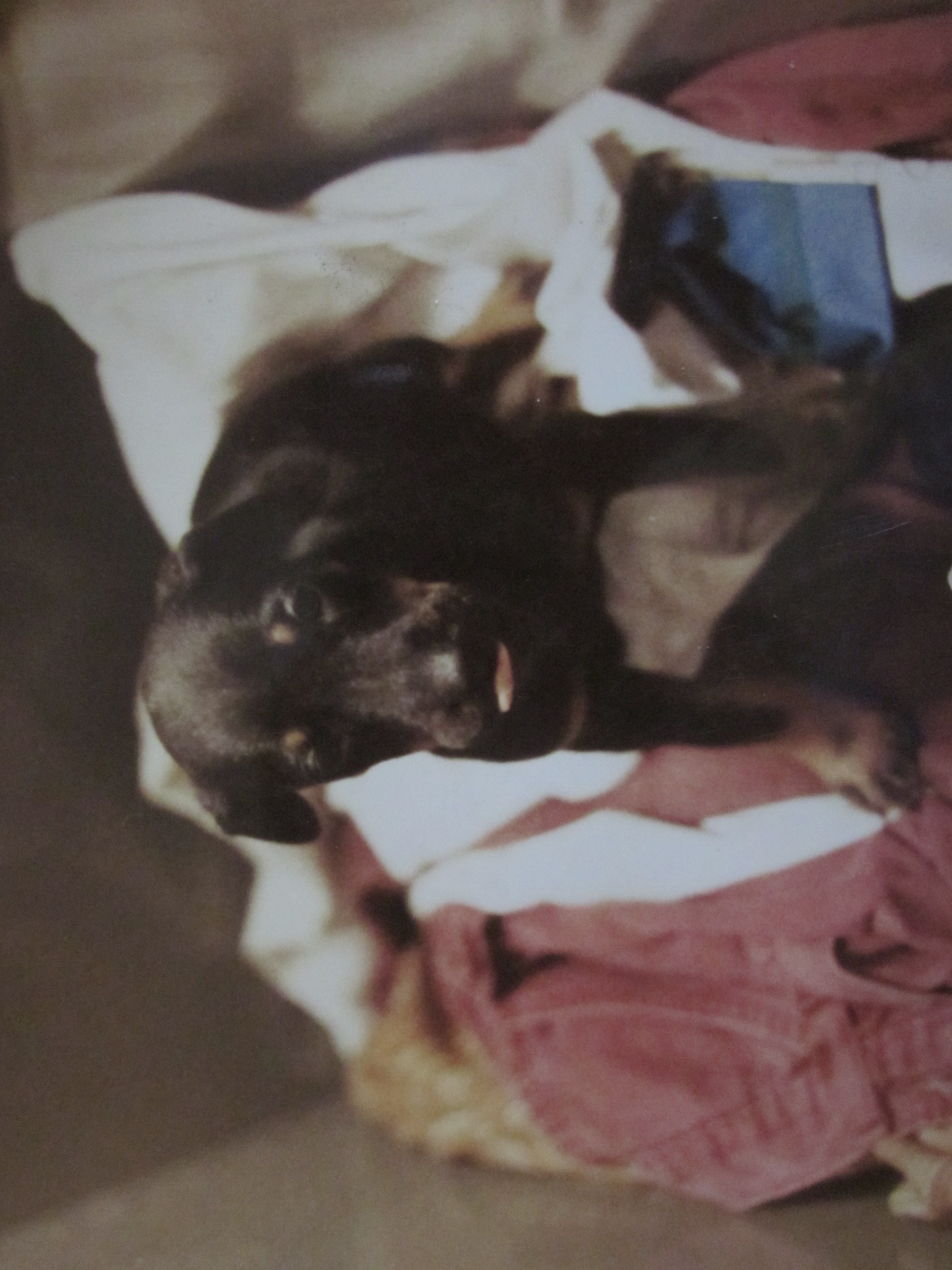
I believed the story – that Delilah had stepped on him, and wounded him – and somehow, in my nine year old brain, that transposed into “Wounder.” Maybe I was trying to combine the two things I saw in him, “wound” and “wonder.” But the final version resonated as more meaningful to me, even then, before I’d ever heard of a Freudian slip.
Mom put an ad in the paper after a few more weeks, and people came by to look at the puppies. But no one bought them. Maybe it was because we weren’t registered breeders or the paperwork wasn’t good enough, or we were asking for too much money.
My father was angry that the puppies didn’t magically sell themselves, and he abdicated responsibility for them. Eventually my mother had to bring the puppies to the animal shelter to be adopted out, because, she said, we just couldn’t keep eight full grown Doberman Pinschers in one house.
The shelter took all of the puppies but one, Wounder. They said he was too rambunctious, climbing on counters and showing them he was boss. I loved that about him. I was sure that my father would have to let me keep Wounder now, but he said no. We couldn’t have an un-neutered son and his un-spayed mother in the same house, and my father refused to have either of them fixed, so Wounder would have to go.
My mother tried to find him a home, but no one would take him, even for free. She had to take him to the pound, where, I knew, they put unadoptable dogs down after a specified period of time. I was told that he was adopted from there, but I’m not sure I believe that.
Delilah went back to sleeping on my bed every afternoon and barking at strangers who came to the door. But I never forgot Wounder, and I don’t think Delilah forgot him or the rest of her puppies either. They were her babies, after all.

My parents had a pony named Abraham before I was born. The pony originally belonged to one of my father’s students, who could no longer afford to stable him in the city. So my father paid $50, and brought the pony out to Long Island in the back of a van. The name Abraham was supposed to signify that he was the first animal in the family, or at least, the first male animal, which, to my father, meant the same thing.
My parents seemed to believe that a pony would fit right into the suburbs. This was forty years ago, when Long Island was still developing, and looked sort of like the country, if you squinted. They kept rabbits and ducks in the backyard, along with the pony and a dog. They received a lot of complaints from the neighbors, especially about the smell. But my father would just ride around in the horse cart that Abraham pulled down the street, and ignore what anyone else had to say.
The house had actually been built on a former horse farm, but by the time my parents arrived, the streets had been paved and the area had been developed into rows of suburban homes, with fenced in yards. Abraham’s stall was in the back of our garage, but he had free run of the backyard while my parents were at work during the day.
All of Abraham is a story to me, because he was sent away before I was born.
The neighbors were finally able to change the local ordinance to make keeping a pony in your backyard illegal.
My mother met the veterinarian who agreed to take Abraham to live at his farm. She saw him loaded into a trailer with her own eyes. And she assures me that he was taken to an actual farm, though it sounds like one of those stories parents tell their kids when the dog dies. Abraham isn’t really dead, he’s gone off to live happily ever after in a place where he can really stretch his legs.
There was a horse farm next door to our synagogue when I was a kid, and every once in a while one of the horses would be outside, and I’d reach through the fence to pet his nose, and I’d ask him if he knew Abraham.
Maybe the Abraham stories explain why I dream of having a farm of my own, despite having no recognizable farming skills. Or maybe it comes from reading Charlotte’s Web so many times. I thought I was just like Wilbur, the little pig, when I was growing up. I was chubby and white and naïve and I could have used Charlotte’s help quite a bit. And maybe I thought that having a pony, and some ducks and rabbits and a few extra dogs in my backyard would have made me feel spectacular, just like Wilbur.

 rachelmankowitz