I was dreading Rosh Hashanah. I was already exhausted from the first week back teaching synagogue school, and I hadn’t even tried on my High Holiday clothes from the year before, just crossing my fingers that they still fit. I’d survived the two hour choir rehearsal in the midst of the crazy first week of school, but just barely, and I still had to go to the vet for Cricket’s fluids and Ellie’s heart meds, and do the food shopping, and at the last minute, we had to do three loads of laundry because Cricket had peed on everything, and by the time we were done I had just enough time to take a shower and get dressed in order to get to the synagogue on time.
Almost as soon as I sat down in the choir seats, the senior rabbi came over to tell me I would be doing the second reading – a Mary Oliver poem about her dog. I hadn’t seen the rabbi in person in a while, because I’d been going to services online, so I guess this was his first chance to tell me that he wanted me to read this poem – though I do have email, and a phone. I mentioned that it would be difficult for me to get to the Bima from the choir seats, especially in between songs, and he turned to my mom and complained about how much people like to complain.
I didn’t know exactly when my reading would come up, just that it would be relatively soon. Maybe. And that I couldn’t say no.
The choir was busy for the first part of the service, rarely sitting down. I’d forgotten how much standing was involved in singing with the choir because we were allowed to sit during rehearsals, and then I heard the junior rabbi give the intro for the poem I was going to read, so I put down my music and scooted past Mom and found my way down the aisle and up the stairs to the podium, and I read about Percy, the loving dog who looks up at his person as if she is everything.
As soon as I was done reading, I had to hurry back to the choir section for the next song, but I felt, in that moment, the reason why I kept saying yes – to singing, to rehearsing, to reading in public, to teaching and exhausting myself – it feels really good to be part of a community, and to be known. Because not only the rabbis, but many of the other people in the room knew why I’d been chosen to read that particular poem. And they knew that I sang with the choir and they knew that I taught in the synagogue school, and they knew my Mom and her photography and quilt work and asked after her when she wasn’t there. They may not all have known how hard it was for me to do all of it, but they saw me, and cared about me, and congratulated me, and it felt good.
I always dread the high holidays, knowing the work involved and how self-conscious I’ll feel going up on the podium and dressing up and singing into microphones, and all of the extra-long services one after the other after the other. And I always forget how meaningful it is, and how satisfying it is, to be surrounded by so many people sharing the same experience.
There are, of course, times when I feel like I don’t belong, and when I feel like parts of me are invisible. During the Torah service, for example, our community calls up groups of congregants for the honors instead of calling up individuals, and they’re all in life-cycle related categories: everyone who will be driving a car in the next year; everyone who is newly married or celebrating an important anniversary; everyone with a new baby or grandbaby.
There are also categories that could apply to me; I’m dreading the time when I can go up for the first Aliyah on Rosh Hashanah, for those who have lost a loved one in the past year. But mostly I feel this otherness, endlessly, because to be a member of the Jewish community often means to focus on the family as the unit of measurement, and I don’t really fit. There’s no Aliyah for people who had to go to more than ten doctors’ appointments in the past year, or people who are pre-emptively grieving the loss of a senior dog, or people who want to do more with their lives, but can’t.
In a way, I prefer the darkness of Yom Kippur: the focus on what has been difficult and painful over the past year; the focus on what we regret. It’s not that I want to revel in the pain, but there’s relief in knowing that everyone is sitting a second longer than usual with what went wrong, and what was missing, instead of focusing solely on the Instagram-ready celebrations.
But I made it through the marathon of Rosh Hashanah services, even forcing myself out to Tashlich on the afternoon of the first day of the holiday, when our community has its dog-friendly service out by the water, where we sing and throw away our sins (even the babies seem to revel in throwing their sins, in the shape of bird seed, out to the ducks), and meet all of the canine members of the community who’ve been out of view, but still there with us in spirit, over the past year.

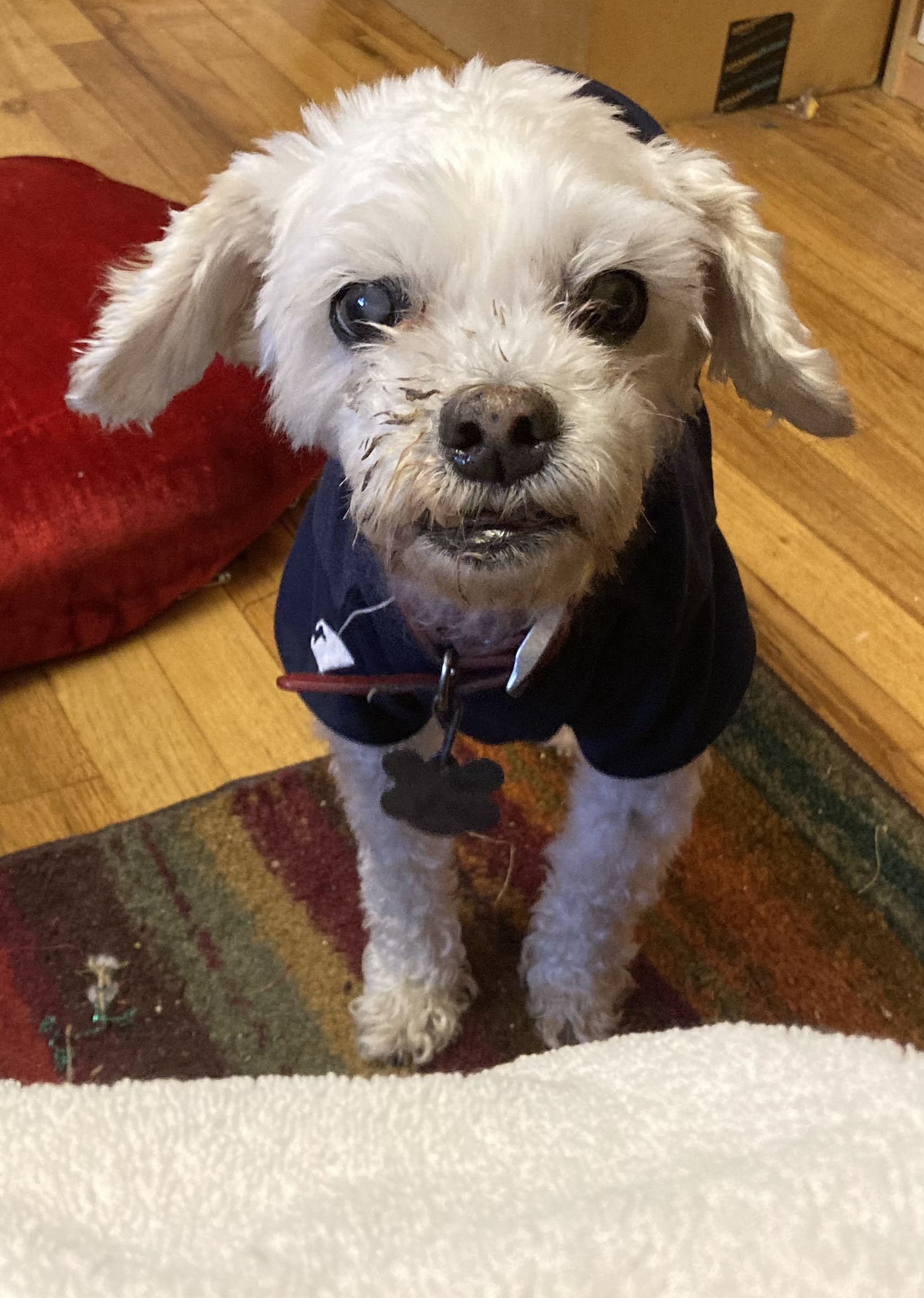
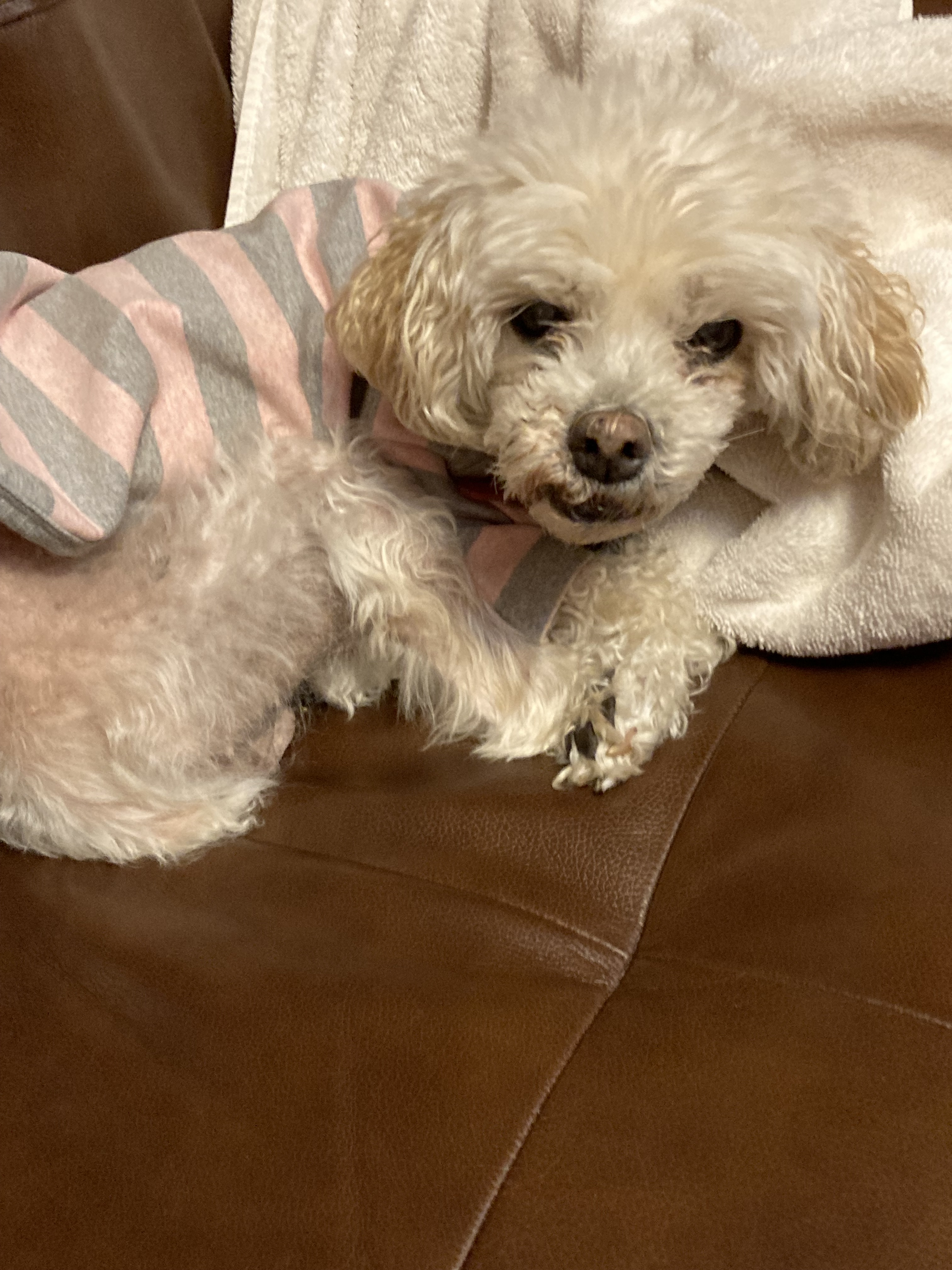
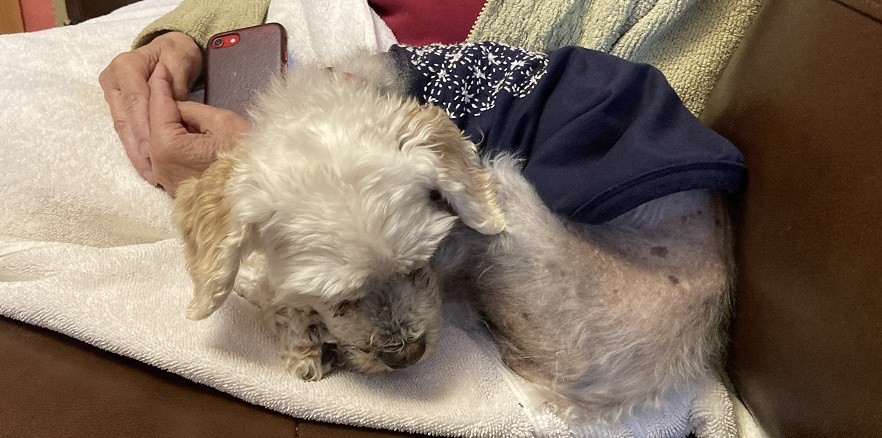
I pushed myself to go to the outdoor service because I wanted Cricket to be there one more time. She’s never been the most outgoing or friendly dog, and she wasn’t feeling all that well on that day in particular, but I wanted her to know that she was still part of our community, still known and seen and loved.
And even if it’s hard to live up to the work of being in community, even if sometimes it feels like more than I can do, there are also moments when it all comes together and my sixteen year old dog, and I, know we belong.

If you haven’t had a chance yet, please check out my Young Adult novel, Yeshiva Girl, on Amazon. And if you feel called to write a review of the book, on Amazon, or anywhere else, I’d be honored.
Yeshiva Girl is about a Jewish teenager on Long Island, named Isabel, though her father calls her Jezebel. Her father has been accused of inappropriate sexual behavior with one of his students, which he denies, but Izzy implicitly believes it’s true. As a result of his problems, her father sends her to a co-ed Orthodox yeshiva for tenth grade, out of the blue, and Izzy and her mother can’t figure out how to prevent it. At Yeshiva, though, Izzy finds that religious people are much more complicated than she had expected. Some, like her father, may use religion as a place to hide, but others search for and find comfort, and community, and even enlightenment. The question is, what will Izzy find?










 rachelmankowitz