Tag Archives: grandparents

Grandpa’s Memoir

            Recently, I realized that while I had typed up all of my grandfather’s letters back and forth with his father (despite many of my great grandfather’s responses being in Yiddish and broken English) and my grandmother’s travel diaries (listing all of the things she hated about each country she visited) and all of the children’s stories my grandfather had written for his grandchildren, or at least the ones that I could find, I hadn’t typed up his forty some odd page memoir, even though I was sure I had. We’ve had copies of his handwritten memoir forever, and maybe that’s why I assumed it had been typed up or at least scanned into the computer at some point, but no.

Grandpa’s memoir

            So, since I’m on summer break from work, I decided to type the memoir and give myself the opportunity to hear my grandfather’s voice once again.

            I had four grandparents, of course, but my father’s parents were both difficult people with not-so-great English who were unlikely to write down their thoughts in any language. And my mother’s mother, who wrote quite a lot, was not the most generous soul, so reading through her poems and essays, can be, at the very least, claustrophobic.

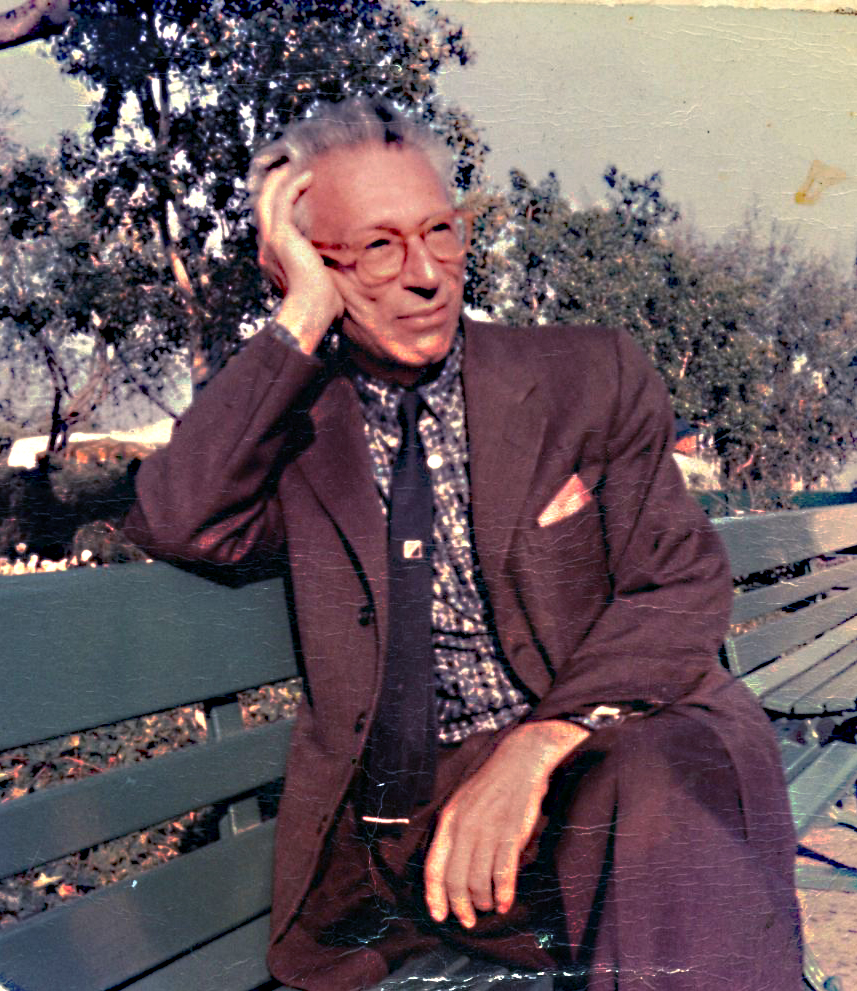
            But my mother’s father was a writer (as well as a teacher) and towards the end of his life he decided to sit down and write an account of his childhood, specifically for his grandchildren. He wrote, early in the pages, that he wished he’d had such an account from his own grandparents, and so he wanted to make sure to do that for us.

            For the past few weeks, whenever I’ve had time, and energy, I’ve been sitting in front of the computer transcribing a few pages of my grandfather’s handwriting – hearing his unique voice and how he played with punctuation (a dash here, a comma there, often both at the same time) and how he often repeated words for emphasis, like hard hard, for very hard, or much much, for very much. Interestingly, I’ve noticed this same pattern in Modern Hebrew, where le’at le’at (or slow slow) means very slowly, and maher maher (or fast fast) means very quickly.

            I was sure I remembered everything important from having read the memoir years ago, but of course there were so many things I’d forgotten: like his descriptions of the outhouse behind the tenement across the street, and how lucky his family was to live in a tenement that had two indoor toilets per floor; or his description of all of the wonderful food his mother made for holidays, or the deep anxiety she lived with year round and that was finally echoed by everyone else during the High Holidays; and there were all of the stores he accompanied his mother to, when he was only four years old, because his English was better than hers; and the way he described his childhood synagogue on Yom Kippur, where the Cantor would close the windows, to avoid catching a cold from the breeze, leaving many people struggling with the heat, and fainting from the combination of the heat and the hunger from fasting.

            My grandfather was a wonderful storyteller; I’ve always known that. And he had strong feelings about the ways his childhood orthodoxy no longer fit him as he grew up and began thinking through his Judaism for himself. And I knew that he loved language and food and his family. None of the information or the wisdom in these pages is new to me, but I am so grateful for the opportunity to dawdle over these pages again and to take my time as I type (because I am a very slow typist) and visit with him again.

Grandpa

            In the midst of the typing, my great aunt Ellen, my grandfather’s baby sister, died at the age of one hundred and eight. She had outlived the rest of her siblings by decades, taking on the mantle of family elder and family glue. And with her death it feels like a whole generation is disappearing at once, except for all of the memories they’ve left behind, including this memoir my grandfather wrote just a few years before he died. These forty short pages are giving me a chance to have conversations with him that we never got to have when he was alive, and I am so grateful to have these words to help keep his memory alive, and the memory of his baby sister whom we loved very much, and, who, as a result, we will never really lose.
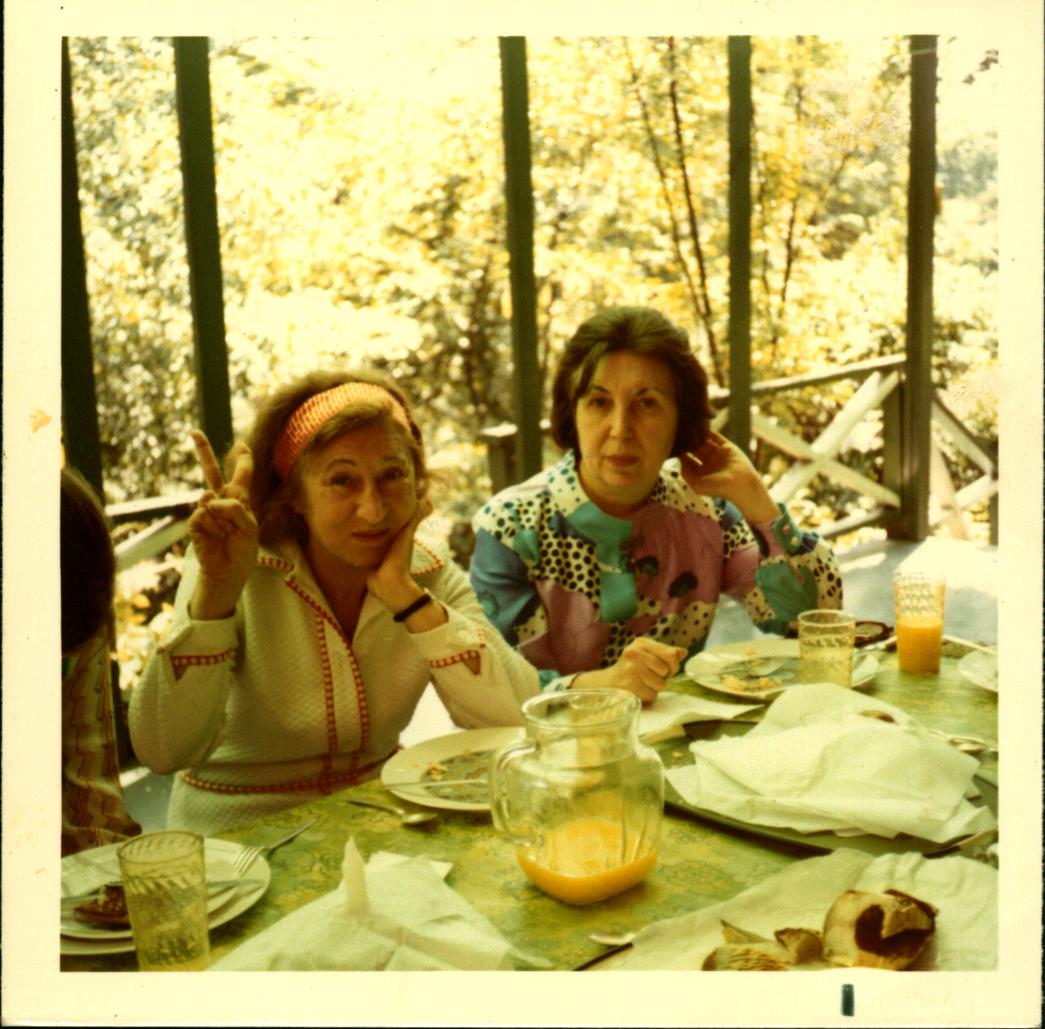
Ellen (right) with her sister Susie

If you haven’t had a chance yet, please check out my Young Adult novel, Yeshiva Girl, on Amazon. And if you feel called to write a review of the book, on Amazon, or anywhere else, I’d be honored.

            Yeshiva Girl is about a Jewish teenager on Long Island, named Isabel, though her father calls her Jezebel. Her father has been accused of inappropriate sexual behavior with one of his students, which he denies, but Izzy implicitly believes it’s true. As a result of his problems, her father sends her to a co-ed Orthodox yeshiva for tenth grade, out of the blue, and Izzy and her mother can’t figure out how to prevent it. At Yeshiva, though, Izzy finds that religious people are much more complicated than she had expected. Some, like her father, may use religion as a place to hide, but others search for and find comfort, and community, and even enlightenment. The question is, what will Izzy find?
The Cuckoo Clock


When I was little, my brother and I slept over at Grandpa and Grandma’s house in Chappaqua. We stayed in the guestroom, with the two twin beds at perpendicular angles, and while we were there we were almost like friends. My brother is two years older than me and, at home, I was a bother and a nuisance, but at Grandpa’s house we were a team. He needed me as much as I needed him, because we were in a strange place and didn’t know what to do, though, of course, he still didn’t want to actually talk to me.

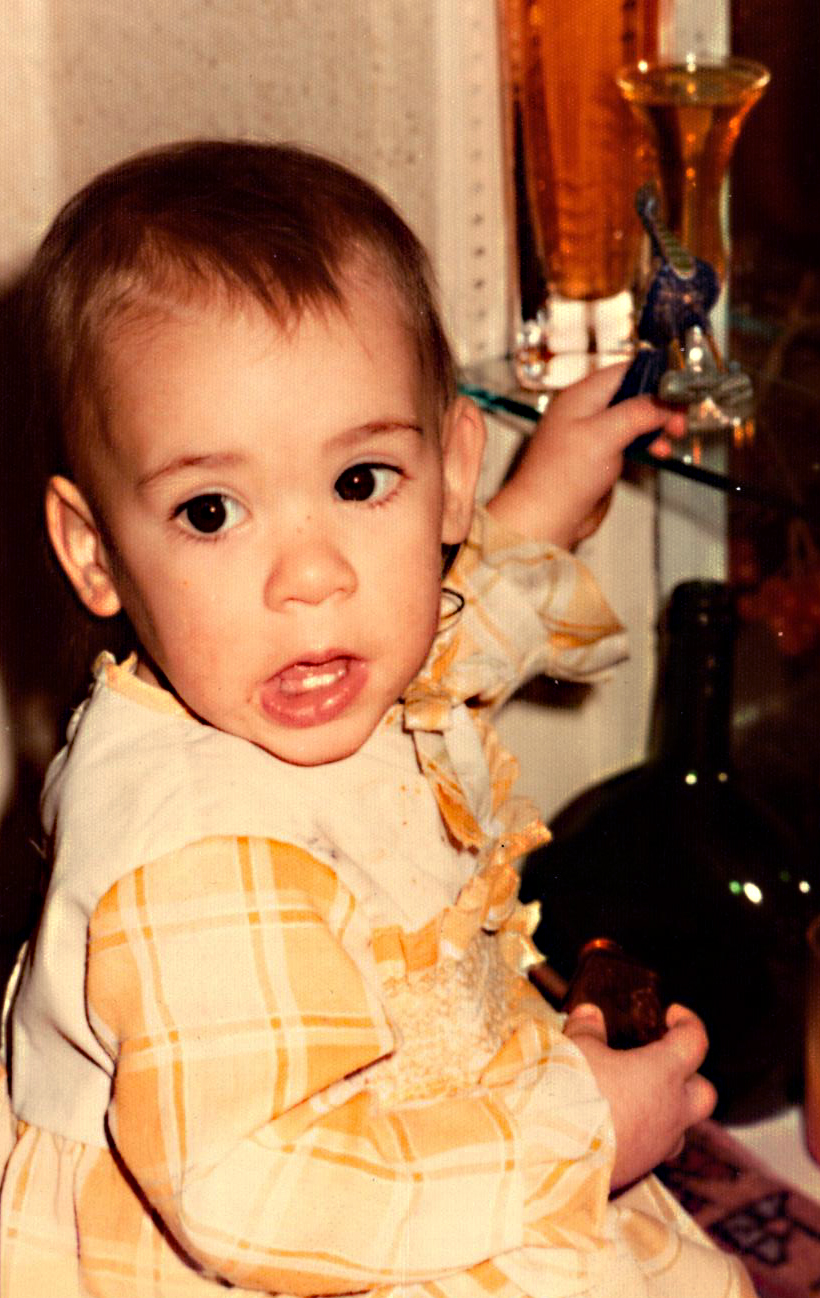
There was some vague sense that our presence was a problem for Grandma, and that we really shouldn’t be seen, or heard. There were glass figurines by the front door – which no one ever used – and I was not allowed to play with them, though there are pictures of me trying to touch them as a toddler. They had no children’s books that I remember, or toys. Grandma had tambourines and maracas and two strange little keyboard/recorder hybrids on top of the piano, and we were allowed to play with those, I think, but not for too long, and not if we gave her a headache.

"What?"

“What?”

My grandparents’ house was built into a hill, so that on one side of the house, the first floor you saw was the main floor of the house – well lit, sunny, and facing a green lawn – and on the other side of the house, the first floor you saw was the garage, and basement, and laundry room – dark and mildewed, and with a rickety stairway up to the main floor. We always entered the house through the laundry room and walked up the rickety stairway into the light.

Me in the living room, looking for the light.

Me in the living room, looking for the light.

When we first arrived, we sat awkwardly in the big chairs at the dining room table and ate butter cookies from a blue tin, and listened to the chimes of the grandfather clock. I don’t remember Grandma talking to us much, except to say no, and don’t do that. She liked for us to sit quietly on the floor and look through old family photo albums with strangers in them who she never identified. For entertainment, we’d crack open nuts from the nut bowl, and that’s how I found out that I loved hazelnuts, and hated brazil nuts, and found walnuts incredibly frustrating to work with.

There was dust everywhere, hanging on the rays of sunshine coming through the windows. And there was a hidden attic, with stairs that had to be pulled down from the ceiling, and there was a laundry chute in the wall that sent the dirty clothes down a slide to the laundry room. We were not allowed to try the ride for ourselves; we asked.

Grandpa took me and my brother food shopping at the local Grand Union, after snacks, and educated us about the wonders of “Red Dot Specials,” and out-of-date bread, and slightly bruised fruit. He’d spent a lifetime teaching Consumer Education and he wanted to share it all with us. He’s probably the reason I’ve always loved supermarkets; he made them seem like magical places, full of everything we could ever need.

Grandpa

Grandpa

He drove us there in his white Mercedes convertible, so that we could feel what it was like to drive with the top down, but I think he also took us out to give Grandma a break from having children in her house.

When we came back, we put the groceries away and then went down to the garage. The house sat on a big piece of property, mostly taken up by a pond. Grandpa had rowboat and life vests and oars hung up in the garage, as if it were a boat house, which it sort of was, and he’d take the row boat out on the pond as often as possible. I’m not really sure what he did out there, because I refused to get in the boat. The water in the pond was an opaque green and I was certain that there were evil creatures skittering around in there. I expected the Loch Ness monster to jump up and roar at any moment. I was even afraid to walk across the little wooden bridge to sit on the bench by the water to wait for Grandpa and my brother to come back, because I expected eels to fly up and grab my legs. I preferred to stand in the driveway, or over by the little stream, where the monsters couldn’t get me.

Late at night, they took us out for ice cream (maybe at eight PM, but it felt like midnight to me) and we ate ice cream sundaes, and brought home candy necklaces, and candy dots, and red licorice strings, and my brother even shared some of his with me, because I ate faster than he did, and because he was better at saving some for later.

At night, though, the house was too quiet. They didn’t have a dog anymore. I would hear about Rufus, the small, shaggy dog my grandmother used to dote on, but by the time I was born there was no sign of a dog in their house, no toe nails clicking on the hardwood floors.

Rufus

Rufus

But, there was the cuckoo clock in the guest room. It was so loud! Every hour, it seemed, the little bird would pop out of the front door of the clock and make noise, and it felt like the whole clock was giggling and shaking. I could hear the tick tick of the cuckoo clock all night. It was wonderful! I looked forward to visits from that cuckoo, like a long lost friend, checking to make sure I was alright. I always wanted to bring the cuckoo clock home with me, but everyone said no.

A Cuckoo Clock (not mine).

A Cuckoo Clock (not mine).

When the dogs wake me up now, at way-too-early in the morning, they remind me of that cuckoo clock. They have the same persistence as the cuckoo, the same cacophony of noise, and the same visible shaking from making all of that noise, as if any second their pieces are going to pop out from excitement. Their little tails wag like metronomes and remind me of the pendulum swinging side to side at the bottom of the clock. And I feel that same sense of relief I felt when the cuckoo came to visit. I’m not alone! Someone else is here, and talking to me. Hello!

"Who us?"

“Who us?”