I’m not ready for the summer to end. I still have writing to do, and doctors’ appointments to go to, and lesson plans to revise. I still want to go to every online Hebrew practice group I possibly can, and see if more poems arrive (I have no idea what makes them bubble up, though there may be storks involved). I tried to get so much done this summer: rebuilding my exercise practice, working on nutrition, changing medications, taking continuing education social work classes, working on therapy, and writing, and Hebrew, and social skills, and on and on. But it’s not enough. I still don’t have a dog. The novel still isn’t finished. My health is still whatever it is. There are still tons of movies I want to see, and issues I wish I could resolve. I’m not ready to go back to work, and choir practice, and trying to find time for my writing in the spaces in between.
This is not my picture, but this is how I picture the poetry stork.
I’m pretty sure I feel this way at the end of every summer, wishing for another month of “vacation” in order to get more of my work done, before the new school year can make me feel like I’m being tied to the back of a speeding train.
I know I will enjoy getting back to the kids, and singing with the choir, but I also know that I will miss this feeling of open time, where I can do things at my own pace and give myself enough time to recover from one panic attack before embarking on the next one.
Here’s hoping that all of the work I’ve done this summer will have shifted something inside of me, creating more space for my summer self to exist during the school year. Because I really want to feel more like myself all year, and not just for a few months at a time.
Fingers crossed.
“Um, I don’t think I have fingers.”
If you haven’t had a chance yet, please check out my Young Adult novel, Yeshiva Girl, on Amazon. And if you feel called to write a review of the book, on Amazon, or anywhere else, I’d be honored.
Yeshiva Girl is about a Jewish teenager on Long Island, named Isabel, though her father calls her Jezebel. Her father has been accused of inappropriate sexual behavior with one of his students, which he denies, but Izzy implicitly believes it’s true. As a result of his problems, her father sends her to a co-ed Orthodox yeshiva for tenth grade, out of the blue, and Izzy and her mother can’t figure out how to prevent it. At Yeshiva, though, Izzy finds that religious people are much more complicated than she had expected. Some, like her father, may use religion as a place to hide, but others search for and find comfort, and community, and even enlightenment. The question is, what will Izzy find?
I recently went to a zoom presentation on Modern Israeli poetry, and both the presentation and the poetry were down to earth and unpretentious and grounded in daily life in a way that made me think, hmm, maybe I am writing real poetry after all, and not just noodling around. I was even more encouraged to find out that, for poetry as opposed to for everything else, Israelis use the vowels under the letters (Nikud in Hebrew) to make sure each word is read correctly, and because it looks cool. The thing is, I grew up learning Hebrew with the vowels intact, and trying to get used to Israeli newspapers and blog posts and books, where there is no Nikud and you have to guess at the pronunciation of new words, has been breaking my brain.
I gave up on writing poetry in English a long time ago, after a lot of rejection, mostly from classmates who thought I was crap at it. But writing poetry in Hebrew seems to bypass a lot of that noise in my head. I’m still self-conscious, of course, and I worry that I’m going to depress people, or that my Hebrew is less real Hebrew than my own invention. But whereas when I try to write poetry in English the words just drip drip like a leaky faucet, in Hebrew they come out with more force, as if they actually have something they want to say.
I’m not sure if these two poems are finished. In fact, I’m pretty sure they’re not, despite many edits, but I wanted to reward myself a little bit for trying to write them at all, so I’m sharing them here. And then sharing links to some actual Israeli poetry, in English Translation.
If you haven’t had a chance yet, please check out my Young Adult novel, Yeshiva Girl, on Amazon. And if you feel called to write a review of the book, on Amazon, or anywhere else, I’d be honored.
Yeshiva Girl is about a Jewish teenager on Long Island, named Isabel, though her father calls her Jezebel. Her father has been accused of inappropriate sexual behavior with one of his students, which he denies, but Izzy implicitly believes it’s true. As a result of his problems, her father sends her to a co-ed Orthodox yeshiva for tenth grade, out of the blue, and Izzy and her mother can’t figure out how to prevent it. At Yeshiva, though, Izzy finds that religious people are much more complicated than she had expected. Some, like her father, may use religion as a place to hide, but others search for and find comfort, and community, and even enlightenment. The question is, what will Izzy find?
There’s an Israeli TV show from about ten or fifteen years ago called Srugim that I’d been avoiding for quite a while. Srugim means “knitted,” or “crocheted” and it refers to the kippot (skullcaps) worn by the modern orthodox men featured in the series (I learned how to crochet kippot in Junior high, because girls were supposed to know how to make these for boys. No, really.) Especially in Israel, but also in the United States, you can tell which particular division of Judaism a man belongs to based on whether he’s wearing a crocheted kippah, a black suede or black velvet kippah, a Sephardi kippah (these are actually more like hats and are incredibly beautiful), or a large white kippah, and, of course, if you wear a black hat over your black kippah you are probably ultra-orthodox, but the style of hat will differ depending on which group you belong to. These careful decisions about what to wear on your head allow people to know who’s in the group and who’s an outsider, kind of like how high school students can tell from across a crowded lunchroom who’s in drama club, who’s a jock, and who wants to be the next Mark Zuckerberg.
I’d watched the first episode of Srugim a few years ago, on the recommendation of my best friend from high school who moved to Israel many years ago. We like a lot of the same things, so it surprised me how much I hated this show, or at least that first episode. It wasn’t actually the show overall so much as this one character who just made me angry, and I wasn’t sure if the writers of the show wanted me to like him and tolerate his obnoxious behavior or if they recognized how much of a jerk he was. And, really, I didn’t have the patience to deal with him either way.
When we got our Chaiflicks subscription (a Jewish streaming service) last winter, I tried to watch that first episode again, because, really, how could my friend love this show and I couldn’t even watch more than one episode? But I still couldn’t tolerate that one guy.
I kept seeing the show on my watchlist, though, each time I jumped over it to watch something else, and I kept wanting to erase it, but I couldn’t. Finally, a few weeks ago, I decided to try again, this time starting with episode two. And I was hooked! It turned out that the writers absolutely knew this guy was an asshole, and wanted to show how his behavior impacted the people around him, especially the woman who was falling in love with him. As I watched episode after episode, I realized that the whole point of the show was that these young modern orthodox Jewish singles in Jerusalem are as complex and confused as everyone else, even if their lives looked very buttoned up from the outside.
Of course, the show is in Hebrew (with English subtitles – before being on Chaiflicks it was on more mainstream American streaming services), so I can tell myself that I’m watching it as homework to help build my Hebrew listening skills.
The show starts when the main characters are on the brink of being “too old” at age thirty to make good matches in the modern orthodox world (though the age for a good match seems to be rising as women have been going to school and starting professions before marriage).
Other popular shows recently have focused more on the ultra-orthodox Jewish world (though there are many ultra-orthodox communities and they are not all the same), rather than the modern orthodox, because they live more isolated lives, avoiding popular culture, including television and smartphones. I’m fascinated by those closed worlds too, but the modern orthodox Jewish singles portrayed in Srugim are trying to straddle two worlds, engaging in the modern world of culture and technology and feminism and professional lives, while also trying to maintain religious laws and traditions, and, for me, that’s much more interesting.
I went to an orthodox Jewish day school (in New York) for Junior high and high school, and I felt like an outsider the whole time, because I could never master all of the rules, let alone believe in them. I kept being overwhelmed by how perfect everyone else seemed to be, on the surface, and how simple and clear their lives looked, with all of their choices made for them.
It took me a long time to understand that my classmates were struggling just as much as I was, and if anything, they felt more pressure to hide their struggles than I did, and to avoid being judged by their community for the ways they inevitably fell short. Something about watching these characters on Srugim, who are like adult versions of my old classmates, has made me see my old friends (and enemies) more clearly and with more compassion. They get embarrassed too, and feel not good enough sometimes, and get lonely, and struggle to keep all of the rules, or struggle to want to. They can fall for the wrong guy, or be the wrong guy, while still wearing a kippah or keeping kosher and following all of the obvious rules. Being religious doesn’t protect them from life, though for some it is able to offer guidance and comfort along the way.
My high school best friend (the one who recommended Srugim) lived in Jerusalem during her twenties, and though she’d told me some of the highs and lows of those years along the way, I didn’t really get it. Her life seemed so clear and straightforward compared to the incoherent chaos and fear I lived with at that time. I took a lot of comfort in the idea that at least she was doing okay. But now I’m getting a fuller picture of what she lived through, with all of the blind dates and coffee meetups and the endless pressure to find “the one” in order to start her real life (aka, having children). I should have known better, given how well I knew her, but at the time I wasn’t up to understanding that everyone’s life is complicated.
Often, when I only see the Facebook or Instagram versions of orthodox lives (the beautifully baked challah on the perfectly set Shabbat table, all seven kids lined up in age order and well-behaved), I forget that behind those images are real lives, with temper tantrums and burned meals and lost jobs and grief and betrayals.
There’s something about being a religious Jew that moves me, though Not the way the rabbis are in charge of everything and the rules are so strict, but the way that every event of the day, every simple handwashing or meal or walk, takes on meaning, because it is acknowledged by a ritual or a blessing. I love the way life is meant to be something to treasure: even when you are bored or confused or angry, there’s a prayer or a lesson from the Talmud to help you through it and to acknowledge that this is life and every moment of it, however painful, has value. It’s like a complex piece of music, where each note matters: each pause, each cacophony, each harmony, each predictable scale or unexpected resolution, is an important part of the whole.
One of the main characters on Srugim goes through her own crisis of faith, partially because she falls in love with a non-religious man, but mostly because she realizes that even though she grew up in the religious world, it doesn’t really fit her, or at least it doesn’t allow for all of who she is. And watching her gradually find her own way forward, while still holding onto the friends who remain in that world, without the show ever judging which way is right or wrong, was really validating. It reminded me of something I’ve known for a long time, but always need to re-learn: being religious isn’t supposed to be a way to hide from the difficulties of life, even if many people try to use it that way, like my father did. Being religious is meant to be a way to help you get through it, and to remember what’s important to you when you are overwhelmed with all of the chaos that keeps pulling you off track.
Friday Night Dinner
Even among the religious characters on the show, each one has their own relationship with the laws they follow, and how deeply they think about their choices, or not; some feel deeply connected to God and some seem to follow all the rules by rote, and the same people can do it all differently at different times in their lives.
I was sure I’d missed a lot on my first binge through the three seasons of the show (I watched 45 episodes in about a week and a half), so I was thrilled when my mom was interested in watching it through from the beginning with me, at a somewhat slower pace. And on second viewing I’m noticing a lot more details, of course, but I’m also feeling more, allowing myself to sit with these characters and their certainties and doubts and their mistakes and their deep love for each other. It feels like these characters are my friends now, even the one I hated at the beginning (though he still pisses me off on a regular basis), and I’m allowing myself to know them as they are, and accept them as they are, without (too much) judgement.
I saw an article online saying that the creator of the show tried to make a sequel a few years ago, showing this same community in the next phase of their lives. I don’t know if anything came of that effort, but if they ever get a chance to make that show, I will be watching.
If you haven’t had a chance yet, please check out my Young Adult novel, Yeshiva Girl, on Amazon. And if you feel called to write a review of the book, on Amazon, or anywhere else, I’d be honored.
Yeshiva Girl is about a Jewish teenager on Long Island, named Isabel, though her father calls her Jezebel. Her father has been accused of inappropriate sexual behavior with one of his students, which he denies, but Izzy implicitly believes it’s true. As a result of his problems, her father sends her to a co-ed Orthodox yeshiva for tenth grade, out of the blue, and Izzy and her mother can’t figure out how to prevent it. At Yeshiva, though, Izzy finds that religious people are much more complicated than she had expected. Some, like her father, may use religion as a place to hide, but others search for and find comfort, and community, and even enlightenment. The question is, what will Izzy find?
The most recent South Korean series I’ve been watching on Netflix is a romantic drama called Chocolate. It’s made up of sixteen hour-long episodes and tells a love story that crosses decades and starts and ends with food, especially chocolate. A boy prepares a meal for a girl when she’s starving, and that sends her on a lifelong journey of feeding others, both to relive the kindness she received and to pay it forward. It feels like the boy transferred his love of cooking to the girl, as if a piece of his soul was grafted onto hers.
The first feast
There’s a sense of ceremony and ritual to the cooking in this series as we watch her sift and chop and snip and stir. And watching the way people receive and enjoy her food is satisfying, even when the particular foods she makes don’t appeal to me (Ahem, kimchi. There’s a kimchi section at my local HMart that always looks so inviting, and I keep trying different dishes hoping to find something with a spice level I can tolerate, but that hasn’t happened yet.
not my picture
She constructs her dishes with an awareness of how they look and smell and feel and sound, like colorful flowers deep fried and added to the plate, for crunch and color, or a cherry blossom roll where you can see the blossom in the center. And I love the way slurping is encouraged rather than frowned upon. Throughout the series, the chef tries to recapture people’s memories with her food, and then relies on chocolate, baked into cakes, molded into designs, or eaten as is, to remind her that there is reason to hope and to hold on, even when she’s at her lowest.
Watching episode after episode of this show has been inspiring but has also reminded me of how little energy I’ve had for cooking over the past few years. I can’t stand at the counter long enough to chop and mix and sauté; one minute at the sink leaves me feeling like there’s a cleaver in my back, two minutes in front of the chopping board and my vision starts to swirl. And yet, I can watch this fictional chef prepare dish after dish for hours without feeling any pain, and I feel taken care of, by osmosis. She reminds me of how I felt when I was little, watching my mother make dinner, peering over the counter to see what she would add next.
I spent many years trying to learn how to cook satisfying food for myself. I took cooking classes and baking classes and cake decorating classes, and I made soups and pastas and dumplings and cakes, but it never felt good enough. I worked so hard to try to feel joy in making the food, but in the end it just felt like work, often tedious and thankless, resulting in food that still disappointed me. Something always seemed to be missing from the final product; something I couldn’t name and couldn’t recreate.
But this fictional chef is able to share some essential element of herself with others through her food, and yet never seems to be diminished by how much she gives away. I wish I could believe that by studying her recipes and techniques I could discover the secret ingredient I keep missing in my own cooking, whether it’s fish paste or a certain way of slicing the onions or some ineffable quality that she infuses into the process from her soul.
The reality is, I don’t go hungry; and I don’t lack joy in my life, or even in the food I eat. But there is always this slight bitterness, this inkling that something is missing, something I need and want and can’t seem to find. I may have to rewatch all sixteen episodes to see if I can figure out what I’m missing; or maybe one day, if I’m lucky, I’ll be able to find it within myself.
If you haven’t had a chance yet, please check out my Young Adult novel, Yeshiva Girl, on Amazon. And if you feel called to write a review of the book, on Amazon, or anywhere else, I’d be honored.
Yeshiva Girl is about a Jewish teenager on Long Island, named Isabel, though her father calls her Jezebel. Her father has been accused of inappropriate sexual behavior with one of his students, which he denies, but Izzy implicitly believes it’s true. As a result of his problems, her father sends her to a co-ed Orthodox yeshiva for tenth grade, out of the blue, and Izzy and her mother can’t figure out how to prevent it. At Yeshiva, though, Izzy finds that religious people are much more complicated than she had expected. Some, like her father, may use religion as a place to hide, but others search for and find comfort, and community, and even enlightenment. The question is, what will Izzy find?
This year for my birthday I got a subscription to Chaiflicks, a Jewish streaming service that has movies from around the world (France, Hungary, Germany, South America, the United States, and, of course, Israel). And since there’s almost nothing new on regular TV in the summer, except for news and sports, I’ve been making my way through their movie collection.
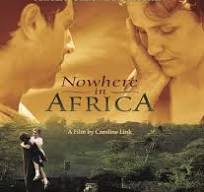
There was one movie called Nowhere in Africa about a Jewish family who left Germany for Africa just before Kristallnacht (1939), leaving behind family members who still weren’t convinced that Hitler and the Nazis really meant all of the awful things they said they wanted to do to the Jews. The transition to life in Africa was hard for them: the heat, the villagers, the farming and hard labor, and of course the language and culture and food. The movie is based on an autobiographical novel by the daughter of the family, and we get to see a lot of the events through her eyes, both her incredible adaptability and the grief she feels when, after the war ends, the family returns to Germany to help rebuild the country.
Another movie, called Gloomy Sunday, was about a thruple (two men and a beautiful woman) in Hungary during World War II. One of the men is a Jewish restaurant owner and the other is a penniless musician who is hired to play piano in the restaurant. Drama ensues, of course. The musician writes a song that becomes intertwined with a series of suicides, and the Jewish restaurant owner is eventually sent to the camps and killed, despite thinking he had a friend among the Nazis who would protect him. But the ending is satisfying, in a revenge is best served cold sort of way.
You may be sensing a theme at this point, because many of the non-Israeli movies on Chaiflicks focus on the Holocaust, from many different perspectives. One of the more hopeful stories was about a grandmother in Bordeaux, France who thought her whole family had been murdered in the Holocaust and then she accidentally finds her granddaughter, alive.
The Missing Granddaughter
There are so many stories that deserve to be told, and have so much to teach us about survival and grief and evil and fighting back, but it’s hard to take it all in.
One of the non-Holocaust movies we watched was about an event I knew almost nothing about: the bombing of the AMIA Jewish community center in Buenos Aires, Argentina in 1994, which killed 85 people, including children. The movie is called Anita, and focuses on a woman with Downs’s syndrome who is injured in the blast and survives, but gets lost for days, while her brother believes she must have died along with their mother in the explosion. Anita seems to bring out the best in a lot of the people she meets, but not right away. In a strange coincidence, the week after we watched the movie the 1994 bombing was in the news again, because it was the 30th anniversary of the bombing and after a court in Argentina had finally placed blame for the bombing on Iran and Hezbollah, the government vowed to pursue justice.
We’ll see what else I can learn from Chaiflicks this summer, though I’d really like it if the filmmakers could be more gentle with my prudish American sensibilities and stop randomly showing women’s breasts in every other scene.
I don’t think I would have had the emotional bandwidth to deal with these movies during the school year, and I feel really lucky to have summers off, not just to rest but also to challenge myself in ways I couldn’t tolerate the rest of the year.
Of course, I still take tons of breaks to watch Hallmark movies, or to binge one of the great South Korean series on Netflix, so I’m not overdoing it. Don’t worry. I just wish I had more time for all of the things I wanted to do this summer. I’m not ready for it to be August already, with only one month left before school starts again. If anyone knows where I can find one of Hermione’s Time Turners (from Harry Potter) I’d be eternally grateful.
“Is there a doggie streaming channel for me?”
If you haven’t had a chance yet, please check out my Young Adult novel, Yeshiva Girl, on Amazon. And if you feel called to write a review of the book, on Amazon, or anywhere else, I’d be honored.
Yeshiva Girl is about a Jewish teenager on Long Island, named Isabel, though her father calls her Jezebel. Her father has been accused of inappropriate sexual behavior with one of his students, which he denies, but Izzy implicitly believes it’s true. As a result of his problems, her father sends her to a co-ed Orthodox yeshiva for tenth grade, out of the blue, and Izzy and her mother can’t figure out how to prevent it. At Yeshiva, though, Izzy finds that religious people are much more complicated than she had expected. Some, like her father, may use religion as a place to hide, but others search for and find comfort, and community, and even enlightenment. The question is, what will Izzy find?









 rachelmankowitz