Monthly Archives: May 2025

My Passport Arrived

            It took me three or four years from the first time I printed out a passport application until finally, a few months ago, I went to the post office with my pre-filled-out application, had my official picture taken, and paid all of the fees. The impetus that finally pushed me on my way was the possibility of going on my synagogue’s trip to Israel, and even though I realized that this particular trip was not for me, I realized it was time to apply for my passport anyway, just in case.

            And then, a couple of days after I posted about the-trip-I-couldn’t-take on the blog, my best friend from high school renewed her offer to host me at her home in Israel, and take time off from work to travel around the country with me, wherever I wanted to go. I’d actually forgotten that she’d suggested such a trip a few years ago. At the time, I don’t think I believed her offer was real, or I thought it shouldn’t be, because she has her own business, and family, and a full life of her own, and I just couldn’t imagine interrupting all of that. But looking back, I think the real reason I didn’t accept the offer was because I just wasn’t ready. I couldn’t have told you why I wasn’t ready, or what would have to change to make me more ready, but this time, when she offered, I believed her, and I said yes. And, when my passport arrived in the mail a few weeks ago, I realized that I am really, finally, going to Israel.

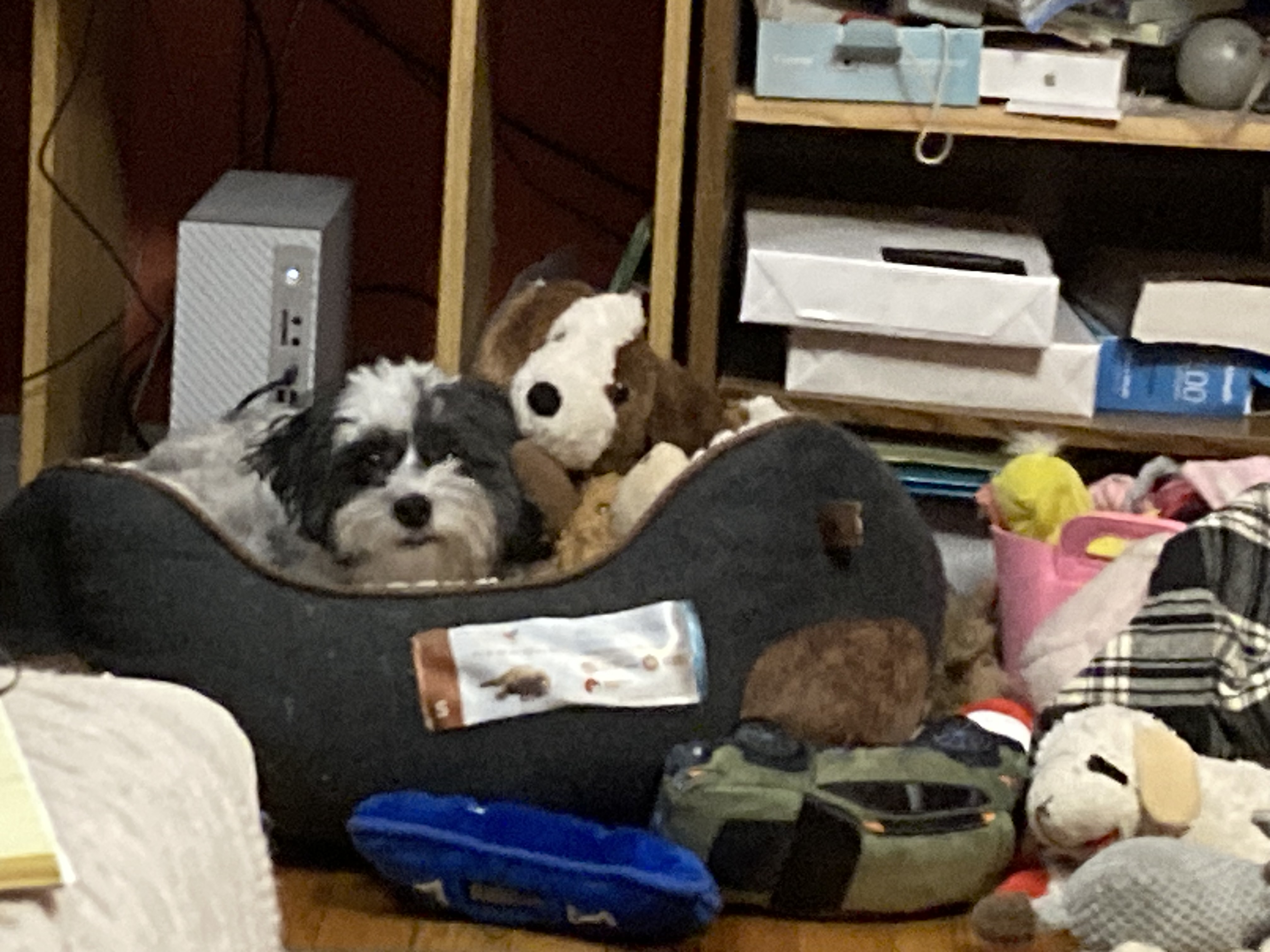
You can’t have it, Mommy.”

            Of course, being me, now I’m thinking about all of the things that could go wrong on the trip. I printed out a pile of articles on what to pack, and where to go, and what to wear, and I filled my YouTube watchlist with videos on how to pack medications and what to put in your carry on and what to wear on the plane, and yet, I still haven’t scared myself out of going on the trip. It helps that I have some time to prepare. We chose November for my visit because that’s when she has a lighter workload, and the weather is more manageable for me, and flights are cheaper, and there are no big Jewish holidays to complicate things. I feel guilty for planning to go during the school year, and missing one or two classes with my students as a result, but even that guilt hasn’t been enough to derail me, so far.

            There’s still so much research to do, and so many decisions to make, and so many opportunities for the panic to overwhelm me. I worry that airport security will want to see all of the prescriptions for my meds, in case I’m hiding opiates in the midst of all of my other pills; and what if I can’t make sense of the Gett app (their version of uber), or the currency exchange rate, or public transportation, and I end up having a panic attack in the middle of the light rail in Jerusalem? And then I wonder if I should make the trip shorter, to reduce the potential causes of anxiety, or if it should be longer, so I can take more time to settle in before trying to do anything too exciting. And then I wonder what I should bring back for my students, and a little voice inside keeps asking, why can’t mommy come with me? And then I think, wouldn’t it be better to win the lottery first, or to wait for a group trip so that someone else can make all of the decisions for me?

            With all of my research, I now know that I will need flight insurance, and travel insurance, but I want to know where I can get mental health insurance, or better yet, an app that will figure out when I’m spiraling and send help when I fall apart in the middle of the Carmel market.

            I’m trying to keep my expectations for the trip low, so I won’t fall into a deep depression when I inevitably fail to make it the best experience of my entire life. I’d like to think of this more as the first in a series of trips, and a chance to acclimate to the country and plan future adventures. That way, as long as I get the chance to walk through one of the outdoor markets, and shop for new-to-me foods in the supermarket, and sit by the beach or in a café, listening to the different accents swirling all around me, everything beyond that will just feel like a bonus.

            The reality is, going on this trip with my good friend is the best part of the plan, because she won’t expect me to suddenly have the energy to climb Masada or swim in the Dead Sea. And if what I really want to do one day is go to the supermarket to search for new snacks and then watch Israeli TV all day, she’ll be right there with me. And, really, if I have a panic attack in the middle of Tel Aviv, I won’t need a mental health app to scoop me up, because she’ll be there to look me in the eye and remind me that the earth not going to swallow me up and with a few deep breaths, and maybe a nap, I really will be okay, and probably better than okay, even on my own power.

            Now, back to worrying about what to pack.

“Can I fit in the carry on?”

If you haven’t had a chance yet, please check out my novel, Yeshiva Girl, on Amazon. And if you feel called to write a review of the book, on Amazon, or anywhere else, I’d be honored.

            Yeshiva Girl is about a Jewish teenager on Long Island, named Isabel, though her father calls her Jezebel. Her father has been accused of inappropriate sexual behavior with one of his students, which he denies, but Izzy implicitly believes it’s true. As a result of his problems, her father sends her to a co-ed Orthodox yeshiva for tenth grade, out of the blue, and Izzy and her mother can’t figure out how to prevent it. At Yeshiva, though, Izzy finds that religious people are much more complicated than she had expected. Some, like her father, may use religion as a place to hide, but others search for and find comfort, and community, and even enlightenment. The question is, what will Izzy find?
The Lingering Smell of Pee

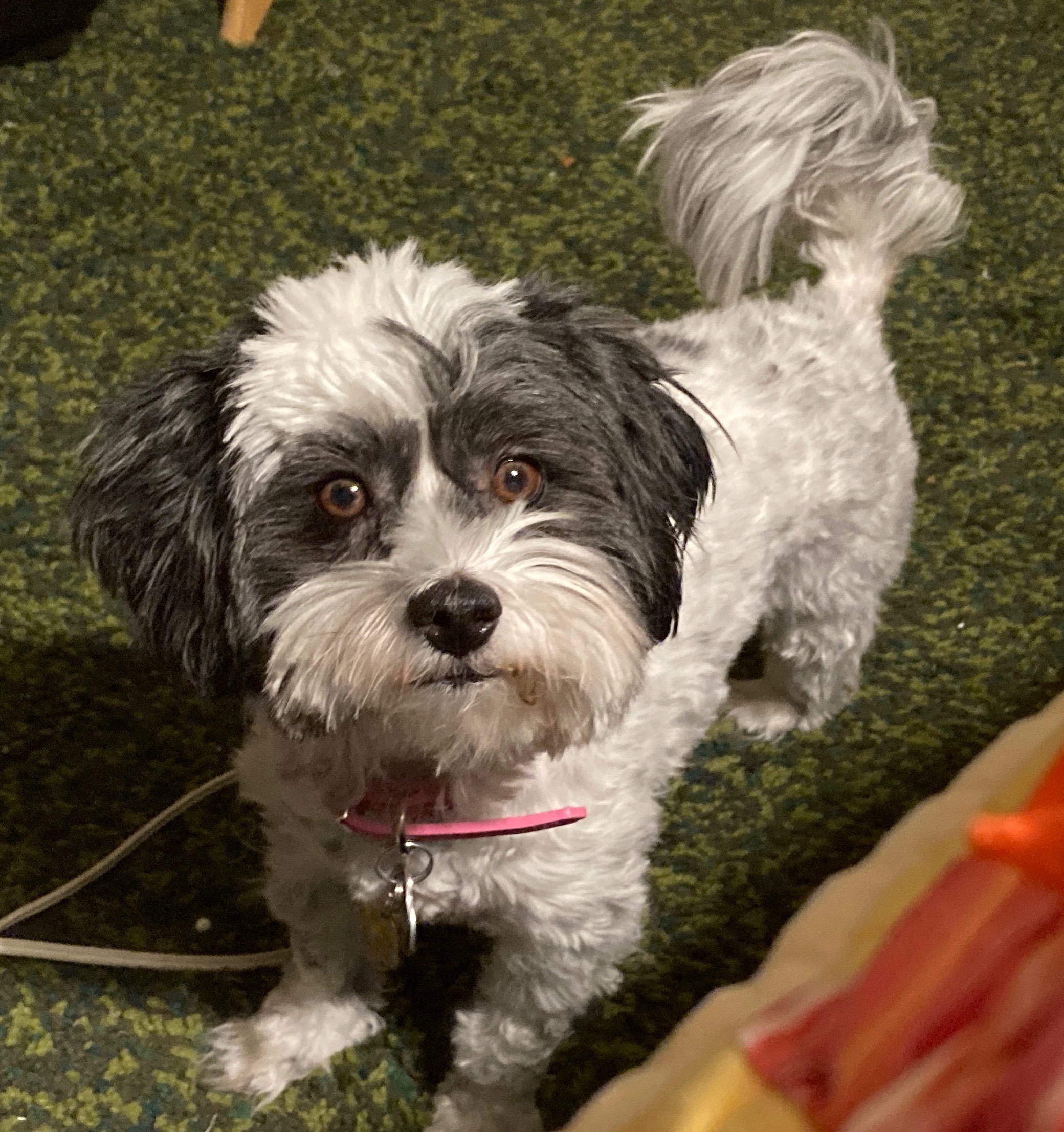
            Though Tzipporah, my four-year-old Havanese rescue dog, has learned to pee on the wee wee pads, she often pees just off the edge (my feet are on the pad, though!), or she’ll pee on the rug by the front door, as a form of protest when we dare to go out and leave her behind for more than five seconds. I thought I was doing a good job of keeping up with all of the pee, sopping it up with paper towels and cleaning each spot as quickly as possible, but then came a week of wet weather and the pee smell seemed to rise up from the rugs to fill the air.

“You’re telling everyone?”

            I ordered some high-powered anti-pee carpet cleaner, because I can’t for the life of me remember how to use the carpet shampooer we bought ten years ago (and haven’t used since), but before it could even arrive, Mom agreed to get rid of the rugs in the hallway. We’re still crossing our fingers, and paws, that the living room rug is salvageable, but we’ll see.

Unfortunately, Tzipporah is still nowhere near ready to pee outdoors. We’ve been taking her outside a few times a week, to help her get used to the grass, and the leash, but it’s been slow going. I’ve also been taking her with me to therapy once a week, to acclimate her to travelling in the car, if nothing else, and, of course, my therapist decided that if Tzippy was going to come to therapy, she might as well do some therapy work. Her goals for Tzippy are to come when called, to walk on a leash, and to accept treats from a human hand (other than Grandma’s). I was pretty happy with Tzippy’s growing ability to sit calmly in the car, and then on my lap for forty-five minutes in the office, but what do I know.

            One very exciting development came when we took Tzipporah outside for one of her get-used-to-the-grass-adventures, and Kevin the mini-Goldendoodle came over and dropped his tennis ball at her feet, four times! Tzipporah had no idea what to do with the ball, but she seemed to recognize that he wasn’t a threat and allowed him to sit next to her on the grass for minutes at a time.

Kevin’s dad took this wonderful picture

            Tzipporah is decidedly different from any of the dogs we’ve had before, especially in her insistence on staying in her bed whenever we’re nearby, and never, ever, barking. And yet, I’ve caught myself almost calling her “Ellie” a number of times. It may just be that Ellie’s name comes to mind because she was our most recent dog before Tzipporah, or because Ellie was also a Havanese (though with different coloring). And it shouldn’t bother me so much, but it does. It’s not that I feel guilty for misnaming Tzippy, because I usually catch myself in time, it’s more that I’m afraid I’m forgetting Ellie too quickly, as if she’s so easily replaceable by someone else.

The problem is, while I can never forget Cricket, even for a moment, I sometimes struggle to remember stories and moments from Ellie’s life. My memories of Cricket are so full-bodied that it feels like Cricket is actually in the room with me when I think of her, as if I can summon her at will. Cricket was in my life for sixteen years, from puppyhood, and she imprinted herself deep into every cell of my body, but I only had Ellie for five years, and I’m afraid my memories of her, which are just whispers at this point, will soon disappear.

“Hey, I’m full bodied too.”

            But, now that I think about it, we had to get rid of our rugs after Ellie’s first few months with us too, and I took her with me to therapy for two years (more for my sake than for hers, to be honest, but the process seemed to help her relax and bond anyway). So Maybe Ellie’s name comes to mind because she is still here with us, and here with Tzipporah. Cricket was Ellie’s trainer, pushing her to bark and run and beg for treats like a “real” dog, and maybe Ellie is doing her own version of big-sister-ing with Tzipporah from the other side of the rainbow bridge, letting her know it’s okay for things to take time and that she will be loved no matter what.

“I’m still here, Mommy.”

Ellie never became a Velcro dog, like Cricket, but she knew she was loved and safe. So, if even an echo of her is still present in the apartment, whispering in Tzipporah’s ear, maybe everything really will be okay.

“I’m never alone.”

If you haven’t had a chance yet, please check out my novel, Yeshiva Girl, on Amazon. And if you feel called to write a review of the book, on Amazon, or anywhere else, I’d be honored.

            Yeshiva Girl is about a Jewish teenager on Long Island, named Isabel, though her father calls her Jezebel. Her father has been accused of inappropriate sexual behavior with one of his students, which he denies, but Izzy implicitly believes it’s true. As a result of his problems, her father sends her to a co-ed Orthodox yeshiva for tenth grade, out of the blue, and Izzy and her mother can’t figure out how to prevent it. At Yeshiva, though, Izzy finds that religious people are much more complicated than she had expected. Some, like her father, may use religion as a place to hide, but others search for and find comfort, and community, and even enlightenment. The question is, what will Izzy find?

Reading Etgar Keret

            I recently started to read a collection of short stories by Etgar Keret, in Hebrew, as a way to practice my Hebrew reading skills and build vocabulary. I’m generally not a short story reader, but my current Hebrew teacher suggested that short stories would be an easier lift than whole novels, and Etgar Keret is the best-known short-story writer in Hebrew today. The other benefit of reading an Israeli author (rather than an English language book translated into Hebrew, like my Harry Potter books, which I’ve been trying to read for many years now), is that I can learn more about life in Israel while improving my Hebrew. The fact that Keret is so popular in Israel suggests that his work resonates with many Israelis.

Suddenly a knock on the Door by Etgar Keret
Harry Potter and the Order of the Phoenix

            Of course, even though the first story in the book (the title story), “Suddenly a knock at the door,” is only 3 or 4 pages long, I managed to fill three pages with vocabulary words to look up on Google Translate; words like “holster,” and “butcher’s knife,” and “avalanche,” are probably not going to end up on my long-term vocabulary list, but “nerves,” and “politeness,” and “boiling,” might be helpful down the road.

The problem is that I found the first story in the collection painful to read, even after getting all of the vocabulary translated. The disconnect between Etgar Keret’s characters and reality, and between his characters and their own emotions and actions, makes it feel like we too, as readers, are in a dissociated state as we follow the story. A number of the stories I’d already read by him, in various classes, involved the need to go to extremes in order to “feel something,” as if his characters are all living their lives in an extended state of post-trauma. There’s also a lot of loneliness in his stories, and an inability for the protagonists to connect to the other people in the world of the story, despite increasingly desperate attempts to do so.

After reading 1 ½ stories, I already needed a break, and I decided to go online to see what other readers had to say about Keret’s work, in English, in case I was missing something in the Hebrew. One reviewer called his stories “a blend of the mundane and the magical,” and many called his style “surreal,” but no one could really explain to me why his writing resonated with so many people, or why Keret himself felt compelled to write this way. And then I found an interview he’d given, where he said that whenever he feels angry with someone and he can’t get past it, he writes a story from their point of view, as a way to put himself in their shoes and try to humanize and understand them. He has, for example, written at least ten stories from the point of view of Benjamin Netanyahu, the seemingly-forever-Prime-Minister of Israel who has moved further and further to the right throughout his time in power. And hearing Keret’s real voice, as opposed to his fictional one, helped me to understand his stories a little bit better. They seem to be, at heart, Keret’s attempt to connect with and make sense of his fellow Israelis, and the disconnect I feel as a reader echoes his own frustration at not being able to do so.

Etgar Keret’s version of Israel is a world filled with missed connections, and deep wounds, and problems that can’t be solved, even though his characters want it to be otherwise; and it’s illuminating to know that many people in Israel find Etgar Keret’s version of their world familiar. Would I have gotten all of that from reading the stories only in English? I’m not sure. The fact is, it was only out of a desire to practice my Hebrew that I was even willing to make the effort to enter into Etgar Keret’s world in the first place. And there’s something to be said for that, for the value of investigating the world through another language and another point of view, in order to see and understand things that are usually out of reach.

One of my classmates in the online Hebrew language school is a native Arabic speaker from Jerusalem. He spent years working in the United States and becoming fluent in English, and now he is back in Israel, learning Hebrew and training to become an English teacher. His goal is to use his English to create a bridge between Hebrew and Arabic speakers, and between Jews and Arabs in Israel. And every time I listen to him talk about his work, I’m inspired to add Arabic to my Duolingo list, but I never do it. In a way, Arabic feels as distant and strange to me as Etgar Keret’s world, but the fact that Hebrew and Arabic come from the same language family and have both borrowed from each other at different points in their development, means there is a lot for me to discover about Hebrew by learning some Arabic. I actually know a bunch of words in Arabic already, because they’ve been borrowed into Hebrew, either with their original meaning intact or with some alterations, but I only know how to read or write them in Hebrew and to go any deeper into the language I’d really have to start with the alphabet, which is all new to me.

            I’ve heard from many people, recently, that they would love to be fluent in Hebrew, or any number of other languages, if they could only take a magic pill, or insert a chip into their brains, because the actual work of learning another language is too hard. I’ve always assumed that the reason it was taking me so long to become fluent in Hebrew (or French, or Spanish) was because I wasn’t working hard enough, or I was doing it wrong, but I’m finally starting to understand that while there are some people who are extraordinarily talented with languages, most of us have to work at it, and it takes a long time.

So, I’m continuing to read the Etgar Keret stories, and taking my Hebrew classes, and adding Arabic to my Duolingo list, because I’ve discovered that even if I never become fluent in another language, I’m still learning more than I ever expected to learn along the way, and it’s making my life and my understanding richer, no matter how long the journey takes.

A review: Etgar Keret’s “Suddenly, a Knock on the Door” – Words Without Borders

An interview: Etgar Keret: “When you say Israel is committing genocide, it means you don’t want to have any conversation.” – Jews, Europe, the XXIst century

“Is there a Duolingo for reading pee messages?”

If you haven’t had a chance yet, please check out my novel, Yeshiva Girl, on Amazon. And if you feel called to write a review of the book, on Amazon, or anywhere else, I’d be honored.

            Yeshiva Girl is about a Jewish teenager on Long Island, named Isabel, though her father calls her Jezebel. Her father has been accused of inappropriate sexual behavior with one of his students, which he denies, but Izzy implicitly believes it’s true. As a result of his problems, her father sends her to a co-ed Orthodox yeshiva for tenth grade, out of the blue, and Izzy and her mother can’t figure out how to prevent it. At Yeshiva, though, Izzy finds that religious people are much more complicated than she had expected. Some, like her father, may use religion as a place to hide, but others search for and find comfort, and community, and even enlightenment. The question is, what will Izzy find?

Sending Out the New Novel

“What are you doing now, Miss Mommy?”

            So, I finished writing a novel. It’s called Hebrew Lessons, and it’s a love story between an American Jew and an Israeli Jew, including all of the cultural divides that have to be overcome, or can’t be overcome. I’m really happy with the story, and my Beta readers gave it a thumbs up, but now that means I have to go on the agent search again, and I’m dragging my feet. The publishing world has not been an especially welcoming place for me, and I’m dreading the rejection, and the critiques, and the roller coaster of hope and disappointment that I went through last time, with Yeshiva Girl.

            But before I can even get to all of that, I have to sit down and write a query letter, and a plot summary, and research potential agents, and my brain is not letting me go there. I’ve come so close to acceptance by the literary world, but never close enough, and there’s no guarantee that this time will be any different. Part of me wants to just self-publish the novel and maybe get a few nice responses and leave it at that. Another part wishes I could hand the book off to someone else – to query agents and write a synopsis and copy edit, etc. – and move on to writing the next novel. But I’ve worked hard on this novel, and I want to give it the best chance to be read, and loved, if at all possible.

            I wish I had the self-confidence to send my work out as consistently as other people seem to be able to do, but it takes me a long time to recover between bouts, and each small step feels like hiking a mountain range. Even the tiny steps I’ve already taken to research the changes in the marketplace have been overwhelming; there has been an explosion of critiquing sites, and self-publishing companies, and writing and publishing blogs with wildly contradictory advice that have appeared since the last time I investigated all of this, and it feels impossible to figure out what’s legitimate and what’s a scam, what’s necessary and what’s irrelevant.

I don’t understand how other authors make their way through all of this chaos, but then again, the publishing world has never really made sense to me. I’ve never been able to understand the rules of the business of writing: the very specific categories each book needs to fit into, or why one author gets lauded and another can’t even get published. Despite years of effort, the mysteries of the publishing world are still mysteries to me, and yet, I can’t stop being a writer and I can’t stop wanting people to read my work. Believe me, I’ve tried. So, I guess I’m diving back into the deep, dark, possibly shark-infested waters.

Wish me luck!

“Did you say sharks?!”

If you haven’t had a chance yet, please check out my novel, Yeshiva Girl, on Amazon. And if you feel called to write a review of the book, on Amazon, or anywhere else, I’d be honored.

            Yeshiva Girl is about a Jewish teenager on Long Island, named Isabel, though her father calls her Jezebel. Her father has been accused of inappropriate sexual behavior with one of his students, which he denies, but Izzy implicitly believes it’s true. As a result of his problems, her father sends her to a co-ed Orthodox yeshiva for tenth grade, out of the blue, and Izzy and her mother can’t figure out how to prevent it. At Yeshiva, though, Izzy finds that religious people are much more complicated than she had expected. Some, like her father, may use religion as a place to hide, but others search for and find comfort, and community, and even enlightenment. The question is, what will Izzy find?           

You Can’t Do What You Can’t Do

            Sometime over the winter, one of the rabbis at my synagogue announced that there would be a week-long volunteer trip to Israel in August, for teenagers and adults, and, oh yeah, they were applying for a grant to subsidize half the cost of the trip.

            That was all the information available at the time, but I already knew I wanted to go, desperately. I fought against the loud voice in my head telling me that going to Israel during the hottest month of the year, and volunteering, most likely outdoors, would be impossible for me, because the idea of going to Israel with people I knew, and being able to learn more about the situation on the ground, and to be of use, at an affordable price, just seemed like the answer to a lot of my prayers.

            So, I started to prepare myself. I wrote out a long list of what I’d need to bring with me (meds, sunblock, water bottle, adapters for the electricity, sim card for the phone, a week’s worth of clothes, Icy Hot patches, extra pain meds, etc.), and I wrote through all of the reasons not to go (fear of the effect of the heat on my autoimmune symptoms, fear of being lonely, fear of pain and exhaustion, fear that something would happen to Mom or Tzipporah while I was gone, fear that I would be too shy to use my Hebrew, fear of feeling bored, or trapped, or disappointed, or confused, etc.). And then I wrote out as many ideas as I could think of for how to deal with those fears.

“Wait, what’s going to happen to ME?!

But despite all of my efforts, I couldn’t plan for the trip until I knew exactly what the trip would entail. So, I reached out to the rabbi with my concerns (how much time would be spent outdoors, would the volunteering activities be things I could actually do, would there be rest periods for recovery, etc.), and she sent me the planned itinerary, with the proviso that, because all of the volunteering locations were small and relatively new, there wouldn’t be any room for adaptations.

And it looked amazing! They would barely be staying in one place for more than a day, traveling to the north and the south and in between, meeting people who were rebuilding in the north after a year of bombing from Hezbollah, and meeting Israelis of all religious backgrounds working to help each other, and meeting families of those who were killed on October seventh, and families of hostages, and Palestinian citizens of Israel, and helping rebuild the agriculture sector in the south that was impacted both by October seventh and by so many men being pulled into the army reserves and out of the fields. There was one afternoon set aside for potential beach time, but other than that, free time didn’t exist.

            I was in awe of the opportunity to meet so many different people working in so many different parts of Israeli society, and the more I read, the more I wanted to go. But no matter how I tried to move things around in my mind, and research all of the sites and turn the pages this way and that, it became clear that I would barely survive day one, let alone a whole week. Except, a big part of me was still in denial, imagining that if I just spent the next few months in physical therapy, and had a miraculous recovery from all of my health issues before August, and maybe found myself a full-body airconditioned suit to wear, I’d be okay.

            The tour guide who would be leading the trip (and who had been leading bi-weekly zooms for us since October seventh, to help us understand how Israelis were reacting to the Hamas attack and the ensuing war), came to the synagogue for an in-person visit leading up to  registration for the trip. I sat in the sanctuary and listened to his impassioned thoughts on the current political turmoil in Israel, and the moral quandaries of the war, and the grief and anger around the hostages still trapped in Gaza, and the communal efforts to support those who were struggling, and I could envision myself in Israel, marching for the hostages, and marching for democracy. In my imagination I could walk for miles, in the heat, singing and calling out at the top of my lungs, even though I’ve never been able to do anything like that here at home.

At one point in the evening, when I was sitting next to the older rabbi from our congregation, who had either led or participated in every previous synagogue trip to Israel, and who had marched in many protests over the years, I told him how much I wanted to go on this trip, and he told me that he would not be going because it would be too much for him. “But, but doesn’t it look amazing?!” I asked, and he shrugged and said, “You can’t do what you can’t do. There will be other trips.”

            And the bubble burst. I knew he was right, and that he was speaking as much to my situation as to his, whether he meant to or not. Of course I couldn’t go on this trip, and it felt awful to have to know that; just like it feels awful every time I have to accept a reality I don’t like. You would think I’d be more practiced at handling disappointment by now, but I suck at it every single time.

            I still made a point of applying for a new passport though (after years of putting it off), just in case, and I kept my packing list and my research on the different volunteering sites, and I continued to add hundreds of Israel-related videos to my YouTube watchlist to fill out my understanding of the culture and the people. One day, hopefully not too far in the future, the right opportunity to go to Israel will come up, and in the meantime I will keep doing the work I am capable of doing so that I’m ready to go when the time comes.

“Puppy, cover my ears!”

If you haven’t had a chance yet, please check out my novel, Yeshiva Girl, on Amazon. And if you feel called to write a review of the book, on Amazon, or anywhere else, I’d be honored.

            Yeshiva Girl is about a Jewish teenager on Long Island, named Isabel, though her father calls her Jezebel. Her father has been accused of inappropriate sexual behavior with one of his students, which he denies, but Izzy implicitly believes it’s true. As a result of his problems, her father sends her to a co-ed Orthodox yeshiva for tenth grade, out of the blue, and Izzy and her mother can’t figure out how to prevent it. At Yeshiva, though, Izzy finds that religious people are much more complicated than she had expected. Some, like her father, may use religion as a place to hide, but others search for and find comfort, and community, and even enlightenment. The question is, what will Izzy find?