Monthly Archives: January 2026

The Dove

A few weeks ago, on one of the coldest days of the winter so far, a bird came into the apartment. This happens sometimes. Mom keeps a bag of birdseed in her room to feed the neighborhood birds, and she uses the slight open space next to the air conditioner as a sort of take-out window. And sometimes, especially on very cold days, a bird will finish eating and take that extra step and come inside. We’ve had birds come to visit for an hour, or an afternoon, or a day or more. They’re usually too fast to be caught, flying across the living room to the bookcase in the hall, and then the light fixture in the dining room, and the refrigerator in the kitchen, eventually making their way back out the same way they came in.

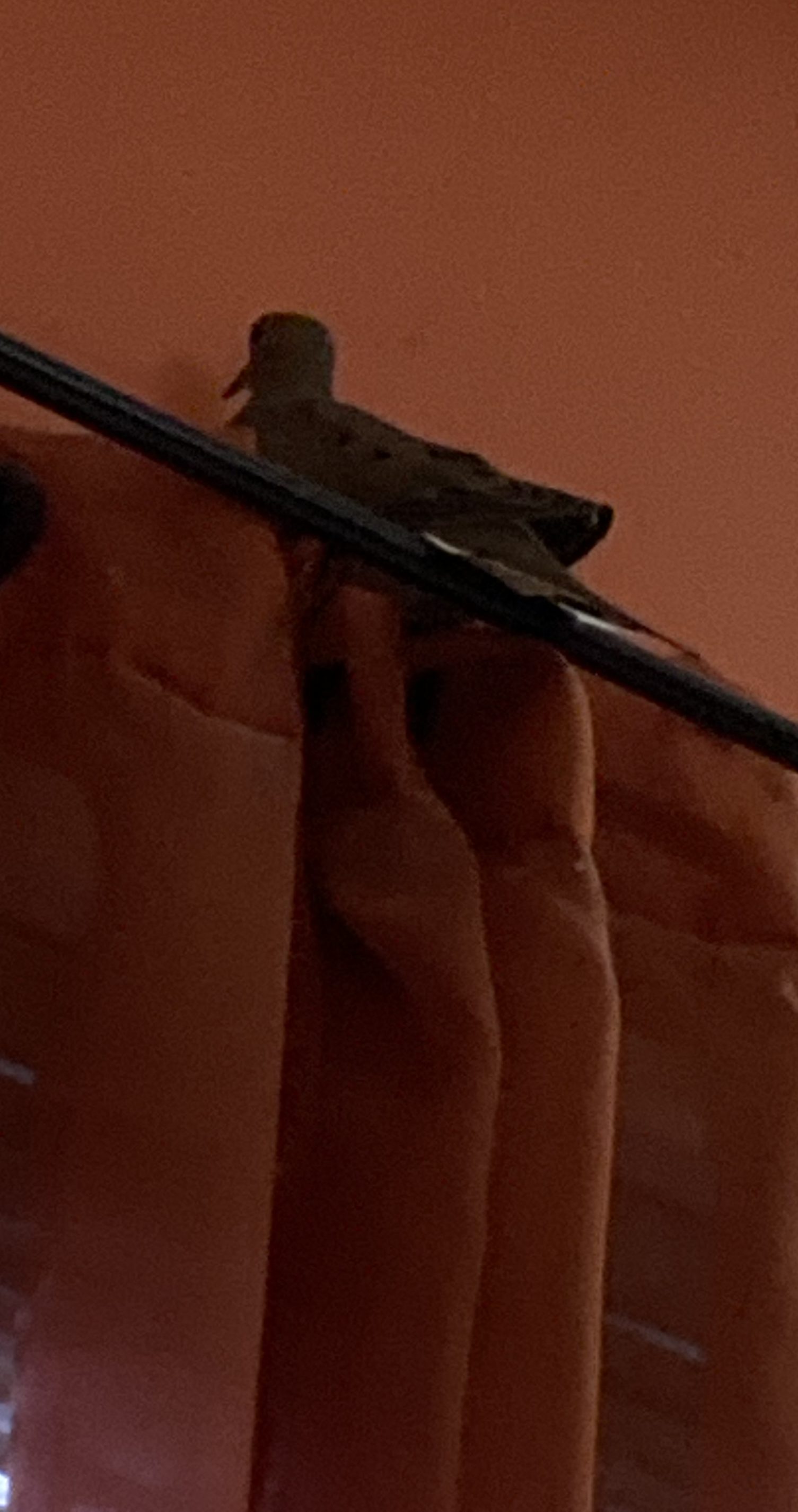
But this bird was different. He was a kind of dove, grey and white, larger and slower and much more frightened than the other birds had been. Mom was able to catch him right away, but before showing him the way out she wanted to show him to me. She brought him into the living room, and when she relaxed her grip, just a little, he flew from her hands up to the curtain rod by the window. After a few moments of rest, as we watched, he stepped away from the curtain rod to fly away, and instead hit his head on the ceiling, over and over again. He kept flapping his wings and propelling himself up and down, caught in a strange loop, until he was finally able to break the pattern and reach the safety of the curtain rod again.

It was awful to watch each time he made a new attempt. I screamed, and Mom tried to catch him, and I covered my eyes in horror as I heard his wings beating against the ceiling again and again. When I opened my eyes, I noticed that there was blood on the ceiling, little dots of red where he’d done his latest dance, and when I looked up at him, standing there on the curtain rod, I could see blood on the feathers of his head. We kept trying to convince him to let us help him, but he was terrified and couldn’t think straight and couldn’t trust anyone; and I could relate.

I left the room at some point, to rest, or escape, and by then he was resting too, standing on the curtain rod, facing the wall. When I came back into the room after my nap, hours later, it was quiet and I assumed he’d escaped on his own, like all the other birds. And then I looked up. There were red dots spattered across the ceiling, from one side of the room to the other, marking every attempt he’d made to escape, and every time he’d found the ceiling where he expected to find sky. He wasn’t standing on the curtain rod anymore, though, and he wasn’t on top of the bookcase in the hall, or the light fixture in the dining room, or the refrigerator in the kitchen. And then I saw him, one foot on the sewing machine, flapping his wings, falling in slow motion down to the floor.

Mom wrapped him in a piece of fabric and carried him to the window in her room and set him down on the ledge next to the air-conditioner. I was afraid that if he took a step, he would just fall, but he was able to fly and landed on the cold ground in the backyard, stunned, but breathing. And when we checked later, he was gone, hopefully because he was able to fly away on his own.

I’d like to believe that he made his way home after that, where his wound could be tended with loving care, and he could consolidate his new life lessons – about accepting help when you need it, and taking a breath when the strange dance of panic starts to take over – but these lessons are so hard to learn.

“Tell me about it.”

The window in Mom’s bedroom is now kept closed, though the birdseed is still placed on the windowsill each morning for whoever needs it. These bird visitations had always seemed like a gift in the past, but this one made it clear that wild birds are not meant to live indoors, even for a little while. They need space to fly. Or a helmet. A helmet would be great.

“I want a helmet too!”

If you haven’t had a chance yet, please check out my novel, Yeshiva Girl, on Amazon. And if you feel called to write a review of the book, on Amazon, or anywhere else, I’d be honored.

            Yeshiva Girl is about a Jewish teenager on Long Island, named Isabel, though her father calls her Jezebel. Her father has been accused of inappropriate sexual behavior with one of his students, which he denies, but Izzy implicitly believes it’s true. As a result of his problems, her father sends her to a co-ed Orthodox yeshiva for tenth grade, out of the blue, and Izzy and her mother can’t figure out how to prevent it. At Yeshiva, though, Izzy finds that religious people are much more complicated than she had expected. Some, like her father, may use religion as a place to hide, but others search for and find comfort, and community, and even enlightenment. The question is, what will Izzy find?

Kissing the Torah

            In the immediate aftermath of the arson attack on Mississippi’s largest synagogue, there were calls for donations to help them replace their lost Torah scrolls, presumed lost in the fire. And even though later reports said that some of the scrolls had been saved, including the one that survived the Holocaust, I was intrigued by the power a Torah scroll seemed to hold over the Jewish imagination. The fact is, in order to have a congregation, you need ten people and a Torah scroll; you don’t need a building. I wasn’t surprised by the idea that the Torah holds value; the Hebrew Bible overall is seen as the word of God, after all. But the sacredness of the scroll itself, as an object, has always confused me. Aren’t we expressly prohibited from worshipping images of God (idols/statues/graven images, etc.)? Shouldn’t that mean we would avoid worshipping proxies too?

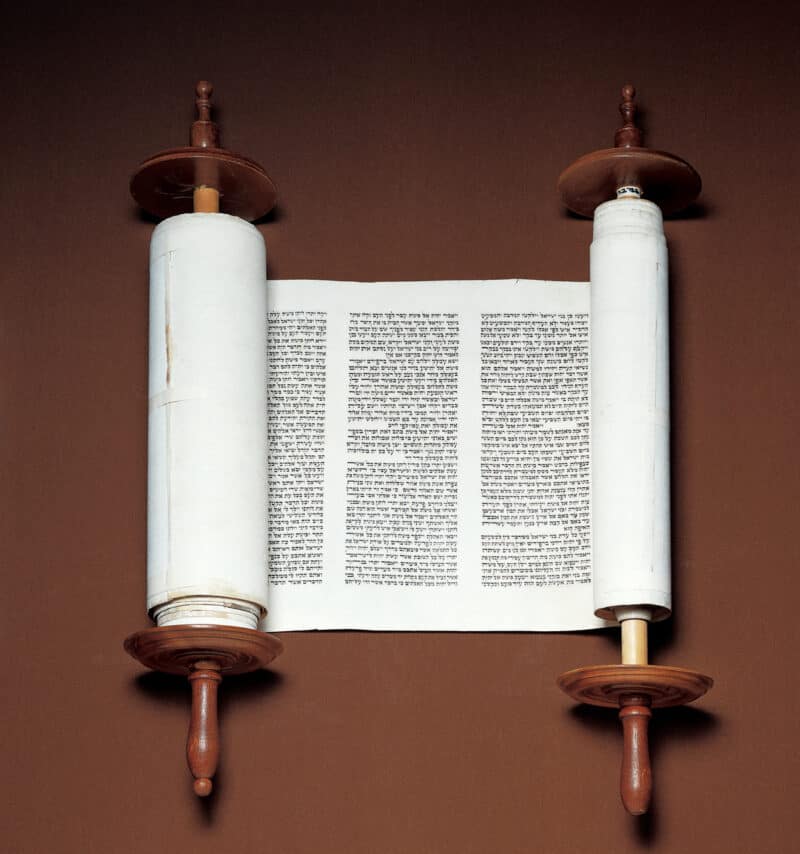
An open Torah scroll (not my picture)

            The prohibition against worshipping idols, or any other physical representations of God, was meant to separate out the Ancient Israelites from their polytheistic neighbors, who prayed to many different idols as part of their daily lives. It was also meant to teach us that God is something other than human, other than animal, other than anything that can be represented in a concrete way. And yet, we have all of these objects – the Torah scroll, the mezuzah, the Shabbat candles, the ark that holds the Torah scrolls – that act as supports, like a child’s pacifier or teddy bear, to fill the missing space.

            We don’t do a weekly Torah service in my congregation, unless there’s a bar or bat mitzvah to celebrate, so most of my recent experiences with the Torah service come from singing with the choir on the high holidays. The choir has specific songs to sing for the two Torah processions, before and after the reading of the text, and I have always stood with the rest of the choir, turning like a sun dial to follow the Torah on its journey. I didn’t even realize I was doing this, until I returned from Israel with stories of the women at the Western Wall backing away so as not to turn their backs on the wall as they left, and the younger rabbi at my synagogue said that we do the same thing with the Torah, following it with our eyes and never turning our backs on it. And I realized that I must have done this hundreds of times, without realizing it and without knowing why. It reminds me of stories about Crypto Jews who, generations after converting to Catholicism, still lit Shabbat candles in the closet each week, without knowing why. There are still so many things like this, both in Jewish practice and in my life overall, where I do what I’m trained to do, what feels “normal” to me, without knowing why, and without consciously choosing to do it. And I thought I should take a look at it.

Every Torah scroll is written on specially prepared animal skins, using hard-to-find ink, by a scribe who has been trained for years (often after finishing rabbinical training as well), and each parchment (piece of animal skin) is then carefully sewn to the next until the whole scroll is attached to wooden rollers. The Torah scroll includes only the first five books of the Hebrew Bible (the prophets and writings don’t get the same treatment), and the scribe is required to copy it exactly, including the mistakes that have been collected over time (letters that seem to have been written incorrectly, words that no one knowns the meaning of after so much time). In Ashkenazi synagogues (Jews of Eastern European descent), the Torah is then covered in a velvet dress, with silver crowns and a breast plate for adornment. In Sephardi synagogues (Jews of Middle Eastern and Spanish descent), the Torah scroll is often kept in a metal or silver (bejeweled) container, almost like armor.

An Ashkenazi Torah, dressed (not my picture)
A Sephardi Torah, dressed (not my picture)

            There’s pomp and circumstance to the Torah service itself, especially on Shabbat and holidays, as the Torah is taken from the ark, placed gently in someone’s arms and paraded down the aisle of the sanctuary. There is even a custom of kissing the Torah as it passes by. Some people kiss their prayer book, or Tallit (prayer shawl), and then touch that to the Torah, and some touch the Torah with their prayer book or Tallit and then kiss that, to bring the holiness of the Torah to their own lips.

            During Covid, most people stopped kissing the Torah for fear of spreading germs, and that reminded me of the sermon my childhood rabbi gave at my brother’s bar mitzvah. This was during the height of the AIDS epidemic, when there was a lot of panic and not a lot of clear information about how the disease was spread, and our rabbi decided to make his sermon about the risk of spreading AIDS through kissing the Torah. He didn’t talk about the pain of those in our congregation who might be suffering with AIDS, or losing family members to the disease, nor did he discuss the incomplete (at that time) science around transmission risk, instead, he focused on the “disgusting” habit of kissing the Torah and managed to insinuate that there was some connection between my brother, who was carrying the Torah for the day, and the transmission of AIDS.

My thirteen-year-old brother was too busy trying to remember his Torah portion, and say hi to his friends in the sanctuary, to pay much attention to the rabbi, Thank God, but the sneer on his face and the anger he had towards my father (for challenging his religious authority, not for being an abusive son of a bitch) stuck with me.

            I don’t know if I stopped kissing the Torah because of that sermon, or if it was just part of my overall discomfort with the choreography of prayer and being told what to do, but it worries me that I could still be reacting to that old slight, even unconsciously, rather than acting out of real understanding and deliberate choice. I also don’t bow when we are supposed to bow, and I don’t shake the lulav and etrog on sukkot, and I don’t kiss the mezuzah on the front door of my apartment, though I do make sure to have one. But I always turn my body to follow the path of the Torah on its journey around the sanctuary, sometimes even standing on my tippy toes to see the Torah over the crowd, as if the Torah scroll is a member of the latest boy band, and we are all tripping over each other just to touch his sleeve. But the reality, for me, is that the Torah scroll, and the ark, and the Shabbat candles, and many of the other ritual objects that are so familiar to me from a lifetime of use, offer me some kind of comfort; maybe simply because there’s value in having an object to hold my awe, especially when the only other container available, God, is theoretical, or at the very least, untouchable.

That’s like when you gave me a fake puppy, with a heartbeat, so I wouldn’t feel so alone.”

If you haven’t had a chance yet, please check out my novel, Yeshiva Girl, on Amazon. And if you feel called to write a review of the book, on Amazon, or anywhere else, I’d be honored.

            Yeshiva Girl is about a Jewish teenager on Long Island, named Isabel, though her father calls her Jezebel. Her father has been accused of inappropriate sexual behavior with one of his students, which he denies, but Izzy implicitly believes it’s true. As a result of his problems, her father sends her to a co-ed Orthodox yeshiva for tenth grade, out of the blue, and Izzy and her mother can’t figure out how to prevent it. At Yeshiva, though, Izzy finds that religious people are much more complicated than she had expected. Some, like her father, may use religion as a place to hide, but others search for and find comfort, and community, and even enlightenment. The question is, what will Izzy find?

The Pitt

            On the 12-hour flight back from Israel, I managed to watch 14 of the 15 episodes of the Pitt, a medical show starring Noah Wyle. My brother is an emergency room doctor, and he was actually in medical school back when Noah Wyle played a medical student on ER, so I spent many years following Noah Wyle’s storylines to try to understand what my brother was going through. And now, here’s Noah Wyle again, many years later, running an ER, just like my brother.

The Pitt is set in a trauma center in Pittsburgh (hence the name of the show, referencing both the city and the feeling of being in the pit of hell). The show is set in real time, with each episode covering an hour of a 12-hour shift (spoiler, there are 15 episodes, so, this doesn’t end up being such a normal shift), which allows us to sit with each decision the doctors have to make: when can I pee? Do I believe what the patient is telling me? What do I say to a grieving parent? How do I convince someone to follow my medical advice against their own instincts? What do I do when a colleague disagrees with my decisions?

The show uses a lot of medical jargon that I don’t understand, but the emotional situations are clear and overwhelming, and I sat there wondering how these doctors were still working after two or three hours, when I already needed a nap. The only time we spend outside of the hospital, in the whole series, is at the beginning and the end of the shift, as Dr. Robby (Noah Wyle’s character) listens to music to help him transition from one part of his life to the other; the claustrophobia we feel from staying closed up in the hospital helps us to understand the all-consuming nature of the job.

My brother has never talked much about his work, even though he’s a natural storyteller (with a very dark sense of humor). In fact, he’s always seemed kind of confused by my interest, even suspicious about why I would ask him so many questions (it has been my lot in life, as a little sister, to be told again and again how very annoying I am). So, this marathon viewing of The Pitt felt like a chance to catch up with my brother, and have some conversations with him in my imagination that would never happen in real life.

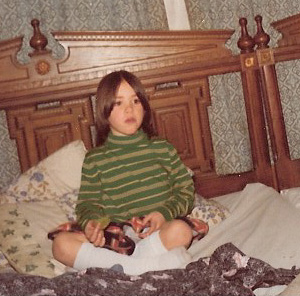
The little sister I remember being
The little sister he remembers

My flight ended about forty-five minutes too soon, and I didn’t get to see the final episode of the 15, but when I got home, I found out that TNT, one of the basic cable channels, was showing The Pitt in three-episode installments, each Monday night. I spent the next few weeks rewatching all of the episodes I’d seen on the plane, with mom this time, leading up to the final episode neither of us had seen yet.

When I told my brother about my watch party, he didn’t seem as annoyed as usual. He said he’d seen the show, and actually liked it, certainly more than most of the other medical shows on TV. He even told me about a contest at one of his medical conferences, where the winner got the chance to spend a day with Noah Wyle (sadly, he didn’t win). Back when he was in medical school, and I was watching episodes of ER to try to understand him, there was more of a disjunct – yes, Dr. Carter was at a similar point in his career, and the show did a lot of realistic medical stories, with all of the jargon and the latest technology, but there was also a lot of soap opera (not as soapy as Grey’s Anatomy, but enough), so when I’d try to identify my brother in those storylines, and figure out what he would have been thinking, and where he would have struggled, there weren’t a ton of parallels. But with The Pitt, it’s different. 

            The emotions in the Pitt are kept, almost aggressively, under control. It takes until the 13th hour for Dr. Robby to break, and even then he manages to pull himself back from the brink and get back to work quickly – not because he’s all better, or because he’s learned something, but just because he has to, because it’s his job and people are relying on him. There’s no attempt by the writers to pretend that this kind of resilience is a good thing, just that it’s what he has to do.

            The show does an incredible job of showing how impossible these jobs are (doctors, nurses, social workers, EMTs, administrators, and pretty much everyone else in the hospital), and the amount of guessing they have to do, and the lack of adequate resources, and the lack of perfect answers to many of the problems that come up. There’s a sense that the doctors are expected to do the impossible, and not be impacted by the anger or grief or pain of their patients. And they make a point of showing the doctors disagreeing on what to do, on medical interventions and on ethical problems, so that we have to sit with the reality that it isn’t always clear who’s right and what the best course of action might be.

            There’s something profound, for me, in the fact that Noah Wyle is now playing a Jewish character, and (spoiler) actually recites the Shma to himself at one point. It’s a small thing – and it’s not like they’re celebrating Chanukah in the middle of the ER – but it makes the show feel that much more connected to my brother, and to me.

            Of course, TNT decided to air the first season of The Pitt in November and December for a reason: the second season is now airing on HBO Max (a paid streaming service). It’s a very good marketing technique, because I’m actually considering a subscription, just to see the show’s second season without having to wait for my next trip to Israel.

            One reassuring thing has been that, while my brother works in emergency medicine, he doesn’t tend to work in trauma centers like the Pitt, so even if he faces a lot of the same issues as Noah Wyle’s character, it’s not at the same unrelenting pace, or with the same level of chaos. At least, that’s what my mom was telling herself, and me, as we watched the series week by week, and that helped both of us sleep a little easier at night.

How can you sleep?! Where are my chicken treats?!”

If you haven’t had a chance yet, please check out my novel, Yeshiva Girl, on Amazon. And if you feel called to write a review of the book, on Amazon, or anywhere else, I’d be honored.

            Yeshiva Girl is about a Jewish teenager on Long Island, named Isabel, though her father calls her Jezebel. Her father has been accused of inappropriate sexual behavior with one of his students, which he denies, but Izzy implicitly believes it’s true. As a result of his problems, her father sends her to a co-ed Orthodox yeshiva for tenth grade, out of the blue, and Izzy and her mother can’t figure out how to prevent it. At Yeshiva, though, Izzy finds that religious people are much more complicated than she had expected. Some, like her father, may use religion as a place to hide, but others search for and find comfort, and community, and even enlightenment. The question is, what will Izzy find?

Simply Sing

            On the final night of Chanukah, during the communal candle lighting ceremony on Zoom, my rabbi asked us to think about what light we might want to bring into the New Year, and I already had an answer: I want to sing more. I tend to sing alone in my car at this point, but he didn’t specify that the light had to be for other people.

“Mommy! We are not outdoor people!”

I’ve been thinking about singing more since choir practices over the summer, when I noticed that I was struggling to make it through each session, always running out of air too soon. But I couldn’t figure out how to make myself sing more, when there were so many reasons why I didn’t feel comfortable doing it. And then I started bingeing Glee videos on YouTube, which led the algorithm to send me all kinds of videos about singing, and somewhere along the way I saw an ad for an app called Simply Sing, offering me a one-week free trial, and I decided to try it. To be honest, I expected it to be a dud, but I hoped that it would at least encourage me to sing a little bit each day and start to build a habit.

This is what the icon looks like on my home page

I hid in my bedroom and took the fan out of my window for my first practice, just in case someone could hear me. The first thing the app wanted me to do was to find my vocal range. They told me to hum my lowest note, and read something in my regular speaking voice, and shout to get someone’s attention, and once the math was done the app had decided that I was, of course, an alto, which felt judgy. Back when I took voice lessons in college, my teacher told me that I’m a mezzo soprano, with an extension, but that was after a lot of practice, and this was after a couple of shouts and buzzes, so I tried not to feel like I’d fallen too far behind.

            The next task was to try a warm up: two minutes of singing the same short phrase over and over, gradually going a step higher each time. It was actually fun, and the female voice telling me what to do was encouraging, so I kept going. She told me to choose a song to learn, and sent me to a list of recommended songs. There were locks next to all of the songs that were above the Basic or Easy levels, but there were still plenty to choose from. I think I started with Every Breath You Take (the Police), or Give Me One Reason (Tracy Chapman), songs that were already familiar. The next thing the app told me to do was to sing the lowest and highest parts of the song, to see if they fit comfortably in my range or needed to be adjusted up or down. I earned points for finding the right key for each song, and then I earned points for reading the lyrics out loud, which was much more embarrassing than I expected it would be; maybe because lyrics rely heavily on their music to make them make sense.

Then it was time to learn the whole song, except, they didn’t show me the music, or break the song into manageable pieces, or coach me through it, they just had a vocal track playing, and the lyrics placed higher and lower on the screen to show their relative pitch. I could go over each song a hundred times if I wanted to, and change the key each time, but I could only earn points for one run-through, and one attempt at singing the song on my own with the vocal track muted. It felt kind of like doing Karaoke, and it bothered me that I didn’t earn more points for practicing more, and it bothered me that I couldn’t see the actual notes (so I could go and play them on a keyboard, at my own pace). The app did grade me on how closely I matched the notes and the rhythm of the song, though, which was something. And the collection of songs was good enough, especially as I earned more points and opened the locks next to more and more of the songs.

screenshot from the app

            I wasn’t learning everything I wanted to learn, but I was practicing at least thirty minutes a day, much more than I would have done on my own, so I decided to sign up for a one-month subscription after the free trial ended. The gamification of the app meant that as I earned more points, I could access new lessons: singing in chest voice, and singing in head voice, correct breathing technique, and pacing, etc. Too quickly, though, I ran out of new lessons to earn with my points, and I finished opening all of the locked songs, and the app stopped counting my points altogether, meaning that the gamification part of the experience was mostly over.

But I still had a new warm up each day, and plenty of songs left to learn, and each day that I was able to get a practice done felt like an accomplishment. I kept putting more and more songs on my wishlist for the future: More Than a Feeling (Boston), The Story (Brandi Carlile), Defying Gravity (from Wicked). I was still closing my bedroom door, and taking my fan out of the window for every session, and I was noticing all kinds of problems with my voice that I couldn’t name, or ignore, but I tried to remind myself that the goal wasn’t to become a professional singer, just to enjoy singing again.

I would really enjoy having more chicken treats.”

            In the meantime, I was still bingeing Glee videos on YouTube, hoping to be inspired by the fun they seemed to be having as they sang together, and trying not to compare myself to them, if at all possible. And then my Glee binge extended to watching Lea Michele and Jonathan Groff in Spring Awakening, and then Jonathan Groff and Daniel Radcliffe and Lindsey Mendez in Merrily We Roll Along, and then all of the Glee kids who’d ended up on Broadway (like Darren Criss and Alex Newell and Kevin McHale), not to mention the Broadway stars who had guest starred on Glee (like Idina Menzel and Kristen Chenoweth) and then just Broadway stars in general, like Aaron Tveit and  Gavin Creel and Bernadette Peters and Christian Borle and Audra McDonald and on and on and on.

I worried that obsessively listening to amazing singers was going to discourage me too much, but I was still practicing every day, and each day when I opened the app, it made sure to tell me more of the benefits of singing: it raises your endorphins! It improves respiration and circulation! It encourages you to express yourself! It encourages you to sing with other people (fat chance)!

Of course, my old issues kept bubbling up: the competition theme (you need to be the best singer in the world in order to have the right to sing at all); the expert theme (you need to master sight reading and dynamics and vocal placement in order to even begin to practice effectively); the alienation theme (if you don’t fit in with other singers – and I was watching a lot of interviews of performers that made it clear I would not have been their cup of tea – then you have no right to sing); and, the waste of time theme (spending time on this, or anything else, with no hope of earning a living from it, is selfish and stupid).

My brain was swirling with noise, and I couldn’t figure out how to drown it out, but at the same time I was noticing that singing certain songs felt cathartic, even therapeutic, either because the words of the song expressed something I needed to say, or needed to hear, or because the music tapped into places in my voice that I couldn’t find on my own. Singing Sittin’ on the Dock of the Bay with Otis Redding, felt like singing with a friend who really knew me. And I thought about an interview I’d seen with Jonathan Groff, where he said that a lot of the roles he’s played have been like therapy for him, helping him work through something that he wasn’t able to work out on his own.

But I was getting more and more frustrated by the limitations of the app, wishing there were more steps in the learning process for each song, and then more steps to help me figure out how to deal with all of the noise in my head. And I knew that I wasn’t ready to seek out live human beings for help, so I went to the app store to see if there might be other singing apps that could offer more support. So far, none of the ones I’ve found has been as good for me as Simply Sing, but I’ll keep looking. And there are always YouTube videos to teach me more breathing exercises and vocal warm ups and vocal techniques. And now I’m seeing ads from all kinds of voice teachers who specialize in posture or mixing chest voice with head voice, or building breath capacity; all things I want to work on, eventually.

These are all tentative steps, but I’m reminding myself that that’s how I started with Hebrew too, and with teaching and writing and therapy. All of the best things, for me, seem to be made of a long series of small, tentative steps, usually without having any idea where those steps will lead. So, I’m doing my best to take it one practice at a time, and I’m looking forward to finding out where these small steps might lead me.

“I’m not taking one more step, just so you know.”

If you haven’t had a chance yet, please check out my novel, Yeshiva Girl, on Amazon. And if you feel called to write a review of the book, on Amazon, or anywhere else, I’d be honored.

            Yeshiva Girl is about a Jewish teenager on Long Island, named Isabel, though her father calls her Jezebel. Her father has been accused of inappropriate sexual behavior with one of his students, which he denies, but Izzy implicitly believes it’s true. As a result of his problems, her father sends her to a co-ed Orthodox yeshiva for tenth grade, out of the blue, and Izzy and her mother can’t figure out how to prevent it. At Yeshiva, though, Izzy finds that religious people are much more complicated than she had expected. Some, like her father, may use religion as a place to hide, but others search for and find comfort, and community, and even enlightenment. The question is, what will Izzy find?