
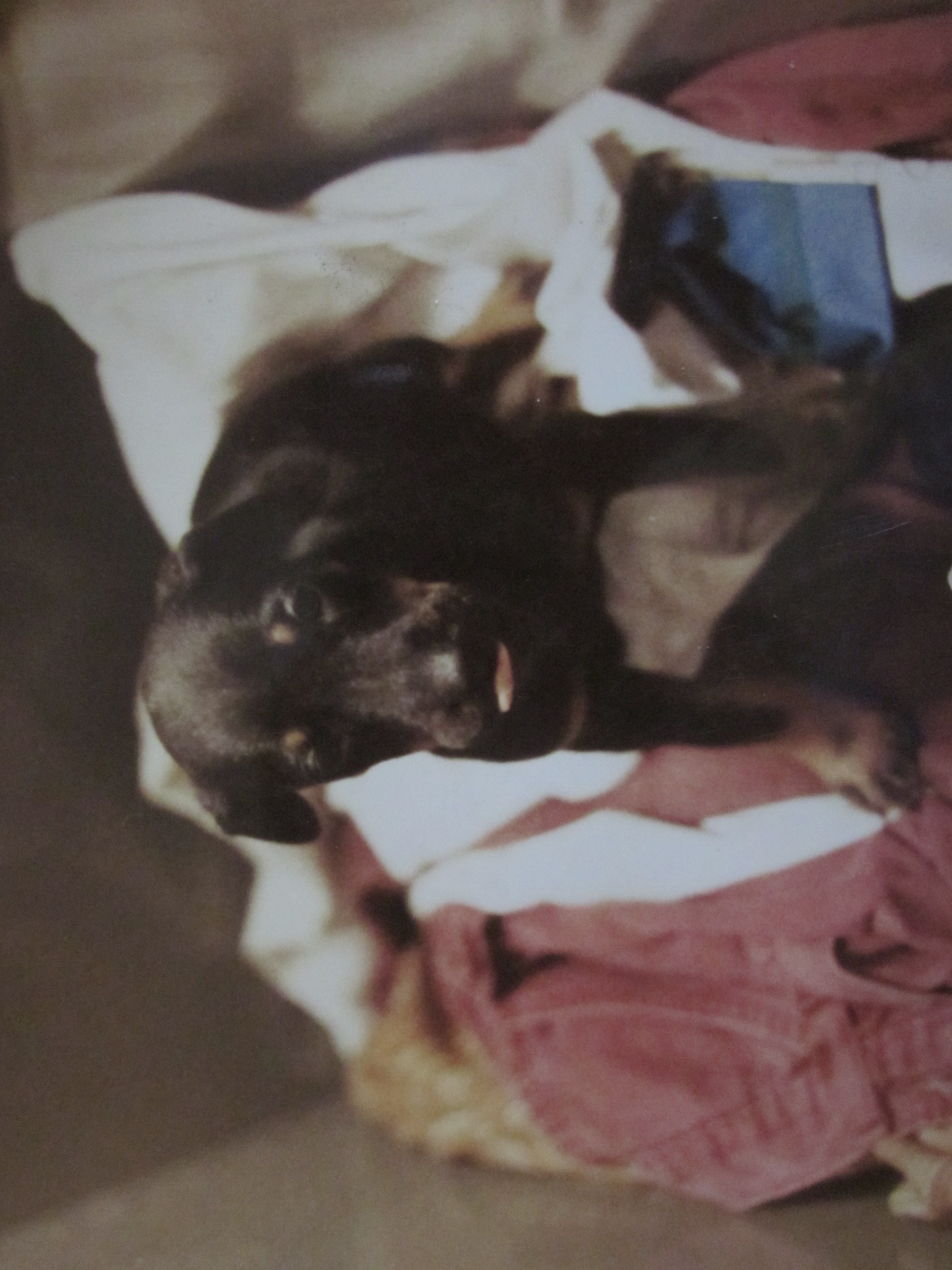
When I was six years old we had a dog named Samson. We adopted him as an eight week old puppy from the shelter. We were used to more aggressive or standoffish dogs, but Samson was a black Labrador mix and had the Lab personality through and through. My brother and I would race off the bus from school to see Samson and play with him. He was the happiest dog we’d ever had and we loved him.
It could just be that he was still a baby, and hadn’t settled into dogdom yet, or maybe he just didn’t have time to cause trouble before he died.
We only had him for two months, until he was hit by a car, on Halloween. I’ve built up a long list of reasons why I hate Halloween: monster movies scare me; I had to touch peeled grape “eyeballs” in the dark at a Halloween party; I don’t like knocking on strangers’ doors; I prefer to choose my own candy; and I have PTSD, so every time someone knocks on our door or rings the doorbell to trick or treat, I feel like hiding under the bed.
I sound like the Grinch who stole Halloween, I know.
But the bottom line is that Samson was hit by a car on Halloween, and the two events have always been paired in my mind.
Mom’s not sure how he got out of the house, but she blames herself. She thinks she must have left the door open when she took the garbage out. When she realized he wasn’t in the house, she ran outside to look for him and a group of kids told her he’d been hit by a car and they’d carried him to the side of the road. His body was still warm, but starting to get stiff by the time Mom brought him up to the porch. I don’t know why he ran out into the street. Maybe he was following the trick or treaters. I don’t know. I was already in my pajamas and probably asleep.
My father insisted that my brother and I not be told that night, so we found out the next morning, after they’d already buried him in the backyard.
Something about the Samson story still feels unresolved, like a haunting. And I don’t know what it is. The traumatic event happened off screen. I didn’t see him getting hit by the car, and I didn’t see him die. I worry that Samson could have been saved if only I’d known that he needed me. I don’t have many narrative memories of him, just a feeling. Not so much a body memory as a soul memory. I feel, in some indistinct place in my heart, my face, my hands, that he was a joyful place in my life. And he was fleeting.







 rachelmankowitz