Tag Archives: cats

My Israel Trip: Day One

            From the beginning, it was something of an out of body experience. I took a car service to the airport, waving goodbye to Mom in the parking lot of our co-op, chatting with the driver about all manner of things (gardening, mothers, compression socks, and, of course, traffic at the airport). When I arrived at Terminal Four at JFK, I was immediately overwhelmed: people were rushing in different directions and there were no clear signs, that I could see, telling me where to go. I had already checked in online, so I was pretty sure I didn’t need to stop at a check-in kiosk, but beyond that I was lost. I asked a man in uniform (hopefully he actually worked there), and he directed me to a woman who was checking boarding passes. I showed her my electronic boarding pass and she let me through, and then I had to show my electronic boarding pass (AKA my phone) to two more women as I followed the crowd around cones and other obstacles onto the security line. I tried to do exactly what everyone else on the line was doing, showing my passport, lugging my carry-on and my personal bag into the gray buckets and pushing them towards the scanner, but I must have missed some of the instructions because my personal bag was pulled aside and I had to wait on another line until they could hand check it, and tell me that I was supposed to have taken my laptop computer out before putting the bag through the scanner. Live and learn.

“You should have stayed home with me.”

            When they sent me on my way, I still wasn’t sure where I was supposed to go next. People were wandering in a bunch of different directions, and signs listed different lounges and gates and floors, but nothing said: this is the way to EL AL. I followed an elderly couple to the elevator, which said “to all gates,” and followed them in, and, luckily, when the doors opened there was finally a big screen listing the destinations and flight times and gates, and I found my flight on the list and followed the arrows to my gate. At least, I thought I was following the arrows in the right direction. I walked past endless toy stores and candy stores and restaurants and people waiting at other gates for other planes, but I couldn’t find my gate. Eventually, I found another nice man in a uniform (this time I was pretty sure he worked for the airport, or at least for one of the airlines), and he directed me to go back to where I’d started and then keep going in that direction. Finally, after walking through what felt like the whole airport, I found my gate and sat down in the waiting area – two hours before boarding was set to begin. They say to get to the airport three hours before your flight, just in case.

            I spent the next two hours people watching, and texting with Mom. There were casually dressed couples (jeans and t-shirts like me) carrying babies, and Haredi men in long back coats with special boxes to carry their hats, and Yeshiva boys in khakis and polo shirts and black suede kippot studying and eating together at a work table. There were also enough other solo female travelers to make me feel less conspicuous than I’d expected, and people reading actual hardcover books like the one hiding at the bottom of my bag while I stole a few last looks at my phone. At some point, there was a group of men on the other side of the waiting area saying the afternoon prayers, and then ten minutes later, after sunset I assume, another group gathered to say the evening prayers, and then our flight was called to start boarding.

            I showed my electronic boarding pass to the woman guarding the line to board the plane, but she said, “Oh no, I will not look at that. You need a paper boarding pass.” Luckily the line at the EL AL desk was short, and I only had to go through a short security interview (Do you understand Hebrew? Are you sure? Why are you going to Israel? Where are you staying?), and then they scanned my passport, and handed me my paper boarding pass and sent me through to the plane.

            The last flight I’d been on was years earlier, and barely two hours long, so I was anxious about the 11-hour flight, without Wi-Fi and with no one to talk to. When I found my seat, a nice man (no uniform this time) helped me lift my carry-on suitcase into the overhead compartment, and then I discovered that my personal bag didn’t actually fit under the seat in front of me, the way all the videos said it would, and there was no more room in the storage compartments, so I was going to have to sit with my legs on an angle for the whole flight. At least I had an aisle seat, though. I’ve been watching Stephen Colbert do his Colbert Questionnaire for a very long time, so I knew I was supposed to get an aisle seat, rather than a window seat, to avoid having to climb over someone else to get to the bathroom.

            I felt some panic just before takeoff, thinking about every possible thing that could go wrong on the trip, and feeling trapped because getting back home would be so much harder midair, but it passed, eventually. I watched my seatmate to find out how to use the entertainment system in front of my seat, and I found a bunch of Israeli TV shows, in Hebrew, which I hoped would help me acclimate to all of the Hebrew I’d be hearing in Israel. I ended up finding a really interesting interview show and watched episode after episode: with an Israeli actress, a past Minister of communications, a former head of Mossad, an Arab Israeli reporter, a comedian who specialized in doing impressions (including of Netanyahu), and the current head of the opposition in the Knesset. We were served dinner about an hour into the flight, and I had to watch my seatmate to figure out where to find the folding tray table hidden in the armrest, but I never figured out how to turn on a light to be able to read my book once the overhead lights were turned down.

They served breakfast about an hour before we landed in Israel, and at that point, a lot of the men on the plane got up to pray the morning prayer, even though it still felt like the middle of night to me.

I’d heard horror stories about people being pulled from the security line and interviewed by customs officials for hours upon landing at Ben Gurian airport, but when we landed, I barely had to wait on line before my passport was checked and I was sent on through. Then I followed a big family through the maze of hallways until I finally reached the arrivals lounge, where I had just enough time to switch my phone to my temporary Israeli telephone number before my friend arrived to pick me up.

            I hadn’t slept at all on the plane, but somehow, I wasn’t tired, so she drove us straight to the Western Wall (The Kotel) in Jerusalem. I’d been promised that I would feel inspired just entering Jerusalem, and that being at the Kotel (the only outer wall remaining after the destruction of the Second Temple in 70 CE) would be profound, but as we walked through the alleyways of the old city, past endless groups of Israeli school children on day trips with their teachers, and groups of soldiers in training, also on day trips with their teachers, I didn’t feel much of anything.

Don’t those kids look inspired?!

It was a long walk on hard stone, down steps and around corners, until we were at the Kotel, and my first impression of this ancient holy place was, eh, it’s kind of dinky. I mean, it’s a wall, with some greenery growing out of it, and pieces of paper stuck in every crevice, but it didn’t glow or anything, and no great voice called down from the heavens telling me that I was home. I’d been warned that I would need to wear a skirt to go to the Kotel, and that there were women guarding the entrance who would insist on wrapping me in a scarf to cover my pants, but it turned out those women were out for the day, or distracted, and I was able to walk in wearing my jeans and t-shirt from the plane. The women’s section was significantly smaller than the men’s section, but one of the men had already climbed up to peer over the divider to see what the women were doing.

            There were plastic chairs set up for us to sit in, but many more women were standing right up against the wall, holding their prayer books and shuckling back and forth. A lot of the women wore long skirts, and elaborate scarves wrapped multiple times around their heads, and prayed with great feeling, but I just sat there and watched. I was fascinated by a pigeon with a peg leg. I don’t actually know if he actually had a peg leg or if he was just missing his foot, but he walked like a pirate and kept scanning the ground for crumbs. A little boy nearby was carrying a bag of snack chips, even though my friend told me you weren’t supposed to bring food to the area, so the bird was on the right track.

            I didn’t feel like praying, or writing a note to shove into the wall. I’d always imagined that there would be a notepad and pen set up nearby, and ladders, so you could put your note into a crevice away from public view, but no. The notes were all homemade and folded into tiny shapes in order to fit into the tiniest spaces in the wall, and you had to really look closely in order to see them. The most interesting thing, to me, was the way many of the women would back away from the wall as they left, and when I asked my friend about it, she said it was a sign of respect, because you shouldn’t turn your back on God. For my own safety, I didn’t risk the maneuver myself, because I was sure I would trip over my feet, or a spare child, so I walked out facing forward while my friend walked out backwards. I hope God understands.

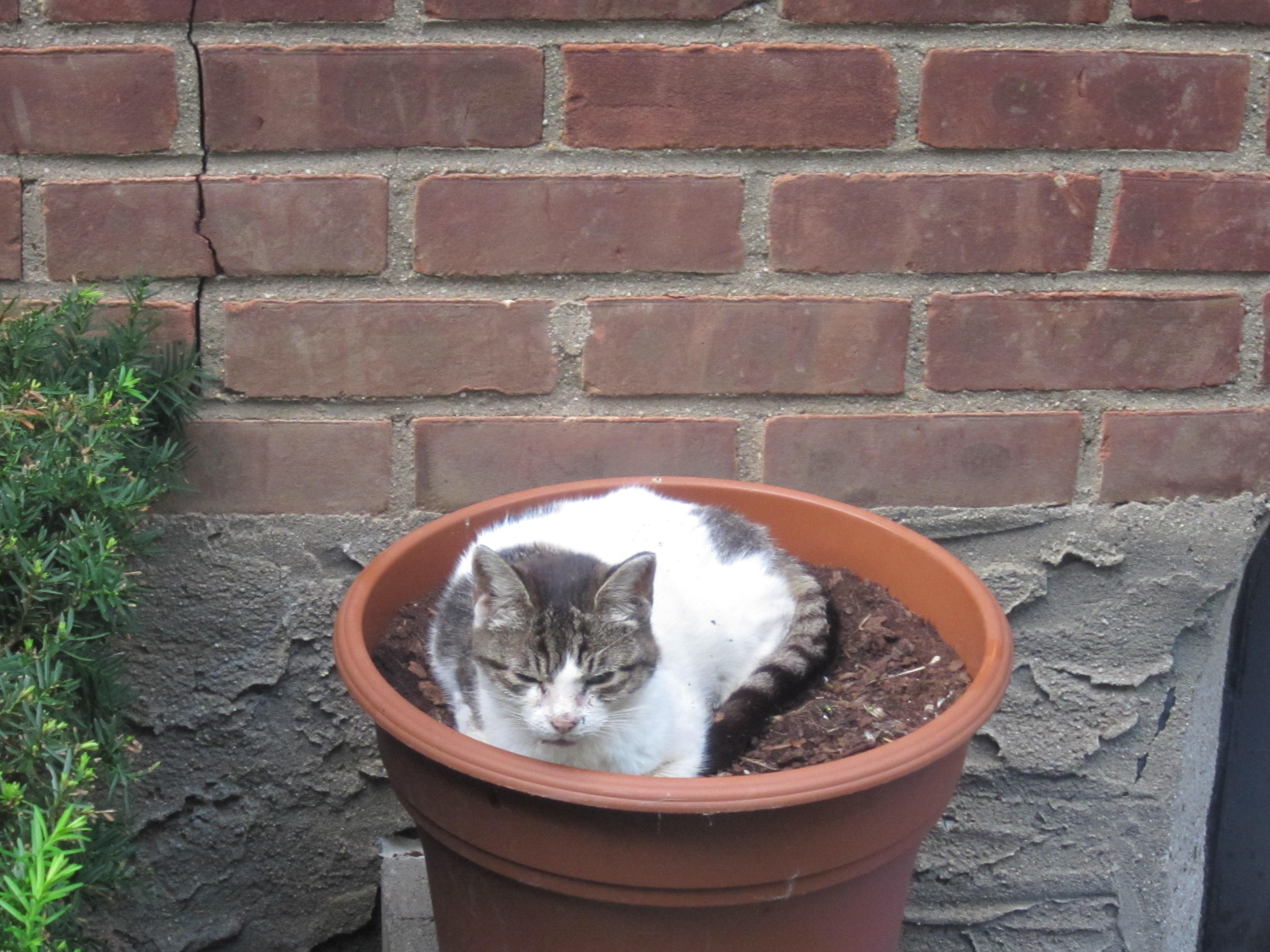
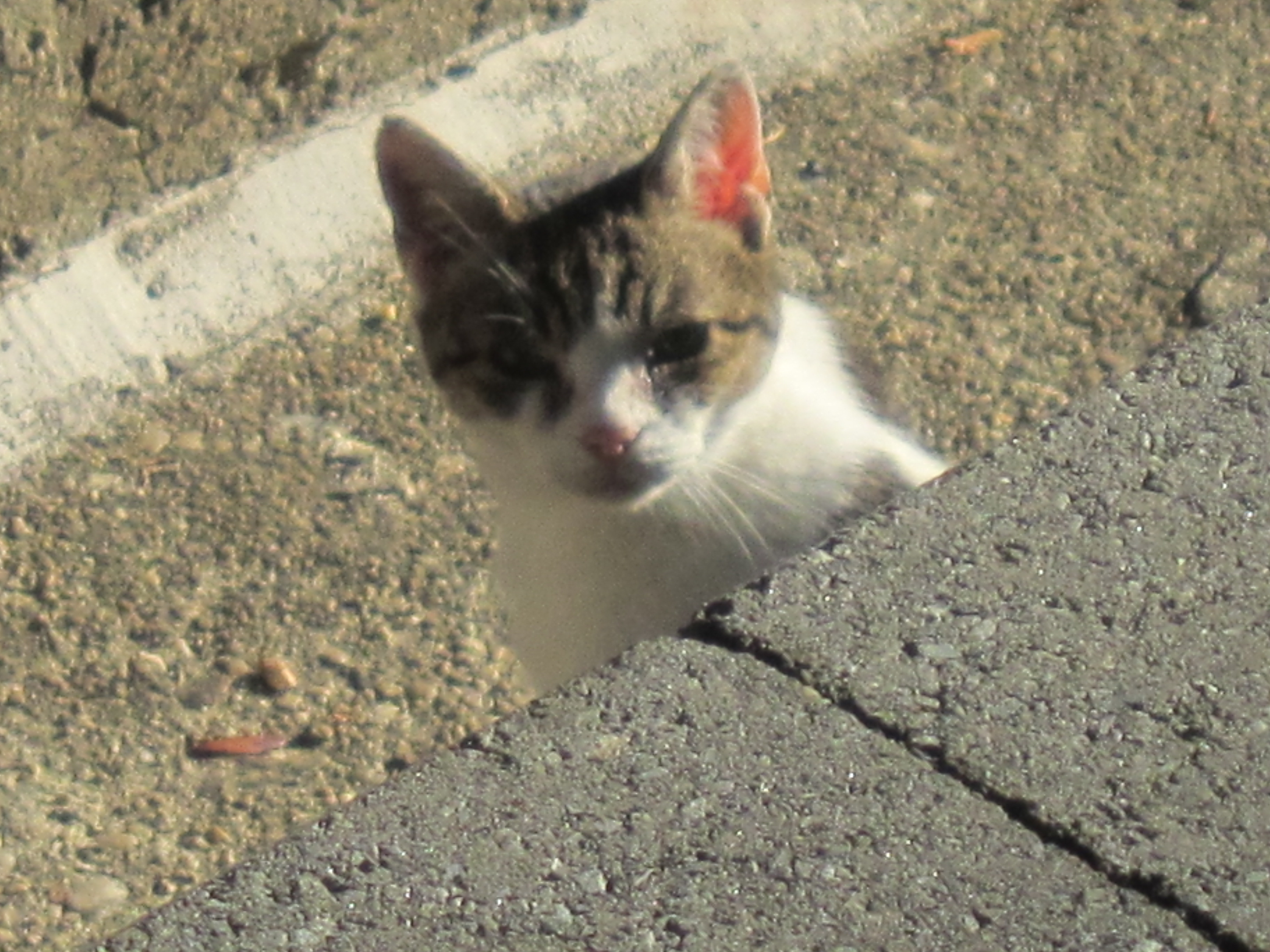
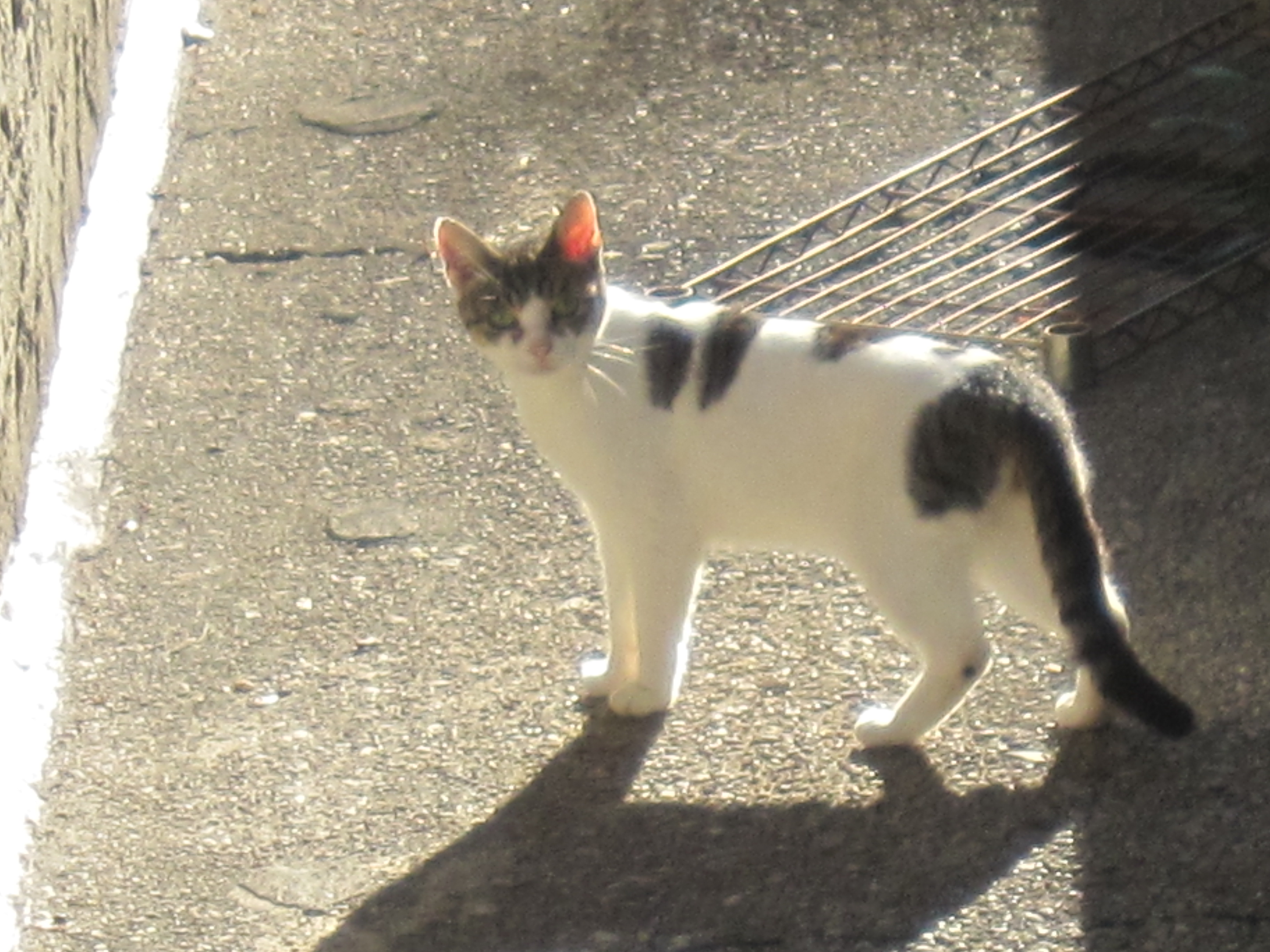
            On our way back up the steps, I finally saw my first Israeli cats (they have stray cats everywhere) and took a picture to send to Mom as my first missive from the holy land. Then we wound our way back through the alleyways, passing little shops and food stalls and tour groups, and many men and women carrying paper cups, asking for money. They didn’t look like the unhoused people I used to see in the subway in New York, more like this was their job and they were proud of it. I could picture them finishing a long day of begging for money from strangers and returning home to their modest Jerusalem apartments to put their feet up and watch TV. At one point, there was a cat stretched out on a low wall, next to a discarded paper cup, but he didn’t make a move to ask for spare change. He seemed confident that someone would feed him eventually.

I’d read all about Jerusalem Syndrome, and how so many people went crazy and started to think they were God just because they were breathing the air in Jerusalem, but I guess I’m immune. I should have known that I wouldn’t be a good candidate for delusions of grandeur.

After visiting the old city, we drove around Jerusalem while my friend played tour guide. She’d lived in Jerusalem when she first made Aliyah, in her 20’s, so it was all very familiar and homey for her. She drove us through the different neighborhoods and past the Israel museum and the Knesset and the Supreme court and the National Library – everywhere a bus tour would have taken us – and then she pointed out the hotel where she’d had her wedding (which I missed, of course), and the neighborhood where her parents were living, though they were out of the country at the moment. And as we drove around Jerusalem, and then out towards her home, my friend and I started to catch up. We’d seen each other every few years when she came to visit family in the States, and of course we’d chatted through email and then WhatsApp, but this was, already, the most time we’d spent together in years, and I started to remember why we became friends in the first place: no matter how shy and anxious and out-of-body I felt, she was able to make to me feel seen and heard and comfortable. I’d been worried that I would feel like a burden, or that we’d have nothing to say to each other, but she was doing everything she could to let me know that I was welcome, and that she was looking forward to our next adventure.

            When we arrived in Modiin, about thirty minutes outside of Jerusalem, it was still light out, and I was surprised to find that the city looked suspiciously like White Plains, NY – with all of the newness and crispness of an upper middle-class enclave. It’s a very young, planned city, so it doesn’t have the tiny alleyways of Jerusalem, or the crowded streets, and the wide-open spaces made it easier to breathe.

First view of Modiin

            My friend’s four-bedroom apartment was huge, and in the process of being cleaned by her Yemeni Israeli house cleaner, whose rapid-fire Hebrew was matched by my friend’s equally rapid-fire Israeli-accented Hebrew – all too fast for me to follow. Of course, I knew that my friend spoke Hebrew – I mean, she’d lived in Israel for decades – but I hadn’t realized she would sound like someone who’d been born there. Up until that point, and on all of our visits in the States, we’d only spoken to each other in English.

            I was set up in her older daughter’s room (since she was away doing national service), and, as I unpacked I, of course, fell back into my out-of-body, what-am-I-doing-here state of mind. I was trying to hide from the cleaning lady, who was busy mopping the living room floor with what looked like a squeegee, because she’d already asked me ten or fifteen personal questions, in Hebrew, about my career and family and where my friend and I knew each other from, and I was afraid the questions were going to get steadily more intrusive. I checked my email and found out that I’d received another rejection from one of my agent queries, which I guess is better than the silence I was getting in response to most of the others, but it didn’t feel great. I focused on unpacking and getting my bearings, and when the house cleaner was finished my friend introduced me to the two kids who were still living at home, and her husband (who I’d met briefly a few times over the years) and the family rabbit, Choo, who spent most of his time meditating in his cage, or wandering out in the yard, on the look out for stray cats so he could rush back to safety at any moment.

Choo, the rabbit

            I don’t remember what we ate for dinner that first night, or what I did or said for the rest of the evening, until it was time to go to bed. I’d been awake for something like 36 hours by then, but I was still too keyed up to sleep, so when everyone went to bed, I went to my room and watched hours of Glee videos on my phone, spending some time with Cory Monteith, the lead actor on Glee, until his untimely death from an accidental overdose. For some reason he felt like a good friend, even though I’d never met him. It was an odd sensation, to find so much comfort in someone I didn’t even know, and who was no longer around, as if my brain was able to manufacture this reassuring presence to help manage my anxiety.

            Eventually, I fell asleep, and slept well. I woke up late the next morning when my friend knocked on my door, after already having done the laundry and emptying and filling the dishwasher and sending the kids off to school and getting a few hours of work done. I washed and dressed quickly, took my meds, ate some breakfast, and, with a few more deep breaths, I was ready to start day two.
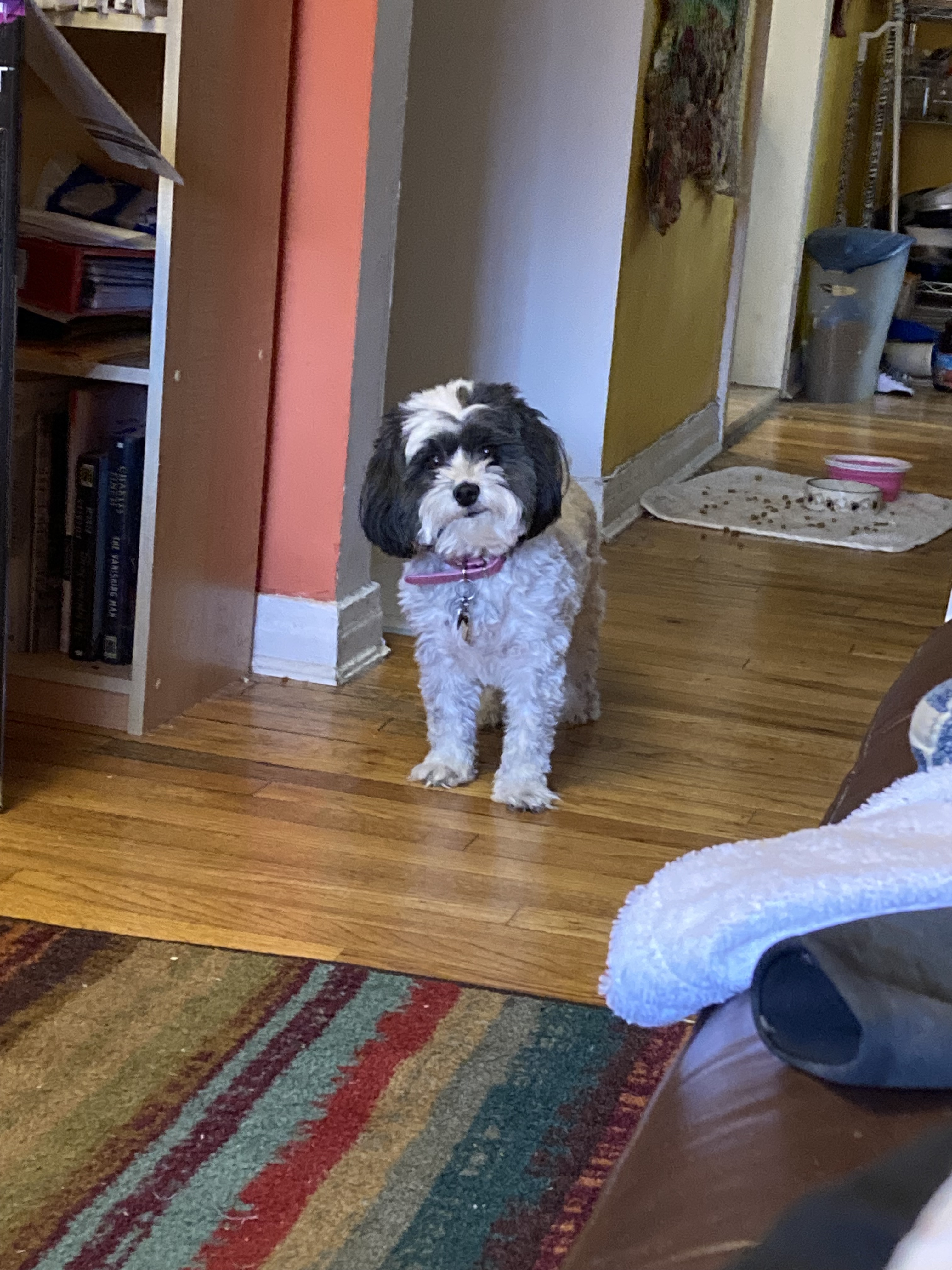
“Wait, all of that was just day one? This is going to take forever.”

If you haven’t had a chance yet, please check out my novel, Yeshiva Girl, on Amazon. And if you feel called to write a review of the book, on Amazon, or anywhere else, I’d be honored.

            Yeshiva Girl is about a Jewish teenager on Long Island, named Isabel, though her father calls her Jezebel. Her father has been accused of inappropriate sexual behavior with one of his students, which he denies, but Izzy implicitly believes it’s true. As a result of his problems, her father sends her to a co-ed Orthodox yeshiva for tenth grade, out of the blue, and Izzy and her mother can’t figure out how to prevent it. At Yeshiva, though, Izzy finds that religious people are much more complicated than she had expected. Some, like her father, may use religion as a place to hide, but others search for and find comfort, and community, and even enlightenment. The question is, what will Izzy find?

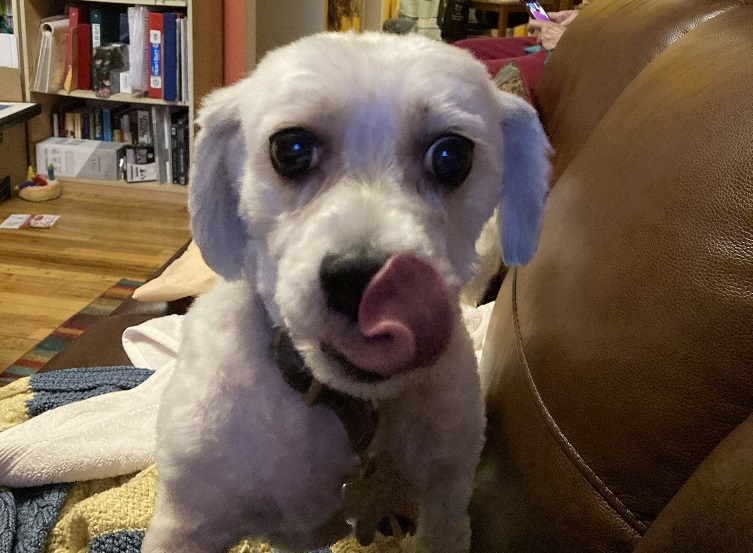
Jon Stewart is Back

            I was both thrilled and a little trepidatious when I heard that Jon Stewart would be coming back as host of The Daily Show one day a week; thrilled because he was always a voice of reason for me back when he was the host of the show, and worried because in the intervening years he’s said a few odd things, about Covid, about Israel, about comedy, that I haven’t agreed with. And he’s been wearing these weird grey jeans on every appearance he’s made on The Late Show with Steven Colbert that are just not flattering.

            First and foremost, thank God, he’s back to wearing a suit on the Daily Show. That deserves a grateful paragraph all on its own.

Second, as soon as he returned to The Daily Show, the critics had a lot of things to say about his tendency to both-sides-ism (both Trump and Biden are really old), and about his age (not a Millennial), and whiteness (after Trevor Noah), and maleness (after a lot of the frontrunners to host the show after Trevor were female). For me, though, none of those things was a deal breaker, but the topic of Israel, which is always in the news lately and on which I know we disagree, was the big test, and on Jon’s third episode back, he started with a segment he called The Futile Crescent, about Israel/Palestine. Oh boy.

            And, yes, he did simplify certain issues too much for my taste, and repeat some of the tropes about Israel that I disagree with, but even with all of that, it became clear to me that he is still the Jon Stewart I remember: vulnerable, funny, snarky heart intact. He ended that third episode with a moment of Zen dedicated to his dog, Dipper, a three legged brindle-coated rescue dog who had died the day before. He cried, and I cried, and I mourned Cricket and Ellie (and Butterfly and Dina) all over again, and I finally felt the relief that I used to feel every night when Jon Stewart was the regular host of The Daily Show, way back when. My buddy was back.

Miss Cricket in full flight
Miss Ellie ready for a snack
Miss Butterfly resting on my dog-walking shoes
Dina on her way to the beach

            It took me a few weeks, but I finally realized that the fact that Jon Stewart and I disagree on some things is actually a feature, rather than a bug in the program. His willingness to accept that, of course, his viewers won’t agree with him on everything, is what makes him Jon Stewart. He doesn’t expect everyone to agree, in fact, his goal seems to be to have difficult conversations with people who can respectfully disagree on a wide range of important issues (as long as he can find a joke in it). Sometimes he makes me angry or uncomfortable, and sometimes he makes me laugh, or cry, but most of all he somehow creates this space that allows me to breathe more deeply, and feel less alone. And given the rigidity of opinions that has become the norm for both political parties in the United States, and the replacement of actual discussions with Tiktok videos and memes and mantras and marches, I really appreciate how Jon Stewart looks around at all of us, laughs, and says, uh, no.

            I remember learning about the bell curve in college, in relation to IQ scores at first, but then with almost everything else, and the lesson was basically that even though some small amount of people live at the extremes, of beauty and intelligence and wealth, the majority of us are somewhere in the murky middle. So, why aren’t we actively listening to the variety of opinions that make up the wide political middle, and trying to find common ground and even reasonable compromises, and instead we’re required to pledge allegiance to Alexandra Occasio Cortez on one side or Donald Trump on the other when they don’t really represent who we are?

            There’s so much to learn, and so much nuance and complexity to each one of us, and all of that gets steamrolled when we’re told what we’re allowed to say before we even open our mouths.

Back when Jon Stewart hosted The Daily Show full time, which feels like a million years ago now, there were always things he said that I didn’t agree with, or sex jokes I really didn’t want to hear, and yet I loved him anyway, because he made me laugh and think and feel just a tiny bit less overwhelmed by the news of the day. And that hasn’t changed.

            I don’t know how long he’ll stay at The Daily Show this time, maybe just long enough to get us through the 2024 presidential election, and if that’s the case then I’m going to work hard to be grateful for whatever time he can give us, and treasure the chance to disagree with him in good faith, knowing that our differences are part of what makes him worth watching. Unless he becomes a cat person. Then we’re done.

“Oh come on. I’m adorable.”

If you haven’t had a chance yet, please check out my Young Adult novel, Yeshiva Girl, on Amazon. And if you feel called to write a review of the book, on Amazon, or anywhere else, I’d be honored.

            Yeshiva Girl is about a Jewish teenager on Long Island, named Isabel, though her father calls her Jezebel. Her father has been accused of inappropriate sexual behavior with one of his students, which he denies, but Izzy implicitly believes it’s true. As a result of his problems, her father sends her to a co-ed Orthodox yeshiva for tenth grade, out of the blue, and Izzy and her mother can’t figure out how to prevent it. At Yeshiva, though, Izzy finds that religious people are much more complicated than she had expected. Some, like her father, may use religion as a place to hide, but others search for and find comfort, and community, and even enlightenment. The question is, what will Izzy find?

The Gang of Cats

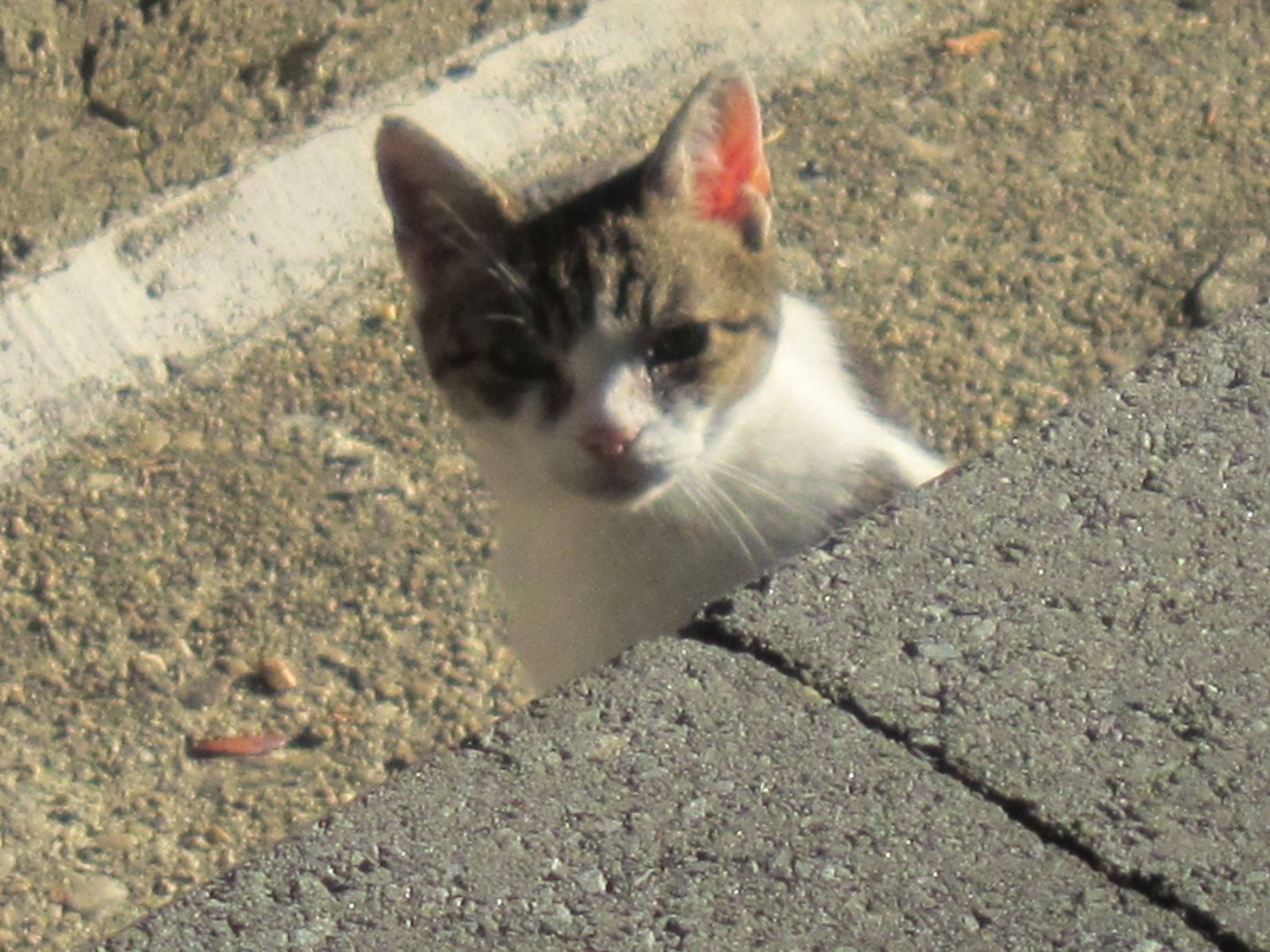
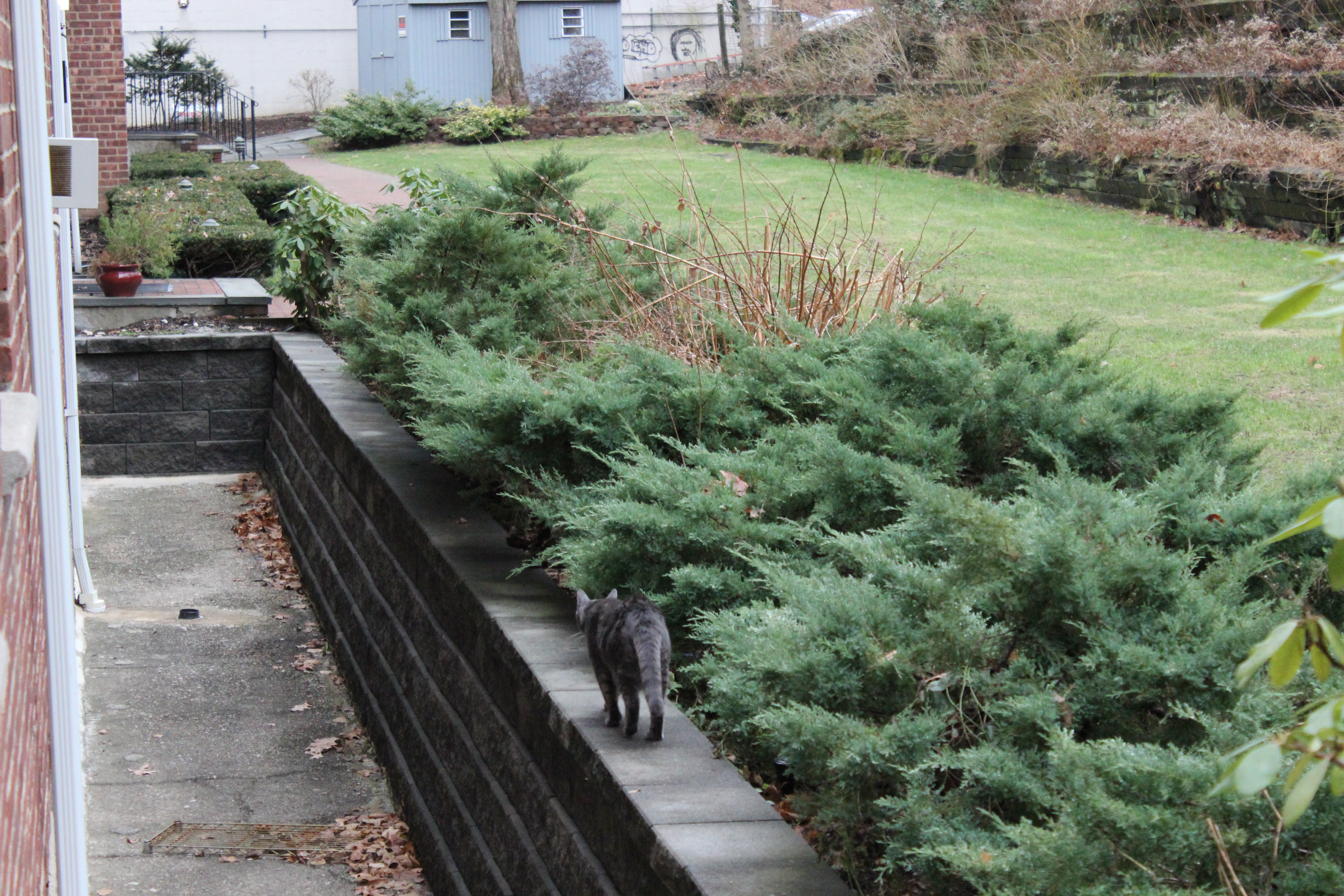
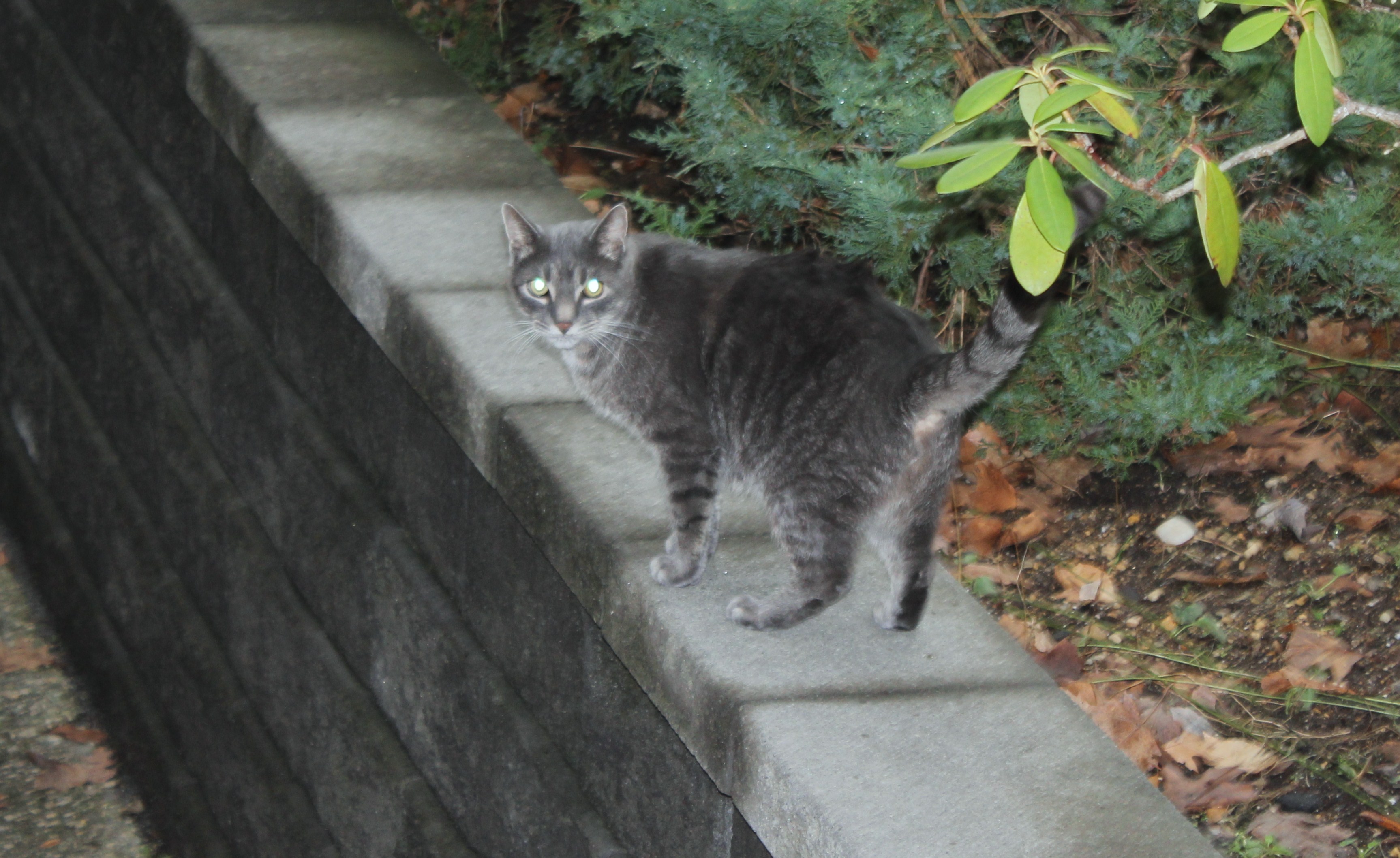
            There is a group of cats that has taken to visiting the backyard of my co-op. So far I know there are at least three of them, a grey one with white feet, and a white one with black markings, and a black one with white markings, though there may be more. It’s hard to count them because they often come around one at a time during the day. When they see Ellie coming out of our door they start to run, and Ellie chases them until they jump up into the retaining wall, out of her reach. For some reason, they have a habit of “hiding” on the third or fourth tier of the retaining wall, behind a single flimsy branch, as if Ellie would be able to see them up there if they weren’t camouflaged by this wondrous work of nature. Except, Ellie can’t see them at all, because she’s a dog and has limited vision and can’t really see things unless they are nearby and/or moving. Generally, Ellie prowls around at ground level searching for clues of the cat’s whereabouts, while I stand right in front of the hidden cat and try to make conversation.

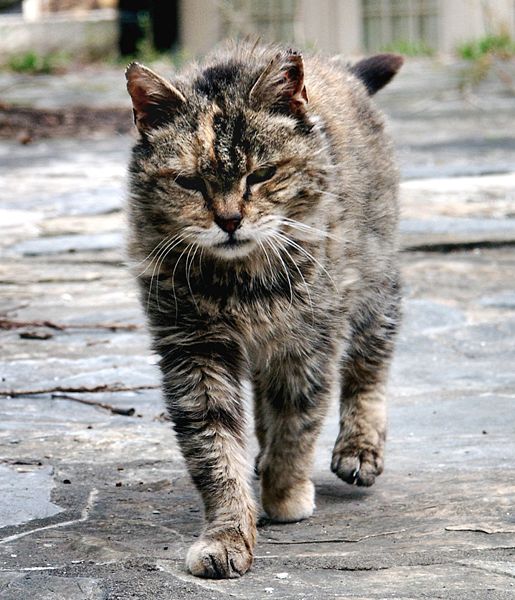
Not one of the current cats, but probably an ancestor.

            The cats never answer my questions, though, which is very disappointing. I keep asking them where they live, and how they’re doing, and they just ignore me and watch the dreaded Ellie down below. Cricket isn’t interested in the cats at all at this point in her life. In fact, she has given up on cats and squirrels and birds altogether and has focused all of her attention on trying to get Kevin, the Mini-Golden-Doodle who lives two buildings over, to play with her.

            Eventually, after Ellie has forgotten about the cat in the retaining wall, and Cricket has, reluctantly, accepted that Kevin isn’t going to come out to play, the dogs let me take them back inside and the cats go back to what they were doing before, usually hanging out under the bushes in front of my building, because it’s the best place from which to spy on the mourning doves, who spend a lot of time near there (my neighbor is very generous with bird seed). A few times we’ve found piles of grey and white feathers in the yard, with no sign of the bird who used to wear them. I try to believe that the bird has survived the attack from the cats, somehow, because there’s no sign of the body or bones or blood, but half a bird’s worth of feathers is a lot, especially when there’s so much of the soft fluff that comes from the layer closest to the bird’s body.

“I didn’t do it. I was sleeping the whole time.”

I don’t know if these cats have homes, or humans to take care of them, and I don’t know if they are really hungry, or if they are more like Ellie, who feels like she’s starving two minutes after a breakfast of kibble, cheese, and chicken treats. They look pretty healthy, so it’s possible that they are house cats who are allowed out whenever they want, either that or there are a lot of people in my neighborhood who like to feed stray cats. It would be easier for me to accept the cats’ hunting behavior if they are feral, though it would still be hard to forgive. Those mourning doves are so awkward and well-fed that they really don’t stand a chance against a gang of cats.

One of the Mourning Doves searching for snacks.

            And yet, despite all of that, I still look forward to seeing the cats. Part of me even wishes that the cats would realize that Ellie isn’t a threat to them, and would see her as a potential friend, because she needs one (Cricket doesn’t count as a friend; she’s a sister, which, if you ask Cricket, is a whole other thing). Ellie would love to catch up to one of the cats and have a loud conversation with them, or teach them one of her special dances (hop, hop, slide, hop, twirl, prance, jump, spin). But they don’t know that Ellie would never hurt another creature and is no threat to them; though she’s been known to hurt Kevin’s feelings when she “hides” on our stoop every time Kevin comes around.

“I wasn’t hiding, I was waiting for you to let me back into the house so I could escape from, Kevin.”

I’m allergic to cats, so I can’t have one of my own, either for my sake or for Ellie’s, but I wish I could. I miss my old friend Muchacho, the cat who lived here when we first moved in about ten years ago. He lived in one of the apartments nearby, with his human, but he came and went through the window as he pleased. He was so friendly that he’d let me pet him, and even pick him up once or twice. It was a real loss when he died, because even though I still have neighbors with cats, they are all indoor cats and I rarely see them. These visiting cats are nothing like Muchacho, of course, and they are unlikely to let me get anywhere near petting them, but part of me believes that if I’m friendly enough they will change their minds. I even worry about them when they’re not here, almost as much as I worry about the wellbeing of the birds when the cats are here. I wonder what the cats are thinking, and where they go when they aren’t in our yard, and if they have human families, or feline ones, or enough food or shelter. I haven’t, yet, tried to chase them up into the retaining wall the way Ellie does, hoping for answers to all of my questions. But I’ve been tempted.

Muchacho

If you haven’t had a chance yet, please check out my Young Adult novel, Yeshiva Girl, on Amazon. And if you feel called to write a review of the book, on Amazon, or anywhere else, I’d be honored.

            Yeshiva Girl is about a Jewish teenager on Long Island, named Isabel, though her father calls her Jezebel. Her father has been accused of inappropriate sexual behavior with one of his students, which he denies, but Izzy implicitly believes it’s true. As a result of his problems, her father sends her to a co-ed Orthodox yeshiva for tenth grade, out of the blue, and Izzy and her mother can’t figure out how to prevent it. At Yeshiva, though, Izzy finds that religious people are much more complicated than she had expected. Some, like her father, may use religion as a place to hide, but others search for and find comfort, and community, and even enlightenment. The question is, what will Izzy find?

Cricket’s New Year’s Demands


Dear Mommy,

Why is it “beautiful” when birds chirp, but when I bark, you get mad at me? When Butterfly runs, Grandma says she’s full of joy, but when I run, you say I’m dragging you, and Grandma uses those bad words.

pix-from-eos-059

“This way, Mommy!”

Mommy, I think you have it all wrong. I think I should bark more, and have more chicken treats (at least more than Butterfly, because she’s shorter than me and she actually likes kibble). I think I should be allowed to grow my hair until it sweeps the ground, and I should be allowed to keep my eye goop, and be able to cover myself in mud and poop if I want to, and you should never be allowed to put me in the bathtub ever again.

img_0510

“Barking is the most wonderful thing in the world!”

I should be able to go out to the backyard and catalog all of the sniffies, even if it takes me all day (squirrels and neighbors and cars and birds are distracting, so it’s not my fault it takes me so long).

I think we should start calling Butterfly “The Cat,” because it would be funny.

img_1144

“I’m a cat?”

I think there should be a rule that whenever one of my humans returns from “away,” they have to stand still so I can sniff where they’ve been, and there will be no changing clothes, or going to the computer, until I’m finished with my investigation.

The beach should be closer to my house, so I can smell rotting fish whenever I want.

The library should have a dog section, with aisles and aisles of smell stories, like little humans get to have picture books. What am I? Illiterate?

I think Grandma should have a warm fluffy coat like mine, so that she never complains again that it’s too cold to take me outside.

I think there should be a slide from the living room window to the yard, so I can go pee whenever I want.

I think it should snow more.

img_2038

I would like to know why I don’t have my own YouTube channel. I can climb in and out of boxes just as well as any cat!

I think I should never have to beg for people food again. Instead, I should be served my dinner on a plate. But, Butterfly doesn’t mind eating on the floor.

img_0105

“Why is it empty?”

I think we should eat more steak. And cookies. And French fries. And chicken skin. Lots and lots of chicken skin. Every night. Forever.

img_0661

“Chicken?!!!!!!!”

These are my demands, and Steven Colbert says that anyone who wears a big furry hat is in charge, and I wear a big furry everything, so that means I’m even more in charge than anyone else.

IMG_0237

“I’m in charge.”


Sincerely,

Cricket

Hershey is Gone

img_1050

Hershey, the last feral cat at my building, has died. I wanted to believe that I was overreacting to her symptoms, especially when I saw her meandering around the property for a couple of weeks after she’d first seemed sick, but I was right to be worried. I started to count days, since the weekend, that I had not seen her around, hoping that I just wasn’t looking closely enough. But then I saw her outdoor house, a box covered in a blue tarp, removed from the alcove next to my neighbor’s apartment, and wrapped up to be taken away.

I asked the maintenance man, sitting on the steps at the last building, if he knew why Hershey’s house was wrapped up, and he said that Hershey had died, and my neighbor had asked him to pack up the cat house because she wouldn’t need it anymore, and maybe because she didn’t want the reminder.

I started sobbing as soon as I got into my apartment. But I was also very, very angry, at my neighbor for not seeking medical help for Hershey when her symptoms began, and at myself, for not confronting her or trying to trap Hershey myself to get her to the doctor.

img_1045

I’ve been told that there used to be fifteen feral cats on the property, and the lawns were dotted with dead mice (and these are the same people who are worried about my dogs peeing on the grass?). One of my neighbors was proactive about trapping the cats, to get them spayed and neutered, and intervening with new litters as soon as possible to get the kittens adopted out if at all possible. He supports a group called Alley Cat Allies based in Washington, DC that advocates for trapping and neutering programs, and helps fund one nearby. He also personally rescued cats that could not survive the feral life, and sought medical care for them whenever possible. Maybe it was all of his work, or just a change in the neighborhood, but by the time Mom and I had moved in, there were only two or three feral cats left. It was hard to tell, actually, because a bunch of my neighbors had indoor/outdoor cats as well, and left front doors or window open for the cats to go wandering on their own schedules, but eventually there were just two, Gimpy and Hershey.

And now there are none.

I’m supposed to be grateful that Hershey lived as long as she did, and as well as she did, as a feral cat. I’m supposed to be philosophical about her death. “That’s nature,” the maintenance man told me, with a shrug. “She wouldn’t have been able to tolerate a visit to the vet, or the medical care required,” another said.

moms-hershey-picture

I worry that Hershey caught whatever illness killed Gimpy (the second to last feral cat, who died a month ago, at age thirteen), or that, even worse, someone put out poison that killed both cats, and my dogs might be vulnerable as well.

Before the blue tarp-wrapped cat house was removed from the lawn behind the building, the girls had a chance to sniff their goodbyes to Hershey. They took a long time, checking each crevice, seeming to recognize her smell, and her story, in each corner.

pix-from-eos-006

“Hershey has to be here somewhere.”

There are still squirrels, and raccoons, and birds and, of course the dogs, around the place. But there is no more Hershey. I’d gotten used to having her around, and spying her through the greenery of the retaining wall. I’m not used to her being gone. I keep looking for her, everywhere.

img_1085

Hershey and Gimpy


We’ve had two feral cats on the property of our co-op, until recently. Gimpy, the brown and grey cat with the wounded paw, died. Gimpy was here when we first moved in, running down from the woods to get his lunch, and then running back up. His benefactor on the other side of the building put his food out under a piece of slanted glass, to protect it as much as possible from the rain, and give him a semi-private place to eat his meal in peace. In the winter, Gimpy left tracks in the snow, complicated designs that showed how extensively he explored the grounds, and how lightly his paws indented the surface. He was a very self-sufficient creature, and was able to survive a serious, bloody wound to one of his forelegs, a few years back, that left him with only three working legs and his nickname.

Gimpy was often hiding under bushes, or spying from the corner of the building. He probably had a lot of stories to tell, but he wasn’t willing to share them with me. Towards the end, though, when he was getting run down with whatever illness eventually did him in, he was more sociable He was willing to stand longer on the walkway when I came by, and even rested out in the open sometimes, where anyone could see or smell him.

029

“I smell something. I definitely smell something.”

Not long before he died, my mother noticed Gimpy sitting in front of our building. He didn’t budge as she and the dogs walked within inches of him. She came to get me, but when I went outside to see him, he was able to gather enough energy to run away. But he only ran about ten feet, to the other side of our doorway, where he had to rest again. We left a message for the neighbor who had looked after him, to let him know that Gimpy seemed unwell.

013

“Is he okay, Mommy?”

The news of Gimpy’s death came third hand, without any details about time, or day, or cause of death. But we had already noticed that he wasn’t around.

The other feral cat is Hershey, a white cat with brown and black markings, who was “adopted” by another neighbor who places food for Hershey right by her apartment window, in a protected alcove, shredding chicken for her by hand. Hershey likes to rest on the retaining wall, or in a flower pot in her alcove, or by the maintenance shed. Her answer to approaching dogs is to remain absolutely still, in the hopes that they won’t notice her, and it usually works.

img_1046

“What are you looking at, human?”

img_1085

“You can leave now.”

A couple of weeks ago, when I was out on a walk with the dogs, Hershey was sick right in front of us. Usually she hides her poop, but she had diarrhea out in the open, and it was a pale, greyish white. There were various older puddles nearby as well. She sat in front of the window of the neighbor who feeds her, mewing, ignoring the bowls of food and water that had been left for her on the nearby steps.

We let her benefactress know, not only what I’d seen for myself, but what I’d found when I googled Hershey’s symptoms; that mostly likely, she had liver disease. Her symptoms could have been caused by any number of things, and could even be a passing illness of no lasting consequence, but with Gimpy’s death so fresh in my mind, and Hershey looking thinner than usual, I was concerned. She’s feral in name only. She may even have other homes she visits for TLC and extra meals on a regular basis.

The next day, there were puddles of pink, filled with all manner of indigestible things. I think our neighbor had given her Pepto Bismal, thinking it was just light indigestion. I hoped she was right.

Hershey is not my cat. She does not come to my door to ask for food, and would not tolerate or accept my attentions. And she is still alive, weeks later, so maybe my anxiety was outsized, and she’ll be fine. Each time I see her moseying up the walkway or hiding in the flower pot, I breathe a sigh of relief. But it doesn’t last long, because I’m still afraid that she’s dying. She sat in her flower pot, unmoving, for hours the other day. I really want her to be okay, because I’ve lost enough lately, and she has squirmed her way into my heart, whether she meant to or not.


005

Hershey, resting in her flower pot.


The Sounds of Spring


Allergy season has been blinding me. I go outside into a fog of loose green flying things, and the dogs take advantage and drag me where they will.

006

Cricket is very proud of herself.

But it’s made me more sensitive to the noises all around me. For example, there is a woodpecker somewhere in the backyard who sounds like he’s using a jackhammer to knock down all of the trees, at seven o’clock in the morning! The woodpecker’s name seems small for the sound he makes. His job is to peck at the wood to find bugs to eat, but I wonder, sometimes, if he’s got a megaphone attached to the side of his beak, to make himself sound more impressive, or maybe woodpeckers really have started to use power tools, just to mess with our minds.

My nose hurts in sympathy whenever I hear that woodpecker, but I’ve never seen him. My idea of a woodpecker is probably distorted, though, because I’ve only ever seen one animated in cartoons, so I may have seen him without realizing it.

woody woodpecker

I have not seen anyone looking like this.

Butterfly loves to stand still and listen to the noises all around her. She’s equally intrigued by a beautiful bird song, the sound of the wind through the trees, and an airplane flying way too low over our heads. The only sound she specifically dislikes is the bus that stops on our corner, and the mechanized female voice that announces each location.

022

Butterfly in listening pose.

There are some odd creatures out in the woods. I don’t know which animal makes the strangled baby noise, but the first time I heard it, I thought it was actually a baby, being strangled, and I looked everywhere to try and find it. There’s also an animal out there with a smoker’s cough, though that could actually be one of my neighbors hiding in the woods, choking to death. I can’t be sure.

I like the swish of the wind and the traditional birdsong, a little tweet here, a little twitter there, but the variety certainly does keep things interesting.

And then there are the two feral cats, Hershey and Gimpy (named by the human residents, not by themselves) who take up zones at opposite ends of the yard and avoid each other religiously. Hershey likes to climb the retaining wall and look down on her fiefdom. Gimpy likes to hide in the manicured bushes and climb through hollowed out trees.

IMG_1050

Hershey, on guard.

One day I saw Gimpy leaning against my mom’s temporary green house (like a pup tent, but for plants) trying to steal some warmth on a chilly day.

The girls have been taking advantage of my frequent need to stop and sneeze. Cricket has been eating extra grass and sniffing extra smells, and Butterfly has been doing her sound meditations, letting the wind curve the sound around her ears in a new way each time.

pix from eos 012

Butterfly listening from another direction.

But at least they don’t seem to mind that I use their poopie bags to collect my used tissues, so that I don’t have to stuff them back into my jacket pocket after use. Maybe they remember that day, early in the season, when I had forgotten to fill my pockets with fresh tissues and had to sneeze into my t-shirt. Cricket looked at me funny when that happened, which is rich, given that she actually eats tissues filled with snot. Harrumph.

IMG_0237

“I can hear you, Mommy.”


Unrequited Love

I hate the word unrequited, because we assume it to mean that there is only one person in love, and the other person is indifferent or even ignorant of that love. We use the term to cover almost any relationship that does not come to fruition: from stalker-like crushes on celebrities, to unequal love affairs, to love that is not actively returned but is still felt on both sides.

“Where are you?”

Cricket has had a few unrequited loves in her life. Usually with cats. Cats are not sure about Cricket, with her fast moving feet and her high pitched bark, but that doesn’t mean that the cats were never interested in her; they preferred to lurk and watch her from a distance.

Cricket and the cat

Cricket and the cat

Butterfly is less intimidating, and more approachable, but as yet she has not shown any persistent interest in any particular dog, or animal, other than her sister. Cricket only pretends indifference to Butterfly. At the very least, she loves having access to a Scent-O-Pee dispenser at all hours of the day and night.

Self explanatory.

Self explanatory.

I used to watch Hugh Grant movies, and a friend told me, you know, life is not really like a romantic comedy. And I said, of course I know that – but maybe I didn’t. I knew that Hugh Grant was not like the characters he played, but I figured someone must be, for the script to be written in the first place. I may have too much faith in my fellow writers.

I’ve had my share of crushes on TV characters, but most of my unrequited loves have been more complicated in one way or another, and yet still, finally, unrealized. I often feel like I’m pressing my nose up against the glass at a department store window, to stare at all of the things I can’t have.

IMG_1829            The dogs are my experiment in love requited, because they really do love me as much as I love them (even if they can be moody and need their own space sometimes). They are my lesson in the routines of love: the gifts given whether you’re in the mood or not, tasks accomplished and needs met even if I feel resentful about it. And I’ve found that I’m pretty good with all of this, and I miss them when they’re at the groomer for a few hours, and I’m happy to see their smiling faces each time I come home. I learned a lot about the dailiness of love from Mom: that love is action as well as feeling, and if you love someone, you take care of them, even if they are annoying you at this moment (I can be very annoying).

"I love you anyway, Mommy."

“I love you anyway, Mommy.”

I’ve learned about how to invest in love from writing, because I invest in it every day, even when weeks go by without inspiration, or years without external signs of success. I feel the security of making that daily investment. But romantic love – I don’t know how to build that or even to seek it out in a productive way. My parents’ marriage was scary, and maybe that’s what I expect romantic love to turn into, no matter how it begins.

I’m tired of seeing everything I do as pathological, even when it is, actually, pathological. The thing about unrequited love, is that there is an endless sense of possibility. Something exciting is always around the corner, even if it never actually arrives.

“What’s next?”

The New Cat On The Block

The first time I saw the new cat, he was sitting on one of the porches at our co-op, half hiding behind an iron banister. He was small, almost kitten-like, and white with grey patches. He watched as I walked the dogs past him. He watched and watched and watched, while the dogs ignored him, or didn’t notice he was there.

The cat with no name. yet.

The cat with no name. Yet.

I read recently that dogs have a hard time seeing things that are too still. They see objects better when the objects are in motion.

Cricket may be able to smell the cat...

Cricket may be able to smell the cat…

but she can't find it.

but she can’t find it.

Eventually the cat hit his limit of watching and jumped down behind an evergreen bush. The dogs noticed him then, but it was too late, he’d already disappeared.

Butterfly was quickly distracted...

Butterfly was quickly distracted…

Butterfly's birdie friend

by a birdie.

I saw the new cat a few more times in passing, literally, passing in front of our door on his way to somewhere else.

And then, one morning, he was sitting in the recess next to my front door, waiting by the window of one of the downstairs apartments. The girls didn’t notice him in his stillness and I could almost picture him putting a paw up to his lips, telling me to keep his secret.

I needed a picture of him, because writing a blog makes me think every experience needs pictorial evidence. So I took the girls up to the apartment and picked up my little red camera. I thought I was on a fool’s errand, but I went back outside and there he was, still sitting by the window.

Still there!

Still there!

I’m not going to say that he posed, but he tolerated me staring at him and clicking away. He seemed to have a particular boundary distance in mind, so as I got closer, he stepped further away. I took a dozen pictures at least, but eventually I got too close and he ran away.

"You're getting too close."

“You’re getting too close.”

"Are you following me?"

“Are you following me?”

He didn’t seem like one of the feral cats. He didn’t have their clever look, or their quick reflexes, and he really did seem small. And the window he’d been leaning against was the one Muchacho used to use as his entrance and exit.

Muchacho

Muchacho

Muchacho, the big cat on campus, hadn’t been seen in months. He’d had a cancerous tumor removed last year, but he’d seemed to recover nicely. All of his fur grew back and he was his sweet, friendly, pee-all-over-the-yard self for a while. But then he was gone.

Muchacho, the scratchy glutton!

Muchacho, the scratchy glutton!

It’s possible that Muchacho died not long after I took his picture and wrote about him for the blog. He didn’t seem ill at all, though. I’d prefer to believe that he went to an old cats’ home or to stay with another relative. I almost wonder if he was saying goodbye that day when he let me pick him up and give him a hug, just for a moment, before realizing what he’d done and jumping out of my arms to freedom.

The last time I saw Muchacho.

The last time I saw Muchacho.

The new cat must have smelled Muchacho’s lingering scent by the lower window and found it welcoming.

Something was drawing me to this new cat, and I felt disappointed when he wasn’t outside during the girls’ walks. There’s something magical about finding a cat hidden in the landscape, like a real live Where’s Waldo. But it’s more than that. Cats make eye contact in a very satisfying way. They stare and observe and notice me in a way people don’t. People are too busy walking by and thinking of other things, but cats notice me, at least until they decide that I’m crowding their space and run away.

It turns out that one of our neighbors has been feeding the new cat behind the tool shed and is contemplating calling the county to have him trapped and neutered, like the other feral cats. Meanwhile he’s been getting bigger all the time, and I’ve been wondering if he has a home somewhere nearby, and just comes over for the food, and to have his picture taken.

I’d like it if that were true.

The Feral Cats


One night, in the old apartment, I heard what I thought was the baby downstairs crying. It was late at night and I worried that he had been left alone on the porch, or left alone in the apartment with the windows open. I was debating whether or not to call the police, when I finally decided to go downstairs myself and take a look. I was outside on the front lawn at one o’clock in the morning, barefoot and in my pajamas, and the only spot of light was on a cat standing ten feet from my next door neighbor’s door. The cat turned to me, and cried.

Looked something like this picture from wikimedia

Looked something like this picture from wikimedia

            I was reassured, at least, that it was not the baby downstairs who had been wailing for hours, but I wasn’t sure what to make of the cat. He seemed to be calling to my next door neighbor, who had an arrangement with a lot of other cats, and dogs, in the neighborhood, concerning food. I asked the cat if he wanted to come inside, but he declined, and went back to staring at my next door neighbor’s side door, ever hopeful.

            I’d never really known about feral cats before then, but suddenly there seemed to be feral cats everywhere. Another neighbor set out bowls of food and water on her porch for the cats, and made snuggly cat houses for them when the weather got chilly, just in case they were desperate enough to accept the warmth.

high class cat house from Alley Cat Allies

high class cat house from Alley Cat Allies

            I couldn’t imagine where all of these cats had come from. They didn’t look like siblings. It might have made sense if one stray, abandoned cat had managed to have a litter on the streets, but where did all of these unmatched cats come from?

            When we first moved into the new apartment in May, I assumed that every cat I saw wandering the grounds was a pet who lived in the complex. I was relieved, because it meant we really had found a pet friendly co-op. I didn’t realize that a number of cats were feral until months later. This concept is so strange to me. Whenever I see a dog out on his own, I make sure he gets home, either following behind as he finds his own way, or using Cricket as a prod, or just going over and looking at the tag and calling home for him. I can’t imagine leaving a dog out on the street. And yet this seems like what’s done with cats all the time. Are the cats better at surviving on their own, or better at avoiding capture? Or are people just scared that bringing feral cats to the shelter will end in euthanasia, rather than adoption?

            I found out about the feral cats because people were feeding them out behind the work shed, as a matter of Co-op Board policy. It had been decided that it was okay to feed the cats, in the hopes that the cats would clear out any spare mice.

            The feral cats here are very quick to run up and hide in the woods when people are around, but they leave behind dead mice and piles of bird feathers, to let us know they’ve done their jobs and earned their keep.

            We have one resident cat who seems to be the big man on campus and his name is Muchacho. He is not a feral cat. He was the first neighbor to welcome me to my new home, rubbing his head on my leg as I carried boxes up the walkway. Muchacho is elderly. He had surgery a couple of months ago to remove a tumor, but within a few days he was back out strolling, with white bandages wrapped around his middle. He is dark grey and overweight and not fast. He can adventure as long as he wants, knowing he has a warm, safe home to return to, and as a result, he can be friendly and charming and relaxed in a way the feral cats can never be. The feral cats have to be hunters. They have to be on their guard. I wonder if some of our cultural expectations of cats come more from these feral cats than from a big old guy like Muchacho who is almost like a dog.

Muchacho

Muchacho

My friend

My friend

            But also, I wonder if Muchacho’s ever present self is the reason why the feral cats here don’t cry at our doors at night. They know who runs this place, and it’s not the people.

"I've got my eyes on you."

“I’ve got my eyes on you.”