Recently, I realized that while I had typed up all of my grandfather’s letters back and forth with his father (despite many of my great grandfather’s responses being in Yiddish and broken English) and my grandmother’s travel diaries (listing all of the things she hated about each country she visited) and all of the children’s stories my grandfather had written for his grandchildren, or at least the ones that I could find, I hadn’t typed up his forty some odd page memoir, even though I was sure I had. We’ve had copies of his handwritten memoir forever, and maybe that’s why I assumed it had been typed up or at least scanned into the computer at some point, but no.
Grandpa’s memoir
So, since I’m on summer break from work, I decided to type the memoir and give myself the opportunity to hear my grandfather’s voice once again.
I had four grandparents, of course, but my father’s parents were both difficult people with not-so-great English who were unlikely to write down their thoughts in any language. And my mother’s mother, who wrote quite a lot, was not the most generous soul, so reading through her poems and essays, can be, at the very least, claustrophobic.
But my mother’s father was a writer (as well as a teacher) and towards the end of his life he decided to sit down and write an account of his childhood, specifically for his grandchildren. He wrote, early in the pages, that he wished he’d had such an account from his own grandparents, and so he wanted to make sure to do that for us.
For the past few weeks, whenever I’ve had time, and energy, I’ve been sitting in front of the computer transcribing a few pages of my grandfather’s handwriting – hearing his unique voice and how he played with punctuation (a dash here, a comma there, often both at the same time) and how he often repeated words for emphasis, like hard hard, for very hard, or much much, for very much. Interestingly, I’ve noticed this same pattern in Modern Hebrew, where le’at le’at (or slow slow) means very slowly, and maher maher (or fast fast) means very quickly.
I was sure I remembered everything important from having read the memoir years ago, but of course there were so many things I’d forgotten: like his descriptions of the outhouse behind the tenement across the street, and how lucky his family was to live in a tenement that had two indoor toilets per floor; or his description of all of the wonderful food his mother made for holidays, or the deep anxiety she lived with year round and that was finally echoed by everyone else during the High Holidays; and there were all of the stores he accompanied his mother to, when he was only four years old, because his English was better than hers; and the way he described his childhood synagogue on Yom Kippur, where the Cantor would close the windows, to avoid catching a cold from the breeze, leaving many people struggling with the heat, and fainting from the combination of the heat and the hunger from fasting.
My grandfather was a wonderful storyteller; I’ve always known that. And he had strong feelings about the ways his childhood orthodoxy no longer fit him as he grew up and began thinking through his Judaism for himself. And I knew that he loved language and food and his family. None of the information or the wisdom in these pages is new to me, but I am so grateful for the opportunity to dawdle over these pages again and to take my time as I type (because I am a very slow typist) and visit with him again.
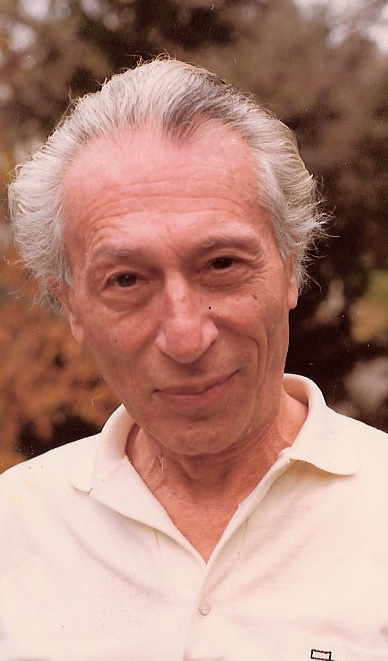
Grandpa
In the midst of the typing, my great aunt Ellen, my grandfather’s baby sister, died at the age of one hundred and eight. She had outlived the rest of her siblings by decades, taking on the mantle of family elder and family glue. And with her death it feels like a whole generation is disappearing at once, except for all of the memories they’ve left behind, including this memoir my grandfather wrote just a few years before he died. These forty short pages are giving me a chance to have conversations with him that we never got to have when he was alive, and I am so grateful to have these words to help keep his memory alive, and the memory of his baby sister whom we loved very much, and, who, as a result, we will never really lose.
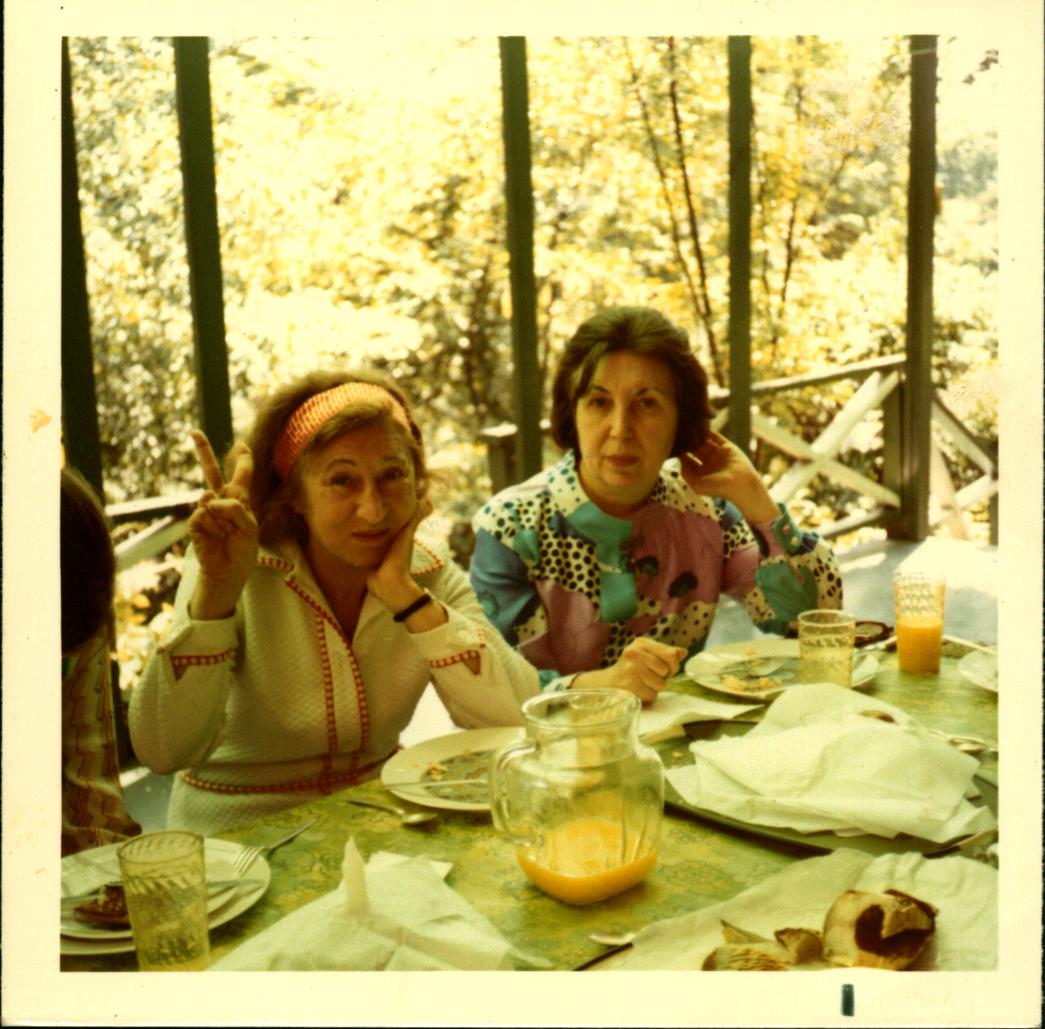
Ellen (right) with her sister Susie
If you haven’t had a chance yet, please check out my Young Adult novel, Yeshiva Girl, on Amazon. And if you feel called to write a review of the book, on Amazon, or anywhere else, I’d be honored.
Yeshiva Girl is about a Jewish teenager on Long Island, named Isabel, though her father calls her Jezebel. Her father has been accused of inappropriate sexual behavior with one of his students, which he denies, but Izzy implicitly believes it’s true. As a result of his problems, her father sends her to a co-ed Orthodox yeshiva for tenth grade, out of the blue, and Izzy and her mother can’t figure out how to prevent it. At Yeshiva, though, Izzy finds that religious people are much more complicated than she had expected. Some, like her father, may use religion as a place to hide, but others search for and find comfort, and community, and even enlightenment. The question is, what will Izzy find?
Ellie died at home early Monday morning, after not eating much the previous day. She had her final bedtime hugs and scratches and then went to get a drink of water and rest by her wee wee pad, and by morning she was gone
A friend suggested that Cricket was getting bored alone in heaven and tapped Ellie on the shoulder, telling her to come sooner. I can believe that of Cricket, and I can believe Ellie would do that for her sister, but she is so deeply missed here on earth.
It’s hard to find words for the loss of Ellie, on top of the loss of Cricket just two months ago, which has left the apartment so completely dogless. My greatest consolation is that Ellie knew how deeply she was loved, and we know how completely she loved us.
A week after seeing the substitute vet, and being told not to spend more money on tests, we were able to get an appointment with Ellie’s regular vet and he recommended an ultrasound, to see if her distended belly was filled with fluid or with something else; and he confirmed that it was all fluid. He recommended against trying to poke around with needles to empty the fluid, because it could stress her literally to death, and because the fluid would come back in a few days anyway. Instead, he raised her diuretic dose a little bit and sent us home, saying that, like with Cricket, if Ellie doesn’t eat for three or four days, she’s suffering.
It certainly wasn’t the news we wanted to hear, but it is what we expected, and it was a relief to know for sure what we were dealing with.
The raised dose of the diuretic helped a little bit, at least enough to allow Ellie to feel hungrier and to enjoy her food again. She especially liked the Chinese food we got for my birthday dinner. Her belly is still full of fluid, and she spends most of her time resting on her side, but her joy in eating is wonderful to see.
“Where are you hiding the Chinese food?”
When we were looking through her papers recently (which makes it sound like she has her own filing cabinet and a small business to run, but we were just looking for her exact birthday so we could celebrate it with her), we realized that she is turning ten this year, not nine like I thought. There’s a little bit of relief in knowing she’s made it all the way to ten, just like there was relief in seeing Cricket pass the sixteen year mark, but it’s still not enough.
We didn’t plan anything special for her birthday, because every day she’s still with us feels special and important, and really an act of will on her part. Just seeing her eat, and take all of her medication, and enjoy getting her back scratched, feels like a celebration to me. I’m so grateful that she wants to stay with us for as long as she can, and I’m especially grateful that we’ve been able to have this time with her, after Cricket’s death, to shower her with as much love and attention as she can absorb, so that she knows what it’s like to be the center of everything, at least for a little while. Even Cricket would have wanted that for Ellie, though not as much as she wanted it all for herself.
Now we’re just going day by day, trying to accept that we won’t have that much more time with her. Her sweet spirit still shines through, even when she’s tired, or worried, or struggling to catch her breath, and we know how lucky we’ve been to have her this long.
Happy birthday dear sweet Miss Ellie, my beautiful girl!
“I need more chicken, Mommy.”
If you haven’t had a chance yet, please check out my Young Adult novel, Yeshiva Girl, on Amazon. And if you feel called to write a review of the book, on Amazon, or anywhere else, I’d be honored.
Yeshiva Girl is about a Jewish teenager on Long Island, named Isabel, though her father calls her Jezebel. Her father has been accused of inappropriate sexual behavior with one of his students, which he denies, but Izzy implicitly believes it’s true. As a result of his problems, her father sends her to a co-ed Orthodox yeshiva for tenth grade, out of the blue, and Izzy and her mother can’t figure out how to prevent it. At Yeshiva, though, Izzy finds that religious people are much more complicated than she had expected. Some, like her father, may use religion as a place to hide, but others search for and find comfort, and community, and even enlightenment. The question is, what will Izzy find?
This past Monday morning, after watching her decline throughout the weekend, we brought Cricket to the vet to end her life. She was sixteen years, two months and three and a half weeks old.
So many times over the past weeks and months we had thought Cricket was nearing the end, and we told ourselves that if she was in the same state in the morning we’d take her to the vet and put her to sleep. Almost every time, Ellie would sleep in Mom’s room overnight, instead of mine, watching over her sister, but when morning came, Cricket would wake up ready to try again; demanding to try again.
Except, in the last few weeks, each time Cricket bounced back, she was a little shakier and a little more uncertain than the time before. We held onto what the vet had said, that if she didn’t eat for three days she was suffering, as our guide, because we didn’t want her to suffer, but we also didn’t want to cut short her life, even a day sooner than necessary.
She still needed the ACE (doggy valium) in order to tolerate her daily subcutaneous fluids (I still have the bite marks from the few times I tried to do it without the ACE, even in her last week), and I was able to take advantage of her time on the ACE to do some grooming that she would never have allowed otherwise: making sure she was clean, and could see as clearly as her foggy eyes would allow, and could grip the floor with her feet, even if she didn’t have perfect control of her legs.
So many people who would never think of assisted suicide for a family member, think it is the only compassionate thing to do for a pet, and I see their point, and even agree with it most of the time, but each time someone hinted to me that it was time to let Cricket go, I disagreed. Dogs can’t speak the way we can, but after sixteen years I knew Cricket, and I knew she wanted to stay as long as possible and she wouldn’t appreciate us making that decision for her, even if it was made with love and compassion and a wish to save her from further pain. But also, however much I want to believe in the Rainbow Bridge, and heaven, and the persistence of the soul beyond the body, I know that death is final. Even if there is something that persists after death, it’s not the same as the life we know.
And I kept thinking of Dina, our lab mix who died at sixteen years and two months of age. Dina couldn’t hold herself up anymore by her last day, but she was still eating, folding herself around her bowl of food. At the time, the decision to let her go was made because Mom was going away to New Zealand for a few weeks and I would be left alone to care for a dog who couldn’t see or hear and was crying in pain. But it still felt too early. If Mom hadn’t been leaving, we wouldn’t have gone to the vet on that particular day. We would have waited. It may have only been one or two more days, or a week, but I felt guilty for that decision. I still don’t know if it would have been right or wrong to wait longer. Maybe there’s no right or wrong in this.
Dina
Our goal with Cricket was to make her as comfortable as possible; to maximize her happiness and minimize her pain. The prolonged hospice period was hardest on Mom, because Cricket insisted on sleeping next to her Grandma, and if she couldn’t wake up in time to get to the floor, she’d pee on Mom’s bed (we had a special set up to protect the bedding, with a wee wee pad and towels and mats, but it wasn’t always enough). But even with all of that, Mom didn’t want to let her go either. So we waited, and we did our best. We spent a lot more time holding her, and wrapping her in towels and blankets to keep her cozy. Her bones were sharp under her warm t-shirts, but we worked hard to hear everything Cricket was saying, about what she wanted, and what she could tolerate.
At a faculty meeting for synagogue school, the week before Cricket died, we did an exercise for the holiday of Sukkot where we passed the Etrog (the citron that’s used as one of the four species for the holiday) around the room. The Etrog, this oversized, lumpy cousin of a lemon, is said to represent the heart, so each of us was asked to hold the Etrog to our chests and say what we were holding close to our hearts right then – a goal, a person, a moment of joy, a realization, etc. – and I said Cricket, I’m holding my dying dog to my heart, and then I went home and literally held her next to my heart for hours.
That night, or the next, when we carried Cricket outside to join Ellie for her evening walk, her friend Kevin, the mini-Goldendoodle, heard us and came running, and Cricket’s little tail wagged and wagged, and she pushed herself to walk faster to get to him, to follow him, to sniff him. After a little while she got worn out and came over to rest by my leg, to let me know she was ready to go back inside; but just seeing her with him, perking up and finding joy in his presence again even for a few minutes, reassured me that we were doing right by her.
And then, a few days later, she stopped eating, and then she stopped drinking. She couldn’t stand up on her own anymore, even though she desperately wanted to, and we knew it was time. Her life was so full and rich and complicated and true, and she gave us every last drop of herself and squeezed everything she could out of her one life, but it still felt too soon to let go. Maybe it always will.
When we came home from the vet, I started to clean: doing load after load of laundry, picking up the wee wee pad path, folding Cricket’s t-shirts and sweaters and putting them away in the closet. And the apartment felt so quiet without her; so big and empty. But then there was Ellie. She was confused, sniffing the places where her sister should have been, looking to us for an explanation, and then climbing up onto the couch for comfort, keeping us close to her so she wouldn’t lose anyone else.
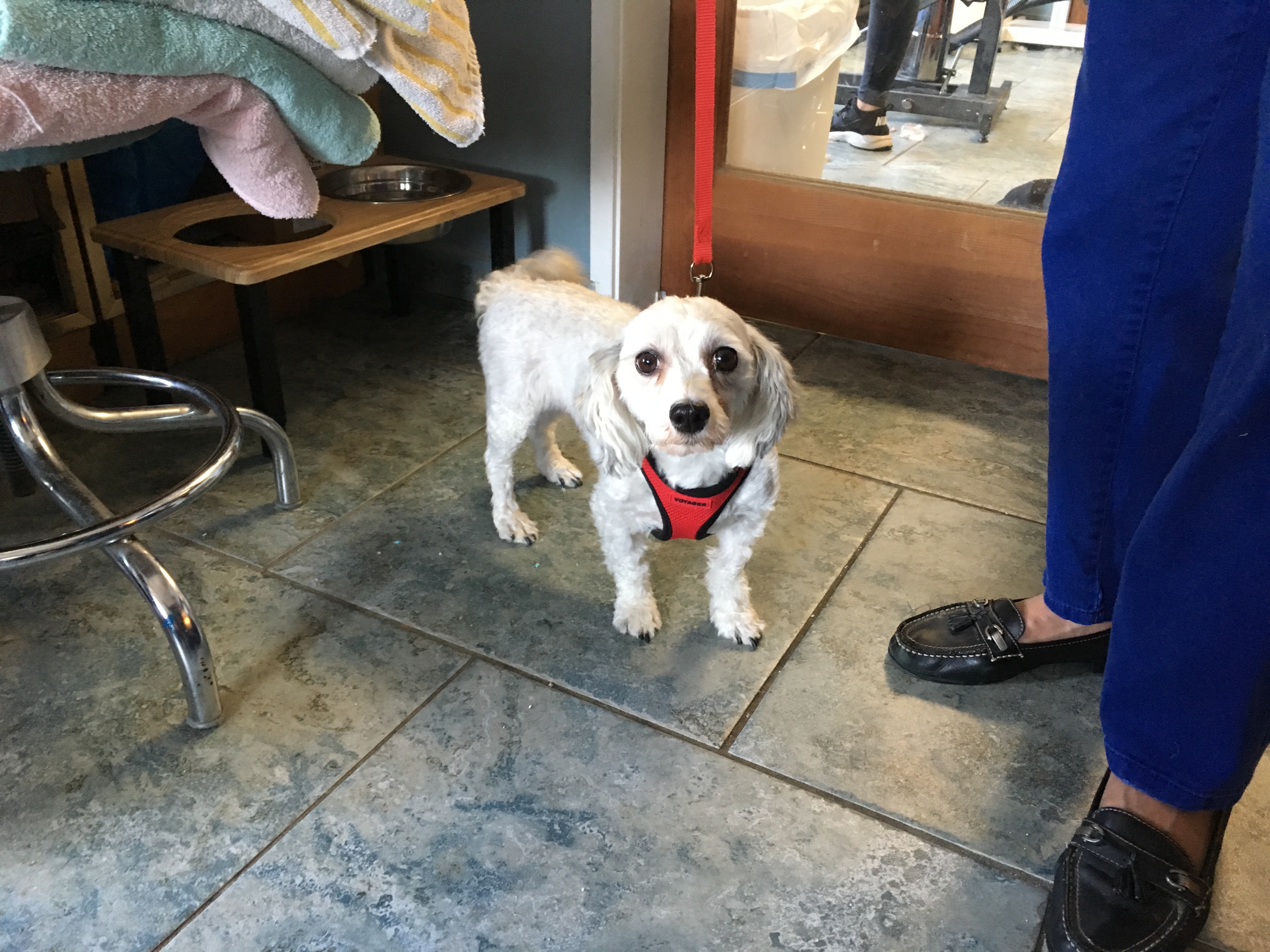
Lonely Ellie
It will take all of us some time to get used to a world without Cricket. It doesn’t seem real, or even possible, that she’s gone. I think part of me believed that Cricket would live forever, because she wanted to, and because her spirit was so indomitable. The idea that she, like all of us, was mortal, just feels impossible. Her presence is everywhere is our lives, and her absence is everywhere too. But I take great comfort in the knowledge that she knew, all her life, no matter what, that she was loved.
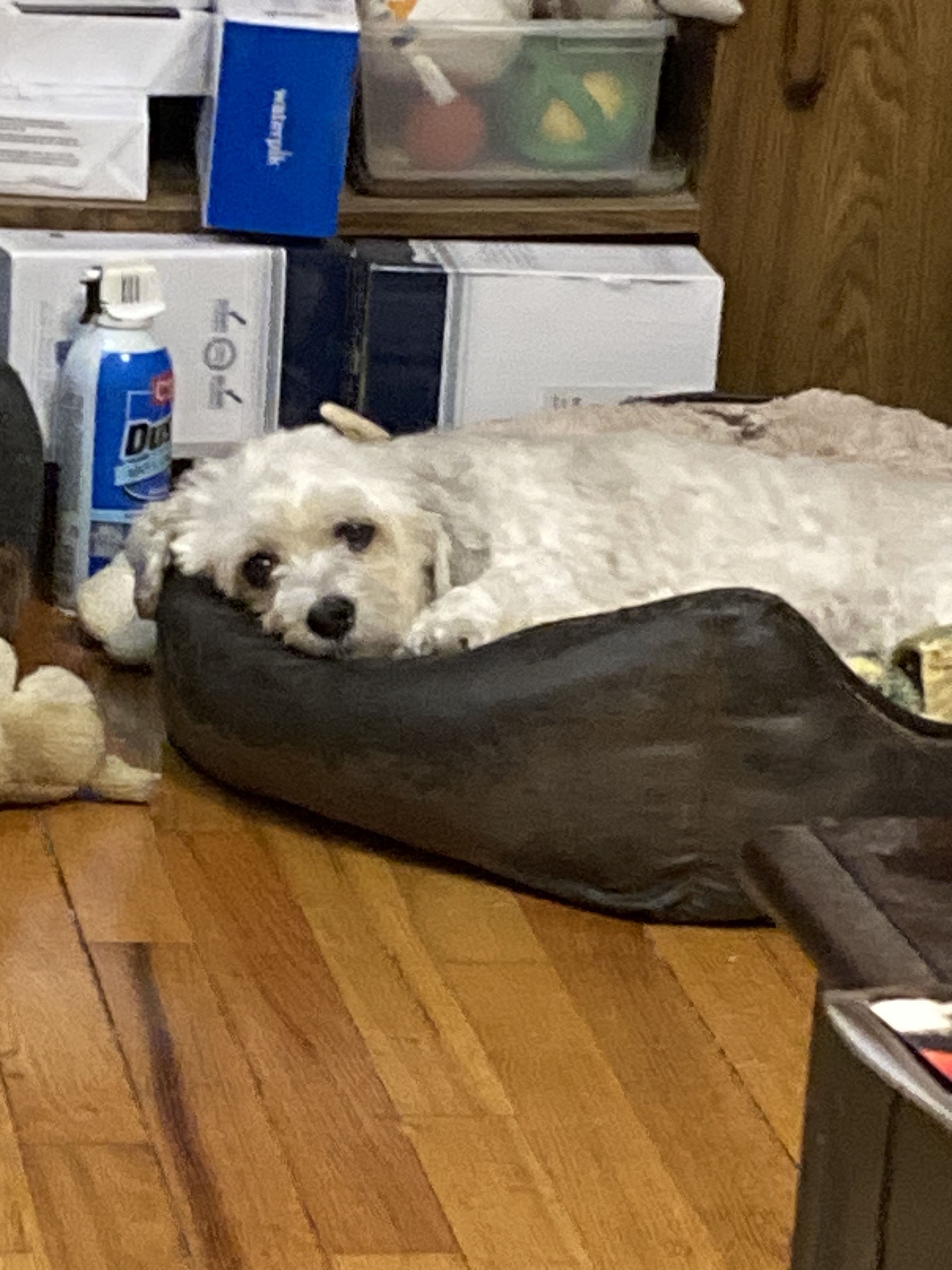
Cricket’s indomitable spirit
If you haven’t had a chance yet, please check out my Young Adult novel, Yeshiva Girl, on Amazon. And if you feel called to write a review of the book, on Amazon, or anywhere else, I’d be honored.
Yeshiva Girl is about a Jewish teenager on Long Island, named Isabel, though her father calls her Jezebel. Her father has been accused of inappropriate sexual behavior with one of his students, which he denies, but Izzy implicitly believes it’s true. As a result of his problems, her father sends her to a co-ed Orthodox yeshiva for tenth grade, out of the blue, and Izzy and her mother can’t figure out how to prevent it. At Yeshiva, though, Izzy finds that religious people are much more complicated than she had expected. Some, like her father, may use religion as a place to hide, but others search for and find comfort, and community, and even enlightenment. The question is, what will Izzy find?
I found out that my father had died by listening to Mom’s side of a phone call. It took a while for me to figure out that she was talking to my brother, and then even longer to figure out that he was telling her my father had died. I had to wait until the call was over to get the details – that my father had been in and out of nursing homes and hospitals for the past three years (which we sort of knew, from clues but not from direct information), that he didn’t have dementia (which is what Mom had assumed), and that there was drama around when and where the funeral would take place.
I wrote to four people after I found out – two good friends, my therapist, and my rabbi. And my rabbi rushed out of a committee meeting (reluctantly?) to call me and see what I might need from him. He already knew the backstory, about the sexual abuse and the estrangement (I hadn’t seen my father in 23 years), and he said something that really stuck with me. He said that the commandment to Honor your father and mother is often misinterpreted. The word in Hebrew is Kaved, which actually means weight or weigh, not respect or honor. It means that you should weigh the role of your parents in your life when you decide what you owe them in return; you are not required to blindly honor or respect a parent simply because they are your parent, but because they acted as a parent should and raised you with love and respect and guided and protected you. The commandment to Honor your father and mother is not meant to be a get out of jail free card for any parent who abuses or neglects their children.
I am not orthodox, like my brother and his family, and I don’t believe that my rabbi is the final word on what I can and can’t do as a Jewish woman, but it helped to have validation and support, both from a person I trust and from the tradition of my ancestors.
I made sure to tell my rabbi not to put out an announcement that my father had died or to add my father’s name to the list for the Mourner’s Kaddish at our synagogue at Friday night services. I didn’t want to receive messages from people who care about me but don’t know my situation, telling me that they are sorry for my loss and may my father’s memory be a blessing. It isn’t a blessing. He wasn’t a blessing in my life.
“Grr.”
Jewish funerals are required to take place as soon as possible after the death, but I did not go (though Mom watched it on Zoom to support my brother and his children). And I didn’t go to sit Shiva at my brother’s house, though Mom went to visit and to offer support, avoiding discussions about what did and did not happen in the past.
I stayed home and sought comfort from my friends and my dogs and my therapist, but I was jealous of my brother’s ability to mourn our father, and all of the Jewish rituals that would support him through that process. I found myself feeling jealous of anyone who could find comfort in hearing their lost loved one’s name read out each week before the Mourner’s Kaddish, or who found comfort in saying the Mourner’s Kaddish and praising God in the memory of their lost loved one. I’m jealous of people for whom the traditional rituals work – like giving nostalgic eulogies and having friends and family over to reminisce and tell stories and share food for a week. Those mourning rituals are so beautiful and powerful, but only when thinking about the lost loved one is a comfort.
“Oy.”
My situation doesn’t fit into the traditional framework. My father sexually abused me, and others. He was a pedophile and a narcissist and a manipulator, and he denied what he’d done and denied the significance of the things he couldn’t dispute having done, and never made any attempt to make amends. If anything, he continued to try to convince important people in my life that I was lying and he was a victim. The fact is, I still live in a world that doesn’t want to reckon with the reality that abuse and neglect are everywhere, and that they destroy lives every day.
This was brought home to me, vividly, that night, when, after writing my emails and texts and making my phone calls, I tried to distract myself with an episode of New Amsterdam on NBC. It’s a hospital show with an idealistic bent, often too simplistic, but still hopeful about making the world a better place. It’s not my favorite show, but I watch it regularly and often find it comforting and/or interesting. But for whatever reason, that night, out of nowhere, the writers chose to go down a rabbit hole about Recovered Memories.
Recovered Memories is a somewhat generic term that people often use to describe traumatic memories that have been forgotten at some point and then remembered later. A lot of how you define the term Recovered Memories depends on what your intentions are: if you want to debunk the idea that it’s even possible for memories to return after a period of forgetting, you will probably define Recovered Memories as wholly forgotten and then remembered only with the help of a therapist or a drug; if you believe that trauma can cause memories to fragment or be blocked for some period of time, you’ll probably define Recovered Memories more generally, as partial forgetting and partial remembering over time, often triggered by events in the present that remind you of the past trauma (like your own child reaching the age you were at when you were abused).
On this episode of New Amsterdam, the writers decided to take the loveable psychiatrist on the show, who is more often than not empathetic and kind, and have him testify in court that all Recovered Memories, of any kind, are unreliable. They even had him quote a study about The Shopping Mall Experiment, where the researchers said they were able to “implant” memories in susceptible adults of having been lost in a mall in childhood. The study has been debunked for any number of reasons, but the biggest reason is that traumatic memory and “normal” memory are not the same, and while being lost in a mall might be scary, it would not qualify as a traumatic memory unless something traumatic happened while you were lost.
But still, I wanted to believe that the writers on the show were going to handle the issue sensitively, and in the next scene they gave me hope when the psychiatrist’s female colleague confronted him with her own recovered memory (though not of abuse), and with the terrible impact his testimony would have on millions of women and children who had been abused and tried to testify to that in court. But then the psychiatrist doubled down on his belief that not only Recovered Memories, but ALL memories, are unreliable. He went on to specifically attack the legitimacy of his female colleague’s memories, by researching the probable season and location where the memory would have taken place, disputing her memories of the weather on that day in order to prove to her that it could not have happened the way she remembered it. He was relentless and wildly inappropriate, and the writers gave no explanation for why he would feel so strongly about this particular issue or why he would be willing to be so cruel to his friend.
By the end of the episode it seemed to me that the writers’ intention was to use this whole storyline as a way to question the female colleague’s memories of how her father had left her when she was little, so she could reassess her feelings towards her still living mother and therefore change her plans to move to London, which threatened the status quo at the hospital; but they could have found hundreds of other ways to change her mind without invalidating millions of people.
I was in shock. The violence of the psychiatrist’s attack on his friend seemed to come out of nowhere, and the female colleague’s willingness to forgive him right away was out of character and bizarre. But more than that, the way the writers were misrepresenting the research was horrifying, especially because it is well known in the field that traumatic memories often have missing or distorted nonessential details, like the time of day, or the weather, or the clothes you were wearing, and those mistaken details have no bearing on whether or not the crux of the memory is true.
The emotions I couldn’t produce in response to the news of my father’s death came roaring up as I watched this show and felt invalidated and manipulated all over again. You can’t prove it and therefore it didn’t happen. You have no pictures and I don’t want to believe you and therefore it didn’t happen. Your memories, your symptoms, your feelings, are nothing in the face of what I want to believe.
But I’ve done the reading that the writers on New Amsterdam clearly did not bother to do, and I’ve done the listening, to many people who have been abused, and I know that the brain often tries to protect us from knowing things we are not ready to deal with. I just felt so let down that a show that had seemed thoughtful and kind was no longer trustworthy.
“Oh no!”
I am still processing my father’s death, and trying to figure out how it changes things, if it changes things. I am safer now than I was as a child. I am loved and supported and listened to and believed; and I cherish the people who have brought me comfort and made my world a better place. But the mourning process is still ongoing, for the loss of the childhood and the father I could have had, and for the years spent trying to recover, and I wish there could be established rituals to help me through this kind of mourning. There are so many of us in similar situations, trying to cobble together the support we need to move forward. I can’t be the only one who struggles to create those rituals on my own, and I can’t be the only one who feels let down by a world that refuses to acknowledge the pervasiveness and validity of the need for those rituals.
“Would hugging a puppy help?”
If you haven’t had a chance yet, please check out my Young Adult novel, Yeshiva Girl, on Amazon. And if you feel called to write a review of the book, on Amazon, or anywhere else, I’d be honored.
Yeshiva Girl is about a Jewish teenager on Long Island, named Isabel, though her father calls her Jezebel. Her father has been accused of inappropriate sexual behavior with one of his students, which he denies, but Izzy implicitly believes it’s true. As a result of his problems, her father sends her to a co-ed Orthodox yeshiva for tenth grade, out of the blue, and Izzy and her mother can’t figure out how to prevent it. At Yeshiva, though, Izzy finds that religious people are much more complicated than she had expected. Some, like her father, may use religion as a place to hide, but others search for and find comfort, and community, and even enlightenment. The question is, what will Izzy find?
I recently found out that my synagogue’s choir will be singing in-person at High Holiday services in September. Up through most of June, we thought we’d be recording one or two more videos (to add to the collection we made last year) and using them for services – both online and on screens in the sanctuary. But with the changes to the protocols in New York, our plans have changed.
“Am I singing?”
In-person choir performances mean rehearsals all summer, starting right away, and also early morning services for Rosh Hashanah and Yom Kippur – which I’m really not looking forward to. Instead of waking up late and eating breakfast and leisurely strolling with the dogs and then getting to synagogue for the 11:30 AM service, the way Mom and I used to do before I joined the choir, I will have to be up and dressed and ready to sing by 8:45 in the morning.
I’d actually gotten pretty comfortable with the distance singing – making the videos and singing along to a voice in my ear – and now I will have to re-acclimate to four-part harmonies, and ignoring what someone else is singing (loudly, next to me).
“Grr.”
I’m also anxious about what to wear for services, and which shoes to wear for all of the standing; and I’m worried that I won’t have enough time to get all of my planned writing done this summer, with my Hebrew classes and choir rehearsals and doctors’ appointments and on and on.
Before the first choir rehearsal could take place, though, a former choir member (whose wife still sings with the choir) died, at age 95. It wasn’t unexpected, given his age and overall health, but it was still a shock. He was full of life, and jokes and opinions, and participated in all of our study sessions and services over zoom during Covid. Almost as soon as the congregational email went out, letting us know of his death, the Cantor wrote to the choir members to ask if we’d want to reschedule our first choir rehearsal and instead go as a group to the first night of Shiva, to sing for our friend. And we all agreed.
This was our first communal funeral since Covid began – the first time we could fill up the sanctuary and sit side by side to mourn one of our own. And it was very sweet. We were able to hear from the children and grandchildren of our lost friend, and share their memories and jokes and tears. And then at Shiva that night, the choir members gathered around his wife, arm in arm, to sing Oseh Shalom (a prayer for peace), which we sing together at the end of every choir rehearsal.
I’d forgotten the power of this, I think, in my fear of the social obligations that come with returning to an in-person world. And maybe I hadn’t even realized what a big part the choir played in these connections – these physical, in-person connections, where we sing to each other and come together.
Sometimes I worry that my social anxiety, and the holes in my social skills, mean that I can’t be a real part of a community, and can’t be a good friend. I worry that I don’t have the gregariousness or the generous instincts other people have by nature. But these are the times when I feel the power of ritual, of having a scaffolding to hold me up as I figure out how to be of use.
It shocks me every once in a while that I’ve found this community, and that I can find a place in it for myself, despite my fear of doing or saying the wrong thing. I’ve learned, slowly, over a long period of time, that everyone says or does the wrong thing sometimes, maybe even all the time, and the world doesn’t end as a result. I still keep a mental list of all of my gaffs and awkward encounters and missed opportunities, but I’ve also collected enough memories of others doing the same things that I’ve learned that it’s okay. We’ve survived a bad joke, or a social misstep, or an inappropriate story, or a missed connection thousands of times, and we are still here.
“How bad are these bad jokes?”
Community can be a fragile thing and requires a lot of work and commitment, and a willingness to speak up when you feel hurt, and to apologize when you are the one who hurts others; but I’ve learned that communities are the safety nets that keep us afloat when our jobs and families and friendship groups can’t quite catch us.
“I will always love you, Mommy!”
When Mom and I first joined the synagogue, nine years ago, I felt the power of going to Friday night services every week and hearing the list of people who had died over the past year, even though I didn’t recognize any of the names. I felt the sanctity in the idea that we mourn together; that these deaths matter to all of us and not just to the close relatives and friends. Over time, more of the names have become familiar, as people I knew, or the loved ones of people I knew, or people I’ve heard stories about from way-back-when have been added to the list. In a way, it feels like an honor to be able to help create a container for the grief, to be able to take on a small part of the weight of memory for someone else, knowing they will do the same for me.
So, I will listen for my friend’s name every week for the next year, and remember how much he valued this community and would want it to survive after his death, if only so we can continue to tell his stories to the next generation. And, as long as the current vaccinations can keep the Delta variant at bay, I will try to embrace the shorter than usual choir rehearsal period, and the earlier-than-heck morning services, because being an active part of this community means that I can help create a safe container for so many different feelings, including joy.
If you haven’t had a chance yet, please check out my Young Adult novel, Yeshiva Girl, on Amazon. And if you feel called to write a review of the book, on Amazon, or anywhere else, I’d be honored.
Yeshiva Girl is about a Jewish teenager on Long Island, named Isabel, though her father calls her Jezebel. Her father has been accused of inappropriate sexual behavior with one of his students, which he denies, but Izzy implicitly believes it’s true. As a result of his problems, her father sends her to a co-ed Orthodox yeshiva for tenth grade, out of the blue, and Izzy and her mother can’t figure out how to prevent it. At Yeshiva, though, Izzy finds that religious people are much more complicated than she had expected. Some, like her father, may use religion as a place to hide, but others search for and find comfort, and community, and even enlightenment. The question is, what will Izzy find?
A good friend of mine died recently. He was a black-haired, gentle-souled miniature poodle named Teddy and I miss him very much. I hadn’t seen him in a while, but just knowing that he was still there, still climbing through his doggy door and sleeping on his Mommy’s lap, was reassuring and made the world feel whole.
He was fifteen and a half, I think, two and a half years older than Cricket, my cocker spaniel/miniature poodle mix, who adored him from the get-go. He was long-legged and skinny, with hair that quickly covered his eyes between grooming session. He could leap like a ballet dancer, pointed toes and all, or just race full steam ahead to play with a toy. He was full of joy, and love, and seriousness. He was a gentleman, in the way he held himself and in the boundaries he set around himself. If he could have spoken, he would have had a faint French accent, nothing too broad, more like the head waiter at a high-end restaurant.
Gentleman Pose
Over the past few years he grew blind and deaf, relying on his younger sister to alert him to noises he needed to respond to, and by the end, to alert him to meal time as well. He had been slowing down for a while, but took great joy in his resurgence on CBD oil, it gave him a zest for life and an appetite and the energy to be his athletic self once again. But his final illness came on quickly, shutting down his kidneys. Treatment only relieved his symptoms temporarily, and when the symptoms inevitably returned he was even more confused than before, and unable to feel like his true self. When he stopped eating, his sister stopped eating too, to keep him company, to express her grief at what she instinctively knew was coming, and because when your loved ones are in pain, you feel the pain too.
He died with dignity, in a way we don’t often allow our human loved ones to do, surrounded by love and by the knowledge that he had lived a full life, a generous life, and a satisfying life. I imagine that when he crossed the rainbow bridge he did a few leaps and arabesques and then raced towards his two golden sisters who were waiting for him on the other side. He would have had so much to tell them about the world they’d left behind, and they would have had so much to tell him about what comes after.
We tend to think that our role models and teachers will be human, but Teddy was one of my best teachers, and he was truly, and fully, a dog, in the best possible way.
Teddy was my therapy dog. Not only because he was my therapist’s dog, but because he offered his own version of therapy: a nonverbal, relationship-based therapeutic technique that they don’t teach in school. He modeled for me how to respect your own emotions and your own boundaries even while reaching out to others. He modeled how to be fully yourself and respectful of others at the same time. He, like Cricket, taught me that there is no shame in speaking up when you feel strongly about something. And that there is honor and strength in accepting your own limitations and not forcing yourself into situations where you don’t feel safe.
“I want out!”
He was a picky little man, with specific tastes in food and people and dog friends, and he chose me. He trusted me, and I felt the honor of that deeply. Teddy taught me that it’s not arrogant or selfish to hold your own views, or to love only who you love. He showed me that you can have those preferences, and know yourself, while still being respectful and polite to those who don’t fit for you – unless they scare you or piss you off, and then you can scream.
“Let’s get ready to rumble!”
He showed me that you can express your fear and pain, and if you express it fully and truthfully, there is then room for other feelings to come in. He taught me that there is no shame in asking for affection when you need it, and he taught me that there are people, and dogs, who will be honored that you’ve asked for their affection.
His acceptance of me, his love for me, and his trust of me, was healing on a very deep level. He reflected me back to myself as I really am. He told me that I am kind, I am trustworthy, and I am loveable. And I believed it, from him. I think the fact that he could never communicate in words, which are my stock in trade, also played a role. He reached the parts of me that can’t speak and they heard him and felt comforted by him.
I know there were times when it wasn’t easy being Teddy. There were a limited number of people that made him feel comfortable, and when he couldn’t be with those people he suffered. I can relate to that, completely.
He stayed with me a couple of times, in the period after Butterfly died and before Ellie arrived, and after a short period of vocal grief and longing for his Mom, he settled in with us. He set his boundaries with Cricket early on, and she respected those boundaries, and appreciated his respect for her space too. They went on walks together, and ate dinner together and took naps together peacefully, as long as I was there to referee. By the time he had to leave Cricket was forlorn, sleeping in his makeshift bed until the scent of him dissipated.
Teddy on his bed
The most important lesson I learned from Teddy is that love is a gift. His love for me was a gift. And the love I felt for him in return made me feel strong enough to raise Cricket with love, and then Butterfly, and now Ellie. He taught me that having enough of what you need makes you feel like you are enough.
Dogs, maybe because they live such short lives, focus in on the most important things: love, food, joy, and safety. They don’t get distracted by appearances or wear the masks we humans wear to get through our days.
Cricket and Teddy napping with Grandma
I will miss Teddy, but I will also keep Teddy with me, as part of me, for the rest of my life, as a guide, and as a source of energy for the lessons I still want and need to learn.
Goodbye, my friend. May you feel all of the love you have inspired throughout your short life, and find peace and community on the other side.
If you haven’t had a chance yet, please check out my Young Adult novel, Yeshiva Girl, on Amazon. And if you feel called to write a review of the book, on Amazon, or anywhere else, I’d be honored.
Yeshiva Girl is about a Jewish teenager on Long Island, named Isabel, though her father calls her Jezebel. Her father has been accused of inappropriate sexual behavior with one of his students, which he denies, but Izzy implicitly believes it’s true. As a result of his problems, her father sends her to a co-ed Orthodox yeshiva for tenth grade, out of the blue, and Izzy and her mother can’t figure out how to prevent it. At Yeshiva, though, Izzy finds that religious people are much more complicated than she had expected. Some, like her father, may use religion as a place to hide, but others search for and find comfort, and community, and even enlightenment. The question is, what will Izzy find?
A few weeks ago, I went to a funeral at a Greek Orthodox Church. The death was expected, though still sad. I’d kept in touch with one of my clients (from my senior center internship), visiting and calling her on a regular basis for the past two years. She had been actively dying for at least fifteen years (from cancer), and inspiring everyone with her persistence and her capacity to live fully within her limitations. But for the last year, things were slowly coming to an end and we talked our way through it together; coming to peace with her death, as much as that’s possible.
The funeral was open casket. Jewish funerals are, traditionally, closed casket, so this was not something I was really prepared for. Even from my seat six rows back, I could see her head clearly (they cranked up the bottom of the casket, with an actual crank, to make her visible during the funeral, and then cranked her back down at the end so they could close the lid). I think I was the only one in the room who didn’t go up to talk to her. They had dyed her hair, and put on makeup, so she looked sort of alive, but not really like herself.
The only people I knew at the funeral were from the senior center, and a few family members; everyone else was a picture I’d seen, or a story I’d been told (she was a great story teller). She told me, often, that I should write her life story for her, and I told her, just as often, that I wanted her to write it for herself. But she never did. I know there are rules about this in the social work code of ethics (avoiding dual relationships), but also just for me, writing her stories would have felt like stealing.
I didn’t start crying until the eulogies started. The director of the senior center talked about my former client as if she was right there in the room (she was!), and I used up all of my tissues within minutes, and had to reuse them, until I was basically wiping my face with snot (don’t judge me, I was desperate).
The saving grace was the distraction of the Greek orthodox rituals. I could focus on my curiosity and hold the grief at bay, just a little bit. The sanctuary had a domed ceiling, and gold painted apostles on the walls, and hidden doors where the gofer (I’m sure there’s a more dignified title for him, but I don’t know it) would sneak in and hand one of the clergymen something they needed. One clergyman was dressed in all black and stood in front of three microphones. The other one wore dramatic white robes, with an overlaid floor length scarf, and had a microphone attached to his head so he could walk through the room and swing incense around the coffin and down the aisle.
They both kept talking about how my former client had “gone to sleep” (at least in the English, I can’t tell you what they said in Greek or Latin). And with the raised pillows, and the hair and makeup, you could almost believe she really was just sleeping. The fact is, she would have loved to have been there, just to hear what people were saying about her, and of course, to critique all of the performances.
As they wheeled her (now closed) coffin out of the building, the crowd followed her out through two enormous steel doors into the fresh air. Everything about the setting was so dramatic and impressive. She would have loved that.
I knew she was ready to die, and that her body had been ready for even longer than her spirit, and I was relieved for her when the end came. But she took up such a big space in my heart – as one of my first clients as a social work intern, but also as a friend. And I miss her.
It was a hard day. I sat with my former supervisor afterwards, both of us trying to absorb the loss and put it into some kind of safe, protected place where it wouldn’t leak out into the rest of our lives. But grief doesn’t really work that way. I remember everything: the times when my client was heartbroken, and enraged, and confused, and as lost as a child. The times when I couldn’t wait to see her, and couldn’t stop laughing, and the times when she cut me so deep I could barely breathe.
The idea that social workers can have a full caseload of clients and not be impacted by them, and not care about them, or miss them, or hate them, or love them – is crazy. We’re human. Yes, we have to choose how to behave, given those feelings, and follow our codes of ethics as far as we can, to make sure we are doing no harm, but the connections are real.
My former supervisor goes to a lot of funerals. That’s what happens when you work with seniors as your life’s work (and maybe why I’m reluctant to follow her down that path, even though I really like the population). You meet people and make connections and do as much as you can to help them, and then, often, you watch as they slip away. Seniors are just as complicated and troubled as everyone else, but maybe more so because they are usually more aware of death, and sometimes that makes them angry, or depressed, or desperate to fit as much as possible into each day, and it can be hard to live up to their needs and expectations.
The funeral did what it was supposed to do: it let me grieve, and it let me say goodbye. But I feel sad that I never wrote my client’s stories down. Even in my progress notes, I didn’t quite capture her voice, and that feels like a loss. For me, for everyone who didn’t get to meet her, and for everyone who did. But I will always remember her, and that’s a good thing.
If you haven’t had a chance yet, please check out my Young Adult novel, Yeshiva Girl, on Amazon. And if you feel called to write a review of the book, on Amazon, or anywhere else, I’d be honored.
Yeshiva Girl is about a Jewish teenager on Long Island, named Isabel, though her father calls her Jezebel. Her father has been accused of inappropriate sexual behavior with one of his students, which he denies, but Izzy implicitly believes it’s true. As a result of his problems, her father sends her to a co-ed Orthodox yeshiva for tenth grade, out of the blue, and Izzy and her mother can’t figure out how to prevent it. At Yeshiva, though, Izzy finds that religious people are much more complicated than she had expected. Some, like her father, may use religion as a place to hide, but others search for and find comfort, and community, and even enlightenment. The question is, what will Izzy find?
According to the New York Times, Olivia Cole died a week ago Friday, on January 19th, which was only a few days after the last time my Mom had spoken to her on the phone. At first, we weren’t sure the news was real; maybe someone had confused her with her mother, who died this fall. But her mother had a different last name, and lived in NY, while Olivia lived in Mexico, and the news stories had that detail right. And then we saw a quote from her agent, and too many more details that made it all sound true.
Olivia was dead.
Olivia is dead.
Olivia and her Mom
It still seemed so unlikely, though. She was just in New York in December, traipsing across the city by foot, despite her rheumatoid arthritis, because she didn’t like spending money on taxis. She even refused to take a cab when she had to be at the airport at five o’clock in the morning, and instead chose to wear most of the clothes, so she wouldn’t have to carry them, and take the subway at three o’clock AM, in the middle of winter.
Mom was worried about that trip back to Mexico, with twenty four hours in transit, and called Olivia a number of times to check if she’d made it home safely. Olivia had a landline, but no cell phone, or email, or even a computer, so when Mom didn’t hear back, so she emailed Olivia’s neighbor in San Miguel and finally heard that Olivia had made it home safely. It still took a few weeks for Olivia herself to call, though. She didn’t like to use her phone for international calls, so she would borrow her friend’s computer-based phone system, on Mondays, to make her calls. She called on MLK day, and the two old friends talked about the need to take care of oneself, and about the foundation Olivia wanted to build, to help finance early education for children of color.
Olivia was one of my mom’s lifelong friends, from their years in the drama club at Hunter High School, and she would pop in and out of our lives every few years, sending tickets to plays she was in, and visiting when she came to New York to see her Mom. The first time I met her in person was when I was eleven, when she played Mama in A Raisin in the Sun at the Roundabout theatre in Manhattan. Seeing Olivia on stage was just like seeing her in real life: she was a character. She was larger than life. She was stubborn and opinionated and fiercely intellectual, delving into the Shakespearean canon for life lessons in even the most obscure of areas. She loved acting, and reading, and opining, but she didn’t like fame, or compromise.
Then Mom received the email, this Thursday, from a high school friend, with the attached announcement of Olivia’s death in the New York Times. The article said that she’d died of a heart attack in San Miguel de Allende, Mexico, where she’d lived for the past thirty years. Mom called to me from the living room, sounding odd, and the only word I understood was “Olivia” and I thought, that’s weird, Olivia wouldn’t call on a Thursday. When I reached her and she repeated “Olivia’s dead?” as a question, I was sure it was a mistake. Yes, Olivia was 75, and had rheumatoid arthritis, and no sense of her own limits, but she took good care of her health and went to all of her doctors on her most recent visit to New York. She hadn’t mentioned any heart issues to my Mom, but then again, she wouldn’t. She was full of plans for the future, and still full of piss and vinegar, never changing, and never really aging.
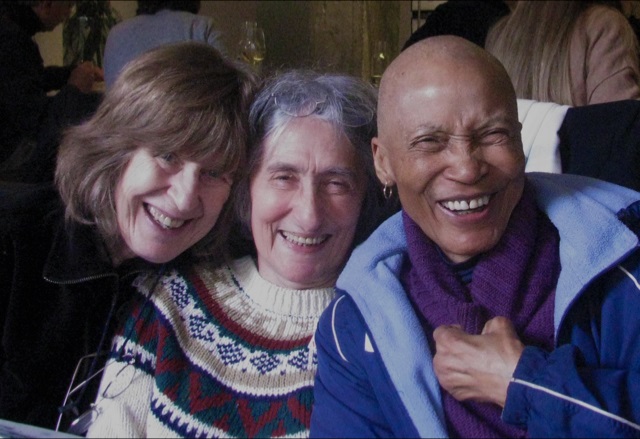
Three old friends on a recent visit
Since we were still not quite believing the news. Mom emailed Olivia’s neighbor in San Miguel for confirmation. The email came back, yes, Olivia was found on her porch, sitting upright in a chair, reading an old article about Barack Obama. Friends hadn’t heard from her in a couple of days and decided to check on her, and they found her there on the porch. The comfort for the people who knew her is that this is exactly how Olivia would have wanted to go: reading and thinking and full of hope for the future.
I had to go to my internship soon after the death was confirmed, but Mom’s high school classmates stepped in, sending messages on their class listserv, offering memories and kindness and compassion. These New York girls grew up knowing that all that mattered was how smart you were, not the color of your skin, or which neighborhood you lived in; and a woman could become anything she wanted to be: a lawyer, a doctor, a mother, a teacher, a writer, or an actress.
There’s a sweet coda to this story. We had a visit from a bird last weekend, two days after Olivia’s death, though we didn’t know that at the time. The bird stayed in the apartment for a while, resting in the quilting closet, and on the vitamin bottles on the entertainment center, and then in the light fixture in the dining room. The bird seemed to want to stay with us, fluttering from place to place indoors, even though the window in mom’s room was wide open. Looking back at that visit, after the news of Olivia’s death, Mom is convinced it was Olivia, saying goodbye. Because that would be a very Olivia thing to do.
I want to thank all of you for your wonderful words of kindness and support since Butterfly’s death. It feels like you came to virtually sit Shiva with me this week, to mourn for the loss of Butterfly, and to celebrate her life. My rabbi even dedicated a poem to Butterfly at Friday night services, two days after she died, about the sacred nature of animals and our great good fortune at having them in our lives.
I wasn’t sure, when we first adopted Butterfly, as an eight year old rescue with heart problems, if I would be able to bond with her, or if I was just going to take care of her in her old age and learn generosity of spirit. But she became my baby, my heart and soul, my inspiration to become a better person, and a person more capable of joy.
I still have an essay about Butterfly’s last illness, and the roller coaster of doctor visits and hospital stays, but I haven’t been up to editing it yet. The first draft was written before she died, when I expected her to recover, and figuring out how it needs to change, now, has been too hard.
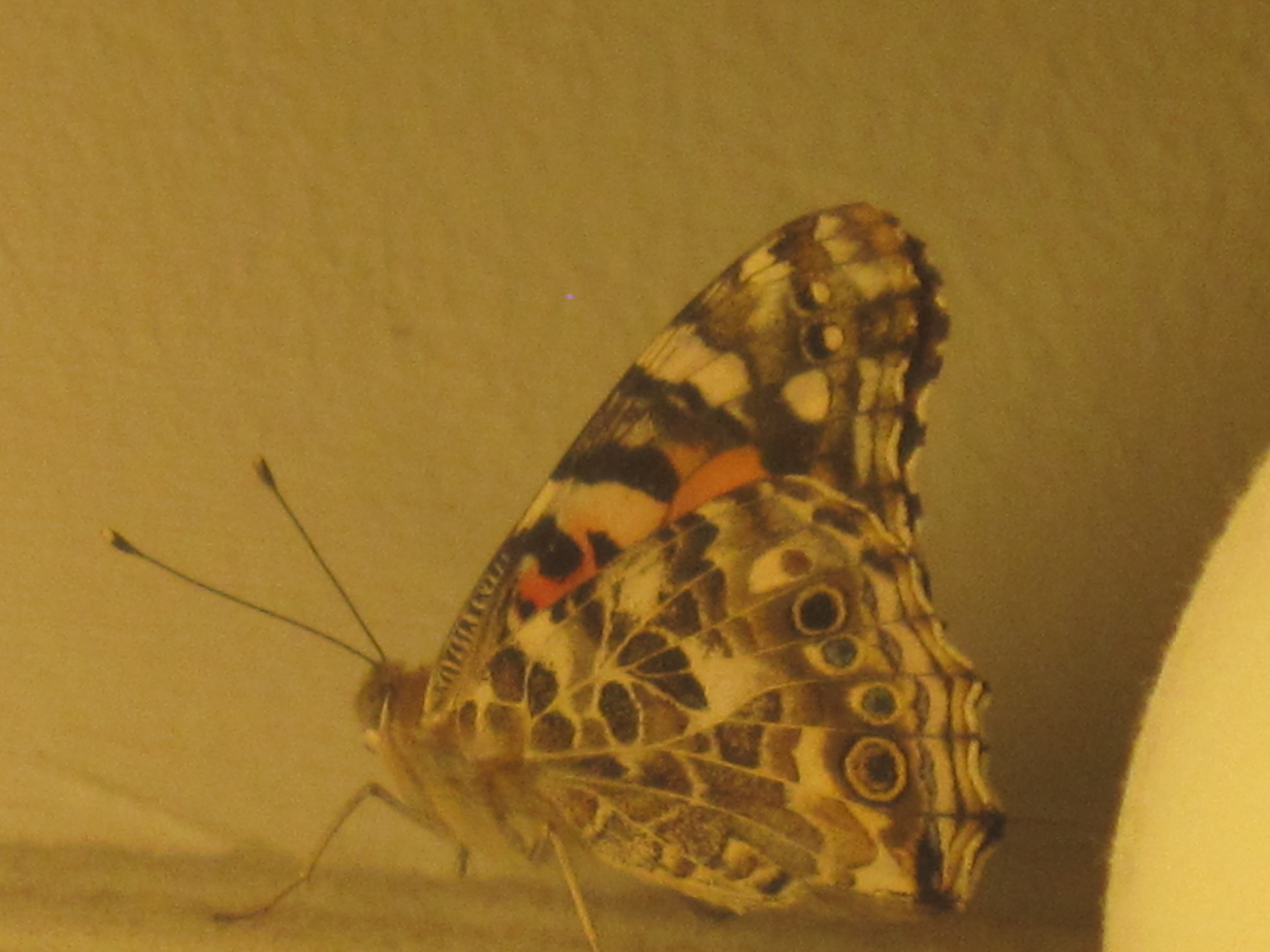
Cricket has shifted in some essential way, internally, as if she needed to make room for part of her sister’s soul. She snuggles with me more than ever before. She eats enough kibble to rival her sister’s moniker of the super pooper. Just this morning, Cricket left two pieces of kibble of the rug again, right where Butterfly would have put them. She’s even giving licks, on occasion. And a brown and yellow tortoise shell butterfly has taken up residence in our bathroom, one of Butterfly’s favorite places to hang out, do her bathmat art, and find peace. Mom set out a cap full of water and a piece of kibble, just in case.
I don’t usually, or ever, advertise products or companies on my blog, and that’s not my intention now, but I have to tell you a story. The day after Butterfly died, a bag of her diabetic dog food arrived from Chewy.com. We had a regular order with them, every few months, and it was already on its way when Butterfly died. Mom wrote to them right away to cancel future orders, and explained why, and they immediately sent us a condolence note and refunded the cost of the last bag of food, telling us to donate it to a local animal shelter.
A week later, we received a bouquet of red and white roses from Chewy.com, and Butterfly’s ashes from the clinic, on the same day, at the same time. I had forgotten about the ashes. Mom couldn’t even open the shipping box through her tears, so I put on my bravado and opened the box, removed the paperwork, and then the paper bag with the order form stapled to the front. The process became harder with each step. There was a white box inside of the paper bag, and then gold tissue paper wrapped around a decorative tin with flowers painted on all four sides. This was the end, inside of the tin were the ashes. The decorated tin reminded me of a jigsaw puzzle I once had, stored in a similarly decorated metal tin.
I was overcome by the reality of Butterfly’s ashes, devastated by it, really. We’d never asked for ashes of a pet, or a person, before. It seemed right on the day she died, when the clinic offered us that option, but seeing that tin made me feel sick, and overwhelmed. I didn’t want to scatter her ashes in the backyard, the way we’d originally planned. The idea of it turned bitter in my mind as soon as I saw the tin, as if we would be throwing Butterfly away.
The only comforting thought I could muster at the time was to bring her to my grandfather’s grave, and let her rest there with him. Because they would have loved each other.
We still need to put the bag of dog food in the car and schlep it over to the shelter – which will be hard. And then make the journey to my grandfather’s grave as well, which, for now, feels impossible. The ashes sit behind Butterfly’s picture, which is surrounded by condolence cards, and those red and white roses. And this is where they belong, for now.

























 rachelmankowitz