Tag Archives: dogs

Little Miss Someone Came Home

            She doesn’t love me, yet. I remember this feeling from when Ellie first came home, worried that she would never love me and I would never love her. I’m also having flashbacks to the night Ellie died, when she was struggling to breathe and asked to be put down on the floor, and so I did as she asked, and the next time I saw her she was dead. I worry that the new baby could be sick in some unforeseen way, and that I will wake up in the morning to find her dead. In a way, I think I’m feeling the parts of the grief I couldn’t stand feeling before. It’s not really a coincidence, but more of a blessing, that “someone” arrived a few days before the year anniversary (the Yahrzeit) of Ellie’s death.

            “Someone” is a four-year-old Havanese, former breeding mama, just like Ellie, though with her black and white coloring, she doesn’t remind me of Ellie too much, thank God. She hasn’t barked at all yet, and for the first few days the only thing I could see in her eyes was fear. But as time has passed, I’ve seen more and more curiosity. She’s eating well, and pooping in all the wrong places, but they are healthy poops. She spends most of her time sleeping, as if she is beyond exhausted and needs to fill up a tank that has never really been filled before.
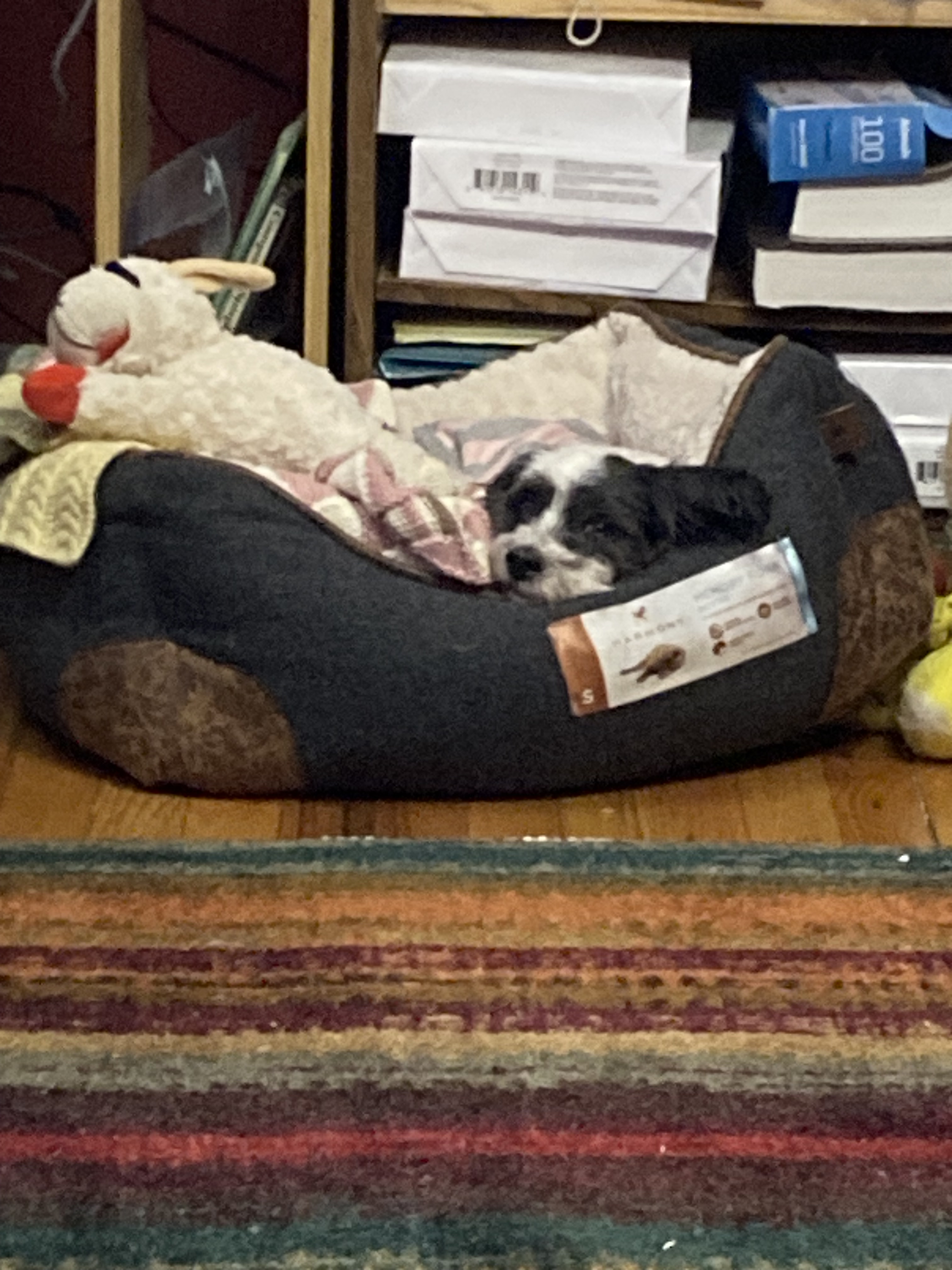
            Two weeks before we adopted her, she was driven up from a puppy mill in Missouri that had decided to “retire” a bunch of mamma dogs (I assume all of the puppies had already been sold). Mom had been calling the shelter (North Shore Animal League America, of Late Show with Stephen Colbert fame) for months, and then daily since news of the rescue of the little dogs. On the Tuesday before Thanksgiving, Mom was told that the dogs wouldn’t be ready for adoption until after Thanksgiving, but by Wednesday, adoption day was scheduled for Friday morning at ten (technically after Thanksgiving, but just barely). My brother and one of my nephews came along with us, because it was the only time they could come for a Thanksgiving visit, and because, you know, dogs. We weren’t the first ones online, but we weren’t the last either. For our entertainment, or just because, the shelter workers kept walking past the line of potential adopters with different dogs, including two Shiba Inu puppies who seemed to be dancing and doing a comedy act. At some point, one of the shelter workers came out to tell us to make two lines, one for dogs and one for cats, and no one moved. We were clearly all there waiting for the small dogs, and I was convinced that there would be no dogs left by the time we got inside.

            But thankfully, I was wrong.

            The way the shelter is set up, you have to walk through the long hallway of big dogs in order to get to the small dogs, in the hopes that someone will fall in love along the way and forget that they live in an apartment. 

When we got to the small dog room, the first dog I noticed was a ten-year-old miniature poodle who was standing on her back legs and demanding attention from everyone who walked by. The dogs were kept in little glass-fronted apartments, with description cards on each door describing the dog or dogs inside: age, breed, gender, health issues, and any specifications (good with kids, needs to be with other dogs, needs to be an only dog, etc.). There were already a bunch of adorable little dogs being held by various humans, seemingly claimed. Then we saw the two Shiba Inu puppies, playing and laughing together, and my nephew said he’d want one of them, if only he wasn’t still living in a college dorm. The two five-month-old Shiba Inu brothers were the exception, though, because most of the dogs were former breeding mamas, from age four to age twelve (I can’t even fathom why a puppy mill still had a twelve-year-old breeding dog). I felt dizzy and overwhelmed by the noise and chaos, but then I saw a six-year-old apricot and white miniature poodle, who looked way too much like Cricket for my comfort, and just behind her, in the same little apartment, was a black and white Havanese. The card said she was four years old and that her name was “Bandita.” Both of the dogs were sleeping, but I asked to see “Bandita” anyway.

            The reason for her name became clear right away, with her raccoon-like eye markings, and she looked terrified, but as soon as she was in my arms I was not willing to give her back. I was still curious about the other dogs in the room, of course, and started wondering if I could adopt two or three dogs at once, or if that would be selfish, given all of the other people still waiting in line. It took me just a minute or two to get the volunteer’s attention and tell her that we had chosen our new dog.

            And then came the paperwork. They had to take “Bandita” from me and put her in another room, so she wouldn’t be claimed by anyone else, and then we waited on line and were given a three-page form to fill out in pencil, and then we waited on line again to review it all with one of the shelter workers, in pen. They needed names and phone numbers for three references, and our vet, and the manager of the co-op where we live. They also wanted information about our previous dogs: health, training habits, living conditions, etc. The shelter worker passed over the fenced-in yard requirement quickly, thank God, and told us that at four years old, “Bandita” qualified for the same senior to senior program under which we’d adopted Butterfly ten years earlier, which meant that the already low adoption fee would be reduced again, down to $25, and any health care provided by the clinic at the shelter would be subsidized. And then we were sent away while they checked through all of our information, in order to decide if we were qualified to adopt a puppy mill survivor.

Miss Butterfly

            We sat at home for two hours waiting for the phone call, trying to distract ourselves, worried they’d find a reason to deny the adoption. In the meantime, I started thinking about names. I had promised myself I would give our next dog a Hebrew name, and my first thought was Tikvah, which means “hope.” But I was worried that calling her “hope” would put too much weight on her tiny shoulders, so I started researching Hebrew girl names: Aviva (spring), Ilana (young tree), Tzipporah (bird), Shir (song or poem), Yaffa (beautiful), Yofi (beauty), Dvash (honey), Rina (singing and joy), Osher (happiness), Adina (gentle), Dafna, Dahlia, Tiferet, Hadassah, and on and on.

            When we finally got the call that “Bandita” was ours, I was thrilled! I didn’t expect to be so happy. I thought I would only feel relieved, or even trepidatious, but I was giddy. It was puppy time!!!

            When we got back to the shelter, all of the parking spots within six blocks were taken by other potential adopters, so I dropped Mom at the front door and drove up the hill to find a spot on a side street.

            While I was parking, Mom signed us up for pet insurance that would cover 80% of her health care, no matter where we chose to take her, and by the time I arrived it was time to read and sign a ton more paperwork, and visit with the vet tech to make sure we understood her health situation (spayed, still has a small scar, had a dental and would need one every year, would need two more vaccinations in two weeks), and then we were loaded up with gifts from the shelter’s corporate sponsors (a Swiffer wet jet, a bag of Rachel Rae dog food, and a dog toy from Subaru and one from a coffee company I didn’t recognize).

            There was so much to carry that I left Mom with the baby, to take an adoption picture and buy some wet dog food, while I dragged all of the loot back to the car. Mom and puppy were waiting for me when I returned, and then they were safely ensconced next to the Swiffer box in the back seat, and we made our way home.

            The first person we met in the back yard at the co-op was Kevin, the mini-goldendoodle who loved (and was very much loved by) Cricket, and he was very enthusiastic about sniffing the new dog and telling her all the news. She was, of course, terrified, of him, and of the grass, and of the leash, and of me, but she made a point of sniffing Kevin’s butt anyway.

            As soon as we got into the apartment, I sat down on the couch, still wearing my winter jacket, and held her on my chest for the next few hours, afraid to move. When I finally put her down on the floor (because I really had to go to the bathroom), she ran for the smallest hiding spot she could find, which turned out to be Mom’s garden kneeler, which was sitting on its side in a corner of the dining room. She peeked out from behind the bench of the kneeler and then curled up behind it, using it as a shield.
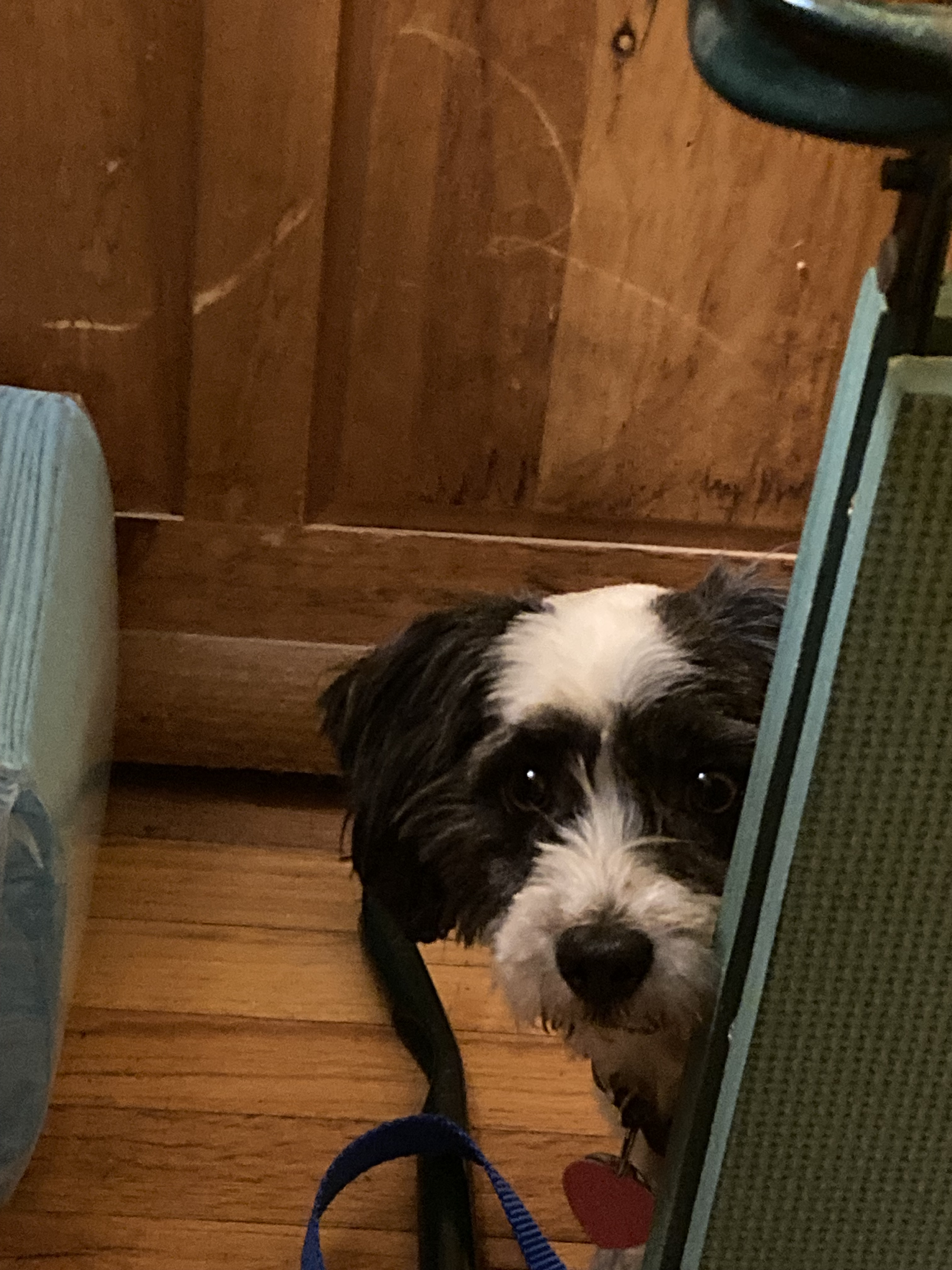
We’d thought we still had a pet gate in storage, and had planned to put her and her food and bed and wee wee pad in the kitchen, but without the pet gate we couldn’t reinforce the boundary, so even though she started her first night in her bed in the kitchen, she quickly found her way down the hall to a little round rug on Grandma’s bedroom floor, where she spent the rest of the first night.

Without the pet gate, trying to explain to her where to pee and poop has been difficult (or impossible), but she’s been making progress anyway. We take her outside a few times a day, even though she has no idea what to do out there and just sits on the grass, waiting to be picked up and brought back inside.

By Sunday morning, we’d narrowed the name choices down to Tzipporah, Tikvah and Shir (or Shira or Shiri), but I still couldn’t quite figure out who she was, and I was afraid of getting her name wrong, forever and ever amen.

            By Monday afternoon, she wasn’t shaking anymore, though she was still skittish when the humans came too close. Pretty quickly, she found the two dog beds, filled with Cricket and Ellie’s toys and blankets, and spent many hours making herself cozy in the midst of her sisters’ smells. We set up a cushion and blanket for her in my room., so she could feel safe and welcome there too, and she was beginning to venture further into the corners of the apartment, examining all of the smells and sounds and textures of her new world. She was starting to stretch out and try different sleeping spots and positions, instead of always being curled in a ball on the round rug in Mom’s room. She even started to look at us, and to continue eating while we were in the room. By then, I had narrowed the choices to Tikvah and Tzipporah. I was leaning more towards Tzipporah (bird), because the sound of it seemed to fit her, and because I could already see her yearning to fly. But I was still holding onto the idea of “hope,” for myself, and wasn’t quite ready to let it go.

            By midweek, when we lit the (vanilla scented) candle for Ellie’s Yahrzeit, and sat with that grief again, something had shifted inside of me and I decided that I was ready to let go of my expectations, and hopes, and “someone” finally became Tzipporah (Tzippy for short).      

Ellie’s Yahrzeit

Her fears are still prominent. She had an encounter with the vacuum cleaner the other day, a previously unknown evil, that sent her back to bed for half a day. She refused to crawl out from under her blankets for anything, even dinner. But we can already see a glimmer of her adventurous spirit hidden underneath the fear. Step by step, chicken treat by chicken treat, I hope that she will eventually decide that she was adopted by the right family, and she’ll discover that good things really are possible, especially love.

Tzipporah

If you haven’t had a chance yet, please check out my novel, Yeshiva Girl, on Amazon. And if you feel called to write a review of the book, on Amazon, or anywhere else, I’d be honored.

            Yeshiva Girl is about a Jewish teenager on Long Island, named Isabel, though her father calls her Jezebel. Her father has been accused of inappropriate sexual behavior with one of his students, which he denies, but Izzy implicitly believes it’s true. As a result of his problems, her father sends her to a co-ed Orthodox yeshiva for tenth grade, out of the blue, and Izzy and her mother can’t figure out how to prevent it. At Yeshiva, though, Izzy finds that religious people are much more complicated than she had expected. Some, like her father, may use religion as a place to hide, but others search for and find comfort, and community, and even enlightenment. The question is, what will Izzy find?
What is there to be thankful for this year?

            For some reason, Thanksgiving has never been my holiday. Maybe it’s because of that one extreme rabbi at my high school who called this secular American holiday a Shanda (a shame/a scandal), and yelled at us to avoid eating even one turkey sandwich; or maybe it’s because I can’t resonate with a holiday that’s all about gratitude when I’m used to Jewish holidays, where we grump at least as much as we celebrate; but most of all, it’s probably because the Thanksgiving-themed TV shows and movies I watched when I was growing up were all about the torture of family get-togethers, as opposed to the Christmas movies, which were full of romance and joy and candy and toys.

            As for the events of the day itself: I’m not a parade person, or a football person, or a dog show person; and I’m really, really not a turkey person.

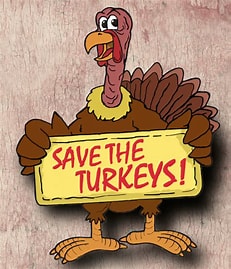
            I saw a meme on Facebook recently that suggested we stop eating turkey for Thanksgiving and switch over to brisket, and while I’m sure it was created either by a Save-the-Turkeys group or by the Cattlemen-of-America, I wasn’t upset by the idea. Trying to cook even a small turkey for just me and Mom would mean eating turkey sandwiches for the next month, and even though I’ve been told that there are ways to cook a turkey to make it taste better, I’m pretty sure that’s just fantasy fiction.

            Of course, Thanksgiving’s big claim to fame, other than turkey and a now-controversial origin story, is that it’s a day for expressing gratitude (it may only be a coincidence that Thanksgiving comes a few weeks after election day each year, when people are still stewing over those results). And for me, Thanksgiving is a time when I feel compelled to remind people that there is such a thing as toxic positivity, and that forcing gratitude out of grumpy people is just cruel. But, of course, I am also extremely vulnerable to peer pressure, so I end up searching through my life for the things I can be grateful for every year anyway. So, this year:

            I’m glad that I was able to start writing poems again, and that I actually finished two drafts of my new novel (the third draft is taking its time); and I’m thrilled that I returned to online Hebrew classes this past summer with renewed joy and inspiration; and I’m grateful that I’m still able to teach, and that I have wonderful students again this year; and I’m grateful for my thoughtful friends and loving family.

But, of course, all of that hopeful, positive energy inevitably stirs up memories of all of the things I’m not grateful for: I keep getting older, and so does Mom; doctors still have no idea what’s wrong with me, but the copays keep coming in larger and larger doses; Israel is still at war and there are still 101 hostages being kept in Gaza (alive or dead, no one seems to know); and then there’s the fact that a majority of voters in the United States chose a predatory criminal as our president, despite mountains of evidence of his crimes, against our country, and against women in particular.

            So, yeah, it’s a mixed bag. My hope is that I will be able to survive the next month of teaching, by relying on Christmas movies and French murder mysteries to keep me going, and then I will be able to rest and recover over winter break. My plan, then, is to watch as little news as possible, and write as much as possible, and start the new year with my feet solidly on the ground and my heart filled with (some) hope.

            We’ll see how it goes.

p.s. Someone arrived the day after Thanksgiving and is waiting to be introduced to everyone. Next week.

If you haven’t had a chance yet, please check out my novel, Yeshiva Girl, on Amazon. And if you feel called to write a review of the book, on Amazon, or anywhere else, I’d be honored.

            Yeshiva Girl is about a Jewish teenager on Long Island, named Isabel, though her father calls her Jezebel. Her father has been accused of inappropriate sexual behavior with one of his students, which he denies, but Izzy implicitly believes it’s true. As a result of his problems, her father sends her to a co-ed Orthodox yeshiva for tenth grade, out of the blue, and Izzy and her mother can’t figure out how to prevent it. At Yeshiva, though, Izzy finds that religious people are much more complicated than she had expected. Some, like her father, may use religion as a place to hide, but others search for and find comfort, and community, and even enlightenment. The question is, what will Izzy find?

Zepbound

            At my most recent visit to the endocrinologist (thyroid issues, etc.), the doctor told me that Lilly has decided to offer Zepbound (a variation on Ozempic) for a discounted price to patients whose insurance companies won’t cover the GLP-1 weight loss medications. The average price for these medications, in the United States, is about $1,000 a month, though in other countries they can be bought for $100 or less, which has come up in contentious congressional hearings of late. My health insurance still refuses to cover these medications for anyone without type two diabetes or a severe heart condition, and I have been waiting impatiently for them to decide to cover GLP-1 medications for Non-alcoholic fatty liver disease, which I was diagnosed with last year, but who knows when that will happen.

            Last year, the endocrinologist told me about a program that discounted Zepbound to half price, but only for people without any insurance coverage, which did not include me. But now, they are making it available to people like me who have health insurance that doesn’t cover the medications. The cost is $400 a month, which is a lot for me, but for the sake of my health I really can’t say no. My hope is that, if the Zepbound works for me, these medications will soon be covered under my health insurance and I won’t have to pay this much for long. Ideally, losing weight will improve the health of my liver and reduce the need for heart medications. I don’t think it will give me more energy, or reduce overall body pain, but you never know.

            To be completely honest, though, what I really want from this medication is to lose enough weight to feel like a normal person. Yes, I want to reduce my risk of liver and heart disease. And yes, I would love to find out that losing weight could give me more energy and allow me to actually live more of my life, but, since childhood, I have been self-conscious about my weight, and I am so tired of feeling like a mutant. I know weight loss won’t change my life miraculously, because I’ve lost weight in the past, when I was able to exercise enough to lose weight on my own. And I’m sure I will still feel uncomfortable in my body, and struggle with pain and depression and anxiety and exhaustion. But it would be great to be able to go to my doctors and tell them my symptoms and NOT have them blame everything on my weight.

            I was on a low dose of Ozempic last year, when my insurance was still allowing it, and I lost fifteen pounds. But as soon as the FDA cracked down on off label use of Ozempic, I was cut off, and within three months I’d gained the weight back. So, one, I know the meds can work, and two, I know I will have to be on them forever.

There’s a lot of fear for me around starting the Zepbound, actually. For some reason, the discounted Zepbound comes in a vial, with separate needles, instead of in pre-dosed pens, so I’m afraid it will hurt more and/or I will do it wrong. I’m afraid I won’t be able to lose enough weight to make a difference in my health, or I’ll get cut off again, because the price will go up or supplies will run out. I’m afraid I’ll be sick to my stomach for the rest of my life (though that’s not very different from how I feel now, to be honest), or that the Zepbound won’t work, or that I’ll lose the weight but I’ll look like a deflated balloon instead of looking, and feeling, healthy.

Maybe most of all, I’m afraid that having to spend $400 a month on this for the foreseeable future, on top of paying off my medical debt, will mean that I can’t really afford a new dog, with all of the vet bills and adoption fees and toys and treats involved. And going too much longer without a dog in the house feels like a risk to my mental health (and to Mom’s). It feels so unfair to have to choose between my physical health and my mental health, especially when they are so intertwined. But here’s hoping I won’t have to choose, and a little, hypoallergenic rescue dog will come along soon, and congress will decide to cover GLP-1 meds for Non-alcoholic fatty liver, and all medical debt will be wiped out, and we will all live in peace and harmony, forever and ever, amen.

A girl can dream. Right?

“I’ll eat whatever you’re not eating. You’re welcome.”

If you haven’t had a chance yet, please check out my novel, Yeshiva Girl, on Amazon. And if you feel called to write a review of the book, on Amazon, or anywhere else, I’d be honored.

            Yeshiva Girl is about a Jewish teenager on Long Island, named Isabel, though her father calls her Jezebel. Her father has been accused of inappropriate sexual behavior with one of his students, which he denies, but Izzy implicitly believes it’s true. As a result of his problems, her father sends her to a co-ed Orthodox yeshiva for tenth grade, out of the blue, and Izzy and her mother can’t figure out how to prevent it. At Yeshiva, though, Izzy finds that religious people are much more complicated than she had expected. Some, like her father, may use religion as a place to hide, but others search for and find comfort, and community, and even enlightenment. The question is, what will Izzy find?

Cricket’s Yahrzeit

            In Jewish tradition, about eleven months after a funeral you have an unveiling, where you finally put up the permanent headstone at the gravesite, with a small ceremony to mark the end of the official mourning period. The unveiling is actually supposed to take place after thirty days (for most relatives) and after eleven months (for a parent), but in the United States most unveilings take place after eleven months no matter how close the relationship with the dead.

            We have two blue gift bags sitting on the low bookcase (where we used to keep the chicken treats), each holding a sympathy card from the vet’s office and a container of ashes: Cricket died in October 2023, and Ellie died in December, two very short months later. My hope was that, after eleven months, I would finally be ready to spread Cricket’s ashes around the base of the paw paw tree (which was born just a few months before Cricket herself), but I wasn’t ready. And even now, after the yahrzeit (literally “year time,” the anniversary of her death), I’m still not ready.

            The one thing I felt ready to do, though, was to mark Cricket’s yahrzeit with light. Of course, I didn’t think ahead and buy an official yahrzeit candle (a twenty-four-hour candle in protective glass), but Mom found two leftover beeswax candles from last Chanukah, and we placed them in a jar in front of Cricket’s picture and watched the flames burn down. I really wanted the two candles to intertwine in some way, to represent how Cricket is still so intertwined in our lives, but the way the two candles split apart and seemed to mimic her flying ears was a wonderful surprise.

            Maybe when we reach the anniversary of Ellie’s death, in December, I’ll feel more ready to let go of both of them, or maybe not. I’m trying to be patient with myself and to trust my feelings to tell me what I can handle and what I can’t, because I miss them both so much. I don’t just miss having “a dog” in my house, but these two particular dogs. They are still knotted up in my life and my thoughts, as if there’s more they need to teach me.

            In a strange symmetry, the pawpaw tree seems to also be in mourning this year. Early in the summer, we were thrilled to find out that, despite some of the lower branches being cut off by the gardeners (again!), we still had four pawpaws growing on our tree. We were hopeful that this year would yield the biggest, healthiest fruit yet, and so we decided to wait as long as possible before picking them, to give them time to fully ripen. But we waited too long. One day in September, when I looked up at the pawpaw tree, I couldn’t find any of the pawpaws. I was used to struggling to see one or two of them, behind those big green leaves, so I told myself I’d just try again later. But when I checked again, and then a third time, there were no pawpaws visible on the tree, and then I checked the ground and found what looked like two small carcasses with their guts spilling out. I looked away automatically, thinking some horrible death had come to two tiny birds, but when I forced myself to look back I realized they really were the pawpaws, or two of them anyway.

One of the pawpaws, in July

            I didn’t cry. I mean, they’re just fruit, right? Just because they are vivid symbols of love, and now of my dogs in particular, doesn’t mean they are, or were, truly alive. Right?

            I never found the other two pawpaws. My hope is that the squirrels (it’s always the squirrels) actually enjoyed the other two pieces of fruit and they didn’t all go to waste.

            In a way, having a fruitless year, or at least a year without pawpaws, is fitting. The loss of the dogs, and the grief and anger and fear and confusion around the war in Israel cries out for some kind of symbolism; some kind of acknowledgment that everything is not okay. Its kind of like when you’re feeling awful and the sky breaks open and the rain pours. It almost helps, in a way.

            Maybe next year, our pawpaw tree will be full of fruit and we will have more than enough to share with all of our woodland creatures. And, hopefully before then, we will also find a new dog ready to come home with us and start on a whole new adventure together. But in the meantime, the mourning cotinues.

Miss Cricket
Miss Ellie

If you haven’t had a chance yet, please check out my novel, Yeshiva Girl, on Amazon. And if you feel called to write a review of the book, on Amazon, or anywhere else, I’d be honored.

            Yeshiva Girl is about a Jewish teenager on Long Island, named Isabel, though her father calls her Jezebel. Her father has been accused of inappropriate sexual behavior with one of his students, which he denies, but Izzy implicitly believes it’s true. As a result of his problems, her father sends her to a co-ed Orthodox yeshiva for tenth grade, out of the blue, and Izzy and her mother can’t figure out how to prevent it. At Yeshiva, though, Izzy finds that religious people are much more complicated than she had expected. Some, like her father, may use religion as a place to hide, but others search for and find comfort, and community, and even enlightenment. The question is, what will Izzy find?

Tikkun Olam and Tikkun HaLev

            Over the past few decades, most liberal Jewish congregations in North America have emphasized Tikkun Olam (usually translated as “Repairing the World”), especially the social action/giving-to-charity interpretation of Tikkun Olam, instead of the particular rituals of Judaism. And more recently, many liberal Jews have seen Tikkun Olam as almost interchangeable with progressive American politics, supporting movements like Black Lives Matter, LGBTQ rights, efforts against Climate Change, etc.

(Two Tikkun Olam images I found online)

In a way, this narrowing of American Jewish values down to Tikkun Olam made it easier for parents to explain to their children what it means to be Jewish, though it left a lot out, and also left out a large portion of the Jewish people who, like me, find meaning and solace in the religious aspects of being Jewish, like prayer and study and rituals and history. But, for the most part, my own liberal Jewish congregation was able to bridge the gaps, accommodating the Jews who wanted to have both a particular Jewish identity and to play a role in the repair of the world overall, and I thought that’s what was happening everywhere else too.

Until October 7th. Many American Jews were caught off guard when their fellow progressives saw Israel, and the Jews who supported Israel, as the enemy. These were Jews who had been raised to see progressive politics and being Jewish as basically the same thing, and couldn’t imagine their lives outside of these movements for social change. Over the next weeks and months, many of these Jews felt alienated and abandoned by their fellow progressives, while others took on the anti-Israel values of their friends; maybe because they’d done their own research and found that they agreed with the progressive stance against Israel, or maybe because they knew very little about the long history of anti-Semitism, and the history of why and how the modern state of Israel came to be and didn’t feel like it was worth losing friends over, or maybe because they identified so much more strongly with their fellow liberal Americans than with the eight million Jews living in Israel (mostly refugees from pogroms and then the Holocaust and then from the surrounding Middle Eastern countries, or the descendants of those refugees), who they knew very little about. I don’t know.

But when I heard from Jews who called themselves anti-Zionists, or distanced themselves from their Jewish communities over conflicting views around Israel, in the aftermath of October 7th, what I heard over and over again was that they were living up to the Jewish values they’d been raised with, especially Tikkun Olam, and that made me think that I needed to better understand the concept of Tikkun Olam and where it came from and how it came to be understood the way so many Jews understand it today.

            The first use of the term Tikkun Olam that I could find was in the Mishnah (a commentary on the Hebrew Bible written between 200 and 500 CE), where the rabbis invoked the idea of Tikkun Olam, or repairing the world, when they considered how their legal rulings would impact society overall (by which they meant Jewish society, because that was all they had any control over). Often these legal rulings were focused on small details about how to make the laws clearer and easier to follow. I love the idea that just by making road signs clearer you are improving the world and I love this lower case interpretation of tikkun olam, which basically says that by doing your individual job well, whatever it is, or being patient with others, or taking other people into consideration, you are fulfilling the Mitzvah (good deed or commandment from God, depending on your point of view) of Tikkun Olam.

            Maimonides, a medieval Jewish sage, later defined Tikkun Olam as made up of three specific parts: studying Torah, doing acts of kindness, and following the ritual commandments. Many of the small diaspora Jewish communities over the millennia have practiced Tikkun Olam, but most referred to it by its component parts, defining their efforts to help their fellow Jews, by caring for the poor and disabled and elderly in their communities as act of loving kindness (or G’milut Chasadim in Hebrew), rather than referring to them as acts of Tikkun Olam.

            The concept of Tikkun Olam overall got a boost from Rabbi Isaac Luria and the kabbalists of the 16th century, when they spoke of how God had contracted part of God’s light in order to create the world, and then created vessels into which to pour God’s light, but the vessels weren’t strong enough to hold all of that power and they shattered. The kabbalists determined that, therefore, our role as Jews, or just as human beings overall, is to collect the shards of those vessels and the sparks of God’s light, like a big jigsaw puzzle, in order to repair the world. But the way we collect those divine sparks, they said, was pretty much the same as Maimonides had prescribed: studying Torah, doing acts of kindness, and following the ritual commandments.

             And then, as Jews began to thrive in places like the United States, where they were free to live and work where they wanted to, many of their G’milut Chasadim efforts to help one another (creating hospitals, social work agencies and charities) grew into more universal organizations meant to help all Americans, Jews and non-Jews alike. At the same time, many Jews were also stripping away the particularly Jewish aspects of their identities in order to fit in with the larger American culture, which they were now free to do, and encouraged to do. And many Jewish congregations and organizations therefore made an effort to keep those more marginally connected Jews in the fold by emphasizing the Jewish value of Tikkun Olam, and redefining Tikkun Olam in a way that allowed these less connected Jews to see their charitable giving and political activism as distinctly Jewish and therefore able to be done in place of the old traditions.

            One of the things that started to bother me about the modern take on Tikkun Olam was that it became very prescriptive and rigid. In part because , from what I’ve seen, when people focus their ethical behavior singularly on social activism, at both the left and the right extremes, they begin to harden their hearts as their goals becomes more important than any individual people involved, and their ideals eventually calcify into weapons. Because, really, it takes a lot of self-knowledge to create real empathy with someone else’s struggle, and to know how to be genuinely helpful, and that wasn’t a value that was being emphasized in these social action movements.

            In the midst of my wrestling with this concept of Tikkun Olam, and feeling torn and bruised by the battle, my rabbi happened to mention another phrase that I hadn’t heard before: Tikkun HaLev, which roughly translates to “repairing the heart.” He said it offhand during a bible study session and I wrote it down, without context. When I looked back at my notes, and realized I didn’t know what it referred to, I went to my friend Google to find out. But I only found a few references, most of which emphasized that repairing the heart is a way to improve your ability to practice repair of the world. I struggled to find any references to what the rabbis themselves meant by the term, or if they had even used it. So I went back to my rabbi and asked him what he’d been referring to when he talked about Tikkun HaLev, and he didn’t even remember saying it, let alone what he’d meant by it.

What all of that said to me was that I was free to translate Tikkun HaLev however I wanted. I could envision a little stick figure character with a broom sweeping the dirt away from a big red heart, or I could imagine a heart-shaped character lifting weights at the gym, or getting surgery, or at least stitches. Or, I could think of the kind of work I’ve been doing in therapy forever, which is about healing my own pain and, only as a side effect, growing my ability to have compassion for others. But the most enduring image that came to mind when I thought of repairing the heart was of the hundreds of times my mom picked up a dog toy from the floor, where its fluffy white guts were spilling out after yet another vigorous play session, and gently re-stuffed and resewed that beloved toy, so that whichever dog it belonged to could continue to play with it and love it.

Miss Ellie, surrounded by her repaired toys.

            If I were going to create my own practice of Tikkun HaLev, or repairing the heart, I would focus on the small details that I actually have some control over, and the ways that fixing those small things improves not just my own life but the lives of the people around me. I can smile at a neighbor, pet a dog, plant a tree, or a flower, practice being patient when a friend tells a rambling story, and take the time to listen and make eye contact when someone needs to complain about the cost of medication. And adding repair of the heart into my vision of how to repair the world could also allow me to be more humble in my assumptions about what needs to be done and what is actually possible.

            In my own version of all of this, I would also want to include outward signs of my Jewish identity, to remind myself and others that being proud of my Jewishness doesn’t mean that I reject the modern and secular world at large, that I can value both at the same time. But that’s just me.

            We are at a point in history where the need to repair our world has become obvious to almost everyone, and we have many different ideas for how that repair should be done. My hope is that we can take some of this energy to repair our hearts as well, and to grieve our losses, and try to be more generous, to ourselves and others, as we go through this process together.

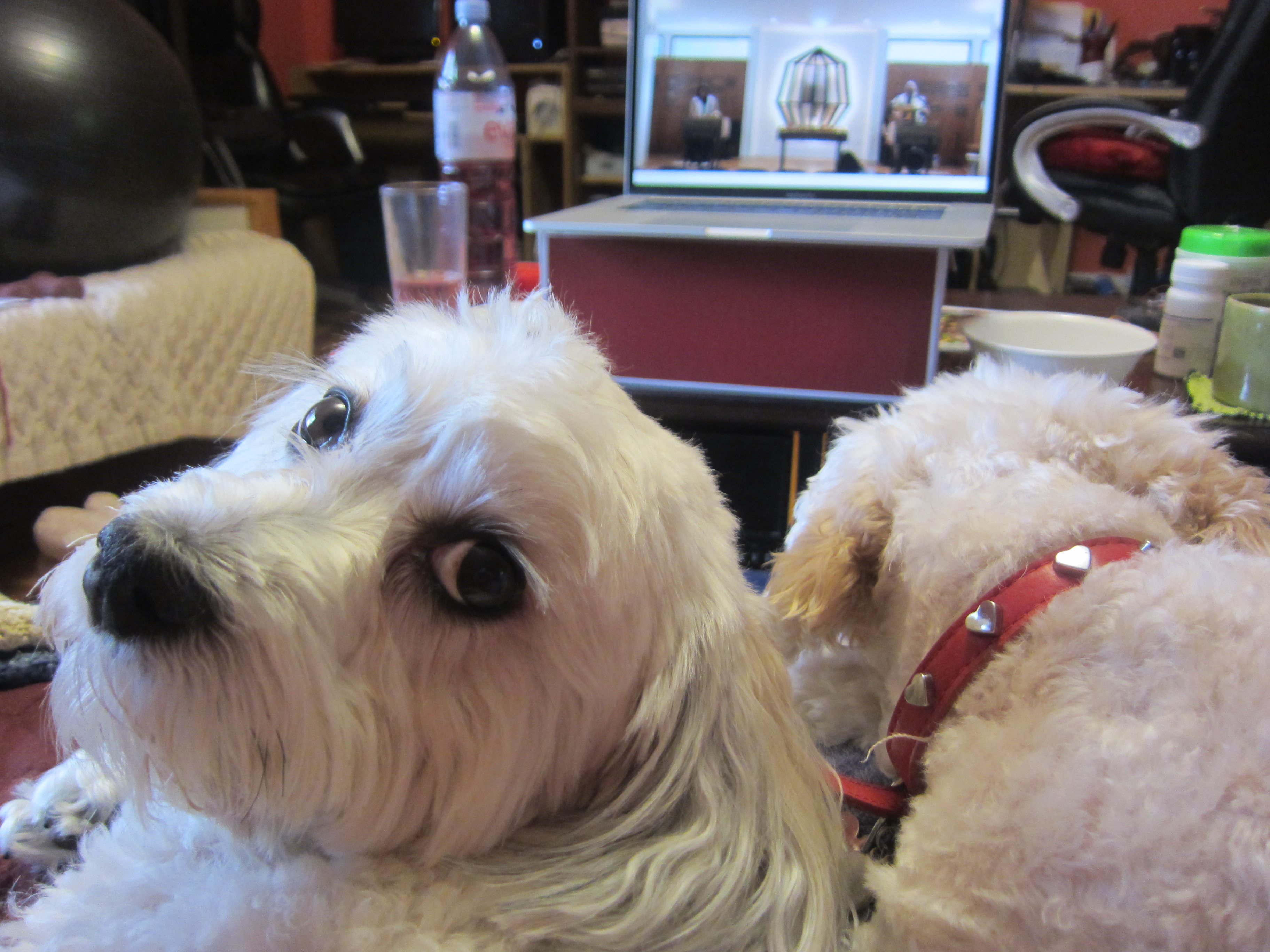
“Shh. Don’t tell anyone I’m up here on the computer. I don’t like the idea of surgery.”

If you haven’t had a chance yet, please check out my Young Adult novel, Yeshiva Girl, on Amazon. And if you feel called to write a review of the book, on Amazon, or anywhere else, I’d be honored.

            Yeshiva Girl is about a Jewish teenager on Long Island, named Isabel, though her father calls her Jezebel. Her father has been accused of inappropriate sexual behavior with one of his students, which he denies, but Izzy implicitly believes it’s true. As a result of his problems, her father sends her to a co-ed Orthodox yeshiva for tenth grade, out of the blue, and Izzy and her mother can’t figure out how to prevent it. At Yeshiva, though, Izzy finds that religious people are much more complicated than she had expected. Some, like her father, may use religion as a place to hide, but others search for and find comfort, and community, and even enlightenment. The question is, what will Izzy find?

Can I Make Things Happen?

            In a previous post I mentioned that I was putting the idea of what I want out into the universe, and ever since then I’ve been debating with myself over whether I really believe in this concept or not. I want to believe in it. I want to believe that by putting my dreams into words and speaking them outloud I can create some sort of alchemy that will bring these dreams to life. But then I worry that this is all “magical thinking,” which has always been a soft spot of mine, and something I’ve been told is somewhere in mental illness territory.

Logically, I can argue that you have to articulate your dreams in order to reach them, at least as a first step on the journey, because if you don’t know what you want you can’t work towards your goals. And I can also argue that telling other people what you hope for can be practical, both because they may have connections or advice to help you reach your goals, and because having friends remind you of your goals can keep you on track. And, if you strip away the wishful thinking part of the whole thing, it’s reasonable to assume that if you focus more on the things you really want in your life, you will start to notice the small opportunities you might have missed before, and therefore have more chances to reach your goals.

            But, I don’t think that’s what I really mean when I think about the power of putting an idea out into the universe, or “manifesting” as it seems to be called today. What I’m really hoping for is that God, or the universe, will give me what I want without me having to do anything.

            Early in life I learned about a version of God that actively does these kinds of things for us: pushing water out of the way so that my ancestors could cross the Sea of Reeds, or sending locusts to convince Pharaoh to let our people go. I loved this vision of God, but it was hard to hold onto it in the face of a much more disappointing version of reality. Then I was taught that even though God hears our prayers, and they are therefore never wasted, sometimes, for whatever reason, God’s answer is no; and we should trust that when God says no to our requests that means the best answer was no, even if we will never understand why. This has never been a satisfying idea for me, if only because I don’t really trust authority figures to judge what’s best for me. Even God.

And then, in college, I learned that it is reasonable to doubt that God has a plan as such and is choosing winners and losers, or even has a role in our everyday lives. Instead, I should see God in the Aristotelian way – as the unmoved mover, the one who got the ball rolling but then stepped back and left us to our own devices. And therefore we have to make our own fate, and fight and scrap for everything we want and never wait for luck to kick in.

            So, I’m split. I believe, deep in my heart, that there are powers and connections at work in the universe that exist despite my inability to see them. But I also believe, almost as deeply, that believing in such things is ridiculous.

Recently, my mother underwent a heart procedure where they were supposed to insert clips on her mitral valve in order to mitigate the damage to the valve, which was causing fluid to regurgitate into the left ventricle. She has had mild to moderate damage to her mitral valve forever, but a recent test showed that the damage had reached the severe stage and therefore needed to be addressed surgically.

Except, the procedure was unsuccessful. It’s not that the clips were unable to adequately close the holes in the mitral valve but that the doctor was unable to even deploy the clips in the first place, because of changes in Mom’s anatomy caused by her scoliosis. The doctor also discovered two other important things during this failed procedure: one, because of these changes in her anatomy the open heart surgery that would have to be performed to fully replace her mitral valve would be contraindicated (aka too dangerous), and two, the damage to the mitral valve isn’t actually so severe and therefore can be managed with medication.

After reading up on “manifesting,” I started to worry that my fears about the open heart surgery had caused this procedure to fail. I was asking God to make sure we didn’t have to do the open heart surgery, or anything that could put my mother’s life at risk, and what if, in response, God said, Okay, we’ll just stop it all right here. The logical part of my brain says that God didn’t do any such thing, and that this was going to be the outcome no matter what I thought or prayed for. But if that’s true, doesn’t that mean that my prayers are a waste of time in every case?

In the research I did on “manifesting,” I came across different interpretations of the idea. One said that having any negative thoughts causes negative things to happen, so, it really is all my fault. Another said that if you do affirmations a thousand or so times a day, you will draw your goals closer to you, with your vibrations. The most practical interpretation I read, though, said that the point of all of the thinking and hoping and focusing on your goals is to get you to start thinking of actions you can take towards your goals, and to encourage you to notice more opportunities than you otherwise would. There is still some magic implied in this interpretation, along the lines of “God helps those who help themselves,” but it’s a kind of magic I can almost believe in.

The reality is, you can argue for almost any world view you want to, and find plenty of evidence for your choice, but there will always be loose threads left unexplained, because we don’t, and can’t, know the whole picture. We are all guessing, or at the very least, interpreting the data we ourselves have access to as if that’s all the data that exists.

So, do I believe that I can manifest my dreams by saying them out loud? Maybe. I don’t know.

For now, I’m going to hope that the doctors can find the right combination of medications to help Mom manage her mitral valve, and allow her to have the energy to do more of the things she loves, for many years to come. And I’m going to keep looking at the stuffed puppy dog sitting on top of my computer screen, and hope that the real life version of him will arrive someday soon. I don’t know if God listens to my hopes and prayers, but I know that it feels good to put it all into words, and saying my dreams outloud makes me feel like I’m taking steps to make the world into the kind of place I can live in, just by imagining that it already is that place. We’ll see where it takes me.

If you haven’t had a chance yet, please check out my Young Adult novel, Yeshiva Girl, on Amazon. And if you feel called to write a review of the book, on Amazon, or anywhere else, I’d be honored.

            Yeshiva Girl is about a Jewish teenager on Long Island, named Isabel, though her father calls her Jezebel. Her father has been accused of inappropriate sexual behavior with one of his students, which he denies, but Izzy implicitly believes it’s true. As a result of his problems, her father sends her to a co-ed Orthodox yeshiva for tenth grade, out of the blue, and Izzy and her mother can’t figure out how to prevent it. At Yeshiva, though, Izzy finds that religious people are much more complicated than she had expected. Some, like her father, may use religion as a place to hide, but others search for and find comfort, and community, and even enlightenment. The question is, what will Izzy find?

The Flowers on the Pawpaw Tree

            The Pawpaw tree has flowered again. Actually, some of the flowers have already bloomed and fallen away, exposing the tiny fruit getting ready to grow. There’s endless inspiration in watching this pawpaw tree go through its cycle of life and death and renewal each year. In the winter, when all I can see is the bare tree with no leaves or buds or fruit or flowers, it would be easy to imagine that there is no life left, but I know better. I know that spring always comes again.

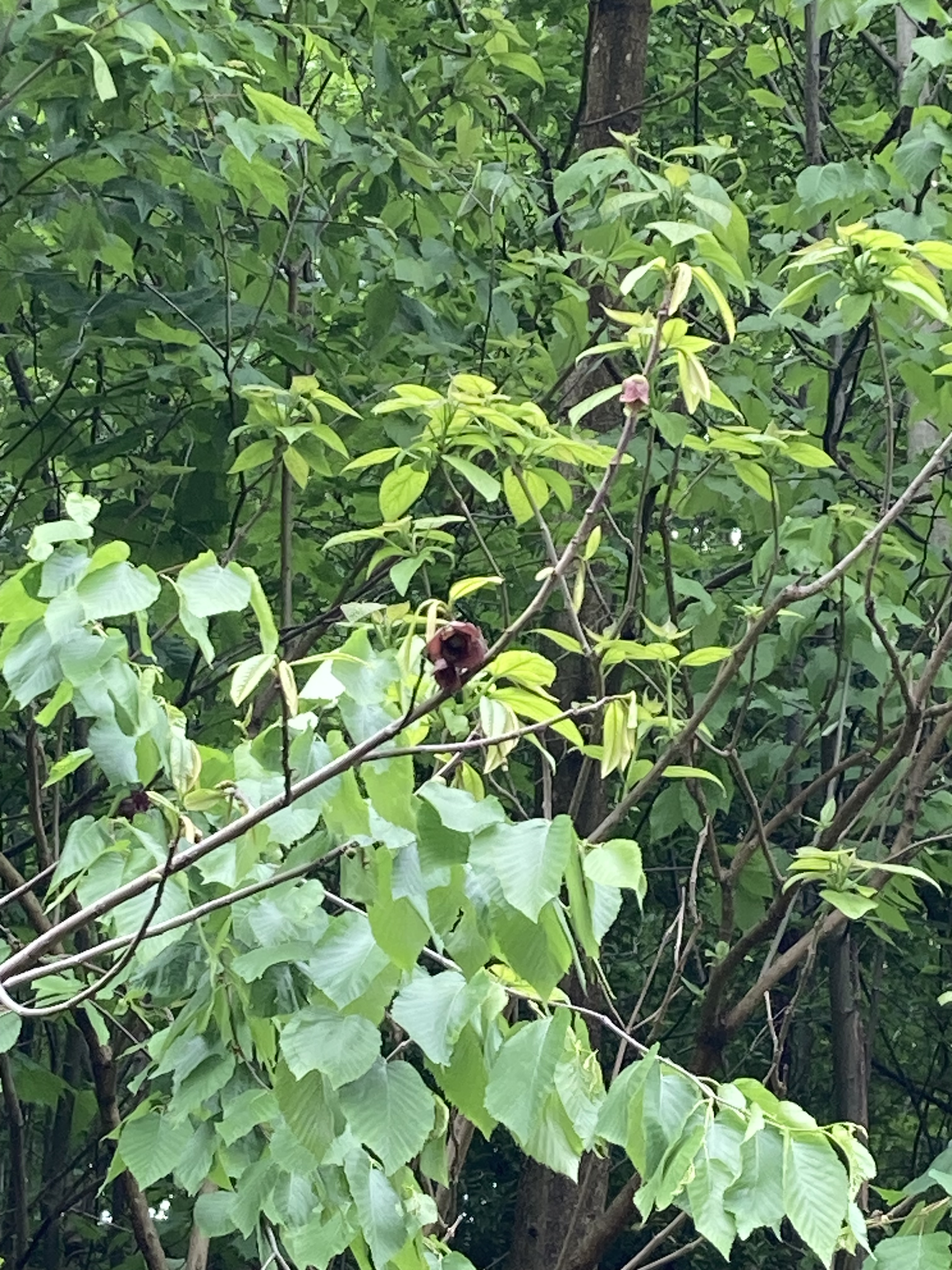
The reddish brown pawpaw flowers
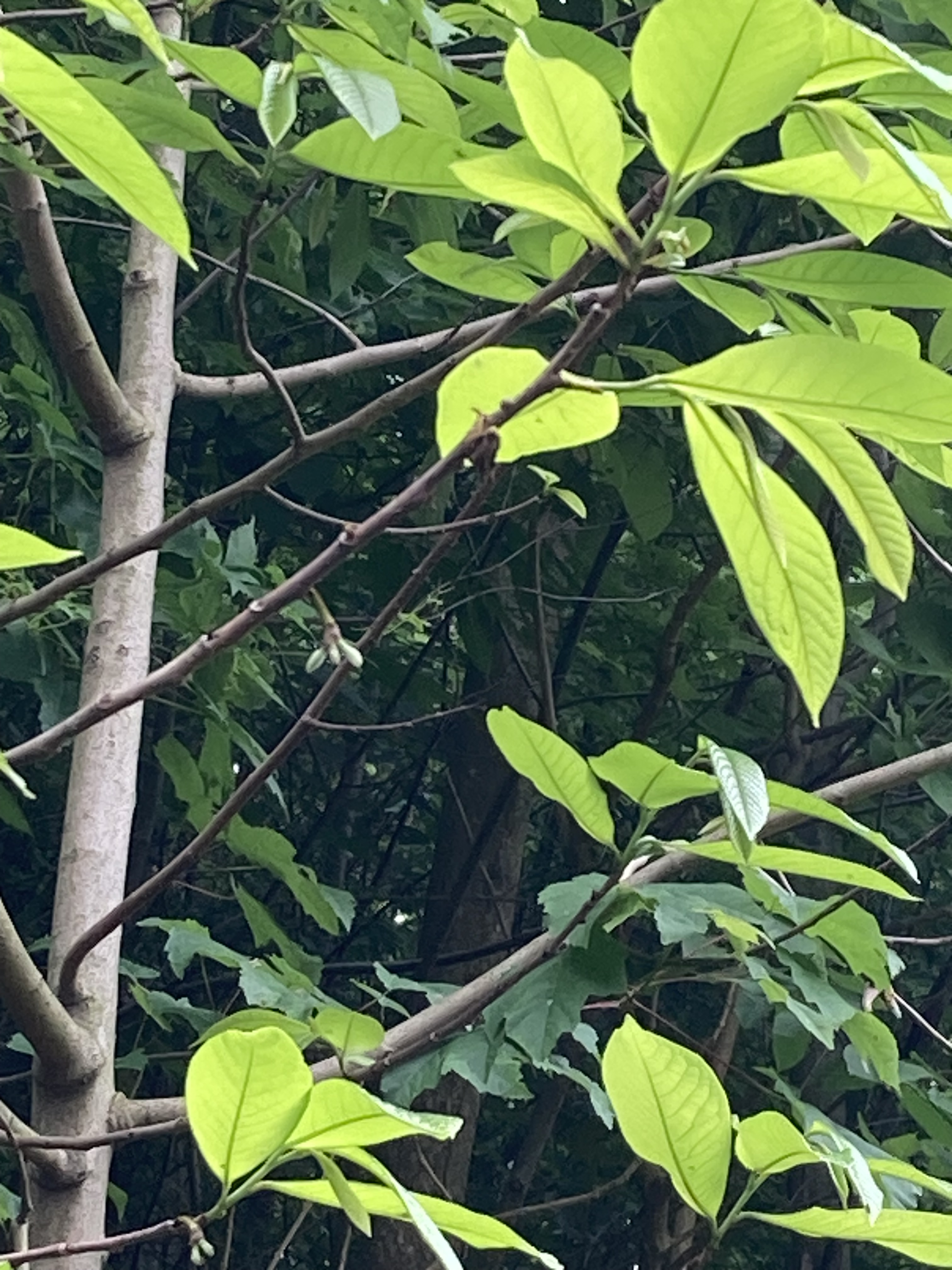
Can you see the three little fruits in a clump?

            When Cricket died in October, I put her collar around the trunk of the pawpaw tree, not because I thought she might come back to life herself in the spring, but because I hoped her life would be an inspiration to the tree, to keep growing. Ellie’s collar was added in December and in a way it made the tree seem more whole, because now it had both the quiet joy of Ellie and the loud vibrancy of Cricket to help it along.

This picture was taken in December, when the Pawpaw tree was still sleeping.

            I don’t know why this small gesture has been so meaningful to me, but every time I see their collars there on the pawpaw tree I feel a sense of comfort and reassurance. I still hear the dogs in the apartment all the time, and I see shadows and imagine that one of them is running past my door. It still surprises me how solid these memories feel, of all of the dogs and people I’ve loved and lost. It’s not that “I see dead people,” but I feel their presence in my mind and in my heart in a way that is so much more substantial than the words “ghost” or “spirit” would suggest.

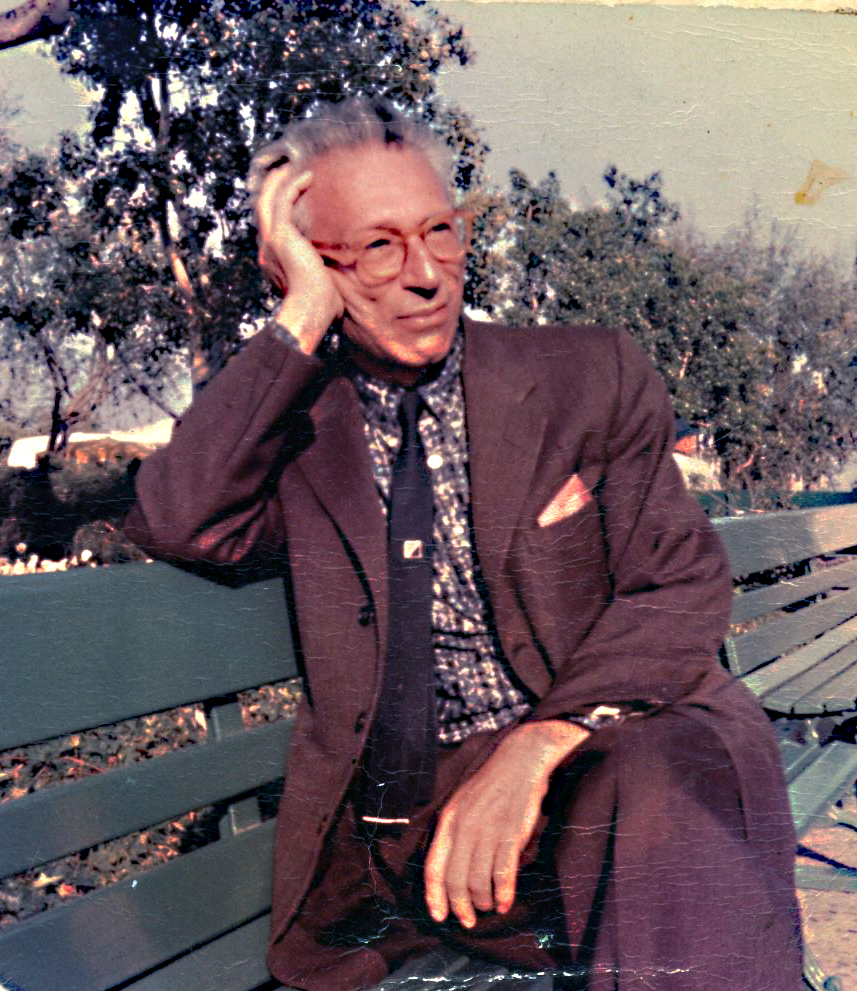
            My grandfather, who died when I was eight years old, is still a daily presence in my life: his smile and his laugh and the strength of his attention bolster me through so many difficult days. The same is true of some of the less positive characters from my past too, unfortunately, but there’s at least reassurance in knowing that my memories remain a part of me, and none of that time was wasted.

Grandpa

            However temporary nature may be, with flowers blooming and wilting, and dogs coming into my life and passing away, I know that I will never really lose them. It all remains. And I think that’s a gift, even if at times a bittersweet one.

We’ll always be here, Mommy.”

If you haven’t had a chance yet, please check out my Young Adult novel, Yeshiva Girl, on Amazon. And if you feel called to write a review of the book, on Amazon, or anywhere else, I’d be honored.

            Yeshiva Girl is about a Jewish teenager on Long Island, named Isabel, though her father calls her Jezebel. Her father has been accused of inappropriate sexual behavior with one of his students, which he denies, but Izzy implicitly believes it’s true. As a result of his problems, her father sends her to a co-ed Orthodox yeshiva for tenth grade, out of the blue, and Izzy and her mother can’t figure out how to prevent it. At Yeshiva, though, Izzy finds that religious people are much more complicated than she had expected. Some, like her father, may use religion as a place to hide, but others search for and find comfort, and community, and even enlightenment. The question is, what will Izzy find?

What I’ve Learned So Far

            With the end of the synagogue school year I always try to take stock of what I’ve learned, and what I need to hurry up and learn over the summer to be prepared for next year’s challenges. This has been a hard year, personally (with the loss of the dogs) and globally, but I’ve learned that I have to find hope, even if I have to manufacture it out of nothing, or else I won’t be able to function.

            My biggest take away from this year is that I love working with these kids, from the youngest to the oldest, from current students to kids I never taught but met along the way. And I love finding out that I made a difference in their lives; even a small one, even just as a contact point, a place where they feel safe being themselves.

            I feel like I’ve been doing a child development observation project for the past five years and I keep learning more and more about what works and what doesn’t work for different kids, and I keep learning the humility that comes with being wrong over and over again. And I find that I don’t mind being wrong and making mistakes (unless those mistakes are pointed out to me endlessly and highlighted in neon, then not so much).

            One of my favorite things is when I meet kids who are clearly being parented well, kids who are their full selves and self-aware and able to accept their own limitations and seek help when they need it and seek out challenges that allow them to grow. Of course, I identify more with the kids who are struggling, who are frightened or insecure or unable to even express the chaos that’s going on inside of them. But I love all of them.

            And now that I’ve been here a while, some of the kids I worked with at the beginning are now teenagers, and some of the teenagers who helped in our classrooms are now young adults, and they still come back to check in and update us on how they are doing. I can especially relate to the way the teenagers and young adults are trying to figure out who they are, because I’m still working on that project myself. I watch as they try on different identities and personas and philosophies and I try to be patient when they are insufferably overconfident or simplistic or combative about their newly discovered truths.

The one area where I’ve been struggling to be patient, though, is when what the kids are trying on is a new worldview wherein Israel is the cause of all evil. A lot of the students who are protesting on campuses are not lifelong supporters of Hamas, or even especially well-educated about the Middle East and the plight of the Palestinians in Israel and the surrounding Arab countries. Most of them are just kids who are trying out new ideas to see how they fit, and they are energized by the communal atmosphere of the encampments and the belief that they can be completely right about something and their parents can be completely wrong. Most of these kids, given time and education, will not be supporters of terrorism, or of any of the other political ideologies they have been flirting with in college, and what I’m learning is that my job as an adult with the honor of interacting with them is to educate, and to listen, and to support. I do not need to pretend that I am convinced by their sudden certainties about the world, nor do I need to argue with them, but I can’t abandon them either.

This is an encampment I might even join
(not my picture)

            I know from my own experience that certainties can help manage the extreme anxiety that comes with having no idea what the future will bring. They are still trying to figure out how to do their own laundry and yet they’re expected to plan out their whole lives: career, finances, life partners, belief systems, etc. The job of their teachers is to open new doors of thought, and present the available knowledge with a good dose of skepticism, and suggest questions worth asking, and teach a tolerance for uncertainty, but a small percentage of professors seem to see their role as becoming gurus who expect their students to swallow their ideologies whole.

With a Professor like this, I’d listen to whatever he had to say. (not my picture)

            I would have done better with less certainty from the adults in my life when I was in school. I needed my teachers to ask me questions and offer me compassion and patience, and then, gently, to introduce the complications to my black and white view of things. I didn’t need their admiration anywhere near as much as I needed their interest and curiosity in who I was and how my mind worked.

This was me all through school. Different hair.
(not my picture)

            I’ve been reminded all over again this year how important it is to be an accurate mirror for my students. Unconditional positive regard only works when it is based in the reality of the child or young adult in front of me. If an oppositional, argumentative class clown is praised for being well-behaved when he isn’t, that’s not helpful. He wants to be seen as he is. He’s being oppositional for a reason and if I ignore his reality I’m not helping him.

            It’s a relief to have the summer off so I can recharge and focus on my writing and focus on myself, but this year especially I know I am going to miss my students, so I will make an extra effort to carry them with me, as a totem, to remind me of how much there is to look forward to in the future.

But first, a really long nap.

This is not my picture either, but it looks just like me.

If you haven’t had a chance yet, please check out my Young Adult novel, Yeshiva Girl, on Amazon. And if you feel called to write a review of the book, on Amazon, or anywhere else, I’d be honored.

            Yeshiva Girl is about a Jewish teenager on Long Island, named Isabel, though her father calls her Jezebel. Her father has been accused of inappropriate sexual behavior with one of his students, which he denies, but Izzy implicitly believes it’s true. As a result of his problems, her father sends her to a co-ed Orthodox yeshiva for tenth grade, out of the blue, and Izzy and her mother can’t figure out how to prevent it. At Yeshiva, though, Izzy finds that religious people are much more complicated than she had expected. Some, like her father, may use religion as a place to hide, but others search for and find comfort, and community, and even enlightenment. The question is, what will Izzy find?

The Next Phase

            My allergies have kicked in big time, and the most likely culprit is all of the maple trees right outside my window and the thousands of seed pods they send raining down to the ground. The wheezing came out of nowhere one day last week: I heard this strange sound, like someone crying or screaming from a distance, and it took me a while to realize that the sound was coming from my own throat. Somehow all of the allergens have chosen to bypass my nose, and mostly my eyes, and lodge themselves in my throat where I inconveniently need oxygen to breathe. Sleep has been tough, and the allergy meds I take day and night are not helping much, but it is sort of fun to sound like Darth Vader every once in a while; it breaks up the monotony. Not that there’s been much monotony lately, to be honest.

I wonder if the mask would help me breathe better (not my picture)

            This past week Mom and I went to see a cardiac surgeon to find out the next steps for dealing with her damaged mitral valve. I was very nervous about the appointment, we both were, in large part because there was so much we didn’t know. We spent about four hours at the hospital on Monday and met with the cardiac surgeon and then with his colleague who specializes in cardiac interventions other than surgery, and the plan going forward is to have a minimally invasive procedure (sort of a combination of an angiogram and an endoscopy with mitral valve clips thrown in), in the hope that clipping the mitral valve (rather than replacing it) will be enough to mitigate the damage. The doctor explained that at this point about fifty percent of the fluid leaving Mom’s heart through the mitral valve is going into the left ventricle, which is stretching it out of shape and wreaking havoc. The clips will close the holes in the mitral valve, at least partially, to redirect the fluid to where it belongs. This less invasive procedure will only require one overnight stay in the hospital (as opposed to a week in the hospital and then two weeks in a rehab facility after the full surgery), and recovery will be minor.

            But there’s something so un-reassuring about the image I have in my mind of the mitral valve clips: I keep seeing tiny wooden clothespins, like the kind that hold laundry on the line so it won’t blow away in the wind, but the doctors say it’s worth a try and could reduce the symptoms of fatigue, shortness of breath and heart palpitations to a more manageable level. The problem is that Mom’s mitral valve isn’t just damaged in one place, it’s more like Swiss cheese, so there’s a fifty/fifty chance that the doctor will go in to do this procedure and on the spot decide it’s not working and we will have to go ahead and schedule the full heart surgery after all.

(not my picture)

            I feel a little better knowing the steps involved in all of this, even if we end up having to go the full surgery route after all. The worst part was not knowing and leaving it all to my imagination, which is vivid. The doctor made sure to say that the chance of death from the minimally invasive procedure is about 1%, which is close to the risk from, say, going for a walk on a spring day. The full surgery’s risk is at about 5%, which is higher, but not high. I’d prefer zero risk and full recovery, but I understand that I’m being unreasonable.

            The cardiac surgeon was pretty optimistic about the success of the full surgery, and said we could just go ahead and do that if we wanted, but as soon as he used the words “heart lung machine” in describing the surgery I came close to having a heart attack myself, so I’m happy that we’re starting small. The ultimate decision to try the less invasive procedure first, of course, was Mom’s, but I think a small part of her was disappointed that she wouldn’t get to stay in a hotel (pardon me, a hospital) for a few weeks, with room service and house cleaning and varied and interesting company.

I think this is more evidence that Mom has reached the second phase of retirement. The first ten years were about making up for lost time, doing all of the projects and trips and socializing she didn’t have time for while she was still working, and the next phase looks like it’s going to include more pampering and siestas. I guess I’ll need to look into getting the co-cop to agree to a pergola in the backyard, and maybe a hammock, so Mom can get her moments of nature and her rest at the same time. If all goes well this summer, this second phase of Mom’s retirement could be even longer than the first, and filled with good health and relaxation, and time to build more happy memories with her grandchildren. And a dog. There really needs to be a dog.

Not my dog, but just sending this image out into the universe

If you haven’t had a chance yet, please check out my Young Adult novel, Yeshiva Girl, on Amazon. And if you feel called to write a review of the book, on Amazon, or anywhere else, I’d be honored.

            Yeshiva Girl is about a Jewish teenager on Long Island, named Isabel, though her father calls her Jezebel. Her father has been accused of inappropriate sexual behavior with one of his students, which he denies, but Izzy implicitly believes it’s true. As a result of his problems, her father sends her to a co-ed Orthodox yeshiva for tenth grade, out of the blue, and Izzy and her mother can’t figure out how to prevent it. At Yeshiva, though, Izzy finds that religious people are much more complicated than she had expected. Some, like her father, may use religion as a place to hide, but others search for and find comfort, and community, and even enlightenment. The question is, what will Izzy find?

The Return of the Panic Attacks

            I thought I was done with panic attacks. It’s not that I was free of anxiety or depression, but for a long time now I’ve felt like I could handle the difficult things that came up without shattering into a million pieces or becoming paralyzed, but something changed in the past few weeks. I’m pretty sure it started when I tried a new Rheumatological medication (Methotrexate), which was meant to lessen my overall body pain and allow me to exercise more, but instead made me even more exhausted and exacerbated my pre-existing depression and anxiety.

At first, I had no idea where the extra depression was coming from: was it from thinking about adopting a new dog? From watching the news? The exhaustion of doctor visits? Discovering that weight loss medication would remain out of reach? I don’t remember now what finally made me believe that it was the Methotrexate that was sending me into the deep dark, but after weeks of worsening depression I decided to stop taking it and see if things improved, and, gradually, I started to feel better and able to think and write and plan and hope again.

            When I called the Rheumatologist to tell her what was going on, she said to wait a few weeks before trying the next medication, which shouldn’t have any of those side effects, and since I wanted to believe her and finally see some improvement in the overall body pain that has seriously restricted my life, I agreed.

            But since I’d been taking the Methotrexate weekly, instead of daily, the timeline for it to leave my system was very slow, and in the meantime, I had my first panic attack: a small one, at Whole Foods. I used to have food panic all the time, because of the thousands of different diets I’ve been on, and because of old conflicts around keeping kosher, but after years of working on Intuitive Eating a lot of that noise had calmed down. Except, at Whole Foods (a ridiculously high priced store that rarely has the things I need, but always has fun stuff I want), I got all mishkebobbled by the prices and the choices and I had no idea what to buy. Eventually, I chose a few small things and got out of there as quickly as possible. It was only a small echo of my old panic attacks though, and I was mostly okay.

            The second panic attack, also small, also happened around food, this time at the enormous supermarket near my house. I blamed it on Passover, because there was a large section of Passover foods that made me feel like I should buy jars of borscht and boxes of cake mix and cans of chocolate chip macaroons that I would never eat. But, again, the panic passed quickly, and when the effects of the Methotrexate finally wore off I thought I was stable enough to try the second rheumatological medication.

            And then the car battery died. This had happened once before, because one of the lights above the driver’s seat goes on accidentally at times and if I don’t notice it right away, and don’t drive the car for a few days, by the time I get back to the car the battery is dead.

            This time it happened when I needed to take Mom for a medical procedure, an endoscopic ultrasound of her heart (called a TEE), but the car wouldn’t start and there was no one around to help, and instead of being able to problem solve, or even think, I panicked. Mom told me that she would call a cab, and then call AAA or the maintenance men at our co-op to help me charge the battery, and the idea that I would have to interact with strangers scared me so much that I left my mother and my pocketbook in the car and race-walked back to the apartment to curl up on my bed and hide.

            Mom called me from the parking lot a few minutes later to say that the cab was on its way, and that the maintenance men would be able to help with the car in about half an hour, but in the meantime I should come back outside and get my pocketbook, because it wouldn’t be safe to leave it in the car. She didn’t seem to be upset with me, or to understand that I was curled up on my bed in an altered state, but I couldn’t think for myself so I did as I was told and went out to the car for my pocketbook. I was able to give Mom a hug just as the cab arrived, and then I walked back up to the apartment, resumed my curled up position, and cowered in my room.

            There was a knock at the door a while later and I jumped out of bed and put on my jacket and answered the door on automatic pilot; some part of me was able to function enough to make chit chat and ignore the bad jokes about my lack of car knowledge. When the guys said I should drive the car around for ten or fifteen minutes before turning it off (and then on again), I did as I was told, even though my pocketbook, with my driver’s license, was still upstairs.

To fill the time, I decided to do a practice drive to the hospital where Mom was having her test done, to make sure I’d know where to pick her up later, and I got stuck in traffic for forty minutes, worrying the whole time that the car would stop suddenly or that I’d get into an accident and have no identification on me. But I made it home safely and turned off the car and waited a few minutes, as I’d been told, and then turned the car back on, successfully (which meant I wouldn’t have to call the maintenance guys again, which was good because I didn’t have their phone numbers). While I was still in the car, taking my first deep breath in more than an hour, Mom called from the hospital to ask if the car was working, because they’d been delaying her procedure until she could assure them that I would be able to pick her up when it was over, and I spoke to the nurse on the phone and reassured her that I would be there on time.

            I survived the rest of the afternoon on automatic pilot and picked Mom up from the hospital and got her home safely. I felt awful for having had a panic attack when she needed me, and really scared that this would be my new normal, but most of all I was exhausted and needed sleep. When I woke up from my nap a few hours later I started to wonder if there might be a connection between starting the second rheumatological medication the night before and this latest, much more significant, panic attack. But my brain was telling me that I was always this useless, and I couldn’t come up with a convincing argument to fight back.

Two days later, Mom and I went to a dog rescue event, because my therapist had suggested (insisted) that I go, and because the depression was getting so dark again that I didn’t have the energy to think for myself. We got the address of the rescue event wrong, twice, but finally found it by following the crowd of cars. Once we’d parked and walked over to the row of tents and tables advertising all of the different rescue organizations, I was overwhelmed by all of the noise and people and dogs, and I couldn’t make sense of what I was supposed to do or where I was supposed to go.

We eventually found an enclosure filled with many small and hypoallergenic dogs, along with some full-sized Poodles and Golden Retrievers and a horse-sized Siberian Husky. But none of the volunteers seemed to know how their adoption process worked, or which dogs were still available for adoption, and no one knew about age and weight and health status, except that all of the dogs were probably around three years old and had been rescued from dog meat festivals in Asia (that’s hard to type, let alone to say out loud).

There was a little black poodle mix who was already on one of the rescue’s leashes outside of the enclosure, but when I asked about him a very possessive older woman glared at me and said she was considering adopting him, which seemed to mean he was off limits. Then we saw a little butter-colored dog who looked like the perfect size for us, but another woman had picked him up and held him tight while she looked for a volunteer to help her with the adoption; when she finally found the volunteer-in-the-know it turned out that that dog was already spoken for by someone else. I was getting more and more overwhelmed by the confusion and heat of the day and part of me wanted to leave (or escape), but part of me felt like it was my job to stay there and tough it out.

Finally, one of the volunteers asked me if I’d like to meet one of the dogs and I looked around and saw a little white dog who looked very much like Butterfly, and I chose her. I held her for a while and she was very calm, to the point where she didn’t even make eye contact or react to much of anything. When I put her down on the ground though, she freaked out at a noise I couldn’t hear and almost strangled herself trying to get out of her leash. The volunteer put her back into the enclosure with the other dogs and she sat down against the fencing, near where I was standing, and seemed to calm down again. She wasn’t the dog I was looking for, especially because she looked so much like Butterfly and was triggering all of the old grief and responsibility, rather than the love, but I couldn’t untangle my feelings or get myself to leave her behind in the chaos either. Mom finally found someone who could explain the adoption process, including the $2,000 adoption fee, which is basically what it would cost to buy a puppy from a breeder, and by then the Butterfly look-alike was sitting patiently on a little girl’s lap, so we took a brochure and finally walked away.

The whole time we’d been near the enclosure I’d been beyond thinking, unable to figure out what I wanted to do or what I thought I should do, except that I knew I should adopt all of the dogs, including the big dogs, because what kind of monster leaves a dog behind just because of money or because the world is tilting, or for any other clearly not-good-enough reason. As we got further away from the dogs I started to be able to hear my own thoughts a little more clearly, but I still felt sick and dizzy and angry and confused. I was able to drive home safely, but hopelessness and the long list of things that were wrong with me was rushing through my mind and refused to shut up.

Hours later, on Mom’s prompting, I looked up the side effects for the second rheumatological medication, and depression and anxiety were at the top of the list, despite the doctor’s assurances that this medication would not be a problem, so I emptied the rest of the pills from my pre-filled weekly pill box and crossed my fingers.

            It took a couple of days for the worst of the hopelessness to wane, but in a way the damage had already been done. I’d forgotten how bad things could get, and now it was right in the front of my mind. It didn’t help that the day after the rescue event Mom got the results of her TEE and told me that she would probably need surgery to repair or replace her mitral valve (her fourth surgery in three years).

I’m frustrated that these medication trials, which were supposed to help me function better, sent me so close to the brink; and I’m frustrated that this is how it’s been with so many medications over the years; and I’m angry that the one medication that was helping (Ozempic) was taken away; and I’m angry that the doctors still have no name for what’s wrong with my health, let alone any solutions.

            But at least I can think again.

I called the Rheumatologist to tell her that I wouldn’t be trying the third medication on her list, at least not right now, because I needed to be in the best frame of mind possible to help Mom through her surgery, and the expected three months of recovery.

Only time will tell if the panic attacks were solely caused by the rheumatological medications, or if, with enough stress, they will return. I’m trying to be hopeful that I’ll be able to handle everything that comes my way this summer, but part of me is worried, remembering how bad it can get. Another part of me, though, is remembering Cricket’s insistent strength, and Ellie’s insistent belief in me and my strength, and holding those memories as close as possible, to inspire me and help me through.

If you haven’t had a chance yet, please check out my Young Adult novel, Yeshiva Girl, on Amazon. And if you feel called to write a review of the book, on Amazon, or anywhere else, I’d be honored.

            Yeshiva Girl is about a Jewish teenager on Long Island, named Isabel, though her father calls her Jezebel. Her father has been accused of inappropriate sexual behavior with one of his students, which he denies, but Izzy implicitly believes it’s true. As a result of his problems, her father sends her to a co-ed Orthodox yeshiva for tenth grade, out of the blue, and Izzy and her mother can’t figure out how to prevent it. At Yeshiva, though, Izzy finds that religious people are much more complicated than she had expected. Some, like her father, may use religion as a place to hide, but others search for and find comfort, and community, and even enlightenment. The question is, what will Izzy find?