Tag Archives: health

The Pizza Burn

I’ve been waiting for my appointment with the oral surgeon for most of the summer, ever since he decided that there was something he could do to deal with my recurring infections (caused by the original oral surgeries, two and three summers ago), other than more cycles of antibiotics. He’s come up with a few different explanations for the infections over time: that the screws they used for the implants way back when (three years ago) were too porous; that the original bone loss left pockets where food could get stuck; that it’s all my fault.

            I was worried that this would turn out to be yet another involved, painful, expensive procedure, but instead the doctor told me it would just take an hour or so, while they took some skin from the roof of my mouth to fill in the vulnerable area, and there would be no extra cost. And, the doctor said, the pain wouldn’t be too bad, just like “a pizza burn.”

            I haven’t had much pizza over the past eight months, since I’ve been on Zepbound and certain favorite foods have become unfriendly, but I vaguely remember burning the roof of my mouth a few times and not being traumatized by the experience.

            Most of the anxiety came before the procedure itself, of course, because it was all unknown. I was relieved when I found out that I wouldn’t need to do all of the medical checks I went through before the two big procedures, because it would be a much shorter, less involved process, and only require twilight sleep instead of full anesthesia. But I still had two months to wait and worry before the appointment, and I’m very good at anxiety.

“Me too.”

Finally, on the day itself, we had to take a car service to the doctor’s office, because I wouldn’t be allowed to drive home, and even though Mom would be with me for moral support, she can no longer drive. And, of course, I was about as anxious about the car service as the procedure itself, because I’m not so good with strangers, in small spaces, early in the morning, or ever. But when I got to the office, the doctor’s assistant welcomed me, and she has been the reliable, friendly, down-to-earth face of the practice all along, so that helped calm me down. A little. She brought me into one of the regular exam rooms, where the light fixtures are covered with happy clouds in a blue sky, which also helped. And then I had time to get anxious again while they set up around me. My x-rays were loaded onto the screen in the front of the room, making me look like a very scary alien, and then my charts came up, saying that I had been told to “aggressively waterpik” (which was news to me, because I was sure “assertive waterpik-ing” should have been good enough). And then I saw the words “arm restraints” pass by quickly on the screen, and I, of course, had to ask what that was about. It turned out they were going to be restraining my arms during the procedure, to prevent me from, I don’t know, punching the doctor or trying to scratch my nose.

            Then they took my glasses, so I couldn’t read anymore, which was a relief, and they put on the automatic blood pressure cuff, and the pulse/ox monitor, and then the oxygen mask, which made my nostrils feel cold and sore. And then came the needle. They had to use my left arm, for choreographic reasons, even though the good vein is clearly on my right arm (I get a lot of blood tests), which meant they couldn’t find a good vein in the usual places and ended up sticking the needle into the back of my left hand, which hurt more than pretty much anything else the whole day. And then there was nothing.

            I came to while they were removing the different monitors and restraints, and telling me that everything had gone well. Then they walked me to the recovery room (pretty much a closet with two places to sit) where Mom was waiting for me, and then they gave me instructions for how and when to change the gauze pads, and ice the wounded area, and let me go home.

            Half of my face was numb for the rest of the day, so I was only allowed to eat pudding (yay!) and cold soup (eh, not so much), but I wasn’t especially hungry anyway. On day two, I was allowed to rinse with medicated mouthwash and as much warm salt water as I could ever want, but no brushing or aggressive waterpik-ing, yet. And I could chew again, though I still wasn’t eating anything too complicated. By the end of day two, the pain was actually worse, and the swelling had started to kick in, but not so bad that I had to fill the prescription for opiates; I was able to make do with Ibuprofen and Acetaminophen.

            Day three was a rest day. It was sort of a delayed reaction to the procedure, as if I’d been the one doing the surgery rather than the one sleeping through it. The doctor called to check on me towards the end of the day and seemed pleased with my report. I’ll see him next week so he can marvel in person over what a great job he did (he likes to marvel at his work like that, unironically), and hopefully, once this short recovery period is over, I will be done with the infections, and maybe that will mean that I’ll feel better overall (since cyclical infections can’t be helping my overall health), though there are no guarantees.

            The thing is, I’ve been really, really tired this summer. I’m always tired, to be honest, but it has seemed worse lately, and I don’t know if reducing the frequency of infections will make much of a difference, or if whatever underlying disorder that has been causing all of my symptoms is ever going to resolve. No further diagnostic progress has been made in the past few years, despite visits to geneticists and neurologists and neuromuscular specialists and rheumatologists, etc., and all kinds of tests and treatments along the way.

            At the very least, I’d like this one procedure to have been successful, and for that to mean a somewhat less crowded year of doctor appointments ahead. Though it would be really nice to feel like a healthy person for a little while. Weird, but nice.
“Weird, but nice? Welcome to my life.”

If you haven’t had a chance yet, please check out my novel, Yeshiva Girl, on Amazon. And if you feel called to write a review of the book, on Amazon, or anywhere else, I’d be honored.

            Yeshiva Girl is about a Jewish teenager on Long Island, named Isabel, though her father calls her Jezebel. Her father has been accused of inappropriate sexual behavior with one of his students, which he denies, but Izzy implicitly believes it’s true. As a result of his problems, her father sends her to a co-ed Orthodox yeshiva for tenth grade, out of the blue, and Izzy and her mother can’t figure out how to prevent it. At Yeshiva, though, Izzy finds that religious people are much more complicated than she had expected. Some, like her father, may use religion as a place to hide, but others search for and find comfort, and community, and even enlightenment. The question is, what will Izzy find?        

Seeing My Psychiatrist on Zoom

            Every three months or so, I see my psychiatrist for a few minutes on zoom (or Doxy, actually, a platform specifically for medical appointments), because he decided not to go back to in-person visits after Covid. He asks me how I’m doing with my antidepressant medications, and I say “fine,” and he takes notes and refills my prescriptions and makes a new appointment for three months in the future, and then we’re done. Of course, there have been times when I didn’t say I was fine, and he raised the dose of one or the other of my medications, which led to a one month follow up instead of a three month follow up, but for the most part, everything has been stable for quite a while. To fill out the four- or five-minute appointment, we tend to chat about my teaching, or my other doctors and the new medications they’ve added to my regimen, but for the most part, he asks me if I think I need to raise the dose of my meds, and I say no, and we wish each other well. But at my latest appointment, when I said a variation of my usual “I’m fine,” he said, “but what does that mean?” and I didn’t know how to answer.

“Do you ever talk about me?”

            In the end, I must have said something reassuring, because he kept everything the same and we made the usual appointment for three months in the future, but when I closed my laptop, I wasn’t sure if “I’m fine,” was really the truth, or just something I’ve gotten used to saying. I don’t remember if I was more willing to go into details back when I actually had to leave the house for those five-minute session every three months, but there’s definitely something about the virtual appointments that encourages me to keep it simple.

            The fact is, I don’t really know if I’m on enough anti-depressant medication, or the right medication. I have no idea if this is the best my mental health can be, or if there are medications or other treatments that could make things better. The few times I’ve been willing to risk changing my medication were when I was feeling so awful that I wasn’t sure I’d be able to function otherwise.

            Antidepressant medications are a mystery, and not just to me. Doctors still don’t really understand why they work, or why one medication works for one person and not for another. It’s a lot of trial and error and guesswork, and a little too much Russian roulette for my liking. When I was first trying medications, years ago, the doctors would try a few from each family of drugs, and I had to spend weeks, and even months, dealing with weird side effects while waiting to see if something positive would happen. There was one medication that the psychiatrist (a different one) insisted on trying even though it was meant for bipolar disorder, which I don’t have, and within 24 hours I felt like I was going to jump out of a window, or at least scream until my head exploded, and I refused to take another dose. The doctor didn’t seem to think my reaction to the meds was all that bad, and he wanted me to stick with it for a least a few more weeks to see what would happen, but I felt strongly that I shouldn’t be taking a medication that made me want to kill myself and he reluctantly moved on to another class of drugs.

            Psychiatrists, and other doctors who prescribe these medications, also tend to be unusually terrible at diagnosis, because there is almost no consistency in how different doctors interpret the words of the DSM (Diagnostic and Statistical Manual of Mental Disorders), and the words used in the DSM are generally unrelated to the way patients actually experience and describe their own symptoms. Sometimes it feels like the doctors are waiting for certain magic words to be said, and don’t know what to make of the metaphors, sentence fragments, and shrugs that real people use to describe how they feel.

            To be fair, medical doctors are just as terrible at diagnosis when they don’t have hard and fast results (from blood tests or scans) to determine what’s going on inside. The pain medication I’ve been on for maybe fifteen years now (after trying a lot of different drugs meant for any number of different diagnoses) has only ever reduced the pain by half, and usually less than that; and the same is true of the psych meds: if they reduce my symptoms by half, that’s a good day.

            In an ideal world, I would sit down with each of my doctors and describe in detail how I feel (what hurts, how it hurts, what I’m struggling with, and what I’ve tried) and be answered with curiosity, understanding, respect and investigative questions to help me pinpoint and articulate my symptoms as clearly as possible. But, to be honest, that has never, ever happened. I have certainly attempted it, with dozens of doctors, but they tend not to hear what I’m saying over the noise of their own assumptions, and it ends up being easier to keep things short.

            I’ve been on my current anti-depressant medications for more than ten years now, and while they have caused weight gain and nervous system disruptions and a bunch of other side effects, they allow me to function most days, and they give me the leeway to do the therapy work that helps me move forward. And for me, to be able to say on an average day that I am fine, that I am not in a panic spiral or falling into depression or obsessing over this or that awful thing coming up in my life, is huge. It allows me to live my life each day and accomplish some of the things that matter to me, and experience joy, and even do the laundry. It may not be miraculous, but, at the very least, it qualifies as fine.

“Have you tried chicken treats? They really work for me.”

If you haven’t had a chance yet, please check out my novel, Yeshiva Girl, on Amazon. And if you feel called to write a review of the book, on Amazon, or anywhere else, I’d be honored.

            Yeshiva Girl is about a Jewish teenager on Long Island, named Isabel, though her father calls her Jezebel. Her father has been accused of inappropriate sexual behavior with one of his students, which he denies, but Izzy implicitly believes it’s true. As a result of his problems, her father sends her to a co-ed Orthodox yeshiva for tenth grade, out of the blue, and Izzy and her mother can’t figure out how to prevent it. At Yeshiva, though, Izzy finds that religious people are much more complicated than she had expected. Some, like her father, may use religion as a place to hide, but others search for and find comfort, and community, and even enlightenment. The question is, what will Izzy find?

You Can’t Do What You Can’t Do

            Sometime over the winter, one of the rabbis at my synagogue announced that there would be a week-long volunteer trip to Israel in August, for teenagers and adults, and, oh yeah, they were applying for a grant to subsidize half the cost of the trip.

            That was all the information available at the time, but I already knew I wanted to go, desperately. I fought against the loud voice in my head telling me that going to Israel during the hottest month of the year, and volunteering, most likely outdoors, would be impossible for me, because the idea of going to Israel with people I knew, and being able to learn more about the situation on the ground, and to be of use, at an affordable price, just seemed like the answer to a lot of my prayers.

            So, I started to prepare myself. I wrote out a long list of what I’d need to bring with me (meds, sunblock, water bottle, adapters for the electricity, sim card for the phone, a week’s worth of clothes, Icy Hot patches, extra pain meds, etc.), and I wrote through all of the reasons not to go (fear of the effect of the heat on my autoimmune symptoms, fear of being lonely, fear of pain and exhaustion, fear that something would happen to Mom or Tzipporah while I was gone, fear that I would be too shy to use my Hebrew, fear of feeling bored, or trapped, or disappointed, or confused, etc.). And then I wrote out as many ideas as I could think of for how to deal with those fears.

“Wait, what’s going to happen to ME?!

But despite all of my efforts, I couldn’t plan for the trip until I knew exactly what the trip would entail. So, I reached out to the rabbi with my concerns (how much time would be spent outdoors, would the volunteering activities be things I could actually do, would there be rest periods for recovery, etc.), and she sent me the planned itinerary, with the proviso that, because all of the volunteering locations were small and relatively new, there wouldn’t be any room for adaptations.

And it looked amazing! They would barely be staying in one place for more than a day, traveling to the north and the south and in between, meeting people who were rebuilding in the north after a year of bombing from Hezbollah, and meeting Israelis of all religious backgrounds working to help each other, and meeting families of those who were killed on October seventh, and families of hostages, and Palestinian citizens of Israel, and helping rebuild the agriculture sector in the south that was impacted both by October seventh and by so many men being pulled into the army reserves and out of the fields. There was one afternoon set aside for potential beach time, but other than that, free time didn’t exist.

            I was in awe of the opportunity to meet so many different people working in so many different parts of Israeli society, and the more I read, the more I wanted to go. But no matter how I tried to move things around in my mind, and research all of the sites and turn the pages this way and that, it became clear that I would barely survive day one, let alone a whole week. Except, a big part of me was still in denial, imagining that if I just spent the next few months in physical therapy, and had a miraculous recovery from all of my health issues before August, and maybe found myself a full-body airconditioned suit to wear, I’d be okay.

            The tour guide who would be leading the trip (and who had been leading bi-weekly zooms for us since October seventh, to help us understand how Israelis were reacting to the Hamas attack and the ensuing war), came to the synagogue for an in-person visit leading up to  registration for the trip. I sat in the sanctuary and listened to his impassioned thoughts on the current political turmoil in Israel, and the moral quandaries of the war, and the grief and anger around the hostages still trapped in Gaza, and the communal efforts to support those who were struggling, and I could envision myself in Israel, marching for the hostages, and marching for democracy. In my imagination I could walk for miles, in the heat, singing and calling out at the top of my lungs, even though I’ve never been able to do anything like that here at home.

At one point in the evening, when I was sitting next to the older rabbi from our congregation, who had either led or participated in every previous synagogue trip to Israel, and who had marched in many protests over the years, I told him how much I wanted to go on this trip, and he told me that he would not be going because it would be too much for him. “But, but doesn’t it look amazing?!” I asked, and he shrugged and said, “You can’t do what you can’t do. There will be other trips.”

            And the bubble burst. I knew he was right, and that he was speaking as much to my situation as to his, whether he meant to or not. Of course I couldn’t go on this trip, and it felt awful to have to know that; just like it feels awful every time I have to accept a reality I don’t like. You would think I’d be more practiced at handling disappointment by now, but I suck at it every single time.

            I still made a point of applying for a new passport though (after years of putting it off), just in case, and I kept my packing list and my research on the different volunteering sites, and I continued to add hundreds of Israel-related videos to my YouTube watchlist to fill out my understanding of the culture and the people. One day, hopefully not too far in the future, the right opportunity to go to Israel will come up, and in the meantime I will keep doing the work I am capable of doing so that I’m ready to go when the time comes.

“Puppy, cover my ears!”

If you haven’t had a chance yet, please check out my novel, Yeshiva Girl, on Amazon. And if you feel called to write a review of the book, on Amazon, or anywhere else, I’d be honored.

            Yeshiva Girl is about a Jewish teenager on Long Island, named Isabel, though her father calls her Jezebel. Her father has been accused of inappropriate sexual behavior with one of his students, which he denies, but Izzy implicitly believes it’s true. As a result of his problems, her father sends her to a co-ed Orthodox yeshiva for tenth grade, out of the blue, and Izzy and her mother can’t figure out how to prevent it. At Yeshiva, though, Izzy finds that religious people are much more complicated than she had expected. Some, like her father, may use religion as a place to hide, but others search for and find comfort, and community, and even enlightenment. The question is, what will Izzy find?

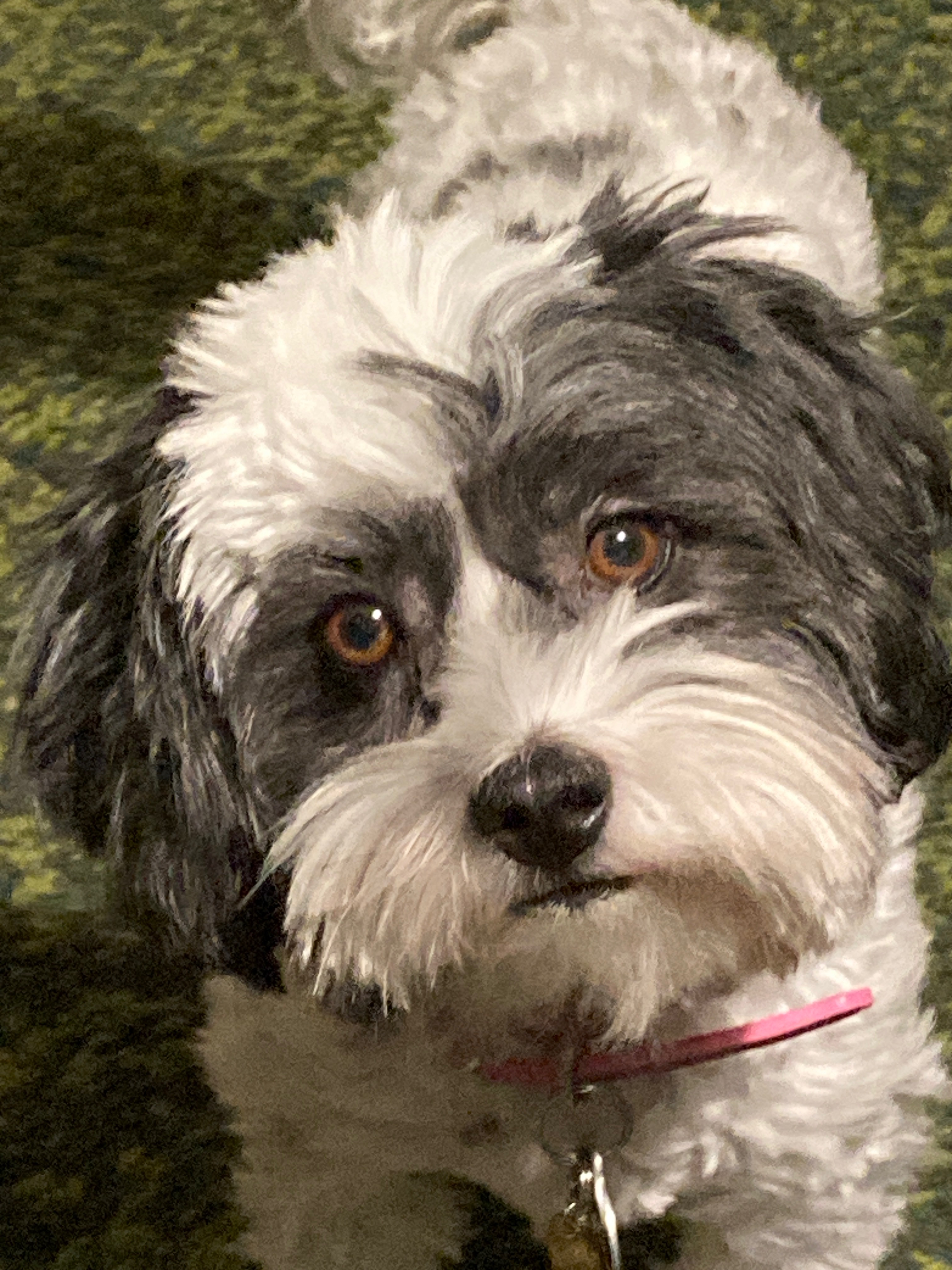
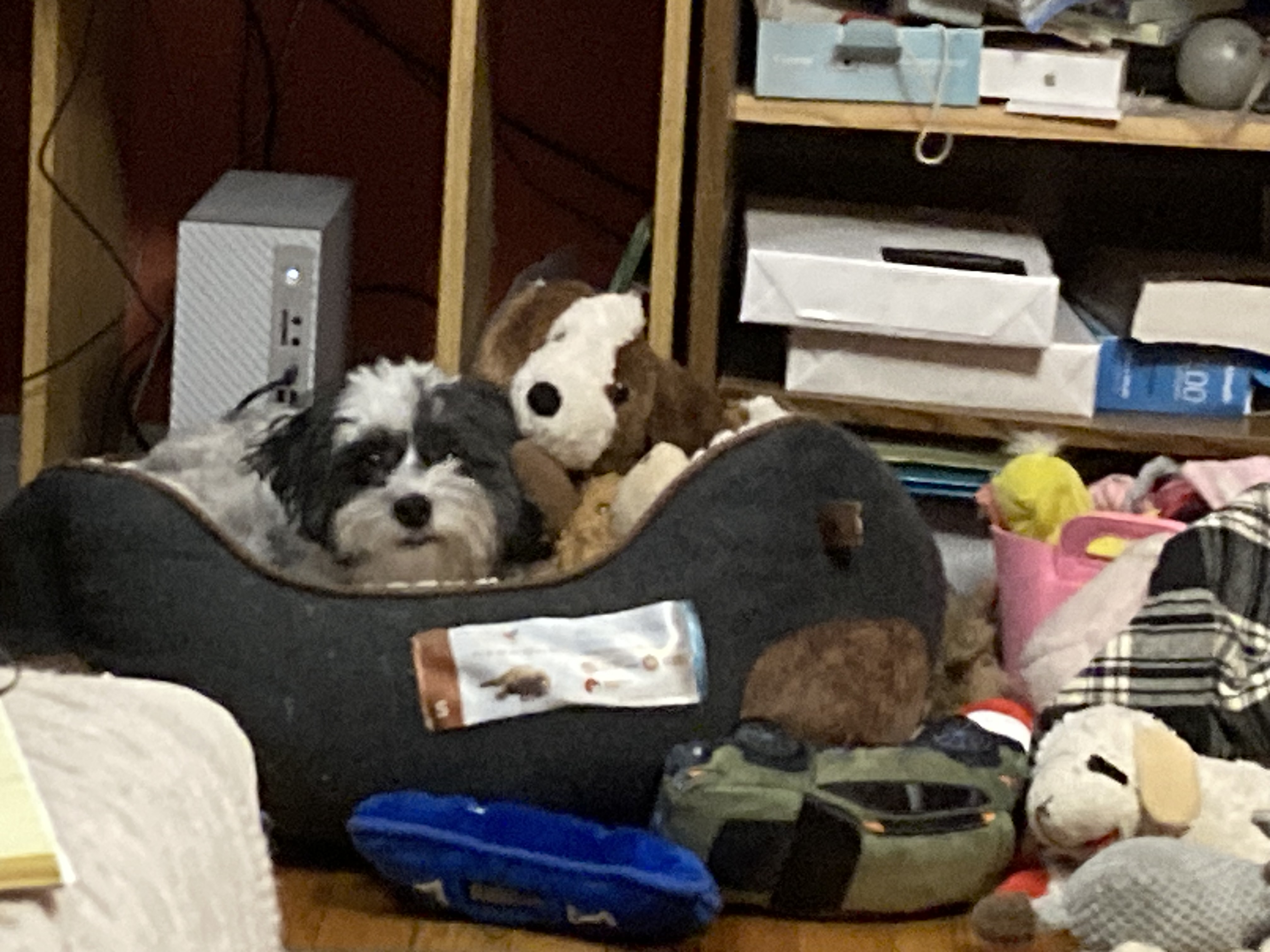
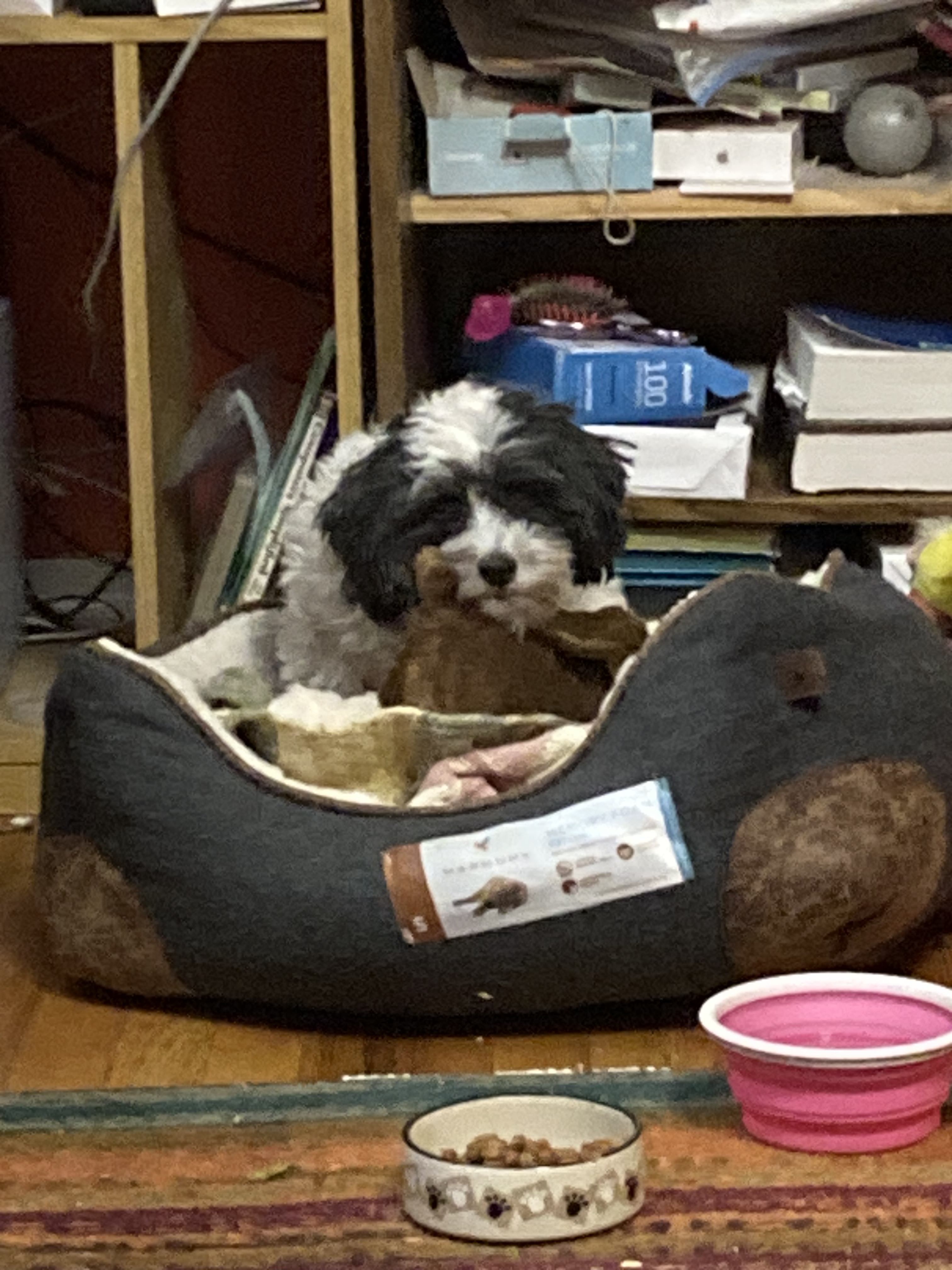
Tzipporah Got Sick

            We don’t know what set it off, but Tzipporah was sick for a week. One afternoon she had a loose poop, and the next poop was even more liquidy, and the next was all liquid, and then she was vomiting, in her bed. Right away, I was having flashbacks to the last few months of Cricket’s life, when she was suffering from kidney disease and we had to spread wee wee pads everywhere. But I tried to stay calm, and when I gave Tzipporah her first bath-at-home, and she hated it, the energy with which she fought off the washcloth and the water made me hopeful. And then we gave her some Pepto Bismol, enrobed in peanut butter, to see if we could stop the flow in its tracks, and she ate the newly crunchy peanut butter gleefully, and then threw it all up. The next morning, she didn’t eat her breakfast at all, so we called the animal shelter’s clinic and they gave us an emergency appointment. Tzipporah needed to have her butt washed one more time before her appointment, which she hated, again, and then we wrapped her in a towel and brought her to the car.  

“I don’t feel so good.”

She sat shaking in my arms in the waiting room at the clinic, leaning her head under my chin to hide. When we were called into the examination room, she let me place her on the exam table, but she stayed as close to me as possible, and then, when the vet came in to examine her, she tried to climb me like a tree. But she survived, and even let me hand her off to the vet tech, who took her away for blood tests and an x-ray, and then brought her out to us in the waiting room wrapped in a wee wee pad, because she’d had another accident during the x-ray.

I held her close and whispered to her and scratched her ears, and she started to relax. And I realized that somewhere along the way Tzipporah has decided that I am her Mommy. There was no one moment that clinched it for her, as far as I could tell, it was just a gradual realization that I can be trusted to feed her, and wash her, and comb her hair, and to comfort her when things go wrong.

When we were called back into the exam room, the vet told us that there was nothing in the blood tests to worry about, except some small elevations caused by stress, but the x-ray showed that Tzipporah’s large intestine was swollen, which could be a sign of a blockage, or not. The vet wanted us to come back the next day for a follow up x-ray, hopefully to find that the swelling had reduced, but if not, she said, we might need to think about surgery. She sent us home with a few medications (all in liquid form, in case Tzipporah still wasn’t up to eating solid food), and a lot of anxiety.

When we got home, I gave Tzipporah yet another bath while Mom cooked up her newly prescribed bland diet (boiled chicken and rice), and then we gave her the prescribed appetite stimulant and she gobbled up her lunch and even let me give her the rest of her meds, sort of. And then she and Mom rested while I went out to teach.

Tzipporah happily ate her dinner later that night, and there was no more vomiting, but she did continue to have diarrhea overnight. The next morning, we were only allowed to give her a little bit of food to go with her meds, because the doctor wanted the second x-ray to be as clear as possible. And then I gave her yet another half-bath and we were off to the vet again.

These visits to the animal shelter clinic, the same one where we used to take Butterfly (our first puppy mill mama), were bringing up a lot of grief and fear, and it was hard to remember that this was probably just a blip, not an illness, yet, and not fatal. When Butterfly came to us, she was eight years old and had significant health issues, so we spent a lot of time in and out of that clinic, especially towards the end of her life, almost five years later. That clinic was a god-send, honestly, and helped us keep Butterfly for much longer than we’d ever have expected, but the grief has never really faded. And watching Tzipporah, another puppy mill mama, going into those same exam rooms, was a lot.

Miss Butterfly

Tzipporah’s second x-ray was better than the first one, with signs that the inflammation was passing, but the vet said to keep an eye out and if she vomited again, we should take her to the emergency vet for an ultra-sound, all of which sounded terrifying and expensive. Thank God, Mom had thought ahead and bought health insurance for Tzipporah the day we adopted her, which, after a deductible, would give us 80% of the cost back.

Before we left the clinic for the day, two vet techs gave Tzipporah subcutaneous fluids and a B12 shot (which also reminded me way too much of Cricket’s final months), and the doctor prescribed another medication to add to her cocktail, and we went home.

Miss Cricket

I spent the rest of that day doing laundry (both dog beds, a whole pile of towels and blankets and toys, and all of the clothes I’d worn to the vet and while giving Tzipporah her many baths), and Tzipporah spent the rest of the day eating and sleeping.

By the next day, there were no more signs of diarrhea or vomiting. It still took her a few more days for her to get back to normal (AKA running down the hall to beg Grandma for chicken treats), and even longer for us to stop watching her anxiously, but we eventually began to add some kibble back into her diet, and she had the energy and presence of mind to toss the kibble out of the bowl and focus in on the chicken and rice.

The whole experience was overwhelming, especially because of the memories it brought up, but something good came out of it too: when Tzipporah was sick and needed help, I had to help her, whether she liked it or not. I’d been so careful with her through her first few months with us, because I didn’t want to re-traumatize her, and I wanted to give her time to acclimate to life with people, and because I was afraid of making mistakes. But when she was sick, I stopped worrying about all of that and gave her the care she needed, and she responded by leaning on me, and asking to be picked up, and looking to me for reassurance. She’s still suspicious of me, of course, but she seems to understand that I can be trusted. I’m also realizing that I was probably too careful, worried that she would reject me or worried that I would love her and lose her too soon. Cricket and Ellie’s deaths last year, within months of each other, left a deep mark on me, and I think some part of me was holding Tzipporah at arm’s length, just like she was holding me at paw’s length for her own reasons.

Cricket and Ellie

But she looks at me now, and communicates in her own unique way, and even recognizes me as a particular person, who she might even like. We still don’t know what set all of this in motion, maybe a stray piece of chocolate or a dropped pill or something else she managed to find on the floor during her nightly wanderings. But whatever it was, it passed, and she seems more confident in the aftermath. And I think we’re more confident too, and willing to be more proactive with her, even when she looks at us with suspicion. It’s still a work in progress, and we still have a long way to go, but we’re finally getting somewhere, and she even seems to be a little bit happy to be here. Sometimes.  

“But only sometimes, Mommy.”

If you haven’t had a chance yet, please check out my novel, Yeshiva Girl, on Amazon. And if you feel called to write a review of the book, on Amazon, or anywhere else, I’d be honored.

            Yeshiva Girl is about a Jewish teenager on Long Island, named Isabel, though her father calls her Jezebel. Her father has been accused of inappropriate sexual behavior with one of his students, which he denies, but Izzy implicitly believes it’s true. As a result of his problems, her father sends her to a co-ed Orthodox yeshiva for tenth grade, out of the blue, and Izzy and her mother can’t figure out how to prevent it. At Yeshiva, though, Izzy finds that religious people are much more complicated than she had expected. Some, like her father, may use religion as a place to hide, but others search for and find comfort, and community, and even enlightenment. The question is, what will Izzy find?
Zepbound

            At my most recent visit to the endocrinologist (thyroid issues, etc.), the doctor told me that Lilly has decided to offer Zepbound (a variation on Ozempic) for a discounted price to patients whose insurance companies won’t cover the GLP-1 weight loss medications. The average price for these medications, in the United States, is about $1,000 a month, though in other countries they can be bought for $100 or less, which has come up in contentious congressional hearings of late. My health insurance still refuses to cover these medications for anyone without type two diabetes or a severe heart condition, and I have been waiting impatiently for them to decide to cover GLP-1 medications for Non-alcoholic fatty liver disease, which I was diagnosed with last year, but who knows when that will happen.

            Last year, the endocrinologist told me about a program that discounted Zepbound to half price, but only for people without any insurance coverage, which did not include me. But now, they are making it available to people like me who have health insurance that doesn’t cover the medications. The cost is $400 a month, which is a lot for me, but for the sake of my health I really can’t say no. My hope is that, if the Zepbound works for me, these medications will soon be covered under my health insurance and I won’t have to pay this much for long. Ideally, losing weight will improve the health of my liver and reduce the need for heart medications. I don’t think it will give me more energy, or reduce overall body pain, but you never know.

            To be completely honest, though, what I really want from this medication is to lose enough weight to feel like a normal person. Yes, I want to reduce my risk of liver and heart disease. And yes, I would love to find out that losing weight could give me more energy and allow me to actually live more of my life, but, since childhood, I have been self-conscious about my weight, and I am so tired of feeling like a mutant. I know weight loss won’t change my life miraculously, because I’ve lost weight in the past, when I was able to exercise enough to lose weight on my own. And I’m sure I will still feel uncomfortable in my body, and struggle with pain and depression and anxiety and exhaustion. But it would be great to be able to go to my doctors and tell them my symptoms and NOT have them blame everything on my weight.

            I was on a low dose of Ozempic last year, when my insurance was still allowing it, and I lost fifteen pounds. But as soon as the FDA cracked down on off label use of Ozempic, I was cut off, and within three months I’d gained the weight back. So, one, I know the meds can work, and two, I know I will have to be on them forever.

There’s a lot of fear for me around starting the Zepbound, actually. For some reason, the discounted Zepbound comes in a vial, with separate needles, instead of in pre-dosed pens, so I’m afraid it will hurt more and/or I will do it wrong. I’m afraid I won’t be able to lose enough weight to make a difference in my health, or I’ll get cut off again, because the price will go up or supplies will run out. I’m afraid I’ll be sick to my stomach for the rest of my life (though that’s not very different from how I feel now, to be honest), or that the Zepbound won’t work, or that I’ll lose the weight but I’ll look like a deflated balloon instead of looking, and feeling, healthy.

Maybe most of all, I’m afraid that having to spend $400 a month on this for the foreseeable future, on top of paying off my medical debt, will mean that I can’t really afford a new dog, with all of the vet bills and adoption fees and toys and treats involved. And going too much longer without a dog in the house feels like a risk to my mental health (and to Mom’s). It feels so unfair to have to choose between my physical health and my mental health, especially when they are so intertwined. But here’s hoping I won’t have to choose, and a little, hypoallergenic rescue dog will come along soon, and congress will decide to cover GLP-1 meds for Non-alcoholic fatty liver, and all medical debt will be wiped out, and we will all live in peace and harmony, forever and ever, amen.

A girl can dream. Right?

“I’ll eat whatever you’re not eating. You’re welcome.”

If you haven’t had a chance yet, please check out my novel, Yeshiva Girl, on Amazon. And if you feel called to write a review of the book, on Amazon, or anywhere else, I’d be honored.

            Yeshiva Girl is about a Jewish teenager on Long Island, named Isabel, though her father calls her Jezebel. Her father has been accused of inappropriate sexual behavior with one of his students, which he denies, but Izzy implicitly believes it’s true. As a result of his problems, her father sends her to a co-ed Orthodox yeshiva for tenth grade, out of the blue, and Izzy and her mother can’t figure out how to prevent it. At Yeshiva, though, Izzy finds that religious people are much more complicated than she had expected. Some, like her father, may use religion as a place to hide, but others search for and find comfort, and community, and even enlightenment. The question is, what will Izzy find?
Can I Make Things Happen?

            In a previous post I mentioned that I was putting the idea of what I want out into the universe, and ever since then I’ve been debating with myself over whether I really believe in this concept or not. I want to believe in it. I want to believe that by putting my dreams into words and speaking them outloud I can create some sort of alchemy that will bring these dreams to life. But then I worry that this is all “magical thinking,” which has always been a soft spot of mine, and something I’ve been told is somewhere in mental illness territory.

Logically, I can argue that you have to articulate your dreams in order to reach them, at least as a first step on the journey, because if you don’t know what you want you can’t work towards your goals. And I can also argue that telling other people what you hope for can be practical, both because they may have connections or advice to help you reach your goals, and because having friends remind you of your goals can keep you on track. And, if you strip away the wishful thinking part of the whole thing, it’s reasonable to assume that if you focus more on the things you really want in your life, you will start to notice the small opportunities you might have missed before, and therefore have more chances to reach your goals.

            But, I don’t think that’s what I really mean when I think about the power of putting an idea out into the universe, or “manifesting” as it seems to be called today. What I’m really hoping for is that God, or the universe, will give me what I want without me having to do anything.

            Early in life I learned about a version of God that actively does these kinds of things for us: pushing water out of the way so that my ancestors could cross the Sea of Reeds, or sending locusts to convince Pharaoh to let our people go. I loved this vision of God, but it was hard to hold onto it in the face of a much more disappointing version of reality. Then I was taught that even though God hears our prayers, and they are therefore never wasted, sometimes, for whatever reason, God’s answer is no; and we should trust that when God says no to our requests that means the best answer was no, even if we will never understand why. This has never been a satisfying idea for me, if only because I don’t really trust authority figures to judge what’s best for me. Even God.

And then, in college, I learned that it is reasonable to doubt that God has a plan as such and is choosing winners and losers, or even has a role in our everyday lives. Instead, I should see God in the Aristotelian way – as the unmoved mover, the one who got the ball rolling but then stepped back and left us to our own devices. And therefore we have to make our own fate, and fight and scrap for everything we want and never wait for luck to kick in.

            So, I’m split. I believe, deep in my heart, that there are powers and connections at work in the universe that exist despite my inability to see them. But I also believe, almost as deeply, that believing in such things is ridiculous.

Recently, my mother underwent a heart procedure where they were supposed to insert clips on her mitral valve in order to mitigate the damage to the valve, which was causing fluid to regurgitate into the left ventricle. She has had mild to moderate damage to her mitral valve forever, but a recent test showed that the damage had reached the severe stage and therefore needed to be addressed surgically.

Except, the procedure was unsuccessful. It’s not that the clips were unable to adequately close the holes in the mitral valve but that the doctor was unable to even deploy the clips in the first place, because of changes in Mom’s anatomy caused by her scoliosis. The doctor also discovered two other important things during this failed procedure: one, because of these changes in her anatomy the open heart surgery that would have to be performed to fully replace her mitral valve would be contraindicated (aka too dangerous), and two, the damage to the mitral valve isn’t actually so severe and therefore can be managed with medication.

After reading up on “manifesting,” I started to worry that my fears about the open heart surgery had caused this procedure to fail. I was asking God to make sure we didn’t have to do the open heart surgery, or anything that could put my mother’s life at risk, and what if, in response, God said, Okay, we’ll just stop it all right here. The logical part of my brain says that God didn’t do any such thing, and that this was going to be the outcome no matter what I thought or prayed for. But if that’s true, doesn’t that mean that my prayers are a waste of time in every case?

In the research I did on “manifesting,” I came across different interpretations of the idea. One said that having any negative thoughts causes negative things to happen, so, it really is all my fault. Another said that if you do affirmations a thousand or so times a day, you will draw your goals closer to you, with your vibrations. The most practical interpretation I read, though, said that the point of all of the thinking and hoping and focusing on your goals is to get you to start thinking of actions you can take towards your goals, and to encourage you to notice more opportunities than you otherwise would. There is still some magic implied in this interpretation, along the lines of “God helps those who help themselves,” but it’s a kind of magic I can almost believe in.

The reality is, you can argue for almost any world view you want to, and find plenty of evidence for your choice, but there will always be loose threads left unexplained, because we don’t, and can’t, know the whole picture. We are all guessing, or at the very least, interpreting the data we ourselves have access to as if that’s all the data that exists.

So, do I believe that I can manifest my dreams by saying them out loud? Maybe. I don’t know.

For now, I’m going to hope that the doctors can find the right combination of medications to help Mom manage her mitral valve, and allow her to have the energy to do more of the things she loves, for many years to come. And I’m going to keep looking at the stuffed puppy dog sitting on top of my computer screen, and hope that the real life version of him will arrive someday soon. I don’t know if God listens to my hopes and prayers, but I know that it feels good to put it all into words, and saying my dreams outloud makes me feel like I’m taking steps to make the world into the kind of place I can live in, just by imagining that it already is that place. We’ll see where it takes me.

If you haven’t had a chance yet, please check out my Young Adult novel, Yeshiva Girl, on Amazon. And if you feel called to write a review of the book, on Amazon, or anywhere else, I’d be honored.

            Yeshiva Girl is about a Jewish teenager on Long Island, named Isabel, though her father calls her Jezebel. Her father has been accused of inappropriate sexual behavior with one of his students, which he denies, but Izzy implicitly believes it’s true. As a result of his problems, her father sends her to a co-ed Orthodox yeshiva for tenth grade, out of the blue, and Izzy and her mother can’t figure out how to prevent it. At Yeshiva, though, Izzy finds that religious people are much more complicated than she had expected. Some, like her father, may use religion as a place to hide, but others search for and find comfort, and community, and even enlightenment. The question is, what will Izzy find?

The Next Phase

            My allergies have kicked in big time, and the most likely culprit is all of the maple trees right outside my window and the thousands of seed pods they send raining down to the ground. The wheezing came out of nowhere one day last week: I heard this strange sound, like someone crying or screaming from a distance, and it took me a while to realize that the sound was coming from my own throat. Somehow all of the allergens have chosen to bypass my nose, and mostly my eyes, and lodge themselves in my throat where I inconveniently need oxygen to breathe. Sleep has been tough, and the allergy meds I take day and night are not helping much, but it is sort of fun to sound like Darth Vader every once in a while; it breaks up the monotony. Not that there’s been much monotony lately, to be honest.

I wonder if the mask would help me breathe better (not my picture)

            This past week Mom and I went to see a cardiac surgeon to find out the next steps for dealing with her damaged mitral valve. I was very nervous about the appointment, we both were, in large part because there was so much we didn’t know. We spent about four hours at the hospital on Monday and met with the cardiac surgeon and then with his colleague who specializes in cardiac interventions other than surgery, and the plan going forward is to have a minimally invasive procedure (sort of a combination of an angiogram and an endoscopy with mitral valve clips thrown in), in the hope that clipping the mitral valve (rather than replacing it) will be enough to mitigate the damage. The doctor explained that at this point about fifty percent of the fluid leaving Mom’s heart through the mitral valve is going into the left ventricle, which is stretching it out of shape and wreaking havoc. The clips will close the holes in the mitral valve, at least partially, to redirect the fluid to where it belongs. This less invasive procedure will only require one overnight stay in the hospital (as opposed to a week in the hospital and then two weeks in a rehab facility after the full surgery), and recovery will be minor.

            But there’s something so un-reassuring about the image I have in my mind of the mitral valve clips: I keep seeing tiny wooden clothespins, like the kind that hold laundry on the line so it won’t blow away in the wind, but the doctors say it’s worth a try and could reduce the symptoms of fatigue, shortness of breath and heart palpitations to a more manageable level. The problem is that Mom’s mitral valve isn’t just damaged in one place, it’s more like Swiss cheese, so there’s a fifty/fifty chance that the doctor will go in to do this procedure and on the spot decide it’s not working and we will have to go ahead and schedule the full heart surgery after all.

(not my picture)

            I feel a little better knowing the steps involved in all of this, even if we end up having to go the full surgery route after all. The worst part was not knowing and leaving it all to my imagination, which is vivid. The doctor made sure to say that the chance of death from the minimally invasive procedure is about 1%, which is close to the risk from, say, going for a walk on a spring day. The full surgery’s risk is at about 5%, which is higher, but not high. I’d prefer zero risk and full recovery, but I understand that I’m being unreasonable.

            The cardiac surgeon was pretty optimistic about the success of the full surgery, and said we could just go ahead and do that if we wanted, but as soon as he used the words “heart lung machine” in describing the surgery I came close to having a heart attack myself, so I’m happy that we’re starting small. The ultimate decision to try the less invasive procedure first, of course, was Mom’s, but I think a small part of her was disappointed that she wouldn’t get to stay in a hotel (pardon me, a hospital) for a few weeks, with room service and house cleaning and varied and interesting company.

I think this is more evidence that Mom has reached the second phase of retirement. The first ten years were about making up for lost time, doing all of the projects and trips and socializing she didn’t have time for while she was still working, and the next phase looks like it’s going to include more pampering and siestas. I guess I’ll need to look into getting the co-cop to agree to a pergola in the backyard, and maybe a hammock, so Mom can get her moments of nature and her rest at the same time. If all goes well this summer, this second phase of Mom’s retirement could be even longer than the first, and filled with good health and relaxation, and time to build more happy memories with her grandchildren. And a dog. There really needs to be a dog.

Not my dog, but just sending this image out into the universe

If you haven’t had a chance yet, please check out my Young Adult novel, Yeshiva Girl, on Amazon. And if you feel called to write a review of the book, on Amazon, or anywhere else, I’d be honored.

            Yeshiva Girl is about a Jewish teenager on Long Island, named Isabel, though her father calls her Jezebel. Her father has been accused of inappropriate sexual behavior with one of his students, which he denies, but Izzy implicitly believes it’s true. As a result of his problems, her father sends her to a co-ed Orthodox yeshiva for tenth grade, out of the blue, and Izzy and her mother can’t figure out how to prevent it. At Yeshiva, though, Izzy finds that religious people are much more complicated than she had expected. Some, like her father, may use religion as a place to hide, but others search for and find comfort, and community, and even enlightenment. The question is, what will Izzy find?

The Return of the Panic Attacks

            I thought I was done with panic attacks. It’s not that I was free of anxiety or depression, but for a long time now I’ve felt like I could handle the difficult things that came up without shattering into a million pieces or becoming paralyzed, but something changed in the past few weeks. I’m pretty sure it started when I tried a new Rheumatological medication (Methotrexate), which was meant to lessen my overall body pain and allow me to exercise more, but instead made me even more exhausted and exacerbated my pre-existing depression and anxiety.

At first, I had no idea where the extra depression was coming from: was it from thinking about adopting a new dog? From watching the news? The exhaustion of doctor visits? Discovering that weight loss medication would remain out of reach? I don’t remember now what finally made me believe that it was the Methotrexate that was sending me into the deep dark, but after weeks of worsening depression I decided to stop taking it and see if things improved, and, gradually, I started to feel better and able to think and write and plan and hope again.

            When I called the Rheumatologist to tell her what was going on, she said to wait a few weeks before trying the next medication, which shouldn’t have any of those side effects, and since I wanted to believe her and finally see some improvement in the overall body pain that has seriously restricted my life, I agreed.

            But since I’d been taking the Methotrexate weekly, instead of daily, the timeline for it to leave my system was very slow, and in the meantime, I had my first panic attack: a small one, at Whole Foods. I used to have food panic all the time, because of the thousands of different diets I’ve been on, and because of old conflicts around keeping kosher, but after years of working on Intuitive Eating a lot of that noise had calmed down. Except, at Whole Foods (a ridiculously high priced store that rarely has the things I need, but always has fun stuff I want), I got all mishkebobbled by the prices and the choices and I had no idea what to buy. Eventually, I chose a few small things and got out of there as quickly as possible. It was only a small echo of my old panic attacks though, and I was mostly okay.

            The second panic attack, also small, also happened around food, this time at the enormous supermarket near my house. I blamed it on Passover, because there was a large section of Passover foods that made me feel like I should buy jars of borscht and boxes of cake mix and cans of chocolate chip macaroons that I would never eat. But, again, the panic passed quickly, and when the effects of the Methotrexate finally wore off I thought I was stable enough to try the second rheumatological medication.

            And then the car battery died. This had happened once before, because one of the lights above the driver’s seat goes on accidentally at times and if I don’t notice it right away, and don’t drive the car for a few days, by the time I get back to the car the battery is dead.

            This time it happened when I needed to take Mom for a medical procedure, an endoscopic ultrasound of her heart (called a TEE), but the car wouldn’t start and there was no one around to help, and instead of being able to problem solve, or even think, I panicked. Mom told me that she would call a cab, and then call AAA or the maintenance men at our co-op to help me charge the battery, and the idea that I would have to interact with strangers scared me so much that I left my mother and my pocketbook in the car and race-walked back to the apartment to curl up on my bed and hide.

            Mom called me from the parking lot a few minutes later to say that the cab was on its way, and that the maintenance men would be able to help with the car in about half an hour, but in the meantime I should come back outside and get my pocketbook, because it wouldn’t be safe to leave it in the car. She didn’t seem to be upset with me, or to understand that I was curled up on my bed in an altered state, but I couldn’t think for myself so I did as I was told and went out to the car for my pocketbook. I was able to give Mom a hug just as the cab arrived, and then I walked back up to the apartment, resumed my curled up position, and cowered in my room.

            There was a knock at the door a while later and I jumped out of bed and put on my jacket and answered the door on automatic pilot; some part of me was able to function enough to make chit chat and ignore the bad jokes about my lack of car knowledge. When the guys said I should drive the car around for ten or fifteen minutes before turning it off (and then on again), I did as I was told, even though my pocketbook, with my driver’s license, was still upstairs.

To fill the time, I decided to do a practice drive to the hospital where Mom was having her test done, to make sure I’d know where to pick her up later, and I got stuck in traffic for forty minutes, worrying the whole time that the car would stop suddenly or that I’d get into an accident and have no identification on me. But I made it home safely and turned off the car and waited a few minutes, as I’d been told, and then turned the car back on, successfully (which meant I wouldn’t have to call the maintenance guys again, which was good because I didn’t have their phone numbers). While I was still in the car, taking my first deep breath in more than an hour, Mom called from the hospital to ask if the car was working, because they’d been delaying her procedure until she could assure them that I would be able to pick her up when it was over, and I spoke to the nurse on the phone and reassured her that I would be there on time.

            I survived the rest of the afternoon on automatic pilot and picked Mom up from the hospital and got her home safely. I felt awful for having had a panic attack when she needed me, and really scared that this would be my new normal, but most of all I was exhausted and needed sleep. When I woke up from my nap a few hours later I started to wonder if there might be a connection between starting the second rheumatological medication the night before and this latest, much more significant, panic attack. But my brain was telling me that I was always this useless, and I couldn’t come up with a convincing argument to fight back.

Two days later, Mom and I went to a dog rescue event, because my therapist had suggested (insisted) that I go, and because the depression was getting so dark again that I didn’t have the energy to think for myself. We got the address of the rescue event wrong, twice, but finally found it by following the crowd of cars. Once we’d parked and walked over to the row of tents and tables advertising all of the different rescue organizations, I was overwhelmed by all of the noise and people and dogs, and I couldn’t make sense of what I was supposed to do or where I was supposed to go.

We eventually found an enclosure filled with many small and hypoallergenic dogs, along with some full-sized Poodles and Golden Retrievers and a horse-sized Siberian Husky. But none of the volunteers seemed to know how their adoption process worked, or which dogs were still available for adoption, and no one knew about age and weight and health status, except that all of the dogs were probably around three years old and had been rescued from dog meat festivals in Asia (that’s hard to type, let alone to say out loud).

There was a little black poodle mix who was already on one of the rescue’s leashes outside of the enclosure, but when I asked about him a very possessive older woman glared at me and said she was considering adopting him, which seemed to mean he was off limits. Then we saw a little butter-colored dog who looked like the perfect size for us, but another woman had picked him up and held him tight while she looked for a volunteer to help her with the adoption; when she finally found the volunteer-in-the-know it turned out that that dog was already spoken for by someone else. I was getting more and more overwhelmed by the confusion and heat of the day and part of me wanted to leave (or escape), but part of me felt like it was my job to stay there and tough it out.

Finally, one of the volunteers asked me if I’d like to meet one of the dogs and I looked around and saw a little white dog who looked very much like Butterfly, and I chose her. I held her for a while and she was very calm, to the point where she didn’t even make eye contact or react to much of anything. When I put her down on the ground though, she freaked out at a noise I couldn’t hear and almost strangled herself trying to get out of her leash. The volunteer put her back into the enclosure with the other dogs and she sat down against the fencing, near where I was standing, and seemed to calm down again. She wasn’t the dog I was looking for, especially because she looked so much like Butterfly and was triggering all of the old grief and responsibility, rather than the love, but I couldn’t untangle my feelings or get myself to leave her behind in the chaos either. Mom finally found someone who could explain the adoption process, including the $2,000 adoption fee, which is basically what it would cost to buy a puppy from a breeder, and by then the Butterfly look-alike was sitting patiently on a little girl’s lap, so we took a brochure and finally walked away.

The whole time we’d been near the enclosure I’d been beyond thinking, unable to figure out what I wanted to do or what I thought I should do, except that I knew I should adopt all of the dogs, including the big dogs, because what kind of monster leaves a dog behind just because of money or because the world is tilting, or for any other clearly not-good-enough reason. As we got further away from the dogs I started to be able to hear my own thoughts a little more clearly, but I still felt sick and dizzy and angry and confused. I was able to drive home safely, but hopelessness and the long list of things that were wrong with me was rushing through my mind and refused to shut up.

Hours later, on Mom’s prompting, I looked up the side effects for the second rheumatological medication, and depression and anxiety were at the top of the list, despite the doctor’s assurances that this medication would not be a problem, so I emptied the rest of the pills from my pre-filled weekly pill box and crossed my fingers.

            It took a couple of days for the worst of the hopelessness to wane, but in a way the damage had already been done. I’d forgotten how bad things could get, and now it was right in the front of my mind. It didn’t help that the day after the rescue event Mom got the results of her TEE and told me that she would probably need surgery to repair or replace her mitral valve (her fourth surgery in three years).

I’m frustrated that these medication trials, which were supposed to help me function better, sent me so close to the brink; and I’m frustrated that this is how it’s been with so many medications over the years; and I’m angry that the one medication that was helping (Ozempic) was taken away; and I’m angry that the doctors still have no name for what’s wrong with my health, let alone any solutions.

            But at least I can think again.

I called the Rheumatologist to tell her that I wouldn’t be trying the third medication on her list, at least not right now, because I needed to be in the best frame of mind possible to help Mom through her surgery, and the expected three months of recovery.

Only time will tell if the panic attacks were solely caused by the rheumatological medications, or if, with enough stress, they will return. I’m trying to be hopeful that I’ll be able to handle everything that comes my way this summer, but part of me is worried, remembering how bad it can get. Another part of me, though, is remembering Cricket’s insistent strength, and Ellie’s insistent belief in me and my strength, and holding those memories as close as possible, to inspire me and help me through.

If you haven’t had a chance yet, please check out my Young Adult novel, Yeshiva Girl, on Amazon. And if you feel called to write a review of the book, on Amazon, or anywhere else, I’d be honored.

            Yeshiva Girl is about a Jewish teenager on Long Island, named Isabel, though her father calls her Jezebel. Her father has been accused of inappropriate sexual behavior with one of his students, which he denies, but Izzy implicitly believes it’s true. As a result of his problems, her father sends her to a co-ed Orthodox yeshiva for tenth grade, out of the blue, and Izzy and her mother can’t figure out how to prevent it. At Yeshiva, though, Izzy finds that religious people are much more complicated than she had expected. Some, like her father, may use religion as a place to hide, but others search for and find comfort, and community, and even enlightenment. The question is, what will Izzy find?

Vacations Are Weird

            I had this past week off, like most teachers in the United States, for Presidents’ week, and I really needed the break. But one week of vacation was just long enough to remind me of all of the things I wanted to get done, and not long enough to actually do them. Especially since the first thing on my to-do list really took over.

            My to do list: SLEEP; put the new rugs down; think through all of the requirements for our next dog(s), and look for rescue organizations that will let us adopt without a fenced in yard; finish three novels and start two more, though one or more may end up being a memoir instead of fiction; read through my ten boxes of Therapy Pages notebooks and plan how to use them; start exercising again (for the fiftieth time); clean the kitchen and get back to cooking (instead of microwaving); read all of the books on my bedside table and piled haphazardly on my shelves; buy more bookcases; finish translating another ten Israeli pop songs and try not to add more to the list right away; work on lesson plans for the rest of the school year; get a haircut (or find a good excuse for why I shouldn’t have to ever cut my hair again); read through my hundred-page-plus draft of an “essay” on the history of the modern state of Israel, and see how many more books I will need to read before I can convince myself that I’m in over my head; watch every webinar I’ve downloaded from YouTube, on writing and therapy and music and Israel and whatever else; oh, and don’t fall into a deep depression as a result of the isolation and loneliness, if possible.

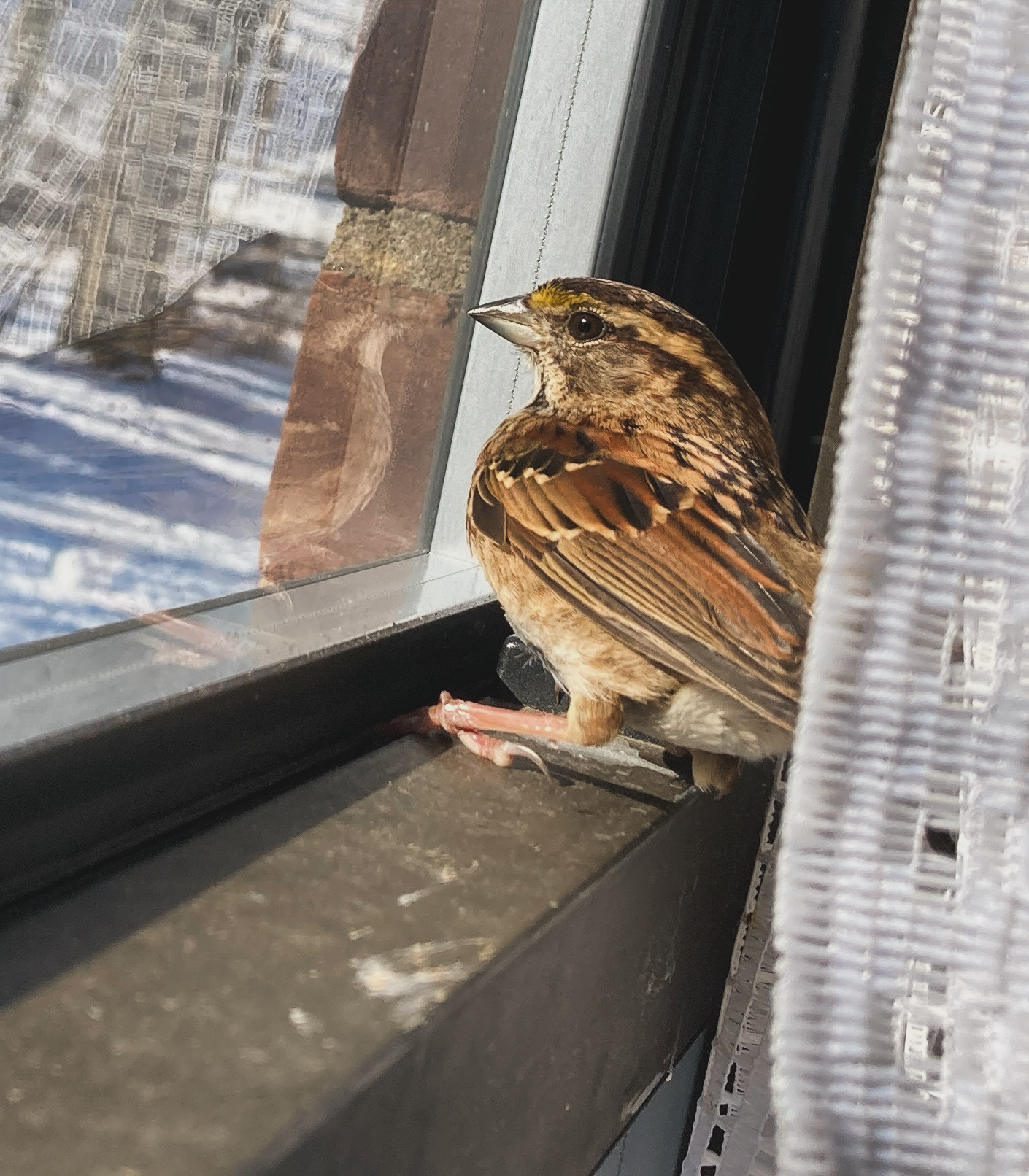
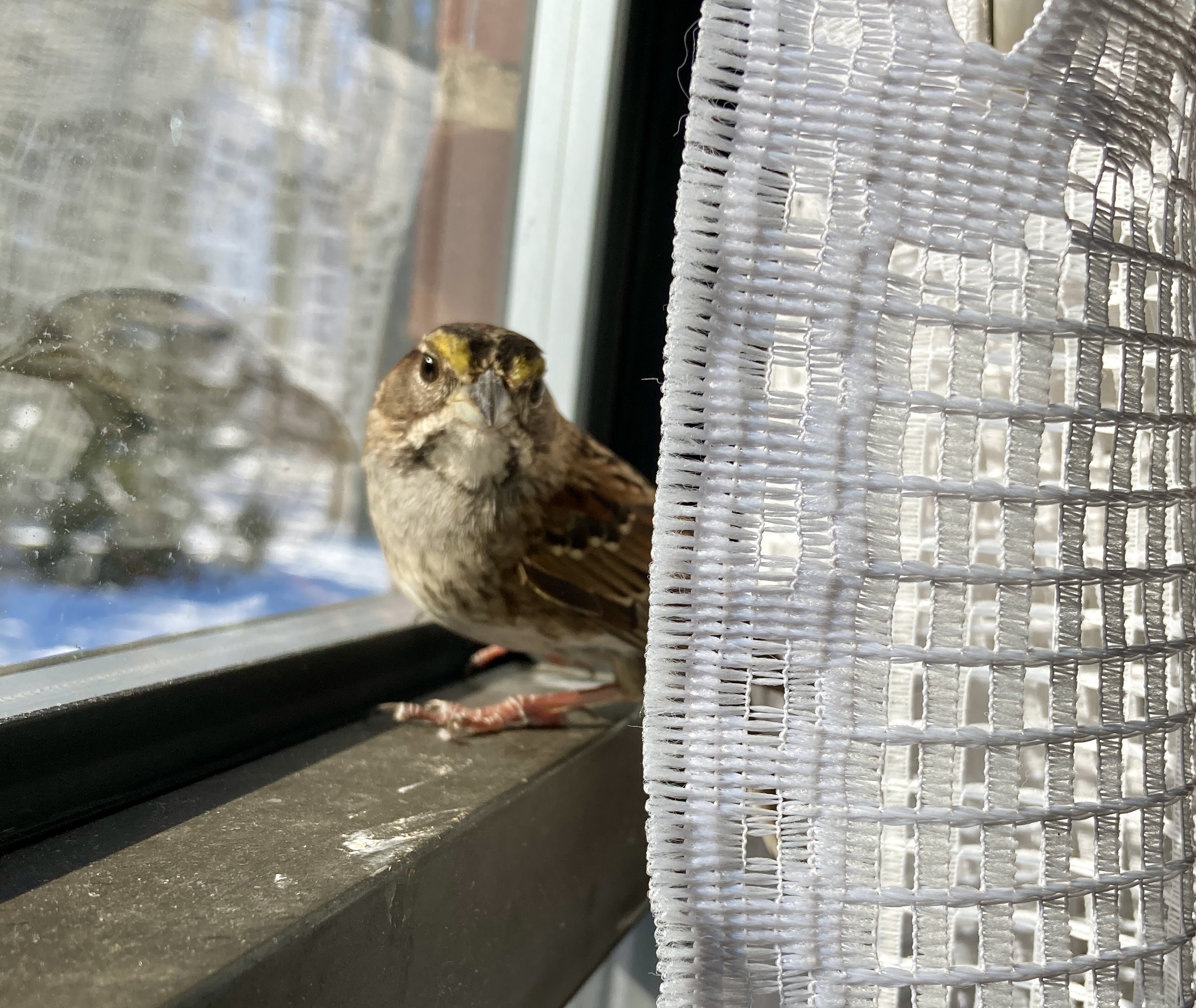
            One nice thing happened before the actual vacation started which gave me hope: we had another birdie visitor. This time it was a young white-throated sparrow who either had ADD or a panic disorder and kept flying and pacing relentlessly around the apartment. Mom got some great pictures of him in the few moments when he was able to remain still.

            But then, right after the bird left, I heard from my pharmacy that the FDA is clamping down on off label prescriptions for Ozempic (anything other than a type-two diabetes diagnosis), and then my doctor told me that my insurance won’t cover any of the other weight loss medications (Wegovy, etc.), so if I wanted to keep taking weight loss medication it would cost at least $1,000 per month. So, after six months of slow weight loss, the experiment is suddenly over. There’s a bill in the US congress to try to get weight loss medications covered by health insurance, but who knows how long it will take to get it approved; relying on the smooth workings of the United States government has never been a good life strategy.

            If the weight I’d already lost had improved my overall health, then maybe I would feel better about stopping here, but, if anything, I’m more exhausted now than I was six months ago. Which is why the first thing on my to-do list overwhelmed everything else I wanted to accomplish this week, and most of my vacation was spent sleeping, or at the very least, lying down. I also watched a bunch of webinars (and managed to download even more), and got some reading and writing and typing done. But vacation is almost over and my to-do list is, if anything, longer than it was at the beginning of the week. How is that even possible?

            Here’s hoping that the rest I’ve been able to get this week will help me get through until the next short vacation, and that somewhere along the way some more birdies will come along to remind me that all of this is worth the effort – even if my to-do list never, ever, gets done.

If you haven’t had a chance yet, please check out my Young Adult novel, Yeshiva Girl, on Amazon. And if you feel called to write a review of the book, on Amazon, or anywhere else, I’d be honored.

            Yeshiva Girl is about a Jewish teenager on Long Island, named Isabel, though her father calls her Jezebel. Her father has been accused of inappropriate sexual behavior with one of his students, which he denies, but Izzy implicitly believes it’s true. As a result of his problems, her father sends her to a co-ed Orthodox yeshiva for tenth grade, out of the blue, and Izzy and her mother can’t figure out how to prevent it. At Yeshiva, though, Izzy finds that religious people are much more complicated than she had expected. Some, like her father, may use religion as a place to hide, but others search for and find comfort, and community, and even enlightenment. The question is, what will Izzy find?

Mom’s Surgery

            As expected, I spent the weeks leading up to Mom’s second hip replacement living in existential dread, afraid she would die on the table and I would be left alone in the world with no one to fight off the gardeners trying to cut down my paw paw tree. And then, as everyone around me seemed to know it would be, the surgery was successful and Mom came through with all of her humor and energy intact.

            The days leading up to the surgery were full of worry, both because of the pre-surgical clearances coming down to the wire, but also because Mom’s hip was deteriorating incredibly quickly and she was struggling just to get from one room to the other, especially after the ban on NSAIDS was put in place five days before the surgery.

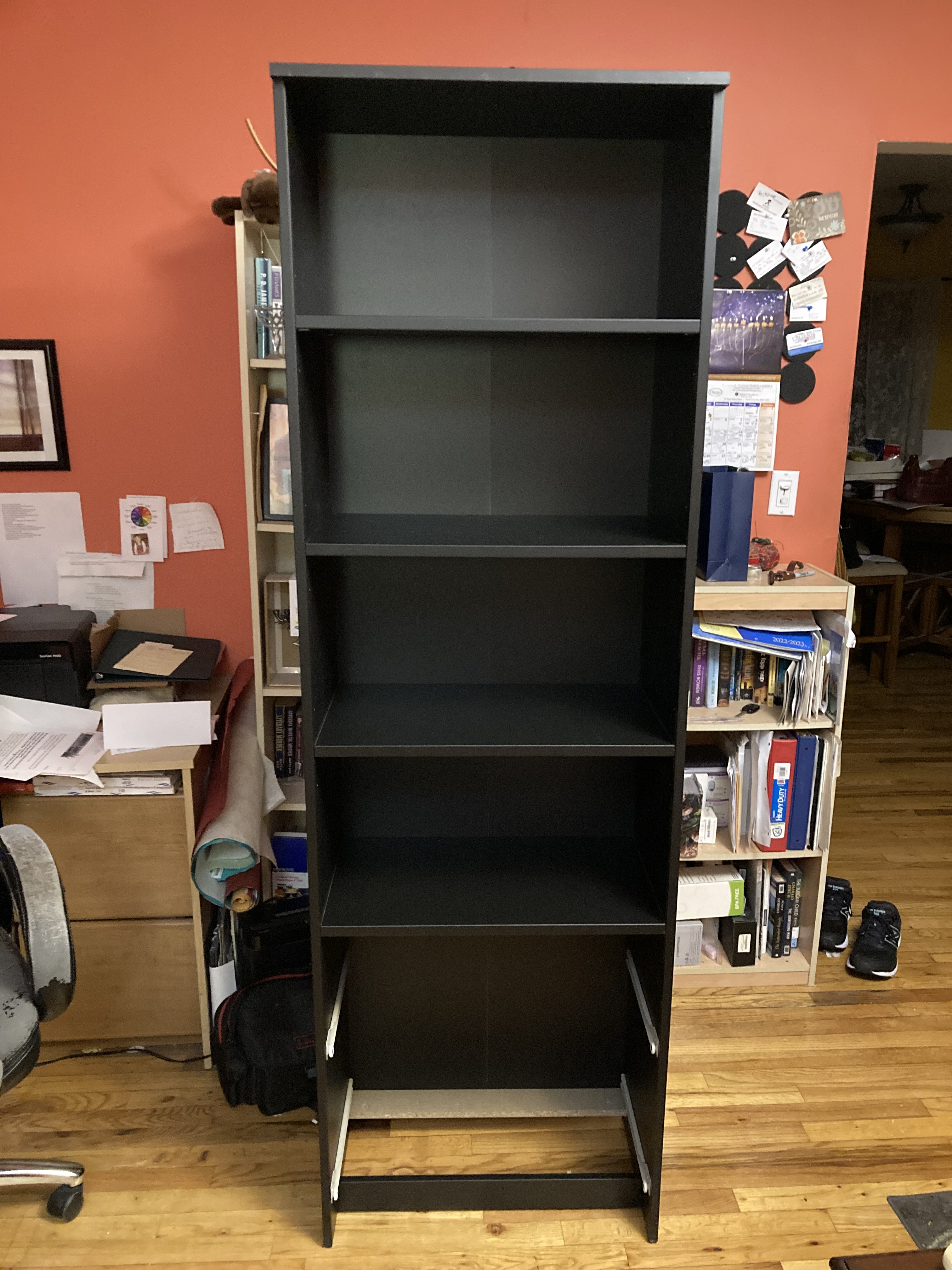
            I filled the time preparing: filling the freezer and the pantry with prepared meals; organizing all of the random crap in the apartment that might get in her way when she came home with the walker; carrying boxes of books to the thrift store, and bags and cans of dog food to the animal shelter; and finally replacing the old crooked bookcase with a new, slightly crooked bookcase (put together by moi – which explains why its wonky), so that she wouldn’t be toppled by falling books and sent back to the hospital.

New bookcase, before the wonky drawers were put in.

            We still have new rugs waiting to be put down, after we removed the un-cleanable rugs from the last months of Cricket and Ellie’s lives, but I’m going to wait on that until Mom’s walking is steadier and she doesn’t need the walker anymore; hopefully the neighbors will be patient with the uncovered floors for a bit longer.

            The need to clean has been profound since losing Ellie. When both dogs were still here I didn’t mind a few extra boxes here and there, but in the quiet I keep wanting to clean and find order and make things neat, as if making the apartment more orderly will heal the grief (though it doesn’t really work).

My Ellie

            It was so strange to be in the apartment alone. For two days it was just me, no Mom, no dogs, and I don’t know how to describe the stillness in the air. I kept hearing noises and thinking Ellie was coming back down the hallway after a midnight snack, or Mom was getting up in the middle of the night for a midnight snack (Mom and the dogs seemed to have a club I was not invited to). But no one was actually there.

Thank God, the surgery itself went well, and now that Mom’s back home, everything feels like its back to normal, where the noises around the apartment are real instead of phantoms, and even on pain meds and using a walker, she’s more energetic and busy than I am, always texting with someone or planning something. I think the lesson here is that I am a very boring person on my own.

            Next up is physical therapy and occupational therapy and nurse’s visits and keeping track of all of the post-op medications and worrying about something else going wrong. But Mom is in a surprisingly good mood so far, and I’m feeling hopeful again.

            Oh, and we got a note from the board of our co-op saying that from now on there won’t be a pet fee charged each month for each (or any) pet you own, so when the time comes I can clearly get as many dogs as I can fit into the apartment. Five sounds like a good number to me. It’s possible that Mom will disagree, so, shh, don’t tell her.

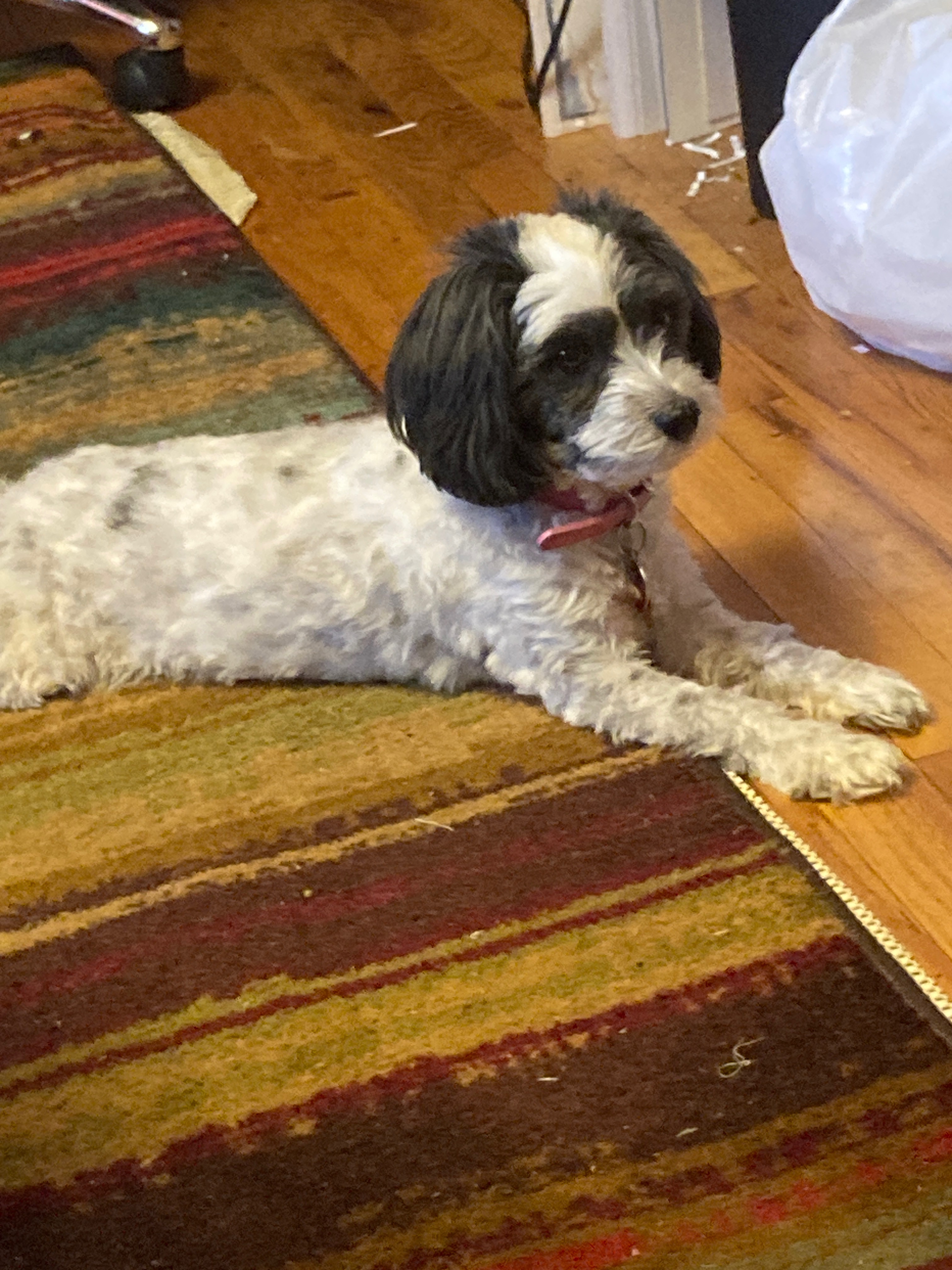
“One dog is always enough.”

If you haven’t had a chance yet, please check out my Young Adult novel, Yeshiva Girl, on Amazon. And if you feel called to write a review of the book, on Amazon, or anywhere else, I’d be honored.

            Yeshiva Girl is about a Jewish teenager on Long Island, named Isabel, though her father calls her Jezebel. Her father has been accused of inappropriate sexual behavior with one of his students, which he denies, but Izzy implicitly believes it’s true. As a result of his problems, her father sends her to a co-ed Orthodox yeshiva for tenth grade, out of the blue, and Izzy and her mother can’t figure out how to prevent it. At Yeshiva, though, Izzy finds that religious people are much more complicated than she had expected. Some, like her father, may use religion as a place to hide, but others search for and find comfort, and community, and even enlightenment. The question is, what will Izzy find?