Tag Archives: Jewish

My Voice

My Voice

When I was little, I used to sing stories to myself. I would walk to the library, make up a story, and revise it over and over, all to some endless tune in my head. My mother loved that I would sing around the house, and she wanted me to sing more. It was her idea to find me a voice teacher when I was in eighth grade. She wanted me to know that my voice was worth taking seriously.

I was always singing, or shouting, it's hard to tell.

I was always singing, or shouting, it’s hard to tell.

My first voice teacher had an opera background, but she spent most of my lessons on vocal exercises and breathing exercises, teaching me how to breathe from my diaphragm, and stand up straight, and relax my shoulders. I’d never much liked practicing scales on the piano, but vocal exercises made more sense to me. She taught me to sing through the mask of my face, like a raccoon, and to change the shape of my mouth to make the consonants clear and the vowels more open.

My father insisted that we sing songs together after Friday night dinner, as a family. But, he didn’t believe in normal limitations, like that a baritone might struggle to hit a glass-shattering high note. He refused to choose a key that everyone, including him, would be comfortable with, and he didn’t care about the quality of the note when he was done with it. He could rip it and strangle it, and drown the note in coughing, but if he hit that note, even for a second, he’d won.

And he did not like competition. He didn’t want me to practice singing between voice lessons. He would complain that I was “caterwauling,” even if I practiced in my room with the door closed. He’d complain about the money Mom was spending on my lessons. And eventually, he made it clear that he believed in the ban on kol isha – the voice of a woman – that we’d learned at school. I could sing at home, but it would be unacceptable to allow my voice to be heard by men outside of the family. He believed that singing, for a woman, is a salacious, sexually provocative act, and if I do it, I am a whore.

Unfortunately, around the same time as I was getting used to my voice lessons, we had a guest speaker at my orthodox Jewish school. Only the girls were invited to the gym to listen to her. She performed for us first, doing her own version of beat boxing, using her mouth like a drum and her hands as tambourines. The things she could do, the sounds she could create with no musical instruments to back her up, were incredible. There was something like bird song about her voice, as if she was born with these songs in her body and she just had to release them. She wasn’t just hitting notes, she was putting spin on them, like a tennis player, top spin and back spin, hollow sounds and full sounds, cold and warm, shivery and strident, all from one voice. I wanted her to be my teacher.

After her performance, she told us that she’d been a voice student at a prestigious conservatory, training for a professional music career, when she started to visit Chabad (a Chasidic Jewish outreach group) on the weekends. She gradually became more and more religious, until it became clear that as a religious Jewish woman she could never sing in front of men. She’d pieced together a career as a speaker, and sold her music to strictly female audiences. Her message was clear: being religious comes first, before anything else you might want, or love, or need in life.

Her visit haunted me. I didn’t stop singing altogether, but I felt her hand tightening around my throat.

My black lab mix, Dina, came along when I was sixteen years old, and she was a singer too. You had to hit a certain note, something in the howl-range, and that would set her off. Her pitch was pretty good and she could sing a nice clear note or series of notes, but she didn’t seem to enjoy it. She seemed like a button had been pressed in her brain and she had to sing, and had no control over it, and no choice. She seemed relieved when the singing stopped, as if it had taken so much out of her and now she could rest in silence.
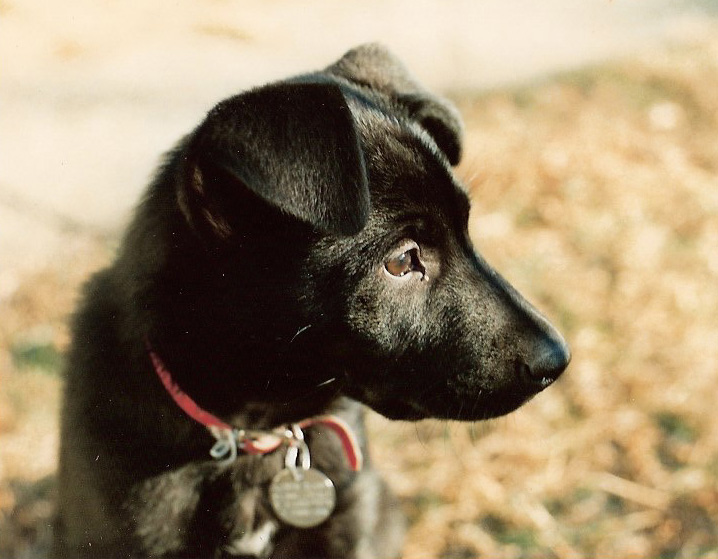
Dina as a puppy.

Dina as a puppy.

I took a few years off from trying to sing, until my last semester of college, when I had two credits to kill. I’d been feeling like a robot, detached from myself and my voice, and I hoped voice lessons would help unlock something. I didn’t have to perform in public; my lessons would be in a safe, partially soundproof room. I still couldn’t practice at home, though, so I’d sing in the car on the way to and from school.

This was my first male voice teacher, and he was closer to my age, and friendly, and an opera singer. Whenever he actually sang something I sort of cringed, though. I’m not an opera fan. The vocal quality they strive for is bombastic and brassy and kind of hurts my ears, but he was very nice. He had me singing from an opera workbook, in Italian. There was something freeing about singing in a language I didn’t understand.

I sang to Dina at home, but not too loud, and never in full voice, and gradually, the hand around my throat grew tighter and tighter, telling me to stop singing, and I did.
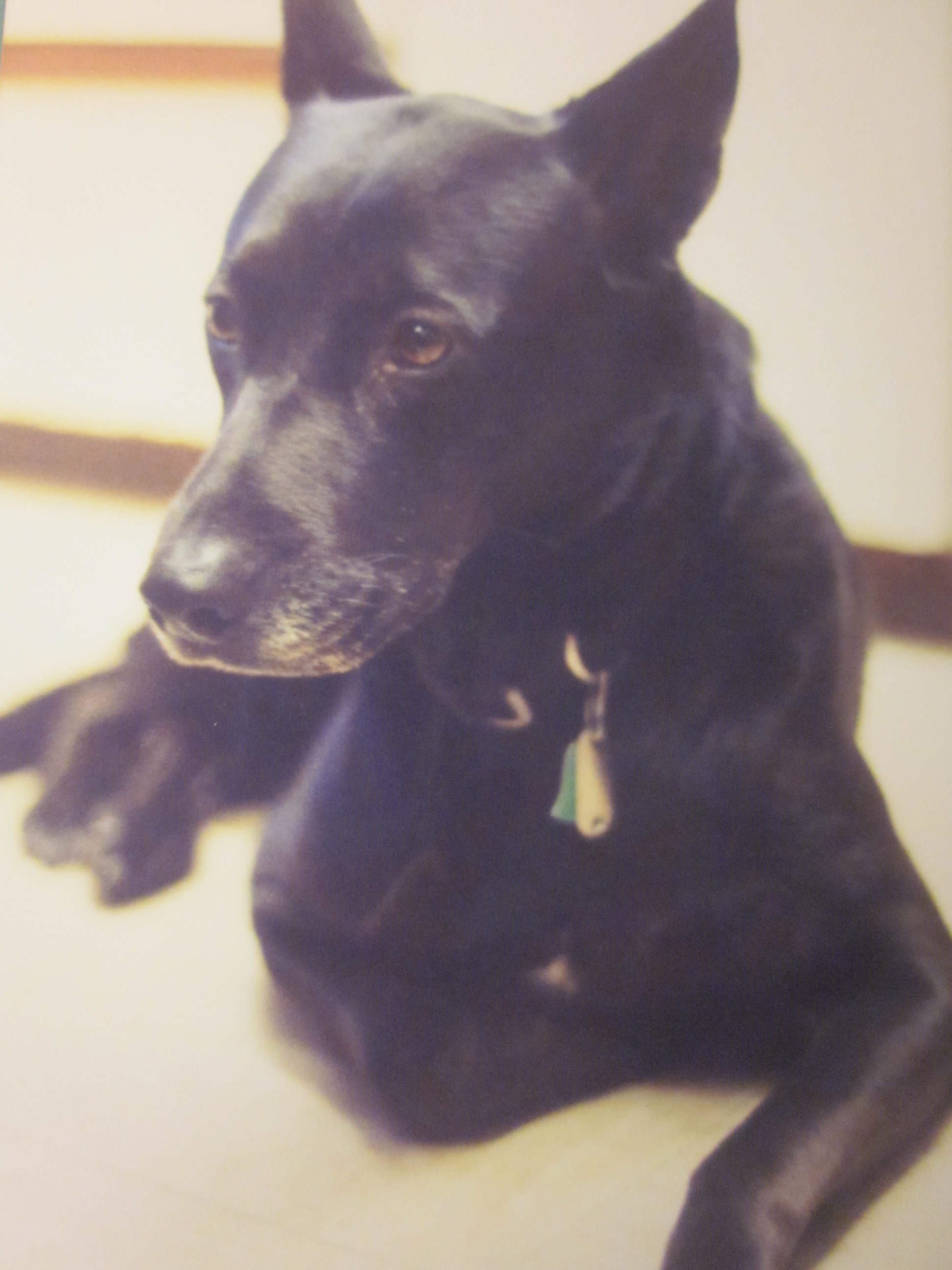
Dina had a lot to think about.

Dina was a very good listener.

When I think back to that girl singer, though, telling us that she had to give up her dreams in order to be a good girl, I wonder if I ignored something important. With her words, yes, she told us to hide ourselves from the world, but her body carried a different message. Her voice seemed to be saying that, if you have a bird trapped in your chest, flapping its wings and trying to sing its song, you have to let it sing, or it will die.
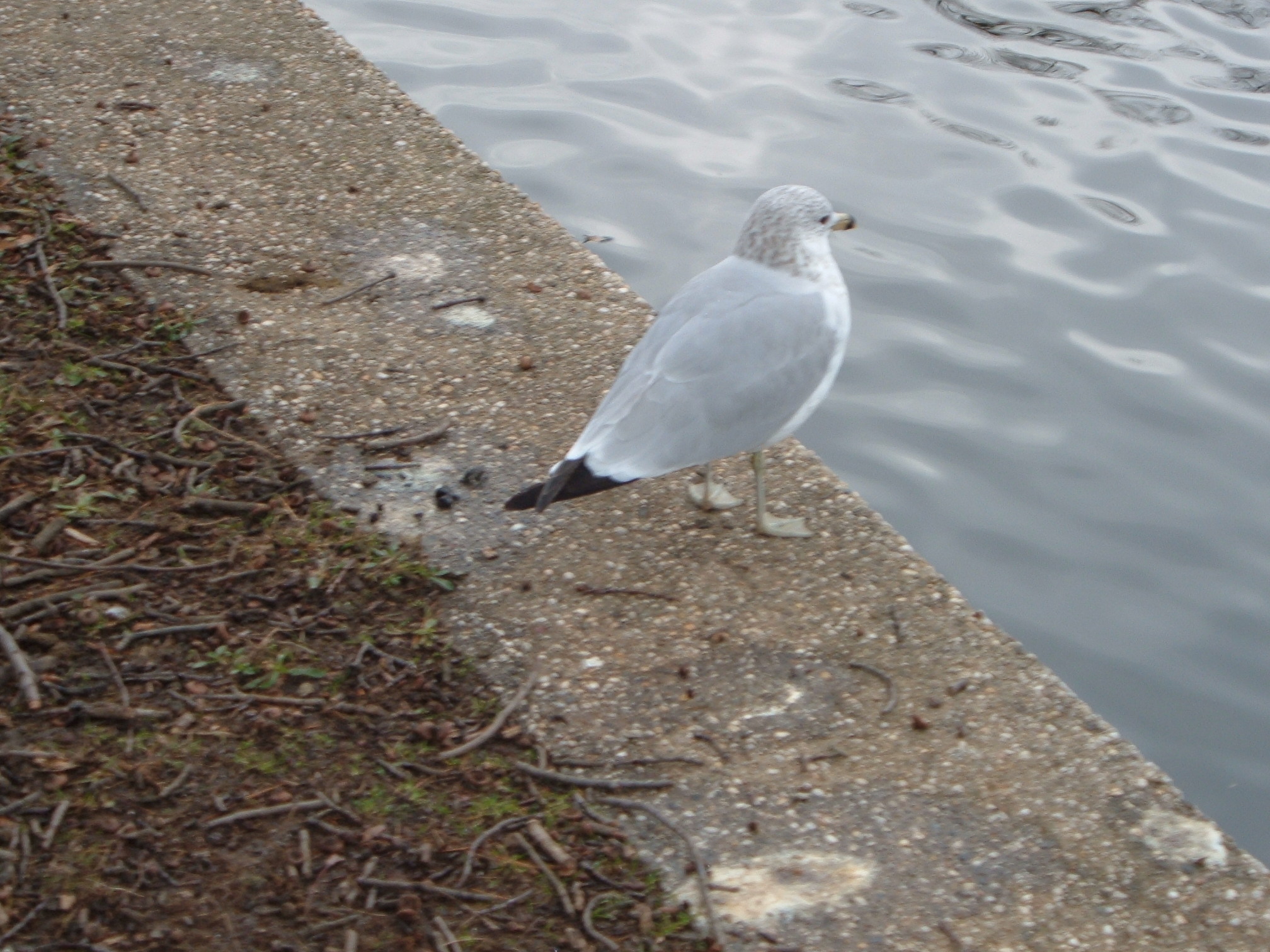
birdie

My Life as a Jewish Woman

One of my blogging friends suggested that I write about my life as a Jewish woman, and it scared me, because writing about being Jewish always scares me, just like writing about anything else people might judge me for scares me. I worry about anti-Semitism; I worry about people feeling alienated from me for being different; I worry about being rejected, and looked down on most of all. The image of the Jew as vermin has always stuck with me. I was born long after the holocaust, but it has never felt that far away.

“What are you talking about, Mommy?”

I grew up in Jewish environments, getting a Jewish education (or a few different Jewish educations), so being Jewish always felt normal to me. It was only when I went to college that being Jewish became an issue. Most of the higher educational world, no matter how many students at a school are Jewish, is based on a Christian world view. It is assumed that when you mention the bible, and you will, you mean the King James Version, including the New Testament. In a discussion about history or biology, or, god forbid, art history, teachers would reference books of the bible I’d never heard of, and I felt like I needed Google and Wikipedia, before such things existed.

“Ask me, Mommy. I know everything!”

It wasn’t just factual references that I missed and had to look up, there were world view things I couldn’t relate to. So much talk of heaven and hell, and turning the other cheek, had never come up in my childhood. I felt like I’d need a PhD in Christianity before I could understand much of anything. So I did my honors thesis on comparative religions, and read the King James Bible, and the New Testament, and the Koran, and forty other books on various religions around the world. I can’t pinpoint what I did with all of that information, and I didn’t feel like an expert when I was done, but I did feel more grounded. I felt like I knew enough to get by.

Despite the adjustment period, there was something freeing about not being in a Jewish environment anymore. I stopped feeling like someone was looking over my shoulder all the time, giving me demerits for each non-orthodox behavior. No one cared if the sandwich I ate for lunch was kosher. No one cared that I wore pants. If I went to school on a Jewish holiday, no one even noticed. It didn’t matter to anyone how religious I was, or wasn’t. They noticed that I was a good, and maybe compulsive, student. They noticed that I talked back to teachers (sometimes too much, sometimes just the right amount).

Being outside of a Jewish point of view allowed me to see how many different world views there really were. I started to see that even the Jewish world was not as unitary as it had seemed. Not all Jews are orthodox and steeped in the Talmud, not all Jews were red diaper babies raised by union activists, all Jews are not from Eastern European shtetls, all Jews are not “New York liberals,” or Pro-Israel, or Pro-peace, or well educated, or small minded, or wealthy, or clever, etc., etc.

The only really Jewish thing about my life now is the fact that I go to synagogue on Friday nights. I don’t keep kosher (sorry, God), and I don’t take out a prayer book three times a day, and I don’t wear a Star of David necklace. I do have a mezuzah on my door, but I never remember to kiss it.

My life isn’t especially Jewish, but I am. It is a big part of my identity, probably as big as being female, or American, or a writer. Being Jewish is essential to how I view the world around me, how I watch the news, how I meet new people. I am probably more skittish about traveling to, say, Germany than the average American woman. I am probably more sensitive about how Israel is portrayed in the news (though some evangelical Christians have me beat on that one).

The fact is, though, that I felt like just as much of a Jewish woman during the fifteen years when I did not belong to a synagogue as I do now. The rituals, and the belonging, while comforting and satisfying, are not the source of the identity for me. I know people who were raised without much involvement in Jewish community life, and they too feel their Jewishness strongly. There’s a mix of pride in the heritage, and fear of being targeted, and shame at being different, that we all share.

My dogs remind me, though, that my Jewish identity isn’t all of who I am. They are deeply connected to the energy of the universe, and they could care less if I am Jewish or Muslim or Christian or agnostic. The dogs represent the connection I have to everyone, not just to one small group.

“Hi Mommy!”

“If you’re Jewish, are we Dogish?”

I went to the supermarket one day, and some kid with weird hair was standing outside. Normally, I wouldn’t ever think of stopping to talk to a strange teenage boy, but he had a bulldog puppy with him and that changed everything. I met the dog, I got kisses, I talked to the boy on the other end of the leash, and he was friendly and talkative, and grateful that I liked his dog, and we parted as friends, feeling better about the world and the other people in it. Dogs do this!

Who could walk past a bulldog puppy! (not my picture)

Who could walk past a bulldog puppy! (not my picture)

So yes, I am a Jewish woman, and an American, and a writer, but before all of that, I am a dog person. It’s not an identity, it’s just what’s there, under all of the layers of identity, and my dogs think it is the most obvious thing about me.

Me and baby Cricket

Me and baby Cricket

My Mezuzah


A mezuzah is a totem, a sort of anti-goblin device slash symbol of Jewish identity that Jewish people are supposed to place on our doorways. The mezuzah itself is a rolled up parchment inside of a decorative case and the parchment comes from the bible and basically reminds us to love God, and believe in God, and keep the commandments, and pass it all on to our children.

It's pink!

It’s pink!

You’re supposed to kiss the mezuzah – or kiss your fingers and then touch the mezuzah – every time you enter or leave the room, but I don’t have the patience for that. I have my one mezuzah at the front door, and I notice it when I walk in, and it gives me a feeling of familiarity. I happen to think my mezuzah is pretty.

The only other thing we have in front of the apartment door is a red welcome mat that almost always has a few pieces of kibble on it. So, welcome, dogs live here. We also have a table out in the hall with plants on it, and there are plants outside the front door of our building, and a turtle made of painted rocks. So we have a few things that announce who we are – Jewish dog people with lots of plants and an interest in turtles.

Turtle guards the garden.

Turtle guards the garden.

When my brother’s family came to visit, my niece Lilah, the black lab, who had only been here once before, raced up the stairs and went straight to our door without anyone reminding her where to go. She knew which apartment smelled right. Eau de kibble sends the message.

Lilah!

Lilah!

Lilah in the snow.

Lilah chasing Cricket in the snow.

But a mezuzah shouldn’t just be a sign to other Jews, as if only Jews should feel welcome in my home. I feel more like the mezuzah announces who I am, so that you will feel more comfortable telling me who you are.

I like symbols. An idea is elusive, but a physical symbol is visceral and concrete, and makes things easier to remember. I’ve considered dog related symbols for our front door too. The shelter where we adopted Butterfly gives out huge paw magnets that you can put on your fridge, and car stickers, and sweatshirts, and blankets, and on and on. But, by the time you get close enough to my door to see a sticker, you will have heard Cricket barking at you from inside, so the sticker would be kind of irrelevant.

I’m not comfortable wearing a star of David necklace. I had one, but I kept yanking at the chain until the chain broke, two or three times. Maybe the necklace felt too reminiscent of the yellow stars Jews had to wear during the holocaust, or maybe it’s just that the necklace I had came from my father’s mother, and she grossed me out.

I wear my Koru instead. It’s a New Zealand/Maori symbol of new birth – an unfurling fern – and I wear it to try to remind myself that I can start again every day. I don’t have to be stuck in the past, even if the past is the bad day I had yesterday. It’s not a religious or spiritual symbol for me, it’s a reminder, like a rubber band on your wrist (I tried the rubber band idea first, but it hurt too much).

Koru and hair.

My Koru, and hair.

I’m afraid to post this now, given the current situation in Israel. I feel vulnerable when I watch the news. When I heard about mass protests against Israel in Europe, and anti-Semitic slurs on college campuses, I couldn’t help but feel frightened.

To me, having a mezuzah on my door means that I feel safe telling people that I am Jewish and I don’t live in a place where being Jewish makes me a target. Putting a mezuzah on my door, or writing about being Jewish in a blog that is largely about dogs, is my way of saying that I know I’m safe and I don’t have to hide who I am in order to reach out to new people.

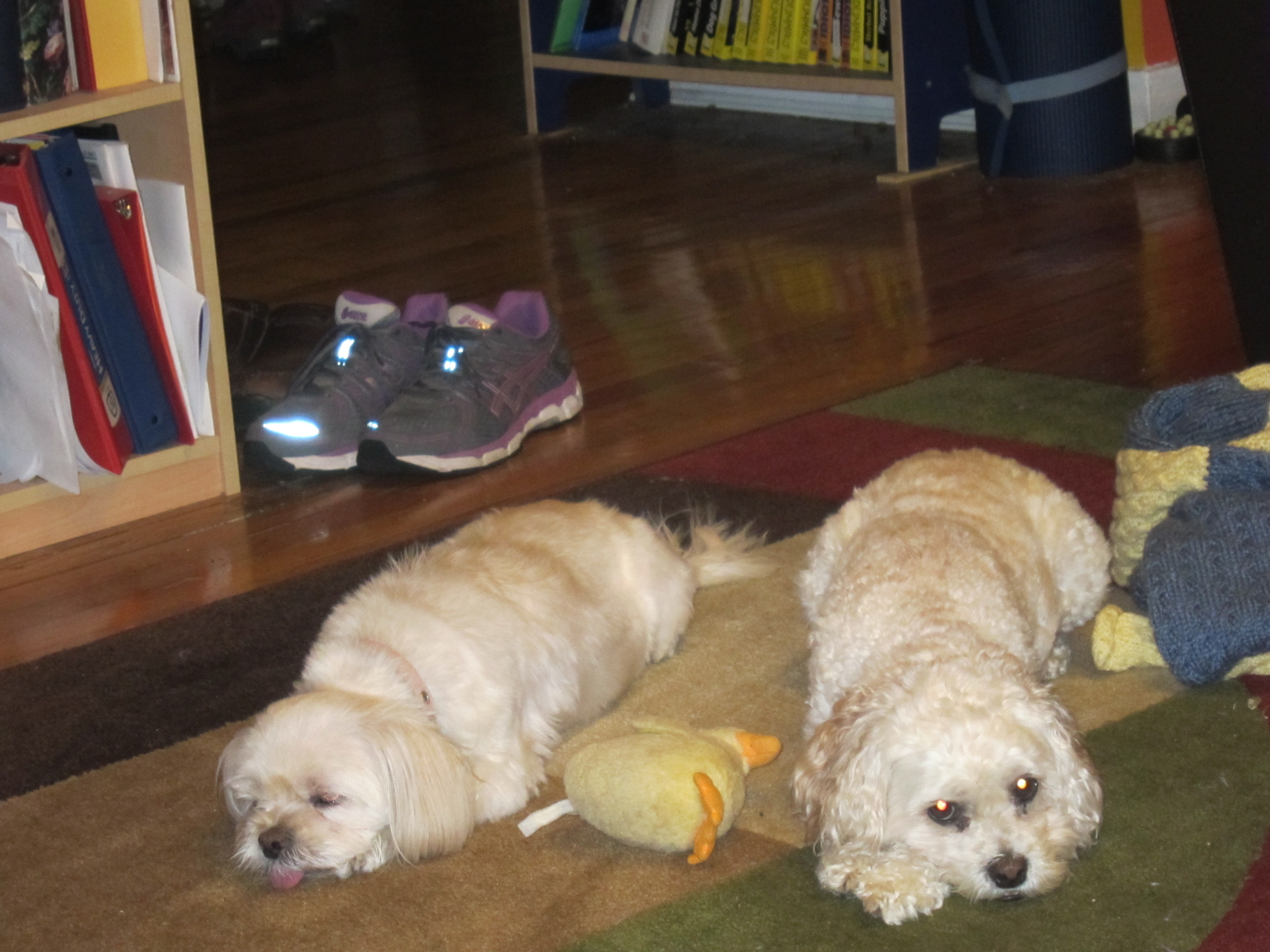
My girls, and Ducky too.

My girls, and Ducky too.

Candle Lighting


When we first moved into the new apartment, back in May of 2013, I promised myself a set of candle sticks for Friday night candle lighting. Usually I’m at synagogue for Friday night services and they light Shabbat candles for us there, but I thought it would be a milestone to light my own candles again.

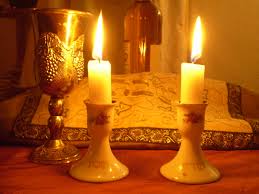
Traditional Shabbat Candles (not my picture)

Traditional Shabbat Candles (not my picture)

I looked in a few brick and mortar stores, while we were looking for other things we needed, like shelving and couches and tables and other little things like that. But I couldn’t find anything. The ensuing online search was extensive, but I eventually found a set of candlesticks that I liked very much. And then I found out that the online store that advertised the special candlesticks had gone out of business, just leaving the web page up to taunt me. When the special candlesticks disappeared, I lost my nerve.

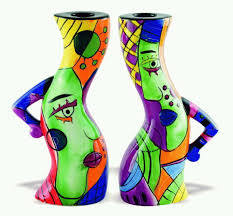
Candlesticks with attitude. Eek!

Candlesticks with attitude. Eek!

I used to be clumsy, or distracted, and sometimes I still am. I have memories of dropping lit matches into full garbage cans, dropping lit candles onto counter tops, setting tablecloths on fire, etc. My fingers would get numb and shaky in the presence of fire, and not act the way I’d trained them to.

Don't worry, that's just my house burning down.

Don’t worry, that’s just my house burning down.

I used to light the Shabbat candles in our house growing up. I’m not sure why my mom didn’t want to light the candles, maybe it was her way of rebelling against my father’s obsession with becoming more and more religious. So it became my job, and I didn’t feel like I could say no.

The fat white Shabbat candles never sat still in their candle holders, so I had to melt the bottoms a bit to make them stick in place. Lighting the wooden matches always made me anxious. If the strip on the box had started to wear down, because we got those huge boxes instead of pocket sized, I’d have to light the candle from the stove, and then worry about doing something ritually wrong by turning off the flame on the stove after the official Shabbat candles were lit.

I hated that fear of doing it wrong. I hated feeling like someone was watching me, just waiting to yell “Gotcha!”

There’s something universal about candles, in all religions, despite electric light being ubiquitous. The flickering, temperamental quality of candle light, or the heat or temporariness of it, seems to add meaning. The Sabbath is a day of rest, a day to stop doing things the way you always do them and be more conscious and aware, of your family, of nature, of love and joy. It’s a time to remind yourself that there’s more to life than work. I wonder if the flame of the candles is, in part, a symbol of how dangerous that rest day maybe be, or may feel, when you stop rushing around and start to really experience your life. There are a lot of shadows hiding behind our busy lives, and the light of the candles may illuminate them in a way we are afraid to face.

If I could make this ritual work for me, I’d want to light four candles: one for me, one for Mom, and one for each of the dogs. But I keep seeing the dogs getting burned and the apartment going up in flames.

There’s a custom in orthodox Jewish homes, and maybe in more liberal Jewish homes now too, of blessing each child on Friday night as part of the ritual of the Sabbath. I knew a family with six kids who did this, and it was a lovely thing to see. Each child went up to their father, in age order, and he closed his eyes and put his hands over the child’s head and said a blessing, including a special wish for each child.

Maybe I could adapt this ritual for my dogs, instead of doing candle lighting, and come up with a prayer to say for them once a week. Just the act of resting hands on their heads would have a calming effect. I could wish them good sleep, good poops, and exciting things to sniff.

"Go ahead, Mommy. I dare you to bless me." (That would be Cricket.)

“Go ahead, Mommy. I dare you to bless me.” (That would be Cricket, on the right.)

And eventually, maybe, I’ll find another set of candle sticks that captures my imagination and help me over the hump. And maybe a fire retardant table cloth to put under them wouldn’t hurt.

Synagogue Dogs

            I wish that my dogs could participate at my synagogue. Yes, Cricket is obstreperous and barky and disruptive, but I’d like to believe that there is something in the music of prayer and the solemnity of the service that would help calm her and give her some relief, the way it does for me. The Rabbi and Cantor at my synagogue like to sing harmonies. I think that was the clincher for me when we visited the synagogue last year and decided to join, the way the music was like a conversation between the two of them.

            It would be nice to have an acknowledgment that dogs are members of our families, especially for people like me who don’t have children, or husbands or wives. We get left out of community rituals that would allow us to feel more whole and welcome.

And sometimes, I just feel like I want Butterfly to be sitting on my lap, so I won’t feel so strange to myself in this strange place that isn’t home. She would be my therapy dog, for when I start to twitch and shake and feel self conscious about being in public.

Butterfly, in silent prayer.

Butterfly, in silent prayer.

 Butterfly’s presence would calm and relax the people around her, except for the occasional stress peeing. And then there would be one less place my dogs would be barred from going. It’s already painful for them that they can’t go to the supermarket.

            My synagogue is Reconstructionist and one of their prime directives is to be inclusive of all kinds of people. People, but not dogs? They’ve broken down barriers for intermarried couples and gay couples and women in leadership. Shouldn’t there be some way to break the prejudice against my dogs?

At Friday night services, people wear casual clothes. I started out wearing black dress pants and high heeled boots, because I thought I should, but now I wear jeans and sneakers. There is an aging population at services and they are very accepting of each other’s limitations. They understand the need to be there instead of alone. This is the kind of place that could welcome dogs.

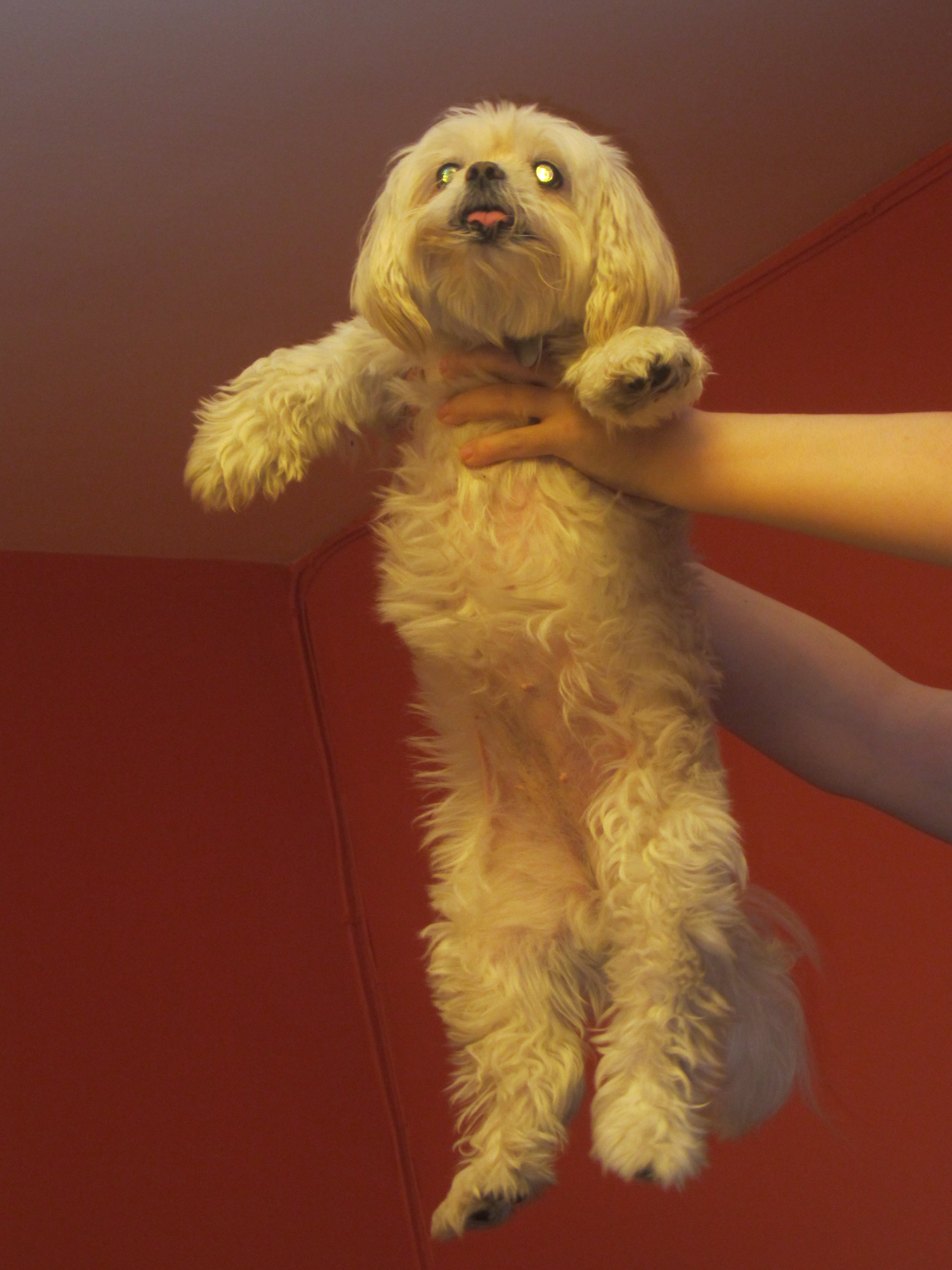
            I would have loved there to be a service to welcome Butterfly into our family. I picture something like the Lion King scene where Simba is introduced to the community, raised up high. I would have liked the Rabbi to hold Butterfly up on the pulpit and say a blessing over her and announce her name to the congregation.

Butterfly's naming pose

Butterfly’s naming pose

When Cricket is sick, it would be nice to be able to go to synagogue and say a public prayer for her recovery. There’s something powerful about putting aside privacy to ask for help from the community, as if we are tapping into an electrical system where everyone’s energy is pooled together.

Cricket is less amenable to being raised in the air

Cricket is less amenable to being raised in the air

On Purim, when we read the story of Esther and use a noise maker, called a grogger, to blot out the name of the bad guy in the story, Haman, the dogs could participate. My dogs, especially Cricket, could be living noisemakers. There could be a whole Hebrew school class for the dogs, to train them for their big day, when they can stand up as a barking choir, and blot out the name of the enemy who tried to harm their humans.

But most of all, I think dogs could bring something unique to a house of worship, because they are not of any particular religious or ethnic persuasion. A Golden Retriever could just as easily, and happily, live with Jews or Muslims or Christians or Buddhists. Dogs are not biased towards one religious group or another. A dog’s presence in the synagogue could be a reminder of the basic spirituality we all share, the God-sense we are all trying to tap into, rather than the specific religion we use to get us there.

My synagogue-ready dogs

My synagogue-ready dogs