Tag Archives: loss

Grandpa’s Memoir

            Recently, I realized that while I had typed up all of my grandfather’s letters back and forth with his father (despite many of my great grandfather’s responses being in Yiddish and broken English) and my grandmother’s travel diaries (listing all of the things she hated about each country she visited) and all of the children’s stories my grandfather had written for his grandchildren, or at least the ones that I could find, I hadn’t typed up his forty some odd page memoir, even though I was sure I had. We’ve had copies of his handwritten memoir forever, and maybe that’s why I assumed it had been typed up or at least scanned into the computer at some point, but no.

Grandpa’s memoir

            So, since I’m on summer break from work, I decided to type the memoir and give myself the opportunity to hear my grandfather’s voice once again.

            I had four grandparents, of course, but my father’s parents were both difficult people with not-so-great English who were unlikely to write down their thoughts in any language. And my mother’s mother, who wrote quite a lot, was not the most generous soul, so reading through her poems and essays, can be, at the very least, claustrophobic.

            But my mother’s father was a writer (as well as a teacher) and towards the end of his life he decided to sit down and write an account of his childhood, specifically for his grandchildren. He wrote, early in the pages, that he wished he’d had such an account from his own grandparents, and so he wanted to make sure to do that for us.

            For the past few weeks, whenever I’ve had time, and energy, I’ve been sitting in front of the computer transcribing a few pages of my grandfather’s handwriting – hearing his unique voice and how he played with punctuation (a dash here, a comma there, often both at the same time) and how he often repeated words for emphasis, like hard hard, for very hard, or much much, for very much. Interestingly, I’ve noticed this same pattern in Modern Hebrew, where le’at le’at (or slow slow) means very slowly, and maher maher (or fast fast) means very quickly.

            I was sure I remembered everything important from having read the memoir years ago, but of course there were so many things I’d forgotten: like his descriptions of the outhouse behind the tenement across the street, and how lucky his family was to live in a tenement that had two indoor toilets per floor; or his description of all of the wonderful food his mother made for holidays, or the deep anxiety she lived with year round and that was finally echoed by everyone else during the High Holidays; and there were all of the stores he accompanied his mother to, when he was only four years old, because his English was better than hers; and the way he described his childhood synagogue on Yom Kippur, where the Cantor would close the windows, to avoid catching a cold from the breeze, leaving many people struggling with the heat, and fainting from the combination of the heat and the hunger from fasting.

            My grandfather was a wonderful storyteller; I’ve always known that. And he had strong feelings about the ways his childhood orthodoxy no longer fit him as he grew up and began thinking through his Judaism for himself. And I knew that he loved language and food and his family. None of the information or the wisdom in these pages is new to me, but I am so grateful for the opportunity to dawdle over these pages again and to take my time as I type (because I am a very slow typist) and visit with him again.

Grandpa

            In the midst of the typing, my great aunt Ellen, my grandfather’s baby sister, died at the age of one hundred and eight. She had outlived the rest of her siblings by decades, taking on the mantle of family elder and family glue. And with her death it feels like a whole generation is disappearing at once, except for all of the memories they’ve left behind, including this memoir my grandfather wrote just a few years before he died. These forty short pages are giving me a chance to have conversations with him that we never got to have when he was alive, and I am so grateful to have these words to help keep his memory alive, and the memory of his baby sister whom we loved very much, and, who, as a result, we will never really lose.
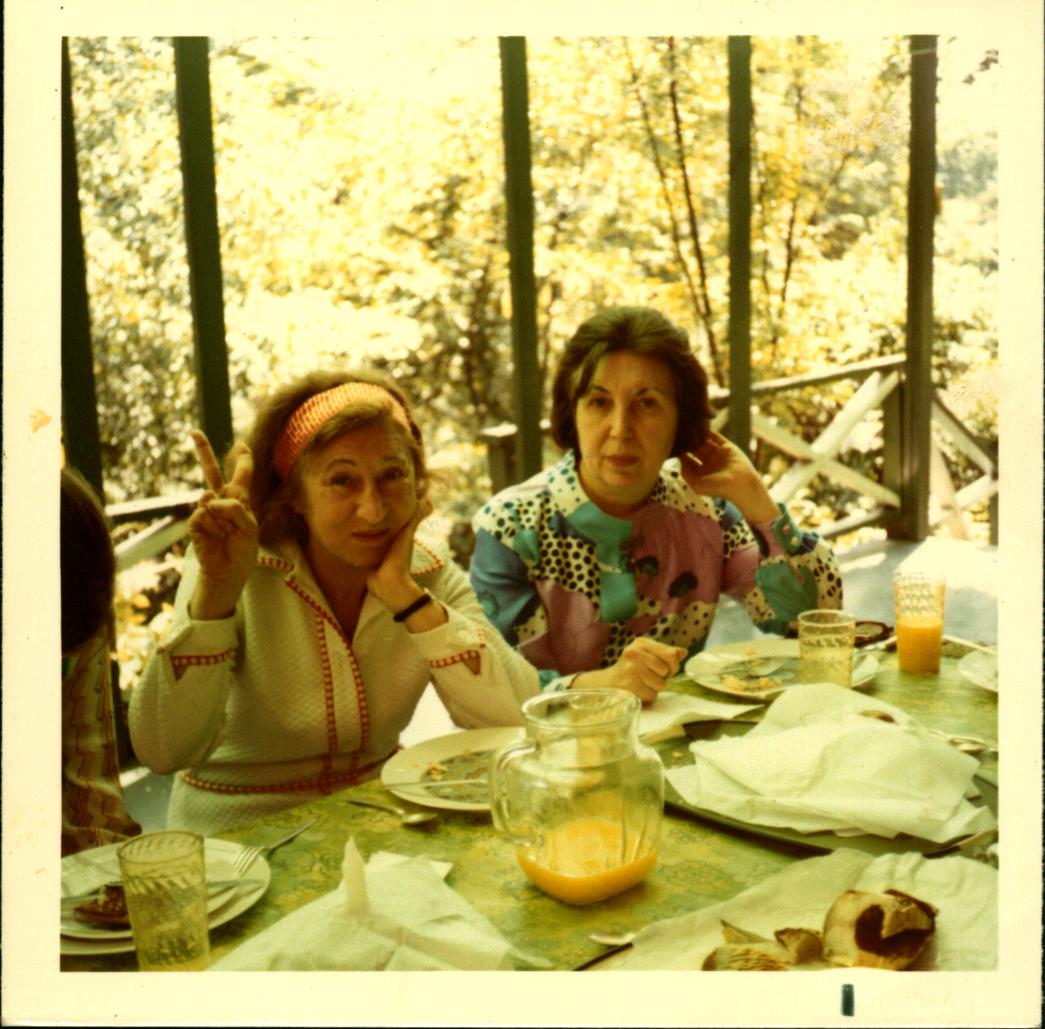
Ellen (right) with her sister Susie

If you haven’t had a chance yet, please check out my Young Adult novel, Yeshiva Girl, on Amazon. And if you feel called to write a review of the book, on Amazon, or anywhere else, I’d be honored.

            Yeshiva Girl is about a Jewish teenager on Long Island, named Isabel, though her father calls her Jezebel. Her father has been accused of inappropriate sexual behavior with one of his students, which he denies, but Izzy implicitly believes it’s true. As a result of his problems, her father sends her to a co-ed Orthodox yeshiva for tenth grade, out of the blue, and Izzy and her mother can’t figure out how to prevent it. At Yeshiva, though, Izzy finds that religious people are much more complicated than she had expected. Some, like her father, may use religion as a place to hide, but others search for and find comfort, and community, and even enlightenment. The question is, what will Izzy find?
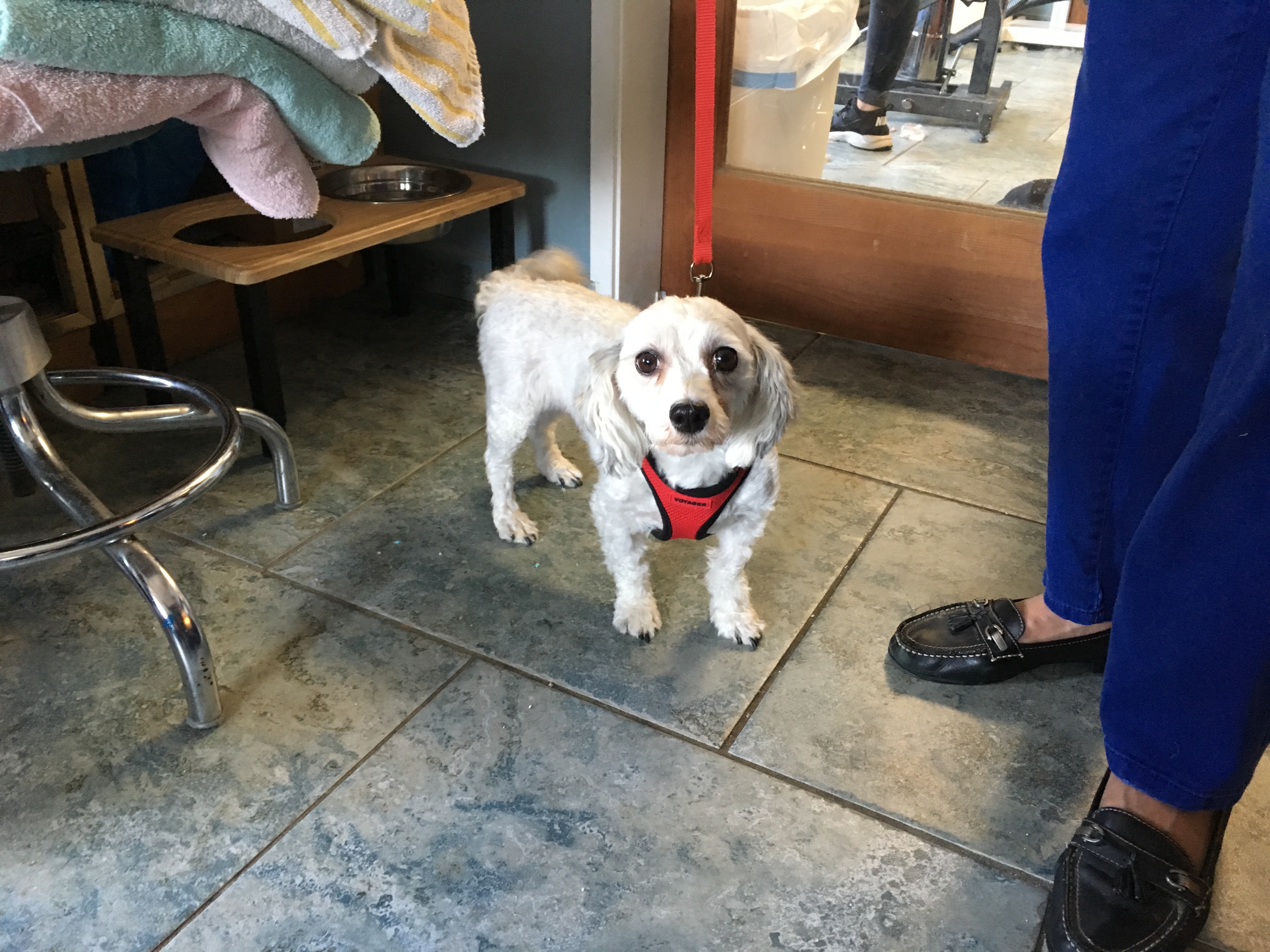

Goodbye, My Ellie

            Ellie died at home early Monday morning, after not eating much the previous day. She had her final bedtime hugs and scratches and then went to get a drink of water and rest by her wee wee pad, and by morning she was gone

A friend suggested that Cricket was getting bored alone in heaven and tapped Ellie on the shoulder, telling her to come sooner. I can believe that of Cricket, and I can believe Ellie would do that for her sister, but she is so deeply missed here on earth.

            It’s hard to find words for the loss of Ellie, on top of the loss of Cricket just two months ago, which has left the apartment so completely dogless. My greatest consolation is that Ellie knew how deeply she was loved, and we know how completely she loved us.

Meeting Ellie
Ellie’s first sleep at home
Ellie’s first complaint
Freedom from the harness
Ellie in therapy
Cricket and Ellie team up
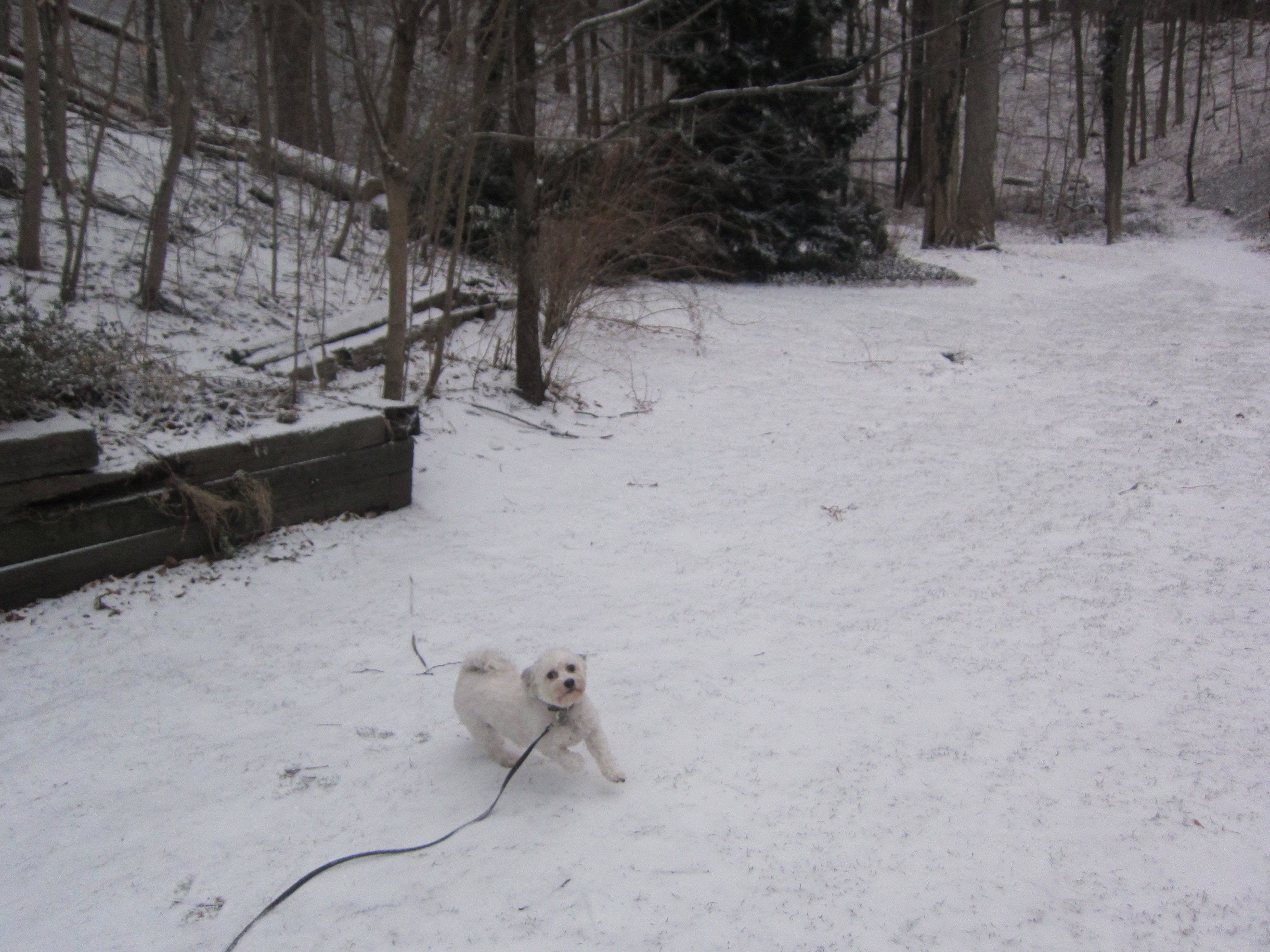
Ellie in the snow
Happy Ellie
Ellie the gardener
Goodbye my Ellie. I will always miss you.


Cricket’s Last Weeks

            This past Monday morning, after watching her decline throughout the weekend, we brought Cricket to the vet to end her life. She was sixteen years, two months and three and a half weeks old.

So many times over the past weeks and months we had thought Cricket was nearing the end, and we told ourselves that if she was in the same state in the morning we’d take her to the vet and put her to sleep. Almost every time, Ellie would sleep in Mom’s room overnight, instead of mine, watching over her sister, but when morning came, Cricket would wake up ready to try again; demanding to try again.

            Except, in the last few weeks, each time Cricket bounced back, she was a little shakier and a little more uncertain than the time before. We held onto what the vet had said, that if she didn’t eat for three days she was suffering, as our guide, because we didn’t want her to suffer, but we also didn’t want to cut short her life, even a day sooner than necessary.

            She still needed the ACE (doggy valium) in order to tolerate her daily subcutaneous fluids (I still have the bite marks from the few times I tried to do it without the ACE, even in her last week), and I was able to take advantage of her time on the ACE to do some grooming that she would never have allowed otherwise: making sure she was clean, and could see as clearly as her foggy eyes would allow, and could grip the floor with her feet, even if she didn’t have perfect control of her legs.

            So many people who would never think of assisted suicide for a family member, think it is the only compassionate thing to do for a pet, and I see their point, and even agree with it most of the time, but each time someone hinted to me that it was time to let Cricket go, I disagreed. Dogs can’t speak the way we can, but after sixteen years I knew Cricket, and I knew she wanted to stay as long as possible and she wouldn’t appreciate us making that decision for her, even if it was made with love and compassion and a wish to save her from further pain. But also, however much I want to believe in the Rainbow Bridge, and heaven, and the persistence of the soul beyond the body, I know that death is final. Even if there is something that persists after death, it’s not the same as the life we know.

            And I kept thinking of Dina, our lab mix who died at sixteen years and two months of age. Dina couldn’t hold herself up anymore by her last day, but she was still eating, folding herself around her bowl of food. At the time, the decision to let her go was made because Mom was going away to New Zealand for a few weeks and I would be left alone to care for a dog who couldn’t see or hear and was crying in pain. But it still felt too early. If Mom hadn’t been leaving, we wouldn’t have gone to the vet on that particular day. We would have waited. It may have only been one or two more days, or a week, but I felt guilty for that decision. I still don’t know if it would have been right or wrong to wait longer. Maybe there’s no right or wrong in this.

Dina

            Our goal with Cricket was to make her as comfortable as possible; to maximize her happiness and minimize her pain. The prolonged hospice period was hardest on Mom, because Cricket insisted on sleeping next to her Grandma, and if she couldn’t wake up in time to get to the floor, she’d pee on Mom’s bed (we had a special set up to protect the bedding, with a wee wee pad and towels and mats, but it wasn’t always enough). But even with all of that, Mom didn’t want to let her go either. So we waited, and we did our best. We spent a lot more time holding her, and wrapping her in towels and blankets to keep her cozy. Her bones were sharp under her warm t-shirts, but we worked hard to hear everything Cricket was saying, about what she wanted, and what she could tolerate.

            At a faculty meeting for synagogue school, the week before Cricket died, we did an exercise for the holiday of Sukkot where we passed the Etrog (the citron that’s used as one of the four species for the holiday) around the room. The Etrog, this oversized, lumpy cousin of a lemon, is said to represent the heart, so each of us was asked to hold the Etrog to our chests and say what we were holding close to our hearts right then – a goal, a person, a moment of joy, a realization, etc. – and I said Cricket, I’m holding my dying dog to my heart, and then I went home and literally held her next to my heart for hours.

            That night, or the next, when we carried Cricket outside to join Ellie for her evening walk, her friend Kevin, the mini-Goldendoodle, heard us and came running, and Cricket’s little tail wagged and wagged, and she pushed herself to walk faster to get to him, to follow him, to sniff him. After a little while she got worn out and came over to rest by my leg, to let me know she was ready to go back inside; but just seeing her with him, perking up and finding joy in his presence again even for a few minutes, reassured me that we were doing right by her.

            And then, a few days later, she stopped eating, and then she stopped drinking. She couldn’t stand up on her own anymore, even though she desperately wanted to, and we knew it was time. Her life was so full and rich and complicated and true, and she gave us every last drop of herself and squeezed everything she could out of her one life, but it still felt too soon to let go. Maybe it always will.

            When we came home from the vet, I started to clean: doing load after load of laundry, picking up the wee wee pad path, folding Cricket’s t-shirts and sweaters and putting them away in the closet. And the apartment felt so quiet without her; so big and empty. But then there was Ellie. She was confused, sniffing the places where her sister should have been, looking to us for an explanation, and then climbing up onto the couch for comfort, keeping us close to her so she wouldn’t lose anyone else.

Lonely Ellie

            It will take all of us some time to get used to a world without Cricket. It doesn’t seem real, or even possible, that she’s gone. I think part of me believed that Cricket would live forever, because she wanted to, and because her spirit was so indomitable. The idea that she, like all of us, was mortal, just feels impossible. Her presence is everywhere is our lives, and her absence is everywhere too. But I take great comfort in the knowledge that she knew, all her life, no matter what, that she was loved.

Cricket’s indomitable spirit

If you haven’t had a chance yet, please check out my Young Adult novel, Yeshiva Girl, on Amazon. And if you feel called to write a review of the book, on Amazon, or anywhere else, I’d be honored.

            Yeshiva Girl is about a Jewish teenager on Long Island, named Isabel, though her father calls her Jezebel. Her father has been accused of inappropriate sexual behavior with one of his students, which he denies, but Izzy implicitly believes it’s true. As a result of his problems, her father sends her to a co-ed Orthodox yeshiva for tenth grade, out of the blue, and Izzy and her mother can’t figure out how to prevent it. At Yeshiva, though, Izzy finds that religious people are much more complicated than she had expected. Some, like her father, may use religion as a place to hide, but others search for and find comfort, and community, and even enlightenment. The question is, what will Izzy find?

The New Car

            We were in a car accident a few weeks ago. I didn’t write about it at the time because Mom was shaken up and didn’t want her aunt to worry.

            Mom has been losing feeling in her feet for a few years now, and going to all of the doctor visits to try to figure out why and how to stop it, but nothing has worked. It has mostly impacted her balance, because she can’t feel the ground as well through her shoes, so more often than not, when she takes the dogs out for a walk, she goes out in her socks or bare feet.

“We go outside barefoot all the time. What’s weird about that?”

            For some reason, that evening, on our way to synagogue, she wore a pair of shoes she hadn’t worn in a while, and very early in the drive she realized her mistake, because she was having trouble feeling the brake pedal, but when I suggested that she pull over and let me drive, she said no, she was fine.

            But she wasn’t fine, and at a crucial moment, when she thought she was stepping on the brake, it turned out that she wasn’t.

            She could have had another career as a race car driver, so even without brakes Mom was able to maneuver through traffic to get to safety, with only minor damage to another car, but our little red Honda was basically totaled, not so much because the accident was terrible, but because the car had so many miles on it that the insurance company thought it wasn’t worth doing all the necessary repairs.

            Mom was in a daze after the accident, overwhelmed that she’d been the cause of it and frightened that the numbness in her feet might take away her independence. But as the days passed she decided that it really was that one pair of shoes, and with thinner soles she could still feel the brake pedal and drive as well as before. At least for now.

            We were both fine, physically, and to my surprise I really didn’t have much of a post-traumatic stress response like Mom did, so I did most of the driving, and emptied all of the gardening tools and grocery bags and random detritus out of the old car before the garage took it away. Thank God, Mom was up to making all of the phone calls with the garage and the insurance company and the rental car company.

“I hate phone calls.”

            As soon as we found out that the insurance company didn’t want to repair the Honda, we started to look for a replacement, and since Mom has been wanting a car that’s easier to get in and out of for a while now, she had a good idea of what she wanted. We went to the nearby Subaru dealer and found a lightly used charcoal grey Subaru Crosstrek, which also has some safety features we didn’t have in the Honda. It’s a good car, and comfortable, and has lots of trunk space, and the driver’s seat can be maneuvered every which way, to give Mom the best possible control over the pedals and view of the road, but it’s not red.

            And there’s this deep sense of loss. The little red Honda Civic has been part of our family for a long time, and I’m used to her. Switching to the rental car, a white KIA, with a push button start and rearview camera and lots of bells and whistles, took some adjustment, and the car didn’t smell like dogs and wet dirt from Mom’s gardening adventures, so it really was a stranger.

            I’m pretty sure the trunk of the new car will be filled with gardening equipment within the first few days, and there will be dog treats stuck into the cushions, and it will start to smell right. And it will be a relief to know that Mom can keep her independence and feel, and be, safer. And the car only has 25,000 miles on it, so we’ll probably be able to keep it for a long time, until it too becomes like family. But the loss is real. Things are changing.

“We don’t like change, Mommy.”

If you haven’t had a chance yet, please check out my Young Adult novel, Yeshiva Girl, on Amazon. And if you feel called to write a review of the book, on Amazon, or anywhere else, I’d be honored.

            Yeshiva Girl is about a Jewish teenager on Long Island, named Isabel, though her father calls her Jezebel. Her father has been accused of inappropriate sexual behavior with one of his students, which he denies, but Izzy implicitly believes it’s true. As a result of his problems, her father sends her to a co-ed Orthodox yeshiva for tenth grade, out of the blue, and Izzy and her mother can’t figure out how to prevent it. At Yeshiva, though, Izzy finds that religious people are much more complicated than she had expected. Some, like her father, may use religion as a place to hide, but others search for and find comfort, and community, and even enlightenment. The question is, what will Izzy find?

Goodbye, My Friend

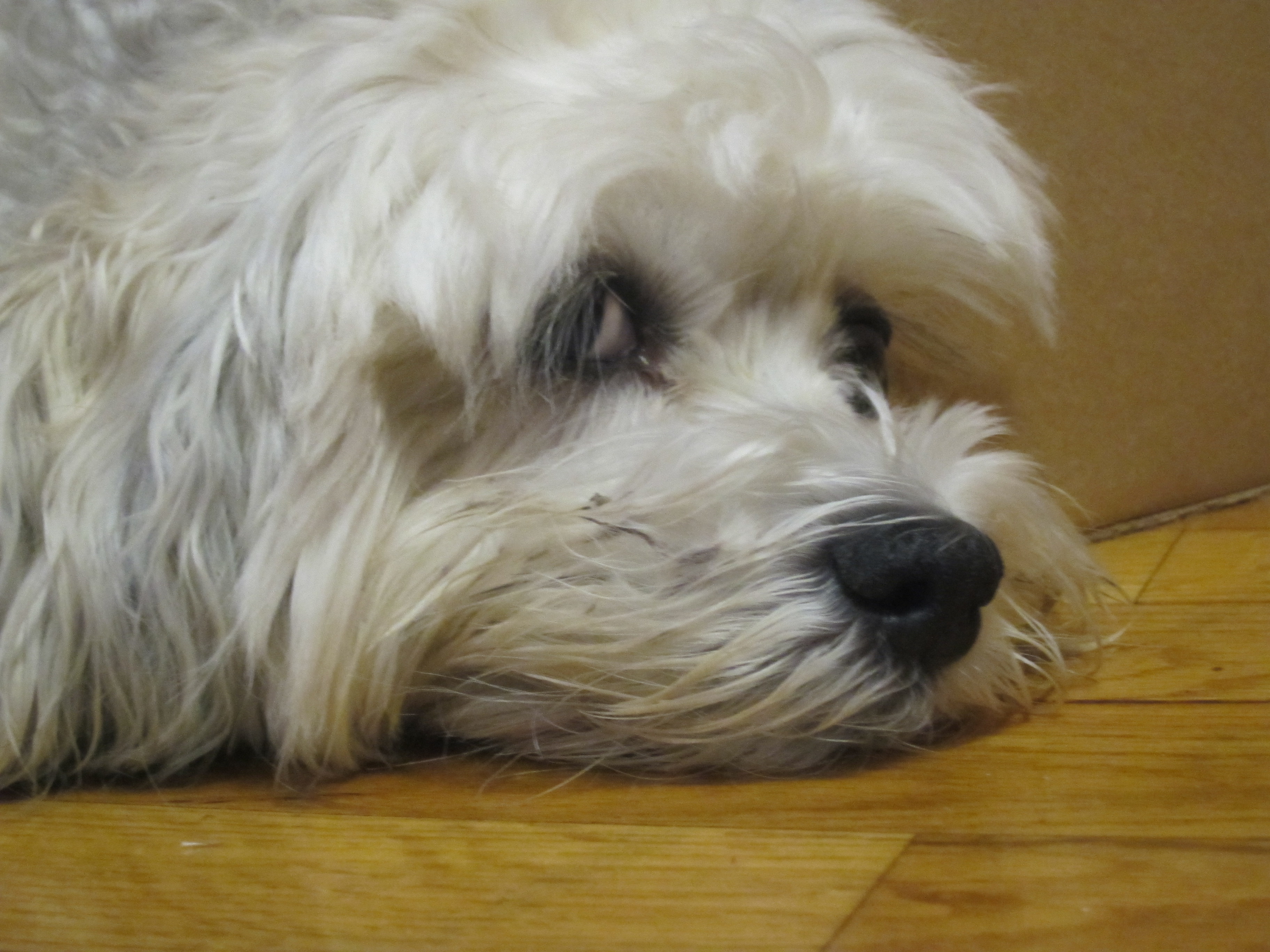
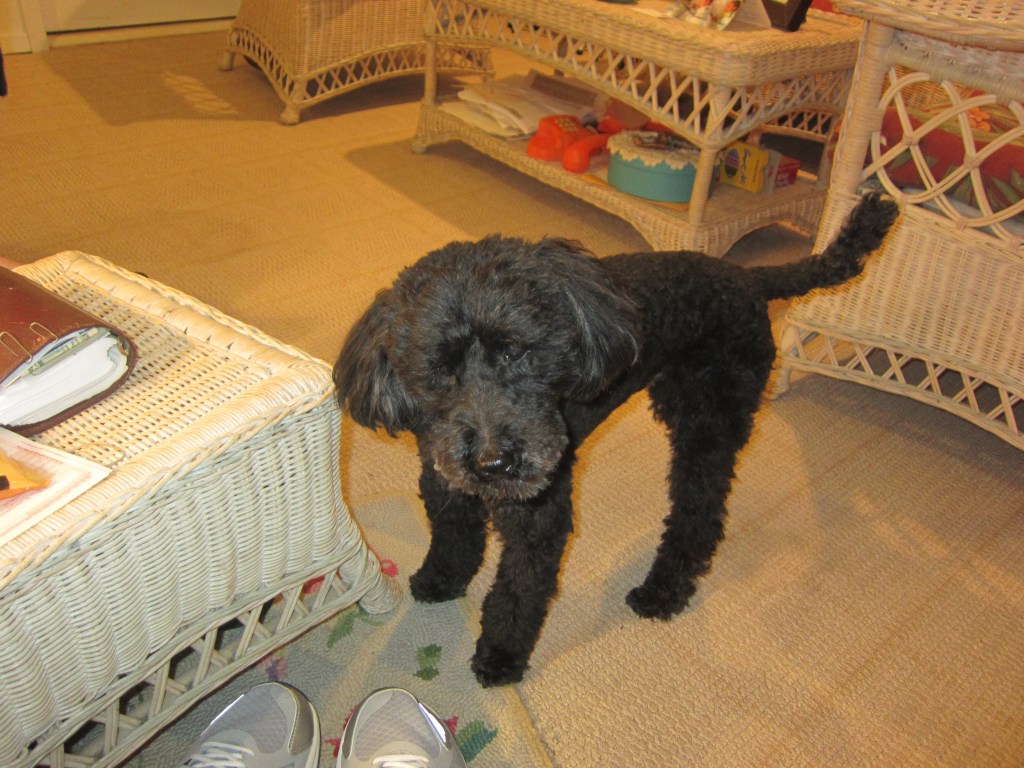
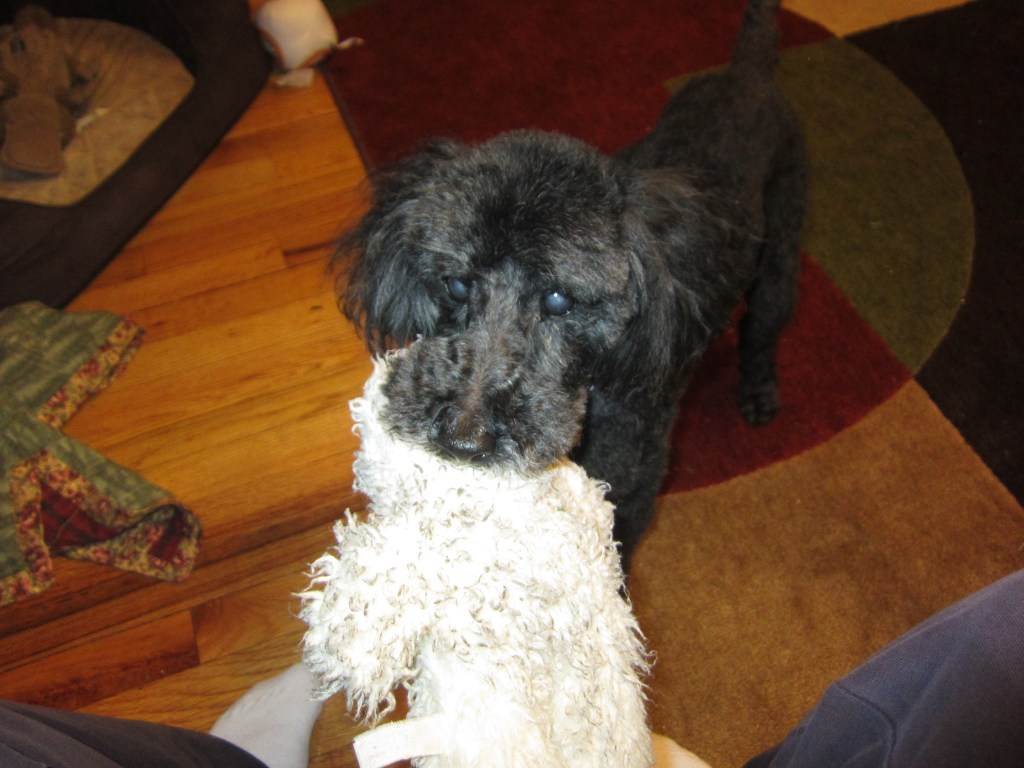
Teddy

            A good friend of mine died recently. He was a black-haired, gentle-souled miniature poodle named Teddy and I miss him very much. I hadn’t seen him in a while, but just knowing that he was still there, still climbing through his doggy door and sleeping on his Mommy’s lap, was reassuring and made the world feel whole.

            He was fifteen and a half, I think, two and a half years older than Cricket, my cocker spaniel/miniature poodle mix, who adored him from the get-go. He was long-legged and skinny, with hair that quickly covered his eyes between grooming session. He could leap like a ballet dancer, pointed toes and all, or just race full steam ahead to play with a toy. He was full of joy, and love, and seriousness. He was a gentleman, in the way he held himself and in the boundaries he set around himself. If he could have spoken, he would have had a faint French accent, nothing too broad, more like the head waiter at a high-end restaurant.

Gentleman Pose

            Over the past few years he grew blind and deaf, relying on his younger sister to alert him to noises he needed to respond to, and by the end, to alert him to meal time as well. He had been slowing down for a while, but took great joy in his resurgence on CBD oil, it gave him a zest for life and an appetite and the energy to be his athletic self once again. But his final illness came on quickly, shutting down his kidneys. Treatment only relieved his symptoms temporarily, and when the symptoms inevitably returned he was even more confused than before, and unable to feel like his true self. When he stopped eating, his sister stopped eating too, to keep him company, to express her grief at what she instinctively knew was coming, and because when your loved ones are in pain, you feel the pain too.

            He died with dignity, in a way we don’t often allow our human loved ones to do, surrounded by love and by the knowledge that he had lived a full life, a generous life, and a satisfying life. I imagine that when he crossed the rainbow bridge he did a few leaps and arabesques and then raced towards his two golden sisters who were waiting for him on the other side. He would have had so much to tell them about the world they’d left behind, and they would have had so much to tell him about what comes after.

            We tend to think that our role models and teachers will be human, but Teddy was one of my best teachers, and he was truly, and fully, a dog, in the best possible way.

            Teddy was my therapy dog. Not only because he was my therapist’s dog, but because he offered his own version of therapy: a nonverbal, relationship-based therapeutic technique that they don’t teach in school. He modeled for me how to respect your own emotions and your own boundaries even while reaching out to others. He modeled how to be fully yourself and respectful of others at the same time. He, like Cricket, taught me that there is no shame in speaking up when you feel strongly about something. And that there is honor and strength in accepting your own limitations and not forcing yourself into situations where you don’t feel safe.

“I want out!”

            He was a picky little man, with specific tastes in food and people and dog friends, and he chose me. He trusted me, and I felt the honor of that deeply. Teddy taught me that it’s not arrogant or selfish to hold your own views, or to love only who you love. He showed me that you can have those preferences, and know yourself, while still being respectful and polite to those who don’t fit for you – unless they scare you or piss you off, and then you can scream.

“Let’s get ready to rumble!”

            He showed me that you can express your fear and pain, and if you express it fully and truthfully, there is then room for other feelings to come in. He taught me that there is no shame in asking for affection when you need it, and he taught me that there are people, and dogs, who will be honored that you’ve asked for their affection.

            His acceptance of me, his love for me, and his trust of me, was healing on a very deep level. He reflected me back to myself as I really am. He told me that I am kind, I am trustworthy, and I am loveable. And I believed it, from him. I think the fact that he could never communicate in words, which are my stock in trade, also played a role. He reached the parts of me that can’t speak and they heard him and felt comforted by him.

            I know there were times when it wasn’t easy being Teddy. There were a limited number of people that made him feel comfortable, and when he couldn’t be with those people he suffered. I can relate to that, completely.

            He stayed with me a couple of times, in the period after Butterfly died and before Ellie arrived, and after a short period of vocal grief and longing for his Mom, he settled in with us. He set his boundaries with Cricket early on, and she respected those boundaries, and appreciated his respect for her space too. They went on walks together, and ate dinner together and took naps together peacefully, as long as I was there to referee. By the time he had to leave Cricket was forlorn, sleeping in his makeshift bed until the scent of him dissipated.

Teddy on his bed

            The most important lesson I learned from Teddy is that love is a gift. His love for me was a gift. And the love I felt for him in return made me feel strong enough to raise Cricket with love, and then Butterfly, and now Ellie. He taught me that having enough of what you need makes you feel like you are enough.

            Dogs, maybe because they live such short lives, focus in on the most important things: love, food, joy, and safety. They don’t get distracted by appearances or wear the masks we humans wear to get through our days.

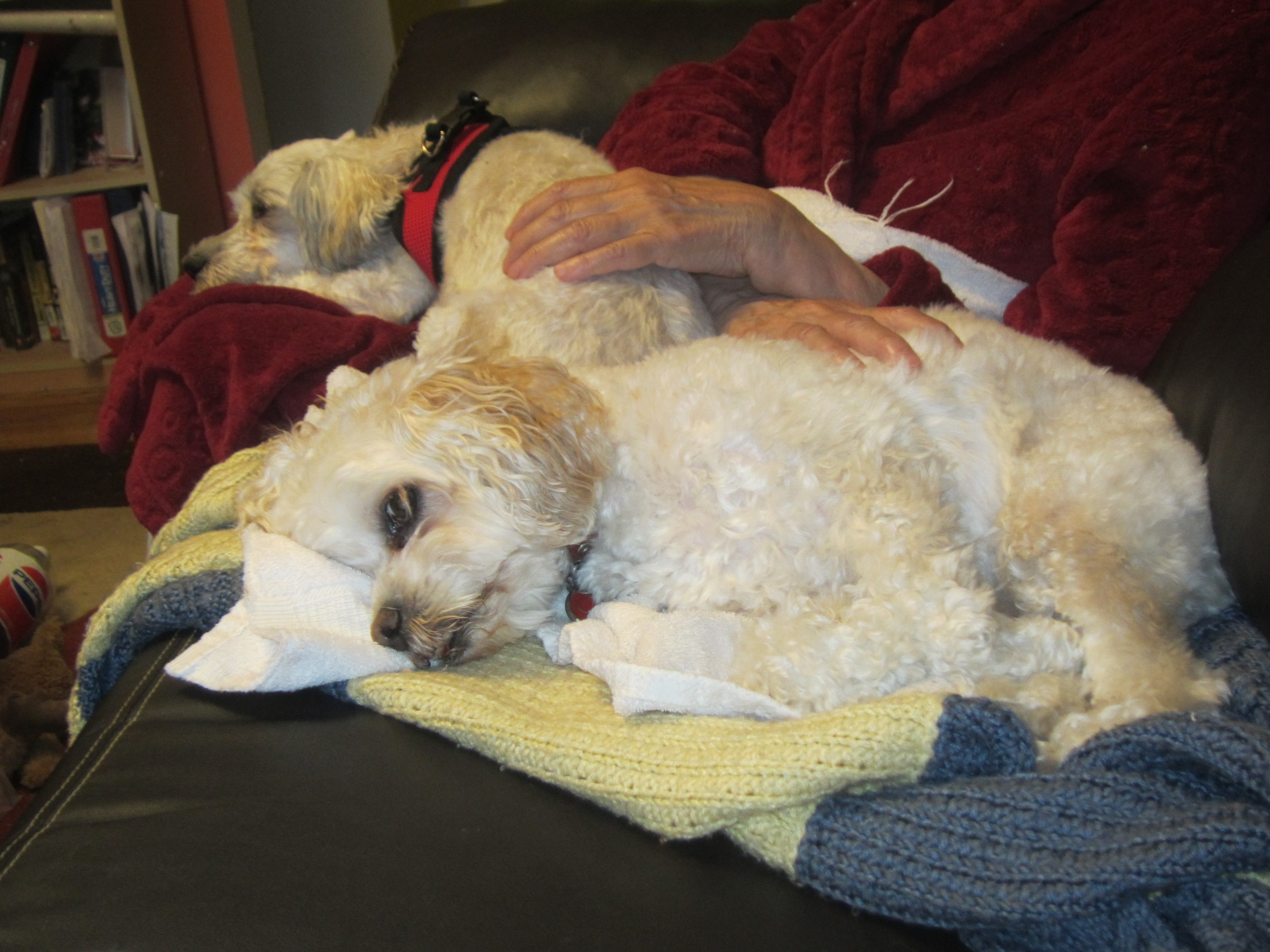
Cricket and Teddy napping with Grandma

            I will miss Teddy, but I will also keep Teddy with me, as part of me, for the rest of my life, as a guide, and as a source of energy for the lessons I still want and need to learn.

            Goodbye, my friend. May you feel all of the love you have inspired throughout your short life, and find peace and community on the other side.

If you haven’t had a chance yet, please check out my Young Adult novel, Yeshiva Girl, on Amazon. And if you feel called to write a review of the book, on Amazon, or anywhere else, I’d be honored.

            Yeshiva Girl is about a Jewish teenager on Long Island, named Isabel, though her father calls her Jezebel. Her father has been accused of inappropriate sexual behavior with one of his students, which he denies, but Izzy implicitly believes it’s true. As a result of his problems, her father sends her to a co-ed Orthodox yeshiva for tenth grade, out of the blue, and Izzy and her mother can’t figure out how to prevent it. At Yeshiva, though, Izzy finds that religious people are much more complicated than she had expected. Some, like her father, may use religion as a place to hide, but others search for and find comfort, and community, and even enlightenment. The question is, what will Izzy find?

I Had Two Pawpaw Trees


I had two pawpaw trees, but now I only have one. The new gardeners decided that the trees were in their way; they had already cut down the first pawpaw tree when Mom looked out the window of her bedroom and screamed.

I had no idea what was going on, because I was still sleeping (afternoon naps are a thing). I heard the small scream and then the dogs barking like crazy so I got up. The first thing I saw was a puddle of pee on my exercise mat. I assume Ellie did that when she heard Grandma scream, but it could have been sitting there for a few minutes. I had to focus on cleaning up the pee, so I couldn’t ask Cricket why she was standing at our apartment door barking her head off.

img_0510

“Where did Grandma go!”

E pre groom

Loud noises make me pee, Mommy.

Then the doorbell rang, and it was Mom, because she’d run outside so quickly that she forgot her key to the building. That’s when I found out what had happened. Between the scream and the doorbell, Mom had been running across the lawn to convince the gardeners to leave the second Pawpaw tree alone, and then dragging the murdered tree out to the woods, to prepare it for a proper burial.

001

Pawpaw branches awaiting burial

I wasn’t taking the information in. I looked out the front door of our building and the bigger pawpaw tree was still there, but fifty feet closer to me, there was a hole. Who cuts down the trunk of a tree like it’s the errant limb of a Forsythia?

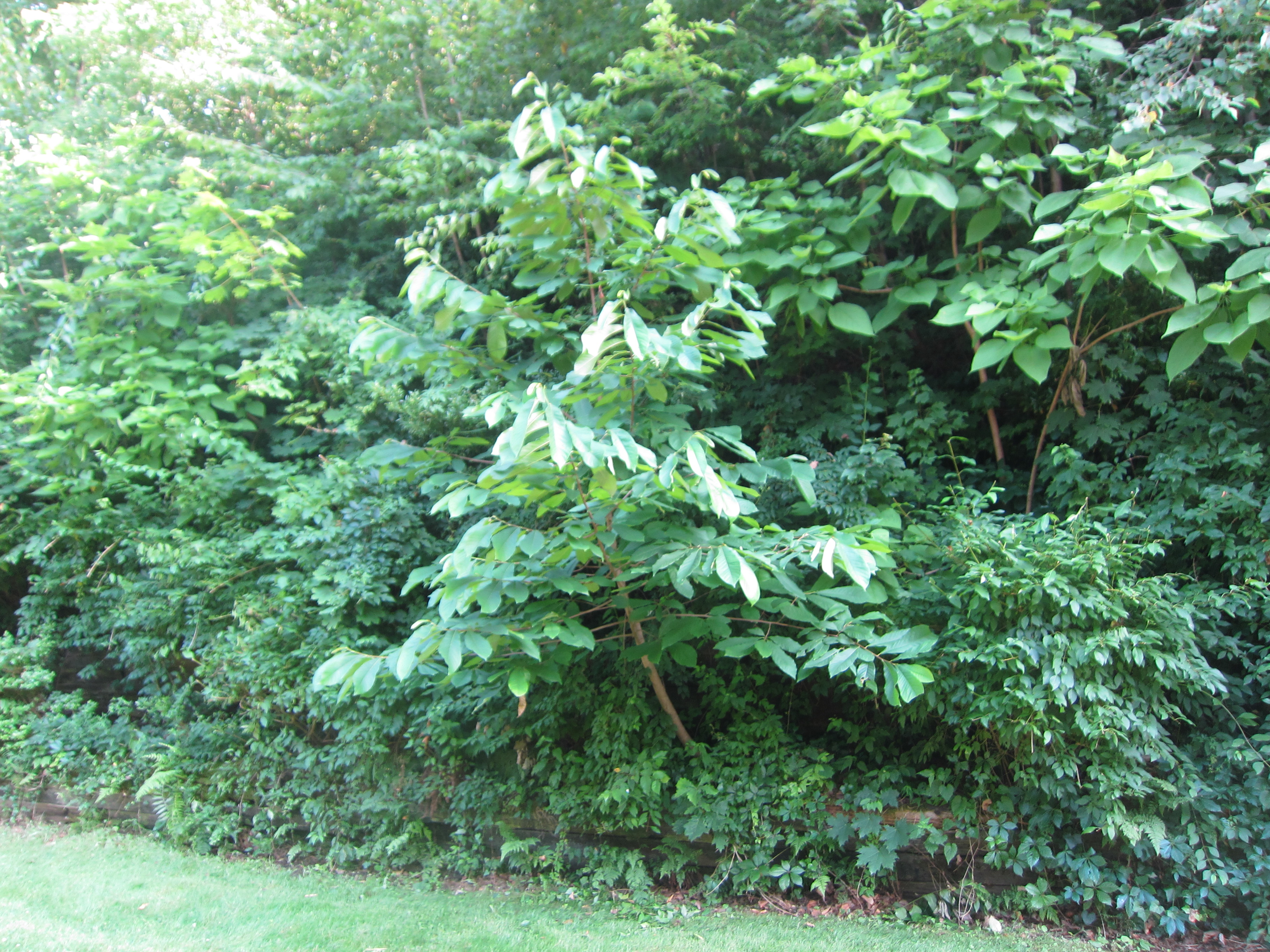
The pawpaw trees were both twelve years old and just beginning to flower. My hope was that, very soon, the flowers would lead to fruiting. Actually, we had the tiny beginnings of pawpaw fruit earlier in the summer; a little clump of four pawpaws. I didn’t want to write about it until I knew if the fruit would survive, and within a week, they were gone. We thought they must have been wiped out by heavy rains, but it turns out that the gardeners had knocked down the fragile baby fruit when they were mowing the lawn, and that’s when they decided that the overhanging bushes and trees would have to go. Except, no one mentioned this to us.

001

Pawpaw flowers

006

clump of baby pawpaws

I was angry, and ranting, and running around like a chicken with my head cut off, but there was nothing I could do.

The powerlessness is what overwhelms me. My mother is the president of our co-op board and no one even told her that the trees were in danger, let alone asked her opinion, or her permission, to take them down. Up until this year we had two maintenance men who knew the trees and knew who to ask when there was a problem with them. They figured this out early, because they’d accidentally knocked down our third pawpaw tree soon after it had been planted in place. But one of the maintenance men retired recently, and the co-op hired a gardening company to come in once a week to make life easier for the remaining maintenance man. The first time they came, Mom told them to stay away from the pawpaw trees, but they seem to have forgotten.

The trees should have had a ribbon around them. Both trees used to be marked, after the incident with the third tree way back when, but we forgot all about it. The trees were so solid, and so tall, that it didn’t occur to us that someone would try to cut them down.

004

Pawpaw standing tall

Within minutes, Mom was calling around for advice on how to fertilize a lone tree; and if there was a way to save any part of the murdered tree; or if you could buy a five or six year old pawpaw tree instead of one of the two year olds, to cut down on the long wait for maturity; or, maybe we could borrow pollen from someone else’s pawpaw tree to fertilize the one tree we have left, next year?

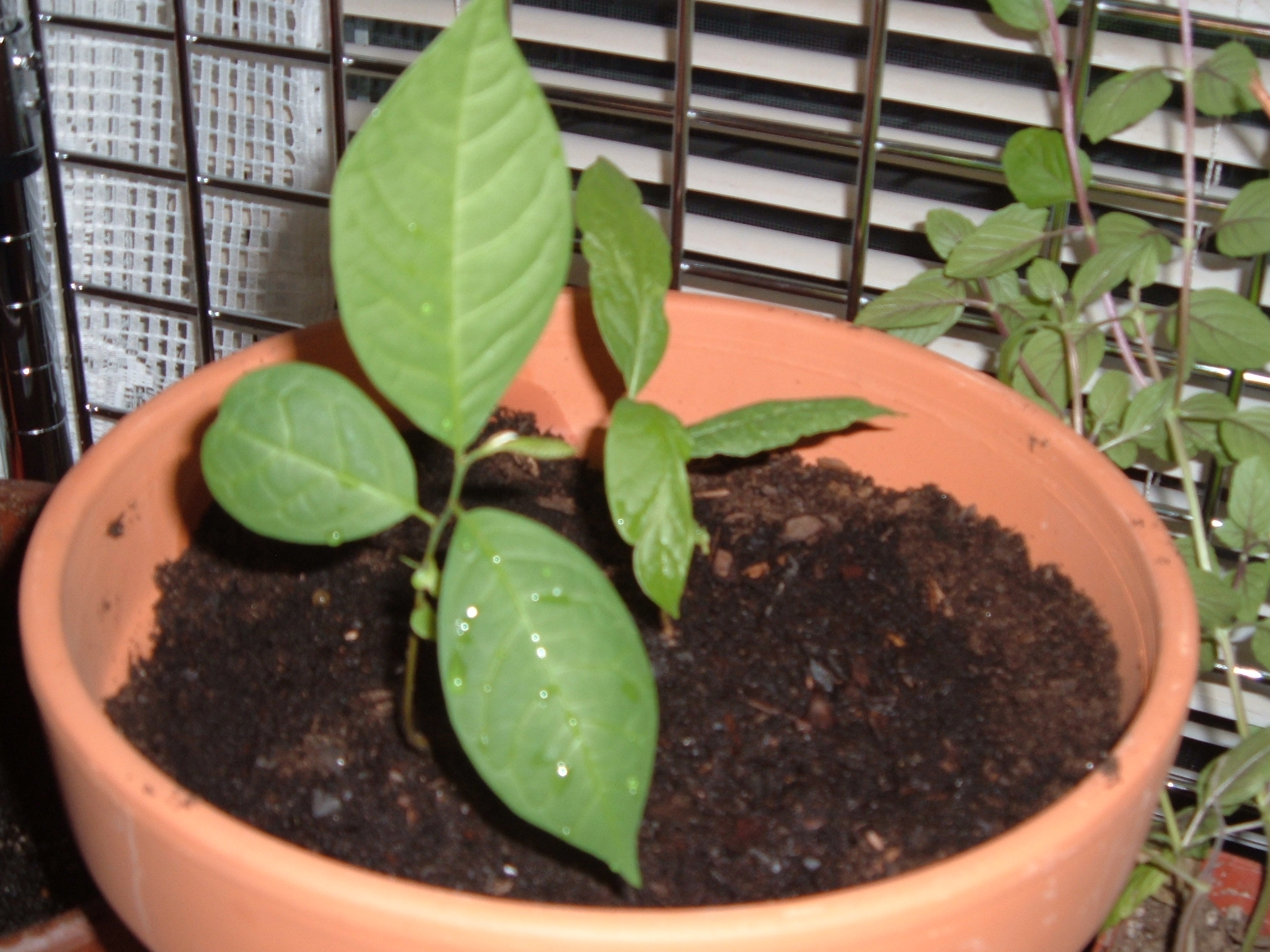
The trees were born a few months before Cricket, and they lived in the kitchen until they were toddlers and ready to live outside, still in their pots. When the trees were planted in our new yard, seven years ago, they took root and decided to stay.

pawpaw new home 007

Pawpaw toddler getting ready to go outside

puppy in October 034

Cricket, same age

That tree was loved, that’s all I can say.

IMG_1053

If you haven’t had a chance yet, please check out my Amazon page and consider ordering the Kindle or Paperback version (or both!) of Yeshiva Girl. And if you feel called to write a review of the book on Amazon, or anywhere else, I’d be honored.

Yeshiva Girl is about a Jewish teenager on Long Island, named Izzy. Her father has been accused of inappropriate sexual behavior with one of his students, which he denies, but Izzy implicitly believes it’s true. Izzy’s father then sends her to a co-ed Orthodox yeshiva for tenth grade, out of the blue, as if she’s the one who needs to be fixed. Izzy, in pain and looking for people she can trust, finds that religious people are much more complicated than she had expected. Some, like her father, may use religion as a place to hide, but others search for and find comfort, and community, and even enlightenment. The question is, what will Izzy find?
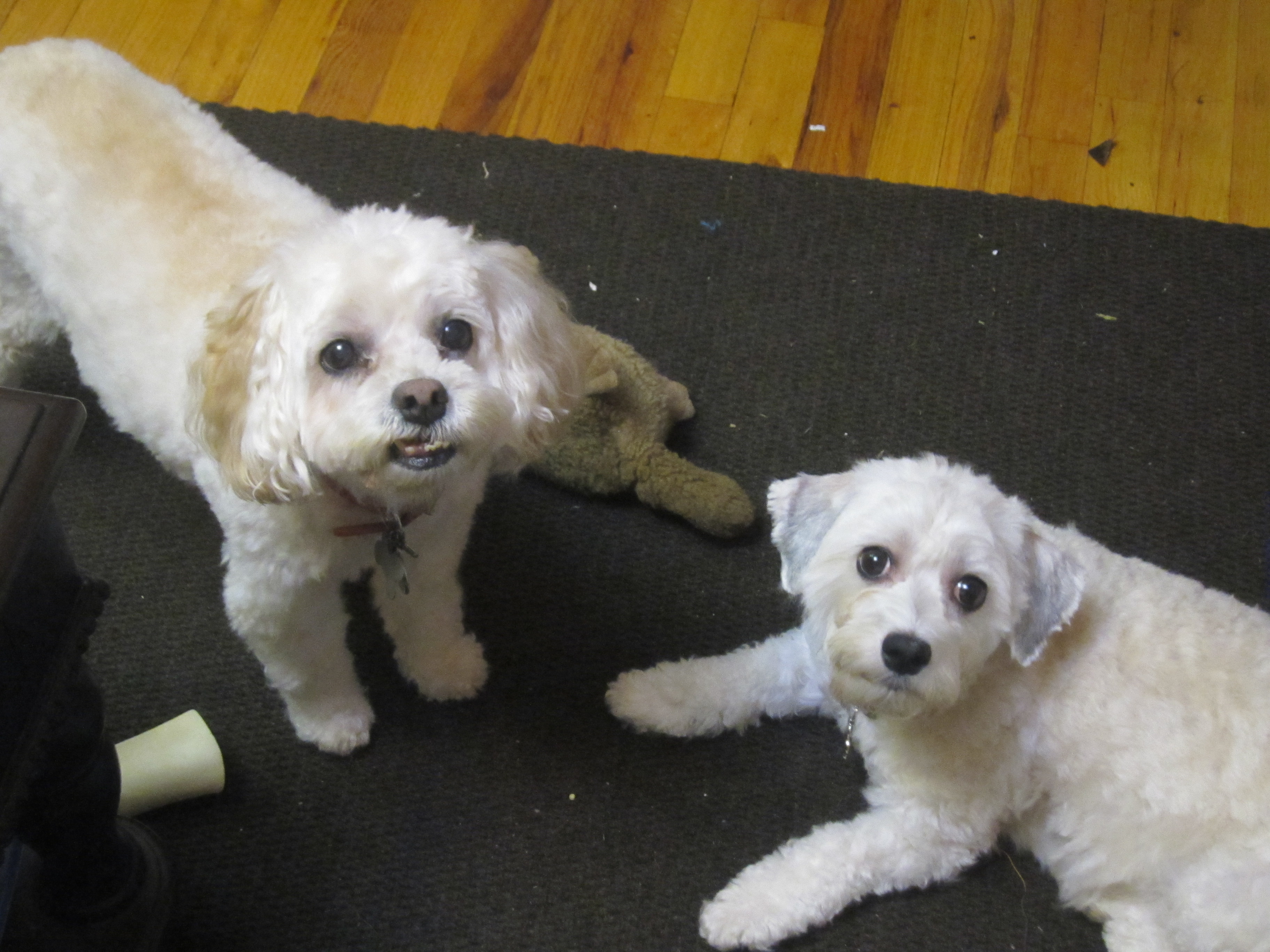
 

The Butterfly Anniversary


Butterfly has been gone for a year now. The plan was to wait until after the one year anniversary to look for another dog, but then Ellie appeared a couple of weeks early and we couldn’t say no. I’m still not done mourning for Butterfly, and I’ll never be “over” her. No one will fill the Butterfly shaped void in my heart, but I think Butterfly is thinking of us and hoping for the best, for Cricket, and for all of us.

IMG_1895.JPG

My Butterfly

The Butterfly Bush seems to be thriving. Mom believes it’s because she chose a spot with good sunlight, and carefully removed the encroaching Hasta leaves, and makes sure to give it enough water and prune the old blossoms. I think it’s because I make sure to give the Butterfly Bush a fresh raspberry each time I give one to Cricket, from our out-of-control raspberry bushes.

Butterfly's bush

Raspberry-fed Butterfly bush

The anniversary has been on my mind for a while, especially because Cricket turned eleven this year, and I worry about her health. I can’t tell if my anxieties are really about her, or about a fear of reliving Butterfly’s health issues. God forbid I’d ever have to give Cricket daily shots. She’d kill me first.

grumpy cricket

“I still have teeth, Mommy.”

We had a scare with Cricket recently, a few weeks before Ellie came home. I woke up, and wandered into the bathroom to brush my teeth, and found my keys, and put on my shoes, and still there was no sign of Cricket. I checked Mom’s room, in case they were both gone and the morning walk had already been taken care of, but Mom was still sleeping, and there was no sign of Cricket on the bed. I checked all of Cricket’s favorite hiding spots in the apartment, under my bed, under her couch, in the kitchen, by the front door, but I couldn’t find her. I was starting to freak out and went back into Mom’s room to, not so calmly, ask her where Cricket was. And that’s when I finally saw Miss Cricket, disappearing under her grandma’s bed, very slowly. I was reassured that she was still alive, and not reenacting my ever present flashbacks to Butterfly’s last weeks, and the middle of the night crises, and hospitalizations, were still reverberating. But why was Cricket hiding under the bed? Was she ill?

My only diagnostic option was to invite her for a walk, and see if she would come out from under the bed. It took her a few minutes to accept my invitation, and she walked very slowly down the stairs, and outside, and started to go into poopy position right on the brick walkway, which isn’t like her. I inched her over to the grass to do her business, and as she stood back up, I finally saw the problem. Miss Cricket had a poopy butt. She did not appreciate my laughing at her pain, but I was so relieved to find out that she was just trying to prevent the inevitability of a bath, instead of having some kind of mortal illness, that I couldn’t help myself.

006

“This is so undignified.”

Cricket made sure to shake her newly clean butt in every direction once her bath was over, and she raced around the apartment in a frenzy, and gave me the evil eye for the next few hours, but really, I didn’t care. She was clean and healthy and sticking around. What else could possibly matter?


035

Don’t tell Cricket, but she is very close to accepting her new sister. Butterfly would be proud.

A Butterfly Bush


The other day, when I was looking through pet blogs, as I always do, I came across a wonderful idea for how to honor Miss Butterfly: plant something beautiful with her ashes. Mom loved the idea, because she’s a gardener, and she immediately envisioned a pink Butterfly Bush as the appropriate tribute, and found the perfect spot for it, with enough sun, and drainage, and space to grow.

pix from eos 051

My Butterfly

I had to research Butterfly Bushes, of course, and at first I was overwhelmed with articles about the negatives: how Butterfly Bushes are non-native plants, and invasive, and kill off native plants, and kill off insects, and on and on. But I persisted in my reading and found other views, and Mom was adamant that the positives outweigh the negatives.

But I’m still reluctant. I’ve been struggling to figure out how to say goodbye to Butterfly, or when. I don’t want to scatter her ashes too soon, because then I could never get them back. As if I still have her with me, because I still have her ashes. And scattering Miss Butterfly’s ashes here means that she can’t go with me if I ever choose to leave. And if the Butterfly Bush doesn’t survive well, then I won’t have the chance to replant her ashes somewhere else.

I didn’t feel this way when Dina, my black lab mix, died, at sixteen years and two months old. I’d had her for her whole life, minus the first eight weeks, and I saw her through every complicated stage of her development. I had Butterfly for less than five years, and it just wasn’t enough, even though she herself was ready to go.

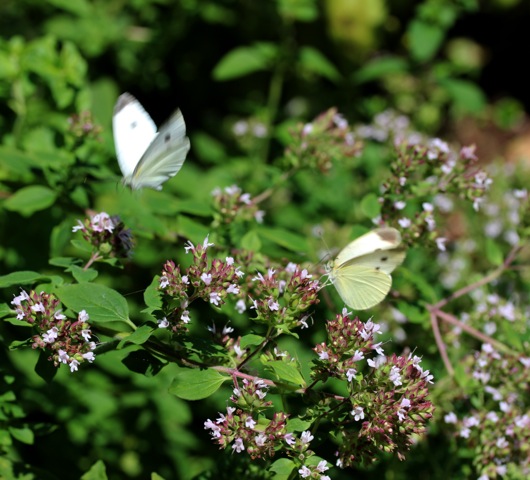
I think the Butterfly Bush may be the right answer for us, because Miss B loved the backyard here. She loved running up the hill, through mounds of rotting leaves, and then racing back to our front door with her tongue hanging out and her eyes shining. This was her safe place. And she knew it from the first day, when two white butterflies greeted her with their fluttering wings.

butterflies

I know that I need to have some kind of marker, and ceremony, to say goodbye to Miss B. I know I need to make peace with the loss of my girl. But I still don’t want to say goodbye.

Butterfly's bush

The Butterfly Bush resting at home


If you want to see the post that inspired me:

https://doodlemum.com/2018/04/17/home-coming/


The Bird Came Back


Last Sunday, while I was answering heartfelt condolences on the death of Mom’s friend Olivia, and sharing the joy of a visit from a bird who seemed to be acting as Olivia’s familiar, the bird came back. This time she came into the apartment through the small opening next to the air-conditioner in the living room (where Mom leaves bird snacks year round, just in case). The bird visited the quilting closet again, of course, and the light fixture in the dining room, but then she became more bold and stood on the kitchen counter to eat pizza crumbs off of a plate, and walked on the living room rug, looking for any treats Cricket might have left behind (as if that would ever happen).

028

Psst. Check the pink thing.

Cricket tolerated the invasion moderately well, until the bird stepped into Cricket’s food bowl to sample the kibble, and then wet her beak in Cricket’s water bowl. The bird even had the temerity to wander under Cricket’s couch! Cricket ran after the bird at that point, and was flummoxed by the whole flying thing.

012

“I must guard my couch from interlopers, Mommy.”

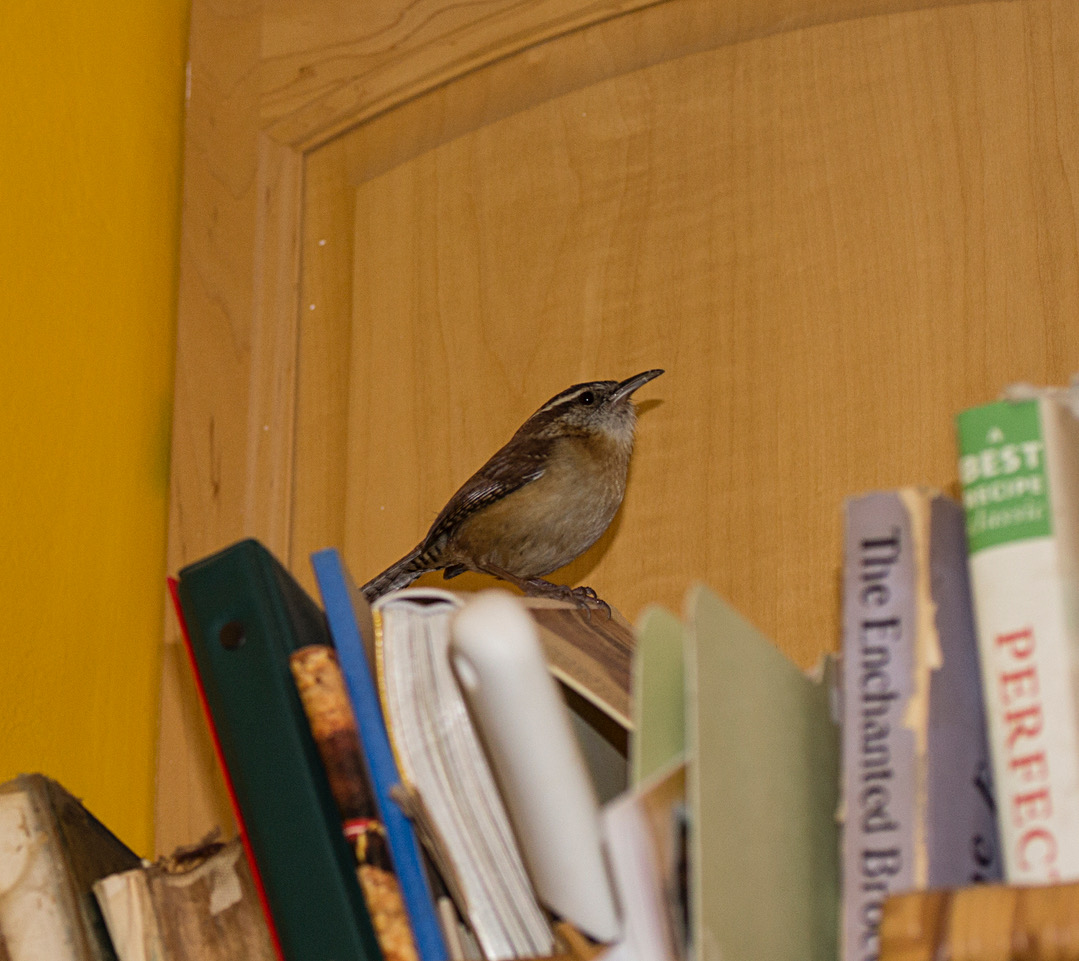
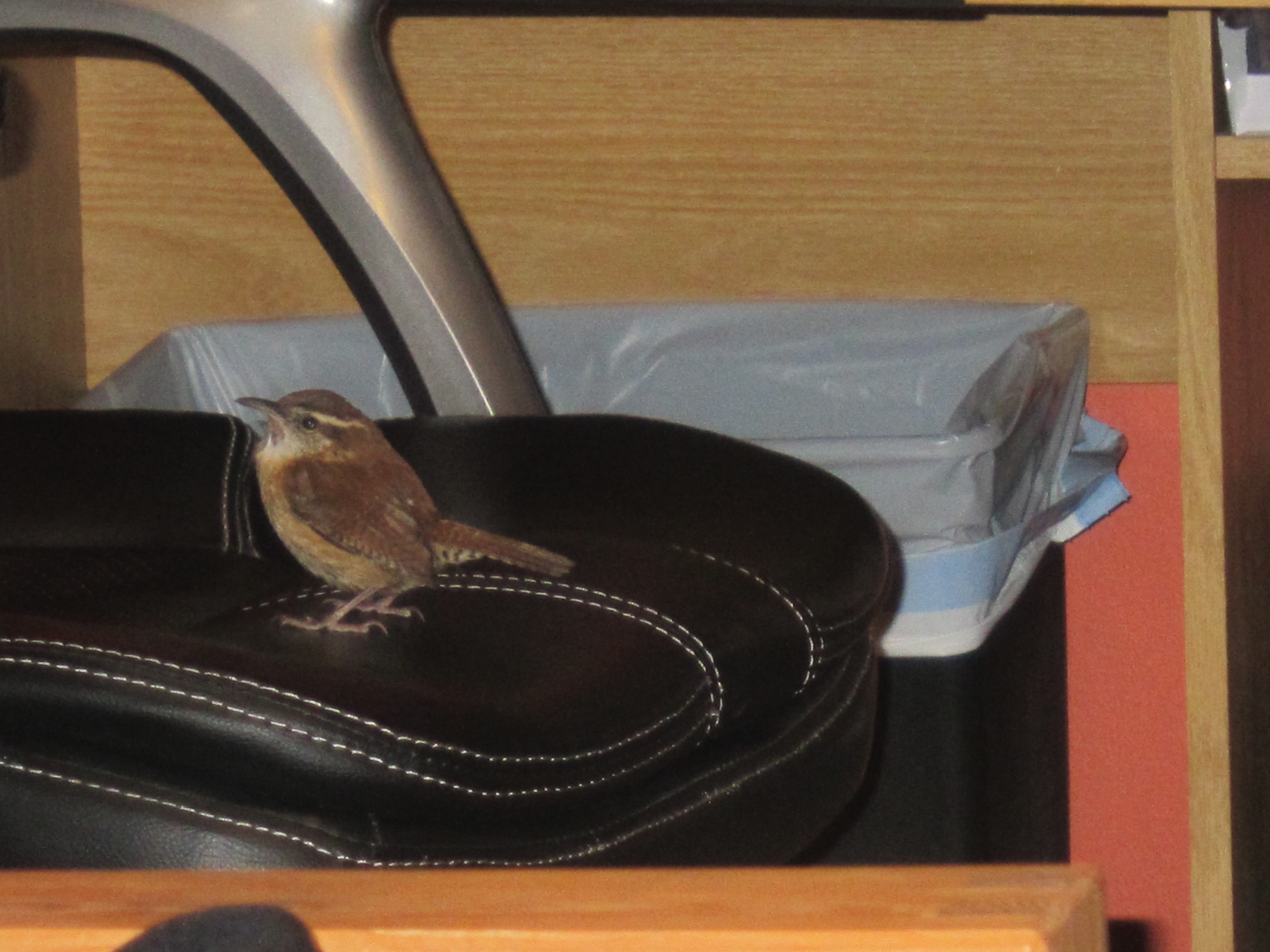
The bird landed on top of curtain rods and lamps, checked out cookbooks, and stood on my computer chair for a good long time, looking over at me with what looked suspiciously like Cricket’s side eye expression.

bird on lamp

(This is my favorite picture – photographed by Mom and her magic camera.)

bird on cookbooks

“These had better be vegan.”

029

“This chair is just right.”

At bed time, instead of remaining in the living room, or the kitchen, the bird followed me and Cricket into my bedroom, investigating the tops of my bookcases, and the notebooks on my bedside table. She even followed Cricket into Mom’s room, and stood on the blanket, about a foot away from Cricket’s tail. We were starting to wonder if we had accidentally adopted a wild bird.

001

“No. Just say no to the bird.”


Mom did research on Carolina Wrens, through Google and bird-wise family and friends, and she found out that this is the time of year when they go house hunting, to decide where to nest in the spring. Of course, we started to worry about how much bird poop we’d be dealing with if the bird decided to bring her whole family to live in our apartment, but there was also something gratifying about even being considered for such an honor.


When Mom woke up in the middle of the night (she and Cricket are big fans of the late night snack), she was sure that the bird had left, but then she saw a pile of feathers on the radiator in the living room. She was afraid that the bird had died, but it turned out that this was just the bird’s sleeping pose, puffing her wings out to act as a blanket, and stuffing her head down to mute the outside noise.

carolina wren sleeping

Ssh. It’s nap time.

By the next morning the bird was gone. We were able to clean up all of the lingering bird poop, which is surprisingly tenacious stuff, but there was also a sense of loss, and then hope, that maybe the bird will return again. Maybe this will become a weekly Sunday visit! Cricket would not be thrilled with a bird in the house on a regular basis, but, for me, it was nice to have another pet again. I think Miss Butterfly would have approved.

butterfly hair askew

“Birdie!”

(Most of the pictures in this post were taken by Naomi Mankowitz. Any pictures that look less than perfect were taken by me.)

Olivia


According to the New York Times, Olivia Cole died a week ago Friday, on January 19th, which was only a few days after the last time my Mom had spoken to her on the phone. At first, we weren’t sure the news was real; maybe someone had confused her with her mother, who died this fall. But her mother had a different last name, and lived in NY, while Olivia lived in Mexico, and the news stories had that detail right. And then we saw a quote from her agent, and too many more details that made it all sound true.

Olivia was dead.

Olivia is dead.

Oivia & Mom stacked

Olivia and her Mom

It still seemed so unlikely, though. She was just in New York in December, traipsing across the city by foot, despite her rheumatoid arthritis, because she didn’t like spending money on taxis. She even refused to take a cab when she had to be at the airport at five o’clock in the morning, and instead chose to wear most of the clothes, so she wouldn’t have to carry them, and take the subway at three o’clock AM, in the middle of winter.

Mom was worried about that trip back to Mexico, with twenty four hours in transit, and called Olivia a number of times to check if she’d made it home safely. Olivia had a landline, but no cell phone, or email, or even a computer, so when Mom didn’t hear back, so she emailed Olivia’s neighbor in San Miguel and finally heard that Olivia had made it home safely. It still took a few weeks for Olivia herself to call, though. She didn’t like to use her phone for international calls, so she would borrow her friend’s computer-based phone system, on Mondays, to make her calls. She called on MLK day, and the two old friends talked about the need to take care of oneself, and about the foundation Olivia wanted to build, to help finance early education for children of color.

Olivia was one of my mom’s lifelong friends, from their years in the drama club at Hunter High School, and she would pop in and out of our lives every few years, sending tickets to plays she was in, and visiting when she came to New York to see her Mom. The first time I met her in person was when I was eleven, when she played Mama in A Raisin in the Sun at the Roundabout theatre in Manhattan. Seeing Olivia on stage was just like seeing her in real life: she was a character. She was larger than life. She was stubborn and opinionated and fiercely intellectual, delving into the Shakespearean canon for life lessons in even the most obscure of areas. She loved acting, and reading, and opining, but she didn’t like fame, or compromise.

Then Mom received the email, this Thursday, from a high school friend, with the attached announcement of Olivia’s death in the New York Times. The article said that she’d died of a heart attack in San Miguel de Allende, Mexico, where she’d lived for the past thirty years. Mom called to me from the living room, sounding odd, and the only word I understood was “Olivia” and I thought, that’s weird, Olivia wouldn’t call on a Thursday. When I reached her and she repeated “Olivia’s dead?” as a question, I was sure it was a mistake. Yes, Olivia was 75, and had rheumatoid arthritis, and no sense of her own limits, but she took good care of her health and went to all of her doctors on her most recent visit to New York. She hadn’t mentioned any heart issues to my Mom, but then again, she wouldn’t. She was full of plans for the future, and still full of piss and vinegar, never changing, and never really aging.


Norah Olivia and me

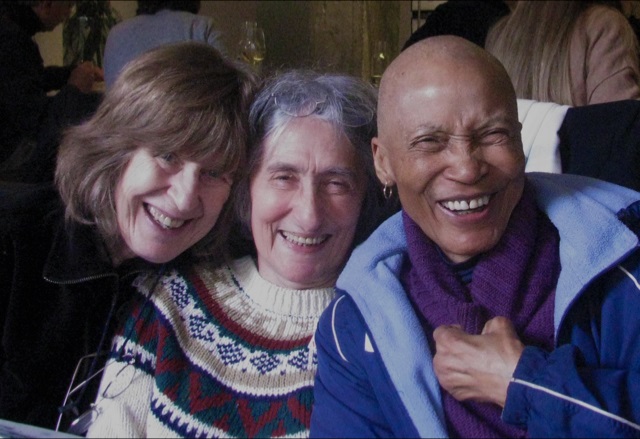
Three old friends on a recent visit

Since we were still not quite believing the news. Mom emailed Olivia’s neighbor in San Miguel for confirmation. The email came back, yes, Olivia was found on her porch, sitting upright in a chair, reading an old article about Barack Obama. Friends hadn’t heard from her in a couple of days and decided to check on her, and they found her there on the porch. The comfort for the people who knew her is that this is exactly how Olivia would have wanted to go: reading and thinking and full of hope for the future.

I had to go to my internship soon after the death was confirmed, but Mom’s high school classmates stepped in, sending messages on their class listserv, offering memories and kindness and compassion. These New York girls grew up knowing that all that mattered was how smart you were, not the color of your skin, or which neighborhood you lived in; and a woman could become anything she wanted to be: a lawyer, a doctor, a mother, a teacher, a writer, or an actress.

There’s a sweet coda to this story. We had a visit from a bird last weekend, two days after Olivia’s death, though we didn’t know that at the time. The bird stayed in the apartment for a while, resting in the quilting closet, and on the vitamin bottles on the entertainment center, and then in the light fixture in the dining room. The bird seemed to want to stay with us, fluttering from place to place indoors, even though the window in mom’s room was wide open. Looking back at that visit, after the news of Olivia’s death, Mom is convinced it was Olivia, saying goodbye. Because that would be a very Olivia thing to do.


bird in the fabric closet 2