I’ve been reading through piles and piles of notebooks, and files and files on the computer, to see which of my writing projects still spark my interest; and unfortunately, they all do. I can sort of prioritize one, or two (or five) above the rest, but it’s like trying to choose my favorite dog and having to ignore all of the others. How can you look away from that sweet, lonely, hungry little dog?! What kind of monster are you?!
There are novel ideas in the notebooks, and novel drafts on the computer, and drafts of long essays and short essays, and children’s stories, and short stories, and mysteries, and even a science fiction story or two. And along with all of the writing projects, I also have lesson plans to write, and a ton of therapy work I still need to do in order to become the kind of functional adult who doesn’t need to crawl under the bed and hide (which hurts my back, honestly).
This is what happens when I try to open the creaky, dusty, long-closed doors in my brain. I know I have to do this every once in a while, if only to make sure I’m not leaving something important behind, but it’s overwhelming. And, of course, there are endless internal arguments over which ideas have the best chance of getting published, and which ones will be an exhausting waste of time, and why do I have to be a writer at all when I really should be doing something more useful with my life, or at least more practical. But I’ve been a writer since I first learned how to hold one of those fat red pencils in nursery school, and if I stopped writing it would feel like I’d stopped breathing. And, really, even if it looks like I’m standing still, I am frantically kicking my feet under the surface, like a duck; and yet I judge myself only by what other people can see.
At some point, hopefully soon, I will finish this reassessment period and be able to choose a few manageable goals to work towards and put the rest aside. And then maybe I can put off the next reassessment for a while, or at least make sure I’m better medicated by then.
“Chicken fixes everything.”
If you haven’t had a chance yet, please check out my novel, Yeshiva Girl, on Amazon. And if you feel called to write a review of the book, on Amazon, or anywhere else, I’d be honored.
Yeshiva Girl is about a Jewish teenager on Long Island, named Isabel, though her father calls her Jezebel. Her father has been accused of inappropriate sexual behavior with one of his students, which he denies, but Izzy implicitly believes it’s true. As a result of his problems, her father sends her to a co-ed Orthodox yeshiva for tenth grade, out of the blue, and Izzy and her mother can’t figure out how to prevent it. At Yeshiva, though, Izzy finds that religious people are much more complicated than she had expected. Some, like her father, may use religion as a place to hide, but others search for and find comfort, and community, and even enlightenment. The question is, what will Izzy find?
Every three months or so, I see my psychiatrist for a few minutes on zoom (or Doxy, actually, a platform specifically for medical appointments), because he decided not to go back to in-person visits after Covid. He asks me how I’m doing with my antidepressant medications, and I say “fine,” and he takes notes and refills my prescriptions and makes a new appointment for three months in the future, and then we’re done. Of course, there have been times when I didn’t say I was fine, and he raised the dose of one or the other of my medications, which led to a one month follow up instead of a three month follow up, but for the most part, everything has been stable for quite a while. To fill out the four- or five-minute appointment, we tend to chat about my teaching, or my other doctors and the new medications they’ve added to my regimen, but for the most part, he asks me if I think I need to raise the dose of my meds, and I say no, and we wish each other well. But at my latest appointment, when I said a variation of my usual “I’m fine,” he said, “but what does that mean?” and I didn’t know how to answer.
“Do you ever talk about me?”
In the end, I must have said something reassuring, because he kept everything the same and we made the usual appointment for three months in the future, but when I closed my laptop, I wasn’t sure if “I’m fine,” was really the truth, or just something I’ve gotten used to saying. I don’t remember if I was more willing to go into details back when I actually had to leave the house for those five-minute session every three months, but there’s definitely something about the virtual appointments that encourages me to keep it simple.
The fact is, I don’t really know if I’m on enough anti-depressant medication, or the right medication. I have no idea if this is the best my mental health can be, or if there are medications or other treatments that could make things better. The few times I’ve been willing to risk changing my medication were when I was feeling so awful that I wasn’t sure I’d be able to function otherwise.
Antidepressant medications are a mystery, and not just to me. Doctors still don’t really understand why they work, or why one medication works for one person and not for another. It’s a lot of trial and error and guesswork, and a little too much Russian roulette for my liking. When I was first trying medications, years ago, the doctors would try a few from each family of drugs, and I had to spend weeks, and even months, dealing with weird side effects while waiting to see if something positive would happen. There was one medication that the psychiatrist (a different one) insisted on trying even though it was meant for bipolar disorder, which I don’t have, and within 24 hours I felt like I was going to jump out of a window, or at least scream until my head exploded, and I refused to take another dose. The doctor didn’t seem to think my reaction to the meds was all that bad, and he wanted me to stick with it for a least a few more weeks to see what would happen, but I felt strongly that I shouldn’t be taking a medication that made me want to kill myself and he reluctantly moved on to another class of drugs.
Psychiatrists, and other doctors who prescribe these medications, also tend to be unusually terrible at diagnosis, because there is almost no consistency in how different doctors interpret the words of the DSM (Diagnostic and Statistical Manual of Mental Disorders), and the words used in the DSM are generally unrelated to the way patients actually experience and describe their own symptoms. Sometimes it feels like the doctors are waiting for certain magic words to be said, and don’t know what to make of the metaphors, sentence fragments, and shrugs that real people use to describe how they feel.
To be fair, medical doctors are just as terrible at diagnosis when they don’t have hard and fast results (from blood tests or scans) to determine what’s going on inside. The pain medication I’ve been on for maybe fifteen years now (after trying a lot of different drugs meant for any number of different diagnoses) has only ever reduced the pain by half, and usually less than that; and the same is true of the psych meds: if they reduce my symptoms by half, that’s a good day.
In an ideal world, I would sit down with each of my doctors and describe in detail how I feel (what hurts, how it hurts, what I’m struggling with, and what I’ve tried) and be answered with curiosity, understanding, respect and investigative questions to help me pinpoint and articulate my symptoms as clearly as possible. But, to be honest, that has never, ever happened. I have certainly attempted it, with dozens of doctors, but they tend not to hear what I’m saying over the noise of their own assumptions, and it ends up being easier to keep things short.
I’ve been on my current anti-depressant medications for more than ten years now, and while they have caused weight gain and nervous system disruptions and a bunch of other side effects, they allow me to function most days, and they give me the leeway to do the therapy work that helps me move forward. And for me, to be able to say on an average day that I am fine, that I am not in a panic spiral or falling into depression or obsessing over this or that awful thing coming up in my life, is huge. It allows me to live my life each day and accomplish some of the things that matter to me, and experience joy, and even do the laundry. It may not be miraculous, but, at the very least, it qualifies as fine.
“Have you tried chicken treats? They really work for me.”
If you haven’t had a chance yet, please check out my novel, Yeshiva Girl, on Amazon. And if you feel called to write a review of the book, on Amazon, or anywhere else, I’d be honored.
Yeshiva Girl is about a Jewish teenager on Long Island, named Isabel, though her father calls her Jezebel. Her father has been accused of inappropriate sexual behavior with one of his students, which he denies, but Izzy implicitly believes it’s true. As a result of his problems, her father sends her to a co-ed Orthodox yeshiva for tenth grade, out of the blue, and Izzy and her mother can’t figure out how to prevent it. At Yeshiva, though, Izzy finds that religious people are much more complicated than she had expected. Some, like her father, may use religion as a place to hide, but others search for and find comfort, and community, and even enlightenment. The question is, what will Izzy find?
At my most recent visit to the endocrinologist (thyroid issues, etc.), the doctor told me that Lilly has decided to offer Zepbound (a variation on Ozempic) for a discounted price to patients whose insurance companies won’t cover the GLP-1 weight loss medications. The average price for these medications, in the United States, is about $1,000 a month, though in other countries they can be bought for $100 or less, which has come up in contentious congressional hearings of late. My health insurance still refuses to cover these medications for anyone without type two diabetes or a severe heart condition, and I have been waiting impatiently for them to decide to cover GLP-1 medications for Non-alcoholic fatty liver disease, which I was diagnosed with last year, but who knows when that will happen.
Last year, the endocrinologist told me about a program that discounted Zepbound to half price, but only for people without any insurance coverage, which did not include me. But now, they are making it available to people like me who have health insurance that doesn’t cover the medications. The cost is $400 a month, which is a lot for me, but for the sake of my health I really can’t say no. My hope is that, if the Zepbound works for me, these medications will soon be covered under my health insurance and I won’t have to pay this much for long. Ideally, losing weight will improve the health of my liver and reduce the need for heart medications. I don’t think it will give me more energy, or reduce overall body pain, but you never know.
To be completely honest, though, what I really want from this medication is to lose enough weight to feel like a normal person. Yes, I want to reduce my risk of liver and heart disease. And yes, I would love to find out that losing weight could give me more energy and allow me to actually live more of my life, but, since childhood, I have been self-conscious about my weight, and I am so tired of feeling like a mutant. I know weight loss won’t change my life miraculously, because I’ve lost weight in the past, when I was able to exercise enough to lose weight on my own. And I’m sure I will still feel uncomfortable in my body, and struggle with pain and depression and anxiety and exhaustion. But it would be great to be able to go to my doctors and tell them my symptoms and NOT have them blame everything on my weight.
I was on a low dose of Ozempic last year, when my insurance was still allowing it, and I lost fifteen pounds. But as soon as the FDA cracked down on off label use of Ozempic, I was cut off, and within three months I’d gained the weight back. So, one, I know the meds can work, and two, I know I will have to be on them forever.
There’s a lot of fear for me around starting the Zepbound, actually. For some reason, the discounted Zepbound comes in a vial, with separate needles, instead of in pre-dosed pens, so I’m afraid it will hurt more and/or I will do it wrong. I’m afraid I won’t be able to lose enough weight to make a difference in my health, or I’ll get cut off again, because the price will go up or supplies will run out. I’m afraid I’ll be sick to my stomach for the rest of my life (though that’s not very different from how I feel now, to be honest), or that the Zepbound won’t work, or that I’ll lose the weight but I’ll look like a deflated balloon instead of looking, and feeling, healthy.
Maybe most of all, I’m afraid that having to spend $400 a month on this for the foreseeable future, on top of paying off my medical debt, will mean that I can’t really afford a new dog, with all of the vet bills and adoption fees and toys and treats involved. And going too much longer without a dog in the house feels like a risk to my mental health (and to Mom’s). It feels so unfair to have to choose between my physical health and my mental health, especially when they are so intertwined. But here’s hoping I won’t have to choose, and a little, hypoallergenic rescue dog will come along soon, and congress will decide to cover GLP-1 meds for Non-alcoholic fatty liver, and all medical debt will be wiped out, and we will all live in peace and harmony, forever and ever, amen.
A girl can dream. Right?
“I’ll eat whatever you’re not eating. You’re welcome.”
If you haven’t had a chance yet, please check out my novel, Yeshiva Girl, on Amazon. And if you feel called to write a review of the book, on Amazon, or anywhere else, I’d be honored.
Yeshiva Girl is about a Jewish teenager on Long Island, named Isabel, though her father calls her Jezebel. Her father has been accused of inappropriate sexual behavior with one of his students, which he denies, but Izzy implicitly believes it’s true. As a result of his problems, her father sends her to a co-ed Orthodox yeshiva for tenth grade, out of the blue, and Izzy and her mother can’t figure out how to prevent it. At Yeshiva, though, Izzy finds that religious people are much more complicated than she had expected. Some, like her father, may use religion as a place to hide, but others search for and find comfort, and community, and even enlightenment. The question is, what will Izzy find?
I am the .1 percent that makes the parabola possible. I am that weirdo.
My doctor saw my blood pressure rising precipitously over a couple of months this fall and decided to put me on a blood pressure medication. I was too tired to argue. I’d hoped to avoid new medication trials, and new doctors, until the end of graduate school, but clearly the emergency lights were flashing, so I took the medication and a referral to a cardiologist.
At first I just felt dizzy and even more tired than usual and kind of nauseous, but my blood pressure was going down (I had to check it at home twice a day). I went to the cardiologist for a work up anyway, like the good obedient girl I am, and suffered through lots of tests, and history taking, and quizzical looks about my long term lack of a diagnosis for such a crazy list of odd and debilitating symptoms. Each test and appointment was physically exhausting, and then the cardiologist decided that I would need to see another pulmonologist, and another rheumatologist, and consider changing this or that medication that could be the culprit for my rising blood pressure (high dose NSAIDs in particular can raise blood pressure and I’ve been on one for years now).
“I’m exhausted just thinking about it.”
I wish I could act like Cricket does at her doctor visits, and bite and scratch and hide under tables, but it doesn’t go over as well with the doctors for humans. So I accepted the needles and the stickers and the probes and the treadmills, with all of the inherent humiliation of being treated like a science experiment, and I smiled and kept my mouth shut so I could get out as quickly as possible, limping down the hallway after one more person told me I seemed fine.
“No one can make me go to the doctor!”
And then, one morning, my lips were swollen to three times their normal size. They were itching and hurting and I thought there must be a secret hive of bees under my pillow, but no, it was an allergic reaction to the blood pressure medication. It’s a well-known reaction, though not well known to me, because doctors think that if they warn me about possible side effects I will decide to have all of them. The doctor took me off the medication and said we’d wait for the reaction to wear off before trying something else, with no advice on how to make the swelling go down, or a time frame for how long this would be going on. I sat in front of the TV with ice on my lips for hours so that I could be moderately presentable for a few hours at my internship, and then I came home and watched my lips blow up again. I took Benadryl at night, and daytime allergy meds during the day, but the swelling kept rising and falling unpredictably.
A week after the original allergic reaction, my lips blew up even bigger than before. We called the pharmacy and they said to go to an urgent care center and get an epi pen, to which I said Nooooooooooo, mostly because I didn’t want to have to get dressed and deal with people. We called the doctor, and he said to take Benadryl four times a day, which meant that I would be mostly unconscious until the allergic reaction wore out. So I did that. It took another week for my lips to resemble their previous selves, though they are still not quite back to normal. For quite a while there, I’m pretty sure people assumed I was getting collagen shots.
No one believes me when I tell them that I tend to have all of the side effects and few of the positive effects of medication, and have a habit of getting paradoxical responses to medication (biological medication meant to resolve psoriasis led to the skin flaying off of my fingers, seriously). No one believes me when I tell them that I am the patient that makes the bell curve possible. But I am that person.
Cricket paid no attention to any of it. She is immune to changes in how I look. She only notices when I change my clothes, because that’s what’s important to her. Pajamas are good, work clothes are evil, sneakers and jeans could be either/or.
“Mommy can’t go anywhere without this.”
I have doctors’ appointments scheduled for the foreseeable future, and most likely more medication trials, and more exhaustion, and more people who think I’m being melodramatic until they realize that I’m just bizarre. None of this is normal. I’m not supposed to be exhausted and in pain all the time. I’m not supposed to have all kinds of weird auto immune reactions and connective tissue disorders. I’m not supposed to need so much pain medication that it leads to even more health problems that bring on even more medications. People my age are supposed to work full-time, raise children, and have social lives, not work their asses off just to make it through part time hours, with no energy left to do the food shopping.
Cricket thinks the problem is that I don’t spend enough time scratching her, and walking her, and if I devoted myself solely to those activities at least one of us would be happy.
“When I’m happy, everyone is happy.”
I feel like I’m holding the parabola in place single handed lately, and there’s no Olympic medal for that. For every one who is safely in the middle of the parabola, with normal reactions to medications, and diseases that can be accurately diagnosed, you’re welcome.
My weight has always been an issue. I was a chubby kid, and then anorexic, and then a compulsive eater, and then on every diet known to womankind, and then mostly normal for a few years. But then, during the trials of endless medications for my body pain and neurological symptoms, we found one that really helped, but also increased hunger and slowed metabolism. And no matter how helpful the medication has been, it hasn’t increased my ability to exercise at any reasonable pace. That means that I can’t maintain the weight I want to be. I don’t overeat, by much, and I do exercise regularly, but I would have to cut or burn at least five hundred calories more per day to make a dent in my weight, and at this point, that’s not possible.
I do what I can. I’ve tried protein shakes and high fiber foods, I’ve cut out refined sugar (and added it back in), and cut almost every other kind of food at one time or another. But if I try to go below a certain number of calories a day, I feel like I’m dying, and if I try to exercise more often or more vigorously, I feel like I’ve been hit by a truck.
And I’m angry about it.
I had hoped that, at some point in my life, my relationship with food and exercise would fall into a regular pattern and stop being a problem. I’ve worked hard on the practical side of eating and exercise, and the emotional and psychological sides too. But it’s all still there, still making me feel like a stranger when I look in the mirror, or making me panic when I open the refrigerator. I want to be one of those people who doesn’t have to think about her weight: someone who exercises because it makes her feel better, or can say no to chocolate frosting without feeling the residual longing for the rest of the week. But I’m not there yet.
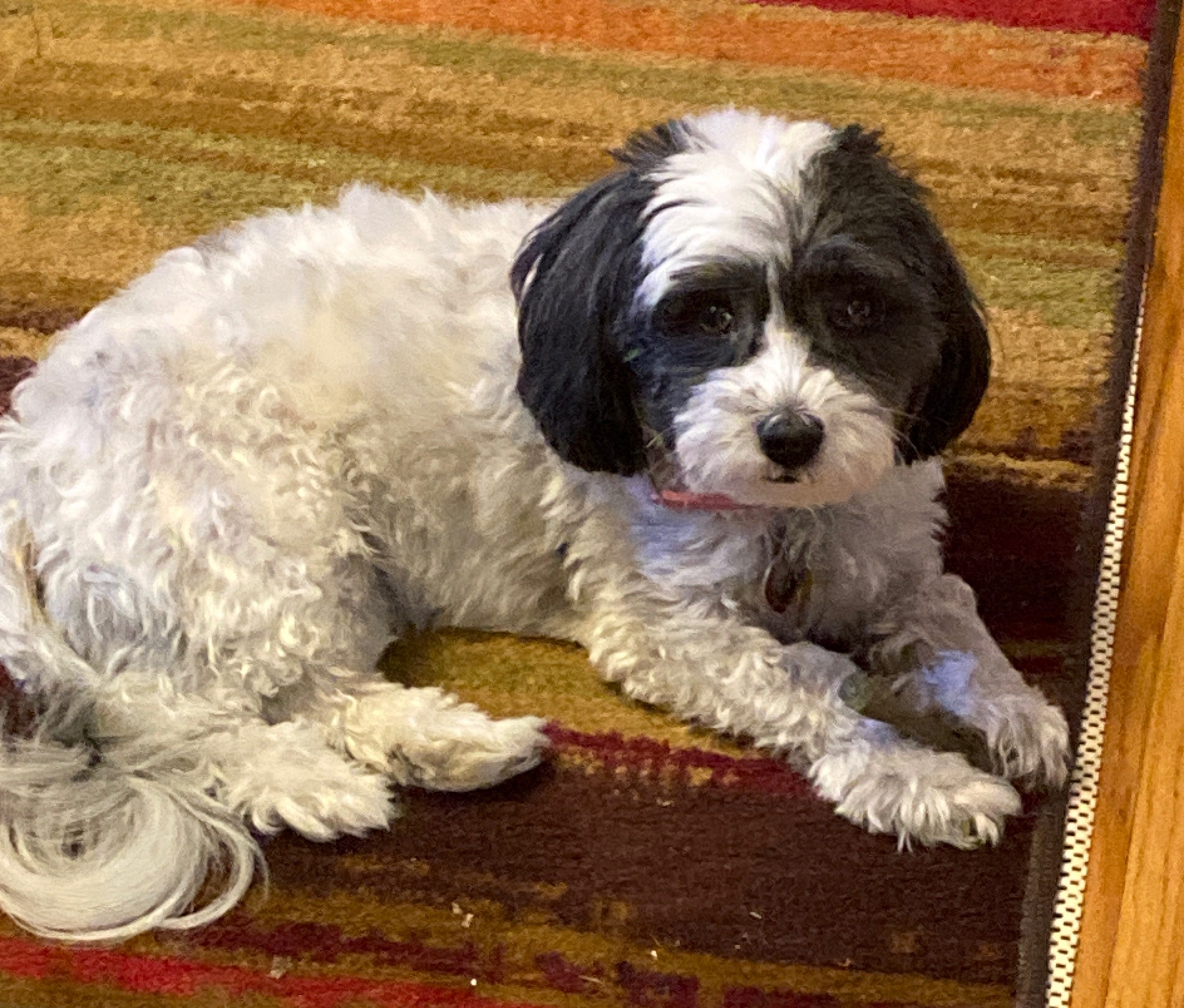
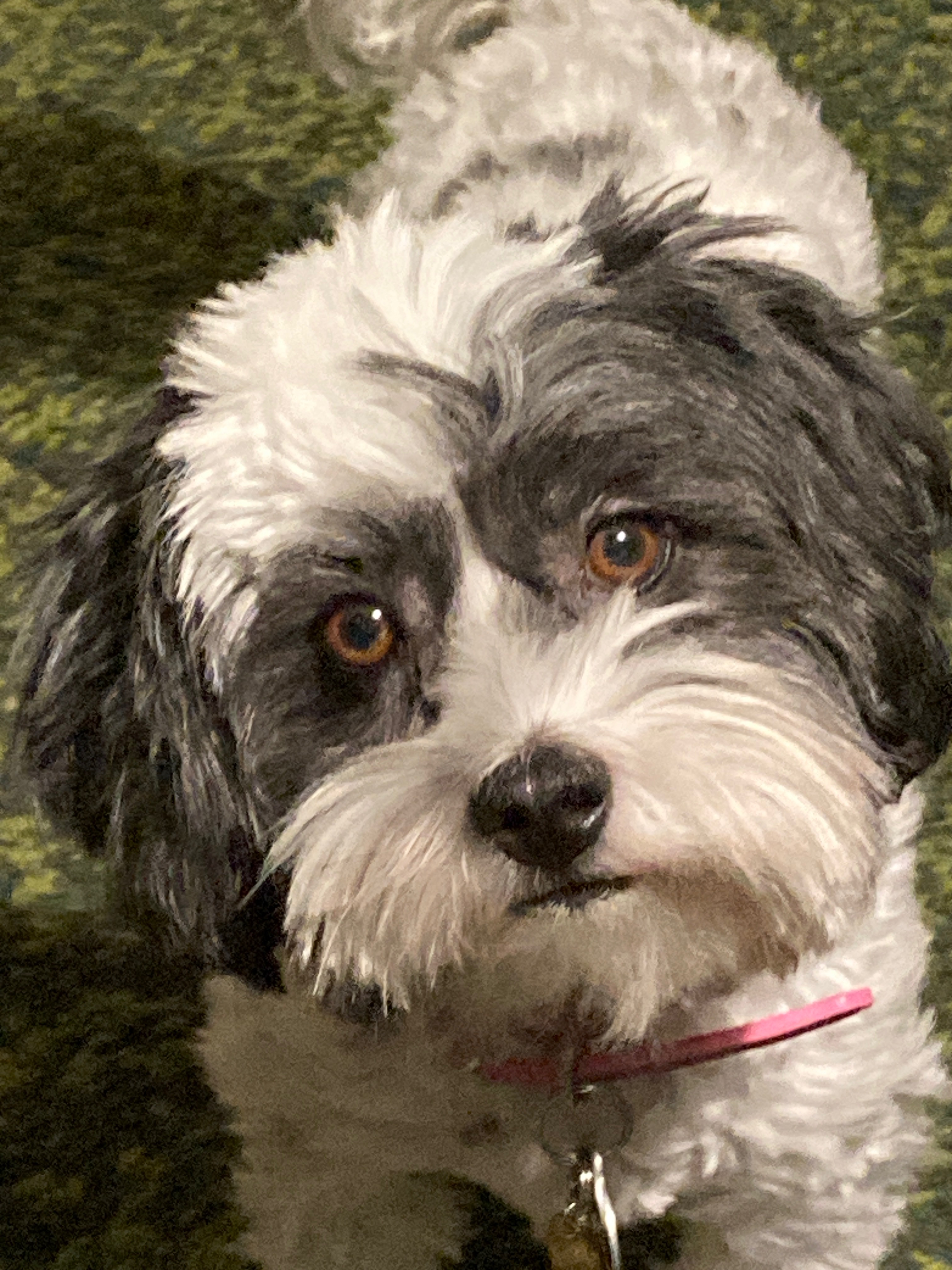
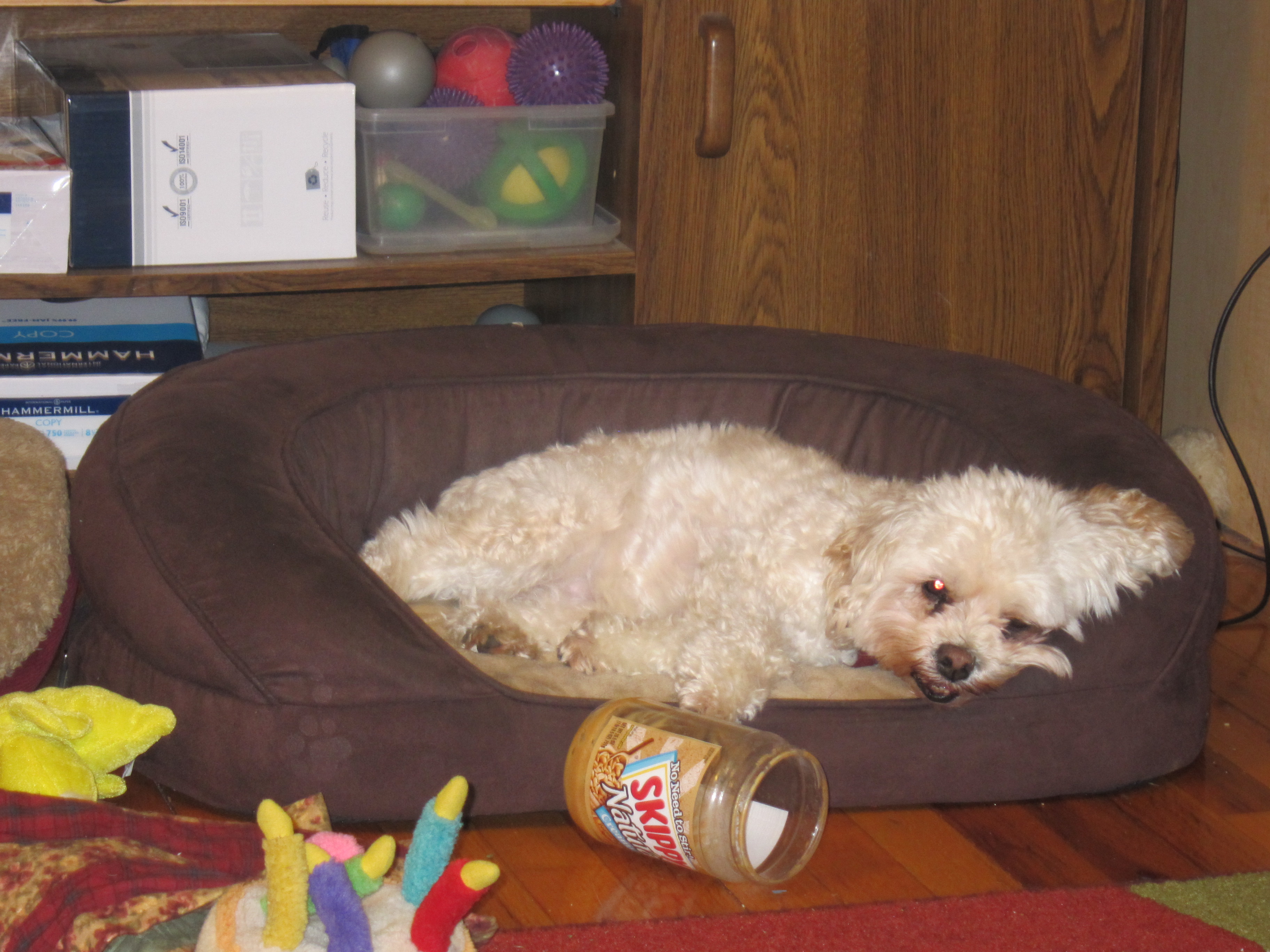
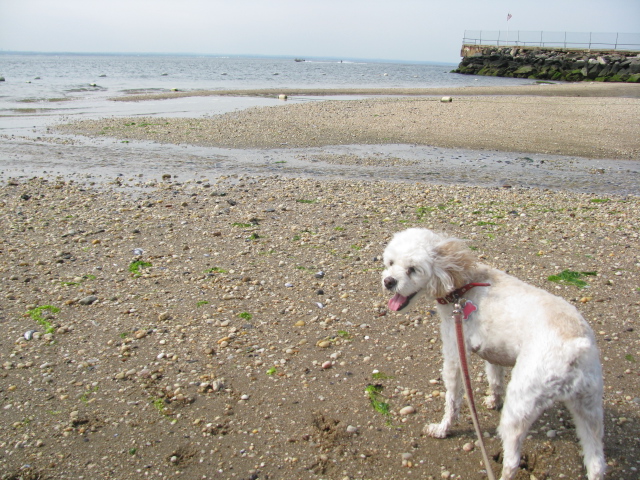
Both of my dogs, food obsessed as they are, have zero weight problems. Butterfly can eat kibble all day long – and she does – and it never impacts her weight. Cricket could probably eat a whole chicken without showing any signs of it, except in the stomach upset that she would inevitably pretend she was not experiencing. They exercise when they feel the urge, and then rest most of the day without guilt.
I keep a food and exercise journal. I drink bottles of water every day. I try out new, healthier recipes, and buy single portion low calorie snacks, but I don’t get anywhere with it. If I could stop taking the offending medication and still function, I’d do that. But I had to make the decision to function, at some point, rather than to maintain my weight. Most days it doesn’t feel worth it, until I try to stop the medication and find myself struggling to breathe, and struggling to walk, and then I remember why I made this decision in the first place.
But it still doesn’t feel worth it. And when I look around me, I see millions of people who believe that a woman should be willing to be sick and in pain in order to look the way she’s supposed to look, and hate herself for eating when she is hungry or resting when she is tired.
The puppies know they need their rest.
The dogs think this is insane. They believe that how they feel is everything, and how they look is only useful when it gets them more scratches or treats. And even then, they’re pretty sure that it’s their powers of persuasion that get them what they want. I don’t think they even know how cute they are; though I could be wrong about that.
“You want to give us food.”
We are not relying on our cuteness to get what we want.”












 rachelmankowitz