Tag Archives: metaphor

God as a Metaphor

            A few years ago, Rabbi Toba Spitzer came out with a book called God is Here: Reimagining the Divine, which delves into the metaphors we use to help us discover God. I haven’t finished reading the book, so don’t tell me how it ends, but what has stood out for me so far is how we rely on metaphor to give us a sense of who, what, and how God might be, just like we use metaphors to help us understand emotions and ideas that we can’t describe in any other way. These metaphors are often treated as literal descriptions by many religious people, as if we are watching a play about the world and God is playing all of the roles. And, to be honest, I don’t believe I can know God with any certainty, or that God is literally an anthropomorphic being. But there are metaphors for God that reach me on a deep level, and that seem to help me tap into the “God energy” within myself and/or in the world around me.

            The Toba Spitzer book has been sitting on my shelf for a while, filled with sticky notes and other place markers, because it is too rich to read all at once, but it came back to mind recently while I was listening to Ishay Ribo, a religious Israeli singer who has become very popular among religious and secular Israelis, and Jews around the world, for singing popular music that is full of metaphors for God, with lyrics that are often pulled directly from traditional Jewish prayers. It is surprising, and also not surprising, that his music has crossed over into the secular world, among people who would say that they are agnostic at best, and would scoff at the idea of an anthropomorphic God who actually intercedes in our lives. And yet, the music has meaning and power for them too. Why?

             I’ve always heard these metaphors for God in Jewish prayer: God as nature – wind, rain, tides, sun, moon, trees. God as warrior. God as provider. God as lover and beloved. God as teacher. God as judge, magistrate, accountant, social worker. God as rock, redeemer, savior. God as breath, spirit, life itself.

            But what I realized as I listened to these metaphors as they are used in Ishay Ribo’s songs, is that the metaphor is really about the nature of our relationship with God, rather than a way of describing God him/her/itself. If God is a Shepherd, then we are the wayward flock. If God is a king, then we are the dependent subjects. If God is a mother, we are her children in need of comfort and nurturance and protection. If God is the teacher, we are the students, looking for knowledge and wisdom. If God is the doctor, we are the patients in need of healing. The metaphor for God that we find most meaningful in any instance will depend on how we see ourselves in that moment, and what we are longing for that we can’t find elsewhere.

            I decided to do a deep dive into some of the songs, or at least use Google Translate to see what I’ve been singing along to all this time, and I found a lot of familiar metaphors for God. In one of Ishay Ribo’s songs, Tocho Retzuf Ahava (He is filled with love), he says of God: “He never turns a blind eye from the sheep of his pasture,” meaning, we are the wayward sheep longing to have someone keep us safe from harm, and especially from our own mistakes, like a shepherd would do with his flock. In another lyric, he sings, “Even when we’re broken vessels, we are still his precious vessels,” which really resonates for me. Whether we are thinking about God or not, the deep need to feel loved and cherished, especially when we feel broken, is something we all share. And then there’s the magic of God, or the alchemy ascribed to God’s power: “In the future [God] will give glory in exchange for ashes, the oil of joy will replace our grief, a shroud of glory will replace a heavy spirit.” Who doesn’t want to believe that God, or fate, or someone, will eventually step in and make things better. You don’t have to believe in God in order to long for that spark of hope when you’re feeling hopeless.

            In his song, LaShuv HaBaita (To Return Home), Ishay Ribo sings: “The time has come to wake up, to leave everything, to overcome, to return home,” and though I know, intellectually, that he is referring to a return to God and Jewish practice, the metaphor of returning home has power for me anyway. And the idea that, “Even if we’ve done something wrong, he forgives and pardons,” feels like a prayer for how the world, or our loved ones, will respond to us. And, “He reaches out a hand to help, and gives, with mercy, the power to correct and fix ourselves and return to him.” I don’t have to believe in an all-powerful God to be comforted by the image of someone who will help me help myself. And I don’t have to see that help as coming from God. I can replace God with friends, teachers, parents, and mentors, in my mind, and be just as comforted.

            I watched an interview with Ishay Ribo on YouTube recently, in Hebrew and without subtitles so I may have misunderstood, but the message I took from it was that he knows his music is reaching more than just believers in God and or orthodox Jews in particular, and that that’s intentional. The words he sings are meaningful to him because he’s using the language that comes most naturally to him, but he is expressing universal experiences of doubt, pain, anger, hope, longing, and joy. And if you want to call all of that God, fine, and if not, that’s fine too. To be fair, Ishay Ribo probably wouldn’t say it that way, exactly, but I think he would agree that it’s the connection between human beings that holds so much power in his songs, and in his singing.

If the energy that connects us is God, or just our own energies radiating outward, what does it matter, as long as we are, eventually, connected? These metaphors have lasted millennia and have held power for the people who have used them, because they help us to describe parts of our internal landscape that are otherwise left in shadow. The metaphors allow us to see and feel and talk about states of longing and pain and hope that otherwise are left unspoken, and that is why they are so healing.

It’s true that, at times, when I sing along to these songs, or take part in Jewish prayer services, I will notice a line about God as father or God as Shepherd and roll my eyes a little bit at the idea that God would literally be any or all of these things. But most of the time, I just close my eyes and feel deeply heard, and comforted, and seen. And I’m not alone.

Ishay Ribo and the Solomon Brothers, LaShuv HaBaita in English and Hebrew: https://youtu.be/WZ6HvzFh7js?si=F6AIRcWu1XOf3smL

Some of Ishay Ribo’s songs in Hebrew:

HaLev Sheli: https://youtu.be/6U_5KhaH6IM?si=Hl_wcxj0TVhKrMCR

LaShuv HaBaita: https://youtu.be/Y30pfWIQfoo?si=Ly0Wz1qWrltC5dzY

Tocho Retzuf Ahava: https://youtu.be/fQRgX3ivUKU?si=YcFnd-2El0GIzqpj

If you haven’t had a chance yet, please check out my novel, Yeshiva Girl, on Amazon. And if you feel called to write a review of the book, on Amazon, or anywhere else, I’d be honored.

            Yeshiva Girl is about a Jewish teenager on Long Island, named Isabel, though her father calls her Jezebel. Her father has been accused of inappropriate sexual behavior with one of his students, which he denies, but Izzy implicitly believes it’s true. As a result of his problems, her father sends her to a co-ed Orthodox yeshiva for tenth grade, out of the blue, and Izzy and her mother can’t figure out how to prevent it. At Yeshiva, though, Izzy finds that religious people are much more complicated than she had expected. Some, like her father, may use religion as a place to hide, but others search for and find comfort, and community, and even enlightenment. The question is, what will Izzy find?
Russian Nesting Dolls

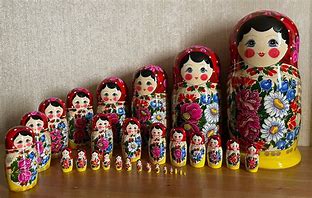
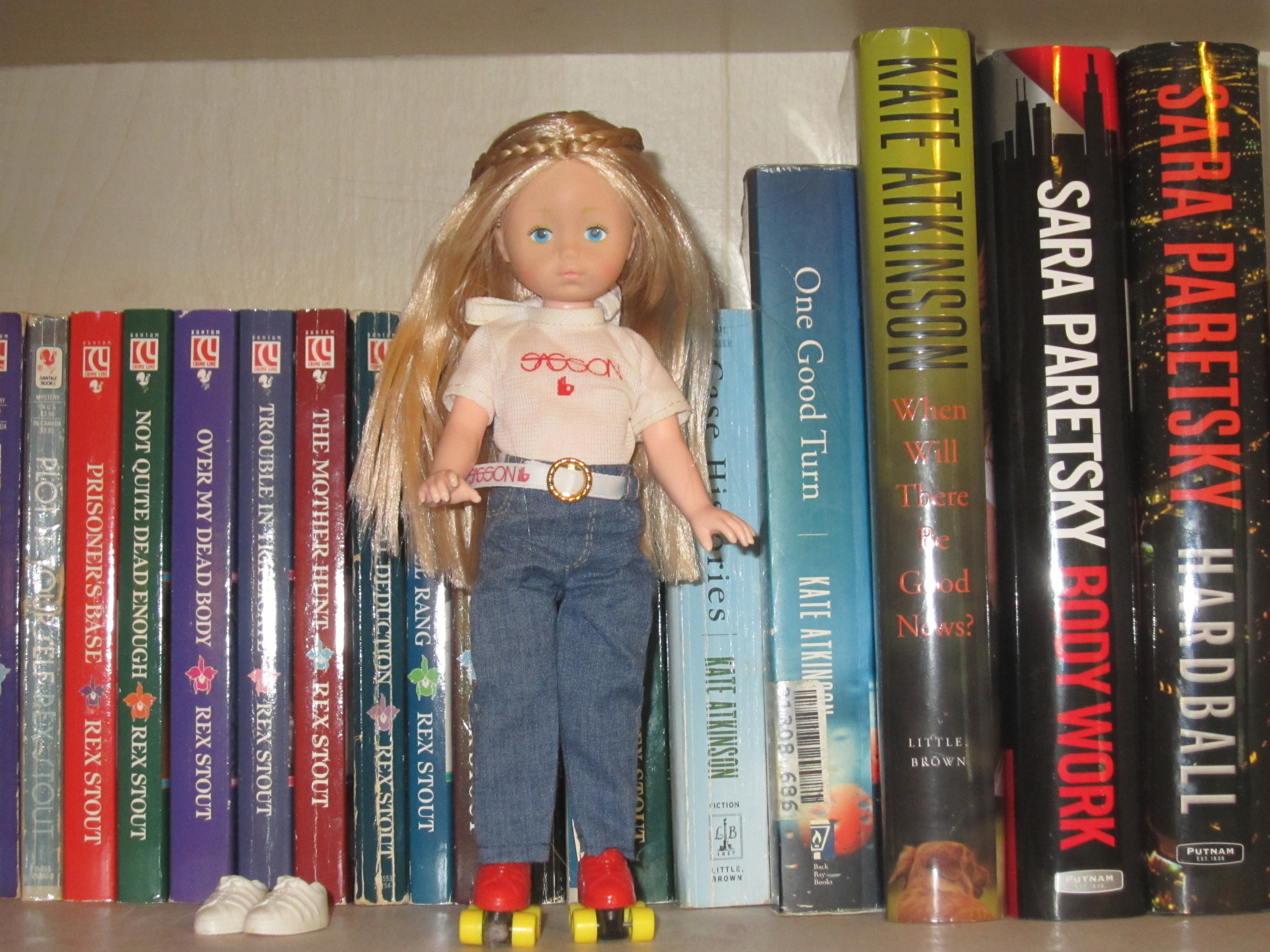
            I don’t remember if I ever had a set of Matryoshka dolls (Russian nesting dolls) of my own when I was younger, but I definitely saw them and played with them somewhere along the way. There was something magical about how each doll hid another doll, and another, and another, except, there wasn’t much to do with these “dolls.” You couldn’t dress them up, or hug them, and none of them had roller skates (like my Ginny doll). And they were so static: their eyelids didn’t open and close, and their arms and legs didn’t move. And yet, they still drew my attention. I haven’t thought about those dolls very much over the years, but recently I saw a set of them on TV, and my first thought was that they would be a very helpful metaphor for the way we carry our old stories within us, even as we try to grow beyond them.

Traditional Russian nesting dolls (not my picture)
My Ginny doll is a reader.

            I was sure that everyone must see the same thing in them as I did, but when I went looking for more background on the dolls, I found out that everyone sees something a little different, depending on where they are in their lives and what lens they are looking through.

            Originally, the dolls were made as a children’s toy, in 1890, possibly inspired by a nesting doll from Japan, and they were meant to highlight Russian femininity, with the dolls wearing a sarafan, a long, shapeless traditional Russian peasant dress, and the figures inside representing her children, of both genders, with the smallest being a baby, made of a single piece of wood.

A smaller set (not my picture)

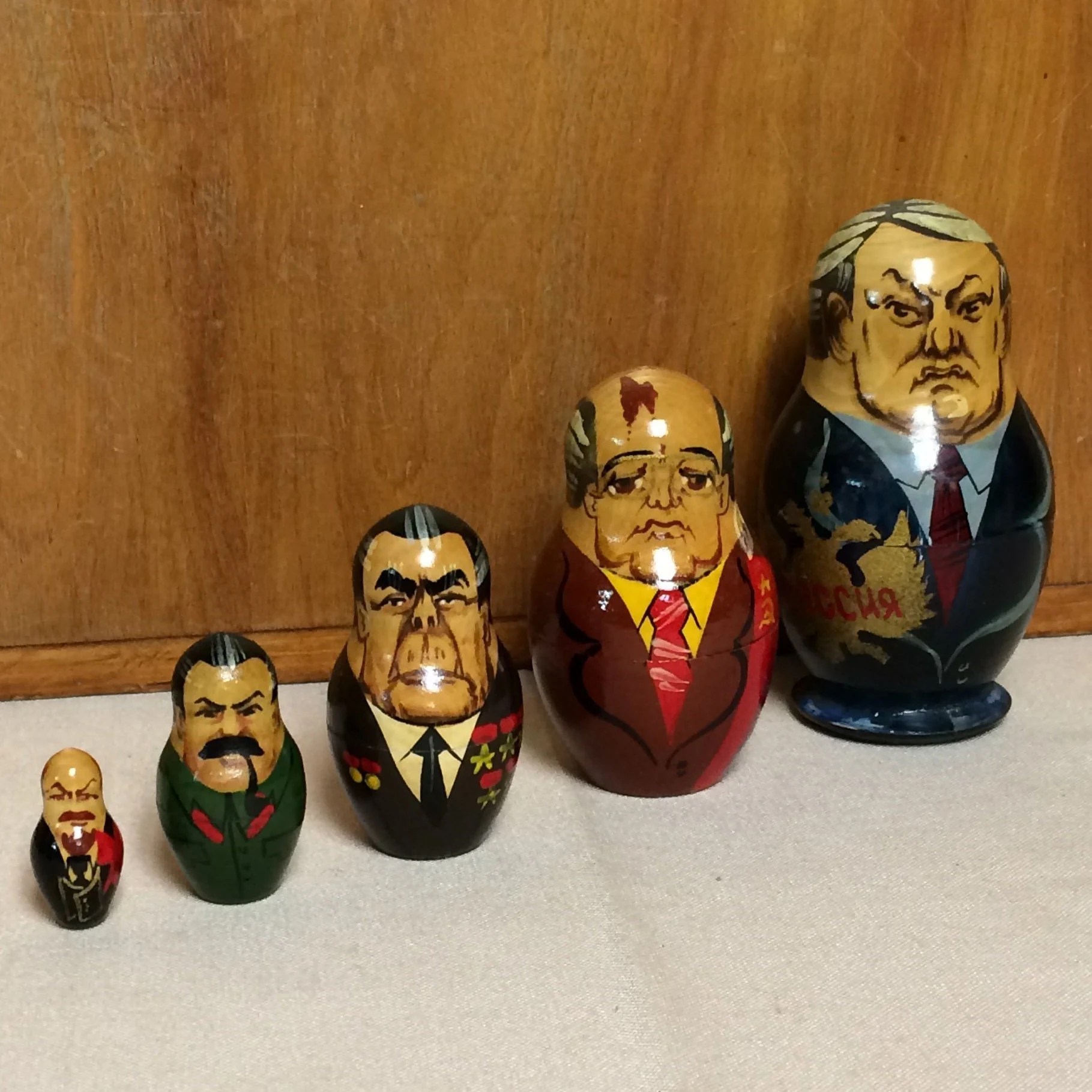
But somewhere along the way the dolls became a favorite souvenir for tourists, and then a way to represent famous Russian politicians, and how each generation of politicians was influenced by the ones who came before. Some people have even repurposed the dolls to represent complicated corporate structures used to avoid paying taxes, like shell companies.

Political Russian nesting dolls (not my picture)

But when I look at these dolls, I see myself, and the way each of my previous selves stays inside of me. My layers don’t peel off, like an onion, or slough off, like the skin of a snake; I hold onto everything, whether I want to or not. I would have thought, given all of that, that I would feel some relief at seeing each doll standing separately on its own “feet,” but instead, the separated dolls seem hollow to me, even forlorn. Despite the pain of holding onto the past, I feel stronger, and more fully myself, with all of my selves held together.

            And there’s something powerful about having a metaphor that I can see and touch and move around in space; because when all I have are words to help me organize my thoughts, the chaos can become overwhelming.

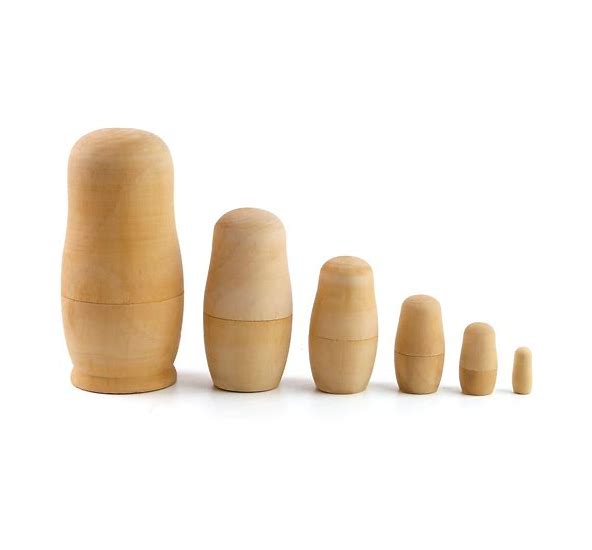
            When I went looking for images of Matryoshka dolls, I found all kinds of different sets – five doll sets and ten doll sets, people and animals, dolls that look exactly the same at each size, and dolls that are completely different from one another – but the most intriguing thing I found were blank sets of dolls that you can paint however you like. And it occurred to me that, if I had any artistic talent at all, which I don’t, it would be really meaningful to create the figures to represent my own layers, or the important people who have influenced me over time, to help me really see all of my pieces.

Animal nesting dolls (not my picture)
Blank nesting dolls (not my picture)

And then I thought about how I could use those blank doll sets with my students, to help them visualize how each generation influences the next, and how who they are today is connected to everyone who came before. And then I thought about the costs of all of the materials involved, and the difficulty of getting my boss on board, and then the work of explaining to the kids exactly what I was looking for, so they wouldn’t just paint all of the dolls as different sized poops; and then I fell into a black hole of self-recriminations about all of the ways I suck as a teacher, and a therapist, and a person overall.

And yet, despite the waterfall of thoughts and worries and self-loathing that washed over me, I still think the Matryoshka dolls have a lot to offer, though maybe they should come with a warning label: open at your own risk, objects inside may be a lot more complicated than you expect.

“Just like me!”

If you haven’t had a chance yet, please check out my novel, Yeshiva Girl, on Amazon. And if you feel called to write a review of the book, on Amazon, or anywhere else, I’d be honored.

            Yeshiva Girl is about a Jewish teenager on Long Island, named Isabel, though her father calls her Jezebel. Her father has been accused of inappropriate sexual behavior with one of his students, which he denies, but Izzy implicitly believes it’s true. As a result of his problems, her father sends her to a co-ed Orthodox yeshiva for tenth grade, out of the blue, and Izzy and her mother can’t figure out how to prevent it. At Yeshiva, though, Izzy finds that religious people are much more complicated than she had expected. Some, like her father, may use religion as a place to hide, but others search for and find comfort, and community, and even enlightenment. The question is, what will Izzy find?

The Pin Cushion

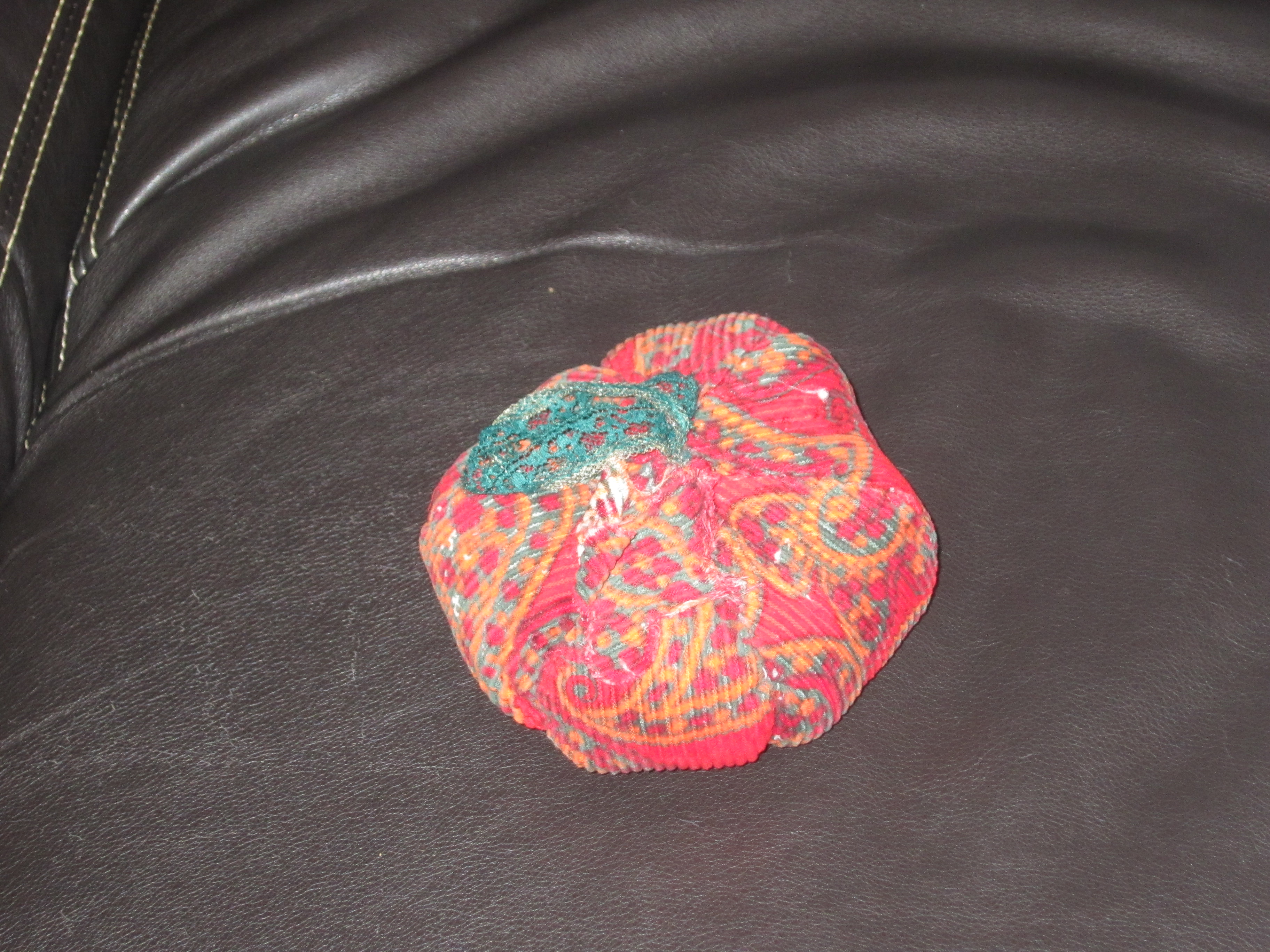
When I was moving the laundry from the washer to the dryer the other day, I found a safety pin, open. Thankfully it hadn’t stuck me, it just fell out of the pile of wet clothes and hit the basement floor. I couldn’t figure out where the safety pin had come from, because I never use safety pins, but I was doing the combined laundry, Mom’s and mine, so I figured it must have fallen out of one of her sewing projects. She’s always tossing random pieces of fabric into the laundry bag for me to wash (I do most of the laundry; she does most of the cooking. It’s a pretty good deal). Then I saw one of Mom’s pincushions on the pile of wet clothes on top of the dryer, and I thought that was probably where the safety pin had come from, but, do pin cushions usually need to be washed? When I picked up the pin cushion, it pricked my finger, and I realized that the tip of a needle was sticking out of the bottom. When I pressed down on the pin cushion, to get a better grip on that needle, three more needle points appeared. I decided that the best plan would be to put the mystery aside for a minute, in a safe place like the bag of laundry supplies, and finish putting the rest of the clothes into the dryer.

010

The offending pin cushion.

As I walked back to the apartment (the laundry room is in the building next to mine), I was torn between being angry at my mother for putting a pin cushion in the laundry without warning the laundress – aka me, and being angry at her for not knowing that her pin cushion was stuffed with hidden needles. But when I got back to the apartment and showed her the pin cushion, she was as shocked as I was, on both fronts. The pin cushion must have fallen into her laundry bag by mistake, and she’d had no idea it was hoarding needles.

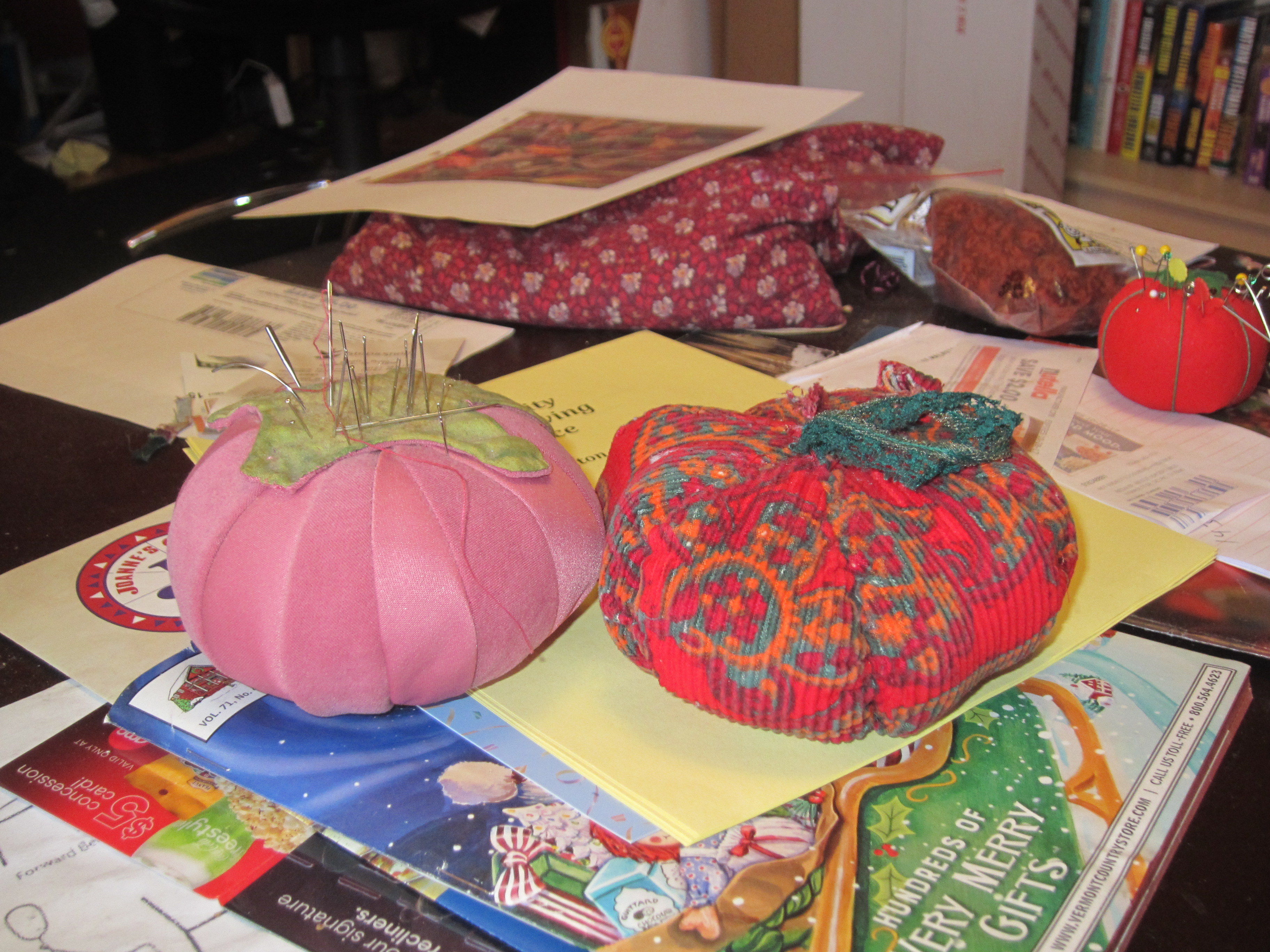
I sat down on the couch for my traditional time-waster between putting the clothes in the dryer and picking them up, and started to pull out the visible needles. I pressed and pushed at the cushion in search of more, and they kept coming. Ten, twenty, thirty needles of all shapes and sizes. This had to be years’ worth of lost needles, hiding all this time as Mom went out and bought ever more replacements. There were rounded needles, and thick quilting needles, and skinny needles, and short needles, and long needles.

013

Some of the hidden needles, now safely stuck in the top of the pink pin cushion.

I had to stop long enough to get the laundry and handed the pin cushion puzzle over to Mom for the time being, because she was eager to give it a try. But after we’d finished putting the clothes away, the puzzle of the pin cushion called out to me, even after Mom was certain she’d found all of the needles that could be found.

I asked if I could undo some of the seams of the pincushion, to make the search easier, but Mom balked at that, suddenly very protective of her little pincushion. So I pressed and pushed at the now miss-shapen cushion until at least fifteen more needles appeared. The needles had migrated deeper and deeper into the stuffing of the pin cushion over the years, and only a finger prick to let me know when I’d caught another needle.

Cricket had no interest in this particular mystery, thank God. I had just watched an episode of Dr. Oakley: Yukon Vet where she’d had to search for porcupine quills in the face of a poor crying sled dog, so I may have been giving off the right amount of fear and foreboding to keep Cricket at a safe distance.

doctor oakley

007

“Save me, Grandma!”

I know that my obsession with finding the hidden needles says something important about me: that I wasn’t put off by the sharp pains, or by my lack of real interest in the needles themselves (what do I need with fifty multi-sized needles that had already been given up for lost?); but I can’t figure out what that metaphor is. I only know that the appearance of each formerly hidden needle filled me with joy and a sense of accomplishment, and that when I couldn’t find any more needles, I felt bereft, as if a sudden void had opened up around me.

Cricket offered her belly up for scratching and even let me remove a small piece of goop from underneath her eye, but the void remained. I feel like I’m supposed to continue the search for hidden needles, or their analogs, but I don’t know where to look.

011

“No needles here.”