Tag Archives: netflix

Au Revoir, Netflix

            We decided to cancel our subscription to Netflix recently, since we haven’t been watching it very much and it’s our most expensive monthly subscription. So, of course, as soon as we scheduled the end date, for not-quite-a-month away, I started to panic and look through every Netflix recommendation to add anything to my list that I might ever want to watch, just to make sure I wouldn’t miss anything. Surprisingly, or not, I didn’t find that many shows I needed to binge, except for what seems like an endless supply of heartfelt, limited series from South Korea that I can barely distinguish from one another just based on the descriptions; and, really, I could never watch all of them, or even the first episode of each one, before our Netflix subscription ends; though I will probably try.

My one-month trial of Prime Video (Amazon), last month, was probably what taught me that I could do without Netflix, and also that I could binge an enormous number of shows in a short period of time, if I was really motivated.

            Lately, I’ve been much more interested in watching shows on MHZ, an international streaming channel that we subscribed to for the year, to try it out. It’s filled with French murder mysteries and Italian and German and Danish and British and Israeli shows of all kinds. I still watch regular cable and broadcast shows too, though I tend to record the shows so I can watch them on my own schedule and fast forward through the commercials. I wish there was a way for cable and all of the streaming channels to come as one package, and be more affordable, because it’s a blessing to have so many options, but we are paying top dollar for that blessing.

            In the past week or so, I’ve been trying to rush through what’s left of my Netflix watchlist, even before the deadline, so I can get back to watching MHZ, and maybe rewatching my latest favorite French murder mystery series, The Art of Crime.

            I am not an art historian. In fact, for my whole life I’ve suffered from some kind of learning disability that makes it impossible for me to focus on a painting for more than five seconds at a time, or to stay conscious and upright in a museum at all. And yet, this mystery series, set in the art crime unit of the Paris police, hooked me. I was surprised both by how many of the artists I was already familiar with, and how unfamiliar I was with the stories behind the paintings.

            The Art of Crime centers around a police officer named Antoine Verlay, who transfers into the art crime unit after being fired by his old boss for insubordination (I think he punched him, but don’t quote me), and he has no background at all (seemingly) in art so he needs help from Florence Chassagne, an art historian who works at the Louvre. Florence, or Mme. Chassagne as he continues to call her season after season, while she calls him Captain Verlay, is sort of flighty, literally falling to the ground with severe bouts of unexplained vertigo when the series begins. And her father, who is also an art history expert, is batty, and is one of the primary reasons why Florence is in psychoanalysis on a regular basis. Captain Verlay, on the other hand, has no interest in art, or therapy, and is impatient and very much the gritty cop, with no time for flights of fancy. Cue the fireworks. Except, their journey together is so much more nuanced than that, and sweet, and vulnerable.
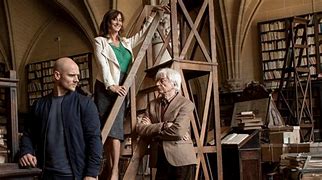
            Along the way, I’ve been learning all kinds of interesting things about the art world that I would never have sought out on my own, and Florence’s childlike joy in art, and the artists who create it, has been making me think that a museum might not be the worst place in the world, though I’m still not convinced.

            One of my favorite parts of the show is when Florence has her gossipy chats with long dead painters, which could have just been a silly gimmick but has turned out to be deeply moving, and insightful, and, most of all allows me to see the artworks as an extension of the artist’s real world, rather than a pretentious gloss painted on top of it. There’s also the physical comedy in the show, and unrequited love and awkwardness, along with the satisfaction of solving puzzles and finding the bad guy. I’ve watched all seven current seasons of the show and am waiting impatiently for season eight, which can’t arrive soon enough.

While I’m waiting for season eight of The Art of Crime, though, I still have a ton of other MHZ shows to try out, and a blog reader shared a link to the first two seasons of The Paris Murders (in French, without subtitles), so I have plenty of shows to keep me, and my dictionary (and/or Google Translate) very busy, until I get to see Captain Verlay and Mme. Chassagne again.
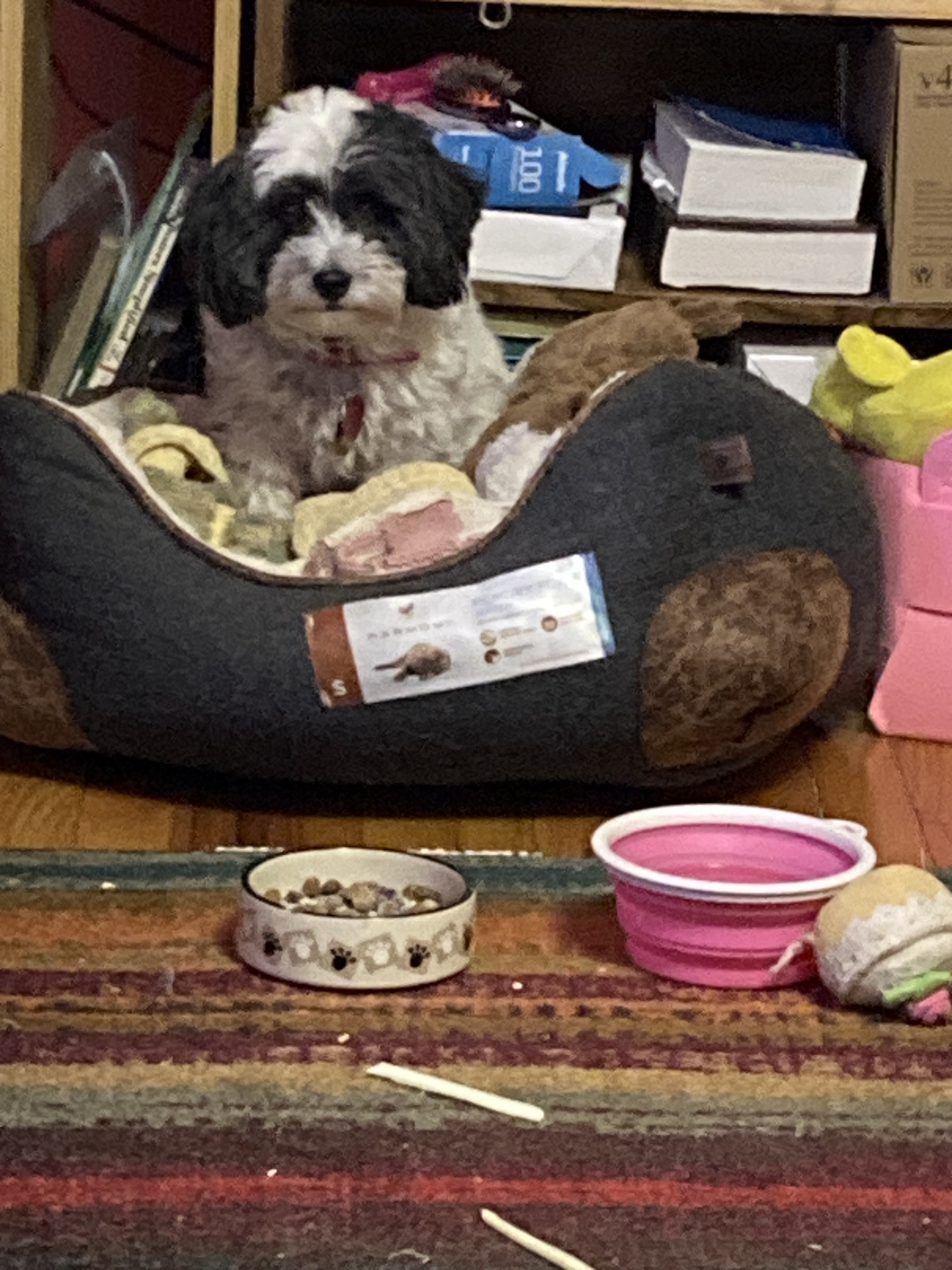
“Je parle francais maintenant.”

If you haven’t had a chance yet, please check out my novel, Yeshiva Girl, on Amazon. And if you feel called to write a review of the book, on Amazon, or anywhere else, I’d be honored.

            Yeshiva Girl is about a Jewish teenager on Long Island, named Isabel, though her father calls her Jezebel. Her father has been accused of inappropriate sexual behavior with one of his students, which he denies, but Izzy implicitly believes it’s true. As a result of his problems, her father sends her to a co-ed Orthodox yeshiva for tenth grade, out of the blue, and Izzy and her mother can’t figure out how to prevent it. At Yeshiva, though, Izzy finds that religious people are much more complicated than she had expected. Some, like her father, may use religion as a place to hide, but others search for and find comfort, and community, and even enlightenment. The question is, what will Izzy find?

Chocolate

            The most recent South Korean series I’ve been watching on Netflix is a romantic drama called Chocolate. It’s made up of sixteen hour-long episodes and tells a love story that crosses decades and starts and ends with food, especially chocolate. A boy prepares a meal for a girl when she’s starving, and that sends her on a lifelong journey of feeding others, both to relive the kindness she received and to pay it forward. It feels like the boy transferred his love of cooking to the girl, as if a piece of his soul was grafted onto hers.

The first feast

            There’s a sense of ceremony and ritual to the cooking in this series as we watch her sift and chop and snip and stir. And watching the way people receive and enjoy her food is satisfying, even when the particular foods she makes don’t appeal to me (Ahem, kimchi. There’s a kimchi section at my local HMart that always looks so inviting, and I keep trying different dishes hoping to find something with a spice level I can tolerate, but that hasn’t happened yet. 

not my picture

            She constructs her dishes with an awareness of how they look and smell and feel and sound, like colorful flowers deep fried and added to the plate, for crunch and color, or a cherry blossom roll where you can see the blossom in the center. And I love the way slurping is encouraged rather than frowned upon. Throughout the series, the chef tries to recapture people’s memories with her food, and then relies on chocolate, baked into cakes, molded into designs, or eaten as is, to remind her that there is reason to hope and to hold on, even when she’s at her lowest.

Watching episode after episode of this show has been inspiring but has also reminded me of how little energy I’ve had for cooking over the past few years. I can’t stand at the counter long enough to chop and mix and sauté; one minute at the sink leaves me feeling like there’s a cleaver in my back, two minutes in front of the chopping board and my vision starts to swirl. And yet, I can watch this fictional chef prepare dish after dish for hours without feeling any pain, and I feel taken care of, by osmosis. She reminds me of how I felt when I was little, watching my mother make dinner, peering over the counter to see what she would add next.

            I spent many years trying to learn how to cook satisfying food for myself. I took cooking classes and baking classes and cake decorating classes, and I made soups and pastas and dumplings and cakes, but it never felt good enough. I worked so hard to try to feel joy in making the food, but in the end it just felt like work, often tedious and thankless, resulting in food that still disappointed me. Something always seemed to be missing from the final product; something I couldn’t name and couldn’t recreate.

            But this fictional chef is able to share some essential element of herself with others through her food, and yet never seems to be diminished by how much she gives away. I wish I could believe that by studying her recipes and techniques I could discover the secret ingredient I keep missing in my own cooking, whether it’s fish paste or a certain way of slicing the onions or some ineffable quality that she infuses into the process from her soul.

The reality is, I don’t go hungry; and I don’t lack joy in my life, or even in the food I eat. But there is always this slight bitterness, this inkling that something is missing, something I need and want and can’t seem to find. I may have to rewatch all sixteen episodes to see if I can figure out what I’m missing; or maybe one day, if I’m lucky, I’ll be able to find it within myself.

If you haven’t had a chance yet, please check out my Young Adult novel, Yeshiva Girl, on Amazon. And if you feel called to write a review of the book, on Amazon, or anywhere else, I’d be honored.

            Yeshiva Girl is about a Jewish teenager on Long Island, named Isabel, though her father calls her Jezebel. Her father has been accused of inappropriate sexual behavior with one of his students, which he denies, but Izzy implicitly believes it’s true. As a result of his problems, her father sends her to a co-ed Orthodox yeshiva for tenth grade, out of the blue, and Izzy and her mother can’t figure out how to prevent it. At Yeshiva, though, Izzy finds that religious people are much more complicated than she had expected. Some, like her father, may use religion as a place to hide, but others search for and find comfort, and community, and even enlightenment. The question is, what will Izzy find?

When Heroes Fly

            I decided to rewatch When Heroes Fly, a fantastic one season Israeli drama (with English subtitles), because I found out that it was about to leave Netflix in January. The first time I’d watched the show was for my online Hebrew class, almost two years ago, with Hebrew subtitles, but it was so vivid and powerful that I understood most of what was going on, despite missing a few words here and there (and everywhere).

            When Heroes Fly follows four guys in a reserves unit who lose their leader in war. Each one deals with the loss, and the trauma of war, in a different way, but the main character, Aviv, truly falls apart. He’s away getting help when his ex-girlfriend, Yaeli, goes on a trip to South America that he was supposed to go on with here, and, it seems, dies in a car accident.

            The mystery that has to be solved, years later, is whether Yaeli actually survived the accident after all, and if so, where is she, and does she want to be found? That’s the frame of the show, but the real drama is in how each of these four men work through their past mistakes and confront themselves and each other.

            What got to me the first time I watched this show was how completely Aviv’s character resonated for me – his inability to heal, despite so much effort and time, and his self-loathing, and how others judged him for being such a mess. His physical expressions of depression and self-loathing, and that sense of truly falling apart – that was me. Even two years ago, after a lifetime of therapy, it all still felt deeply true for me. And yet now, despite grieving both of my dogs, and still having “issues,” and still feeling frightened and incapable at times, I don’t feel that wracking whole body depression anymore. It’s been receding for a long time, but until I watched this show again I didn’t realize how long it’s been since that was my daily, and then weekly, and then monthly experience of life.

            Another thing I relate to, deeply, in this show is how much these friends need each other and yet can’t quite connect or hear each other through the fog of their own trauma responses. We want to believe that if we try hard enough and love hard enough we can fix anything, but sometimes our need to help is the problem, stopping us from seeing the real person in front of us who is in so much pain.

            A new character is introduced late in the series, an Israeli detective with her own deep trauma who has to find the four men and Yaeli as part of a larger case. But she isn’t cut off from her pain, or completely lost in it, she’s strong and broken at the same time. I want to be this woman, this strong, capable woman who is also deeply attached to herself and to reality. I get the feeling that a lot of people think I already am this women. I’m not, yet, but just seeing her on screen makes it seem more possible.

            But the biggest revelation for me in watching this show now is the impact of collective trauma, which goes beyond each individual’s experience of trauma, when they are all experiencing the trauma together. As an American Jew I can try to take an “objective” view on the current war, because my family isn’t running to shelters at any moment as rockets fall, and I’m not grieving a loved one who died in the massacre or was taken hostage, and no one in my family is a soldier in this war, risking their life every day. I am Jewish, but as an American Jew I have the privilege of not feeling the depth of the collective trauma that is tormenting Israelis, and Palestinians, as they try to figure out what happens next.

            When I watch the news and do my deep dives into the history to try and understand what I’m seeing, I still find much of it incomprehensible, because I can’t see it through their eyes; I can’t feel it in my body and know the darkness that prevents clear sight on things that, from here, seem obvious. I keep trying to understand anyway, and I try not to judge the decisions and opinions I can’t understand, because I know that people who are not under the influence of trauma think a lot of things should be possible that people within the trauma can’t fathom and can’t choose.

            Interestingly, while the English title of this show is When Heroes Fly, which suggests that these four men are clearly heroic, as if they are morally unambiguous and selfless and always know what to do, the title in Hebrew is For Her Heroes Fly, suggesting that heroic behavior has to come from somewhere, from some internal motivation, beyond the theoretical goodness and righteousness we keep expecting from our heroes. These are not men with infinite courage and a willingness to die for a cause; these are men who are willing to fight for the people they love.

            People want to believe that Israel only has a right to exist, that Jews only have a right to exist, because we are supposed to be a beacon of light to the nations; and some Jews try very hard to live up to that ideal, but most of us are just people, like everyone else. Requiring Israel to meet standards of behavior that no one else can live up to is unfair and inhumane.     No one gets through wars unscathed, and Israel has had to face war after war, and then terrorist act after terrorist act, throughout her short existence. Israeli soldiers, like all soldiers, are capable of mistakes in judgment and tactics and behavior. When three hostages were accidentally killed by the IDF, Israel had to deal with that reality, because Israel itself has inhuman expectations of its soldiers and its military, just like the world at large seems to have. Israel, this tiny country, with soldiers culled from all walks of life, drafted into service as teenagers, is meant to be a perfect military machine, capable of fighting tunnel warfare without making mistakes and hurting non-fighters, even when the Hamas fighters wear civilian clothes and embed in civilian neighborhoods and buildings. The Israeli soldiers who killed those three hostages, and the soldiers who have killed Palestinian civilians when aiming for Hamas, are all going to have to live the rest of their lives with that burden of guilt and failure, not out of choice but out of necessity, because they have to fight for the survival of their tiny country. The trauma that results will last a lifetime, and will alter everything that comes next.

We, on the outside of all of this, can have whatever hopes and dreams and judgements we want, but it is the people on the ground who will have to make it happen, and that means we have to accept who they are and what feels possible to them, as they carry this war, and every previous war, with them into the future.

If you haven’t had a chance yet, please check out my Young Adult novel, Yeshiva Girl, on Amazon. And if you feel called to write a review of the book, on Amazon, or anywhere else, I’d be honored.

            Yeshiva Girl is about a Jewish teenager on Long Island, named Isabel, though her father calls her Jezebel. Her father has been accused of inappropriate sexual behavior with one of his students, which he denies, but Izzy implicitly believes it’s true. As a result of his problems, her father sends her to a co-ed Orthodox yeshiva for tenth grade, out of the blue, and Izzy and her mother can’t figure out how to prevent it. At Yeshiva, though, Izzy finds that religious people are much more complicated than she had expected. Some, like her father, may use religion as a place to hide, but others search for and find comfort, and community, and even enlightenment. The question is, what will Izzy find?

Longmire

My latest Netflix binge is a show called Longmire. It first aired on A&E (a basic cable channel in the US) and I really liked it back then, despite being anything but a Western fan, which was the genre the show seemed to fit into, though it’s also a crime drama. Walt Longmire (based on books by Craig Johnson) is a Sherriff in the fictional Absaroka County, Wyoming. His wife died the year before the show starts, seemingly of cancer, but we find out that no, she was murdered. We meet his best friend, Henry Standing Bear, from the nearby Cheyenne reservation, and his daughter, a lawyer, and his deputies, and we learn about the kinds of crimes that a Sherriff in Wyoming might have to deal with, and the politics, and so much more.

“Any dogs in the show?”

            After two or three seasons on A&E the show was cancelled, for having too old of an audience supposedly. I don’t know if I realized at the time that Longmire had been picked up by someone else, but since I didn’t have Netflix back then it was over for me, and I mourned the loss.

            Maybe I’m an old soul, as I have often been told, but a lot of the shows that have been designated as being for older people have been favorites of mine since childhood – like Murder, She Wrote and Matlock and Law & Order. The assumption that we all only watch shows that reflect our current age and situation in life is silly, and something that, if true, should be challenged.

            The sixth and final season of Longmire aired on Netflix back in 2017, so there’s really no hope of them going back and doing more seasons now, damn it, especially because the show’s final episode wrapped things up in a way that kind of cuts off the blood supply for possible future seasons. But all of those knots could be untied – like when you knit a sweater and realize it’s too short, so you pull out the last row or two and add on – and it could be done seamlessly. Almost. But for now, I only have these six seasons to watch and re-watch to try to figure out why it burrowed so deeply into my psyche in such a short amount of time.

On second viewing I’m noticing more details, more places where they foreshadowed the future plot twists, and how they used music to create tension, and how they developed certain themes on a slow burn. I thought it might be too soon to watch it all again and that I would get bored, but that just hasn’t happened. I feel like I’m getting to know these people better, and seeing how much more detail was there in the first place, helping me to understand how their minds work and where they are strong and where they are weak and what they know about themselves and what they don’t.

The relationships between the characters are so deeply explored, often through just the tone of voice or a look between two people. And I love that every strong character in the show has weaknesses and grey areas and confusions over what is right and wrong. And even the best of friends disagree about what’s right in any given situation.

I love Lou Diamond Phillips in his role as Henry Standing Bear. He’s able to capture the easy charm of a bartender, and the deep loyalty of a best friend, and the spirituality and anger of a Cheyenne warrior, all without seeming to pivot from one part of himself to another. And Vic, the female Sherriff’s deputy from Philadelphia who goes from flirty to sarcastic to frightened to defiant to deeply loyal with the same seamlessness.  

“She sounds like Cricket.”

And then there’s Walt, the strong, silent Sheriff, who can be childlike and confused and then strong and formidable, and whose moral compass is in constant motion, not always leading him in the right directions but showing us that he is always searching for what is right. His bravery and endurance feel almost unbelievable, the way he pushes himself to the brink to help other people, but we get to see all of the damage it causes and all of the pain he’s trying to hide and all of the disappointment and the fear, so that his strength seems deeply human after all.

Nothing is simple on Longmire, but instead of the last minute plot twists of a show like Law & Order, each surprising development in the plot has been laid into the fabric of the show and feels believable and even inevitable, though still shocking.

I love that I’m addicted to a show set in the cowboys and Indians world of Wyoming, a world I wasn’t really curious about before this. I can’t find myself in these places or these people and yet their stories resonate deeply with me, maybe because, bottom line, I trust their values. I trust them to care about me. I believe that Walt and Henry and Vic would care what happened to me, and find ways to protect me if I needed protection. Despite all of the violence and tension in their world, I feel safe with them.

            I wish I could write like this. I wish I could write the next season of the show and make the actors come back to shoot it. But maybe most of all, I want to be strong the way these people are strong, while always still acknowledging my fears and weaknesses and confusions. I want to be clear about my values and goals, while still being open to learning something new about the world and about myself. And I want to be able to stick to what is true for me, even while respecting what is true for someone else, unless they’re delusional, in which case, fuck them.

            I think Walt would agree.

“Watch your language, Mommy.”

If you haven’t had a chance yet, please check out my Young Adult novel, Yeshiva Girl, on Amazon. And if you feel called to write a review of the book, on Amazon, or anywhere else, I’d be honored.

            Yeshiva Girl is about a Jewish teenager on Long Island, named Isabel, though her father calls her Jezebel. Her father has been accused of inappropriate sexual behavior with one of his students, which he denies, but Izzy implicitly believes it’s true. As a result of his problems, her father sends her to a co-ed Orthodox yeshiva for tenth grade, out of the blue, and Izzy and her mother can’t figure out how to prevent it. At Yeshiva, though, Izzy finds that religious people are much more complicated than she had expected. Some, like her father, may use religion as a place to hide, but others search for and find comfort, and community, and even enlightenment. The question is, what will Izzy find?

The Fab Five

            I’ve been binge watching Queer Eye on Netflix lately, ever since I ran out of episodes of the Great British Baking Show. I was a big fan of the original Queer Eye for the Straight Guy on Bravo, where five gay guys make over one straight man, and I’d heard that they were doing a new version of the show a few years back, but I didn’t have Netflix at the time so I mostly forgot about it. And then, when I started watching the new version a few weeks ago, I was worried that it wouldn’t be as kind as the original, or as funny, but it turns out that it’s even better. They’ve expanded the original purpose of the show to include makeover subjects who are male and female, gay and straight, trans or nonbinary or whatever, and they’ve made the show more empathetic and more actively accepting of differences. And it’s wonderful!

            I’ve been watching the seasons backwards in time, because that seems to be how Netflix works, so I’ve seen them in Austin, Philadelphia, Missouri, Georgia, and even Japan (!) so far, and I’m loving that they do a deep dive into each state, working with a cross section of people of different genders and ages and ethnicities and ways of life.

“What about dogs?”

            And as we go backwards in time, I learn more and more about the difficulties each of the Fab 5 has been through in their lives and how they’ve coped, or not, and what they’ve learned that got them to this point in their lives. I love Jonathan Van Ness, the grooming expert. I never thought I could get used to someone with a beard who wears high heels and dresses, but the look just seems so right on Jonathan, with his/her/their childlike joy and sweetness. It’s clear that they’ve been through a lot, including being bullied as a teenager, but all of that seems to help them be present and generous with the makeover subjects in their own grief and pain.

            Then there’s Tan, the fashion expert and Englishman of Pakistani descent, who seems so posh and above it all on the outside but is willing to be vulnerable and talk about his own difficulties coming out to his family, and his fears and excitement about welcoming his first child with his husband. He can also just be silly and playful with the rest of the guys, as long as it doesn’t mess up his absolutely perfect hair.

And Bobby, the interior design maven, has talked movingly about his Christian upbringing and being homeless as a teenager when his family couldn’t accept who he was, and Antoni, the food and wine guy, has talked about his difficult childhood and his broken relationship with his mother, and Karamo has talked about his life as a child of immigrants and a father of young men, and all of it is brought to the table to make the makeover subjects, and the audience, feel more comfortable, instead of intimidated by the gorgeousness and the abilities of the five guys who have come to be of service.

The fundamental theme of this new version of the show isn’t, “you need to dress, act, look, a certain way to have a better life,” instead it’s “you deserve the help we can offer you, because no one can do it all by themselves.”

It’s also a lot of fun, with dogs, and dancing, and playfulness and, oh yeah, there was that one time when Michelle Kwan showed up to help a ten year old girl and her father bond over figure skating!!!!!!!!!!!

“I would be a great figure skater!”

            So, of course, after watching a few seasons of the show, I started to think about what an episode about me would look like (though I should probably go on a medical mysteries show first, where they could figure out what’s wrong with my health and get me to a place where I’d actually be able to make it through a whole week with the fab five). I don’t know how my neighbors would react if an SUV rolled up and five fairy godparents rolled out and stomped up to our door. We’d probably get noise complaints. I’m also not sure there would be room for everyone to be in the apartment at one time, especially with Cricket barking her head off and trying to bite their ankles.

“That sounds like Cricket.”

            On each episode, the fab five comes up with a goal that the “hero” (what they call their makeover subjects) can reach by the end of the week: building a man’s confidence so he can propose to his girlfriend; preparing a man for the new baby that’s about to arrive; helping the trans woman feel ready to welcome friends and family to her home and especially to reconnect with her father. But I’m not sure what the goal of my makeover could be. I’d love to have help figuring out my hair and skincare and makeup with Jonathan, and my wardrobe could use a lot of support from Tan, and it would be great to have Antoni help me get back into cooking, and Bobby could redo the kitchen/dining area and make it possible for more than one person to be in the kitchen at a time without playing human bumper cars. But none of that is a cohesive goal, and that’s where Karamo comes in. Karamo’s area of expertise is called “Culture,” but really he’s like a therapist or social worker, there to help the makeover subject find more confidence or recognize what’s missing in their lives. And he’s great at it. He’s the kind of social worker I wanted to become: confident, thoughtful, imaginative, energetic and outgoing. But I don’t know which of my many limitations he’d want to tackle, and I’m afraid I’d fail to live up to his expectations, and I’d end up crying and screaming and hiding under the bed, and the director would yell cut and all of the loving and helping would just disappear.

            I wish, so much, that the Fab Five could have come along when I was a teenager; they could have helped Mom get the divorce agreement she deserved, including the house, and then they could have redecorated the house to wipe the darkness away and made it into a place where we could thrive, so I could have started my adult life on an even keel, instead of having to spend decades shoveling the shit out of the way before I could even breathe fresh air.

            Because, really, a haircut and a new wardrobe and a nice big kitchen would be lovely, but they wouldn’t be enough. There’s too much structural damage underneath, inside of me, and even a week full of hugs and reassurance that I’m okay the way I am wouldn’t be able to fix all of that. And that makes me so angry!

But as it is, the scope of the show doesn’t allow for helping people like me, with more complicated problems that take longer to address and don’t wrap up so nicely at the end of a week. I wish they could have a “special episode” every once in a while, or a spin off, where they could spend six months to a year checking in on someone, building the relationships over time, and problem solving when the first idea for how to help doesn’t quite work.

Towards the end of many of the episodes I start to feel anxious about what’s going to happen to this person once the five guys leave, because they’ve clearly built relationships and trust and dependence over the week. And that’s when the tone of the show changes and the guys go back to their headquarters and sit on their couch and watch, and judge, a video of how the makeover subject handled their end of show challenge (cooking something, choosing an outfit, coming out to family, proposing to a fiancé, etc.). I think the intention, or at least the impact, of this physical and intellectual distancing by the five guys, is to create more emotional distance for the audience, so that saying goodbye doesn’t feel quite so painful. And I understand the need for that distance, but there has to be a way to create it without being so judgmental, and without making the participants take a kind of final exam at the end of the episode to prove they deserve the help they’ve received.

I wish there could be less emphasis overall on how much this particular participant deserves the help, and more focus on just how much we all need and deserve help and kindness. I think that feeling of generosity to ordinary people shined the brightest in the Japan episodes, where they didn’t know all of the cultural hierarchies and therefore were able to see each individual for who they really were, without prejudice.

It’s unlikely that the show will be coming to New York anytime soon though, given how many other states still need their attention, so maybe by the time they get to me the show will have become even more compassionate and I will have become more ready to embrace all of the wonderful things they have to offer, most of all their kindness and attention.

“We’re waiting.”

If you haven’t had a chance yet, please check out my Young Adult novel, Yeshiva Girl, on Amazon. And if you feel called to write a review of the book, on Amazon, or anywhere else, I’d be honored.

            Yeshiva Girl is about a Jewish teenager on Long Island, named Isabel, though her father calls her Jezebel. Her father has been accused of inappropriate sexual behavior with one of his students, which he denies, but Izzy implicitly believes it’s true. As a result of his problems, her father sends her to a co-ed Orthodox yeshiva for tenth grade, out of the blue, and Izzy and her mother can’t figure out how to prevent it. At Yeshiva, though, Izzy finds that religious people are much more complicated than she had expected. Some, like her father, may use religion as a place to hide, but others search for and find comfort, and community, and even enlightenment. The question is, what will Izzy find?
My New Friend Roku

            For my birthday this year, my mom offered to figure out how to add streaming to our regular TV, so that we could finally get Netflix and find out what everyone’s been talking about. Up to now we’ve only been able to watch streaming channels (like Hoopla and Kanopy, which we get free from our library) on our computers or phones, so it didn’t seem worth the extra expense to pay for Netflix. But Mom was determined to try, and she ordered a Roku device, and spent two very frustrating days setting it up (I would have given up in two seconds) until it was all connected and working. Then my brother got me a few streaming channels for my birthday, so now we have Netflix and Britbox and Roku’s free movies on top of the two streaming services from our library. And then there are the channels I’m supposed to be able to move over from cable into streaming, so that the shows will be available whenever I want instead of just when they are scheduled, but I’m not sure my brain has the bandwidth to figure out how to make that happen, and I’m already overwhelmed with so many options I can barely see straight.

“We’re exhausted too.”

            It took us forever to look into a device to add streaming to our TV, mostly because I was sure it would be expensive, and require a smart TV, and add ten times more stress to my life; just like I waited forever to switch from my flip phone to a smart phone, because I was overwhelmed with all of the new skills I’d have to learn, and all of the decisions I’d have to make. But my smart phone has turned into a wonderful companion, and I think the Roku will probably be the same, eventually.

            My first priority when the Roku was connected, and Netflix was added, was to start watching Shtissel – an Israeli TV show about an ultra-orthodox family in Jerusalem. I’d seen two episodes a few years ago, on YouTube, with only Hebrew subtitles, so now I could watch the whole series, with English subtitles to fill in the gaps where my Hebrew and Yiddish skills failed me. But as soon as I went looking for Shtissel, I found a ton of shows people have been recommending for years, and I had to fill up my watchlist before I could focus on watching any actual shows.

            Then I went through Britbox and ended up putting most of those shows on my watchlist too – because I’m a sucker for a British mystery, but also because even on the large screen I can barely read the show descriptions, so I added a lot of shows without really knowing what they’d be about, just assuming it’s a British mystery, so it has to be good. We’ll see how that goes.

“You can never assume!”

            Of course, now I’m eyeing those channels I don’t have yet (apple+, Prime Video, Hulu, etc.) because I keep seeing ads for shows I can’t access, and it is insanely frustrating, and then I  get overwhelmed with all of the options, and wish I could go back to only having two hundred or so channels to choose from.

“Is there a squirrel channel?”

            But I am, gradually, getting used to all of this. I’ve even learned how to juggle the three TV remotes we need now, one for cable, one for Roku, and one to switch back and forth from Roku to cable.

            My mom, who got all of this set up, says she is flummoxed by the three remotes, and all of the options, and leaves it to me to make the decisions about what to watch and when. She tells me that the Roku was a present for me, not for her, so she will happily watch whatever I choose. But I know that, eventually, she will find a streaming channel devoted entirely to quilting or photography, and I will be unable to convince her to hand back the remote controls, so I am doing my best to get on board and watch all of the shows I like now, before it’s too late.

“Don’t let her do it! She already sews too much!”

If you haven’t had a chance yet, please check out my Young Adult novel, Yeshiva Girl, on Amazon. And if you feel called to write a review of the book, on Amazon, or anywhere else, I’d be honored.

            Yeshiva Girl is about a Jewish teenager on Long Island, named Isabel, though her father calls her Jezebel. Her father has been accused of inappropriate sexual behavior with one of his students, which he denies, but Izzy implicitly believes it’s true. As a result of his problems, her father sends her to a co-ed Orthodox yeshiva for tenth grade, out of the blue, and Izzy and her mother can’t figure out how to prevent it. At Yeshiva, though, Izzy finds that religious people are much more complicated than she had expected. Some, like her father, may use religion as a place to hide, but others search for and find comfort, and community, and even enlightenment. The question is, what will Izzy find?