We watched what we thought was the first season of The Paris Murders on PBS last year, and I was intrigued enough to wonder if there were more seasons available, but the show wasn’t on any of the streaming services we got at the time, so I put the idea out of my mind, assuming PBS would eventually play another season. But then, recently, Mom had to buy something on Amazon that required a short-term subscription to Prime, and with her new prime membership came Prime Video, and inside of that, we found out that PBS Masterpiece was doing a seven-day free trial, and they had seven seasons of The Paris Murders.

My first thought was that, of course, I could watch all seven seasons in seven days, but when it turned out that I was mistaken, because of work and sleep and other annoying things like that, we reluctantly decided to pay the fee for the month so we could watch the rest of the episodes (and then maybe watch them all again).
And then, when I started to get close to the end of the series, I looked the show up online and it turned out that there were supposed to be ten seasons. For some reason, when PBS decided to air the French show Profilage, they changed the title to Paris Murders and started with season four, calling it season one. I have no idea why they did this, and now, having watched all seven available seasons, I am desperate to know what came before, but I have no idea where to find those first three seasons, or why PBS decided to disappear them. There are some mysteries in the series that I think must be hidden in those first three seasons, but also, I just miss the show and it would be a relief to have a few more seasons to wallow in.
Part of the intrigue is also that I can find snippets of the earlier seasons in these weird video compilations on YouTube, put to music, so I can see hints of all of the storylines I missed, including a whole other character, but I have no idea what it all means.
It’s important to say, somewhere in here, that Profilage is a crime show set in Paris, created by two women, and with an emphasis on crimes that impact women. There is a deep understanding in this show of how trauma (especially in childhood) impacts who you can become in the future, and the immense work it takes to create a liveable life in the aftermath.
I always find it so difficult to relate to the shiny, glossy, successful surfaces people show to the world, in real life and especially on TV, where even police detectives are in full makeup in the middle of the night, so when I’m allowed to see through the cracks to the person underneath, and feel like this is a person who is really struggling and really trying to heal, the relief I feel is deep and lasting, even if its fiction.
My biggest disappointment, though, while watching this clearly addictive series, was that in season four (really season seven in the original count), Chloe, the female lead, a criminologist with a, let’s say, quirky personality (or tormented, sweet, complicated, loveable, and mentally ill) decides to leave Paris (and the show), and her protégé, the much less lovable Adele, takes her place. It’s possible that getting to watch those first three seasons would fill up my Chloe tank, and help me appreciate her protégé a bit more, but without those three seasons, I’m in limbo.

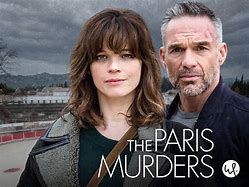
The actress who played Chloe (Odile Vuillemin) did an amazing job of capturing the physical awkwardness and social oddness of her character, while also being deeply loving and present with all of the other characters. She was especially good opposite Commander Rocher (Philippe Bas) who, unfortunately, lost some of his depth when she left the show (though he remained ridiculously good looking and reliable and an unreasonably good athlete, which makes for some amazing action scenes).
Basically, I got very, very attached to these characters, possibly because I tried to watch seven seasons in less than a week, but also because I saw something in Chloe, especially, that resonated with me. Her vulnerability, her brokenness, her willingness to show all of her emotions, no matter how unpretty they may have seemed to other people, reached me. And I felt like there were things I could have learned from her, like a puppy mill rescue can follow a dog who’s lived in a home for a while, to figure out how everything works, and follow in their familiar footsteps.

Chloe, with her fiery red hair, and sixties style outfits, and the heels, and the bags, doesn’t look or act anything like me, but I could feel what she was feeling. And I miss her.
So, yeah, if anyone knows how someone in the United States can access the first three seasons of Profilage, please let me know.
I’m also hoping that showing season four/season one of the show on PBS, and maybe building a new audience in the United States, will create enough interest to get the writers to consider bringing the show back, or creating something new to bring Odile Vuillemin and Philippe Bas back together again to work on more cases.
A girl can dream.

If you haven’t had a chance yet, please check out my novel, Yeshiva Girl, on Amazon. And if you feel called to write a review of the book, on Amazon, or anywhere else, I’d be honored.
Yeshiva Girl is about a Jewish teenager on Long Island, named Isabel, though her father calls her Jezebel. Her father has been accused of inappropriate sexual behavior with one of his students, which he denies, but Izzy implicitly believes it’s true. As a result of his problems, her father sends her to a co-ed Orthodox yeshiva for tenth grade, out of the blue, and Izzy and her mother can’t figure out how to prevent it. At Yeshiva, though, Izzy finds that religious people are much more complicated than she had expected. Some, like her father, may use religion as a place to hide, but others search for and find comfort, and community, and even enlightenment. The question is, what will Izzy find?








 rachelmankowitz