We decided to cancel our subscription to Netflix recently, since we haven’t been watching it very much and it’s our most expensive monthly subscription. So, of course, as soon as we scheduled the end date, for not-quite-a-month away, I started to panic and look through every Netflix recommendation to add anything to my list that I might ever want to watch, just to make sure I wouldn’t miss anything. Surprisingly, or not, I didn’t find that many shows I needed to binge, except for what seems like an endless supply of heartfelt, limited series from South Korea that I can barely distinguish from one another just based on the descriptions; and, really, I could never watch all of them, or even the first episode of each one, before our Netflix subscription ends; though I will probably try.
My one-month trial of Prime Video (Amazon), last month, was probably what taught me that I could do without Netflix, and also that I could binge an enormous number of shows in a short period of time, if I was really motivated.
Lately, I’ve been much more interested in watching shows on MHZ, an international streaming channel that we subscribed to for the year, to try it out. It’s filled with French murder mysteries and Italian and German and Danish and British and Israeli shows of all kinds. I still watch regular cable and broadcast shows too, though I tend to record the shows so I can watch them on my own schedule and fast forward through the commercials. I wish there was a way for cable and all of the streaming channels to come as one package, and be more affordable, because it’s a blessing to have so many options, but we are paying top dollar for that blessing.
In the past week or so, I’ve been trying to rush through what’s left of my Netflix watchlist, even before the deadline, so I can get back to watching MHZ, and maybe rewatching my latest favorite French murder mystery series, The Art of Crime.

I am not an art historian. In fact, for my whole life I’ve suffered from some kind of learning disability that makes it impossible for me to focus on a painting for more than five seconds at a time, or to stay conscious and upright in a museum at all. And yet, this mystery series, set in the art crime unit of the Paris police, hooked me. I was surprised both by how many of the artists I was already familiar with, and how unfamiliar I was with the stories behind the paintings.
The Art of Crime centers around a police officer named Antoine Verlay, who transfers into the art crime unit after being fired by his old boss for insubordination (I think he punched him, but don’t quote me), and he has no background at all (seemingly) in art so he needs help from Florence Chassagne, an art historian who works at the Louvre. Florence, or Mme. Chassagne as he continues to call her season after season, while she calls him Captain Verlay, is sort of flighty, literally falling to the ground with severe bouts of unexplained vertigo when the series begins. And her father, who is also an art history expert, is batty, and is one of the primary reasons why Florence is in psychoanalysis on a regular basis. Captain Verlay, on the other hand, has no interest in art, or therapy, and is impatient and very much the gritty cop, with no time for flights of fancy. Cue the fireworks. Except, their journey together is so much more nuanced than that, and sweet, and vulnerable.
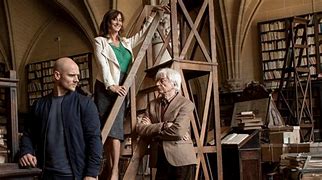
Along the way, I’ve been learning all kinds of interesting things about the art world that I would never have sought out on my own, and Florence’s childlike joy in art, and the artists who create it, has been making me think that a museum might not be the worst place in the world, though I’m still not convinced.
One of my favorite parts of the show is when Florence has her gossipy chats with long dead painters, which could have just been a silly gimmick but has turned out to be deeply moving, and insightful, and, most of all allows me to see the artworks as an extension of the artist’s real world, rather than a pretentious gloss painted on top of it. There’s also the physical comedy in the show, and unrequited love and awkwardness, along with the satisfaction of solving puzzles and finding the bad guy. I’ve watched all seven current seasons of the show and am waiting impatiently for season eight, which can’t arrive soon enough.
While I’m waiting for season eight of The Art of Crime, though, I still have a ton of other MHZ shows to try out, and a blog reader shared a link to the first two seasons of The Paris Murders (in French, without subtitles), so I have plenty of shows to keep me, and my dictionary (and/or Google Translate) very busy, until I get to see Captain Verlay and Mme. Chassagne again.

If you haven’t had a chance yet, please check out my novel, Yeshiva Girl, on Amazon. And if you feel called to write a review of the book, on Amazon, or anywhere else, I’d be honored.
Yeshiva Girl is about a Jewish teenager on Long Island, named Isabel, though her father calls her Jezebel. Her father has been accused of inappropriate sexual behavior with one of his students, which he denies, but Izzy implicitly believes it’s true. As a result of his problems, her father sends her to a co-ed Orthodox yeshiva for tenth grade, out of the blue, and Izzy and her mother can’t figure out how to prevent it. At Yeshiva, though, Izzy finds that religious people are much more complicated than she had expected. Some, like her father, may use religion as a place to hide, but others search for and find comfort, and community, and even enlightenment. The question is, what will Izzy find?























 rachelmankowitz