Tag Archives: sukkot

Our Imperfect Canopy of Peace

            After Rosh Hashanah and Yom Kippur – the big Jewish holidays where even unaffiliated Jews go to synagogue, or fast for a day, or at least eat brisket in a nod to tradition – comes Sukkot, the holiday where Jews build huts in their yards and eat under the stars for a week. This used to be the biggest Jewish holiday of the year, back in ancient Israel. It was a celebration of the harvest, with everyone traipsing to Jerusalem to see and be seen. Today, among liberal Jews in America, Sukkot doesn’t get much attention, coming as it does four days after Yom Kippur, when everyone is sick of being Jewish, or at least of going to synagogue. And that’s unfortunate, because Sukkot is meant to be a happy holiday, with Sukkah Hops (visiting everyone else’s sukkot/huts to eat cake and cookies and just hang out and gossip), and waving palm fronds, and sniffing citrons (etrogim), and all kinds of weird traditions that keep things interesting and happily silly.

            But a year after the October 7th Hamas attack on Israel, which took place during the later days of the holiday of Sukkot, celebrations of the holiday are more complicated. It’s hard to celebrate when Israel is at war (with Hamas, Hezbollah, the Houthis, and, ultimately, of course, with Iran), 101 hostages are still being held in Gaza, and antisemitism is rising around the world. But celebrating Sukkot is an obligation, and one of the other names for this holiday is Zman Simchateinu (the time of our happiness), so we are obligated not only to go through the motions of erecting a sukkah and saying the blessings over the Lulav and Etrog, but to find moments of true joy as well.

Lulav and etrog

            At my synagogue, we build a sukkah each year (well, someone builds it), and we try to have as many services and events and classes as possible in the sukkah, in order to give everyone a taste of the holiday, since most of us aren’t building our own sukkot at home. And at the synagogue school, we try to make a big deal out of the sukkah in the courtyard, and to engage the students in seeing the holiday through different perspectives. This year’s theme is looking at the connection between the sukkah we build for the holiday of Sukkot, and the more figurative Sukkat Shalom, or Canopy of Peace, that we sing about each week in the Hashkivenu prayer at Friday night services.   The most obvious connection is the word “sukkah,” which can be translated to mean booth or hut, as it is for the holiday of Sukkot, or canopy, as it is in the Hashkivenu prayer, where we ask God to cover us with a canopy of peace; but even more so this year, we are looking for a connection, or hoping for a connection, between these days of Sukkot and peace.

In Leviticus 23:41-43, we are told that living in a sukkah for a week each year is a reminder of the Exodus from Egypt, and the forty years our ancestors spent in the desert afterwards before entering the promised land. But, given that we remember the splitting of the Sea of Reeds in our daily prayers, and spend the whole week of Passover remembering the Exodus from Egypt, the fact that Sukkot is also a time for remembering the Exodus is often forgotten, in favor of the lulav and the etrog and the sukkah and all of the food. But this is a Jewish holiday, and there is no such thing as a simple Jewish holiday; even at a Jewish wedding we manage to remind ourselves of tragedy (stepping on the glass to remember the destruction of the temple in Jerusalem, and/or to scare away evil spirits). So, it’s not surprising that even during this holiday of happiness, even during a year when we’re not in mourning, we are still called to reexperience suffering.

The sukkah, which really looks ridiculous if you think about it, with its open door and barely covered roof, is a representation of the fragility of life and our imperfect safety in the world, and in both of those ways it is meant to remind us of our dependance on God. And yet, we are commanded to enjoy life in this sukkah, and invite friends and strangers inside to eat with us. We are called to practice creating joy even in the midst of difficulty, because that’s a time when it feels unnatural but is essential to remember that joy is possible.

a sukkah

And I think that may also be the lesson with our Sukkat Shalom, our figurative canopy of peace: that even with God’s protection our lives will be imperfect, and our experience of peace will be imperfect, and temporary.

            And that sucks. I have always wanted to believe in a future filled with an idyllic peace – a world full of comfort and kindness and all of our needs being met – despite never actually experiencing such a thing; even the hope of such peace in the future has been enough to keep me going. But what if this imperfect peace, filled with moments of suffering and fear and open doors and leaky roofs, is the only kind of peace that’s really possible? What if our prayers for peace have already been answered, but because we were looking for something more perfect we can’t recognize it?

We tend to think of peace as an absolute: we are either at peace or at war. But what if peace is complicated, or exists along a spectrum? American Jews are facing a dramatic rise in antisemitism, and grief and confusion and anger over what’s happening in Israel, but even before October 7th peace in Israel and for American Jews was never perfect (Israel was in the middle of yet another ceasefire with Hamas when the attack occurred, after all, and the past few years in America have not been free of antisemitic acts by any means). There is no time in history free of all difficulty. And maybe these holidays, which we are obliged to celebrate every year no matter what circumstances we are living through, are not about keeping us on our guard, or depressed about our lack of safety, but to teach us that even in an imperfect world we can, and must, live our lives as joyfully as possible, as fully as possible.

            It’s a hard lesson to learn, and even harder to teach, honestly. But Sukkot gives us a yearly opportunity to practice living in and appreciating an imperfect peace. We can sit in our fragile shelter and feel the chill in the air and watch our napkins fly off the table, and still eat good food and laugh with our friends and sing together, feeling gratitude for what we have, and grief for what we don’t have, at the same time.

Feeling multiple things at once isn’t the only lesson of Sukkot, but it might be the most useful one for this particular moment in Jewish history. And, it may actually be the key to all of the other life lessons we want our students to learn. We often think of resilience and mental health as the ability to focus only on the positive, but in reality, resilience is the ability to accept life as it is, and continue on. Like it says in Ecclesiastes, there’s a time for everything, a time to plant and time to uproot, a time to mourn and a time to dance, a time for peace and a time for war. We are meant to live in all of it, eyes open, taking it in and seeing it for what it is. And even, or most importantly, saying a blessing over what we see.

If you haven’t had a chance yet, please check out my novel, Yeshiva Girl, on Amazon. And if you feel called to write a review of the book, on Amazon, or anywhere else, I’d be honored.

            Yeshiva Girl is about a Jewish teenager on Long Island, named Isabel, though her father calls her Jezebel. Her father has been accused of inappropriate sexual behavior with one of his students, which he denies, but Izzy implicitly believes it’s true. As a result of his problems, her father sends her to a co-ed Orthodox yeshiva for tenth grade, out of the blue, and Izzy and her mother can’t figure out how to prevent it. At Yeshiva, though, Izzy finds that religious people are much more complicated than she had expected. Some, like her father, may use religion as a place to hide, but others search for and find comfort, and community, and even enlightenment. The question is, what will Izzy find?


Ushpizin

            I know, it sounds like I just sneezed on you, but Ushpizin is an Aramaic word that means “guests.” It refers to a Jewish custom, during the holiday of Sukkot (which we are in now), where we are supposed to not just build a temporary hut/booth outdoors and invite real guests to eat with us, but also invite our ancestors. I knew about the idea of inviting friends to eat in the sukkah, and about our patriarch Abraham’s penchant for inviting dusty strangers into his tent, but I didn’t know about the Ushpizin ceremony until recently.

“Did you say Pee?”

            According to tradition, each night a different exalted guest enters the sukkah, and each of the ushpizin has a unique lesson to teach us based on the Sefirot. The Sefirot, translated as attributes, emanations, or illuminations of God’s infinite light, are seen as the channels through which the Divine creative life force is revealed to humankind (according to Kabbalah). The traditional Ushpizin are meant to represent the “seven shepherds of Israel”: Abraham, Isaac, Jacob, Moses, Aaron, Joseph and David. Some streams of Judaism also recognize a set of seven female shepherds of Israel, called Ushpizot (using the Modern Hebrew feminine pluralization), or Ushpizata (in reconstructed Aramaic).

            The custom of Ushpizin was established by the Kabbalists in the sixteenth century, and while there’s something a little bit woo-woo about the inviting-dead-people-to-eat-with-you thing, there’s also something comforting about it. It reminds me of how the past Jedi masters returned to support new Jedis in the Star Wars movies, and how Harry Potter got to see his parents, and Dumbledore, when he really needed their support, even though they were gone.

            Especially now, when we can’t really invite our friends and neighbors to eat with us, there’s something magical about being able to invite our ancestors to sit with us instead. But, of course, I would prefer to come up with my own list of guests, instead of being stuck with the biblical characters each night.

            For Day One the divine characteristic is Chesed, usually translated as loving kindness, but generally meaning generosity, compassion, and maybe something like the unconditional love of grandparents. The examples in the Reconstructionist prayer book are Abraham and Sarah, but I would choose my grandfather, for his humor and his good conversation, and most of all for how clearly he loved us. I’d invite him every night, if he would come.

“Can I come too?”

            For Day two, the quality is Gevurah, meaning strength, discipline, and adherence to the law. The examples given are Isaac and Rebecca for some reason, but I think I’d invite Ruth Bader Ginsburg for day two.

            For day three the divine quality is Tiferet, or beauty, harmony, and the ability to see the whole picture. The examples given are Jacob and Leah, which makes no sense to me. Neither of them was known for their beauty, as far as I remember. And Jacob stole his brother’s birthright, while Leah stole her sister’s husband, so, not especially harmonious either. I’d like to pick an artist for day three, but I don’t know which one to choose.

“Oooh! Pick me! Pick me!”

For day fourthe characteristic isNetzach, meaning patience, endurance, persistence, and the willingness to demand justice, even from God. The examples given are Moses and Chanah, and though we all know about Moses persisting in his fight to convince Pharaoh to free the Israelites from bondage, Chanah, or Hannah, is more obscure. She is one of the many women in the bible who struggles with infertility (which was a serious affliction in a society where women were only seen as valuable if they could provide children), and she prays to God to give her a son, promising to dedicate his life to the service of God. She ends up becoming the mother of the prophet Samuel (in the first book of Samuel), and when she hands him over to the high priest she is rewarded with the ability to give birth to five more children. So both Moses and Chanah are good examples of persistence, and worthy of attention, but really, I’d rather have a second visit with Ruth Bader Ginsburg for Netzach, to give me some insight into what it took to fight for women’s rights to be considered valuable whether they were wives and mothers or not. Really, someday, I’d like to be someone else’s idea of Netzach myself.  

For day five the characteristic to celebrate is Hod, or holiness with humility, someone who is powerful but not always announcing her strength. The examples given are Aaron and Miriam, and I think I would like to spend some time with Miriam, if only to get to know her better. She doesn’t get much air time in the Torah.

For day six the divine quality is Tzedek, meaning righteousness and self-sacrifice, and the examples given are Joseph and Esther, though each of them actually received quite a lot of earthly riches for their sacrifices. An alternative for day six is Yesod, meaning “foundation,” with a focus on investing in the foundations of our world and creating connections between people. And that sounds like a parent to me. Like my Mom.

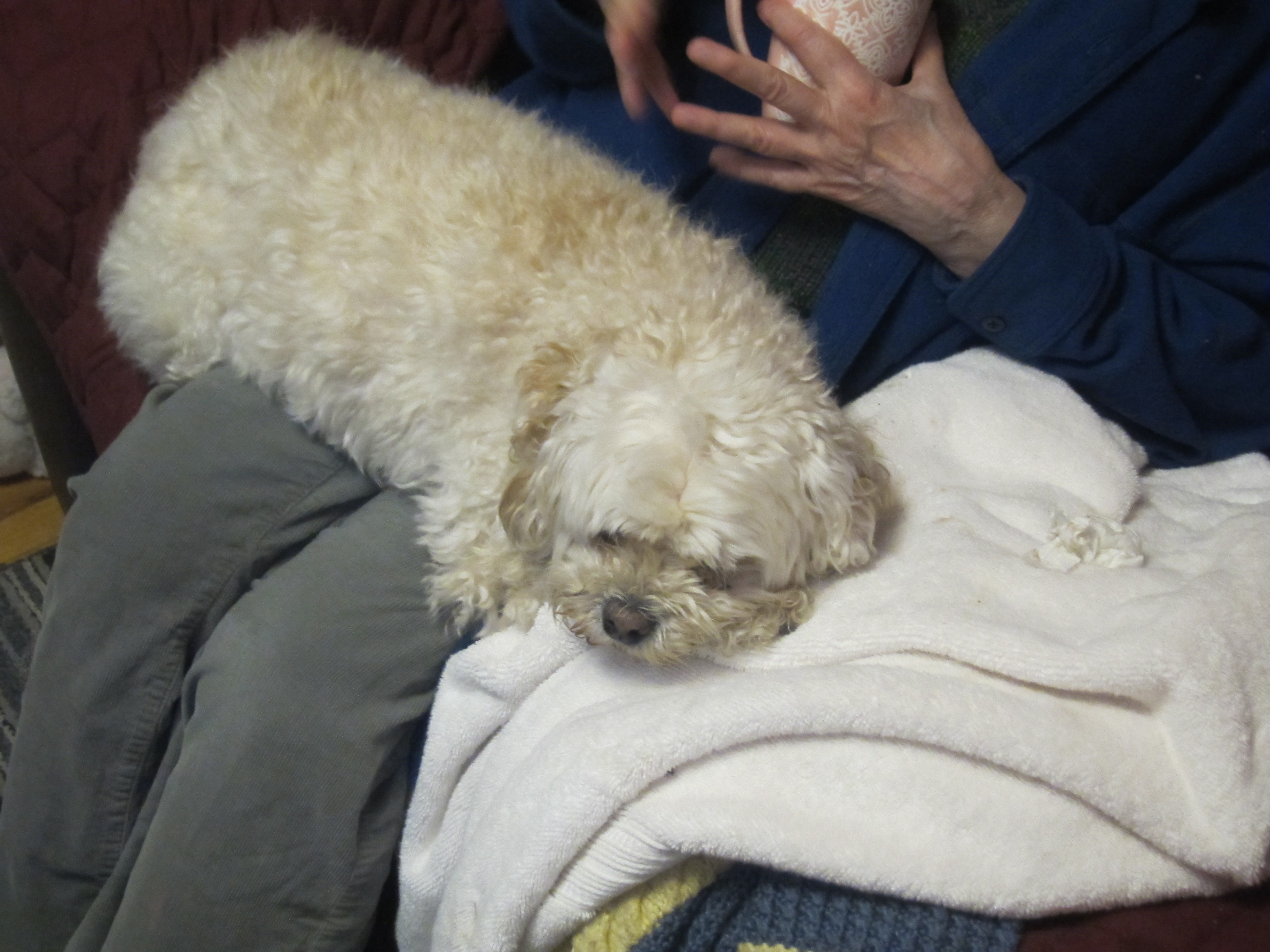
Cricket’s home base – Grandma’s lap.

For day seven, the final divine characteristic is Malchut: sovereignty, leadership and sensitivity to the needs of others. The examples are David and Rachel, and David actually makes sense for kingship, though his sensitivity to the needs of others is questionable. I’d like to meet a leader, or a president, who could lead with sensitivity and compassion for her people. Someone who could give me hope for the future.

There is a lovely idea in the Talmud that all Jews should sit in one sukkah together, living together under a shelter of peace, even if we live across the world from each other, or have different beliefs and different life circumstances. I’d like to think we can expand this concept to all of humanity; that we should act as if we all live under the same roof, because, really, we do.

            There’s a line in the Ushpizin ceremony in the Reconstructionist prayer book that really works for me: May this sukkah, vulnerable to sun and wind and rain, teach us that real peace comes not from an external structure, but from the strength of the community that gathers within.

            May we all feel that strength, within us and between us, even as we live in our own vulnerable bodies, minds, homes, and countries.

If you haven’t had a chance yet, please check out my Young Adult novel, Yeshiva Girl, on Amazon. And if you feel called to write a review of the book, on Amazon, or anywhere else, I’d be honored.

            Yeshiva Girl is about a Jewish teenager on Long Island, named Isabel, though her father calls her Jezebel. Her father has been accused of inappropriate sexual behavior with one of his students, which he denies, but Izzy implicitly believes it’s true. As a result of his problems, her father sends her to a co-ed Orthodox yeshiva for tenth grade, out of the blue, and Izzy and her mother can’t figure out how to prevent it. At Yeshiva, though, Izzy finds that religious people are much more complicated than she had expected. Some, like her father, may use religion as a place to hide, but others search for and find comfort, and community, and even enlightenment. The question is, what will Izzy find?

The Purpose of the Sukkah


I don’t have a Sukkah at my apartment building; not only because the co-op board would frown on it, but because I really don’t want to. I have a lot of grumpy “I refuse” moments when it comes to religious practices. I don’t want to bow or bend during services. I don’t want to kiss the Torah scroll when it is carried past me at synagogue. I don’t want to wear a Tallit, a Jewish prayer shawl, even though many liberal Jewish women now wear them, and there are beautiful ones to choose from. And I don’t want to build a Sukkah and eat and pray in it for seven or eight days.

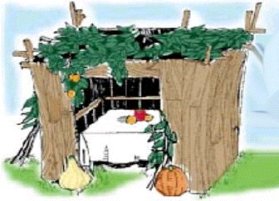
drawing-of-a-sukkah

This is a drawing of a Sukkah that I found on google images.

I didn’t roll my eyes or make snotty comments in the Sukkah at my synagogue during services for the first day of Sukkot. I sat amidst the greenery and decorations and prayed with everyone else. But I refused to borrow the Rabbis Lulav and Etrog (palm frond and other species, plus a large citron) to say the prayer and shake the Palm frond in every direction, like the Jewish version of a rain dance. I didn’t have a good intellectually-driven reason for skipping the ritual. My internal monologue sounded something like, “I don’t wanna! You can’t make me!” One woman suggested that I didn’t want to do it because it was a man’s ritual. (There’s something to be said for that, but not in the way she thought. The lulav has a phallic quality to it, especially with the Etrog – only one bulbous shape rather than two, but still – right next to it.) Someone else said that maybe I didn’t like the magical thinking of it (eh, I tend to be a fan of magical thinking).

lulav-and-etrog

Not my Lulav and Etrog.

I’m not an expert on the religious significance of Sukkot – the seven or eight days when Jews are supposed to eat and pray in a hut-like temporary shelter, with greenery overhead, instead of a roof, so that you can see the sky and the stars. There are various points of view to choose from. There’s the historical significance: to remember when we were nomads in the desert. There’s a social action interpretation: sit in the temporary shelter and think about what life is like for those without a secure home. There’s a self-awareness angle: to force us to think about the ways that we are too protected in our daily lives, and separated from nature and the world around us. It goes on and on. Just ask your nearest rabbi, who has to come up with new sermons about the holiday every year.

I remember putting together our Sukkah as a child, with my father and brother, and getting my fingers stuck between two of the flattened pipes that my father used as the frame for the temporary building. I remember having to carry full dishes of food, to and from the house late at night, while my father sat at the table in the Sukkah on our front lawn, like a king.

There is so much baggage left in my Judaism; personal, crummy, anecdotal baggage that I don’t want to have to relive constantly. It’s a funny mix. I love going to shul. I love singing the prayers, and being with my community, and studying. I love just looking at the Hebrew letters in my prayer book, as if they are my old friends returning to me. But then I hit these bumps, like the Sukkah, or candle lighting, or kissing the Torah, and I trip over the invisible rubble in my mind.

I’ve been told that, next year, our synagogue will be inviting animals into the Sukkah for a visiting day, as they’ve done in the past. There will be dogs, of course, but also snakes and gerbils and parrots and on and on. Maybe, when I can bring Cricket and Butterfly with me, I won’t find the Sukkah quite as intimidating. Or maybe Cricket will think the plastic fruit on the walls were put there just for her delectation, and I’ll have a whole new set of horrible memories of Sukkot to carry with me in the future.

pix from eos 059.jpg

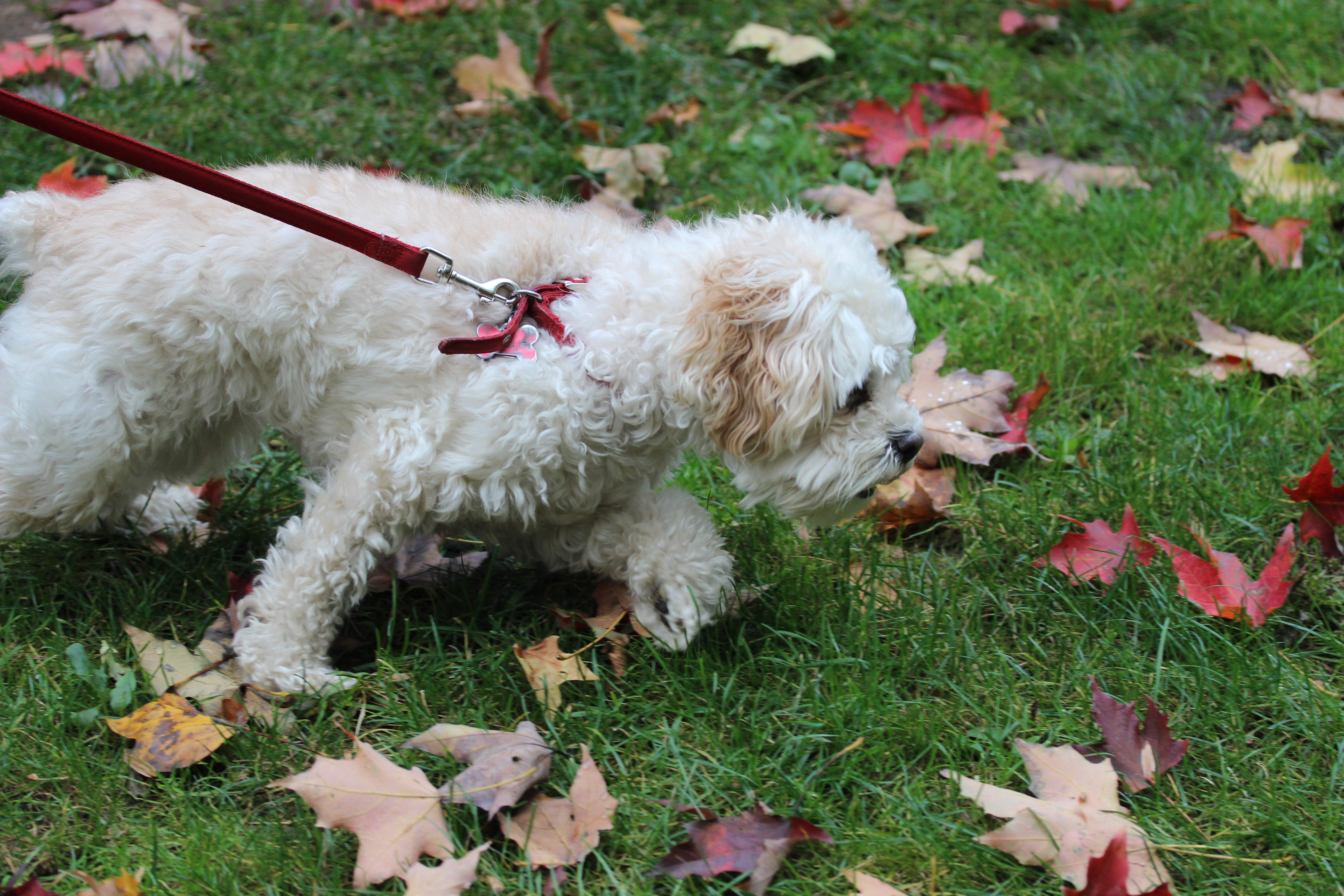
Cricket is ready to go!

pix-from-eos-023

She’s training herself, to see how much she can fit into her mouth at one time.

pix-from-eos-026

Butterfly is practicing her facial expressions, for after Cricket misbehaves in public.

pix-from-eos-013

This is her “I’m the cute one” face.