Tag Archives: television

Cognitive Dissonance

            According to Google, cognitive dissonance is a “psychological phenomenon where a person holds two or more conflicting beliefs, attitudes, or behaviors simultaneously. This inconsistency creates discomfort and tension, motivating the individual to resolve the dissonance.”

            This concept came to mind recently while I was watching the first season of 911 (after a marathon binge of the show, starting in season three, that left me really curious about how the series began). I was especially interested in the romance between Abby, a 42-year-old 911 operator, and Buck, a 26-year-old rookie firefighter, because it set up the whole structure of the show, where they follow 911 calls through to their resolutions. But almost immediately, I felt queasy about the age difference between the two characters. I had to remind myself that, even though he was immature, Buck was an adult, and even though Abby was 42, she was at a vulnerable stage in her life and not in a position to take advantage of any perceived power differences between the two of them. They were both so obviously in need of love, and specifically in need of the kind of love the other had to offer, but…

Maybe because of the low stakes (it’s a TV show after all), I was able to sit with the dissonance and let it simmer for a while (a day or two, actually, because I watched the first season all in one go), and I realized that even though these moments of cognitive dissonance can be uncomfortable, or worse, they are also an opportunity for deeper understanding, of ourselves and of others.

            When we see this kind of cognitive dissonance in our politicians, we tend to call it hypocrisy. How can you say you care about the poor and then fight so hard to cut Medicaid? How can you say you are an advocate for survivors of sexual abuse and then ignore the sexual offences of your favorite politician? In our private lives, it can show up maybe as wanting to save money for retirement, and then going on Amazon to buy ten things we don’t need.

“I needed all of it, Mommy!”

            Like many psychological terms and theories, cognitive dissonance feels like a judgement being made on other people, a negative way of naming how we behave, without bothering to understand why we do it or having compassion for the struggle. Psychologists and therapists, and many other helping professionals, tend to feel overwhelmed by the chaos their patients or clients bring into the room and rely heavily on the intellectual distance of naming things to keep the chaos from seeping into their own lives.

            The emphasis in the cognitive dissonance articles I was able to find, was on how we tend to resolve our dissonances, often with defense mechanisms, like: avoiding the dissonance altogether by staying away from discussions or situations that bring it up; delegitimizing the person or group or situation that highlighted the dissonance (this is fake news!); or minimizing the impact by telling yourself that you didn’t really go against your beliefs, or you just did it one time. Rarely, the articles seemed to suggest, do we actually choose to change our behavior or reassess our value systems in order to resolve the dissonance.

            I’m not comfortable with the judgment (name calling) underlying all of this, and the assumption that we are all lying to ourselves all the time in order to resolve our discomfort, but I still think Cognitive Dissonance can be a useful concept, if we use it as a way to identify a problem that needs further attention. Ideally, if I feel guilty for doing something I didn’t plan to do, I can be curious instead of judgmental. And if I find myself minimizing, rationalizing, ignoring new information, or dismissing research out of hand, I can be curious rather than self-loathing. I can choose to look at the dissonance as a mystery worth exploring, a part of myself that deserves more of my attention and respect, rather than my judgment or impatience.

            Just like in music, dissonance can catch your attention in a way that harmony may not, and it can tell you that something important is happening: it could be a mistake (you played the wrong note); or it could be the entrance of a new character, or a change in mood; or it could be the start of a disaster.

            The Abby and Buck story on 911 tapped into two of my strongly held, and in this case opposing, beliefs: 1) that age/power/status differences between people can lead to abuse if we’re not careful about setting clear boundaries, and 2) love is a wonderful and healing thing. The way the show dealt with the dissonance in the relationship was both to minimize the weirdness of the age difference (by rarely mentioning it), and, in the end, by sending Abby off on a trip around the world until Buck could get over her. The un-stated conclusion was that two people who are at two very different places in their lives (either because of age or status or something else) may be able to spend time together and do each other good, but only for so long. The creators of the show chose not to sit with the discomfort inherent in such an age difference for more than a season, maybe because it made them that uncomfortable, or maybe because they discovered that it made their audience uncomfortable. And in season two, they replaced Abby’s character in the ensemble with Jennifer Love Hewitt, playing Buck’s older sister, suggesting that Buck was drawn to Abby in the first place in part because he was missing his sister, or missing the supportive role she played in his life, helping to ground him and give him perspective.

Even though I really liked the character of Abby, and especially the actress who played her (Connie Britton), I was relieved when she left the show and the void was filled with two new characters, Maddie (Buck’s sister) and a separate love interest. The dissonance that Abby and Buck’s relationship brought up for me, and for others, it turned out, was fundamentally not resolvable. I do wonder, though, what would have happened if the writers had made a different decision, and allowed that relationship to play out over a longer period of time. Would that have offered me an opportunity to delve more deeply into my own beliefs and feelings about power gap relationships, or would I have had to stop watching the show because it just made me too uncomfortable? (It’s also worth considering how the storyline would have been treated differently if the 42-year-old character had been male and the 26-year-old female. Would they have even told us their ages? Would I have thought to be bothered by it?)

            While I was researching cognitive dissonance, I also came across the related quote, attributed to F. Scott Fitzgerald, that “Intelligence is the ability to hold two opposing ideas in mind.” The quote suggests that it’s a sign of intelligence to be able to entertain conflicting theories or facts without becoming overwhelmed or paralyzed, but I think the ability to face your cognitive dissonance is more about emotional strength, or intellectual bravery, rather than intelligence itself. I know a lot of highly intelligent people who, when faced with opposing ideas or desires within themselves, or facts in contradiction to a well-loved theory, resort to ever more inventive defense mechanisms to try to deny the existence of the conflict.

And I am no different. Recently, I was listening to a podcast by Haviv Rettig Gur, an Israeli journalist who writes and speaks in English to reach an audience outside of Israel. He was responding to an article in Haaretz (Israel’s venerable left-wing newspaper), that claimed Israeli soldiers were intentionally shooting at Gazans seeking aid. My first response, when I saw the article in my newsfeed, was disbelief, and then anger that they would even repeat such claims. How dare they suggest that the IDF would deliberately kill civilians, especially after telling me over and over again that the IDF does its best to avoid civilian casualties. But Haviv Rettig Gur, as a journalist, was able to sit with the dissonance (between believing that the IDF tries to avoid killing civilians and the reports that they were doing just that), and what he came to understand, or believe, was that, yes, the shootings were happening (though probably not in the numbers reported by Hamas), not because the soldiers intended to randomly kill civilians, but rather because these young soldiers were being tasked with protecting aid locations without being trained for the task. Most of the soldiers involved had been taken from nearby battlegrounds, where they were under attack from Hamas soldiers wearing civilian clothes, facing booby-trapped buildings and roadside bombs and all kinds of dangers around every corner, and then suddenly they were told to guard aid sites, where the signage was unclear and it was inevitable that civilians would go the wrong way at the wrong time and the soldiers were going to see them as a threat.

The problem, as Haviv Rettig Gur saw it, was caused both by the presence of Hamas in the aid areas and by the expectation of Israeli politicians that these soldiers could be tasked with protecting the aid sites without adequate training or support. Those politicians, especially the ones with little to no military experience (which is a significant deficit in Israel, where army service or an equivalent form of civil service is required for the majority of the population, but the fight over whether or not the ultra-orthodox have to serve is ongoing), probably thought they could order the army to do whatever they wanted, like ordering a special hamburger off menu. And when the army’s leadership said they couldn’t do it, the politicians probably assumed that they were lying for some reason, because that’s what the politicians themselves would have done. Are some of those politicians okay with killing civilians? Yeah. Some of the far-right politicians have basically stated their disinterest not only in the lives of Palestinian civilians but in the lives of Israeli soldiers and Israeli hostages as well. Should they still have their jobs? Not at all, but Netanyahu appeases them in order to keep his coalition government afloat. Is this the best way to run a country, especially during a war? Not even a little. But when the attorney general or the supreme court in Israel have tried to intervene, the government has threatened to dismantle the whole system of checks and balances (this is what led to the year long protests across Israel in the year leading up to October seventh), and being attacked by Hamas didn’t fix the underlying hypocrisy and graft in the government that is now tasked with protecting its people from further attacks.

            The dissonance between Israel’s stated dual values of protecting civilian lives and eliminating Hamas has been there from the beginning, and ideally those conflicts would have been openly addressed and debated, with deep discussions as to the value of human life and the needs of a populace to feel secure, but instead the conflicts have been minimized and denied, to disastrous effect.

            Another example. When it became obvious to the people around Joe Biden that he was losing his faculties, yet still insisted on running for President again, they could have been open, with him and with the American people (or at least with the higher ups in the Democratic party), about their concerns. There could have been discussions about how to prevent a Trump presidency (with all of its inherent dangers to democracy), while also pursuing an open Democratic primary, and a contest of ideas leading to the best possible candidate, or at least an open acknowledgment that our country is still not ready for a woman of color as our president; but instead, they rationalized and made excuses and got defensive, and therefore they could not solve the problem at all, until it exploded.

Unfortunately, we are living in a time when defense mechanisms are being chosen over reality, not just by some people but by most people, and especially by those in power. Republican congressmen are ignoring their cognitive dissonance around the “Big, beautiful bill,” with its severe Medicaid cuts and inevitable growth of the national debt, because they seem to be too afraid of Trump to vote their stated values. And many Israelis, at least at the beginning of the war with Hamas, seemed to be willing to ignore the suffering in Gaza because they thought empathy for the civilians would get in the way of their goal of removing Hamas as an existential threat. Most Israelis have, as far as I can tell, grown throughout the war in their empathy and willingness to face a complicated reality, including the realization that removing the threat of Hamas entirely may be impossible.

The acknowledgement of a cognitive dissonance, between what you may have hoped to be true and what is really happening, or who you thought you should be and who you really are, can be painful and frightening, and can lead to hopelessness and despair, which explains why we have found so many creative ways of avoiding the dissonance. At times it can feel like the dissonance is unresolvable, because it may be, and therefore that there’s no point in facing it. And sometimes we really do need the respite that denial and minimization can provide, until we feel strong enough and capable enough and supported enough, to face the truth. But it’s only when we allow ourselves to see all of the facts, and to face all of the conflicting facets of ourselves, that we have any real chance of finding solutions, or at least of processing our grief when solutions are found to be impossible.

“Is it treat time yet?!”

If you haven’t had a chance yet, please check out my novel, Yeshiva Girl, on Amazon. And if you feel called to write a review of the book, on Amazon, or anywhere else, I’d be honored.

            Yeshiva Girl is about a Jewish teenager on Long Island, named Isabel, though her father calls her Jezebel. Her father has been accused of inappropriate sexual behavior with one of his students, which he denies, but Izzy implicitly believes it’s true. As a result of his problems, her father sends her to a co-ed Orthodox yeshiva for tenth grade, out of the blue, and Izzy and her mother can’t figure out how to prevent it. At Yeshiva, though, Izzy finds that religious people are much more complicated than she had expected. Some, like her father, may use religion as a place to hide, but others search for and find comfort, and community, and even enlightenment. The question is, what will Izzy find?


Watching 911

            I must have glanced past the listing for 911 in the TV Guide a hundred times without really seeing it, or maybe I assumed it was a documentary show about chasing criminals or something else I didn’t want to watch. But a few weeks ago, I saw a short interview with Angela Bassett (What’s Love Got to Do with It, Waiting to Exhale, How Stella Got Her Groove Back, etc.), about losing her costar in the final episode of 911 for the season, and I got curious. Angela Bassett is on a TV show? And her co-star died? Or just the character he played on the show? I can’t even remember if I saw this information on YouTube or in the “news” on my phone, but I was interested enough to go a-googling and found out that, yes, Angela Bassett has a TV show, called 911, and it had just finished its eighth season, and her husband on the show, played by Peter Krause (Parenthood, Six Feet Under), had been killed off and “everyone” was shocked.

I was intrigued enough to look for episodes of 911 in the Free on Demand section of my DVR, but there were only five episodes available, from the middle of season eight, and I decided that I didn’t want to drop into the show at the last minute with no idea what was going on. I took a minute to be annoyed that the Free on Demand thing has so few episodes available now (it used to have whole seasons and previous seasons), but then I mostly forgot about it. You don’t want me to watch your show? Nu? Fine.

“I don’t think you really mean that, Human Mommy.”

Not long after that, I was looking for coverage of the French Open in the guide on my TV (rather than the hard copy TV Guide that still comes to my house every week), and I checked ESPN and ESPN 2 and the page of channels before and after them, and I noticed the numbers “911” as they passed by. It turned out that WeTV, a channel I don’t generally watch, had a marathon of episodes from 911 all day long, and I thought, eh, why not record a few episodes, and if I’m not interested, I can erase them later.

I set the DVR and then went back to searching for the French Open. Except that the tennis got boring very quickly (I’m not a big fan of clay court tennis, I don’t know why), so I started watching one of the 911 episodes as it was recording, and I was hooked. I raced to set the DVR to record the rest of the episodes in the marathon, and then I spent the next few days watching episode after episode, in between naps. I wasn’t able to start watching from the first episode of the show, or even the first season, so there were a lot of mysteries left unexplained, but I was riveted anyway. Then the next week, I discovered that WeTV does a 911 marathon every Tuesday. So, every week now, I happily spend a couple of days watching a season or more of this show that I didn’t even know existed a few weeks ago.

            I’m sure that part of the attraction of this show is that I’m on summer vacation, and with everything going on in the world I’ve needed a good, fictional distraction. But there’s also something about the people that draws me in. First of all, I love the character Angela Bassett plays. She’s a police officer (the 911 call center, the police, and the fire department in Los Angeles are the three focal points of the show), married to a firefighter, and she is never the damsel in distress, but she’s also never made out to be superhuman either. She has her flaws and her strengths, like a real person. Then there’s Aisha Hinds’ character, Hen, a paramedic/firefighter/medical student married to another strong woman (played by Tracie Thoms, from Rent and Cold Case, and a bunch of other things), and I love how these women have created a family together, embracing Hen’s aging mother, mothering an adopted son, taking in foster children and generally being the emotional home base for a lot of the other characters on the show. And then there’s Jennifer Love Hewit, who plays a 911 operator/former nurse/former victim of domestic violence. A million years ago, Jennifer Love Hewit was one of the beautiful up-and-coming actresses in Hollywood, and then she seemed to disappear, or at least I didn’t see her in many things, but now here she is, playing a woman with a lot of resilience and vulnerability, and, maybe most important for me, she’s not a skinny little thing anymore. On this show, women come in all sizes and have real lives, full of love and romance and conflict and drama. Lots and lots of drama. Both the women and the men on this show are portrayed as real people: sometimes confused, always imperfect, but also kind and generous and smart and brave. I love that in a show about unreasonably heroic behavior (and there are some wild storylines that put the heroes in life threatening danger very very frequently), none of the characters is impervious to pain or struggle.

This is not an HBO-type show, where everyone and everything is morally ambiguous; the heroes on 911 are all genuinely heroes and genuinely striving to be better people, though they are often challenged along the way. I’m not a huge fan of all of the gory disasters on the show, and how impossible some of them are (our two heroes go on a cruise to escape their hectic lives and end up being attacked by pirates and almost drowning as the ship sinks into the ocean), and I often find myself covering my eyes during the rescues, just waiting for the worst of it to be over. And, yes, sometimes the plot resolutions on the show are a little too fast, or too simple, for my comfort. But overall, these characters are people who make me feel hopeful about the world, and hopeful about the people who live in it. These people are kind, and funny, and down to earth, and I’m not being asked to identify with bad guys, or to forgive heinous behavior. There’s enough of that in the real world, thank you very much.

Agreed.”

            But now, a few weeks into my 911 marathon, as I get closer and closer to the current season, where I know ahead of time that one of the main characters is going to die, I’m dreading it. I’ve become attached to these people, and I’ve gotten used to how the characters can put their lives at risk multiple times in every episode and still defy death. Of course, it’s unreasonable to believe that people could go through this many life-threatening events and come out relatively unscathed, but season after season that’s what they’ve been able to do, and the idea that reality is coming to get even my fictional friends just sucks. And yet, I’m still watching, because I care about these people, and because, in a weird way, I feel like I need to be there for them in their time of need. It’s kind of like the way I watched videos of Israelis in their safe rooms and underground shelters during the recent war with Iran, because I felt like if I shared in their struggle I could remove some of the pain, or something.

Now that I think about it, I don’t even know if WeTV will be able to show episodes from the latest season of 911, or if I’ll have to piece the story together from the few episodes available on Free on Demand, but either way I will keep going, and maybe hoping that now that I’m watching the show the outcome will be different. I mean, that’s how the world works, right?

“My human mommy is very silly.”

If you haven’t had a chance yet, please check out my novel, Yeshiva Girl, on Amazon. And if you feel called to write a review of the book, on Amazon, or anywhere else, I’d be honored.

            Yeshiva Girl is about a Jewish teenager on Long Island, named Isabel, though her father calls her Jezebel. Her father has been accused of inappropriate sexual behavior with one of his students, which he denies, but Izzy implicitly believes it’s true. As a result of his problems, her father sends her to a co-ed Orthodox yeshiva for tenth grade, out of the blue, and Izzy and her mother can’t figure out how to prevent it. At Yeshiva, though, Izzy finds that religious people are much more complicated than she had expected. Some, like her father, may use religion as a place to hide, but others search for and find comfort, and community, and even enlightenment. The question is, what will Izzy find?

Au Revoir, Netflix

            We decided to cancel our subscription to Netflix recently, since we haven’t been watching it very much and it’s our most expensive monthly subscription. So, of course, as soon as we scheduled the end date, for not-quite-a-month away, I started to panic and look through every Netflix recommendation to add anything to my list that I might ever want to watch, just to make sure I wouldn’t miss anything. Surprisingly, or not, I didn’t find that many shows I needed to binge, except for what seems like an endless supply of heartfelt, limited series from South Korea that I can barely distinguish from one another just based on the descriptions; and, really, I could never watch all of them, or even the first episode of each one, before our Netflix subscription ends; though I will probably try.

My one-month trial of Prime Video (Amazon), last month, was probably what taught me that I could do without Netflix, and also that I could binge an enormous number of shows in a short period of time, if I was really motivated.

            Lately, I’ve been much more interested in watching shows on MHZ, an international streaming channel that we subscribed to for the year, to try it out. It’s filled with French murder mysteries and Italian and German and Danish and British and Israeli shows of all kinds. I still watch regular cable and broadcast shows too, though I tend to record the shows so I can watch them on my own schedule and fast forward through the commercials. I wish there was a way for cable and all of the streaming channels to come as one package, and be more affordable, because it’s a blessing to have so many options, but we are paying top dollar for that blessing.

            In the past week or so, I’ve been trying to rush through what’s left of my Netflix watchlist, even before the deadline, so I can get back to watching MHZ, and maybe rewatching my latest favorite French murder mystery series, The Art of Crime.

            I am not an art historian. In fact, for my whole life I’ve suffered from some kind of learning disability that makes it impossible for me to focus on a painting for more than five seconds at a time, or to stay conscious and upright in a museum at all. And yet, this mystery series, set in the art crime unit of the Paris police, hooked me. I was surprised both by how many of the artists I was already familiar with, and how unfamiliar I was with the stories behind the paintings.

            The Art of Crime centers around a police officer named Antoine Verlay, who transfers into the art crime unit after being fired by his old boss for insubordination (I think he punched him, but don’t quote me), and he has no background at all (seemingly) in art so he needs help from Florence Chassagne, an art historian who works at the Louvre. Florence, or Mme. Chassagne as he continues to call her season after season, while she calls him Captain Verlay, is sort of flighty, literally falling to the ground with severe bouts of unexplained vertigo when the series begins. And her father, who is also an art history expert, is batty, and is one of the primary reasons why Florence is in psychoanalysis on a regular basis. Captain Verlay, on the other hand, has no interest in art, or therapy, and is impatient and very much the gritty cop, with no time for flights of fancy. Cue the fireworks. Except, their journey together is so much more nuanced than that, and sweet, and vulnerable.

            Along the way, I’ve been learning all kinds of interesting things about the art world that I would never have sought out on my own, and Florence’s childlike joy in art, and the artists who create it, has been making me think that a museum might not be the worst place in the world, though I’m still not convinced.

            One of my favorite parts of the show is when Florence has her gossipy chats with long dead painters, which could have just been a silly gimmick but has turned out to be deeply moving, and insightful, and, most of all allows me to see the artworks as an extension of the artist’s real world, rather than a pretentious gloss painted on top of it. There’s also the physical comedy in the show, and unrequited love and awkwardness, along with the satisfaction of solving puzzles and finding the bad guy. I’ve watched all seven current seasons of the show and am waiting impatiently for season eight, which can’t arrive soon enough.

While I’m waiting for season eight of The Art of Crime, though, I still have a ton of other MHZ shows to try out, and a blog reader shared a link to the first two seasons of The Paris Murders (in French, without subtitles), so I have plenty of shows to keep me, and my dictionary (and/or Google Translate) very busy, until I get to see Captain Verlay and Mme. Chassagne again.

“Je parle francais maintenant.”

If you haven’t had a chance yet, please check out my novel, Yeshiva Girl, on Amazon. And if you feel called to write a review of the book, on Amazon, or anywhere else, I’d be honored.

            Yeshiva Girl is about a Jewish teenager on Long Island, named Isabel, though her father calls her Jezebel. Her father has been accused of inappropriate sexual behavior with one of his students, which he denies, but Izzy implicitly believes it’s true. As a result of his problems, her father sends her to a co-ed Orthodox yeshiva for tenth grade, out of the blue, and Izzy and her mother can’t figure out how to prevent it. At Yeshiva, though, Izzy finds that religious people are much more complicated than she had expected. Some, like her father, may use religion as a place to hide, but others search for and find comfort, and community, and even enlightenment. The question is, what will Izzy find?

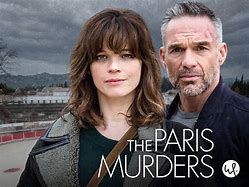
The Paris Murders

            We watched what we thought was the first season of The Paris Murders on PBS last year, and I was intrigued enough to wonder if there were more seasons available, but the show wasn’t on any of the streaming services we got at the time, so I put the idea out of my mind, assuming PBS would eventually play another season. But then, recently, Mom had to buy something on Amazon that required a short-term subscription to Prime, and with her new prime membership came Prime Video, and inside of that, we found out that PBS Masterpiece was doing a seven-day free trial, and they had seven seasons of The Paris Murders.

            My first thought was that, of course, I could watch all seven seasons in seven days, but when it turned out that I was mistaken, because of work and sleep and other annoying things like that, we reluctantly decided to pay the fee for the month so we could watch the rest of the episodes (and then maybe watch them all again).

            And then, when I started to get close to the end of the series, I looked the show up online and it turned out that there were supposed to be ten seasons. For some reason, when PBS decided to air the French show Profilage, they changed the title to Paris Murders and started with season four, calling it season one. I have no idea why they did this, and now, having watched all seven available seasons, I am desperate to know what came before, but I have no idea where to find those first three seasons, or why PBS decided to disappear them. There are some mysteries in the series that I think must be hidden in those first three seasons, but also, I just miss the show and it would be a relief to have a few more seasons to wallow in.

            Part of the intrigue is also that I can find snippets of the earlier seasons in these weird video compilations on YouTube, put to music, so I can see hints of all of the storylines I missed, including a whole other character, but I have no idea what it all means.

            It’s important to say, somewhere in here, that Profilage is a crime show set in Paris, created by two women, and with an emphasis on crimes that impact women. There is a deep understanding in this show of how trauma (especially in childhood) impacts who you can become in the future, and the immense work it takes to create a liveable life in the aftermath.

            I always find it so difficult to relate to the shiny, glossy, successful surfaces people show to the world, in real life and especially on TV, where even police detectives are in full makeup in the middle of the night, so when I’m allowed to see through the cracks to the person underneath, and feel like this is a person who is really struggling and really trying to heal, the relief I feel is deep and lasting, even if its fiction.

            My biggest disappointment, though, while watching this clearly addictive series, was that in season four (really season seven in the original count), Chloe, the female lead, a criminologist with a, let’s say, quirky personality (or tormented, sweet, complicated, loveable, and mentally ill) decides to leave Paris (and the show), and her protégé, the much less lovable Adele, takes her place. It’s possible that getting to watch those first three seasons would fill up my Chloe tank, and help me appreciate her protégé a bit more, but without those three seasons, I’m in limbo.

            The actress who played Chloe (Odile Vuillemin) did an amazing job of capturing the physical awkwardness and social oddness of her character, while also being deeply loving and present with all of the other characters. She was especially good opposite Commander Rocher (Philippe Bas) who, unfortunately, lost some of his depth when she left the show (though he remained ridiculously good looking and reliable and an unreasonably good athlete, which makes for some amazing action scenes).

Basically, I got very, very attached to these characters, possibly because I tried to watch seven seasons in less than a week, but also because I saw something in Chloe, especially, that resonated with me. Her vulnerability, her brokenness, her willingness to show all of her emotions, no matter how unpretty they may have seemed to other people, reached me.  And I felt like there were things I could have learned from her, like a puppy mill rescue can follow a dog who’s lived in a home for a while, to figure out how everything works, and follow in their familiar footsteps.

“Would I have to share my chicken treats?”

            Chloe, with her fiery red hair, and sixties style outfits, and the heels, and the bags, doesn’t look or act anything like me, but I could feel what she was feeling. And I miss her.

            So, yeah, if anyone knows how someone in the United States can access the first three seasons of Profilage, please let me know.

            I’m also hoping that showing season four/season one of the show on PBS, and maybe building a new audience in the United States, will create enough interest to get the writers to consider bringing the show back, or creating something new to bring Odile Vuillemin and Philippe Bas back together again to work on more cases.

A girl can dream.

If you haven’t had a chance yet, please check out my novel, Yeshiva Girl, on Amazon. And if you feel called to write a review of the book, on Amazon, or anywhere else, I’d be honored.

            Yeshiva Girl is about a Jewish teenager on Long Island, named Isabel, though her father calls her Jezebel. Her father has been accused of inappropriate sexual behavior with one of his students, which he denies, but Izzy implicitly believes it’s true. As a result of his problems, her father sends her to a co-ed Orthodox yeshiva for tenth grade, out of the blue, and Izzy and her mother can’t figure out how to prevent it. At Yeshiva, though, Izzy finds that religious people are much more complicated than she had expected. Some, like her father, may use religion as a place to hide, but others search for and find comfort, and community, and even enlightenment. The question is, what will Izzy find?

What is there to be thankful for this year?

            For some reason, Thanksgiving has never been my holiday. Maybe it’s because of that one extreme rabbi at my high school who called this secular American holiday a Shanda (a shame/a scandal), and yelled at us to avoid eating even one turkey sandwich; or maybe it’s because I can’t resonate with a holiday that’s all about gratitude when I’m used to Jewish holidays, where we grump at least as much as we celebrate; but most of all, it’s probably because the Thanksgiving-themed TV shows and movies I watched when I was growing up were all about the torture of family get-togethers, as opposed to the Christmas movies, which were full of romance and joy and candy and toys.

            As for the events of the day itself: I’m not a parade person, or a football person, or a dog show person; and I’m really, really not a turkey person.

            I saw a meme on Facebook recently that suggested we stop eating turkey for Thanksgiving and switch over to brisket, and while I’m sure it was created either by a Save-the-Turkeys group or by the Cattlemen-of-America, I wasn’t upset by the idea. Trying to cook even a small turkey for just me and Mom would mean eating turkey sandwiches for the next month, and even though I’ve been told that there are ways to cook a turkey to make it taste better, I’m pretty sure that’s just fantasy fiction.

            Of course, Thanksgiving’s big claim to fame, other than turkey and a now-controversial origin story, is that it’s a day for expressing gratitude (it may only be a coincidence that Thanksgiving comes a few weeks after election day each year, when people are still stewing over those results). And for me, Thanksgiving is a time when I feel compelled to remind people that there is such a thing as toxic positivity, and that forcing gratitude out of grumpy people is just cruel. But, of course, I am also extremely vulnerable to peer pressure, so I end up searching through my life for the things I can be grateful for every year anyway. So, this year:

            I’m glad that I was able to start writing poems again, and that I actually finished two drafts of my new novel (the third draft is taking its time); and I’m thrilled that I returned to online Hebrew classes this past summer with renewed joy and inspiration; and I’m grateful that I’m still able to teach, and that I have wonderful students again this year; and I’m grateful for my thoughtful friends and loving family.

But, of course, all of that hopeful, positive energy inevitably stirs up memories of all of the things I’m not grateful for: I keep getting older, and so does Mom; doctors still have no idea what’s wrong with me, but the copays keep coming in larger and larger doses; Israel is still at war and there are still 101 hostages being kept in Gaza (alive or dead, no one seems to know); and then there’s the fact that a majority of voters in the United States chose a predatory criminal as our president, despite mountains of evidence of his crimes, against our country, and against women in particular.

            So, yeah, it’s a mixed bag. My hope is that I will be able to survive the next month of teaching, by relying on Christmas movies and French murder mysteries to keep me going, and then I will be able to rest and recover over winter break. My plan, then, is to watch as little news as possible, and write as much as possible, and start the new year with my feet solidly on the ground and my heart filled with (some) hope.

            We’ll see how it goes.

p.s. Someone arrived the day after Thanksgiving and is waiting to be introduced to everyone. Next week.

If you haven’t had a chance yet, please check out my novel, Yeshiva Girl, on Amazon. And if you feel called to write a review of the book, on Amazon, or anywhere else, I’d be honored.

            Yeshiva Girl is about a Jewish teenager on Long Island, named Isabel, though her father calls her Jezebel. Her father has been accused of inappropriate sexual behavior with one of his students, which he denies, but Izzy implicitly believes it’s true. As a result of his problems, her father sends her to a co-ed Orthodox yeshiva for tenth grade, out of the blue, and Izzy and her mother can’t figure out how to prevent it. At Yeshiva, though, Izzy finds that religious people are much more complicated than she had expected. Some, like her father, may use religion as a place to hide, but others search for and find comfort, and community, and even enlightenment. The question is, what will Izzy find?

Srugim, or The Modern Orthodox Singles Scene in Jerusalem

            There’s an Israeli TV show from about ten or fifteen years ago called Srugim that I’d been avoiding for quite a while. Srugim means “knitted,” or “crocheted” and it refers to the kippot (skullcaps) worn by the modern orthodox men featured in the series (I learned how to crochet kippot in Junior high, because girls were supposed to know how to make these for boys. No, really.) Especially in Israel, but also in the United States, you can tell which particular division of Judaism a man belongs to based on whether he’s wearing a crocheted kippah, a black suede or black velvet kippah, a Sephardi kippah (these are actually more like hats and are incredibly beautiful), or a large white kippah, and, of course, if you wear a black hat over your black kippah you are probably ultra-orthodox, but the style of hat will differ depending on which group you belong to. These careful decisions about what to wear on your head allow people to know who’s in the group and who’s an outsider, kind of like how high school students can tell from across a crowded lunchroom who’s in drama club, who’s a jock, and who wants to be the next Mark Zuckerberg.

I’d watched the first episode of Srugim a few years ago, on the recommendation of my best friend from high school who moved to Israel many years ago. We like a lot of the same things, so it surprised me how much I hated this show, or at least that first episode. It wasn’t actually the show overall so much as this one character who just made me angry, and I wasn’t sure if the writers of the show wanted me to like him and tolerate his obnoxious behavior or if they recognized how much of a jerk he was. And, really, I didn’t have the patience to deal with him either way.

            When we got our Chaiflicks subscription (a Jewish streaming service) last winter, I tried to watch that first episode again, because, really, how could my friend love this show and I couldn’t even watch more than one episode? But I still couldn’t tolerate that one guy.

            I kept seeing the show on my watchlist, though, each time I jumped over it to watch something else, and I kept wanting to erase it, but I couldn’t. Finally, a few weeks ago, I decided to try again, this time starting with episode two. And I was hooked! It turned out that the writers absolutely knew this guy was an asshole, and wanted to show how his behavior impacted the people around him, especially the woman who was falling in love with him.  As I watched episode after episode, I realized that the whole point of the show was that these young modern orthodox Jewish singles in Jerusalem are as complex and confused as everyone else, even if their lives looked very buttoned up from the outside.

            Of course, the show is in Hebrew (with English subtitles – before being on Chaiflicks it was on more mainstream American streaming services), so I can tell myself that I’m watching it as homework to help build my Hebrew listening skills.

            The show starts when the main characters are on the brink of being “too old” at age thirty to make good matches in the modern orthodox world (though the age for a good match seems to be rising as women have been going to school and starting professions before marriage).

            Other popular shows recently have focused more on the ultra-orthodox Jewish world (though there are many ultra-orthodox communities and they are not all the same), rather than the modern orthodox, because they live more isolated lives, avoiding popular culture, including television and smartphones. I’m fascinated by those closed worlds too, but the modern orthodox Jewish singles portrayed in Srugim are trying to straddle two worlds, engaging in the modern world of culture and technology and feminism and professional lives, while also trying to maintain religious laws and traditions, and, for me, that’s much more interesting.

            I went to an orthodox Jewish day school (in New York) for Junior high and high school, and I felt like an outsider the whole time, because I could never master all of the rules, let alone believe in them. I kept being overwhelmed by how perfect everyone else seemed to be, on the surface, and how simple and clear their lives looked, with all of their choices made for them.

            It took me a long time to understand that my classmates were struggling just as much as I was, and if anything, they felt more pressure to hide their struggles than I did, and to avoid being judged by their community for the ways they inevitably fell short. Something about watching these characters on Srugim, who are like adult versions of my old classmates, has made me see my old friends (and enemies) more clearly and with more compassion. They get embarrassed too, and feel not good enough sometimes, and get lonely, and struggle to keep all of the rules, or struggle to want to. They can fall for the wrong guy, or be the wrong guy, while still wearing a kippah or keeping kosher and following all of the obvious rules. Being religious doesn’t protect them from life, though for some it is able to offer guidance and comfort along the way.  

            My high school best friend (the one who recommended Srugim) lived in Jerusalem during her twenties, and though she’d told me some of the highs and lows of those years along the way, I didn’t really get it. Her life seemed so clear and straightforward compared to the incoherent chaos and fear I lived with at that time. I took a lot of comfort in the idea that at least she was doing okay. But now I’m getting a fuller picture of what she lived through, with all of the blind dates and coffee meetups and the endless pressure to find “the one” in order to start her real life (aka, having children). I should have known better, given how well I knew her, but at the time I wasn’t up to understanding that everyone’s life is complicated.

            Often, when I only see the Facebook or Instagram versions of orthodox lives (the beautifully baked challah on the perfectly set Shabbat table, all seven kids lined up in age order and well-behaved), I forget that behind those images are real lives, with temper tantrums and burned meals and lost jobs and grief and betrayals.

            There’s something about being a religious Jew that moves me, though Not the way the rabbis are in charge of everything and the rules are so strict, but the way that every event of the day, every simple handwashing or meal or walk, takes on meaning, because it is acknowledged by a ritual or a blessing. I love the way life is meant to be something to treasure: even when you are bored or confused or angry, there’s a prayer or a lesson from the Talmud to help you through it and to acknowledge that this is life and every moment of it, however painful, has value. It’s like a complex piece of music, where each note matters: each pause, each cacophony, each harmony, each predictable scale or unexpected resolution, is an important part of the whole.

            One of the main characters on Srugim goes through her own crisis of faith, partially because she falls in love with a non-religious man, but mostly because she realizes that even though she grew up in the religious world, it doesn’t really fit her, or at least it doesn’t allow for all of who she is. And watching her gradually find her own way forward, while still holding onto the friends who remain in that world, without the show ever judging which way is right or wrong, was really validating. It reminded me of something I’ve known for a long time, but always need to re-learn: being religious isn’t supposed to be a way to hide from the difficulties of life, even if many people try to use it that way, like my father did. Being religious is meant to be a way to help you get through it, and to remember what’s important to you when you are overwhelmed with all of the chaos that keeps pulling you off track.

Friday Night Dinner

Even among the religious characters on the show, each one has their own relationship with the laws they follow, and how deeply they think about their choices, or not; some feel deeply connected to God and some seem to follow all the rules by rote, and the same people can do it all differently at different times in their lives.

I was sure I’d missed a lot on my first binge through the three seasons of the show (I watched 45 episodes in about a week and a half), so I was thrilled when my mom was interested in watching it through from the beginning with me, at a somewhat slower pace. And on second viewing I’m noticing a lot more details, of course, but I’m also feeling more, allowing myself to sit with these characters and their certainties and doubts and their mistakes and their deep love for each other. It feels like these characters are my friends now, even the one I hated at the beginning (though he still pisses me off on a regular basis), and I’m allowing myself to know them as they are, and accept them as they are, without (too much) judgement.

I saw an article online saying that the creator of the show tried to make a sequel a few years ago, showing this same community in the next phase of their lives. I don’t know if anything came of that effort, but if they ever get a chance to make that show, I will be watching.

Srugim trailer – https://youtu.be/zbxgf3cNV4U?si=m7eUiplvnZ6x9a-H

Srugim theme song – https://youtu.be/OrvMH0hQClQ?si=kD4KQP3S7_EL7pUR

If you haven’t had a chance yet, please check out my Young Adult novel, Yeshiva Girl, on Amazon. And if you feel called to write a review of the book, on Amazon, or anywhere else, I’d be honored.

            Yeshiva Girl is about a Jewish teenager on Long Island, named Isabel, though her father calls her Jezebel. Her father has been accused of inappropriate sexual behavior with one of his students, which he denies, but Izzy implicitly believes it’s true. As a result of his problems, her father sends her to a co-ed Orthodox yeshiva for tenth grade, out of the blue, and Izzy and her mother can’t figure out how to prevent it. At Yeshiva, though, Izzy finds that religious people are much more complicated than she had expected. Some, like her father, may use religion as a place to hide, but others search for and find comfort, and community, and even enlightenment. The question is, what will Izzy find?

Longmire

My latest Netflix binge is a show called Longmire. It first aired on A&E (a basic cable channel in the US) and I really liked it back then, despite being anything but a Western fan, which was the genre the show seemed to fit into, though it’s also a crime drama. Walt Longmire (based on books by Craig Johnson) is a Sherriff in the fictional Absaroka County, Wyoming. His wife died the year before the show starts, seemingly of cancer, but we find out that no, she was murdered. We meet his best friend, Henry Standing Bear, from the nearby Cheyenne reservation, and his daughter, a lawyer, and his deputies, and we learn about the kinds of crimes that a Sherriff in Wyoming might have to deal with, and the politics, and so much more.

“Any dogs in the show?”

            After two or three seasons on A&E the show was cancelled, for having too old of an audience supposedly. I don’t know if I realized at the time that Longmire had been picked up by someone else, but since I didn’t have Netflix back then it was over for me, and I mourned the loss.

            Maybe I’m an old soul, as I have often been told, but a lot of the shows that have been designated as being for older people have been favorites of mine since childhood – like Murder, She Wrote and Matlock and Law & Order. The assumption that we all only watch shows that reflect our current age and situation in life is silly, and something that, if true, should be challenged.

            The sixth and final season of Longmire aired on Netflix back in 2017, so there’s really no hope of them going back and doing more seasons now, damn it, especially because the show’s final episode wrapped things up in a way that kind of cuts off the blood supply for possible future seasons. But all of those knots could be untied – like when you knit a sweater and realize it’s too short, so you pull out the last row or two and add on – and it could be done seamlessly. Almost. But for now, I only have these six seasons to watch and re-watch to try to figure out why it burrowed so deeply into my psyche in such a short amount of time.

On second viewing I’m noticing more details, more places where they foreshadowed the future plot twists, and how they used music to create tension, and how they developed certain themes on a slow burn. I thought it might be too soon to watch it all again and that I would get bored, but that just hasn’t happened. I feel like I’m getting to know these people better, and seeing how much more detail was there in the first place, helping me to understand how their minds work and where they are strong and where they are weak and what they know about themselves and what they don’t.

The relationships between the characters are so deeply explored, often through just the tone of voice or a look between two people. And I love that every strong character in the show has weaknesses and grey areas and confusions over what is right and wrong. And even the best of friends disagree about what’s right in any given situation.

I love Lou Diamond Phillips in his role as Henry Standing Bear. He’s able to capture the easy charm of a bartender, and the deep loyalty of a best friend, and the spirituality and anger of a Cheyenne warrior, all without seeming to pivot from one part of himself to another. And Vic, the female Sherriff’s deputy from Philadelphia who goes from flirty to sarcastic to frightened to defiant to deeply loyal with the same seamlessness.  

“She sounds like Cricket.”

And then there’s Walt, the strong, silent Sheriff, who can be childlike and confused and then strong and formidable, and whose moral compass is in constant motion, not always leading him in the right directions but showing us that he is always searching for what is right. His bravery and endurance feel almost unbelievable, the way he pushes himself to the brink to help other people, but we get to see all of the damage it causes and all of the pain he’s trying to hide and all of the disappointment and the fear, so that his strength seems deeply human after all.

Nothing is simple on Longmire, but instead of the last minute plot twists of a show like Law & Order, each surprising development in the plot has been laid into the fabric of the show and feels believable and even inevitable, though still shocking.

I love that I’m addicted to a show set in the cowboys and Indians world of Wyoming, a world I wasn’t really curious about before this. I can’t find myself in these places or these people and yet their stories resonate deeply with me, maybe because, bottom line, I trust their values. I trust them to care about me. I believe that Walt and Henry and Vic would care what happened to me, and find ways to protect me if I needed protection. Despite all of the violence and tension in their world, I feel safe with them.

            I wish I could write like this. I wish I could write the next season of the show and make the actors come back to shoot it. But maybe most of all, I want to be strong the way these people are strong, while always still acknowledging my fears and weaknesses and confusions. I want to be clear about my values and goals, while still being open to learning something new about the world and about myself. And I want to be able to stick to what is true for me, even while respecting what is true for someone else, unless they’re delusional, in which case, fuck them.

            I think Walt would agree.

“Watch your language, Mommy.”

If you haven’t had a chance yet, please check out my Young Adult novel, Yeshiva Girl, on Amazon. And if you feel called to write a review of the book, on Amazon, or anywhere else, I’d be honored.

            Yeshiva Girl is about a Jewish teenager on Long Island, named Isabel, though her father calls her Jezebel. Her father has been accused of inappropriate sexual behavior with one of his students, which he denies, but Izzy implicitly believes it’s true. As a result of his problems, her father sends her to a co-ed Orthodox yeshiva for tenth grade, out of the blue, and Izzy and her mother can’t figure out how to prevent it. At Yeshiva, though, Izzy finds that religious people are much more complicated than she had expected. Some, like her father, may use religion as a place to hide, but others search for and find comfort, and community, and even enlightenment. The question is, what will Izzy find?

The New Hebrew Semester

            I’ve been in the same online Hebrew program from Tel Aviv for more than a year now, but each semester feels like a new experience, with new challenges. For the first session of this semester, back in late October, our new teacher spoke quickly and mostly in Hebrew, only clarifying a few words in English here or there, and yet, I was able to follow most of it. A year ago I would have been lost and intimidated and now I’m not. I’m still not fluent, but I’m much closer.

“Mazel Tov.”

            One of the obstacles to overcome each semester is the renewed feeling that I’m the worst student in the class and have the least interesting life and the least impressive resume. My teachers keep telling me that I’m underestimating my fluency, but I’m the one inside my head, grasping around in the dark even for the words I thought I knew well. I do fine with homework and conjugations and vocabulary, but making conversation is hard enough for me in English, with all of my social anxiety, it’s that much harder in Hebrew, with the words endlessly trying to escape from my brain. Generally it takes me a few weeks to remember that everyone in the class is a flawed human being, just like me. I wish I could have mastered this lesson by now, but I guess I should be grateful that it eventually kicks in at all.

I’m still not sure what my goal is in studying Hebrew. Is it about going to Israel for a visit? Or just wanting to learn about Israel in more depth? Is the next step in my journey secular or religious, an activity, or more studying? I just don’t know.

“Don’t go anywhere without me, Mommy.”

This semester we’ve started to read Facebook posts in Hebrew, and other instances of natural Hebrew existing in the wild, to build our reading comprehension, but it has the effect of making me feel like an alien and uncool, now in two different languages.

            One of the new things we’re doing this semester is that instead of watching one TV show from beginning to end, we’re watching single episodes of reality shows (not like “Married at First Sight,” which we watched in a previous class and that I keep trying to wash out of my brain), getting to hear different accents and different vocabularies with each show.

            The first thing we watched was an episode of a show called “Makers,” where a team of creative craftspeople made new hearing aids for a hard of hearing singer, so she wouldn’t have to deal with so much static when she put her headphones on in the studio, and then they created a smart house set up for a pair of born-deaf adult twins who needed help knowing when someone rang the doorbell or when the alarm clock went off. They put light strips in every room, even in the bathroom, and programmed the lights in different colors for each alert: like the phone, or the door, or the sirens telling them to find shelter when rockets came from Gaza. And for one of the sisters who struggled with getting up on time, they attached a light fixture to her alarm clock that gradually grew brighter the longer she ignored it, and then if she was still sleeping, a fan would go on and blow in her face to finally wake her up.

Makers

We also watched an episode of a show called “On the Napkin,” about Israeli chefs, and the episode we watched was about a Japanese cook in Israel, married to an Israeli man for forty years with three adult children, and now she’s serving homestyle Japanese dinners in their dining room/restaurant every night, sourcing tofu and mushrooms and greens from nearby farms.

But the story that really got to me was from a show called “The Recording Studio.” The episode we watched was about a twelve-year-old autistic boy who wanted to record a song for his longtime teacher’s aide. His parents came with him to the studio, but he explained everything himself, telling the host of the show that his aide was so special to him because she’d spent years teaching him how to relate to his non-autistic classmates, teaching him how to speak their language so that he could live in their world and make friends. He said that it would take a degree in psychology to learn the autistic language, so he had to be the one to learn how to understand them. During rehearsals, he not only played piano and sang, he also made sure to communicate as clearly as possible with the host and musicians about what he wanted, and confronted them when they were making assumptions about what he could and couldn’t do, or which truths he could and couldn’t handle.

When his aide finally came into the studio, he hugged her and introduced her to all of the musicians, and then he sang the song with the band, and his teacher and his parents were in tears. It was so clear that she really had set him free from a lonely place, and that she had taught him how to relate to other people and feel connected to them, while still being himself.

Sometimes, out in the real world, I feel like that autistic boy, trying to translate all of my thoughts and feelings into a language other people can understand, and wishing they could speak my language instead, whatever that is. So maybe that’s why I am so drawn to learning languages in the first place, and why I’m working so hard to learn Hebrew in classes full of other people with their own internal languages and stories to share. Hearing about the countries they live in (Israel, Holland, Spain, Belgium, Germany, Italy, Poland, America, Croatia) and the reasons why they want to learn Hebrew (planning to move to Israel, already living in Israel but wanting to speak the language, discovering a Jewish identity, trying to make peace with a Jewish childhood, wanting to talk to Israeli grandchildren, joining an Israeli dance company, or, very often, marrying an Israeli), helps me to feel hopeful that one day I will find the words to say what I mean and, in the meantime, other people will work hard to understand me, just like I work hard to understand them. And the hard work feels worth it, whether I become fluent in Hebrew or not, because the process itself is helping me create connections all over the world, and in my own brain, to help me understand myself.

If you haven’t had a chance yet, please check out my Young Adult novel, Yeshiva Girl, on Amazon. And if you feel called to write a review of the book, on Amazon, or anywhere else, I’d be honored.

            Yeshiva Girl is about a Jewish teenager on Long Island, named Isabel, though her father calls her Jezebel. Her father has been accused of inappropriate sexual behavior with one of his students, which he denies, but Izzy implicitly believes it’s true. As a result of his problems, her father sends her to a co-ed Orthodox yeshiva for tenth grade, out of the blue, and Izzy and her mother can’t figure out how to prevent it. At Yeshiva, though, Izzy finds that religious people are much more complicated than she had expected. Some, like her father, may use religion as a place to hide, but others search for and find comfort, and community, and even enlightenment. The question is, what will Izzy find?
Watching the U.S. and the Holocaust, or, Thank You, Ken Burns


            Watching the Ken Burns documentary, The U.S. and the Holocaust, the week before Rosh Hashanah (the Jewish New Year) was hard. The three night, six-hour documentary was advertised as being about America’s reaction to the treatment of Jews in Germany leading up to and during the Holocaust, and the ways our own prejudices and the resulting immigration restrictions we set up at the time, kept the United States from being a haven for those escaping Hitler. I felt myself shaking with rage and pain and frustration, and I started to yell at the TV (similar to the way I felt when Trump took that first trip down the escalator onto the world stage). But however difficult it was for me to sit with the pain and horror of the documentary, it was even more validating. The timeline of the film, and the clarity it brought to the questions of when people in the United States knew what was happening op the Jews in Germany, and how they chose to respond to that information, was edifying; some failed to act because of their ingrained anti-Semitism, but others were afraid that if they took action to help the Jews of Europe it would set off even more (!!!!!) antisemitism around the world, and especially at home. It’s painful, but important, to remember how prevalent anti-Semitism was at the time.

            Antisemitism has come racing back in the last decade, but it’s still not seen as much of a problem by the wider world, maybe because Jews are perceived as powerful and white and part of the majority, rather than as a very small minority with an outsized place in history. Jews have been blamed for things like the black plague, failed governments, and poverty, whenever a convenient scapegoat has been needed. Maybe the Jews are easy to blame because we are a small enough group that people think we can be easily removed, like a tumor, but even after expelling the Jews, converting the Jews, or killing the Jews, it has always become clear, again and again, that the Jews weren’t the problem in the first place.

            I felt strongly that I needed to watch this documentary as it aired, rather than recording it and watching it later, because I wanted to feel like I was watching it with other people. I needed that feeling of support. So when the second night of the documentary was postponed in favor of a recap of Queen Elizabeth’s funeral, for anyone who may have missed more than a week’s coverage of every detail leading up to and through the funeral on multiple channels, I felt minimized and pushed aside. I definitely took it personally.

“Me too.”

            There are around 7.6 million Jews in the United States today (according to Google), less than there were in Europe before World War Two, and we are only about 2.4 percent of the U.S. population, and yet, when the White Supremacists marched in Charlottesville they shouted “Jews will not replace us,” as if we are a threat to their place in the world.

            So when PBS aired the second episode, a day later than expected, I sat down in front of the television with my mom and crossed my fingers, hoping a crowd would be watching with us and that something would come of it.

“We’re watching with you, Mommy.”

            There were times when the documentary seemed to equivocate, trying very hard to soften its criticism of America, and especially of president Roosevelt. And there wasn’t much reference to the way the British actively kept Jewish refugees out of Palestine, leading up to and during the Holocaust, despite knowing full well that they were sending boats full of refugees back to Germany to die. But I appreciated the way the filmmakers bookended the documentary with the Anne Frank story, which is so familiar to the American audience, and then delved deeper into her real life than we usually see in discussions of her edited diary. Her former classmate, who went through very similar circumstances as Anne but survived the Holocaust, talked about the famous line in the diary where Anne says that she still believes people are essentially good, but she pointed out that it was written before the Franks were captured by the Gestapo, and before Anne was taken to Auschwitz, and before she and her mother and her sister died there. The optimism of that line has captured American hearts for generations but it has always bothered me, because many people are NOT essentially good, and Anne Frank’s life and death are proof of that. But the sugar coating of her story is very American, where we don’t just need a spoonful of sugar to make the medicine go down, but a cup, or five.

“I love sweet things!”

            The thing the documentary did best was to address the tendency of majorities to blame their problems on powerless minorities, and it made a clear connection between how the United States dealt with African Americans and Native Americans, and how the Nazis treated the Jews. Hitler is so often portrayed as an outlier in his hatred for Jews, and the disabled, and homosexuals, and the Romany, and on and on and on, but he was following models he’d seen in other countries, including ours, and the fact that most countries in the world refused to take in refugees from Hitler, allowing them no safe place to escape to, was a secondary cause of so many deaths.

            In the film, Freda Kirchway, who wrote for the Nation magazine in 1943, was quoted as saying, “We had it in our power to rescue this doomed people and we did not lift a hand to do it, or perhaps it would be fairer to say that we lifted one cautious hand encased in a tight-fitting glove of quotas and visas and affidavits, and a thick layer of prejudice.”

Even after Americans knew what had happened to the Jews in the Holocaust, and saw the concentration camps and their survivors, only 5% of Americans were willing to let in more Jews.

            I don’t know why this documentary aired in September, instead of around Yom HaShoah (Holocaust Remembrance Day, in the spring), but a week later, a far right leader, with direct connections to Mussolini’s fascist party, won the election in Italy, so it turned out to be very timely after all.

            There are people who, endlessly, deny that the Holocaust happened, despite all of the evidence. Right now, we’re watching the Ukrainians fight a war and at the same time have to document the atrocities done to them in granular detail, because they know they will need this evidence to prove what really happened, and even then, the people who don’t want to know will continue to deny it; believing what their minds can tolerate instead of what is demonstrably true.

            This phenomenon of disbelief haunts us. Most Jews had the same trouble believing that such a thing could happen, because no one wants to believe things that make them feel uncomfortable, or frightened, or guilty, or any of the other emotions we hate to sit with. Humans are great at forgetting or minimizing or compartmentalizing the knowledge we can’t deal with.

            People can’t take in a number like six million people killed. And when they can, they often choose to believe that the Jews were to blame for their own killings; that they were complicit, or weak, or evil, and that’s why they were targeted and killed in such large numbers. There were something like nine million Jews in Europe before World War Two, and six million of them were killed. Most of the rest left Europe, to escape Hitler, or to escape their neighbors who didn’t want them around even after the war.

            It’s a painful thing to look at all of that hatred and horror, but it’s necessary, and I’m grateful to Ken Burns and his colleagues for making an attempt to bring this history back to the forefront, and to remind America of the dangers we face when we refuse to believe the evidence in front of us. And in the aftermath of watching the documentary, I hoped to hear that everyone in the world, or at least in America, had been watching with me, but I only saw a few responses, and those mostly from within the Jewish community. I hope that when the documentary airs again, and again, more people will choose to see it. But even with the lack of public response, what I still feel most deeply is gratitude, to Ken Burns, Lynn Novick, Sarah Botstein and the rest of their team, and to all of the people who participated in the documentary, and to the people who chose to air it.

Thank you for being willing to see what really happened. Thank you for making it feel real instead of like it’s a bad dream or an exaggeration or so long in the past as to be irrelevant. Thank you for seeing the parallels in the world today. Thank you for saying that these horrifying things have to be looked at and acknowledged, over and over again, to combat the natural human desire to forget.

To Stream the U.S. and the Holocaust from PBS – https://www.pbs.org/kenburns/us-and-the-holocaust/

If you haven’t had a chance yet, please check out my Young Adult novel, Yeshiva Girl, on Amazon. And if you feel called to write a review of the book, on Amazon, or anywhere else, I’d be honored.

            Yeshiva Girl is about a Jewish teenager on Long Island, named Isabel, though her father calls her Jezebel. Her father has been accused of inappropriate sexual behavior with one of his students, which he denies, but Izzy implicitly believes it’s true. As a result of his problems, her father sends her to a co-ed Orthodox yeshiva for tenth grade, out of the blue, and Izzy and her mother can’t figure out how to prevent it. At Yeshiva, though, Izzy finds that religious people are much more complicated than she had expected. Some, like her father, may use religion as a place to hide, but others search for and find comfort, and community, and even enlightenment. The question is, what will Izzy find?

Why I eat in front of the TV

            The one rule that I have never been able to stick to in every diet I’ve ever been on, is don’t eat in front of the TV. The reasoning for the rule is that when you watch TV you go into a dissociative state – you are focusing on the TV characters or the story or the horrible news, or the sound effects, and not on yourself – and therefore you are likely to overeat. But distracting myself from myself is pretty much the point of watching TV. I find my own thoughts overwhelming, especially my own thoughts around food.

            I haven’t had a problem with other aspects of dieting – I can drink enough water, and exercise, and use small plates, and eat-this-but-not-that, and reduce portion sizes – but I can’t turn off the TV. If I were only allowed to eat at the dining room table, with no distractions, I think I might starve to death – because food just isn’t worth that kind of suffering.

“I don’t understand.”

            This sounds crazy, I know. But I think the problem started because nightly family dinners were one of the most consistently awful parts of my childhood. And it was consistent. My parents, who didn’t believe in regular chores or bed times, believed in eating dinner together as a family, every night, no matter what. I couldn’t escape to eat alone in my room, or say I wasn’t hungry, or even leave the table early. Those were just not options in our house. When I found out that other families didn’t always eat dinner together, I was shocked.

“Sometimes I like to eat alone too. So, stop following me.”

            We didn’t eat “kid food.” I heard about families where the kids ate fish sticks, or chicken nuggets, or refused to eat vegetables, or only ate white food, but I thought those were fairy tales. There was only one menu for dinner and it had to fit what my father wanted to eat and that was that. There was a time when my brother tried to be a picky eater, keeping his peas away from his meatloaf on the plate, or refusing to eat cream cheese and jelly sandwiches because they just didn’t go together, but that didn’t last. He trained himself to eat whatever was put in front of him, whether he liked it or not.

            My father also had a habit of throwing dishes (if they had minor chips in them), or yelling about having to eat chicken twice in one week, or just yelling because he was in the mood to yell. Otherwise, dinner conversation was most often focused on my father’s problems at work, or arguments about paying the bills, or other adult problems that needed to be solved. There were so many times when all I wanted to do was to crawl under the table and sit with the dog, whichever dog we had at the time, but I wasn’t allowed to do that either.

            I remember Friday night dinners, the worst of the worst of family dinners each week, when we had to stay at the table for hours, with guests, and discuss the news (Jeffrey Dahmer), and the gossip from our synagogue (ugh, don’t ask), and the latest unfairness my father had experienced at work (where they were all out to get him), and listen to my father’s childhood stories, where the moral of every story seemed to be that he could get away with doing any crazy shit he wanted. Everyone acted like all of this was normal, but I didn’t want to hear about the serial killer who ate his victims, or the rabbi’s affairs, or my father’s paranoia. And when I didn’t join in with the laughter or sympathy the way I was supposed to, I became the problem. That was when I became the target of jokes about my sensitivity, my looks, my eating habits, etc. I was a rich target, they told me, because I always “overreacted.”

            I remember a few times in my teens when I desperately wanted to leave the table, and leave behind yet another endless argument about whether murder is really wrong, or monogamy is necessary, or sexual harassment is actually a thing. I was the only one on my side of every argument (Mom abstained, excusing herself from the table to serve food or fill the dishwasher or do pretty much anything else). As the awfulness continued, I actually fell to the floor hiccupping with high pitched giggles, unable to catch my breath.

            I still wasn’t allowed to leave the table, though Mom came over to rub my back and give me a glass of water (which I promptly snorted through my nose).

            My eating habits were already disturbed by then. I was sneaking food past my mother after school, and alternately starving myself and binging on cookies I didn’t even like (either because my father liked them and if I ate them he couldn’t have them, or because they were the only cookies in the pantry).

            I tried, once, as an adult, to force myself to eat at the kitchen table in the old apartment. I put a notebook next to me so that I could write down whatever came to mind, and I sat solemnly in my seat, alone, staring at my food. But I couldn’t eat, or write, or breathe, really. I persisted, one meal a day for a week. If it had led to pages and pages of writing, and insight, and recognition of the emotions behind it all, I might have continued the experiment, but none of that happened. Everything in me just shut down, and all I could do was force myself to sit there and fork food into my mouth, but I couldn’t taste anything.

            So when the week was over, I let myself eat all of my meals in the living room again, in my comfy chair in front of the TV, and color came back into my life and food tasted good again. I knew I was choosing to dissociate from my body, and most of my mind, as I sat there eating in front of the TV, but I also knew that that was the best I could do at that moment.

“We could use a snack.”

            I still struggle to taste the food when I eat at a table with other people. The anxiety is too big and I just eat mindlessly, unaware of hunger or taste or how much I want to eat.

            With my Intuitive Eating project, I didn’t even bother trying to eat away from the TV, even though it’s high on the list of rules, or suggestions. I told myself, and my nutritionist, that this was one rule I knew I couldn’t follow, and if she insisted on it then I wouldn’t be able to continue. But she accepted it. She said that you should only challenge yourself as much as is helpful, because pushing past your limits is counterproductive.

            So, I eat while I’m watching the news, or Christmas movies, or Law & Order. I eat with a towel on my lap, to protect the couch and my clothes. I eat with my dogs surrounding me, begging for my food with their eyes, and then with their voices. And the food tastes good. Maybe someday I will be able to eat dinner at the dining room table (I’ll have to move the dog treats, box of wee wee pads, and containers of snacks first, though), and maybe not.

“What are you eating now, Mommy?”

            In the meantime, I hope I can come to some kind of peace with food, even if I can’t come to peace with the dining room table.

“Tables are overrated.”

If you haven’t had a chance yet, please check out my Young Adult novel, Yeshiva Girl, on Amazon. And if you feel called to write a review of the book, on Amazon, or anywhere else, I’d be honored.

            Yeshiva Girl is about a Jewish teenager on Long Island, named Isabel, though her father calls her Jezebel. Her father has been accused of inappropriate sexual behavior with one of his students, which he denies, but Izzy implicitly believes it’s true. As a result of his problems, her father sends her to a co-ed Orthodox yeshiva for tenth grade, out of the blue, and Izzy and her mother can’t figure out how to prevent it. At Yeshiva, though, Izzy finds that religious people are much more complicated than she had expected. Some, like her father, may use religion as a place to hide, but others search for and find comfort, and community, and even enlightenment. The question is, what will Izzy find?