Tag Archives: TV

The Pitt

            On the 12-hour flight back from Israel, I managed to watch 14 of the 15 episodes of the Pitt, a medical show starring Noah Wyle. My brother is an emergency room doctor, and he was actually in medical school back when Noah Wyle played a medical student on ER, so I spent many years following Noah Wyle’s storylines to try to understand what my brother was going through. And now, here’s Noah Wyle again, many years later, running an ER, just like my brother.

The Pitt is set in a trauma center in Pittsburgh (hence the name of the show, referencing both the city and the feeling of being in the pit of hell). The show is set in real time, with each episode covering an hour of a 12-hour shift (spoiler, there are 15 episodes, so, this doesn’t end up being such a normal shift), which allows us to sit with each decision the doctors have to make: when can I pee? Do I believe what the patient is telling me? What do I say to a grieving parent? How do I convince someone to follow my medical advice against their own instincts? What do I do when a colleague disagrees with my decisions?

The show uses a lot of medical jargon that I don’t understand, but the emotional situations are clear and overwhelming, and I sat there wondering how these doctors were still working after two or three hours, when I already needed a nap. The only time we spend outside of the hospital, in the whole series, is at the beginning and the end of the shift, as Dr. Robby (Noah Wyle’s character) listens to music to help him transition from one part of his life to the other; the claustrophobia we feel from staying closed up in the hospital helps us to understand the all-consuming nature of the job.

My brother has never talked much about his work, even though he’s a natural storyteller (with a very dark sense of humor). In fact, he’s always seemed kind of confused by my interest, even suspicious about why I would ask him so many questions (it has been my lot in life, as a little sister, to be told again and again how very annoying I am). So, this marathon viewing of The Pitt felt like a chance to catch up with my brother, and have some conversations with him in my imagination that would never happen in real life.
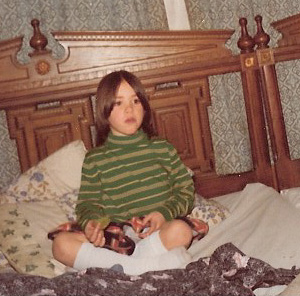
The little sister I remember being
The little sister he remembers

My flight ended about forty-five minutes too soon, and I didn’t get to see the final episode of the 15, but when I got home, I found out that TNT, one of the basic cable channels, was showing The Pitt in three-episode installments, each Monday night. I spent the next few weeks rewatching all of the episodes I’d seen on the plane, with mom this time, leading up to the final episode neither of us had seen yet.

When I told my brother about my watch party, he didn’t seem as annoyed as usual. He said he’d seen the show, and actually liked it, certainly more than most of the other medical shows on TV. He even told me about a contest at one of his medical conferences, where the winner got the chance to spend a day with Noah Wyle (sadly, he didn’t win). Back when he was in medical school, and I was watching episodes of ER to try to understand him, there was more of a disjunct – yes, Dr. Carter was at a similar point in his career, and the show did a lot of realistic medical stories, with all of the jargon and the latest technology, but there was also a lot of soap opera (not as soapy as Grey’s Anatomy, but enough), so when I’d try to identify my brother in those storylines, and figure out what he would have been thinking, and where he would have struggled, there weren’t a ton of parallels. But with The Pitt, it’s different. 

            The emotions in the Pitt are kept, almost aggressively, under control. It takes until the 13th hour for Dr. Robby to break, and even then he manages to pull himself back from the brink and get back to work quickly – not because he’s all better, or because he’s learned something, but just because he has to, because it’s his job and people are relying on him. There’s no attempt by the writers to pretend that this kind of resilience is a good thing, just that it’s what he has to do.

            The show does an incredible job of showing how impossible these jobs are (doctors, nurses, social workers, EMTs, administrators, and pretty much everyone else in the hospital), and the amount of guessing they have to do, and the lack of adequate resources, and the lack of perfect answers to many of the problems that come up. There’s a sense that the doctors are expected to do the impossible, and not be impacted by the anger or grief or pain of their patients. And they make a point of showing the doctors disagreeing on what to do, on medical interventions and on ethical problems, so that we have to sit with the reality that it isn’t always clear who’s right and what the best course of action might be.

            There’s something profound, for me, in the fact that Noah Wyle is now playing a Jewish character, and (spoiler) actually recites the Shma to himself at one point. It’s a small thing – and it’s not like they’re celebrating Chanukah in the middle of the ER – but it makes the show feel that much more connected to my brother, and to me.

            Of course, TNT decided to air the first season of The Pitt in November and December for a reason: the second season is now airing on HBO Max (a paid streaming service). It’s a very good marketing technique, because I’m actually considering a subscription, just to see the show’s second season without having to wait for my next trip to Israel.

            One reassuring thing has been that, while my brother works in emergency medicine, he doesn’t tend to work in trauma centers like the Pitt, so even if he faces a lot of the same issues as Noah Wyle’s character, it’s not at the same unrelenting pace, or with the same level of chaos. At least, that’s what my mom was telling herself, and me, as we watched the series week by week, and that helped both of us sleep a little easier at night.

How can you sleep?! Where are my chicken treats?!”

If you haven’t had a chance yet, please check out my novel, Yeshiva Girl, on Amazon. And if you feel called to write a review of the book, on Amazon, or anywhere else, I’d be honored.

            Yeshiva Girl is about a Jewish teenager on Long Island, named Isabel, though her father calls her Jezebel. Her father has been accused of inappropriate sexual behavior with one of his students, which he denies, but Izzy implicitly believes it’s true. As a result of his problems, her father sends her to a co-ed Orthodox yeshiva for tenth grade, out of the blue, and Izzy and her mother can’t figure out how to prevent it. At Yeshiva, though, Izzy finds that religious people are much more complicated than she had expected. Some, like her father, may use religion as a place to hide, but others search for and find comfort, and community, and even enlightenment. The question is, what will Izzy find?

What I’m Watching

            Even with many of the broadcast TV shows returning after the long hiatus (because of the writers and actors strikes in Hollywood) there are still a lot of empty spaces in my TV watching schedule that need to be filled. For a while there, I was happily ensconced in episodes of the Murder in (France) series, on Hoopla (though seasons 6 and 7 are missing for some reason), but I only have a certain number of monthly views, so I keep having to go back to the other streaming services, like Netflix, to fill the empty hours.

Murder In (France)

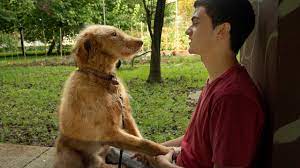
I started, of course, with One Day, the constantly-advertised-on-social-media-limited-British-series about a two-decades-long-bittersweet-love-story. Eh. It was okay. But when I finished watching that, I found a Spanish movie called Diecisiete/Seventeen, about two brothers and a dog and a grandma and a camper. Did I mention that there’s a dog? And that it’s really a love story about brothers finally figuring out how to be there for each other? It was wonderful! There was also a limited series, also from Spain, called Un Cuento Perfecto/A Perfect Story, about the romance between two (gorgeous) people with low self-esteem, who finally realize that in order to find love you have to risk being known for who you really are, with all of your imperfections. It almost ended badly, but Thank God, in the form of a Deus Ex Machina, it all worked out in the end.

Diecisiete, and a dog!

Then there was a Korean romantic comedy series, and a Croatian/German movie about mid-life love, and then I went through Chaiflicks, one of the Jewish streaming services, where I watched some episodes of Soon by You, an American show about young orthodox Jewish singles in New York City, and Yidlife Crisis, a Yiddish language show by two comedians from Montreal, and Checkout, an Israeli comedy set in a small supermarket, and The New Black, about misfits at a yeshiva in Israel, and Cupcakes, a silly, sweet movie about a group of friends who are accidentally chosen as Israel’s representatives at a Eurovision-type competition show. I finally landed on Unchained, an Israeli show set in the Haredi (Ultra-Orthodox Jewish) community, about the difficulty of getting a religious divorce if the husband doesn’t want one; it was uncomfortable and enraging to watch at times, and not much of a break from the news, but it was definitely interesting.

The problem with watching all of these foreign language shows, though, is that I can’t get my typing done, or scan social media, or play video games, while the movies are on; I actually have to pay attention and read the subtitles in order to follow what’s happening, so it’s a more intense experience than just watching American broadcast TV. And the fact is, sometimes I just want the TV on in the background to remind me that the world still exists, while I focus on other things.

            So, I gave in, and watched a handful of Hallmark-lite movies on The Great American Family Channel, and found myself unable to sit through a bunch of them, even with only half an ear paying attention. It’s as if someone came up with a list of plot points and then forgot to write the actual scenes. There are millions of good, heartwarming, reassuring stories to tell, and I really don’t mind repeating tropes or unreasonably happy endings, but I do care if I can relate to the people in the story, so that I can buy into their romance and live vicariously through them for a couple of hours.

            Even if I only have my TV on in the background to remind me that the world still exists, I’ve discovered, some part of me is still paying attention and needs to be respected. It’s the same with junk food; I’m not eating French fries for their nutritional value, but, at the very least, they need to taste good.        

            So, I’m back to the foreign language films, mixed with some returning broadcast shows like Will Trent (there’s a dog!) and The Rookie and Law & Order SVU. But I’m craving something more hopeful, and believable, that will lift my spirits and block out the news; just for a little while. Oh, and I really think my cable and streaming bills should be covered by my health insurance. Because it’s medicine.

Will Trent and Betty

If you haven’t had a chance yet, please check out my Young Adult novel, Yeshiva Girl, on Amazon. And if you feel called to write a review of the book, on Amazon, or anywhere else, I’d be honored.

            Yeshiva Girl is about a Jewish teenager on Long Island, named Isabel, though her father calls her Jezebel. Her father has been accused of inappropriate sexual behavior with one of his students, which he denies, but Izzy implicitly believes it’s true. As a result of his problems, her father sends her to a co-ed Orthodox yeshiva for tenth grade, out of the blue, and Izzy and her mother can’t figure out how to prevent it. At Yeshiva, though, Izzy finds that religious people are much more complicated than she had expected. Some, like her father, may use religion as a place to hide, but others search for and find comfort, and community, and even enlightenment. The question is, what will Izzy find?

Cold Case

            I’ve been re-watching a show called Cold Case on the Roku streaming channel. When I saw it on there a few months ago I remembered feeling safe in the hands of the writers and actors on the show, so when I needed reassurance, with the grief of losing Cricket and watching the recent events unfold in Israel, I started watching the episodes from the beginning, often instead of watching the news.

The magical Cricket

The premise of Cold Case is that this particular Philadelphia homicide squad focuses on cases that have been left unsolved for years, even decades. More often than not, the storylines hold secrets that couldn’t have been told in their own time, either because of the prejudices of the day or the inability of the traumatized people involved to speak up. Music helps to set each episode at a particular place and time, and we see the scenes play out both in the past and the present to bring the story to life, but the real power of the show is in the way the detectives genuinely care about what happened to these people, even so many years later, as if they really believe that every life matters and every story deserves to be told.

            I remember so many times in graduate school, both for writing and for social work, when the lesson was the opposite: that no one life really matters that much. In social work, the focus was on the collective – the family, community, institution, etc. – as opposed to the individual. And in writing workshops it was all about the beauty or cleverness of the writing, or the complexity of the plot or the nuances of the sentence structure or variety of descriptions; there was a lot of active disrespect for people whose telling of their own stories was still raw or full of emotion, and there was even more anger at people who wanted to tell stories that “have all been told before,” which often referred to stories about rape, sexual abuse, domestic violence, and eating disorders, not coincidentally stories that are often told by women.

“What?!”

            But on Cold Case every story matters. It matters what happened to a young woman who dressed as a man during prohibition; and it matters what happened to an autistic boys’ parents, even if he can’t tell his story in words; and it matters who shot a little black girl on the playground, and how a teenage boy who was thought to be a criminal was killed on a rooftop. It matters who loved who, and what went wrong and why. It has been such a relief to sit on the couch with Mom and Ellie and watch this show and feel that our sympathy can be unlimited, and that there are endless stories that can and should be told.

            I don’t think I recognized, when I watched this show the first time around, more than fifteen years ago, that it resonated so deeply with my own story; my childhood has often felt like a cold case, moldering in a file box somewhere. So much of the drama of my adult life has resulted from a crime that never received justice, and I’ve had to fight off the insistence (from others but also from within myself) that my story doesn’t deserve the attention I give to it, and that what happens to me, or people like me, is inconsequential. I still speak up because I know that there is healing in being seen and heard, but the fight has been exhausting. Except, when I watch the detectives connecting with each victim, through their own troubled lives, I feel reassured that they would have cared about what happened to me too. And for a few hours at a time, I don’t have to fight, because I know I matter; I know that we all matter.

“I matter too. Right, Mommy?”

If you haven’t had a chance yet, please check out my Young Adult novel, Yeshiva Girl, on Amazon. And if you feel called to write a review of the book, on Amazon, or anywhere else, I’d be honored.

            Yeshiva Girl is about a Jewish teenager on Long Island, named Isabel, though her father calls her Jezebel. Her father has been accused of inappropriate sexual behavior with one of his students, which he denies, but Izzy implicitly believes it’s true. As a result of his problems, her father sends her to a co-ed Orthodox yeshiva for tenth grade, out of the blue, and Izzy and her mother can’t figure out how to prevent it. At Yeshiva, though, Izzy finds that religious people are much more complicated than she had expected. Some, like her father, may use religion as a place to hide, but others search for and find comfort, and community, and even enlightenment. The question is, what will Izzy find?

Intuitive Eating, Continued

            I’m making progress on my journey to Intuitive Eating. I’ve tried a bunch of different exercises in the Intuitive Eating Workbook, with varying levels of success. The first really helpful exercise was keeping a Hunger Journal, which I did for a few weeks. I was often at “desperately hungry” before I would let myself eat, but the nutritionist said no, eat sooner, eat before the hunger becomes unpleasant, because if you wait too long you’ll be so distracted by the intensity of the need to eat that you won’t notice when you start to feel full.

            I still struggle with this, because it feels like a competition, and if I eat before I’m starving to death then I lose. But I’m getting a little better.

“Sure you are, Mommy.”

            The biggest challenge after that was figuring out when to STOP eating. And I hadn’t reached the chapter on fullness yet, so I had no idea what to do. The next time I had a Zoom meeting with the nutritionist she said, if you’re struggling to figure out fullness then why don’t we just jump ahead to that chapter in the book?

            Jump ahead? Skip a chapter that an author put in that exact order for a specific reason?

            Yes. Of course, the nutritionist said. This is about your journey with food. If fullness is on your mind, then that’s what we should turn to.

            Sometimes being a compulsive ‘A’ student gets in my way. Who am I kidding? It always gets in my way. And even after I jumped ahead in the workbook, only skipping one chapter, I felt guilty and worried. What if, without that missing chapter, the whole experiment falls apart? What if everything is riding on the specific magic of the order of the exercises and I’m ruining it?

            Oh Lord.

            But, I took the risk and started the fullness chapter anyway. The first exercise asked me to stop each meal with one or two bites of food left on the plate, to check on my feelings of fullness. A few times I waited ten minutes, to see if I was still hungry, and then ate the last two bites anyway, but most of the time I found that I didn’t need the last two bites as much as I thought I did (the dogs really enjoyed this exercise!). I told myself that if I was hungry again in half an hour, after giving away those last two bites, I could eat again, and most of the time I didn’t need to.

“We’re ready whenever you need us.”

            The next exercise I tried was eating with my left (non-dominant) hand, to see if that would help me slow down and pay more attention to my fullness signals along the way. It was an interesting experience, but mostly it just made a mess and strained my left wrist, so I moved on.

            Then I read the section about removing distractions while eating, and found that my most persistent distraction during meals is TV – because I always eat in front of the television set. And when the book told me to try not eating with the television on, I rebelled. I was just not ready for that kind of horror, and since this is my journey I get to decide what I’m ready to try, and that is not it.

            The next exercise I chose to do was another journaling exercise to chart fullness levels, every half hour after eating (lasting two hours overall). The goal was both to force myself to check in on my fullness levels throughout the day, and to pay attention to how long the feeling of fullness lasted after different meals. I discovered that the full feeling I got from salads doesn’t last long at all, but trail mix lasts for hours. That doesn’t mean I’m going to stop eating salads, but I’m going to think about how to fill out the meal with more protein and fat next time, so that the feeling of fullness can last longer.

            I still feel sad when I realize that I’m full before I’ve finished eating everything on my plate. It’s disappointing to find out how much less food I need to eat than I want to eat. I’m discovering that the distance between emotional satisfaction and physical fullness is still a pretty big gulf, and I’m not sure how to fill it.

            Ellie has a similar issue, but she relies on me to limit her food intake, so that she doesn’t eat something that makes her feel sick, or she doesn’t eat so much that she can’t fit through the door. She always thinks she needs to eat more than I think she needs to eat, but once she can shake off the emotional hunger, she’s ok. She just needs my help. Most often that means some belly scratches, or a walk, or some time spent playing or napping. I need to figure out how to take as good care of myself as I take of Ellie.

“I love you, Mommy, but I’m still hungry.”

            There’s still a lot more to learn about Intuitive Eating and how much and what kinds of food my body needs, but it’s a relief to have made some progress and to see a path forward. I even managed to lose the two pounds I gained during the first part of this experiment. We’ll see if that trend continues.

            Fingers crossed.

“Our fingers don’t cross, Mommy.”

If you haven’t had a chance yet, please check out my Young Adult novel, Yeshiva Girl, on Amazon. And if you feel called to write a review of the book, on Amazon, or anywhere else, I’d be honored.

            Yeshiva Girl is about a Jewish teenager on Long Island, named Isabel, though her father calls her Jezebel. Her father has been accused of inappropriate sexual behavior with one of his students, which he denies, but Izzy implicitly believes it’s true. As a result of his problems, her father sends her to a co-ed Orthodox yeshiva for tenth grade, out of the blue, and Izzy and her mother can’t figure out how to prevent it. At Yeshiva, though, Izzy finds that religious people are much more complicated than she had expected. Some, like her father, may use religion as a place to hide, but others search for and find comfort, and community, and even enlightenment. The question is, what will Izzy find?

Cricket and Ellie’s Extraordinary Playlist

My favorite television show this Spring was Zoey’s Extraordinary Playlist, where Zoey, a computer programmer in her twenties, discovers that she can hear people’s innermost thoughts and feelings in song and dance numbers (after an accident in an MRI during an earthquake). I’m a sucker for a musical to begin with, but this show made the connection between music and emotional honesty even more explicit. And I loved it!

            And watching the show made me wonder what I might be singing, out walking the dogs, or on Zooms, or at the supermarket, if someone could hear my “heart songs” (this is what Zoey’s friend called the song and dance numbers only Zoey could see and hear on the show). Would my heart songs express the feelings I already feel safe sharing? Or the things I consciously choose to keep to myself? Or feelings I don’t even know I have?

“Ooh, a mystery!”

            I’m a little bit afraid of this question; on the one hand, I don’t think my emotions are much of a mystery. I may not sing them at the top of my lungs to every stranger on the street, but I imagine that most of my feelings are kind of obvious. Except, what if there were surprises? What if the emotions I haven’t yet wrestled into compliance just started to let themselves out? That worries me. I think I’d rather be Zoey than be heard by Zoey.

            Some of the “heart songs” Zoey heard on the show didn’t express people’s deepest secrets, but rather things that Zoey, when she wasn’t hearing the songs, wasn’t able to figure out for herself. Before the accident in the MRI gave her this special power, Zoey was kind of dense about her own emotions, and anyone else’s, and it was keeping her stuck and lonely. The heart songs were her awakening to the world around her and the world inside of her.

            I can imagine some of the songs I’d hear other people singing, though: like my rabbi singing Sondheim on every occasion (which he kind of does already); or long litanies of anger and complaint from my fellow shoppers in line at the supermarket (some singer/songwriter laments, but mostly in the Headbanger genre). My synagogue school students often did break into song at random moments, to let me know how bored they were by my chosen lesson plans. My preference would be to listen to a playlist of ballads about people’s secret longings and disappointments, but I’m not sure I’d be that lucky.

“Oy.”

            And, what if in my version of the disorder, all of the singing and dancing people would be tone deaf and have two left feet? I’d be cringing all the time, and dodging falling bodies. I don’t do well with cacophony, and long stretches of listening to off key music might actually kill me. But at least I wouldn’t have to spend as much time guessing at what people are thinking, reading body language and tone of voice and worrying that I’m guessing wrong. Instead, I could feel confident that I really did know what people were thinking, and then I could move on to feeling guilty about all of the ways I would inevitably fail to help them.

            Given that, I still love the idea of my day being filled with music. And I love the idea of all of my thoughts and feelings being intertwined with music, instead of just standing there, like stick figures, marching through my brain.

“There’s music in my head? Can you get it out?”

            But I do worry that if I could hear and see these musical numbers as vividly as Zoey does, then I’d become so overwhelmed with external noise that I wouldn’t have any room left to hear my own thoughts. I’d have to hide away in my room just to get any writing done – which, come to think of it, describes my regular life pretty well.

            The only people I know who wouldn’t be overwhelmed by a sudden outpouring of song and dance numbers, expressing our most secret feelings, would be dogs. For Cricket and Ellie, and all of their compatriots, humans are vividly expressing their deepest secrets, through tone of voice, and body language, and especially smell, all the time. Dogs know everything! And yet they still love us. It’s pretty much the dream of every human being, that even at our most vulnerable and imperfect, with all of our embarrassing smells and shameful secrets hanging out, we could still be deeply loved. And yet to dogs, that’s a given. And, more often than not, we do this for our dogs in return (those lovely creatures who lick themselves in public, and breathe stinky breath in our faces, and expect us to pick up their poop while they bark their heads off at all of our neighbors). It’s other humans we struggle to accept as they are, and other humans who we think will reject us if they knew everything.

Pets, even dogs as judgmental and harrumph-y as Cricket, love us just the way we are. No wonder we love them so much in return.

If you haven’t had a chance yet, please check out my Young Adult novel, Yeshiva Girl, on Amazon. And if you feel called to write a review of the book, on Amazon, or anywhere else, I’d be honored.

            Yeshiva Girl is about a Jewish teenager on Long Island, named Isabel, though her father calls her Jezebel. Her father has been accused of inappropriate sexual behavior with one of his students, which he denies, but Izzy implicitly believes it’s true. As a result of his problems, her father sends her to a co-ed Orthodox yeshiva for tenth grade, out of the blue, and Izzy and her mother can’t figure out how to prevent it. At Yeshiva, though, Izzy finds that religious people are much more complicated than she had expected. Some, like her father, may use religion as a place to hide, but others search for and find comfort, and community, and even enlightenment. The question is, what will Izzy find?

Why I’m Afraid to See Wonder Woman


I should have been on line to buy one of the first tickets to see Wonder Woman. It’s a superhero movie, with a female star, who fights for the vulnerable, and the actress in the starring role is Jewish. But I couldn’t make myself go. The movie has become a smashing success, even without my help, and for that I’m grateful, because it means that female superheroes aren’t such a scary idea to (some) men anymore, and if the movie is good that’s really all that matters to an audience. But I still can’t make myself go to see it.

wonder woman

The thing is, I can never live up to Wonder Woman. I could never be that strong or courageous. I’ve worked my whole life to build up to a level of strength that allows me to believe that I might be able to do some good in the world. If I have to compare myself to Wonder Woman, I’m afraid I will lose all hope. I know women who are fierce and strong and capable, and I feel like I always disappoint them with my vulnerabilities and doubts. Wonder Woman would find me pathetic.

I look at my dogs, both female, and I know that they are not superheroes. They have their strengths and their weaknesses, they can almost fly and they bark at every danger, but they are imperfect and I love them for it, because they make my imperfections seem acceptable. Wonder Woman, on the other hand, makes me think of all of my flaws. She is like the Golden Retriever of women: loyal, strong, up for anything, deceptively smart, and, of course, beautiful. That’s not me.

IMG_0991

Delilah doesn’t even need a special outfit to look like a superhero.

When I was little I loved the Wonder Woman TV show. Lynda Carter and her twirly skirts and golden lassos comforted me. I didn’t imagine that that could be me, no, I imagined that Wonder Woman could be one of my teachers, or a neighbor down the block, or the Torah reader at my synagogue. I thought, maybe there is a superhero hiding in plain sight and she will come to save me. I especially liked that she was in disguise, like Superman, with her glasses, and skirt suit, and a day job hiding her real identity. I wondered, every once in a while, if even Wonder Woman couldn’t manage to be Wonder Woman all the time.

wonder_woman_first_season_by_hamletroman-d7dwjfo

It’s possible that Cricket and Butterfly think I’m a little bit like Wonder Woman, actually, the way I pretend to be tired and achy and boring most of the time and then suddenly save the day with a walk or chicken treats or extra-long scratching sessions. I’d like to think they could see me that way, but I still refuse to wear the new Wonder Woman outfit, that armor looks painful.

IMG_1248

“Scratchies are wonderful!”

IMG_1233

“Playtime is wonderful!”

IMG_0581

“I wonder where my treats are!”

My Snow Day


Up until the middle of this week, I was working on a post about how little snow we’ve gotten on Long Island this winter. It is therefore possible that Thursday’s massive Thunder-snow-bomb-aggedon was my fault.

The thing is, I like snow. Even more than that, I like snow days, when the whole world seems to be at home watching the same news shows, and not a word of politics is spoken. Theoretically. I love zipping up my tall boots and taking the dogs out for picture time. I love watching Cricket hop through the snow searching for treasures (a leaf!!!!!). And I even like trying to console Butterfly about the weird texture of the ground under her paws.

026

“I see something!!!!!!!”

041

“Now I see it over there!”

027

“Mommy, why can’t I feel my toes?”

We were having all of the negatives of winter: the severe cold, the biting wind, the gloomy lighting, and every kind of cold and flu imaginable, without the benefit of snowball fights and hot cocoa to lighten the load. Even Cricket and Butterfly had to suffer through the short daylight hours, and even shorter walks, and the plinking rain on their heads, with no reward.

We had one day, recently, when the air was full of snowflakes that blurred the world, but added up to almost nothing on the ground. I had to drive carefully, and wear a warm jacket, scarf, and gloves, but I still had to go to work. I felt cheated.

Summer will come along too soon, and it will be relentlessly hot and humid and full of smog and sweat and swarms of bugs. I just wanted a few snow days in my memory bank, to shore me up for those long months of heat, when I would barely be able to go outside and would have to sit with my head right up against the air conditioner just to be able to think.

It’s not that I’m thrilled with having to shovel my car out of the deep snow. I would actually like to have a magical shovel that removes the snow without any help from me. And I could do without the black ice on the roads, and the slippery walkways, and the bad headache that inevitably comes with extreme changes in air pressure. But the snowstorm was a relief just the same. I could turn on the TV and watch weather for as long as I wanted to, with only short breaks to hear about the national political dramas. Every local newsperson was out in the snow, wearing silly hats, and asking random snow-covered strangers some very silly questions. My local government officials were all too busy keeping people safe, and making sure the snow was getting removed from the roads, to cause trouble. One mayor was even driving the snow plow himself, with a reporter along for the ride to make sure the event was recorded for posterity.

I need days like that. I need a few days each year when all of the pain and disorder are muted under Mother Nature’s snowy blanket. Now if only we could convince her to lift up the blanket of snow again once we’ve rested, and not leave it to me to remove pounds of wet snow with my non-magical shovel, then I wouldn’t need three days in bed to recover from my beautiful snow day.

019

“We’re going back inside now, Cricket.”

045

“I can’t go inside yet, Butterfly. There’s still a leaf under here. I’m sure of it!”

Christmas Movies, Again


Mom is getting VERY tired of Christmas movies. I try to tell her that it’s either a Christmas movie or another two hours of watching the news, or, we can watch repeats of Law & Order for the tenth time each. She acts like I’m purposely making her suffer through Twee Season (see what I did there? Twee for Tree?), and blocking all of the sensible shows from the TV.

This is not my fault. Actually, there have been more than a few Christmas movies this season that I had to stop watching early on. Usually I like the sugary sweet love stories, and the magical touches that make everything turn out alright, but sometimes the acting is too unbelievable, even for me.

butterfy-with-hair-stand-up

“Am I sugary sweet, Mommy?”

Poor Mom is stuck, because she doesn’t like the too sweet movies, and she doesn’t like the edge-of-your-seat-the-world-is-ending movies (or news), and there’s not much left in between right now.

img_0510

“The world is ending, Grandma!”

This is the time of year when I wish I could forget the plot lines of all of the shows I love, and then I could watch the repeats for hours on end, in pure bliss. But, damn it, my memory is too good. If I try to watch the reruns, I get impatient with my favorite characters for making the same mistakes they made the last time I watched this damn episode.

And I still haven’t given in and joined Netflix, or whatever it is you do with Netflix or Hulu or Amazon. I still borrow DVD’s from the library when I want to catch up on episodes of Miss Marple or Foyle’s War (not kidding).

It helps to have something relaxing on TV while I’m doing my schoolwork at the computer, because if I paid too much attention to the darkness and despair we read and write about in my social work classes, my head would explode. Instead, I listen to Christmas movie dialogue, and reach down to scratch Butterfly’s head, and look over at Cricket’s enigmatic face every once in a while, for reassurance that we haven’t all gone to hell in a handbasket.

002

img_0251

Ideally, all Christmas movies would star Jimmy Stewart, or Tom Hanks, and be directed by Frank Capra or Nora Ephron, and I could just relax my critical mind and let them take me on a floating journey. I could listen to Louis Armstrong singing about a wonderful world, and watch snow fall on the screen, while I sit in my warm, cozy living room, and believe, for a few hours, that everything will be okay.


Wouldn’t that be a wonderful thing?

cricket-in-snow-2

“Yeah!!!!!!!!!”

Children’s Television

When I was seven years old, I inherited my parents’ old black and white television set. I could never fall asleep as early as everyone else in the house, so I watched whatever was on until Johnny Carson at 11:30 PM, when I could relax. I felt like he could see me through the TV, and therefore I wasn’t alone. I’d leave the TV on as a night light, waking up at Three AM to the buzz of the target on the screen.

I had a philosophy teacher in college who told us that people who leave the TV on for company are fooling themselves, but I didn’t like him anyway.

Delilah, my childhood Doberman pinscher, used to sleep on my bed during the day, so she watched TV with me sometimes. I don’t think she cared much for it though. Maybe she liked the steady hum of the TV in the background of her dreams. She just liked being with me, especially if I had snacks in my room, or was up in the middle of the night. In a way, I was the TV show she watched.

My Delilah

My Delilah

From an early age, I would read through my TV guide with a highlighter and count up how many shows I could look forward to in the coming week. My favorite issues of the magazine were the ones at the end of the summer that previewed the new shows for the fall. It was just like getting my new school books in August and being able to preview all of the potentially exciting homework for the year ahead, and similarly disappointing by October and November when school and TV turned out not to be as wonderful as I’d hoped.

“Rachel, someone peed on these hastas! This is much more interesting than your TV shows.”

I never felt satisfied by children’s television. There were times, watching The Smurfs, where I saw glimpses of my real life, in the tininess of the smurfs compared to the enormous Gargamel, but most of the time, shows for children portrayed us as super powered beings, as if the average eight-year old could overcome abuse and war and neglect without any help. I needed Wonder Woman to come to my house and help me, not to always be helping the government. I needed the Bionic Woman to hear me with her super hearing, and run to scoop me up, and jump out of the window with me in her arms. And I needed some explanation of how these children on TV were able to survive, because it didn’t make sense to me.

I didn’t like the way the adult characters in kid’s shows talked so slowly and with such simple language, as if I were an idiot. That’s not how real people talked. I liked Cookie Monster, though, because he would start out counting and then just start shoving cookies in his mouth and losing control. This I could relate to.

My Dina, the peanut butter monster!

My Dina, the peanut butter monster!

I watched mostly shows meant for adults, instead. I felt like these were my teachers. In school we never talked about real life. There was no discussion of how often to take showers, or which clothes to wear, or how to earn money, or how to make friends. There was an endless list of rules that everyone else seemed to live by automatically, and I couldn’t find the list anywhere.

“Hygiene is overrated, Mommy.”

I loved The Love Boat. I didn’t understand that it was unrealistic. I thought the floating, fizzy feeling of the show was completely possible in real life. Even when dark things happened, the tone of the show was never dark. And a little girl got to live on the ship, and be doted on all the time, and her Dad was the captain, and there was a cruise director planning activities, and everyone was so happy to be there.

For some reason I really liked The Fall Guy with Lee Majors as a bounty hunter. I liked that his job was to catch bad guys, and that he worked so hard to do it. In my real life, the adults I knew would have given up as soon as it started to look difficult or dangerous. I loved his persistence.

My favorite shows were the ones that made better lives seem possible. Like on Kate and Allie, where these two divorced Moms, with three kids, shared a house. I loved the idea that friends could be your family, and that you could depend on them and not have to survive on your own. On One Day at a Time, a divorced woman moved out with her two teenage daughters to live in an apartment in the city, and it was not sugar coated at all. The point of the show seemed to be that women can do this; they can start over, even when it’s hard, even when things go wrong along the way. And I wanted to believe in that.

I still believe in the transformative power of TV shows, but I think we need a better idea of how to present it. Two dimensional images on a screen are not enough. Maybe the images could be projected, like holograms, into the room. Cricket and Butterfly would love that! We’d need a less furnished room to watch TV in, so that the characters wouldn’t be projected onto the coffee table or impaled by a lamp. And maybe there could be a device we’d wear, like a sensor on our foreheads that would see how we’re feeling and pick a show to fit our needs. Cricket would get a laser light show, so she could chase the lights around the room until she was exhausted, and then there’d be soothing music to help her take a nap. Butterfly would get bird songs, in stereo, all around the room. And she’d need some smell-o-vision, and a treat dispenser, and maybe an automatic scratchy hand she could go over to when she’s itchy.

Butterfly and her buddies are ready to watch TV.

Butterfly and her buddies are ready to watch TV.

Cricket's not so sure about this arrangement.

Cricket’s not so sure about this arrangement.

And for me, as a kid, I would have loved to have recognition that I was there in the room, and that I mattered; that the TV show only came to life because someone was watching it. Even better, a character on the TV could wave to me, and say, Rachel looks tired, maybe we shouldn’t have a smash ‘em up car chase right now, let me go get my acoustic guitar.

“I like acoustic guitar too, Mommy.”

Skating Lessons


The ground has been very icy lately. Even when the snow starts out powdery soft, we end up with ice rinks on the grass within a day, and the girls seem to enjoy it. I’ve always wanted to take them ice skating, but indoor rinks don’t seem to welcome dogs.

"This outdoor ice is too bumpy, Mommy."

“This outdoor ice is too bumpy, Mommy.”

Cricket would be a terrible figure skater. She would be gripping the ice with her toe nails and hopping like a bunny rabbit, but maybe Butterfly would like the glide, just flying for a few seconds, and glorying in the curve.

Butterfly, dreaming about the glide.

Butterfly, dreaming about the glide.

I took skating lessons as a kid at the local rink. We were separated by levels – alpha, beta, gamma, delta – and given one rectangle of ice for our group lessons. We wore snowsuits and white skates and gloves and hats. We learned snowplow stops, two foot turns and bunny hops, falling and standing up. But the rink was so cold, and I was uninspired. I never saw skating as something I could get better at.

But that changed when I was seventeen. I had gone to college, and run home screaming, and needed something therapeutic to do while I went to therapy. One day, in desperation, Mom suggested going ice skating, and we went, and I never wanted to leave. I spent the whole two hour session, in terrible blue plastic rental skates, loving it.

I went three days a week, took group lessons and then individual lessons, got my own white skates, and started to improve. But really I loved just skating around the rink. I loved the whoosh of the air, and the speed, and I loved that feeling of attachment to the ice – like a trolley car must feel. With walking and running, your goal is to push off of the ground, to get away from it, but skating is all about the ice and the blade coming together. You fly best when you are attached to the ice (unless you’re a female pair’s skater, in which case, God help you).

No!!!!!!!!!

No!!!!!!!!!

Eventually I had to go back to school and be responsible, and I couldn’t figure out what place skating had in my life. But I was still obsessed with watching skating on TV. For a few years there, the televised skating world was filled with wonderful, creative, emotional performances. Torvill and Dean did a program called Encounter, or January Stars, and it was extraordinary. Everything they did was wonderful, but that one haunts me. Scott Hamilton makes me laugh, Kurt browning makes me want to skate or dance or just watch him on an endless loop. Katya Gordeeva, either back in her pair days with Sergei Grinkov or in the aftermath, is exquisite and soul deep. Michelle Kwan made me cry and made my heart beat in sync with hers. They all have this ability to be inside of the music, wearing it like clothes.

katya and sergei

Katya and Sergei, way back when.

Mostly now we get repetitive Olympic eligible competitions, and packaged professional shows that all look the same, but every once in a while something wonderful happens: Meryl Davis blossoms into a beautiful and evocative ice dancer, Kurt Browning skates with his sons, Jeremy Abbot creates whole new styles of movement on the ice. Even if there are only one or two minutes of blissful skating in a whole two hour program, I can’t risk missing those two minutes.

I wish my girls could take figure skating lessons. I can picture them, bundled up in pink snowsuits, wearing four skates each, learning to glide and stop and turn, and hopefully not pee on the ice. Cricket would love to be able to jump, but she’d also be at risk for severely hurting herself, and others. Butterfly would follow her teacher and then sniff after the Zamboni as it cleaned the ice.

I found this picture of a dog in a snowsuit on line, because if I tried to do this to Cricket, I would be in the hospital.

I found this picture of a dog in a snowsuit on line, because if I tried to do this to Cricket, I would be in the hospital.

Ditto.

Ditto.

They’d probably have to have the ice to themselves, because putting up orange traffic cones wouldn’t really stop Cricket from busting out into the crowd and going in the wrong direction and kicking her blades around. Maybe she’d do better with hockey skates, because they don’t have a toe pick on the front. Figure skates are serious weapons.

Those toepicks are vicious!

Those toepicks are vicious!

But, then, Cricket is pretty dangerous herself.

But, then, Cricket is pretty dangerous herself.