For a long time now, I’ve attended most of the Friday night services at my synagogue online. At least last year I had to go in person once a month to teach, but our program changed and I no longer teach on Friday nights, so even those services have been lost. Part of the change is physical: I’m just so tired by the end of the day, and at the beginning, and in the middle. One small trip to the grocery store wipes me out so much that I need a three-hour nap just to recover. After that, I can’t even fathom taking a shower and getting dressed to go to synagogue, not even when one of my former students is marking their b’nei mitzvah, despite the promise I made to myself that I would go to every Friday night service for every student who’d ever been in my class.
I’ve always been tired, and I’ve always been in pain, but still, something has shifted.
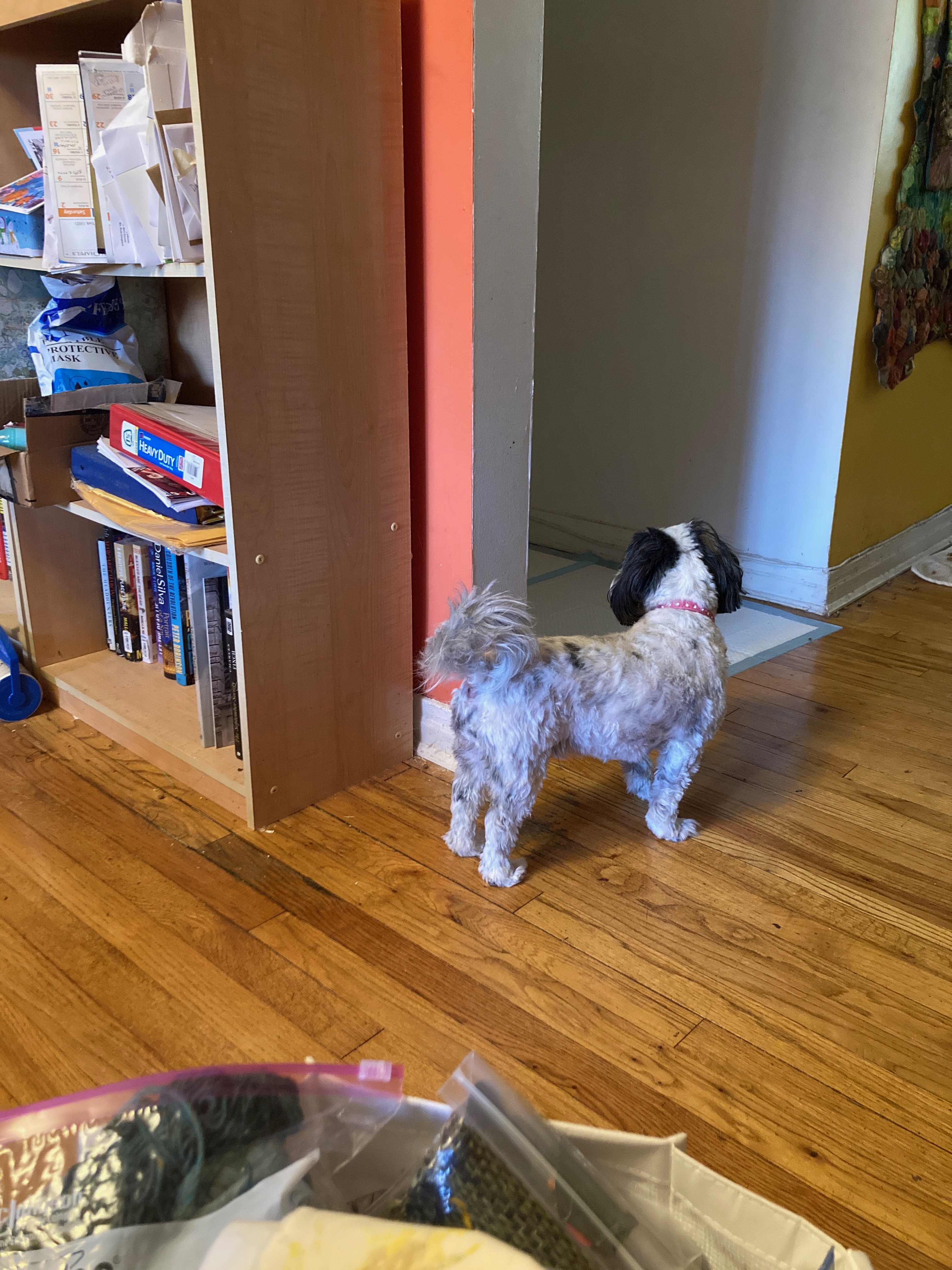
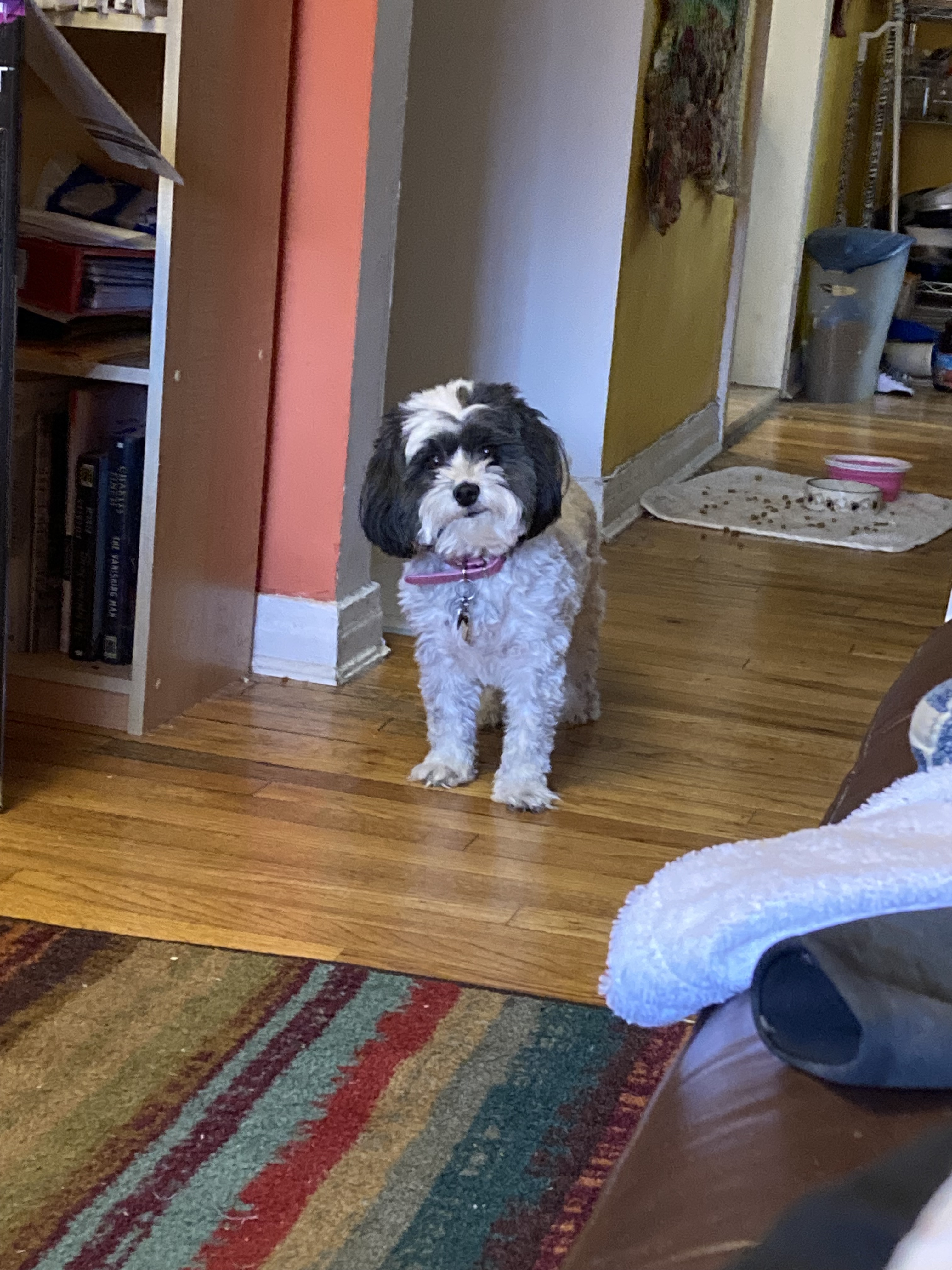
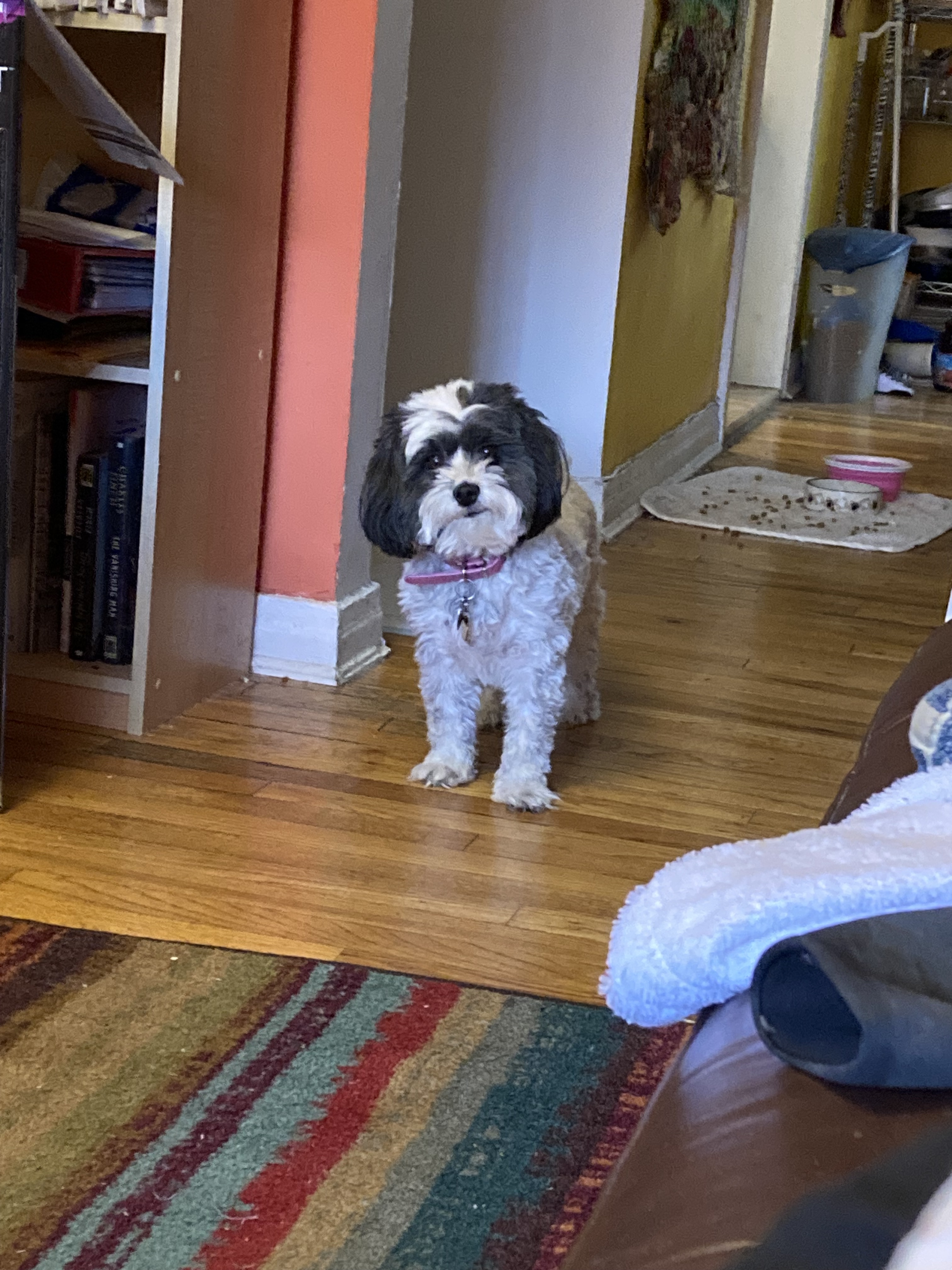
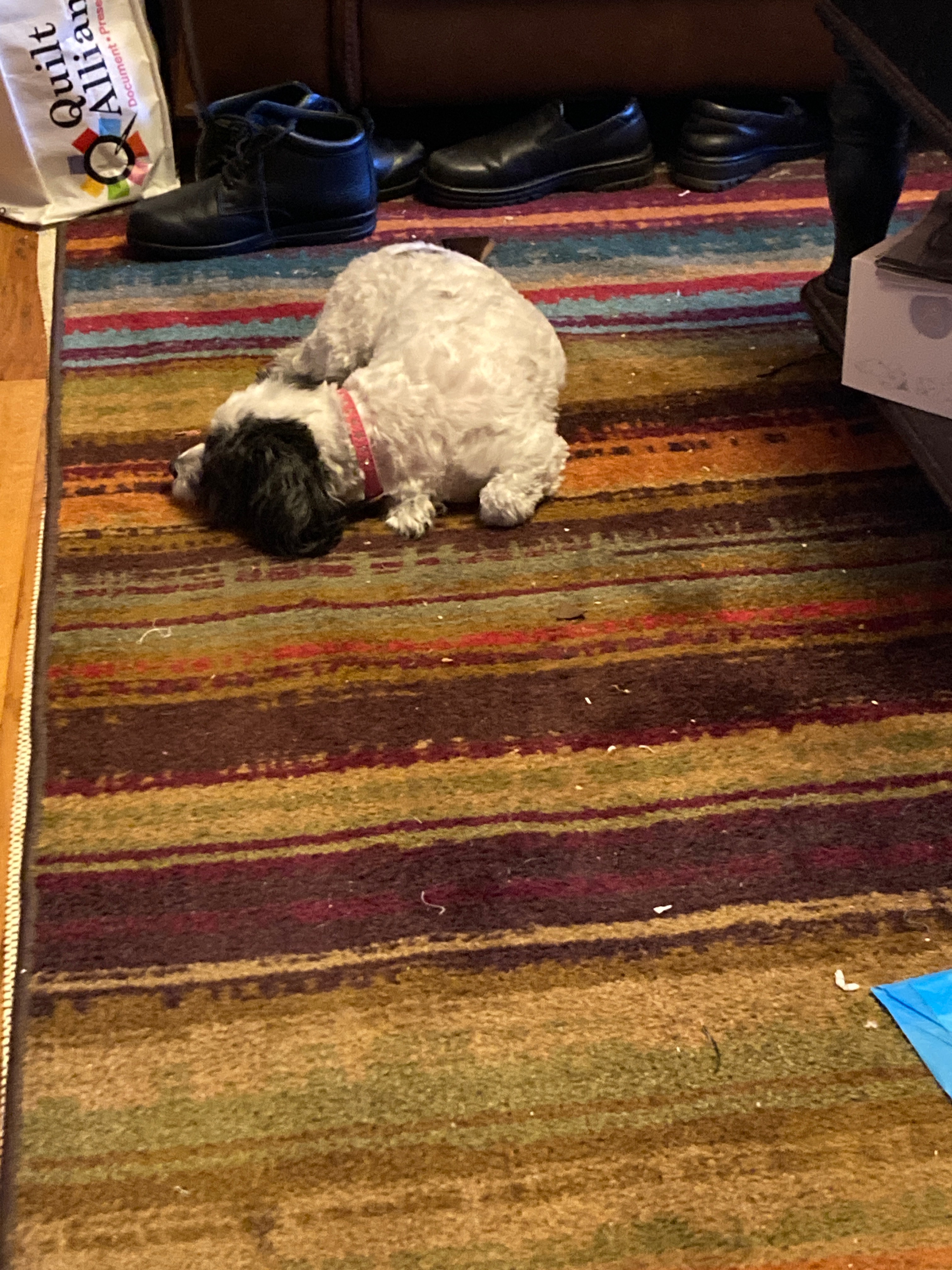
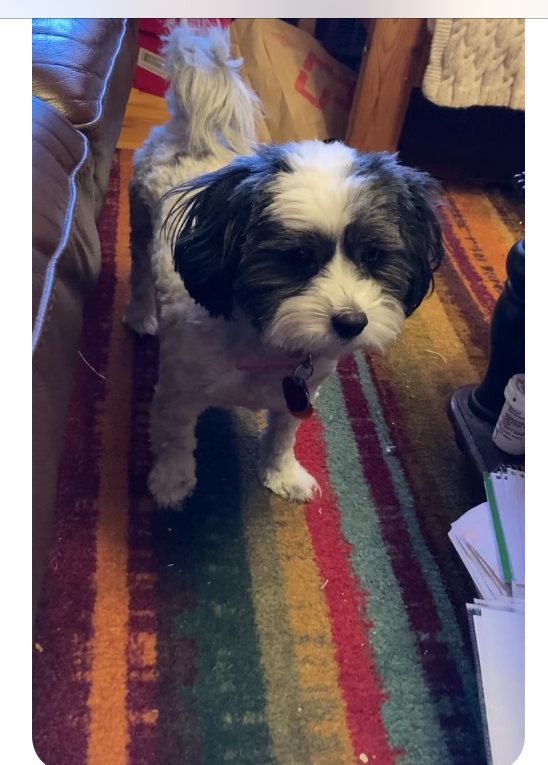
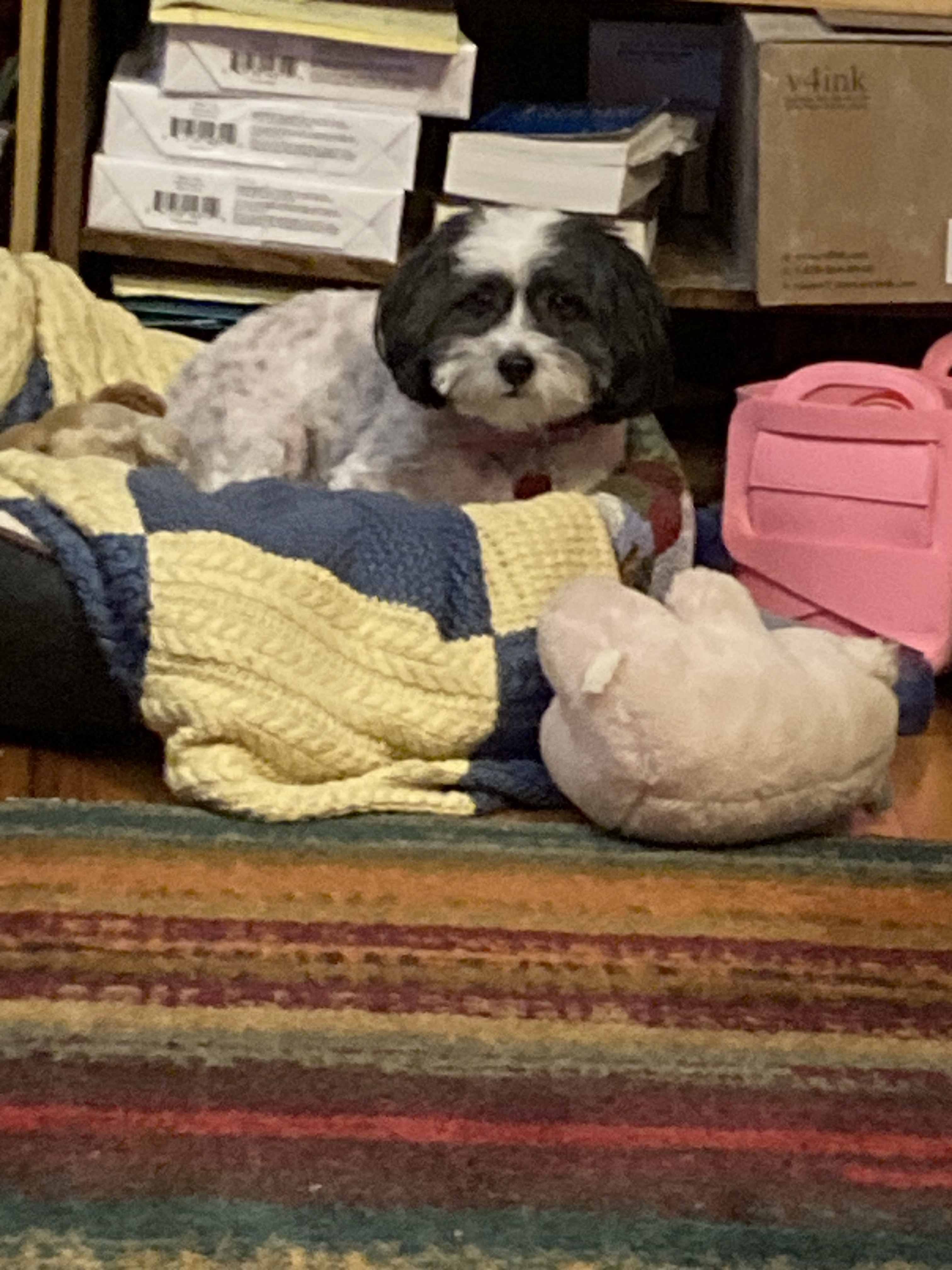
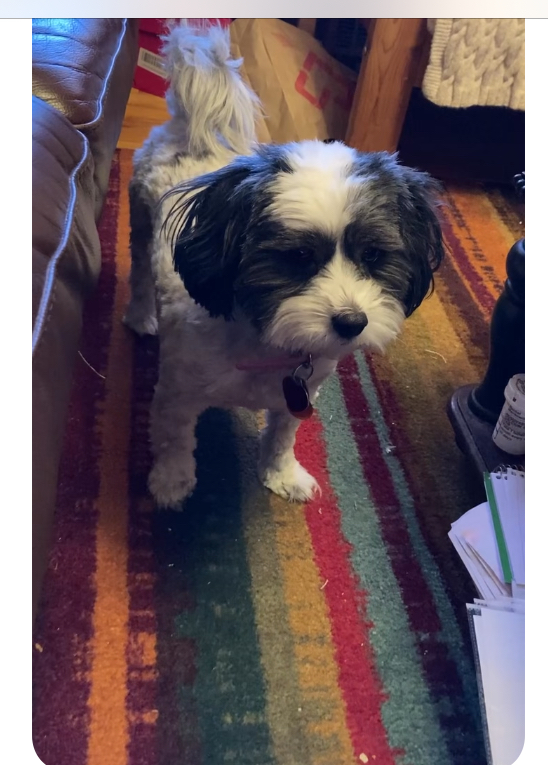
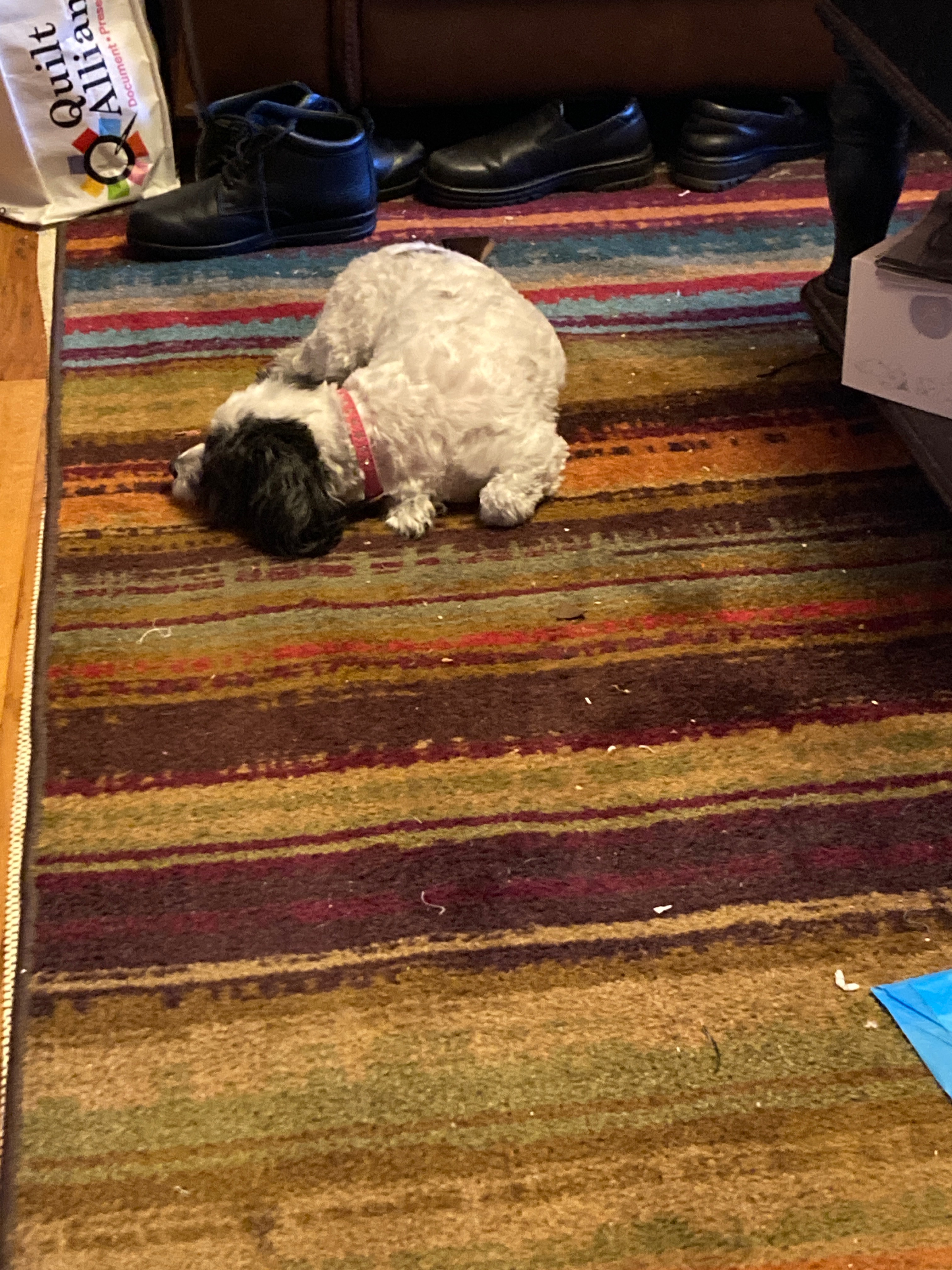
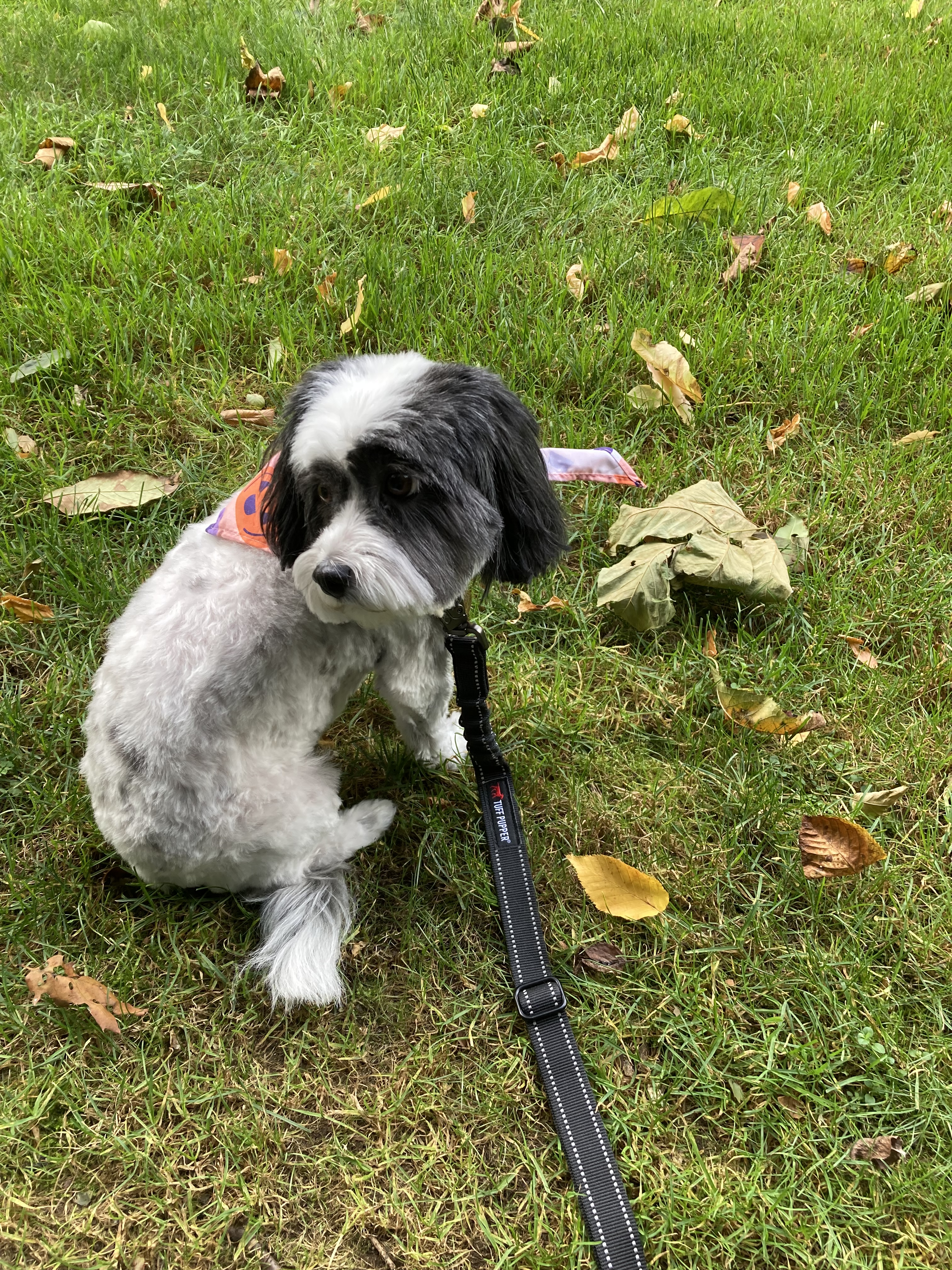
Tzippy can relate.
Maybe it happened when our senior rabbi cut down to a quarter time, and started to show signs of age, so that even when he’s there and vibrant and funny and inspiring, there’s still this underlying sense of doom and grief, as if a clock is ticking in the background.
Maybe it happened when I started taking weight loss medication, and something in the mechanism that cuts my appetite also cut into my ability to enjoy the rest of my life.
Maybe all of the antisemitism that’s been unleashed since October 7th has finally pulled me under, because it doesn’t feel temporary anymore. After the ceasefire, it doesn’t feel like something with a cause and effect anymore. It feels endemic.
Maybe it’s all of the rejection, after sending my writing out for so many years, with no idea why I’m not what anyone’s looking for.
I still had some sense of energy last spring – I can vaguely remember what it felt like – when I started to plan the Israel trip, and started researching agents for the new book. I even felt hopeful, and brave, and willing to push through the hard tasks and difficult feelings to get to the good stuff on the other side.
My hope is that the current malaise is a side effect of my travel anxiety, and once I get to Israel and the anxiety can disperse, I’ll find the rest of my feelings, and I will feel brave again. But I miss the feeling of hope that pushed me to start going to Friday night services in person way back when, and to make the effort to talk to new people and to sing and to speak up. I miss the feeling that I was building up to something, creating something that would continue to grow and bring me joy and comfort.
Maybe I just need to recommit to the practice of going to services on Friday nights, forcing myself out of the house no matter how tired I am, the way I used to do before zoom services were a thing. I don’t know. Maybe spending a shabbat in Israel will wake something up in me that has been on pause for a while, and I’ll be ready to make more of an effort once I get back home. That would be something to look forward to.
“I’m ready.”
(I’ll be away from the blog for the next couple of weeks, but hopefully I will have a lot to share when I return. Fingers crossed!)
If you haven’t had a chance yet, please check out my novel, Yeshiva Girl, on Amazon. And if you feel called to write a review of the book, on Amazon, or anywhere else, I’d be honored.
Yeshiva Girl is about a Jewish teenager on Long Island, named Isabel, though her father calls her Jezebel. Her father has been accused of inappropriate sexual behavior with one of his students, which he denies, but Izzy implicitly believes it’s true. As a result of his problems, her father sends her to a co-ed Orthodox yeshiva for tenth grade, out of the blue, and Izzy and her mother can’t figure out how to prevent it. At Yeshiva, though, Izzy finds that religious people are much more complicated than she had expected. Some, like her father, may use religion as a place to hide, but others search for and find comfort, and community, and even enlightenment. The question is, what will Izzy find?
My glasses broke. I’ve had the same pair of glasses for a very long time, because I like the frames and because my prescription hasn’t really changed in years, so I got lulled into believing they would last forever. As soon as the frames broke, and one of the lenses fell into my lap, I panicked: It’s the end of the world! God hates me! I will never see clearly again! I’ll have to feel my way across Israel in a fog!
“Oy. Mommy’s losing it.”
I tried taping the frames, and then Mom went the extra step and tried gluing them, but it was hopeless, until Mom asked if I had a back up pair and I remembered that there was an old pair of glasses in my cabinet-of-lost-things and when I put the glasses on, I could at least see where I was going.
This all happened on Saturday night, early Sunday morning, so I had plenty of time to wallow in my helplessness and ruminate on my inability to function in the real world and think about how useless I would be out in the wild (I don’t know where the idea came from that I would be dropped out into the wild, possibly by helicopter, to survive on my own, but I have always had this image in mind and have always been convinced that it would not go well).
The next morning, we went to the Pearle Vision Center nearby (almost around the corner, though I’d never noticed it before), and asked if they could fix the frame (yes, but it would take two weeks and the fix would only be temporary), and then if I could get a new pair of glasses a bit sooner than that (since I would be leaving for my trip in fifteen days), and they said they could get the glasses done by Tuesday or Wednesday, depending on when I could get them a copy of my prescription.
I chose frames, and then the woman in charge immediately chose different frames for me (probably more expensive, but much nicer than the ones I’d chosen for myself, and I was in no mood to quibble), and then she gave me a store card and wrote out the email address and told me to have my eye doctor send them my prescription as soon as possible.
When we got home, I was actually able to find my prescription from the original-now-broken glasses, and I was able to send it to her right away and pay for the glasses over the phone, and she told me I’d get a text when the glasses were ready.
In the meantime, everything was a little blurry. I’m nearsighted, so even with the out-of-date prescription, writing and reading up close were fine, but there was no way I could read subtitles on TV, and individual figure skaters looked like fuzzy twigs. Fortunately, Hallmark movies, with all of their bright colors and constant sound were perfect. Driving was also, surprisingly fine, though I didn’t risk taking any long trips.
It was lucky that this happened now, instead of when I’m away in Israel, but it also reminded me of all of the things that could go wrong and set off waves of panic. Except, while my internal experience of all of this felt chaotic and frightening, Mom said I was handling it all really well, asking the right questions, speaking clearly, making solid decision, etc. I wish my internal experience reflected that, but it’s reassuring to know that even if I’m freaking out, I seem okay on the outside. I just wish I could feel as calm as I look, because then there’d be so much more I could do. Anxiety is really exhausting.
“This is news to you?”
If you haven’t had a chance yet, please check out my novel, Yeshiva Girl, on Amazon. And if you feel called to write a review of the book, on Amazon, or anywhere else, I’d be honored.
Yeshiva Girl is about a Jewish teenager on Long Island, named Isabel, though her father calls her Jezebel. Her father has been accused of inappropriate sexual behavior with one of his students, which he denies, but Izzy implicitly believes it’s true. As a result of his problems, her father sends her to a co-ed Orthodox yeshiva for tenth grade, out of the blue, and Izzy and her mother can’t figure out how to prevent it. At Yeshiva, though, Izzy finds that religious people are much more complicated than she had expected. Some, like her father, may use religion as a place to hide, but others search for and find comfort, and community, and even enlightenment. The question is, what will Izzy find?
Shpilkes is a Yiddish word that literally means “pins,” but has come to refer to “sitting on pins and needles,” or, feeling fidgety and nervous and needing to move.
When I teach this word to my students, I tend to liken it to the ADHD symptoms they see in so many of their classmates (because even the undiagnosed kids seem to have shpilkes by the end of a long school day, which is when they come to me). This time, I was sitting with a mixed age group of kids, from second to sixth grade, for our twenty-minute elective period at the end of synagogue school for the day, and we were all exhausted and ready to go home.
I gave them the option of sitting at their desks or on the floor, but most of them chose to sit at their desks, except for the one girl who chose to sit in my rolling chair, so I sat on the floor by myself. Whatever. As a warm up, I asked them to repeat the word “shpilkes” with me, over and over, because it’s just fun to say. We’d already done a session on Kvetching (complaining) before the holiday break, and I knew we weren’t ready to move straight to Kvelling (expressing joy at someone else’s accomplishments), so shpilkes was the next step on our Yiddish ladder.
“Kvelling sounds terrible.”
Once they’d giggled through the word a few times, I asked them if they had ever experienced having shpilkes themselves, or if they knew someone else who struggled to sit still, and they told stories about friends who couldn’t sit still, or couldn’t shut up, though no one was willing to jump in yet and admit that they themselves might struggle with sitting still. Then, one girl raised her hand shyly and said, I know someone who’s the opposite. She can get so focused on reading a book that she doesn’t hear what’s going on around her.
I asked if anyone else knew someone who could get so caught up, or if they’d experienced something like that themselves, and the stories kept coming. And then one of them asked, do you know the feeling when a song gets stuck in your head and you can’t get it out! Which led to an in-depth discussion of earworms and what causes them and how to treat them. One girl had developed a whole theory, saying that earworms are caused when you forget some of the lyrics to a song you like, so your brain just keeps repeating the song to try and remember the lost words. Her suggested treatment was to go to Spotify and listen to the song until the earworm crawled away in defeat, which, she said, worked every time.
Aren’t our brains fascinating?! I said, from my seat on the floor. By then, one of the students had joined me on the floor, because all this talk of shpilkes had reminded him that chairs and desks are confining and it’s much more comfortable to stretch out.
But, what about when one friend has shpilkes and the other friend has to deal with the consequences? Because, my friend keeps getting us into trouble when she talks in class, and she can’t help it, but we’re going to get kicked out and I really like that class.
To which one of the younger boys said, Yeah, it’s hard when you can’t understand why someone acts the way they do, even though you still like them and want to spend time with them. I’m paraphrasing, but only a little.
And with minutes left to go, and so many more stories to tell and hands raised and legs swinging, I asked them if they’d ever seen a show called Glee (a few of them had, actually. Streaming makes everything new again). Glee was a TV show about a high school glee club, where they often took two songs from different genres and mashed them toegther, and sometimes, not all the time, the mash-up allowed us to hear each song in a new way because of how the two songs spoke to each other. The kids didn’t even need me to hammer the point home. They already had their hands up with stories to share about their friends who are really different from them but make life so interesting.
Of course, my most literal student asked if I could supply examples, and I did try to find something from Glee on my phone, but the dismissal announcement interrupted me, and then we had to focus on listening to the walkie talkie calling out names one by one. But even then, more stories were spilling out, and each story reminded someone of another story, and another.
It doesn’t always go like this. My current regular class has so much collective shpilkes that it feels like we’re hiking through a tornado just to get from the beginning of a sentence to the end. But sitting on the floor, listening to the stories flow around the room, reminded me that they all have so much going on inside of them, and sometimes, if I’m very lucky, they will share their stories with me in a way I can hear them.
“I only get Shpilkes in the middle of the night, when everyone else is sleeping.“
If you haven’t had a chance yet, please check out my novel, Yeshiva Girl, on Amazon. And if you feel called to write a review of the book, on Amazon, or anywhere else, I’d be honored.
Yeshiva Girl is about a Jewish teenager on Long Island, named Isabel, though her father calls her Jezebel. Her father has been accused of inappropriate sexual behavior with one of his students, which he denies, but Izzy implicitly believes it’s true. As a result of his problems, her father sends her to a co-ed Orthodox yeshiva for tenth grade, out of the blue, and Izzy and her mother can’t figure out how to prevent it. At Yeshiva, though, Izzy finds that religious people are much more complicated than she had expected. Some, like her father, may use religion as a place to hide, but others search for and find comfort, and community, and even enlightenment. The question is, what will Izzy find?
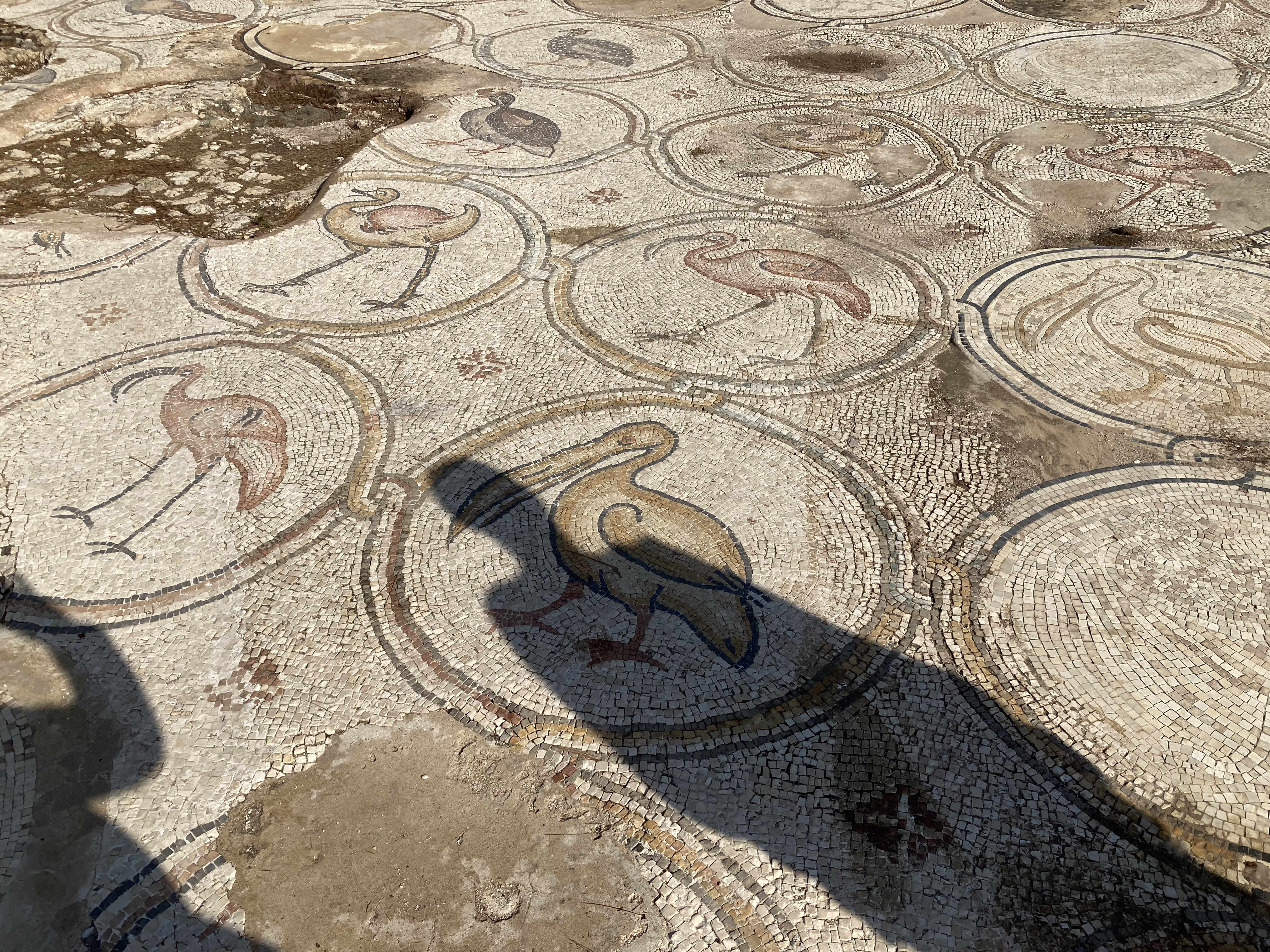
In anticipation of my Israel trip, and to try to allay some of my overall anxiety, I decided to do a practice run at packing. I planned it for the two-week Sukkot break from teaching (after the Jewish High Holidays), on the assumption that full days would be filled with perseverating and procrastinating, which they were.
Earlier in the summer, I went through a marathon effort to research everything for the trip, watching endless videos about where to go and what to bring and how to pack it correctly, and then I spent way too much time on Amazon buying all kinds of things I was sure I would need. In my defense, the high level of anxiety made it very hard for me to think clearly, which also explains why I ended up with multiples of a bunch of things, because I forgot what I’d already ordered.
“Why couldn’t you have forgotten to take me to the groomer?
The goal of the practice packing was to : 1) figure out if I could take just a carry on and a personal bag, or if I’d need a bigger suitcase that I would have to check in (which all of the videos told me not to do); and 2) to see if there was anything I’d forgotten to buy (like quart-sized Ziploc bags, for packing liquids and medications, according to the rules).
But first I had to recover from my Yom Kippur cold, and then watch guiltily as Mom suffered from her own version of the cold, and then I had to catch up on errands that I’d had to put off during the holidays and the ensuing sick-in (like laundry and food shopping and multiple trips to the drug store). And then I had no more excuses. Except, I still couldn’t even look at the pile of stuff from Amazon that had been living on my treadmill for months, or at the packing list I’d made after watching and rewatching and summarizing and analyzing all of those videos.
I tried to think of ways to make the task more manageable, to Bird-by-Bird it, the way I do with everything else that overwhelms me (I know that Anne Lamott meant her wisdom to be used specifically for writing projects, breaking down a big project into smaller tasks, bird by bird, but for me it has become a helpful way to portion out all kinds of difficult tasks). But even the thought of looking at my packing list, or opening the bag of compression packing cubes, set off images in my mind of being pulled out of the security line by giant men with mustaches (for some reason), and stun guns.
Finally, in a moment of desperation, I poured all of the Amazon items onto my bed, so I could go through them and see what I had actually bought. The two extra crossbody bags and the extra power adaptor made me feel silly, it’s true, but it wasn’t as bad as I’d feared. Most of the things I’d bought were useful, if not strictly necessary. And I was able to use the packing cubes (multiple sizes of mesh zipper bags) to help keep things organized, and allow me to pack one small bag at a time instead of a whole suitcase.
The easiest place to start was to pack the things I wouldn’t need to use in the next few weeks, like the travel-size Waterpik, and the long skirt, and the foldable water bottle (why did I think I’d need such a thing?). And then I added in socks and underwear to fill out the bag, and because I remembered my high school friend (the one I’m going to visit in Israel) telling me about a long trip she took where she made sure to pack thirty pairs of socks for thirty days (her father owned a sock store), I threw in a few extra pairs of socks, for luck.
I knew I couldn’t pack my prescription meds until the last minute, especially because I’d decided to go with the strictest recommendations, which said to bring the actual bottles instead of pre-packing pill cases and bringing the prescription labels, so I typed up the (also recommended) list of all of my medications, and doses, and doctors names, and phone numbers. And then I filled a pill case with all of the over-the-counter medications I might need on the trip (allergy meds, Tylenol, probiotics, etc.), and labeled each compartment so I wouldn’t accidently confuse the Benadryl with the probiotic. And then I packed an empty day-by-day pill case, to fill once I get there. The very specific, and endless, rules around how to pack medications and liquids make me worry that if I do something even a little bit wrong, I’ll be arrested and accused of drug trafficking, because I am clearly planning to smuggle anti-depressants and thyroid medication to sell on the black market in Tel Aviv.
By the time I’d finished practice packing the meds, and the liquids (in flexible silicone bottles that came with their own labels too!), I was exhausted, but at least I had a better idea of what I’d forgotten to buy (the Ziploc bags), and I’d resolved some of the conundrums I’d left hanging for months (should I bring the prescription bottles or just the labels and a pill case). I just took a few more minutes to shove a few outfits into my suitcase to see how much would fit, and then I declared myself finished.
It still doesn’t feel real that I’m going to be in Israel in a few weeks, though. Just like it doesn’t feel real that all of the living hostages are finally home. It takes me a long time to process things like this, and it doesn’t help that I’m already seeing reports about Hamas reasserting itself in Gaza, and killing their Palestinian enemies in the streets. I’m also not hearing much optimism about Hamas actually returning all of the bodies of the murdered hostages or agreeing to disarm. But I can’t do anything about that, or about many of the other things that are causing me so much anxiety, but I can pack my suitcase, and unpack it and repack it, and make sure I have enough socks and Tylenol and shampoo to make it through my trip. For now, I guess, that will have to be enough.
“You could order more chicken treats. I’m sure that would make you feel better.”
If you haven’t had a chance yet, please check out my novel, Yeshiva Girl, on Amazon. And if you feel called to write a review of the book, on Amazon, or anywhere else, I’d be honored.
Yeshiva Girl is about a Jewish teenager on Long Island, named Isabel, though her father calls her Jezebel. Her father has been accused of inappropriate sexual behavior with one of his students, which he denies, but Izzy implicitly believes it’s true. As a result of his problems, her father sends her to a co-ed Orthodox yeshiva for tenth grade, out of the blue, and Izzy and her mother can’t figure out how to prevent it. At Yeshiva, though, Izzy finds that religious people are much more complicated than she had expected. Some, like her father, may use religion as a place to hide, but others search for and find comfort, and community, and even enlightenment. The question is, what will Izzy find?
Over the past year, Tzipporah had successfully mastered the art of peeing and pooping on the wee wee pads; we had to throw out a few rugs early on, and do a lot of scrubbing, but eventually we figured out the right number of wee wee pads, at the right strategic places, to make the whole thing work for her. But then, a few weeks ago, she started to leave tiny pee puddles in my bedroom, out of nowhere.
I was 95% convinced that she was using her pee as a form of criticism, rather than having a health problem, because I noticed that the pee puddles only seemed to appear when there were no more treats left. So, if I took a nap during the day and didn’t remember to put a Greenie in front of the air conditioner, there might be a pee puddle by my door when I woke up, and if I set out a trail of chicken treats at bedtime, but failed to refill it at some point during the night, there might be a pee puddle on my path to the bathroom in the morning.
“Oops.”
Then, one night, while I was sitting with her in the living room, Tzipporah suddenly got up, walked across the room, and disappeared down the hall. I sat very still, in shock, wondering if she’d forgotten I was there, because in her almost-a-year of living with us, she has never gotten out of her bed while I was in the room with her, let alone walked brazenly across the room. When she returned to her bed, I snuck a peek into the hallway and saw that she’d left a poop on the wee wee pad. Good girl! I cleaned up after her and praised her and gave her a treat, dizzy with the belief that we were finally turning a corner in our relationship. But the second and third time she left the room, she went straight to my bedroom and used my rug as her bathroom, overcome with a bout of diarrhea. It’s a cheap rug, so I wasn’t overly upset about that, but the spark of joy I’d felt when I thought she was making progress was immediately flushed down the toilet.
It turned out that during her evening strolls through the apartment, she’d been eating whatever she could find on the floor, whether it was a piece of onion dropped during the preparation of dinner, or a piece of the Siberian Iris leaves Mom was using for weaving. Once we figured out the cause of the problem, we were able to keep the floor safer for her, and the diarrhea and the pee puddles quickly disappeared.
The truth is, though, that she really has been making some progress. She’s become much more present during her once-weekly therapy visits, lifting her head and looking around the room instead of hiding under my elbow. And she’s gotten used to the routine of sitting in the backseat of the car with her seat belt on, and then walking towards the door to be detached and picked up. Most of the time she practically jumps into my arms, whether we’re on our way into therapy or on our way home.
And she has started to express herself more forcefully with me, pawing at my hand when she thinks I’m brushing her hair too much, giving me the evil eye whenever I go near her tail with the comb. She was already letting loose with a bark or two each night, at Grandma, when the treats came too slowly, but recently she actually barked at the TV, pacing back and forth and yelling at a man on the screen, though I wasn’t there in person so I have no idea who she was barking at or how much he deserved it. I still only get to see her adventures when Mom can record them for me, since Tzipporah’s law against leaving her bed while I’m in the room came back into play as soon as her belly problems resolved.
My big hope is that while I’m away in Israel, in a few weeks, she will realize that she can run freely around the apartment without fear of running into Mommy, and then she’ll get so used to her freedom that she won’t want to relinquish it even when I return. It’s my dream, anyway, and I’m allowed to dream. I mean, if peace can come to the Middle East, surely Tzipporah can figure out that I’m not all that scary. Right?
“Mommies are so needy.”
If you haven’t had a chance yet, please check out my novel, Yeshiva Girl, on Amazon. And if you feel called to write a review of the book, on Amazon, or anywhere else, I’d be honored.
Yeshiva Girl is about a Jewish teenager on Long Island, named Isabel, though her father calls her Jezebel. Her father has been accused of inappropriate sexual behavior with one of his students, which he denies, but Izzy implicitly believes it’s true. As a result of his problems, her father sends her to a co-ed Orthodox yeshiva for tenth grade, out of the blue, and Izzy and her mother can’t figure out how to prevent it. At Yeshiva, though, Izzy finds that religious people are much more complicated than she had expected. Some, like her father, may use religion as a place to hide, but others search for and find comfort, and community, and even enlightenment. The question is, what will Izzy find?
This time of year is always a challenge for me, with choir rehearsals and synagogue school starting and then high holiday services one after another. I had to skip the Tashlich service – the one dogs are invited to because it’s at a pond instead of indoors – because I was wiped out after the first (three hour) service of the day. And then I had to leave early on the second day of Rosh Hashanah too, because I was afraid if I stayed much longer, I wouldn’t be able to drive home safely. Mom was sure people would assume it was her fault we were leaving early, but she was ready to stay until the bitter end. I was the weak link.
This feeling, that I am at my breaking point so much sooner and so much more completely, is frightening.
Listening to the shofar blasts was more meaningful this year, somehow. The strangeness of the sound – not music, but not not music either – connects us back to our ancestors, who used ram’s horns to be heard over the din of the crowd. Each prayer on this holiday seems to bring us back to a time in Jewish history, really. We say the Acheinu prayer for the wellbeing of the Israeli hostages, but the text was written millennia ago, when Jewish hostages were taken by ancient enemies and redeemed by the Jewish community at whatever cost, and the music connects us to yet another Jewish community in the more recent past, so that we can feel our ancestors in the room with us from every direction.
Tzipporah is waiting for her ancestors to visit the apartment, with treats.
The aging of our congregation was more obvious this year, with all of the walkers and the rollators and the shuffling and the rounded shoulders, but it was good to see the congregation filled to the rafters (literally, we had people up in the choir loft, which is never actually used for the choir). We were only filled to the brim for the first day of Rosh Hashanah and the morning of Yom Kippur, but still, it was nice to see.
I’ve gotten used to the presence of the security guards at the front doors now, and the locked doors, and tinted windows, and bollards to prevent car rammings, but it’s hard to settle into the reality that we really do need all of those measures because there are people who actively want to kill us.
And then, of course, I caught a cold on Yom Kippur. Mom was sure that my allergies were kicking in, because the heat had gone on overnight for the first time, swirling dust every which way, but as the day went on my symptoms worsened until it was obviously more than just allergies.
Surprisingly, though, with all of that, the Yom Kippur services were easier than expected. The rabbi’s speech, Against Despair, helped a lot. We started the day with the news about the attack on Jews entering a synagogue in Manchester, England, so despair was sitting in the room with us, but the hope the rabbi tapped into wasn’t about how things were going to turn around and love would prevail, instead he told us that the Jewish people have survived through one devastation after another, outliving enemies time after time, just by the commitment to life.
The other highlight of Yom Kippur, for me, was a prayer I must have heard many times over the years, but it hit me differently this time. It’s called Shma Koleinu (Hear our Voice), and in our synagogue it is sung as a solo by the cantor. It’s a simple plea for God to hear our suffering, and to hear our pleas for help, and I always forget how healing it can be just to be heard, even when no material help can be offered.
Hear our voice, God, spare us and have compassion on us and accept our prayers, mercifully and willingly.
I went looking for this prayer on YouTube and found a lot of versions, including a few with the same tune we use (by Max Helfman), but none of them captured the power that our cantor was able to create with those same notes. Technically, I think its because he chooses to stay in chest voice instead of switching to head voice for the top notes of the cry, so it sounds more like a cello than like a violin; the fullness of the sound, rather than something more piercing or fragile, implies that we deserve to be heard by God. It’s not a desperate plea, instead we’re calling out, through our cantor, to say that we need help and respect at the same time.
We feel like we walk through the world without leaving a ripple in the fabric of other people’s lives, and while that’s never really true, it feels true, when no one stops to tell us that we’ve been heard.
Singing with the choir, even though it takes a lot out of me, gives me the opportunity to be heard and seen, and to feel like an essential part of my community. And we all need that feeling. We all need to feel like our presence matters and our voice counts to someone other than ourselves.
There’s a reason why Rosh Hashanah and Yom Kippur are the big communal holidays in Judaism, and it’s not because they are the only holy days on the Jewish calendar (there are kind of a lot). It’s because they are the hardest. We are meant to spend this time searching our souls for the sins we’ve committed, and, like chimps carefully picking bugs out of each other’s hair, this awful task is much easier to do with company. When we cry out to God and express despair, at least we aren’t doing it alone, because to do such a thing alone would be to risk truly falling into a pit of despair where the monsters have free reign.
We do all kinds of things to mitigate the despair of looking so closely at our lives and at what we need to change in the coming year: we find beautiful music to set our prayers to, we dress up, we prepare more deeply and for a longer period of time, and we come together. And then, we stand together and pray for long periods of time, listing our sins and our flaws and our fears, but we do it together, in the light of the synagogue, rather than alone in the dark.
And when we cry out to God, we are also crying out to each other: Hear me and I will hear you, and together we can make sure our lives matter, at least to one another.
If you haven’t had a chance yet, please check out my novel, Yeshiva Girl, on Amazon. And if you feel called to write a review of the book, on Amazon, or anywhere else, I’d be honored.
Yeshiva Girl is about a Jewish teenager on Long Island, named Isabel, though her father calls her Jezebel. Her father has been accused of inappropriate sexual behavior with one of his students, which he denies, but Izzy implicitly believes it’s true. As a result of his problems, her father sends her to a co-ed Orthodox yeshiva for tenth grade, out of the blue, and Izzy and her mother can’t figure out how to prevent it. At Yeshiva, though, Izzy finds that religious people are much more complicated than she had expected. Some, like her father, may use religion as a place to hide, but others search for and find comfort, and community, and even enlightenment. The question is, what will Izzy find?

I’ve been reading through piles and piles of notebooks, and files and files on the computer, to see which of my writing projects still spark my interest; and unfortunately, they all do. I can sort of prioritize one, or two (or five) above the rest, but it’s like trying to choose my favorite dog and having to ignore all of the others. How can you look away from that sweet, lonely, hungry little dog?! What kind of monster are you?!
There are novel ideas in the notebooks, and novel drafts on the computer, and drafts of long essays and short essays, and children’s stories, and short stories, and mysteries, and even a science fiction story or two. And along with all of the writing projects, I also have lesson plans to write, and a ton of therapy work I still need to do in order to become the kind of functional adult who doesn’t need to crawl under the bed and hide (which hurts my back, honestly).
This is what happens when I try to open the creaky, dusty, long-closed doors in my brain. I know I have to do this every once in a while, if only to make sure I’m not leaving something important behind, but it’s overwhelming. And, of course, there are endless internal arguments over which ideas have the best chance of getting published, and which ones will be an exhausting waste of time, and why do I have to be a writer at all when I really should be doing something more useful with my life, or at least more practical. But I’ve been a writer since I first learned how to hold one of those fat red pencils in nursery school, and if I stopped writing it would feel like I’d stopped breathing. And, really, even if it looks like I’m standing still, I am frantically kicking my feet under the surface, like a duck; and yet I judge myself only by what other people can see.
At some point, hopefully soon, I will finish this reassessment period and be able to choose a few manageable goals to work towards and put the rest aside. And then maybe I can put off the next reassessment for a while, or at least make sure I’m better medicated by then.
“Chicken fixes everything.”
If you haven’t had a chance yet, please check out my novel, Yeshiva Girl, on Amazon. And if you feel called to write a review of the book, on Amazon, or anywhere else, I’d be honored.
Yeshiva Girl is about a Jewish teenager on Long Island, named Isabel, though her father calls her Jezebel. Her father has been accused of inappropriate sexual behavior with one of his students, which he denies, but Izzy implicitly believes it’s true. As a result of his problems, her father sends her to a co-ed Orthodox yeshiva for tenth grade, out of the blue, and Izzy and her mother can’t figure out how to prevent it. At Yeshiva, though, Izzy finds that religious people are much more complicated than she had expected. Some, like her father, may use religion as a place to hide, but others search for and find comfort, and community, and even enlightenment. The question is, what will Izzy find?

I’ve been watching videos in Hebrew for a while now, to practice my listening skills and to get a wider sense of Israeli culture, and one of the richest sources for short (2-15 minute) videos is Kan Digital, the online section of the public broadcasting channel in Israel. I have no idea how many of these videos actually end up on TV in Israel, but there are tons of them available on YouTube; along with a really great interview series by Orit Navon that delves into serious subjects (mental illness, living with disability, bullying, grief, having one Jewish and one Muslim parent), there are also videos by a variety of reporters/performers from different segments of Israeli society (religious and secular, Ethiopian and Russian, Israeli Arab, Jewish, Muslim, Christian, etc.), on a wide range of subjects, from serious, fact-based pieces on how Israeli elections work, to slice of life videos about working from home during Covid, to a dance video on how to choose a watermelon.
Orit Navon
Recently, I saw a video from one of the usually less serious performers/reporters (he did the watermelon video), where he’s sitting in what looks like a real therapy session, or a very close facsimile thereof, and both the reporter (Ehud Azriel Meir) and the therapist seem to be from the Religious Zionist community (roughly equivalent to Modern Orthodox in America – which you can tell from their crocheted kippot and casual clothes, as opposed to the more formal clothing and black hats worn by Haredim/ultra-orthodox). I’d seen a lot of videos from Ehud before; he did a whole series where he was supposedly sent to work with the Arabic language division at Kan to create educational videos about Jewish holidays and rituals, and each video in the series poked fun at all of the assumptions Jews and Muslims and Christians in Israel make about each other. It was silly and light, but also allowed for a pretty deep exploration of social conflicts Israelis grapple with on a daily basis. In general, Ehud’s videos are like this, characterized by humor and a willingness to show his own flaws and mistakes, but the video with the therapist had a much more serious tone than I was used to from him.
Ehud Azriel Meir
The therapy session starts with Ehud’s feelings of guilt at wanting to vote for someone other than the Religious Zionist candidate in the coming election. He believes that if he votes for “the other” candidate, he’s not only letting his own side down, he’s letting the other side win (though in Israel’s multi-party system there are always more than two options). This led to a discussion of the moment he started to feel some alienation from his own political party, which is also his religious community, way back in the 1990’s, when Prime Minister Yitzhak Rabin was assassinated. Before the assassination, Ehud, as a teenager, took part in a lot of the demonstrations against Rabin’s push for the Oslo Accords. He and his fellow Religious Zionists believed strongly that the accords would lead to more terrorism rather than to peace, and they were loud and vehement in their opinions, calling Rabin a traitor and a murderer. And then, Yigal Amir, also a Religious Zionist, shot and killed Rabin at a peace rally.
For Ehud, Rabin’s murder was a moment of awakening. It truly devastated him that this man, who was like a father to him and to the country as a whole, had been killed by someone on “his side.” He had never considered the possibility that people were taking those screamed epithets literally, but when he and his friends tried to go to the vigils to mourn Rabin with the rest of Israel, they were turned away. And, still today, he resented that the secular Israelis blamed him for Rabin’s death, and he felt like it would be disloyal to his own group, and to himself, to vote with them on anything, even when he agreed with their policies.
The therapist pushed Ehud to acknowledge that his strong feelings around all of this might mean that he did feel somewhat responsible for Rabin’s murder, and that maybe he was uncomfortable in both the Religious and the secular worlds because he was still trying to avoid facing those feelings of guilt. Ehud bristled at that idea, but the therapist persisted, suggesting that in order for him to be at peace with having one foot in each camp, he needed to wrestle with the ways he himself believed that his actions long ago may have done harm, and to acknowledge that no matter how much he treasured his identity as a Religious Zionist, that wasn’t all of who he was.
There was something really powerful for me in watching this usually very un-serious guy, now grumbling and uncomfortable, being willing to share his discomfort and uncertainty with the public, in case it might do some good. And his internal conflict resonated with me too, even more so because he used the words Gam ve Gam (Both/And) to describe his feeling of being both a Religious Zionist, and something else as well.
Whenever I start a new semester of online Hebrew classes, I’m asked if I prefer my name to be pronounced the English way or the Hebrew way, and I always say Gam ve Gam, both because I grew up going to Jewish day schools where half the day I was one and half the day I was the other, but also because the feeling of having different parts of me that fit in with different groups is a big part of my everyday life. It can be really hard to live in the Both/And. I’m never sure if I should stand with one foot in each camp, or hop from one side to the other, or stand in the middle all by myself. More often than not, I feel like I have to hide parts of myself, or act in ways that feel wrong to me in order to fit in.
“I like both chicken treats AND Greenies.”
Watching this video reminded me of the traditional Ashamnu prayer that we say during the Jewish high holidays each year, where we pound our chests and admit to all of the possible sins that may have been done by a member of our community. That level of exaggerated responsibility has always bothered me, because I work so hard to make sure I do no harm, and it doesn’t seem fair that I should have to take responsibility for Joe Schmo over there who couldn’t care less who he hurts. It’s not even clear which community the prayer is referring to: does it include all Jews? All Jews on Long Island? All human beings on earth?
But now I wonder if the prayer is trying to get at the collective guilt we tend to feel when someone from our own political party, or tribe, or family, does something wrong. Even if we are not directly responsible for an evil act, we may have played a role in creating the conditions for that evil act to take place; or maybe our strongly held beliefs led us to encourage someone in the direction that led them astray; or maybe we were silent when we knew we should speak up, because we were afraid of being kicked out of the group; or maybe we felt responsible simply because outsiders told us that we were responsible, because they see our group as a single entity rather than a collection of individuals.
Once a year, this prayer gives us the opportunity to acknowledge those complex feelings of communal guilt, and reminds us that we need to recognize the impact we can have on the people around us, whether we intend that impact or not. And maybe most of all, the prayer reminds us that even when we disagree with our fellow community members, and speak up against them, we are still part of that community and that community is still a part of us.
I had a Creative Non-fiction teacher back in graduate school who told us that in order to write a good essay (for her class, at least), we needed to write about two seemingly unrelated subjects at once. For example, if you’re writing about pizza, you could also write about existential philosophy; or if you are writing about fashion, you could also look back at a memory from a childhood dance class, or a nature walk, or a chess game. Because, she said, the most interesting material comes from the way those two unrelated topics brush up against each other and create something new. And I think that’s true of more than just a good essay. When I live my life in both A and B (and often in C and D and E as well), the friction that comes from those mashups creates a lot of sparks, and what would our lives be like without all of those sparks to help light the way forward?
“You said pizza. I didn’t hear anything after that.”
If you haven’t had a chance yet, please check out my novel, Yeshiva Girl, on Amazon. And if you feel called to write a review of the book, on Amazon, or anywhere else, I’d be honored.
Yeshiva Girl is about a Jewish teenager on Long Island, named Isabel, though her father calls her Jezebel. Her father has been accused of inappropriate sexual behavior with one of his students, which he denies, but Izzy implicitly believes it’s true. As a result of his problems, her father sends her to a co-ed Orthodox yeshiva for tenth grade, out of the blue, and Izzy and her mother can’t figure out how to prevent it. At Yeshiva, though, Izzy finds that religious people are much more complicated than she had expected. Some, like her father, may use religion as a place to hide, but others search for and find comfort, and community, and even enlightenment. The question is, what will Izzy find?
One of the things I’ve been enjoying a lot lately in my online Hebrew classes is watching Israeli stand-up comedy routines. Even a year ago, I would have found it really difficult to follow what they were saying because they speak so quickly, but now, as long as the videos include subtitles in Hebrew, I can pretty much follow what’s going on. And I’ve found that I’m learning a lot about Israeli culture from these short videos on YouTube, because a comedian’s job is to comment on, and laugh at, all of pompous, ridiculous, or just plain wrong things the politicians, the media, and regular people are saying and doing every day.
“I prefer give-me-a-treat-comedy.”
One of my favorite Israeli comedians is Giora Zinger. He and his family made Aliya (immigrated to Israel) from Ukraine when he was five or six years old (he has a whole bit about how he, and many other Jewish boys from the former Soviet Union, had to be circumcised when they arrived in Israel, and getting circumcised as a newborn is a completely different experience from getting circumcised when you are old enough to know what’s going on). A lot of his humor is about the cultural divide between his Ukrainian parents and the Israeli culture he grew up in. And his version of his mother’s accent, in Hebrew, is probably my favorite thing in his act, both because his version of his mother speaks much more slowly than most Israelis, so I can understand what she’s saying, and because his version of her says all of the things you’re not supposed to say out loud.
Giora Zinger
Israeli humor is, overall, less politically correct than American humor, so some comedians can come across as a little mean, but most of the time they are refreshingly honest and give me a lot of insight into how people in Israel really feel.
Another comedian I started watching recently is Yuval HaGanan, which translates to Yuval the Nursery School Teacher, and his act comes straight out of his day job as a, yes, nursery school teacher. He does a lot of impressions of his three- and four-year-old students, sharing their responses to the war, or a death in the family, young love and, of course, poop. And, like Giora Zinger’s mother, they tend to tell it like it is. Yuval also talks about all of the times when he had no idea what he was supposed to say to the kids’ very direct questions and just went with whatever came out of his mouth, and I can relate.
Yuval HaGanan
But my favorite Israeli comedian at the moment is Udi Kagan. His humor is often very silly, and filled with bodily noises, and jokes at his own expense, and at his failures as a husband and as a father and as an adult male in general. He is also a musician and often plays the piano and sings as part of his act. There was one video about re-hearing the Aerosmith song “I don’t want to miss a thing,” (from the movie Armageddon), years after it became a hit, and suddenly realizing how disturbing the lyrics are (I could stay awake just to hear you breathing…). He plays a lot with that space between Hebrew and English, where Israelis often find themselves, because they watch a lot of American TV, and listen to a lot of American music, and study English much more seriously in school than Americans study any second language.
Udi Kagan
But the reason why he’s my favorite right now is because of a 20-minute clip that was recently posted on YouTube where he talked about suffering from PTSD after his army service, and how it came roaring back after the Hamas attacks on October seventh. In Israel they either say “PTSD,” in English, or they use the Hebrew translation of “Battle Shock,” which is an old term for PTSD, and maybe more to the point in this case. In the video, he talks about all of the ways he and his friends tried to ignore their symptoms, or mute them with drugs and alcohol, until he finally asked for help and started to get better. And something about his vulnerability, and silliness, and self-deprecating honesty, allowed the audience to really go there with him. And not just the in-person audience, because I’ve already seen a bunch of videos of young Israeli men responding to his performance and opening up about their own experiences with PTSD.
I was getting frustrated that I couldn’t share these Israeli comedians with my friends and readers, because their acts are in Hebrew with only Hebrew subtitles, but when I went back to watch Udi Kagan’s “Battle Shock” video again, I found a version with English subtitles. None of his other videos, that I could find, had been translated, but maybe someone recognized that this one needed to be shared with as many people as possible.
There are, of course, many other voices in Israeli comedy. There are even Israelis who perform in English, like Yohai Sponder, who has become a huge presence online (for the Jewish world at least) since October 7th. His broken English is a big part of his act, as is the giant star of David he wears around his neck. He’s not gentle and sweet like Udi or Yuval or Giora; he has the macho style that is more often identified with Israeli men. But a lot of Diaspora Jews have found comfort in his confidence, and his pride in being Jewish, in the face of the renewed wave of antisemitism.
There is still something amazing to me about the existence of a country, however small, where being Jewish is the norm, and therefore where the music and the art and the drama and the comedy all either come from a Jewish perspective or are in conversation with Jewish history, without apology. My hope is that this war will end soon, and the hostages are returned, and a road to peace with the Palestinians can be found, and that peace will make it possible for the lighter, softer side of Israelis to become more visible, both so people can see them more fully, and because I think Israelis have wisdom to share about resilience and how to find humor and love and hope even under difficult circumstances.
If you haven’t had a chance yet, please check out my novel, Yeshiva Girl, on Amazon. And if you feel called to write a review of the book, on Amazon, or anywhere else, I’d be honored.
Yeshiva Girl is about a Jewish teenager on Long Island, named Isabel, though her father calls her Jezebel. Her father has been accused of inappropriate sexual behavior with one of his students, which he denies, but Izzy implicitly believes it’s true. As a result of his problems, her father sends her to a co-ed Orthodox yeshiva for tenth grade, out of the blue, and Izzy and her mother can’t figure out how to prevent it. At Yeshiva, though, Izzy finds that religious people are much more complicated than she had expected. Some, like her father, may use religion as a place to hide, but others search for and find comfort, and community, and even enlightenment. The question is, what will Izzy find?
You might remember that a while back I decided to set out a trail of treats for Tzipporah, to encourage her to spend more time in my room. Well now, multiple times during the day and night, Tzipporah sneaks into my room like a phantom, ignoring me completely, looking for her trail of treats; even after she’s eaten all of the treats I’ve carefully placed around the room, she comes back again and again, hoping, expecting, that new treats will have sprouted from the floor. But even though she had a traumatic early life in the puppy mill, I’m pretty sure she’s not living a double life as a murderous phantom taking out her trauma on unsuspecting victims, though one can never be sure.
“Where’d you hide the treats?”
I wish I could convince her that I am friendly and harmless, but I’m also the one who insists on cleaning her tushy when she has an accident, and combs through her hair when she has knots, so she has legitimate reasons for doubt. But even though she doesn’t play with me, or sing at me, like she does with her grandma, she does watch me carefully and sit by my side at the computer, so even if I’m scary, I seem to be fascinating too, which is nice.
She sat with me this summer while I sent out my query letters to potential agents, and while I collected the rejections; and she sat with me as I watched The Rachel Maddow Show each Monday night, and tried to believe her when she said that we can survive the current situation in the United States; and Tzippy was with me when I found out that The Late Show with Stephen Colbert got cancelled (though the show isn’t over until next May, so there’s still some comfort left); and she was with me while I watched the news of the Catholic school shooting in Minnesota, which felt dangerously close to home because I teach in a synagogue that has been under threat for years now, with ever increasing security measures as antisemitism and violence in general have continued to grow.
I’ve been overwhelmed with anxiety this summer, from every direction, but the biggest anxiety seems to come up around planning and packing for my trip to Israel in November. Somehow, I’ve become obsessed with the fear that I’m going to overpack and have my suitcases taken away at the airport, or that I’ll forget to pack something essential that can’t be bought in Israel, though I have no idea what that might be. But my automatic response, when it feels like there are too many things outside of my control, is to try to control the little things, like making sure I have everything I could possibly need for the trip, which means I’ve been spending a lot of time scrolling through Amazon, looking for things I definitely need but have never heard of before.
Now that September has arrived, I’m going to have less time to spend on Amazon, and focus more of my energy on my students, and trying to come up with ways to make my classroom fun and welcoming, so we can keep the world at bay for a couple of hours at a time. I wish I could bring Tzipporah with me to class, but her anxiety skyrockets as soon as she leaves the apartment.
When I think about it, I’m not sure if Tzipporah is the Phantom of the apartment, or if I am, or if there’s some invisible threat that we both feel radiating from the world around us. I’m not even sure if I’m really more anxious than usual, or if there are just so many more echoes of my anxiety in the world around me that it all seems louder and more pervasive.
There was one nice break from the anxiety last week. The weather was nice enough that I was able to take Tzipporah outside to socialize with the neighbors, and Kevin the mini-Goldendoodle did his best to reassure her that he’s a nice boy and only wanted to sniff her nose and invite her to play. She wasn’t any more convinced by him than by me, at the beginning, but by the end of the visit she had relaxed on my lap, and stopped shaking, and she was able to watch Kevin run across the lawn chasing his favorite ball. It was only a few moments, but it was progress, though I’m pretty sure Tzippy’s favorite part of the outing was when we returned to the apartment, and she ran straight to her bed, and, magically, found a chicken treat sitting there waiting for her. That apartment phantom knows my little girl very well.
“I’m not that complicated, Mommy.”
If you haven’t had a chance yet, please check out my novel, Yeshiva Girl, on Amazon. And if you feel called to write a review of the book, on Amazon, or anywhere else, I’d be honored.
Yeshiva Girl is about a Jewish teenager on Long Island, named Isabel, though her father calls her Jezebel. Her father has been accused of inappropriate sexual behavior with one of his students, which he denies, but Izzy implicitly believes it’s true. As a result of his problems, her father sends her to a co-ed Orthodox yeshiva for tenth grade, out of the blue, and Izzy and her mother can’t figure out how to prevent it. At Yeshiva, though, Izzy finds that religious people are much more complicated than she had expected. Some, like her father, may use religion as a place to hide, but others search for and find comfort, and community, and even enlightenment. The question is, what will Izzy find?