Author Archives: rachelmankowitz

My Israel Trip: Day One

            From the beginning, it was something of an out of body experience. I took a car service to the airport, waving goodbye to Mom in the parking lot of our co-op, chatting with the driver about all manner of things (gardening, mothers, compression socks, and, of course, traffic at the airport). When I arrived at Terminal Four at JFK, I was immediately overwhelmed: people were rushing in different directions and there were no clear signs, that I could see, telling me where to go. I had already checked in online, so I was pretty sure I didn’t need to stop at a check-in kiosk, but beyond that I was lost. I asked a man in uniform (hopefully he actually worked there), and he directed me to a woman who was checking boarding passes. I showed her my electronic boarding pass and she let me through, and then I had to show my electronic boarding pass (AKA my phone) to two more women as I followed the crowd around cones and other obstacles onto the security line. I tried to do exactly what everyone else on the line was doing, showing my passport, lugging my carry-on and my personal bag into the gray buckets and pushing them towards the scanner, but I must have missed some of the instructions because my personal bag was pulled aside and I had to wait on another line until they could hand check it, and tell me that I was supposed to have taken my laptop computer out before putting the bag through the scanner. Live and learn.

“You should have stayed home with me.”

            When they sent me on my way, I still wasn’t sure where I was supposed to go next. People were wandering in a bunch of different directions, and signs listed different lounges and gates and floors, but nothing said: this is the way to EL AL. I followed an elderly couple to the elevator, which said “to all gates,” and followed them in, and, luckily, when the doors opened there was finally a big screen listing the destinations and flight times and gates, and I found my flight on the list and followed the arrows to my gate. At least, I thought I was following the arrows in the right direction. I walked past endless toy stores and candy stores and restaurants and people waiting at other gates for other planes, but I couldn’t find my gate. Eventually, I found another nice man in a uniform (this time I was pretty sure he worked for the airport, or at least for one of the airlines), and he directed me to go back to where I’d started and then keep going in that direction. Finally, after walking through what felt like the whole airport, I found my gate and sat down in the waiting area – two hours before boarding was set to begin. They say to get to the airport three hours before your flight, just in case.

            I spent the next two hours people watching, and texting with Mom. There were casually dressed couples (jeans and t-shirts like me) carrying babies, and Haredi men in long back coats with special boxes to carry their hats, and Yeshiva boys in khakis and polo shirts and black suede kippot studying and eating together at a work table. There were also enough other solo female travelers to make me feel less conspicuous than I’d expected, and people reading actual hardcover books like the one hiding at the bottom of my bag while I stole a few last looks at my phone. At some point, there was a group of men on the other side of the waiting area saying the afternoon prayers, and then ten minutes later, after sunset I assume, another group gathered to say the evening prayers, and then our flight was called to start boarding.

            I showed my electronic boarding pass to the woman guarding the line to board the plane, but she said, “Oh no, I will not look at that. You need a paper boarding pass.” Luckily the line at the EL AL desk was short, and I only had to go through a short security interview (Do you understand Hebrew? Are you sure? Why are you going to Israel? Where are you staying?), and then they scanned my passport, and handed me my paper boarding pass and sent me through to the plane.

            The last flight I’d been on was years earlier, and barely two hours long, so I was anxious about the 11-hour flight, without Wi-Fi and with no one to talk to. When I found my seat, a nice man (no uniform this time) helped me lift my carry-on suitcase into the overhead compartment, and then I discovered that my personal bag didn’t actually fit under the seat in front of me, the way all the videos said it would, and there was no more room in the storage compartments, so I was going to have to sit with my legs on an angle for the whole flight. At least I had an aisle seat, though. I’ve been watching Stephen Colbert do his Colbert Questionnaire for a very long time, so I knew I was supposed to get an aisle seat, rather than a window seat, to avoid having to climb over someone else to get to the bathroom.

            I felt some panic just before takeoff, thinking about every possible thing that could go wrong on the trip, and feeling trapped because getting back home would be so much harder midair, but it passed, eventually. I watched my seatmate to find out how to use the entertainment system in front of my seat, and I found a bunch of Israeli TV shows, in Hebrew, which I hoped would help me acclimate to all of the Hebrew I’d be hearing in Israel. I ended up finding a really interesting interview show and watched episode after episode: with an Israeli actress, a past Minister of communications, a former head of Mossad, an Arab Israeli reporter, a comedian who specialized in doing impressions (including of Netanyahu), and the current head of the opposition in the Knesset. We were served dinner about an hour into the flight, and I had to watch my seatmate to figure out where to find the folding tray table hidden in the armrest, but I never figured out how to turn on a light to be able to read my book once the overhead lights were turned down.

They served breakfast about an hour before we landed in Israel, and at that point, a lot of the men on the plane got up to pray the morning prayer, even though it still felt like the middle of night to me.

I’d heard horror stories about people being pulled from the security line and interviewed by customs officials for hours upon landing at Ben Gurian airport, but when we landed, I barely had to wait on line before my passport was checked and I was sent on through. Then I followed a big family through the maze of hallways until I finally reached the arrivals lounge, where I had just enough time to switch my phone to my temporary Israeli telephone number before my friend arrived to pick me up.

            I hadn’t slept at all on the plane, but somehow, I wasn’t tired, so she drove us straight to the Western Wall (The Kotel) in Jerusalem. I’d been promised that I would feel inspired just entering Jerusalem, and that being at the Kotel (the only outer wall remaining after the destruction of the Second Temple in 70 CE) would be profound, but as we walked through the alleyways of the old city, past endless groups of Israeli school children on day trips with their teachers, and groups of soldiers in training, also on day trips with their teachers, I didn’t feel much of anything.

Don’t those kids look inspired?!

It was a long walk on hard stone, down steps and around corners, until we were at the Kotel, and my first impression of this ancient holy place was, eh, it’s kind of dinky. I mean, it’s a wall, with some greenery growing out of it, and pieces of paper stuck in every crevice, but it didn’t glow or anything, and no great voice called down from the heavens telling me that I was home. I’d been warned that I would need to wear a skirt to go to the Kotel, and that there were women guarding the entrance who would insist on wrapping me in a scarf to cover my pants, but it turned out those women were out for the day, or distracted, and I was able to walk in wearing my jeans and t-shirt from the plane. The women’s section was significantly smaller than the men’s section, but one of the men had already climbed up to peer over the divider to see what the women were doing.

            There were plastic chairs set up for us to sit in, but many more women were standing right up against the wall, holding their prayer books and shuckling back and forth. A lot of the women wore long skirts, and elaborate scarves wrapped multiple times around their heads, and prayed with great feeling, but I just sat there and watched. I was fascinated by a pigeon with a peg leg. I don’t actually know if he actually had a peg leg or if he was just missing his foot, but he walked like a pirate and kept scanning the ground for crumbs. A little boy nearby was carrying a bag of snack chips, even though my friend told me you weren’t supposed to bring food to the area, so the bird was on the right track.

            I didn’t feel like praying, or writing a note to shove into the wall. I’d always imagined that there would be a notepad and pen set up nearby, and ladders, so you could put your note into a crevice away from public view, but no. The notes were all homemade and folded into tiny shapes in order to fit into the tiniest spaces in the wall, and you had to really look closely in order to see them. The most interesting thing, to me, was the way many of the women would back away from the wall as they left, and when I asked my friend about it, she said it was a sign of respect, because you shouldn’t turn your back on God. For my own safety, I didn’t risk the maneuver myself, because I was sure I would trip over my feet, or a spare child, so I walked out facing forward while my friend walked out backwards. I hope God understands.

            On our way back up the steps, I finally saw my first Israeli cats (they have stray cats everywhere) and took a picture to send to Mom as my first missive from the holy land. Then we wound our way back through the alleyways, passing little shops and food stalls and tour groups, and many men and women carrying paper cups, asking for money. They didn’t look like the unhoused people I used to see in the subway in New York, more like this was their job and they were proud of it. I could picture them finishing a long day of begging for money from strangers and returning home to their modest Jerusalem apartments to put their feet up and watch TV. At one point, there was a cat stretched out on a low wall, next to a discarded paper cup, but he didn’t make a move to ask for spare change. He seemed confident that someone would feed him eventually.

I’d read all about Jerusalem Syndrome, and how so many people went crazy and started to think they were God just because they were breathing the air in Jerusalem, but I guess I’m immune. I should have known that I wouldn’t be a good candidate for delusions of grandeur.

After visiting the old city, we drove around Jerusalem while my friend played tour guide. She’d lived in Jerusalem when she first made Aliyah, in her 20’s, so it was all very familiar and homey for her. She drove us through the different neighborhoods and past the Israel museum and the Knesset and the Supreme court and the National Library – everywhere a bus tour would have taken us – and then she pointed out the hotel where she’d had her wedding (which I missed, of course), and the neighborhood where her parents were living, though they were out of the country at the moment. And as we drove around Jerusalem, and then out towards her home, my friend and I started to catch up. We’d seen each other every few years when she came to visit family in the States, and of course we’d chatted through email and then WhatsApp, but this was, already, the most time we’d spent together in years, and I started to remember why we became friends in the first place: no matter how shy and anxious and out-of-body I felt, she was able to make to me feel seen and heard and comfortable. I’d been worried that I would feel like a burden, or that we’d have nothing to say to each other, but she was doing everything she could to let me know that I was welcome, and that she was looking forward to our next adventure.

            When we arrived in Modiin, about thirty minutes outside of Jerusalem, it was still light out, and I was surprised to find that the city looked suspiciously like White Plains, NY – with all of the newness and crispness of an upper middle-class enclave. It’s a very young, planned city, so it doesn’t have the tiny alleyways of Jerusalem, or the crowded streets, and the wide-open spaces made it easier to breathe.

First view of Modiin

            My friend’s four-bedroom apartment was huge, and in the process of being cleaned by her Yemeni Israeli house cleaner, whose rapid-fire Hebrew was matched by my friend’s equally rapid-fire Israeli-accented Hebrew – all too fast for me to follow. Of course, I knew that my friend spoke Hebrew – I mean, she’d lived in Israel for decades – but I hadn’t realized she would sound like someone who’d been born there. Up until that point, and on all of our visits in the States, we’d only spoken to each other in English.

            I was set up in her older daughter’s room (since she was away doing national service), and, as I unpacked I, of course, fell back into my out-of-body, what-am-I-doing-here state of mind. I was trying to hide from the cleaning lady, who was busy mopping the living room floor with what looked like a squeegee, because she’d already asked me ten or fifteen personal questions, in Hebrew, about my career and family and where my friend and I knew each other from, and I was afraid the questions were going to get steadily more intrusive. I checked my email and found out that I’d received another rejection from one of my agent queries, which I guess is better than the silence I was getting in response to most of the others, but it didn’t feel great. I focused on unpacking and getting my bearings, and when the house cleaner was finished my friend introduced me to the two kids who were still living at home, and her husband (who I’d met briefly a few times over the years) and the family rabbit, Choo, who spent most of his time meditating in his cage, or wandering out in the yard, on the look out for stray cats so he could rush back to safety at any moment.

Choo, the rabbit

            I don’t remember what we ate for dinner that first night, or what I did or said for the rest of the evening, until it was time to go to bed. I’d been awake for something like 36 hours by then, but I was still too keyed up to sleep, so when everyone went to bed, I went to my room and watched hours of Glee videos on my phone, spending some time with Cory Monteith, the lead actor on Glee, until his untimely death from an accidental overdose. For some reason he felt like a good friend, even though I’d never met him. It was an odd sensation, to find so much comfort in someone I didn’t even know, and who was no longer around, as if my brain was able to manufacture this reassuring presence to help manage my anxiety.

            Eventually, I fell asleep, and slept well. I woke up late the next morning when my friend knocked on my door, after already having done the laundry and emptying and filling the dishwasher and sending the kids off to school and getting a few hours of work done. I washed and dressed quickly, took my meds, ate some breakfast, and, with a few more deep breaths, I was ready to start day two.

“Wait, all of that was just day one? This is going to take forever.”

If you haven’t had a chance yet, please check out my novel, Yeshiva Girl, on Amazon. And if you feel called to write a review of the book, on Amazon, or anywhere else, I’d be honored.

            Yeshiva Girl is about a Jewish teenager on Long Island, named Isabel, though her father calls her Jezebel. Her father has been accused of inappropriate sexual behavior with one of his students, which he denies, but Izzy implicitly believes it’s true. As a result of his problems, her father sends her to a co-ed Orthodox yeshiva for tenth grade, out of the blue, and Izzy and her mother can’t figure out how to prevent it. At Yeshiva, though, Izzy finds that religious people are much more complicated than she had expected. Some, like her father, may use religion as a place to hide, but others search for and find comfort, and community, and even enlightenment. The question is, what will Izzy find?


Falling Into Glee

            It started a few weeks ago, when I mentioned Glee in a class (Talking Shpilkes), and talked with my students about the way they used to use mashups in the show, combining two songs from different genres to bring something new out of the combination. A student asked me for concrete examples, and I dutifully typed Glee into the search bar on YouTube, but was interrupted by the dismissal bell. I forgot all about it, but the YouTube algorithm remembered, so among the videos about places to visit in Israel, and Israeli music, and instructions on how to pack for an international trip, I started to see a few songs from Glee here and there. I had watched Glee when it aired originally, about fifteen years ago, and enjoyed it a lot, but I hadn’t spent much time thinking about it in the interim. So, I thought, I’ll just watch one video, one song, to remind myself of what the show was like, especially because I couldn’t remember which songs they’d used for mashups, and I was starting to worry that I’d imagined the whole thing. Almost immediately, I fell into a black hole of Glee videos: the top 100 songs on Glee, and then the top 200, and then the best mashups, and the saddest songs, and the best duets, and on and on.

Each day, I assumed I’d watched as many videos as I could stand, and I’d just watch one more, and then the binge would start all over again. I tried to understand I was getting so sucked in, especially when I couldn’t even find full episodes of the show, just short clips of the musical numbers. I thought the timing of the binge might be significant, because here I was watching scenes from a show about high school the week before a planned visit to Israel to see my best friend from high school. There was also something about the way the actors sang and danced full out, every time, pushing the emotions out to their fingertips, that was cathartic for me; because that’s how life feels, even if it doesn’t look that way from the outside. Each song seemed to crack me open and tap into emotions I’d long ago learned to contain, or repress.

            On Glee, as opposed to in my real life, they were able to find the right songs to express everything that needed to be said, and watching one performance after another, I felt like I was connecting to those lost or hidden parts of myself. But while watching these “kids” (the actors were mostly in their twenties) perform was cathartic, it was also bittersweet, because all of the old expectations and comparisons came rushing back; all of the feelings of not being good enough or talented enough or brave enough. And I remembered the anxiety that came with performing, too; it wasn’t just a little stage fright for me, it was crippling.

            I did my best to overcome my fears. I took voice lessons, and I went to a musical theatre camp. I wrote my own songs and poems and plays. I used to sing and dance in the halls in elementary school, and for a long time I would dance around the kitchen while Mom was making dinner, telling her about my day. But when I tried to perform in public, the anxiety got in the way.

            And then, as I continued to watch more and more videos from Glee, I started seeing the videos about the death of Cory Montieth, the male lead on the show. I don’t even remember how I reacted at the time of his actual death during the run of the show, but now it was tapping into my grief at all of the things I’d lost, or never had in the first place. I started to think that if I just watched one more video, Cory would come back to life. Or maybe it was a mistake, and Cory Monteith didn’t actually overdose, they got it wrong, and he was still alive, somewhere. But each time I watched, the tribute episode replayed, and no amount of watching or hoping could bring him back to life.

            I couldn’t understand why his death was hitting me so hard, so many years later, or why the reality of his death was so hard for me to accept. I didn’t have the same reaction to his co-star Naya Rivera’s accidental drowning a few years after the show ended.

In a way, Finn, Cory Monteith’s character on the show, may have represented that one person I was waiting for, the man who would make me feel acceptable and loveable, and the grief at never having found him, and never having found that feeling of acceptance internally. Or he could represent someone who was willing to try and fail; because he wasn’t one of the musical theatre prodigies on the show, competing for the number one spot. He was just loving the work, and putting everything he had into it. He was the cast member I would have wanted to know, and hang out with. It would have been a joy to make him laugh. And yet, he must have been struggling, fighting old demons, all along.

After he died, from an accidental drug overdose just before shooting for the fifth season was supposed to begin, it became clear that he had been the heart of the show. He must have been such a relief to be around, after the constant competition and backbiting of the showbusiness life many of them had been living since childhood. He was the one who made Glee accessible, and made the audience feel like we could be part of things, even if we didn’t have Lea Michele or Amber Riley’s voices. And he was having so much fun!

Finn (Cory) and Rachel (Lea) on Glee

I don’t think Finn resonated for me the first time I watched Glee, ten to fifteen years ago. I would have been much more focused on the Lea Michele/Amber Riley rivalry, or the love story between the teachers, Mr. Shue and Miss Pillsbury. But it all hit differently this time. And my favorite moments weren’t about the best vocals, or the most dramatic or comedic scenes, it was all about the duets between Cory and Lea Michele, and the way he seemed to love and respect her (you can see it in the show, and in interviews. It pours off of him). While there were a million things the other cast members could do that he couldn’t, his great talent seemed to be his ability to create believable relationships. He made each relationship on the show feel real, and heartfelt, and reliable. And then he died.

            There’s been a lot of behind the scenes gossip about Lea Michele (the female lead on the show and his real-life girlfriend), about how she treated other actors disrespectfully; that she was a bully, or even a racist. My own sense was that she was very much like her character on the show: single-minded about her goals in life, and unaware of how her behavior impacted other people. And then Cory died, and she shut down. It seemed like a lot of the worst stories about her came from those years, after his death. And I kept thinking about how much Cory seemed to love her, and how Jonathan Groff (her best friend and another extraordinary triple threat Broadway actor) loves her, and how she can sing in a way that breaks my heart open, and it made me want to give her the benefit of the doubt.

            Also, watching some of the behind-the-scenes videos of Ryan Murphy (the creator of the show) made me think that a lot of the drama among the actors came from the way he led them at the time. He created a beautiful, if imperfect show, that inspired an enormous amount of people to be more fully themselves, but he often did it through manipulating and exposing his actors’ inner lives, unintentionally causing harm.

            The genius of the show is also the most painful thing about it: it feels real. It’s a heightened, melodramatic, glorious, and heartbreaking trek through the growth process, and inadvertently, it created a vivid picture of how grief can shatter people. They did their best to wrap up the show neatly, but at the heart of it all is the reality that the story didn’t get to finish; the dramatic arc broke when Cory died. And something about that brokenness just kept sticking with me and echoing.  

I thought the binge, and the resonance, would end once I got to Israel, with so much to see and feel, but it continued. And one thing I realized, as my high school friend and I spent hours traipsing across Jerusalem and Tel Aviv, and reminiscing about the past and catching up on what we’d missed over the years, was that my friend also has a talent for relationships, just like Cory Monteith. She has the ability to make all kinds of people feel comfortable and welcome. She is full of curiosity, and open about her own struggles, and generous to a fault with her time and attention: offering to take a picture for the group of tourists at Caesaria; offering to watch a guy’s double-parked car while he helped his girlfriend move in Old Yafo/Jaffa; willing to take in an old friend for more than a week and show her around Israel.

I wish I could say that I’ve unraveled the whole Glee mystery for myself, and figured out what I need to learn from it, and figured out how to tolerate knowing that this man I never knew really is gone, but that would be a lie. It will take me a while to process the impact of my Glee binge, and the impact of the Israel trip. But don’t worry, I’ll get to the details of the trip in my next blog post, with plenty of pictures, and maybe I’ll even get some things figured out. Eventually.

“Don’t forget pictures of me, Mommy.”

Songs to get you started on Glee:

(The song that started it all) “Don’t Stop Believing” – https://youtu.be/1FaJshIWdpU?si=aIf5vvYV0pcHaK1n

(The crush) Cory Monteith – Jessie’s Girl – https://youtu.be/6twI8pyeRF0?si=ZlkvnjJVgCW9KEkC

(The Love) Pretending/Light Up the World –https://youtu.be/0j5wIDfYNB8?si=VGPkr1yhJ3MOmOgT

(The loss) Lea Michele – Make you feel my love – https://youtu.be/z-uLll_cZHs?si=DdrUIus25tAjKQz_

(Just a great song and performance from Lea Michele) To Love You More – https://youtu.be/hQQT49lEM7I?si=CWQSN3qOetxRm544

There are so many more, but these should get the binge rolling.

If you haven’t had a chance yet, please check out my novel, Yeshiva Girl, on Amazon. And if you feel called to write a review of the book, on Amazon, or anywhere else, I’d be honored.

            Yeshiva Girl is about a Jewish teenager on Long Island, named Isabel, though her father calls her Jezebel. Her father has been accused of inappropriate sexual behavior with one of his students, which he denies, but Izzy implicitly believes it’s true. As a result of his problems, her father sends her to a co-ed Orthodox yeshiva for tenth grade, out of the blue, and Izzy and her mother can’t figure out how to prevent it. At Yeshiva, though, Izzy finds that religious people are much more complicated than she had expected. Some, like her father, may use religion as a place to hide, but others search for and find comfort, and community, and even enlightenment. The question is, what will Izzy find?

Friday Night Services

            For a long time now, I’ve attended most of the Friday night services at my synagogue online. At least last year I had to go in person once a month to teach, but our program changed and I no longer teach on Friday nights, so even those services have been lost. Part of the change is physical: I’m just so tired by the end of the day, and at the beginning, and in the middle. One small trip to the grocery store wipes me out so much that I need a three-hour nap just to recover. After that, I can’t even fathom taking a shower and getting dressed to go to synagogue, not even when one of my former students is marking their b’nei mitzvah, despite the promise I made to myself that I would go to every Friday night service for every student who’d ever been in my class.

            I’ve always been tired, and I’ve always been in pain, but still, something has shifted.

Tzippy can relate.

            Maybe it happened when our senior rabbi cut down to a quarter time, and started to show signs of age, so that even when he’s there and vibrant and funny and inspiring, there’s still this underlying sense of doom and grief, as if a clock is ticking in the background.

            Maybe it happened when I started taking weight loss medication, and something in the mechanism that cuts my appetite also cut into my ability to enjoy the rest of my life.

            Maybe all of the antisemitism that’s been unleashed since October 7th has finally pulled me under, because it doesn’t feel temporary anymore. After the ceasefire, it doesn’t feel like something with a cause and effect anymore. It feels endemic.

            Maybe it’s all of the rejection, after sending my writing out for so many years, with no idea why I’m not what anyone’s looking for.

            I still had some sense of energy last spring – I can vaguely remember what it felt like – when I started to plan the Israel trip, and started researching agents for the new book. I even felt hopeful, and brave, and willing to push through the hard tasks and difficult feelings to get to the good stuff on the other side.

            My hope is that the current malaise is a side effect of my travel anxiety, and once I get to Israel and the anxiety can disperse, I’ll find the rest of my feelings, and I will feel brave again. But I miss the feeling of hope that pushed me to start going to Friday night services in person way back when, and to make the effort to talk to new people and to sing and to speak up. I miss the feeling that I was building up to something, creating something that would continue to grow and bring me joy and comfort.

            Maybe I just need to recommit to the practice of going to services on Friday nights, forcing myself out of the house no matter how tired I am, the way I used to do before zoom services were a thing. I don’t know. Maybe spending a shabbat in Israel will wake something up in me that has been on pause for a while, and I’ll be ready to make more of an effort once I get back home. That would be something to look forward to.

“I’m ready.”

            (I’ll be away from the blog for the next couple of weeks, but hopefully I will have a lot to share when I return. Fingers crossed!)

If you haven’t had a chance yet, please check out my novel, Yeshiva Girl, on Amazon. And if you feel called to write a review of the book, on Amazon, or anywhere else, I’d be honored.

            Yeshiva Girl is about a Jewish teenager on Long Island, named Isabel, though her father calls her Jezebel. Her father has been accused of inappropriate sexual behavior with one of his students, which he denies, but Izzy implicitly believes it’s true. As a result of his problems, her father sends her to a co-ed Orthodox yeshiva for tenth grade, out of the blue, and Izzy and her mother can’t figure out how to prevent it. At Yeshiva, though, Izzy finds that religious people are much more complicated than she had expected. Some, like her father, may use religion as a place to hide, but others search for and find comfort, and community, and even enlightenment. The question is, what will Izzy find?

Blurry Vision

            My glasses broke. I’ve had the same pair of glasses for a very long time, because I like the frames and because my prescription hasn’t really changed in years, so I got lulled into believing they would last forever. As soon as the frames broke, and one of the lenses fell into my lap, I panicked: It’s the end of the world! God hates me! I will never see clearly again! I’ll have to feel my way across Israel in a fog!

“Oy. Mommy’s losing it.”

            I tried taping the frames, and then Mom went the extra step and tried gluing them, but it was hopeless, until Mom asked if I had a back up pair and I remembered that there was an old pair of glasses in my cabinet-of-lost-things and when I put the glasses on, I could at least see where I was going.

            This all happened on Saturday night, early Sunday morning, so I had plenty of time to wallow in my helplessness and ruminate on my inability to function in the real world and think about how useless I would be out in the wild (I don’t know where the idea came from that I would be dropped out into the wild, possibly by helicopter, to survive on my own, but I have always had this image in mind and have always been convinced that it would not go well).

            The next morning, we went to the Pearle Vision Center nearby (almost around the corner, though I’d never noticed it before), and asked if they could fix the frame (yes, but it would take two weeks and the fix would only be temporary), and then if I could get a new pair of glasses a bit sooner than that (since I would be leaving for my trip in fifteen days), and they said they could get the glasses done by Tuesday or Wednesday, depending on when I could get them a copy of my prescription.

            I chose frames, and then the woman in charge immediately chose different frames for me (probably more expensive, but much nicer than the ones I’d chosen for myself, and I was in no mood to quibble), and then she gave me a store card and wrote out the email address and told me to have my eye doctor send them my prescription as soon as possible.

            When we got home, I was actually able to find my prescription from the original-now-broken glasses, and I was able to send it to her right away and pay for the glasses over the phone,  and she told me I’d get a text when the glasses were ready.

            In the meantime, everything was a little blurry. I’m nearsighted, so even with the out-of-date prescription, writing and reading up close were fine, but there was no way I could read subtitles on TV, and individual figure skaters looked like fuzzy twigs. Fortunately, Hallmark movies, with all of their bright colors and constant sound were perfect. Driving was also, surprisingly fine, though I didn’t risk taking any long trips.

            It was lucky that this happened now, instead of when I’m away in Israel, but it also reminded me of all of the things that could go wrong and set off waves of panic. Except, while my internal experience of all of this felt chaotic and frightening, Mom said I was handling it all really well, asking the right questions, speaking clearly, making solid decision, etc. I wish my internal experience reflected that, but it’s reassuring to know that even if I’m freaking out, I seem okay on the outside. I just wish I could feel as calm as I look, because then there’d be so much more I could do. Anxiety is really exhausting.

“This is news to you?”

If you haven’t had a chance yet, please check out my novel, Yeshiva Girl, on Amazon. And if you feel called to write a review of the book, on Amazon, or anywhere else, I’d be honored.

            Yeshiva Girl is about a Jewish teenager on Long Island, named Isabel, though her father calls her Jezebel. Her father has been accused of inappropriate sexual behavior with one of his students, which he denies, but Izzy implicitly believes it’s true. As a result of his problems, her father sends her to a co-ed Orthodox yeshiva for tenth grade, out of the blue, and Izzy and her mother can’t figure out how to prevent it. At Yeshiva, though, Izzy finds that religious people are much more complicated than she had expected. Some, like her father, may use religion as a place to hide, but others search for and find comfort, and community, and even enlightenment. The question is, what will Izzy find?

Talking Shpilkes

            Shpilkes is a Yiddish word that literally means “pins,” but has come to refer to “sitting on pins and needles,” or, feeling fidgety and nervous and needing to move.

            When I teach this word to my students, I tend to liken it to the ADHD symptoms they see in so many of their classmates (because even the undiagnosed kids seem to have shpilkes by the end of a long school day, which is when they come to me). This time, I was sitting with a mixed age group of kids, from second to sixth grade, for our twenty-minute elective period at the end of synagogue school for the day, and we were all exhausted and ready to go home.

            I gave them the option of sitting at their desks or on the floor, but most of them chose to sit at their desks, except for the one girl who chose to sit in my rolling chair, so I sat on the floor by myself. Whatever. As a warm up, I asked them to repeat the word “shpilkes” with me, over and over, because it’s just fun to say. We’d already done a session on Kvetching (complaining) before the holiday break, and I knew we weren’t ready to move straight to Kvelling (expressing joy at someone else’s accomplishments), so shpilkes was the next step on our Yiddish ladder.

“Kvelling sounds terrible.”

            Once they’d giggled through the word a few times, I asked them if they had ever experienced having shpilkes themselves, or if they knew someone else who struggled to sit still, and they told stories about friends who couldn’t sit still, or couldn’t shut up, though no one was willing to jump in yet and admit that they themselves might struggle with sitting still. Then, one girl raised her hand shyly and said, I know someone who’s the opposite. She can get so focused on reading a book that she doesn’t hear what’s going on around her.

I asked if anyone else knew someone who could get so caught up, or if they’d experienced something like that themselves, and the stories kept coming. And then one of them asked, do you know the feeling when a song gets stuck in your head and you can’t get it out! Which led to an in-depth discussion of earworms and what causes them and how to treat them. One girl had developed a whole theory, saying that earworms are caused when you forget some of the lyrics to a song you like, so your brain just keeps repeating the song to try and remember the lost words. Her suggested treatment was to go to Spotify and listen to the song until the earworm crawled away in defeat, which, she said, worked every time.

            Aren’t our brains fascinating?! I said, from my seat on the floor. By then, one of the students had joined me on the floor, because all this talk of shpilkes had reminded him that chairs and desks are confining and it’s much more comfortable to stretch out.

            But, what about when one friend has shpilkes and the other friend has to deal with the consequences? Because, my friend keeps getting us into trouble when she talks in class, and she can’t help it, but we’re going to get kicked out and I really like that class.

To which one of the younger boys said, Yeah, it’s hard when you can’t understand why someone acts the way they do, even though you still like them and want to spend time with them. I’m paraphrasing, but only a little.

            And with minutes left to go, and so many more stories to tell and hands raised and legs swinging, I asked them if they’d ever seen a show called Glee (a few of them had, actually. Streaming makes everything new again). Glee was a TV show about a high school glee club, where they often took two songs from different genres and mashed them toegther, and sometimes, not all the time, the mash-up allowed us to hear each song in a new way because of how the two songs spoke to each other. The kids didn’t even need me to hammer the point home. They already had their hands up with stories to share about their friends who are really different from them but make life so interesting.

            Of course, my most literal student asked if I could supply examples, and I did try to find something from Glee on my phone, but the dismissal announcement interrupted me, and then we had to focus on listening to the walkie talkie calling out names one by one. But even then, more stories were spilling out, and each story reminded someone of another story, and another.

            It doesn’t always go like this. My current regular class has so much collective shpilkes that it feels like we’re hiking through a tornado just to get from the beginning of a sentence to the end. But sitting on the floor, listening to the stories flow around the room, reminded me that they all have so much going on inside of them, and sometimes, if I’m very lucky, they will share their stories with me in a way I can hear them.

“I only get Shpilkes in the middle of the night, when everyone else is sleeping.

If you haven’t had a chance yet, please check out my novel, Yeshiva Girl, on Amazon. And if you feel called to write a review of the book, on Amazon, or anywhere else, I’d be honored.

            Yeshiva Girl is about a Jewish teenager on Long Island, named Isabel, though her father calls her Jezebel. Her father has been accused of inappropriate sexual behavior with one of his students, which he denies, but Izzy implicitly believes it’s true. As a result of his problems, her father sends her to a co-ed Orthodox yeshiva for tenth grade, out of the blue, and Izzy and her mother can’t figure out how to prevent it. At Yeshiva, though, Izzy finds that religious people are much more complicated than she had expected. Some, like her father, may use religion as a place to hide, but others search for and find comfort, and community, and even enlightenment. The question is, what will Izzy find?

Packing Practice

            In anticipation of my Israel trip, and to try to allay some of my overall anxiety, I decided to do a practice run at packing. I planned it for the two-week Sukkot break from teaching (after the Jewish High Holidays), on the assumption that full days would be filled with perseverating and procrastinating, which they were.

            Earlier in the summer, I went through a marathon effort to research everything for the trip, watching endless videos about where to go and what to bring and how to pack it correctly, and then I spent way too much time on Amazon buying all kinds of things I was sure I would need. In my defense, the high level of anxiety made it very hard for me to think clearly, which also explains why I ended up with multiples of a bunch of things, because I forgot what I’d already ordered.

“Why couldn’t you have forgotten to take me to the groomer?

            The goal of the practice packing was to : 1) figure out if I could take just a carry on and a personal bag, or if I’d need a bigger suitcase that I would have to check in (which all of the videos told me not to do); and 2) to see if there was anything I’d forgotten to buy (like quart-sized Ziploc bags, for packing liquids and medications, according to the rules).

            But first I had to recover from my Yom Kippur cold, and then watch guiltily as Mom suffered from her own version of the cold, and then I had to catch up on errands that I’d had to put off during the holidays and the ensuing sick-in (like laundry and food shopping and multiple trips to the drug store). And then I had no more excuses. Except, I still couldn’t even look at the pile of stuff from Amazon that had been living on my treadmill for months, or at the packing list I’d made after watching and rewatching and summarizing and analyzing all of those videos.

            I tried to think of ways to make the task more manageable, to Bird-by-Bird it, the way I do with everything else that overwhelms me (I know that Anne Lamott meant her wisdom to be used specifically for writing projects, breaking down a big project into smaller tasks, bird by bird, but for me it has become a helpful way to portion out all kinds of difficult tasks). But even the thought of looking at my packing list, or opening the bag of compression packing cubes, set off images in my mind of being pulled out of the security line by giant men with mustaches (for some reason), and stun guns.

            Finally, in a moment of desperation, I poured all of the Amazon items onto my bed, so I could go through them and see what I had actually bought. The two extra crossbody bags and the extra power adaptor made me feel silly, it’s true, but it wasn’t as bad as I’d feared. Most of the things I’d bought were useful, if not strictly necessary. And I was able to use the packing cubes (multiple sizes of mesh zipper bags) to help keep things organized, and allow me to pack one small bag at a time instead of a whole suitcase.

The easiest place to start was to pack the things I wouldn’t need to use in the next few weeks, like the travel-size Waterpik, and the long skirt, and the foldable water bottle (why did I think I’d need such a thing?). And then I added in socks and underwear to fill out the bag, and because I remembered my high school friend (the one I’m going to visit in Israel) telling me about a long trip she took where she made sure to pack thirty pairs of socks for thirty days (her father owned a sock store), I threw in a few extra pairs of socks, for luck.

            I knew I couldn’t pack my prescription meds until the last minute, especially because I’d decided to go with the strictest recommendations, which said to bring the actual bottles instead of pre-packing pill cases and bringing the prescription labels, so I typed up the (also recommended) list of all of my medications, and doses, and doctors names, and phone numbers. And then I filled a pill case with all of the over-the-counter medications I might need on the trip (allergy meds, Tylenol, probiotics, etc.), and labeled each compartment so I wouldn’t accidently confuse the Benadryl with the probiotic. And then I packed an empty day-by-day pill case, to fill once I get there. The very specific, and endless, rules around how to pack medications and liquids make me worry that if I do something even a little bit wrong, I’ll be arrested and accused of drug trafficking, because I am clearly planning to smuggle anti-depressants and thyroid medication to sell on the black market in Tel Aviv.

            By the time I’d finished practice packing the meds, and the liquids (in flexible silicone bottles that came with their own labels too!), I was exhausted, but at least I had a better idea of what I’d forgotten to buy (the Ziploc bags), and I’d resolved some of the conundrums I’d left hanging for months (should I bring the prescription bottles or just the labels and a pill case). I just took a few more minutes to shove a few outfits into my suitcase to see how much would fit, and then I declared myself finished.  

            It still doesn’t feel real that I’m going to be in Israel in a few weeks, though. Just like it doesn’t feel real that all of the living hostages are finally home. It takes me a long time to process things like this, and it doesn’t help that I’m already seeing reports about Hamas reasserting itself in Gaza, and killing their Palestinian enemies in the streets. I’m also not hearing much optimism about Hamas actually returning all of the bodies of the murdered hostages or agreeing to disarm. But I can’t do anything about that, or about many of the other things that are causing me so much anxiety, but I can pack my suitcase, and unpack it and repack it, and make sure I have enough socks and Tylenol and shampoo to make it through my trip. For now, I guess, that will have to be enough.

“You could order more chicken treats. I’m sure that would make you feel better.”

If you haven’t had a chance yet, please check out my novel, Yeshiva Girl, on Amazon. And if you feel called to write a review of the book, on Amazon, or anywhere else, I’d be honored.

            Yeshiva Girl is about a Jewish teenager on Long Island, named Isabel, though her father calls her Jezebel. Her father has been accused of inappropriate sexual behavior with one of his students, which he denies, but Izzy implicitly believes it’s true. As a result of his problems, her father sends her to a co-ed Orthodox yeshiva for tenth grade, out of the blue, and Izzy and her mother can’t figure out how to prevent it. At Yeshiva, though, Izzy finds that religious people are much more complicated than she had expected. Some, like her father, may use religion as a place to hide, but others search for and find comfort, and community, and even enlightenment. The question is, what will Izzy find?

A Pupdate for the New Jewish Year

            Over the past year, Tzipporah had successfully mastered the art of peeing and pooping on the wee wee pads; we had to throw out a few rugs early on, and do a lot of scrubbing, but eventually we figured out the right number of wee wee pads, at the right strategic places, to make the whole thing work for her. But then, a few weeks ago, she started to leave tiny pee puddles in my bedroom, out of nowhere.

            I was 95% convinced that she was using her pee as a form of criticism, rather than having a health problem, because I noticed that the pee puddles only seemed to appear when there were no more treats left. So, if I took a nap during the day and didn’t remember to put a Greenie in front of the air conditioner, there might be a pee puddle by my door when I woke up, and if I set out a trail of chicken treats at bedtime, but failed to refill it at some point during the night, there might be a pee puddle on my path to the bathroom in the morning.

“Oops.”

Then, one night, while I was sitting with her in the living room, Tzipporah suddenly got up, walked across the room, and disappeared down the hall. I sat very still, in shock, wondering if she’d forgotten I was there, because in her almost-a-year of living with us, she has never gotten out of her bed while I was in the room with her, let alone walked brazenly across the room. When she returned to her bed, I snuck a peek into the hallway and saw that she’d left a poop on the wee wee pad. Good girl! I cleaned up after her and praised her and gave her a treat, dizzy with the belief that we were finally turning a corner in our relationship. But the second and third time she left the room, she went straight to my bedroom and used my rug as her bathroom, overcome with a bout of diarrhea. It’s a cheap rug, so I wasn’t overly upset about that, but the spark of joy I’d felt when I thought she was making progress was immediately flushed down the toilet.

            It turned out that during her evening strolls through the apartment, she’d been eating whatever she could find on the floor, whether it was a piece of onion dropped during the preparation of dinner, or a piece of the Siberian Iris leaves Mom was using for weaving. Once we figured out the cause of the problem, we were able to keep the floor safer for her, and the diarrhea and the pee puddles quickly disappeared.

            The truth is, though, that she really has been making some progress. She’s become much more present during her once-weekly therapy visits, lifting her head and looking around the room instead of hiding under my elbow. And she’s gotten used to the routine of sitting in the backseat of the car with her seat belt on, and then walking towards the door to be detached and picked up. Most of the time she practically jumps into my arms, whether we’re on our way into therapy or on our way home.

And she has started to express herself more forcefully with me, pawing at my hand when she thinks I’m brushing her hair too much, giving me the evil eye whenever I go near her tail with the comb. She was already letting loose with a bark or two each night, at Grandma, when the treats came too slowly, but recently she actually barked at the TV, pacing back and forth and yelling at a man on the screen, though I wasn’t there in person so I have no idea who she was barking at or how much he deserved it. I still only get to see her adventures when Mom can record them for me, since Tzipporah’s law against leaving her bed while I’m in the room came back into play as soon as her belly problems resolved.

            My big hope is that while I’m away in Israel, in a few weeks, she will realize that she can run freely around the apartment without fear of running into Mommy, and then she’ll get so used to her freedom that she won’t want to relinquish it even when I return. It’s my dream, anyway, and I’m allowed to dream. I mean, if peace can come to the Middle East, surely Tzipporah can figure out that I’m not all that scary. Right?

“Mommies are so needy.”

If you haven’t had a chance yet, please check out my novel, Yeshiva Girl, on Amazon. And if you feel called to write a review of the book, on Amazon, or anywhere else, I’d be honored.

            Yeshiva Girl is about a Jewish teenager on Long Island, named Isabel, though her father calls her Jezebel. Her father has been accused of inappropriate sexual behavior with one of his students, which he denies, but Izzy implicitly believes it’s true. As a result of his problems, her father sends her to a co-ed Orthodox yeshiva for tenth grade, out of the blue, and Izzy and her mother can’t figure out how to prevent it. At Yeshiva, though, Izzy finds that religious people are much more complicated than she had expected. Some, like her father, may use religion as a place to hide, but others search for and find comfort, and community, and even enlightenment. The question is, what will Izzy find?
Did I Survive the Jewish High Holidays?

            Just barely.

            This time of year is always a challenge for me, with choir rehearsals and synagogue school starting and then high holiday services one after another. I had to skip the Tashlich service – the one dogs are invited to because it’s at a pond instead of indoors – because I was wiped out after the first (three hour) service of the day. And then I had to leave early on the second day of Rosh Hashanah too, because I was afraid if I stayed much longer, I wouldn’t be able to drive home safely. Mom was sure people would assume it was her fault we were leaving early, but she was ready to stay until the bitter end. I was the weak link.

            This feeling, that I am at my breaking point so much sooner and so much more completely, is frightening.

            Listening to the shofar blasts was more meaningful this year, somehow. The strangeness of the sound – not music, but not not music either – connects us back to our ancestors, who used ram’s horns to be heard over the din of the crowd. Each prayer on this holiday seems to bring us back to a time in Jewish history, really. We say the Acheinu prayer for the wellbeing of the Israeli hostages, but the text was written millennia ago, when Jewish hostages were taken by ancient enemies and redeemed by the Jewish community at whatever cost, and the music connects us to yet another Jewish community in the more recent past, so that we can feel our ancestors in the room with us from every direction.

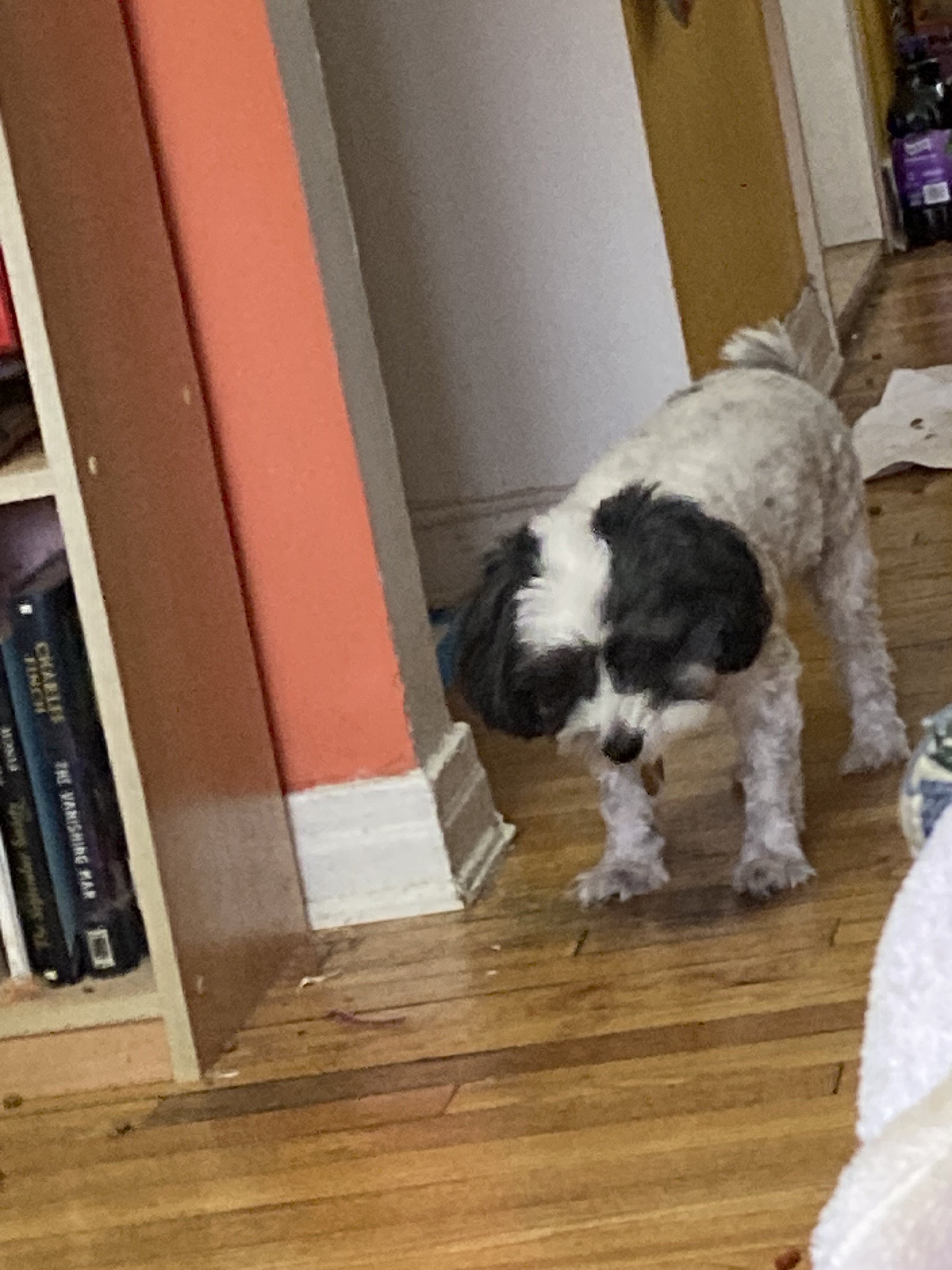
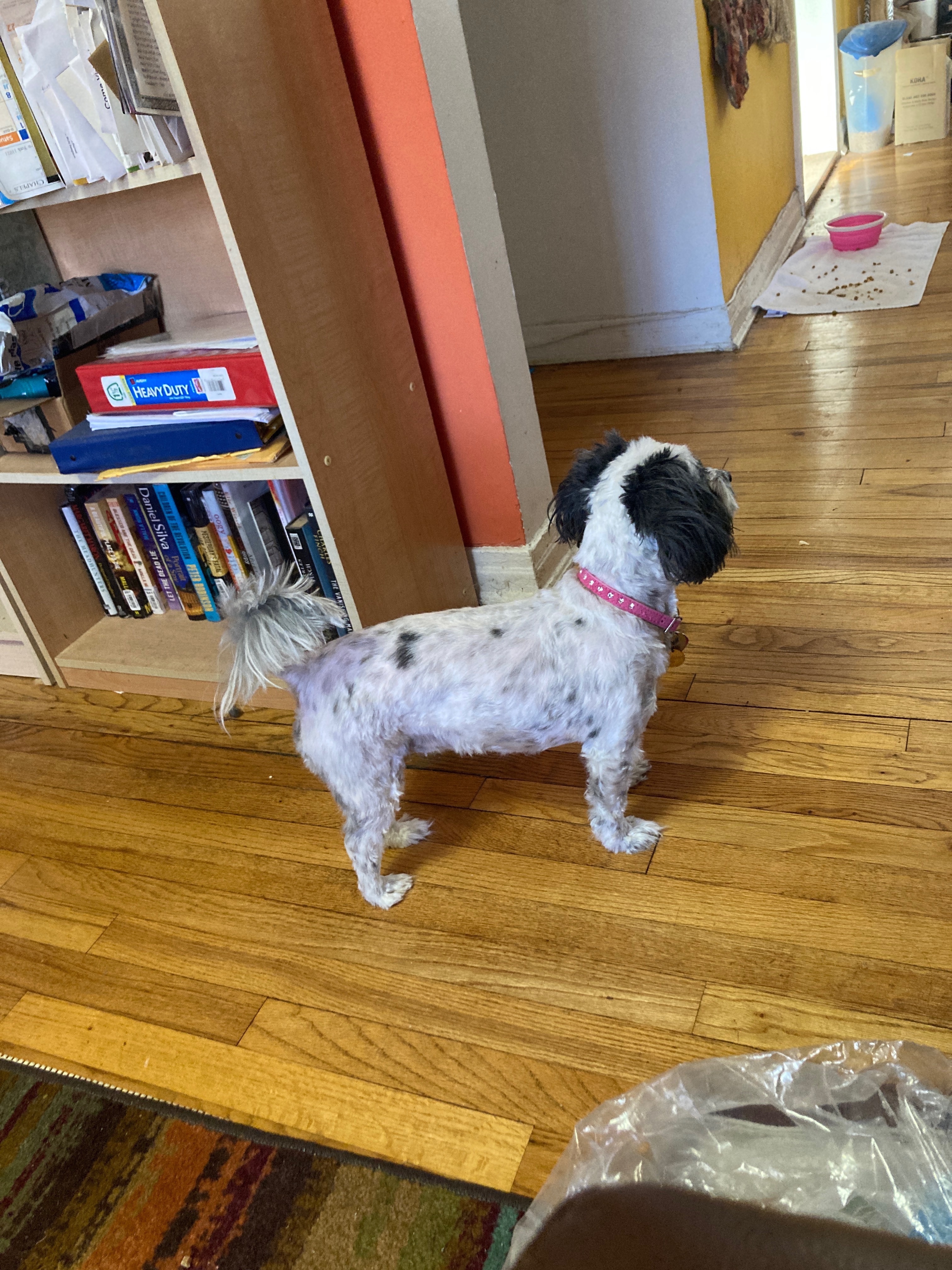
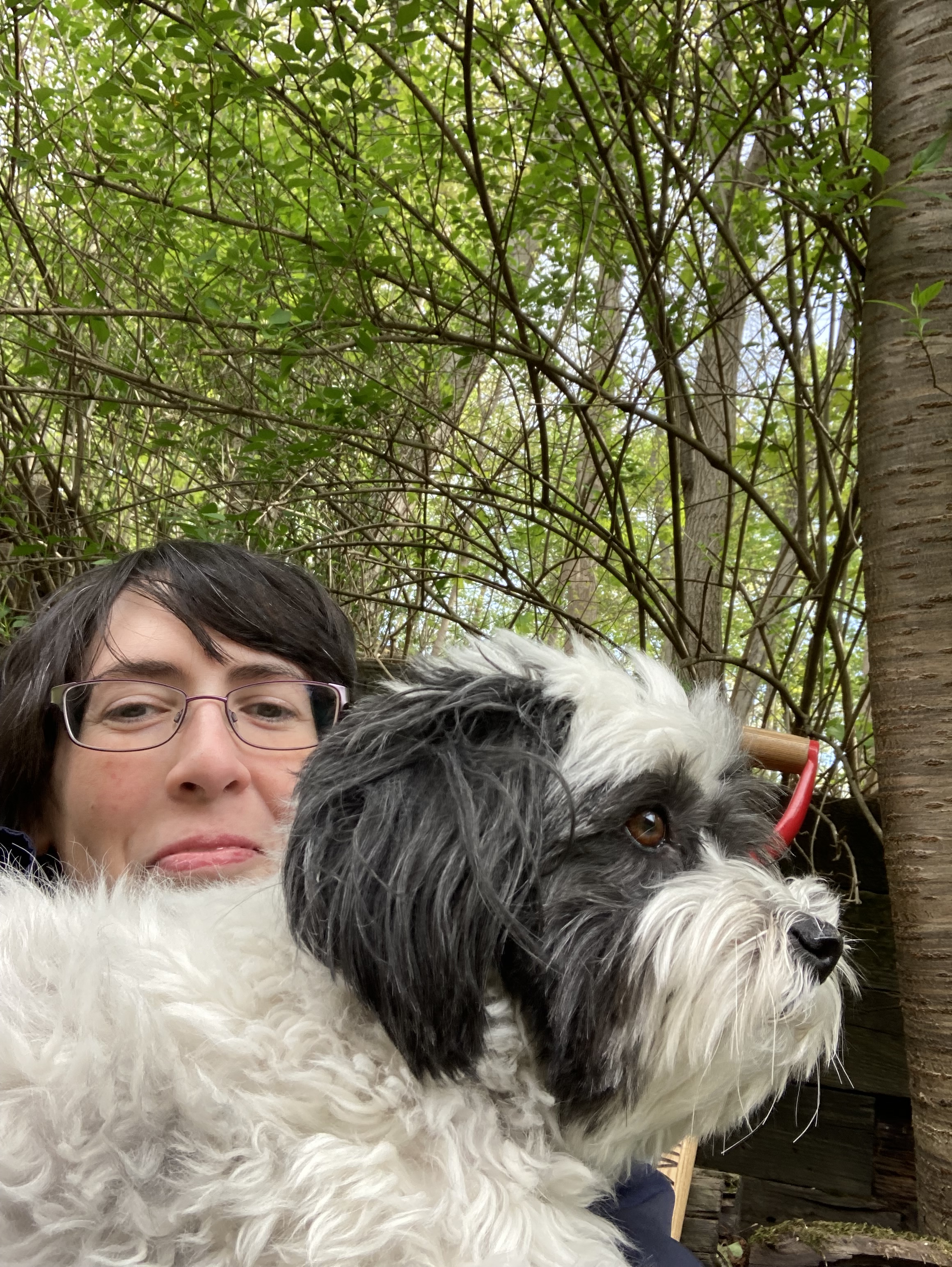
Tzipporah is waiting for her ancestors to visit the apartment, with treats.

            The aging of our congregation was more obvious this year, with all of the walkers and the rollators and the shuffling and the rounded shoulders, but it was good to see the congregation filled to the rafters (literally, we had people up in the choir loft, which is never actually used for the choir). We were only filled to the brim for the first day of Rosh Hashanah and the morning of Yom Kippur, but still, it was nice to see.

            I’ve gotten used to the presence of the security guards at the front doors now, and the locked doors, and tinted windows, and bollards to prevent car rammings, but it’s hard to settle into the reality that we really do need all of those measures because there are people who actively want to kill us.

            And then, of course, I caught a cold on Yom Kippur. Mom was sure that my allergies were kicking in, because the heat had gone on overnight for the first time, swirling dust every which way, but as the day went on my symptoms worsened until it was obviously more than just allergies.

Surprisingly, though, with all of that, the Yom Kippur services were easier than expected. The rabbi’s speech, Against Despair, helped a lot. We started the day with the news about the attack on Jews entering a synagogue in Manchester, England, so despair was sitting in the room with us, but the hope the rabbi tapped into wasn’t about how things were going to turn around and love would prevail, instead he told us that the Jewish people have survived through one devastation after another, outliving enemies time after time, just by the commitment to life.

            The other highlight of Yom Kippur, for me, was a prayer I must have heard many times over the years, but it hit me differently this time. It’s called Shma Koleinu (Hear our Voice), and in our synagogue it is sung as a solo by the cantor. It’s a simple plea for God to hear our suffering, and to hear our pleas for help, and I always forget how healing it can be just to be heard, even when no material help can be offered.

            Hear our voice, God, spare us and have compassion on us and accept our prayers, mercifully and willingly.

            I went looking for this prayer on YouTube and found a lot of versions, including a few with the same tune we use (by Max Helfman), but none of them captured the power that our cantor was able to create with those same notes. Technically, I think its because he chooses to stay in chest voice instead of switching to head voice for the top notes of the cry, so it sounds more like a cello than like a violin; the fullness of the sound, rather than something more piercing or fragile, implies that we deserve to be heard by God. It’s not a desperate plea, instead we’re calling out, through our cantor, to say that we need help and respect at the same time.

We feel like we walk through the world without leaving a ripple in the fabric of other people’s lives, and while that’s never really true, it feels true, when no one stops to tell us that we’ve been heard.

            Singing with the choir, even though it takes a lot out of me, gives me the opportunity to be heard and seen, and to feel like an essential part of my community. And we all need that feeling. We all need to feel like our presence matters and our voice counts to someone other than ourselves.

            There’s a reason why Rosh Hashanah and Yom Kippur are the big communal holidays in Judaism, and it’s not because they are the only holy days on the Jewish calendar (there are kind of a lot). It’s because they are the hardest. We are meant to spend this time searching our souls for the sins we’ve committed, and, like chimps carefully picking bugs out of each other’s hair, this awful task is much easier to do with company. When we cry out to God and express despair, at least we aren’t doing it alone, because to do such a thing alone would be to risk truly falling into a pit of despair where the monsters have free reign.

            We do all kinds of things to mitigate the despair of looking so closely at our lives and at what we need to change in the coming year: we find beautiful music to set our prayers to, we dress up, we prepare more deeply and for a longer period of time, and we come together. And then, we stand together and pray for long periods of time, listing our sins and our flaws and our fears, but we do it together, in the light of the synagogue, rather than alone in the dark.

            And when we cry out to God, we are also crying out to each other: Hear me and I will hear you, and together we can make sure our lives matter, at least to one another.

Shma koleinu by Max Helfman – sung by Cantor David Rosen – https://youtu.be/ijAuDvzVmfw?si=RSsIoxhpiXJUkeCT

“Next year, can I sing too?”

If you haven’t had a chance yet, please check out my novel, Yeshiva Girl, on Amazon. And if you feel called to write a review of the book, on Amazon, or anywhere else, I’d be honored.

            Yeshiva Girl is about a Jewish teenager on Long Island, named Isabel, though her father calls her Jezebel. Her father has been accused of inappropriate sexual behavior with one of his students, which he denies, but Izzy implicitly believes it’s true. As a result of his problems, her father sends her to a co-ed Orthodox yeshiva for tenth grade, out of the blue, and Izzy and her mother can’t figure out how to prevent it. At Yeshiva, though, Izzy finds that religious people are much more complicated than she had expected. Some, like her father, may use religion as a place to hide, but others search for and find comfort, and community, and even enlightenment. The question is, what will Izzy find?

Reassessing

            I’ve been reading through piles and piles of notebooks, and files and files on the computer, to see which of my writing projects still spark my interest; and unfortunately, they all do. I can sort of prioritize one, or two (or five) above the rest, but it’s like trying to choose my favorite dog and having to ignore all of the others. How can you look away from that sweet, lonely, hungry little dog?! What kind of monster are you?!

            There are novel ideas in the notebooks, and novel drafts on the computer, and drafts of long essays and short essays, and children’s stories, and short stories, and mysteries, and even a science fiction story or two. And along with all of the writing projects, I also have lesson plans to write, and a ton of therapy work I still need to do in order to become the kind of functional adult who doesn’t need to crawl under the bed and hide (which hurts my back, honestly).

            This is what happens when I try to open the creaky, dusty, long-closed doors in my brain. I know I have to do this every once in a while, if only to make sure I’m not leaving something important behind, but it’s overwhelming. And, of course, there are endless internal arguments over which ideas have the best chance of getting published, and which ones will be an exhausting waste of time, and why do I have to be a writer at all when I really should be doing something more useful with my life, or at least more practical. But I’ve been a writer since I first learned how to hold one of those fat red pencils in nursery school, and if I stopped writing it would feel like I’d stopped breathing. And, really, even if it looks like I’m standing still, I am frantically kicking my feet under the surface, like a duck; and yet I judge myself only by what other people can see.

            At some point, hopefully soon, I will finish this reassessment period and be able to choose a few manageable goals to work towards and put the rest aside. And then maybe I can put off the next reassessment for a while, or at least make sure I’m better medicated by then.

“Chicken fixes everything.”

If you haven’t had a chance yet, please check out my novel, Yeshiva Girl, on Amazon. And if you feel called to write a review of the book, on Amazon, or anywhere else, I’d be honored.

            Yeshiva Girl is about a Jewish teenager on Long Island, named Isabel, though her father calls her Jezebel. Her father has been accused of inappropriate sexual behavior with one of his students, which he denies, but Izzy implicitly believes it’s true. As a result of his problems, her father sends her to a co-ed Orthodox yeshiva for tenth grade, out of the blue, and Izzy and her mother can’t figure out how to prevent it. At Yeshiva, though, Izzy finds that religious people are much more complicated than she had expected. Some, like her father, may use religion as a place to hide, but others search for and find comfort, and community, and even enlightenment. The question is, what will Izzy find?           

Both/And

            I’ve been watching videos in Hebrew for a while now, to practice my listening skills and to get a wider sense of Israeli culture, and one of the richest sources for short (2-15 minute) videos is Kan Digital, the online section of the public broadcasting channel in Israel. I have no idea how many of these videos actually end up on TV in Israel, but there are tons of them available on YouTube; along with a really great interview series by Orit Navon that delves into serious subjects (mental illness, living with disability, bullying, grief, having one Jewish and one Muslim parent), there are also videos by a variety of reporters/performers from different segments of Israeli society (religious and secular, Ethiopian and Russian, Israeli Arab, Jewish, Muslim, Christian, etc.), on a wide range of subjects, from serious, fact-based pieces on how Israeli elections work, to slice of life videos about working from home during Covid, to a dance video on how to choose a watermelon.

Orit Navon

Recently, I saw a video from one of the usually less serious performers/reporters (he did the watermelon video), where he’s sitting in what looks like a real therapy session, or a very close facsimile thereof, and both the reporter (Ehud Azriel Meir) and the therapist seem to be from the Religious Zionist community (roughly equivalent to Modern Orthodox in America – which you can tell from their crocheted kippot and casual clothes, as opposed to the more formal clothing and black hats worn by Haredim/ultra-orthodox). I’d seen a lot of videos from Ehud before; he did a whole series where he was supposedly sent to work with the Arabic language division at Kan to create educational videos about Jewish holidays and rituals, and each video in the series poked fun at all of the assumptions Jews and Muslims and Christians in Israel make about each other. It was silly and light, but also allowed for a pretty deep exploration of social conflicts Israelis grapple with on a daily basis. In general, Ehud’s videos are like this, characterized by humor and a willingness to show his own flaws and mistakes, but the video with the therapist had a much more serious tone than I was used to from him.

Ehud Azriel Meir

The therapy session starts with Ehud’s feelings of guilt at wanting to vote for someone other than the Religious Zionist candidate in the coming election. He believes that if he votes for “the other” candidate, he’s not only letting his own side down, he’s letting the other side win (though in Israel’s multi-party system there are always more than two options). This led to a discussion of the moment he started to feel some alienation from his own political party, which is also his religious community, way back in the 1990’s, when Prime Minister Yitzhak Rabin was assassinated. Before the assassination, Ehud, as a teenager, took part in a lot of the demonstrations against Rabin’s push for the Oslo Accords. He and his fellow Religious Zionists believed strongly that the accords would lead to more terrorism rather than to peace, and they were loud and vehement in their opinions, calling Rabin a traitor and a murderer. And then, Yigal Amir, also a Religious Zionist, shot and killed Rabin at a peace rally.

            For Ehud, Rabin’s murder was a moment of awakening. It truly devastated him that this man, who was like a father to him and to the country as a whole, had been killed by someone on “his side.” He had never considered the possibility that people were taking those screamed epithets literally, but when he and his friends tried to go to the vigils to mourn Rabin with the rest of Israel, they were turned away. And, still today, he resented that the secular Israelis blamed him for Rabin’s death, and he felt like it would be disloyal to his own group, and to himself, to vote with them on anything, even when he agreed with their policies.

The therapist pushed Ehud to acknowledge that his strong feelings around all of this might mean that he did feel somewhat responsible for Rabin’s murder, and that maybe he was uncomfortable in both the Religious and the secular worlds because he was still trying to avoid facing those feelings of guilt. Ehud bristled at that idea, but the therapist persisted, suggesting that in order for him to be at peace with having one foot in each camp, he needed to wrestle with the ways he himself believed that his actions long ago may have done harm, and to acknowledge that no matter how much he treasured his identity as a Religious Zionist, that wasn’t all of who he was.

            There was something really powerful for me in watching this usually very un-serious guy, now grumbling and uncomfortable, being willing to share his discomfort and uncertainty with the public, in case it might do some good. And his internal conflict resonated with me too, even more so because he used the words Gam ve Gam (Both/And) to describe his feeling of being both a Religious Zionist, and something else as well.

Whenever I start a new semester of online Hebrew classes, I’m asked if I prefer my name to be pronounced the English way or the Hebrew way, and I always say Gam ve Gam, both because I grew up going to Jewish day schools where half the day I was one and half the day I was the other, but also because the feeling of having different parts of me that fit in with different groups is a big part of my everyday life. It can be really hard to live in the Both/And. I’m never sure if I should stand with one foot in each camp, or hop from one side to the other, or stand in the middle all by myself. More often than not, I feel like I have to hide parts of myself, or act in ways that feel wrong to me in order to fit in.

“I like both chicken treats AND Greenies.”

            Watching this video reminded me of the traditional Ashamnu prayer that we say during the Jewish high holidays each year, where we pound our chests and admit to all of the possible sins that may have been done by a member of our community. That level of exaggerated responsibility has always bothered me, because I work so hard to make sure I do no harm, and it doesn’t seem fair that I should have to take responsibility for Joe Schmo over there who couldn’t care less who he hurts. It’s not even clear which community the prayer is referring to: does it include all Jews? All Jews on Long Island? All human beings on earth?

But now I wonder if the prayer is trying to get at the collective guilt we tend to feel when someone from our own political party, or tribe, or family, does something wrong. Even if we are not directly responsible for an evil act, we may have played a role in creating the conditions for that evil act to take place; or maybe our strongly held beliefs led us to encourage someone in the direction that led them astray; or maybe we were silent when we knew we should speak up, because we were afraid of being kicked out of the group; or maybe we felt responsible simply because outsiders told us that we were responsible, because they see our group as a single entity rather than a collection of individuals.

Once a year, this prayer gives us the opportunity to acknowledge those complex feelings of communal guilt, and reminds us that we need to recognize the impact we can have on the people around us, whether we intend that impact or not. And maybe most of all, the prayer reminds us that even when we disagree with our fellow community members, and speak up against them, we are still part of that community and that community is still a part of us.

I had a Creative Non-fiction teacher back in graduate school who told us that in order to write a good essay (for her class, at least), we needed to write about two seemingly unrelated subjects at once. For example, if you’re writing about pizza, you could also write about existential philosophy; or if you are writing about fashion, you could also look back at a memory from a childhood dance class, or a nature walk, or a chess game. Because, she said, the most interesting material comes from the way those two unrelated topics brush up against each other and create something new. And I think that’s true of more than just a good essay. When I live my life in both A and B (and often in C and D and E as well), the friction that comes from those mashups creates a lot of sparks, and what would our lives be like without all of those sparks to help light the way forward?

“You said pizza. I didn’t hear anything after that.”

If you haven’t had a chance yet, please check out my novel, Yeshiva Girl, on Amazon. And if you feel called to write a review of the book, on Amazon, or anywhere else, I’d be honored.

            Yeshiva Girl is about a Jewish teenager on Long Island, named Isabel, though her father calls her Jezebel. Her father has been accused of inappropriate sexual behavior with one of his students, which he denies, but Izzy implicitly believes it’s true. As a result of his problems, her father sends her to a co-ed Orthodox yeshiva for tenth grade, out of the blue, and Izzy and her mother can’t figure out how to prevent it. At Yeshiva, though, Izzy finds that religious people are much more complicated than she had expected. Some, like her father, may use religion as a place to hide, but others search for and find comfort, and community, and even enlightenment. The question is, what will Izzy find?